
Porsche 944 Cabriolet buyer's guide
Porsche 944 Cabriolet -- the model's own buyer's guide: variants, values and what to check.
Years listed: 1989-1991 · Series: 944
Overview and history
The Porsche 944 S2 is the car the 944 always wanted to be. It arrived for the 1989 model year as the replacement for the short-lived 944S, and it solved the S model's central problem — an engine that made its power too high in the rev range and felt strained getting there — by simply making the engine much bigger. In place of the 2.5-litre sixteen-valve four, Porsche fitted a 3.0-litre version, at the time the largest four-cylinder engine in a production car, and the S2 became a genuinely fast, flexible sports car that no longer needed to be thrashed to go. Production ran for three model years, 1989 through 1991, before the heavily revised 968 took over the transaxle line for 1992.
The context matters. The 944 line began in 1982 as the development of the 924, with the engine at the front, the gearbox at the back in a transaxle joined by a rigid torque tube, and weight distribution so close to even that period testers treated the handling as a benchmark. The 944 grew through the eighties: an oval-dash interior from 1985 and a half, the sixteen-valve S in 1987, and finally the S2, which combined the big sixteen-valve engine with the Turbo-look body and Turbo-grade brakes, but no turbocharger. Think of the S2 as the naturally aspirated flagship of the range — the Turbo was quicker outright, but the S2 was the car many owners considered the better-balanced road car, because its power arrives in a straight, predictable line with no lag and no boost threshold to manage.
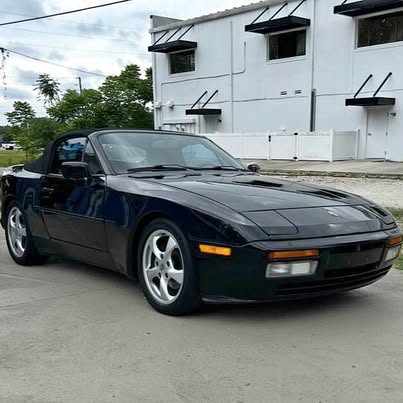
Two body styles were offered, and the second was a first for the 944. Alongside the familiar coupe, Porsche sold a full Cabriolet — the first open 944 — with a power-operated fabric roof, its conversion work carried out for Porsche by ASC at Weinsberg in Germany. The open car kept the coupe's mechanical specification intact, which is why it drives like a proper S2 and not a softened derivative.
Our own listings illustrate how thin the S2 sits in today's market compared with the ordinary 944. We currently track just four S2s in total — three offered for sale and one recorded as sold — spanning the 1989 and 1990 model years in the sample, in coupe and cabriolet form, from sellers in Arizona, Florida, Maryland and West Virginia. That is a tiny sample, and this guide will not pretend otherwise: it is enough to show the shape of the market, not to price a car from. The buying knowledge that follows is drawn from the model itself — a well-documented Porsche with a known set of strengths and a known, finite set of expensive failure points.
Those failure points define the purchase. An S2 is not a fragile car; the structure is galvanised, the bottom end is strong, and the transaxle layout gives it manners most front-engined sports cars of the period cannot match. But it has several time-based services that cannot be deferred safely — the timing belt, the balance-shaft belt, and the small chain and tensioner pads that link its two camshafts — plus a clutch job whose labour bill reflects the transaxle layout. A car with those jobs documented and recent is a car you can buy with confidence and use hard. A car with no record of them is a car whose first bill is already written.

The models
There are only two S2s, and they share everything that matters mechanically. Choosing between them is a choice about open-air motoring, not about performance or engine specification — there was no lesser S2, no automatic S2, and no special edition you need to hunt down or avoid.
| Model | Years | Engine | Output | Gearbox | Character |
|---|---|---|---|---|---|
| 944 S2 coupe | 1989–1991 | 3.0 16v four (M44/41) | 208 hp | 5-speed manual transaxle | The core car; hatchback, sunroof on most, the driver's pick |
| 944 S2 Cabriolet | 1989–1991 | 3.0 16v four (M44/41) | 208 hp | 5-speed manual transaxle | The first open 944; power roof, same mechanicals, rarer |
The coupe. This is the S2 in its purest form: a two-plus-two hatchback with the big glass rear hatch, a removable electric sunroof panel on the majority of cars, and the full Turbo-look body — flared arches, the deeper front valance with integrated fog and driving lamps, and the rubber-edged rear spoiler under the hatch glass. The coupe is the lighter, stiffer car, the one to choose for fast road work or track days, and the one with the more practical luggage space, because the hatch opens onto a flat load bay with folding rear seat backs. The rear seats are best treated as occasional: legroom is minimal for adults, though the space works for children and soft bags. Period figures put the coupe at around six and a half seconds to 60 mph and a top speed just under 150 mph, numbers that still feel brisk today because the car is light by modern standards.
The Cabriolet. The open car took the coupe's floorpan, added the structural reinforcement an open shell needs, and gained a fully lined, power-operated fabric hood — check whether the car in front of you has a plastic or a later glass rear window, because condition and replacement cost differ. With the roof up it is a civilised, weather-tight car; with it down it is the most relaxed way to enjoy the S2's torquey, unstressed engine. You give up the hatchback's load space to a smaller boot and some shell stiffness, and you take on the roof mechanism and its motors and relays as an extra system to inspect. In return you get the rarest regular-production S2 and, on the right road, the most charming one.
Markets and specification. The S2 was sold worldwide, and US-market cars are what most readers of this guide will meet. US cars carry the same M44/41 engine rated at 208 hp, catalytic converters, air conditioning in the great majority of cases, cruise control, and the full electric convenience package that had become standard 944 fare by 1989. Options worth knowing about, because they affect both feel and value, include the M030 sports suspension package with adjustable Koni dampers, the M220 limited-slip differential, and sports seats with their deeper bolsters. The option sticker — a paper label under the rear carpet in the boot area and duplicated in the service book — lists the car's codes, and decoding it is a five-minute job that tells you how the car actually left the factory, as opposed to how it is described.
What did not exist. Bury three myths before you shop. First, there was no automatic S2: every car left the factory with the five-speed manual transaxle, so an automatic car wearing S2 badges is a lesser 944 in costume. Second, there was no S2 Turbo and no factory S2 Clubsport for the road; the turbocharged flagship remained the separate 944 Turbo line. Third, the S2 badge on the rear of a 1987 or 1988 car does not make it one — the earlier 944S is a 2.5-litre car with a different engine, character and value, and the engine designation check in the inspection section settles which car you are actually looking at.

Engines and gearboxes
The M44/41: a 3.0-litre four with two camshafts
Every S2, coupe or cabriolet, US or European, uses the same engine: the M44/41, a 2,990 cc inline four with a double-overhead-cam, sixteen-valve cylinder head. The bore is 104 mm and the stroke 88 mm — dimensions that made it, at launch, the largest-capacity four-cylinder engine in series production anywhere. Output for US cars is 208 hp at 5,800 rpm, with torque of 207 lb-ft at 4,000 rpm; European cars were quoted at 211 PS on the same basic state of tune. The compression ratio is a high 10.9:1, the engine management is Bosch Motronic with knock control, and the rev limit sits at about 6,400 rpm. Those figures only hint at the character. What defines the M44/41 on the road is the spread of its torque: it pulls cleanly and usefully from below 2,000 rpm, swells through the middle of the range where the old 2.5-litre S was still clearing its throat, and still enjoys being taken to the red line. It is an engine you can drive lazily in a high gear or work hard in a low one, and it sounds and feels willing either way.
The bottom end is developed from the 944's 2.5-litre block, an aluminium-silicon Alusil casting with siamesed bores — the cylinders share walls, with no water jacket between them, which is how Porsche found room for the 104 mm bores inside a block of the original size. The crankshaft is forged, and the oil system carries a generous capacity with an external oil cooler circuit. In service this bottom end has proved very strong. Bore wear, crank failure and oil-pressure collapse are all rare on cars that have had their oil changed; when an M44/41 dies young, the cause is almost always at the top of the engine or at its front, in the belt and chain systems described below.
The cylinder head is where the S2 engine earns and spends its money. It is an aluminium casting with four valves per cylinder, hydraulic tappets, and two camshafts — but only one of them is driven directly by the timing belt. The belt drives the exhaust camshaft; a short single-row chain inside the head drives the intake camshaft from the exhaust cam, with a hydraulic tensioner pressing on a replaceable plastic-faced pad to keep the chain taut. Hold that arrangement in your head, because it is the single most important mechanical fact about buying an S2: the belt system at the front of the engine and the chain system inside the head are two separate wear systems, with two separate service lives, and a seller who can document only one of them has documented only half of the valve drive. Failure of either, on an interference engine like this one, bends valves.
Two balance shafts live in the block, driven by their own toothed belt from the crankshaft and turning at twice engine speed in opposite directions. They exist because a 3.0-litre four without them would shake in a way no Porsche buyer would accept; the system follows the Mitsubishi-patented layout Porsche licensed for the 944 family, and when correctly timed and tensioned it works invisibly — an S2 at idle should be strikingly smooth for a big four. The balance-shaft belt is a separate item from the timing belt, with its own tension and alignment marks, and its condition and timing are part of every proper belt service. A car that vibrates at idle or buzzes through the structure at certain revs is very often a car whose balance shafts are a tooth out or whose balance belt was tensioned by feel — annoying rather than destructive, but a reliable fingerprint of hurried front-of-engine work.
Fuel and spark are managed by the Bosch Motronic system, with a vane-type airflow meter, electronic injectors, idle stabilisation, and knock sensors that allow the high compression ratio to live safely on modern unleaded fuel. Premium fuel is the correct diet. The system is fundamentally reliable; its common failures are age failures — perished vacuum hoses, tired flywheel reference and speed sensors, cracked relay solder joints, dirty idle valves — and they are covered as ownership items below.
Ancillaries follow the mature 944 pattern. The water pump is driven by the timing belt, which is why pump replacement is normally folded into a belt service rather than done alone. The alternator, power-steering pump and air-conditioning compressor are driven by separate auxiliary belts. Engine mounts are hydraulic, fluid-filled units that isolate the big four's remaining vibration very effectively when sound and transmit it faithfully when they have collapsed — a diagnostic gift, as the problem section explains.
The five-speed transaxle and the torque tube
The gearbox sits at the back of the car, combined with the final drive in a transaxle casing, and is connected to the engine by a drive shaft running at engine speed inside a rigid torque tube. That layout is the whole reason the 944 family handles as it does: the heavy gearbox mass sits over the driven wheels, the front of the car carries only the engine, and the static weight distribution lands close to fifty-fifty. The S2's box is a five-speed manual with ratios matched to the 3.0 engine's torque — taller and more relaxed than the 2.5 S box needed to be — and a rod-and-cable shift linkage running the length of the car to a lever that, when the linkage bushes are fresh, gives a precise, mechanical change unlike anything else of the period.
Judge the gearbox on three things. Synchromesh health, especially on second and third, tested both up and down the box when the oil is cold and again when hot. Noise: a transaxle should be quiet apart from a faint whine under load, and a bearing growl that rises with road speed rather than engine speed points at the transaxle or the torque-tube bearings. And the clutch, which on this layout sits at the front of the car, bolted to the engine flywheel in the bell housing at the front of the torque tube. The clutch itself is a conventional single dry plate, but reaching it means separating the torque tube and transaxle assembly from the engine — a long, labour-heavy job that turns a modest parts bill into the largest routine service cost the car has. The original disc used a rubber centre as its torsional damper; those centres age, crack and eventually fail, and most cars have by now been converted to a conventional spring-centred disc at their first clutch change. A documented spring-centre conversion is a small plus on any car you view.

Problem areas
An S2 concentrates its risk in a handful of well-understood places, and that is good news: you are not gambling on unknown failure modes, you are auditing a known list. Work through it in the order below — valve drive first, because it is the only area where neglect can destroy the engine without warning; then the rest of the engine; then the driveline whose labour costs dominate ownership; then the chassis; and finally the body, electrics and cabin, where the bills are smaller but more numerous. A note on evidence: our own store currently tracks only four S2s, three for sale and one sold — far too small a sample to quote photo-checked incidence rates from honestly, so this section makes no such claims. What follows is the model's established mechanical record, stated as mechanisms and tests you can apply to the car in front of you.
The valve drive: timing belt, balance-shaft belt and the cam chain
The timing belt. The M44/41 is an interference engine: if the timing belt fails, pistons meet valves, and the repair stops being a service and becomes a cylinder-head rebuild with a bill that typically runs $3,500–6,500 at a specialist once head work, gaskets, belts and labour are counted. The belt itself is not weak; the failure mode is age and neglect. Rubber belts harden, crack at the root of the teeth and shed teeth, and they do it on a calendar as well as a mileage clock, because the car spends most of its life stationary with the belt bent around the same pulleys, taking a set and oxidising. Specialist practice converges on replacement roughly every 45,000 miles or four to five years, whichever arrives first — and on a low-mileage car the years, not the miles, are nearly always the binding limit. A belt described as done at a mileage with no date attached may be a decade old. Treat undocumented as undone.
A proper belt service is a system job, not a belt swap. It covers both belts, the tensioners and idler rollers they run on, and inspection — usually replacement — of the belt-driven water pump, plus the front crankshaft and balance-shaft seals while access is open, because a seal that starts weeping oil onto a new belt shortens that belt's life and forces the whole job to be repeated. Priced as a whole at an independent specialist, expect roughly $1,200–2,200 for the belts, rollers and labour, rising to about $1,800–3,000 when the water pump and front seals are included — which, on any car without proof they are recent, they should be. The distinguishing evidence is an itemised invoice naming the parts, not a line that says belts done. A new belt also wants its tension rechecked after a short running-in period, because new belts settle; a file that shows that second check is the signature of a shop that knows these engines.
The balance-shaft belt. This second belt rarely destroys anything when it fails — the balance shafts simply stop — but it causes two real problems. A failed or mistimed balance belt leaves the engine vibrating in a way owners misdiagnose for months as mounts, misfires or a failing clutch. And a balance belt that breaks or jumps can tangle with the timing belt beside it, when it is no longer harmless. The belt is also fussy to tension: too loose and it slaps, too tight and it sings at a pitch that rises with revs, a sound owners describe as a supercharger the car does not have. Whine from the front of the engine that tracks engine speed is your test prompt — ask when the belts were last set, and by whom. Balance-shaft seals are the other chronic item here: the shaft housings at the front of the block weep with age, and because the shafts spin at twice crank speed, their seals live a harder life than the crank seal. Oil low at the front of the engine, spread by the belts, usually starts here or at the crank seal, and the fix belongs inside a belt service at a few hundred dollars of seals and labour on top.
The cam chain and its tensioner pad. This is the S2-specific trap, and it catches buyers who know the 944 family from the eight-valve cars, which have no such system. Inside the head, the chain linking exhaust and intake cams runs against a hydraulic tensioner whose contact face is a plastic pad. Over years and heat cycles the pad wears, grooves and eventually can break up; the chain, also stretching slowly with age, then runs slack, sawing at the tensioner and wearing the teeth of the camshaft sprockets into hooked profiles. Left far enough, the chain can jump a tooth or shed its relationship with the cams altogether, with the same bent-valve consequences as a belt failure — and unlike the belt, the chain has no published service interval, which is exactly why it gets forgotten. Specialist practice is to inspect the pads and chain with the cam cover off at around 100,000 miles and at every opportunity thereafter, and to renew the pads — cheap parts — preventatively; the labour to open the cover, inspect, and replace pads and, if needed, the chain is typically $600–1,200, rising sharply if the camshafts themselves have suffered tooth wear, because worn sprockets are part of the cams. The test at a viewing is documentary and audible: ask when the cam cover was last off and the pads inspected, and listen at a cold start for a rattle from the top of the engine. A rattle that persists hot, or a seller who has never heard of the pads, both price into the offer.
The rest of the engine: mounts, cooling, oil and management
Engine mounts. The hydraulic mounts collapse with age — the fluid leaks or the rubber separates, the engine sits measurably lower, and the big four's vibration arrives in the cabin at idle and through the pedals under load. The test is comparative: a sound S2 idles with a smoothness that surprises people who expect a large four to shake, so a car that buzzes its mirrors at idle is telling you something, and mounts are the first suspect once balance-belt timing is confirmed. A pair fitted runs roughly $500–900. Do not let a seller pass idle vibration off as character; on this engine, roughness is a symptom.
Cooling. The system is conventional and adequate, and its failures are the failures of age: a belt-driven water pump whose bearing play or seal weep shows as coolant loss and rumbling from the front of the engine; radiators whose plastic end tanks embrittle; expansion tanks that yellow, craze and split; thermostats that stick; electric fans whose switches, relays and resistor packs fail one speed at a time; and hoses that look fine outside and are soft inside. The test is a full heat cycle on the test drive: the gauge should rise to its normal mark, stay there in traffic with the fans cutting in audibly, and the heater should blow properly hot. Overheating on an aluminium-head engine is not a shrug — a warped head turns a cooling fault into a head-gasket job at $1,500–2,800 — so a car that runs hot is a car to diagnose before purchase, not after.
Oil leaks and consumption. Beyond the front seals, the usual weeps are the cam-cover gasket, the oil-pressure sender, the oil cooler seals, and the rear of the engine around the clutch bell housing. Modest weeping on a thirty-five-year-old engine is normal and budgetable; dripping that marks its parking space daily is a jobs list. Oil consumption on a healthy M44/41 is modest; a car smoking blue on the overrun after a long downhill is showing valve-stem seal wear, while smoke under hard acceleration points lower, to rings and bores, and reprices the car as an engine project.
Management and starting. The Motronic system fails in patterns. A car that cranks but will not start, intermittently and then completely, is very often the DME relay — the combined relay that powers the ECU and fuel pump — whose solder joints crack with heat cycles; experienced owners carry a spare, and a $40–70 relay in the glovebox is the cheapest insurance in Porsche ownership. Flywheel reference and speed sensors age and heat-soak, giving hot-start failures that vanish when the car cools. The idle stabiliser valve gums up and produces a hunting idle that a clean often cures. None of these is expensive in parts — sensors run $80–200 each — but all reward methodical diagnosis over parts-swapping.
The driveline: clutch, torque tube and transaxle
The clutch job is the labour bill. Because the transaxle must be separated and the torque tube moved to reach a clutch that sits at the front of the car, a clutch replacement on a 944-family car is a full day or more of skilled labour wrapped around a few hundred dollars of parts. Budget $1,800–3,000 all-in at an independent specialist for a spring-centred disc, pressure plate, release bearing and the while-you-are-there items. The failure modes are three: honest wear, announced by a high biting point and slip in high gears under load; the original rubber-centred disc failing, announced by clunks on take-up, shunting at low speed and eventually a loss of drive as the centre tears free; and release-bearing noise, a whir that changes as you press the pedal. Step 7 of the inspection tests all three on the drive. A car with a documented recent clutch has retired the model's single largest service liability, and that is worth real money against an identical car without the invoice.
Torque-tube bearings. The drive shaft inside the tube runs in bearings that wear with age, producing a rumble that tracks engine speed in any gear and persists with the clutch pressed at speed in a way wheel bearings do not. Replacement means the same transaxle-out labour as the clutch, plus the bearing work — $1,200–2,200 standalone — which is why wise owners combine tube bearings with a clutch whenever either is due, and why a file showing both done together is a strong buying signal.
Transaxle wear. Second-gear synchromesh is the first to tire, crunching on rushed changes especially when cold; a box that crunches hot on up and down changes is budgeting for a rebuild at $2,500–4,500, while a box that merely prefers a deliberate cold change and is clean when warm is showing normal age. Gear oil that has never been changed accelerates all of it — ask. Linkage wear is the cheap impostor: worn bushes make a vague, long change that feels like gearbox wear and is cured for $150–400, so drive the car before condemning the box. Constant-velocity joints click on lock and knock on the overrun when their grease has dried or boots have split; a rebuilt shaft is a few hundred dollars a side fitted.
Chassis: suspension, steering and brakes
Front suspension. MacPherson struts with aluminium lower control arms. The ball joints in those arms were not originally sold as separate service items, which turned a worn joint into an expensive arm; the aftermarket long ago solved this with rebuild services and replaceable-joint solutions, so a worn joint today is a $300–600 per-side conversation rather than a crisis — but check for play at every viewing by rocking the wheel with the car lifted, and check the strut inserts for leaks and the top mounts for cracking. Rear suspension is by semi-trailing arms on torsion bars; tired dampers and sagging ride height show first as a car that sits low or lopsided at the back and squats under power. A full damper refresh runs $800–1,600 fitted across the car, and ride height that differs side to side wants a torsion-bar conversation, not just new dampers.
Steering. Power-assisted rack and pinion, with feel that should be a model highlight. Leaks gather at the rack seals and at the pump and its reservoir hoses; a groan on lock at parking speed is usually low fluid from a leak, not a dying pump, and the test is to find the wet component rather than accept a quote for all of them. Rack replacement or rebuild runs $700–1,400 fitted; pumps and hoses are less.
Brakes. The S2 inherited serious hardware: four-piston fixed calipers of Brembo manufacture over ventilated discs, with ABS. The parts are reasonably priced; the enemies are seized caliper pistons from old brake fluid, perished flexible hoses, corroded hard lines on cars from salted-road states, and discs worn thin by owners who fitted pads alone. A full hydraulic refresh — fluid, hoses, caliper rebuilds as needed — runs $600–1,400; calipers rebuilt or exchanged are $200–400 a corner when needed. On the test, the car must stop straight and hard from speed with a firm pedal that does not sink at a standstill; a long pedal is air or a master cylinder, a judder is disc thickness variation, and either is a negotiation point with a known price.
Body, electrics and cabin
The galvanised shell — and its exceptions. The 944 shell was fully galvanised, which is why S2s survive where contemporaries dissolved, and why structural rust is the exception rather than the rule. The exceptions have addresses: the battery tray and the floor beneath it, where decades of acid and trapped water defeat the coating; the sill ends and jacking points, where stone damage breaks the zinc layer; the bottoms of the front wings behind the wheels; the rear hatch aperture; and, on cabriolets, the floor and hood well where a leaking roof has kept the carpets wet. Localised welding and paint on a northern car is budgetable at $800–2,500; perforated sills or a holed battery-tray area on an otherwise ordinary car should reprice it as a project. Fresh underseal applied over everything, thick and uniform, deserves the same suspicion it deserves on any classic — prod the seams with a screwdriver, with permission, and listen for the change in sound.
The rear hatch. The coupe's big glass hatch delaminates: the glass separates slowly from its frame, showing as a white, milky edge spreading from the corners, and the hatch begins to creak, leak and eventually whistle. Regluing is a specialist job with mixed long-term results at $300–700; a good used hatch is the durable cure when one can be found. Hatch struts that no longer hold the glass up are trivial money; the locating pins and latches that wear and let the hatch rattle are cheap parts and an hour of adjustment.
Electrics. Work everything, because the failures are individually small and collectively a four-figure list: pop-up headlamps that rise unevenly or stay up point to the motor linkage and the relay before the motor; electric windows slow to a crawl as regulators and channels gum; the coupe sunroof drives through cables and a gearbox whose plastic gears strip, leaving a panel that tilts but will not slide; and the odometer gear inside the speedometer head crumbles with age, freezing the mileage while the speedometer keeps working — which is why a mileage gap in any 944-family car's history must be explained by paperwork, not by the odometer alone. The trip meter must never be reset while the car is moving; that is the classic way the gear is killed. A car where everything works has been maintained by someone who fixed things as they failed, which correlates with everything else in this section having been done too.
Interior. The oval dashboard cracks in sun-state cars, typically at the defroster vents and across the passenger side; uncracked dashes command real money, dash caps and re-trims are the cosmetic cures at $150 for a cap to $1,000-plus for proper refinishing work, and a cracked dash on an Arizona car — one of our four tracked cars is an Arizona cabriolet — is honest wear to price, not a shock. Seat bolsters wear through on the driver's entry side, foam collapses under the covering, and leather dries and splits along its stitching; a professional retrim of a pair of seats runs $1,500–3,500 depending on material, while good used seats are the value route. Door cards warp at their tops and hatch-area carpet fades in the sun through that big glass. None of it stops the car; all of it costs more to put right than buyers expect, which is why original, uncracked, unfaded interiors carry the premium they do.
The cabriolet roof. On the open car, add the hood to the structural audit. The fabric tears at its fold points and wears shiny along the frame bows; the rear window clouds, yellows and cracks — a replacement window section or a full hood runs $1,200–2,800 fitted depending on scope and material; the power mechanism's motors, microswitches and control unit fail in sequence; and the seals around the header rail and windows perish, after which every journey in rain wets the carpets and starts the floor conversation above. Operate the roof through two full cycles at a viewing, watch for even movement side to side, and inspect the carpets and hood well for the tide marks of past leaks.

How to inspect one
Allow ninety minutes, bring a torch, a cloth-wrapped magnet and a friend to work the pedals and switches while you walk around. Insist on a cold engine — a warmed-up S2 hides its cold-start rattle, its sensor faults and its exhaust smoke — and if the car passes your inspection, pay for a lift inspection by a Porsche specialist before money changes hands. On this model the lift hour is not a formality; it is where the front-of-engine oil leaks, the torque tube and the sill ends can actually be seen.
- Paperwork and identity first. Match the VIN on the title to the stamping in the engine bay and the label in the door jamb. Find the build sticker under the rear carpet and decode the option codes — you are looking for M220 if a limited-slip differential is claimed. Read the engine designation: an S2 carries the M44/41 3.0-litre; a car presented as an S2 whose engine is the 2.5-litre of the earlier 944S is a different car at a different price, whatever the rear badge says. Then read the service file in date order, hunting for three invoices: the belt service, the cam-chain tensioner pad inspection, and the clutch. Those three documents are worth more than any other paper in the file.
- Cold start. With the engine stone cold, start it and listen from outside the car. A brief top-end rattle that fades as oil pressure builds is the cam-chain tensioner filling; a rattle that persists, or a whine from the front of the engine that rises with revs, points back to the belt and chain systems in the problem section. Watch the exhaust: a puff of blue that clears is stem seals; continuing smoke is a repricing conversation. The idle should settle smooth and steady — a healthy M44/41 is an unusually smooth big four, so vibration at idle sends you to the balance-belt timing and the engine mounts, in that order.
- The belt audit, standing at the front wing. You cannot see the belts with the covers on, so audit the evidence instead: the itemised invoice with dates and parts, the water pump's age, and any oil weeping low at the front of the engine from the front seals. A belt service older than five years on the calendar is due again regardless of mileage, and a service with no date is no service. Price the full system job into the offer for any car that fails this step.
- Under the front of the car. With the torch, work the battery tray first — lift the battery if the seller allows, and look at the metal beneath it — then the sill ends and jacking points, the bottoms of the front wings, and every seam you can reach. The shell is galvanised, so you are hunting local defeat of the coating, not general rot: perforation at a sill end or under the battery is a welding bill; surface scabbing on seams is a treatment bill. Run the magnet over the sills and arches for filler while you are down there.
- The rear of the coupe, or the roof of the cabriolet. On a coupe, open the hatch and look at the edges of the glass for the milky whitening that means it is separating from its frame, check that the struts hold it unaided, and lift the rear carpet for water marks and the build sticker. On a cabriolet, run the roof through two full cycles, watch for even movement on both sides, examine the fabric at its folds and the rear window for clouding and cracks, and check the carpets and hood well for tide marks of leaks. Either way, check the spare wheel well for standing water.
- Wheels, suspension and steering, corner by corner. Rock each front wheel top-to-bottom and side-to-side for ball-joint and bearing play. Check the Design 90 wheels for kerb damage and cracks, and read the tyre dates and wear pattern — uneven shoulder wear is an alignment and suspension story, not a tyre story. With your friend turning the wheel, watch for leaks at the steering rack boots and listen for pump groan on lock. Confirm the car sits level; a low or lopsided rear sends you back to the torsion-bar discussion in the problem section.
- The clutch and transaxle tests, on the road. Drive at least twenty minutes, from cold, including traffic, a fast road and a hill. Test the clutch three ways from the problem section: a third-gear pull-away on a slope for slip, slow traffic work for the clunks and shunt of a failing rubber-centred disc, and pedal presses at idle for release-bearing noise. Work every gear up and down, cold and hot, feeling for second-gear synchromesh protest. Listen at a steady cruise for a rumble that follows engine speed in every gear — the torque-tube bearing signature — and for clicks from the rear on lock, which are the constant-velocity joints asking for attention.
- Brakes and ABS. From speed, brake hard in a straight line on an empty road: the car must pull up square, the pedal firm and non-sinking, with no judder through the wheel. Back at rest, press the pedal hard for thirty seconds; a pedal that creeps down is a master cylinder or a leak, and either ends the viewing until it is priced. Check the discs through the wheel spokes for lipping and scoring, and ask when the brake fluid was last changed — dark fluid in the reservoir dates the maintenance culture of the whole car.
- Heat, cooling and electrics, all at once. Let the car idle after the drive until the fans cut in, watching the temperature gauge hold its mark. Run the heater hot and the air conditioning cold. Then work everything electrical in one pass: pop-up headlamps up and down, windows, sunroof on a coupe or roof switches on a cabriolet, mirrors, seats, washers, wipers, indicators, the clock and every blower speed. Note each failure separately and price them separately, using the problem section — the list is the negotiation.
- The odometer question. Check that the odometer is turning during the drive, and compare the displayed mileage against the service file's chronology. The odometer drive gear crumbles with age and freezes the reading while the speedometer keeps working, so a static mileage across years of invoices has a known explanation — but the true mileage is then the paperwork's estimate, not a fact, and the car should be priced on condition and documents rather than the number in the cluster.
- Interior, seated. Sit in the driver's seat and feel for collapsed foam and a bolster worn through at the entry side. Read the dashboard in raking light for cracks starting at the defroster vents. Check the door cards at their tops and the rear carpet for sun fade through the hatch glass. Weight what you find heavily: mechanical faults have known prices, but recreating a worn interior to original standard is the slowest money you will spend on the car.
- The lift inspection, before the money. Finish where the car can be seen from below: front seals and water pump from underneath, torque tube and transaxle for leaks and play, constant-velocity joint boots, brake and fuel lines, exhaust condition, and the underside of the sills and floors. Have the specialist pull the cam cover if the pad history is undocumented — it is the one internal inspection that can change the price by more than its cost. Only when this hour agrees with everything above have you actually inspected an S2.
Values
The market block beneath this guide carries the current numbers — what is listed now, at what asking levels, and what recorded sales have achieved — refreshed as the market moves, so this section teaches you how to read those numbers rather than repeating figures that would stale.
The first thing to understand is the spread, because on this model the spread is the story. The distance between the cheapest S2 advertised and the most expensive is not primarily about mileage, colour or body style; it is about documented, recent completion of the three big services — belts, cam-chain pads and clutch — set against their absence. A car with all three invoiced and fresh is a car whose next owner buys driving; a car with none of them is a car whose next owner buys workshop time, and the market, when it is paying attention, prices that difference almost exactly at the cost of the work. Your job as a buyer is to sort listings by evidence before you sort them by price.
The second is the asking-versus-achieved gap. S2s sit in the part of the Porsche market where optimistic asking is common and patient selling is normal: cars are advertised hopefully, sit, and then move at auction or by negotiation at levels the original advertisement would not have suggested. Auction results — completed sales with a hammer price, of the kind collected in the market block below — are therefore the honest benchmark for what a given specification and condition level actually achieves, and a private asking price should be tested against the most recent comparable auction result, adjusted for the evidence in the car's file, rather than against other asking prices. One exceptional result for a fully documented car does not lift the value of an ordinary one, and one distressed project sale does not sink it; read the middle of the results, not the edges.
Body style cuts both ways. The cabriolet was the rarer car when new and remains the scarcer find, which supports it — but its buyer pool is smaller, its roof is a condition item the coupe does not have, and a cabriolet needing hood work gives back its rarity premium in a single invoice. The coupe is the deeper market: easier to buy well, easier to sell. Within either, the premiums that survive scrutiny are for originality and evidence — matching build-sticker specification, unmodified cars, full files — while modified cars return to the market at standard-car money or below. Colour operates at the margins: popular shades sell faster rather than for dramatically more.
Condition language needs translating. A project S2 — a non-runner, a long-stored car, a car with the belt service a decade overdue — is not a cheap S2; the gap between project money and driver money on this model is smaller than the cost of crossing it. The rational money is nearly always in the middle: the honest, used, documented driver, bought at the level the auction results support. Low mileage, finally, deserves the scepticism the inspection section gives the odometer itself: a low displayed number unsupported by a continuous paper trail is a claim, not a fact.
Parts and ownership
The S2 sits in a fortunate position for a thirty-five-year-old Porsche: it was built in meaningful numbers as part of a long-lived model family, it shares a great deal with the other 944 variants, and it is served by Porsche's own classic parts programme and by a mature independent specialist network that knows the transaxle cars intimately. Very little on the car is truly unobtainable; the ownership questions are about price and about labour, in that order.
Easy and reasonably priced: service consumables across the board — filters, plugs, belts as parts, brake pads and discs, hoses, thermostats, water pumps, radiators and expansion tanks — plus suspension dampers and bushes, ball-joint solutions for the front arms, tie-rod ends, clutch parts as components, constant-velocity joints and boots, wheel bearings, window and sunroof service parts, the DME relay and the flywheel sensors, and most gaskets and seals. Order today, fit this week, at prices that will not frighten anyone used to modern German cars.
Dearer, or slower to source: camshafts if chain neglect has hooked the sprocket teeth, because the sprockets are part of the cams; torque-tube bearing work, where the parts are modest but the labour is the job; a transaxle rebuild done properly; cabriolet hood components and motors; uncracked dashboards and good original interior trim in the right colours; the coupe's rear hatch glass in undelaminated condition; and body panels, where good used is often the realistic route. None of this is unobtainable — it is the tier where you learn the breakers who specialise in transaxle cars and plan purchases ahead of need.
Running costs in practice. Fuel consumption in mixed use sits in the mid-to-high twenties per gallon on the imperial measure, and better on a long cruise; insurance through classic schemes is generally modest for a car of this performance. Annual servicing at a specialist is a few hundred dollars when nothing is found, and the honest ownership budget also sets aside a rolling fund for the calendar items: belts on their four-to-five-year cycle, tyres by age as much as by wear, and one age-related system a year — cooling, then suspension bushes, then hydraulics — refreshed in turn. Owners who budget that way describe the S2 as a cheap Porsche to run. Owners who budget only for fuel and insurance describe it as a car that ambushes them, and the difference is bookkeeping, not luck.
The first-year rule. Whatever car you buy, reserve the first year for catching up: verify or renew the belts and pads, change every fluid including the transaxle oil and brake fluid, replace tyres that are old regardless of tread, and work the electrical list the inspection produced. On a documented car this is a modest programme of confirmation; on an undocumented one it is the full price of admission, and it should have been in the purchase negotiation. After that year, a sorted S2 is a genuinely usable classic — reliable enough for distance, and simple enough in its systems that a competent owner with a workshop manual can do a satisfying share of the maintenance at home.
Which one to buy
- The all-rounder: S2 coupe with a full file. Belts, pads and clutch all documented and recent, original specification, honest miles. This is the S2 most buyers should be shopping for, and the one that will be easiest to sell when the time comes.
- The driver's car: S2 coupe with the M030 sports chassis or the M220 limited-slip differential, verified on the build sticker. The options genuinely sharpen the car for fast road and track use — just confirm the codes on the sticker rather than paying for a claim.
- The open-air car: S2 Cabriolet with a sound, working roof. Buy the hood's condition as carefully as the engine's: a cabriolet with a recent, well-fitted hood, clear rear window and dry carpets is the rarest S2 in the most enjoyable form.
- The value buy: the documented higher-mileage coupe. Miles with invoices behind them frighten the market more than they frighten the M44/41. A car that has been used, serviced and belted on schedule is a better purchase than a low-mileage car that has sat — and it is usually the cheaper of the two.
- The project: only at project money, and only with your eyes open. A stored or neglected S2 can be the right buy for an owner who wants the work, provided the shell is sound and the price already reflects the belts, pads, clutch and recommissioning it will need before its first proper drive.
And the rule that overrides all of the above: buy the evidence, not the odometer, the colour or the badge. On an S2, three invoices — belts, cam-chain pads and clutch — separate a car you can drive away from a car you will pay to meet properly. A seller who cannot produce them is asking you to fund the difference, and the price should say so.
See the 13 944 Cabriolet cars currently listed.
For sale now
 $15,900
Expand
What they sell for: 944 Cabriolet sale prices.