
Porsche 986 Boxster buyer's guide
Porsche 986 Boxster -- the model's own buyer's guide: variants, values and what to check.
Years listed: 1997-2011 · Series: Boxster
Overview and history
This guide covers one car: the first-generation Porsche Boxster, type 986, sold in the United States as a 1997 through 2004 model. The later 987 Boxster (2005 onward) is a different car under familiar styling — different interior, revised engines, eventually a completely different engine family — and it appears here only as context. Everything that follows, every failure mode, every inspection step and every buying judgement, is about the 986.
The Boxster exists because Porsche nearly did not. In the early 1990s the company was selling three ageing model lines in collapsing numbers, and the car that saved it was conceived as the cheapest possible route to a new Porsche: a mid-engined roadster, styled by Grant Larson's team under design chief Harm Lagaay, shown as a concept at the Detroit auto show in January 1993 to an ecstatic reception. The production car, launched in late 1996, stayed remarkably faithful to that concept — and, crucially, it was engineered to share its entire front end, its doors, much of its interior architecture and its new water-cooled flat-six engine family with the 996-generation 911 that followed a year later. That parts-sharing is why the Boxster could be built profitably far below the 911's price, and why, twenty-five years on, the two cars share so many known faults: when you read about the M96 engine in this guide, you are reading about the 996's engine in a smaller state of tune.
The styling deliberately quoted the 550 Spyder and RS60 racers of the 1950s, and the production 986 delivered the substance as well as the look: the engine ahead of the rear axle, a luggage boot at each end, and the sweet, neutral handling of a mid-engined layout that made reviewers reach for superlatives in 1997 and still defines the car today. Production came from Zuffenhausen and, because demand outran capacity, from Valmet in Finland — Finnish-built cars carry a U in the VIN where Stuttgart cars carry an S, with no quality difference worth a cent either way.
The range developed in three acts, which the models section follows. The original car (1997–99) had a 2.5-litre engine and a deliberately simple specification. For 2000 the range split in two: the base car grew to 2.7 litres and the Boxster S arrived with a 3.2, a six-speed gearbox and bigger brakes. For 2003 a facelift brought revised bumpers and lights, a glass rear window in place of the original plastic one, and small power increases. Production ended in 2004, with roughly 165,000 built in total — per-variant splits are quoted differently by different sources, and this guide does not pretend to a precision the record does not support.
A word about this site's own pool, because it shapes what you will actually find when you shop here. The pool behind this guide is small — 11 cars in total, 7 listed for sale and 4 recorded as sold — and heavily weighted to the early cars: 9 of the 11 are 1997–99 2.5-litre cars, with one 2000 car and one 2004 car, and none of the 11 is identified in the pool data as a Boxster S. Silver and black account for 6 of the 11 between them. Treat the pool as a picture of the entry level of the 986 market, not as evidence that S or facelift cars are rarer in the wider world than they are — they were built in large numbers and change hands through other channels more often. Of the 11 pool cars, 7 came via Facebook Marketplace and 4 via Cars & Bids — a fair sketch of where these cars trade now: marketplace listings at the cheaper end, auctions for the presented ones.
What defines a 986 today is not its age but its paperwork: one genuinely engine-ending known fault (the IMS bearing, covered in forensic detail below), a handful of expensive-but-manageable ones, and a service history that either answers those questions or leaves them expensively open. Mileage matters far less than evidence.

The models
There are five mainstream 986 variants and one special edition, and the badge on the rear deck — plus, on an S, a few visual tells — identifies each. Outputs below are the period European DIN figures; US cars were rated a few horsepower lower on the SAE net scale (the 2.5 at 201 hp), a difference of paperwork, not performance. The "built" column is deliberately honest: roughly 165,000 986s were built in total, but per-variant splits are quoted inconsistently across published sources, so this guide gives the total and declines to invent the breakdown.
| Model | Years | Engine | Output | Built | Character |
|---|---|---|---|---|---|
| Boxster 2.5 | 1997–1999 | 2.5 flat-six (M96.20) | 204 hp | — (see text) | The original; lightest, simplest, revviest |
| Boxster 2.7 | 2000–2002 | 2.7 flat-six (M96.22) | 220 hp | — | The better base car; more torque, nicer cabin |
| Boxster 2.7 (facelift) | 2003–2004 | 2.7 flat-six (M96.23) | 228 hp | — | Glass rear window, sharper styling, glovebox |
| Boxster S 3.2 | 2000–2002 | 3.2 flat-six (M96.21) | 252 hp | — | Six speeds, big brakes, the driver's pick |
| Boxster S 3.2 (facelift) | 2003–2004 | 3.2 flat-six (M96.24) | 260 hp | — | The most complete 986 of all |
| Boxster S 550 Spyder Edition | 2004 | 3.2 flat-six (M96.24) | 260 hp | limited run | Anniversary special; trim, exhaust, GT Silver |
The 2.5 (1997–99). The launch car, and in some ways the purest: the lightest 986, with an engine that makes its power by revving and a cabin trimmed to the minimum — early cars have no glovebox and the simplest specification Porsche had offered in decades. It is not a fast car by modern measure, but the chassis is the same one the S later used, and on a real road a well-driven 2.5 is not embarrassed by anything in this guide. Its weaknesses are age-specific: the early engines carry the cracked-cylinder-head risk described in the problem areas, and the interior plastics are the most fragile of the range. The compensating virtue is the IMS bearing: the earliest engines carry the double-row design with the lowest recorded failure rate in the M96 family (the IMS section below explains why that matters and why it is not a clean bill of health).

The 2.7 (2000–02). The year-2000 revision matters most to base-car buyers. The engine grew by 200 cc but gained its real improvement in torque and flexibility rather than headline power, the cabin gained noticeably better materials, and the car feels a generation more finished than a 2.5 without losing the original's lightness of touch. If you are buying a base 986 to drive rather than collect, this is the value sweet spot: nearly all the facelift car's mechanical substance at pre-facelift money. The caution is the IMS bearing — cars from this period straddle the change from double-row to single-row, and which one a given engine contains cannot be told from the model year alone. That uncertainty should shape how you buy any 2000–01 car: evidence, as set out in the inspection section, not assumption.
The Boxster S (2000–02). The S is a substantially re-engineered car, not a badge. The 3.2 engine is matched to a six-speed manual the base cars never got, the brakes are the larger 996-derived setup with red calipers and cross-drilled discs, a third, central radiator sits in the front bumper, the suspension is retuned, and the cabin gained white-faced dials. Tells from outside: the twin central exhaust outlet (base cars have a single oval tip), the S badge, red calipers behind 17-inch wheels, and a deeper front bumper with the extra intake. On the road the difference is torque — the S pulls from low revs in a way the smaller engines never quite do — and braking stamina. It is the variant the market wants most, and the one with the highest running-cost ceiling: the 3.2 is the engine in this family most associated with bore scoring, covered carefully, with its relative risks, in the problem areas.
The facelift (2003–04). The 2003 model year brought the changes that make the last cars the easiest to own. Outside: restyled bumpers, clear indicator lenses, new wheel designs and body-colour side intake grilles. Inside: a proper glovebox at last, revised centre console and cupholders. Power rose by 8 hp on both engines. But the change owners value daily is at the back: the plastic rear window gave way to a smaller glass window with a demister element. It does not crack, does not yellow, does not need folding with ceremony in cold weather — which makes the facelift cars the default recommendation for anyone who will use the car year-round.
The 550 Spyder Edition (2004). A limited-run anniversary model based on the facelift S, marking fifty years since the original 550 Spyder: GT Silver paint (the colour of the 2003 Carrera GT concept), special leather interior, sports exhaust, lowered sports suspension, 18-inch Carrera wheels and a numbered plaque. Mechanically it is an S and should be bought as one — the premium is for originality and specification, so a car missing its correct trim or plaque has lost the very thing you paid extra for.
Options and equipment worth knowing about. A factory hardtop was offered throughout and is genuinely desirable — it transforms winter usability and is worth real money bought with the car, since colour-matched used hardtops are awkward to find later. Litronic (xenon) headlamps, heated seats, cruise control and Porsche Stability Management (PSM) were base-car options worth having. Full leather ages better than the standard trim.
Engines and gearboxes
The 2.5: M96.20
All 986 engines belong to the M96 water-cooled flat-six family — aluminium block and heads, four valves per cylinder, double overhead camshafts per bank, chain drive, and VarioCam variable intake cam timing. The 2.5 that launched the car is the M96.20: 2,480 cc, 204 hp at 6,000 rpm and 245 Nm of torque, figures that look modest until you register that they arrive in a car weighing around 1,250 kg and that the engine is happiest between 4,000 rpm and the red line. A healthy one starts instantly, idles cleanly once warm, pulls without flat spots and shows no smoke beyond the flat-six's characteristic brief puff after standing (oil settles past the rings in a flat engine that has sat; a small grey wisp on the first start of the day is normal, a cloud is not — see the air-oil separator in the problem areas).
Two period specifics define the 2.5 as a used buy. First, the earliest cylinder heads: a proportion of 1997–98 engines suffered cracked head castings, dealt with in detail below. Second, service access: like every Boxster, the engine hides under an insulated panel behind the seats, reached by putting the top into its service position, with a further hatch behind the seats for belts and the front of the engine. Routine work is entirely feasible, but nothing on this engine is a five-minute look — which is precisely why previous owners' invoices, not a glance in the engine bay, are your evidence.
The 2.7 and the 3.2 S: M96.22, M96.21 and the facelift engines
The 2000 engines are developments, not replacements. The 2.7 (M96.22, 2,687 cc) makes 220 hp and, more importantly, a broader spread of torque; the facelift version (M96.23, 2003 on) makes 228 hp. The S engine (M96.21, 3,179 cc) makes 252 hp and 310 Nm, rising to 260 hp in facelift form (M96.24). All run VarioCam and electronic throttle, and all share the family's architecture — including its two structural weaknesses, the intermediate shaft bearing and the rear main seal, and its Lokasil aluminium-silicon bore surfaces, whose behaviour in the 3.2 is discussed in the bore-scoring section below.
Character differs more than the numbers suggest. The 2.7 is the balanced engine: flexible, willing, and — in the specialist trade's experience — the least troubled of the three capacities in old age. The 3.2 is the performance engine: genuinely quick, with a harder edge to its delivery and sound, and the one that rewards the S chassis. Neither should use meaningful oil between services when healthy — a litre per thousand miles was within Porsche's stated tolerance when new, but a car drinking at that rate today is telling you something about its bores or its air-oil separator, both priced in the problem areas. All three require premium fuel; all three use timing chains that are not a scheduled service item but whose tensioners and guide pads age, so a metallic rattle from cold persisting beyond a second or two is a symptom to price, not a quirk to accept.
One ownership point applies to every M96 in this guide: Porsche's factory service intervals were long — in later years up to two years and five-figure mileages between oil services. The specialist consensus, hard-earned from two decades of M96 failures, is that the engine wants fresh oil far more often — annually or every 5,000–7,500 miles — because oil condition is implicated in almost every M96 weakness, from bearing life to bore wear to VarioCam health. A car whose history shows oil changes at twice the factory frequency has had the owner you want; a car serviced "by the book" at maximum intervals has had the minimum, whatever the stamps look like.

Gearboxes: five-speed manual, six-speed manual, Tiptronic S
Three gearboxes were offered, and the choice shapes both the driving and the buying maths. Base cars came with a Getrag five-speed manual as standard or the five-speed Tiptronic S automatic as an option. The S came with a six-speed manual as standard, with the same Tiptronic available.
The manuals are the enthusiast default and the market's preference, and they hold their value accordingly. The five-speed's change is light and precise when the linkage cables and bushes are fresh, vague when they are not — cable stretch and worn bushes are wear items, not gearbox failures, and a sloppy change is usually a linkage refresh rather than a rebuild. The six-speed in the S is the stronger box with a weightier action. On either, judge synchromesh on second gear (the first to wear, tested on a brisk cold downchange), and judge the clutch honestly: a clutch is a consumable on a 25-year-old car, replacement runs roughly $1,200–2,000 at an independent specialist, and a rattling dual-mass flywheel adds substantially to that bill. The saving grace of the job is that with the gearbox removed, the IMS bearing and rear main seal are right there — which is why clutch invoices and IMS invoices so often arrive together, and why a recent clutch with no mention of the IMS is a missed opportunity you should price.
The Tiptronic S is a ZF five-speed automatic (the 5HP19 family) with manual override via steering-wheel buttons. It suits the car better than purists admit, but it costs performance (measurably slower than the manual, blunting the smaller engines in particular), it costs fuel, and the market discounts Tiptronic cars — which makes a good one the value route into 986 ownership if you are honest about how you drive. Two buying points are specific to it. First, fluid: Porsche originally presented the Tiptronic as sealed for life, and the trade no longer believes that — a car with a documented fluid and filter change in middle age is a better bet than one on original fluid at 120,000 miles, and a box that flares or hesitates engaging reverse is a rebuild conversation in the several-thousand-dollar range. Second, the IMS question does not go away with an automatic: the bearing is the same, access is via the same gearbox removal (the torque converter adding labour), and Tiptronic cars are if anything less likely to have had the job done, because their owners were less likely to be enthusiasts who read forums. Price an unaddressed IMS on a Tiptronic exactly as you would on a manual.
A note on identity, because the pool data itself shows the confusion: this site's pool of 11 cars records transmissions under three overlapping labels — "Manual", "5-Speed" and "Automatic" — a fair reflection of how sellers describe these cars in the wild. A "5-speed" Boxster may be a manual or a Tiptronic, both having five ratios. Never take the gearbox from a listing's headline: look at the cabin photograph. Three pedals and a gear lever settle it in a second.
Problem areas
A 986 does not rust its way to the scrapyard like a classic Mercedes, and it does not dissolve electrically like a period Italian. Its risks are concentrated, well documented and — the good news — almost all assessable before you buy. They concentrate in the engine, because the M96's known weaknesses are design weaknesses, not maintenance accidents. Work through this section in order: the first two subsections carry the money.
The IMS bearing and the rear main seal
The intermediate shaft (IMS) runs along the bottom of the M96, driven by the crankshaft, driving the camshaft chains. At its rear end it rides in a ball bearing, sealed and greased for life — and "for life" turned out to be the problem, because the seal eventually lets the grease out and engine oil in, the bearing runs dry, and when it fails it fails completely: the shaft loses location, the chain drive derails, valves meet pistons, and the engine is, in almost all cases, scrap. There is usually no warning rattle, no gradual decline. This is the fault that defines M96 buying, and it deserves precision rather than panic.
Which cars carry which bearing. Porsche used two bearing designs in the 986 production run. The early cars — 1997 through 1999 and into the 2000 model year — carry a double-row bearing, larger and more durable, with a failure rate the specialist trade and the US class-action record put in the region of one percent. Later cars — from some point in the 2000–01 production run through the end of 986 production in 2004 — carry a single-row bearing, smaller, with a commonly cited failure rate several times higher, in the high single figures percent. Two honest caveats. The changeover does not follow the model year cleanly: engines were stocked and fitted in sequence, not calendar order, so a 2000 or 2001 car can carry either design, determinable with certainty only from the engine number against Porsche's records or by inspecting the bearing flange during a clutch job. And the percentages are estimates assembled from litigation and trade experience, not figures Porsche has ever published — treat them as orders of magnitude, not actuarial tables. What is not in dispute is the ranking: double-row good, single-row the risk, and no 986 bearing immortal, because the grease is now a quarter-century old in every surviving original bearing.
The retrofit question. Because the bearing can be replaced with the engine in the car (gearbox off, bearing extracted, new bearing pressed in), a substantial aftermarket exists. The established options are an upgraded ball bearing (ceramic-hybrid balls are the well-known LN Engineering approach), a cylindrical roller conversion, and an oil-fed plain bearing (sold as the IMS Solution), which eliminates the ball bearing entirely at a permanent-fix price. Fitted costs, bundled with the clutch and rear main seal work that shares the same labour, typically run $2,500–4,000 at an independent specialist, the plain-bearing conversion above that. Is it mandatory? The trade's working answer: on a single-row car with no evidence, yes — budget it as deferred purchase price and do it at the first clutch; on a double-row car the case is weaker and many experienced owners monitor instead. Nobody sensible buys a single-row car at full price with no plan.
How to assess a car's evidence. You cannot hear or see a healthy IMS bearing, so you assess the paper and the oil. In descending order of value: (1) an invoice for a named retrofit bearing, dated, with the fitting specialist identified — the strongest evidence a seller can offer, worth a real premium; (2) a clutch invoice recording that the bearing was inspected or replaced with a standard bearing — better than nothing, and it dates the inspection; (3) a history of frequent oil changes with the filter cut open — several specialists cut every filter as routine, because the earliest sign of bearing distress is ferrous glitter in the pleats, and a file noting clean filters is meaningful evidence; (4) an oil analysis report, which some fastidious owners commission annually. On the car itself, the only physical clues are at the back of the engine: a weeping IMS flange seal, or metal debris already circulating. A seller who has never heard of the IMS is not a villain — but on a single-row car, their ignorance is a cost you are about to inherit, and the price should say so.
The rear main seal (RMS) lives in the same neighbourhood and shares the same labour, which is why the two are always discussed together. The crankshaft's rear seal weeps with age on a great many M96s. Distinguish a weep — a misting of oil on the bellhousing, a drop forming but rarely falling — from a leak that drips, marks the driveway and, on a manual car, can contaminate the clutch. A weep is a monitor-and-wait item; a drip is a gearbox-off job, done with the clutch and the IMS assessment as one operation. Updated seal designs have improved longevity, and a car with a documented recent RMS — ideally on the same invoice as clutch and IMS work — has had the whole rear-of-engine chapter closed in one visit. That invoice is the single most valuable piece of paper in a 986's history file.
Cylinder bores, cylinder heads and coolant–oil intermix
Bore scoring is the M96 fault most often mis-sold to Boxster buyers, because its reputation was made on the 996 — particularly the 3.6-litre 996 and, in the next generation, the 3.6 and 3.8 997 — and it is routinely applied to every M96 as if the risk were uniform. It is not. Scoring is the breakdown of the Lokasil bore surface, typically on the thrust side of the highest-loaded cylinders, producing vertical scores that raise oil consumption, foul a plug, soot the exhaust and eventually knock. The relative risk across the 986 range, as the specialist trade reports it, runs: 3.2 S highest (the same bore dimensions and thermal loading as its 996 relations), 2.7 lower, 2.5 lowest — the smaller engines are simply not the cars that fill the bore-scope photo galleries. Cold climates, short journeys that never fully warm the oil, and long oil intervals aggravate it. None of this makes a 3.2 a car to avoid; it makes it a car to bore-scope. A pre-purchase inspection including a borescope examination through the plug holes — a routine specialist service — converts reputation into finding, and on an S it is money unambiguously well spent. Symptoms that should trigger the scope on any variant: oil consumption past a litre per thousand miles, a rhythmic ticking at hot idle, one tailpipe sootier than its twin (on the S's twin outlets), or a single persistently fouling plug.
Cracked cylinder heads are the early 2.5's specific weakness — the mirror image of the bore story, concentrated where the bore risk is smallest. A proportion of M96.20 heads from the first production period (1997–98, with cases into 1999) were cast with a flaw that can crack in service, allowing coolant and oil to mix. Porsche replaced many engines under warranty and goodwill at the time, which creates a used-buying subtlety: an early car may carry a replacement engine, identifiable from its engine number, and that is usually good news — the replacement postdates the flawed castings. The symptom set is intermix, which has two candidate causes on this engine, separated in the next paragraph, because one is an engine-out catastrophe and the other is a bolt-on part.
Intermix — coolant in the oil, oil in the coolant — announces itself as a mayonnaise-like emulsion under the oil filler cap and in the expansion tank, unexplained coolant loss, and, in developed cases, overheating. Short-journey cars can show a harmless trace of condensation emulsion under the filler cap in winter, which burns off on a long run; emulsion in the expansion tank is never harmless. On an early 2.5, suspect the head. On any 986, suspect also the oil cooler (heat exchanger), whose internal failure mixes the fluids exactly as a cracked head does and which is replaceable at a small fraction of the cost. The diagnostic order matters: pressure-test the cooling system, test or substitute the cooler, and only then condemn castings. A car with intermix already diagnosed as "head gasket" by a non-specialist is doubly misdescribed — these engines rarely fail head gaskets in the classic sense at all.
The cooling system
The M96's coolant runs the length of the car to two front radiators (three on the S, counting the centre radiator) — a system that rewards maintenance and punishes neglect comprehensively. The known items, in the order you will meet them:
The expansion tank, in the rear trunk, is the famous one. Its plastic yellows, crazes and cracks with age and heat cycles, weeping first at the seams and then properly leaking; the level sensor fails too, sometimes reporting a low level that is actually a dying tank. An original tank gone amber and brittle-looking is a replacement waiting for its moment — budget a few hundred dollars in parts and modest labour, and treat a recently replaced tank (crisp, pale plastic) as a small plus point.
The water pump uses a plastic impeller on early cars and is a service item in everything but the official schedule: bearing play, weeping from the tell-tale hole, or impeller degradation all call for replacement, typically in the 60,000–90,000-mile region or whenever the history is silent and the miles are high. Debate exists over metal-impeller replacements; the conservative trade view favours the correct composite part, replaced on time. The pump is commonly renewed with the thermostat and drive belt as one job.
The front radiators live behind the bumper intakes, unprotected by any grille, where road grit and leaves accumulate. The debris mats between radiator and air-conditioning condenser, rots both from the outside in, and is invisible until the bumper cover comes off. Every viewing should include a torch shone into the intakes; every new owner should budget an early bumper-off clean. Radiator replacement is not ruinous; an overheated M96 can be, because sustained overheating is implicated in the bore and head troubles above. Small print: the coolant cap was revised in period (the updated part number ends in .04) because early caps vented pressure early and caused mysterious coolant loss — check which cap the car wears before condemning anything expensive; and a system that has been opened needs correct vacuum filling, so a car that overheats only after recent coolant work usually has air in it, not a terminal engine.
Air-oil separator, ignition and engine ancillaries
The air-oil separator (AOS) is the M96's most theatrical minor fault. It separates oil vapour from crankcase gases; when its diaphragm fails, the engine draws oil into the intake. The signature is unmistakable: a large cloud of white-blue smoke on start-up or after hard cornering, far beyond the normal standing puff, sometimes with a whistle or a rough idle. The workshop test takes ten seconds — engine idling, try to remove the oil filler cap. On a healthy car it unscrews against mild resistance; with a failed AOS, manifold vacuum sucks it down hard, and releasing it changes the idle. Replacement is a few hundred dollars in parts with awkward access rather than deep labour, and a documented recent AOS is barely a selling point — but an undiagnosed one matters, because the smoke is routinely misread as terminal engine wear, in both directions: good cars dismissed, genuinely worn engines excused as "just the AOS". The filler-cap test separates the two in seconds. Do it on every viewing.
Ignition and fuelling items are conventional but worth listing, because they cause the misfires sellers describe as character. Coil packs crack with heat and age and misfire under load, worst in the wet; spark plug tube seals weep oil into the plug wells on early engines; the mass airflow sensor drifts and produces flat spots owners chase through the fuel system before testing the sensor; VarioCam solenoid faults produce rattles at the changeover. None is expensive individually; a car with coils, plugs and a MAF in its recent history is a car whose previous owner fixed things properly — the pattern you are always really inspecting.
The convertible top, body and drains
The 986's body shell is galvanised and genuinely rust-resistant — structural corrosion is a rarity, usually a fingerprint of accident repair rather than age — so the body's real subject is its roof. The power top is an electric mechanism: a motor drives, via flexible cables, two top transmissions that move the frame through pushrods ending in plastic ball-joint cups. Those cups are the wear item — they pop off or crack with age, leaving a top that moves unevenly, stops mid-cycle or refuses entirely — and the cables stretch, putting the two sides out of sync and the clamshell out of alignment. A top that cycles smoothly and quietly, latching without persuasion and with the cover flush, has been maintained; a top that needs a helping hand has a bill inside it, from a few hundred dollars for cups and cables to four figures for transmissions and a motor. Operate it at least twice on any viewing, and never accept "it just needs the battery charged" as an explanation for not demonstrating it.
The rear window divides the range. Pre-2003 cars have a plastic window that yellows, clouds and — its fatal habit — cracks when folded in cold weather, when the plastic is stiff; period advice was to fold the top only in mild temperatures and to ease the window into its fold by hand (the "Boxster chop" owners will demonstrate for you). A cloudy window can sometimes be polished back; a cracked one means a new window sewn in or, more commonly, a complete new top — aftermarket glass-window conversions are popular for early cars, and a quality replacement top fitted runs from around $1,500 upward. The 2003-on glass window deletes the entire subject, a large part of the facelift premium.
Water management is the sleeper issue. The top compartment and front cowl drain through small channels that block with leaf debris. Blocked rear drains flood the cabin floor — and under the left-hand seat sits the central locking and immobiliser control unit. A flooded unit means a car that will not start and a bill with genuine weight to it; it is the most expensive puddle in the 986 world. Damp carpets, a musty smell, or electrical eccentricity in the locks should send you looking at the drains and under that seat before anything else. The fix, once bought, is free: keep the drains clear, forever. Door membranes matter too — a torn vapour barrier behind a door card (usually from a previous window-regulator repair) lets water into the footwell by a second route. Window regulators are a wear item: cables fray, the glass stops dropping on door opening and chips itself on the seal. A window that drops crisply on both doors is a small, telling sign of a sorted car.

Suspension, steering and brakes
Underneath, the 986 uses MacPherson struts at both ends — unusual at the rear, and a key to its compact mid-engined packaging — with aluminium control arms. Nothing here is exotic, but everything is now old, and the wear pattern is consistent. The lower control arms (the "coffin arms", named for their shape) carry ball joints integral to the arm, so joint wear means arm replacement; diagonal arm bushes soften; drop links rattle; and the classic symptom is a creak or knock over low-speed bumps, joined at higher mileages by worn strut top mounts and tired dampers. A full refresh of arms and links at a specialist runs into the low thousands in parts and labour, and it transforms the car — steering feel is the 986's party piece, and worn front arms are what dulls it. Judge it on the test drive: light, talkative, free of play around the straight-ahead, no groaning from the rack at parking speeds.
Tyres and alignment deserve a sentence of their own: mismatched or elderly tyres and out-of-spec geometry produce tramlining sellers describe as "they all do that", which they do not. Porsche's N-spec approval is the easy choice; whatever is fitted, check date codes — a low-mileage 986 on decade-old tyres is wearing four small liabilities. Brakes are strong and conventional: base cars use plain discs with black calipers, the S cross-drilled discs with red calipers, and the usual age items apply — corroded disc faces on cars that stand, perished hoses, and drilled S discs that crack between holes when worn thin. None of it is dear by Porsche standards; all of it is negotiable when found.
How to inspect one
Allow ninety minutes, bring a torch, and arrange the viewing so the engine is cold when you arrive — a warmed-up car has had its most honest ten minutes taken from you. If the car passes you, pay for a specialist pre-purchase inspection (PPI) with a borescope and a diagnostic scan before money moves; on a 986 the PPI is not a formality, it is the inspection, and yours is the screening that decides whether it is worth buying.
- Paperwork first. Match the VIN (base of the windscreen, and the sticker in the front trunk) to the title. Then read the history file as the inspection it really is: look for oil-change frequency (annual or 5,000–7,500-mile intervals are the specialist pattern), and for the golden invoice — clutch, rear main seal and IMS bearing addressed together. A named IMS retrofit invoice outranks every other document in the file. Note the bearing question the file leaves open: double-row car, retrofitted car, or single-row car with no evidence. That classification follows you through every later step.
- Cold start. From cold, the engine should fire immediately and settle. Listen for a timing-chain rattle that outlasts a second or two, and watch the exhaust: a brief grey wisp is the flat-six standing puff; a billowing cloud sends you to the AOS filler-cap test in step 5.
- Fluids and the intermix check. Engine cold, open the coolant expansion tank in the rear trunk: the coolant should be clean and correctly coloured, with no emulsion and no oil sheen. Check which coolant cap is fitted (the revised .04 cap is the one you want) and look at the tank for yellowing and seam cracks. Under the oil filler cap, a trace of winter condensation on a short-journey car is acceptable; mayonnaise in quantity, or any emulsion in the coolant tank, starts the intermix diagnosis from the problem areas — cooler before castings.
- The oil evidence. Read the service book against step 1's standard, and ask directly when the oil and filter were last changed and whether the filter was cut open. If the seller services the car themselves and cannot answer, that is your answer. On the PPI, have the specialist cut the filter and, on a 3.2 S, bore-scope the cylinders — the two findings that price this engine family.
- The AOS test. Engine idling warm, try to undo the oil filler cap. Mild resistance is healthy; a cap sucked down hard, with the idle stumbling as it releases, is a failed air-oil separator — a few hundred dollars, and a useful negotiation point, because the smoke it causes frightens other buyers more than it should frighten you.
- Underneath. On a lift if at all possible: look at the rear of the engine and bellhousing for the RMS verdict — misting is monitoring, dripping is a gearbox-off job. Check radiators and condensers from below for the debris mat and corrosion described in the cooling section, then coolant pipes along the car's length, CV boots, suspension arm joints and damper leaks. Shine a torch into both front bumper intakes as well.
- The top, twice. Cycle the top fully at least twice. It should move evenly on both sides, without groaning, hesitation or a clamshell that sits crooked. Inspect the rear window by looking through it (plastic-window cars: clouding, cracks along the fold, stitching letting go), check the folding well for water and mould, and feel the cabin carpets — especially the left-hand side — for damp. Damp plus any lock eccentricity is the drains-and-immobiliser story from the problem areas, and it reprices the car.
- Body and identity. Panel gaps, paint meter readings if you have one, and a check for accident repair — on a galvanised car, visible rust is a repair marker, not an age marker. Confirm the variant against the car, not the badge: an S should have the six-speed (or Tiptronic), red calipers, twin exhaust tips and the centre radiator intake.
- Cabin and electrics. Work everything: both windows' drop-and-rise on door opening, locks, mirrors, heated seats if fitted, air conditioning (cold, not cool-ish — condensers live in the debris zone), blower on all speeds, warning lights that light and then go out. Water finds the electrics on this car, so any dead accessory is a clue, not a quirk.
- The test drive — gearbox and clutch. Fifteen minutes minimum, including a stretch where the engine can work. On a manual, test second-gear synchromesh with a brisk cold downchange, feel for clutch slip in a high gear at low revs, and listen for dual-mass flywheel rattle at idle and shutdown. On a Tiptronic, demand clean engagement of reverse and drive from cold, no flaring between ratios, and kickdown without a thump.
- The test drive — engine and chassis. The engine should pull cleanly to the red line with no flat spot at the VarioCam changeover and no misfire under load. Note any ticking at hot idle afterwards (bore-scoring's calling card on a 3.2 — back to the borescope). The steering should be light, precise and free of knocks over rough patches; creaks at low speed are suspension arms pricing themselves into your offer; brakes should pull straight with no judder, and a drone that changes with cornering load is a wheel bearing naming itself.
- The DME report. At the PPI, have the scan read the engine computer's operating hours and over-rev counters. The ranges record how hard the engine has been over-revved (a missed downchange in a manual is what fills the high ranges), and the hours let you sanity-check the displayed mileage — hours at an average speed in the high twenties is the cross-check specialists use. A car whose hours and mileage do not reconcile has a story the seller should be the one to tell.
- Wheels, tyres, hardtop and the small things. Check tyre brands match, sizes are correct and staggered, and date codes recent. If a hardtop is included, fit it and check its seals and headlining. Count the keys (two, ideally), books, tool kit, spare and wind deflector. Each absence is small; together they are the car's biography.
- Price what you found, in the open. Total the car as: purchase price, plus the IMS plan if the evidence is missing (full retrofit on a single-row car, inspection at the next clutch on a double-row), plus top and window items, plus tyres and suspension as found. If that total reaches a better car's asking price, buy the better car instead. The market is deep enough that walking away is always an available move — the inspection's job is to tell you when to make it.

Values
The figures that matter for this model are computed from this site's own listings and recorded sales, and they sit below this guide — the listed-now summary and the market block are refreshed every time the site rebuilds, so use them rather than any number quoted elsewhere. What follows is how to read them.
The 986 market is priced by evidence more than by specification, and once you see that, the price ladder makes sense. At the bottom sit the cars with open questions: single-row IMS bearings with no paperwork, tired tops, intermix symptoms, deferred everything — cheap because the first owner's year with them is a sequence of invoices, and the market knows it. The middle is the honest driver — thick file, rear-of-engine work done, fresh consumables — and it is wider than the spread between the model variants, because a documented 2.7 will correctly cost more than an undocumented S. At the top sit low-mileage, fully evidenced cars, facelift S models in particular, and the 550 Spyder Edition, where originality prices like collectability rather than transport.
The premiums that persist are rational ones. The S carries a premium because the market wants the torque and the six-speed; the facelift carries one because the glass window and tidier cabin are worth money every day; manuals carry one over Tiptronics because demand says so — which is exactly why the Tiptronic is the value buy for anyone who does not mind the gearbox the market snubs. Documented IMS work is the rare modification that returns its cost at sale. Colour works quietly — silver and black are the volume colours (6 of the 11 cars in this site's pool between them) and price neutrally, while the period greens, reds and blues have a small following.
Two cautions. First, asking prices at the cheap end are fiction in both directions — sellers anchor on the best cars while describing the worst — and auction results are the corrective, because a 986 at auction is bid on by people pricing the IMS question in real time. Second, this site's own pool is small and early-car-heavy (11 cars, 9 of them 1997–99), so its computed figures describe the market's entry level far better than S or facelift values; for those, weight recent auction results over asking medians. The project-versus-driver gap is the widest in modern Porsche ownership: a project 986 bought for a fraction of a sorted car's price will reliably consume the difference, plus your patience, on the way to being the same car. There is no cheap route to a good 986 — only the choice of paying the previous owner for the work, or paying your specialist.
Parts and ownership
The 986 is one of the best-supported modern Porsches, because Porsche built so many of them and so many 996 parts interchange. Between the factory's classic parts programme, the independent specialists and a healthy used-parts market fed by cars broken for accident damage, there is very little you cannot buy. A Porsche-specific scan tool reads systems a generic code reader cannot reach — one more reason ownership gravitates to specialists.
Easy: service items, filters, plugs and coils, brake discs and pads for both setups, water pumps, expansion tanks, air-oil separators, suspension arms and links, radiators and condensers, window regulators, ignition switches, and most seals. Order today, fit this week, at prices that are Porsche-flavoured but rarely shocking.
Harder and dearer: IMS retrofit kits are well stocked (the aftermarket built itself around this engine), but the labour is the cost; convertible top transmissions, motors and quality replacement tops; the immobiliser/central locking unit, which needs coding to the car and is the expensive end of the drains story; Litronic headlamp units; good used hardtops in the right colour; and, at the top of the tree, engine internals — a bore-scored or IMS-failed engine is a rebuild-or-replace decision in five figures, which is why every section of this guide works so hard to keep you out of that room. A quality repaint is modern-car money; the good news is that galvanised shells rarely need one for corrosion reasons.
Running costs. A sorted 986 is a realistic year-round car: fuel consumption in the mid-to-high twenties mpg in mixed use, insurance in line with other modern classics, servicing any good Porsche independent can handle. Budget annually for an oil service at the specialist interval (not the factory's longest), brake fluid every two years, and a rolling programme of the age items this guide lists. The line that catches new owners is the first year: catching up deferred maintenance honestly costs $2,000–4,000 before you improve anything, and buying the IMS answer at the first clutch puts bearing, seal and clutch into one planned bill rather than three surprises. Cars that have sat need the recommissioning liturgy: fluids throughout, cooling system inspected end to end, top drains cleared and proven, tyres condemned by date rather than tread — a 986 wakes up well, but only if you wake it properly.

Which one to buy
- The all-rounder: Boxster S, facelift (2003–04), manual. The most complete 986: the 3.2's torque, the six-speed, the glass rear window, the tidiest cabin. Bore-scope it before you buy, confirm the IMS evidence, and you have the definitive version of the car.
- The value buy: Boxster 2.7 (2000–02). Nine-tenths of the experience for base-car money, with the least troubled engine of the three capacities. A documented 2.7 with the rear-of-engine work done is the smartest purchase in this guide.
- The purist's car: Boxster 2.5 (1997–99). The lightest, revviest and original — and the double-row IMS bearing gives it the calmest bearing prognosis in the range. Buy it for how it drives, check the heads and intermix history carefully, and accept the plastic window as the price of purity.
- The cruiser: any Tiptronic car, honestly bought. The market discounts the automatic, the gearbox is durable when serviced, and a Tiptronic 2.7 or S in good order is the cheapest route into a sorted 986. Price the IMS exactly as you would on a manual — automatics are the least likely to have had it done.
- The collector's car: Boxster S 550 Spyder Edition (2004). Buy it only complete — correct GT Silver, correct interior, numbered plaque present, sports exhaust intact — because the premium is the specification, and an incomplete car is an S with a story.
- The project: none of them, unless the shell and top are sound and the price assumes an engine. A cheap 986 with an open IMS question and a tired top is not a bargain awaiting love; it is a sorted car's price, payable in instalments to your specialist.
And the rule that overrides all of the above: buy the evidence, not the mileage. A 120,000-mile M96 with annual oil changes, a cut-open filter history and the clutch/IMS/RMS invoice in the file is a safer car than a 50,000-mile example with gaps in its past and a sealed bearing nobody has ever looked at. On this engine, service records are not supporting documentation — they are the condition report. Buy the car whose file answers the questions this guide has taught you to ask.
See the 146 986 Boxster cars currently listed.
For sale now
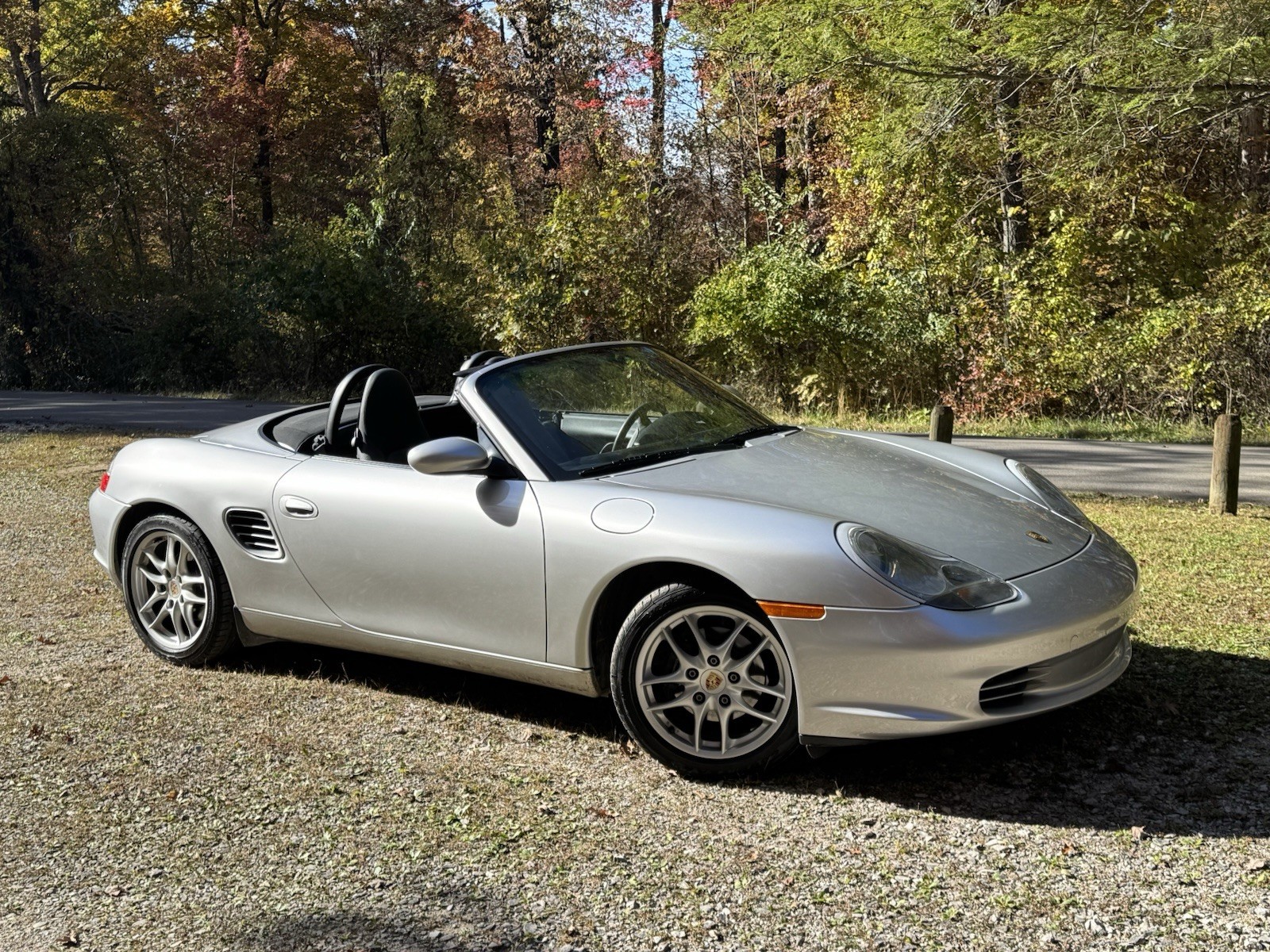 $8,700
Expand
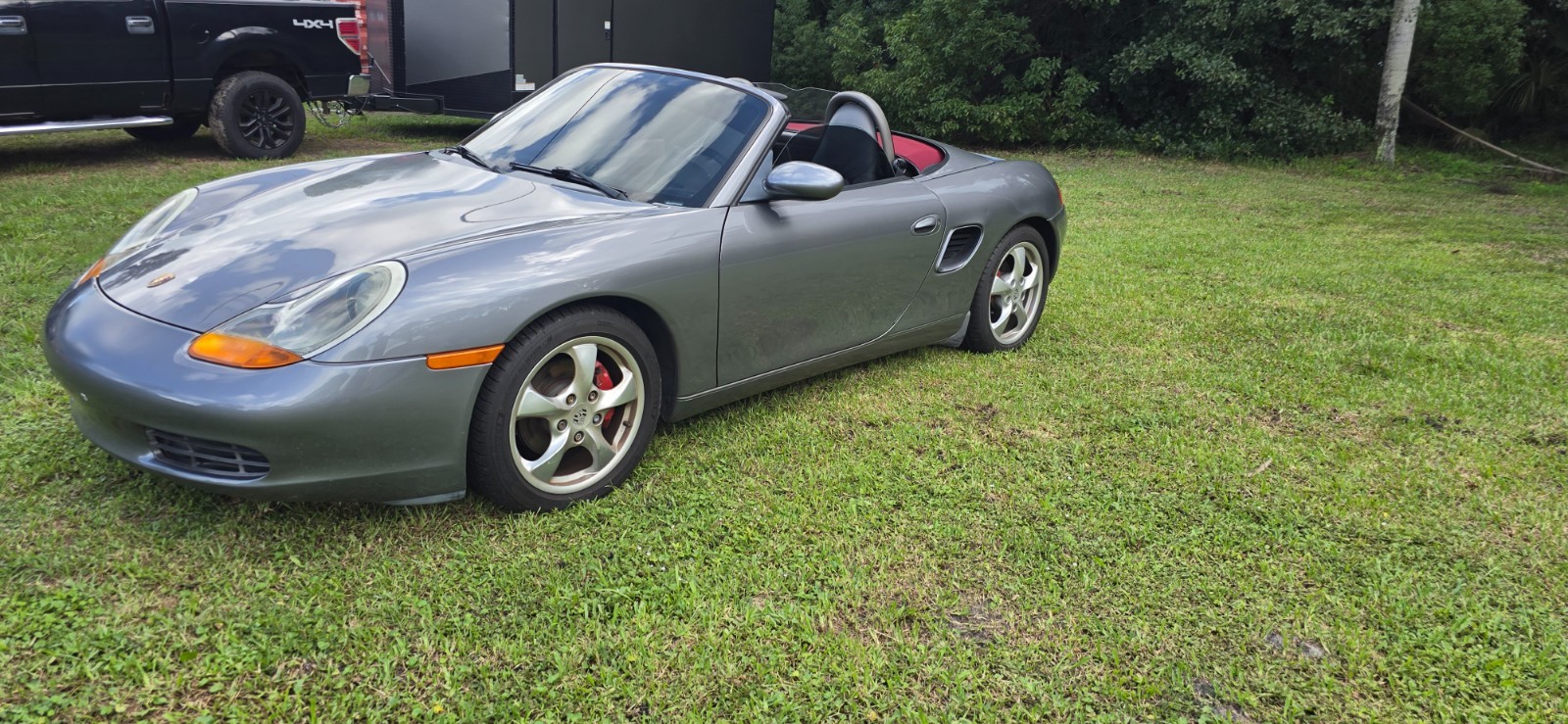 $10,500
Expand
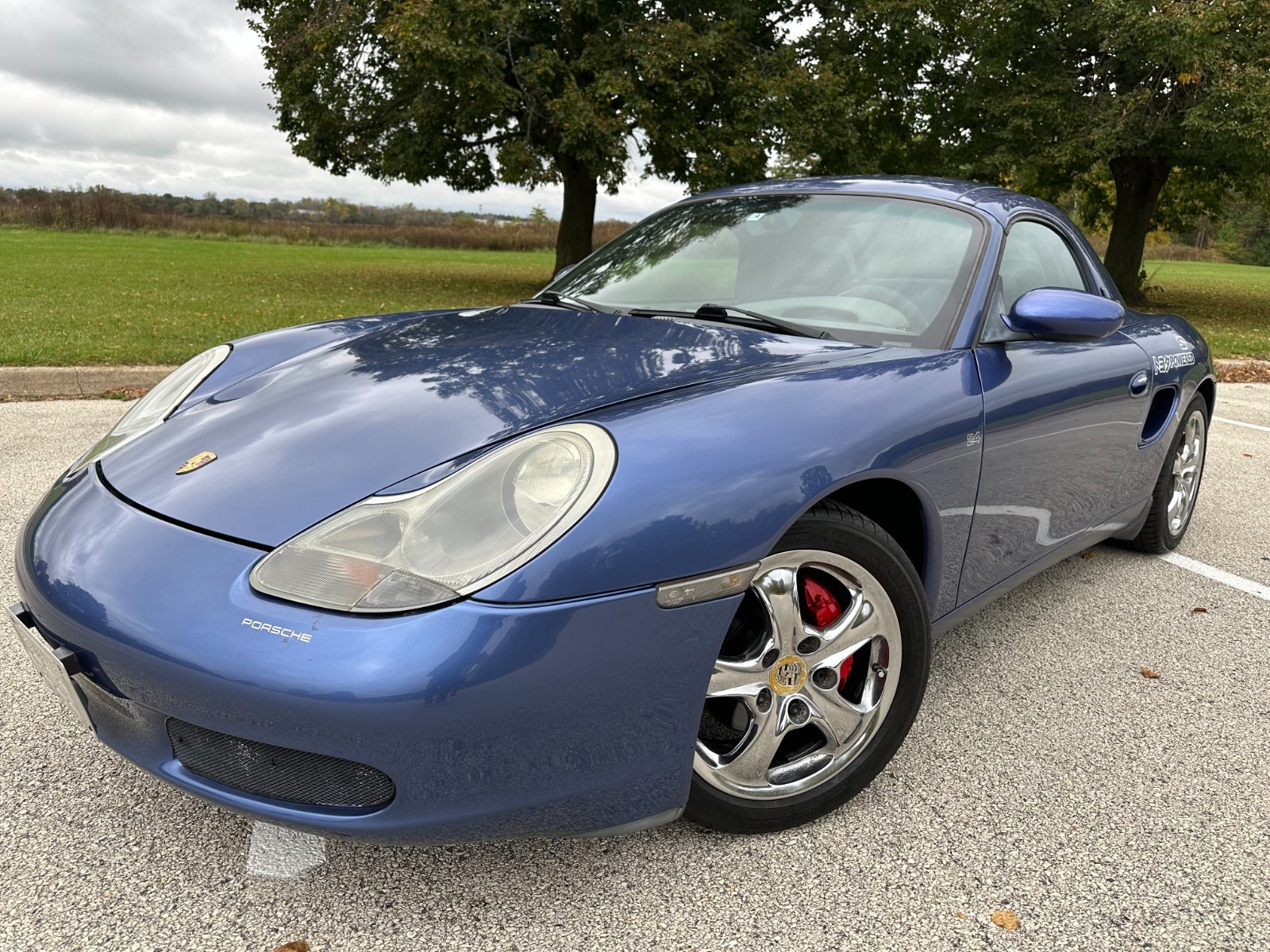 $9,900
Expand
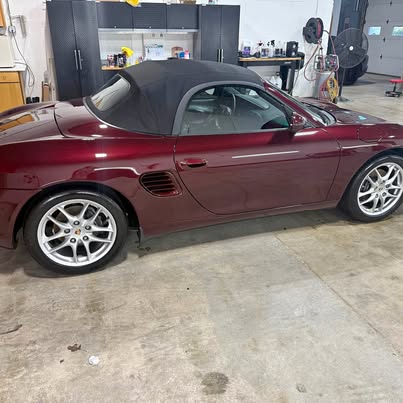 $20,000
Expand
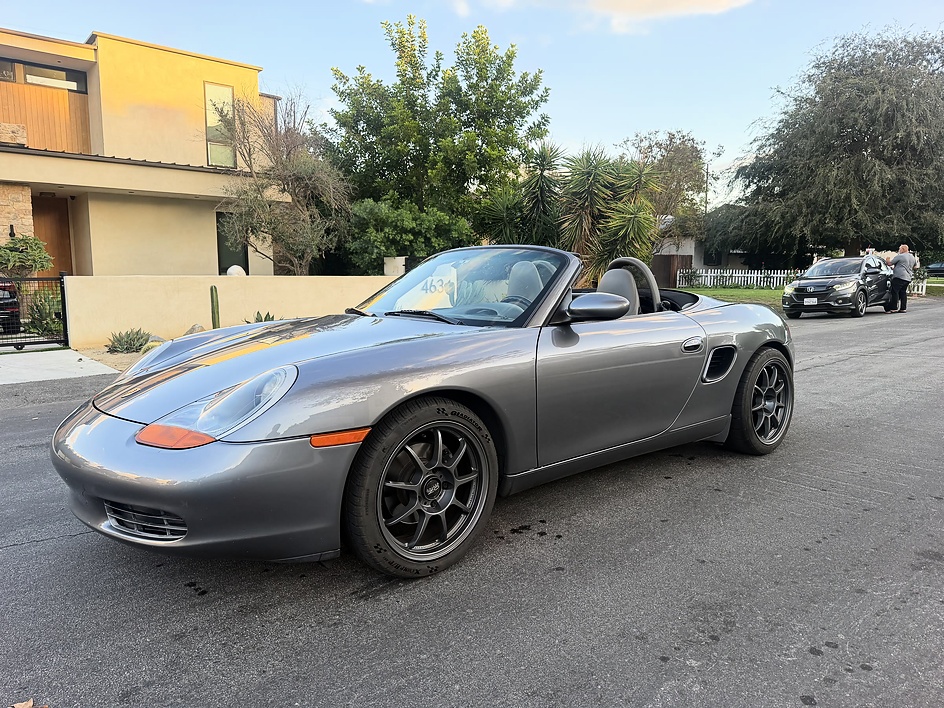
Expand
What they sell for: 986 Boxster sale prices.