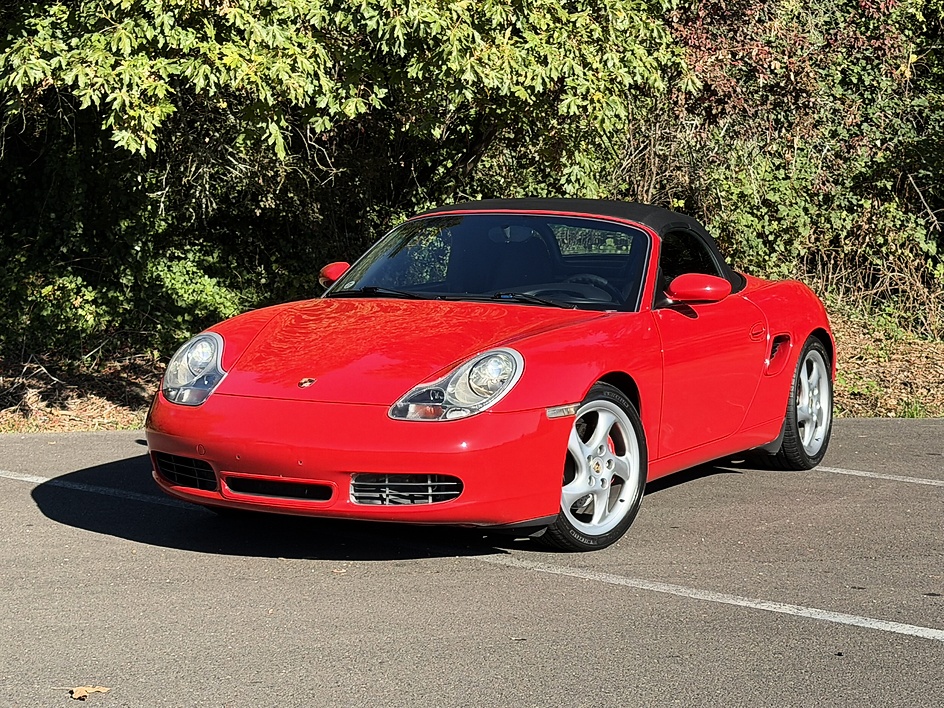
Porsche Boxster buyer's guide
Porsche Boxster (1997–2004) — Boxster, Boxster S: what's listed, and what they sell for.
Years: 1997–2004 · Models: Boxster, Boxster S
Overview and history
The Boxster is the car that saved Porsche, and it did so by being the purest Porsche of its era rather than the fastest. When it reached American showrooms for the 1997 model year, the company was emerging from a near-death early 1990s, the 911 was about to go water-cooled, and the front-engined 968 had just died. Into that uncertainty Porsche launched a mid-engined, two-seat roadster with its engine behind the seats and ahead of the rear axle, two luggage compartments, a power soft top, and a price that undercut the 911 by a wide margin. Critics expected a soft lifestyle car. What they got was the best-balanced chassis Porsche had ever sold, a flat-six that sang to 7,000 rpm, and steering feel that embarrassed cars costing twice as much. The Boxster did not just sell. It funded the Cayenne, the modern 911 programme, and the company's independence for the next two decades.
The concept had been shown at Detroit in 1993, styled under Harm Lagaay with clear debts to the 550 Spyder and the 718 RS 60 of the 1950s and 1960s — centre exhaust, low scuttle, speedster humps in spirit if not in the production body. The production car, internal code 986, shared its doors, front wings, headlamps and much of its interior with the 996-generation 911 that followed it a year later, a parts-sharing strategy that made the business case work. Underneath, though, the layout was its own: the water-cooled M96 flat-six mounted amidships, MacPherson struts at both ends in Porsche's tuned form, and a weight distribution close to 47 percent front and 53 percent rear that gives every Boxster its defining trait.
Four generations carry the name. The 986 runs from 1997 to 2004, first with a 2.5-litre engine, then with 2.7 and 3.2-litre versions and a significant facelift for 2003. The 987 runs from 2005 to 2012, sharper inside and out, and splits in two mechanically: the early cars carry developments of the M96 and M97 engine with the intermediate shaft bearing you must learn about, and the facelift cars from 2009 carry the completely redesigned MA1 engine that deletes that bearing entirely and adds direct injection and the PDK double-clutch gearbox. The 981 runs from 2013 to 2016, lighter, longer in the wheelbase, electrically steered, and topped by a 3.8-litre Spyder that is already a collector car.
That spread is what makes buying one interesting and buying one carelessly expensive. A Boxster can be a twenty-five-year-old 986 bought for project money, a dual-purpose 987.2 S that does school runs and track days, or a near-new 718 GTS 4.0 that costs more than a house deposit in most states. The badge is the same; the risks are not. The early six-cylinder cars carry one famous engine bearing, a set of age faults that are now entirely predictable, and soft tops and interiors that are a quarter-century old.
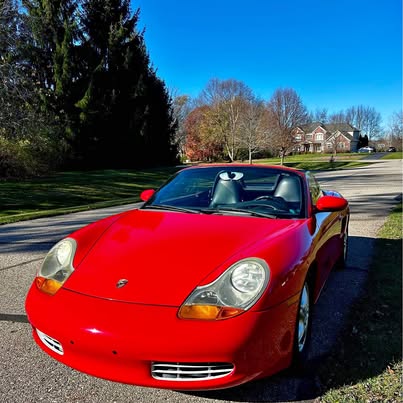
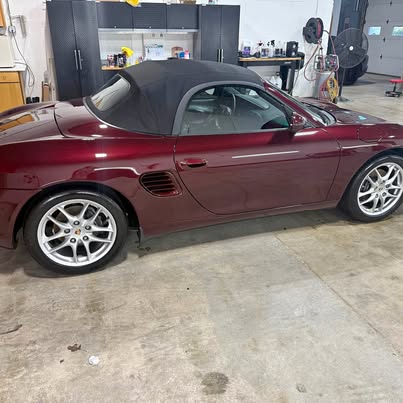
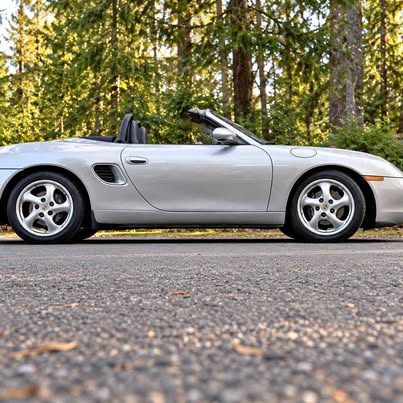
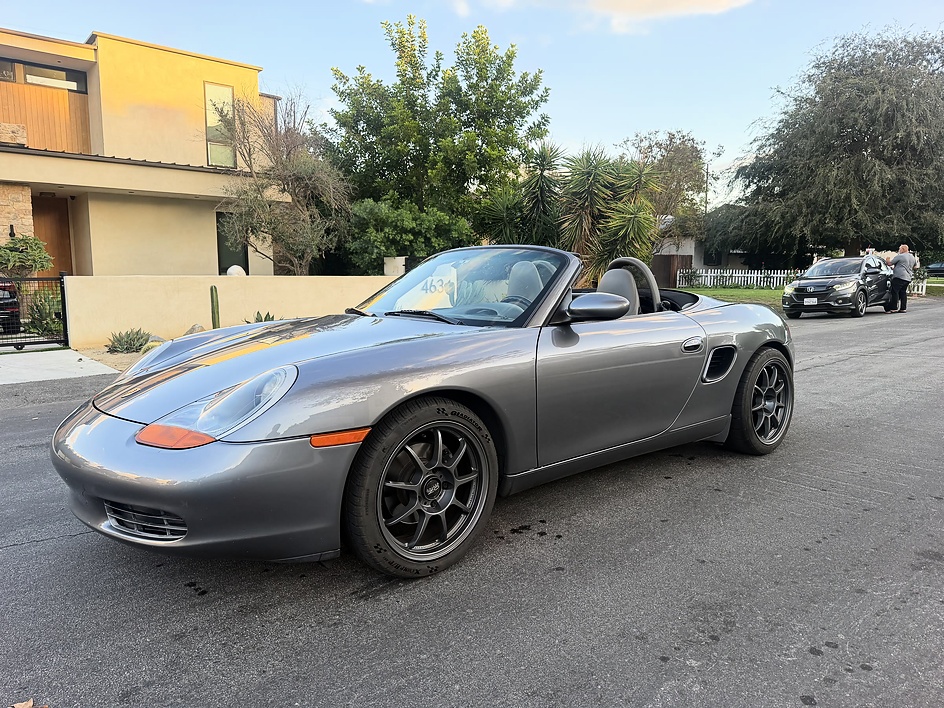
A note on what our own listings currently show, stated plainly so the rest of the guide sits in proportion. The cars in our pool at the time of writing are all early cars — first-generation 986s from 1997 to 2004, base models in the main with manual gearboxes in the majority, in silver, red, black and grey. That is not an accident of sampling. It is where the volume of the affordable used market actually is: the 986 is the Boxster most buyers meet first, because it is the one that has depreciated into reach.
The models
Every Boxster is a two-seat, mid-engined roadster with a power-operated fabric roof — there has never been a factory coupe Boxster; the coupe sister car is the Cayman, which arrives alongside the 987 generation and shares most of its mechanical life. Trim splits are simple by Porsche standards. There is the base car, the S with a larger engine and stronger running gear, periodic GTS versions that bundle the desirable options with a small power lift, and the Spyder specials, which trade roof convenience and equipment for lightness and, in the later cars, the biggest engines ever fitted to the name.
| Model | Years | Engine | Output | Built | Character |
|---|---|---|---|---|---|
| Boxster (986) | 1997–1999 | 2.5 flat-six (M96.20) | 201 hp | Part of about 165,000 986s in total | The original: sweet, modestly powered, now the cheapest way in |
| Boxster (986) | 2000–2002 | 2.7 flat-six (M96.22) | 217 hp | See above | More torque, e-gas throttle, the better early base car |
| Boxster (986 facelift) | 2003–2004 | 2.7 flat-six | 228 hp | See above | Glass rear window, revised lamps, the sorted 986 base |
| Boxster S (986) | 2000–2002 | 3.2 flat-six (M96.21) | 250 hp | See above | Six-speed manual, bigger brakes, the performance 986 |
| Boxster S (986 facelift) | 2003–2004 | 3.2 flat-six | 258 hp | See above | The last and best-developed 986 S |
| Boxster (987) | 2005–2008 | 2.7 flat-six | 240–245 hp | Part of about 80,000 987s | Sharper cabin, variable-ratio steering |
| Boxster S (987.1) | 2005–2008 | 3.2, then 3.4 flat-six | 280, then 295 hp | See above | The 3.4 is fast and carries the bore-score question |
| Boxster (987.2) | 2009–2012 | 2.9 flat-six (MA1) | 255 hp | See above | No intermediate shaft, direct injection, PDK option |
| Boxster S (987.2) | 2009–2012 | 3.4 flat-six DFI (MA1) | 310 hp | See above | The engine the 987 should always have had |
| Boxster Spyder (987) | 2011–2012 | 3.4 flat-six | 320 hp | Low volume, about 1,400 worldwide | Manual lightweight roof, the driver's 987 |
| Boxster (981) | 2013–2016 | 2.7 flat-six DFI | 265 hp | Not published by variant | Electric steering, longer wheelbase, high quality feel |
| Boxster S (981) | 2013–2016 | 3.4 flat-six DFI | 315 hp | Not published by variant | The mainstream performance 981 |
| Boxster GTS (981) | 2015–2016 | 3.4 flat-six DFI | 330 hp | Low volume | The bundled-options sweet spot |
| Boxster Spyder (981) | 2016 | 3.8 flat-six | 375 hp | Low volume, under 2,500 worldwide | 911 Carrera S engine, manual only, collectible |
| 718 Boxster | 2017 onward | 2.0 turbo flat-four | 300 hp | Current-era production | Faster than the six it replaced, different voice |
| 718 Boxster S | 2017 onward | 2.5 turbo flat-four | 350 hp | Current-era production | Variable-geometry turbo, serious pace |
| 718 Boxster GTS 4.0 | 2020 onward | 4.0 flat-six | 394 hp | Current-era production | The six returns; the connoisseur's modern Boxster |
| 718 Boxster Spyder | 2020–2023 | 4.0 flat-six | 414 hp | Limited run | Cayman GT4 mechanicals under a roadster body |
| 718 Spyder RS | 2024 onward | 4.0 flat-six (GT4 RS engine) | 493 hp | Limited run | GT3-derived engine, the end-of-line extreme |
Outputs are period figures for US-market cars where they differ from European ratings. Treat any single-number production claim for an ordinary variant with suspicion; the totals that matter for buying are survival and specification, not rarity by spreadsheet.
The 986 (1997–2004). The original, and the car our current listings hold. The launch car has a 2.5-litre engine making 201 hp, a five-speed manual or five-speed Tiptronic S automatic, a plastic rear window in the roof, and an interior shared with the early 996 that ages in specific, known ways. For 2000 the range matures: the base car grows to 2.7 litres and 217 hp with an electronic throttle, and the Boxster S arrives with a 3.2-litre engine, 250 hp, a six-speed manual, larger brakes with red calipers, twin centre exhaust outlets and a third, central radiator. The 2003 facelift is the one to learn by sight: clear-lens lamps, revised bumpers, a glass rear window with a demister in place of the plastic screen, and small power lifts to 228 hp and 258 hp. A 550 Spyder 50th Anniversary edition closes the run for 2004.
The 987 (2005–2012). A heavier redesign than the styling suggests: only about one fifth of the parts carry over, the interior takes a decisive step up in material quality, steering becomes variable-ratio, and side airbags and stability management broaden the safety net. The 987.1 base car uses a 2.7 making 240 hp, rising to 245 hp with variable valve timing for 2007, when the S moves from a 3.2 of 280 hp to the 3.4 of 295 hp shared with the new Cayman S. Limited editions — the RS 60 Spyder and the Porsche Design Edition cars among them — are trim exercises over the same mechanicals and should be priced as such. The 2009 facelift, the 987.2, is the mechanical watershed of the whole Boxster story: new MA1 engines with direct injection on the S, no intermediate shaft at all, revised styling with LED lamps, and the seven-speed PDK double-clutch gearbox replacing Tiptronic.
The 981 (2013–2016). Longer, lower and more deliberately styled, with a wheelbase stretched by about two and a half inches, tracks widened, and a structure that mixes aluminium with steel to hold weight down even as equipment grows. The base engine shrinks to 2.7 litres but gains direct injection and 265 hp; the S keeps a 3.4, now making 315 hp; the GTS of 2015 adds 15 hp, the sport chassis and the desirable options as standard. Electric power steering arrives and with it the one lasting dynamic criticism of the generation — accuracy without the 987's textured feedback. The 2016 Spyder answers the collectors directly: the 3.8-litre engine from the 911 Carrera S, 375 hp, a manual gearbox only, a part-manual roof, and a specification close enough to the Cayman GT4 to make the pair a matched set.
The 718 (2017 onward). The 982 generation takes the 718 name and a turbocharged flat-four: 2.0 litres and 300 hp in the base car, 2.5 litres and 350 hp with a variable-geometry turbocharger in the S, and a GTS that begins at 365 hp in four-cylinder form. Objectively these are the fastest mainstream Boxsters yet, with torque the sixes never had at road speeds. Subjectively the four's flat, hard note divided the market from the first road test, and Porsche's own response tells you how the argument ended: for 2020 the GTS becomes the GTS 4.0, with a detuned version of the 4.0-litre six from the GT4 making 394 hp, joined by a Spyder at 414 hp and, for 2024, the Spyder RS, which fits the 493 hp GT4 RS engine — itself derived from the GT3 unit — behind the seats of an open car with a lightweight single-layer roof.
One naming trap runs through the whole range and our own listings illustrate it. Sellers and listing systems routinely attach the wrong generation name to early cars — a 1998 car described with 718 in its title is a 986 wearing a label from twenty years in its future, and a base car described as a turbo is a car with no turbocharger anywhere on it, because no 986 or 987 left the factory with one. Never shop by title text.
Engines and gearboxes
Three engine architectures carry the Boxster's whole life, and learning which one a car has matters more than learning its trim level, because the architecture decides the risk profile. The M96 and its M97 development power the 986 and the early 987: brilliant, rev-happy, and built around an intermediate shaft whose bearing is the most discussed component in modern Porsche ownership. The MA1, the so-called 9A1 family, powers the 987.2 and 981: it deletes the intermediate shaft, changes the oiling and crankcase design, and is the engine that lets you stop having the bearing conversation. The late cars split two ways — a turbocharged flat-four for the mainstream 718, and a high-revving 4.0-litre six, derived from the 911 GT3 line by way of the GT4, for the specials.
The M96 and M97: 2.5, 2.7, 3.2 and 3.4 (1997–2008)
The M96 is a water-cooled, all-alloy flat-six with four valves per cylinder, double overhead camshafts per bank, dry-sump-style scavenging in an integrated wet-sump arrangement, and VarioCam variable intake valve timing on the later versions. In the Boxster it appears as the 2.5-litre M96.20 of the launch car at 201 hp, the 2.7 M96.22 and its successors at 217 and then 228 hp, and the 3.2 M96.21 of the S at 250 and then 258 hp. The 987 continues the family as the M97: a 2.7 at 240 and then 245 hp, an S 3.2 at 280 hp for two years, and from 2007 the 3.4 at 295 hp that also powers the Cayman S. All of them share a character owners love: modest torque low down, a cam-timing change you can hear and feel in the mid-range, and a top end that rewards using every rev to the 7,000 rpm region redline.
Service rhythm is conventional and non-negotiable. Oil and filter annually or every 10,000 to 12,000 miles in modern use regardless of the longer period schedules, because these engines are now old and oil is their bearing protection as much as their lubricant; spark plugs on a four-year cycle; the polyrib belt, coolant and brake fluid on their schedules; and an air-oil separator, water pump and thermostat treated as mid-life consumables rather than lifetime parts, as the problem areas section details. A major service at a good independent specialist typically runs about 600 to 1,100 dollars depending on plugs and ancillary work, and a car whose history shows that rhythm, year after year, is telling you the most important thing about itself before you ever start it.
Two design facts shape everything else in this guide, so learn them here. First, the intermediate shaft. The M96 and M97 drive their camshafts partly through a shaft running the length of the crankcase, supported at its rear by a sealed ball bearing that lives in engine oil splash but is not pressure-fed. That bearing — the IMS bearing — exists in three forms: a dual-row bearing on cars built roughly through 1999, a smaller single-row bearing from about 2000 to 2005 which carries the highest recorded failure rate, and a larger single-row bearing from about 2006 to 2008 which cannot be replaced without splitting the crankcase. When the bearing fails, it can take the engine with it.
The MA1: 2.9, 3.4 and 3.8 direct-injection sixes (2009–2016)
The MA1 family that arrives with the 987.2 is a redesign in the areas that matter. There is no intermediate shaft: the camshafts are chain-driven directly, and the IMS conversation simply ends. The crankcase and oiling are reworked, a proper dry sump philosophy returns in scavenging terms, and the S engine gains direct fuel injection, which is why the 987.2 S makes 310 hp from the same 3.4 litres that made 295 hp in port-injected form, while using less fuel. The base 987.2 uses a 2.9-litre port-injected version at 255 hp — note that the base car is not direct-injected, a detail sellers blur and a useful check on how carefully a description was written.
The 718 split: turbo flat-four and 4.0-litre six (2017 onward)
The 718's mainstream engine is a turbocharged flat-four, all-alloy, direct-injected, with a single turbocharger — a conventional unit on the 2.0-litre base engine at 300 hp, and a variable-geometry unit, technology Porsche had previously reserved for the 911 Turbo, on the 2.5-litre S at 350 hp. The torque figures are the story: the four makes its peak twist lower and holds it longer than any six-cylinder Boxster below the specials, so a base 718 is genuinely quick in ordinary driving, not just on a timed run.
The six-cylinder answer arrives for 2020. The 4.0-litre engine in the GTS 4.0 at 394 hp and the Spyder and GT4 at 414 hp is a bored, naturally aspirated development of the 911's turbocharged 3.0 architecture, built to rev to about 8,000 rpm and fitted, in the Spyder RS, in its 493 hp GT4 RS form with individual throttle response and a 9,000 rpm ceiling. These engines have no IMS story, no turbo story and no direct-injection carbon reputation of consequence so far; their ownership questions are the ordinary expensive-car ones of warranty status, over-rev history on manual cars, and options specification.
Gearboxes: manual, Tiptronic and PDK
The manual is the default enthusiast choice on every generation, and the range divides cleanly. Base 986 and 987 cars use a five-speed; the S cars and all later performance variants use a six-speed; the 981 and 718 keep the six-speed as the manual option, with ratios and shift quality that stay at or near the top of the class throughout. Porsche shift feel is precise, slightly mechanical and intolerant of rushed, cold second-gear changes on high-mileage early cars, where a worn synchromesh shows itself exactly there. Clutch life varies with use more than with mileage — a city Tiptronic-era car tells you nothing about a manual's clutch — and a clutch replacement on an early car, typically about 1,200 to 2,000 dollars fitted at a specialist, is also the moment when the IMS bearing on a serviceable car and the rear main seal are addressed for little extra labour, a bundling point the problem areas section returns to.
The five-speed Tiptronic S automatic fitted to 986 and 987.1 cars is a conventional torque-converter automatic with steering-wheel shift buttons and adaptive shift logic. It suits the base cars better than folklore admits, it is generally durable when its fluid and filter have been changed despite period sealed-for-life claims — budget about 350 to 600 dollars for that service — and it fails expensively when it has been ignored, with a rebuild comfortably into four figures and beyond. There are more Tiptronic cars than manual purists want, which makes them the value route into a sound shell, particularly in 986 form. Drive one properly before dismissing it: a healthy Tiptronic in a well-kept 2.7 is a better purchase than a tired manual in a neglected S.
From 2009 the PDK seven-speed double-clutch gearbox replaces the automatic option, and it is a different order of device: two wet clutches, near-instant shifts, a proper launch character, and, in traffic, manners close enough to an automatic that many owners never miss the torque converter. PDK cars are quicker than their manual equivalents and hold value strongly. Their ownership terms are discipline and fluids — clutch and gearbox oil services on schedule, typically about 500 to 900 dollars for the combined fluid work at a specialist — and their fault behaviour is electronic as much as mechanical: mechatronic and sensor faults announce themselves with warning messages and limp behaviour rather than with noises, and they need Porsche-level diagnostic equipment, not guesswork. A PDK car with a gearbox warning in its history that was cleared and never diagnosed is not a cheap car.
Problem areas
A Boxster rarely rusts to death and rarely wears out its suspension into danger the way an older classic does. What it does instead is concentrate its risk in a short, well-mapped list: one engine bearing on the early sixes, cylinder bores on one specific engine, a cooling system with a lot of plastic in it, a roof mechanism with motors, cables and drains, water that gets into places Porsche never intended, and twenty-five years of deferred maintenance on the cheap cars. Work through the systems in this order — engine internals first, then cooling, then roof and water, then chassis and electrics — and you will find the expensive problems before the cosmetic ones distract you.
The engine: IMS bearing, rear main seal and bore scoring
Start with the intermediate shaft bearing, because every M96 and M97 conversation starts there whether it needs to or not. The facts, stripped of forum heat. The bearing is a sealed ball bearing at the rear of the intermediate shaft. Its seals age, engine oil washes past them, the grease that was supposed to last the bearing's life is displaced, and the bearing runs dry, wears, and in the worst case disintegrates, distributing metal through the engine and sometimes allowing the shaft to move enough to destroy valve timing. The single-row bearing fitted to most cars from about the 2000 to the 2005 model years carries the highest recorded failure rate, commonly quoted in the region of several percent of engines over their lives — not a certainty, not a rarity either. The dual-row bearing on the earliest cars fails less often. The larger bearing on roughly 2006 to 2008 cars fails least of the three and cannot be renewed without splitting the case, which in practice means it is monitored rather than replaced.
The rear main seal is the bearing's neighbour and its innocent bystander. The crankshaft seal at the back of the engine weeps on a large proportion of M96 and M97 cars, leaving oil at the junction between engine and gearbox. A light misting is cosmetic. Drips on the ground, oil on the clutch, or a seal that has been replaced repeatedly point deeper — repeated seal failure can indicate crankcase or shaft issues that a new seal alone will not cure, and it is one more reason the clutch-off inspection matters: with the gearbox removed, a competent specialist can assess seal, bearing and clutch in one look, which is exactly why those jobs are bundled in practice.
Bore scoring is the second engine fault, and it belongs chiefly to one engine: the 3.4-litre M97 in the 987.1 Boxster S and Cayman S, with the 3.2 and other M96 and M97 variants affected far less often. The mechanism is a breakdown between piston skirt coating and the Lokasil bore surface, usually worst on the bank whose pistons thrust hardest, progressing from polished vertical scoring marks to material transfer, rising oil consumption, a ticking or knocking at cold idle that owners compare to a diesel, sooty exhaust tips on one side, and eventually misfires and compression loss. Heat and duty cycle feed it — cars that idle long, run short trips, or have cooling faults live harder bore lives — which is why a cooling-system history is part of a bore conversation. The only reliable test is a borescope inspection through the spark plug holes, ideally from below with the sump removed for a full view, carried out by someone who has seen scored and healthy bores and can tell them apart; budget about 300 to 600 dollars for that inspection inside a proper pre-purchase examination, and treat it as mandatory on a 3.4 M97 at any mileage. A scored engine is a rebuild conversation in the region of 12,000 to 20,000 dollars for a proper job with steel liners or a replacement short engine, so there is no version of skipping the test that saves money.
Smaller engine faults fill the rest of the picture, and most are honest wear. The air-oil separator fails with age and announces itself theatrically: clouds of white-blue smoke on start-up or under deceleration, a howling or whistling from the engine bay, and a filler cap that is hard to remove against vacuum at idle. The part is cheap, access is not, and the job typically runs about 500 to 900 dollars fitted. Ignore it and oil is drawn into the intake in quantities that foul plugs and stress catalysts. Coil packs crack with heat cycles and cause rain- and heat-sensitive misfires; a set is a few hundred dollars and often due with plugs. Spark plug tubes leak oil into the plug wells on early cars. The oil filler tube and its bellows split and cause vacuum leaks and idle faults that get misdiagnosed as engine management problems.
Cooling, radiators and the plastic problem
A mid-engined car lives or dies by its cooling system, and the Boxster's is generous in capacity and vulnerable in materials. Two radiators sit in the front corners — three on the S, which adds a centre radiator — fed by ducts in the front bumper, with air conditioning condensers sandwiched ahead of them. Those ducts collect leaves, gravel and road debris against the condenser faces, the trapped damp corrodes the condensers and then the radiators, and the first symptom is often an air conditioning failure or a slow coolant loss rather than an overheat. Look into the front ducts with a torch on every car: a clean duct with mesh retrofitted is a cared-for car; a compost heap is a bill arriving, with radiators and condensers typically running about 400 to 800 dollars a side in parts before labour.
The coolant expansion tank in the rear luggage compartment is the family's known plastic failure: it yellows, crazes and cracks, weeping coolant under pressure and eventually splitting, and its cap is a service item in its own right whose part number has been superseded several times — an old cap that no longer holds pressure causes coolant loss that owners chase through the whole system. A tank replacement typically runs about 350 to 650 dollars fitted. Water pumps wear their bearings and weep from the tell-tale hole; thermostats stick; both are mid-life jobs in the 600 to 1,100 dollar region with coolant, and both are frequently done together. The discipline point is simple: these engines tolerate no overheating.
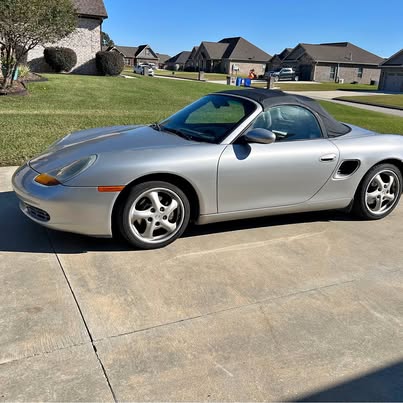
Roof, body and water management
The Boxster does not rust like a 1960s roadster — the shell is galvanised and structural corrosion is rare — but it manages water in complicated ways, and water is this car's slow enemy. Start with the roof. The 986 and 987 power top runs on an electric motor driving cables and two transmissions, with push rods ending in plastic ball joints that snap with age, microswitches that tell the control unit where the top is, and a clamshell cover that must move in sequence. Failure presents as a top that stops mid-cycle, moves unevenly side to side, or flashes its warning lamp and refuses. Individual push rods and ball joints are cheap parts; transmissions and motors are not, and a full mechanism overhaul can run from about 500 dollars for rods and adjustment to 2,500 dollars and beyond for transmissions and motors.
Drains decide whether the electrics live. Rain water that enters the roof well and the front compartment is supposed to leave through drain tubes; when they block with leaf debris, water pools in the rear roof compartment and, far worse, under the seats, where the alarm and immobiliser control unit sits beneath the left seat on early cars. A flooded control unit presents as a car with possessed electrics — locks cycling, windows dropping, alarms sounding, a no-start with no mechanical cause — and replacement and reprogramming runs well into four figures. Lift the carpets and feel for damp on every car, check under both seats, and ask when the drains were last cleared; it is a ten-minute service task that separates careful owners from the rest. Door membranes fail the same way at smaller scale: the sealing membrane behind each door card perishes, rain that enters past the window seal runs into the cabin instead of out of the door drains, and the footwell carpets wet from below.
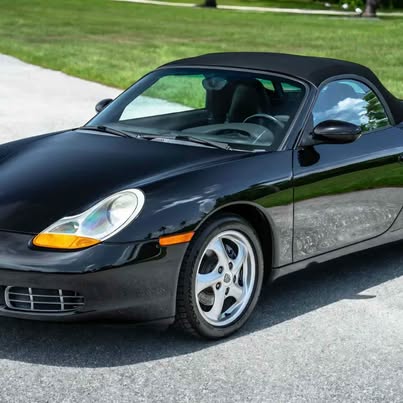
Chassis, brakes, steering and electrics
The chassis is MacPherson struts all round with aluminium control arms whose ball joints and bushes are not separately replaceable in the way an older car's were: when a coffin arm — the lower control arm whose shape gives it the name — creaks over speed bumps or its ball joint wears, the arm is renewed complete, typically about 300 to 550 dollars a corner fitted, and the front arms and the tuning-fork links that locate them are a matched mid-life story on any car past about 80,000 miles. The test is sound and feel: creaks and groans at parking speeds over bumps, a knock over sharp edges, and uneven front tyre wear that says the geometry has been compensating for worn joints. Wheel bearings hum and are routinely misdiagnosed as tyre noise; a hum that changes with steering load at speed is a bearing until proven otherwise.
Brakes are strong and honest. Discs wear in step with pads, the S cars' larger brakes cost more in proportion, and the real enemies are age items: flexible hoses perishing, caliper pistons sticking on cars that sit, and handbrake shoes inside the rear discs that are never inspected until they fail a test. A car that has sat for a year needs its brakes recommissioned, not just driven harder, and a judder under braking on a stored car is corrosion on the disc faces as often as it is warping. Steering on the hydraulic cars — everything before the 981 — should be light, precise and free of pump whine at full lock; whine plus heavy spots is a pump or low-fluid story, and fluid that is black is a system that has never been serviced.
Electrics and interior wear close the list. The ignition switch — a part shared with contemporary Audis — fails progressively: accessories flicker, the key feels vague, the starter engages reluctantly, and eventually the car will not crank; the switch itself is an inexpensive part and a known fix, and a seller blaming a battery for those symptoms is describing a switch. Window regulators and door microswitches govern the drop-glass choreography the roof depends on: a window that does not drop when the handle is pulled, or a roof that will not operate because the car thinks a window is up, is usually a microswitch or regulator, each a few hundred dollars fitted, not a roof catastrophe — but it must be diagnosed as such, because roof faults get quoted at roof prices by people who have not tested the switches. Seat bolsters wear, the early 996-shared interior plastics go sticky and mark, airbag and seat-belt warning lights trace to underseat connectors disturbed by water or by seat removal, and the instrument cluster's pixels and backlighting age on early cars.
How to inspect one
Inspect a Boxster in a fixed order: paperwork first, cold engine second, everything the engine's temperature would hide before you ever turn the key. A seller who will not allow a cold start, a lift inspection or a borescope on a car whose engine demands one has given you the inspection result already. Take a torch, a paint-depth gauge if you have one, a cloth for the dipstick and oil cap, and this list. The steps cross-refer to the problem areas section deliberately — that section explains the mechanisms; this one gives you the order of work.
- Start with the paperwork, not the car. Read the service history as a timeline: annual oil services, brake fluid changes, and invoices that name parts — IMS bearing, clutch, air-oil separator, water pump, expansion tank, roof push rods — rather than stamps alone. Check the VIN plate in the windscreen base and the options sticker under the front trunk lid against the car in front of you: engine size, gearbox type and factory options all live there, and the sticker settles arguments about what the car was born as. Confirm the title is clean and in the seller's name; a mid-engined Porsche with a branded title needs a discount that reflects resale reality, not the seller's feelings.
- Check identity against the generation tells. Year, engine and badge must agree: a pre-2000 car cannot be an S, a car badged 718 with 1990s paperwork is a mislabelled 986, and no early car has a turbocharger whatever the listing title says. Look for the facelift tells on a claimed 2003 or 2004 986 — clear-lens lamps and a glass rear window — and for the centre radiator and twin exhaust outlets that mark a genuine 986 S.
- Do the cold start, and listen before you look. The car must be stone cold; a pre-warmed engine is a hidden answer. A healthy flat-six fires cleanly, settles to a steady idle within seconds, and makes no rattle that persists beyond the instant of oil pressure arriving. A lasting timing-chain rattle, a deep knock, or clouds of blue-white smoke that do not clear point back to the engine section's suspects — timing drive wear, bore or separator trouble. A puff of smoke on a car that has sat for weeks can be oil settled in the cylinders of a flat engine and clears in seconds; smoke that continues is a different verdict.
- Read the oil before the test drive, not after. Pull the dipstick or check the electronic level as the generation allows, and look at level and colour: low oil in an engine whose VarioCam and bearing health depend on it is a maintenance summary in one glance. Remove the oil filler cap and look for mayonnaise-style emulsion — a little on a short-trip winter car can be condensation, heavy emulsion is a conversation — and, on any M96 or M97 car, ask when the filter was last cut open and what was in it. Metallic debris in a filter is the IMS bearing's calling card from the problem areas section.
- Interrogate the cooling system cold. Look into both front bumper ducts with a torch: debris packed against the condensers is the single most predictive cosmetic sight on the car. Check coolant level in the expansion tank in the rear trunk, look at the tank itself for yellowing, crazing and tide marks, check the cap is the current superseded part, and look under the car for the pink crust of dried coolant at hose junctions. A car that needs coolant, or whose seller tops it up as a habit, is a car with a leak you are being asked to fund.
- Work the roof through two full cycles, standing outside. Watch for even movement side to side, listen for straining cables and slipping transmissions, and check the clamshell sits flush and the warning lamp goes out. On a pre-2003 986, examine the plastic rear window for cracks and clouding and ask the seller to show you the fold; on every car, inspect the fabric at its fold points against the light. Then feel the carpets, lift them where you can, and check under both seats for damp — the flooded control unit test from the problem areas section costs you thirty seconds here and saves four figures later.
- Test every electrical promise the roof and doors make. Pull each door handle and watch the glass drop; operate both windows fully; check the ignition switch feel for vagueness and flicker; run the air conditioning and confirm genuinely cold air at the vents, not cool-ish air with a story attached. Operate the spoiler manually where the control allows, check both luggage compartment releases, and confirm two working keys — a replacement Porsche key with programming is not a trivial purchase.
- Drive it long enough to get everything hot — at least thirty minutes. Use the full rev range once the oil is warm: the car should pull cleanly through the VarioCam change, with no misfire, hesitation or warning lamp. Feel for the bore-score and bearing symptoms from the engine section under real load, and listen at idle afterwards, hot, for ticks that were not there cold. A 3.4 M97 car that ticks hot and uses oil is telling you its borescope result in advance.
- Test the gearbox as its own purchase. Manual: every gear, up and down, at speed and at crawl, feeling for the cold second-gear reluctance that is common and the crunching synchromesh that is wear; check the clutch bite point and for slip under a high-gear, low-rev pull. Tiptronic: confirm clean shifts, no flare between gears, and prompt engagement of drive and reverse. PDK: confirm clean take-up from rest, no judder in slow manoeuvring, and no gearbox message in the cluster at any point — a message that appears and clears is a fault recorded, and the car's memory will hold it for the inspection in step 12.
- Assess chassis and brakes on a road with bumps, not just a highway. Listen for the coffin-arm creaks and knocks from the chassis section at parking speeds over speed bumps, feel for wheel-bearing hum that changes as you load the steering at speed, and brake firmly from speed twice: the car should stop straight, without judder, with a firm pedal that stays firm. Check tyre brands, ages and wear pattern — mismatched old tyres on a car sold as cherished is a sentence the seller wrote themselves.
- Get it on a lift. This step is not optional on any generation. From underneath you can see what no driveway inspection reveals: rear main seal oil at the engine-gearbox junction, coolant and oil leaks at their sources rather than their drip points, the condition of hoses, brake pipes and the undertrays that hide them, exhaust manifold fixings, CV boots, damper bodies and the floors of both luggage compartments from below. Ask for the undertrays to be removed; what is under them is the car you are actually buying.
- Commission the generation-specific test. On a 986 or 987.1: the IMS evidence review, and on a 3.4 M97, a borescope of the bores by a specialist who knows scored from healthy — the test the problem areas section calls mandatory. On a 987.2 or 981: a diagnostic read for fault codes, over-rev ranges on manual cars, and PDK service evidence where fitted. On a 718: the same diagnostic discipline, plus warranty and recall status. A proper pre-purchase inspection at a Porsche specialist, including the relevant one of these, typically runs about 250 to 500 dollars, and it is the best money in the entire purchase.
- Price the car you inspected, not the car in the advertisement. List every fault you found with its job cost from the earlier sections — bearing and clutch bundle, condensers, roof work, dampers, tyres, the service that is due — and total them honestly. A car that needs the list is not necessarily the wrong car; it is the wrong car at the asking figure. The sellers worth buying from recognise their own list when you show it to them.
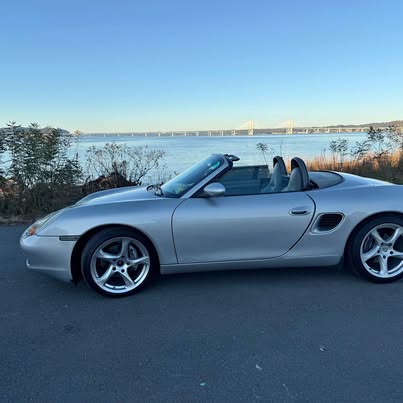
Values
The build of this page appends the current market figures — what is listed now and what recorded sales show — directly beneath this guide, and those numbers move with the market in a way a written section cannot. So read them there, and use this section for what does not move: how the Boxster market is structured, what actually drives a price up or down, and how to tell an asking figure that reflects a car from one that reflects a seller's optimism.
The first structural fact is the generation staircase. Each generation sits in its own price band with its own buyer, and the bands overlap only at their edges — the very best 986 S money buys an ordinary early 987, the best 987.2 money reaches a leggy 981, and so on upward. That overlap is where the interesting buying happens, because it forces the honest question: do you want the best example of the older car, or an average example of the newer one? On a Boxster the answer is usually the best example of the older car, because condition spread within a generation is enormous — wider than the spread between generations. Two 986s of the same year and mileage can be a full condition class apart: one with a documented bearing, clutch, cooling refresh and roof overhaul, the other with none of those and a shiny detail.
Within a generation, the premiums are consistent and explicable. The S premium over the base car is real but modest on the 986, where the base car's charm survives intact, and firmer on the 987 and 981, where the S engine is the one most buyers picture. The manual premium is the market's clearest signal: as the cars have become enthusiast purchases rather than daily transport, a manual gearbox has moved from a preference to a pricing factor, and a Tiptronic car must be bought at a figure that respects how much smaller its resale audience is.
Condition language needs translating. Original paint, full history and low owners are worth money in that order of verifiability — paint can be measured, history can be read, owner counts can be checked. Low mileage is the most abused claim in the Boxster market: a 40,000-mile car that has sat for five years needs its brakes, tyres, cooling plastics, roof seals and fluids recommissioning throughout, and a flat engine that has done short cold trips can wear its bores and its bearing seals faster than a car driven properly to twice the mileage. The recorded-sales figures beneath this guide will show you what the market actually paid, as opposed to what it asked; the persistent gap between ambitious asking figures and achieved prices on ordinary cars is the negotiation reality of this market.
Parts and ownership
Boxster ownership is specialist-shaped rather than expensive in the abstract, and the distinction matters. Parts supply for the 986 and 987 is excellent: Porsche still supports the cars, the independent parts network is deep on both sides of the Atlantic, and almost everything mechanical — bearing kits, separators, water pumps, suspension arms, roof components — is available off the shelf at prices that sit between mainstream and 911 money. The 981 and 718 are still in the modern support window, where the constraint is not availability but the price of electronic modules and the diagnostic access needed to fit them. What is genuinely scarce, on the early cars, is trim: interior plastics in the less common colours, roof compartment trim, lamp units in the early amber-lens pattern, and small fittings that were shared with the early 996 and are hunted by owners of both cars.
The servicing map is simple. A marque specialist with Porsche diagnostic equipment — the factory PIWIS system or a professional equivalent — can do everything these cars need, including PDK work, roof calibration and control-unit coding, and will typically charge meaningfully less per hour than a main dealer while knowing the early cars better. Budget an annual service in the region of 300 to 600 dollars for an oil service with inspection, a major service at 700 to 1,200 dollars as the engines section noted, brake fluid every two years, and a sinking fund rather than optimism for the age items: on a 986 or 987.1, assume the car will ask you for one substantial job a year — a cooling component, a suspension corner, a roof part, a set of tyres at 800 to 1,400 dollars depending on size and brand — and you will find ownership calmer than the forum stories suggest.
Two ownership disciplines pay for themselves. The first is use: these engines are healthiest driven regularly and warmed fully, their roofs are healthiest cycled rather than left down or up for seasons, and their batteries — which live in the front trunk and power a car full of control units that dislike low voltage — are healthiest on a maintainer when the car is stored. A stored Boxster with a dead battery and a closed front trunk whose electric release has no power is a rite of passage you can skip by learning the emergency release procedure in the handbook before you need it. The second discipline is the file: keep every invoice, photograph the borescope, save the oil analysis reports.
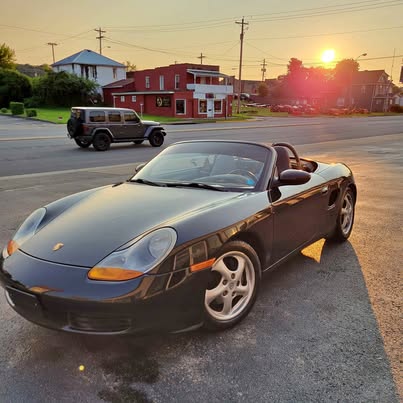
Which one to buy
There is no wrong generation of Boxster, only wrong examples of each. Choose by the driving you will actually do and the risk you are actually willing to carry, then buy the best-documented example of that car you can find, even when it costs more than the cheapest version of the next model up.
- The value buy: a facelift 986, 2003 or 2004, base 2.7 or S, with the glass rear window, a documented clutch and IMS bearing bundle on the six-cylinder cars that need it, and a cooling system that has visibly been maintained. This is the most Boxster per dollar the market offers, bought at the point where the early cars' faults are all known and priced.
- The all-rounder: a 987.2 S with the MA1 engine and either gearbox, bought on history rather than mileage. You pay the engineering premium once and then simply own the car, without the bearing and bore conversations that frame every 987.1 purchase. In manual form it is the closest thing the range has to a default recommendation.
- The purist's early car: a 986 S with the six-speed manual, unmodified, in a launch colour, bought for its steering and its balance rather than its speed. Slower than almost everything modern, better than almost everything modern at the speeds the road allows.
- The modern daily: a 981 S or a 718 base car, depending on which side of the steering-feel-versus-torque argument you stand on. The 981 gives you the last six-cylinder mainstream car; the 718 gives you the faster, newer, warranty-friendlier one. Drive both before deciding, because the specification sheets will not settle it and an hour in each will.
- The collector: a 981 Spyder, a 987 Spyder, or a 718 GTS 4.0 or Spyder, bought on originality, documentation and specification in that order. At this level you are buying a place in the model's history, and the inspection emphasis inverts: provenance first, mechanics second, cosmetics a close third.
The overriding rule: buy the documented car, not the described car — on a Boxster, a thick file of invoices from a known specialist is worth more than low mileage, a rare colour or a fresh detail, because every expensive fault this model has is invisible in photographs and visible in paperwork.
Listed now
On Classic Listings today: 206 cars are listed here; 7 for sale and 183 marked sold; average asking price $9,025; asking range $7,000 to $10,500; sold cars average $12,682.
See the 206 Boxster cars currently listed.
The market — recorded sales
Boxster Classic Listings Index: $12,143 — based on 90 recorded sales, Nov 2024 – Nov 2026.
Change vs the prior 24 months: +17% (n=50 then, n=90 now).
Recorded sales: 90 · Total recorded sale value: $1,152,249 · Lowest sale: $2,550 · Top sale: $29,950 · Most recent sale: $5,697 (Nov 19, 2026)
Dates are the sale date where the source states one; otherwise the date the sale was recorded here.
For sale now
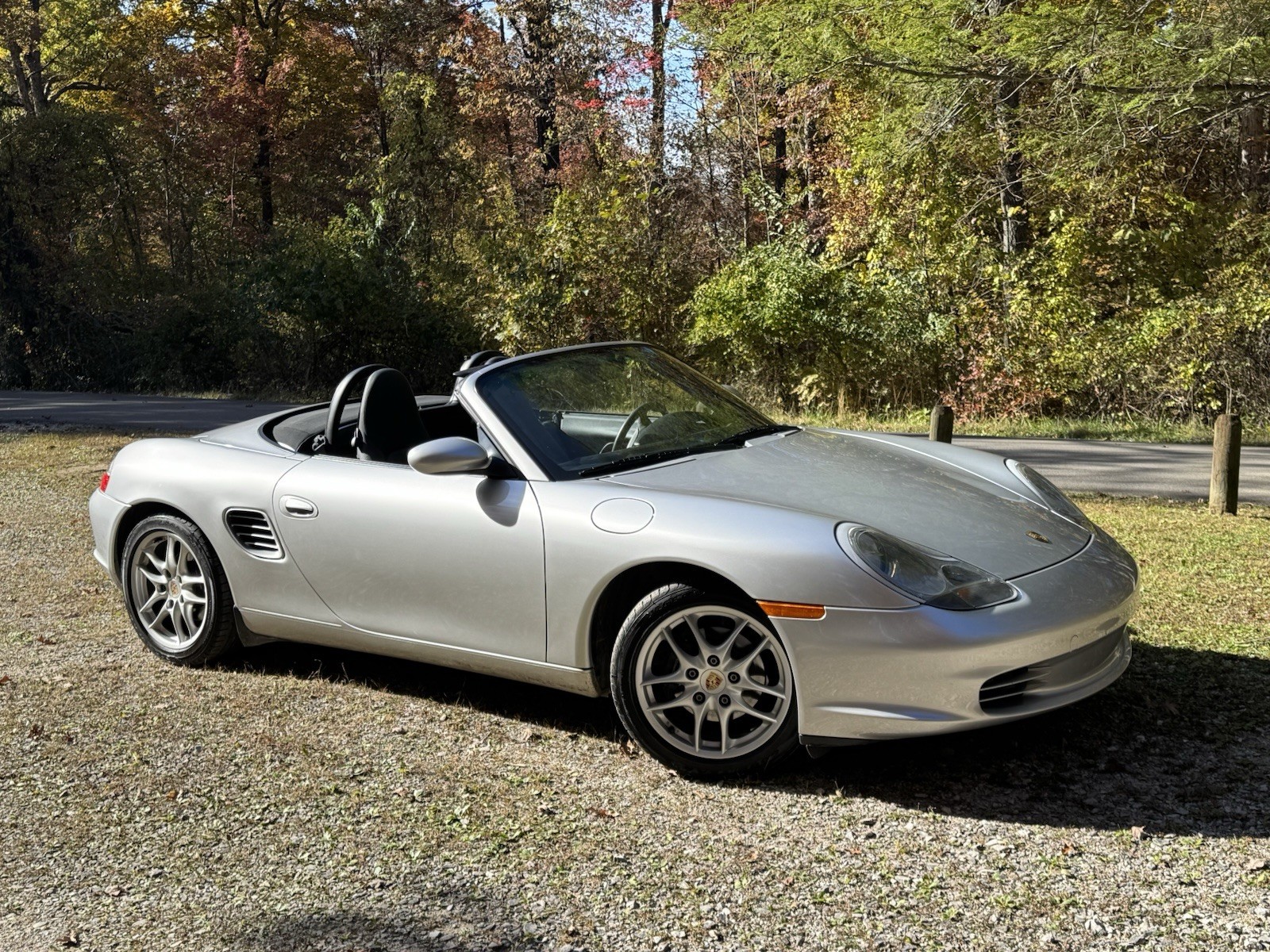 $8,700
Expand
 $7,000
Expand
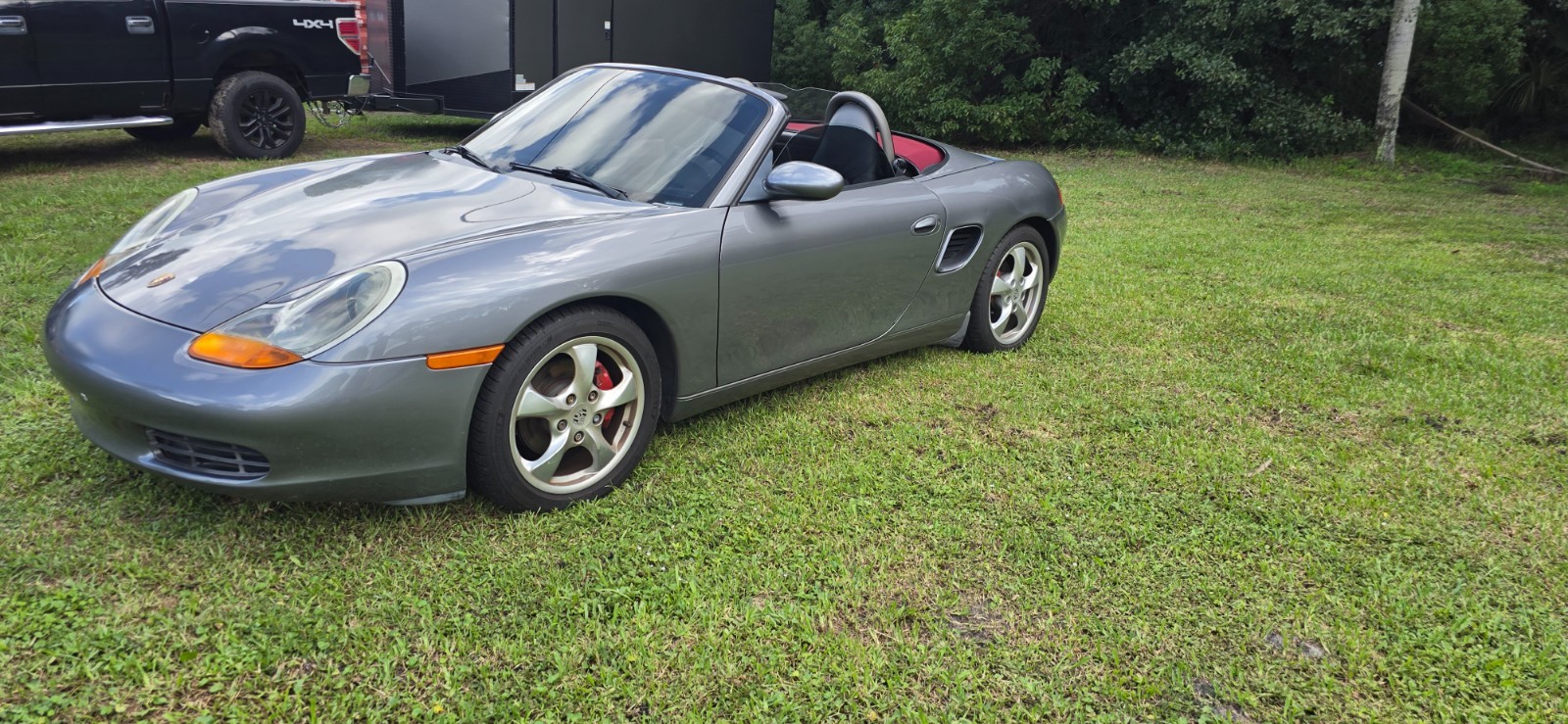 $10,500
Expand
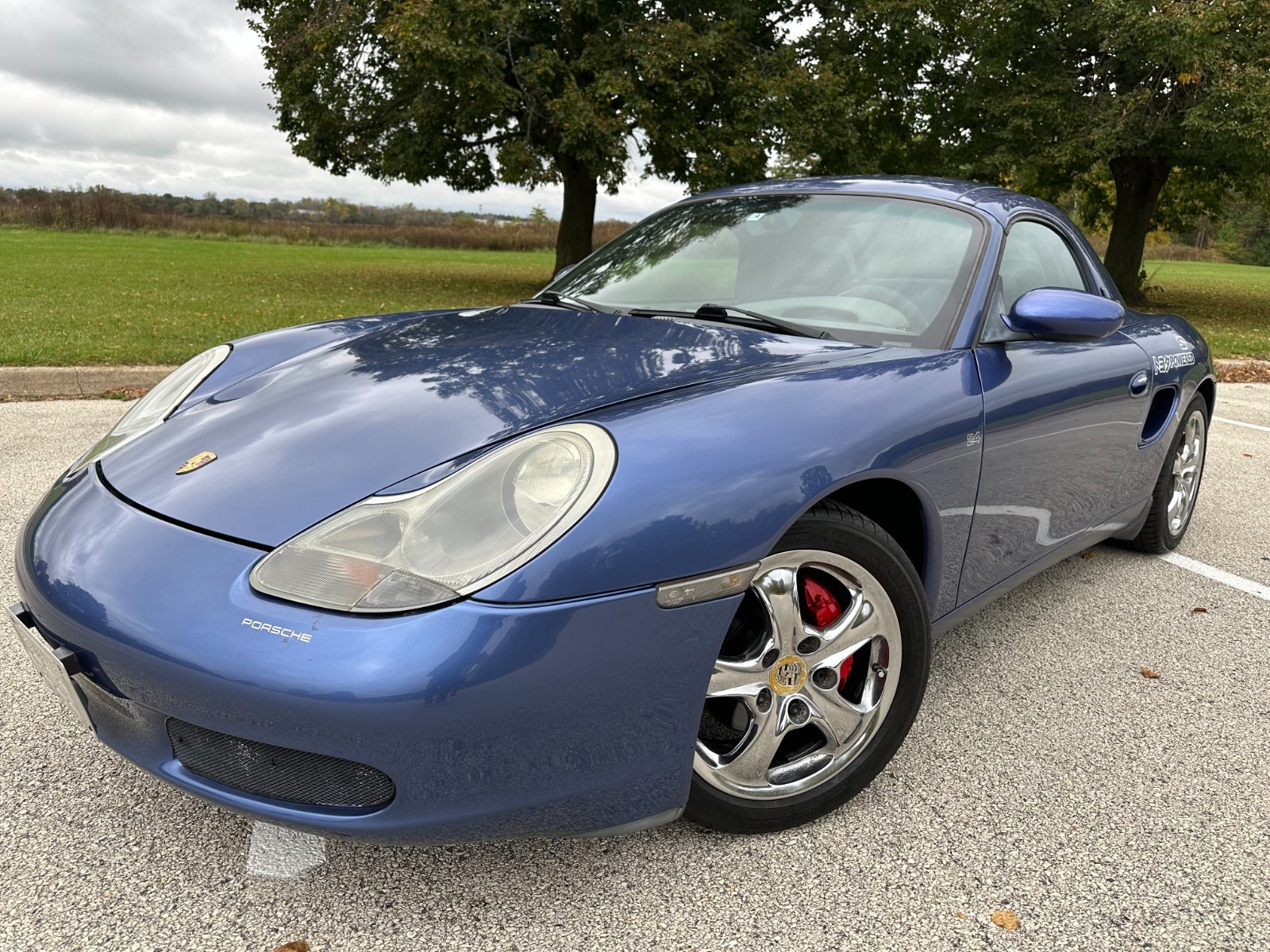 $9,900
Expand
$20,000Expand
Expand