
Studebaker Champion/conestoga station wagon buyer's guide
Studebaker Champion/conestoga station wagon -- the model's own buyer's guide: variants, values and what to check.
Years listed: 1950-1955 · Series: Commander
Overview and history
The Champion is the car that kept Studebaker alive. Not the glamorous one, not the fast one — but from 1939 to 1958 it was the volume backbone of the company, the economy six-cylinder line that paid for everything else South Bend built. If you understand the Champion, you understand Studebaker: an independent maker that could not outspend Ford, Chevrolet or Plymouth, so it had to out-think them on economy, on weight, and — for a remarkable run of years — on styling.
Studebaker launched the Champion for 1939 as an all-new, smaller, lighter car priced to fight the Big Three's cheapest models head-on: a real Studebaker, not a stripped penalty box, but engineered down to a weight and price the bigger Commander and President lines could never reach. It was styled under Raymond Loewy's studio, which had held the Studebaker contract since the mid-1930s — clean, integrated, almost European in its restraint. Underneath sat a new small flathead six of 164 cubic inches in the very first cars, quickly settled at 169.6 cubic inches, a three-speed manual with overdrive available, and a deliberately light chassis. The payoff was fuel economy Studebaker advertised relentlessly and owners genuinely got: a Champion with overdrive was one of the most economical full-sized American cars of its day, and that earned reputation carried the nameplate for twenty years.
The Champion's second act is the famous one. When civilian production resumed after the war, Studebaker was first — genuinely first, not first with a warmed-over 1942 car. The 1947 Champion and Commander, introduced in mid-1946, were the first all-new postwar American cars, styled by Loewy's studio under Virgil Exner, who ran the Studebaker account before his later fame at Chrysler. Exner's team produced a car so different it entered folklore: the long, sloping rear deck and wraparound rear window on the Starlight coupe made front and back genuinely hard to tell apart, and the joke — "which way is it going?" — followed the 1947–52 cars for life. Under the jokes was a serious car: new body, modernised chassis, same economy-six formula, in a package that looked five years ahead of a 1947 Ford or Chevrolet because, in styling terms, it was.

The third act is the one today's buyers argue about most. For 1953, Loewy's studio — this time with Robert Bourke leading the actual design work — produced the Loewy coupe, one of the most admired American designs of the century: long, low, clean, with a hood line lower than almost anything else on sale and not a wasted line on it. The coupe was sold as both a Commander with a V8 and a Champion with the six, and in Champion form it is the purest version of the idea — light nose, balanced proportions, economy running gear under show-car sheet metal. The sedans that shared the 1953 redesign were taller and more conventional, and they are the honest cars of the range, but the coupe is why the 1953–55 Champion has a following out of all proportion to its performance. Performance, to be clear, was never the point: a 1953 Champion makes about 85 horsepower and cruises happily rather than quickly.
After 1955 the story turns. Studebaker had merged with Packard in 1954, money was short, and the Champion's last years — 1956 facelifts, then the austere 1957–58 Scotsman era, when the cheapest Studebaker of all wore the Scotsman name and the Champion badge itself faded out after 1958 — are a story of a good basic car starved of development. The name ended in 1958. Its role did not: the compact Lark that replaced it for 1959 was, mechanically and commercially, the Champion's heir, and when the old flathead six finally gained overhead valves in 1961, that was a Lark-era event, not a Champion one. Keep that boundary clean when you read listings and forum posts — a Champion, by definition, is a flathead-six car, and any "Champion" described with an overhead-valve six or a V8 is either misdescribed or modified, and the serial plate settles which.
What survives, and in what mix? Our own listings pool for this guide is small — 13 cars in total, 10 offered for sale and 3 recorded sold — and heavily concentrated postwar: five of the 13 are 1950 models and three are 1951s, with single cars from 1947, 1948, 1953, 1955 and 1956. That is honest to the market: bullet-nose cars are what you will actually be offered, while pre-war and late cars appear far less often. Treat the sample as a snapshot of what crosses this site, not a census of survivors.
A Champion today is bought not for speed or investment theatre, but because it is light, simple, economical, mechanically honest, supported by one of the best marque clubs in the hobby, and — in the right years — styled by the best studio in America at the top of its game.

The models
Every Champion is a six-cylinder car. That single fact organises the whole range: bodies, trims and styling generations change across twenty years, but the car underneath is always the economy model — flathead six, three-speed manual as the standard gearbox, overdrive as the option that defines the car's character, and (from the early 1950s) Studebaker's Automatic Drive automatic for buyers who wanted it. The Commander was the bigger-engined sister line and the President the early flagship; a Champion with a V8 is a swap, full stop.
The range divides cleanly into four generations.
1939–42: the original Champion. The launch car and its pre-war developments. Light, handsome in the Loewy manner, mechanically simple even by 1939 standards. Bodies ran to coupes, two- and four-door sedans, and business coupes. Trim was plain by design. These are now the rarest Champions in ordinary commerce — cheap cars, used hard through the war years when no new cars were available, and attrition was severe. A survivor is a pre-war event car, not a starter classic to buy blind from photographs.
1947–52: the postwar cars, in two faces. The 1947–49 cars wear the original Exner postwar body; the 1950–51 cars add the famous "bullet nose" — a central spinner in the grille, aircraft-inspired, instantly recognisable and now the single most collected look of the range — and the 1952 cars close the generation with a facelifted front end that loses the bullet. Within the generation the body that matters most is the Starlight (later Starlite) coupe, with its wraparound rear window divided by slim pillars: it is the "which way is it going?" car, and good ones command the generation's attention. Convertibles exist and are scarce and desirable; sedans are the volume; business coupes are the utility cars. Trim levels step up through the period — base Champion, Deluxe, and Regal (Regal Deluxe in the early years) — bringing better upholstery, more chrome and more equipment, but the mechanical car underneath is the same, so buy trim for condition, not for specification.

1953–55: the Loewy era. Two distinct cars share these years. The Bourke-designed coupes — pillarless hardtop and pillared Starlight coupe — are the design icons, sold in Champion six and Commander V8 form on the longer coupe wheelbase. The sedans and the Conestoga two-door wagon are taller, more upright cars on the shorter sedan wheelbase: practical and pleasant, styled to match the coupes without sharing their proportions. Do not let a seller blur the two: a 1953 Champion sedan is a good car, but it is not "the Loewy coupe" and should never be priced as if it were. For 1955 the front end gained a larger, chromier grille; mechanically the big news is the enlarged 185.6-cubic-inch six from 1954 onward, covered in the next section.
1956–58: the last cars. The 1956 cars are facelifted versions of the 1953 sedan body with fins beginning to sprout; the range is thinning. For 1957–58 the cheapest line was the Scotsman — deliberately austere, painted hubcaps and minimal trim, sold on price and economy — and the Champion as a named model fades out at the end of 1958 as the Lark takes over. A late car is fascinating industrial history and the cheapest entry into the story, but be honest about what it is: an austerity car from a company running out of money.
| Model group | Years | Engine | Output (period, approx.) | Character |
|---|---|---|---|---|
| Champion (original) | 1939–42 | 169.6 cu in flathead six (164 cu in, earliest 1939) | ~78–80 hp | The launch car; light, rare today, pre-war manners |
| Champion (postwar) | 1947–49 | 169.6 cu in flathead six | ~80 hp | First all-new postwar car; the "coming-or-going" body |
| Champion (bullet nose) | 1950–51 | 169.6 cu in flathead six | ~85 hp | The collected face of the range; Starlight coupe is the prize |
| Champion (facelift) | 1952 | 169.6 cu in flathead six | ~85 hp | Last year of the Exner body; often overlooked, often good value |
| Champion coupe (Loewy/Bourke) | 1953–55 | 169.6, then 185.6 cu in flathead six | ~85–90 hp | The design icon in its purest, lightest form |
| Champion sedan / Conestoga wagon | 1953–55 | 169.6, then 185.6 cu in flathead six | ~85–90 hp | The honest family cars of the Loewy years |
| Champion (last years) / Scotsman era | 1956–58 | 185.6 cu in flathead six | ~90–101 hp | Facelift, then austerity; history over glamour |
(Outputs are period gross ratings and vary slightly by year and source; treat them as orientation, not gospel — the differences between an 80 hp and a 90 hp Champion matter far less than the overdrive, as the next section explains.)
One caution costs buyers money: badges wander. "Regal", "Starlight/Starlite" and "Land Cruiser" (a Commander-line name) badges all circulate, and a Champion can acquire upgraded trim across seventy years of owners. The serial plate and body plate — covered in the inspection section — are the car's identity; the badges are its jewellery. Note too that the visible market is coupe-heavy relative to what Studebaker sold: sedans were the production volume, so a good sedan is frequently the rational buy hiding in plain sight.


Engines and gearboxes
The Champion six: 169.6 and 185.6 flathead
There is, in essence, one Champion engine, in two sizes. It is a side-valve (flathead) inline six — L-head in period language — with the valves in the block beside the cylinders, a single downdraft carburettor, and a design philosophy that puts durability, low-speed torque and fuel economy ahead of everything else. It is not a sophisticated engine by the standards of, say, a contemporary overhead-valve Chevrolet six, and that is precisely its charm and its strength: there is very little to go expensively wrong, almost everything on it can be understood by a competent home mechanic, and a healthy example will run for decades on ordinary maintenance.
The standard size for most of the Champion's life is 169.6 cubic inches (about 2.8 litres), bore 3.00 inches, stroke 4.00 inches. The earliest 1939 cars used a slightly smaller 164-cubic-inch version; if you are buying a 1939, confirm which engine is actually in the car, because early production and later swaps muddy the water. Period output sits around 80 horsepower postwar, rising to about 85 by 1950–51. Those numbers sound modest because they are. The Champion was tuned for the driving its buyers actually did — 35 to 55 mph on two-lane roads — and in that band the flathead's torque is entirely adequate. What it will not do is cruise a modern interstate at 75 mph all day in direct top. That is what the overdrive is for, and it transforms the car.
For 1954, Studebaker enlarged the six to 185.6 cubic inches (about 3.0 litres) by increasing the bore to 3 1/16 inches — the engine is often called the 185 — and output rose to around 90 horsepower, climbing in later years with compression and tuning changes to figures around the 100 hp mark in the final cars. The 185 is the better road engine in every measurable way: a little more torque everywhere, a little less strain at cruise, the same manners and the same service needs. It is not, however, a different character of engine, and you should never pay a Loewy-coupe premium for a sedan purely because it carries the 185. Buy the 185 when it comes in the car you otherwise want; do not chase it as a specification.
What goes wrong is predictable, and most of it is age rather than design. The flathead's valves sit in the block, so valve work means working in the block: clearances are set with the engine's adjustable tappets, they close up or open up with wear and neglect, and a Champion that ticks loudly, runs roughly at idle, or is down on compression on one cylinder often needs nothing more exotic than a proper valve service — but budget for it properly, because "just a valve job" on a flathead is still head-off, valves-out work at a machine shop if seats need cutting or guides need replacing. Expect a thorough top-end overhaul, with the head skimmed, valves and guides done and everything refaced, to run roughly $1,200–2,500 at a general machine shop before refitting labour, varying widely by region and by how much else is found. Head gaskets themselves are cheap and available; a blown gasket announces itself the usual ways — overheating, bubbles in the radiator, oil and water mixing — and the flat head makes replacement straightforward.
Cooling is the flathead's standing worry. A side-valve six runs its exhaust passages through the block, putting more heat into the coolant than an overhead-valve design, and these cooling systems are now seventy-plus years old: radiators silt up, water pumps wear, thermostats stick. A Champion that runs hot in traffic, boils after a run, or needs constant topping up wants a full recommission — radiator recore or replacement ($400–900 for a quality recore), pump, hoses, thermostat and a proper flush — not a bottle of sealant. Do it once and completely; Champions cooled properly do not overheat, and chronic overheating warps heads and blows gaskets.
Oil leaks are a way of life at this age — side covers and oil pan more than anywhere — and a dry engine bay should make you ask what was just cleaned and why. Oil consumption on a worn engine shows as blue smoke under load (rings and bores). Bottom-end wear is uncommon in a car that has had oil changes, because the engine is understressed; a deep knock under load at low revs is the one sound that turns a viewing into a walk-away unless the price assumes a rebuild. A full rebuild done properly is a $4,000–7,000 conversation at a shop that knows flatheads — which is why a documented rebuild is worth a premium and an undocumented "rebuilt" claim is worth nothing until you see invoices.
Fuelling is a single carburettor throughout — Carter units predominate postwar, with Stromberg in some years; confirm what is actually fitted, because seventy years of substitutions mean the book answer and the car often differ. Failure modes are standard: worn throttle shafts leaking air, hardened accelerator-pump cups causing a flat spot on tip-in, sticking chokes, and ethanol varnish in cars that sit. A professional rebuild runs roughly $350–700. Ignition is points and coil throughout — dwell and timing done by the book transform a flat-feeling Champion, and half the "these cars are just slow" complaints trace back to retarded timing and tired points.
One era boundary must be stated plainly, because listings blur it. In 1961 — three years after the last Champion — Studebaker converted this engine family to overhead valves for the Lark. That OHV six shares ancestry with the flathead but is a different top end and parts story. No factory Champion has it. If a seller describes a Champion as an "OHV six," either the car has been re-engined with a later Lark unit (price it as a modification) or the description is simply wrong. Open the hood: a flathead has a flat, plain head and no rocker cover doing the talking; an OHV conversion announces itself immediately.

Gearboxes: three-speed, overdrive, and Automatic Drive
The standard gearbox is a three-speed manual, column-shifted on most cars (the famous "three on the tree"), with synchromesh on the upper gears in the postwar cars. It is a light, pleasant box when the linkage is in adjustment and a vague, graunching misery when the column linkage bushes have worn — which, at this age, they usually have. Budget linkage work into any car whose change feels like stirring a bucket: the parts are cheap, the labour is fiddly, and the transformation is total. Second-gear synchromesh wear is the internal test: a box that crunches into second on a brisk change, hot or cold, is telling you about its rebuild future, roughly $1,200–2,500 for a specialist overhaul of the box itself, plus removal and refitting.
The option that defines the Champion is overdrive — a Borg-Warner overdrive unit behind the three-speed, electrically engaged, giving an overdriven top ratio (around 0.70:1 in the common R10-type installations) that drops cruising revs by roughly 30 percent. Understand what this does to the car. A non-overdrive Champion at 60 mph is busy and drinking fuel at the rate its gearing dictates. The same car with overdrive engaged is turning something like 2,000 rpm where it would otherwise turn nearer 2,900, cruising quietly, and returning the economy figures Studebaker built its advertising on — period tests and owner reports in the high 20s mpg at touring speeds are real for a well-tuned overdrive car driven gently. Overdrive also freewheels below its cut-in speed (around 30 mph) and disengages for overtaking when you floor the throttle — the kickdown — which surprises first-time drivers. Learn the system on the test drive: engage it, feel the step up as you lift off above cut-in, floor it and feel it drop out, and confirm it re-engages. The failure points are electrical as much as mechanical: the governor, the solenoid, the relay and the kickdown switch, plus the wiring between them. A car whose overdrive "just needs a wire" may indeed just need a wire — the components are available and the system is well documented by the club — but price the diagnosis honestly: solenoid and governor work, with parts and labour, runs a few hundred dollars when it is simple and more when the overdrive unit itself needs internal work. An overdrive Champion is worth meaningfully more than an identical non-overdrive car, both to buy and to own; it is the single most valuable option on the model, ahead of any trim level.
From 1950, Studebaker offered Automatic Drive, its first automatic — a Borg-Warner-based three-speed automatic with a torque converter, developed with Detroit Gear. It is a competent period automatic: smooth, unhurried, and well suited to a sedan used gently. It also saps the small six's performance in a way the overdrive manual does not, and a Champion automatic is a noticeably slower, thirstier car. Survivors with automatics exist in our pool — three of the 13 brief cars are listed as automatics, against five listed as manuals plus two more described specifically as 3-speed manuals — and they suit buyers who prioritise ease over economy. Judge an automatic on the usual period tests: fluid that is red and unburnt rather than brown and smelling of toast, engagement of drive and reverse without a long delay or a thump, no flare between ratios, and no slipping under a firm throttle opening on a hill. A rebuild is specialist work at $2,500–4,500; a car that needs it must be priced as a car that needs it.
Clutches on manual cars are conventional, cheap in parts, and labour-priced like any engine-out-adjacent job of the era — $800–1,500 fitted is a fair planning range. Rear axles are sturdy and quiet when the oil has been changed at least occasionally in seventy years; a whine that rises and falls with road speed, or clonks on taking up drive, points to wear or to tired universal joints first — joints are cheap, a differential rebuild is not.
Problem areas
Everything in this section follows one rule that governs every Champion purchase: the mechanicals are cheap and fixable, the body is not. A Champion six can be rebuilt, a gearbox can be overhauled, an overdrive solenoid can be replaced — but a rotten shell consumes money at body-shop rates until it exceeds the finished value of all but the most desirable coupes. Read this section in that order: rust first, everything else after.
Rust: the map
Studebaker bodies of this era were not rustproofed in any modern sense, the steel was ungalvanised, and the cars were cheap enough to live outside. Rust follows the water and the mud traps, and on a Champion the map is consistent enough to memorise.
Front fenders. The Champion's signature rust. The front fenders trap mud behind and above the wheel, around the headlamp area, and along the crown and rear edge where they meet the cowl. Postwar cars rot at the fender tops and at the lower rear of the fender; bullet-nose cars add the complex pressings around the central grille and spinner, where repair sections are harder to form. Prod the fender crowns with a cloth-wrapped magnet and your fingertips: filler over rot feels dead and sounds dull, and fresh paint over the crown of a front fender, with no matching work elsewhere, is a question the seller should answer. Front fender repair or replacement panels, painted and fitted, run roughly $800–2,000 per side depending on whether you are patching, replacing, or paying someone to form metal — and good used fenders for the popular years are a club-network hunt, not a catalogue order.
Floors. The second structural check and the one that decides most purchases. Water enters past windshield and rear window seals, past the heater and cowl vents, and through failed door seals, then sits under carpets and mats where it rots the floor pans from the top down while road salt attacks from below. Lift every carpet. Surface scale is treatable; perforation at the seat mounts, at the toe boards, or along the transmission tunnel is structural work. Floor sections are reproduced for the popular postwar cars, which helps — a side fitted and painted at $600–1,500 is a fair planning range — but floors, like the exemplar guides say of every car in this programme, rarely rot alone. Floor rust is a marker: it tells you the seals have leaked for years, and the sills and trunk have been drinking the same water.
Sills and rocker panels. The sills carry the body and trap mud thrown up by the front wheels. Check the full length, the jacking areas, and the junctions with the front and rear fenders. Bubbling at the bottom of a door is cosmetic; bubbling along the sill below it, with softness when you press hard, is not. Sill replacement, cut out, welded and painted, runs roughly $1,000–2,500 per side at a competent shop, and it is the job that most often turns a "cheap Champion" into an expensive one.
Trunk floor and spare wheel well. The rear window seal — above all the Starlight's wraparound glass, with its long seal perimeter — leaks, and the water collects under the spare wheel and in the well corners, exactly where nobody looks. Lift the spare on every viewing, without exception. Staining is a clean-and-seal afternoon; a perforated trunk floor is a panel job at $800–1,800 fitted and painted, and it usually arrives with rear valance and lower rear fender rust as a package. On business coupes, add load damage to corrosion: these trunks worked for a living.
The rest of the map. Door bottoms (drain holes block, doors fill, bottoms bubble — feel along the lower edge of every door), the battery tray and the inner fender beneath it (acid rot, invisible with the battery in place — lift it or rock it and look), headlamp bowls, the cowl sides, the lower rear fenders behind the wheels, the windshield surround, and — on 1953–55 coupes — the long, low rear quarters and the area around the rear wheel openings, where the beautiful lines collect road filth. On convertibles, add the top well and the reinforced areas around it, and price any convertible's shell a full grade more suspiciously than a coupe's: they leaked from new and flexed more doing it.
Learn to read underseal as evidence. Honest factory-era underseal and seventy years of patching looks patchy — thin at edges, chipped by stones, dirty. A fresh, uniform coat of black blown over everything the week before sale, seams and brake pipes and all, is a cover-up until proved otherwise. Nobody re-underseals a sound car as a favour to its next owner.
Chassis, suspension, steering and brakes
The Champion chassis is a conventional ladder frame with independent front suspension by coil springs and unequal-length arms, and a live rear axle on leaf springs. Nothing about it is exotic, and almost everything about it is rebuildable with reproduced or commonly available parts — but seventy years of grease-gun neglect has a price list.
Front suspension wear shows as knocks over bumps, vague wandering at speed, and uneven front tyre wear. Kingpins and bushings, trunnion wear (the postwar cars use a threaded trunnion arrangement at the outer ends of the control arms that wears and knocks when dry), ball joints on later applications where fitted, control-arm bushings and shock absorbers are the consumables. The discipline is the same as on any kingpin car: lubricate first, then judge. Old grease hardens in the passages, joints feel worn when they are merely dry, and a proper grease-through — warming stubborn joints if the gun will not push — can return a "worn out" front end to specification. A full front-end rebuild with kingpins, bushings and alignment runs roughly $1,000–2,000 with labour; price it in when the car knocks and wanders, but do the grease test before you let anyone sell you the rebuild.
Steering boxes wear at the centre of travel, where the car has spent its life: free play at the straight-ahead that no adjustment fully cures is box wear, and a rebuilt or good used box is a club-and-specialist hunt. Steering linkage joints are cheap and available. A Champion should steer lightly and accurately at parking speeds — it is a light car — so heavy steering means seized or dry joints, low tyre pressures, or both.
Brakes are drums all round throughout the Champion's life, single-circuit hydraulics on the earlier cars. The system is simple and every component — cylinders, shoes, hoses, master cylinder — is available, but a car that has sat will need all of it: seized wheel cylinders, perished hoses, a tired master and contaminated fluid are the standard recommissioning list, at $800–1,800 for a full hydraulic refresh with labour. Judge the drums and the pedal together: a long pedal, a pedal that pumps up, or a car that pulls to one side under braking is a budget item already spent, not a negotiating nuance. Handbrakes seize in their cables; free them or replace them, cheaply, before they become an inspection failure.
Rear axles and springs: leaf springs sag and occasionally crack a leaf, shackles wear, and the car sits down at the back. Read stance as a symptom — a Champion should sit level and even. A car down on one corner is a spring or a mount; a car down at the back is a known, priceable job (springs and fitting, $500–1,200). Do not accept "they all sit like that." They do not.
Engine ancillaries, electrics and the 6-volt question
Most Champions are 6-volt, positive-ground cars, and they stayed 6-volt later than many rivals — Studebaker moved to 12 volts in 1956, so a 1956-onward car should be 12-volt and anything earlier should be 6 unless converted. The 6-volt system is not a defect; it is a maintenance standard. A 6-volt Champion with clean, heavy cables, sound grounds, a healthy generator and a good battery starts perfectly well. A 6-volt car with thin modern replacement cables, corroded grounds and a tired battery cranks slowly and gets blamed for its electrics. Judge the installation, not the voltage: thick cables (6-volt needs roughly double the copper of 12), bright clean connections, and a charging system that holds voltage at cruise with the lights on. Generator and starter rebuilds are routine specialist work at $250–500 per unit. Many cars have been converted to 12 volts and alternators by past owners; a tidy, documented conversion is a practical plus for a car you intend to tour, while a scruffy conversion with mystery wiring is a deduction. Either way, know which system the car in front of you actually has before you price its electrical health.
Wiring fails at connections and at the insulation: cloth and early plastic hardens, cracks and chafes, above all in the engine bay. Replacement looms are reproduced for the popular years — one of the quiet strengths of the Studebaker parts scene. A car where everything works — lights, horn, wipers, heater, a fuel gauge that tells the truth — has been used and maintained, which is the best single predictor of a good Champion there is.
Interior and trim
Champion interiors were built to a price, and the materials show it honestly. Cloth and vinyl in the sedans, better cloth and more brightwork in Regal trim, leather only rarely. Seat springs sag, padding crumbles, headliners stain from the same leaks that rot the floors, and door cards warp with damp. All of it is priceable: seat re-padding and recovering runs from roughly $600 per seat for a driver-quality job upward, a headliner fitted is $600–1,200, and a full professional retrim reaches well into four figures. Reproduction upholstery in correct patterns is available through the specialist trade for the mainstream years — a genuine advantage over many independents — but Starlight- and convertible-specific trim is scarcer.
The expensive interior items are the model-specific ones. Bullet-nose dashboard and grille brightwork, Starlight rear glass and its rubber, Loewy coupe side glass and trim, convertible top frames and mechanisms, and un-cracked steering wheels all live in the "find a good used one or pay for restoration" category. Chrome re-plating is priced per piece and adds up brutally fast across a whole car: a full re-plate of a postwar Champion's brightwork is a four-figure commitment before you are halfway through the list. Count the pitted pieces on the viewing and price them as a line item, not as an afterthought. Glass is mostly flat or gently curved and cuttable for side windows; the Starlight wraparound rear glass is the exception — confirm it is sound and well sealed, because replacement is a hunt.
The heater deserves respect: test it on every viewing, whatever the weather. Studebaker's Climatizer system, when working, is effective; when the core leaks it soaks the front floor (see floors, above) and when the motor dies it is a fiddly job — still $400–900 with the core replaced at shop rates. A sweet antifreeze smell in the cabin with the heater on is a core announcing its retirement.
How to inspect one
Allow a full hour, bring a torch, a cloth-wrapped magnet and a notebook, and insist on seeing the car cold and, if possible, on a lift before money changes hands. Champions are simple cars, which makes a thorough inspection genuinely decisive.
- Paperwork and identity first. Find the serial plate — on postwar cars on the driver's side front door pillar (the hinge post); earlier cars carry plates in the engine bay / firewall area, so ask and look rather than assuming. The serial confirms the car is a Champion and not a re-badged Commander or a shell swap. Find the body plate on the firewall/cowl (body style and trim codes) and the engine number stamped on a machined pad at the front of the block — clean it and read it. Title, serial plate and body plate must agree. Then ask about the production order: the Studebaker National Museum holds the factory records and sells copies of a car's original production order — colours, trim, engine, options including overdrive, build date and destination. For any car where originality is part of the price, order it or require the seller's copy. One that confirms the car is worth money; one that contradicts it is worth even more, because it tells you the truth before you pay.
- Cold start. The engine must be cold when you arrive — a warmed-up Champion is a seller managing the viewing. A healthy flathead six starts with choke, settles to an even idle as the choke comes off, and shows no blue smoke beyond a possible first puff. Loud ticking that does not fade is valve clearances or worse (see the engine section); a deep knock under light load is the walk-away sound. Watch the oil pressure behaviour and the charging gauge as it warms.
- Cooling system, immediately. While it warms, inspect: radiator condition, hose softness, water pump weep, fan belt, and whether the coolant is coolant or rusty water. After the drive (step 9), a car that has boiled, crept into the red in traffic, or needs a pint of water has priced its recommission for you — radiator, pump, hoses and thermostat, done as one job.
- Under the car. Torch along both sills, prod the jacking areas, check floor seams from below, the front frame and crossmember, the rear spring hangers and shackles, and the trunk floor from underneath. Perforation in sills, floors at the seat mounts, or frame rust is structural and reprices or ends the viewing. Read the underseal as you go: patchy and honest is original; a fresh uniform black coat over everything is a question, not an answer.
- Trunk and spare well. Lift the spare wheel and any mat or board. Look for perforation in the well corners, water staining, and the state of the rear window seal from inside. On a Starlight, walk the full perimeter of that wraparound glass with your eyes and fingertips — seal failure here is the trunk's water supply.
- Floors inside. Lift all the carpets you are allowed to lift. Look for water tracks from the windshield base, cowl and heater, prod the toe boards and the areas under the front seats, and smell for the sweet antifreeze signature of a leaking heater core. Wet carpets in a "garage-kept" car mean leaking seals and rust already started.
- Body, fenders and gaps. Run the magnet over the front fender crowns, sills, door bottoms and lower rear fenders. Sight down both flanks — on a bullet-nose car and a Loewy coupe alike, the styling lives or dies on straight panels. Check door bottoms by fingertip, lift the battery (or rock it) and inspect the tray beneath, and count the pitted chrome pieces, pricing them as you go. On a 1953–55 coupe, confirm it is a coupe shell, not a sedan wearing coupe language in the advert: the proportions, low hood and longer wheelbase are visible from across the street once you know them.
- Front end and steering. Rock each front wheel top-to-bottom and side-to-side — but apply the grease rule from the problem areas: dry play is a question, not a verdict. If the car otherwise stacks up, price a front-end rebuild ($1,000–2,000) into the offer and let a post-purchase grease-through refine the diagnosis. Check steering free play at the straight-ahead, and look at the front tyres: uneven wear is the front end's written report.
- The test drive, with the overdrive test built in. Fifteen minutes minimum, including a sustained 50–60 mph stretch. Manual car: changes should be clean, second-gear synchromesh is the test, clutch take-up smooth without judder. If overdrive is fitted, this is where it earns its premium: above roughly 30 mph, lift off and feel it engage — revs and noise drop, the car relaxes. Floor the throttle: it should kick down out of overdrive and pull; lift again and it should re-engage. An overdrive that does none of this is a non-overdrive car with extra parts, priced as one until the electrical diagnosis (governor, solenoid, relay, switch) proves otherwise. Automatic car: check engagement delay, flare, slip on a hill, and afterwards look at and smell the fluid. Brake hard from speed twice: straight stop, no pull, pedal firm.
- Electrics and equipment, everything, in order. Lights (all), horn, wipers, heater and defroster on every setting, fuel gauge sanity, dash lights, and — on a 6-volt car — lights at idle versus at cruise to judge charging. Every working system is maintenance evidence; every dead one is a line item.
- Stance and ride. Stand back and photograph the car from the side and each corner. Level and even is correct. Down at the back is springs or hangers; down on one side is a spring or mount. On the drive, the car should ride softly without crashing or knocking — knocks return you to step 8's budget.
- Interior last, and honestly. Sit in the driver's seat, not just the passenger's — it wears first. Feel for collapsed springs and crumbled padding, check the headliner for stains that corroborate the leak story, and judge whether the trim is complete enough to live with or tired enough to price a retrim. A complete, honest, worn interior beats a half-finished amateur retrim with missing pieces: completeness is the scarce commodity.
If the car passes your hour, pay for a lift inspection by a mechanic who knows old cars — ideally one the local Studebaker Drivers Club chapter can name — before money changes hands.
Values
The figures that matter for this model are computed from this site's own listings and recorded sales, and they sit below this guide — the listed-now summary and the market block are refreshed every time the site rebuilds, so use them rather than any number quoted elsewhere. What follows is how to read them, and it matters more than usual here, because the Champion pool on this site is small: 13 cars in the brief drawn for this guide, 10 for sale and 3 recorded sold. With a sample that size, a single exceptional Loewy coupe or a single desperate project car moves every summary figure violently. Read the range and the individual cars, not the median, and weight auction results and club-market sales — where Champions trade steadily — alongside anything a listing summary tells you.
The Champion market is really four markets wearing one badge. At the top sit the cars where styling does the pricing: the 1953–55 Loewy coupes in Champion form and the bullet-nose Starlight coupes, with convertibles of any postwar year alongside them. Next come the good postwar sedans and coupes in ordinary trim — the volume of the market — where condition, overdrive and originality spread the prices across a wide band. Below them sit the honest projects and the late austerity-era cars, and at the bottom the parts-grade and rust-grade cars that are worth what their overdrive units, chrome and glass will fetch. The spread between a project and a sorted driver of the same year and body is, for a Champion, most of the money in the model: the mechanical recommissioning is affordable, but body, paint, chrome and trim at shop rates will consume the entire value of a mid-band car, which is why sorted cars look expensive until you price the work on a cheap one.
Three premiums are real. Overdrive is the first: it transforms usability, was a genuine factory option the production order can confirm, and a working unit is worth a clear step over an identical non-overdrive car. Documented originality is the second — production order on file, matching colours and trim, consistent engine number — because unmodified cars are the finite supply. The Starlight and Loewy coupe bodies are the third, and they are styling premiums, not performance premiums: a seller who prices a sedan as a coupe is asking you to fund a misunderstanding. Discounts should be equally clear-eyed: a non-working overdrive is a non-overdrive car until fixed; an automatic sedan is an ease-of-use buy, not a collector buy; a scruffy 12-volt conversion, a V8 swap, or a colour change away from the production order all narrow the next buyer pool and should narrow your offer.
Asking and achieved prices part company predictably. These are club cars: informed buyers are in the Studebaker Drivers Club, know what comparable cars actually sold for, and do not chase optimistic listings. A car priced from V8 Commander values applied to a six-cylinder Champion will sit, and the listing's age becomes the negotiation. Auction results are the corrective, and they usually sit below hopeful asking medians. Because full body, paint, chrome and interior restoration exceeds the finished value of every Champion except the best coupes and convertibles, the market prices projects harshly and finished cars firmly. There is no cheap Champion that stays cheap if it needs bodywork — but solid, scruffy, overdrive sedans bought for what they are and kept in regular use are the best value in the whole Studebaker world.
Parts and ownership
The Champion's ownership case rests on the strongest foundation any independent-make car can have: the Studebaker Drivers Club. Founded in 1962 and still one of the largest single-marque clubs in the hobby, the SDC — its magazine Turning Wheels, its local chapters, its annual meets and its dense network of knowledgeable owners — is the reason a Champion is a rational purchase sixty-five years after the factory closed. Join before you buy, not after: the chapter members know which local cars are good, which sellers are straight, and which mechanic within driving distance actually knows flathead sixes and Borg-Warner overdrives. The club's collective knowledge on the overdrive electrics alone will save you its membership fee in your first year.
Easy: almost everything mechanical. The flathead's service and rebuild parts — gaskets, bearings, pistons, rings, valves, guides, water pumps — are reproduced or in stock through the specialist vendors who advertise in Turning Wheels. Carburettor kits, ignition parts, clutch components, brake hydraulics, suspension bushings and kingpin kits, exhaust systems, glass rubbers, wiring looms for the popular years, and floor and trunk repair panels for the mainstream postwar cars are all orderable today at prices comparable to equivalent Ford or Chevrolet parts. Studebaker's own parts stock famously survived the company's closure in organised hands, and NOS components still surface through the vendor network to a degree owners of other orphan makes can only envy.
Harder and dearer: the model-specific and the beautiful. Bullet-nose grille and spinner chrome in good order, Starlight wraparound rear glass and its rubber, Loewy coupe-specific glass, trim and brightwork, convertible top frames and mechanisms, un-pitted pot-metal of any kind, correct-pattern upholstery for the scarcer trims, and good used front fenders for the rust-prone years. None of it is impossible — the club network exists precisely to circulate these parts — but all of it is hunted rather than ordered, and priced accordingly. This is why the inspection section has you counting chrome pieces and checking Starlight glass like a jeweller: those are the parts the catalogue cannot save you on.
Running costs. A sorted Champion is one of the cheapest full-sized classics in America to run. Fuel consumption in the mid-to-high 20s mpg is genuinely achievable in an overdrive car at touring pace. Servicing is within any competent home mechanic's reach — the flathead rewards regular oil, clean points, correct valve clearances and a greased chassis — and any good independent shop that still works on old cars can handle the rest. The budget line that catches new owners is the first year: catching up deferred maintenance on a running car honestly runs $1,500–4,000, and recommissioning a car that has sat for years runs $3,500–7,000 at shop rates. Buy a car in regular use over a sleeping car at the same price, every time.
A word on documentation: the Studebaker National Museum in South Bend holds the factory production records, and a copy of your car's production order is obtainable for a modest fee. Order it when you buy, keep it with the title, and file every invoice behind it. On a marque where originality is verifiable this cheaply, the documented car is simply worth more at resale.
Which one to buy
- The all-rounder: a 1950–51 bullet-nose sedan or coupe with overdrive. The most available Champion (five of the 13 cars in this site's pool are 1950s, three more are 1951s), fully supported on parts, and — with a working overdrive — genuinely usable at modern road speeds. If you want one Champion to own and drive, start here.
- The design buy: a 1953–55 Loewy coupe, Champion six. The Bourke coupe in its lightest, purest form. Buy the best shell you can find, accept the six for what it is, and never pay Commander V8 money for it — the premium is for the shape, and the shape is identical.
- The value buy: a 1947–49 or 1952 sedan with overdrive. The same postwar car as the bullet-nose, without the premium. The 1952 is the overlooked year: last of the Exner body, often the cheapest route into a sorted postwar Champion.
- The character buy: a Starlight coupe, 1947–51. The "which way is it going?" car, wraparound glass and all. Budget for the rear glass seals and the trunk floor, and enjoy owning the joke that defined postwar American styling.
- The economy buy, honestly labelled: a Conestoga wagon or a late Scotsman-era car. The wagon is practical, rare and charming; the late cars are industrial history at the lowest prices in the range. Buy either with your eyes open about trim and resale audience.
- The pre-war buy: a 1939–42 Champion, for the committed. Light, lovely and rare — and a specialist purchase. Buy the most complete, original car you can find, from within the club network, never from photographs alone.
And the rule that overrides all of the above: buy the least rusty, most complete Champion you can find, with a working overdrive, in the body style you actually want. Engines, gearboxes, brakes and heaters are all fixable at prices you can plan for. A rotten shell or a missing Starlight glass will cost more than the finished car is worth — completeness, on a Champion, is the one thing money cannot easily buy back.
See the 2 Champion/conestoga station wagon cars currently listed.
For sale now
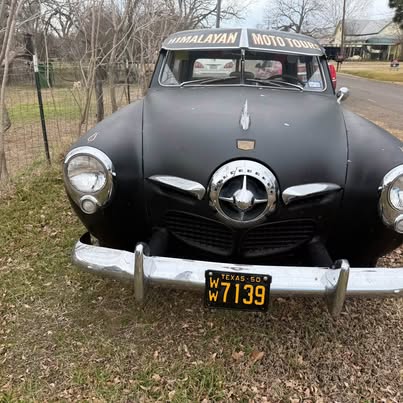 $17,000
Expand
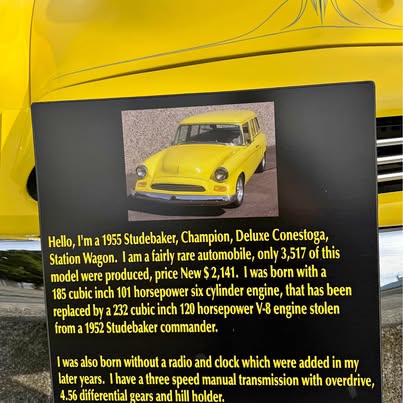 $25,000 · 38% above typical
Expand
What they sell for: Champion/conestoga station wagon sale prices.