
Studebaker Commander buyer's guide
Studebaker Commander -- the model's own buyer's guide: variants, values and what to check.
Years listed: 1938-1953 · Series: Commander
# Studebaker Commander — Buyer's Guide
Overview and history
You are not buying one car when you buy a Studebaker Commander. You are buying into one of the longest-running nameplates in American motoring, a badge Studebaker of South Bend, Indiana first uses in 1927 and keeps in service, with interruptions in 1936 and from 1959 to 1963, until the mid-1960s. Across those decades the name moves up and down the range: mid-range six at first, the cheapest Studebaker for part of the 1930s, the senior line after the war, demoted when the President returns in 1955, and finally a trim level on the compact Lark. The badge tells you almost nothing on its own. The year, the body and the engine tell you everything, and this guide teaches you to read those three things first.
That warning matters because the Commanders you actually meet are a specific slice of that history. The cars recorded on this site number nine in total, eight offered for sale and one recorded sold, running from a 1938 coupe and a 1939 car to a pair of 1956 cars, with a single 1951 bullet-nose car and pairs of 1953 and 1955 cars between them. That spread is honest to the market: prewar cars survive in small numbers, early-1950s cars in the largest numbers because Studebaker builds so many, and the mid-1950s Loewy coupes and their relatives are the ones the hobby has settled on as keepers. This guide covers the prewar sixes briefly and the 1947–56 cars in depth, because those are the Commanders that exist in numbers and trade regularly.
Understand what Studebaker is, because it explains the car's character: an independent — no General Motors, Ford or Chrysler behind it — engineering-led and stubborn. This is the company that gives you the Hill Holder in the 1930s, a transverse-leaf independent front suspension when rivals run beam axles, the first genuinely new postwar body in 1947 while the Big Three sell warmed-over 1942 models, a modern overhead-valve V8 in 1951, and a lock-up torque converter automatic a quarter-century before the rest of the industry adopts one. It is also the company that keeps a flathead six into the 1950s, sells a single-circuit brake system long after you would like redundancy, and rustproofs its bodies to a standard a Midwestern winter treats as a light snack. You buy a Commander for the engineering imagination. You inspect it for the rustproofing.
Two myths need correcting now, because both distort prices. First, a Commander is not inherently a V8 car: every Commander built before 1951 is a six, and the big Commander flathead six is a larger, stronger engine than the Champion's small six — in a 1947–50 car it is the correct and respectable specification, not a consolation prize. Second, "bullet nose" does not describe the whole postwar Commander: the aircraft-spinner grille lasts exactly two model years, 1950 and 1951. The 1947–49 cars wear a conventional grille, the 1952 car a one-year facelift, and the 1953 car is a completely different design. A seller who calls a 1949 car a bullet nose is telling you, free of charge, how much homework he has done.
The arc, in brief: the name returns in 1937 on the car previously sold as the Dictator, and in 1939 the Champion slots in beneath it, with the President straight-eight above. War stops production in early 1942. Studebaker restarts in 1947 with the industry's first all-new postwar design, styled by Raymond Loewy Associates with Virgil Exner doing much of the work, the Commander at the top of the range and the Land Cruiser as its flagship. The bullet nose arrives for 1950, the V8 for 1951, and a tidied 1952 range closes the era. For 1953 the Loewy studio, now under Robert Bourke, produces the famous low coupes, while the sedans sharing the styling look comparatively upright. Sales slide in 1954 in the Ford–Chevrolet price war, Studebaker merges with Packard, the President returns for 1955, and for 1956 the family cars grow taller bodies while the coupes become the Hawk family. The name carries on through 1958, rests, and returns for 1964–66 on the Lark — a different car entirely, and outside this guide's scope.
What survives is a car with an unusually honest support structure behind it: factory records in the Studebaker National Museum archives to a degree no other independent maker can match, one of the oldest and most technically literate one-make clubs in the Studebaker Drivers Club, and a new-old-stock parts trade deeper than almost any other orphan's. You will not abandon one for want of a water pump. You may well abandon one whose body has dissolved around a perfectly serviceable drivetrain — and that asymmetry shapes everything that follows.
The models
Read the range in four blocks: the prewar sixes of 1937–42, the first postwar cars of 1947–52, the Loewy cars of 1953–55, and the taller cars and Hawks of 1956–58. Within every block the trim ladder matters as much as the year, because the difference between its bottom and top is equipment, upholstery and chrome — not structure or, in most years, engine. Learn the ladder and you can place any car within thirty seconds of opening its doors.
The prewar block is where the recorded pool starts, with the 1938 and 1939 cars. The 1938 Commander is the first Studebaker styled by the Loewy organisation: upright grille, headlamps faired into the fenders, running boards on their way out. You get a 226.2 cu in flathead six of 90 hp, a 116.5-inch wheelbase, the transverse-leaf Planar independent front suspension, and — standard on the plusher State Commander — the Hill Holder. The one-year curiosity is the 1938 Miracle Shift, a vacuum-and-electric remote gearshift worked by a small lever at the wheel; it is troublesome when new, and most survivors have either a carefully preserved system or a conversion to a conventional column shift — establish which before you value the car. For 1939 the range is restyled, the Champion arrives beneath the Commander, and the Commander settles mid-range with the same 226 six. Prewar coupes are the collectible shapes; the four-door sedans, with their rear-hinged rear doors, are the value shapes.
The 1947–52 block is the heart of the early postwar market. The 1947 car is genuinely new: new body and frame, coil-spring independent front suspension with kingpins in place of the transverse leaf, and a wraparound rear window on the Starlight coupe that makes the car look, in the famous contemporary jibe, as if it is coming and going at the same time. The trim ladder runs DeLuxe, then Regal DeLuxe, with the Land Cruiser above as a longer-wheelbase flagship sedan. Body styles cover two- and four-door sedans, the Starlight coupe, a conventional coupe and a convertible. For 1949 the big six grows, as the engines section details. For 1950 the bullet nose arrives — a full-width spinner grille — and the wheelbase settles at 120 inches for Commanders against 113 for Champions: a tape measure across the wheel centres separates the two lines more reliably than any badge. For 1951 the ring around the spinner is painted body colour instead of chrome, your fastest 1950-versus-1951 tell, wheelbases come down to 115 inches with the Land Cruiser at 119, and the V8 arrives as standard — the six is not offered in the 1951 Commander at all. For 1952 the spinner disappears in a one-year facelift marking Studebaker's centenary as a vehicle maker.

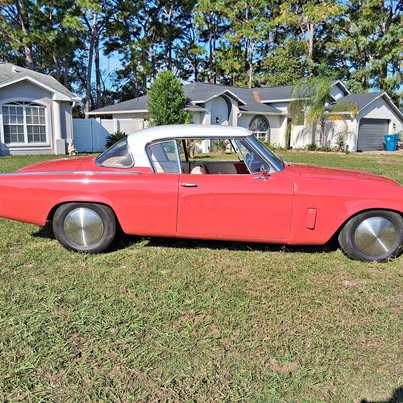
The 1953–55 block is the one the market cares about most, and it splits in two. The coupes — Starlight pillared coupe and Starliner pillarless hardtop, on a 120.5-inch wheelbase — are Robert Bourke's masterwork for Loewy: low, long-hooded, European in proportion, built as Commanders with the V8 or Champions with the small six. The sedans and, from 1954, the two-door Conestoga wagon sit on a 116.5-inch wheelbase and wear the same face on a taller, narrower body; honest cars, but nobody's poster. Learn the body names precisely, because sellers blur them: Starlight is the pillared coupe, with a fixed B-post; Starliner is the pillarless hardtop. A Starliner is worth materially more, and a "Starliner" with a B-post is a Starlight wearing a better name — the post, not the paperwork, settles it. The 1953 production figures in the table explain today's survival pattern: the factory builds Starliners in real numbers, and Starliners are what the hobby preserves. For 1954 the range is much the same with a toothier grille. For 1955 the face grows a large chrome grille surround, wraparound windscreens arrive partway through the year, the President returns as flagship, and a cheaper Commander Custom appears — the lighter body with Commander V8 power, its trim and interior Champion-grade even though its engine is not.
The 1956–58 block closes the classic Commander story. For 1956 the sedans and wagons get taller, more conventional bodies with wraparound windscreens, while the coupe line is re-sorted as the Hawk family: the pillared Power Hawk is the Commander-engined coupe, above the six-cylinder Flight Hawk and below the Sky Hawk and Golden Hawk. A Power Hawk is a Commander in everything but badge, and this guide's mechanical advice applies to it in full. The wagon line gives you the two-door Parkview and four-door Pinehurst; the recorded pool includes a 1956 Parkview, a reminder that wagons survive in small numbers and in family hands. For 1957–58 the cars continue with detail changes and the ultra-basic Scotsman below them; the Commander name is then retired until 1964.
Now the identity trap that runs through the whole range: Commander versus Champion is an engine, wheelbase and trim distinction, not a styling distinction. In most years the two lines share their basic sheet metal. A Champion is the small 169.6 cu in six, the shorter wheelbase where wheelbases differ, plainer trim, smaller brakes and lighter running gear; a Commander is the big six or the V8, better trim and heavier running gear. Because the sheet metal is shared, badges migrate — Commander scripts fit a Champion in five minutes. Your defences are physical: measure the wheelbase on the 1947–51 cars, count the engine (six or eight, and which six), read the serial and body plates, and check the trim walk inside, because a genuine Commander carries its grade in its upholstery, instruments and brightwork in ways far harder to fake than a pair of fender scripts.
| Model | Years | Engine | Output | Built | Character |
|---|---|---|---|---|---|
| Commander / State Commander sedan and coupe | 1938–39 | 226.2 cu in flathead six | 90 hp | — | First Loewy-styled cars; Planar front suspension, Hill Holder on State |
| Commander DeLuxe / Regal DeLuxe (incl. Starlight coupe) | 1947–48 | 226.2 cu in flathead six | 94 hp | — | The first all-new postwar American car; wraparound-rear-window Starlight |
| Commander (incl. Land Cruiser) | 1949–50 | 245.6 cu in flathead six | 102 hp | — | Bigger, stronger six; bullet nose arrives for 1950 |
| Commander Regal Starlight coupe | 1951 | 232.6 cu in OHV V8 | 120 hp | 8,192 | Pillared coupe with the new V8; the six is gone from the Commander line |
| Commander State Starlight coupe | 1951 | 232.6 cu in OHV V8 | 120 hp | 11,637 | Top-trim pillared coupe; the volume Starlight of the bullet-nose year |
| Commander DeLuxe Starlight coupe | 1953 | 232.6 cu in OHV V8 | 120 hp | 6,106 | Entry Loewy coupe; plainer trim, same Bourke body |
| Commander Regal Starlight coupe | 1953 | 232.6 cu in OHV V8 | 120 hp | 14,752 | The volume Loewy coupe; the car the 1953 line is remembered by |
| Commander Regal Starliner hardtop | 1953 | 232.6 cu in OHV V8 | 120 hp | 19,236 | Pillarless hardtop; the best-selling Commander body of 1953 |
| Commander Regal Starlight coupe | 1954 | 232.6 cu in OHV V8 | 120 hp | 3,151 | Production collapses in the price-war year; same car, far fewer built |
| Commander range, all bodies | 1955 | 259.2 cu in OHV V8 (late cars) | 162 hp (2-barrel) | 58,792 | President returns above it; big chrome grille, wraparound screen mid-year |
| Commander Power Hawk coupe | 1956 | 259.2 cu in OHV V8 | 170 hp (2-barrel) | 7,095 | The Loewy coupe under a Hawk badge; Commander mechanicals throughout |
A note on those figures: Studebaker's production records survive unusually completely in the museum archives, and the figures quoted are factory counts for those specific body and trim combinations — which is why the early rows carry none. Where no total is quoted, accept no figure for that combination from anyone, this guide included, without the archive record in hand. Where rarity carries the price, a production-order copy from the Studebaker National Museum archive settles the car's original body, trim, engine and equipment — buy one before you pay a rarity premium, not after.
Engines and gearboxes
Three engine families power every Commander here: the big flathead six, the 232 cu in overhead-valve V8 that replaces it, and the enlarged 259 that follows. All are Studebaker's own designs, all are fundamentally strong, and each has a failure signature you can test for. Identify which is actually in the car first: a flathead's head is a flat slab with the plugs screwed into it from above and no valve covers at all; a V8 shows two rocker covers and a distributor at the back of the engine. A car advertised as a V8 that opens to reveal a flathead is a Champion in costume or a Commander that has lost its engine, and either way the price conversation restarts.
The Commander six: 226 and 245 cu in flatheads
The Commander six is a side-valve (flathead) inline six, and the first thing to grasp is that it is not the Champion's engine: the Champion runs a small 169.6 cu in six of about 80 hp, an economy engine in a light car. The Commander six displaces 226.2 cu in prewar and in 1947–48, rated at 90 hp in 1938–39 trim and 94 hp postwar, and grows to 245.6 cu in for 1949–50, rated at 102 hp with 205 lb ft of torque arriving at only 1,200 rpm. It is a long-stroke, low-revving, understressed engine, and its character matches the figures: nothing much happens above 3,000 rpm because nothing needs to — the car surfs on low-speed torque and pulls top gear down to walking pace. Judge it by that standard. A buyer from a V8 who finds the six "slow" has usually found a healthy engine and the wrong expectation; one who finds it rough, fumy or reluctant to pull from low speed has found a sick one.
The flathead's weaknesses are thermal and age-related, not structural. Cooling is first: the long block's water passages silt up over decades, radiator cores of this era are marginal when clean and inadequate when furred, and a flathead that runs hot warps its head and blows its gasket in slow motion — the classic presentation is a car fine around town that creeps toward the red on a long grade, losing coolant you cannot find at any hose. Test it exactly that way: a road run of at least twenty minutes including a climb, then check for bubbles in the radiator header tank at hot idle, which separates a gasket or head problem (a steady stream of bubbles, worse with a throttle blip) from a silted radiator (hot, but no gas in the coolant). Exhaust manifolds crack with heat cycling, ticking when cold and quietening as they expand — a bargaining point, not a walk-away. A flathead that clatters at hot idle wants its tappet clearances set, a morning's work; one silent but down on power may have valves riding open. An oil gauge reading low hot at idle and recovering with revs is showing bearing wear, and a full six rebuild typically runs $4,500–7,500 at a generalist machine shop. These engines tolerate honest wear gracefully: an even compression spread — within about 10 percent across cylinders — matters far more than absolute numbers.
One trap is specific to this engine: the Champion and Commander sixes look alike at a glance, and a Commander can carry a Champion engine fitted decades ago as the cheap fix, losing performance and value while looking entirely plausible. The difference is not visible from outside; your checks are the engine number, decodable against the factory records, and the performance itself, since a 169-powered Commander is noticeably more breathless than a 226 or 245 car. If the numbers say the engine is the small one, you are buying a different car from the one advertised.
The 232 V8: the engine that changes the car
For 1951 Studebaker replaces the flathead with its own clean-sheet overhead-valve V8, designed in-house under Stanwood W. Sparrow's direction — the single most important mechanical event in this guide. The 232.6 cu in V8, oversquare at 3.375 in bore by 3.25 in stroke, produces 120 hp at 4,000 rpm and 190 lb ft at 2,000 rpm on a 7.0:1 compression ratio, fed by a single Stromberg two-barrel. On paper that is only 18 hp more than the 245 six; on the road it is a different car, revving and holding speed on grades as the flathead never attempts, in a smaller, lighter package. This basic engine, enlarged over the years, powers Studebakers to the end of South Bend production, which is why the knowledge and parts base behind it is so deep.
Know its architecture, because its service needs follow from it. The camshaft is gear-driven — no timing chain to stretch — so a whining front drive on a rebuilt engine points at gear mesh, not a consumable. The valve gear uses solid lifters with adjustable clearance: a rhythmic tick at hot idle usually asks for a valve adjustment, while a single-cylinder tick that survives adjustment sends you looking for a worn cam lobe or lifter face. The oil filter on these early engines is a partial-flow (bypass) type — only part of the oil is filtered on each circuit — which was normal in 1951 and means cleanliness depends on short change intervals; black sludge under the rocker covers is the receipt for long ones. The distributor sits at the rear of the engine, and the engine number is stamped at the top rear of the block beside it on 1951–52 engines, moving to the top front from 1953. That stamp, beginning with a V prefix, is your primary identity check on any V8 car, and its sequence decodes to the year and line the engine was built for. A 232 wearing a later 259 or 289 is common and no sin — the family is essentially interchangeable — but it must be priced as what it is.
Failure modes, with the tests that separate them. Overheating is most often radiator and water pump, but add one V8-specific cause: the exhaust manifold heat-riser valve, which routes hot gas under the intake manifold to speed warm-up, seizes with age. Seized open, it cooks the carburettor and gives hot-start flooding and a flat spot; seized shut, a cold-blooded engine that spits back on winter mornings. Move its counterweight by hand on a cold engine — if it does not swing freely, free or replace it before blaming the carburettor. Oil leaks are the family's social habit: distinguish a weep (a film, an occasional drip) from a leak (active dripping hot, oil on the exhaust, a clutch slipping from contamination through the bellhousing) — the first is ownership, the second a bill, with a rear-main reseal typically $600–1,200 because access, not parts, is the cost. Low oil pressure hot means bearings, as with the six; a V8 short-block rebuild typically runs $5,000–9,000. Carburettor complaints are nine times out of ten the Stromberg's accelerator pump, float level or ethanol-perished gaskets, and a professional rebuild at $300–600 transforms most "tired engine" complaints — but never let a seller's "needs a tune," or a fresh carburettor rebuild, talk you out of a compression test.
The 259 V8, and the 224 that came first
The 1955 story has a wrinkle you must check physically. Early 1955 cars carry a short-lived 224.3 cu in version of the V8; partway through the year the 259.2 takes over, bored to 3.5625 in on the same 3.25 in stroke. In standard tune, with the Stromberg WW two-barrel, the 259 is rated at 162 hp; the optional four-barrel Passmaster version, with a Carter WCFB and dual exhausts, at 185 hp, and for 1956 the two-barrel rating rises to 170 hp in the Power Hawk. The 259 is the mechanical sweet spot of this guide: torquier and lazier than the 232, thoroughly developed, best supported by the parts trade. But a 1955 car advertised as a 259 that carries the 224 is a lesser car than described, and the engine number is the arbiter — from outside, 224, 232, 259 and 289 are four brothers in the same suit. Everything said about the 232's valve gear, oil system, heat riser and leaks applies unchanged; add only that the WCFB's secondary operation needs verifying on the road — a car that pulls cleanly then stumbles when floored often has seized or maladjusted secondaries, not an engine fault.
Gearboxes: overdrive manuals, Automatic Drive and Flight-O-Matic
The standard gearbox is a three-speed manual with column shift — stronger and pleasanter than its humble specification suggests. The option that transforms it, and the one to hunt, is the Borg-Warner overdrive behind it: a separate planetary unit, electrically controlled, with a governor that arms it at road speed, a solenoid that engages it, a kickdown switch under the accelerator that drops it out for overtaking, and a dashboard cable that locks it out and disables the freewheel that otherwise operates below engagement speed. In overdrive top the engine turns at roughly seventy percent of its direct-top speed, and the car cruises as a direct-top car cannot. Test it as a system: freewheel gently at low speed, engagement with a soft surge as you lift the throttle above engagement speed, hold under load, kick down smartly floored. One that never engages is most often electrical — solenoid, governor, switch, wiring — and usually a $150–500 exercise rather than a rebuild; one that slips or jumps out under load is mechanical and dearer. A car whose overdrive is permanently locked out is telling you a previous owner declined the electrical bill; the hardware is probably still there.
The automatic story has two chapters; know which is in the car. Studebaker Automatic Drive, introduced during 1950 and used through 1955, is the Borg-Warner Detroit Gear (DG) design — DG150, DG200 and DG250 variants — and it is remarkable: a planetary automatic whose torque converter locks up mechanically in top, giving direct drive with no slip, decades before lock-up converters become universal. Early units start in intermediate gear and shift once into locked top, so an early car that seems to have only one shift is not broken; from 1954 they start in low as a true three-speed. The costs are real: the DG is complex and expensive to rebuild, the pool of shops that know it is small, and a full overhaul is a $2,500–4,500 specialist job. One that shifts cleanly, locks up without shudder and holds clear, unburnt fluid is a prize; check the dipstick's colour and smell before the road test, not after. For 1956 the DG is dropped on cost grounds for Flight-O-Matic, a Borg-Warner unit closely related to Ford's Ford-O-Matic: conventional three-speed, no lock-up, second-gear start in V8 form — less brilliant, much easier to live with, and correct on a 1956 car. The prewar footnote: where the 1938 Miracle Shift survives and works it is a delightful period piece; where converted to a column shift, that is a practical improvement and a small authenticity deduction — either is acceptable if disclosed and priced.
Problem areas
Every Commander problem falls into one of five systems: body and frame, brakes, front suspension and steering, electrics, and interior and trim. Work through them in that order — it is also the order of financial danger. A Commander with a tired engine and a sound body is a project with a future; one with a sweet engine and a rotten body is a parts car with a pulse.
Rust: the map
Studebaker builds these cars body-on-frame throughout the period of this guide — there is no unitary construction to fear — but do not let that comfort you into skipping the underside. The frame is a separate ladder-type chassis and it is strongly made; the body bolted to it is where the water wins. Learn the map, because rust on these cars is not random: it follows the water's routes, and the same places fail on car after car.
Start with the floors. The front pans rot from the inside out: water enters past perished windscreen and cowl seals and the cowl vent, sits under carpets and mats — rubber mats are worse, because they trap what they catch — and eats the pan from the top down, so a floor sound from underneath can be tissue paper under the driver's heels. Lift the mats on any car you are serious about; a seller who will not let you has answered the question. Toe boards and lower cowl sides follow the same water path. The rocker panels — the sills below the doors — rot from inside: dirt and water enter at the ends, drains block, and the panel perforates first at its lowest, rearmost point, ahead of the rear wheel. Press along the sill's underside for the give and crunch of laminated rust; bubbling on the outer face means the inside is far worse, because the outer face is the last place it shows. Proper sill replacement runs roughly $1,200–2,500 per side, and a car needing floors, sills and trunk work at once costs more to restore than a sound car costs to buy.
Move rearward. The trunk floor rots around its edges and above the fuel tank, fed by water past the decklid seal and, on the Starlight coupes, past the wraparound rear window, whose seal channel is a rust trap of the first order: the four-piece rear glass of the 1947–52 Starlight is surrounded by a channel that holds water against the steel, so inspect its lower corners from inside the trunk and the rear seat area with care, because repairing that channel means removing glass you do not want to disturb. On the 1953–55 Loewy coupes the map shifts: rear quarters blister along their lower edges and behind the wheel openings, the decklid's lower skin goes, and the long, heavy doors rot along their bottom seams where drain holes block. On all years, front fenders rust at their lower rear edge where they meet the cowl, and at the headlamp surrounds on bullet-nose cars. The battery tray and inner fender beneath it suffer acid attack. Wagons add their own chapter: a Parkview or Conestoga tailgate's lower panel, rear floor and spare-wheel well hold water and cargo damage together, and a wagon with a sound tailgate earns a premium because so few survive unrotted.
Now the frame, checked not because it usually fails but because when it does, everything else is moot. The vulnerable points are the rear kick-up over the axle, where the rails trap mud on their top faces; the crossmember ends and body-mount outriggers, where a rotten mount lets the body sit down and throws every panel gap crooked; and any previous repair that plated over rust instead of cutting it out — fresh black underseal over a suspiciously lumpy surface is a confession, not a cosmetic. The settling test: sight along the sills and rails for sag or twist, then open and close every door on level ground and again with one front wheel raised on a ramp — doors that bind or pop as the car twists are telling you the structure between them is soft. A sound frame with rotten bolt-on panels is a viable car. A rotten frame under shiny panels is a trap with good marketing.
Brakes, and the Hill Holder
The brakes on every car here are four-wheel hydraulic drums fed by a single master cylinder, and that single circuit organises your thinking: any one hydraulic failure — a rusted line, a perished hose, a blown wheel cylinder seal — costs you the whole system, not half of it. Properly maintained, the brakes are adequate for the cars' performance, and Commanders carry larger drums than Champions — a quiet reason the bigger car is the better buy. Age attacks systematically: steel lines corrode in their frame clips and from inside if the fluid has absorbed water; flex hoses perish and can fail internally, a detached inner flap acting as a one-way valve — the brake applies, then will not release, and the wheel runs hot. That hose failure is the great impersonator here, routinely misdiagnosed as a wheel cylinder or Hill Holder fault. The distinguishing test: crack the bleed screw on the dragging wheel. If fluid spurts under residual pressure and the brake frees, pressure is trapped upstream and the hose (or Hill Holder) is the culprit; if nothing spurts and it still drags, the fault is mechanical in the drum.
The Hill Holder deserves its own explanation, because sellers alternately boast about it and blame it for unrelated faults. It is a Bendix NoRoL device, introduced by Studebaker in the 1930s and fitted to manual cars: a valve body in the brake line at the master cylinder containing a steel ball. Stop uphill with clutch down and brake applied, and the ball rolls back onto its seat; lift off the brake and the ball traps pressure, holding the car. Release the clutch and linkage unseats the ball as drive takes up, and you pull away without rolling back. When it works, it is delightful. Its two failure modes are opposites: a ball and seat fouled with old-fluid sediment either holds pressure when it should not — brakes dragging after hill starts, or after any stop if the linkage is maladjusted — or fails to hold at all, the car rolling back on hills while behaving perfectly elsewhere. Linkage adjustment is the first suspect in both cases: a car that drags its brakes just after a clutch replacement has almost certainly had the linkage disturbed, and the fix is adjustment to the manual, not a new valve. Test it deliberately: on a slope, stop, clutch down, brake on, brake off — the car should sit; feed the clutch in — it should release cleanly as drive arrives. Budget $200–500 for overhaul and setting by someone who knows the device. Many owners bypass it and drive on the handbrake — serviceable, but it should be disclosed and priced, because a working one is part of what you are paying for.
The rest of the brake audit is non-negotiable. The master cylinder lives under the floor on early postwar cars, filled through an access plate, so it is rarely checked and often found weeping or running on ancient fluid; budget a full hydraulic renewal — master cylinder, four wheel cylinders, three flex hoses, lines as needed — at $800–1,800 on any car without documented recent work, and treat it as the entry ticket for a single-circuit car, not a defect. Inside the drums, look for scored drums, shoes contaminated by leaking cylinders or axle seals, and seized self-adjusting hardware where fitted. The handbrake, a separate cable system, is your only backup: test it on the same slope as the Hill Holder. Finally, front disc conversions exist and are popular: a well-executed one with a dual master cylinder is a genuine improvement and no deduction, but one retaining a single master cylinder is a liability wearing a selling point's clothes — ask what was actually fitted.
Front suspension, steering and the rear axle
Postwar Commanders run independent front suspension with coil springs, upper and lower arms, and kingpins — vertical pins on which the stub axles pivot — in place of the prewar transverse-leaf Planar layout. The kingpin design is strong and long-lived exactly as long as it is greased. The failure mechanism is plain: the pin runs in bushings at the top and bottom of the stub-axle carrier, with a thrust bearing carrying the car's weight; grease starvation lets water in and metal meet metal, the bushings wear oval, and the wheel gains play. The test takes a minute: front wheel jacked clear, supported under the lower arm so the suspension stays loaded, grip the tyre at twelve and six and rock — play felt as a clonk is kingpin and bushing wear; grip at three and nine to test steering joints and wheel bearing separately, so you do not bill the kingpins for a loose bearing. Kingpin and bushing renewal, reamed to size, is a specialist-press job at $700–1,400 per side if the uprights are sound — which is why documented front-end work is worth real money. The prewar Planar cars substitute their own wear list: transverse spring leaves that crack and sag, and perished shackle and link bushings.
Steering on the later cars uses a centre-point arrangement, with a bellcrank relaying motion to both wheels. Its pivot bushing is the wear point nobody greases and everybody blames on the steering box: worn, it makes the car wander and feel vague around the straight-ahead while the box itself may be perfectly adjusted. The distinguishing test is a helper rocking the wheel gently through its free play while you watch underneath where the motion is lost — bellcrank pivot, track-rod ends and inside the box are three different bills, and only the third is large. The rear axle, a live axle on leaf springs, is the least troublesome assembly on the car: listen for a whine that changes between drive and overrun (crownwheel and pinion wear), and check pinion and axle seals for cheap-part, moderate-labour leaks. Springs sag with age, more on the driver's side; assess them before blaming dampers, whose test is one firm return to rest, not two-plus oscillations.
Electrics: living with six volts
Every Commander built before 1956 runs 6 volts with positive earth — the battery's positive terminal is the grounded one — and a generator rather than an alternator. Nothing about that is a defect. What age does is raise resistance everywhere at once: insulation hardens, earth straps corrode at their frame connections, contacts pit, starter brushes wear — and a 6-volt system, carrying twice a 12-volt system's current for the same work, punishes resistance twice as hard. The classic presentation is slow hot cranking, headlamps the colour of weak tea, and an owner who says "they're all like that." They are not: a healthy 6-volt car cranks briskly. Measure rather than guess — voltage at the battery while cranking is the battery's truth, voltage at the starter terminal is the cables' truth, and the difference is the resistance you are hunting, usually in the earth path. A full refresh — heavy-gauge cables, earth straps, starter and generator overhauled — runs $500–1,100 and is among the best money you can spend on one.
Two traps belong here. The first is polarity: with positive earth, a carelessly fitted modern battery, a habitual jump start or a modern accessory wired by assumption can all do damage, and a car converted to 12 volts and negative earth — a common, legitimate conversion, standard from the factory for 1956 — must be checked for completeness: a proper conversion deals with charging, bulbs, motors, fuel gauge and clock, while a partial one leaves burnt bulbs and odd behaviour for you to inherit. Verify the system at the battery with your own eyes before discussing anything else electrical. The second trap is the wiring itself: original loom insulation is seventy-plus years old, and unrestored cars carry cracked, chafed, amateur-spliced sections; intermittent faults that come and go with bumps are chafed wires earthing on bodywork until proven otherwise. Specialists supply replacement looms, and a car with a new one has had one of ownership's least glamorous jobs done for you — it should count in the price.
Interior, trim and brightwork
The mechanicals are replaceable; much of the trim is not, and the interior audit is where experienced buyers slow down. Start with brightwork: the bullet-nose spinner assembly, the 1953 coupes' slim bumpers and fine grille bars, the 1955 cars' big chrome surround — these define each year's face, they pit, crack and bend, and a missing or broken casting is a search, not a purchase order. Rechroming a major grille assembly runs $800–2,000, assuming you have a sound core. Inventory the brightwork piece by piece, because "complete trim" in an advertisement and complete trim on the car are different countries. Inside, apply the same discipline to winders, handles, dash knobs, clock, radio, seat frames and springs. Upholstery is reproducible — specialists supply correct-pattern covers and panels, and a full retrim runs $3,000–6,500 — but collapsed seat frames are fabrication, and a Starlight's interior, its shapes dictated by the wraparound glass, leaves no room for improvisation. Rubber seals are stocked consumables; a car that leaks in the rain is usually a seals bill, not a body bill — but remember where that leaked water has been going, and re-read the rust section. On a convertible, operate the top fully, twice, and check the frame pivots for the slop that makes a top sit crooked and leak at the header rail.
How to inspect one
Inspect in this order, cold car first, and do not let the seller warm it up before you arrive — a warm engine hides cold-start smoke, a seized heat riser and half the noises you are paying to hear.

- Identity before condition. Read the serial and body plates, then the engine number — top rear of the block by the distributor on a 1951–52 V8, top front from 1953. Confirm the car is the Commander it claims to be: wheelbase measurement on a 1947–51 car, engine size per the engines section, B-post present or absent on a 1953–55 coupe. A Starlight sold as a Starliner, or a Champion-engined car sold as a Commander, reprices everything that follows.
- Cold start, standing behind it. Blue smoke on start-up that clears is valve seals; smoke that persists under load is rings or bores. Listen for the flathead's tappet clatter or the V8's single-cylinder tick, and move the heat-riser counterweight by hand once the engine is off and cooling.
- Coolant and oil, hot. After a run of at least twenty minutes, look for bubbles in the radiator header tank at idle — the gasket test from the engines section — and check the oil filler and dipstick for emulsion, and the oil pressure gauge's hot-idle reading.
- Floors and sills. Lift the mats. Press the sill undersides along their length, hardest just ahead of the rear wheels. A seller refusing the mats test has graded his own floors.
- The twist test. Open and close every door on level ground, then again with one front wheel raised. Binding or popping doors mean soft structure, per the rust section — and on a Starlight, inspect the wraparound rear window's lower channel from inside the trunk while you are there.
- Frame and mounts. Torch along the rear kick-up, crossmember ends and body mounts. Fresh underseal over lumps is a confession; plated rails are a walk-away unless documented as proper repairs.
- Brakes, statically. Firm pedal that does not sink under sustained pressure; then inspect the master cylinder for weeping, flex hoses for cracking, and budget the full hydraulic renewal from the problem areas if there is no documented recent work. On a single-circuit car this step is not optional.
- The hill test. On a slope: handbrake holds alone; then, on a manual car, the Hill Holder test exactly as the brake section describes — holds with clutch down and brake released, releases cleanly as drive arrives. A dragging wheel afterwards sends you to the bleed-screw test to separate hose from Hill Holder.
- Front end, loaded. Jack under the lower arm and rock the wheel at twelve and six for kingpin play, three and nine for steering and bearing play. Then have a helper rock the wheel while you watch the bellcrank on a later car, locating the lost motion before you price it.
- Gearbox as a system. Manual: overdrive freewheels, engages, holds and kicks down, per the gearbox section. DG automatic: check fluid colour and smell first, then confirm clean shifts and a shudder-free lock-up. Flight-O-Matic: conventional behaviour, no flare between gears.
- Electrics by measurement. Cranking voltage at the battery and at the starter; the gap between the numbers is the resistance bill. Confirm by eye which system the car runs — 6-volt positive earth or a 12-volt conversion — and whether a conversion is complete.
- Trim inventory, last and slowly. Spinner or grille assembly, bumpers, scripts, dash hardware, seat frames. Price what is missing as a search, not a purchase, and let a complete, shabby interior outrank a pretty, incomplete one every time.
Values
Read this market from the body backwards, not from the badge forwards. Within any single year, the spread between the least and most wanted Commander is driven first by body style, then by condition, and only then by trim and options. The Loewy coupes sit at the top, the pillarless Starliner above the pillared Starlight, because the design is the point of those cars; convertibles trade on rarity and summer appeal; sedans sit at the bottom of each year's range not because they are worse cars — mechanically they are the same cars — but because supply is larger and the styling argument weaker. Wagons break the pattern: built in small numbers, used hard, and now wanted for rarity and utility, so a genuinely sound wagon can outrun a sedan of the same year by a margin that surprises sellers who price by body count alone.
Condition spreads are wider than asking figures suggest, because the cost curve of putting one right is so uneven. The project-to-driver gap is not really about the engine — engines are rebuildable at knowable cost — but about body and brightwork, where costs are open-ended and missing pieces are searches. Two apparently similar cars can therefore be honestly offered at very different levels: the cheaper one is often carrying the sill, floor and grille bills itemised in this guide. Asking prices also run ahead of achieved prices here more than in the mainstream classic trade, because sellers anchor on the best coupe advertised while selling a sedan, or on restoration money spent, which the market does not reimburse. Treat every asking figure as the start of a conversation whose subject is the inspection findings, and let documented work — hydraulics renewed, front end rebuilt, floors done properly with photographs — carry real weight, because documentation is the closest thing to a warranty this market offers. Use the cars recorded on this site and the market summary appended below this guide to place a specific car against its true peers — same body, same engine, same structural state — never against the best photograph on the internet.
Parts and ownership
Ownership is where the Commander repays its buyers. The Studebaker Drivers Club is the centre of the world: join before you buy, because its magazine, technical advisers and members' classifieds answer questions this guide cannot, and a knowledgeable member is the best pre-purchase inspector you can hire. The parts trade is unusually deep for an orphan. Studebaker International and Stephen Allen's Studebaker are the anchor specialists, carrying new old stock, reproduction and used parts; the factory's vast unsold inventory passed into the trade when South Bend closed, which is why genuine stock still surfaces. Mechanical consumables — brake cylinders, hoses, kingpin kits, gaskets, water pumps, carburettor kits — are routine orders, typically $40–250 per item, and a brake renewal is a phone call, not a quest. Body panels are the honest limit: reproduction floors and repair sections exist for the popular cars, but a Starliner quarter or a Starlight window channel is a used-part search, and prewar sheet metal is scarcer still. The museum production orders double as an ownership tool, settling arguments about engines, trim and colours for as long as you own the car. Running one is undemanding: 3,000-mile oil changes suit the partial-flow V8s, kingpins want grease at every service, the Hill Holder wants clean fluid and correct linkage, tyres in period sizes are stocked by the classic tyre trade, and the car wants to be driven — Commanders that sit grow the resistance, seized heat risers and perished hoses catalogued here, while cars in regular use mostly just wear their tyres.
Which one to buy
- The design buy: a 1953 Commander Regal Starliner. The pillarless Loewy hardtop is the car this nameplate is remembered by, the factory builds 19,236 so supply is real, and the 232 V8 with overdrive is the specification to hunt. Verify the missing B-post before paying the premium.
- The value buy: a 1953–54 Commander Starlight coupe. The same Bourke body and V8 with a B-post and plainer trim. The DeLuxe Starlight is the cheapest honest entry into the Loewy shape.
- The driver buy: a 1955–56 Commander with the 259. The strongest, best-supported engine in the guide, Flight-O-Matic ease in the 1956 cars, sedan prices for coupe mechanicals. On a 1955, confirm by engine number that it is a 259, not the early 224.
- The character buy: a 1951 Commander, any body. Bullet nose and first year of the V8 in one car, with the DG automatic's lock-up top gear as a genuine party trick. A State Starlight or Land Cruiser gives you the full 1951 argument at sedan money.
- The traditionalist buy: a 1949–50 Commander six. The big 245 flathead, the Starlight's wraparound glass, overdrive if fitted. You are buying torque and period charm, and you must buy the body twice as carefully as the engine.
- The prewar buy: a 1938–39 Commander coupe. For the committed only: Planar suspension, Hill Holder, Miracle Shift questions on the 1938 car, trim that cannot be reordered. Buy completeness above all.
- The left-field buy: a 1956 Parkview wagon. Commander V8, wagon utility, survival rarity. Inspect tailgate and rear floor first; a sound one is genuinely scarce.
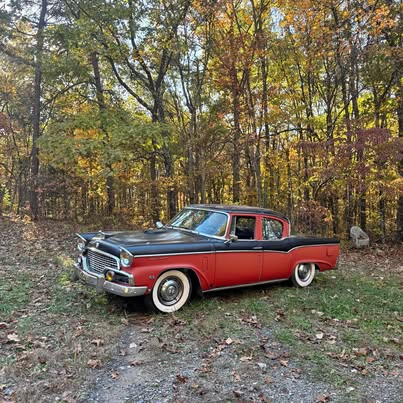
The overriding rule: buy the body, then the brightwork, then the engine — in that order, every time. A sound shell with complete trim can absorb any mechanical bill this guide names; a shiny car with rotten sills and a missing grille is expensive at any price.
See the 3 Commander cars currently listed.
For sale now
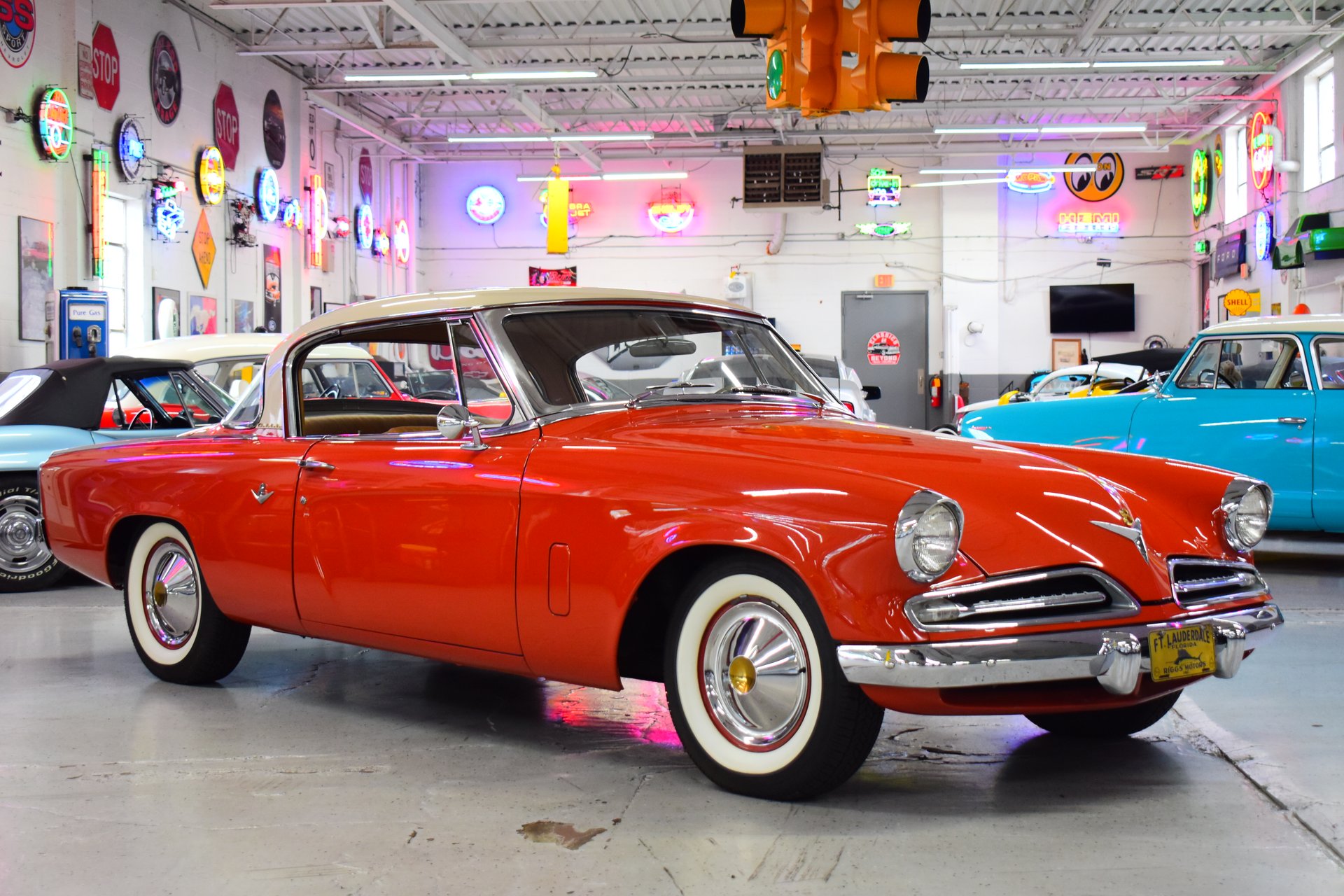 $39,995 · 29% above typical
Expand
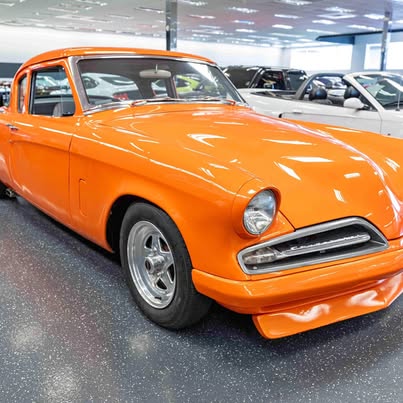 $25,999
Expand
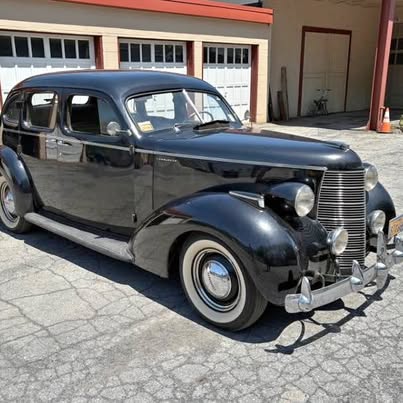 $13,500
Expand
What they sell for: Commander sale prices.