
Studebaker Silver Hawk buyer's guide
Studebaker Silver Hawk -- the model's own buyer's guide: variants, values and what to check.
Years listed: 1958-1964 · Series: Lark/Hawk
# Studebaker Hawk — Buyer's Guide
Overview and history
You are not really buying a Hawk. You are buying the afterlife of the most beautiful American car of 1953, stretched, finned, de-finned, supercharged and bargain-priced across eleven model years by a company fighting for its life the whole time — and somehow never stopped making the car interesting. Understand that arc and every Hawk makes sense. Miss it, and you will pay Golden Hawk money for a Silver Hawk with jewellery, or walk past a genuinely rare supercharged GT because the seller described it badly.
The starting point is the 1953 Starliner hardtop and Starlight pillar coupé, the "Loewy coupés" designed under Raymond Loewy's studio with Robert Bourke doing the actual lines. They anchor the Hawk story because every Hawk from 1956 to 1964 is, underneath the changing decoration, that same 1953 coupé body on the same 120.5-inch-wheelbase chassis. The shell is not a metaphorical carry-over: the doors, the basic cowl and the whole understructure persist, which is wonderful for parts interchange and ruthless for rust — a weakness designed in for 1953 is still there, in the same place, on a 1964 car.
For 1956 Studebaker turns the coupés into a named family — the Hawks — split by engine and trim into a ladder: six-cylinder Flight Hawk, V8 Power Hawk, 289 Sky Hawk hardtop, and at the top the Golden Hawk, a genuine performance car carrying Packard's 352 V8. In 1957 the range simplifies to the Silver Hawk pillar coupé and the supercharged Golden Hawk hardtop, a two-car pattern that runs through 1958. The Silver Hawk alone continues for 1959, the name shortens to plain Hawk for 1960–61, and then Brooks Stevens performs one of the great low-budget facelifts: for 1962 the fins come off, a squared, formal roofline goes on, and the car relaunches as the Gran Turismo Hawk, running to the end of South Bend production in December 1963, sold as a 1964 model.
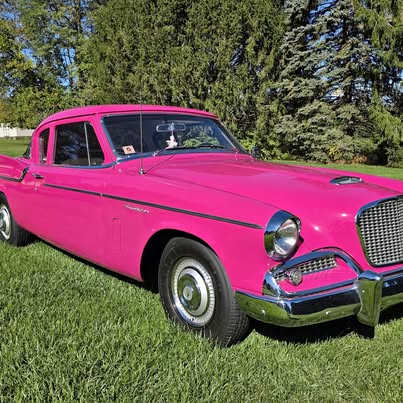
The cars on this site scope the family honestly rather than completely. The current pool is small — eleven records, nine offered for sale and two recorded sold — and it clusters where the surviving, trading cars cluster: one 1957, three 1958s, one 1959, two 1962s and four 1963s, so Silver Hawks and Gran Turismo Hawks dominate and the 1956 cars do not appear at all. Treat the pool as a snapshot of what you will actually find advertised, not as the family's shape. Automatics outnumber manuals heavily in it, colours run from grey (twice) through pink, blue, yellow, beige, red, black and gold, and the located cars scatter — Tennessee twice, and singles in New Jersey, Ohio, Michigan, Kentucky and Kansas. That scatter is typical: Hawks survive everywhere because they were sold everywhere, usually cheaply, to people who kept them.
Why buy one at all? Because a Hawk gives you three things no similarly priced contemporary combines: distinguished styling with a documented design pedigree; simple, over-engineered mechanicals — an iron V8 with a forged crank and gear-driven cam, a Dana rear axle, kingpin suspension you can grease and rebuild at home — wrapped in a parts world far healthier than the orphan-car stereotype suggests; and, at the top of the range, real performance, from the factory-supercharged 289 of 1957 to the Avanti-engine R-series GT Hawks of 1963–64, proper muscle-era machinery in a gentleman's suit.
The counterweights are rust, identity and a market that prices badges instead of cars. A Hawk shell rusts in structural places, and because values have historically been low, many cars were repaired to a price — filler over frame rot, floors patched from above, fins refitted over corroded steel. Identity matters because the range spans a six-cylinder Flight Hawk and a supercharged Golden Hawk sharing a silhouette: engines swap easily, badges swap easier, and the difference between a genuine R2 GT and a 289 with a blower bolted on is the difference between a collectible and a project with delusions.
One myth to kill before we start: Studebaker did not build Hawks out of parts-bin leftovers. The supercharged cars were engineered programmes with their own pistons, cams, cooling and axle specifications, and the GT Hawk's restyle was a considered design job, not a sticker package. The company was short of money; the cars, mostly, are not short of engineering.

The models
The Hawk family is a ladder, and your first job is to place any car on the right rung before you discuss condition or price, because the rungs share bodywork and almost nothing else that determines value. Remember that trim, fins and badges are the easiest things on the car to change.
The 1956 launch range has four rungs. The Flight Hawk is the entry car: a pillar coupé with the flathead Champion six, modest trim and economy-car manners — charming, slow and now genuinely scarce, because few were saved. The Power Hawk puts the 259 V8 in the same shell and is the sweet-tempered all-rounder of the first year. The Sky Hawk is a hardtop with the 289 V8 and plusher trim, a one-year model collectors rate highly precisely because it was not repeated. The Golden Hawk tops the range as a hardtop with the Packard 352 V8 and heavy-duty running gear; for 1956 only, it is a Studebaker with another company's flagship engine, available because of the Studebaker-Packard merger.
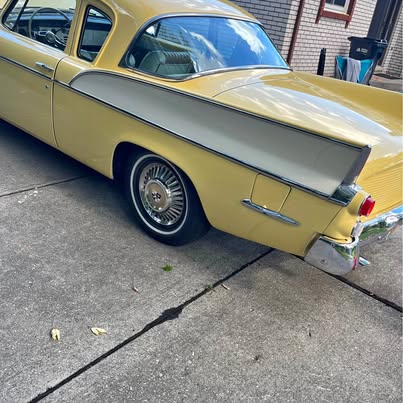
For 1957 the ladder is rebuilt. The Silver Hawk replaces the Flight, Power and Sky Hawks as a single pillar-coupé line offered with the six or the 259 or 289 V8, wearing tall steel fins. The Golden Hawk continues as the hardtop flagship but changes character completely: the Packard engine is gone, and in its place sits the 289 with a McCulloch supercharger, rated at the same output and weighing far less over the front wheels. The 1957–58 Golden Hawk also gains the family's most recognisable feature — raised rear fins of fibreglass bolted over the steel fenders — plus a bonnet scoop feeding the blower. For 1958 the range is Silver Hawk and Golden Hawk, trimmed a little more cheaply as money tightens. The Golden Hawk ends after 1958; the Silver Hawk carries 1959 alone, recognisable by cleaner flanks and the Hawk emblem on the fin; and for 1960–61 the car is simply the Hawk: a pillar coupé, V8 standard, fins shrunk to vestigial blades, and from 1961 a four-speed manual on the options list, which transforms its character.
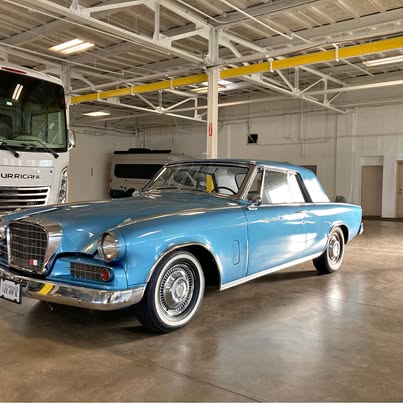
The Gran Turismo Hawk of 1962–64 is the final form and the one you will meet most often, including in this site's pool, where 1962 and 1963 cars make up the majority of records. Stevens removes the fins, fits a squared roof with a thick rear pillar on the hardtop shell, adds a faux grille panel between the headlamps, and gives the interior bucket-style seats and wood-effect trim. Underneath it is the same car — same chassis, same 289 as standard — but the options list now reaches into the Avanti programme: for 1963–64 you can order the R1 and supercharged R2 engines, front disc brakes, a four-speed and Twin Traction in combinations that make some GT Hawks genuine factory performance cars. A 1964 GT, built in South Bend's last weeks, is the rarest regular-production Hawk simply because so few were made.
| Model | Years | Engine | Output | Built | Character |
|---|---|---|---|---|---|
| Flight Hawk | 1956 | 185 cu in flathead six | ~101 hp | — | Economy coupé; scarce survivor |
| Power Hawk | 1956 | 259 cu in V8 | ~170–180 hp | — | The first-year all-rounder |
| Sky Hawk | 1956 | 289 cu in V8 | ~210 hp | — | One-year hardtop; collector favourite |
| Golden Hawk | 1956 | 352 cu in Packard V8 | 275 hp | 4,071 | Heavy, fast, a merger-era one-off |
| Silver Hawk | 1957–59 | Six, 259 or 289 V8 | ~101–225 hp | — | The volume Hawk; pillar coupé |
| Golden Hawk | 1957–58 | 289 V8, supercharged | 275 hp | 4,356 (1957); 878 (1958) | The blown flagship; fibreglass fins |
| Hawk | 1960–61 | 289 V8 (six in 1960) | ~210–225 hp | — | Simplified, honest, four-speed from 1961 |
| Gran Turismo Hawk | 1962–64 | 289 V8; R1/R2 optional 1963–64 | 225 hp; R1 ~240, R2 ~290 | 9,335 (1962); 4,634 (1963); 1,767 (1964) | The Stevens car; the performance sleeper |
Outputs are period factory ratings, quoted the way Studebaker quoted them; treat all 1950s horsepower figures as comparative rather than absolute. Production figures are given only where they are firmly documented.
Three identity points govern this table, and each is worth money. First, the 1956 Golden Hawk is Packard-engined and the 1957–58 car is a supercharged Studebaker; they share a name and silhouette and almost nothing mechanical, and the engine bay settles it in five seconds — a big Packard V8 against a compact 289 wearing a round McCulloch blower and an enclosed air box. Second, fins lie: steel Silver Hawk fins, fibreglass Golden Hawk fins and plain Hawk blades all interchange in a determined trimmer's hands, so fins alone never prove a variant. Third, the GT's R-engines are documented options, not trim: a genuine R2 left the factory with the blower, the correct carburettor enclosure, heavy-duty cooling, suspension and axle specification, and a record the Studebaker National Museum archives can confirm from the production order. A standard GT with a Paxton added later can be a fine car, but it is a modified standard GT and you price it as one.
Engines and gearboxes
The sixes and the small V8s: Champion, 259 and 289
Start at the bottom, because it teaches you how Studebaker engineered everything above it. The six in Flight Hawks and early Silver Hawks is the Champion engine, a flathead six of 170 cubic inches, later 185, built in essence since 1939. It is smooth, quiet, almost impossible to wear out and slow in a way modern drivers underestimate: roughly 101 horsepower moving a full-size coupé makes motorway merging a planned manoeuvre. Its virtues are simplicity — almost nothing on it defeats kerbside servicing — and its vices are the flathead vices: it runs hot in traffic if the cooling system is neglected, valve clearances are set by grinding rather than a quick tappet adjustment, and repeated overheating eventually cracks the block around the exhaust valve seats. From 1961 the Hawk six, where offered, is the overhead-valve 170, a different and livelier engine converted from the flathead architecture; check which six a late car actually has.
The V8s are where Hawks live. Studebaker's overhead-valve V8, introduced in 1951, is a compact, deep-skirt iron block with a forged steel crankshaft, gear-driven camshaft — no timing chain to stretch, ever — and generous bearing sizes. In Hawks you meet it mainly in two sizes. The 259 (259 cubic inches, about 4.2 litres) powers Power Hawks and most Silver Hawks, in two-barrel form at around 170–180 horsepower and in four-barrel form a little higher. The 289 (about 4.7 litres) powers Sky Hawks, later Silver Hawks as an option, all 1960–61 Hawks and every standard GT Hawk, at roughly 210 horsepower with a two-barrel carburettor and 225 with a four-barrel. The two engines are externally near-identical, share almost every service part, and differ by crankshaft stroke — which means a 259 can become a 289 and a tired engine can hide under either set of badges. The engine number, stamped on a pad at the front of the left-hand side of the block, carries a prefix that identifies displacement and year series; decode it against the published tables before you pay 289 money for any car, because the seller may honestly not know what a previous owner fitted.
In service both V8s share the same short list of real weaknesses. The gear cam drive eliminates chain wear, but the fibre or aluminium cam gear itself eventually sheds teeth at high mileages, announcing itself as erratic timing and a rattle from the front cover. The rope-type rear main seal weeps with age — a damp bellhousing is normal; a drip that marks the drive after every run is a gearbox-out job in the $900–1,800 range. Hardened valve stem seals give the classic puff of blue smoke on start-up after standing; continuous blue smoke under load is rings and bores, and a proper rebuild conversation runs $4,500–7,500 with machining. Oil pressure is the quick health check: a freshly "rebuilt" engine with lazy hot idle pressure has usually been treated to rings and hope rather than bearings and measurement. Carburation is by Carter or Stromberg units — simple, rebuildable, prone to the usual ethanol-era perished pump cups and swollen needle valves, which present as hot-start flooding and hesitation.
Cooling interacts with everything. The radiators are marginal when silted, and the thermostat housing and bypass arrangement must be correct or the engine overheats at the heads while the gauge reads innocently. A Hawk V8 hot in traffic but cool on the road usually wants a radiator recore ($600–1,100) and a fan and shroud check; one hot everywhere wants a compression test first, because head gaskets and cracked heads between the valve seats enter the picture. Head cracking is the one genuinely expensive V8 failure mode: it follows repeated overheating, and shows as unexplained coolant loss and a misfire no ignition part cures.
The supercharged engines: McCulloch 289 and the Avanti R-series
The 1957–58 Golden Hawk engine is Studebaker's boldest production move of the decade: the 289, fitted with lower-compression pistons, a performance camshaft, dual exhausts, heavy-duty cooling and a McCulloch VS57 centrifugal supercharger blowing through an enclosed Carter four-barrel carburettor, rated at 275 horsepower — the same headline figure as the Packard 352 it replaced, from 63 fewer cubic inches and with far less weight on the front axle. The VS57 is a variable-ratio design: a split pulley changes drive ratio under solenoid control, so boost builds with demand rather than simply with revs. It works, and a healthy Golden Hawk is a genuinely quick 1957 car. It is also a system with consumables and failure modes of its own, covered in the problem areas below, and the first identity rule of the whole guide applies here: a genuine Golden Hawk has the full installation — blower, drive, air box, correct carburettor, low-compression engine internals — documented by its production order, while the market periodically offers Silver Hawks wearing a blower and Golden Hawk badges. The blower is the easy part to add. The engine underneath it is the expensive part, and the paperwork is the part that makes it a Golden Hawk.
The story resumes with the Avanti programme. For the 1963 Avanti, Studebaker's engineers developed the 289 into a family of R-engines, and those engines were offered in the GT Hawk for 1963–64. The R1 is the naturally aspirated performance version: high-compression heads, a Carter AFB four-barrel, a hotter camshaft and dual exhausts, rated around 240 horsepower. The R2 adds a Paxton SN60 centrifugal supercharger — Paxton having absorbed McCulloch's supercharger business — with the carburettor in a sealed pressure box, rated around 290 horsepower, and it is the engine that makes a GT Hawk a factory muscle car in a tailored suit. Beyond them sit the rare competition engines: the R3, bored and stroked to about 305 cubic inches with big-valve heads and the Paxton blower, rated around 335 horsepower and built in tiny numbers, mostly for Avantis; and the R4, a dual-four-barrel naturally aspirated version at around 280 horsepower, rarer still. R3 and R4 Hawks, if they exist as factory cars at all, are documented individually — treat any claim of one as unproven until the production order says otherwise, and expect the claim, not the car, to be the usual situation.
Mechanically the R-engines share the standard 289's bottom-end strength and add their own sensitivities. The R1's high compression makes it the most octane-sensitive engine here: on modern fuel it wants its timing set by ear and plug reading rather than the book figure, and sustained detonation will find the ring lands. The R2's fixed-ratio SN60 blower lives on its own oil supply and belt, and pressurises a carburettor that must be the correct sealed unit; a standard AFB in a box is a common, unhappy substitution. Both R-engines were specified with heavy-duty cooling, the Dana 44 Twin Traction axle and stronger suspension, so an "R2 car" with standard cooling and an open axle needs paperwork, not the seller's enthusiasm, to carry its story.
The Packard 352: the 1956 Golden Hawk exception
One engine in this guide is not a Studebaker engine at all. The 1956 Golden Hawk carries Packard's 352 V8, flagship of the merged Studebaker-Packard corporation, rated at 275 horsepower and driving through either a manual gearbox with overdrive or Packard's own Ultramatic automatic. It is big, heavy and torque-rich — substantially heavier than the 289 that replaces it, which is why the 1956 car has its own front spring specification and a nose-heavy balance period testers noted. Parts support runs through the Packard world rather than the Studebaker vendors: internals, Ultramatic converter and band service, and Packard-specific gaskets are all obtainable, but you shop in a different catalogue and sometimes wait longer. The engine itself is durable in the Packard manner, and its characteristic failures are age failures: lifter noise from sludge after long storage, hardened seals, and an Ultramatic that slips because its bands and converter have not been serviced in decades. Price any 1956 car as a Packard engine room with Packard costs — which is precisely what makes it interesting.
Gearboxes: manual, overdrive and Flightomatic
Most Hawks you will meet are automatics — in this site's pool, automatics outnumber manuals by a wide margin — but the manuals are the cars drivers seek, so learn both. The standard manual is a three-speed, column-shifted in the early cars, with Borg-Warner overdrive as the era's defining option: the overdrive engages electrically above a set speed, drops engine revs substantially at cruise, and turns a 289 Hawk into a relaxed long-distance car. Its failure modes are electrical as much as mechanical — the governor, solenoid, kickdown switch and relay all have to work, and a car whose overdrive "never worked" usually needs a $40 switch or a cleaned governor contact rather than a gearbox. Synchromesh on the three-speed is adequate when the linkage is tight and vague when the column bushes wear; judge the bushes before you judge the box. From 1961, and most often in GT Hawks, you find the Borg-Warner T-10 four-speed with a floor shift: a strong, well-supported gearbox, the single most desirable transmission in the range, and worth a real premium in an R-engine car. T-10s whine a little in the indirect gears even when healthy; the test is whether it stays in gear under load and overrun — jumping out of second or third on the overrun means worn dogs and a rebuild in the $1,500–2,800 range.
The automatic fitted to the great majority of Hawks is Studebaker's Flightomatic, a Borg-Warner-built torque-converter automatic, with the floor-shifted Powershift variant appearing in later GT Hawks. It is a fundamentally sound unit whose behaviour depends entirely on two things sellers neglect: fluid condition and throttle/kickdown linkage adjustment. A Flightomatic that flares between ratios, delays engagement from cold, or kicks down at the wrong moment is very often a linkage and service problem, not a rebuild — budget a specialist service and adjustment at $250–450 before you budget the $1,800–3,000 rebuild. The 1956 Golden Hawk's Packard Ultramatic is the exception again: a more complex twin-range unit, smooth when right, and a Packard-specialist job when wrong. On any automatic car, check the fluid's colour and smell on the dipstick before the test drive and again after it; dark, burnt fluid in a box that also slips is a negotiation, not a surprise.
Clutches are conventional, but the linkage wears at its pivots and bellcrank, producing a heavy pedal owners blame on the clutch itself. Rear axles are Dana units — the Dana 44 on V8 cars — with Twin Traction limited-slip the desirable option, identified by its tag and by jacking one rear wheel and feeling for resistance rather than free spin. Hawk axles use tapered shafts retained at the hub: removing a rear drum requires the correct hub puller, and a drum beaten off with a hammer in the past may sit on a bent flange forever after. Axle whine on the overrun is pinion bearing wear; a clunk on take-up is usually the two-piece driveshaft's centre bearing and rubber mounting, a modest job that transforms the car.

Problem areas
Rust: the Hawk's specific map
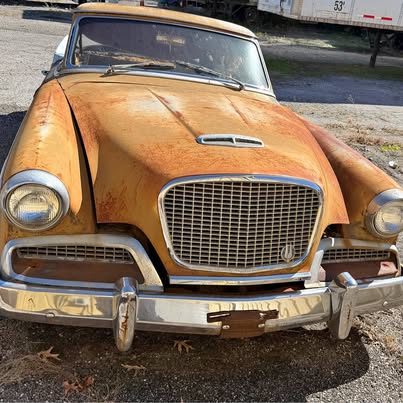
Rust is the Hawk problem, the one that decides whether a car is a purchase or a donation to a welder, and it follows the 1953 body's architecture with complete fidelity. Work the map in the order the water does.
Start with the front fenders. The fender behind the headlamp and its rear lower corner, where it meets the cowl, trap road dirt against single-skin steel; bubbling low at the trailing edge means the rot has already eaten the inner structure you cannot see, and fresh underseal in exactly that area is a car someone wanted you not to read. Move to the rocker panels — the sills. They are structural, they rust from inside out because their drain holes block, and the test is physical: torch along the underside, tap with a knuckle, and treat any sill that crunches, flakes or shows a welded patch seam as needing work at $1,000–2,500 per side done properly. A magnet that will not hold along the lower six inches of the car is the oldest test in the world and still the fastest.
The floors go next, in a pattern: front footwells first, fed by wet carpet and a leaking windscreen seal; the seat mounting areas, where stress concentrates; and the trunk floor, where a perished seal channels water for years. Lift every carpet the seller will allow — a seller who will allow none has answered you — and press hard around the seat bolts. Surface rust is a weekend; a floor that flexes under thumb pressure is a panel replacement, at moderate panel cost and substantial labour. The rear quarters rust ahead of the rear wheel and where the quarter wraps under; on finned cars the fin seam hides the quarter's top completely, which brings us to the fins below.
The frame is the part buyers skip, because it requires getting under the car, and it matters most. The Hawk sits on a separate chassis — the body unbolts, a restorer's gift — and it rusts at the front crossmember and spring pockets, along the rails where body mounts sit, and above all at the rear, around the spring hangers and the kick-up over the axle. Surface scale is normal. Flaking, layered rust at a spring hanger is structural, and a frame plated over at the rear rails without the rot cut out is worse than an honestly rusty one, because the plate hides the continuing failure. Budget frame welding at $800–2,000 for localised professional repair; a car needing a frame is a parts car at Hawk values, whatever its paint says. Body mounts perish and compress too, the body settles unevenly and door gaps go tapered — sellers call it "character". New mounts are cheap; what they reveal about the rails is the point.
Finally the brightwork-adjacent rust: door bottoms, where the skin folds over the door frame and the drains block — run your fingers along the lower edge and feel for filler; the bonnet's front lip; the boot lid's lower edge; and the battery tray area, thinned by decades of acid mist. None is fatal alone. Together they draw the car's biography: a Hawk rusty in six places has been wet for twenty years, and the seventh place is the one you have not found yet.
Fins, fibreglass and trim: the Golden Hawk's special issues
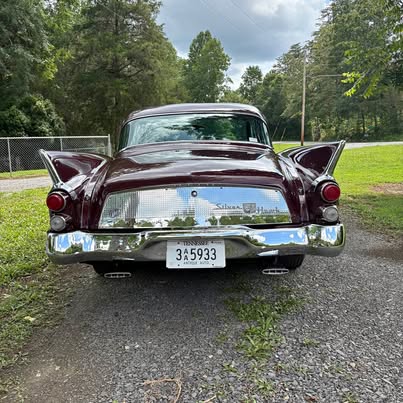
The 1957–58 Golden Hawk's raised rear fins are fibreglass panels bolted over the steel rear fenders, and they create a problem class no other Hawk has. The fibreglass cracks around its mounting points, star-cracks where it has been overtightened or struck, and delaminates at the edges after decades of heat cycles; repairs are straightforward for anyone who works on boats or early Corvettes, but colour-matching aged paint across a repaired fin is not. The deeper problem is what the fin hides: the steel fender beneath it sweats condensation in the sealed gap and rusts unseen, sometimes extensively, under a fin that looks perfect. On any Golden Hawk, get a torch and mirror to the fin's underside edges, flex it very gently and listen for the crunch of scale. A fin removed for inspection during a serious negotiation is reasonable — the panel is meant to come off.
The Golden Hawk's bonnet carries a fibreglass scoop section for the blower installation with its own cracking and fit issues, and the whole car wears more stainless and chrome trim than any other Hawk — trim that is largely unique to the model and year, expensive to replate (budget $150–400 per significant piece) and occasionally unobtainable except used. The rule for all Hawks, sharpened for Golden Hawks, is that trim completeness is value: a car missing its one-year-only side spears, fin caps or grille pieces will cost you more in hunting than the price difference to a complete car. Silver Hawks and plain Hawks share most trim with the wider Studebaker range and are easier; GT Hawks have their own 1962–64 pieces — the faux grille panel, the squared roof's rear window surround, the rear panel trim — which are GT-only and should be inventoried piece by piece against photographs of a correct car.
Interior trim is a parallel story. The specialist suppliers reproduce Hawk vinyl and cloth well for the popular years, but the GT Hawk's patterned materials and the Golden Hawk's fabrics are harder, and a car "retrimmed" in generic vinyl has lost something real. Seat foams collapse; door cards warp from the same water that rusts the door bottoms, so a warped card is a diagnostic, not just a cosmetic fault. Allow $2,500–5,000 for a proper interior refresh on a car that needs everything, and price it in.
Brakes, steering and suspension
Every Hawk left the factory with drum brakes all round and single-circuit hydraulics — adequate in 1957, merely survivable in modern traffic if tired — so the brake inspection is a safety inspection, not a haggle point. The characteristic faults are seized or leaking wheel cylinders (the rears hide inside the drum and announce themselves as a damp backing plate and a pull under braking), a master cylinder that sinks slowly at a long traffic light as its seals bypass, perished hoses that look fine and balloon under pressure, and drums worn oversize or distorted by the hammer-removal history described earlier. A full hydraulic overhaul is $700–1,400 and should be a first-month cost on any car without documented recent work. The prize specification is the 1963–64 GT Hawk option of front disc brakes, the Bendix-built system shared with the Avanti: it transforms the stopping, the specialists support it, and a disc-brake GT earns a genuine premium. Verify the claim, though — drums hide behind the same wheels.
Steering is by recirculating ball, with power assistance optional and common on Golden and GT Hawks. The wear points are the kingpins and their bushes — Studebaker kept kingpins long after rivals went to ball joints — the steering box adjustment, the centre link and tie-rod ends, and the bellcrank pivot. Kingpins are a grease-or-die component: a shot of grease roughly every 1,000–3,000 miles in period practice, and a car whose pins have run dry wears the bushes oval, giving shimmy, wander and uneven tyre wear no alignment will cure. The test is to jack the front wheel and rock it top and bottom: play that disappears when a helper presses the brake pedal is wheel bearing; play that remains is kingpin and bush, a $600–1,200 professional job with reaming. Front springs sag, particularly on the heavy 1956 Golden Hawk, and coil cutting by past owners chasing a stance is common — measure ride height against the book figure.
At the rear, leaf springs flatten and their shackles and bushes wear, the Dana 44's pinion seal weeps, and Twin Traction limited-slip units lose their grip with age and wrong oil: the unit needs its specific limited-slip lubricant or additive, and a car filled with plain gear oil will chatter on tight turns in a way owners mistake for axle failure. Shock absorbers are conventional, cheap and almost always overdue. None of the chassis is exotic; all of it is old, and the honest summary is that a Hawk with tight kingpins, fresh hydraulics and correct springs drives far better than its reputation, while the average unrestored car drives exactly to its reputation.
Electrics, supercharger care and the age failures
Hawks from 1956 onward are 12-volt, negative earth — a genuine mercy — and the electrical system's enemies are age and previous owners rather than design. Charging is by generator on early cars and alternator on the last GTs; brushes and regulators are service items, and a car that charges only above 2,000 rpm is telling you so. Wiring insulation hardens in the engine bay's heat, switches that carry full current wear their contacts, and earth points — Studebakers earth through body bolts rusting for sixty years — cause the classic wandering symptoms: gauges that lie, lamps dim on one side, an overdrive that engages when it feels like it. Budget patience rather than money: most faults are a cleaned earth or a replaced switch away. Instruments fail at their senders more often than at the dial; an oil gauge reading zero on a healthy-sounding engine is a sender until proven otherwise — but prove it with a mechanical gauge, every time, before you drive anywhere.
The superchargers need their own discipline. The McCulloch VS57 is a variable-ratio unit with an electrical control side — a solenoid and throttle-linked switching that changes pulley ratio — and two failure families follow. The mechanical family is bearings, seals and drive: a blower that rattles at idle, leaks oil, or shows play in its impeller shaft needs a specialist rebuild, $1,200–2,500 through the Paxton/McCulloch specialists, and running it dry destroys it expensively. The control family is subtler: if the ratio-change solenoid or its switchgear fails, the car drives like a mild 289 with extra plumbing, and sellers describe the missing boost as "needs a tune". The test is a full-throttle run watching for the surge as boost builds, plus a static check that the solenoid clicks. The R2's Paxton SN60 is simpler — fixed ratio, its own oil reservoir to check and change on schedule — and the same listening test applies: bearing whine beyond the normal note, oil weeping from the case, or a belt polished by slip all mean the rebuild conversation. On both, the carburettor lives in a pressurised enclosure with seals that perish; a blown car that floods or runs rich at cruise often wants box seals and the correct carburettor, not a new blower.
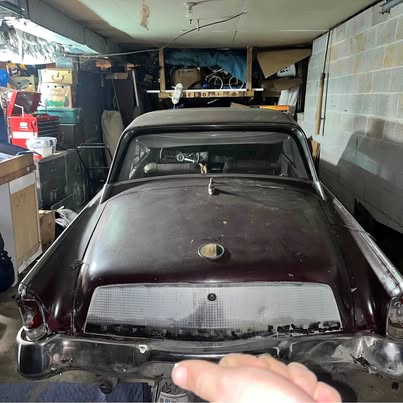
Close with the age failures that actually strand owners. Rubber has a life, and ethanol shortens the fuel system's share of it: assume any rubber fuel component of unknown age is due, and treat a fuel smell in the cabin or trunk as a stop-and-fix. Fuel tanks rust from inside and shed scale that blocks filters in a cycle owners misdiagnose as carburettor trouble; a car that dies after twenty minutes and restarts when cool is drawing against a blocked pickup until proven otherwise. And the storage failure — the Hawk that "ran when parked" five years ago — bundles all of it: seized brakes, varnished fuel system, flat-spotted tyres, a blower full of condensation. Price storage cars as the sum of those jobs, not as a discount on a runner.
How to inspect one
Work in this order, so the cheap, decisive checks come first and you can walk away early from a car that fails a structural test without spending an hour being charmed by its paint. Bring a torch, a magnet wrapped in cloth, a friend, and overalls you do not mind ruining.
- Paperwork and identity first. Read the serial plate and the engine number before you look at the car. Decode the engine prefix against the published tables: does the displacement match the variant claimed? On a Golden Hawk or an R2 GT, note the numbers and plan to verify them against the production order records held by the Studebaker National Museum — a genuine blown car's paperwork exists, and a seller of a real one expects the question.
- Cold engine, bonnet up. Insist the engine is cold when you arrive; a warmed car hides starting faults, choke problems and blower rattle. Check oil level and condition, coolant colour, and the supercharger oil reservoir on a blown car. Look at the inner fenders and battery tray for acid and rust while you are there.
- The rust walk. Torch and magnet, in the map order from the problem areas: front fender trailing edges, cowl, sills (tap them, do not just look), door bottoms with your fingertips, rear quarters ahead of the wheels, and under the Golden Hawk's fibreglass fins with a mirror if you can. Any crunch, any magnet that will not hold on a lower panel, stops being cosmetic and starts being money.
- Underneath. Get the car on a lift if the purchase justifies it; if not, lie down and do the rear frame rails, spring hangers and front crossmember by torchlight. Plating over rails, fresh underseal on an otherwise grubby underside, and flaking at a spring hanger are your three walk-away-or-renegotiate findings.
- Floors and trunk. Lift the carpets. Press the footwells and seat mounts with your thumb. Open the trunk, lift the mat, and read the trunk floor and the tank's top surface; a stained, scaled trunk floor tells you the seal's history and the tank's future.
- Start it and listen. A V8 should settle to an even idle with strong oil pressure on the gauge. Start-up blue smoke that clears is valve stem seals; smoke that stays is deeper. Listen at the front cover for cam-gear rattle and at the blower for bearing noise. Watch the temperature gauge's whole journey as it warms.
- The kingpin and steering test. Jack each front wheel, rock it top and bottom, and separate bearing play from kingpin play with a helper on the brake pedal, exactly as the suspension section describes. Then rock at quarter-to-three for steering linkage play, and check the steering wheel's free play before the road wheels answer.
- Brakes before speed. In the drive, pump the pedal: it should be firm, high and stay there — a pedal that sinks slowly under steady pressure is a master cylinder bypassing. On the road, brake firmly from moderate speed, hands light on the wheel: pulling means a cylinder, a hose or contamination on one side. On a disc-brake GT claim, look through the wheel and confirm the disc and caliper are actually there.
- The drive: engine under load. Use a hill. A healthy 289 pulls cleanly without detonation; an R1 that pings on modern fuel needs timing attention, not rejection. Feel for the overdrive dropping in above its cut-in speed on a manual car, and on a blown car make the full-throttle run that proves the supercharger delivers boost — no surge, no boost, whatever the seller says about tuning.
- Gearbox behaviour. Manual: every gear, up and down, listening for T-10 whine that is normal and watching for jumping out on the overrun that is not. Automatic: note engagement delay from cold, flare between ratios, kickdown response, then check the fluid again afterwards — the Flightomatic linkage-and-service rule from the gearbox section applies before any rebuild talk.
- Rear axle and ride. At a steady cruise, lift off and listen for pinion whine on the overrun; take up drive from rest and feel for the centre-bearing clunk. Drive a tight slow circle: Twin Traction chatter on plain oil announces itself here. Note the ride height and whether the car sits level — sagging springs and cut coils show in the stance before they show in the handling.
- Trim, glass and completeness inventory. Walk the car against photographs of a correct example of its exact year and variant, listing every missing or wrong trim piece, the fin condition on a Golden Hawk, the GT-only panels on a GT. Price the list before you price the car: on a Hawk, completeness is the cheapest thing to buy and the most expensive thing to add later.
Score the car in three columns — structural, mechanical, completeness — and let the structural column veto the other two. A mechanically tired Hawk with a sound shell is a good purchase at the right price, because everything mechanical is rebuildable with parts that exist. A shiny Hawk with rotten sills, floors and rear rails is not a project at any price a private buyer should pay, because the labour exceeds the finished value and always will.
Values
The Hawk market rewards knowledge and punishes badges, and the computed market block beneath this guide — the current listings and recorded sales the site tracks — is where you read the live numbers. This section gives you the framework for reading them, because with eleven records in the current pool, nine offered and two sold, any single figure tells you less than the market's shape does. Read the block for the spread first and the level second: the distance between the cheapest Hawk and the dearest is the story, driven almost entirely by three things — variant, structural condition, and proof.
Variant is the first driver and the steepest. The ladder in the models section is a value ladder too, but not a smooth one: the market pays heavily for the Golden Hawk name in either of its two unrelated forms, pays a real and growing premium for documented R-engine GT Hawks, and pays surprisingly little extra for a Sky Hawk or a four-speed car relative to what those cars cost to recreate — which is where the knowledgeable buyer eats. The middle of the market — Silver Hawks, plain Hawks and standard GTs in driver condition — is where supply is steadiest and prices most honest. At the bottom, six-cylinder cars and projects sit in a thin market where the right buyer is a restorer with a specific plan; if that is not you, their cheapness is a warning about exit as much as entry.
Structural condition is the second driver, and it outweighs everything mechanical. Two otherwise identical Silver Hawks can sit at opposite ends of the recorded spread because one has original, sound sills, floors and frame rails and the other has a documented history of welded repairs — and the market is right to price them so, because the mechanical car can be made perfect with ordinary money while the welded car carries its repairs forever in every future buyer's inspection. Originality compounds this: an unrestored Hawk with honest paint, its original engine confirmed by number, and its trim complete will hold its value against a shinier restored car of the same variant, because restoration quality in this market varies enormously and originality cannot be faked after the fact. When you compare a listing against the recorded sales, compare like with like on structure and originality before you compare paint and photographs.
Proof is the third driver, and the one sellers most often misunderstand. A claimed supercharged car without production-order confirmation trades, among knowledgeable buyers, as the standard car it may be — the premium belongs to the paperwork as much as to the blower. Conversely, a standard car with a thick file sells faster and firmer than a nominally superior car with a story. Asking prices are optimistic in the usual way of small, emotional markets, and the gap between asking and achieved is widest exactly where proof is thinnest: the badge-engineered Golden Hawk tribute, the R2 that cannot produce its order, the restored car with no photographs of the metal work. Those gaps are your legitimate negotiating ground — you are not doubting the seller's honesty, you are pricing the risk the paperwork leaves with you.
Finally, the project-versus-driver gap: a driving, structurally sound Hawk costs a multiple of a project, and the multiple is smaller than the cost of turning the project into the driver. Buy the project only if the work itself is the hobby. Buy the driver if the driving is.
Parts and ownership
Owning a Hawk is easier than owning almost any other orphaned American car of its era, and the reason has a name: the Studebaker Drivers Club, and the vendor network that grew up around it. Between the club, the Studebaker National Museum in South Bend — which holds the factory production orders you use to verify identity — and a mature group of specialist suppliers, the proposition is closer to owning a Ford than a true orphan. New old stock survived in quantity because Studebaker's parts operation outlived car production, and the reproduction trade has filled the gaps.
Availability, honestly graded, runs like this. Service and mechanical parts are excellent: engine internals for the 259 and 289, gaskets, water pumps, brake hydraulics, kingpin kits, clutch parts, carburettor kits and supercharger service through the Paxton specialists are all obtainable by mail order without drama. Suspension, steering and axle parts are very good, helped by the Dana 44's wider life elsewhere. Body panels are the middle ground: floor pans, rockers and common repair sections are reproduced; complete fenders, doors and roofs are used-parts territory, findable because the 1953 shell was shared across so many years, but shipped at freight prices. Trim is the thin end: year-specific stainless, Golden Hawk pieces and GT-only panels are parts you buy when you see them, not when you need them, and a spares shelf is a rational strategy rather than hoarding.
Running costs follow the mechanical simplicity. Fuel consumption is period V8 consumption, and the six is meaningfully thriftier — the Flight Hawk's one practical argument. Insurance is straightforward through the classic market, with agreed-value policies available. Servicing is home-mechanic work to a degree few 1960s cars match: the engine bay is roomy, the chassis has grease points that expect your attention, and the factory manuals are reprinted and thorough. Build the rhythm the car was designed for — grease the kingpins on a short interval, change the supercharger's oil on its own schedule, keep the Flightomatic's fluid fresh and its linkage adjusted — and a Hawk repays it with the reliability its engines were famous for.
The ownership traps are organisational, not mechanical. The first is the half-restored car priced at the sum of its receipts: a half-restored Hawk is worth its shell's condition plus its parts, and the receipts are the seller's memoir, not your asset. The second is title and identity drift through many hands — engine swaps, year misstatements, cars titled by year of sale rather than year built. The serial plate and the museum's records settle all of it, cheaply, at purchase. The third is disuse: a Hawk bought as an investment object and never exercised deteriorates in its brakes, seals and fuel system exactly as the storage warnings describe. Drive it, grease it, and keep the paperwork with the title.
Which one to buy
Match the rung of the ladder to the buyer you are, and let condition overrule variant every time the two conflict.
- The all-rounder: a 289-powered Silver Hawk, plain Hawk or standard GT Hawk in driver condition — the sweet spot of price, pace, parts and usability, and the car most of this site's pool represents. Buy the best shell you can find.
- The value buy: a 1960–61 Hawk or a standard 1962 GT Hawk with a four-speed or overdrive, sound underneath and scruffy on top. The market underprices the late, simple cars against the finned ones, and the driving gives nothing away.
- The performance buy: a documented R2 Gran Turismo Hawk, 1963–64, with its production order, its disc brakes if fitted, and its blower healthy. This is the factory muscle car of the range and the one whose premium is backed by paperwork rather than hope.
- The collector's car: a 1957 Golden Hawk — the supercharged flagship in its best year, fibreglass fins and all — bought on verified identity and complete trim. The 1956 Packard-engined car is the connoisseur's alternative, a Packard ownership proposition under a Studebaker badge.
- The character buy: a Sky Hawk, if you can find one, or a tidy six-cylinder Silver Hawk at six-cylinder money — bought for the 1953 shape and the Loewy line rather than speed, and none the worse for it.
- The brave buy: a Flight Hawk or a project Golden Hawk with a rotten shell, only if welding is your hobby and the price is parts money.
The overriding rule: buy the structure, then the paperwork, then the variant — in that order, every time. A sound, documented standard Hawk is a better car and a better purchase than a rotten or unproven Golden Hawk or R2 at any price the market is likely to ask, because sills, floors and frame rails cannot be bought off a shelf and identity cannot be added later.
See the 4 Silver Hawk cars currently listed.
For sale now
 $8,000
Expand
What they sell for: Silver Hawk sale prices.