
Studebaker lark lark 2 door station wagon buyer's guide
Studebaker lark lark 2 door station wagon -- the model's own buyer's guide: variants, values and what to check.
Years listed: 1960-1963 · Series: Lark/Hawk
# Studebaker Lark — Buyer's Guide
Overview and history
The Lark is the car that saved Studebaker — once. By 1958 the company was in deep trouble: the Packard merger had failed, Packard itself was dead, the big Studebaker sedans were selling in penny numbers against Ford, Chevrolet and Plymouth, and the dealer body was drifting away. President Harold Churchill's answer was not a new car at all, in the engineering sense. Chief engineer Gene Hardig's team took the existing full-size Studebaker sedan — a design whose roots ran back to 1953 — cut the wheelbase down to 108.5 inches, trimmed the overhangs, and wrapped the shortened car in clean, conservative new front and rear styling under design chief Duncan McRae. The result, launched in the autumn of 1958 as a 1959 model, was one of America's first compacts: a six-passenger car with a proper trunk, a choice of six or V8 power, and dimensions a size class below the standard Detroit sedan.
It worked. The Lark sold roughly 131,000 cars in its first year — more than Studebaker had managed with its entire range in some mid-fifties seasons — and it returned the company to profit. Timing helped: the 1958 recession had made economy fashionable, Rambler was proving the compact market existed, and for one model year the Lark had that market almost to itself below Rambler. Then, for 1960, Ford launched the Falcon, Chevrolet the Corvair and Plymouth the Valiant, and for 1961 the Lark's novelty was gone. Sales fell away year by year even as the car itself got better: an overhead-valve six for 1961, a handsome Brooks Stevens restyle for 1962, a sliding-roof wagon and Avanti-powered performance versions for 1963, and a second, sharper facelift for 1964.
The endgame matters to a buyer today because it splits the Lark into two families. South Bend, Indiana built the cars through December 1963; when that plant closed, production moved entirely to Studebaker's Canadian plant in Hamilton, Ontario. The 1965 and 1966 cars that followed are Larks in name and body but not in running gear — Studebaker's own engine plant had closed with South Bend, so the last two years use Chevrolet-designed sixes and V8s built under licence in Canada. The final car, a Cruiser sedan, left Hamilton in March 1966 and Studebaker — a company that had built wagons since 1852 — was out of the vehicle business.
For the classic buyer the Lark's appeal is that it is a genuinely usable, mechanically simple, body-on-frame American car of the compact era, with a character entirely its own and an unusually strong club and parts scene for an orphan marque. It is not fast in six-cylinder form, it is not sophisticated in its suspension, and it rusts like every other car of its period. But it is honest, roomy, easy to work on, and — because it was built the old way, on a separate chassis, with thick steel and serviceable components — a surprising number survive in fixable condition. The seven cars in our current listings span 1960 to 1964, which is the heart of the range: the original-shape cars and the Brooks Stevens cars, six-cylinder and V8, sedan, convertible and wagon. This guide covers the full 1959–1966 run, but the emphasis throughout is on those South Bend years, because that is where the market — and the supply — actually is.
One identity point before anything else, because it governs every viewing: a Lark's year is not always what the title or the seller says it is. The styling changed in steps (single headlamps for 1959–60, quad lamps from 1961, the Stevens restyle for 1962, a new grille and squared lines for 1964), engines changed mid-run, and sixty years of parts swapping means grilles, badges and even engines migrate between cars. The serial plate — riveted to the driver's side front door hinge post — and the car's production order, which the Studebaker National Museum in South Bend can supply from the factory archive for a modest fee, settle what a car actually is. Buy the car the serial plate describes, not the car the advertisement describes.

The models
The Lark was never a single model; it was a range, and the badge on the fender tells you the engine before it tells you anything else. For 1959 to 1961 the cars were sold as the Lark VI (six-cylinder) and the Lark VIII (V8) — you can see the small VI/VIII script on the front fenders in period photos and on survivors. Within each engine line there were two trim levels: the austere Deluxe, with painted rather than chromed trim and rubber mats, and the Regal, with stainless side mouldings, better upholstery and more chrome. Body styles at launch were two- and four-door sedans and a two-door station wagon, joined for 1960 by a four-door wagon, a two-door hardtop and a convertible — the convertible and hardtop being Regal-only, and the prettiest cars in the range.
The range reorganised itself as the sixties went on. For 1962 the Brooks Stevens restyle brought a longer, more formal body (the wheelbase grew to 109 inches for most models), new names began to appear — Custom took over the middle ground — and, most importantly, the Daytona arrived as the sporting flagship: initially a hardtop and convertible with bucket seats, a standard V8 and a more luxurious interior. A Lark Daytona convertible was the pace car at the 1962 Indianapolis 500, which tells you how hard Studebaker was pushing the performance angle. For 1963 the Daytona line expanded to include the Wagonaire, the famous wagon with a sliding rear roof section — slide the panel forward over the front half of the roof and you could carry a refrigerator, a grandfather clock or a small tree standing upright, exactly as Studebaker's advertising demonstrated. The same year brought the Cruiser, a longer-wheelbase (113-inch) luxury four-door sedan aimed at buyers who wanted Lark economy with big-car rear legroom.
For 1964 the names settled into the pattern that lasted to the end: Commander (the value line, roughly the old Deluxe/Custom role), Daytona (sporting), and Cruiser (the luxury sedan). The 1965–66 Canadian cars kept Commander, Daytona and Cruiser badges but with the Chevrolet-sourced engines described in the next section, and the Wagonaire continued to the very end — the last Studebakers built included sliding-roof wagons.
Trim and badge engineering aside, the practical divisions for a buyer are three. First, the early cars (1959–61): shortest, lightest, simplest, with the flathead six in the first two years and the prettiest, most "fifties" detailing. Second, the Stevens cars (1962–64): more space, better brakes and equipment, the widest engine choice including the Avanti-derived performance V8s, and the Wagonaire and Cruiser body styles. Third, the Canadian cars (1965–66): rare, historically interesting, mechanically a Studebaker body on Chevrolet running gear, and a specialist taste.
| Model | Years | Engine | Output | Built | Character |
|---|---|---|---|---|---|
| Lark VI Deluxe / Regal sedan | 1959–1960 | 169.6 cu in flathead six | 90 hp | Part of ~131,000 Larks in 1959 | The economy original; slow, simple, unbreakable |
| Lark VIII Deluxe / Regal sedan | 1959–1960 | 259.2 cu in V8 | 180–195 hp | — | The sleeper: full-size performance in a compact body |
| Lark VI sedan / hardtop / convertible | 1961 | 169.6 cu in OHV six ("Skybolt") | 112 hp | — | Overhead valves wake the six up; head castings need care |
| Lark VIII (259 / 289) | 1961 | 259 or 289 cu in V8 | 180–225 hp | — | 289 availability makes 1961 the connoisseur's early car |
| Lark Custom / Regal | 1962 | OHV six or 259/289 V8 | 112–225 hp | — | Stevens restyle; more room, more formality |
| Lark Daytona hardtop / convertible | 1962–1964 | 259 or 289 V8 | 180–225 hp | — | Bucket seats and pace-car glamour; the sporting Lark |
| Lark Cruiser sedan | 1963–1966 | 289 V8 (1965–66: 283) | 195–225 hp | — | 113-inch wheelbase luxury version; the most comfortable Lark |
| Lark Wagonaire | 1963–1966 | Six or 259/289 V8 | 112–225 hp | — | Sliding-roof wagon; brilliant idea, leaky execution |
| Lark Daytona / Commander "Super Lark" | 1963–1964 | 289 R1 or supercharged R2 | 240 / 289 hp | Very few — order-built | Avanti engines in the family car; genuine Q-ship |
| Commander / Daytona / Cruiser (Canada) | 1965–1966 | 194 cu in six or 283 V8 (GM design) | 120 / 195 hp | Hamilton only | The last Studebakers; a different car under the skin |
Production figures for individual Lark variants were not published in a form that survives reliably, and honest totals by body style are hard to come by; the table therefore leaves variant production blank rather than inventing numbers. What is solid is the arc: a six-figure first year, a strong 1960, then a slide through the Stevens years to a few tens of thousands annually, and a final Canadian run small enough that 1965–66 cars are now genuinely scarce.
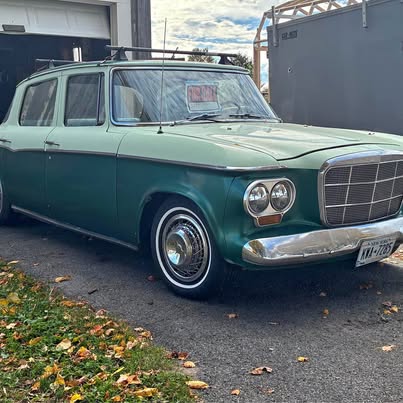
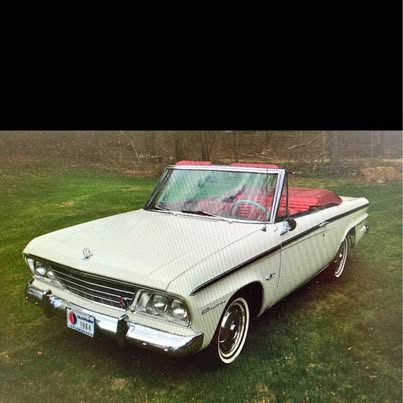
A word on names in listings. Sellers advertise these cars as "Lark", "Lark Daytona", "Lark Regal", "Daytona Lark" and occasionally just "Studebaker" — our own listings include a "daytona lark" convertible and an "SRT Studebaker Lark Regal" (the SRT is a seller's embellishment; Studebaker never used it). None of this matters if you verify the car by its serial plate, body style and engine number rather than by the words in the advertisement. What the car is — year, body, engine, trim — is stamped and plated on it. Everything else is conversation.
Engines and gearboxes
Three engine families power the South Bend Larks, plus a fourth that powers the Canadian cars. All are conventional, accessible, and well understood by the Studebaker club world; the differences between them decide what kind of car you are buying.
The sixes: flathead 169.6 (1959–60) and OHV "Skybolt" 169.6 (1961–64)
The Lark VI began life with Studebaker's 169.6 cu in L-head (flathead) six, an engine whose basic design dated to the 1939 Champion. It makes about 90 hp, which in a car weighing around 2,700 lb means what you would expect: it will cruise at legal speeds all day, but hills and overtaking require planning and momentum. Its virtues are real, though. It is quiet, smooth, understressed, tolerant of neglect and poor fuel, and almost impossible to kill in normal use. Valves are adjusted mechanically, the single-barrel Carter carburettor is simple, and the whole engine can be serviced with hand tools. If you want the authentic early Lark experience and your driving is local, the flathead is not a hardship — but go in knowing it is the slowest version of the car.
For 1961 Studebaker did something ingenious and slightly risky: it converted the old flathead block to overhead valves with a new cylinder head, creating the engine the factory marketed as the Skybolt Six. Output rose to about 112 hp and the car feels noticeably livelier. The risk is the head itself. The OHV six has a known weakness for cracking in the cylinder head, typically around the valve seats and combustion chambers, often announced by unexplained coolant loss, a misfire on one cylinder, or white exhaust vapour that does not clear. A cracked head is not necessarily the end of the car — the club world knows the problem, good used heads and repair routes exist — but it is the first thing to rule out on any 1961–64 six, and the test is simple: a cooling-system pressure test and a careful look at the coolant and plugs before you buy, not after. Budget the possibility into the price of any OHV six that has not been recently proven.
The sixes' shared service points are mundane: keep the cooling system clean (these blocks silt up after decades of short trips), keep the oil changed (the flathead's bypass filtration is of its era), and keep an ear on valve clearances. Neither six has hydraulic lifters to hide neglect behind.
The Studebaker V8: 259 and 289 (1959–64)
The Lark VIII is where the car's reputation among enthusiasts comes from. Studebaker's overhead-valve V8, introduced in 1951 at 232 cu in and grown to 259.2 cu in by 1955, is a compact, heavy, over-engineered engine with a forged crankshaft, gear-driven camshaft and solid valve lifters. In the Lark it was offered with a two-barrel carburettor at about 180 hp, or a four-barrel at about 195 hp. From 1961 the 289 cu in version — the same engine with a longer stroke — joined the range at about 210 hp (two-barrel) or 225 hp (four-barrel). In a car this light, either engine transforms the Lark: a 259 Lark is brisk, a 289 Lark is genuinely quick by early-sixties standards, and both are smooth, torquey and long-lived. This is the same basic engine family that powered the Golden Hawk and, in developed form, the Avanti — it is not a bought-in unit and it is not fragile.
The V8's character points are specific. Solid lifters mean periodic valve adjustment and a mechanical top-end tick when clearances open up — noise that frightens buyers used to hydraulics but is normal and adjustable. The gear-driven cam avoids timing-chain stretch but the drive gear wears over very long mileages; listen for front-of-engine whine and rattle. Rear main seals weep with age. The exhaust manifolds and the heat-riser valve in the right-hand manifold matter: a heat riser stuck closed cooks the carburettor and the intake crossover, a riser stuck open makes cold running miserable — check it moves freely. Carburetion is a Stromberg WW two-barrel on most 259s and a Carter AFB four-barrel on the performance versions; both are rebuildable, and a flat spot on a four-barrel car is usually accelerator-pump or vacuum-advance trouble, not a reason to condemn the engine. Engine numbers are stamped on a machined pad at the front of the block; the prefix tells you the engine's original displacement and year, and comparing it with the serial plate is the quickest defence against a "289" that is really a tired 259 — swaps between the two are easy and common.
For 1963–64, the range went further. Because the Avanti's engines were in production, a buyer could order a Lark — most often a Daytona — with the R1 engine (289, high-compression, Carter AFB, about 240 hp) or the R2 (the same engine with a Paxton centrifugal supercharger, about 289 hp), along with heavy-duty suspension, brakes and a limited-slip differential. These "Super Larks" were built in tiny numbers, are documented through the factory production orders held by the museum, and are the most collectible Larks of all. They are also the most faked. A supercharger on a 289 does not make an R2 car: the genuine article is proven by its production order and serial number, full stop. The R cars are worth understanding even if you never buy one, because their existence set the Lark's performance ceiling and because their equipment — the disc brakes, the heavy-duty suspension, the Twin Traction differential — is the checklist of desirable factory options on ordinary V8 cars too. The R1's Carter AFB four-barrel is a straightforward, tunable carburettor; the R2's Paxton is a different animal altogether, belt-driven and spinning at several times crank speed, and it rewards the owner who keeps its drive fluid clean and checks its mounting and bearings rather than the owner who merely polishes it.
There is a practical point about the two V8s that buyers of ordinary cars should carry with them. The 259 and the 289 share the same block, and the differences — stroke, crankshaft, pistons, and the engine-number prefix — are invisible from outside the car. Most honest sellers know which they have; some do not, and some hopeful sellers have learned that "289" sells better. The engine-number prefix is the answer, and it takes two minutes. The other V8 point is about expectations: a well-tuned 259 Lark with the two-barrel is a car that will keep up with modern traffic in town and on the highway, comfortably and without drama, while the 289 four-barrel car is the one that will surprise a sports-car owner at a traffic light. Neither is a race car by modern standards, and neither needs to be. The Lark's appeal is that it puts V8 torque in a light, compact, well-visibility body — not that it wins stop-light races. Cooling capacity is the V8's one everyday weakness: the radiator is marginal for a hard-driven 289 on a hot day even when new, and after six decades it is marginal full stop, so the cooling-system overhaul described in the problem areas section is not optional on a V8 car you intend to use.
The Canadian engines: 194 six and 283 V8 (1965–66)
When South Bend closed, Studebaker's own engines died with it. The Hamilton-built 1965–66 cars use General Motors designs built by McKinnon Industries in Canada: the 194 cu in overhead-valve six (about 120 hp) and the 283 cu in small-block V8 (about 195 hp). Mechanically this is good news and bad news. The good news is that parts and knowledge for a Chevrolet 283 are everywhere on earth. The bad news is that nothing under the bonnet interchanges with the South Bend cars, the cars' Studebaker character is diluted, and the small production run means trim and body parts specific to the last two years can be harder to find than for a 1962 car. Buy a Canadian Lark because you want the end-of-the-story car, not because it is the easiest Lark to own.
Gearboxes
Most Larks you will meet have one of three transmissions. The standard gearbox is a three-speed manual with column shift — Borg-Warner T-96 behind the sixes, a heavier-duty three-speed behind the V8s — with a Borg-Warner overdrive available as an option that transforms highway cruising and is worth seeking out: an overdrive car at 65 mph is a relaxed car, a non-overdrive six at 65 mph is a busy one. Many manual Larks carry Studebaker's famous Hill Holder, a device dating to the 1930s that holds the brakes on when you stop on a gradient with the clutch down, and releases them as you pull away. When it works it is delightful; when its linkage or valve is maladjusted it drags the brakes or refuses to release, and sellers occasionally describe the symptom as a brake fault. It is neither — it is an adjustment, described in the shop manual.
From 1961–62, V8 cars could be ordered with a Borg-Warner T-10 four-speed manual with floor shift — the Daytona performance option, and the gearbox to have if you are buying an R-engine car. The automatic option throughout the South Bend years is the Flight-O-Matic, Studebaker's version of the Borg-Warner automatic also seen in period Fords: a three-speed unit with a distinctive shift pattern in which Drive starts in second gear unless you select Low or floor the throttle. That second-gear start is normal, not a fault — a surprising number of Lark automatics have been "diagnosed" with a dead first gear by people who did not know. Flight-O-Matics are durable if the fluid is clean and the bands are adjusted, and they leak, like all period automatics, from seals that have had sixty years to harden. The 1963–64 Avanti-engined cars offered the floor-shifted Power Shift automatic, a stronger unit in the same Borg-Warner family. Canadian cars use GM-pattern transmissions — two-speed Powerglide automatic or three/four-speed manuals — with parts availability to match.
Problem areas
A Lark is a body-on-frame car built from thick steel with a conservative specification, which means its problems are the classic ones — rust first, then the consequences of age on rubber, brakes and cooling systems — rather than exotic failures. Work through them by system.
Rust: the map
Rust decides Lark values more than any other single factor, because mechanical parts are available and body panels, while findable, are not cheap to fit and paint. Start underneath, because the Lark's separate chassis can mislead you in both directions: a solid frame does not mean a solid body, and a scruffy body can sit on a perfectly good frame.
The frame itself rusts at the rear spring hangers, around the body-mount outriggers, and in the boxed sections where road dirt packs and stays wet; probe with a screwdriver, especially on any car that has lived in the snow belt — several of the cars in our listings are in New York, Pennsylvania and West Virginia, and they should be inspected as snow-belt cars until proven otherwise. The body rusts in a predictable map. Front fenders go behind the front wheels, where mud thrown up by the tyre sits against the inner panel, and along the top edge beside the bonnet. The floor pans rust from the inside out — lift the carpets and the rubber mats, because water from leaking screens and heater cores collects under them invisibly; a car that smells musty inside is telling you something. Sills and rocker panels rust at their ends, the dogleg panel behind the rear doors (where the rear wheel arch meets the sill) is a classic failure point on four-doors, and the boot (trunk) floor rusts around the spare-wheel well and above the fuel tank. Rear wheel-arch lips bubble from the inside. On wagons, add the tailgate lower skin and the load floor; on a Wagonaire, add everything around the sliding roof panel — the roof seals perish, the drain arrangements clog, and water enters the roof structure and the rear quarters, so a Wagonaire needs its headlining dropped or at least its rear pillars and roof rails inspected with real care. Convertibles rust in the floors and the top well first, for the obvious reason.
The good news is that the Lark was built in volume, the club scene is strong, and reproduction floor pans, rocker panels and patch panels exist through the Studebaker parts trade, along with a deep stock of new-old-stock and used sheet metal. A structurally honest car with cosmetic rust is a fair buy. A car with a rusted frame at the spring hangers, or floors you can push a finger through, is a restoration project whatever the paint looks like — and shiny fresh paint over those areas is the oldest trick in this market. A magnet, a torch and ten minutes on your back will tell you more than an hour of looking at the topside. Expect to pay a competent welder in the region of $800–2,000 per side for proper sill and floor work, and considerably more if the rear quarters and doglegs are involved; rust is negotiable at purchase and expensive afterwards.
Front suspension, steering and brakes
The front suspension is independent with coil springs — and kingpins, not ball joints, a design Studebaker kept to the end. Kingpins are durable if greased and dreadful if not: the service routine calls for chassis greasing every 1,000–2,000 miles by the standards of the day, and a car that has been run dry will have play in the kingpin bushes that shows up as wander, uneven front tyre wear and a clonk over bumps. Jack the front up, grip the wheel top and bottom, and rock it; play means kingpin and bush work, a known job with parts available (budget roughly $400–900 in parts and machine work per side if the pins need replacing and reaming). The steering is a recirculating-ball box, often with power assistance on V8 cars; play at the wheel is usually a combination of box wear, idler and tie-rod wear, all conventional and fixable. Rear suspension is a live axle on leaf springs — check for sagged or broken leaves and perished shackle bushes, and on V8 cars confirm whether the axle is the heavy-duty unit and whether the Twin Traction limited-slip (if fitted) still works: jack one rear wheel up and try to turn it against the other.
Brakes are drums all round on most cars, self-adjusting from 1962, with finned drums on heavy-duty applications. The system is simple and adequate when maintained; the failures are age failures — perished flexible hoses, seized wheel cylinders, a master cylinder bore corroded from old fluid. Budget for a full hydraulic overhaul on any car that has sat, and treat a hard or sinking pedal as a stop-and-fix item, not a test-drive talking point. The significant upgrade arrived for 1963: front disc brakes, of the Bendix/Dunlop pattern developed for the Avanti, were optional on Larks and standard on the R-engine performance cars. A disc-brake Lark stops like a much newer car, and the option is desirable — but check the calipers carefully, because pistons seize in stored cars and correct parts, while available through the club trade, are pricier than drum hardware.
Engines in old age: cooling, oil and the OHV six head
All Lark engines suffer the same old-age enemy: a cooling system that has silted up over decades. Radiators lose capacity, blocks accumulate rust and sediment, and a car that "runs a bit warm" in traffic will boil on the first hot highway run. A proper fix is unglamorous — radiator recore or replacement (roughly $400–800), hoses, thermostat, water pump, and a block flush — and it is money well spent on any car you intend to drive. V8s additionally suffer hardened valve-stem seals (blue smoke on start-up and on the overrun), weeping rear main seals, and exhaust manifold bolts that seize and snap when disturbed; none of this is fatal, all of it should be priced in. The flathead six wears its valve gear and loses compression gracefully rather than suddenly. The OHV six's cylinder-head cracking, covered in the engines section, is the one genuinely model-specific mechanical trap in the whole range: pressure-test the cooling system of any 1961–64 six-cylinder car before money changes hands. On R2 supercharged cars, add the Paxton blower itself to the inspection: it needs its own fluid (it uses automatic transmission fluid in its drive) and periodic service, and a neglected or noisy supercharger is a specialist rebuild, not a Saturday job.
Fuel system, gearboxes and running gear in old age
The fuel system is the first thing that stops a stored Lark and the last thing most sellers service. The tank rusts from the inside when a car sits with old fuel in it, and the rust travels: it blocks the pickup, fills the filter, and reaches the carburettor, where it holds needle valves open and produces the flooding and hot-start trouble that gets blamed on the carburettor itself. If a car has sat for years, the honest sequence is tank out, cleaned or replaced, lines blown through, pump checked (the mechanical pumps' diaphragms perish, and modern ethanol-blended fuel shortens the life of old diaphragm and hose rubber throughout the system — replace every flexible fuel hose on any car you buy, as a matter of fire safety rather than originality), and only then a carburettor rebuild. A Lark that "needs the carburettor looking at" very often needs its tank looking at first. Fuel senders corrode and read falsely, as noted in the electrics section; carry a gallon and know your range until you have proven the gauge.
Gearbox troubles are mostly adjustment and wear rather than breakage. The three-speed manual's column-shift linkage wears at its bushes and the change goes vague and obstructive — a linkage rebuild with new bushes transforms it, and should be tried before anyone condemns the gearbox. Second-gear synchromesh wears first on hard-used cars. The Borg-Warner overdrive is electrically engaged through a solenoid, a relay and a governor switch, and when an overdrive "doesn't work" the fault is electrical in the majority of cases — a fuse, a corroded connection, a failed solenoid — rather than mechanical; the freewheel unit itself is robust. Do not let a seller price an overdrive car as a non-overdrive car, or vice versa, until the circuit has been checked with a test lamp. The Flight-O-Matic automatic's age faults are front and rear seal leaks, a stretched or maladjusted kickdown linkage (which makes the box lazy and late to change down), and bands that have never been adjusted in living memory; a fluid and filter change plus a band adjustment is the correct first service, costing in the low hundreds of dollars, and a box that still slips after that is a rebuild — budget in the region of $1,500–2,500 for a specialist overhaul. The T-10 four-speed is a strong box whose problems are the usual ones of worn synchros and tired shifters.
The rest of the running gear is conventional: a Dana rear axle (lighter unit behind sixes, the heavier Dana 44 behind many V8s) that whines if it has been run low on oil and lasts indefinitely if it hasn't, universal joints that dry out and clonk on take-up, and leaf-spring shackles and bushes that perish and let the axle steer the car gently from behind. None of it is exotic, all of it is available, and a Lark that feels loose or noisy underneath is almost always suffering from thirty small perished rubber parts rather than one big broken one — which is good news, provided the price reflects the weekend-by-weekend labour of replacing them.
Interior, trim and electrics
Lark interiors are vinyl, cloth and painted metal, and they age in the usual ways: seat vinyl splits at the seams and on the driver's bolster, foam collapses, headlinings sag and stain (especially in Wagonaires, where the sliding roof leaks onto them), and door cards warp from damp. The good news is that the shapes are simple and a competent trimmer can reproduce them; the bad news is that year- and model-specific items — Daytona bucket-seat covers, correct-pattern cloth, convertible top-well trim — take hunting. Exterior trim is the bigger problem. Stainless side mouldings, grille surrounds and badges are model-year-specific, they were the first things damaged or discarded, and bright, straight replacements command real money in the club market. A car with all its trim present and straight is worth more than a mechanically identical car missing its mouldings, because you cannot simply order the missing pieces. Check the small things: window regulators (the gears strip), door handles, the sliding-roof mechanism and seals on a Wagonaire, and the convertible top frame for bends and seized joints.
Electrics are 12-volt, negative earth, with a generator on early cars and an alternator (Prestolite) from 1963. The systems are simple — lights, a heater fan, wipers, a radio — and the failures are the universal ones: corroded earths, a voltage regulator past its best, brittle insulation in the engine bay, and sixty years of previous owners' additions under the dashboard. A car whose electrics have been "improved" with modern wiring spliced in at random is a bigger liability than a car with an honest, original, slightly tired loom. Gauges fail individually; fuel senders in particular lie, so verify the tank contents before a long test drive. Heater cores leak into the passenger footwell — damp carpets on the right-hand side with a sweet smell are the tell — and a core replacement is fiddly rather than expensive.
How to inspect one
Inspect a Lark in this order — identity first, structure second, mechanicals third, cosmetics last. Cosmetics are the cheapest thing to fix and the thing sellers polish; identity and structure are the things that decide what the car is worth.
- Start with the serial plate. It is riveted to the driver's-side front door hinge post. Read the year and model coding from it, and check it against the title. If the plate is missing, replaced or freshly re-riveted, stop and ask why before you look at anything else.
- Check the engine number. On V8s it is stamped on a pad at the front of the block; the prefix identifies displacement and year. A car sold as a 289 that carries a 259 prefix is a 259 with a story. On an R1/R2 car, require the production order from the Studebaker National Museum archive — it is the only proof that matters.
- Do the cold start yourself. Insist the engine is cold when you arrive. Watch for blue smoke (valve-stem seals on a V8, wear on a six), white vapour that does not clear (head gasket — or, on a 1961–64 six, the cracked-head problem from the engines section), and listen for the V8's solid-lifter tick, which should quieten slightly as it warms, not turn into a knock.
- Pressure-test the cooling system, or at minimum check for emulsion under the oil filler cap, bubbles in the radiator with the engine running, and unexplained low coolant. This single test settles the OHV six's head and every engine's gasket health.
- Get underneath. Frame at the rear spring hangers and body-mount outriggers first, then floors, sills and the dogleg behind the rear doors — the rust map from the problem areas section, in that order. Bring a torch and a screwdriver; probe, don't tap politely.
- Lift the carpets and look in the boot. Floor rust hides under mats, and the boot floor over the fuel tank tells you how the car has been stored. A musty smell is evidence, not atmosphere.
- Test the kingpins. Front end jacked up, wheel gripped top and bottom: rock it. Play here is the single most common front-end bill on a Lark, and it is quantifiable before you buy.
- Drive it long enough to get it hot — twenty minutes minimum. Watch the temperature gauge in traffic afterwards. A Lark that stays cool on the move but climbs at idle has a marginal radiator or fan, and the test drive is when you find out, not the drive home.
- Work the gearbox through every mode. On a manual, check for a dragging Hill Holder by stopping on a slope: the car should hold, then release cleanly as you pull away. On a Flight-O-Matic automatic, remember the second-gear start in Drive is correct behaviour; select Low and confirm first engages, and check the fluid's colour and smell.
- Test the brakes from speed, twice. The car should pull up straight without the pedal sinking or needing a pump. On a 1963–64 disc-brake car, check for the seized-caliper pull that stored cars develop.
- Operate everything that moves: windows, wipers, heater fan, lights — and on a Wagonaire, slide the roof panel through its full travel and look hard at the headlining and rear pillars for water staining; on a convertible, run the top up and down and inspect the top well.
- Audit the trim against the year. Grille, lamps, side mouldings and badges should match the serial plate's year — single lamps for 1959–60, quads from 1961, the Stevens body from 1962, the horizontal-bar grille for 1964. Mismatched trim means swapped panels or a misdescribed year, and the missing correct pieces will come out of your pocket.
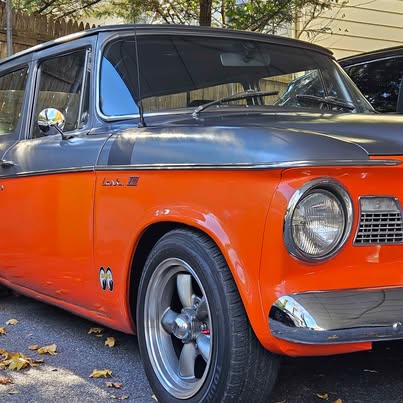
Values
The build below this guide carries the live market — the cars currently listed and the recorded sales — and that block, not anything written here, is where the numbers live. What follows is how to read it, because the Lark market has a shape that catches newcomers out.
The first thing to understand is the spread. The Lark was a cheap car when new, it is an orphan now, and the distance between the cheapest and the dearest Lark is driven almost entirely by three things: body style, engine, and structural condition — in that order of surprise to people used to other marques. Convertibles and Daytonas sit at the top because they were the glamorous cars and because soft-tops and bucket-seat interiors cost real money to restore. V8 cars carry a consistent premium over sixes, and a genuine, documented R1 or R2 car is in a different market altogether — small, specialist and provenance-driven. At the bottom, six-cylinder sedans and rough wagons change hands as projects, and the gap between a project and a finished driver is wide: wide enough that buying the project only makes sense if the labour is yours and the enjoyment is the point.
The second thing is the asking-versus-achieved gap. Larks are often advertised by sellers who have priced them against better-known contemporaries — a Falcon or a Rambler in similar condition — or against what they have spent. The achieved market, as the recorded-sales block below shows over time, is more modest, and cars priced at the optimistic end sit. That is not an insult to the car; it is the economics of a marque whose buyer pool is loyal but small. As a buyer, it means patience is rewarded and the first car you see is rarely the one to buy. As a negotiator, it means documented condition beats optimism: a seller with a rust-free, well-maintained car and the paperwork to prove it can hold a price; a seller with shiny paint and no history cannot.
Condition language needs translating in this market. "Original" on a Lark often means "never restored", which can mean anything from a preserved survivor to a car that has been decaying gracefully for forty years — the inspection checklist above is how you tell which. "Restored" should come with receipts and photographs; a Lark repainted without structural work is worth little more than the same car unrepainted, because the structure is where the money goes. The project-versus-driver gap is the sharpest of all: a non-running Lark needs the full recommissioning described in the problem areas section before it needs anything cosmetic, and the honest way to value one is to price the finished car, subtract the recommissioning, the rust work and the trim hunt, and then subtract something again for your time. Sellers of projects rarely do that arithmetic. You should.
Finally, the Canadian 1965–66 cars and the Wagonaire sit slightly outside the main market. The last-year cars trade on rarity and story as much as condition, and prices are correspondingly inconsistent — comparable sales are few, so the recorded block below matters more, not less. The Wagonaire carries a novelty premium when its roof works and its structure is dry, and a discount when either fails. In all cases, the museum production order and a documented history add value out of proportion to their cost, because in a small market, proof is scarce.
Parts and ownership
Owning an orphan sounds brave until you discover the Studebaker support network, which is one of the best in the old-car world. The Studebaker Drivers Club, founded in 1962 while the cars were still in production, is large, active and technically deep, with local chapters, a monthly magazine and a membership that has been keeping these cars alive for sixty years. Join it before you buy, not after: the classifieds and the collective knowledge are worth more than any single parts catalogue.
Parts supply works in layers. Mechanical service parts — brake hydraulics, suspension bushes, kingpin kits, engine gaskets, carburettor kits, water pumps — are available from specialist Studebaker vendors such as Studebaker International and Stephen Allen's, and a surprising amount crosses over to generic period hardware because Studebaker bought in components (Borg-Warner gearboxes and overdrives, Dana axles, Bendix brakes) from the same suppliers as everyone else. New-old-stock parts survive in quantity because the factory and dealer stocks were dispersed into the trade when the company closed, and firms that bought up that stock still supply from it. Reproduction sheet metal — floor pans, rockers, patch panels — is made by specialists such as Classic Enterprises, and used panels and trim circulate through the club and the swap meets. The genuinely difficult items are the year-specific bright trim, some convertible and Wagonaire hardware, and correct interior materials; the ownership rule follows from that: buy the car with the best trim and interior you can find, and let the mechanical condition be the negotiable part, because mechanical parts are the ones you can actually get.
Documentation is the other ownership pleasure. The Studebaker National Museum in South Bend holds the factory production orders, and for a modest fee it will supply the record for your car's serial number: original engine, colours, trim, options, build date and destination dealer. No Lark purchase at the upper end of the market should happen without one, and no R-engine claim should be believed without one. Factory shop manuals and parts books are readily available in reprint and are genuinely good — Studebaker expected its dealers to fix these cars, and wrote the manuals accordingly.
Running a Lark is otherwise unremarkable, which is the point. Fuel consumption is period-normal — gentle on a six, thirstier on a 289 driven hard. Insurance through the usual classic schemes is straightforward. The cars are simple enough that a competent home mechanic can do everything except machine work, and the club will tell you which local machine shop knows the V8. The one discipline the car demands is the one its maker assumed: grease it, change the fluids, and keep the cooling system clean, and a Lark will repay you by simply continuing to work.
Which one to buy
- The all-rounder: a 1962–64 V8 sedan or hardtop. The Stevens body gives you the roomiest, best-braked, best-equipped Lark, the 259 or 289 gives it proper performance, and sedans remain the value end of the V8 market. This is the Lark to buy if you want one car to drive.
- The value buy: a 1961 Lark VIII. Quad lamps, the 289 on the options list, the pre-restyle lightness — and prices that lag the Stevens cars for no good mechanical reason. Check the trim is complete, because 1961 brightwork is a hunt.
- The character pick: a 1959–60 Lark VI. The original compact, flathead six and all. Slow, sweet and simple; buy it for local work and shows, not for interstate trips, and enjoy the fact that nothing on it can really surprise you.
- The enthusiast's car: a Daytona — hardtop or convertible, 1962–64. Bucket seats, V8, the pace-car connection and the best looks in the range. Convertibles demand the full top-and-floors inspection; hardtops are the easier ownership proposition.
- The conversation piece: a Wagonaire. Nothing else at a show has a sliding roof. Buy the driest, least-rusted one you can find, test the roof mechanism obsessively, and accept that the seals are a maintenance item, not a fit-and-forget part.
- The collector's car: a documented R1 or R2 Super Lark. Only with the museum production order in hand, only with the matching engine number, and only at a price that reflects that fakes and clones exist. Verified, it is one of the great American Q-cars.
- The end-of-the-story car: a 1965–66 Canadian Commander, Daytona or Cruiser. Bought for the history, run on Chevrolet mechanicals. Scarce, interesting, and a commitment to hunting year-specific trim.
The overriding rule: buy structure and trim, not shine. A Lark's mechanicals can nearly all be bought, rebuilt or substituted — its floors, frame hangers, brightwork and interior cannot, at any sensible price. The best Lark is the most solid, most complete car you can find, whatever its year or badge.
See the 4 lark lark 2 door station wagon cars currently listed.
For sale now
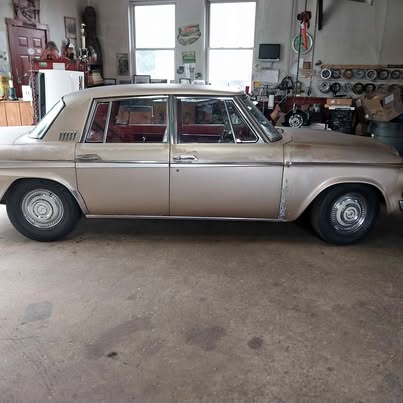 $5,500 · 59% below typical
Expand
$24,500 · 88% above typicalExpand
$4,000 · 70% below typicalExpand
What they sell for: lark lark 2 door station wagon sale prices.