
Subaru WRX STI buyer's guide
Subaru WRX STI -- the model's own buyer's guide: variants, values and what to check.
Years listed: 2001-2005 · Series: Impreza WRX
Overview and history
The Subaru Impreza WRX is the rally car that escaped. For a decade it lived in Japan and Europe as a performance saloon North America admired from a distance; then, in 2001 as a 2002 model, Subaru finally sold it in the United States, and it changed what American buyers expected a fast car to look like. No rear-wheel drive, no V8, no coupe silhouette — instead a boxy four-door sedan, and later a wagon and hatchback, with a turbocharged flat-four, all-wheel drive on every car, a bonnet scoop that actually fed an intercooler, and performance that embarrassed cars costing far more. If you are standing in front of one now, you are looking at one of the most consequential performance cars of its era — and at a car whose survival rate in unmodified, unabused form is far lower than its production numbers suggest. That tension, between how good a right one is and how few right ones remain, is the whole subject of this guide.
The name decodes simply. Impreza is the model line, Subaru's compact car launched in Japan in late 1992. WRX stands for World Rally eXperimental in Subaru's telling, and the car was created to give the rally team a suitable base: the programme that produced the blue-and-gold 555 cars, Colin McRae's 1995 drivers' title, and manufacturers' titles in 1995, 1996 and 1997. STI — Subaru Tecnica International, the motorsport and tuning arm — built the hotter versions, with more power, stronger gearboxes and serious chassis hardware. Throughout this guide, WRX means the mainstream turbo car and STI the flagship; they share a shell and a philosophy but not, in most generations, an engine tune, a gearbox or a price, and the differences matter enormously when you are buying.
The first generation, GC for the sedan and GF for the wagon, ran in Japan from 1992 to 2000: light, narrow and raw, escalating from 237 hp to the famous 276 hp gentlemen's-agreement figure, with limited editions — the 22B wide-body coupe of 1998 above all, and a string of STI Version I to VI cars — now blue-chip collectibles. North America never officially received the GC WRX. What it got instead, from 1998, was the Impreza 2.5RS: the GC coupe and later sedan with a naturally aspirated 2.5-litre flat-four, much of the WRX's looks, and none of its turbo hardware. The 2.5RS proved the American market existed — and it is the car most often converted into, or used to impersonate, an early WRX. A turbo-swapped 2.5RS can be wonderful when done completely and honestly; it is never a factory WRX, and should never be priced as one.
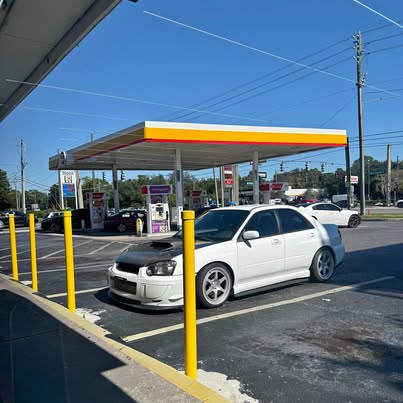
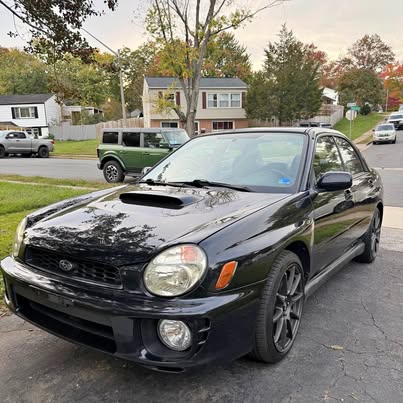
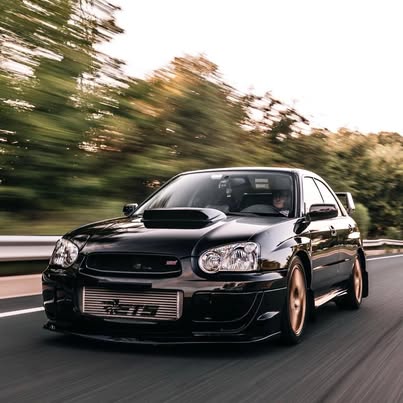
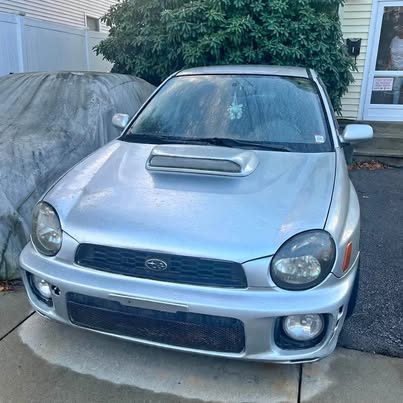
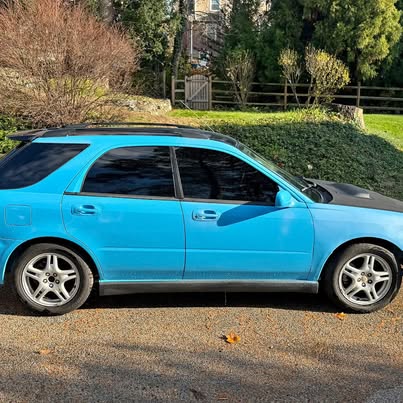
The car that built the American market is the second generation, the GD sedan and GG wagon of 2002 to 2007, in three faces enthusiasts name by their headlights: the round-eyed Bugeye of 2002–03, the Blobeye of 2004–05, and the Hawkeye of 2006–07. The 2002 WRX brought a 2.0-litre turbo engine making 227 hp, a five-speed manual, and a price that made it the performance bargain of the decade. The STI followed for 2004, with a US-only 2.5-litre engine making 300 hp, a six-speed manual, a driver-controlled centre differential and Brembo brakes — a deliberately hardcore flagship. In 2006 the mainstream WRX moved to the 2.5 too, gaining torque and losing a little of the 2.0's rev-hungry character. The cars in our own current listings are exactly this era: every WRX we presently track is a 2002 to 2005 car, split between sedans and the less common, increasingly sought-after wagons, in black, silver, World Rally Blue and white. These are the cars that have fallen to the bottom of their depreciation curve, been modified, crashed, parted out and neglected in large numbers, and are now being sorted into the worth-saving and the too-far-gone.
The third generation, GE/GH for 2008 and GR/GV thereafter, widened the car, softened it at first, then sharpened it again: the 2008 WRX was criticised — fairly — for going soft, and Subaru answered in 2009 with a bigger turbo, 265 hp and firmer suspension. The hatchback became the lead STI body style, with wide bodies from 2011 and the STI sedan's return. The fourth generation, the VA of 2015 to 2021, separated WRX and STI from the mainstream Impreza line in name and shell. The WRX moved to the direct-injected FA20 2.0, with much better economy and a choice of six-speed manual or CVT; the STI carried on with the old EJ 2.5, the six-speed box and hydraulic steering, a beloved anachronism sold new until 2021. A fifth-generation WRX followed from 2022, without an STI; it is too new to be this guide's subject, though everything here about modification history applies to it in full.
Why did these cars get used so hard? Because they invited it. All-weather pace meant they were driven all year, in salt states as happily as in the Sun Belt. A huge, cheap and effective tuning aftermarket meant few stayed standard, and the line between a sensibly enhanced car and one tuned past the strength of its pistons and gearbox is one many owners crossed without knowing. The result is a market with a wider spread between best and worst than almost any comparable car. A one-owner, standard, full-history car is genuinely rare and priced as one; a four-owner car with a parts-bin engine bay and no history is common, and is priced — by the unwary — dangerously close to the good one. Your job is to tell them apart, and most of that job is forensic: reading a car's modification history, its paper trail and its underside, rather than judging how it drives for fifteen minutes.
The models
Every WRX is an Impreza shell with a turbocharged flat-four, all-wheel drive and uprated suspension and brakes. Beyond that, the range divides by generation, and then by the WRX-versus-STI line that runs through every generation from 2004 onward in the US. Read the table by generation first: the chassis code tells you the era, the engine code the mechanical story, the badge the specification. Production figures are given only where genuinely established; Subaru did not publish clean per-variant US numbers for most WRX years, and any seller quoting a suspiciously precise rarity figure for an ordinary WRX should be asked for his source.
| Model | Years | Engine | Output | Built | Character |
|---|---|---|---|---|---|
| WRX (GC8, Japan/Europe) | 1992–2000 | 2.0 flat-four turbo (EJ20G/K) | 237–276 hp | Not reliably published | The original: light, raw, never officially sold new in the US |
| Impreza 2.5RS (GC/GM, US) | 1998–2001 | 2.5 flat-four, NA (EJ251) | 165 hp | Not reliably published | The WRX-look predecessor; no turbo — the swap donor and the impersonator |
| WRX Bugeye (GD/GG, US) | 2002–2003 | 2.0 flat-four turbo (EJ205) | 227 hp | Not reliably published | The car that started the US market; revvy 2.0, five-speed, sedan and wagon |
| WRX Blobeye (GD/GG, US) | 2004–2005 | 2.0 flat-four turbo (EJ205) | 227 hp | Not reliably published | Facelifted Bugeye; stronger hubs and trim from 2005, same basic recipe |
| WRX STI Blobeye (GD, US) | 2004–2005 | 2.5 flat-four turbo (EJ257) | 300 hp | Not reliably published | The US flagship: 2.5 litres, six-speed, DCCD, Brembos, sedan only |
| WRX Hawkeye (GD/GG, US) | 2006–2007 | 2.5 flat-four turbo (EJ255) | 230 hp | Not reliably published | The torque car: 2.5 in the mainstream WRX, bigger brakes, last of the GDs |
| WRX STI Hawkeye (GD, US) | 2006–2007 | 2.5 flat-four turbo (EJ257) | 293 hp (SAE net) | Not reliably published | Refined STI; rating falls on paper under the new SAE method, pace does not |
| WRX (GE/GH, US) | 2008 | 2.5 flat-four turbo (EJ255) | 224 hp | Not reliably published | The soft one: narrow body, gentle tune — the year to buy cheap or avoid |
| WRX (GR/GV, US) | 2009–2014 | 2.5 flat-four turbo (EJ255) | 265 hp | Not reliably published | The answer: bigger turbo, wide body from 2011, hatch or sedan |
| WRX STI (GR/GV, US) | 2008–2014 | 2.5 flat-four turbo (EJ257) | 305 hp | Not reliably published | Hatch-led, wide-body from 2011, sedan returns; the modern-classic STI |
| WRX (VA, US) | 2015–2021 | 2.0 flat-four turbo DI (FA20) | 268 hp | Not reliably published | New engine, new shell, six-speed or CVT; economy and pace together |
| WRX STI (VA, US) | 2015–2019 (Type RA 2018; S209 2019) | 2.5 flat-four turbo (EJ257) | 305 hp; RA 310 hp; S209 341 hp | RA 500; S209 209 | The last EJ car: hydraulic steering, mechanical diffs, a farewell edition line |
The GC cars and the 2.5RS question. A genuine Japanese or European GC8 WRX in the US is an import, eligible under the 25-year rule in increasing numbers, and should come with import paperwork matching its specification: the Japanese range runs from cooking WRX models through WRX RA lightweight cars to the STI Versions, and the value differences are enormous. The 22B — 400 built, wide-body, 2.2-litre coupe — lives in a different market entirely. Domestically, the 1998–2001 2.5RS is the car you will actually meet wearing WRX badges and a bonnet scoop: a good car in its own right, but one that left the factory with a naturally aspirated engine known for head-gasket failures, so any turbo power it now has came from a swap. Price a swap as a swap, on the quality of the conversion and the paperwork, never on the badge.
The GD/GG cars (2002–07) — the heart of this guide. The Bugeye remains the purest expression of the recipe: the high-revving EJ205 2.0, a five-speed manual or a four-speed automatic, sedan or wagon. The Blobeye facelift of 2004 brought tidier styling, and 2005 cars gained stronger wheel hubs and a revised interior. The Hawkeye of 2006–07 is mechanically the most changed mainstream car: the EJ255 2.5 brought a fat mid-range, the brakes grew to four-piston front calipers, and a short-lived WRX TR (Tuner Ready) stripped trim to cut the price. In our current listings the early cars dominate — 2002 through 2005, with manual gearboxes on eight of the ten cars we track, which matches the market: the automatic WRX was bought by a different kind of owner, and is a separate, quieter buy.
The STI (2004 onward). The STI is not a WRX trim level; it is a parallel model. Over the contemporary WRX it adds, depending on year: the EJ257 engine with stronger internals and a larger turbo, the six-speed manual with a driver-controlled centre differential (DCCD), limited-slip differentials front and rear, Brembo brakes, inverted-strut suspension, and a price when new roughly half as much again. The 2004 car is the rawest US STI — no radio, no frills. The 2005 gained stronger hubs; the Hawkeye STI is the most polished GD; the GR hatchback STI of 2008–14 divides opinion on looks and unites it on pace, with the wide-body cars from 2011 the ones to have. The VA STI kept the faith — EJ engine, hydraulic steering, mechanical differentials — long after the mainstream moved on, and the limited runs (Type RA, 500 built for the US; S209, 209 built) are the modern collectibles of the line. A caution that runs through our own listings: STI badging is cheap and widely applied. Cars are listed as STI wagons in years when Subaru never sold an STI wagon in the US, and as early-2000s STIs from before the model reached America. Neither is automatically a dishonest car — a WRX wagon with STI parts can be excellent — but the VIN, the engine code, the gearbox count and the differential hardware settle what a car is, and the badge settles nothing.
Special and limited editions. Subaru sold a steady stream: WRX Limited trims with leather and a sunroof, the 2006 TR, the STI Limited of 2007 (leather, sunroof, a lip spoiler in place of the wing — the grown-up STI), and VA-era Series cars in special colours. Most add comfort or cosmetics rather than pace. Pay for the car, not the plaque — except for the genuinely limited STI runs in the table, where the build number and paperwork are part of what you are buying and must be verified like the VIN.
Engines and gearboxes
The EJ20: EJ205 and the Japanese EJ207
The original WRX engine is a 2.0-litre flat-four — two opposed banks, a short, stiff crankshaft, and a layout that sits low enough to give the car its balance. The US Bugeye and Blobeye WRX uses the EJ205: an open-deck aluminium block, belt-driven double overhead cams, a Mitsubishi TD04 turbocharger, a top-mount intercooler fed by the bonnet scoop, and 227 hp at 6,000 rpm with peak torque arriving high, around 4,000 rpm. It wants revs and feels flat below 3,000 rpm in a way modern turbo engines do not; owners either love the swell as the turbo arrives or prefer the 2.5's mid-range. Mechanically the EJ205 is the toughest of the US turbo EJs in ordinary use. Its pistons are stronger relative to its output than the 2.5's, it does not share the later cars' ringland reputation at standard power, and its known weaknesses are age ones: the timing belt and its idlers, tired turbochargers, perished hoses, coil packs on early cars, and oil consumption that creeps up with mileage. A healthy one starts cleanly, idles evenly once warm, pulls hard from 3,500 rpm to the redline without hesitation, and shows no blue smoke on a cold start or the overrun. Budget for the belt service on any car without proof of it, and treat a car that boosts unevenly or smells of hot oil as a diagnosis to be made before purchase, not after.
The EJ25 turbos: EJ255 and EJ257, ringlands and head gaskets
From 2006 the US WRX uses the EJ255, and every US STI the EJ257: 2.5-litre versions of the same architecture, with a semi-closed-deck block and, in the EJ257's case, stronger pistons, different heads and a larger turbocharger. Period outputs: 230 hp for the 2006–08 WRX, 265 hp from 2009 with the larger VF52 turbo, and 300 hp for the 2004–06 STI, restated as 293 hp for 2007 under the revised SAE method, then 305 hp for the GR and VA STI. On the road the 2.5 transforms the car: torque arrives earlier and stronger, and it feels muscular where the 2.0 feels eager. The STI's EJ257 adds a hunger for revs the EJ255 lacks, plus the hardware to use it.
Now the two failure modes you must understand before buying any 2.5 turbo, because sellers will minimise both.
Ringland failure is the signature EJ255/EJ257 engine failure. The pistons are cast, and the ring lands — the thin sections of piston crown between the compression rings — can crack under detonation. Cylinder four, which runs hottest, is the usual victim. The cause is a knock event, usually from an aggressive or mismatched tune, low-octane fuel, an intake fitted without the required remap, or overheating; compression then leaks past the rings into the crankcase. The symptoms are specific and checkable: rising oil consumption, a lumpy idle, a misfire code for one cylinder, oil pushed into the intake tract, and — the decisive test — a compression or leakdown test that singles out one cylinder. A leakdown test on any 2.5 turbo you are serious about is not optional diligence; it is the single most informative money you will spend, an hour or two of shop time against an engine rebuild that runs into five figures done properly. A seller who refuses one has told you what it would find often enough that you should walk away. Note the corollary: ringland failure is overwhelmingly a tuned-car and hard-use failure. A standard, well-maintained EJ257 on good fuel is not living on borrowed time, and the internet's blanket condemnation of the engine says more about how these cars were used than how they were built.
Head gaskets need separating by engine, because the internet conflates two stories. The naturally aspirated EJ25 of the 2.5RS and ordinary Imprezas and Outbacks is genuinely notorious for external head-gasket leaks; that reputation is earned. The turbo engines use multi-layer steel gaskets and are far less prone in standard use — but not immune, especially after overheating, after a cheap previous repair, or at high mileage and high boost. The signs are combustion gas in the coolant (a chemical block test settles it), a reservoir that overflows under load, unexplained coolant loss, and overheating that appears under boost and vanishes in gentle driving. A head-gasket job on a turbo EJ — engine out, heads machined, timing belt renewed while access is free — is a four-figure job; priced into a purchase it is manageable, discovered afterwards it sours a car.
Supporting systems matter as much as the headline failures. The oil pickup tube on EJ engines can crack at its brazed joint, starving the engine of oil pressure with little warning; many careful owners fit an uprated pickup as preventive insurance, and its presence in a history file marks an informed owner. The banjo-bolt filters in the oil feeds to the turbo and the variable-valve-timing (AVCS) solenoids clog with neglected oil, starving the turbo; a car with patchy oil history is a candidate. Turbochargers — TD04 on the 2.0 and early 2.5 WRX, VF39 on the 2004–06 STI, VF43 for 2007, VF48 on GR/VA STI, VF52 on the 2009–14 WRX — are durable on clean oil and tired on the opposite; shaft play, oil in the intercooler in quantity, and a siren note under boost are the tells, with a replacement turbo a mid-four-figure fitted cost. Timing belts govern all of it: every EJ is an interference engine, the interval is 105,000 miles or 105 months, and a snapped belt bends valves. The job is belt, idlers, tensioner and usually the water pump together — typically a high-three-figure to low-four-figure job at an independent — and a car at or past the interval with no invoice needs it priced in on day one, however well it runs.
The FA20: the VA WRX engine
The 2015 VA WRX replaced the EJ with the FA20 in direct-injected turbo form: 2.0 litres, a twin-scroll turbo mounted low, a timing chain in place of the belt, 268 hp, and a broad, early torque plateau that makes it the easiest WRX engine to drive quickly and the most economical by a wide margin. Its failure profile is different, not absent. Direct injection means the intake valves get no fuel washing, so carbon builds on the valve backs over mileage; walnut-shell blasting is the established remedy and a routine ownership cost, not a catastrophe. The rods are the known ceiling for tuners — the FA20 tolerates sensible tunes but lacks the EJ257's headroom, and a heavily tuned VA WRX deserves the same forensic suspicion as a tuned EJ car. Fuel pump and injector issues appear at higher miles, and the chain removes the belt deadline but not the need for clean oil. Overall the FA20 is the lowest-drama engine in this guide at standard power, one reason the VA WRX is the daily-driver pick in the final section.
Gearboxes: the five-speed's limits, the six-speed, and the automatics
Gearboxes divide the WRX world as sharply as engines do, and the five-speed manual is the dividing line. The standard WRX five-speed (the TY75 family) is an old design in a case that flexes under torque; at standard power, driven with mechanical sympathy, it lasts. Add power, launches and a heavy clutch, and the case flex lets the gears separate and strip — third-gear failures on tuned GD cars are a genre of forum post, not an anecdote. The honest rules: a five-speed car at near-standard power with clean changes is fine; one with a big tune, a puck clutch and no gearbox work in the file is a car whose next owner pays for the transmission. Judge it on second and third gear synchromesh from cold, on whine under load, and on whether it jumps out of gear on the overrun. A rebuild or a good used box is a four-figure decision either way, and the popular six-speed conversion is a driveline project — box, clutch, driveshaft, rear differential, hubs in some combinations — not a weekend swap, whatever an advertisement implies.
The STI six-speed (the TY85 family) is the opposite story: a genuinely strong, motorsport-bred gearbox with its own oil pump, capable of handling substantially more than standard power, paired with the DCCD centre differential that lets the driver vary the front-rear torque split and, on later cars, adds automatic modes. It is heavier and notchier than the five-speed, and that is the whole case against it. On a used STI, check the DCCD works through its modes without warning lights, listen for centre-differential groan on full-lock turns beyond the mild binding that is normal, and confirm the car has run on matched tyres — a mechanical all-wheel-drive system with limited-slip differentials is damaged by mismatched rolling circumferences, and a car wearing one odd tyre deserves hard questions.
The automatics are the minority choice — two of the ten cars in our current listings — and better than their reputation. The GD/GG cars offered a four-speed automatic; the VA WRX offered a CVT with paddle-shift steps, which suits the FA20's torque curve well. An automatic car has usually lived a gentler life and is worth considering precisely because the boy-racer market ignores it. Judge it on fluid condition and history — Subaru automatics want their fluid changed, not sealed for life — and on the same engine evidence as any other car. One ownership rule applies to every version: all four tyres must match in size, model and approximate wear, because the centre differential's health depends on it. A seller who has run odd tyres has been stressing it every mile.
Problem areas
A WRX's problems are rarely mysterious. They cluster in five places — the engine's response to tune and maintenance, rust in a specific and predictable map, the driveline that modification stresses, suspension and brakes consumed by hard use, and an interior and electrical system that age honestly but show neglect early. Work through them in that order, because the order is also roughly the order of cost. A note on evidence: our own current WRX pool is small — ten cars, all early GD/GG models — so this guide does not pretend to photo-note statistics for the model; the patterns below are the established ones, and the inspection section turns each into a check you can perform on the car in front of you.
Engine: tune, detonation and the cost of other people's modifications
The single largest risk in a used WRX is not a component; it is the car's tuning history. The ECU expects specific intake airflow, fuelling and boost behaviour, and the popular modifications change all three. An aftermarket intake on an EJ car alters the airflow the mass-airflow sensor reports, leaning the mixture unless the ECU is remapped for that exact intake. A vent-to-atmosphere blow-off valve releases air the ECU has already metered and fuelled for, producing rich spikes owners mistake for character. A boost controller or a downpipe fitted without a tune lets boost arrive harder and leaner than the map allows. Any of these, sustained, is how ringlands crack. The forensic signs are readable in any engine bay: a non-standard intake, shiny silicone hoses where factory rubber should be perished, a boost gauge plumbed through the firewall, an aftermarket downpipe, a front-mount intercooler where a top-mount belongs, non-factory wiring, and — most telling — an access-port tuning device conspicuously absent from a car whose hardware clearly needs one. Ask whether the car has been tuned, by whom, and whether the device comes with the car married to it. An access port unmarried and sold separately leaves the car running its last tune with no way for you to see it; a car returned to a factory map while keeping airflow-changing hardware is worse than either honest state. None of this makes a modified car a bad car: a documented build — named tuner, dyno sheet, matching hardware list, compression figures in the file — can be the best buy of all. What you are pricing is evidence, and its absence on a modified car is itself the finding.
Beyond tune, the age faults are conventional but specific. Oil consumption rises with mileage on every EJ; a quart between changes on a high-mileage car is a monitoring item, while a quart in a few hundred miles is a leakdown test and probably a short block. Coolant leaks gather at the radiator's plastic end tanks (a GD radiator is a consumable by now; an all-aluminium replacement is a good sign) and at the small reservoir by the turbo. Power-steering pumps whine and leak, and a groaning pump that quiets with fresh fluid and a new inlet O-ring is a cheap fix masquerading as a failure. Coil packs and spark plugs matter disproportionately: a misfire under boost is very often ignition, plugs are awkward to reach on a flat-four and therefore skipped, and a car with no recorded plug change is a car whose other services deserve doubt. The secondary air-injection system on 2006-onward cars — an emissions pump and valves that corrode and stick — generates warning lights and, in some states, inspection failures; deleting it is common, illegal for road use in many places, and a conversation to have before purchase.
Rust: the map
A WRX rusts where a rally-bred, all-weather Subaru rusts, and the map is consistent enough that you can walk it on any car in five minutes. These cars were bought to be used in winter, many lived in the salt belt, and the youngest GD is now old enough to vote. Cosmetic rust is negotiable. Structural rust is the car's price ceiling.
Rear quarter panels and arches. The signature WRX rust. The rear arch lip traps mud against the inner wing, the paint bubbles from inside, and by the time the blister is visible the metal behind it is thin or holed. Press along the arch lip with a thumb, look inside the arch with a torch at the seam where the quarter meets the inner tub, and check the matching area inside the boot or load bay. Repair ranges from a localised arch section to a quarter-panel replacement with paint; get a body shop's number on any car showing more than surface bubbling, because the visible blister is never the whole of it.
Rear subframe and suspension mounting points. The rear subframe that carries the differential and rear suspension corrodes, in salt country severely, and so do its mounting areas on the shell. This is lift territory: you cannot grade a subframe from the kerb. A heavily scaled subframe with flaking at the mounts is a fabrication-and-parts bill and, at the extreme, a car to walk away from; surface corrosion on a southern car is a wire-brush weekend. The front U-shaped subframe on GD cars has its own record — Subaru itself ran corrosion campaigns on control arms in salt states — and a rotten front subframe or lower control arm is a safety item, not a cosmetic one.
Sills and jacking points. As on every car in these guides, the sill carries the jack, and the jack test carries the verdict: a sill that takes the car's weight on its own jacking point, quietly and without flex, is sound; one that creaks or folds is structural rust announcing itself. Check the full length, especially behind the front wheels where spray lands.
Strut towers, especially the rears. The rear towers live inside the body at the top of the rear suspension, hidden behind trim on sedans and under the load area on wagons and hatches. Water and mud attack them from the hidden side, and GR-generation cars in particular have a record of rear tower corrosion found only when trim is pulled. Front towers are visible in the engine bay; look for bubbling around the top-mount seam. Tower rust is structural and expensive, and it is the rust sellers' photographs most reliably avoid.
The rest of the map. The fuel filler neck corrodes and leaks, announcing itself as a fuel smell and an evaporative-emissions code. Bonnet and boot-lid seams, door bottoms, the windscreen surround on cars that have had a screen replaced badly, and the spare-wheel well all collect water and deserve the torch treatment, as do underbody brake and fuel lines in salt country. And read the underside's cosmetics as evidence: a uniform fresh coat of black underseal over everything, applied the week before sale, is a cover-up until the seller proves otherwise, while honest, patchy factory protection with clean seams is what a sound twenty-year-old Subaru actually looks like.
Driveline: clutches, differentials and wheel bearings
The clutch is the driveline's fuse and its diary. A car that has been launched consumes clutches, and a car on its third at modest mileage has told you how it was driven. Judder on take-up, a biting point at the top of the pedal, and slip in a high gear under boost — test it in fourth or fifth at low revs with full throttle, where slip shows first — are the signs. Replacement is a mid-four-figure job at a shop on the STI, less on the WRX, and an aggressive puck clutch on a five-speed car trades a clutch problem for a gearbox problem. On STIs, check the DCCD through its modes and the rear differential for chatter on tight turns; on all cars, listen for the clunks of worn differential bushes and mounts — cheap parts, tedious access, a reliable indicator of hard use. Centre differentials suffer silently from mismatched tyres, so uneven tyre wear is a driveline clue, not just a tyre bill.
Wheel bearings are a known consumable, more so on the 2002–04 cars with the earlier hub design; the drone that changes pitch when you weave gently at speed is the classic presentation, and the 2005-onward stronger hubs are one of that year's quiet improvements. CV boots split with age and the joints follow if ignored.
Suspension, steering and brakes
The WRX rides on MacPherson struts all round, and by now every rubber bush in the system is old. The symptoms are knocks over broken surfaces, wandering under braking, uneven tyre wear, and steering that has lost its centre feel. Top mounts knock, drop links rattle cheaply, and worn rear bushes give the back end a vague, steery feel owners chase with alignment after alignment. Budget for a systematic bush-and-damper refresh on any high-mileage car that has not had one — dampers alone are a four-figure set fitted for quality units — and treat a car on cheap coilovers with unknown settings as suspension you are buying twice: once to remove them, once to fit something right. Good coilovers, aligned with paperwork, are a genuine plus.
Steering is hydraulic across the range except for the VA WRX's electric rack — even the VA STI kept hydraulic assistance — so pumps, racks and hoses follow the usual ageing pattern of leaks and whines. Brakes: the standard WRX sliding calipers are adequate, the 2006–07 four-piston fronts better, and the STI's Brembos excellent but hungry for expensive discs and pads, with seized pins the known irritation on older cars. On every version, seized rear calipers, perished hoses and discs lipped from standing are the standard recommissioning list, and a car that has sat needs its brakes treated as unproven until stripped, whatever the pedal feels like in the driveway.
Interior, electrics and the small things that price a car
Subaru interiors of this era are durable in structure and cheap in finish. Seats hold up better than the trim suggests, though driver's bolsters wear and STI seats show shiny patches on their suede-effect centres. Dashes rarely crack; the common failures are window regulators, blower resistors, and small displays. The check-engine light deserves its own sentence: it must illuminate with the ignition and go out after starting. A car where it never lights has had the bulb removed or the code suppressed — a seller telling you, in writing, not to trust anything else he says. Read the codes on any car you are serious about, and treat stored knock, misfire and emissions codes as the start of the real negotiation. Air-conditioning that blows warm is usually a compressor or a condenser leak, both ordinary. Water leaks follow perished seals and blocked drains, and a damp spare-wheel well is worth tracing because the same water feeds the rust map above. Aftermarket alarm systems from three owners ago cause a steady trickle of no-start stories; a documented modern installation is a plus.
How to inspect one
Allow ninety minutes, bring a torch, a code scanner, a magnet wrapped in cloth and a tyre-depth gauge, and arrange the test drive before the viewing — a WRX that cannot be driven hard, from a cold start, is one you are not inspecting, merely looking at. If the car passes you, pay for a pre-purchase inspection with a compression and leakdown test at a Subaru specialist before money changes hands. On an EJ25 turbo especially, that test is the purchase.
- Paperwork and identity first. Match the VIN on the title to the plate at the base of the windscreen and the stampings on the car. Confirm the car is what its badge claims: count the gears (a US STI has six; a WRX five or an automatic), read the engine code from the block, look for the DCCD controls and Brembo calipers an STI must have. A car listed as an STI wagon, or as a pre-2004 US STI, needs its true identity established here, before you fall for it. Read the service file for the three dates that price the car: the last timing-belt service on an EJ, the last clutch, and any engine work.
- The cold start. Insist the engine is stone cold when you arrive — a seller who has warmed the car has hidden the start. A healthy turbo EJ or FA starts at once, may tick briefly, and settles to an even idle. Blue smoke at start-up points to turbo seals or valve-stem wear; smoke that continues is rings or worse. A lumpy, hunting idle on an EJ25 is a leakdown test asking to happen. Listen for the hollow rattle of a failing timing-belt tensioner on an EJ, and for piston slap that fades as the engine warms — mild slap on a cold high-mileage EJ is a known trait, slap that stays is wear.
- Oil and coolant, before the drive. Pull the dipstick: the level, the colour, and whether the oil smells of fuel. Check for emulsion under the oil filler cap and in the coolant reservoir — and then remember that the decisive EJ25 checks are the leakdown test and the coolant block test from the problem areas, not anything your eyes can do here. Note the coolant level and colour, look at the radiator end tanks for the green or pink crust of a weeping seam, and check the small turbo reservoir. Low fluids on a car presented for sale are a maintenance statement.
- The engine-bay forensic pass. Work through the modification checklist from the problem areas: intake, downpipe, intercooler, blow-off valve, boost gauge, non-factory wiring, missing heat shields. Ask what tune the car runs, on what device, and whether the device comes with the car. A standard bay with aged-but-original rubber is a selling point worth paying for; a modified bay with no paperwork is a discount you should take, not a premium you should pay.
- Under the car: the rust map. Torch along the rear arches and quarter seams, the rear subframe and its mounts, the front U-subframe and control arms, the sills — and apply the sill-jack test from the rust section if the seller allows it, because a sill that takes the car's weight quietly has answered the structural question. Look up at the rear strut towers as far as access allows, at the fuel filler neck, and at the brake and fuel lines. Perforation in a subframe, a tower or a sill ends the inspection for most buyers; price anything less with a body shop's number, not a guess.
- The test drive, properly. Twenty minutes minimum: a full-throttle pull in a high gear to test the clutch for slip, full boost in third and fourth while you watch for hesitation, misfire or a flashing warning light, and a steady cruise for wheel-bearing drone and driveline whine. Boost should arrive smoothly and hold; a car that boosts, cuts and boosts again is reporting a fuelling, ignition or tune fault. Brake firmly from speed — straight, no judder — and make slow full-lock turns: mild centre-differential binding on an STI is normal, groaning and hopping are not.
- Gearbox, cold and hot. Check the tyres as you go: all four must match in make, size and tread depth, because the centre differential's health depends on it, and one new tyre among three worn ones is a driveline question as well as a full set in the budget. The five-speed must take second and third cleanly from cold, must not whine under load in third, and must stay in gear on the overrun. The STI six-speed is notchier by nature but must be precise; vague selection is wear, not character. An automatic must change promptly and cleanly, hot and cold, with no flare between ratios; a CVT must pull without judder.
- Electrics and the warning-light test. Confirm the check-engine light illuminates with the ignition and extinguishes after starting — no light at all is a fail, as the problem areas explain. Read stored and pending codes with your scanner, then work every window, the wipers, the lights, the blower on all speeds and, on an STI, the DCCD through its modes. Codes plus a seller who discourages scanning end negotiations in your favour or end the viewing; either is a result.
- Heat and a hot restart, then the specialist hour. Let the car idle for five minutes after the drive: watch the temperature gauge for creep, check again for smoke, run the heater hot and the air-conditioning cold, then switch off and restart — a hot EJ that cranks long is reporting trouble. If the car has passed you, book the pre-purchase inspection: lift time for the rust map, a compression and leakdown test on any EJ25 turbo (and on any EJ20 with oil consumption or a lumpy idle), a coolant block test if there is any cooling doubt, and a scan with a Subaru-capable tool. Price what it finds against the asking price in writing. This step, not the test drive, is where good WRX purchases are actually made.
Values
The WRX market is really several markets wearing one badge, and the computed listings and recorded-sales summary beneath this guide will show you the spread for the cars actually on offer. Read those figures with the market's structure in mind, because no model line in these guides punishes a lazy average like this one: a median drawn across a rusty four-owner Blobeye, a one-owner Hawkeye wagon and a collector-grade VA STI describes none of them.
The first driver of value is generation and badge, in that order. The GC-era imports and the 22B live in a collector market of their own. Among the US cars, the STI commands a strong premium over the equivalent WRX in every generation — it was the rarer, dearer car new, its hardware is genuinely superior, and its survival rate in standard form is the lowest of all. Within the WRX generations, the GD cars are the emerging classics: the Bugeye has first-of-the-line appeal, the Hawkeye the 2.5 engine and the best mainstream brakes, the Blobeye the value entry to the shape. The GR/GV cars are the modern-usable buys, the VA cars the newest and most complete, and the 2008 WRX the perennial exception — the soft car the market prices below both its predecessor and its successor, correctly.
The second driver is originality, and it works in a direction new buyers find counterintuitive: on a WRX, modifications subtract value, because the buyer pool has learned what a tune history can hide. A standard car with a full service history is the easiest WRX to sell and the hardest to find. A modified car is worth the sum of its evidence — a named tuner, a coherent parts list, invoices and a clean leakdown test can hold real value, while hardware with no paperwork is priced as an engine rebuild waiting for a date. Compare two cars' files before you compare their specification sheets.
The third driver is the condition spread — on these cars not the usual gap between tidy and scruffy but a chasm between sorted and structurally tired. Rust is the hinge: a rust-free southern or western car carries a real premium over an identical salt-belt car, and earns it the first time either car needs welding. Mileage matters less than the market pretends: a high-mileage car with a documented timing belt, a recent clutch and a clean leakdown result is a safer buy than a low-mileage car with none of those and a storage history. Colour moves money at the margins — World Rally Blue is the signature colour and the easiest sale, white is scarce — and wagons and hatches, once the cheap way in, have firmed as buyers have recognised how few clean ones survive.
Asking and achieved prices part company on this model more than most. Sellers of modified cars ask for their build cost back, and the market declines; sellers of genuinely standard cars sometimes underprice them, because the listings around them are louder. Auction results for the best STIs set the public benchmarks, while ordinary WRXs change hands privately at figures that lag advertised asking prices — our own listings, drawn from marketplace sellers, sit at the everyday end of that market and should be read as asking prices on working cars, not the collector ceiling. The project-versus-driver gap is wide and honest: a running, rusty WRX is cheap because the welding, the engine evidence and the recommissioning are all still to pay for. Negotiate on evidence, in inspection order: structural rust first, engine health second, modification history third, cosmetics last.
Parts and ownership
The WRX is one of the best-supported modern classics you can own: Subaru built the same basic car for a long time, the enthusiast base is enormous, and the aftermarket is one of the deepest in the industry. Almost everything mechanical for a GD, GR or VA car can be ordered today, much of it from multiple sources, and the knowledge base — factory manuals, forum archives, specialist tuners in every state — is as good as it gets for a car of this age.
Easy: service items of every kind, filters, plugs and coil packs, brake discs and pads including the STI's Brembo hardware, clutches, dampers and suspension bushes in both standard and uprated forms, radiators, exhausts from standard to performance, timing-belt kits with every idler and the water pump, wheel bearings, and a long list of factory parts still supplied through Subaru dealers. The flat-four's top-mounted ancillaries make much routine work accessible, though spark plugs and anything at the sides of the engine bay demand patience and the right extensions.
Harder and dearer: short blocks and engine rebuilds are the big-ticket centre of WRX ownership — a properly built replacement engine, fitted, is a five-figure decision, which is why the leakdown test before purchase matters more than any other check in this guide. Six-speed gearboxes are strong but expensive when they do need work. Body panels and rust-repair sections for the GD are thinner than the mechanical supply, wagons more so than sedans, and clean early interior trim is increasingly a breaker's-yard search. STI-specific parts — differentials, DCCD controllers, Brembo calipers — command STI prices. Japanese-market parts for GC imports require the exact chassis and engine codes and a supplier who knows them.
Running costs. A sorted WRX is a realistic daily classic: it seats four or five, works in winter, and returns fuel economy in the low-to-mid twenties on a run for an EJ car, better for the FA20 VA, worse for an STI driven as intended. All of them want premium fuel — a requirement, not a preference, on a turbo EJ — and insurance reflects the model's theft and accident history, so quote before you buy, especially on an STI. The budget line that catches new owners is the first year: a deferred timing belt, a matched set of four tyres, brake work and the small faults of a twenty-year-old car add up to a real number even on a good purchase, and a car bought cheap because it needs an engine is not cheap at all. Servicing discipline is the ownership skill that matters: short-interval oil changes with the correct grade, fresh coolant, the timing belt done on time rather than on failure, tyres replaced as matched sets. Owners who do those things run these cars to high mileages; owners who do not generate the listings the rest of us inspect.
Which one to buy
- The all-rounder: VA WRX (2015–21). The FA20 engine, the stiffest shell, the best economy and safety. The easiest WRX to live with every day, and the least likely to present you with an EJ-era forensic puzzle.
- The classic buy: GD WRX, Hawkeye first, Bugeye for purists. The 2006–07 car's 2.5 torque and bigger brakes make it the best-driving mainstream GD; the 2002–03 Bugeye is the original and the most characterful. Either way, buy the standard car with the history file over the modified car without one, every time.
- The value buy: the GR WRX (2009–14). The 265 hp wide-body cars deliver most of an STI's pace for WRX money, in a hatch that swallows a family's life. Avoid the soft 2008 unless it is priced as the exception it is.
- The flagship: the STI — GD for rawness, VA for the last of the line. Both demand the full forensic treatment: leakdown, DCCD, modification history. A right STI is one of the great performance buys of its era; a wrong one is the most expensive car in this guide.
- The sleeper: the GG wagon (2002–07). Sedan pace, estate discretion, and a survival rate so low that clean ones are genuinely scarce. Buy the best shell you can find.
- The specialist buy: a GC import or a 2.5RS. The imported GC8 and STI Versions are the rising collector cars, bought on paperwork and provenance; the 2.5RS is a fine swap base, bought as what it is and never as a WRX.
And the rule that overrides all of the above: buy the car with the evidence — the rust-free shell, the leakdown sheet, the service file and the honest modification history — in the specification you can live with. Engines, clutches and brakes are all fixable at prices you can plan for. A rotten shell, a cracked ringland and a hidden tune are the three bills that turn a bargain WRX into a cautionary tale, and every one can be found before you pay, if you inspect in the order this guide sets out.
See the 31 WRX STI cars currently listed.
For sale now
$35,000Expand
 $4,500
Expand
What they sell for: WRX STI sale prices.