
Subaru Impreza WRX buyer's guide
Subaru Impreza WRX (2001–2007) — WRX, WRX STI, Impreza WRX: what's listed, and what they sell for.
Years: 2001–2007 · Models: WRX, WRX STI, Impreza WRX
Overview and history
The Impreza WRX is the car that brought rally-car performance to American buyers at an ordinary-car price — a turbocharged, all-wheel-drive Impreza with its roots in Subaru's World Rally Championship programme, sold through normal Subaru dealers with a normal warranty. The name is a job description: WRX stands for World Rally eXperimental, and the car was built to homologate and celebrate the Impreza that Colin McRae, Richard Burns and Petter Solberg drove to three consecutive manufacturers' titles in 1995–97. Japan and Europe had the WRX from 1992. America, to its lasting frustration, did not — Subaru judged the US market unready, and for a decade American enthusiasts could only watch.
That changed for the 2002 model year, when the second-generation Impreza (chassis codes GD for the sedan, GG for the wagon) arrived in the US with the WRX at the top of the range: a 2.0-litre turbocharged flat-four making 227 hp, a five-speed manual, all-wheel drive, a functional bonnet scoop feeding a top-mounted intercooler, and a price in the low-to-mid twenty-thousand range when new. Nothing else at the money offered the same combination of pace, traction and four-door practicality, and the car landed in a market primed by rally video games and magazine covers. It sold far beyond Subaru's expectations and effectively created the modern American sport-compact segment, forcing Mitsubishi to finally bring the Lancer Evolution to the US in 2003.
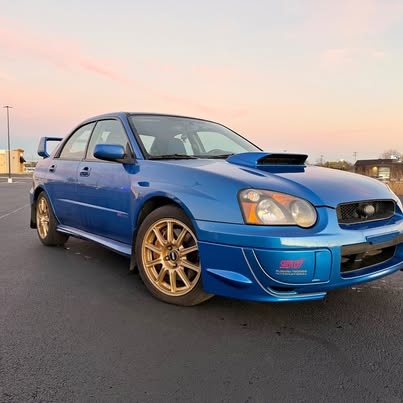
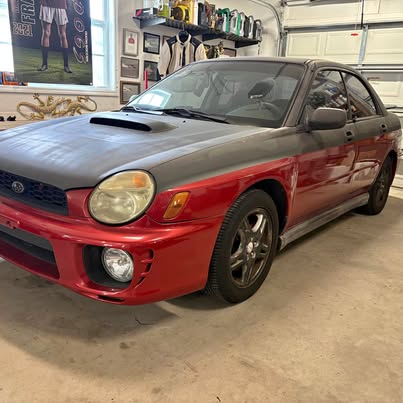
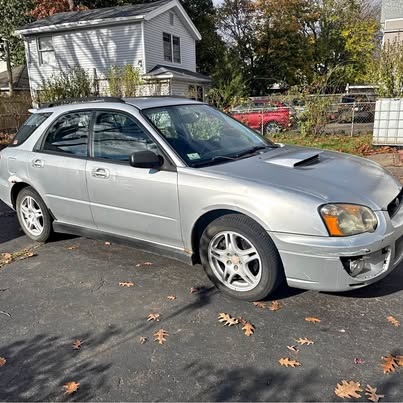
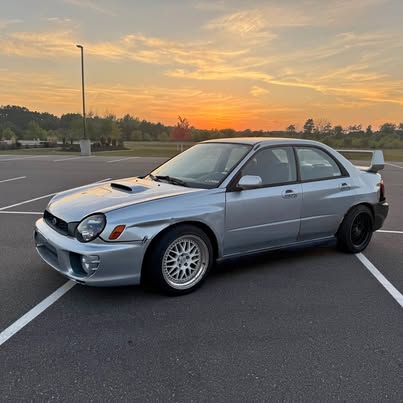
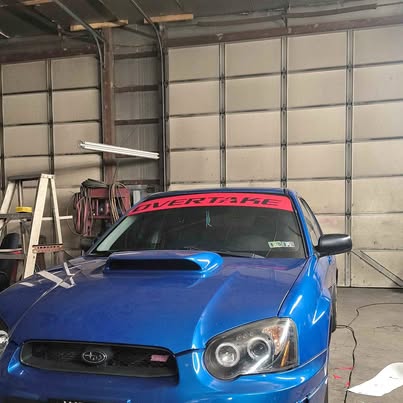
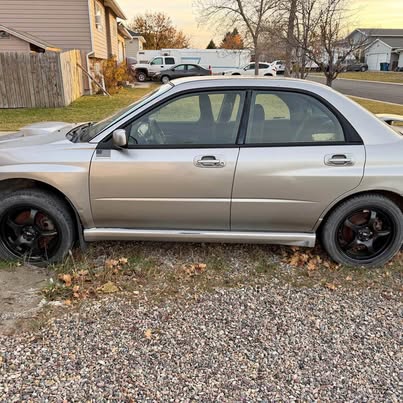
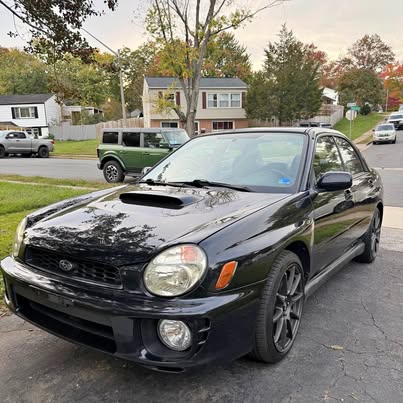
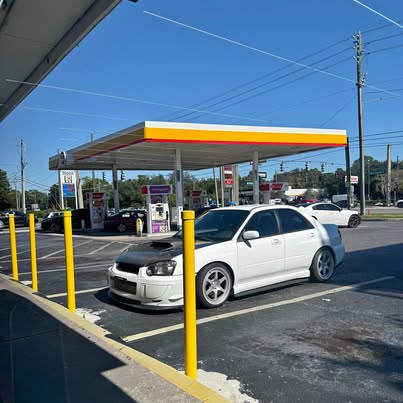
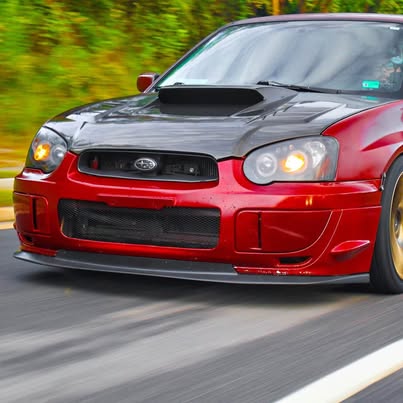
The WRX's American life falls into three visually distinct chapters, named by their headlights. The 2002–03 cars are the "bugeye," with big round lamps that were controversial when new and are now the most nostalgic of the three. A facelift for 2004 produced the "blobeye," with teardrop lamps and a tidier nose, and — far more importantly — brought the WRX STI to America at last: 300 hp, a six-speed gearbox, driver-adjustable centre differential and Brembo brakes. A second facelift for 2006 produced the "hawkeye," and the WRX itself changed character that year, swapping the 2.0 for a torquier 2.5-litre engine. Production of this generation ended after 2007, replaced by the softer, hatchback-led third-generation car.
Why the car matters now is the same thing that makes buying one difficult. These were cheap, tuneable and bought young. A large share were modified — often skilfully, often not — driven hard in all weathers, launched at drag strips, and maintained on a budget once third-hand. The survivors divide sharply: a small pool of stock, documented, garaged cars that are genuinely collectible, and a much larger pool carrying twenty years of modifications, deferred servicing and, in the snow belt, structural rust. The difference between the best and worst WRX you can buy is wider than for almost any other car of its era, and almost never visible in the listing photographs. This guide covers the US-market GD/GG cars, 2002–07, including the STI; the earlier Japanese and European cars and the 2008-on models are different purchases.
The models
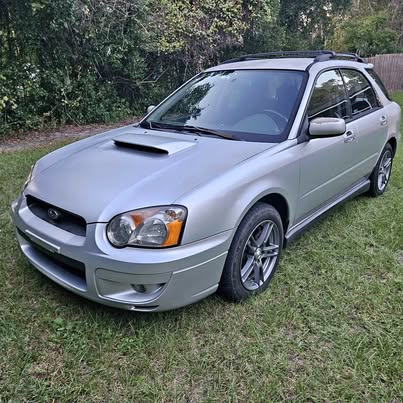
Every US GD/GG WRX is a four- or five-door Impreza with a turbocharged flat-four, all-wheel drive and a bonnet scoop. The range is simple at the top level — WRX or WRX STI — but the details changed almost every year, and the body style matters more than buyers expect: the wagon was never offered as an STI in the US, carries slightly narrower track and steel front arms instead of the sedan's alloy ones, and has become a cult car in its own right precisely because it was the understated one.
| Model | Years | Engine | Output | Built | Character |
|---|---|---|---|---|---|
| WRX sedan (bugeye) | 2002–2003 | 2.0 turbo (EJ205) | 227 hp | Not published separately | The original; rawest, lightest-feeling, most nostalgic |
| WRX wagon (bugeye) | 2002–2003 | 2.0 turbo (EJ205) | 227 hp | Not published separately | The sleeper; same pace, narrower track, cult following |
| WRX sedan/wagon (blobeye) | 2004–2005 | 2.0 turbo (EJ205) | 227 hp | Not published separately | The facelift cars; tidier cabin, same mechanical recipe |
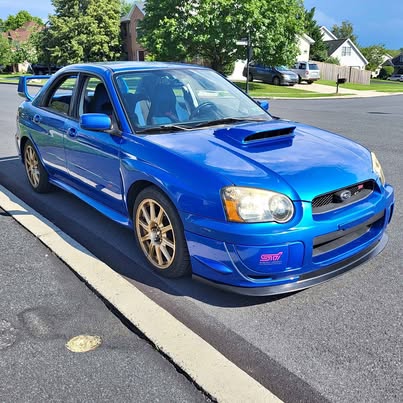
| WRX STI | 2004–2007 | 2.5 turbo (EJ257) | 300 hp (293 hp as re-rated 2007) | Not published separately | The full rally homologation package; six-speed, DCCD, Brembos |
| WRX (hawkeye) | 2006–2007 | 2.5 turbo (EJ255) | 230 hp | Not published separately | Torquier and easier to drive fast; TR is the stripped one |
| WRX STI Limited | 2007 | 2.5 turbo (EJ257) | 293 hp | 800 | Wingless, leather, sunroof; the discreet STI, and the rarest |
(Subaru never released a clean US production split by WRX variant and year, so the built column gives figures only where genuinely documented — the STI Limited's 800 cars. Treat any seller quoting an exact production figure for an ordinary WRX with suspicion: there is no factory source for it.)
The bugeye (2002–03). The first American WRX and, for many, the definitive one. Sedan and wagon, 227 hp from the 2.0-litre EJ205, a cable throttle and the lightest standard equipment list of the generation. The 2002 cars have the earlier, narrower-toothed five-speed gearset; from 2003 the gears were widened and strengthened, which matters if the car will be tuned. A Premium package (sunroof, heated seats and mirrors, spoiler on the sedan) arrived for 2003. These are the cars the nostalgia premium is attaching to, and also the cars with the highest mileages and the most previous owners.
The blobeye (2004–05). The facelift brought the teardrop headlights, a revised interior with better seats and, on the sedan, the option path most buyers took. Mechanically the WRX barely changed — same EJ205, same output — which is good news: everything in the engines section below applies equally. The 2005 cars gained an improved interior with automatic climate control and a smaller, three-spoke steering wheel replacing the four-spoke Momo wheel of the early cars.
The STI (2004–07). A substantially different car, not a trim level. The EJ257 2.5-litre engine makes 300 hp and 300 lb-ft in 2004–06 form (re-rated at 293 hp for 2007 under a revised SAE measurement standard — the engine did not get weaker, the ruler changed, and 2007 cars actually have revised gearing that makes them quicker in the quarter mile). Add the six-speed manual (the only gearbox offered), the Driver Controlled Center Differential, a front limited-slip differential, inverted-strut suspension, Brembo brakes, 17-inch forged BBS wheels on most cars and a quicker steering rack. The 2004 car is the rawest — no radio as standard, the most aggressive differential settings. For 2005 the STI gained a wider rear track with fender-arch extensions, a helical front differential in place of the 2004 car's Suretrac unit, and an immobiliser that makes key and ECU identity worth checking. There was no US STI wagon, and no automatic STI, ever: a car offered as either is neither.
The hawkeye WRX (2006–07). The WRX's own move to 2.5 litres (EJ255, 230 hp but a much fatter torque curve, 235 lb-ft delivered lower) makes these the easiest of the generation to drive quickly and the best daily drivers. The range gained a stripped TR (Tuner Ready) sedan — steel wheels, basic seats, priced for people who intended to modify it, which tells you how most TRs have lived — and a Limited with leather and a sunroof. Seventeen-inch wheels and four-piston front brakes became standard, a real improvement over the earlier sliding calipers.
Engines and gearboxes
The 2.0-litre cars: EJ205 (2002–05 WRX)
The EJ205 is a 1,994 cc flat-four with an aluminium block and heads, belt-driven double overhead cams (four valves per cylinder), a single Mitsubishi TD04L-13T turbocharger and a top-mounted air-to-air intercooler fed by the bonnet scoop. US-market cars make 227 hp at 6,000 rpm and 217 lb-ft at 4,000 rpm. Unlike the Japanese-market version, the US EJ205 has no variable valve timing — simpler, and one less system to fail. Fuel is by sequential electronic injection with a mass-airflow (MAF) sensor, and the 2002–05 cars use a cable-operated throttle, which gives them the direct, slightly raw response owners praise.
A healthy EJ205 starts instantly, idles smoothly once warm (a slightly lumpy cold idle for the first minute is common and usually harmless), and pulls hard and cleanly from about 3,000 rpm to the 7,000 rpm redline. Boost should arrive as one smooth push, not in steps or with hesitation. The engine is fundamentally strong at stock power; the limiting factor on most cars is not the design but the history — oil-change discipline, tune quality and how often it was launched.
Three design features shape the EJ205's old age. First, the pre-turbo catalytic converter in the up-pipe: US 2002–05 WRXs carry a cat in the pipe between the exhaust manifold and the turbo. With age and heat cycles the substrate can break up, and the debris goes through the turbocharger's turbine. Many cars have had it replaced with a catless up-pipe (standard practice, and the STI part fits) — ask, and treat an original up-pipe at high mileage as a scheduled job, not a surprise. Second, the timing belt: it is a 105,000-mile / 105-month service item on an interference engine, so a belt that lets go bends valves. The job is belt, tensioner, idlers and usually the water pump together; a sticker on the timing cover or an invoice is the only acceptable evidence, and an undocumented car at 110,000 miles needs the job priced in immediately. Third, oil consumption and oil discipline: turbo Subarus use some oil, the sump holds only about 4.2 litres, and the flat-four's oil pickup sits in a shallow pan. A car run low on oil, or run hard on extended oil intervals, wears its rod bearings — the failure that actually kills these engines, discussed in Problem areas.
Fuel quality is not optional. The engine is mapped for premium (91 AKI minimum, 93 preferred), and sustained detonation on regular fuel is a piston-killer on any turbo EJ. A car whose owner boasts it "runs fine on regular" has told you something important about its past.
The 2.5-litre cars: EJ255 WRX (2006–07) and EJ257 STI (2004–07)
The 2,457 cc engines share the EJ family's architecture but are a different ownership proposition: more torque, more electronics and a shorter list of acceptable excuses. Both have intake variable valve timing (AVCS), drive-by-wire throttle, a secondary air-injection pump for cold-start emissions (a new failure item — see Problem areas) and a semi-closed-deck block on the STI version.
The WRX's EJ255 (230 hp, 235 lb-ft) uses a TD04 turbo and makes the hawkeye WRX feel a generation quicker in ordinary driving — boost arrives earlier and the car pulls from 2,500 rpm where the 2.0 is still waking up. Internally it is not simply an STI engine with a smaller turbo: pistons, heads and cam profiles differ, and the EJ255's cast pistons are the component to interrogate, because cracked piston ringlands are the signature failure of the 2.5s (below).
The STI's EJ257 (300 hp, 300 lb-ft, 2004–06) adds a larger IHI VF39 turbocharger (VF43 for 2007), a bigger top-mount intercooler with a driver-operated water spray, sodium-filled exhaust valves, a higher rev ceiling and forged BBS-friendly hardware throughout the drivetrain behind it. It is one of the great turbo fours: laggy by modern standards, then genuinely violent from 4,000 rpm. It should idle more evenly than the 2.0 (drive-by-wire and AVCS help), pull to its 7,000 rpm redline without flattening, and show no smoke at any point. Blue smoke at start-up after sitting is valve-stem seals or turbo seals; smoke under boost, or a compression test that varies between cylinders, is ringlands until proven otherwise — and on an STI, you prove it before purchase, not after (step 3 of the inspection).
Both 2.5s are exquisitely sensitive to tuning quality. The factory map runs lean under spool-up for emissions on some model years, and the community's answer — a reputable staged tune with supporting parts — ranges from excellent to catastrophic depending on who did it. A stock-map car with full history is the low-risk buy; a tuned car is only as good as its paperwork: who tuned it, on what fuel, with what parts, and whether a compression test has been done since.
Gearboxes, differentials and the all-wheel-drive system
The five-speed manual (TY75 family) is the standard WRX gearbox and the car's most discussed weakness. It is not weak at stock power driven normally; it is marginal at raised power driven hard. The case flexes under load, second and third gear synchros wear, and shock loading from clutch-dump launches is what strips gears — the gearbox is a fuse for driving style. Judge it by its synchros (second and third, cold, on both up and down changes), by whine in gear under load, and by whether the oil has ever been changed. The 2002 cars have the narrower early gearset; 2003-on gears are wider and stronger, a genuine point in the later bugeye's favour. A five-speed car that changes cleanly, quietly and without crunching at 130,000 miles has been driven by adults and is worth more than its mileage suggests.
The four-speed automatic (4EAT) was chosen by a minority of WRX buyers and is underrated as a used buy: it takes stock power indefinitely, the cars were rarely launched or tracked, and it uses a more sophisticated VTD centre differential versus the manual's simpler viscous coupling. Check for delayed engagement when cold and for dark, burnt-smelling fluid. Automatic WRXs are the cheapest route into the generation and often the least abused cars in it.
The STI six-speed (TY85 family) is the opposite of the five-speed in every way: a famously strong gearbox, designed for far more than stock torque, with its own oil pump and a much heavier, more deliberate shift. Behind and within it sits the DCCD — the Driver Controlled Center Differential — an electronically controlled limited-slip centre differential whose torque split is 35/65 front/rear on 2004–05 cars and 41/59 on 2006–07, adjustable from the thumbwheel by the handbrake and with an auto mode that most drivers should simply use. Binding, clunking or groaning from the driveline in tight, full-lock manoeuvres with DCCD in manual mode is normal behaviour at some settings; the same noises in auto mode, or a DCCD warning light, are not. The viscous centre differential in five-speed cars fails silently the other way: it loses its limited-slip action with age and heat, and the test is whether the car binds and hops slightly in a tight full-lock circle on dry tarmac when hot — a healthy viscous unit resists a little; a dead one behaves like an open diff, and the car loses the all-weather traction that is the point of it.
All-wheel drive imposes one discipline no other cheap performance car demands: tyres are a set of four. Mismatched overall diameters between axles wind up the centre differential and destroy it over time. Different brands front to rear, or two new tyres paired with two worn ones, are a defect to price, not a detail — measure tread depths on all four corners during the inspection.
Problem areas
A WRX fails in a predictable order. The engine's rotating assembly is threatened by oil history and tune quality; the body is threatened by salt; the gearbox is threatened by the previous owner's right foot and left foot working together; and everything is threatened by modifications whose quality you cannot see. Work through the car in that order — the expensive verdicts come first, and a car that fails an early check does not need the later ones.
The engine: bearings, ringlands, gaskets and oil
Rod bearing failure — the engine-killer. The classic EJ death is a spun rod bearing, announced by a rhythmic knock that follows engine speed and worsens under load, metallic glitter in the drained oil, and falling oil pressure. The mechanism is almost never a defective bearing. It is oil starvation or oil degradation: the small sump run low between changes, long oil intervals on a turbo engine that shears and dilutes its oil, hard sustained cornering sloshing oil away from the pickup, or — on the 2.5-litre cars especially — a cracked oil pickup tube. The pickup is a brazed steel tube, and the braze joint fatigues and cracks, typically on 2006-on EJ255/EJ257 cars; the engine then sucks air at exactly the high-rpm moments it needs pressure most. Owners of 2.5 cars who know the issue fit a reinforced aftermarket pickup as insurance (the part is a few hundred dollars; fitting it means dropping the sump, so budget the job at roughly $600–1,100 all-in). On any car, ask when the oil was last changed and with what, pull the dipstick and look at the level and the smell, and listen at cold start and at 3,000 rpm under light load for the deep knock that is not piston slap. Short, light piston-slap noise on a cold 2.5 that fades fully as it warms is common and usually benign; a knock that stays, or grows, is a short-block conversation — a rebuilt or replacement short block fitted runs roughly $4,500–8,000, which is most of the value of an ordinary WRX. Price accordingly, or walk.
Piston ringland failure — the 2.5 disease. The cast pistons in the EJ255 and EJ257 crack the ringland — the bridge of metal between the compression rings — under detonation. Causes stack up: low-octane fuel, a lean tune, an intake fitted without remapping (the MAF sensor under-reads airflow, the engine runs lean under boost), sustained high load in a tall gear, or simple age on an engine that has been tuned hard. Symptoms are subtle at first: rising oil consumption, a slightly rough idle, oil in the intercooler pipes, then a misfire and a cylinder down on compression. The diagnosis that settles it is a compression test followed by a leakdown test — budget roughly $200–400 for a proper pre-purchase test at a Subaru specialist, and on an STI or any tuned 2.5, consider it as mandatory as the lift inspection. One cylinder 15–20 psi below its neighbours is a failed ringland until the leakdown proves otherwise. The repair is pistons at minimum and usually a short block: the same $4,500–8,000 conversation as bearings, and the reason a documented stock 2.5 is worth a premium over a faster tuned one with no paperwork.
Head gaskets — real, but read the mythology correctly. Subaru head gaskets are internet-famous, and the fame mostly belongs to the non-turbo EJ25s of the late 1990s and 2000s, whose single-layer gaskets leak externally as a matter of course. The turbo engines in this guide use multi-layer steel gaskets and fail far less often — but they do fail, usually after an overheating event, a big-power tune, or head-lift under high boost. The signs are combustion gas in the coolant (a chemical block test on the expansion tank settles it in minutes), coolant pushing into the overflow and not returning, a sweet smell and white vapour from the exhaust beyond cold-start condensation, and oil/coolant cross-contamination. External weeps at the head-to-block seam — a damp, dusty stain rather than a drip — are common on high-mileage cars and are a watch item, not a death sentence. A proper head-gasket job is engine-out, heads skimmed and pressure-tested, roughly $2,200–3,800 at a specialist; the trap is the car that has overheated repeatedly, because the heads and the block deck both need checking and the bill grows teeth.
Turbocharger and boost control. The TD04 on WRXs and the IHI VF39/VF43 on STIs are durable units killed by oil starvation, oil coking from hot shutdowns without a cool-down idle, and on the 2.0 cars by up-pipe cat debris. Check for shaft play if the intake tract is opened (a trace of radial play is normal; axial play or blades kissing the housing is not), blue smoke under boost or on the overrun after boost, and oil pooling in the intercooler. Boost faults are more often plumbing than turbo: the vacuum lines around the turbo and boost-control solenoid are small, heat-cycled rubber, and the line to the wastegate actuator contains a brass restrictor pill whose absence or wrong size causes overboost or underboost that owners misdiagnose for months. A car that boosts in steps, cuts at high rpm (fuel cut from overboost), or shows a check-engine light for boost control has a diagnosable, usually cheap fault — but insist on diagnosing it before purchase, because "just a vacuum line" is also what a dying turbo's seller says. A quality replacement turbo, fitted with lines and gaskets, runs roughly $900–1,800 for a TD04; STI IHI units are scarcer and dearer used, and provenance matters.
Cooling. The factory radiator has plastic end tanks that crack and weep at the crimped seams with age — any GD on its original radiator is on borrowed time, and an all-aluminium replacement is a normal, non-alarming upgrade to find. Look for crust at the top tank seam and a swollen top hose, and watch the gauge on the test drive: it should rise to the middle and stay there through traffic and a hill. Water pumps are changed with the timing belt; thermostats stick and are cheap; the expensive cooling fault is the one that has already happened — repeated overheating warps heads and starts the head-gasket story above.
Secondary air system (2006–07 WRX, and 2007 STI). The air pump that injects air into the exhaust on cold starts has valves that corrode and stick, lighting the dashboard and, on some calibrations, triggering limp strategies. Deleting the system is common but is an emissions-compliance problem in many states — check whether it is present and working before you buy a hawkeye, because reinstating it properly runs roughly $800–1,500 in parts and labour.
Rust: the map
GD Imprezas are not galvanised heroes. They were built to a price, the underbody protection is ordinary, and in the salt belt the structure is now the single most common reason a mechanically sound car is worth parts money. Work through it in this order:
Front subframe (the "U-frame"). The bolt-on front subframe cradle that carries the engine and front suspension rusts from the inside out, worst at its rear legs and around the mounting points. It is the GD's signature structural failure: the outside can look merely scabby while the walls are paper-thin. Prod it, don't just look — a screwdriver that goes through ends the negotiation. Replacement subframes exist and the job is labour-heavy but defined, roughly $1,200–2,400 fitted with a good used or new frame and an alignment; but a rotten front subframe on a salt-belt car means you must assume the rear one matches.
Rear subframe and outriggers. The rear subframe and the outrigger brackets that tie it to the shell rot in the same pattern, and the job of replacing them is bigger because the fuel tank and rear suspension live in the way. Surface rust on the subframe is universal and treatable; perforation at the mounting points is structural. Budget roughly $1,500–3,000 for a proper rear subframe replacement with a sound used unit, and walk away from perforation in the shell-side mounting points themselves — that is fabrication, priced per car, and rarely worth it on a WRX.
Rear wheel arches and quarter panels. The rear arch lip, where the bumper cover meets the quarter, traps mud and rots outward through the visible panel — bubbling at the arch edge is the classic GD tell, and it is always worse behind the bumper than the visible bubble suggests. Repairs mean cutting out and welding, roughly $800–2,000 a side done properly with paint; filler over rust returns within a year and is visible to a magnet and a practised thumb. Front wings bolt on and are cheap; rear quarters are the car's structure and its value.
Sills, floors and strut towers. Sills rot at the jacking points and behind the front wheels where salt spray lands; check by pressing hard along the full length and looking at the pinch welds from underneath. Floors are generally better than on older Subarus but lift the rear seat and check the spare-wheel well and the boot floor corners for water that came past the rear lamp and window seals. Front strut towers on salt-belt cars deserve a look from inside the engine bay — bubbling around the tower seams is structural rust in a load-bearing area and a hard fault to price kindly.
The cosmetic layer. Stone chips on the leading edges (Subaru paint of this era is thin and chips eagerly), rust starting at chip sites, and surface corrosion on suspension arms and the exhaust. None of this kills a car; all of it tells you where it has lived. A genuinely rust-free southern or western car is worth a real premium over a northern car at the same mileage — rust is the one thing on a WRX that money cannot make original again.
Gearbox, clutch and driveline
The five-speed's failure modes are synchro wear (a crunch into second when cold that improves warm is wear, not a quirk — budget a rebuild at roughly $1,800–3,200 fitted, or a good used box at less with more risk), gear whine under load that rises with road speed in one gear (bearing or gear damage), and jumping out of gear under load or overrun (worn engagement teeth or a bent fork, usually from rushed shifts). The clutch tells the launch history: a high bite point, slip in fourth or fifth under full boost at low rpm, or a judder pulling away all mean a clutch job — roughly $900–1,600 fitted on a WRX, more on an STI — and a car that has eaten clutches has been launched, which loops back to the gearbox and the centre differential. The STI six-speed rarely fails mechanically; its costs are the clutch (heavier-duty, dearer) and DCCD electronics: a flashing DCCD display, a centre-diff warning, or binding that persists in auto mode points at sensors, the control unit or the diff's electromagnetic clutch pack, and diagnosis belongs to a specialist with the Subaru scan tool.
At the back, the rear differential (an R160 on WRXs, the stronger R180 on STIs) whines when worn or run low, and the viscous limited-slip in WRX rear diffs fades with age into open-diff behaviour — mostly a winter-traction disappointment rather than a bill. CV boots split and click, rear wheel bearings drone (a known GD wear item, roughly $350–600 a side fitted), and the propshaft's centre bearing develops play that shows as a shunt on throttle transitions. None of these is a walk-away alone; together they are the difference between a tight car and a tired one, and they price the offer.
Suspension, steering and brakes
The MacPherson-strut suspension is simple, and its wear items are honest: front lower-arm rear bushes split, drop links knock, top mounts creak on lock, and dampers die quietly into bouncy mileage. The STI's inverted struts have a signature fault — a rear strut clunk over slow bumps caused by stiction; greasing cures it temporarily, a rebuild or replacement struts properly, and it is annoying rather than dangerous. Budget roughly $250–450 a corner for quality replacement dampers fitted. Steering racks leak from their seals, and the power-steering pump whines when its inlet O-ring hardens and lets it suck air — a whine that rises with revs and froths the reservoir fluid is usually that inexpensive O-ring, not a pump; a rack replacement is roughly $700–1,400 fitted. Brakes: the early WRX's sliding calipers seize with age; the 2006–07 four-piston fronts and all STI Brembos are strong, but Brembo disc and pad costs are real money (roughly $600–1,100 for quality front discs and pads fitted). A car that pulls under braking, pulses through the pedal, or shows a rust lip on every disc has been sitting or skimped — price the refresh, roughly $500–1,000 on a WRX.
Electrics, interior and the modification audit
Electrically the GD is a simple car and mostly a reliable one: alternators and starters are ordinary wear items, the factory immobiliser causes occasional no-crank confusion (especially on 2005-on STIs, where key and ECU identity matter), window regulators slow down, and dash bulbs die. Air conditioning compressors fail with age; a re-gas that "just needs doing every summer" is a leak, and a compressor job runs roughly $700–1,200 fitted. Inside, the seats are the story: the early cars' heavily bolstered seats wear through on the driver's entry bolster and the foam collapses, and good used seats are getting scarce — sit in the driver's seat and price what you feel, because a retrim or a good replacement pair is $600–1,500. Dashes crack on sun-state cars, and wagon-specific rear trim is the hardest interior stuff to find.
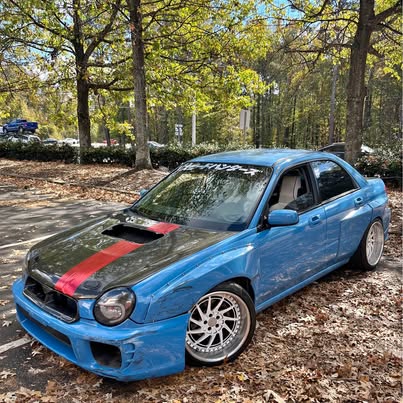
The last problem area is not a component but a category: the modification audit. Assume any US WRX has been modified at some point, including the ones advertised as stock — parts return to stock for sale. What you are auditing is quality and reversibility. A quality staged build with invoices from a known Subaru shop, a named tuner and supporting parts in the right order (fuel before boost, tune after every airflow change) can be a better car than stock. The red flags are specific: an intake or downpipe with no tune; a manual boost controller (a device whose entire function is raising boost without the ECU's knowledge); a vent-to-atmosphere blow-off valve on a MAF car (it dumps metered air and makes the car run rich on every shift — a small thing that signals the owner's understanding); cut springs or no-name coilovers wound to the stops; boost numbers above stock with no supporting paperwork; wiring splices in the engine bay; and a tuning device unmarried from the car, which can mean the ECU still carries a map nobody can now adjust. Check the downpipe, the up-pipe, the turbo's heat shield (its absence suggests the turbo has been off), and whether the factory airbox — the best intake for a stock-turbo car — is still there. Every undocumented modification is a discount: you are pricing the diagnostic work the next fault will require.
How to inspect one
Allow two hours, not one — a WRX has more ways to hide money than most cars, and the decisive tests (compression, underside, cold start) cannot be hurried. Bring a torch, a tyre tread gauge, an OBD2 reader, and a friend to watch the exhaust on start-up. If the car passes you, pay for a specialist pre-purchase inspection with a lift and a compression test before money changes hands; on a 2.5 or an STI, treat that as part of the purchase price.
- Paperwork and identity first. Match the VIN on the title to the plate at the base of the windscreen and the stamping in the engine bay. Confirm the car is what its badges claim: an STI has the EJ257 engine, the six-speed box, the DCCD controls by the handbrake, Brembo calipers and the larger intercooler — a WRX wearing STI badges and a wing is a WRX, priced as one, whatever the seller calls it. Count the keys, and on a 2005-on STI ask about the immobiliser: a car with one key and no master is a dealer bill waiting. Ask for the service history, the timing-belt evidence and any tuning paperwork, and read it before you look at the car — the file tells you which of the following steps matter most.
- The cold start. Insist the engine is stone cold when you arrive — a warmed-up car has had its worst noises hidden for you. Stand behind it while your friend starts it. Blue smoke at start-up points to turbo seals or valve-stem seals; a brief puff that never returns is a watch item, a cloud is a bill. Listen for the first five seconds: a light piston-slap ticking on a cold 2.5 that fades as it warms is common; a deep knock at any point, cold or warm, is the rod-bearing test from the problem areas, and it ends the inspection.
- Compression and leakdown — the 2.5 rule. On any EJ255 or EJ257 car, and on any tuned EJ205, arrange a compression test, and a leakdown test if any cylinder reads low or uneven. One cylinder 15–20 psi down on its neighbours is a cracked ringland until proven otherwise. A seller who refuses a compression test on an STI has answered the question the test would have asked. On a stock, documented 2.0 car with a clean bill from the other steps, the test is still cheap insurance at specialist rates.
- Oil, coolant and the dipstick verdict. Pull the dipstick: level low, oil black and gritty, or a fuel smell all tell a story about intervals. Look under the oil filler cap for mayonnaise (condensation on short-trip cars can mimic it — cross-check with the coolant). The coolant in the expansion tank should be clean and the level stable; bubbles rising in the tank at idle, or a chemical block test turning the fluid yellow-green, means combustion gas in the coolant and the head-gasket conversation from the problem areas. Check for the damp, dusty external weep at the head seams and note it as a watch item rather than a verdict.
- Underneath: the subframe test. On a lift or with the car safely raised, prod — do not just look at — the front subframe, especially its rear legs and mounting points, then the rear subframe and outriggers. Surface rust is normal; perforation in the front subframe means a defined replacement job, perforation in the shell-side mounts means walk away. Read the sills and jacking points, the spare-wheel well from below, and the rear arch lips from inside the wheel wells while you are there. This step, like the sill-jack test in the W108 world, is the one that decides whether the rest of the inspection matters.
- The modification audit. Work through the engine bay with the checklist from the problem areas: factory airbox or intake (and if intake, is there a tune for it?), up-pipe and downpipe original or replaced, turbo heat shield present, manual boost controller anywhere (walk-away-or-discount territory), blow-off valve type, intercooler original or swapped, spliced wiring, boost gauge and what it reads. Photograph everything. Every undocumented change is either a discount or a reason — decide which before the test drive makes you emotional.
- Tyres as a driveline test. Measure all four tread depths and read all four sidewalls. The set should be one make and model, evenly worn. Mismatched diameters front to rear mean the centre differential has been winding itself up — price a set of four tyres into the offer and treat the differential as suspect until the full-lock test in step 10 clears it. Uneven wear across one tyre is alignment or bushes.
- Gearbox and clutch, cold. From cold, engage every gear at a standstill, then drive gently and test second and third synchros on up and down changes before the oil warms and masks them. A cold crunch into second that vanishes warm is synchro wear with a rebuild price attached, per the problem areas. Test the clutch for slip in fourth or fifth at low rpm under full boost — rpm rising without road speed is slip. On an automatic, note any delay engaging drive or reverse from cold and any shudder as the torque converter locks. On an STI, work the DCCD through auto and manual modes and confirm the display responds.
- The test drive: boost, brakes, bearings. Twenty minutes minimum, including a hill and a stretch of fast road. Boost should build once, smoothly, from around 3,000 rpm (2.0) or earlier (2.5), with no steps, cuts or hesitation, and the car should pull cleanly to near the redline in third. Watch the temperature gauge throughout and again in traffic afterwards. Brake firmly from speed: straight stop, no judder, no pull. Listen at steady speed for the drone of a rear wheel bearing (it changes with load in gentle bends) and over slow bumps for the STI's rear strut clunk and the knock of tired drop links.
- The full-lock circle. In a car park, drive a slow, tight, full-lock circle in both directions, engine hot. A healthy viscous centre differential resists slightly and evenly. Violent binding, hopping or groaning in a manual five-speed car means the viscous unit or a mismatched-tyre history has damaged it; on an STI, repeat in DCCD auto — noise that persists in auto is a fault, noise only in manual lock settings is the system working as designed.
- Electrics, air conditioning and the interior list. Run everything: air conditioning cold at idle and at speed, all windows, mirrors, heated seats and sunroof where fitted, washers, lights, the alarm and central locking with both keys if present. Sit in the driver's seat and judge the bolster and foam with your back, not your eyes; a collapsed driver's seat is a real cost, and on a wagon, fold the rear seats and check the latches and load cover.
- Stance and panels, last. Stand back and look down each flank: panel gaps even, arch lips un-bubbled, paint matching panel to panel under street light as well as daylight. Check the front panel and inner wings for ripples of a repaired impact, and the boot floor for the matching story at the back. A WRX that has passed steps 1–11 and stands straight is the car to stretch for — good cars are a minority of this generation, and the market knows it.
Values
The build's market block beneath this guide carries the current listing figures, and that is where numbers belong — what follows is how to read them, because the WRX market is one where a median conceals more than it reveals.
The condition spread is the widest of any car in its price class. At one end sit the cars this guide warns about: high-mileage, multiply-modified, rust-belt cars with stories, which trade at parts-plus money because the next owner is underwriting an engine or a subframe. At the other end sit stock, documented, rust-free cars — increasingly bought by people who wanted one new, could not have it then, and are now paying for the exact car memory specifies. Between those poles the asking figures cluster in a band that looks homogeneous and is not: two cars at the same asking price can differ by the cost of a short block, and the listing text rarely tells you which one you are looking at. Read every asking price as a hypothesis the inspection has to test.
Asking and achieved prices part company fastest on modified cars. Sellers add up invoices; the market does not. A tuned car with full paperwork from a respected shop can hold a modest premium over stock for the right buyer; an undocumented build is worth less than the same car stock, because the buyer inherits the diagnostic risk. The strongest money in the generation is consistently made by originality: factory airbox in place, original turbo, unopened engine, full service file, and a clean underside. The STI sits in its own market a clear step above the WRX, with the earliest 2004 cars and the 2007 STI Limited drawing collector interest beyond their performance difference, and the bugeye — the slowest-selling nose when new — now carries a nostalgia premium that grows as clean survivors thin out. Wagons trade at a discount to equivalent sedans on paper and are quietly harder to find good: the sleeper premium is paid in search time rather than money.
The project-versus-driver gap is the market's defining shape. A running, driving, honest car with needs is worth several times a non-runner with the same needs, because the non-runner's needs are unknown — nobody sells a WRX that only needs a cheap fix without doing the cheap fix. Regional spread matters as much as specification: a rust-free southern or western car justifiably asks more than a northern twin, and paying the premium is usually cheaper than welding. Negotiation reality is simple: the defects you can price are the ones you can name with a test result — a compression figure, a subframe photograph, a timing belt with no invoice. Sellers of good cars concede little; sellers of the other kind have priced the car for the first buyer who does not test it. Do not be that buyer, and the market is fair.
Parts and ownership
The GD WRX is one of the best-supported performance cars of its era, for three reasons: Subaru built the Impreza in volume and kept parts flowing, the car shares its architecture with a wide family of Subarus, and the aftermarket adopted it completely — there is almost no component, from a wheel bearing to a forged short block, that only one supplier makes.
Easy and cheap: service items, filters, plugs (iridium, and a fiddly job in the flat-four's tight frame rails — budget an hour, not the ten minutes of an inline engine), brake discs and pads for the WRX's sliding calipers, suspension wear parts, drop links, bushes, wheel bearings, radiators (all-aluminium replacements are common and sensibly priced), exhaust systems, clutches, timing-belt kits, and glass, seals and trim shared with ordinary Imprezas. Order today, fit this weekend, at prices close to modern-car money.
Harder and dearer: STI-specific parts — Brembo consumables, R180 differential components, six-speed internals, forged BBS wheels in unbent condition — carry STI prices, and good used examples are hunted. The DCCD control components and sensors are specialist diagnosis territory. Wagon-specific rear trim and load-area parts are scarcer than sedan equivalents. Correct, uncracked dashboards and unworn early seats are appreciating trim items. A quality repaint on a rust-repaired car starts where it starts on any car — the welding, at the per-side figures in the rust section, is the part to price first.
Running costs. A sorted WRX is a realistic daily classic: fuel consumption in the low-to-mid twenties mpg driven gently, high teens driven as intended, premium fuel mandatory. Insurance is the line that surprises: the car's theft and accident history in young hands loads premiums even for mature owners, so quote before you buy. The budget line that catches new owners is the first year — catching up deferred maintenance on a running car honestly costs $1,500–4,000 in parts and labour before you improve anything: timing belt if undocumented, all fluids, plugs, a radiator if original, and a matched set of four tyres if the car arrives mismatched. Recommissioning a car that has sat runs more, and adds the fuel system and every brake component to the list. Buy a car in regular use over a sleeping bargain, every time.
The ownership habit that matters most is oil discipline: check the level every other fuel stop, change it on time with quality oil, and treat any rise in consumption as a symptom to diagnose, not a top-up schedule. The second habit is mechanical sympathy when cold — no boost until the oil is warm, because most bearing and ringland damage is accumulated in the first five minutes of hard-driven journeys. Owners who do those two things run these engines to very high mileages.
Which one to buy
- The all-rounder: 2004–05 WRX sedan. The blobeye keeps the 2.0's character, gains the better interior, and sits before the 2.5's ringland and air-pump complications. The deepest pool of cars to choose from, and the easiest to find stock.
- The value buy: the automatic wagon. The least-launched, least-tuned corner of the whole generation. If you want the rally-era Impreza experience at the lowest entry cost and the lowest abuse rate, this is it — just verify the four tyres match and the fluid history is real.
- The enthusiast's car: 2005 WRX STI. The wider track, helical front differential and immobiliser of the 2005-on car, without the 2007's revised-rating confusion. Compression test non-negotiable; paperwork is half the car.
- The collector car: 2007 WRX STI Limited. Eight hundred built, wingless and leather-trimmed, the one GD with a genuinely documented production figure. Verify the number plaque and the specification ruthlessly — Limited badges on a standard car are the generation's easiest fraud.
- The daily driver: 2006–07 WRX. The 2.5's torque makes it the easiest to live with and the quickest in real traffic. Buy it stock, fit the reinforced oil pickup if it has not been done, and keep the secondary air system legal in your state.
- The nostalgia buy: 2002–03 bugeye, stock and documented. The original American WRX, appreciating as survivors thin. Pay for the 2003's stronger gearset if the car will be driven hard, and pay for rust-free over low mileage every time.
And the rule that overrides all of the above: buy the car with the strongest paperwork and the cleanest underside, in the specification you can live with. Engines can be compression-tested, gearboxes judged in twenty minutes, and every mechanical fault on a WRX has a price you can plan for. An undocumented tune history and a rotten subframe are the two things that cannot be inspected away — and they are the two things that decide what owning the car will actually cost.
Listed now
On Classic Listings today: 39 cars are listed here; 5 for sale and 23 marked sold; average asking price $15,500; asking range $4,500 to $35,000; sold cars average $23,357.
See the 39 Impreza WRX cars currently listed.
The market — recorded sales
Impreza WRX Classic Listings Index: $21,250 — based on 23 recorded sales, Oct 2024 – Oct 2026.
Change vs the prior 24 months: — not enough earlier sales to compute a change.
Recorded sales: 23 · Total recorded sale value: $537,221 · Lowest sale: $5,200 · Top sale: $107,000 · Most recent sale: $21,250 (Oct 30, 2026)
| Date | Car | Sale price | Source |
|---|---|---|---|
| Oct 30, 2026 | 2004 WRX STI | $21,250 | Cars & Bids |
| Oct 28, 2026 | 2004 WRX STI | $11,100 | Cars & Bids |
| Oct 27, 2026 | 2002 WRX Sedan | $6,200 | Cars & Bids |
| Oct 15, 2026 | 2002 WRX Wagon | $6,345 | Cars & Bids |
| Oct 12, 2026 | 2004 WRX STI | $30,000 | Cars & Bids |
| Sep 3, 2026 | 2003 WRX Wagon | $6,036 | Cars & Bids |
| Sep 1, 2026 | 2005 WRX STI | $13,750 | Cars & Bids |
| Aug 28, 2026 | 2005 WRX STI | $33,500 | Cars & Bids |
| Jul 20, 2026 | 2001 WRX STI | $15,500 | Cars & Bids |
| Jul 8, 2026 | 2001 WRX STI Wagon | $19,250 | Cars & Bids |
| Jun 24, 2026 | 2004 WRX STI | $34,790 | Cars & Bids |
| May 28, 2026 | 2004 WRX STI | $24,250 | Cars & Bids |
| May 6, 2026 | 2004 WRX STI | $23,500 | Cars & Bids |
| Mar 30, 2026 | 2005 WRX STI | $32,250 | Cars & Bids |
| Mar 23, 2026 | 2004 WRX STI | $37,000 | Cars & Bids |
| Mar 18, 2026 | 2002 WRX Sedan | $8,500 | Cars & Bids |
| Mar 13, 2026 | 2002 WRX Wagon | $5,200 | Cars & Bids |
| Feb 26, 2026 | 2004 WRX STI | $107,000 | Cars & Bids |
| Jan 20, 2026 | 2005 WRX STI | $22,500 | Cars & Bids |
| Dec 1, 2025 | 2005 WRX STI | $21,250 | Cars & Bids |
| Nov 20, 2025 | 2005 WRX STI | $27,250 | Cars & Bids |
| Nov 13, 2025 | 2004 WRX Wagon | $8,300 | Cars & Bids |
| Oct 21, 2025 | 2005 WRX STI | $22,500 | Cars & Bids |
Dates are the sale date where the source states one; otherwise the date the sale was recorded here.
For sale now
 $20,000
Expand
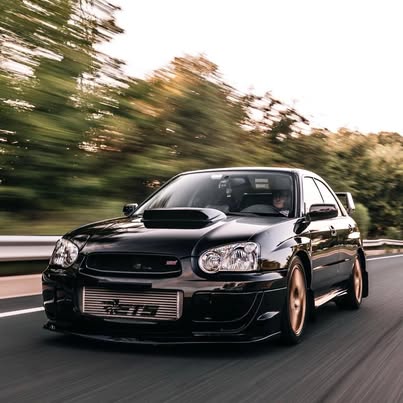 $35,000
Expand
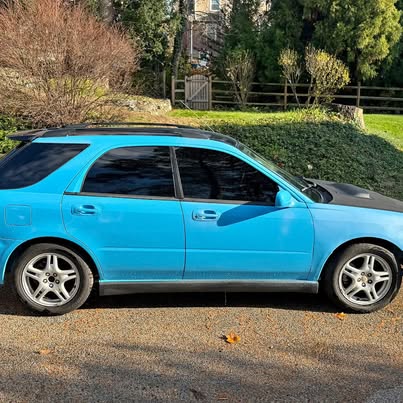 $4,500
Expand
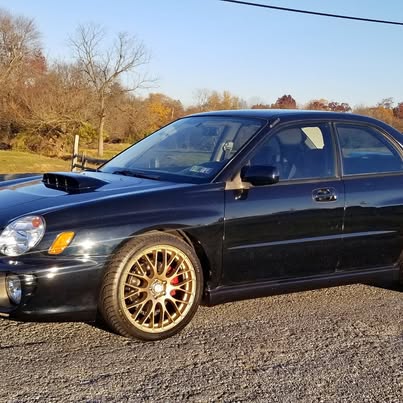 $10,500
Expand
$7,500