
Subaru Forester buyer's guide
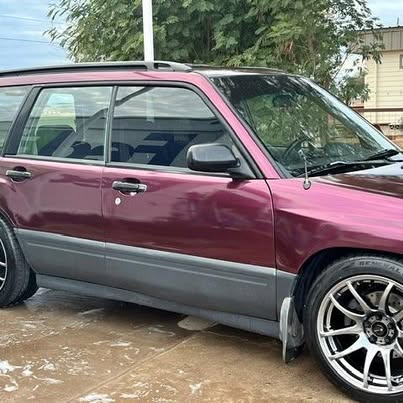
Subaru Forester (1997–2001) — Forester: what's listed, and what they sell for.
Years: 1997–2001 · Models: Forester
Overview and history
The Forester is the car that taught America a Subaru could be a family wagon and a winter tool at the same time, without being either a truck or a curiosity. Subaru showed it in Japan in 1997 and sold it in the United States from the 1998 model year, and the idea was disarmingly simple: take the Impreza platform, raise it, give it a tall, square, one-box wagon body with a genuinely upright tailgate, fit the larger 2.5-litre flat-four, and send every version out with all-wheel drive as standard. No two-wheel-drive economy model, no part-time transfer case to explain. You bought a Forester, you got four driven wheels and a load bay shaped like a box because Subaru had not yet been told to round the corners off for style.
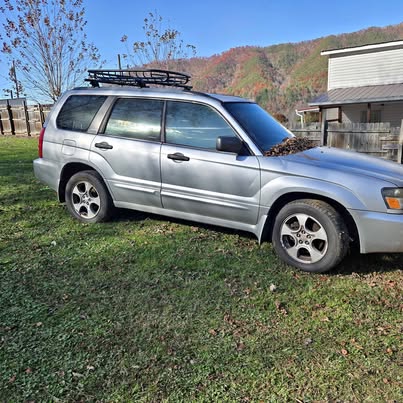
That square shape is the whole point, and it is why these early cars still make sense when so many newer crossovers do not. The first generation, chassis code SF, ran in the US for 1998 to 2002. The second, code SG, replaced it for 2003 and runs in this guide to 2005, the span covered by our listings — the same idea with a stiffer shell, better crash structure, a little more room, and from 2004 a turbocharged XT that turned a sensible snow wagon into one of the great sleepers of its decade. If you understand one generation, you understand the other; what changes is detail, equipment and which version of a familiar set of faults to look for.
Subaru's timing was perfect, even if it did not look it in 1998. Sport-utility buyers wanted height and traction; wagon buyers wanted a car that drove like a car. The Forester sat exactly between them, years before crossover became the industry's favourite word, with about 7.5 inches of ground clearance, a weight of roughly 3,100 to 3,300 pounds, and all-wheel drive that was mechanical and permanent rather than a front-drive system that woke the rear wheels up after they had already slipped. In snow country that mattered more than any brochure figure. Foresters were bought by people who intended to get home, and to keep the car: an SF or SG is rarely a pampered second car. It was the car — school runs, ski trips, dog transport, winters on salted roads.
The engines are fundamentally strong, the gearboxes stronger than most, and the all-wheel-drive system itself almost never wears out in ordinary use. What kills these cars, in order, is head gaskets ignored until the engine cooked, rust in the rear of the shell and the rear subframe, a timing belt and its idlers run far past the interval, and the slow accumulation of deferred jobs — wheel bearings, CV boots, valve-cover gaskets, a tired radiator — until the next bill looks bigger than the car. Every one of those faults is known, diagnosable at a viewing with the tests this guide gives you, and fixable at prices you can plan for. There is no mystery electronic architecture, no air suspension, no sealed-for-life anything.
The trap is the opposite one. Because these cars are cheap and famously durable, buyers forgive them faults they would walk away from on anything else — a whiff of coolant, a bubbling overflow bottle, gaskets said to be done with no invoice. Do not. On a Forester, the head-gasket question is not a detail. It is the purchase. A car with a documented gasket job — heads checked, correct multi-layer gaskets, belt renewed in the same labour — is a different and better car than an identical one with a story. Price the story at zero and the invoice at full value.
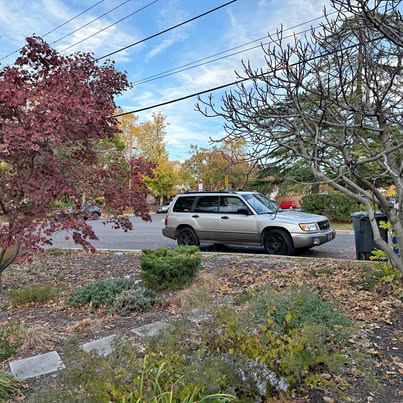
The models
Every US Forester of this period is a four-door wagon with all-wheel drive and a 2.5-litre flat-four. There is no coupe, no sedan, no front-drive version and — despite what some listings claim — no six-cylinder car. The differences that matter are generation, trim, gearbox, and one engine option: from 2004 the turbocharged XT changed what a Forester could be. Treat every badge as a claim to be verified, because quarter-century-old cars acquire badges, wheels and seats from other cars.
| Model | Years | Engine | Output | Built | Character |
|---|---|---|---|---|---|
| Forester (base) / L (SF) | 1998–2002 | 2.5 flat-four (EJ25D, then EJ251) | 165 hp | Not published by trim | The working car; L adds the equipment most buyers want |
| Forester S (SF) | 1998–2002 | 2.5 flat-four (EJ251 from 1999) | 165 hp | Not published by trim | The SF flagship; bigger brakes, rear limited-slip, better trim |
| Forester 2.5X (SG) | 2003–2005 | 2.5 flat-four (EJ251/EJ253) | 165 hp | Not published by trim | The volume SG; the default used buy |
| Forester 2.5XS (SG) | 2003–2005 | 2.5 flat-four (EJ251/EJ253) | 165 hp | Not published by trim | The equipped SG; sunroof and comfort options, XS Premium the plushest |
| Forester 2.5XT (SG) | 2004–2005 | 2.5 turbo flat-four (EJ255) | 210 hp | Not published by trim | The sleeper; WRX pace in a wagon body, turbo bills to match |
(Subaru published production by nameplate rather than by US trim line for these years, so the Built column says so rather than inventing per-trim figures. The naturally aspirated cars were rated at 165 hp throughout, the XT at 210 hp.)
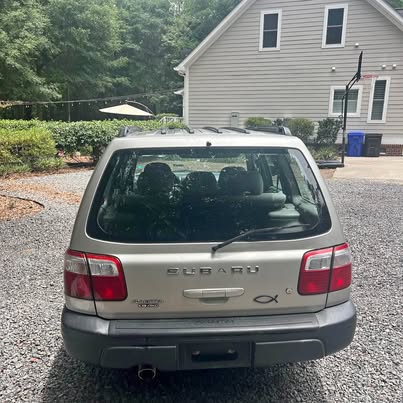
The SF base and L (1998–2002). The 1998 car is the odd one out, for one reason that matters more than any trim difference: its EJ25D is the earlier dual-overhead-cam 2.5, with a different head-gasket failure pattern from every car that followed — covered in full below. From 1999 the SF switched to the single-overhead-cam EJ251. The base car is plain; the L adds air conditioning, power windows and mirrors, cruise control. Neither is rare and neither carries a premium. Buy an SF on shell condition and gasket history, not on its badge.
The SF S (1998–2002). The top SF: alloy wheels, larger front brakes, a viscous limited-slip rear differential, heated seats and mirrors on cold-weather cars, a large sunroof on some specifications. The limited-slip rear is the functional difference — it helps genuinely when one rear wheel is on ice. An S is worth a modest premium over an L in equal condition, and none if its gasket paperwork is weaker.
The SG 2.5X (2003–05). The volume second-generation car: the same 165 hp engine, a five-speed manual or the four-speed automatic most buyers chose, air conditioning, power windows, and the SG's improved safety structure. It is the honest default buy — cheapest SG to run, simplest to fix, deepest pool to choose from.
The SG 2.5XS (2003–05). The XS adds alloy wheels, automatic climate control on most, heated seats on Premium specification, and the very large panoramic sunroof that defines the plush SGs. That roof is a pleasure and a liability — its drains, mechanism and seal are inspection items below. An XS Premium with a documented gasket job and a working roof is the nicest naturally aspirated Forester of the era; the same car with a stuck roof and no paperwork is an X with extra bills.
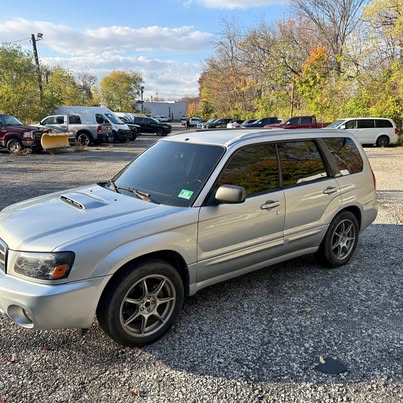
The SG 2.5XT (2004–05). The XT is why enthusiasts care about this guide. Subaru fitted a detuned version of the WRX-era turbo engine — the EJ255, a top-mount intercooler fed by a real bonnet scoop, 210 hp — with a five-speed manual as well as the automatic. The manual XT is a genuinely quick cross-country car that looks like a dog wagon, and a different ownership proposition: turbo oil lines, a clutch that has lived a harder life, premium fuel, and previous owners who bought it because it was quick. In 2005 the XT Limited added leather and the panoramic roof. Never let a seller price a tired XT off a good one's reputation.
Two naming traps recur in listings. First, 2.5i is not a US Forester trim of this period — that badge belongs to Impreza and Legacy lines; a Forester advertised as a 2.5i is a mislabelled 2.5X until paperwork proves otherwise, and the mislabelling tells you to check everything else twice. Second, some cars wear XT scoops or badges without the turbo underneath. The scoop on a real XT feeds an intercooler you can see the moment you lift the bonnet. No intercooler, no XT, whatever the tailgate says.
Engines and gearboxes
The naturally aspirated 2.5: EJ25D, EJ251 and EJ253
Every non-turbo Forester in this guide runs a 2.5-litre horizontally opposed four — a flat-four, in Subaru language a boxer — of 2,457 cc, with the cylinders lying flat either side of the crankshaft. That layout is why the engine sits so low, and why certain jobs — plugs, valve-cover gaskets, head gaskets above all — are done in a space shaped by the frame rails. It is a torquey, unstressed engine, rated at 165 hp across the period. Its reputation rests on one component, and you need to understand the three versions separately because they fail differently.
The EJ25D (1998 Forester, and 1996–99 Legacy and Outback cars). This is the Phase I engine: dual overhead cams, and a head-gasket design that is the weak point of the entire EJ25 family tree. On an EJ25D the gaskets typically fail internally. Combustion gas is pushed into the cooling system under load, and the symptoms are overheating that comes and goes, an overflow bottle that fills and bubbles, a heater that blows cold at idle because gas has displaced coolant, and a temperature gauge that climbs on a hill and drops on the flat — behaviour owners misread for months as a thermostat or a radiator cap. Sometimes it is those cheap things. On a 1998 Forester, assume you must prove it is not the gaskets, with the tests in the inspection section. A documented EJ25D gasket job is not a reason to reject a 1998 car — done properly, it is the reason to buy it — but an undocumented 1998 with any overheating history is a car to price as needing the job, or to walk away from.
The EJ251 (1999–2004 in most Foresters) and EJ253 (from around 2004–05). These Phase II engines — single overhead cam per bank, simpler and in most respects better — fail the other way. The original gasket coating breaks down and the leak is external: coolant weeping from the head-to-block joint, most often at the lower rear of the left-hand head, and oil seeping from the right-hand joint. An external weep is less immediately dangerous, and cars run for years with a damp joint and a top-up habit. That is exactly the danger: the level in the radiator — not just the overflow bottle — falls unnoticed, an air lock forms, the engine overheats once, properly, and a weep becomes warped heads and a real bill. Subaru's own response tells you how common it was: a coolant conditioner was specified for these cars, so a bottle of it in the history is period-correct maintenance, not a confession. A dry-looking joint with a low radiator and no explanation is worse.
The mechanism matters because it tells you what a proper repair is. The heads come off, are checked for flatness and skimmed if needed, multi-layer steel gaskets of the improved pattern are fitted and torqued in sequence — and, because the labour overlaps almost completely, the timing belt, idlers, tensioner, water pump, thermostat and seals are renewed while access is open. That bundle is why a real gasket job at a specialist runs roughly $1,800 to $3,500, and why a quote at half that is usually gaskets alone, fitted to unchecked heads, with every worn idler put back to fail later. When a seller says the gaskets were done, the invoice should read like that paragraph. If it does not, the job is an unknown.
Everything else about the Phase II engine is reassuringly ordinary. Valve clearances are set with screw adjusters, so a warm tick may simply mean they need checking, and the short-skirt pistons can slap lightly when stone cold — a hollow rattle for a minute or two that fades completely as the engine warms. Cold slap that disappears is a known characteristic, not a death rattle; slap that stays hot, or a deep knock under load, is a different conversation.
Oil leaks are the daily reality of an old EJ, cheap in parts and dear in access. Valve-cover gaskets harden and weep onto the exhaust, giving the hot-oil smell owners call the Subaru smell; spark-plug tube seals leak oil into the plug wells, where it eventually causes a misfire; cam and crank seals weep behind the timing covers; and the separator plate at the back of the block leaks at the bellhousing joint, where it is easily mistaken for a rear main seal. None of these rejects a car, but three small leaks are one labour bill done together and three done apart. Budget roughly $300 to $700 for valve-cover gaskets and tube seals fitted, and treat a bone-dry high-mileage engine with the same suspicion as a wet one — dry usually means recently cleaned.
The ignition and fuelling are conventional. A coil pack feeds the plugs through HT leads; heat cracks the coil towers, and a misfire in rain or under load that moves when you swap leads is ignition until proven otherwise. The knock sensor on top of the block cracks its housing with age, sets a code and pulls timing, making a healthy engine feel flat — roughly $150 to $350 fitted, and often the whole fault.
The timing belt system is the second purchase question after the gaskets. The EJ25 is an interference engine: if the belt breaks, pistons meet valves. The interval is 105,000 miles or 105 months, and the belt itself is rarely what fails first — the cogged idler whose bearing dries and seizes, a smooth idler, the tensioner or the water pump fails, and a seized idler shreds a good belt in seconds. So the service item is never belt alone: it is belt, all idlers, tensioner, water pump, thermostat and seals while the covers are off, roughly $800 to $1,400 at an independent specialist. A sticker on the timing cover or an invoice with date and mileage is the evidence. No evidence past 105,000 miles, or past ten years on any belt regardless of mileage, means you book the job in the first month and price it into the offer.
The turbo: EJ255 in the XT
The XT's EJ255 shares its architecture with the naturally aspirated cars and almost none of their ownership maths: a turbocharged, intercooled 2.5 with stronger internals, lower compression and an appetite for oil changes done on time with the correct grade. In 2004–05 US form it was rated at 210 hp, and the performance is real — the manual car in particular covers ground at a pace its shape has no right to.
Turbo health is judged on evidence, not on whether the car feels fast on the day — a tired turbo still boosts. Inspect the intercooler and throttle-body hoses for oil: a light film is normal, pooled oil is turbo seals or a breathing problem asking for diagnosis. A healthy turbo is almost silent beyond a whistle under load; a siren-like whine, a dentist-drill note or grinding on spool points to bearing wear and a rebuild or replacement, realistically $900 to $2,000 fitted. The small oil-feed line and its banjo bolt, with a fine filter screen in the feed, are a known starvation point: neglected oil changes sludge the screen, the turbo starves, and the failure is then blamed on the turbo. Treat an XT with no oil history as a car whose turbo is on borrowed time. The up-pipe on early XT cars contains a catalytic converter ahead of the turbo, and a breaking-up pre-turbo catalyst sends debris through the turbine. Many cars have had it replaced with a catalyst-free pipe; ask, and regard a documented replacement as a plus, not a modification to fear.
Buy an XT on paperwork — oil services, premium fuel, any turbo or clutch work invoiced — because its extra heat ages mounts, clutch, exhaust joints and every gasket on a shorter clock. With that file it is one of the most enjoyable cars in this guide; without it, it is a naturally aspirated car's price plus a turbo's risks.
Gearboxes and the all-wheel-drive system
There are two gearboxes, and both are good news. The manual is a five-speed that takes high mileages without complaint, and the automatic is Subaru's four-speed 4EAT, an old-fashioned, well-understood box that fails slowly and announces itself. What differs between them, and what almost no seller will explain correctly, is the all-wheel-drive system bolted behind each one.
Manual cars use a centre differential with a viscous coupling, splitting torque 50/50 in normal driving. When the axles turn at different speeds the silicone fluid in the coupling shears, heats and stiffens, and drive transfers to the end with grip. Its failure mode is specific: a coupling overheated by years of mismatched tyres or prolonged wheelspin binds, making the car hop and wind itself up in tight low-speed turns on dry tarmac, as if a locked differential were fighting the steering. That test — full lock, car park, walking pace — is in the checklist, and it matters, because a replacement coupling or used gearbox is a four-figure conversation. Manual cars also have the hill-holder on most specifications, a valve that holds the brakes on a slope with the clutch down; a car that holds its brakes on the flat has a hill-holder adjustment fault before it has a brake fault.
Judge the manual box on synchromesh, especially second and third, a clean change into reverse, and bearing noise that follows gear selection rather than road speed. Clutches last well in naturally aspirated cars and far less long in XTs and towing cars; a high bite point with slip under full throttle in a high gear is a clutch at the end, roughly $800 to $1,400 fitted, and on a car already booked for rear-engine oil leaks the clutch belongs in the same labour.
Automatic cars use a different centre system: an electronically controlled multi-plate transfer clutch, governed by the transmission control unit, varying the front-to-rear split continuously and defaulting to a front-biased distribution in steady cruising on most calibrations. The solenoid that meters pressure to that clutch, in the tail housing, is the wear item. When it fails or the clutch pack wears, the car develops torque bind — the same tight-turn shudder as a failed viscous coupling, sometimes with a flashing AT Oil Temp light. Tyres cause more of it than gearboxes do: the system assumes all four tyres match in size, make, pattern and wear within a tight tolerance, and one new tyre against three worn ones forces the centre system to work constantly. On any automatic, look at the four tyres before you look at the gearbox. Four matched tyres with even wear signal a literate owner; a mixed set is a negotiation point and a possible cause of any bind you feel.
The 4EAT's own health is read the standard way: fluid reddish and unburnt, a change history, no flare between ratios, prompt engagement of drive and reverse, no harsh thump into gear. Delayed engagement cold that improves warm is a tired box or tired fluid — change the fluid first and price the car as if the delay may stay. A full rebuild is roughly $2,200 to $3,800, which on most Foresters exceeds what the market will forgive, so an automatic that flares or arrives with burnt-smelling black fluid is a walk-away unless the price is a parts-car price. Well-kept 4EATs routinely outlast the shells around them.
The rear differential is a simple, strong unit that wants occasional oil changes; front differential oil is separate on automatics, where non-specialist shops routinely confuse it with transmission fluid — a Subaru-literate invoice shows both.
Problem areas
Work through this section in order, because that is the order in which Foresters actually end: gaskets and cooling first, because they end engines; rust second, because it ends shells; then running gear, electrics and cabin, which end budgets more slowly but just as surely. The skill is not knowing a long list — it is doing the few decisive tests instead of admiring the paint.
Head gaskets and the cooling system
This is the section the whole purchase turns on. A Forester cooling system in perfect order is boring: the radiator full to the cap when cold, the overflow bottle between its marks week after week, the temperature gauge in the middle and unmoving in traffic, on hills or at a cruise, both fans cutting in and out, the heater hot at idle and at speed. Any deviation from boring has a cause, and on these engines the cause list is short enough to work through properly.
Start with the two failure patterns from the engines section, because the tests differ. On the Phase I EJ25D in the 1998 car, suspect internal failure: combustion gas entering the coolant. Start the engine cold and watch for a steady stream of bubbles in the overflow bottle as it warms and as an assistant holds the revs up — occasional burps as air purges are normal on a recently filled system, a continuous champagne fizz is not. A chemical block-test kit, whose fluid changes colour in the presence of combustion gas, costs little and settles the question. Do it, or pay a shop to, on any 1998 car and any later car with an overheating story. On Phase II cars, suspect the external weep: look at the head-to-block joints from below with a mirror and torch, the left-hand joint at its rear lower corner above all. Fresh coolant leaves coloured crust, so read crust by position and wetness rather than colour alone. A wet joint, a sweet coolant smell after a run and a radiator low when the cap comes off cold is a live leak, whatever the overflow bottle claims.
The supporting cast fails too, and each cheap part can imitate or cause the expensive failure. The radiator has plastic end tanks crimped to an alloy core, and the tanks crack with heat cycles at the age every car here has reached — a hairline at the top tank that opens only when hot and vanishes before you park. A replacement radiator is roughly $250 to $600 fitted; conversely, a brand-new radiator with no other paperwork sometimes means previous overheating was treated at the radiator and not at its cause. Thermostats must be the correct Subaru pattern — the aftermarket is full of physically fitting thermostats that flow less and open later, and a Forester that runs hot after a recent thermostat change has an incorrect thermostat until proven otherwise. Water pumps weep and rumble before they fail, and are renewed with the timing belt. A radiator cap that no longer holds pressure produces mystery coolant loss with no visible leak. Establish which cooling parts are new and which are original, and whether the gauge truly never moves — a seller who says it runs cool should prove it on a long drive with a hill in it.
One more pattern catches buyers out: a car with failing gaskets can be made to behave for a viewing — coolant topped up, system bled, sealer in it, the overflow filled to the brim so a low radiator is not obvious. Sealers have a look: brown or coppery sludge in the bottle, gritty deposits under the cap. Insist on a cold start; on a Forester it is half the inspection.
Rust: the rear of the car first
Foresters do not rust evenly. The front of an SF or SG is usually presentable long after the rear has become the limiting factor, which is why sellers' photographs, heavy on front three-quarter views, are exactly the wrong evidence. Buy the rear of the car. The front will follow.
Rear strut towers and inner rear arches. The most important rust on a Forester hides inside the load bay, behind the side trim, where the rear struts mount to the shell. Water and salt work at the seams around the turrets, and the corrosion grows where no casual viewing sees it. Lift the load-bay side trim — on most cars it unclips enough to see and get a hand in — and look and feel around the top of each turret for bubbling, flaking and soft metal. Surface discolouration is a clean, treat and protect job. Perforation around a strut mount is structural welding in an awkward place, realistically $800 to $2,000 a side done properly, and advanced rot here ends cars because the same water has usually reached the arch and sill end as well. A seller who will not let you lift the trim has answered the question. This check alone separates the Foresters worth owning from the ones worth photographing.
The rear subframe. The rear suspension and differential hang from a pressed-steel subframe that lives in the direct line of road salt and is, on northern cars, the single most common reason a mechanically sound Forester is scrapped. Get under the back of the car with a torch and screwdriver and prod it systematically — mounts, pickup areas and the flat sections where mud sits. Heavy scale, holes at the mounts, or metal that rings dull and soft is not a cosmetic item. Used subframes exist, and the job, with bolts that may need cutting out, runs roughly $700 to $1,800 in parts and labour. Front subframes and the SG's U-shaped front reinforcement also corrode where they trap mud, but they fail less often and are cheaper to source. Judge both, price the rear.
Arches, sills and the tailgate area. The outer rear arch lips rust where the skins meet and the plastic trim traps wet dirt — run a fingertip around the inside of each lip and feel for roughness under unbroken paint, because the lip rots from inside the fold outward. The front of the rear arch, where it meets the sill and rear door shut, is a mud trap and a reliable early-warning site. Sills rot at their rear ends and jacking points; prod the jacking points, because a sill that will not take the car's own jack is telling you about its inside. The tailgate rots around the window seal, the handle and along its bottom edge. The spare-wheel well collects any water past the tailgate and rear light seals: lift the spare, look for standing water and tide marks, and check whether the spare matches the road tyres or is the space-saver that should never have been run for distance on an all-wheel-drive car. Fuel filler necks corrode on salt-belt cars and announce themselves as a fuel smell, an emissions warning light or rust staining behind the flap — a neck is a few hundred dollars fitted, common enough that specialists expect it.
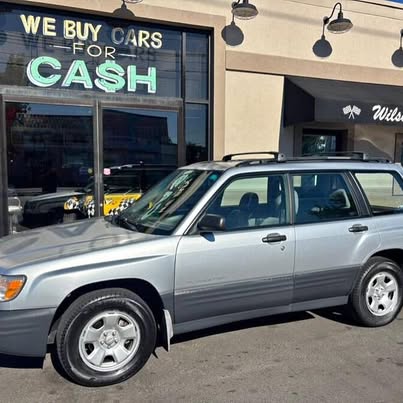
Brake pipes corrode along the rear of the car, fuel pipes alongside them, and the handbrake hardware inside the rear discs rusts until the handbrake barely holds. After twenty winters the honest picture underneath is patchy: surface rust on heavy sections is normal, while a fresh, uniform coat of black over everything the week before sale — pipes, subframe, fasteners and all — is a cover story until a lift and a screwdriver prove otherwise. Nobody under-seals a sound car as a favour to the next owner.
Suspension, steering, brakes and wheel bearings
The suspension is conventional — MacPherson struts in front, a strut-type multi-link rear — and wears conventionally. Front struts knock and leak, top mounts creak on lock, anti-roll-bar drop links rattle over broken surfaces at walking pace (roughly $100 to $250 a pair fitted, and the first suspect for any light rattle), and front lower-arm bushes soften until the steering feels vague under braking. Rear struts on some SF cars were self-levelling, and a car sitting low at the back may have a tired unit, which is dearer than a standard strut; many have been converted to conventional struts and springs in pairs, the sensible repair if documented and the car sits level. At viewing, judge stance, symmetry and noise: level side to side, one bounce and settle at each corner, no knocks that cost more than drop links.
Steering is power-assisted rack and pinion. A pump that whines on lock with foaming fluid usually has air entering at the suction hose O-ring on top of the pump — a part costing very little — before it has a failed pump. On the drive it should self-centre, run straight hands-light, and show no notchiness around the straight-ahead.
Brakes are front discs and, depending on year and trim, rear discs or drums, with a drum handbrake inside the rear disc on disc cars. The system is strong; its enemies are standing and salt. Calipers seize on their slide pins, discs rust into a lipped state on cars that sit, hoses perish invisibly. A full hydraulic refresh runs roughly $700 to $1,600 depending on how much is seized, and is the standard first-year bill on a car bought out of storage. Judge the pedal and the straightness of a firm stop, and whether the handbrake holds on a slope both ways — a weak handbrake on a disc car is its own small job inside the disc hat, not a caliper verdict.
Wheel bearings deserve their own paragraph because Foresters eat rear bearings in a way that surprises owners of other cars. The press-in hub bearings fail as a drone that rises with road speed, loudest between 40 and 60 mph, and changes as you weave gently to load each side — louder in a left sweep means the right-side bearing is guilty. Do not confuse it with tyre roar, and on the lift spin each wheel feeling for roughness, though a bearing can be noisy under load and smooth unloaded. Replacement is a press job, roughly $300 to $600 a side fitted; a hum described as tyre noise should be priced as a bearing until the lift proves otherwise. CV joints complete the list: inner joints wear into a vibration under load, outer joints click on full lock once their boots split, and boots caught early are a boot kit while boots ignored are a driveshaft, roughly $250 to $500 a side fitted.
Electrics, air conditioning and the cabin
A Forester of this era has few enough electrics to be diagnosable; the failure pattern is age, not design. The alternator is a known weak point at high mileage — a battery light flickering at idle or headlights brightening with revs precede a failure that leaves you with the miles in the battery and no more; a replacement is roughly $300 to $600 fitted. Starters fail as a click or a lazy crank owners blame on the battery; test the battery first because it is cheaper. Drain faults trace most often to a door switch keeping the interior light awake, or to aftermarket alarm and audio wiring — regard a rats' nest under the dash as a warning about the whole car's previous ownership.
The frameless door windows are the Forester's signature fault. SF and SG glass seals against the body rubber, stabilised by the triangular gusset at the mirror; with age the gussets split, the glass drops out of adjustment, and the result is wind roar from the mirror corner at highway speed and a drip in rain. A new gusset is the real fix, at a modest parts cost with fiddly fitting. Regulators wear too — a glass that tilts and jams as it rises is a regulator, roughly $250 to $500 fitted. A car whose windows all rise straight and seal quietly has usually been looked after in ways that extend to the mechanicals.
Air conditioning cools well when charged; when it does not, the cause is usually a leak at the condenser, which sits ahead of the radiator collecting stones and salt, or at hardened hose O-rings. A re-gas that lasts a summer is a leak being rented, not repaired. The heater's faults are diagnostic gifts: cold at idle on an EJ25D car is a head-gasket clue, a heater varying with engine speed is air in the system, and a sweet smell with a misting windscreen is a leaking heater matrix — a dashboard-out job, priced like one. The panoramic sunroof needs its own test: run it open and closed twice, listen for a straining motor, and look for damp in the load-bay sides and footwells that betrays blocked drains — a roof that has leaked has usually leaked onto the same trim that hides the rear strut towers, so the two checks belong together.
In the cabin, judge the driver's seat first: the foam and covering on the entry bolster collapse and split, and good used seats are the usual answer, as new foam and covers are scarce. Tailgate struts sag until the gate meets your head — a cheap pair fixes it. A Forester that smells of coolant inside, hot oil outside and damp in the back has told you its three biggest secrets before you have started the engine.
How to inspect one
Allow ninety minutes, insist the engine is cold when you arrive, and bring a torch, a mirror, a screwdriver for prodding (with permission), a tread gauge and, for any 1998 car or any car with a temperature story, a block-test kit. If the car passes you, pay for an hour on a lift before money changes hands — the rear subframe, head joints and filler neck are all lift judgements.
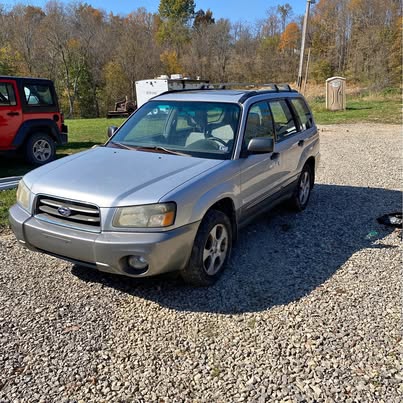
- Start with the paperwork and the identity. Match the VIN on the title to the plate at the base of the windscreen and the stamping in the engine bay. Decode the trim from the car's equipment, not the listing: does it have the sunroof, heated seats and wheels its badge implies? Read the service file in a specific order — head-gasket invoice first, timing-belt invoice second, everything else third. A gasket invoice should name the gaskets, the head check or skim, and ideally the belt and pump done in the same labour. No invoice means the job is unproven, however sincere the seller.
- Cold start. The engine must be cold — a warm car on arrival ends the viewing until it can be repeated cold. A healthy EJ starts at once, may slap lightly from the pistons for a minute on a Phase II car, and settles to an even idle. Blue smoke at start-up that clears is valve-stem oil; blue smoke that continues, sweet-smelling white vapour, or bubbling from the overflow as it warms all stop the viewing and start a different conversation. Listen for bottom-end rumble and alternator or idler whine.
- The coolant interrogation. Cold, take the radiator cap off — never on a hot engine — and check the level in the radiator itself, not just the overflow bottle. Low in the radiator with a full bottle is a system drawing air or losing coolant. Look for sealer sludge under the cap and in the bottle, and oil on the coolant surface. On a 1998 EJ25D car, or any car with bubbles suspected, run the block test now while the engine warms.
- The head joints from below. Torch and mirror: inspect both head-to-block joints, the left-hand rear lower corner above all, for wet coolant, coloured crust and fresh cleaning — a joint cleaned yesterday is as eloquent as a wet one. Note every oil leak by position and add them up as one labour conversation, not four surprises.
- The rear of the shell. Lift the spare wheel: look for water, tide marks and rust in the well, and note whether the spare matches the road tyres. Then lift the load-bay side trim on both sides and inspect the rear strut towers with torch and fingers. Perforation here, or a seller who refuses the trim check, is the closest thing this guide has to an automatic walk-away on a car priced as a keeper.
- Underneath on a lift. Prod the rear subframe at its mounts and flat sections, the front subframe and the sill jacking points. Check the fuel filler neck, the brake and fuel pipes, and the underseal — honest and patchy against fresh and total. This step decides whether the car has a future at any mechanical standard.
- Tyres as a diagnostic. Measure all four: same make, size and pattern, wear within a small margin. A mismatched set is not a tyre bill alone — it is a question about how long the centre coupling or transfer clutch has worked against itself, which step 9 tests. Uneven wear across one tyre points to alignment or a worn bush.
- Gearbox, cold and hot. Manual: clean synchromesh into second and third, a clutch bite neither at the floor nor at the very top, no slip in a high gear under full throttle. Automatic: prompt, unflared changes, immediate engagement of drive and reverse, fluid reddish and unburnt. Note any cold delay the seller calls normal. Some are. Price them as if they are not.
- The tight-turn test. In an empty car park, on dry tarmac, drive slowly in a full-lock circle both ways. The car should roll round without hopping, shuddering or winding itself tight. Binding is torque bind — viscous coupling on a manual, transfer clutch or solenoid on an automatic, mismatched tyres the first suspect on either. A car that binds needs a cause and a price, in that order, before it needs an owner.
- The test drive, with a hill. Twenty minutes minimum: town, a fast road and a climb long enough to load the engine while you watch the temperature gauge — it should not move from its normal position. Check the heater hot at idle when you stop, listen between 40 and 60 mph for the wheel-bearing drone while weaving gently to load each side, brake firmly for straightness, and feel for vibration under load from an inner CV joint. An XT must pull cleanly on boost with no siren note from the turbo and no smoke behind you.
- Electrics and the roof. Work everything: all four windows for speed and squareness, mirrors, locks, wipers and washers, seat heaters, air conditioning for genuinely cold air at idle, and the sunroof twice through its full travel. Listen at highway speed for wind roar at the front window gussets, and check headlining and footwells for damp from roof drains or window seals.
- Interior and load bay last. Sit in the driver's seat and judge the foam honestly. Fold the rear seats, lift every mat edge you can for damp, operate the tailgate on its struts, and check jack, tools and spare are present. A dry, complete load bay on a car that has passed the strut-tower check is the sign of a Forester garaged, maintained and honestly sold — the car this checklist exists to find.
Values
The build below this guide carries the live market — what is listed now, and what recorded sales have achieved — refreshed at every build, and that is where the numbers live. This section teaches you how to read it, because on these cars the spread between the cheapest and dearest example of the same model is almost never about the model. It is about paperwork and one part of the shell, and once you see that, the market stops looking random.
The first driver is the head-gasket invoice. A car with a documented gasket job — heads checked, improved gaskets, belt and pump in the same labour — is worth a clear premium over an identical car without one, because the buyer is purchasing the removal of the model's defining risk. The second driver is timing-belt evidence, for the same reason at a smaller scale. The third is geography written into the metal: a southern or western shell with sound rear strut towers and subframe is a fundamentally different asset from a salt-belt car that needs welding, and the market knows it even when sellers pretend not to. Read any asking price by asking which of those three the car actually has, not which the advertisement claims.
Asking prices and achieved prices part company predictably here. Sellers of ordinary cars price off the best example they can find online; buyers, correctly, price off the bills. Cars with the paperwork above sell close to asking because the next buyer can verify what he is paying for. Cars with stories — gaskets done by a cousin, a belt done at a mileage nobody wrote down, a hum that is just the tyres — sit, then move at the discount missing evidence always commands. Auction results for the XT run ahead of the general market when a manual car with a real file appears, because the pool of good ones is small; the same badge on a tired automatic with no oil history earns no premium, and the gap between those two XTs is the widest condition spread here.
The project-versus-driver gap is equally instructive. A non-running or overheating Forester is worth very little beyond its shell and parts, because the buyer must assume the full gasket, belt and recommissioning bill before the car can even be assessed — and a cooked EJ can need more than gaskets. A running, documented car, even a cosmetically tired one, is worth disproportionately more, because it can be improved one job at a time while it earns its keep. That is the negotiation reality: you are haggling over who pays for the next timing belt, the next set of rear bearings and the welding the strut towers may or may not need. The checklist above prices those items — use it, line by line, and let the seller's paperwork, or its absence, do your negotiating.
Parts and ownership
The Forester is one of the easiest cars of its era to keep, for a structural reason: Subaru built the same basic engine, gearboxes and running gear across the Impreza, Legacy, Outback and Forester lines in very large numbers, and sold the cars in every cold-weather market in the world. The specialist trade is deep, the knowledge is public, and almost nothing on an SF or SG requires a dealer or a part that exists only in one warehouse in Japan.
Easy and cheap: service items, filters, plugs and leads, coil packs, knock sensors, oxygen sensors, brake discs, pads, calipers and hoses, anti-roll-bar links, struts and springs, exhaust sections, CV boots and complete driveshafts, wheel bearings any machine shop can press, radiators, correct-pattern thermostats, alternators, starters, tailgate struts and window gussets. Most of it is order-today, fit-this-weekend, at prices close to ordinary modern-car money, and the pattern parts are generally good because the market for them is so large.
Dearer, or worth planning: the head-gasket job done properly, at the specialist money described above; an XT turbocharger and the labour around it; a 4EAT rebuild, the one bill that can exceed a cheap car's value and is therefore a buying test rather than an ownership plan; self-levelling rear struts on SF cars that still carry them, where conversion to conventional parts in a pair is usually the rational answer; a rear subframe, where the labour is in the seized bolts; sunroof motors, cables and seals; and good interior trim — unmarked load-bay plastics and driver's seats with living foam are now broken-car parts, priced by scarcity.
Running costs are the reason people keep these cars for decades. Fuel consumption sits in the mid-twenties miles per gallon for a naturally aspirated manual, a little worse for an automatic and worse again for an XT driven as an XT invites. Tyres must be bought four at a time and rotated — the all-wheel-drive system's one non-negotiable demand, repaid by centre couplings and transfer clutches that last the life of the car. Insurance is unremarkable, and a competent owner can do brakes, valve covers, plugs and most suspension work on a driveway. The budget line that catches new owners is the first year: catching up a deferred Forester — belt kit, fluids everywhere, boots or a shaft, rear bearings, a radiator — honestly runs into four figures before you improve anything, and a car that has sat for years adds the fuel system, every brake component and every seal. Buy a car in regular use, with the two big invoices in its file, over a sleeping bargain.
One ownership habit prevents the model's signature failure: check the coolant in the radiator, cold, monthly — not the overflow bottle alone — and treat any unexplained loss as a same-week investigation, not a top-up routine.
Which one to buy
- The all-rounder: SG 2.5X, with the gasket and belt invoices. The simplest second-generation car, the deepest pool to buy from, no turbo bills and no sunroof mechanism. If you want one Forester to use all year, this is it — in the best shell you can find.
- The value buy: SF L or S, documented. The first-generation cars are cheaper for reasons of age and fashion, not capability. A 1999–2002 L or S with a proven gasket job, a sound rear subframe and towers you have personally inspected is the most winter car your money buys anywhere in this guide.
- The comfort pick: SG 2.5XS Premium. The panoramic roof, heated seats and climate control make it the nicest naturally aspirated Forester of the era — provided the roof runs twice without complaint and its drains are clear. Buy the roof's condition, not its size.
- The enthusiast's car: SG 2.5XT manual. A genuinely quick, genuinely discreet performance wagon. Buy only on an oil-service file, a quiet turbo and a clutch with life in it, and keep the premium-fuel and turbo budget in the plan from day one.
- The one to be careful with: the 1998 EJ25D car. Not a car to avoid — a car to prove. Block test it, read its gasket paperwork twice, and let a documented car charm you. An undocumented 1998 with any overheating story is priced as a gasket job or not priced for you at all.
- The project car: any overheating or binding example at a shell price. Worthwhile only if the rear towers and subframe are sound. The engine work is knowable; the welding is what decides.
And the rule that overrides all of the above: buy the paperwork and the rear of the shell, in that order, and let the badge fall where it may. Head gaskets, belts, bearings and gearboxes are all fixable at prices you can plan for. A rotten rear subframe and perforated strut towers cost more to put right than a cheap Forester will ever be worth — and a car with the two big invoices in its file has already had its defining risks paid for by somebody else.
Listed now
On Classic Listings today: 10 cars are listed here; 3 for sale and 6 marked sold; average asking price $2,941; asking range $123 to $5,500; sold cars average $7,442.
See the 10 Forester cars currently listed.
The market — recorded sales
Recorded-sale figures: 6 recorded sales · median $5,425 · range $1,200 to $17,500 (Nov 2024 – Nov 2026)
Based on 6 recorded sales — too few for a benchmark value.
| Date | Car | Sale price | Source |
|---|---|---|---|
| Nov 14, 2026 | 1999 Subaru Forester | $1,800 | |
| Nov 14, 2026 | 2001 Subaru Forester L Sport Utility 4D | $1,500 | |
| Nov 14, 2026 | 1999 Subaru Forester S Sport Utility 4D | $1,200 | |
| Nov 3, 2026 | 2001 Forester | $9,050 | Cars & Bids |
| Aug 18, 2026 | 2001 Forester | $17,500 | Cars & Bids |
| Jul 23, 2026 | 2005 Forester | $13,600 | Cars & Bids |
Dates are the sale date where the source states one; otherwise the date the sale was recorded here.
For sale now
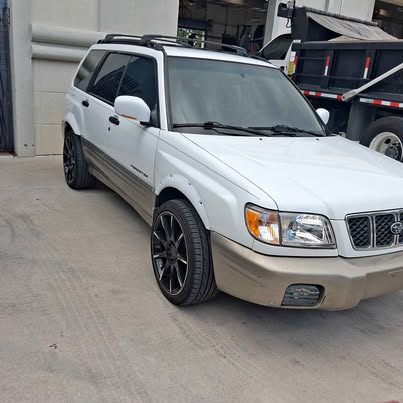 $3,200
Expand
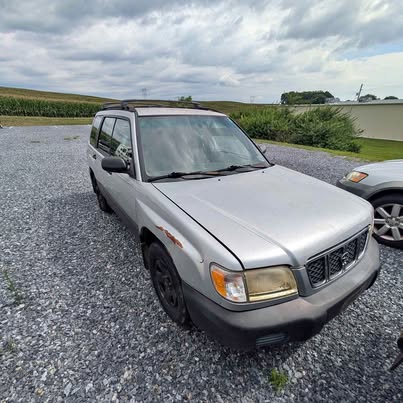 $123
Expand
 $5,500