
Subaru Sambar buyer's guide
Subaru Sambar -- the model's own buyer's guide: variants, values and what to check.
Years listed: 1990-2000 · Series: Sambar
Overview and history
This is the model guide to the Subaru Sambar, and it assumes the basic idea already appeals: a Japanese kei truck or van, no longer than a small hatchback, engine at the back, a bed or a box in the middle, and a cab you sit in with your feet ahead of the front axle line. The series guide covers the story in outline. This guide goes one level down, into the questions that separate one advertised Sambar from another: which generation it really is, which version of the EN07 engine sits under the hatch, whether the four-wheel drive is the part-time truck system or the full-time wagon system, whether a Dias is a genuine passenger flagship or a working van with seats, and what the Japanese paperwork that crossed the Pacific with the car does and does not prove. Those details are the price, the parts order and the ownership experience, decided before you turn the key.
Depth matters here because the American market never chose its Sambars. Subaru of America never sold the model, so nothing here was specified or supported for this country. Every example is a survivor of the Japanese domestic market that became eligible under the federal 25-year exemption, was bought at a Japanese auction or from a Japanese dealer, shipped, titled and resold. That pipeline favours the fifth generation of 1990 to 1999, codes KS and KV, because those cars crossed the 25-year line first in large numbers and because the 660 cc engine that arrived with them makes them the first Sambars genuinely usable on American roads. It is now adding the sixth generation, codes TT and TV, built from 1999 to 2012, as those cars age into eligibility. The earlier 360 cc and 550 cc cars barely feature, and arrive as collector pieces when they do.
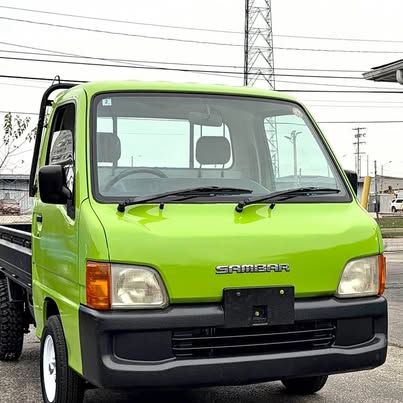
It also weights body styles the way use does. In Japan the truck was a tool, and the van was the same tool with a roof. The Dias line — Sambar Dias, then Dias Wagon — was the deliberate exception: the same mechanical package finished as a family car, with proper seats, air conditioning as standard, and on top versions a supercharged engine and an automatic gearbox. That split in original purpose is still visible in every car you inspect: a Dias that lived on school runs and a truck that carried fertiliser on a mountain farm may share a model year and an odometer reading, and be entirely different vehicles in structure, wear and value.
One boundary needs drawing first, because sellers blur it. Subaru designed and built the Sambar itself from 1961 to 2012, always with the engine at the rear. From 2012 the name continued on vehicles designed and built by Daihatsu — a rebadged Hijet with its engine under the seat. A post-2012 Sambar is not the vehicle this guide is about, and it shares almost no parts with the Subaru-built cars. Everything that follows is about the rear-engined, Subaru-built Sambar, in practice its 660 cc generations.
The models
Six Subaru-built generations span 1961 to 2012, and the honest way to read them is as three eras. The cars to 1982 are the collector era. The 550 cc cars of 1982 to 1990 are the transitional era, when four-wheel drive and the Dias idea arrived but the engine was still small. The 660 cc cars from 1990 onward are the usable era, the only one this guide treats as transport rather than as an exhibit. Within it the range divides by chassis code, and the code, stamped on the build plate and in the body, is the single most useful piece of information on any Sambar. Learn the code system and you can identify a car more reliably than from its badges, its advert or its seller, all three of which are wrong often enough to matter.
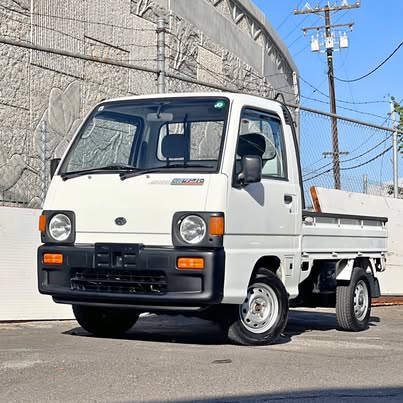
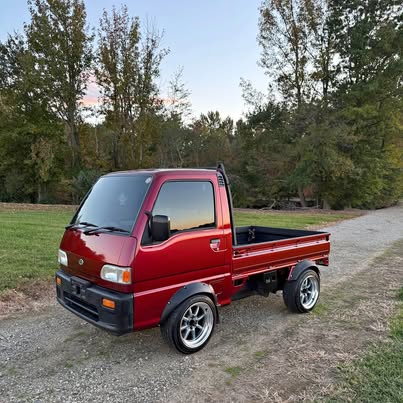
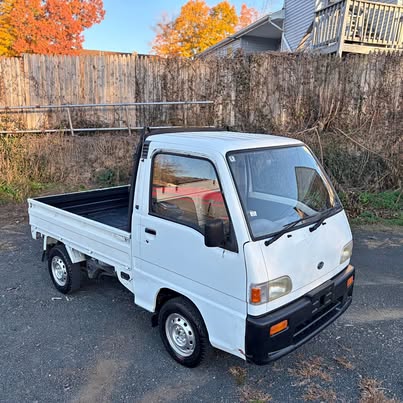
On the fifth generation, built from February 1990 to 1999, the pattern is KS for trucks and KV for vans, the final digit giving the drive layout: KS3 and KV3 are two-wheel drive, KS4 and KV4 are four-wheel drive. On the sixth generation, 1999 to 2012, the same logic repeats as TT1 and TT2 trucks and TV1 and TV2 vans, with TW1 and TW2 for the Dias Wagon — odd digit two-wheel drive, even digit four-wheel drive. A car advertised as four-wheel drive whose code ends in an odd digit is misdescribed, full stop, and that one check has saved more buyers than any other in this guide. Trim sits on top of the codes: working vehicles carry plain trims and vinyl interiors, better fifth-generation vans were sold as the Dias II and the retro-styled Dias Classic, and sixth-generation passenger buyers were steered to the Dias Wagon, the TW car, a distinct model line rather than a trim of the TV van.
| Model | Years | Engine | Output | Built | Character |
|---|---|---|---|---|---|
| Sambar, 1st generation | 1961–1966 | EK31 356 cc air-cooled two-stroke twin | about 18 PS | not reliably published | The original cab-over on Subaru 360 mechanicals; a museum piece now |
| Sambar, 2nd generation | 1966–1973 | 356 cc two-stroke twin, air- then water-cooled | about 20–25 PS | not reliably published | Larger cab, same formula; the last pure two-stroke era |
| Sambar, 3rd generation | 1973–1982 | EK21 356 cc four-stroke, then EK23 544 cc three-cylinder | about 28–31 PS | not reliably published | Four-stroke power arrives; grows to the 550 class in 1976 |
| Sambar, 4th generation | 1982–1990 | EK23 544 cc three-cylinder, then EN05 547 cc four-cylinder | about 31–42 PS | not reliably published | Four-wheel drive and the first Dias; the modern layout settles |
| Sambar truck KS3 / KS4 | 1990–1999 | EN07 658 cc four-cylinder, NA or supercharged | 42–55 PS | not reliably published | The core American import: drop-side truck, 2WD or part-time 4WD with EL gear |
| Sambar van KV3 / KV4 | 1990–1999 | EN07 658 cc four-cylinder, NA or supercharged | 42–55 PS | not reliably published | The working van and panel; base for Dias and the conversions |
| Sambar Dias / Dias II, KV | 1990–1999 | EN07 658 cc, injected or supercharged | about 45–55 PS | not reliably published | The passenger van: seats, trim, air conditioning, automatics common |
| Sambar Dias Classic / Classic, KV | mid-1990s–1999 | EN07 658 cc, NA or supercharged | about 45–55 PS | not reliably published | Retro-styled Dias and van; factory styling, standard mechanicals |
| Sambar truck TT1 / TT2 | 1999–2012 | EN07 658 cc four-cylinder, NA or supercharged | about 46–58 PS | not reliably published | Sixth-generation truck: safer shell, same rear engine and EL gear |
| Sambar van TV1 / TV2 | 1999–2012 | EN07 658 cc four-cylinder, NA or supercharged | about 46–58 PS | not reliably published | Sixth-generation van; working and semi-passenger trims |
| Dias Wagon TW1 / TW2 | 1999–2009 | EN07 658 cc, NA or supercharged | about 46–58 PS | not reliably published | The last passenger flagship; full-time 4WD available, twin sunroofs |
| Sambar, Daihatsu-built | 2012–present | Daihatsu KF 658 cc three-cylinder | about 46–64 PS | Daihatsu production | A rebadged Hijet, engine under the seat; not a Subaru design |
Two cautions belong with the table. Subaru did not publish trustworthy per-variant production figures, and this guide does not invent them: where the built column says not reliably published, that is the true state of the record, and any seller quoting a precise build count for a supercharged Dias is repeating something unsourced. Scarcity here is about survival and import flow, not factory rarity. The output figures are period Japanese ratings, so treat them as orientation; what decides performance is which EN07 variant a car carries, read from the engine code and the hardware under the hatch, never from the tailgate badge.
Within the fifth generation, closer reading pays, because it is where your money will most likely go. Working trucks came in plain grades with vinyl seats, steel wheels, and air conditioning as an option many first buyers declined — which is why so many imported trucks have no air conditioning at all rather than broken air conditioning. Higher grades added it, along with better seats and, later in the run, power steering. Vans mirror the trucks in working grades, and then the Dias branch diverges: a Dias II gives you a proper passenger interior, cloth-trimmed seating, carpets and air conditioning as part of the concept, while Dias Classic adds retro front-end styling. Supercharging was offered on Dias models and on better trucks and vans, and it is the most desirable mechanical option in the range.
The sixth generation is the same vehicle matured under newer rules. The 1998 kei regulation revision allowed a slightly longer, wider body, and the TT and TV cars use it: a roomier cab, a more serious crash structure, and equipment such as a driver airbag and anti-lock brakes that KS cars never offered. The Dias Wagon continued the passenger line to 2009, after which the range concentrated on working vehicles until production ended in 2012. The American catch is timing: eligibility arrives car by car at 25 years, so the TT and TV population here is younger, smaller and skewed to the earliest years, and a claimed later car offered for road registration deserves its import paperwork examined with particular care.
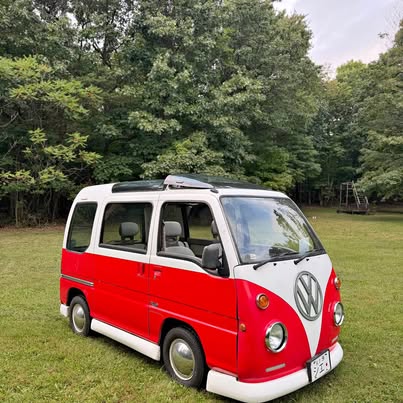
Then there are the conversions, which are not factory models and must be priced as what they are. Japanese conversion houses turned KV vans into miniature Volkswagen Type 2 tributes — replacement front panel, round headlamps, two-tone paint — and built campers, food trucks and promotional oddities on vans and trucks alike. The red 1991 car in our listings, described as VW style, is exactly this: a standard KV van underneath a costume. The costume changes nothing about the EN07, the rust map or the cooling system, and it adds its own questions about panel fit, water sealing and rust at the joins. Buy the van first, and never pay a rarity price for a model Subaru never built.
Engines and gearboxes
The EN07 family: one engine, three personalities
Every 660 cc Sambar runs the same basic engine, and understanding its variants is the core mechanical skill in buying one. The EN07 is a 658 cc inline four-cylinder, water-cooled, single overhead camshaft, mounted flat at the rear under the bed floor or the van's rear floor, driving the rear wheels through a transaxle. It descends from the EN05 of the late 550 cars. Four cylinders is the point of pride: Daihatsu and Suzuki built their kei commercials around threes, and the Subaru four is smoother and happier to rev. It is not powerful in any form. It is willing, and the variants decide how much willingness you get.
The entry version, fitted to early fifth-generation cars and working grades throughout, is the carburettor engine, the EN07E in its original form, making about 42 PS. A single downdraught carburettor with an automatic choke feeds it, and its character is set by that choke: from cold it should start readily, idle fast, and step down in stages as it warms, then pull without a flat spot. The choke's heat and vacuum controls age, the carburettor's small passages varnish on stale fuel, and the nest of vacuum hoses around it perishes in the heat of the rear compartment. Hunting at idle, stalling at junctions when cold, a rich smell and a flat spot on gentle throttle are this system's standard vocabulary, and almost all of it is hoses, choke adjustment and cleanliness rather than the carburettor body itself. A full vacuum-hose replacement is the cheapest transformation available on an early car, typically a few hundred dollars in parts and labour.
Fuel injection arrived on the better fifth-generation cars and became the norm on the sixth generation, raising output into the mid-40s of PS and, more importantly, removing the choke ritual and most cold-running complaints. Injected cars use electronic management with distributor-based ignition on the versions you will meet, and the distributor, living at the back of a hot engine in a spray-filled compartment, is a service item: cap, rotor arm, leads and the shaft seal all age, and oil weeping from that seal into the cap is a classic cause of a misfire that comes and goes with temperature. Injected cars start instantly, idle evenly and tolerate American fuel and winters better. They also produce fault codes, which on a Japanese-market car means finding a shop whose scan tools know the system.
Whichever fuel system a car has, the service facts are the same. The timing belt is an interference-design deadline: belt, tensioner and water pump are replaced together, typically for 500 to 900 dollars in parts and labour, and the Japanese habit of recording the job on a sticker in the engine compartment, with date and kilometres, means a maintained car carries its own evidence. Find that sticker and do the arithmetic; an unknown belt age means the job is due at full price in the purchase budget. Oil capacity is small, so changes are cheap and must be frequent, around every 5,000 kilometres in hard use. Valve clearances are checked on schedule, plugs are a short-cycle item, and the cooling system is serviced as part of the engine, not as an accessory.
The supercharged EN07: the one you want
The supercharged engine, the EN07Y in fifth-generation form and its sixth-generation development, is the option that turns the Sambar from equipment into something closer to a car. Subaru fitted a small Roots-type supercharger, mechanically driven from the crankshaft by its own belt, sized for response rather than peak numbers. Output rises to about 55 PS in the fifth generation and a little more in the sixth, but the figures understate it, because the real change is where the torque sits. A naturally aspirated Sambar gathers itself and then goes. A supercharged one goes, from low revs, in the gear you are already in, with the air conditioning running and a load in the back. That is why supercharged Dias wagons are the most sought-after Sambars of all.
The blower is also a wear item with its own inspection, and this is where buyers get caught. A healthy supercharger is almost unobtrusive: a faint whine under load that rises with revs, and nothing at idle beyond the engine's own sounds. A worn one announces itself three ways — bearing wear rattles at idle and changes as revs rise, seal wear leaks oil at the snout and drive, and drive-belt wear squeals on a belt that may be cracked through. Confirm the hardware first: the blower sits on the side of the engine in the rear compartment with its own belt, the engine code identifies the supercharged variant, and the installation should look factory throughout. Cars exist with the blower removed and the drive blanked off after a failure, running on as low-compression naturally aspirated engines, noticeably flat and worth substantially less than either a proper supercharged car or an honest naturally aspirated one. A replacement blower is a used part from Japan, typically 700 to 1,400 dollars landed before labour, with availability that comes and goes, so a noisy blower is priced as a replacement, not as a noise. On the test drive, correct behaviour is a smooth, progressive thickening of the push from low revs. A step, a shriek, a rattle, or a car that feels no stronger than a naturally aspirated one means the premium option is not currently working, whatever the advert says. The engine runs contentedly on American regular fuel, and there is no tuning scene to inherit problems from: non-standard pulleys, plumbing or wiring in the rear compartment mark an experiment you are being asked to fund.
Gearboxes and four-wheel drive: two systems, two rulebooks
The standard gearbox is a five-speed manual, light, precise and honestly geared for a vehicle that cruises at high revs by American standards. Expect the engine to be busy at 60 mph; that is gearing, not distress. Second-gear synchromesh is the wear point to test, cold and hot — a slight baulk stone cold that frees as the oil warms is wear to price, a crunch in both states is a gearbox conversation. The clutch is judged by bite point, judder on take-up and slip under load on a hill; a replacement typically runs 600 to 1,000 dollars in parts and labour.
Four-wheel-drive trucks add the feature that defines them for land work: an extra-low first gear, marked EL, selected as a separate gate position alongside the normal five ratios. In effect the truck has six forward gears, the lowest a crawler that walks a loaded truck up a muddy slope or onto a trailer at walking pace with the clutch fully home. If your use involves soft ground or slopes, EL is worth more than any trim item, and it is the first thing to verify on a 4WD truck. Vans do not all share the truck's EL provision, so on a KV4 or TV2 establish what is actually fitted.
The automatic is a three-speed unit, found mainly in the Dias line and better-trimmed vans. It suits the passenger cars well, but it blunts a naturally aspirated engine noticeably — three ratios spread over the EN07's narrow comfort zone leave gaps the engine must climb — and it pairs far better with the supercharger, whose low-speed torque fills exactly those gaps. Judge it as you would any older automatic: fluid colour and smell first, then shift quality cold and hot, then engagement of drive and reverse without delay or thump.
Four-wheel drive is where variants differ most in how they must be used, and confusing the two systems damages cars. The truck system, and the system on most working vans, is part-time: a lever or switch engages the front axle through a transfer arrangement with no centre differential. On loose surfaces it is superb — mud, snow, gravel, wet grass, boat ramps, farm tracks. On dry pavement it must not be used, because the locked axles wind the transmission up against itself in turns, scrubbing tyres and stressing joints. That behaviour gives you a legitimate test: on a loose surface, engage four-wheel drive and confirm the car pulls from all four corners and that EL, if fitted, crawls; in two-wheel drive on pavement, the car should steer and roll freely. Binding in two-wheel drive is a fault; binding in four-wheel drive on pavement merely proves the part-time system is working.
The Dias Wagon, and some Dias models before it, offered the other system: full-time four-wheel drive with a viscous coupling, designed to be used everywhere without driver decisions. It is the right system for a family car in a snowy state and the wrong system to feed mismatched tyres, because the coupling earns its living compensating for differences in wheel speed, and a tyre of different size or wear on one corner makes it work constantly until it fails. On a full-time car, check that all four tyres match in make, size and approximate wear, and budget to replace them as a matched set. Binding and shuddering in tight low-speed turns on a full-time car is a symptom, where the same behaviour on a part-time car in four-wheel drive is normal — same sensation, opposite verdicts, decided by which system the chassis code and hardware say the car has. Front CV boots are consumables on both systems, a set fitted typically costing 250 to 500 dollars.
Problem areas
Rust by generation: where each era fails
The series guide gives the Sambar rust map in full. What follows is the model-level version: how that map shifts by generation and body style, because a buyer choosing between a 1992 KV and a 2000 TV is choosing between two rust profiles as much as between two ages of car. Every Subaru-built Sambar is a monocoque rustproofed lightly, to Japanese domestic expectations, and carries its structure in its floor, sills, cab and the members that carry the engine and suspension at the rear. Rust in cosmetic panels is a negotiation. Rust in those structures is the end of the car's economic life, because the welding is specialist, the panels are in Japan, and the finished car is worth a kei vehicle's money.
On fifth-generation trucks, the cab is the first structure to judge: floor corners, door aperture bottoms, the lower cab back panel and the sills, attacked by water under the mats and mud packed behind the front wheels. The bed is the second: its floor rusts along the seams and around the engine hatch, the drop sides along their lower rails and hinge lines, and the rear panel traps water around the lamps. Read a bed like a diary — soil, fertiliser, salt and fish all sign the seams — and treat a bed floor repainted over scale, on a truck whose cab is honestly worn, as painted for you. Vans move the weak points rather than removing them: sliding-door tracks low on both flanks, the lower tailgate aperture, roof gutters and, on sunroof cars, the sunroof apertures and their drains. A damp headlining or stained rear floor on a Dias is a drain problem until proven otherwise, with floor rust as its downstream cost.
Sixth-generation cars are better protected, so perforation is less common at equivalent age and the inspection balance shifts toward accident repair and whether the extra equipment works — but do not let a TT or TV car's freshness talk you out of the lift. On every generation the rear subframe area, where engine and rear suspension mount, is the structural heart, living in the warm, wet, salt-catching box of the rear compartment, where surface rust is universal and structural rust is fatal. The screwdriver test, with the seller's permission, distinguishes them: powdery scale on thick metal is cosmetic; flaking or soft metal around mountings is not. Proper sill or member welding typically runs 1,000 to 2,500 dollars a side before paint.
One trap deserves naming: export underseal, a thick, fresh, uniform coat of black applied underneath before shipping, sometimes honest protection and sometimes a curtain over exactly the areas above. Fresh underseal over everything, including seams, fasteners and pipe runs, on a car with no other sign of recent care, should lower your confidence, not raise it, and the areas it covers hardest are the areas to test hardest. Judge the fasteners while you are there: underbody bolts rounded with rust will fight every future job.
Cooling: the system that decides the engine's life
If one system decides whether a Sambar purchase succeeds, it is the cooling system. The layout is fixed by the design: engine at the rear, radiator at the front where the airflow is, and coolant travelling the length of the vehicle through steel pipes and rubber hoses beneath the floor. That run ages in three environments at once and fails three ways. The steel pipes corrode externally in underbody salt and spray, and internally if the car has run on plain water or exhausted coolant, perforating in pinholes that mist coolant only under pressure and heat, leaving a car that loses coolant mysteriously and shows a dry driveway. The hoses perish in the heat at the rear. The radiator, small to begin with, blocks progressively with sediment, so a car can idle cool, cruise cool, and overheat only at the sustained load of a long grade in summer — precisely the use an American buyer in a warm state has planned for it.
Generation and use change the odds rather than the physics. A low-mileage Dias that lived in a mild prefecture on proper coolant may arrive with its original pipes sound; a farm truck from a snowy prefecture may need pipe sections as a condition of purchase. Budget accordingly: replacing a corroded pipe section, fabricated in stainless or sourced from Japan and fitted properly, typically runs 300 to 800 dollars, and a car needing several sections and a radiator carries a four-figure cooling rebuild that belongs in the price negotiation. The supporting cast matters as much as the pipes: the electric fan and its thermoswitch are the cooling system at the low speeds a working truck lives at, and both must be proved, not assumed. The thermostat sticks, the radiator cap loses its seal and drops the boiling point with it, and the water pump is renewed with the timing belt as policy.
The test that sorts all of this is behavioural. From cold, the gauge should rise to the middle and stay there: in traffic, at a steady cruise, on a grade, with the air conditioning running. Creep in traffic that recovers with speed points to airflow and the fan. Creep under load at speed points to radiator capacity, pipes or head gasket, in ascending order of cost. Any seller explanation that a high reading is a gauge fault is tested with an infrared thermometer at the thermostat housing before it is believed, and a cooling system that needs regular topping up has a leak by definition. Find it before money moves: overheating is how EN07 engines die, head gasket first, warped head behind it.
The Dias difference: passenger equipment, passenger problems
Everything that makes a Dias desirable adds a system that can fail. Start with the sunroofs. Single and twin installations were signature Dias and Dias Wagon equipment, lovely when sealed and draining. Their drains block with age, their seals perish, and the water they collect is delivered down tubes inside the body — tubes that, when blocked or detached, deliver it into the headlining, the pillars and the floor instead. Inspect a sunroof car from the headlining outward: stains, a damp smell, a sagging liner and rust at the floor edges form one story, and it is a water story. Operate both roofs through their full travel; a roof that tilts but will not slide is a mechanism job with parts from Japan.
Air conditioning on a Dias is standard equipment and on a working model a rare option, but in both cases the system shares the Sambar's defining vulnerability: it is a long system on a long vehicle. The compressor sits on the engine at the rear, the condenser at the front, and the pipes run the length of the car with a union at every opportunity to leak. A system that blows cold at purchase after a fresh regas and fades within a fortnight is the classic disappointment of this market; the only honest test is time and a specialist's leak detection, with a proper overhaul of pipes, seals and receiver typically running 600 to 1,500 dollars. Interiors wear in the opposite pattern to the trucks: where a truck's vinyl survives everything and its driver's seat base collapses, a Dias gives you cloth seats that stain and wear, carpets that record every wet boot, electric windows that slow and fail, and trims that crack in sun states. A genuinely tidy Dias interior is worth money precisely because retrimming one in America is a hunt rather than an order. On the Dias Wagon, add the full-time four-wheel drive's tyre discipline from the engine section and check for the viscous coupling's tight-turn shudder. The Dias premium is real. So is the Dias bill when its systems have been neglected, and the inspection has to price both.
Working hardware: doors, beds, suspension and tyres
The hardware that earns a Sambar its living wears in predictable places, and because these vehicles were bought to work, wear here is information about the whole car's life. Sliding doors run on rollers in tracks that fill with grit and corrode; a door that must be lifted to close has worn rollers — a parts-from-Japan repair typically costing 150 to 350 dollars in parts plus labour — and a door allowed to drop wears its catches and misaligns its seals, which lets in the water that starts floor rust. Test both doors, full travel, several times. Truck bed hardware tells a similar story: tailgate and drop-side hinges bend under machinery loading, latches wear until sides rattle, and a bed whose sides no longer sit square has usually been loaded by something heavier than the truck. None of that condemns a working truck bought for work; all of it prices the truck as the tool it has been rather than the tool the advert describes.
Suspension is fully independent, struts at the front and trailing arms at the rear, which is why a Sambar rides and steers better than its leaf-sprung rivals and why it has more joints to wear than they do. Front struts leak and knock, top mounts perish, and worn rear trailing-arm bushes let the rear wheels steer the car faintly on a trailing throttle, a queasy wander owners misdiagnose as alignment or tyres. A car that tracks straight and stays composed over a rough lane has usually been maintained by someone, and that inference about the rest of the car is one of the most reliable in this guide.
Brakes are front discs and rear drums, sized for a light vehicle and honest at its designed weights, with two truths attached. Brake pipes run the length of the car beside the coolant pipes and corrode in the same environment, so pipe condition belongs on every lift inspection, with a corroded run replaced typically for 200 to 450 dollars in parts and labour. And a laden Sambar descending a long grade will fade brakes driven like a modern car's; engine braking, early and often, is technique, not caution. The handbrake must hold on a slope in both directions, tested. Tyres close the section because they are the most commonly wrong item on an imported car. Sambars run 12-inch wheels with narrow light-truck tyres, commonly 145R12 in the correct load rating. The rating is the substance: passenger-car tyres of similar nominal size have softer sidewalls and lower load capacity and are not a substitute on a vehicle whose rear tyres carry the engine and most of the load. Imports routinely arrive on aged Japanese tyres; read all four date codes, plus the spare, and budget a correct set, typically 350 to 600 dollars fitted, as part of the purchase.
Electrics fail by age and environment rather than by design: corroded earth points, worst in the rear compartment; alternators that stop charging; starter motors that click on cold mornings. Headlamps on a Japanese-market car dip for left-hand traffic and will dazzle oncoming drivers on American roads until corrected, as your state's rules require. And the odometer reads in kilometres, always: any mileage figure quoted in miles should be converted in front of you and weighed against the pedal rubbers, the driver's seat and the paperwork.
How to inspect one
Inspect a Sambar as an import first and a vehicle second: identity and paperwork before metal, metal before machinery, machinery before the road. Bring a torch, a magnet, a screwdriver, an infrared thermometer if you have one, and at least an hour. Arrange the cold start in advance, because half of what this inspection exists to discover is hidden by a warm engine.
- Identity before everything. Match the chassis number on the build plate and the body stamp to the export certificate, the import documents and the title, character by character. Read the chassis code and confirm the generation, body style and drive layout it encodes — KS3, KS4, KV3, KV4, TT, TV, TW, odd digit two-wheel drive, even digit four-wheel drive — against the advert. Read the engine code and establish whether the car is carburettor, injected or supercharged before the seller tells you. Any disagreement stops the inspection until it is explained in documents, not in conversation.
- Read the Japanese paperwork like an inspector. The export certificate and, where it survives, the auction sheet are the car's Japanese biography. The auction sheet carries an exterior grade, an interior letter, a diagram marked with the dents, scratches and repairs the Japanese inspector found, and the odometer reading in kilometres at export. Have it translated properly; machine translation of the diagram codes is where bargains and disasters get confused. Check the readings for continuity: auction kilometres, export kilometres and the dash today should form a plausible line, and a gap or a step backwards needs a documentary answer.
- The structure walk, generation by generation. Crouch at each corner and work the rust map from the problem section in the order it kills cars: cab floor corners and door aperture bottoms, sills along their full length, bed seams and hatch surround on a truck, sliding-door tracks and tailgate aperture on a van, sunroof apertures and gutters on a Dias. Use the magnet on cab corners and sills, and the screwdriver, with permission, on anything that feels like underseal over scale.
- Underneath, on a lift, front to back. This step decides most purchases. Follow the coolant pipes and brake pipes along the full length of the car, looking for corrosion, pinhole staining and sections already replaced, well or badly. Examine the front subframe and radiator support. Then spend the longest time at the rear: engine subframe, mountings, surround panels and rear valance — the metal everything bolts to. Surface scale passes; soft, flaking or holed metal around mountings fails the car. Treat a fresh, uniform coat of underseal over everything as a reason to test harder, not a reassurance.
- Cold start, twice observed. First from the driver's seat, then restart and listen at the rear compartment. A carburettor car should fire on the choke, idle fast and step down as it warms; an injected car should start at once and idle evenly. Watch the first exhaust smoke: a puff that clears is age, continuing blue is oil, white vapour that does not clear is coolant until proven otherwise. At the rear, listen for supercharger bearing rattle, exhaust chuffing at the manifold joint and belt squeal.
- The cooling interrogation. From cold, watch the gauge climb and settle in the middle, feel the hoses pressurise, and confirm the electric fan cuts in as the car idles warm. Inspect the coolant itself — clean and correctly coloured, or rusty and exhausted — and the radiator cap's seal. If the gauge does anything unusual, put the infrared thermometer on the thermostat housing and settle whether you are looking at an instrument or a temperature. This step and step 4 together are the car's pass-or-fail examination.
- Under the hatch: the EN07 audit. Open the engine hatch and read the compartment as a record. Oil level, colour and smell on the dipstick. The timing belt sticker, if present: date and kilometres, compared with the dash. Weeps at the cam cover, crank and cam seals and distributor seal. The vacuum hoses on a carburettor car, squeezed for perishing. The air filter. All the belts, including the supercharger belt where fitted. On a car claimed to be supercharged, identify the blower itself and confirm the engine code agrees. A steam-cleaned compartment tells you nothing; look at the seams and low points for what the cleaning was meant to remove.
- Gearbox, clutch and the EL test. Stationary first: every gear including reverse, light and precise, then the four-wheel-drive engagement. On a 4WD truck, find the EL position and confirm it selects. On the move, test second-gear synchromesh cold and hot, feel the clutch bite and check for judder and for slip under load on a hill. On an automatic, read the fluid's colour and smell, then judge shift quality cold and hot.
- The test drive, long enough to be honest. Twenty minutes minimum, fully warm, including a hill, a rough lane and a stretch at 50 to 60 mph. The engine should pull cleanly through the revs — progressively and strongly from low down if supercharged, with revs and gears if not — the temperature should sit still throughout, and the steering should self-centre and track straight. Listen in a gentle weave for wheel-bearing hum, and feel for rear-end wander on a trailing throttle.
- Four-wheel drive, tested by its own rulebook. On a part-time truck or van, engage four-wheel drive only on a loose surface, confirm it pulls and that EL crawls as it should, then confirm the car rolls free in two-wheel drive on pavement. On a full-time Dias, confirm smooth take-up, check for shudder in tight low-speed turns, and verify all four tyres match in size, make and wear.
- Brakes, handbrake and the tyre census. Stop from moderate speed: straight, no judder, no pull. The handbrake must hold the car on a slope facing both ways. Then read the tyres properly: size, light-truck load rating, and all four date codes plus the spare. Aged or passenger-rated tyres are a full replacement set in the budget.
- Every switch, every door, every roof. Lights, wipers, washers, heater fan on all speeds, demister, horn, instruments, charging voltage at a fast idle with the lights on. Air conditioning, if fitted, must blow cold within a minute and keep blowing cold at idle; a compressor that merely engages proves nothing. Both sliding doors on a van, full travel, repeatedly. Every window. Every sunroof on a Dias, full travel, then inspect the headlining and pillars for the water stains that say the drains have already failed.
- The second look and the honest total. Leave the car ten minutes, then look underneath again for fresh drips and re-check the oil. Now total the findings: identity, structure and cooling are pass or fail, and a failure in any one ends the purchase at any price near the market. Belt, hoses, tyres, boots, bushes, blower condition and air conditioning are budget lines with known prices from the earlier sections; add them up and negotiate from the total, not from a feeling. A Sambar that passes the first group and prices the second honestly is a good buy in any variant. One that fails the first group is a parts source, whatever its photographs look like.
Values
Read the computed market block beneath this guide for the current numbers, and read this section for how to think about them, because the Sambar market punishes buyers who treat a thin set of listings as a price list. Supply is created by an import pipeline, not by a factory or a dealer network, and it arrives in batches shaped by the Japanese auction seasons, shipping costs and which model years have most recently crossed the 25-year line. A season that lands a dozen clean Dias wagons makes wagons look plentiful without changing their underlying scarcity one bit; a season of farm trucks does the reverse. In a market this size, weight the broad middle of any figures you are shown, distrust both extremes, and remember that the cars in our own current listings are a small, all-private-seller sample drawn from a handful of states — a snapshot of what is being offered, not a census of what exists.
Within that caution, the structure of value is stable. Condition comes first, and on a Sambar condition has a specific meaning: structure and cooling health, verified on a lift and a long test drive, outweigh mileage, trim and shine. A sound underbody with documented cooling work is the most valuable thing a Sambar can have, because it is the hardest thing to buy later. After condition, the premiums line up consistently. Four-wheel drive earns a real premium, because the American uses for these vehicles — land, snow, ramps, tracks — reward it, and because the truck's extra-low gear is unique in the kei class. The supercharger earns a premium because it changes the driving, not the specification sheet, and the two premiums stack. The Dias line sits at the top of the van market when its equipment works, because it offers the only car-like experience in the range — and a Dias whose sunroofs leak and whose air conditioning is a rumour gives that premium back in full. The retro and VW-style conversions sell quickly to the buyer who wants one and slowly to everyone else, which makes them enjoyable purchases and unreliable investments.
The asking-versus-achieved gap is structural. Sellers anchor on their import costs — Japanese purchase, auction and export fees, ocean freight, duty, titling — and those costs are real, but they are a floor under the seller, not a value to the buyer. Buyers anchor on the vehicle's size and age. Negotiation is where the two anchors meet, and the inspection is your leverage: every verified finding from the checklist, priced from the problem sections, is a legitimate, documentable adjustment, while a vague feeling that the car is expensive is not.
The project-versus-driver gap is the sharpest feature of this market. A non-running or structurally rusty Sambar is worth very little, because reviving it — welding, cooling work, parts freight, a specialist's time — approaches the price of a sound car while producing a vehicle worth less than one. A sorted driver with a known timing belt, fresh correct tyres, a proved cooling system and paperwork that matches its metal is worth its premium every time: what you are buying is the verified absence of the exact risks this guide catalogues.
Parts and ownership
Owning a Sambar in America means running a small Japanese supply chain, and the owners who thrive organise it before they need it. Subaru's American network never sold the car and cannot help you. Your pipeline runs to Japan: factory parts catalogues cover the KS, KV, TT, TV and TW cars in full, Japanese parts exporters will supply anything from a timing belt kit to a sliding-door roller against your chassis number, and used-parts channels carry components from dismantled cars, which is where superchargers and trim mostly come from. Order by chassis and engine code, never by model name alone. Order ahead, keep a shelf stock of consumables, and consolidate orders, because freight from Japan punishes the single small part more than the part itself costs.
Sort the parts world into three tiers and budget by tier. The easy tier is service stock: filters, spark plugs, brake pads and shoes, and common wear items that cross-reference or arrive quickly, at prices close to ordinary-car money once freight is shared across an order. The planned tier is where Sambar money actually goes: the timing belt, tensioner and water pump job at 500 to 900 dollars fitted; a clutch at 600 to 1,000 dollars in parts and labour; coolant pipe sections at 300 to 800 dollars a section; a replacement supercharger at 700 to 1,400 dollars landed before labour; CV boots fitted at 250 to 500 dollars a set; air conditioning overhaul at 600 to 1,500 dollars; a correct set of light-truck tyres at 350 to 600 dollars fitted. None of those figures is frightening alone; all of them arriving in the same season is what an uninspected purchase feels like. The hard tier is body and glass: a windscreen, a bed side, a sliding door or Dias interior trim is a freight decision and sometimes a waiting game, and a car needing hard-tier parts needs them priced as such, with the wait included.
Labour matters as much as parts. Routine work — oil and filter, plugs, air filter, belts and hoses — is done through the engine hatch by owners with ordinary skills, helped by translated Japanese service literature circulating in the kei community. Major work, anything requiring the engine and transaxle dropped as a unit, is where a kei-literate independent shop earns its money; finding that shop is an ownership task for your first month.
Two realities of American ownership need stating plainly. The first is legality. The federal 25-year exemption governs importation, but titling, registration and road use are state matters, and state treatment of kei vehicles has changed in both directions in recent years. Verify your own state's current position, from your own state's sources, before you buy, and keep the full import file with the car: export certificate, customs paperwork, translations and title history. The second reality is the driving itself. A Sambar is right-hand drive, narrow, modest in speed and short of crash structure by modern standards. Driven as what it is — a small vintage working vehicle, at the speeds it was built for — it is economical and absurdly useful, returning fuel consumption a fraction of a full-size truck's. Driven as a motorway car it is none of those things.
Which one to buy
Match the variant to the job first, then buy the best individual example of that variant you can find, judged on identity, structure and cooling. Within any variant, the individual car outranks the specification every time.
- The all-rounder: a fifth-generation KS4 or KV4 four-wheel-drive with the five-speed manual — part-time four-wheel drive for loose surfaces, the extra-low gear on the truck, and the deepest pool of cars, parts knowledge and community experience to draw on.
- The value buy: a two-wheel-drive KS3 truck in honest working order — mechanically the same vehicle where it matters, cheaper because the market chases four-wheel drive, and entirely sufficient for yards, gardens, estates and light commercial work on made surfaces.
- The driver's pick: a supercharged Dias or Dias Wagon, manual if you find one, automatic if you do not — the only Sambars that feel like cars, with the low-speed torque to match their refinement. Buy the one whose sunroofs seal, whose air conditioning blows cold and whose blower is silent.
- The camper base: a KV or TV glass van, four-wheel drive if your campsites are honest ones — flat floor, sliding doors on both sides and an interior volume out of all proportion to the footprint.
- The newer car: an early TT or TV sixth-generation example, as eligibility allows — a roomier, safer shell and younger metal, bought with extra care over the import paperwork, because the newest cars sit closest to the 25-year line.
- The character choice: a VW-style or Dias Classic conversion, bought as a good van in a wonderful costume — full inspection on the underlying vehicle, a fair premium for conversion work you can examine, and never a rarity price for a model the factory never built.
- The collector's corner: a two-stroke or 550 cc car from the early generations — a different hobby of specialist parts, gentle use and historical charm, bought for love of the object and never as cheap transport.
The overriding rule: buy the paperwork, the structure and the cooling system, in that order, and let everything else be negotiable — a Sambar whose documents match its metal, whose shell is sound underneath and whose temperature gauge never moves is the right car in any variant, and a Sambar failing any one of those three tests is the wrong car in every variant, at any price.
See the 11 Sambar cars currently listed.
For sale now
 $5,999
Expand
 $10,500
Expand
 $15,000
Expand
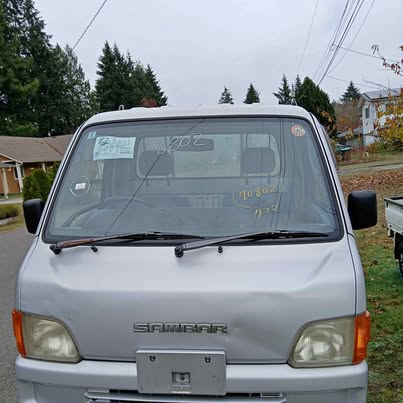 $9,200
Expand
What they sell for: Sambar sale prices.