
Subaru Sambar buyer's guide
Subaru Sambar (1990–2001) — Sambar: what's listed, and what they sell for.
Years: 1990–2001 · Models: Sambar
Overview and history
The Subaru Sambar is the longest-lived nameplate Subaru has ever built, and for most of its life it was also the most un-Subaru Subaru you could buy — which is precisely why people who find one tend to keep it. Where the rest of the range built its reputation on flat-four engines and rally stages, the Sambar spent fifty years as a cab-over kei truck and van with a tiny engine tucked under the load bed at the back, doing the unglamorous work of Japanese farms, building sites, fishing ports and mountain villages. It outlived the 360, the Rex and the Vivio that shared its mechanicals, and when Subaru stopped building its own kei vehicles in 2012, the Sambar was the last one standing. The name continues today on rebadged Daihatsu Hijets, and where the real Subaru ends and the badge engineering begins is the first thing a buyer has to get straight, because the two families share almost nothing but the badge.
The kei class is the frame for everything that follows. Japanese kei regulations cap length, width, height and engine capacity, and in return owners get lower taxes, lower insurance and cheaper tolls. The caps moved over the Sambar's life — 360 cc in the early years, 550 cc from the mid-1970s, and 660 cc from 1990 — and every generation was drawn tightly around the limit of its day. That is why every genuine Subaru-built Sambar is the same basic shape: a flat-fronted cab over the front wheels, a load bed or van box behind it, overall length around 3.3 to 3.4 metres, width around 1.4 metres, and an engine of whatever the current limit allowed, mounted at the rear so the floor could stay flat and the turning circle could stay absurdly tight. A Sambar turns in about the length of itself, carries a proper half-tonne-class payload in truck form, and fits down farm tracks that stop a normal pickup. Those are exactly the virtues American buyers now import them for: a farm, ranch, campsite or smallholding runabout that carries real loads, sips fuel, and can be parked anywhere.
The Sambar appeared in February 1961, three years after the Subaru 360, and it borrowed the 360's air-cooled two-stroke twin and rear-engine layout wholesale. The formula proved so durable that Subaru barely disturbed it for decades: the changes that mattered were four-stroke power in the 1970s, the growth spurts imposed by the kei regulations in 1976 and 1990, four-wheel drive in the early 1980s, and a steady layering of equipment on the passenger versions, sold from the late 1980s as the Dias and Dias Wagon. Through all of it the engine stayed at the back — a point of identity Subaru defended long after every rival had moved to an engine under the seat. Daihatsu's Hijet, Suzuki's Carry and Honda's Acty all put the engine under the cab; the Sambar alone kept it behind the rear axle, Volkswagen-style, which gave it the flattest floor and the most distinctive handling of the class, for better and for worse.
Almost none of this was ever sold new in the United States. Subaru of America never offered the Sambar, so every example here arrived as a grey import, in practice under the federal 25-year exemption, which is why the American population is dominated by 1990s cars: the fifth-generation KS and KV series built from 1990 to 1999, with sixth-generation TT and TV cars joining as they cross the age line. Earlier two-stroke and 550 cc cars exist in America in tiny numbers, imported by collectors, and they are a different hobby entirely. This guide covers the whole line for context, but its inspection and problem sections are written for the cars you can actually buy here: the 660 cc EN07-powered trucks and vans of the 1990s.
One more piece of context before the details. In Japan a Sambar was bought to work, and most worked hard: farmers, builders, delivery drivers and municipal fleets ran them in all weathers, loaded them to the bed rails and beyond, and serviced them on the kei schedule, which is frequent because the components are small. A minority — the Dias wagons especially — lived gentler lives as family cars and campers. When you shop in America you are shopping the survivors of that working life, filtered through Japanese auctions, exporters, and at least one ocean. Condition varies far more than age or mileage suggests, and the gap between a cherished Dias and a farm-worn truck with the same odometer reading is the whole buying game. The sections that follow are built around closing that gap.
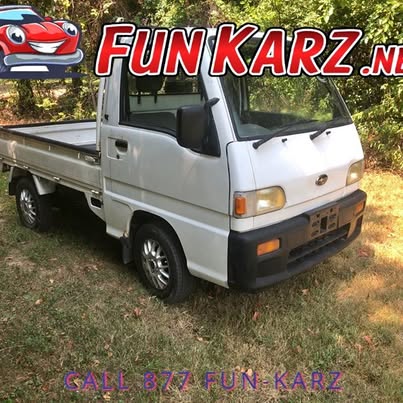
The models
Six generations of Sambar were designed and built by Subaru between 1961 and 2012, and two more have been supplied by Daihatsu since. Trucks and working vans are Sambars; the better-trimmed passenger vans were sold from the late 1980s as the Sambar Dias and later the Dias Wagon, on the same mechanicals. Chassis codes tell you the generation and the drive layout at a glance on the fifth and sixth generations, which are the ones that matter in America: on the 1990–99 cars, KS3 is the two-wheel-drive truck, KS4 the four-wheel-drive truck, KV3 the two-wheel-drive van and KV4 the four-wheel-drive van. On the 1999–2012 cars the pattern repeats as TT1 and TT2 for the trucks and TV1 and TV2 for the vans, with TW codes for the Dias Wagon. The last digit is the tell — odd for two-wheel drive, even for four-wheel drive — and the code is stamped on the build plate, so you can verify what a car actually is rather than what an advert calls it.
Body styles divide into three. The truck is an open pickup with drop-down sides and tailgate, a bed roughly two metres long, and the engine under a hatch at the rear of the bed. The van is the same vehicle with a closed box, sliding doors on both sides, a large tailgate and either panel sides, in the working versions, or glass all round in the passenger versions. The Dias and Dias Wagon are those glass vans finished as cars: better seats, often a sunroof or twin sunroofs, and air conditioning as standard rather than an option. There are also factory oddities. The Sambar Classic of the 1990s dressed the KV van in retro styling with a rounded nose treatment. And a thriving Japanese conversion industry turned KV vans into miniature Volkswagen Type 2 lookalikes, with a VW-style front panel, round lamps and two-tone paint — the VW-style Sambars advertised in America are those conversions, not a factory model, and their value sits in the quality of the conversion, not in any rarity.
| Model | Years | Engine | Output | Built | Character |
|---|---|---|---|---|---|
| Sambar Truck / Van, 1st gen | 1961–1966 | EK31 356 cc air-cooled 2-stroke twin | about 18 PS | not reliably published | The original: 360 mechanicals under a cab-over work body |
| Sambar, 2nd gen | 1966–1973 | 356 cc 2-stroke twin, air- then water-cooled | about 20–25 PS | not reliably published | Bigger cab, same formula; the last of the pure two-strokes |
| Sambar, 3rd gen | 1973–1982 | EK21 356 cc, then EK23 544 cc four-stroke | about 28–31 PS | not reliably published | Four-stroke conversion mid-run; 550-class growth in 1976 |
| Sambar, 4th gen | 1982–1990 | EK23 544 cc 3-cyl, then EN05 547 cc 4-cyl | about 31–42 PS | not reliably published | Four-wheel drive arrives; the modern Sambar takes shape |
| Sambar KS/KV, 5th gen | 1990–1999 | EN07 658 cc 4-cyl, NA or supercharged | 42–55 PS | not reliably published | The 660-class car America imports; Dias passenger line peaks |
| Sambar TT/TV, 6th gen | 1999–2012 | EN07 658 cc 4-cyl, NA or supercharged | about 46–58 PS | not reliably published | Last Subaru-built Sambar; safer shell, same rear engine |
| Sambar, 7th gen | 2012–2022 | Daihatsu KF 658 cc 3-cyl | about 46–53 PS | Daihatsu production | A rebadged Hijet: engine moves under the seat |
| Sambar, 8th gen | 2022–present | Daihatsu KF 658 cc 3-cyl, NA or turbo | about 46–64 PS | Daihatsu production | Rebadged Hijet Cargo / Atrai; not a Subaru design |
Read the table with two cautions. First, the output figures are period Japanese ratings and they moved within generations as engines changed, so treat them as orientation, not specification — the engine code on the car in front of you settles what it has. Second, the absence of trustworthy per-generation production figures is itself a fact about this marque: Subaru published totals irregularly, so any seller quoting you an exact build count for a Sambar variant is quoting something you should ask them to source. Survival, not production rarity, is what makes any individual variant scarce today.
Within the fifth generation — the heart of the American market — the range splits by job. At the bottom sit the working trucks in plain trim: vinyl seats, minimal equipment, often no air conditioning, bought by farmers and usually showing it. Better-trimmed trucks add air conditioning, power steering on later cars and plusher cabs. The vans mirror the trucks in working form, and then the Dias line branches off into passenger territory: the Dias II and Dias Classic of the KV era, with supercharged engines on the top versions, automatic gearboxes on many, and sunroofs. The sixth generation simplified the picture: TT trucks in working trims, TV vans, and the Dias Wagon as the passenger flagship, which by the 2000s could be had with a supercharged engine, an automatic gearbox and equipment lists that included dual sunroofs and factory alloy wheels. Compare within these families first — a Dias and a farm truck were different products when new and lived different lives.
Trim traps are mostly about credit claimed for things the car never had. Air conditioning was an option on working models for most of the run and is frequently described as fitted when the compressor is present but the system is dead — a distinction the inspection section deals with. Power steering arrived late and unevenly; a heavy wheel at parking speed on an early KS truck is normal, not a fault. Four-wheel drive on the trucks is a part-time system for loose surfaces, while Dias wagons could have a full-time system — the difference matters for how you test them and what you may do on dry pavement.
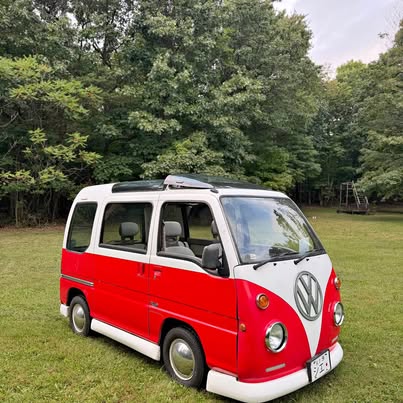
Engines and gearboxes
The two-stroke and early four-stroke engines
The first Sambars used the Subaru 360's EK-series twin: 356 cc, air-cooled, two-stroke, fed by a single carburettor, with the oil carried in the fuel or, on later versions, metered by a separate injection system. Two-stroke Sambars are unmistakable — blue haze, ring-ding exhaust note, and a power delivery that asks to be revved — and in America they are museum pieces rather than transport, with parts a specialist hobby in Japan. The third generation of 1973 switched the Sambar to four-stroke power, initially still at 356 cc with the EK21 two-cylinder, and the 1976 regulation change brought the EK23, a 544 cc three-cylinder that powered the Sambar into the late 1980s. Late fourth-generation cars moved to the EN05, a 547 cc four-cylinder that previewed the engine family the 660 era would use. These 550 cars do reach America occasionally, and they are charming, slow and harder to feed than the 660s: engine parts overlap with the Subaru Rex and Justy world rather than the EN07 mainstream. Buy one with your eyes open, as a collector, not as the cheap way into a working truck.
The EN07: the 660 engine that matters
From 1990 the Sambar is a one-engine vehicle: the EN07, a 658 cc inline four-cylinder, water-cooled, mounted flat under the rear of the bed or van floor and driving the rear wheels through a transaxle. It belongs to Subaru's EN family, developed from the EN05 of the Rex and Vivio, and it was designed for exactly this life — small, light, willing to rev, and built to be serviced through a hatch. In the Sambar it appears in two states of tune you must learn to tell apart, because sellers blur them. The naturally aspirated version, the EN07E in early cars, uses a carburettor and makes about 42 PS; fuel-injected naturally aspirated versions followed, with output creeping into the mid-40s. The supercharged version, the EN07Y, adds a small mechanically driven supercharger and makes about 55 PS in fifth-generation form and a little more in the sixth generation, with torque arriving far lower than the figures suggest. The engine code is stamped on the block and appears on the build plate; learn to read it, because a carburettor car advertised as supercharged, or a supercharged car with its blower missing, is a known shape of disappointment in this market.
In character the EN07 is the best thing about the vehicle. It is smooth for a kei engine — four cylinders where Daihatsu and Suzuki used three — and it pulls a light Sambar along with genuine enthusiasm if you use the gearbox and the revs. What it is not is torquey at low speed in naturally aspirated form: a loaded truck on a long grade is a momentum exercise, planned a gear early. On the road a healthy EN07 idles evenly, revs cleanly without flattening, and holds its temperature in the middle of the gauge once warm — that last point matters more on this vehicle than on almost any other, for reasons the problem section explains. Service rhythm is kei rhythm: oil and filter every 5,000 km or so in hard use, because the sump is small; spark plugs on a short cycle; valve clearances checked on schedule; and the timing belt treated as a hard deadline rather than a suggestion. A snapped belt on an interference-fit top end is an engine-out conversation, and the belt, tensioner and water pump are sensibly done as one job, typically costing $500 to $900 in parts and labour at an independent shop willing to work on a JDM vehicle. Ask for the belt's age in kilometres and years, in writing, and treat an unknown age as due.
Fuel and ignition hardware splits by era. Carburettor cars carry a single downdraught carburettor with an automatic choke; cold behaviour is the diagnostic — a good one starts on the choke, settles as it warms and pulls without a flat spot, while a bad one hunts, stalls at junctions when cold and smells of fuel. Injected cars use electronic management with a distributor-based ignition on earlier versions; the distributor lives in the heat at the back of the engine and its seals and cap are consumables. On both, a forest of small vacuum hoses ages in the heat of the rear compartment, and perished hoses are the commonest cause of a rough-running Sambar blamed on everything else first. Budget for a vacuum-hose refresh on any newly imported car; the hose is cheap, the labour is access, and the improvement is usually out of proportion to the cost.
The supercharged EN07
The supercharger is the Sambar's party trick and the option that most changes the vehicle. Subaru chose a supercharger rather than a turbocharger for a sound reason: a kei truck needs torque at the speed a loaded truck climbs a hill, not boost at the top of the rev range, and a small Roots-type blower driven from the crankshaft delivers pressure from idle upward with no lag. In the Sambar the blower sits on the side of the engine in the rear compartment, driven by its own belt, and on the EN07Y it works without an intercooler in most applications — outputs around 55 PS sound modest until you drive a naturally aspirated car back to back with one. It transforms hill work, motorway merges and air-conditioning performance, and supercharged Dias wagons are the most car-like Sambars ever built.
It also adds a wear item with a finite life. Blower bearings and seals age and drive belts crack. A healthy blower is nearly silent beyond a faint whine under load; a dying one rattles at idle, whines loudly enough to hear in the cab, or leaks oil at its snout. Replacement blowers come from Japan, used, at prices that make the inspection worth doing properly, and a car whose blower has been removed and blanked off — it happens, because the car will still run, badly, on its low-compression engine — is a car to walk away from unless the price reflects fitting a replacement, typically $700 to $1,400 in parts landed from Japan before labour. On the test drive, boost should arrive as a smooth thickening of the push from low revs, not a step or a shriek.
Gearboxes and four-wheel drive
Most Sambars you will meet have a five-speed manual gearbox, and it is a good one: light, accurate, and geared short enough that top gear is a working gear rather than an overdrive, which means motorway cruising sits at high revs by American standards — expect the engine to be busy at 60 mph, and do not mistake that for a fault. Four-wheel-drive trucks add the feature that sells them to farmers everywhere: an extra-low first gear, marked EL, engaged as a separate position, giving six usable forward ratios in effect and a crawler gear that will walk a loaded truck up a muddy slope at walking pace without touching the clutch. If you are buying a truck for land work, the EL gear is worth more than any trim option on the list. Automatics are a three-speed unit, found mostly on Dias wagons and better-trimmed vans; they suit the passenger cars well, blunt the naturally aspirated engine noticeably, pair happily with the supercharger, and are judged by fluid colour and shift quality in the usual way.
Four-wheel drive comes in two systems and the difference is operational, not academic. Truck four-wheel drive is part-time: a lever or button engages the front axle, there is no centre differential, and the system is for loose or slippery surfaces only. Driving one on dry pavement in four-wheel drive winds up the transmission and wears tyres and joints — and, usefully for the buyer, a car that feels bound up on a tight dry turn with four-wheel drive engaged is demonstrating a working part-time system, while the same test in two-wheel drive should feel free. Dias wagons could instead have full-time four-wheel drive with a viscous coupling, usable everywhere; those cars need matched tyres all round, because a viscous coupling works itself to death compensating for mismatched rolling radii. Front CV joints, boots and propshaft joints on any four-wheel-drive car live hard lives, and the boots are a consumable you should expect to replace: a set of boots and the labour to fit them typically costs $250 to $500, while a front joint run dry until it clicks on lock is a bigger bill and a sign of the maintenance standard you are buying into.
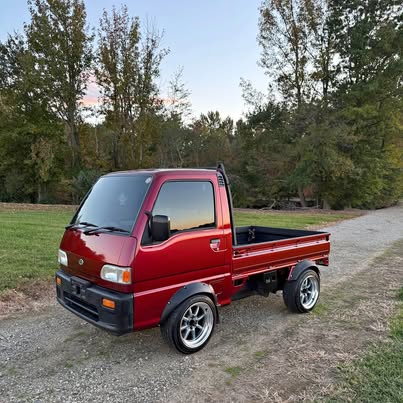
Problem areas
Rust: the map
A Sambar is a Japanese domestic vehicle that was never rustproofed to export-market standards — and the survivors you are offered have then spent twenty-five to thirty-five years somewhere, doing something. Where that somewhere was decides the car. Japan has snow and salt country of its own, and a truck that worked a northern fishing port can be as rusty as any Minnesota farm truck, while a southern, garaged Dias can be startlingly clean underneath. There is no shortcut: every Sambar is inspected from underneath, on a lift or at least on stands with a light, and the auction grade and the seller's photographs are not evidence.
The structure first. The Sambar is a monocoque, and its strength lives in the floor, the sills, the cab mounts and the longitudinal members carrying the engine and suspension subframes. Start at the cab: the floor corners where the cab meets the steps, the bottoms of the door apertures, and the area under the pedals and seats, where water sits under mats. Cab corners and the lower edges of the cab back panel rust from the inside out; bubbles in the paint low on the cab are a late symptom, not an early one. The sills carry jacking loads and collect internal mud, and the honest test is the one the inspection section formalises: lifted on its own jack points, the vehicle should not creak, shift or show fresh cracking around the point. On trucks, the bed floor rusts along its seams and around the engine hatch, the drop sides rust along their lower rails and hinge lines, and the rear panel around the lamps traps water. A bed that has carried soil, fertiliser or fish for twenty years will tell you so at the seams, and a freshly painted bed floor on an otherwise honest truck is a question, not an answer. On vans, add the sliding-door tracks and the lower tailgate aperture, both of which hold water, and the wheel arches front and rear, where mud thrown by the wheels sits undisturbed for decades.
Underneath, work front to back. The front subframe and radiator support corrode where road spray concentrates, and the long coolant pipes corrode externally and can perforate, presenting as a leak that gets misdiagnosed as a hose. The rear is the worst of it, because the engine compartment is a warm, wet, salt-catching box: the surround panels, rear valance, the subframe that carries the engine and rear suspension, and the bodywork above the exhaust all live in road spray, and surface rust there is universal while structural rust there is the car's death sentence. Distinguish the two with a screwdriver and permission: powdery surface scale on thick members is cosmetic; flaking, holed or soft metal around suspension and engine mountings is structural, and welding in the rear compartment, around fuel and heat, is specialist work that typically costs $1,000 to $2,500 a side for proper sill or member repairs before paint. A truck with a sound cab and floor and a scabby bed can be a good buy. A pretty truck with a soft rear subframe area cannot, because everything that makes it move bolts to that metal.
Finally, look for underseal and fresh black paint underneath applied for export — sometimes honest protection, sometimes a curtain — and at the fasteners: a car whose underside bolts are all rounded rust is a car every future job will fight. Check the identity points while you are under there: the chassis number stamped in the body and on the build plate must agree exactly with the Japanese export paperwork. The paperwork trail is part of the car's value, and gaps in it are priced as risk.
Cooling: the long way round
If the Sambar has an Achilles heel, this is it, and it follows directly from the layout. The engine sits at the rear; the radiator sits at the front, where the air is; and coolant travels between them through long steel pipes and rubber hoses running the length of the vehicle. That is roughly three times the plumbing of a normal car, ageing in three climates at once — hot at the engine, cold at the front, wet and salty underneath — and the system's health is the difference between a Sambar that works for a decade and one that cooks its engine in its first American summer. Overheating is the EN07's main way of dying: the head gasket goes, the head warps, and a cheap-to-run engine becomes an import-parts project.
The pipes are the headline item. The steel coolant pipes corrode from the outside in the underbody environment and from the inside if the car has run on plain water or exhausted coolant, and they perforate in pinholes that mist coolant under pressure and may show nothing at idle in a driveway. Budget on any newly imported car for a hard look at the full pipe run: replacing sections of pipe is normal Sambar ownership, fabricated in stainless or replaced with Japanese parts, typically $300 to $800 in parts and labour for a section done properly. The radiator itself is small and its core blocks with age and sediment; a radiator that looks fine can be half-blocked, and the test is thermal: on a working run the whole core should be evenly hot. The water pump is replaced with the timing belt as a matter of policy. The thermostat sticks, the radiator cap loses its seal, and the electric fan and its thermoswitch must be proved working, because at the low road speeds a working truck spends its life, the fan is the cooling system. On the test drive, the gauge behaviour you want is boring: a rise to the middle, a stay there, in traffic, on a grade, with the air conditioning on. A gauge that creeps in traffic and recovers at speed is telling you about airflow and fan; a gauge that creeps under load at speed is telling you about the radiator, the pipes or the head gasket, in ascending order of expense. Walk away from any car whose seller explains a high gauge as a gauge fault unless he will let you prove it with an infrared thermometer on the thermostat housing.
Air locks deserve a mention, because the long pipe runs make the Sambar prone to them after any coolant work, and a car that runs hot since a belt change may simply be carrying an air lock at a high point. Bleeding one properly takes time. And a cooling system that needs constant topping up is not a personality trait: it is a leak, and it gets found before money changes hands, not after.
Engine compartment: access, oil and ancillaries
The engine lives under a hatch — in the bed floor on trucks, under the rear floor on vans. Oil and filter, plugs and the air filter are hatch jobs. The timing belt and water pump are a longer reach, and major work means dropping the engine and transaxle as a unit: choose a kei-literate shop before you need one. Oil leaks are the compartment's background noise — cam cover gaskets, crank and cam seals, the distributor seal on distributor engines and the oil filter housing all weep with age, and a dry EN07 is the exception worth paying for, because oil in that compartment coats the belts and hoses, and because a quart low in a small sump is a bigger fraction of the engine's blood supply than in any normal car. Check the oil level and its smell on the dipstick before anything else: oil that is black, thin and fuel-smelling on a carburettor car is telling you about choke habits and short trips.
The exhaust lives entirely at the rear, is short, runs hot in an enclosed space and rots from the inside on short-trip cars; manifold joints blow and are audible as a chuff under load. Catalytic converters on injected cars age out and are a Japan-sourced item. The air-conditioning system, where fitted, runs its pipes the length of the car like the cooling system, with the compressor on the engine and the condenser at the front, so it shares the cooling system's vulnerabilities and can lose gas at any of a dozen unions. A dead system can be anything from a relay to a full pipe run, and the honest way to price it is a specialist's vacuum and leak test, not a regas — a regas that works for a fortnight is the classic Sambar disappointment, and a proper overhaul with pipes and seals typically runs $600 to $1,500. On supercharged cars add the blower checks from the engine section. On all cars, check the engine mounts: the rubber ages in a hot box, and a rocking engine wears the exhaust joint and the coolant hoses.
Suspension, steering, brakes and tyres
The Sambar rides on fully independent suspension — struts at the front and a trailing-arm arrangement at the rear — which is why it rides and handles better than its leaf-sprung rivals, and why it has more bushes and joints to wear than they do. Front struts leak and knock; top mounts perish; worn rear trailing-arm bushes let the rear wheels steer the car gently on a trailing throttle, a queasy wandering that is a bush problem, not a chassis problem, until proven otherwise. Ball joints and track-rod ends are small and cheap in Japan. Wheel bearings hum in the usual way, diagnosed by the load change in a gentle weave. A car that drives straight and rides level over a rough lane has usually been maintained by someone, which is information about the rest of the car too.
Steering is light and direct on manual cars; heaviness or notchiness points to strut top bearings, track-rod ends or accident history. Power steering, where fitted, leaks at the rack and pump in the conventional ways. Brakes are front discs and rear drums sized for a light vehicle, and their limits are the vehicle's limits: a loaded Sambar descending a long grade will fade brakes treated like a modern car's, and engine braking, early and often, is part of owning one. Judder, pulling and a long pedal are the usual age faults; the handbrake must hold the car on a slope in both directions, tested, not assumed. Brake pipes run the length of the car alongside the coolant pipes and corrode in the same environment, so pipe condition belongs on the lift inspection, with replacement of a corroded run typically $200 to $450 in parts and labour.
Tyres are a safety section disguised as a detail. Sambars run 12-inch wheels with narrow light-truck tyres, commonly 145R12 in the correct load rating. The rating is the point: the vehicle is light but it is a load carrier, and passenger-car tyres of the same nominal size are not a substitute — softer in the sidewall, lower in load capacity, wrong for a laden truck. In America the correct LT tyres are a specialist order, and many imports arrive on aged Japanese tyres whose date codes should be read before the car is driven anywhere at speed: a ten-year-old tyre on a rear-engined vehicle, whose rear tyres carry the engine and most of the load, is the cheapest disaster to prevent in this guide. Budget a full set, including a serviceable spare, as part of the purchase, typically $350 to $600 fitted.
Electrics, body hardware and the working interior
Kei electrics are simple and mostly durable, and the faults are of age and environment rather than design: corroded earth points, especially in the rear compartment where the engine's earth straps live in heat and spray; alternators that stop charging after thirty years; starter motors that click in cold weather; fuse boxes whose terminals green quietly in damp cabs. The charging test is a multimeter across the battery at a fast idle, and the starting test is a cold start, which the inspection section insists on for exactly this reason. Headlamps on a Japanese-market car dip the wrong way for American roads: right-hand-drive beam patterns dazzle oncoming traffic, and the response ranges from beam deflectors to replacement lamps depending on your state's rules, but ignoring it is not a response. Wipers, washers, heater fan and demister all matter more on a working vehicle than on a toy, and the heater is a cooling-system component too — a weak heater can be the first symptom of the air locks discussed above.
Body hardware is where a working life shows. Sliding doors on vans run on rollers and tracks that wear, fill with grit and eventually drop the door on its catches; a door that needs lifting to close is telling you its rollers are done, a parts-from-Japan job that typically costs $150 to $350 in parts, plus labour. Tailgate hinges and latches on trucks bend under load abuse; bed sides that do not sit square have usually been loaded by machinery. Window regulators slow and die; door seals perish and let in the water that starts the floor rust, so seals are structural maintenance, not cosmetics. Inside, expect vinyl and hard plastics that wear honestly: driver's seat bases collapse, and a retrimmed seat is common and no cause for suspicion, while a worn-through driver's seat on a claimed low-mileage car is a mileage question in physical form. Dash tops crack in sun states. The odometer deserves scepticism: the instruments read in kilometres, and any mileage claim in miles should be converted in front of you and checked against the paperwork, the pedal rubbers and the seat. Paperwork and wear together are worth more than any number on the dash.
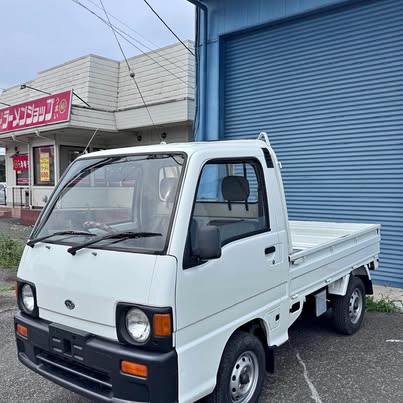
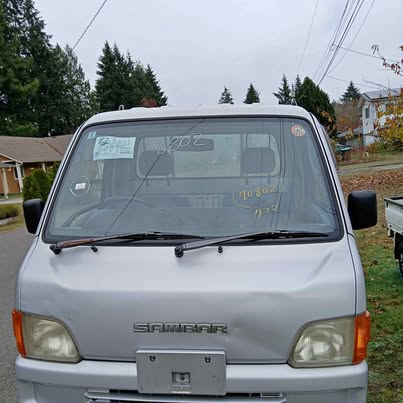
How to inspect one
Inspect a Sambar in the order below, cold, in daylight, with a torch, a magnet, a screwdriver and at least an hour. The order is deliberate: paperwork and structure first, because they cannot be fixed at any sensible price; the engine's cold behaviour next, because a warm engine hides its worst habits; the test drive last, when you know what you are listening for. Any disagreement between the export paperwork and the metal ends the inspection until it is explained.
- Paperwork and identity first. Match the chassis number on the build plate and the body stamp to the export certificate and title documents, character by character. Read the chassis code — KS3, KS4, KV3, KV4, TT, TV — and confirm the drive layout and body style match the advert, and read the engine code so you know whether the car is carburettor, injected or supercharged before anyone tells you. Note the odometer reading in kilometres and convert it yourself.
- The structure walk. Crouch at each corner and work through the rust map from the problem section: cab floor corners, door aperture bottoms, sills, bed seams and hatch surround on a truck, sliding-door tracks and tailgate aperture on a van, arches inside and out. Use the magnet on the cab corners and sills, and the screwdriver, with permission, on anything that looks like underseal over scale.
- Underneath, on a lift if at all possible. Follow the coolant and brake pipes the full length of the car, look at the front subframe and radiator support, and spend the longest time at the rear: engine subframe, mountings, surround panels and rear valance. Surface scale is acceptable; soft or holed metal around mountings is a walk-away.
- Cold start, from the driver's seat and then at the engine. The car must be genuinely cold — arrange it in advance and feel the engine if in doubt. A carburettor car should fire on the choke and settle as it warms; an injected car should start instantly and idle evenly. Listen at the rear compartment for supercharger bearing rattle, exhaust chuffing and belt squeal, and watch the first exhaust smoke: a puff that clears is age, a continuing blue haze is oil, and white vapour that does not clear is coolant until proven otherwise.
- The cooling interrogation. From cold, watch the gauge climb and settle, feel the radiator hoses pressurise, and check the fan cuts in. Look at the coolant itself — clean and coloured, or rusty and tired — and at the cap's seal. Any history of topping up, any staining down a pipe joint, any hose that feels crunchy is a finding. If the gauge behaves oddly, verify with an infrared thermometer before accepting any explanation.
- Oil, leaks and the hatch. Open the engine hatch and read the compartment: oil level and smell on the dipstick, weeps at the cam cover and seals, the vacuum hoses, the air filter, the belts including the supercharger belt. A compartment steam-cleaned for sale tells you nothing — look at the ground it stands on instead.
- Gearbox and drive, stationary. Work through every gear including reverse and, on a 4WD truck, the extra-low position and the four-wheel-drive engagement. The change should be light and precise; a baulky second gear when cold that frees when warm is wear to price, not yet a failure. On an automatic, check the fluid's colour and smell.
- The test drive, unhurried. Drive at least twenty minutes, far enough to be fully warm, and include a hill, a rough lane and a stretch at 50 to 60 mph. The engine should pull cleanly through the revs, the temperature should sit still, and the steering should self-centre and track straight. Listen for wheel-bearing hum in a gentle weave, rear-end wander on a trailing throttle, and knocks over bumps.
- Four-wheel drive, tested correctly. On a loose surface, engage four-wheel drive and confirm engagement and the extra-low gear on trucks; on a full-time Dias, confirm smooth take-up and check all four tyres match in size and wear. Beyond the brief binding check described in the gearbox section, never test a part-time system with tight turns on dry pavement.
- Brakes, handbrake and tyres. From moderate speed the car should stop straight without judder; the handbrake must hold on a slope both ways. Read all four tyre date codes and confirm the size and load rating are the correct light-truck specification. Old or passenger-rated tyres go on the budget list at full replacement cost.
- Electrics and equipment, everything switched on. Lights, wipers, washers, heater fan at all speeds, demister, horn, instruments, and the air conditioning if fitted — which must blow cold within a minute and keep doing so at idle, not merely have a compressor that engages. Check the charging voltage at a fast idle with the lights on. Test both sliding doors on a van through their full travel, and every window.
- The second cold look. Back at base, leave the car ten minutes and look underneath again for fresh drips, and re-check the oil. Then total the findings honestly: structure, cooling and identity are pass-or-fail; belts, hoses, tyres, boots and bushes are budget lines; trim is taste. A car that passes the first group is a buy. A car that fails the first group is a parts source wearing a price tag.
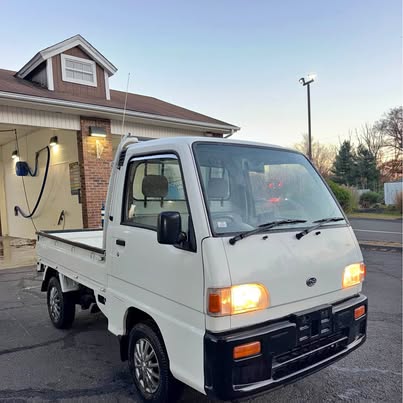
Values
The Sambar market in America is young, thin and import-driven — so read the computed market block beneath this guide, with its current listings and recorded sales, as a snapshot of a moving supply line rather than as a price guide carved in stone. Supply is set by the 25-year rule and by what Japanese auctions and exporters feed into it, which means the mix changes constantly: a season rich in clean Dias wagons makes wagons look common, and a season of farm trucks does the opposite, without anything fundamental having changed. In a market this size, a handful of cars is a trend, so weight the broad middle of the figures and distrust the extremes.
Within that caution, the structure of value is consistent. Condition dominates everything, and on a Sambar condition means structure and cooling health first, because those are the expensive, hard-to-verify items — a genuinely rust-free underbody with a documented cooling system is worth more than any trim level and any amount of cab shine. After condition, the premiums arrange themselves predictably. Four-wheel drive earns a real premium because the American use case — land, snow, campsites, boat ramps — rewards it and because the extra-low gear on trucks is unique in the class. The supercharger earns a premium because it changes the driving experience rather than the specification sheet, and supercharged Dias wagons sit at the top of the tree for the same reason: they are the most usable, most car-like Sambars, and the supply of good ones is finite. Air conditioning that demonstrably works adds value in proportion to your state's summers. The retro and VW-style conversions divide the market — they sell quickly to the buyer who wants one and slowly to everyone else, which makes them poor investments and perfectly good toys.
The asking-versus-achieved gap on Sambars is wider than the small numbers suggest, for a structural reason: sellers anchor on the cost of importing a car — purchase in Japan, shipping, duties, titling — and buyers anchor on the car's size, and the two anchors rarely meet without negotiation. Import cost is a floor for the seller, not a value for the buyer. Equally, the project-versus-driver gap is sharp relative to the car's price: a non-running or structurally rusty Sambar is worth very little, because the parts and labour to revive it approach the price of a sound car while the result is worth less than one, whereas a sorted driver with fresh tyres, a known timing belt and a proved cooling system is worth its premium every time — the buyer is purchasing the absence of the exact risks the problem section catalogues. Private sellers of honestly described working trucks tend to be the market's value; freshly imported, freshly detailed cars at ambitious prices deserve the full inspection and no sentiment. Buy the car the inspection describes, not the story the paperwork tells.
Parts and ownership
Owning a Sambar in America is an exercise in planned logistics, and the owners who enjoy it accept that on day one. Subaru's American dealer network never sold the car and cannot supply its parts; your parts pipeline runs to Japan, at the speed of international shipping. The good news is that the pipeline is well worn: Japanese parts catalogues cover the KS, KV, TT and TV cars in detail, the big Japanese parts exporters will sell you anything from a timing belt kit to a sliding-door roller against the chassis number, and Japanese auction channels carry a constant flow of used parts from dismantled cars. The disciplines are simple: order by chassis and engine code, never by model name alone; order ahead, keeping filters, belts, hoses, plugs and brake parts stocked so a routine job never waits three weeks on a gasket; and consolidate orders, because freight from Japan punishes single small parts.
Wear parts divide into the easy and the planned. Easy: oil and air filters, spark plugs, brake pads and shoes cross-reference or arrive quickly, and a kei-literate independent shop will do the work happily once it understands the car — find that shop before you need it, ideally one that already runs other imported kei vehicles. Planned: timing belt kits with water pump, coolant pipe sections, clutch kits, CV boots and joints, suspension bushes and struts, sliding-door hardware, and air-conditioning pipes and seals. Body panels and glass are the hardest category — a windscreen or a bed side is a freight decision, not a shopping trip — which is another reason the rust and accident checks at purchase matter so much. Typical planned costs at an independent shop: a timing belt, tensioner and water pump job in the region of $500 to $900 fitted; a clutch replacement $600 to $1,000 in parts and labour; a set of four correct light-truck tyres $350 to $600 fitted. None of these numbers is frightening alone; all of them are if discovered in the same month, which is what the purchase inspection is for.
The ownership rhythm itself is undemanding and genuinely cheap. Fuel consumption is a fraction of a full-size truck's, oil changes are small and frequent, and the mechanical simplicity that makes the car inspectable makes it maintainable — owners with ordinary skills do much of the routine work through the engine hatch, and the community knowledge base is deep: Japanese service literature has been translated and shared by the kei-truck community, and the American kei scene has solved most problems publicly at least once. Two ownership realities deserve plain statement. First, legality varies: the federal 25-year exemption covers importation, but state rules on titling, road use and kei vehicles differ and have changed in both directions in recent years, so verify your own state's current position before purchase, not after. Second, the car is right-hand drive, low and slow by highway standards; drive it as the small vintage vehicle it is, and it will repay you by doing the jobs it was built for better than anything else its size.
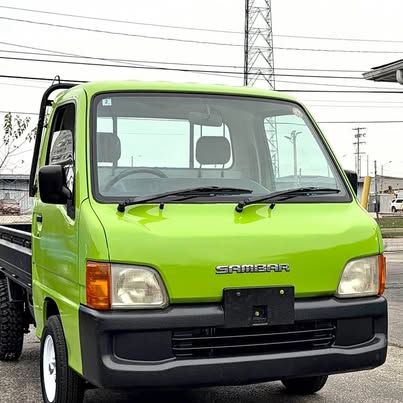
Which one to buy
The right Sambar is the one matched to the job, bought on structure and cooling health. Within any variant, the individual car's condition outranks the variant itself every time.
- The all-rounder: a fifth-generation KS4 or KV4 four-wheel-drive with the five-speed manual and the extra-low gear — the most capable, most flexible Sambar, equally happy as a farm truck, a snow vehicle or a campsite hauler, and the easiest variant to resell.
- The value buy: a two-wheel-drive KS3 truck in honest working condition — mechanically identical where it matters, cheaper because the market chases four-wheel drive, and entirely sufficient for yard, garden, estate and light commercial work on made surfaces.
- The driver's pick: a supercharged Dias or Dias Wagon, manual if you find one, automatic if you do not — the only Sambars that feel like cars rather than equipment, with the torque to use their refinement.
- The camper base: a KV or TV glass van, four-wheel drive if your campsites are honest ones — flat floor, sliding doors on both sides, and an interior volume out of all proportion to the footprint; budget the air-conditioning overhaul if summers are involved.
- The character choice: a VW-style or Classic conversion, bought with your eyes open — an ordinary van in a wonderful costume, worth its price when the underlying van passes the full inspection and the conversion is well executed, and never worth a rarity premium.
- The collector's corner: an early two-stroke or 550-class car — a different hobby of specialist parts and gentle use, bought for love of the object's history rather than for work.
The overriding rule: buy the structure and the cooling system, and let everything else be negotiable — a Sambar with a sound shell, a proved cooling system and paperwork that matches its metal is the right car in any variant, and a Sambar without them is the wrong car in every variant, at any price.
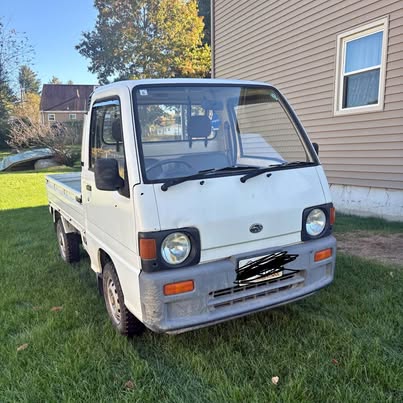
Listed now
On Classic Listings today: 11 cars are listed here; 4 for sale and 7 marked sold; average asking price $10,175; asking range $5,999 to $15,000; sold cars average $7,515.
See the 11 Sambar cars currently listed.
The market — recorded sales
Recorded-sale figures: 7 recorded sales · median $6,696 · range $5,000 to $15,111 (Oct 2024 – Oct 2026)
Based on 7 recorded sales — too few for a benchmark value.
| Date | Car | Sale price | Source |
|---|---|---|---|
| Oct 5, 2026 | 1995 Sambar | $5,000 | Cars & Bids |
| Jul 24, 2026 | 1995 Sambar | $15,111 | Cars & Bids |
| Jun 15, 2026 | 1992 Sambar | $7,500 | Cars & Bids |
| May 19, 2026 | 1990 Sambar | $7,500 | Cars & Bids |
| Mar 30, 2026 | 1996 Sambar | $6,696 | Cars & Bids |
| Jan 20, 2026 | 1991 Sambar | $5,700 | Cars & Bids |
| Dec 9, 2025 | 1996 Sambar | $5,100 | Cars & Bids |
Dates are the sale date where the source states one; otherwise the date the sale was recorded here.
For sale now
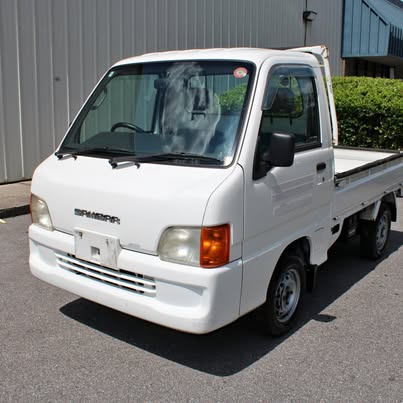 $5,999
Expand
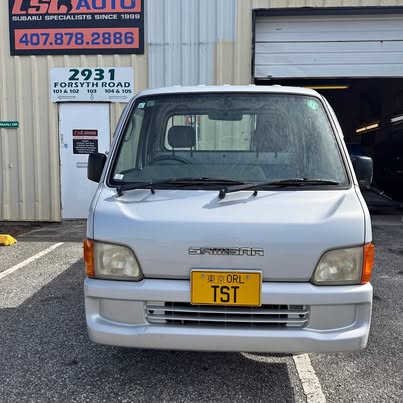 $10,500
Expand
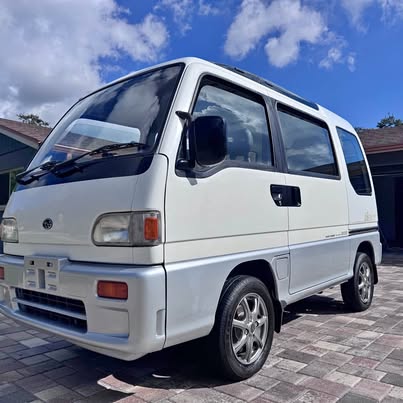 $15,000
Expand
$9,200