
Toyota 4Runner buyer's guide
Toyota 4Runner (1984–2001) — 4Runner, 4 Runner: what's listed, and what they sell for.
Years: 1984–2001 · Models: 4Runner, 4 Runner
Overview and history
The Toyota 4Runner is the truck-based sport utility that outlasted the craze it helped start. It is a body-on-frame Toyota truck under a wagon body, with a proper low-range transfer case, a live rear axle on every generation covered here, and mechanicals shared with the pickups Toyota sold all over the world in places where a breakdown is not an inconvenience but a problem. That is the whole appeal, and it is also the whole inspection: a 4Runner rarely dies from its engine or gearbox. It dies, when it dies, from a rusted frame, from deferred cooling-system work, or from one of two or three well-documented faults that each generation carries and that a buyer can test for in an afternoon.
Toyota introduced the 4Runner for the 1984 model year, developed with Winnebago Industries in the United States. The starting point was the short-wheelbase Hilux pickup, sold in America simply as the Toyota Truck: pickup cab and chassis, a removable fibreglass top over the cargo bed, a rear bench seat, the bed trimmed as a passenger compartment. The idea was not new — the Blazer and Bronco had been doing it for years — but the execution was: a Blazer-sized idea built to Toyota tolerances, with Toyota fuel economy, at a Toyota price. It sold immediately, and kept selling through four generations in the period this guide covers, 1984 to 2005: the removable-top original, the second-generation wagon that added four doors, the third-generation model that became a genuinely refined family vehicle without giving up low range, and the larger fourth-generation truck that offered a V8.
Every generation kept the same recipe, which is why the market treats them as one family. Ladder frame. Longitudinal engine. A two-speed transfer case. Coil springs at the rear from the second generation onward, independent front suspension from midway through the first, and a tailgate — never a side-hinged door with a spare wheel hanging off it — on the wagon generations. Interiors moved upmarket from vinyl and rubber mats to leather and climate control, but a mechanic who knows one generation can find his way around any of them.
The generations map cleanly onto today's market. First-generation trucks (1984 to 1989) are the collector and trail end. Second-generation trucks (1990 to 1995) are the honest cheap end, held back by one engine's reputation. Third-generation trucks (1996 to 2002) are the sweet spot and the core of the listings market: modern enough to drive daily, simple enough to fix on a driveway, available with a factory rear locking differential. Fourth-generation trucks (2003 onward, covered here to 2005) are the biggest, quietest and fastest, the only ones with a V8, and the closest in spirit to the Land Cruiser.
One warning belongs at the front: Toyota frames of this era rust from the inside out, and the same story that produced frame-replacement campaigns on the Tacoma applies in kind to the 4Runner. A truck can present with shiny paint and a sweet-running engine over a frame that will not pass a hammer test at the rear spring hangers. Nothing else in this guide matters until the frame has been judged, and the inspection section is built in that order on purpose.
The models
There is one body idea across all four generations — a two-box wagon on a truck frame — but the details split the range more sharply than the badges suggest. Almost every classic 4Runner you will meet is an SR5 or a Limited. SR5 began as the sport trim package on Toyota trucks and became the mainstream grade: cloth trim, the better instruments, air conditioning on most trucks. Limited, the flagship, brought leather, automatic climate control, colour-keyed cladding on the third generation, and on many trucks the more sophisticated four-wheel-drive system. Base and DLX trucks sit below the SR5 — plainer, often two-wheel drive, now rare because they were bought to work. Sport Edition trucks, a fourth-generation grade, add a hood scoop that feeds nothing, larger brakes and X-REAS linked dampers on many examples.
Two-wheel-drive 4Runners exist in every generation and are common in Sun Belt listings. They share the body and frame but have no transfer case, front differential or low range. Judge one as a tall rear-drive wagon and price it well below an equivalent four-wheel-drive truck: four-wheel drive is most of what the market is paying for.
| Model | Years | Engine | Output | Built | Character |
|---|---|---|---|---|---|
| 4Runner (first generation, two-door) | 1984–1989 | 2.4 four (22R / 22R-E), 2.4 turbo (22R-TE), 3.0 V6 (3VZ-E) from 1988 | 97–150 hp | Not published separately from Hilux production | The original: removable fibreglass top, pickup cab, solid front axle on 1984–85, independent front suspension from 1986 |
| 4Runner (second generation, two- and four-door) | 1990–1995 | 2.4 four (22R-E), 3.0 V6 (3VZ-E) | 105–150 hp | Not published separately | The wagon conversion completed: four doors, coil-sprung rear axle, the 3.0 V6 and its head-gasket story in most trucks |
| 4Runner SR5 (third generation) | 1996–2002 | 2.7 four (3RZ-FE), 3.4 V6 (5VZ-FE) | 150–183 hp | Not published separately | The sweet spot: refined, properly quick with the V6, optional factory rear locker, Multi-Mode four-wheel drive on many trucks |
| 4Runner Limited (third generation) | 1996–2002 | 3.4 V6 (5VZ-FE) | 183 hp | Not published separately | The flagship third-generation truck: leather, cladding, automatic climate control, usually Multi-Mode |
| 4Runner SR5 and Sport Edition (fourth generation) | 2003–2005 | 4.0 V6 (1GR-FE), 4.7 V8 (2UZ-FE) | 235–260 hp | Not published separately | Bigger, faster, quieter; five-speed automatic only; Sport adds the scoop and, on many, X-REAS dampers |
| 4Runner Limited (fourth generation) | 2003–2005 | 4.0 V6 (1GR-FE), 4.7 V8 (2UZ-FE) | 235–260 hp | Not published separately | The near-Land Cruiser: full-time four-wheel drive on V8 trucks, Torsen centre differential, the heaviest and best-equipped classic 4Runner |
(Outputs are period US-market figures. The fourth-generation V8 was rated at 235 hp in 2003–04 and 260 hp from 2005, when variable valve timing arrived; the 4.0 V6 was rated at 245 hp at launch. Toyota has not published clean per-generation production totals, so this guide does not invent any.)
The first generation (1984–1989). Two doors only, and that removable fibreglass rear top, under which the rear seat lives. Remove the top — a two-person job involving a row of bolts and a weather seal always older than the seller says — and you have an open truck. The 1984 and 1985 trucks carry a solid front axle on leaf springs, the specification trail drivers still hunt for: a solid-axle first-generation truck is the cheapest route into a genuinely old-school Toyota crawler. From 1986 the front suspension went independent, the turbocharged 22R-TE arrived briefly, and in 1988 the 3.0 V6 joined the range. Interiors are pickup-grade: durable, washable, short on sound deadening. Rust, cracked dashboards and tired top seals are the norm.
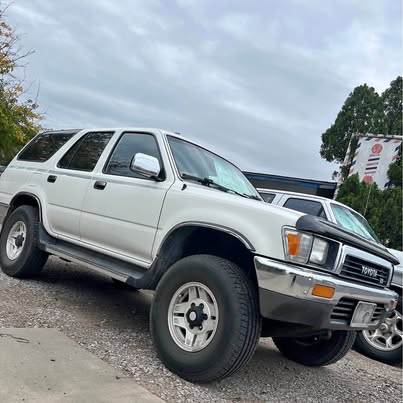
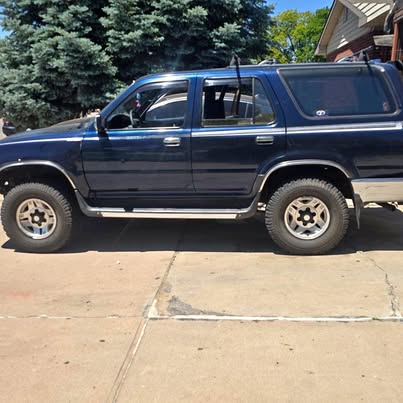
The second generation (1990–1995). The four-door arrives and the 4Runner becomes a family wagon in earnest, though a two-door sold in small numbers early in the run. The body is now all steel, the rear suspension is by coil springs and links instead of the pickup's leaves, and the cabin is a generation quieter. Most trucks carry the 3.0 V6, and that single fact organises the whole second-generation market, for reasons the engines and problem sections cover in detail. The 22R-E four survived as the economy choice, and a four-cylinder second-generation truck is slow in a way a buyer should experience before committing rather than after. The tailgate carries the powered rear window, a 4Runner signature from the first generation onward.
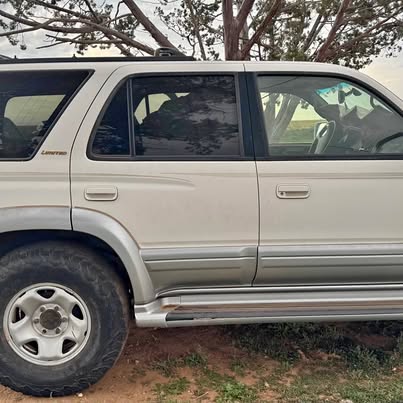
The third generation (1996–2002). The truck most buyers picture. Longer, wider and far more refined, with a proper safety structure, dual airbags, and two excellent engines: the 2.7 four and, in the great majority of trucks, the 3.4 V6. Trim runs from base through SR5 to Limited, whose cladding and leather define the top of the market. Two four-wheel-drive systems appear — part-time, and Multi-Mode with an open centre differential that can run on dry pavement and lock when needed — and a factory electric rear locking differential was a real, orderable option: the single most desirable box a third-generation buyer can find ticked. A TRD supercharger for the 3.4 was sold through Toyota dealers; supercharged trucks are quick, and need the fuel-system checks described below.
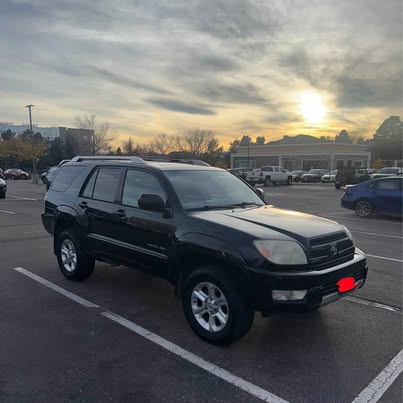
The fourth generation (2003–2005 in this guide). A bigger truck on a frame shared with the Land Cruiser Prado family overseas, with the 4.0 V6 standard, the 4.7 V8 as the option, a five-speed automatic as the only gearbox, and a step up in refinement that makes the third generation feel like the truck it is. V8 trucks are full-time four-wheel drive with a lockable Torsen centre differential; V6 trucks use part-time or Multi-Mode-style systems. These are the newest, heaviest and most complex classic 4Runners, and the ones where options — X-REAS dampers, rear air suspension on some Limited trucks — add real inspection work.
Engines and gearboxes
The four-cylinder engines: 22R, 22R-E, 22R-TE and 3RZ-FE
The 22R family is the engine the 4Runner was born with, and one of the most durable fours Toyota ever built — with one designed-in weakness every buyer should know by name. The 22R is a 2.4-litre, single-overhead-cam, chain-driven four. Carburetted, it makes about 97 hp; the fuel-injected 22R-E, which took over through the mid-1980s and carried the four-cylinder 4Runner to 1995, makes about 105 hp and is the better engine in every way that matters: it starts in winter, stays in tune, and returns fuel economy in the high teens. The 22R-TE turbo, sold in 1986 and 1987, makes about 135 hp and is now the rarest engine in the range — a period turbo installation with period manners, lag, heat and a hunger for oil changes, collectible because so few were sold and fewer survived unmodified.
The weakness is the timing chain. The 22R drives its camshaft with a single-row chain running against plastic guide rails. The guides wear, and the driver's-side guide commonly breaks, from around 120,000 miles upward. Once it is gone the slack chain saws into the aluminium timing cover beside the water pump passage, and if it saws through, coolant and oil mix inside the engine — the classic 22R failure. The early warning is audible and free to check: a rattle from the front of the engine on a cold start, worst in the first seconds and easing as oil pressure builds. That rattle is a chain and guide set priced into the offer — roughly $900 to $1,600 at an independent shop — not necessarily a walk-away. An engine that has already mixed its fluids is a different conversation: milky oil, a falling coolant level with no external leak, and a repair that can end with the head gasket and bearings. Check coolant and oil on any 22R truck as if the chain were already guilty; on this engine, that is simply experience talking.
Beyond the chain, the fours ask for ordinary care and give extraordinary life. Valve clearances drift — a top-end tick is usually clearance, not catastrophe — and the 22R-E has no systemic head-gasket fault. Oil leaks gather at the front crank seal, cam cover and distributor O-ring, untidy rather than serious. Judge performance honestly: a four-cylinder 4Runner on oversize tyres with an automatic is a slow vehicle by any modern standard, and no tune-up changes that arithmetic.
The 3RZ-FE, the 2.7-litre four in base third-generation trucks from 1996, is a more modern engine: twin cams, sixteen valves, about 150 hp, and a balance-shaft smoothness the 22R never had. It is torquey, understressed and long-lived, with a timing chain whose service record is far better than the old engine's, and in a light truck it performs respectably. Its faults are modest: valve clearances needing periodic adjustment, occasional exhaust manifold cracking, ageing sensors and hoses. The market discounts these trucks for the badge, not for any mechanical failing.
The V6 engines: 3VZ-E, 5VZ-FE and 1GR-FE
Three V6s span the classic range, and they could hardly differ more in reputation. The first is the engine to interrogate. The second is the engine to seek out. The third is the engine that made the 4Runner fast.
The 3.0-litre 3VZ-E (1988–1995) is a single-overhead-cam-per-bank V6 making 150 hp, fitted to late first-generation trucks and to the great majority of second-generation trucks. In isolation it is a smooth, torquey, ordinary engine. Its problem is its head gaskets, severe enough that Toyota ran a special service campaign on these engines for years, replacing gaskets and, where failure had damaged them, engines. The mechanism tells you what to test: the original gasket design, an exhaust crossover that bakes the rear of the right-hand bank, and hard thermal cycling combine to breach the gasket, most characteristically at the rearmost cylinders. Failures run both ways — combustion gas into the coolant, pressurising the system and overheating the engine; and coolant into a cylinder or externally down the back of the block, hiding for months as a slow coolant loss no listing photograph will ever show you.
The tests are the standard head-gasket tests, done properly: bubbles at idle from cold, a block-test fluid change if you have the kit, coolant in the oil and oil in the coolant, a sweet exhaust smell and white vapour that does not clear as the engine warms. A system that pressurises hard within minutes of a cold start is condemning itself. Ask directly whether the gaskets have been done, when, and by whom, and treat campaign-era or dealer paperwork as genuinely valuable. A properly repaired 3VZ-E can give long service — the fix runs roughly $1,800 to $3,000 at a shop for both banks — but an unrepaired truck with symptoms is priced as a truck needing that job on day one, and a seller who describes overheating on a 3.0 as a thermostat issue is asking you to fund his diagnosis. The 3VZ-E also uses a timing belt on a roughly 60,000 to 90,000-mile interval: a belt of unknown age joins the first-service list. Power is adequate rather than generous, and fuel consumption is heavy for the performance — the worst of both worlds, which the 3.4 corrected.
The 3.4-litre 5VZ-FE (1996–2002) is the engine that made the third-generation 4Runner's reputation, and it deserves it. A twin-cam, 24-valve 3.4 making 183 hp with strong, low-down torque, it is smooth, durable and tolerant of hard use. It uses a timing belt — plan on 90,000 miles as the working interval — and the belt job is its one scheduled expense of consequence, roughly $700 to $1,200 with the water pump and tensioners done at the same time, which they should be: the pump lives behind the belt, and a pump the same age as a new belt is a false economy. Head gaskets are not a systemic issue. The faults that appear are the honest faults of age: weeping cam and crank seals, valve covers leaking onto the exhaust, tired leads and coil packs misfiring under load, a dirty mass airflow sensor causing flat spots. A 5VZ-FE that starts cleanly, idles evenly and pulls to the red line without a stumble is an engine with years left in it.
The TRD supercharger, a dealer-sold Eaton-based blower kit for this engine, was fitted to a minority of trucks. A supercharged truck needs two extra checks: fuelling — early installations on standard fuelling can run lean under boost, and better-documented trucks carry the later fuel upgrades — and the automatic gearbox behind it, which works harder and runs hotter, connecting directly to the radiator failure covered in the problem section. A supercharged truck with full documentation is a prize; with none, it is a standard truck plus an unknown.
The 4.0-litre 1GR-FE (2003 onward) is a thoroughly modern engine: all-alloy, twin-cam, with intake variable valve timing in these early versions, about 245 hp at launch, and a timing chain in place of the 3.4's belt. It is strong, refined and notably reliable. Its early-production footnote is a head-gasket weakness on some 2003 to 2005 engines, showing as an external coolant weep at the rear of the block; far less common than the 3.0's troubles, it should be checked for rather than assumed, with a torch at the back of the engine. Exhaust manifolds can crack and tick when cold. Beyond that, the 1GR asks for oil, plugs and clean coolant, and repays it with performance the earlier trucks cannot approach.
The V8: 2UZ-FE
The 4.7-litre 2UZ-FE, offered from 2003, is the iron-block V8 Toyota built for the Land Cruiser and Tundra: twin cams, 32 valves, 235 hp in 2003–04 form and 260 hp from 2005 with variable valve timing. It is not sporty: an understressed, immensely durable truck engine whose torque arrives early and stays, delivering effortless performance and the best towing manners in the classic range. It uses a timing belt on an interval in the region of 90,000 miles, and the belt service with water pump — roughly $900 to $1,500 done completely — should be documented or budgeted. Starter motors live under the intake manifold, turning a cheap part into a labour bill when one fails; a laboured crank on a V8 truck deserves a hard look. Exhaust manifolds crack and tick. A maintained 2UZ is among the longest-lived engines in this guide's scope.
Gearboxes and four-wheel drive
The manual gearboxes are Toyota truck five-speeds — the W56 family behind the early fours, the stronger R150F behind the V6s — and they are as durable as the engines. Judge one on synchromesh, second gear first, and on a clutch whose bite point and judder tell you its remaining life; a clutch fitted runs roughly $900 to $1,500. Manuals are a small minority of classic 4Runners — in the current listings pool the overwhelming majority are automatics — and a good manual V6 third-generation truck is a genuinely sought-after specification.
The A340 family, a four-speed automatic used across the first three generations in A340F form, is one of the strongest automatics of its era, with no inherent weakness. What kills A340s is heat and neglect: fluid never changed, towing without regard to temperature, and above all the radiator failure described in the problem section, which fills the gearbox with coolant emulsion and can destroy it in miles. Changes should be clean, engagement prompt, and the fluid pink-to-red rather than brown and burnt. A fluid exchange and filter service, roughly $200 to $400, is the first job on any automatic truck without documented fluid history. The fourth generation's A750F five-speed is a more modern, electronically controlled box, sealed-for-life in Toyota's period language — translate that as fluid changes at sensible intervals if you intend the box to outlive the marketing. A rebuild on either automatic is a multi-thousand-dollar event, so the test drive's gearbox minutes are worth more than its engine minutes.
Four-wheel drive divides into three systems, and knowing which one a truck has is basic literacy. The part-time system, standard on most early and SR5 trucks, drives the rear wheels on the road; four-wheel drive is selected by lever on early trucks or switch on later ones, and with no centre differential it is for loose surfaces only — driving a part-time truck locked on dry pavement winds up the transmission in juddering and steering fight, and a seller who demonstrates it on tarmac is demonstrating his own misunderstanding. The ADD front-axle disconnect engages the front differential by vacuum and electric actuators that stick on trucks that never leave the road: a truck that will not engage is usually an actuator or vacuum fault, fixable for hundreds rather than thousands, but it must be tested, because a four-wheel-drive truck that cannot select it is a two-wheel-drive truck at a four-wheel-drive price.
The Multi-Mode system, on many third-generation and some fourth-generation V6 trucks, adds an open centre differential: four-wheel drive on any surface, wet or dry, with a centre-differential lock and low range for serious work — the best all-round system fitted to a classic 4Runner. The full-time system on fourth-generation V8 trucks uses a lockable Torsen centre differential with low range, permanently engaged; there is no two-wheel-drive mode, and fuel consumption reflects it. On all systems, low range must engage cleanly and the lock light must settle rather than blink forever; a dash full of blinking lights is an actuator, sensor or wiring story that needs a price attached before you buy, not after.
Problem areas
A 4Runner's problems divide by consequence, not by frequency. At the top sits the frame, which decides whether the truck has a future at all. Below it sit two generation-specific faults — the 3.0 V6's head gaskets and the third generation's radiator and transmission cooler — either of which can turn a cheap truck expensive in a single journey. Below those sits the long, honest list of wear that any twenty- to forty-year-old truck accumulates: suspension joints, axle seals, sagging springs, tired brakes and perished rubber. Work through this section in that order when you view a truck, and you will spend your attention in proportion to the bills.
Frame rust: the map
Toyota's truck frames of this era are fully boxed, strong in section, and prone to rusting from the inside out. The mechanism defeats the casual look-under most buyers perform. The frame's internal surfaces were less thoroughly protected than the external ones, drain holes are few and easily blocked by road dirt, and moisture and road salt that enter the rails stay there. Corrosion therefore starts inside the box section, thins the wall from within, and can be well advanced while the outside of the rail still wears its original black paint with only light surface bloom. By the time rust blisters through the outside or flakes off in scales under a thumb, the section has lost real strength. This is the same failure pattern that led Toyota to frame-replacement and buyback programmes on Tacoma pickups of overlapping years. The 4Runner was not the centre of those programmes, which means a rusty 4Runner frame is the owner's problem and the buyer's test to perform.
Judge a frame with a hammer and a torch, with the seller's permission, and judge it in the places the rot actually lives. The worst area on most trucks is the rear half: around the rear spring hangers and shackle mounts on leaf-sprung first-generation trucks, and around the coil-spring seats, trailing-arm mounts and the crossmembers that carry them on the coil-sprung generations. The rails alongside the fuel tank are another classic site, hidden by the tank itself, where trapped dirt holds moisture against the steel for decades. Work forward from there: the crossmember under the transmission, the rails at the front body mounts, the area around the steering box and front suspension mounts, and the inner faces of both rails where the front crossmember meets them. Tap along the rail, top, side and bottom. Sound steel rings; rotten steel thuds, crunches, or gives under the hammer face. Surface rust that powders is cosmetic. Flaking in layers, softness, or perforation anywhere near a suspension, steering or body mount is structural.
Scale the verdict to the finding. Honest surface rust on a solid frame is a candidate for cleaning, treating and wax-based internal protection — a weekend of filthy work or a few hundred dollars at a shop — and that genuinely arrests the problem if the steel is sound. Localised perforation away from mounts can be cut out and plated by a competent fabricator, roughly $600 to $1,500 per area, but each repair is evidence about the steel you cannot see, and a frame needing three plates needs a different conversation. Perforation at spring hangers, body mounts or crossmembers, or rails soft over long lengths: walk away, whatever the engine is like. A full frame swap is a body-off project whose labour dwarfs the value of all but the most collectible first-generation trucks. The corollary matters too: a genuinely clean frame — a lifelong dry-state truck with factory markings still legible inside the rails — is worth a substantial premium, and it is the first thing a knowledgeable seller will show you.
While underneath, read the rest with the same eye: fuel-tank straps rust, brake lines corrode along the rail — a line that weeps under pedal pressure is an immediate repair, not a negotiating chip — the spare-wheel winch seizes, and exhausts rot from the rear silencer forward. Together they tell you whether the truck lived in the salt belt and was washed, lived there and was left, or never saw salt at all.
Head gaskets, timing components and the cooling system
The 3VZ-E's head-gasket failure is covered in the engines section because it defines that engine; here it is enough to place it in the ownership picture. It is the single most expensive common fault in the classic 4Runner range, it is concentrated in one engine fitted to two generations, and it is entirely testable before purchase. If you are buying a 3.0, the gasket question is the purchase. Everything else about a second-generation truck is secondary to a documented gasket history and a cooling system that behaves on a long test drive.
Cooling systems in general are where ageing 4Runners are most often let down. Radiators silt up internally and their plastic end tanks crack with age. Thermostats stick. Viscous fan clutches lose their drive and let temperatures creep in traffic and on grades while behaving at speed — a pattern sellers describe as an air lock. Water pumps weep long before they fail, and on the belt-driven engines the pump is renewed with the timing belt as a matter of course. The discipline is simple: a temperature gauge that does anything other than rise to the middle and stay there, in traffic and under load, is a stop-and-investigate instruction, because on a 3VZ-E an overheat is how head gaskets die, and on every other engine it is how a cheap truck becomes an engine job. A full cooling refresh — radiator, pump where due, thermostat, hoses, coolant — runs roughly $600 to $1,400 depending on generation, and is money well spent on a keeper.
Timing components divide by engine, as detailed above: chain guides on the 22R family, checked by ear at cold start; belts on the 3VZ-E, 5VZ-FE and 2UZ-FE, checked by paperwork. Treat an undocumented belt as due immediately and price it in, because a previous owner's assurance is not a service record.
The radiator and transmission cooler: the pink milkshake
Third-generation automatic trucks carry one further fault that every buyer of a 1996 to 2002 automatic must know by its nickname. The automatic transmission's fluid cooler lives inside the radiator's bottom tank, separated from the engine coolant by the cooler's own walls. With age and corrosion, that internal wall can fail. Coolant then enters the transmission fluid and fluid enters the coolant, and the mixture that results — pink, frothy, and universally called the strawberry milkshake — destroys the automatic gearbox's friction material in short order. A truck can drive into this failure apparently healthy and need a transmission rebuild, in the region of $2,500 to $4,500 fitted, plus a radiator and a full system flush, because of a radiator that might have cost $200 to replace preventatively.
The checks cost nothing. Coolant should be clean red or green, never pink and oily; transmission fluid on the dipstick should be red and translucent, never pink or frothy. Treat an original radiator on a high-mileage third-generation automatic as a first-week replacement however clean the fluids look — the failure is internal and gives no external warning. Many experienced owners fit an external transmission cooler and bypass the radiator cooler entirely, removing the fault at a stroke; a truck so modified, neatly done, has had an owner who knew the model.
Suspension, steering and brakes
Front suspension on the independent trucks wears at the ball joints, and on the third generation the lower ball joints deserve a paragraph of their own. The joint's design places it under tension, and a worn joint does not merely knock — it can separate, dropping the corner of the truck onto the road. Toyota recalled these joints on later production, and any third-generation truck's history should show inspection or replacement. The test is physical: jack the front corner, support it properly, and lever under the tyre while watching the joint for movement. Any play in a third-generation lower ball joint is a replace-before-driving verdict, at roughly $300 to $600 a side fitted with quality parts, and the same check applies in kind to the earlier independent trucks. Upper ball joints, tie-rod ends and steering arms wear more conventionally and announce themselves with play at the steering wheel, wandering at speed and uneven front tyre wear. A full front-end refresh with quality components is a four-figure job at a shop, so price the wear you find.
The steering is a recirculating-ball box on the first three generations and rack-and-pinion on the fourth. Boxes wear at centre and leak; a truck that wanders with tight joints usually needs the box. Fourth-generation racks leak from their end seals. At the rear, first-generation leaf springs sag and crack leaves; later coil springs sag noticeably — a truck sitting low at the rear is showing its most common stance fault, cured with a spring set for a few hundred dollars — and shock absorbers are consumables whose failure shows as bounce and cupped tyres. X-REAS linked dampers, on fourth-generation Sport trucks, are judged as a system: dampers are replaced in pairs at prices well above ordinary shocks, and a truck riding badly can carry a bill in the region of $1,500 to $3,000 to put right. Rear air suspension on Limited trucks sags overnight when its bags perish, and a truck that kneels by morning is telling you so for free.
Brakes are conventional discs at the front and, depending on generation, drums or discs at the rear, with anti-lock systems increasingly standard through the range. Judge as on any old truck: pedal feel, straightness under a hard stop, disc condition, flexible hoses perished at their ferrules, and a parking brake that actually holds — a 4Runner is a heavy vehicle to park on a hill on the transmission alone. The rear axle brings one more signature fault: the axle seals weep gear oil into the rear brakes, most familiar on third-generation trucks, showing as oil inside the rear drum or on the backing plate and, in developed cases, contaminated shoes and a grabbing rear brake. The seal itself is cheap; the labour, and the bearing work that often accompanies it, puts the job in the region of $400 to $800 a side done completely.
Body, interior and electrics
The steel wagon bodies from the second generation onward rust in predictable rather than structural places: rear wheel arches, door bottoms and the tailgate's lower seam, the windscreen surround — where a leaking seal also wets the front footwells — and the rear quarters. First-generation trucks add the removable top's sealing flange, the converted pickup bed's sides and floor, and cab corners. None of this is cheap to make beautiful — arch and sill paint work runs into four figures once both sides are counted — but it is cosmetic in a way frame rust is not, and the honest order is frame, mechanics, body. Check the tailgate's powered rear window on every wagon: it must glide down into the gate and back without grinding, because the regulator, motor and gate wiring all age, and the window's seals keep water out of the gate — a gate rusting from its bottom seam has usually been drinking through them for years.
Interiors wear in proportion to the honesty of the truck's life. First-generation cabins are pickup-simple; cracked dashboards and split vinyl are patina at trail-truck prices and faults at collector prices. Second- and third-generation cloth lasts well; the driver's seat foam collapses first, and a hammock sitting position means the foam, not the cover, has gone. Limited leather cracks and is expensive to match. Electrics are Toyota-ordinary: switches, window motors, blower resistors and the rear-window circuit rather than systemic loom faults. Air conditioning should blow cold on the test drive; a system that needs only a recharge usually needs a leak repair as well, and a full revival runs from roughly $600 on a sound system to $1,500 or more with a compressor. Four-wheel-drive engagement, covered above, is the one system to test functionally on every viewing, without exception.
How to inspect one
Allow two hours, bring a torch, a small hammer for the frame test, a magnet, and a mat you are willing to lie on. A 4Runner inspection is an underneath inspection with a test drive attached, in that order. If the seller will not let you underneath, or insists the engine be warm when you arrive, both answers are information. Pay for a lift inspection on any truck that passes your checks and costs serious money; on a vehicle whose chief fault hides inside a box-section frame, the lift fee is the best money in the purchase.
- Paperwork and identity first. Match the VIN on the title to the plate at the base of the windscreen and the sticker on the driver's door jamb, and confirm the engine matches the badge: a wing badge or a listing line is not evidence, the engine in front of you is. Read the service history with the problem section in mind — head gaskets on a 3.0, timing belt on a 3.4 or a V8, radiator on a third-generation automatic, lower ball joints on a third-generation truck — and note which big jobs have paper and which have only assurances.
- Cold start. Insist on a genuinely cold engine. A 22R truck that rattles from the front of the engine for the first seconds is showing you its timing-chain guides; a truck already warm when you arrive may be hiding the same class of evidence. Watch the exhaust: blue smoke is oil, persistent white vapour with a sweet smell is coolant, and either stops the inspection until explained. Check coolant level and colour and the oil before the start, and again after the drive.
- The frame, before anything else mechanical. Underneath, with torch and hammer, from the rear spring hangers and coil seats forward along both rails, past the fuel tank, across the transmission crossmember and up to the front mounts, exactly as the rust section maps it. Ring is sound, thud is rot, and perforation near any mount ends the viewing at any price above scrap. Read the underseal as you go: aged, patchy factory coating is honest; a fresh, uniform coat of black over everything, applied for the sale, is a question the seller must answer with something better than a shrug.
- The head-gasket tests, on any 3.0 V6. Cooling behaviour is the purchase on these trucks. From cold, watch for bubbling and rapid pressurisation; look for coolant in the oil and oil in the coolant; smell the exhaust once warm. Ask the gasket question directly and weigh the paperwork. A 3VZ-E truck that passes and carries documented gasket work is a fair buy. One that fails any test is priced as a truck needing the job, whatever the asking figure assumes.
- The milkshake check, on any third-generation automatic. Coolant clean and correct in colour, transmission fluid red and translucent, no pink emulsion in either system. Ask the radiator's age. An original radiator on a high-mileage automatic joins the first-service list in your notes at that moment — this is the cheapest catastrophic failure in the range to prevent and the most expensive to meet unprepared.
- Four-wheel drive, functionally. On a loose surface, engage four-wheel drive high, then low range, then the centre-differential lock where fitted, and confirm each engages, holds and disengages, with the dash lights settling. A part-time truck must not be tested locked on dry tarmac. Blinking lights that never settle, or a system that will not engage, point at actuators, vacuum lines or sensors — fixable, but priced before purchase. On a two-wheel-drive truck, skip this step and re-check the price against four-wheel-drive money.
- The test drive, at least twenty minutes. Long enough for full operating temperature, a motorway stretch, a hill, and traffic. The engine should pull cleanly without flat spots or misfire; the automatic should change without flare or thump; a manual should take second and third without a crunch. Watch the temperature gauge throughout — it should reach the middle and stay there. Brake hard once from speed where safe: the truck should stop straight, without judder or a sinking pedal.
- Front-end wear. Rock each front wheel and, if you can jack a corner safely, lever under the tyre and watch the lower ball joint — on a third-generation truck this joint is a safety item, and any play is a replacement before the truck is driven in anger. Steering play at centre, knocks over bumps, and front tyre wear complete the picture.
- Rear axle, springs and stance. Judge the stance again: sagging rear coils, a cracked leaf on a first-generation truck, a fourth-generation truck sitting unevenly or kneeling on tired air springs. Look at the rear backing plates for the wet sheen of a leaking axle seal, and bounce each corner to judge the dampers.
- Body and tailgate. Arches, door bottoms, tailgate seam, windscreen surround, and on a first-generation truck the top's sealing flange and the bed floor, with the magnet over any area that looks too straight for its age. Work the tailgate window down and up, twice; check the spare is present and its winch turns. Lift carpets where you can and look for water tracks from a leaking screen seal.
- Interior and electrics, every switch. Air conditioning cold, heater hot, blower on all speeds, every window, wipers, washers, lights, and the four-wheel-drive indicators from step 6. Sit in the driver's seat and judge the foam, not the cover. Electrical faults are individually cheap; a dash full of them is a biography of neglect, and it should move the price.
- Decide by the frame and the big three. Total what you have found in this guide's order: frame first, then the generation's signature fault — gaskets, milkshake, belt history, ball joints — then the ordinary wear list with prices attached. A sound-framed truck with its signature fault documented as done is the buy at a fair price. A shiny truck with an untested frame is not a cheaper version of the same thing; it is a worse purchase wearing the same clothes.
Values
The build's market block beneath this guide carries the live numbers — what is listed now, and what recorded sales have achieved — and this section's job is to teach you how to read them, because the classic 4Runner market is one where the spread within a single generation is wider than the spread between generations, and where the headline figure for a model tells you less than the condition story behind it.
Start with the condition spread, which on these trucks is driven less by mileage than by geography and frame state. A lifelong dry-state third-generation truck with a clean frame and documented timing belt sits in a different market from a cosmetically identical salt-belt truck: a low figure attached to a northern truck with no underside photographs is not a bargain signal, it is an unasked question. Read every asking figure against the underside photographs the seller did or did not provide. Sellers who know they have a clean frame show it, and the market has learned to pay for that proof.
Asking and achieved prices part company in predictable places. High asks attach to low-mileage Limited trucks, supercharged third-generation trucks, solid-axle first-generation trucks and V8 fourth-generation trucks, and some are real — exceptional trucks find buyers at strong money, because the supply of clean-framed, documented examples shrinks every year. Ordinary trucks asked at exceptional money sit. The recorded-sales block is your corrective: on a model where private sellers dominate, the gap between ask and achieved is routinely wide enough to negotiate with confidence when your inspection has given you a priced list of faults.
Variant premiums are rational. Four-wheel drive over two-wheel drive is the largest single premium in the range, and it is earned. The factory rear locking differential on a third-generation truck adds real money, because it cannot be retrofitted at anything like the premium. Manual gearboxes behind the V6 carry a scarcity premium out of proportion to their numbers. The first generation's early solid-axle trucks have crossed from utility into collectibility, and their figures now move with the collector market rather than the truck market. The 3.0 V6's reputation suppresses second-generation values below what condition alone would justify, which is why a documented, gasket-sorted second-generation truck is the range's standing value opportunity: the discount prices the fault, and the fault, once properly repaired, is done.
The project-versus-driver gap is the last lesson. A project 4Runner — non-running, long-parked, or carrying an undiagnosed signature fault — is worth a small fraction of a driving truck, and the gap is honest: the recommissioning list on a parked truck runs through the cooling system, brakes, fuel system, tyres and every rubber component before the signature fault is even addressed. The cheap truck at the bottom of the listings is cheap for reasons that will present themselves as invoices. Buy the driver, buy the frame, and let the market block below show you what that decision costs this month.
Parts and ownership
The 4Runner's parts position is one of its strongest ownership arguments. Toyota built these trucks in enormous numbers, shared their mechanicals with pickups and Land Cruisers sold worldwide, and supported them for decades; the specialist and breaker networks that grew up around the off-road scene then filled most of the remaining gaps. Very little on a classic 4Runner is unobtainable, and most of what wears out is available at prices that belong to a working truck rather than a collector car.
Easy: service items of every kind, filters, plugs, leads and ignition consumables; brake discs, pads, drums, shoes and hydraulics; ball joints, tie-rod ends, bushes and steering wear parts; shock absorbers and standard coil and leaf springs; timing-belt kits, water pumps, radiators and cooling components; clutch kits; exhaust systems; and the timing-chain and guide sets the 22R asks for. Order today, fit this weekend is a fair description for most of this list, and the depth of the pattern-parts market keeps even Toyota's own prices honest.
Harder and dearer: first-generation removable tops and their seals, and the early trucks' interior trim and dashboard pads; 3VZ-E cylinder heads in uncracked condition; X-REAS damper components, system parts at system prices; rear air-suspension bags and compressors; Limited-specific trim and leather in matching colours; and good used frames, which exist but travel poorly and price accordingly. The TRD supercharger and its parts for the 3.4 are a specialist market of their own — serviceable, enthusiast-supported, and not a main-dealer conversation any more.
Running costs. Fuel consumption is truck consumption: the fours return figures in the high teens in US miles per gallon in mixed use, the V6s sit in the mid-to-high teens, and the V8 and full-time trucks live below that. Build it into the decision rather than discovering it. Insurance is ordinary for the value. Tyres in standard sizes are mainstream money; the oversize all-terrains many trucks wear are a real budget line, and a truck needing five is carrying a bill to count at the viewing. Servicing follows this guide's pattern: fluids on schedule including the transfer case and differentials owners forget, timing belts on their intervals, and a standing annual date with the frame — wash the underside, inspect the rails, renew internal wax protection — that matters more to a 4Runner's life expectancy than any other habit.
Catching up deferred maintenance on a running, driving truck — fluids throughout, a timing belt where due, brakes where worn, the front-end items your inspection flagged, the preventative radiator on a third-generation automatic — honestly runs into the low thousands of dollars before you improve anything. Recommissioning a parked truck costs more. Neither is an argument against the model; both are arguments for buying the truck whose previous owner already spent them.
Which one to buy
- The all-rounder: third-generation SR5 or Limited with the 3.4 V6. The best balance in the range of refinement, capability, parts support and price, with the Multi-Mode system and a factory rear locker as the options to hunt for. This is the default recommendation, and the truck most buyers should end up owning.
- The value buy: a second-generation truck with documented head-gasket work. The market discounts the whole generation for the 3.0's reputation. A truck where that job is done, papered and cooling properly is a roomy, capable wagon bought at a fault-discounted price for a fault it no longer has.
- The trail truck: a first-generation truck, 1984 or 1985 for the solid front axle, 1986 onward for the better road manners. Light, simple, endlessly modifiable and now genuinely collectible in unmodified form. Buy the most original one you can find and think twice before cutting it.
- The daily driver: a fourth-generation V6. The quietest, safest and most economical of the big trucks, with modern road manners and the 4.0's chain-driven reliability. The newest classic 4Runner is the easiest one to live with every day.
- The tower and flagship: a fourth-generation V8 Limited. Full-time four-wheel drive, the Land Cruiser engine, and effortless performance loaded or towing. Pay for documented timing-belt history and judge the suspension options carefully, then enjoy the best truck in this guide.
- The honest workhorse: a four-cylinder truck, 22R-E or 3RZ-FE, priced as what it is. Slow, simple and nearly unkillable, and the cheapest route into a sound frame. Buy one with your eyes open about performance and it will never disappoint you.
And the rule that overrides all of the above: buy the frame, then the paperwork, then the truck. A clean-framed 4Runner with its signature fault documented as done is worth more than a prettier truck never tested underneath — engines, gearboxes, ball joints and radiators are all fixable at prices you can plan for, while a rotten frame is the one fault money cannot sensibly put right.
Listed now
On Classic Listings today: 53 cars are listed here; 9 for sale and 24 marked sold; average asking price $6,067; asking range $3,000 to $8,000; sold cars average $9,927.
See the 53 4Runner cars currently listed.
The market — recorded sales
4Runner Classic Listings Index: $8,125 — based on 24 recorded sales, Nov 2024 – Nov 2026.
Change vs the prior 24 months: — not enough earlier sales to compute a change.
Recorded sales: 24 · Total recorded sale value: $238,238 · Lowest sale: $3,850 · Top sale: $25,500 · Most recent sale: $8,500 (Nov 12, 2026)
| Date | Car | Sale price | Source |
|---|---|---|---|
| Nov 12, 2026 | 1995 Toyota 4Runner SR5 Sport Utility 4D | $8,500 | |
| Oct 30, 2026 | 1999 4Runner | $6,500 | Cars & Bids |
| Oct 27, 2026 | 2000 4Runner | $3,850 | Cars & Bids |
| Oct 12, 2026 | 1999 4Runner | $5,900 | Cars & Bids |
| Sep 23, 2026 | 1987 4Runner | $21,000 | Cars & Bids |
| Sep 2, 2026 | 1992 4Runner | $10,950 | Cars & Bids |
| Aug 5, 2026 | 1999 4Runner | $8,700 | Cars & Bids |
| Jul 31, 2026 | 2001 4Runner | $6,600 | Cars & Bids |
| Jul 16, 2026 | 1993 4Runner | $14,100 | Cars & Bids |
| Jun 3, 2026 | 1984 4Runner | $25,500 | Cars & Bids |
| Mar 6, 2026 | 2000 4Runner | $8,000 | Cars & Bids |
| Feb 23, 2026 | 1998 4Runner | $12,900 | Cars & Bids |
| Feb 9, 2026 | 2001 4Runner | $7,100 | Cars & Bids |
| Feb 4, 2026 | 2001 4Runner | $7,300 | Cars & Bids |
| Jan 23, 2026 | 1995 4Runner | $10,700 | Cars & Bids |
| Dec 19, 2025 | 2005 4Runner | $8,000 | Cars & Bids |
| Dec 4, 2025 | 2003 4Runner | $8,888 | Cars & Bids |
| Nov 19, 2025 | 2001 4Runner | $8,250 | Cars & Bids |
| Nov 10, 2025 | 2000 4Runner | $7,300 | Cars & Bids |
| Oct 28, 2025 | 2000 4Runner | $13,000 | Cars & Bids |
| Oct 24, 2025 | 2002 4Runner | $7,200 | Cars & Bids |
| Oct 10, 2025 | 1996 4Runner | $7,100 | Cars & Bids |
| Sep 29, 2025 | 2005 4Runner | $16,000 | Cars & Bids |
| Sep 8, 2025 | 2001 4Runner | $4,900 | Cars & Bids |
Dates are the sale date where the source states one; otherwise the date the sale was recorded here.
For sale now
 $24,900
Expand
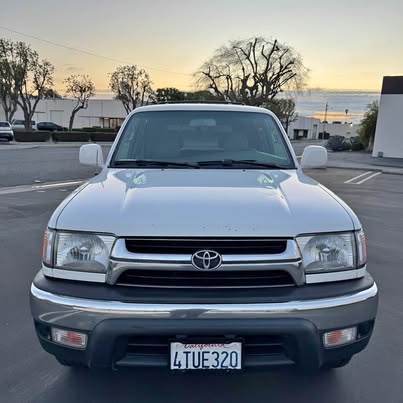 $7,600
Expand
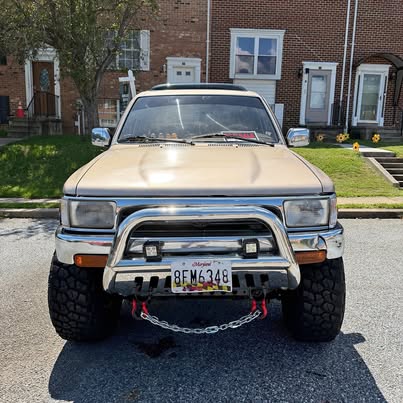 $8,000
Expand

Expand
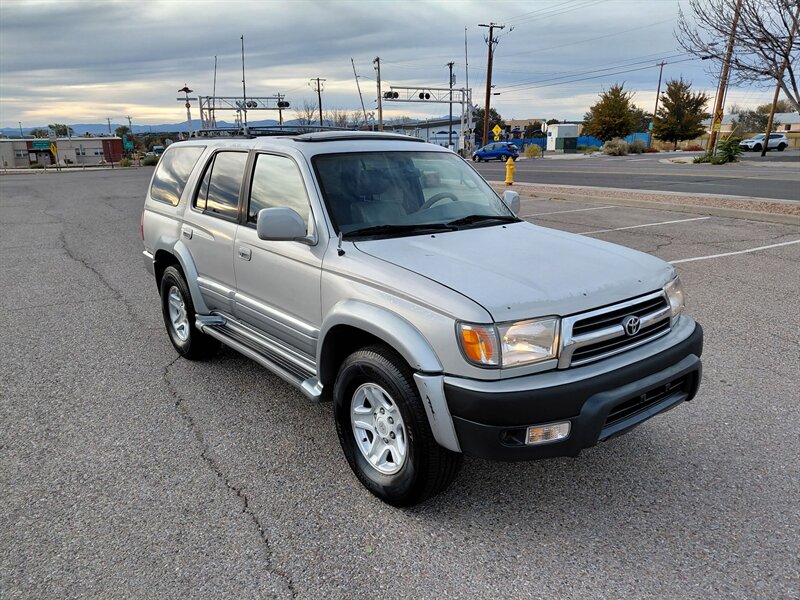
Expand
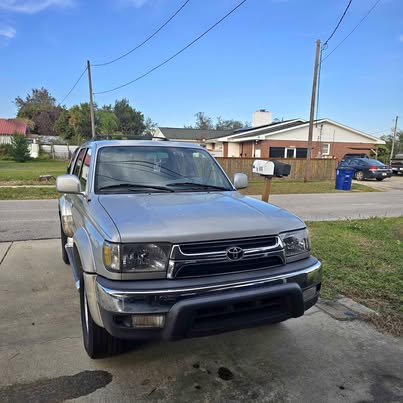 $5,500
Expand
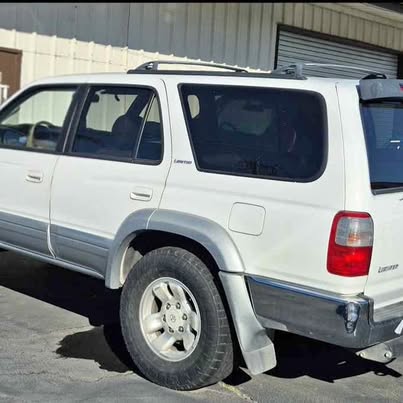 $5,800
Expand
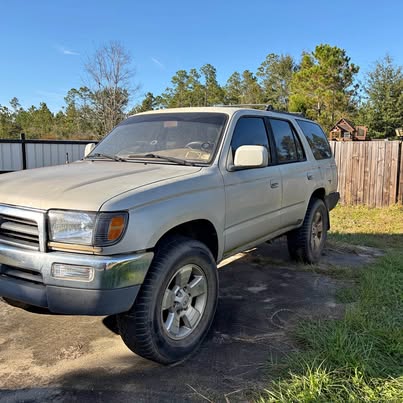 $3,000