
Toyota celica buyer's guide
Toyota celica -- the model's own buyer's guide: variants, values and what to check.
Years listed: 1983-1996 · Series: Celica
# Toyota Celica — Buyer's Guide
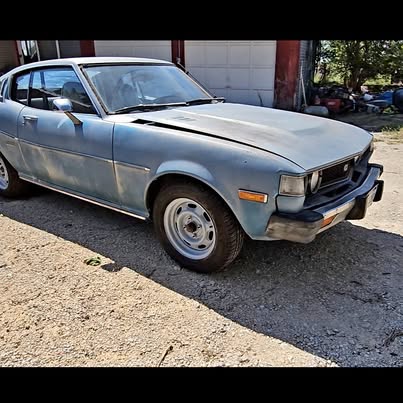
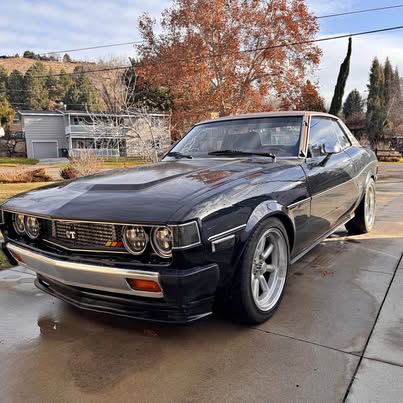
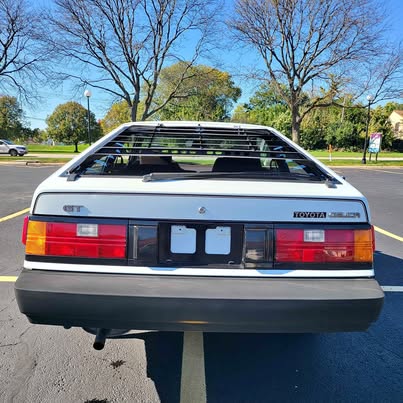
The Celica is really two different classics wearing one badge. The early cars are rear-wheel-drive coupés in the American pony-car mould, all long bonnet and short deck, built around Toyota's near-indestructible R-series four-cylinder. The later cars are front-wheel-drive coupés built on Corolla and Camry hardware — lighter on drama, heavier on refinement, and in GT-Four form genuinely quick rally-bred machines. The cars listed on this site right now make the split plainly: of the four Celicas currently for sale, three are 1976–77 first-generation cars and the fourth is a 1994 sixth-generation GT, all offered by private Marketplace sellers in Texas, Idaho, New York and Utah, three of them manual and one automatic. This guide therefore goes deepest on those two generations — the 1970–77 A20/A30 cars and the 1993–99 T200 — while covering the rest of the family where it helps you judge a car you may meet elsewhere.
Overview and history
Toyota launched the Celica in Japan in late 1970 as a style-led personal coupé, and the intention was never hidden: this was Japan's answer to the Ford Mustang formula. You picked your trim, your engine and your equipment from a list, and Toyota built you a car that looked like a junior muscle car but cost Corolla money to run. The name — derived, Toyota said, from the Latin for "celestial" — sat on a notchback coupé with a long bonnet, a cabin set well back and detailing that openly quoted American practice, right down to the Mustang-style fastback liftback that joined the range in 1973 in Japan and reached the United States for 1976.
Underneath, the first cars are simple in the best way: a steel monocoque, MacPherson struts at the front, a coil-sprung live axle at the back, rear-wheel drive, and a choice of Toyota's T-series and R-series four-cylinder engines. American cars started with the 1.9-litre 8R and 2.0-litre 18R and moved to the 2.2-litre 20R from 1975, by which time federal emissions equipment had taken the edge off the performance but none off the durability. These engines earned their reputation in pickups and delivery vans as much as in Celicas; a looked-after 20R is a 200,000-mile engine, and that toughness is the foundation of the early car's appeal today.
The second generation (1977–81, A40/A50) softened the styling and added the 22R engine at the end of its run. The third (1981–85, A60) squared the shape off, gained fuel injection on the 22R-E, and spawned the Celica Supra — the six-cylinder sister car that eventually took the Supra name away entirely. The decisive break came in 1985 with the fourth generation (T160): front-wheel drive, transverse engines shared with the Camry, and a much more aerodynamic shape. Purists mourned the driven wheels; buyers mostly did not, because the cars were quicker, quieter and far better in winter.
Front-wheel drive also set up the Celica's second career. Toyota took the T160 rallying, then built the turbocharged, all-wheel-drive GT-Four versions of the next three generations — the ST165, ST185 and ST205 — as homologation specials. The rally cars won drivers' world championships in the early 1990s and back-to-back manufacturers' titles in 1993 and 1994, and the road-going GT-Fours remain the most collectible Celicas of all. The fifth generation (1989–93, T180) gave America its version, badged All-Trac Turbo. The sixth (1993–99, T200) — the generation of the 1994 car in our current listings — is the rounded, twin-headlamp car: ST and GT in the United States, GT-Four elsewhere. The seventh and last (1999–2006, T230) sharpened everything again with the high-revving 2ZZ-GE in the GT-S, before Toyota ended the line after 36 years.
What survives, and in what numbers, shapes today's market. The early cars were cheap used transport for decades and were used up accordingly; rust and the crusher thinned them hard, so a solid 1976–77 car is now genuinely scarce even though the model was once everywhere. The 1990s cars lasted better bodily but were bought as appliances and modified or neglected in equal measure. Either way, you are shopping in a pool where condition varies far more than specification — which is exactly why the inspection sections below matter more than the brochure details.
It also helps to know which audience each end of the range speaks to, because it explains the prices you will meet. The first-generation cars draw the classic-car buyer: someone who wants the shape, the simplicity and the rear-drive balance, and who accepts 1970s rust risk as the entry fee. The sixth-generation cars draw the modern-classic buyer: someone who wants air conditioning that works, a roof that does not leak, parts from any motor factor in the country, and a car that can cross a continent without a toolkit — with styling that has aged into genuine presence. Neither audience is wrong, but they value opposite things, and a seller quoting the wrong audience's logic is a negotiating opening.
The models
Seven generations, one nameplate, and a great deal of badge engineering in between. The table below covers the variants you are most likely to meet in North America, with the two generations our current listings represent — the 1976–77 cars and the 1994 GT — in their context.
| Model | Years | Engine | Output | Character |
|---|---|---|---|---|
| Celica ST coupé (A20) | 1971–77 | 8R/18R, later 20R | around 90 hp | The entry car: simple, light, the purest shape |
| Celica GT coupé (RA24) | 1975–77 | 20R 2.2 | around 90 hp | Five-speed box, better trim, the one to find |
| Celica GT liftback (RA29) | 1976–77 | 20R 2.2 | around 90 hp | The "Japanese Mustang" fastback; rarest early body |
| Celica GT/GTS (A60) | 1982–85 | 22R/22R-E 2.4 | 105–116 hp | Last rear-drive Celica; injection on later cars |
| Celica All-Trac Turbo (ST185) | 1990–93 | 3S-GTE turbo | 200 hp | America's GT-Four: AWD, rare, complex |
| Celica ST (T200) | 1994–99 | 7A-FE 1.8 | 110 hp | Corolla-hearted coupé; light and economical |
| Celica GT (T200) | 1994–99 | 5S-FE 2.2 | 135 hp | Camry-hearted coupé; torquey, relaxed, durable |
| Celica GT-Four (ST205) | 1994–99 | 3S-GTE turbo | 240–255 hp | The rally car for the road; never sold new in the US |
| Celica GT / GT-S (T230) | 2000–05 | 1ZZ-FE / 2ZZ-GE | 140 / 180 hp | Light, sharp, high-revving in GT-S form |
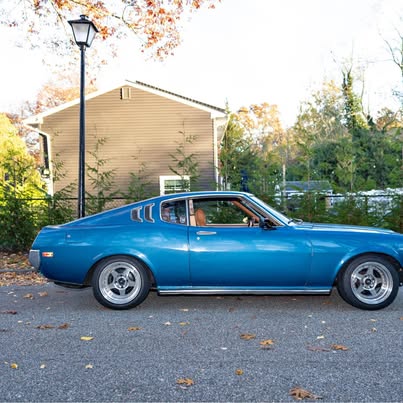
First generation (1970–77, A20/A30). Two bodies: the notchback coupé and, from 1976 in the US, the liftback with its big rear hatch. American trim levels run ST and GT; the GT brings the five-speed gearbox, a fuller instrument cluster and better trim, and it is the version collectors chase. Chassis codes tell you what you are really looking at: US cars with the 20R are RA24 (coupé) and RA29 (liftback) — the 1976 blue liftback in our listings is an RA29, and that code, stamped on the firewall plate, is worth more than anything the seller says about the car. Japanese-market cars include the twin-cam 2T-G and 18R-G models, wonderful things that were never sold new in America; a claimed US-market twin-cam car is an import or an engine swap until its paperwork proves otherwise.
Second and third generations (1977–85, A40/A50 and A60). Bigger, softer and more equipment-led, with the 22R 2.4 arriving for 1981 and electronic injection (22R-E) on the A60. The A60 GTS, with its flared arches and independent rear suspension on later cars, is the connoisseur's pick of the rear-drive era and still undervalued next to the first generation. These cars rust just as enthusiastically as the originals and are harder to find unmolested than their production numbers suggest.
Fourth and fifth generations (1985–93, T160 and T180). Front-wheel drive, Camry-based, and the start of the All-Trac/GT-Four story. The US-market All-Trac Turbo (ST185, 1990–93) pairs the 200 hp turbocharged 3S-GTE with full-time all-wheel drive; it is rare, complicated and increasingly sought after. Ordinary ST and GT models are pleasant, durable coupés whose survival enemy is neglect rather than corrosion.
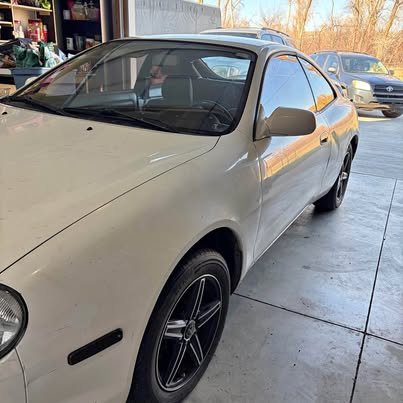
Sixth generation (1993–99, T200). The car our 1994 listing represents. In the US you choose between the ST (7A-FE 1.8, Corolla-derived) and the GT (5S-FE 2.2, Camry-derived), as a coupé or liftback, with a GT convertible added from 1995. The GT-Four ST205 — turbocharged, all-wheel drive, water-to-air intercooler, Super Strut front suspension — was sold in Japan and Europe but never in the United States. That single fact drives the identity check that matters most on this generation: any 1994–99 Celica presented as a US-market GT-Four is not one. Genuine ST205s in America are later imports, almost all right-hand-drive Japanese cars; the chassis plate reads ST205, the car has a rear differential and a propshaft, and a GT badge on a front-drive car changes none of that. Check the driven wheels before you discuss the price.
Seventh generation (1999–2006, T230). A clean-sheet, lightweight design with the 1ZZ-FE in the GT and the Yamaha-headed 2ZZ-GE in the GT-S, which revs to around 8,000 rpm and makes its power at the top of the range. Sharp, fun and plentiful — but read the oil-consumption notes in the problem areas section before buying a GT, because the 1ZZ has a known thirst in middle age.
Engines and gearboxes
The R-series: 18R, 20R and 22R
The R-series is a cast-iron-block, aluminium-head, single-overhead-cam four with a timing chain, and it is one of the most durable engines Toyota has ever built — which is why the same architecture powered pickups, vans and forklifts for decades. The early US Celicas use the 1,968 cc 18R; from 1975 the American cars get the 2,189 cc 20R, identified by the engine code stamped on the block pad and by the chassis codes RA24 and RA29. In US emissions trim the 20R makes around 90 hp through a two-barrel Aisin carburettor, breathing through a thicket of period equipment: an air-injection pump, exhaust gas recirculation, a heated air intake and dozens of vacuum hoses, each with a job and each now forty-plus years old.
Understand what that means in practice. The engine itself almost never wears out first: bores, crank and bearings routinely outlast the car. What fails is everything bolted to it. The single-row timing chain stretches with mileage and the tensioner and guide rails wear; a chain that rattles for a few seconds at cold start and then quietens is asking for a chain kit, while a chain ignored long enough can saw into the aluminium timing cover — the classic 20R/22R failure — after which coolant leaks internally into the sump. The distinguishing evidence is specific: coolant disappearing with no external leak, oil on the dipstick turning milky or over-full, and a chain rattle that no longer fades. That is a strip-down diagnosis, not a head-gasket guess, and the inspection section gives you the checks in order.
Valve stem seals harden with age and heat, so most surviving 20Rs puff blue smoke at start-up after standing overnight and again after a long overrun downhill. That is seals — a weekend job with the head in place — not rings; an engine that smokes continuously under load is telling a different, more expensive story. The Aisin carburettor gets blamed for every running fault on these cars and is guilty of perhaps half of them. The other half is vacuum: perished hoses, a failed choke pull-off diaphragm, or a sticking EGR valve. Test before you spend — a hand vacuum pump on each diaphragm, and a systematic hose-by-hose inspection, will find the real culprit for the price of a coffee, while a rebuilt carburettor fitted to a car with split vacuum lines changes nothing. Budget $300–700 for a professional carburettor rebuild if it genuinely needs one, and $600–1,200 for a timing chain job done properly with guides, tensioner and a cover inspection.
The 22R (2,366 cc) in the second- and third-generation cars is the same idea grown slightly: more torque, the same chain-and-cover caveat, and from the A60 the option of the fuel-injected 22R-E, which deletes the carburettor and most of the vacuum plumbing and is the easier engine to live with daily. Japanese-market twin-cams — the 1,600 cc 2T-G and the 1,968 cc 18R-G with its Yamaha-developed head — are sweeter and revvier, but they were never US-market engines; treat any car wearing their badges with the identity checks from the models section.
The front-drive fours: 7A-FE, 5S-FE and the 3S family
The front-drive Celicas draw their engines from the family-sedan shelf, which is good news: parts are cheap, knowledge is everywhere, and the failure modes are documented to the last O-ring.
The 7A-FE (1,762 cc, twin-cam, 110 hp) powers the sixth-generation ST. It is a Corolla engine tuned for economy — narrow valve angle, long stroke, modest output — and its vices are oil consumption as the miles climb (valve stem seals first, then ring wear) and a general coating of leaks from the cam cover and front seals. It is not an engine that rewards tuning; it is an engine that rewards oil changes.
The 5S-FE (2,164 cc, twin-cam, 135 hp in the 1994 GT) is the Camry engine, and it is the one in our current 1994 listing. It makes its torque low and stops trying at the top end, which suits the car. Three things to know. First, it leaks oil from known addresses: the distributor O-ring at the back of the head, the cam and crank front seals, and — the one everyone misses — the oil pump shaft seal and its housing gasket (the "spaghetti seal") behind the timing belt covers. A 5S-FE that marks its parking space usually needs a reseal, not a rebuild; a full front-of-engine reseal with a fresh timing belt is a $700–1,300 job at a shop and transforms the car. Second, it sludges if the oil is neglected: pull the filler cap and look for black custard under the cam cover before you buy, because a sludged 5S-FE starves its top end and rattles its balance shafts. Third, the timing belt is a service item on a roughly 60,000-mile rhythm on cars of this era, and the 5S-FE is a non-interference design — a snapped belt strands you but does not bend valves, which changes the risk calculation on a car with no belt history: budget the belt job ($450–800 with the water pump and seals) rather than fearing the engine.
The 3S family is the performance branch: the naturally aspirated 3S-GE in Japanese and European cars, and the turbocharged 3S-GTE in the All-Trac Turbo and GT-Four. The GTE is a serious engine — iron block, turbocharger, charge cooling (an air-to-air intercooler on the ST185, a water-to-air unit on the ST205) — and a complicated one, packaged tightly with all-wheel drive. Its costs are the costs of any 1990s turbo flagship: turbo seals and bearings, perished boost hoses, heat-aged wiring, and labour times inflated by access. Buy a GT-Four on its maintenance file, not its mileage.
Judge a GTE by how it boosts, not by how it idles. On the test drive it should pull cleanly and evenly from around 3,000 rpm with no hesitation, no smoke under boost and no whistling that changes pitch with load — a turbo whose seals are going smokes on overrun and at idle after a hard run, and a car that feels flat is usually leaking boost through a split hose or a tired intercooler pump on the ST205 rather than suffering engine wear. The water-to-air system on the ST205 has its own electric pump and plumbing; if the pump is dead, charge temperatures climb, the ECU pulls timing, and the car feels strangled exactly when it should feel strongest. None of these faults requires an engine rebuild, but all of them require diagnosis time, and diagnosis time on a GT-Four is billed at flagship rates.
The ZZ engines in the last cars
The seventh-generation cars pair the 1ZZ-FE (1,794 cc, 140 hp in the GT) with the 2ZZ-GE (180 hp, GT-S). The 1ZZ is a light, efficient engine with one documented weakness that dominates buying advice: oil consumption in middle age, caused by the oil-control rings and the small oil-return holes in the pistons carboning up until oil stays in the bore and burns. It is covered fully in the problem areas section because it is the single most important check on a 2000–05 GT. The 2ZZ-GE, with its Yamaha head and VVTL-i two-stage cam lift, is a jewel that revs to around 8,000 rpm; its known items are the cam-lift bolts, which wear and blunt the transition onto the high-lift cam, and an oil pump that does not forgive a money-shift over-rev. Both are checkable, neither is a reason to avoid the car — but both are reasons to drive one properly before paying GT-S money.
Gearboxes
Early cars come with the W40 four-speed or, in the GT, the W50 five-speed manual — a strong steel-case box whose weak points are second-gear synchromesh wear (a crunch on fast 1–2 and 3–2 shifts when cold, easing as it warms) and sloppy shift feel from worn selector bushings, a cheap fix that transforms the car. The period three-speed automatic is durable and saps what little performance the emissions-era 20R has; three of our four current listings are manual, which reflects what buyers of these cars actually want. Front-drive cars use the C52 five-speed in the ST and the S53 in the GT, both light and precise, with input-shaft bearing rumble — a whir in neutral that stops when you press the clutch — as the wear signal to listen for. The GT-Four and All-Trac use the E-series all-wheel-drive boxes (E150F in the ST185, E154F in the ST205), strong but expensive to open. The four-speed automatics in the 1990s cars are conventional Toyota units that live or die on fluid changes: dark, burnt-smelling fluid and a flare on the 2–3 shift mean you should price in a rebuild or walk away, because no additive fixes worn clutches. On any manual car, also test the clutch hydraulics — a sinking pedal or a bite point at the floor is a master or slave cylinder, $150–350 in parts and labour, and a legitimate negotiating point rather than a catastrophe.
Problem areas
Rust: the map
On a first-generation Celica, rust is not one of the things you check. It is the thing you check, and everything else is a distant second, because the mechanical parts are cheap and available while the body is neither. These cars were rustproofed to early-1970s standards — which is to say barely — and they were sold in salt states as everyday transport. The 1976 car in our listings lives in New York and the 1977 cars in Texas and Idaho; geography is a clue, never a verdict. Work the map in this order, because it runs roughly from most structural to most cosmetic.
Start with the sills (rocker panels). They are structural, they rot from the inside out, and they hide it behind paint and underseal until late. Crouch and look along the sill's full length for bubbling, then press hard with your thumb along the seam and around the jacking points; a sill that crunches, flexes or sheds flakes has failed, whatever the surface looks like. The floor pans follow: lift the carpets — insist on it — and check the front footwells and the area under the seats, where water from a leaking windscreen seal or heater matrix sits undisturbed for years. Water gets in at the top and the floor pays for it, so damp carpets on a dry day are a rust finding, not a valeting detail.
The liftback adds its own traps. The channel around the big rear hatch glass traps water against the metal lip, and the hatch frame and the panel beneath the glass bubble early; open the hatch and inspect the whole aperture seam, plus the spare-wheel well in the trunk floor, which collects whatever the hatch seal lets past. Coupés rot in the same trunk floor around the wheel well and at the rear valance. Front wings (fenders) go at the bottom rear edge behind the front wheels, where road dirt packs against the A-pillar, and at the top around the headlamp bowls. The A-pillar bases themselves, the bottoms of the doors, the drip rails above them, and the scuttle panel under the windscreen all deserve a magnet and a fingertip. A magnet that will not hold is filler; filler over a small bubble is a repair, filler over a structural section is a lie. Spring mounts and the rear axle's locating-arm pick-ups are the final structural check — get the car on a lift if the seller will allow it, because rot there ends the conversation.
Repair economics are unforgiving: proper sill replacement runs $800–2,000 a side once inner sills and paint are counted, floors and hatch apertures are fabrication work, and a car needing all of it is a parts car wearing a whole car's price. This is why the rule in the final section is what it is.
Two traps deserve naming. The first is fresh underseal: a thick new coat over the sills, floors and wheel tubs, applied for sale, hides exactly the areas this map tells you to inspect, and it should lower your offer rather than raise your confidence — honest sellers of honest cars rarely need to black everything the week before you arrive. The second is the second- and third-generation cars' quieter version of the same story: A40 and A60 bodies rot in the same sills, floors and hatch surrounds, and because their values are lower, the welding bill overtakes the car's worth even sooner. On any rear-drive Celica, also check the front crossmember and the steering-box mounting area on the chassis rail; flex and cracking there is rare but terminal, and it hides behind the engine bay's grime until you clean a patch and look properly.
The front-drive cars are far better protected and rust far less, but they are now 25–35 years old and their weak points have emerged: rear wheel-arch lips and the ends of the sills, the front subframe on sixth-generation cars (surface rust is normal; perforation around the mounting points is not), rear suspension arms and the fuel and brake lines that run beside them, and the spare-wheel well again. A 1994 car from Utah, like our listing, has likely led a drier life than one from the Northeast — but check the same places, because one winter-salting owner undoes a decade of desert.
Oil, chains, belts and leaks
Engines across all seven generations share a theme: the internals are strong, and the problems arrive through oil — too little, too dirty, or escaping. Take the generations in turn.
On the 20R and 22R, the timing chain is the headline item from the engines section: rattle at cold start that fades is wear you can schedule; rattle that persists, plus unexplained coolant loss and milky oil, is the chain eating the timing cover and is an engine-out-of-service fault until fixed. Valve stem seals give the blue puff at start-up — cosmetic for a long time, and the honest fix is seals, not the "full rebuild" a seller might price in or a buyer might fear. Oil leaks on R-series cars come from the cam cover gasket, the front crank seal and the fuel pump gasket, all cheap; budget your concern for the chain, not the drips. Carburettor-era running faults — hunting idle, flat spots, hot-start flooding — are vacuum leaks and worn diaphragms nine times out of ten; the test is a hand vacuum pump and patience, and any car whose previous owner "fixed" it by deleting the emissions plumbing wholesale should be priced as the diagnostic puzzle it now is.
On the 5S-FE in the 1994–99 GT, expect the reseal list from the engines section — distributor O-ring, front seals, oil pump seals — and check for sludge under the filler cap, the signature of skipped oil changes. Sludge matters because this engine feeds its balance shafts and top end through small passages; a sludged engine that still runs quietly is on borrowed time, while a clean one with receipts is the 200,000-mile proposition these cars are bought for. The 7A-FE in the ST adds oil consumption to the same list: a litre between services on a high-miler is typical wear, but ask directly and check the exhaust tip and plugs, because sellers rarely volunteer it.
The 1ZZ-FE in the 2000–05 GT deserves its own paragraph because it is the most misdiagnosed issue in the whole Celica story. The mechanism is specific: the oil-control rings gum up and the small oil-return holes drilled in the piston crowns block with carbon, so oil scraped from the bore cannot drain back and is burned instead. Consumption climbs — a litre every few hundred miles in bad cases — while the engine still runs sweetly and shows no blue smoke dramatic enough to alarm anyone, until the level drops, the remaining oil overheats, and wear accelerates through the whole engine. The myth to correct is that "they all use a bit of oil": a healthy 1ZZ uses very little, and heavy consumption is a fault with a cause, not a character trait. The distinguishing checks are consumption history from the seller (ask for the top-up interval in miles, in so many words), blackened, oil-fouled plugs, a sooty tailpipe, and a PCV valve that is clear — a blocked PCV pressurises the crankcase and mimics ring trouble, so test it first because it costs almost nothing. A car already burning heavily needs pistons-out work or a replacement engine, $1,800–3,500 territory, and should be priced as such. Toyota addressed the piston design during production, so later cars are less prone — but "less prone" is a probability, not a promise, and the checks still apply.
Turbocharged cars add their own list: turbo oil seals (blue smoke at idle after a run), cracked exhaust manifolds on hard-used 3S-GTEs, perished intercooler hoses that leak boost invisibly, and on the ST205 a water-to-air intercooler system whose pump and plumbing must all work. Any GT-Four that feels no quicker than a GT has a boost problem until proven otherwise.
Suspension, steering and brakes
The first-generation chassis is conventional — struts in front, a coil-sprung live axle behind, a recirculating-ball steering box — and its wear items are equally conventional. Ball joints and track-rod ends wear and announce themselves as vagueness and uneven front tyre wear; the steering box develops play at the straight-ahead that adjustment can reduce but not cure if the worm is worn; idler-arm bushes are a classic source of a wandering car that "just needs an alignment." Rear axle bearings whine, leaf-spring-era sag does not apply (the axle is coil-sprung — a car sitting low at the back has tired coils or tired dampers, not springs to re-arch), and dampers all round will be past their best on any unrestored car. None of this is expensive individually; a full front-end refresh with joints, bushes and dampers is $600–1,400 in parts and labour, and it transforms these cars. Brake hydraulics are the safety item: forty-year-old flex hoses, seized rear wheel cylinders and perished master-cylinder seals mean you budget a full hydraulic overhaul ($400–900) on any car without recent evidence of one, and you do it before the cosmetic work, not after.
Front-drive cars wear their struts, top mounts (knocking over low-speed bumps on the sixth generation is usually the front top mounts), anti-roll bar links and rear trailing-arm bushes. The ST205 GT-Four's Super Strut front suspension is the expensive exception: its figure-of-eight links and additional ball joints are GT-Four-specific, wear shows as knocks and wayward geometry, and a full refresh runs into four figures — another reason a GT-Four is bought on its file. On all 1990s cars, test the handbrake properly: rear disc handbrakes seize at the caliper mechanism, and a car that will not hold on a slope has caliper work in its near future. ABS faults on later cars are usually a wheel-speed sensor or its rusty reluctor ring rather than the pump — read the code before believing any estimate.
Interior, electrics and trim
Interiors decide how a car feels every day, and on the early cars they are the hardest parts to replace. First-generation dashboards crack across the top under sun; uncracked originals are rare enough that a good dash is a genuine selling point, while a dash cap is the accepted cosmetic answer. Vinyl seat covers split along the seams, headlinings sag, and much of the bright trim is unique to the model and effectively unobtainable except used — price a car with its trim completeness in mind, because the missing stainless strip or GT badge you assume is a quick internet purchase may not exist at any price. Liftback struts fail and the hatch is heavy; prop it, do not trust it. Heater matrices leak into the footwells (and feed the floor rust in the map above), blower motors die, and the period electrics fail by corrosion at earth points and fuse boxes rather than by component death — flickering lights and intermittent gauges on an early car are usually grounds, literally, and a systematic clean of the earth points cures faults that look like three separate failures.
The 1990s cars invert the problem: trim is tougher and more available, but the equipment list is longer. Check every electric window (regulators are the wear item), the sunroof if fitted — drains block and water appears in the footwells or headlining — air conditioning (a system that needs "just a regas" usually needs a compressor or a condenser; a proper diagnosis is $100–200 and a compressor job $600–1,100), central locking, and on convertibles the hood operation and rear window. Sixth-generation dashboards survive well; seat bolsters, especially the driver's outer bolster on GTs, wear through the cloth. On seventh-generation cars, add the GT-S's lift engagement to the electrical-mechanical checklist: you should feel and hear the cam change at around 6,000 rpm on a full-throttle run; if the top end feels flat, worn lift bolts are the first suspect, and the test costs nothing but road.
One more early-car item that catches buyers out: the instruments and switchgear. GT models carry a fuller cluster, and sellers of STs occasionally fit GT instruments to support a GT claim — another reason the chassis code, not the dashboard, settles what the car is. Tachometers and fuel gauges fail with age and are repairable by specialists; a cluster showing wildly implausible mileage against the car's wear is a question to ask, politely and directly. On convertibles — the sixth-generation GT convertible is the common one — operate the hood twice, check the rear quarters of the hood well for water, and inspect the chassis-floor bracing the conversion added; a convertible that creaks and twists over driveways is telling you about its structure, not its age.
How to inspect one
Work in this order: identity first, body second, mechanics third, paperwork last. A car that fails an early step does not earn the later ones.
- Verify the identity before anything else. Match the VIN plate, the firewall stamping and the title. On an early car, read the chassis code — RA24 for a 20R coupé, RA29 for a 20R liftback — and confirm the engine number prefix matches the engine the car claims to have. On any 1994–99 car presented as a GT-Four, look for the driven rear wheels, the propshaft and an ST205 chassis code; without all three, you are looking at a front-drive car with badges, and you should price it as one.
- Do the sill and floor test from the rust section. Press along both sills, check the jacking points, lift the carpets and inspect the footwells and the area under the seats. Crunching, flexing or damp means the structural conversation starts now, not after you fall for the engine.
- Walk the full rust map with a magnet: hatch aperture and trunk floor (or spare-wheel well) on the early cars, front wing bottoms, A-pillar bases, door bottoms, drip rails, scuttle. Note every filler finding and where it sits — cosmetic panels and structural sections are different negotiations.
- On a 1990s car, get underneath or use a mirror and torch on the front subframe, rear arch lips, suspension arms and the brake and fuel lines. Perforation at a subframe mounting ends the inspection; surface rust does not.
- Start the engine from stone cold — insist on it. Listen for the R-series timing-chain rattle and note whether it fades within seconds or persists. Watch the exhaust: a brief blue puff after standing is stem seals; continuous smoke under load is a different and bigger problem.
- Check the oil and coolant like a detective. Milky or over-full oil plus a falling coolant level on a 20R or 22R points at the timing-cover failure described in the problem areas — walk away or price an engine strip. On a 5S-FE, look under the filler cap for sludge. On a 1ZZ car, pull a plug and ask the top-up question in so many words: how many miles per litre of oil?
- Hunt the leaks at their known addresses. Distributor O-ring and oil-pump seals on the 5S-FE, cam cover and front seal on the R-series. A dry engine on a freshly steam-cleaned car is not evidence; check the undertray and the ground it stood on overnight.
- Drive it at least twenty minutes, including a hill and a dual-carriageway run. Feel for the second-gear crunch in a W50 box when cold, listen for input-shaft bearing rumble in the front-drive boxes (present in neutral, gone with the clutch down), and on a GT-S hold a gear to the cam change at around 6,000 rpm to confirm the lift engages. On a GT-Four or All-Trac, add two specific tests: full-lock slow circles in a car park, where a binding, skipping sensation points at the centre differential or mismatched tyres, and a full-boost run in a high gear, where hesitation or a strangled top end points at the boost and intercooler faults in the engines section.
- Test the steering and suspension on a quiet road: play at the straight-ahead on an early car, knocks over low-speed bumps (top mounts on a T200, Super Strut links on an ST205), and a car that wanders is showing you bushes and joints, not alignment. Brake firmly from speed twice — pull, judder or a sinking pedal each have their own bill attached.
- Work every electrical item methodically: windows, sunroof, air conditioning (cold at the vents, not just a lit switch), heater output, lights, wipers, and on a liftback the hatch struts. On an early car, intermittent faults that come and go together are earth points until proven otherwise.
- Read the paperwork for rhythm, not just presence. Regular oil-change entries matter more than a thick folder of valeting receipts; a timing-belt date and mileage on a 5S-FE or 3S car, a chain-kit invoice on an R-series car, and welding invoices with photographs on an early car are the documents that carry real value.
- Finish with the cold arithmetic of the problem areas: list every fault you found, group them into structural, mechanical and cosmetic, and price the structural list first. If the structural list alone exceeds what a better car costs, this is not the car, however charming the test drive was.
Values
The Celica market splits cleanly along the same line as this guide: the rear-drive cars are classics now, priced on body condition and originality, while the front-drive cars are still priced mostly as old coupés — with one towering exception. Read the market in that order and most asking prices explain themselves.
Within the early cars, the spread between a project and a finished car is the whole story. A rusty 1970s Celica is not a cheap way into the model; it is the expensive way, paid in instalments to a welder, and the market knows it — sound, honest cars with tired cosmetics routinely out-achieve shiny cars with fresh paint over fresh filler, because informed buyers price the structure and forgive the shine. Liftbacks carry a premium over coupés, GT specification carries a premium over ST, and a car with its original engine, matching numbers and unmolested emissions-era plumbing is worth more to the next buyer than one "improved" with a swap, however well the swap was done. Japanese-market twin-cam cars sit above all of these when they appear, but they are imports with import paperwork questions, and the premium only holds when the documentation does.
The front-drive cars invert several of those rules. Mileage and maintenance history move the price more than trim does; a 1994 GT like the one in our current listings is valued as a durable, handsome coupé, and the difference between the top and bottom of its range is the difference between a resealed, belted, receipted car and one with sludge under the filler cap and a belt of unknown age. The 1ZZ oil-consumption issue hangs over seventh-generation GTs in the same way: a car with a documented low-consumption engine is simply worth more than an identical car whose seller cannot answer the top-up question. And then there is the GT-Four and All-Trac tier, which trades in a different currency altogether — rarity, rally heritage and the shrinking pool of unmodified cars — where originality and a thick history file outweigh low mileage, and where a modified car is worth less than a standard one, not more.
Two negotiation realities apply across all generations. First, asking prices for the early cars are often set by the cost of the restoration the seller has already paid for, which has no necessary relationship to what the car will fetch; the achieved price follows the structure, not the receipts. Second, on every Celica the gap between a project and a driver is widest exactly where the repair is least visible — welding, engine reseals, suspension refreshes — so the car that looks only slightly better in photographs may be genuinely much better in metal, and priced accordingly. The listings and recorded sales beneath this guide show the current spread for the cars actually on the market; use them to place a specific car, and use the sections above to decide which end of the spread it belongs at.
Parts and ownership
Ownership costs are where the Celica's sedan-derived engineering pays you back. The R-series engines share their service parts — filters, plugs, points-era ignition parts where fitted, gaskets, water pumps — with a generation of Toyota pickups and vans, so consumables are cheap and on the shelf; a full service kit is pocket money and a water pump is a $60–120 part. The 20R's carburettor parts (gaskets, diaphragms, choke components) remain available through specialists, and the timing chain kit itself is inexpensive — the $600–1,200 fitted cost quoted earlier is mostly labour, which a competent home mechanic can save entirely, since the R-series is one of the friendliest engines ever made to work on: everything is reachable, nothing is buried, and the factory manual is excellent. Body and trim are the opposite story: panels are effectively unavailable new, good used wings, hatch glasses and bright trim trade in a small and knowing market, and that scarcity — not mechanical cost — is what should drive your buying decision on an early car.
The front-drive cars are cheaper still to run. The 5S-FE and 7A-FE share filters, belts, brakes and suspension consumables with the Camry and Corolla in their millions; a timing-belt kit with water pump is a $120–200 parts basket, brakes are ordinary sedan parts, and even the sixth generation's struts and top mounts are stocked everywhere. GT-Four ownership is the exception that proves the rule: Super Strut links, turbocharger parts and all-wheel-drive components are specific, sometimes Japan-sourced, and priced like the low-volume parts they are — budget a GT-Four's running costs at roughly double a GT's and keep a reserve. Seventh-generation cars sit between the two: mechanical parts are plentiful, but a 1ZZ engine replacement, if the oil consumption has gone too far, is the one four-figure event in an otherwise cheap ownership proposition.
Day to day, these are easy cars to live with. The early cars want an oil change every 3,000–5,000 miles on modern classic-appropriate oil, valve clearances checked periodically on the R-series, and — the ownership habit that matters most — to be kept dry and used regularly, because it is storage damp, not mileage, that restarts the rust map. Tyres deserve a word on the early cars: original-fitment sizes are still made by the classic ranges of the major brands, but a car on decade-old rubber of any brand needs a set before it needs anything cosmetic, and a set of four in the period sizes is a $400–700 decision you should take at purchase, not after the first wet roundabout. The 1990s cars ask for oil every 5,000 miles, a timing belt on schedule, gearbox oil that most owners forget and the cars quietly appreciate, and attention to coolant condition, since neglected coolant corrodes the 5S-FE's internals and the heater matrix alike. Insurance and club support are strong on both sides of the split: the model is well covered by classic insurers, owners' clubs hold the collective knowledge (and much of the used trim supply), and a Celica of any generation is welcome at almost any Japanese or general classic event. Buy the best body you can, keep the oil clean, and a Celica is among the cheapest genuine classics to own properly.
Which one to buy
- The all-rounder: a sixth-generation GT (1994–99) with the 5S-FE, a manual gearbox and a receipted timing belt and reseal. Camry durability in the best-looking body of the front-drive era, cheap parts forever, and enough torque to make it a pleasure rather than a chore. The 1994 car in our listings is exactly this formula — judge it on the sludge check and the leak addresses, and it is the easiest Celica here to own.
- The value buy: a first-generation ST or GT coupé with a genuinely solid shell and tired cosmetics. The market pays for shine; you should pay for structure. A dry-state coupé that needs paint and a seat retrim is a better car than a gleaming liftback with soft sills, and it will still be the cheaper purchase.
- The purist's pick: a 1976–77 RA29 GT liftback, the "Japanese Mustang" in its definitive form — but only with verified structure, original 20R and intact trim, because the liftback premium evaporates the moment the hatch aperture and rear quarters need fabrication.
- The enthusiast's pick: a GT-Four or All-Trac Turbo bought entirely on its history file — standard specification, documented turbo and suspension work, no modifications to unpick. It is the fastest Celica and the most expensive to put right, in that order.
- The modern pick: a seventh-generation GT-S, if you drive it to the cam change on the test drive and confirm the lift engages; the GT is the same shape for less money, but only with a documented answer on oil consumption.
The overriding rule: on the early cars, buy the body and forgive the mechanics; on the later cars, buy the maintenance file and forgive the mileage — and in both cases, a Celica whose seller cannot answer the specific questions in the inspection section is priced as if the answers are bad, because eventually they are.
See the 4 celica cars currently listed.
For sale now
 $19,995
Expand
What they sell for: celica sale prices.