
Toyota Land Cruiser buyer's guide
Toyota Land Cruiser -- the model's own buyer's guide: variants, values and what to check.
Years listed: 1964-2026 · Series: Land Cruiser
Overview and history
The Toyota Land Cruiser is not one vehicle. It is a family of body-on-frame, solid-axle four-wheel-drives that Toyota has built continuously since 1951 — the 40, 55, 60, 70 and 80 Series, plus the lighter Prado line — sharing a philosophy rather than a parts bin: a separate ladder frame, beam axles front and rear, a torquey engine that is deliberately understressed, and mechanical systems a competent owner can service with hand tools. On a Land Cruiser the mechanicals are almost never the problem. The frame, the body and the honesty of forty years of previous owners are the problem.
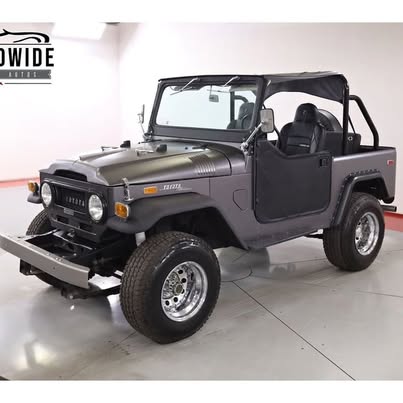
The story starts with war. In 1950 Toyota built a prototype military truck closely following the wartime Jeep pattern, and in 1951 the BJ went into limited production — B for its B-type six-cylinder petrol engine, J for Jeep, a name Toyota could not keep. In 1954 the truck was renamed Land Cruiser — a name chosen to stand toe-to-toe with Land Rover — and the 20 Series of 1955 made it a proper export product. The car that made the reputation arrived in 1960: the 40 Series — short-wheelbase FJ40s, medium-wheelbase FJ43s, and long-wheelbase FJ45 pickups, wagons and troop carriers, all powered by the F-series overhead-valve six and sold in the United States in meaningful numbers through the 1960s and 1970s. The 40 stayed in production in Japan until 1984 — a 24-year run — and was built under licence in Brazil until 2001.
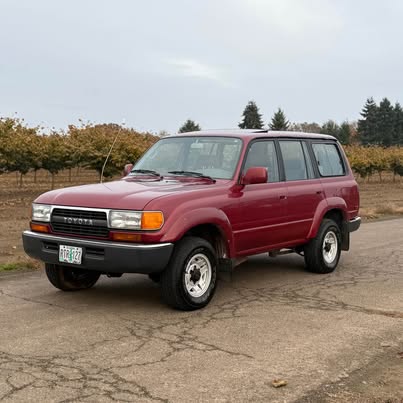
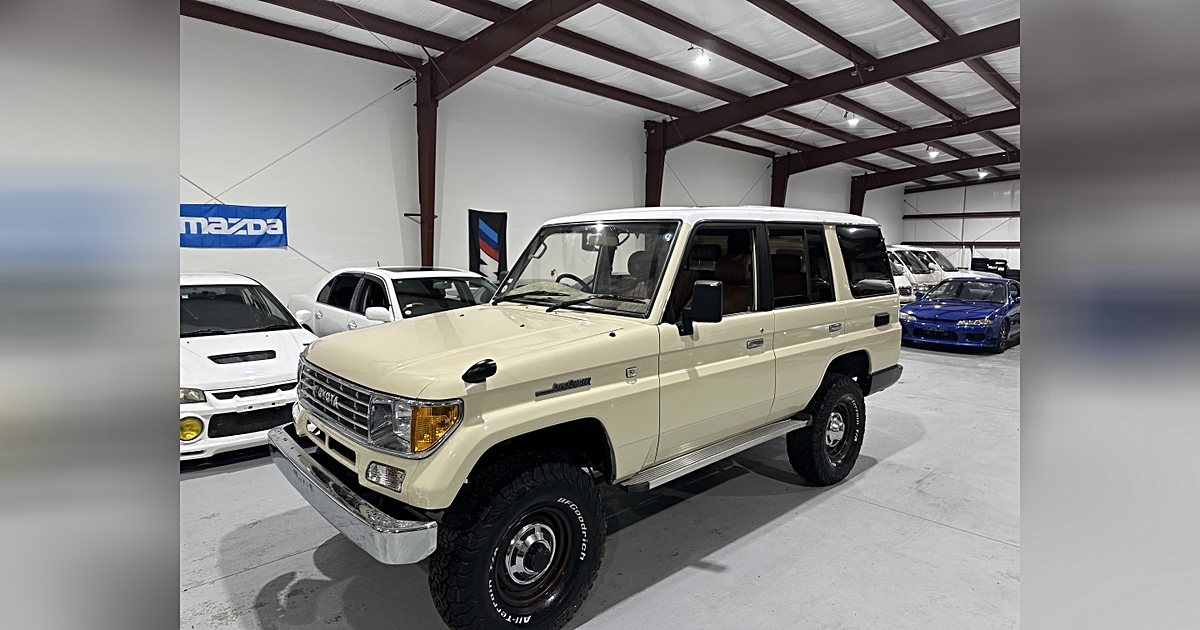
Alongside the utility line, Toyota built a wagon line for buyers who wanted the capability without the agricultural manners. The FJ55 of 1967–1980 was the first: a long-wheelbase station wagon on 40 Series mechanicals, nicknamed the Iron Pig by owners who love it. The 60 Series of 1980 civilised the formula with a wider body, better trim and eventually fuel injection and an automatic gearbox in the FJ62. In 1984 Toyota split the range decisively. The heavy-duty 70 Series replaced the 40 as the working truck and remains in production, in updated form, to this day, though it was never officially sold in the United States. The wagon line went its own way to the 80 Series of 1990: coil springs all round, full-time four-wheel drive, a modern double-overhead-cam engine in the FZJ80 from 1993, and the option of factory differential locks front and rear. A third, lighter line — the Prado, built on smaller underpinnings — appeared from the mid-1980s and matters to American buyers now because Japanese-market Prados are arriving as grey imports, one of which sits in our own listings.
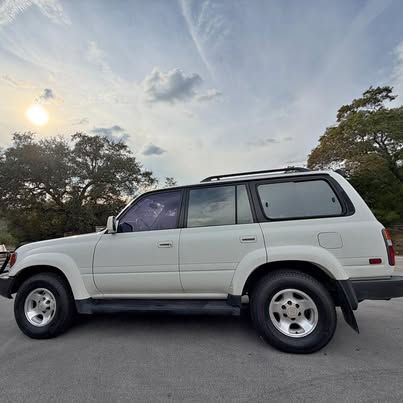
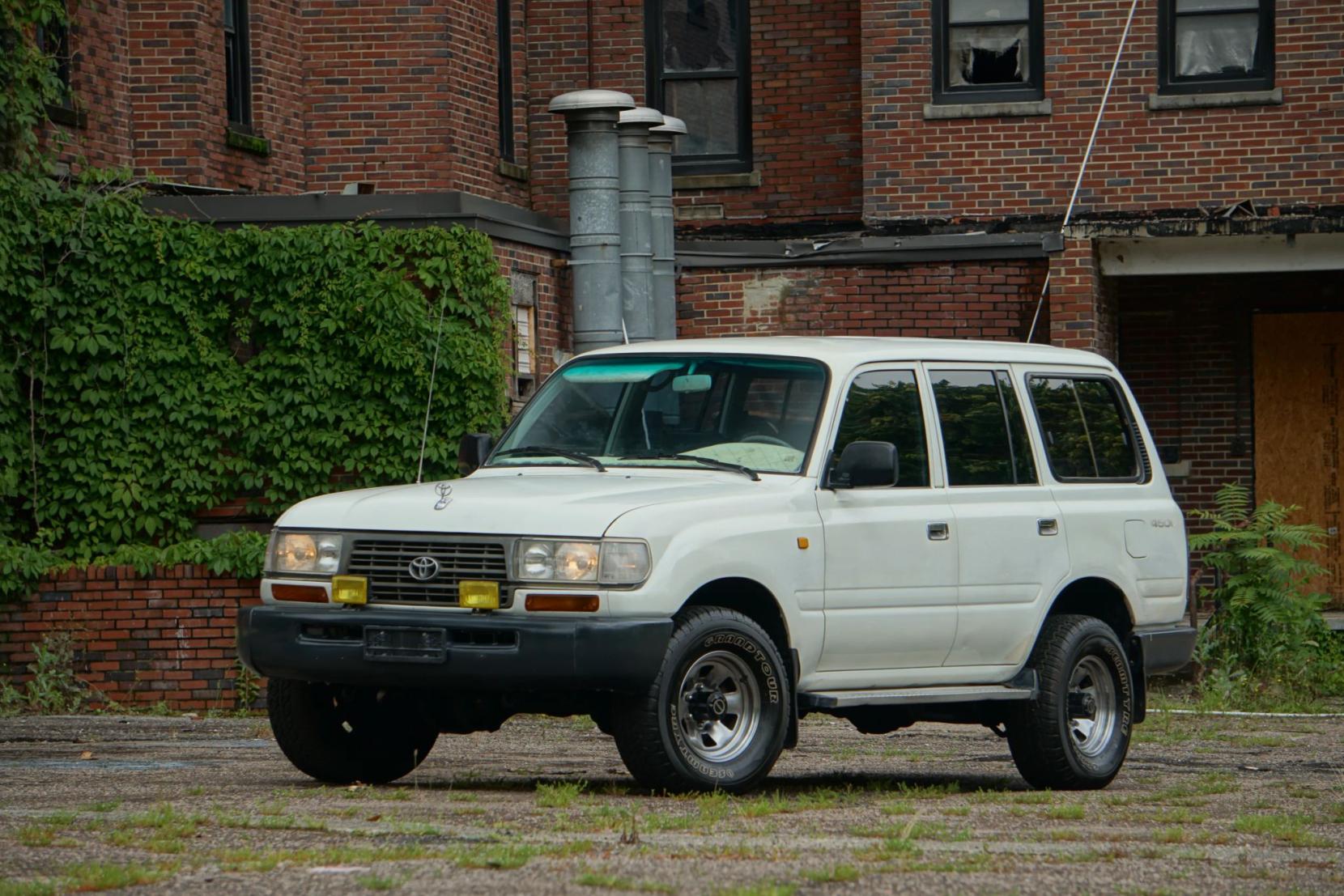
That breadth is the first thing to grasp about the market you are shopping in. Our current Classic Listings pool is small — ten Land Cruisers, all sourced from Facebook Marketplace, spanning 1961 to 1996 — and heavily weighted to the late wagons: a 1991 FJ80, a 1992 VX Limited, two 1996 trucks including a Japanese-market Prado diesel, set against a 1971 FJ40, a 1984 60 Series and a 1988 FJ62. That spread is representative of the wider American classic market. The 80 Series is the volume classic Land Cruiser now: new enough to use daily, old enough to feel like a machine. The 40 Series is the icon, and the 70 Series and diesels are an import market of their own.
Two consequences follow. First, identity matters more than badge. A Land Cruiser's series, engine and market of origin decide its value, its parts supply and its legal position, and all three are routinely misdescribed in listings — innocently, because sellers copy each other's vocabulary, and occasionally not innocently, because a locked FZJ80 or a diesel is worth more than a base petrol truck. Second, condition spreads are enormous, because these trucks were bought to work. A Land Cruiser may have been a ranch truck, a mall wagon, a South American working vehicle re-imported after a hard life, or a Japanese truck retired early by Japan's inspection system with low miles and a different set of problems. The badge tells you none of that. The frame rails and the service history tell you all of it.
The models
Every classic Land Cruiser sits in one of five families, and the families overlap in time, so year alone never identifies a truck. Learn the families first, then the variants inside each one.
| Model | Years | Engine | Output | Built | Character |
|---|---|---|---|---|---|
| 40 Series (FJ40 / BJ40) | 1960–1984 | 3.9 F or 4.2 2F petrol six; 3.0 B / 3.4 3B diesel | 125 hp (F), 135 hp (2F), about 80–93 hp (diesels) | Long 24-year Japanese run; no clean factory series split published | The icon: short-wheelbase utility, removable top, ambulance doors or tailgate |
| 55 Series (FJ55) | 1967–1980 | 3.9 F, then 4.2 2F petrol six | 125–135 hp | Low volume beside the 40 Series | The first wagon; the Iron Pig; charm in inverse proportion to parts supply |
| 60 Series (FJ60) | 1980–1987 | 4.2 2F petrol six, carburettor | 135 hp | Volume wagon of the 1980s | Round headlights, four-speed manual; the last carburetted US Land Cruiser |
| 60 Series diesels (BJ60 / HJ60 / HJ61) | 1981–1990 | 3.4 3B, 4.0 2H, 4.0 12H-T turbo diesels | About 90 hp (3B), 103 hp (2H), 134 hp (12H-T) | Never officially sold in the US; Canada took the BJ60 and HJ60 | The overlander's choice; the HJ61 turbo is the connoisseur's diesel |
| FJ62 | 1988–1990 | 4.0 3F-E petrol six, fuel injection | 155 hp | Three model years only | Rectangular headlights, automatic only; the bridge to the 80 |
| 70 Series (BJ70 / HZJ70 family) | 1984–present | Various; 3.4 3B, 4.2 1HZ diesel, petrol sixes | About 90–129 hp for the classic diesels | In production for four decades, updated repeatedly | The heavy-duty successor to the 40; a US truck is always an import |
| FJ80 | 1990–1992 | 4.0 3F-E petrol six, fuel injection | 155 hp | First three years of the 80 Series | Coil springs and full-time four-wheel drive with the old pushrod six |
| FZJ80 | 1993–1997 | 4.5 1FZ-FE petrol six, DOHC injection | 212 hp | The definitive 80 Series | The modern classic: real power, optional factory lockers, the deepest market |
| Prado (J90, incl. TX) | 1996–2002 | 3.0 1KZ-TE turbo diesel (also petrol fours and V6) | About 130 hp (1KZ-TE) | Japanese-market volume; US cars are grey imports | The light-duty line: smaller, coil-sprung, right-hand drive in JDM form |
A note on the Built column: Toyota passed ten million cumulative Land Cruisers in 2019 but publishes no clean per-series split for the classic generations, and the figures repeated online are usually unsourced — so this guide uses documented figures only, and says so where none exist.
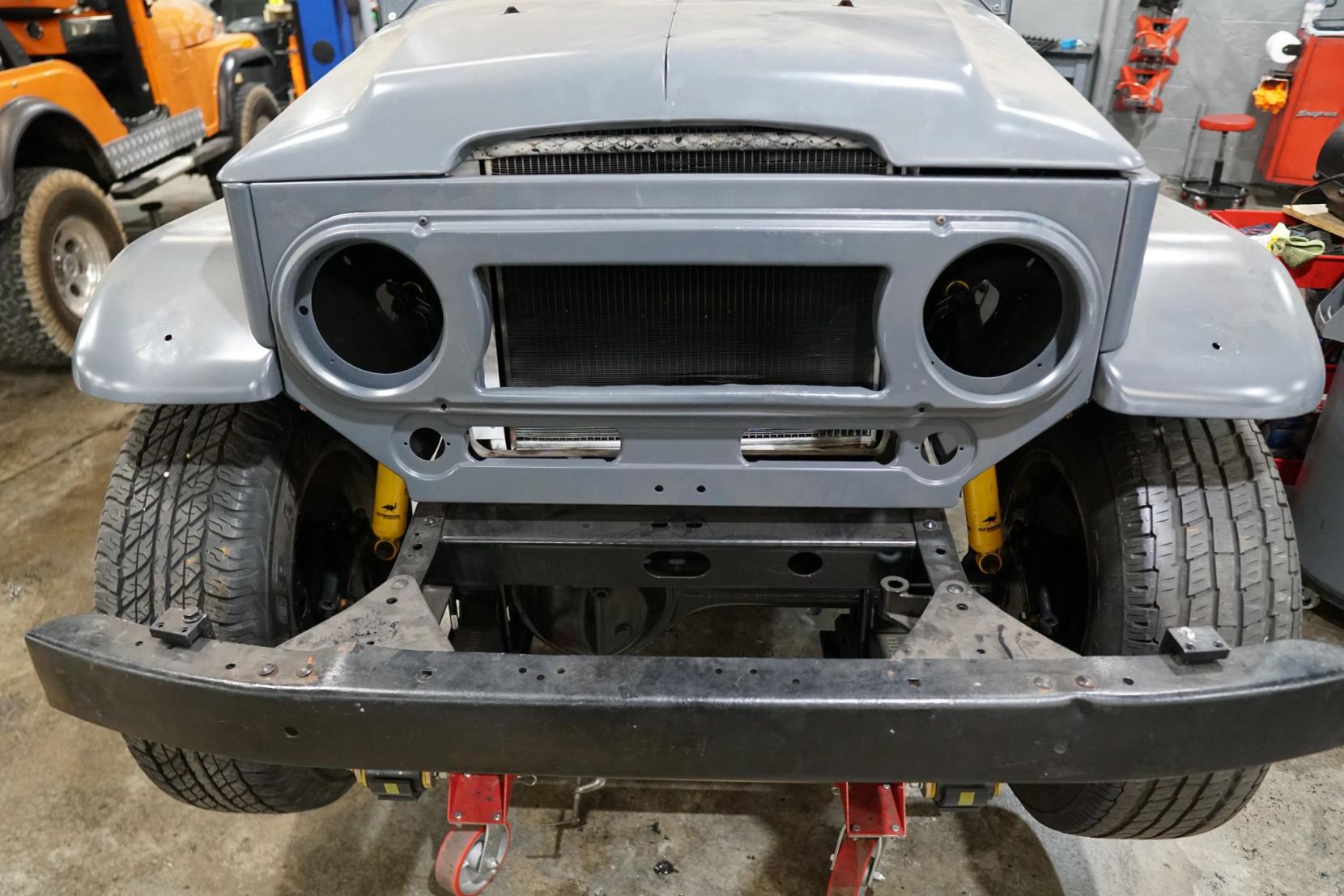
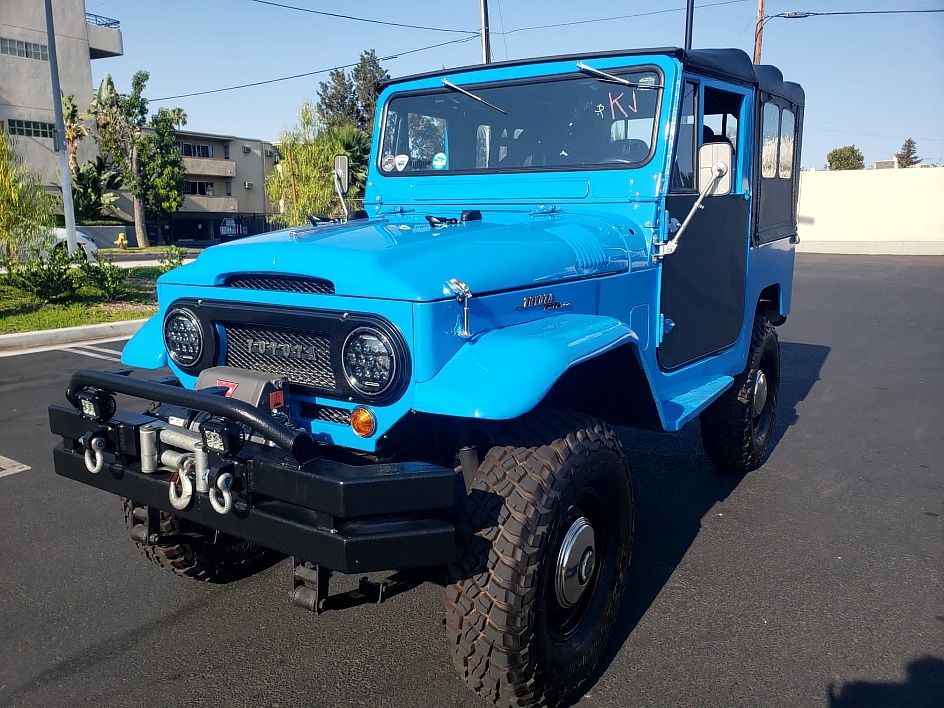
The 40 Series (1960–1984). The definitive Land Cruiser shape: flat panels, a fold-down windscreen, a removable top on the short-wheelbase FJ40, and a white headlamp bezel owners fit upside down so often the error has its own folklore — the thicker edge belongs at the bottom, and one fitted the other way marks a truck assembled by someone not paying attention. US trucks carry the F engine to 1974 and the 2F from 1975. Front disc brakes arrived for 1976, a four-speed replaced the three-speed during 1973–74, and the last US cars offered power steering and air conditioning. Body choice drives value as much as condition: the long-wheelbase FJ45 pickup and troop carrier trade in different markets from the standard truck.
The 55 Series (1967–1980). The FJ55 wrapped the 40 Series formula — same engines, same axles — in a proper station wagon body. It is the rarest classic wagon in America today not because few were sold but because few survived: the body rusts comprehensively (see the problem areas section) and almost nothing for it is reproduced. Buy the most complete one you can find, because trim you assume you will source later often does not exist.
The 60 Series (1980–1990). The 60 made the wagon genuinely comfortable: wider, quieter, power steering standard in the US. The FJ60 (1980–1987) is the simple one — 2F carburetted engine, four-speed manual, round headlights. The FJ62 (1988–1990) is the refined one — 3F-E injected engine, a four-speed automatic as the only gearbox, rectangular headlights, power windows and mirrors. Outside the US the same shell carried the diesels American buyers now import: the BJ60's 3B, the HJ60's 2H, and the HJ61's turbocharged 12H-T, the last a genuinely quick truck by classic standards and the one the overland market prizes. Canadian diesel 60s are left-hand drive; Japanese trucks are right-hand drive and higher-specification, with factory locked axles on some HJ61s.
The 70 Series (1984–present). When the 40 ended, the 70 took over the working role and never gave it back: leaf-sprung, narrow, built in short, medium and long wheelbases as soft-tops, hardtops, pickups and troop carriers, with the 3B and later the 1HZ diesel in classic form. No 70 was sold new in the US, so every American example is an import, and origins produce wildly different trucks wearing the same badge. A low-mileage Japanese HZJ77 wagon and a worked-to-death mining pickup share almost nothing as purchases. Provenance is the whole inspection on a 70.
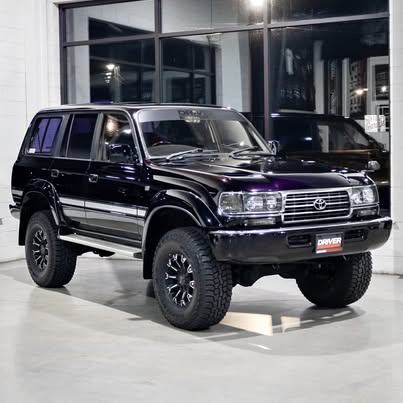
The 80 Series (1990–1997). The 80 is where classic and modern Land Cruiser meet: coil springs at both ends, full-time four-wheel drive, four-wheel disc brakes on the FZJ80, and refinement that finally matched the capability. The FJ80 (1990–1992) kept the FJ62's 3F-E pushrod engine and is the value end of the range: same shell, same chassis, less power. The FZJ80 (1993–1997) fitted the 4.5-litre 1FZ-FE double-overhead-cam six, gained a full-float rear axle with disc brakes, and offered the option collectors now hunt: factory electric differential locks front and rear, ordered on a minority of US trucks and identifiable by the rotary lock switch to the left of the steering column and the option code on the door-jamb label — not by a seller's memory. The Lexus LX 450 is the same truck. Japanese-market 80s — the VX Limited in our pool is one — add right-hand drive, 1HD-T and 1HD-FT turbo diesels, and trim the US never saw.
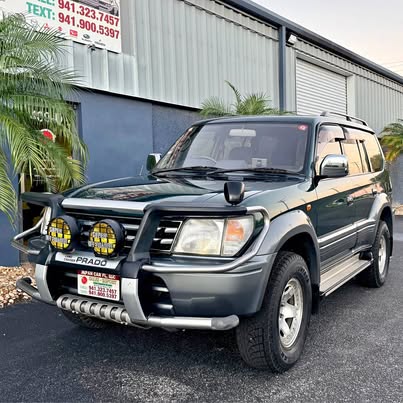
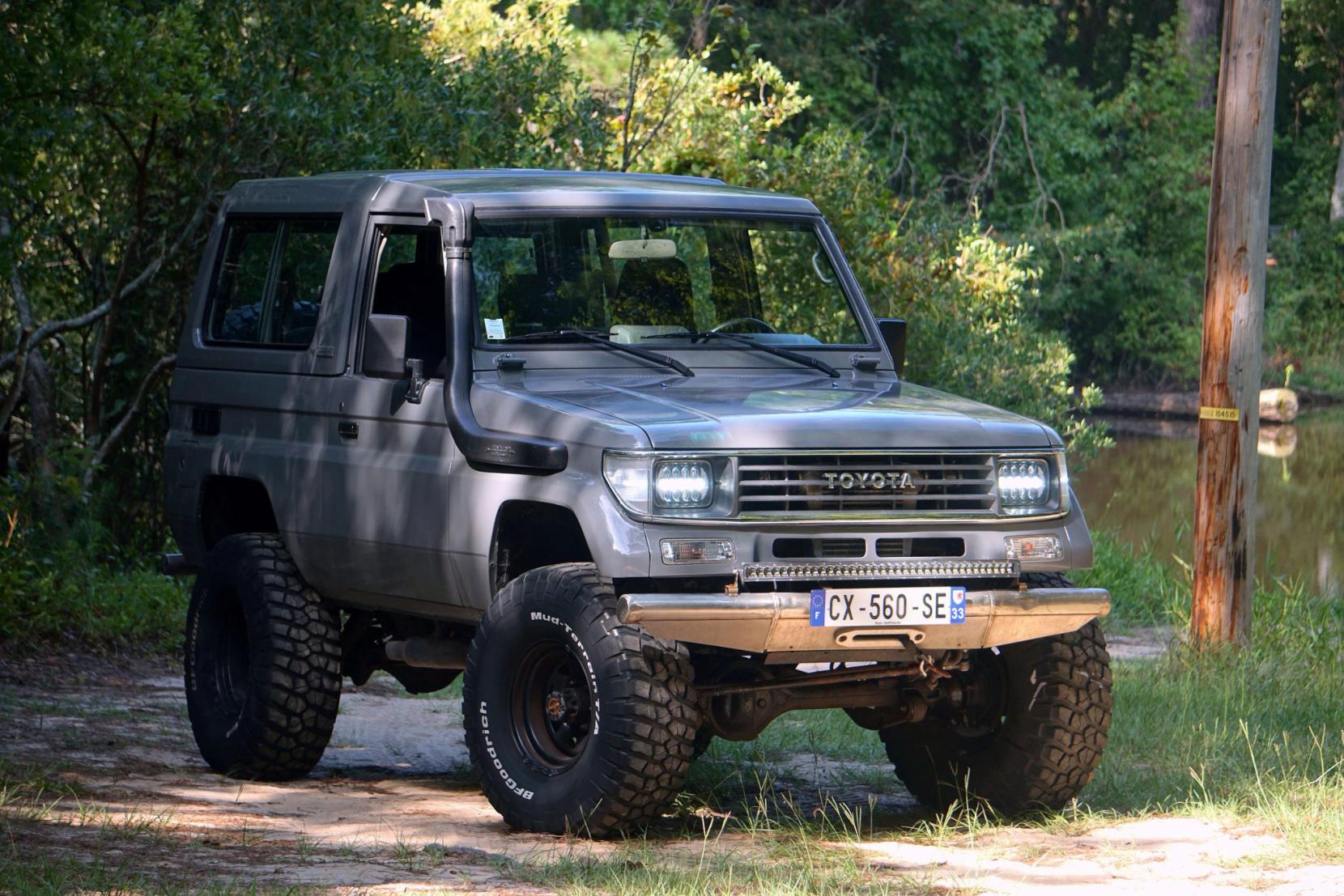
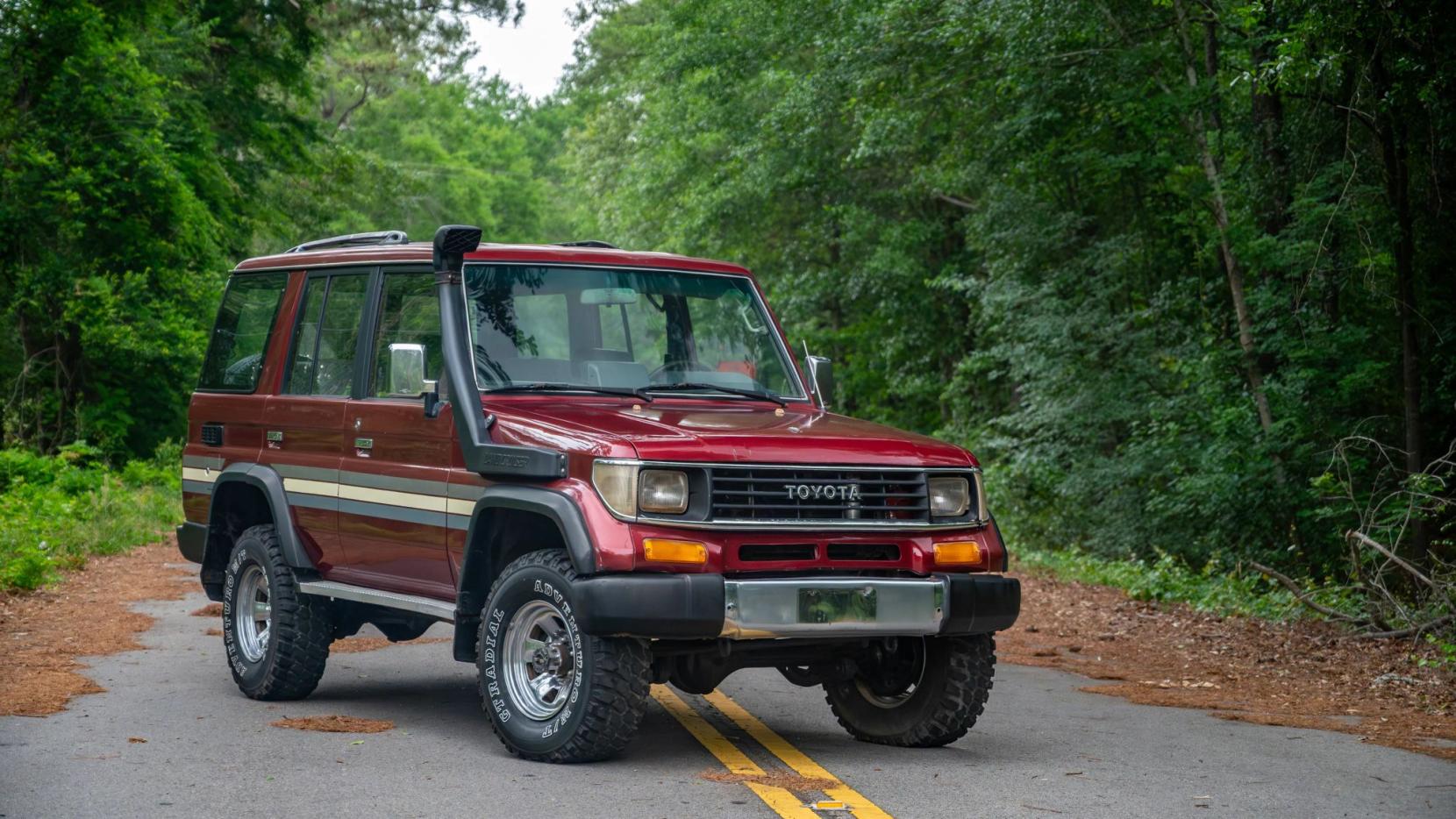
The Prado. The Prado is a Land Cruiser by badge and a different vehicle underneath: lighter frame, smaller engines, independent front suspension from the J90 generation of 1996. The J90 Prado TX in our listings is a Japanese-market truck with the 1KZ-TE 3.0 turbo diesel. Prados are capable and increasingly imported because they are cheaper than an 80 — but do not buy one expecting 80 Series strength or parts commonality, and read the diesel sections below twice, because the 1KZ-TE has a known cylinder-head weakness that punishes neglected cooling systems.
Engines and gearboxes
Classic Land Cruiser engines divide into three petrol sixes, a diesel family, and one modern six that replaced them both. All are long-lived, and each has one or two specific weaknesses that decide what a particular truck will cost you — rarely the one sellers talk about.
The F and 2F petrol sixes: the pushrod originals
The F engine (3.9 litres, 3,878 cc) powered the 40 and 55 Series from the start of the classic era, and its enlarged successor the 2F (4.2 litres, 4,230 cc) took over in 1975 and ran to the end of the FJ60 in 1987. Both are overhead-valve, cast-iron inline sixes in the pre-war American pattern — Toyota's F was developed from General Motors six-cylinder practice — with a single two-barrel Aisin carburettor, solid lifters needing periodic valve adjustment, and a torque curve that does the work: peak torque arrives low, and the engine pulls from idle. Period outputs are 125 hp (F) and 135 hp (2F); both feel stronger than the numbers suggest off-road and slower on a freeway on-ramp.
These are among the most durable petrol engines ever put in a truck: bottom ends routinely outlast the bodies around them, and 250,000 miles on an unopened 2F that has had oil changes is unremarkable. The wear that matters is at the top. Valve stem seals harden and give the classic puff of blue smoke on start-up and on the overrun — cheap to fix in place, not a reason to condemn an engine. Head gaskets weep and eventually fail with age and overheating history; a 2F run hot can warp its long iron head, so any overheating history deserves a compression test (expect broadly even readings across all six, roughly in the 150 psi region on a healthy engine). The exhaust manifold is the signature fault: the combined intake and exhaust manifold assembly warps and cracks, the gasket blows, and the truck ticks loudly when cold. Resurfacing it or fitting a header is a well-trodden job — budget roughly $600–1,400 at a shop depending on whether studs snap, as they like to — and a ticking truck should be priced with that job already spent.
The carburettor and emissions equipment cause more bad running than the engine ever will. The Aisin two-barrel suffers from worn throttle shafts, perished accelerator-pump leather, and fifty years of amateur adjustment, and US trucks from the mid-1970s carry air injection, exhaust gas recirculation and a thicket of vacuum hoses that many owners have "desmogged" with varying legality and competence. Two rules follow. First, a desmogged truck in a state that still inspects emissions equipment may be unregisterable until it is restored, and correct smog parts are now hunted items — check your state's rules before you buy. Second, a badly desmogged truck runs badly in specific ways — flat spots, dieseling, a hunting idle — that sellers blame on "the carb". A properly rebuilt Aisin on a stock engine idles evenly and pulls cleanly; if it does not, the cause is findable and should be priced in.
The 3F, 3F-E and 1FZ-FE: injection, then the modern six
The 3F (4.0 litres) is the last of the pushrod line: a destroked, higher-revving development of the 2F, familiar to Americans in fuel-injected 3F-E form (155 hp) in the FJ62 and early FJ80. The 3F-E keeps the family's virtues — iron block and head, huge low-speed torque, tolerance of neglect — and adds electronic injection that starts instantly and removes most of the vacuum plumbing from your life. Its faults are age faults now. Exhaust manifold studs and gaskets fail as on the 2F, with the same cold tick. The EFI main relay and the in-tank fuel pump cause the classic crank-but-no-start that strands trucks which then get misdiagnosed for weeks; a seller describing an intermittent no-start is describing a findable fault, but find it before you rely on the truck.
The 1FZ-FE (4.5 litres, 4,477 cc) in the FZJ80 is a different species: an iron block with an aluminium double-overhead-cam, 24-valve head, chain-driven cams and electronic injection, making 212 hp and 275 lb-ft of torque. It is a genuinely 300,000-mile engine with oil changes, and it cruises at modern freeway speeds without strain. It has two known weaknesses, and you price both on every FZJ80 you view. The first is the head gasket. The original design fails, typically past 150,000 miles, usually at the rear cylinders, presenting as slow coolant loss, a misfire on cold start that clears, or bubbles in the coolant reservoir. Toyota's revised gasket fixes it permanently, and a documented replacement is a selling point worth paying for; an original gasket at high miles is a job in waiting at roughly $2,000–3,500 at a shop. The second is the "pesky heater hose" — the short 90-degree heater hose buried at the back of the head above the starter, invisible in a casual look, which hardens with heat cycles and bursts without warning on trucks where every visible hose was changed and this one was not. Replacing it costs little in parts and a few skinned hours in labour; a truck with receipts showing it done has been owned by someone who knew the model — the best signal an FZJ80 can send.
The diesels: B, 3B, 2H, 12H-T, 1HZ and the Prado's 1KZ-TE
No classic diesel Land Cruiser was sold new in the United States except through Canada in small numbers, so every diesel you meet is an import or a swap, and the premium buys torque, range and simplicity at the price of parts planning. The family tree is simple. The B (3.0 litres) and its enlarged 3B (3.4 litres, about 90 hp) are four-cylinder indirect-injection engines in BJ40s, BJ60s and early 70 Series trucks: slow, loud, nearly unkillable, and shared with Toyota's Dyna trucks and industrial equipment, which keeps their parts obtainable. The 2H (4.0 litres, about 103 hp) is the six-cylinder equivalent in the HJ60, and the 12H-T (134 hp) its turbocharged development in the HJ61 — the one diesel here with genuinely relaxed road performance. The 1HZ (4.2 litres, 129 hp), fitted to 70 and 80 Series trucks from 1990, is the connoisseur's engine: indirect injection, no turbo to fail, a reputation for half-million-kilometre life in Australian and African service.
Diesel buying rules differ from petrol in three ways. First, cold starting is the compression test you get for free: a healthy indirect-injection Toyota diesel starts from stone cold on its glow plugs with a brief, even crank and a puff of grey that clears; a truck that needs extended cranking, ether, or a warm garage has low compression, dead glow plugs or a tired injection pump, and the seller's explanation is worth nothing against a cold start you witnessed. Second, cooling history is destiny, because these engines crack heads when overheated and then keep "working" while pressurising the coolant — check for bubbles in the header tank at a hot idle. Third, know your electrical system: many Japanese and Canadian diesel trucks are 24-volt for starting (two batteries in series) with 12-volt ancillaries, and mismatched battery pairs generate electrical mysteries.
The Prado's 1KZ-TE (3.0 litres, about 130 hp) breaks the family pattern. It is a four-cylinder turbo diesel with an aluminium cylinder head, and its known weakness is head cracking after overheating — the head, not just the gasket, is the failure, and replacement heads are the standard cure. On any 1KZ-TE truck the cooling system is therefore the inspection: a fan clutch that locks up, a radiator that flows, and no sign of sealant in the coolant. Budget a full cooling-system refresh on any freshly imported Prado, and treat a seller's "it only overheated once" as the most expensive sentence in this guide. Its timing belt is a service item (around every 100,000 km on the warning-lamp system these trucks carry) — a belt of unknown age gets changed before the truck is driven home, because a snapped belt is a head-off event.
Gearboxes, transfer cases and the four-wheel-drive system
Early 40 Series trucks have a three-speed manual with an unsynchronised first gear; the stronger, fully synchronised four-speed H41/H42 family replaced it during 1973–74. The five-speed H55F, standard in many diesel trucks and a popular FJ60 retrofit, adds an overdrive top that transforms freeway use — and wears its fifth-gear and input-shaft bearings, announced by a whine in fifth absent in fourth. Budget roughly $1,500–2,800 for a proper H55F rebuild; a whine priced as "they all do that" is a rebuild being handed to you. Automatics are the A440F in the FJ62 and early FJ80 — a strong four-speed that fails mainly from heat, so check the fluid (dark and burnt-smelling is a rebuild conversation at $2,500–4,500) — and the electronic A442F and later A343F in the FZJ80, both durable, the A442F notably so.
Transfer cases split the range in two. Everything before the 80 Series is part-time four-wheel drive: a two-speed case (low range roughly 2:1 to 2.3:1 depending on year) driving the front axle only when engaged, with free-wheeling hubs to disconnect the front wheels on the road. The checks are functional and are covered in the inspection: clean engagement, low range that holds under load without jumping out (a case that pops out of low on a descent is worn, and it chooses the worst moment to tell you), and hubs that lock by hand. The 80 Series replaced all of it with full-time four-wheel drive through the HF2A case (viscous-coupled HF2AV on most FZJ80s). A viscous coupling that has overheated — usually from mismatched tyres — binds and makes the truck hop in tight turns; slow full-lock circles on tarmac will find it. Factory differential locks are electric actuators that seize from disuse more often than they wear out, so a locked truck whose locks have "never been needed" needs them proven on your test drive before the premium changes hands.
One component deserves its explanation here because the next section returns to it as the most common Land Cruiser service item: the front knuckles close around Birfield constant-velocity joints, which run in moly grease inside the knuckle, with the differential's gear oil held back by a small inner axle seal. That seal is the weak point, and its failure mode — gear oil washing the grease out of the knuckle — is the first thing you will look for in the inspection.
Problem areas
A Land Cruiser fails in a predictable order. The frame and body rust. The front axle's knuckles and seals wear. The cooling system ages until one hot day finds it out. The mechanical core — crankshaft, gearbox gears, transfer case, differentials — almost never fails first, which is why a Land Cruiser with serious problems can still drive beautifully on a test drive. Everything here is ordered by consequence: structure, then the systems that steer and stop the truck, then the systems that strand it, then the trim that decides whether a good truck is also a pleasant one.
Rust: frame first, then body, series by series
Start underneath, always, because on every classic Land Cruiser the frame is the asset. Toyota frames are strong ladder frames (fully boxed on the 80 Series), and they rust from the inside out where mud and salt sit undisturbed. On the 40 Series, work from the rear: the rear crossmember and frame horns behind the rear spring hangers rot first, then the hanger brackets, then the rails under the tub where the body mounts trap moisture. On the 60 Series the signature failure is the inside face of the rear frame rails, in the C-channel section around the rear spring shackles — a rail can look sound from outside and be perforated on its inner face, which is why a torch and a mirror, or a lift, are not optional on a 60. On the 80 the frame is far better protected and rarely structural, but check the rear rails behind the axle on any truck that has lived in salt country. Frame repair is fabrication: sectioning rails runs roughly $1,500–4,000 for a localised repair, and a frame that needs rails, hangers and crossmembers is a frame swap or a walk-away. Tap with a small hammer and listen for the change from a ring to a crunch, and treat fresh black paint on a frame being sold as a question only bare metal answers.
The bodies rust in series-specific maps. 40 Series: the steel tub rots at the rear sill below the tailgate or ambulance doors, the rear quarters behind the wheels, the floor pans, the cowl sides and windscreen frame, and the front wings at their rear lower corners. The hardtop is comparatively durable; the tub is not. This is where the aluminium question belongs. Aftermarket aluminium tubs (the best known are Canadian-made by Aqualu) are a legitimate repair for a rotten FJ40, and a truck rebuilt on one can be an excellent driver. But an aluminium tub changes what the truck is: the body is no longer original, the steel cowl and windscreen frame usually remain and still rust, and the data plate and title history must still tie the truck together. Buy an aluminium-tub 40 as a driver at driver money; do not pay original-steel money for one, or let a seller present it as an upgrade that adds collector value, because the collector market disagrees. 55 Series: everything on the 40's list, plus roof gutters, the tailgate (which rots from inside around the window mechanism) and the sills — the rust champion of the range. 60 Series: rear wheel arches, the lower tailgate, the roof gutter seams (bubbling along the drip rail, staining on the headlining), door bottoms and the cowl; the 60's body usually outlasts its frame, the reverse of the 40. 80 Series: the best-protected shell of the classic range, but not immune — rear quarters behind the wheels, the upper tailgate around the window frame, the windscreen surround, and the sills on trucks with leaking sunroof drains all go, and a rusty 80 usually signals a truck used in salt or on beaches, which predicts the state of everything underneath it too.
Two traps cut across all series. The first is the restoration of varying honesty: fresh paint over filler on a 40's quarters, new sill covers over rotten sills on a 60. A magnet in a cloth and photographs of the work in progress are your defences — a seller with a genuine restoration has the pictures. The second is the imported truck's hidden geography: a Latin American 40 or 70 may carry decades of farm repairs, an Australian truck may be sun-cooked but rust-free, a Japanese truck cosmetically superb with an underside that has never been washed. Origin is a clue, never a verdict.
Front axle, steering and brakes: the knuckle service and its neighbours
The front axle is the Land Cruiser's defining service item, the same basic design from the 40 to the 80: a solid axle with closed steering knuckles, Birfield constant-velocity joints inside them, trunnion (kingpin) bearings carrying the steering load, and felt-and-rubber wiper seals sweeping the knuckle ball. It wears in one characteristic way. The inner axle seal — a small lip seal where the axle shaft enters the differential housing — hardens and leaks, gear oil migrates into the knuckle, washes the moly grease out of the Birfield, and the mixture escapes past the wipers as a black slurry coating the knuckle ball. Owners call it birfield soup, and a knuckle wearing a thick coat of it is a Birfield running in diluted lubricant and wearing. The cure is the knuckle rebuild: strip, clean, new trunnion bearings, seals and felts, preload set with shims, fresh grease — roughly $800–1,600 at a shop for both sides. It is a service, not a catastrophe: budget it on any truck without a receipt for it in the last 60,000 miles. The checks belong to every viewing and are set out in the inspection: knuckle balls, wheel rock, and the full-lock drive test.
Steering wear accumulates link by link: tie-rod and drag-link ends, the centre arm pivot on a 40 and 55, the steering box itself (manual boxes wear a vague straight-ahead; power boxes on 60s and 80s leak and groan), and the rag joint and column bushes. No single item is expensive; the sum is the wandering drive sellers call character. On the 80, add the front radius-arm bushes — cracked rubber there is the usual cause of a vague, tramlining FZJ80. Brakes follow the generations: early 40s have drums all round (adequate when adjusted, alarming when not), US FJ40s gained front discs for 1976, the 60 kept a disc/drum layout with a load-sensing proportioning valve that seizes and unbalances braking, and the FZJ80 has discs all round with ABS on most trucks. Perished hoses, seized caliper pistons after standing, and a handbrake that barely holds are the standard recommissioning list, at roughly $800–2,000 for a full hydraulic refresh. A truck that has sat for years also needs its fuel system cleaned end to end — old petrol varnishes tanks and carburettors, diesel grows contamination in damp tanks — before any other diagnosis is trusted.
Cooling, electrics and the age of rubber
More classic Land Cruisers are killed by heat than by wear. The diesels — above all the 1KZ-TE — crack heads when overheated, the 1FZ-FE blows its head gasket, and the 2F warps its manifold and eventually its head. The cooling systems are now 30 to 60 years old: radiators silt up (the FZJ80's plastic-tanked radiator should be treated as a service item past 150,000 miles), viscous fan clutches freewheel when they should lock, water pumps weep, and every original hose is on borrowed time. A cooling system of unknown age is a budget line — roughly $600–1,500 to renew radiator, hoses, thermostat, fan clutch and pump on an 80, less on a 40 or 60 — and a truck with evidence of overheating (sealant residue in the header tank, a past temperature episode mentioned casually) gets its price cut by the cost of the failure it may already have suffered, not the cost of the parts it needs.
Electrics fail at connections, as on any old vehicle, with three Land Cruiser specifics. First, fusible links: the 80 Series protects its main circuits with fusible link wires at the battery, and a corroded link produces total, intermittent electrical death that mimics a failed alternator or ECU; a spare link belongs in every FZJ80's glovebox. Second, the EFI trucks' relays and fuel-pump circuit, covered in the engines section, cause the classic no-start. Third, imports bring their own wiring: 24-volt starting systems with mismatched battery pairs, Japanese looms with options the US never saw, and lighting conversions of varying quality. Add the ordinary: earth straps corrode, alternator brushes wear, and a slow crank on a diesel with two good batteries is usually a cable or earth, not a starter.
Interior, trim and the completeness problem
Land Cruiser interiors divide by generation. The 40 is painted metal, vinyl and rubber: almost everything is available, and a shabby 40 interior is a modest bill. The 55 is the opposite — its dash pad, door cards, headlining and wagon-specific trim are largely unobtainable, and a complete, uncracked 55 interior is worth a real premium over a tidier truck with missing pieces. The 60 sits between: dash pads crack in sun states, seat foam collapses on the driver's bolster first, and most of it is findable with patience. The 80 has modern failure modes: leather that cracks on the driver's seat, power-seat drives with plastic gears that strip (the seat stops moving on one side and twists), slow window regulators, a sunroof whose drains block and fill the sills and footwells, and air conditioning that is a genuine ownership cost when it fails. Judge completeness above cosmetics everywhere: the missing jack, the removed emissions equipment and the non-original seats are each small deductions that together describe how the truck has been treated — and on the modified trucks that fill this market, judge the modifications themselves. A quality lift with correct caster correction and a documented engine swap (small-block Chevrolet V8s are the common 40 and 60 swap) can make a better driver than a tired original. A spring-over conversion without steering correction, or a swap with spaghetti wiring, will cost you more to civilise than the truck saved you to buy. Modified is not a verdict. Undocumented is.
How to inspect one
Allow two hours, bring a torch, a magnet wrapped in cloth, a small hammer for sounding frame rails and a friend. Inspect in this order — identity, frame, body, axles, engine, four-wheel drive, road manners — because each stage can end the purchase and there is no point road-testing a truck whose frame is perforated. If the truck passes you, pay for a lift inspection before money changes hands; on a Land Cruiser the underside is the biography.
- Start with identity and paperwork. On a 40 or 55, match the frame number stamped into the top of the right-hand front frame rail against the data plate and the title; on a 60 or 80, match the VIN plate at the windscreen base and the door-jamb label against the title. Read the engine, not the badge: a 2F is stamped 2F on the block pad by the distributor, and a diesel's code decides the truck's whole market. On an FZJ80 claimed to have factory lockers, find the rotary switch by the steering column and the locker option code on the door label, and plan to prove the actuators work at step 9 — the switch alone proves nothing. On any import, read the import paperwork before the truck: entry documents, title history and, for a Japanese truck, the export certificate and auction sheet if they exist.
- Cold start, insisted upon. Confirm the engine is stone cold by touching the exhaust manifold. A petrol six should start with brief choke (carburetted) or instantly (injected), settle to an even idle, and show no more than a breath of blue from stem seals. A diesel must start on its glow cycle with an even crank — long cranking, uneven chuffing or a cloud that does not clear is compression, glow or pump trouble. On an FZJ80, a cold-start misfire that clears in a minute is a head-gasket symptom, not a tune-up item; price it.
- The frame, on the ground and then in the air. Torch and hammer along both rails, dwelling where each series fails: rear crossmember and hangers on a 40, the inner faces of the rear rails on a 60, behind the rear axle and at the radius-arm mounts on an 80. Check every body mount. Perforation in a rail is structural and reprices the truck as a project regardless of how it drives.
- Body and tub, with the magnet. Work the rust map for the series: rear sill, quarters and floors on a 40 (and decide, if the tub is aluminium, that you are buying a driver and paying accordingly); gutters, tailgate and quarters on a 55 and 60; quarters, upper tailgate and windscreen surround on an 80. Run the magnet over quarters, sills and arches — filler announces itself — and open every door and the tailgate looking for the water tracks that explain the rust you found.
- Knuckles, Birfields and front-axle oil. Look at both steering knuckles before you drive anywhere: a light grease film is health, black slurry coating the ball and wheel is the failed inner seal from the problem areas section. Rock each front wheel top-to-bottom for trunnion and bearing play. Then, on the drive at step 10, add the full-lock test: slow circles both ways, listening for Birfield clicking. Price a clicking truck with the knuckle rebuild and joints included.
- Engine health, family by family. Petrol sixes: pull the oil cap and look for emulsion, check the coolant for oil and bubbles at a hot idle, listen for the cold exhaust-manifold tick on an F or 2F, and ask when the valves were last adjusted — silence is an answer. 3F-E: ask about the EFI relay and fuel pump, and treat any intermittent no-start story as an unpaid diagnosis. 1FZ-FE: ask directly for the head-gasket receipt and the pesky-heater-hose receipt; the two answers together grade the previous owner. Diesels: watch the header tank for bubbles at hot idle, confirm the glow system works from cold, and on a 1KZ-TE Prado make the fan clutch and radiator the centre of the whole inspection.
- Gearbox and transfer case, stationary first. Manuals: clutch take-up should be smooth and mid-pedal. Automatics: check the dipstick fluid — pink and sweet is health, brown and burnt is a rebuild — and note any delay engaging drive or reverse. Engage low range and lock and unlock the hubs by hand on a part-time truck; on an 80, engage the centre diff lock and confirm the dash lamp goes solid.
- Cooling system, cold and then hot. Cold: cap off, look for silt, sealant and oil film; squeeze hoses (crunchy is perished); feel whether the viscous fan clutch drags. Hot, after the drive: the gauge should sit steady mid-scale, the fan clutch should roar when the engine is heat-soaked and revved, and there should be no coolant smell, no bubbles in the reservoir and no hose rock-hard with exhaust pressure. A truck that runs hot on your drive has a cause; price the worst version of it.
- Four-wheel drive, proven, not described. On a loose surface: engage four-wheel drive high and low, confirm low range holds under load on a slope without jumping out, and work every locker the truck claims — factory 80 Series actuators can take thirty seconds and some rolling to engage, but they must engage, lamps solid, and disengage again.
- The road test, at least twenty minutes. Include a freeway stretch and a rough road. A 40 should track straight with modest correction, pull cleanly through the gears and stop straight from 50 mph; wander plus knocks is the accumulated steering wear of the problem areas section. A 60 or 80 should feel composed, with no driveline shunt beyond a whisper, no whine in fifth on an H55F truck, firm automatic shifts without flare, and brakes that pull up square.
- Electrics and the import checklist. Work everything: lights, indicators, washers, heaters, windows, sunroof, air conditioning, gauges. On an import, check the lighting conversion properly (beam pattern, side markers, indicator colours) and confirm which battery system the truck runs — 12-volt or 24-volt starting. On a right-hand-drive truck, honestly assess overtaking visibility from the driver's seat before the romance of the specification decides for you.
- Interior, completeness and the modification audit, last. Sit in every seat, operate an 80's power seats through their full travel, and inventory the jack, tools, spare and the trim the series makes unobtainable — above all on a 55. Then list the modifications and grade each one: documented and quality, or unknown and priced as a future correction.
Values
The build below this guide carries the current numbers — what is listed now and what recorded sales have achieved — and this section teaches you how to read them, because this market punishes buyers who read a single figure as a price.
The first lesson is the condition spread, wider here than in almost any other classic market. The same model year of FZJ80 can be a worn, high-mileage truck with an original head gasket, or a low-mileage, locked, documented example collectors compete for, and the distance between those two trucks is not a percentage — it is a multiple. The 40 Series spread is wider still, because it contains a second market inside the first: original trucks priced on correctness, and restomod trucks priced on build cost, and the two markets value opposite things — an aluminium tub or a V8 swap adds money in one and subtracts it in the other. Before you compare any two asking prices, decide which market each truck is actually in.
The second lesson is what carries a premium and why. On the FZJ80 it is factory lockers, low mileage with documents, original paint, and the two big receipts — head gasket and full cooling refresh — already paid. On the FJ40 it is originality of tub and drivetrain, the desirable specifications (later disc-brake trucks, the long-wheelbase bodies), and honest rust-free structure, the rarest specification of all. On the 60 Series it is the diesel: a genuine HJ61 or a clean Canadian diesel 60 commands a premium over any petrol 60 because supply is a trickle of imports, and the H55F five-speed adds to any 60 it is fitted to. On imports generally, left-hand drive carries a premium over the identical right-hand-drive truck. Colour matters only at the margins, and white — the commonest colour in our own current listings — is never the reason a truck is expensive.
The third lesson is the asking-versus-achieved gap. Land Cruisers listed on open marketplaces are routinely priced on hope, on build cost, or on the best auction result the seller ever saw for a better truck, and they sit. The auction market — where the best-documented trucks sell in public — sets the ceiling for comparable condition, and private sales of ordinary trucks clear below asking as a rule. Use the recorded-sales block below as your anchor: if a truck has been listed for months at a figure the sales data does not support, the market has already negotiated, and your offer should start from the achieved evidence, not the ask. The project-versus-driver gap follows the same logic: the distance between a running, structurally sound truck and a project is mostly the cost of the frame, tub and knuckle work in the problem areas section, priced at shop rates, because that is how the next buyer will price it from you.
Finally, the diesel and import premium deserves a cold eye. A diesel costs more to buy and holds its value on scarcity — but a cheap diesel is the most expensive Land Cruiser there is, because injection pumps, heads and 24-volt electrics are specialist bills, and a grey import with unclear title history can be unsellable in some states at any price. Pay the premium for documented trucks with clean paperwork. Decline it, politely and completely, for anything else.
Parts and ownership
The classic Land Cruiser is one of the best-supported old trucks in the world, because Toyota built these generations for decades and sold them on every continent. The support divides by series, and knowing which side of each line your truck sits on is an ownership skill.
Easy: service items for every engine in this guide — filters, belts, plugs, points and condensers for the early trucks, brake pads, discs and hydraulics, clutch kits, water pumps, alternator and starter parts (including the FZJ80's starter contacts), suspension bushes, steering joints, and the full knuckle-rebuild kits that every specialist stocks because every truck needs them. The F and 2F are supported by a deep US specialist trade (Specter Off-Road, Man-A-Fre's successors, Cruiser Outfitters and others) with everything from manifold gaskets to full engine parts. The 80 Series still draws genuine Toyota parts for most mechanical systems.
Harder and dearer: FJ55 anything — body panels, glass rubbers, dash and trim are effectively a used-parts hunt, and a parts car is a rational purchase for a 55 owner. Original 40 Series steel tub parts are reproduced in varying quality (fit before paint, always), while correct early trim, soft-top bows and 1970s smog equipment are hunted. Diesel parts split by engine: the 3B and 1HZ are industrial-supported and straightforward through importers and Australian channels; the 12H-T and 1HD family are supported but pricier; the 1KZ-TE's head is available as a quality aftermarket casting precisely because the original fails. JDM electrical parts, 24-volt components and Prado-specific parts all carry import lead times — order ahead if the truck is your daily transport. Locking-differential actuators, good used H55F gearboxes and uncracked 60 Series dash pads are the perennial scarcities.
Running costs. A sorted classic Land Cruiser is a realistic regular-use vehicle, with two honest caveats. Fuel consumption is heavy by any modern standard — the carburetted trucks are the thirstiest, the diesels the most frugal, and no petrol Land Cruiser here should be bought with economy in mind. And the first year costs money: catching up deferred maintenance on a running truck — knuckle service, full fluid baseline, cooling-system refresh, brake hydraulics, every belt and hose — honestly runs $2,000–5,000 in parts and shop labour before you improve anything, and recommissioning a truck that has sat for years runs higher. Against that, the mechanical core asks little: valve adjustments on the pushrod engines, oil and filters everywhere, grease in the knuckles and driveshafts, and timing-belt discipline on the 1KZ-TE. Insurance and registration are ordinary classic-truck matters except for grey imports, where you should confirm insurability and your state's title position before purchase, as the values section warns. Buy the most complete truck you can and keep the receipts the next buyer will ask you for.
Which one to buy
- The all-rounder: FZJ80 (1993–1997). Coil springs, real power, full-time four-wheel drive, modern brakes and the deepest parts base of any classic Land Cruiser. Buy the best-documented one you can find; pay the premium for factory lockers only after you have watched them engage.
- The icon: late FJ40 (1976–1983). Front discs, the 2F engine, four-speed gearbox and the definitive shape. Buy original steel and honest structure over fresh paint, every time, and treat an aluminium tub as a driver's discount, not a defect or a premium.
- The value buy: FJ62 or FJ80. The FJ62 gives you injection, an automatic and 60 Series charm for the least money of any wagon here; the FJ80 gives you the 80 Series chassis with the slower engine at a discount the market over-applies. Either is the cheapest route into a good Land Cruiser.
- The overlander: HJ61 or a 70 Series diesel. The turbocharged HJ61 is the classic the expedition world chose, and a documented 1HZ 70 Series is the working truck distilled. Buy provenance and paperwork first; the specification is worthless without them.
- The connoisseur's wagon: FJ55. The rarest ownership experience in this guide and the most rewarding when it is right — complete, solid and bought with a parts strategy. Never buy an incomplete one at any price that assumes the trim exists.
- The family classic: FJ60. Round lamps, a manual gearbox, a carburettor you can rebuild on a bench and room for everyone. The thinking buyer's 60, provided the rear frame rails pass step 3 of the inspection.
- The cautious import: J90 Prado. Capable, comfortable and cheaper than an 80 — buy one only with the cooling system refreshed or budgeted, the timing belt documented, and the title position in your state confirmed in writing.
And the rule that overrides all of the above: buy the frame, the body and the paperwork, in that order — every engine, gearbox and axle in this guide can be rebuilt at a price you can plan for, but a perforated frame, a rotten tub and a clouded title are the three debts a Land Cruiser never repays. A tired truck on a sound frame is a project with a future. A beautiful truck on a rotten one is a photograph.
See the 99 Land Cruiser cars currently listed.
For sale now

Expand
 Current bid $5,500
Expand
Expand
Expand
Expand
Expand
Expand
 $26,995
Expand
What they sell for: Land Cruiser sale prices.