
Toyota Pickup buyer's guide
Toyota Pickup -- the model's own buyer's guide: variants, values and what to check.
Years listed: 1980-1995 · Series: Pickup/Hilux
Overview and history
The Toyota Pickup is the truck that taught America a small pickup did not have to be a penalty box. In the United States it was never given a proper model name at all: from the late 1970s until the middle of the 1990s the tailgate and the paperwork said, simply, "Pickup" or "Truck." Everywhere else in the world the same basic vehicle was the Hilux. The Tacoma that replaced it in the US for the 1995½ model year was a different, US-designed truck — related in spirit, separate in metal. Keep those three names straight and you have understood the first identity trap in this market: a US "Pickup" is a Hilux by engineering and a pre-Tacoma by chronology, and it is neither a Tacoma nor, in US paperwork, usually a Hilux at all.
The scope of this guide is the US-market compact Pickup of 1979–1995 — three broad generations sharing one idea executed with unusual discipline. The formula never really changed: a separate ladder frame, a leaf-sprung live rear axle, a simple overhead-cam engine driving the rear wheels, part-time four-wheel drive on the 4WD versions, and a cab and bed sized for work rather than fashion. What changed was refinement: independent front suspension replaced the solid front axle on 4WD trucks for 1986, fuel injection spread from option to norm, an extended cab arrived, and a V6 joined the four that had done all the work until then.
That restraint is exactly why the trucks are still here. A Pickup asked very little of its owner — oil, coolant, valve adjustments on the early cars, and not much else — and in return it routinely outlasted the domestic compacts it competed against. Fleets, farms, tradesmen and teenagers ran these trucks hard, neglected them in ordinary ways, and they kept starting. By the time the last ones were sold, "Toyota truck" had become the default answer to the question this guide ends with — what old truck should I buy?
Our own pool for this model is small and should be read as such: 8 cars, all 8 listed for sale and none recorded sold, all 8 sourced from Facebook and all 8 filed under the Pickup/Hilux series. The years run from 1978 to 1991, with 1986 the only year represented twice; the colours are led by white (3 of the 8), then red (2 of the 8); 5 of the 8 are manuals and 3 automatics. That is a Facebook snapshot of survivors, weighted to the South and scattered as far as Oregon and Montana — not a census of what Toyota built. Treat it as evidence of what surfaces for sale now: older, four-cylinder-era trucks, mostly kept because they still work.
The ownership story splits cleanly in two, and the split decides what you will find. Trucks that stayed in dry country and stayed in use tend to be mechanically tired but structurally honest. Trucks that lived where roads are salted, or that were parked in grass for a decade, tend to be the opposite: the engine will still start with a fresh battery and old fuel drained, while the frame underneath has quietly become the whole conversation. Almost everything that follows flows from that asymmetry. On a Mercedes of the same era you buy the body and fix the mechanics; on a Pickup you buy the frame and fix nearly everything else — and the "body" that matters is not the panels you can see, it is the ladder chassis you have to get underneath to judge.
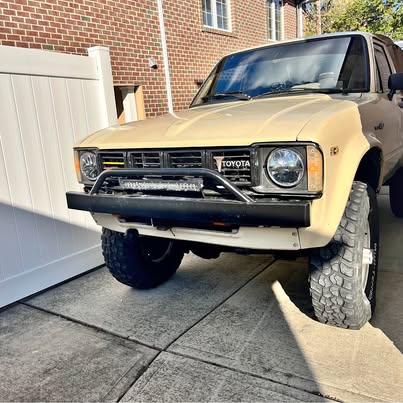
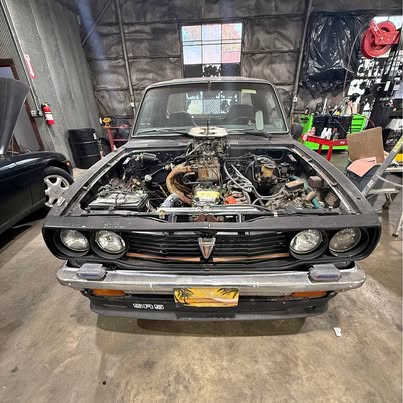
The models
There was never a trim ladder worth memorising. A Pickup is defined by four choices, in this order: generation, cab, drive (2WD or 4WD), and engine. Trim — base, Deluxe, SR5 — changed the seats, instruments, chrome and stickers far more than it changed the truck. Read any listing in that order and you will not be misled by a stripe package.
| Model | Years | Engine | Output | Built | Character |
|---|---|---|---|---|---|
| Pickup (3rd-gen Hilux family) | 1979–1983 | 2.2 four (20R), then 2.4 four (22R) | about 90–97 hp | Not reliably separated by US nameplate | The original formula; solid-axle 4WD, simplest of all |
| Pickup (4th-gen Hilux family) | 1984–1988 | 2.4 four (22R / 22R-E / 22R-TE turbo) | about 97–135 hp | Not reliably separated by US nameplate | Xtra Cab arrives; injection and the rare turbo; IFS from 1986 on 4WD |
| Pickup (5th-gen Hilux family) | 1989–1995 | 2.4 four (22R-E), 3.0 V6 (3VZ-E) | about 112–150 hp | Not reliably separated by US nameplate | The mature truck; V6 common, best cabs, last of the line |
| Pickup 4WD | 1979–1995 | Four or V6, by year | As above | — | Part-time 4WD; solid front axle to 1985, IFS from 1986 |
| Pickup one-ton | Mainly 1980s | 2.4 four (22R / 22R-E) | about 97–112 hp | Small numbers | Heavier rear axle and springs for campers and work bodies |
| Pickup diesel | Early-to-mid 1980s | 2.2 / 2.4 diesel four (L / 2L family) | Well under the petrol fours | Small numbers | Slow, economical, rare in the US; a curiosity now |
(Outputs are period US ratings and vary a little by year and by carburettor versus injection; treat any single horsepower figure a seller quotes as approximate. Toyota did not publish US "Pickup" production in a form that separates these generations cleanly by nameplate, so no built figures are quoted here rather than invented.)
The 1979–1983 trucks. The redesign for 1979 gave the Pickup its classic shape: square, upright, with round headlamps at first and a straightforward steel bed. Four-wheel drive was offered in the US from this generation, and those early 4WD trucks are mechanically the simplest of the whole run — leaf springs at all four corners, a solid front axle, manual locking hubs and a gear-driven transfer case on most. Two-wheel-drive trucks used independent front suspension with torsion bars, as US compact trucks generally did. Cabs were regular-cab only in spirit: if you need to carry more than two people in comfort, this generation is not your truck. The 20R powered the first years and the 22R replaced it for 1981; the change matters less than condition does.
The 1984–1988 trucks. This is the generation most buyers picture. The styling squared off further, the interior became a genuinely pleasant place, and — the change that matters most — the Xtra Cab extended cab arrived for 1984, with a longer cab, small extra space behind the seats and, on many, little windows in the extended section. It is not a crew cab and adults do not ride behind the front seats in comfort, but for tools, dogs, children on short trips and keeping valuables inside a locked cab it transformed the truck's usefulness. Fuel injection (the 22R-E) appeared in this generation and became the engine to have; the turbocharged 22R-TE was offered briefly in the middle of the generation and is covered under Engines. For 1986 the 4WD trucks changed fundamentally: the solid front axle gave way to independent front suspension with torsion bars. On the road the IFS trucks are better in every measurable way. Off the road, and in the mythology, the solid-axle trucks kept the crown — which is why a straight, unrusted 1985 4WD is a specific and sought-after thing: last year of the solid axle, first era of injection.
The 1989–1995 trucks. The final generation is the most car-like: smoother styling, a better dashboard, improved seats, more sound deadening, and the 3.0 V6 (3VZ-E) now a common option rather than a novelty — it had arrived late in the previous generation, for 1988. The four-cylinder did not disappear; the 22R-E remained the base engine to the end and is, for many buyers, still the point of the exercise. These last trucks are the easiest to live with daily, and the most likely to be priced by sellers who have fully absorbed the model's reputation — judge the metal, not the story.
SR5 and the trim question. SR5 was the sporty, better-equipped trim: bucket seats, fuller instrumentation (a tachometer where base trucks made do without), upgraded trim, and stripes and decals that varied by year. An SR5 badge adds desirability and a little money; it does not add strength, gearing or capability, with one practical exception — SR5 trucks are more likely to have been bought as personal vehicles rather than as the cheapest possible work tool, and personal trucks tend to have had easier first lives. Verify trim by equipment present, not by decals, because stripe kits and badges have been added to base trucks for forty years.
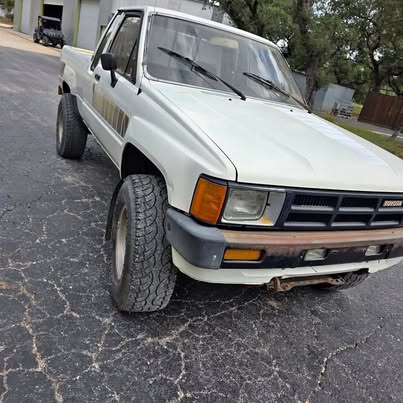
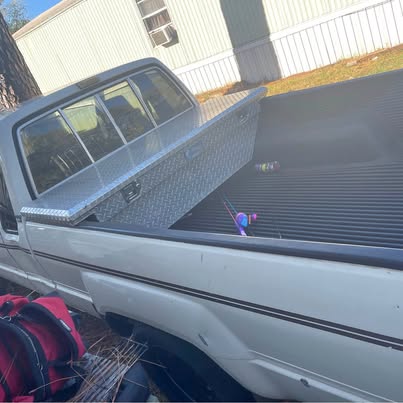
Cab and bed. Regular cab and Xtra Cab; short and long beds, with the mix varying by year and drive. The long-bed trucks are work tools and ride better laden; the short-bed 4WD trucks are the recreational shape. None of this is rare enough to pay a premium for by itself — except insofar as the combination a buyer wants (Xtra Cab, 4WD, injection, manual gearbox) narrows the field a great deal, because so many trucks were built as simple 2WD regular cabs for work.
The one-ton and the diesel. Toyota sold a one-ton version — heavier rear axle, uprated rear springs, often a chassis-cab destined for a camper or service body — and a small number of diesel Pickups in the early-to-mid 1980s, using the L-family diesel fours. Both are footnotes in volume and interesting in person. The one-ton's heavier hardware is genuinely useful if you intend to carry weight; the diesel is slow in a way modern drivers find startling, economical, and supported by a much thinner parts pipeline than the petrol fours. Buy either because you specifically want it, not because rarity alone will carry the value.
Engines and gearboxes
The fours: 20R, 22R, 22R-E and 22R-TE
One engine family does most of the work in this guide, and understanding it is most of understanding the truck. The R-series fours are single-overhead-cam, crossflow-head four-cylinders with a cast-iron block, an alloy head and a timing chain — not a belt — driving the camshaft. They are undersquare, low-revving and tuned for torque and survival rather than for power, and their reputation for lasting 250,000 miles and more is earned, provided one specific weakness — covered in Problem areas and returned to below — is managed.
20R (1979–1980 in this guide's scope). The 2.2-litre 20R powered the first trucks of the 1979 generation, rated at roughly 90 hp in US form: a simple, carburetted engine with adjustable valve clearances. Keep the valves adjusted, the oil changed and the cooling system honest, and it will run for a very long time. Its age is its problem now — every hose, vacuum line and carburettor gasket is over four decades old unless renewed, and the emissions-era carburation (air injection, a thicket of vacuum hoses and thermal switches) means a neglected 20R can idle badly for half a dozen separate small reasons at once. None is expensive. Together they are a weekend of tracing, and the tracing is the cost.
22R (1981–1990, carburetted). The 2.4-litre 22R is the engine the legend was built on. In carburetted US form it makes roughly 97–105 hp depending on year, which sounds like nothing and, on the road, feels like just enough — because the torque arrives early and the gearing is honest. It uses a two-barrel carburettor (Aisan, in Toyota's supply chain) and, on later cars, an increasing amount of emissions plumbing. A healthy 22R starts readily, idles with a slight mechanical busyness that is normal for the family, pulls from low revs without complaint, and shows no smoke. Blue smoke at start-up that clears is valve stem seals — common, cheap in parts, and not a reason to walk away. Smoke under load, a knocking bottom end, or coolant disappearing with no visible leak are the serious signs, and the last of those points at the family's signature failure, below.
22R-E (fuel-injected, mid-1980s to 1995). The injected version is the one to have for a truck you intend to use. Toyota's electronic fuel injection (with the air-flow meter and ECU of the period) replaced the carburettor, output rose modestly to roughly 105–116 hp by year, and in exchange for a little more to diagnose you get instant cold starting, clean hot restarts, altitude compensation and no choke cable rituals. The system is fundamentally reliable; its age faults are mundane — a tired fuel pump, a clogged filter, cracked intake hoses between the air-flow meter and the throttle body leaking unmetered air, corroded ECU grounds, and idle-air components gummed with decades of crankcase vapour. A 22R-E that hunts at idle or stumbles just off idle is usually confessing to an air leak or a filthy throttle body, not to a dead computer, whatever the seller has been told. ECUs themselves fail rarely; connectors and grounds fail constantly. That ordering — hoses, grounds, sensors, and only then the box — will save you real money.
22R-TE (turbocharged, mid-1980s). For a brief period Toyota offered a factory turbo version, the 22R-TE, rated at about 135 hp, in 4WD and 2WD trucks including the SR5. It is the rarest engine here and the most collectible, and it deserves a clear eye rather than worship. The installation is period Toyota: conservative boost and engine management adapted from the injected car. When it is right, a 22R-TE truck is usefully quicker and a genuine curiosity. When it is wrong, you own a forty-year-old turbo system with heat-cycled manifolds, oil lines that coke up, and a parts pipeline far thinner than the 22R-E's. Heat is the theme: check for cracked exhaust manifold castings, oil weeping at the turbo, and hoses near the turbo cooked hard — a turbo engine forgives overheating even less than the standard one, which is to say not at all. Buy one with a specialist's inspection, and never pay the rarity premium for a truck whose turbo history is a shrug.
The signature issue, stated once here and in full later: the 22R family's timing chain runs against plastic-faced guides. As the chain stretches and the guides wear — and especially once a guide breaks — the slack chain can saw into the timing cover at the water pump passage until it breaches into the coolant. The result is coolant in the oil (or oil in the coolant) on an engine whose head gasket is perfectly innocent. This single mechanism is responsible for a large share of the "blown head gasket" diagnoses, the milkshake oil and the quietly ruined bearings in this model's history. It is preventable, it is detectable, and inspecting for it is step-critical in the checklist below.
Diesel fours (L family). The small number of US diesel Pickups used Toyota's L-family diesels — indirect-injection fours of about 2.2 and later 2.4 litres: mechanically simple, very economical and very slow. Glow-plug condition, injector condition and cold-start behaviour are the whole inspection; a diesel that starts cleanly from cold on its glow plugs, without prolonged cranking or white smoke that never clears, is a healthy one. US parts support is thin. Treat a diesel as a specialist purchase.
The V6: 3VZ-E
For 1988 Toyota added the engine buyers had been asking for: the 3VZ-E, a 3.0-litre V6 rated at about 150 hp, single overhead cam per bank, with fuel injection. It transformed the truck's highway manners. A V6 Pickup cruises at modern speeds without the four's constant downshifting, tows modest loads with far less drama, and makes the automatic gearbox a sensible choice rather than a compromise. If your use is distance, altitude or towing, the V6 is the rational engine in this guide.
Its record, honestly stated, is good but not 22R-good, and the difference has a name: head gaskets. The 3VZ-E became known for head-gasket failure — typically at the rear of the heads, presenting as external coolant weeping, overheating under load, or coolant loss with no puddle — to the point that Toyota ran a well-known service campaign on these engines in the 1990s. Many trucks had the work done, some more than once; later gasket designs and the correct head-bolt procedure improved matters materially. None of this makes a V6 truck a bad buy. It makes the paperwork the buy: a 3VZ-E with documented head-gasket work is a known quantity, and one with a mysterious coolant top-up habit and no history is a priced-in repair waiting for a date. The V6 also uses a timing belt, not a chain — a service item (period practice is roughly 60,000–90,000 miles) whose neglect risks an expensive failure, though the 3VZ-E is generally regarded as non-interference, so a snapped belt usually strands you rather than destroying valves. Ask for the belt's invoice as you would ask for chain-and-guides paperwork on a Mercedes; the logic is identical.
Around the head gaskets, the V6's ordinary faults are ordinary: valve-cover leaks baking oil onto the exhaust, a tired idle-air valve, manifolds that tick when cold from a small crack or failed gasket, and cooling systems that must be in full health because this engine tolerates overheating worst of all here. Oil consumption on a high-mileage 3VZ-E is common and, within reason, tolerable; coolant consumption never is.
Gearboxes and drive
Manuals. Most Pickups are manuals — in our 8-car pool, 5 of the 8 — and the boxes are part of the legend. The five-speeds fitted behind the fours (the W-series family, including the W56 widely used in 4WD trucks) and the stronger boxes behind the V6 and turbo are long-lived, their synchromesh wearing by mileage and abuse rather than age. Second and third gears show wear first: a crunch on a hurried change that disappears when you slow the shift is wear you can live with for years; a box that jumps out of gear under load, or whines in every gear, is a rebuild conversation, realistically $1,500–3,000 at a specialist. Clutches are conventional and cheap in parts ($300–600 for a kit); judder, a high biting point and slipping in top under load are the wear signs, in roughly that order.
Automatics. The automatics are conventional torque-converter boxes (the A340 family served widely behind the V6 and later fours), well matched to the V6, less happily to the four, whose modest output the converter's losses noticeably blunt. Judge them as you judge any period automatic: fluid that is red and smells of nothing much, prompt engagement of drive and reverse, changes firm rather than flaring. A rebuild is a known, priceable job — roughly $2,500–4,500 — and an automatic priced as though its box were new, with brown fluid and a two-second pause into reverse, is mispriced by about that much.
Four-wheel drive. All 4WD Pickups are part-time systems: a two-speed transfer case, no centre differential, and four-wheel drive for loose surfaces only — driving one in 4WD on dry pavement winds up the transmission until the truck hops, groans and eventually breaks something, so a truck that "feels tight" in 4WD on tarmac is demonstrating misuse, not health. Early trucks use manual locking front hubs; later ones may have automatic disconnect systems depending on year — establish what the truck in front of you has and test that it engages and releases. Gear-driven transfer cases on many four-cylinder trucks share the engines' longevity reputation; chain-driven cases in later and V6 applications are fine but want their fluid changed. Test low range on every viewing, on a loose surface, and listen for the whine that means the case has been run dry. Front-axle differences are the generation split already described — solid axle with Birfield joints to 1985, independent suspension with CV half-shafts from 1986 — each with its own wear items, covered under Problem areas.
Gearing and axles. Rear axles are strong and rarely the story unless a one-ton or a worked-to-death truck is involved. Differential whine under load, pinion seal leaks and tired wheel bearings are the usual findings. The door-jamb plate's axle codes identify ratio and differential type — a limited-slip was available in later years — and decoding the plate beats any assumption from the badge, exactly as with a Mercedes data card.
Problem areas
Everything in this section is the distilled experience of forty years of these trucks being worked, parked, salted and resurrected. The ordering is deliberate and it is not the ordering most listings invite. Sellers photograph paint, seats and engine bays. The thing that ends a Toyota Pickup's life is underneath it, made of steel channel, and invisible in every photograph taken from standing height. Start there, always.
Frame rust: the map
The Pickup's frame is a separate ladder chassis, and in principle that is good news: a frame can be inspected along its whole length, its condition is not hidden inside body pressings, and local repairs are possible in a way that a rotten monocoque sill is not. In practice the frame is this model's sill, spring perch and frame rail combined — the single structural subject that decides whether a truck is a purchase or a parts source.
Rust follows a recognisable map. Work through it in this order:
The rear frame, around and behind the rear axle. The classic failure zone. The rails from the cab rearward — around the front spring hangers, over the axle, and through the rear spring and shackle mounts — collect road salt, mud and bed drainage, and boxed sections trap it inside where no hose ever reaches. Perforation here is not cosmetic: the rear springs hang from this metal, and a rail that flexes or cracks at a hanger is a truck whose rear axle location depends on rust. Prod with a screwdriver, tap with a small hammer and listen for the change from a ring to a crunch, and get a torch inside any boxed opening you can find. Surface scale that cleans to sound metal is a maintenance job. Holes, lamination flaking away in layers, or metal a screwdriver pushes through are a fabrication conversation — frame sectioning and welding by someone who does chassis work, realistically $1,500–4,000 and up depending on extent, and only worth doing on a truck that is otherwise right.
The spring hangers, shackles and shock mounts. The frame can pass and its furniture fail. Rear spring hangers and shackle brackets corrode at their riveted and bolted joints, shock mounts tear, and the crossmembers — particularly the one carrying the spare wheel and the ones under the bed — rot where mud sits on their top faces, invisible from below until they are far gone. Budget hangers and crossmember repairs as welding jobs in the hundreds each rather than the thousands for rails, but count them all before you offer: three "small" welding jobs plus a rail repair is a frame restoration wearing a disguise.
The middle frame and cab mounts. Under the cab, check the rails for the deep pitting that comes from a truck that has sat in wet grass — the underside rusts from condensation and soil contact even in states that never see salt — and check the cab mount brackets and rubbers. Perished mounts let the cab sit down and knock over bumps and misalign the doors. The mounts are a kit and a day's work; brackets rotted off the rail are welding again.
The front frame and steering mounts. The front rails, the steering box mounting area and the front crossmember deserve the same prodding. Cracking around steering-box mounts is known on hard-used 4WD trucks, especially ones that have run oversize tyres. Look for previous repair plates: a neatly plated frame, honestly disclosed and well welded, can be a perfectly usable truck; a plated frame under fresh underseal with a seller who "didn't know" is a different proposition.
Reading coatings, Toyota edition. Factory finishes age honestly and patchily. A uniform coat of fresh black stone-chip over the whole frame, applied the week before sale — over the spring hangers, brake lines and wiring — is a cover-up until proven otherwise: nobody restores a frame's cosmetics for the buyer's benefit, and thick coatings both hide rust and trap moisture against it. The correct response is not paranoia but a magnet, a screwdriver and a torch, and a price that assumes the coating is lying until the metal proves it is not.
The bed. Steel beds rust from both directions: the floor corrodes in the seams and at the wheel tubs, the front panel behind the cab traps leaves and rots unseen, and the mounts carry the load regardless. A holed bed floor is replaceable and, on a work truck, arguably cosmetic; rotted-through mounts are structural again. Lift any bed liner — plastic drop-in liners trap water against the floor and produce beds that look tidy in photographs and are lace underneath. If the seller will not lift the liner, price the bed as though it were holed.
One honest footnote on frames: the Tacoma that followed this model became notorious enough for frame perforation that Toyota ran large-scale inspection and replacement programs. The Pickup predates those programs — no safety net exists for it. The frame on the truck in front of you is the frame you are buying, at your risk, forever. That is why this section comes first, and why the checklist puts the truck on a lift before it lets you fall for the engine.
The 22R timing chain, and engine failure modes
The timing chain and its guides — the signature inspection item. Return here in every conversation about a four-cylinder truck, because no other single check prices a 22R as reliably. The mechanism, step by step: the chain stretches with mileage; the tensioner takes up what slack it can; the plastic guide rails — particularly the driver's-side guide — wear, crack and eventually break; the now-loose chain slaps and saws against the aluminium timing cover, at exactly the point where a coolant passage runs behind it near the water pump; the cover breaches; and coolant and oil begin to mix. The early symptom is a rattle from the front of the engine on a cold start that fades as oil pressure builds — the sound of slack chain before the tensioner takes up. The late symptoms are coolant loss, oil that looks like milky coffee on the filler cap and dipstick, overheating, and bearing damage from diluted oil — on an engine that will still, deceptively, run.
The buyer's tests are three. First, the cold-start rattle, listened for with the engine genuinely cold: a brief second of noise is common on a tired tensioner; sustained slapping is the chain asking for money. Second, the oil and coolant themselves: pull the dipstick and filler cap and look for emulsion, and check the coolant for oil — then understand that either finding means investigate the cover before condemning the head gasket, because the cover failure mimics it almost exactly and the repair is different work. Third, history: documented chain, guide and cover work — or at minimum a guide inspection in the 100,000–150,000-mile window many specialists use on a truck with no record — is worth a premium, exactly as documented injection-pump work is on a Mercedes SE. The job itself runs realistically $900–2,000 in parts and labour at an independent, more if the cover is badly cut or the engine has run long on mixed fluids. A truck with milkshake oil and a seller insisting it "just needs a head gasket" should be priced as an engine of unknown internal condition, because that is what it is.
Head gaskets, both engines, kept separate. The 22R can blow a head gasket in the ordinary way — overheating, detonation on poor fuel, age — but it is not the family's defining failure, and the cover breach above must be excluded first. The 3VZ-E V6 is the opposite case: head-gasket failure is its defining failure, covered under Engines, and the tests are coolant loss, external weeping at the back of the heads, combustion gas in the coolant (a chemical block test settles it in minutes), and overheating that appears under load and vanishes at idle. Do not let a seller blur the two engines' stories together; they fail differently, they are diagnosed differently, and they cost differently.
Cooling systems generally. Every engine in this guide is old enough that its radiator, hoses, water pump and fan clutch are either renewed or suspect. A part-plugged radiator shows itself exactly when you least want it — a long grade, a hot day, a load — and both the 22R's cover problem and the V6's head gaskets are made worse by every overheating episode. A truck that runs cool in traffic and on a grade, with a radiator that looks new-ish and hoses that feel like rubber rather than wood, has had the single most valuable maintenance an old Toyota can receive.
Oil leaks and consumption. Rear main seals, valve-cover gaskets, distributor O-rings on the fours and cam seals weep with age; a dry engine on a 200,000-mile truck has usually been cleaned for sale, which is fine, but look at the underside and the back of the block for the truth. Oil consumption of a quart between changes on a high-mileage 22R is a fact of life; a quart every 500 miles is rings or guides and a rebuild conversation ($3,000–5,500 for a proper 22R rebuild, which is why so many trucks instead received used engines — ask which engine the truck actually has, and whether its number matches the era of the truck).
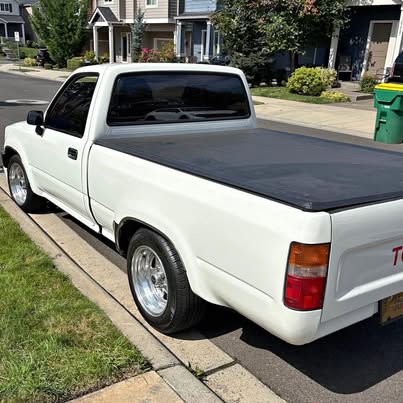
Suspension, steering and the 4WD systems
Rear suspension is leaf springs and a live axle on every truck here, and its faults are honest ones: sagging or broken leaves (count them, compare sides, look for a main leaf cracked at the eye), worn shackle bushes, and dead shock absorbers no seller ever mentions. A truck that sits level and does not crab down the road has a healthy rear end; a tail-down truck on broken leaves is a few hundred dollars of springs, not a tragedy — provided the hangers they bolt to passed the rust section above.
Front suspension, 2WD and IFS 4WD. Independent trucks use torsion bars with double wishbones. Wear concentrates in ball joints, idler and pitman arms, tie-rod ends and bushes — all cheap parts, collectively a $600–1,500 front-end refresh with alignment if everything has gone at once, as it usually has. Torsion bars sag and get wound up to compensate, which restores ride height and ruins ride quality; a truck that sits right and rides harshly may simply be telling you that. Power steering, where fitted, leaks from pumps and boxes; manual steering on a 2WD truck is heavy at parking speeds and indestructible.
Solid-axle 4WD front ends (1979–1985). The live front axle rides on leaf springs and steers through knuckles whose Birfield joints run inside closed knuckles packed and sealed with felt and rubber seals that perish. The classic presentation is grease and gear oil mixing and weeping from the knuckle balls — a knuckle service (seals, bearings, trunnion bearings, fresh grease) is a known job at roughly $600–1,200 in parts and labour, and a truck with dry, rusty knuckle balls has been run without the service for a long time. Wheel bearing play, worn spring bushes and a tired steering stabiliser complete the list. None of it is exotic; all of it is labour.
IFS 4WD front ends (1986–1995). The independent trucks replace Birfields with CV half-shafts, whose boots split and whose joints then die of grit — a clicking CV on full lock is a shaft, at a few hundred dollars a side. Front differential mounts perish, automatic disconnect systems (where fitted) fail to engage, and manual hubs seize through disuse. Test engagement on dirt, in both ranges, on every viewing — the system that is never used is the system that has seized.
Brakes. Discs at the front, drums at the rear on most. The parts are cheap; the enemy is sitting. Seized calipers, perished flex hoses, corroded hard lines — inspect the lines along the frame rail with the same suspicion as the frame itself, because they rust in the same places — and rear drums full of axle-seal oil are the standard recommissioning list, $600–1,500 for a full hydraulic refresh with labour. A truck that stops straight, with a firm pedal and a handbrake that holds on a grade, has passed a test half the survivors fail.
Cab, bed, interior and electrics
Cab rust follows the water, but the map is shorter than a sedan's: cab corners and rockers, the floor pans under the mats (lift them — a wet floor under a leaking windshield seal or rotted cowl is the norm, not the exception), door bottoms, and the cowl and windshield surround. Cab rust is repairable panel work and rarely kills the truck by itself; what it does is tell you how the truck has lived and where the frame inspection should look hardest. A cab with rotted floors over a seller-described "solid frame" deserves a second, slower look underneath.
Interiors are vinyl, cloth and hard plastic, and they age in sunlight: dashboards crack across the top, seat vinyl splits at the driver's bolster, foams collapse, door cards warp. SR5 buckets and Xtra Cab trim are nicer and harder to replace like-for-like. Judge the interior from the driver's seat, but price it differently from a luxury car's: a serviceable Pickup interior can be made presentable with seat covers, a dash cap and used trim for hundreds rather than thousands. Heater blowers, window regulators and wiper linkages wear; test them all.
Electrics are the simplest in any guide in this programme: an alternator, a starter, a small fuse box, and wiring that fails at grounds and connectors rather than in looms. Charging problems, dim lights and wandering gauges are ground straps and corroded terminals until proven otherwise. The 22R-E adds the air-flow meter, throttle position sensor and oxygen sensor to the age suspects; the V6 adds more of the same. A truck where everything electrical works has been used and maintained — on these trucks that correlation is the best single predictor there is.
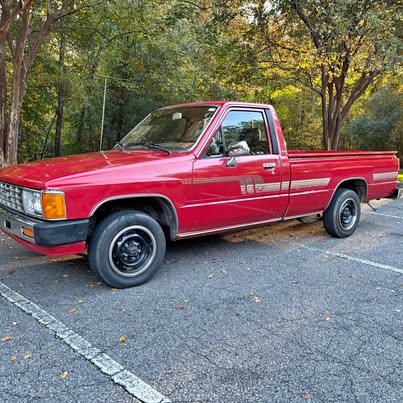
How to inspect one
Allow an hour, bring a torch, a small hammer or a screwdriver for tapping and prodding (with the seller's permission), a magnet wrapped in cloth, and a jack and stands or — better — pay for lift time. On this model the lift is not a luxury: the purchase decision lives underneath, and a seller who will not let the truck go on a lift has answered the most important question already.
- Start with the paperwork and the identity. Match the VIN on the title to the plate on the door jamb and the stamping the truck carries. Decode the jamb plate's axle and trim codes rather than trusting the badges. Remember what the truck is: a US Pickup, Hilux by engineering, not a Tacoma — and treat any listing that calls a pre-1995 truck a Tacoma, or a US truck a Hilux on its paperwork, as a prompt to check everything else twice. In our own 8-car pool, one entry is described with the Tacoma name against a 1991 year — a combination that cannot be factory-correct, and exactly the kind of loose labelling this step exists to catch.
- Cold start, and listen at the front of the engine. Insist the engine is genuinely cold. A 22R should start readily and settle; stand at the front and listen for timing-chain rattle that lasts beyond the first second or two — the signature sound from the Problem areas section, and the cheapest $1,000 you will ever save. A 22R-E should start instantly with no throttle. A V6 should start cleanly and idle without a coolant smell at the exhaust.
- The oil and coolant cross-check. Pull the dipstick and the oil filler cap: look for milky emulsion. Check the coolant reservoir and, when cool, the radiator: look for oil contamination and for a level that suggests regular topping-up. Emulsion on a four means investigate the timing cover before anyone says "head gasket"; coolant loss on a V6 means the head-gasket questions from the engine section, settled with a block test if the truck otherwise stacks up.
- Under the truck — the frame, in map order. Torch and hammer along both rails from the cab rearward first: spring hangers, over-axle sections, shackle mounts, crossmembers. Then the middle rails and cab mounts, then the front rails and steering-box area. Perforation at a spring hanger or in a rear rail is structural and decides whether you continue at all. Read any underseal as you go — patchy and honest is age; a fresh uniform coat over everything is a question, not an answer. Prod, tap and listen for the ring turning to a crunch.
- Bed and its mounts. Lift any drop-in liner, or price the bed as holed if you cannot. Check the bed floor seams and wheel tubs, the front panel behind the cab, and the bed mounts from underneath. Separate in your notes "bed floor rust" (panel work) from "mount and frame rust" (structural) — sellers blur them deliberately.
- Cab floors and corners. Lift the mats in both footwells. Look for water tracks from the windshield base and cowl, prod the pans, check the cab corners and door bottoms. Wet floors mean leaking seals and a truck that has been storing water; find where it has been going.
- Suspension and steering, by generation. Rock each front wheel for bearing and joint play. On an IFS truck, check ball joints, idler arm and CV boots. On a solid-axle truck, look hard at the knuckle balls for the grease-and-oil weep that means a knuckle service is due. At the rear, count the leaves, compare the sides, check shackle bushes, and bounce each corner for dead shocks.
- Engage four-wheel drive properly. On dirt or gravel — never judge it on dry pavement — engage 4WD high and low, confirm the hubs or disconnect system actually engage, crawl in low range, and listen to the transfer case. Disengage and confirm it releases. A system that will not engage, or will not let go, is priced into the offer.
- The test drive. Twenty minutes, including a hill and a highway stretch. A four should pull cleanly from low revs without hesitation — flat spots mean carburation on a 22R, air leaks or fuel delivery on a 22R-E. A V6 should pull a grade without the temperature gauge moving. The manual box should take second and third without a crunch when shifted at a normal pace; the automatic should engage drive and reverse promptly and change without flaring. Brake hard from speed: straight stop, firm pedal, no pull, no judder.
- Heat and cooling under load. After the drive, let it idle hot. Watch the temperature gauge's whole story, check for coolant weeping at the back of a V6's heads, look for leaks at the water pump and hoses on a four, and confirm the fan clutch or electric fan is doing its work. An old Toyota that runs cool under load has had the maintenance that matters most.
- Electrics and the everyday things. Work everything: lights, indicators, wipers and washers, blower on every speed, heater hot and cold, horn, every gauge. Then sit in the driver's seat and judge the interior from there — collapsed foam and a split bolster are the honest wear of these trucks, priced in hundreds, not thousands.
- Stance, last, from a distance. Stand back. A Pickup should sit level side to side, with any tail-down rake explained by springs you have already inspected, not by frame you have not. Look down each flank for ripples, run the magnet over cab corners and bed sides, and photograph it from this distance — faults you talk yourself out of in person are obvious in a picture.
Values
The figures that matter for this model are computed from this site's own listings and recorded sales, and they sit below this guide — the listed-now summary and the market block are refreshed every time the site rebuilds, so use them rather than any number quoted elsewhere. What follows is how to read them, and for this model the first lesson is humility about sample size: our pool behind this guide is 8 cars, all for sale, none recorded sold, all from Facebook. A sample like that describes what is being offered, not what trucks achieve, and a single exceptional or desperate listing moves its numbers violently. The range matters more than any median, and the recorded-sales evidence matters more than either.
The Pickup market is really a market in frames with trucks attached. The condition spread is the widest of any vehicle in this programme relative to the trucks' original prices, because the mechanicals converge — almost any survivor can be made to run well for moderate money — while the structure diverges completely: a dry-state frame and a salted frame are different assets wearing the same paint. Read every asking price as a claim about the underside, and discount it in full until you have been underneath with a torch.
Within that, the premiums have clear logic. The 1985 4WD — last solid axle, injection era — carries an off-road following that lifts straight examples well above their IFS successors. The turbo 22R-TE trucks carry a rarity premium that is real but thin: few buyers, few trucks, prices set by whichever two people want the same one. The SR5 badge and the Xtra Cab each add genuine money because they add genuine use. The V6 splits the market — worth more to the buyer who will tow and travel, worth less to the buyer who came for 22R simplicity — so a V6 can be simultaneously overpriced for one audience and cheap for another. The diesel and the one-ton are priced by specialists and should be bought against specialist advice.
The project-versus-driver gap is where this market traps newcomers in the opposite direction from most classics. Because a running Pickup feels indestructible, buyers overpay for runners with rotten frames and underpay for structurally sound trucks with tired engines — exactly backwards, since the engine is the fixable part. A sound frame under a truck that needs a timing-chain set, a knuckle service and a brake refresh is the value buy in this entire guide. And asking prices on these trucks carry a reputation tax: sellers price the legend, buyers at auction and in person pay for the metal, and the gap between the two is your negotiating room — provided your inspection, not the seller's story, is what established the metal's condition.
Parts and ownership
The Pickup is one of the best-supported old trucks in existence, for the simplest of reasons: Toyota built them in enormous numbers worldwide as the Hilux, they were sold on every continent, and a working aftermarket follows working trucks. The qualification matters, though — support is deep for the mechanical core and thinner at the edges of US-specific trim.
Easy: service items for the 22R family — filters, plugs, belts, hoses, water pumps, timing-chain sets and guides (buy the best kit available; this is not the place to save $40) — brake discs, pads, calipers and hydraulics, clutch kits, suspension bushes, ball joints, shocks and leaf springs, exhaust systems, radiators and cooling parts, U-joints, and most seals and gaskets. Order today, fit this weekend, at prices close to modern-car money.
Harder and dearer: 22R-TE turbo components and manifolds; diesel-specific parts in the US; 3VZ-E head work done properly (the parts are available — the expertise is the cost); good cab and bed sheet metal for the early generations, which is why rust-free dry-state panels travel across the country; SR5-specific interior trim in good order; early solid-axle knuckle components are available but the service is labour; and glass and rubbers for the earliest trucks. A quality repaint costs what a quality repaint costs anywhere — from around $8,000 upward done properly — which is the arithmetic behind this guide's mantra: buy the frame and the cab, fix the mechanics.
Running costs. A sorted Pickup is among the cheapest classics in this programme to actually use. Fuel consumption is in the high-teens to low-twenties mpg for a four-cylinder truck driven gently, worse for a V6 or a lifted 4WD on big tyres. Servicing is within any competent home mechanic's ability — the trucks were designed for markets where the dealer might be a day's drive away — and any independent Toyota shop will know the 22R's chain and the V6's gaskets on sight. The budget line that catches new owners is the first year: catching up deferred maintenance on a running truck — chain guides done, cooling renewed, brakes refreshed, every fluid changed including transfer case and differentials — honestly costs $1,500–4,000 before you improve anything. Recommissioning a truck that has sat for years runs more: ethanol fuel varnishes tanks and lines, brake hydraulics corrode from inside, and tyres date-expire on trucks that never wear them out. Buy a truck in regular use over one that has been asleep, even at a higher price.
One ownership habit is this model's whole longevity secret: wash the frame. Owners in salt country who rinse the rails, hangers and crossmembers through winter, and treat boxed sections and bed drains as maintenance items, keep these trucks alive decades past their salted contemporaries.
Which one to buy
- The all-rounder: 1989–1995 22R-E, Xtra Cab if you can find it. Injected, mature, the best cab of the run, with the four-cylinder's simplicity intact. If you want one Pickup to use for everything, this is it.
- The value buy: a sound-frame 1984–1988 22R-E. The middle generation is the deepest pool and the least fashionable; a dry truck with tired mechanics is the cheapest route into everything this model does well — because the mechanics are the cheap part.
- The off-roader's pick: 1985 4WD. Last year of the solid front axle, first era of injection. Verify the knuckles, the steering-box mounts and the frame, expect to pay the following's premium, and know that a straight one is genuinely scarce.
- The cruiser and tower: 3VZ-E V6, 1989–1995. The only Pickup that keeps up with modern traffic without effort. Buy the paperwork — documented head-gasket and timing-belt history — as much as the truck.
- The collector's curiosity: 22R-TE turbo. Rare, quick and interesting, with the thinnest parts support here. A specialist inspection is not optional, and neither is a sense of humour about heat-aged components.
- The traditionalist: 1979–1983, 20R or 22R. The simplest trucks of the run, regular cab, leaf springs everywhere on the 4WD. Buy survival and honesty; these are priced by condition, not specification, and the good ones were never salted.
- The worker: one-ton or long-bed 22R/22R-E. Heavier hardware, honest specification, no fashion premium. If the truck is for carrying things, this is the rational money to spend.
And the rule that overrides all of the above: buy the least rusty frame you can find, in the specification you can live with. Timing chains, head gaskets, knuckles, brakes and clutches are all fixable at prices you can plan for. A perforated frame costs more to put right than the finished truck will be worth — and on a model whose legend is that it cannot be killed, the frame is the one way it dies.
See the 23 Pickup cars currently listed.
For sale now
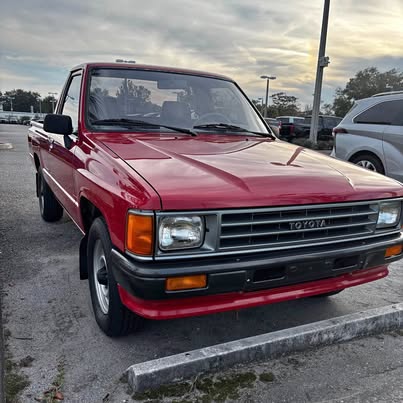 $17,500
Expand
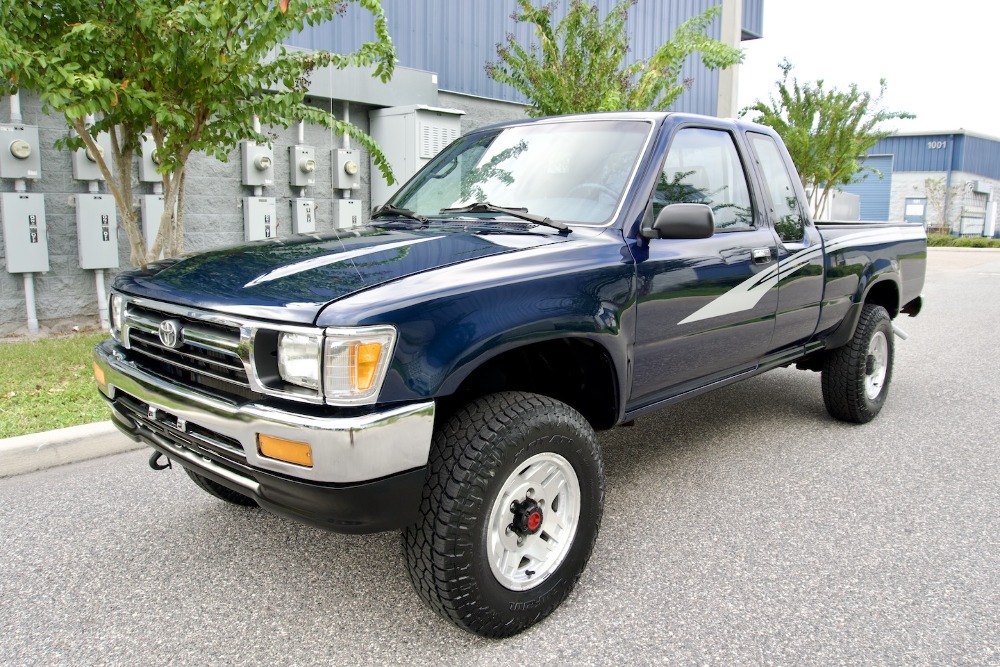
Expand
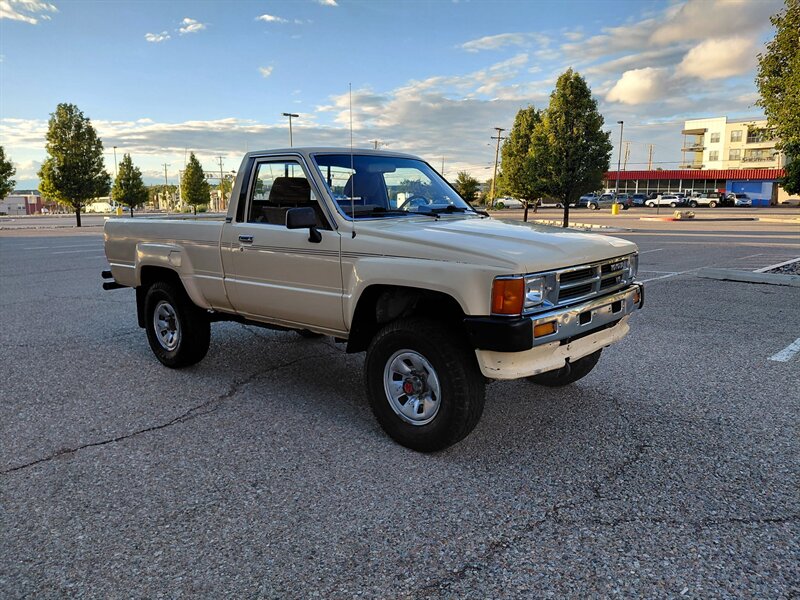
Expand
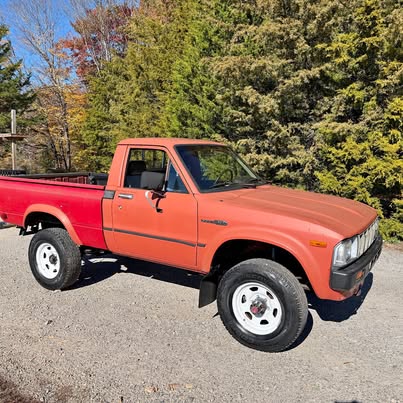 $7,900
Expand
What they sell for: Pickup sale prices.