
Volkswagen super bug convertible buyer's guide
Volkswagen super bug convertible -- the model's own buyer's guide: variants, values and what to check.
Years listed: 1973-1973 · Series: Beetle
Overview and history
First, the name, because it decides what you are actually shopping for. Nobody at Volkswagen ever sold a car officially called the Bug. The car is the Volkswagen Type 1 — the Beetle, the Käfer in German — and "Bug" is simply the American nickname that stuck hardest, the word buyers search, the word sellers title their listings with, and the word this site's taxonomy files a slice of its Beetles under. So this guide covers the classic air-cooled Beetle under its Bug name: the rear-engined, flat-four, torsion-bar car built in essentially one continuous design from the 1940s to the end of German sedan production in 1978, and in Mexico until 2003. It does not cover the New Beetle of 1998 onward, which is a front-engined, water-cooled Golf in a retro costume and shares nothing with the car here but the silhouette. If a listing says Bug and the engine is in the front, you are in a different market entirely.
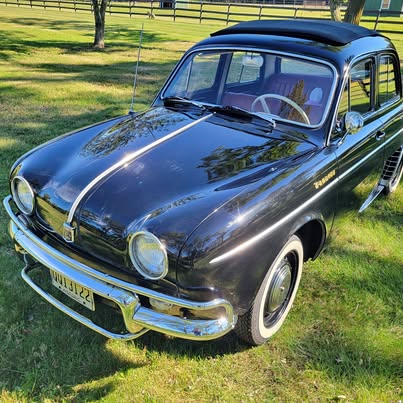
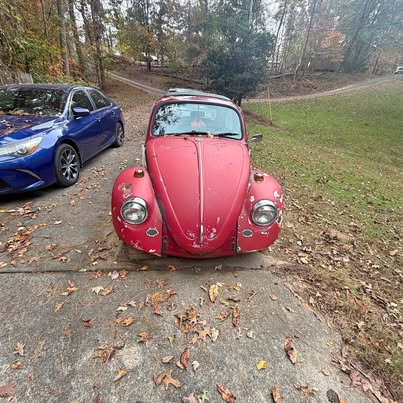
In this site's current pool the distinction is clean: all 5 cars filed under the Bug name are filed in the Beetle series, they span 1958 to 1977, every one of the 5 carries a manual gearbox, and every one arrived via Facebook Marketplace sellers. That is a small sample — treat it as a flavour of what surfaces under this name, not a census — but its spread is honest to the model: one car from the 1950s, one from the early 1960s, two from the turn of the 1970s and one late car, which is exactly how the Bug market presents. At any given moment you will be choosing between early, middle and late versions of what looks like the same car, and the whole skill of buying one is knowing how much changed underneath that unchanging shape.
The design predates the war. Ferdinand Porsche's office developed the KdF-Wagen in the 1930s to a brief for a cheap people's car: air-cooled engine at the back so there was no radiator to freeze or boil, torsion-bar suspension, a backbone-chassis floorpan with the body bolted on top, and every component simple enough to be serviced anywhere. Serious civilian production began in 1945 at Wolfsburg, and the car became the best-selling single design in history: total Type 1 production passed 21.5 million — the figure usually quoted is 21,529,464 — and in 1972 the fifteen-millionth car took the Model T Ford's production record.
Exports to the United States began in 1949 — famously, just two cars sold that first year — and the growth that followed made Volkswagen the defining import marque in America. The car succeeded precisely because it refused to change: while Detroit restyled annually, the Beetle improved in small, cumulative, almost invisible steps. Engines grew from 1.2 litres and 36 horsepower to 1.6 litres; electrics went from 6 volts to 12; windows and bumpers grew, safety and emissions equipment accumulated. But a 1977 car and a 1958 car are recognisably one machine, and a mechanic who knows any year knows the grammar of all of them.
For the US buyer the key dates are these. German-built sedans were sold in America through the 1977 model year; the Cabriolet — built by Karmann — continued into 1979, sold as a 1980 in its final run. German sedan production ended in January 1978. Production continued longest at Puebla, Mexico, where the last car of all was built on 30 July 2003; Mexican and Brazilian cars were privately imported in small numbers and have their own specifications, outside the mainstream US market this guide addresses.
What defines buying one now is a paradox. This was the cheapest, most disposable car of its era, maintained for decades on a shoestring by owners who were told — correctly — that it would tolerate almost anything. So the survivors divide sharply: genuinely preserved cars, garaged and structurally sound, increasingly valued for the ordinariness that used to make them worthless; and the enormous middle — painted twice, engined three times, patched underneath, lowered, raised, chopped into Baja bugs, loved and abused in equal measure. No classic rewards inspection over specification more completely. Two Bugs of the same year and colour can be a sound car and a structural write-off wearing the same smile. This guide exists to tell them apart.
The models
There is only one model here in the modern sense — one body, one layout, one engine family — so what you are choosing between is not models but eras, defined by engineering changes mostly invisible in a listing photograph. Learn the breakpoints and you can date a car from across a car park, spot a car wearing the wrong year's parts, and understand why two outwardly identical Bugs drive and cost so differently. The table gives the US-market spine of the run.
| Model (US market) | Years | Engine | Output | Built | Character |
|---|---|---|---|---|---|
| 1200 (oval window) | 1953–1957 | 1,192 cc flat-four | 36 hp | Part of 21.5m total | The collector's early car; split-window cars (to 1953) precede it |
| 1200 (big window) | 1958–1965 | 1,192 cc flat-four | 40 hp from 1961 | Part of 21.5m total | The classic early Bug; simple, slow, 6-volt |
| 1300 | 1966 only | 1,285 cc flat-four | 50 hp | One US year | One-year engine in the US; last 6-volt year |
| 1500 | 1967–1969 | 1,493 cc flat-four | 53 hp | Part of 21.5m total | 12-volt from 1967; 1967 is a one-year-parts car |
| 1600 (single-port) | 1970 | 1,584 cc flat-four | 57 hp | One US year | The strongest single-port; a sweet spot for drivers |
| 1600 (dual-port) | 1971–1979 | 1,584 cc flat-four | 60 hp, later net ratings lower | Part of 21.5m total | Doghouse cooler, best parts support; Super Beetle alongside |
| Super Beetle | 1971–1979 | 1,584 cc flat-four | 60 hp | Part of 21.5m total | MacPherson strut front end; a different front half, not a trim level |
| Cabriolet | 1949–1980 | As per year | As per year | About 330,000 by Karmann | Open car, built by Karmann; premium and its own rust story |
(Outputs are period SAE gross figures for US cars, the numbers Volkswagen of America advertised; later US cars were also quoted in lower SAE net terms as the industry changed its method, which is why a 1975 car can appear less powerful than a 1971 on paper while using essentially the same engine. Production was not published as a clean per-US-variant split, so the table honestly gives the run total rather than invented per-model figures; the Cabriolet total, built by Karmann at Osnabrück, is the one variant count that is well established.)
The split and oval cars (to 1957). The earliest cars have a two-piece split rear window — that design ended in March 1953 — and the oval rear window that replaced it ran to the end of the 1957 model year. These are the collector's cars: semaphore turn signals on the earliest, small tail lights, an austere cabin, a crash (non-synchromesh) first gear, and a pace modern traffic tolerates only just. Their value logic is originality — correct early parts are scarce and expensive — because an early shell wearing later parts is worth a fraction of a correct car.
The big-window 1200 (1958–1965). The 1958 model year brought the enlarged rear window and a larger windshield, and this is the car most people picture as the classic Bug: tall front fenders, small bumpers with overriders, a simple painted dashboard. From 1961 the 1200 became a revised 40 hp engine with a different case and heads — the 36 hp and 40 hp engines are not interchangeable in all their parts, a distinction that matters when a seller says "1200 engine" as if there were one kind. Front suspension is the link-pin design (ball joints arrived for 1966), and these cars are 6-volt.
1966 and the 1300. One year, one engine in the US: the 1285 cc "1300," 50 hp, the last 6-volt US year and the first for ball-joint front suspension. A well-liked driver's car — noticeably stronger than a 1200, still early in feel. Many 1300s have long since been rebuilt as or replaced by 1600s, so verify what is actually in the car by its engine number rather than its badge.
1967: the famous one-year car. If you learn one year cold, learn 1967. It was the first US year for 12 volts and the 1500 engine, and Volkswagen changed so many details for that year only — before revising them again for 1968 — that 1967 owns a parts catalogue of its own: the rear decklid, the rear bumper and its overrider tubes, the front fenders and horn grilles, the door handles and locks, the dashboard switches and radio face, the seat-back releases. None of this makes a 1967 a bad buy — many rate it the best-driving early car — but a "1967" wearing a 1968 decklid and bumpers has had bodywork or identity drift, and correct one-year parts cost real money. Price a 1967 on what is actually fitted, not on the year alone.
1968–1970: the transition. The 1968 cars look modernised — bigger bumpers, larger tail lights, external fuel filler, padded dashboard — and underneath, the US range split its rear suspension: the new Autostick cars got double-jointed independent rear suspension (IRS) in 1968, while manual cars kept the swing axle one more year, moving to IRS for 1969. That is the most useful dating tool in the late range: a manual US car with a swing axle is 1968 or earlier in its underpinnings; a manual car with IRS and CV joints at both ends of each axle is 1969 or later. The 1500 ran to 1969, and 1970 brought the 1600 single-port — one US year only, 57 hp, and quietly one of the best engines of the run.
1971 onward and the Super Beetle. For 1971 the 1600 gained dual-port heads and the "doghouse" oil cooler, and alongside the standard car Volkswagen launched the Super Beetle — model 1302, then the 1303 with a curved windshield from 1973. The Super is not a trim package. Its entire front half is different: MacPherson struts instead of the torsion-bar beam axle, a different front body structure to carry them, a flatter spare-wheel well with the spare lying flat, a longer, rounder nose, and more luggage room. Telling one from a standard car takes two seconds: open the front trunk. A standard Beetle carries its spare upright in a deep well; a Super's spare lies flat in a shallow, wide well, and under the car you will find struts and coil springs where the beam axle should be. The curved windshield and modern dashboard mark the 1303; the flat-windshield 1302 looks deceptively like a standard car from the front, which is why the trunk test, not the silhouette, is the authority.
The Cabriolet. Karmann built the open car for the whole run: a lined, well-sealed top for its era, extra body bracing to replace the roof's stiffness, and a price premium then and now. Its traps are the top frame and bows, the top itself (a quality replacement fitted properly is a four-figure job), and rust in the reinforced sills and body mounts. Buy a Cabriolet on its shell and top gear first and its engine last — only more so.
Engines and gearboxes
The flat-four: one engine, four sizes
Every classic Bug is powered by the same idea: an air-cooled, horizontally opposed four-cylinder engine behind the rear axle, its crankcase in magnesium-aluminium alloy, its cylinders individual finned barrels with separate alloy heads. There is no radiator, no water pump, no coolant. Cooling air is moved by a fan on the generator (later alternator) shaft, inside a pressed-steel shroud — the "doghouse" on later cars with the offset oil cooler — and directed over the cylinders by tinware: a suit of shaped steel panels sealing the engine compartment. That tinware is not trim. An engine missing its lower tinware, its engine-to-body seal or its thermostat flaps is being slowly cooked, whatever the seller says, and much of the "mystery overheating" in this market traces to cooling parts discarded at a past engine swap because they looked unimportant.
The sizes that matter in the US are four. The 1200 (1,192 cc) powered everything to 1965 — 36 hp to 1960, then a substantially revised 40 hp form from 1961 with a different crankcase and heads; the two share a capacity and little else, and engine numbers are the only reliable way to know which a car carries. The 1300 (1,285 cc, 50 hp) was the US engine for 1966 only. The 1500 (1,493 cc, 53 hp) ran 1967 to 1969 and is liked for its torque. The 1600 (1,584 cc) arrived for 1970 as a single-port (57 hp) and became a dual-port for 1971 (60 hp gross), with a larger oil cooler moved into the doghouse offset where it no longer pre-heated the air to the number-three cylinder. The dual-port 1600 in its detail forms — and from 1975 in the US, with Bosch L-Jetronic fuel injection — is the engine in most late cars you will meet, including the 1977 car in this guide's pool.
Carburetion for most of the run is a single downdraft Solex — 28 PCI and PICT forms on the early cars, the 30 PICT series on the 1300 and 1500, the 34 PICT-3 on the dual-port 1600. Most running faults are understanding problems rather than parts problems. The automatic choke's bi-metal coil loses its calibration, the tiny idle jet blocks with a single speck of tank rust, and the throttle shaft wears its bushings until the car will not idle steadily at any adjustment — air leaks in around the shaft and the mixture wanders. That last one is the great misdiagnosis of the dual-port cars: a hunting, stalling idle is very often worn throttle-shaft bushings, cured by re-bushing the body, not by another hour with a screwdriver. The 34 PICT-3 also has a famous flat spot when paired with the mechanical-advance Bosch 009 distributor, fitted to thousands of cars as a supposed upgrade: the 009 advances on rpm alone while the 34 PICT-3 wants vacuum advance at part throttle, and the hesitation just off idle is usually cured by a correct vacuum-advance distributor, not by carburettor parts.
Assessment of any flat-four starts with four checks, and they price the engine more honestly than a test drive. Crankshaft endplay first. The crankshaft's fore-and-aft movement is set by shims behind the flywheel and taken up against a thrust bearing in the case. Grab the crank pulley at the bottom of the engine and push and pull it hard. Correct endplay is a few thousandths of an inch — roughly 0.07 to 0.13 mm, 0.003 to 0.005 in — a movement you can barely feel as a faint click. If the pulley visibly clunks back and forth, the thrust bearing has been hammering its seat in the magnesium case, and once the bearing is loose in the case the fix is not shims but a line-bore and case machining, or another case: in plain terms, a rebuild with machine-shop money in it, realistically $3,500–6,500 for a properly rebuilt long engine by the time machining, bearings, pistons and cylinders and heads are counted, against $400–800 for a used engine of unknown history that may measure exactly the same. Every other judgement about the engine is secondary to this one test, and it takes ten seconds.
Oil leaks second — read them, don't just count them. A flat-four completely dry underneath is either freshly cleaned for sale or genuinely unusual; the skill is locating sources. The pushrod tubes weep at their seals with age and are a cheap, engine-in-place job. The oil cooler seals, on top of the case under the shroud, leak down the left side and mimic worse faults. The crankshaft seal behind the flywheel leaks into the bellhousing and onto the clutch, announcing itself as clutch slip and oil from the engine-to-gearbox joint. A kinked breather hose pressurises the case and pushes oil out of the pulley end — which has no seal, only an oil slinger thread — spraying the rear tinware and decklid. "They all leak" is true of seeps and false of drips: a car leaving a saucer-sized patch after a test drive has a named fault, and the name is findable.
Case condition third. The magnesium alloy case is the engine's foundation and its weak point in old age. Head studs pull out of the case — a rebuilt engine should have the factory-style case-saver inserts — and the main bearing saddles wear oval until the case needs line-boring. You cannot see most of this on a viewing, which is why endplay and the oil-pressure story carry the weight: a hot engine whose oil light flickers at idle on the correct grade of oil, sender proven, is telling you about bearing clearances. Listen for the deep, load-dependent knock of a tired bottom end against the lighter top-end clatter these engines always make — valve clearances are set cold at 0.006 in on most of the run (0.004 in on some early engines) and a well-kept flat-four has a mechanical, sewing-machine soundtrack. Evenness, not silence, is the goal.
Heat exchangers fourth. The Bug heats its cabin with its exhaust: each side's front exhaust pipes run inside sheet-steel boxes — the heat exchangers — over which cooling air is blown forward into the cabin. Rotted exchangers give weak heat and, far worse, can leak exhaust gas into the heating air if the internal pipe perforates while the outer box still looks sound — a carbon-monoxide route into the cabin, and the reason any exhaust smell with the heater on is a stop-and-fix item. Cheap pattern exchangers have thinner fins and poorer fit, heating less and rotting faster; budget $250–500 a side for quality replacements fitted. While you are under there, check the thermostat and flap linkage: generations of owners removed the cooling flaps entirely in warm climates, which slows warm-up, increases wear, and marks how the car has been understood.
Compression needs context: a healthy engine shows roughly 110–140 psi per cylinder, even across all four — evenness within about 10 percent matters more than the headline number. A single low cylinder points at that head (a burnt exhaust valve is the classic); four evenly modest readings describe a tired but honest motor. Valve guides give blue smoke on start-up and the overrun; rings give smoke under load.

Gearboxes: swing axle, IRS and the Autostick
The standard gearbox is a four-speed manual transaxle, synchromesh on all four gears from 1961. It is strong and long-lived, and its faults are legible: worn second-gear synchromesh, a whine that stays the same for years, jumping out of gear under load (worn internals or broken mounts, not adjustment), and leaks from the axle boots and nosecone. Budget $1,200–2,500 for a specialist rebuild, exchange units being the common route.
The rear suspension it drives is the era split you must learn to see. Swing axle cars — everything to 1968 in manual US form — carry each wheel on a rigid axle tube pivoting at the gearbox, with strong camber change, the famous tuck-under handling vice, and axle boots as the main service item. IRS cars — Autostick from 1968, manual US cars from 1969 — have double-jointed half-shafts with CV joints at both ends and far better manners; their service item is the CV joints, a $150–300 per-side refresh if caught at the torn-boot stage. Identification is one look under the rear: unbroken axle tubes mean swing axle; slim half-shafts with booted joints at both ends mean IRS. On any car whose year and underpinnings disagree, believe the underpinnings and ask what pan or transaxle the car is really built on.
The Autostick — Volkswagen's semi-automatic, offered in the US from 1968 to 1976 — deserves a paragraph because sellers describe it as an automatic and it is not one. It is a three-speed manual gearbox with a torque converter and a vacuum-operated clutch worked by a microswitch in the gear lever: touch the lever and the clutch disengages. There is no clutch pedal, there is a separate ATF circuit for the converter, and its faults — clutch servo and vacuum tank leaks, control valve problems, a lever switch out of adjustment — are specialised but well documented. A working Autostick is a pleasant curiosity; a faulty one needs one of the shrinking number of specialists who know it, and conversion to a manual is common enough that an Autostick car should be checked for whether it still is one.
Front suspension divides the range the same way. Standard cars use a beam axle with stacked torsion bars — link-pin to 1965, ball-joint from 1966 — with a steering box and damper. Wear shows as play, knocks and shimmy; link-pin cars need their pins shimmed and greased on schedule. Super Beetles replace all of it with MacPherson struts, and their signature fault is a shimmy at 45–55 mph from worn bushings and tired strut inserts — curable, and a negotiating point rather than a walk-away. Brakes on US cars are drums all round for the entire classic run, single-circuit on early cars and dual-circuit from 1967: a Bug that pulls up straight and firm on drums is right, and front disc conversions are a modification to judge on quality, not an automatic plus.
Problem areas
A Bug's great structural virtue is also the key to inspecting it: body and floorpan are separate. The pan — a pressed-steel backbone chassis with floor halves, a frame head at the front, and a frame fork at the rear — provides most of the strength. The body bolts to it around its perimeter and contributes the heater channels, which are part of the body, not the pan. Rot therefore has an address list split between two structures, a car can need a body-off restoration while its pan is sound (or the reverse), and the two halves can be — and often have been — separated and recombined across years.
Rust: the map
Work the map in this order, because it is also the order of repair cost.
Heater channels. The single most important rust item on the body. The channels are the box sections along both sides of the body at floor level, carrying hot air forward and forming the body's lower edge and its bolt line to the pan. They rot from the inside, and they are structural: a car with perforated channels flexes, its doors drop, and its body-to-pan seal is gone. Check the full length inside (carpets up), underneath along the bolt line, and at both ends behind the wheels. Press hard; bubbling paint along the running-board line is the visible tip. Replacing a channel properly is body-off or body-braced surgery — realistically $1,500–3,000 per side with paint — and it is the job that most often turns a "solid driver" listing into a restoration project. New running boards over bubbled channels mean dressed, not repaired.
Floor pans. The floor halves rot predictably: under the battery (under the right side of the rear seat, where acid weep and trapped water perforate that corner first), along the outer edges, and at the front footwells where windshield-seal leaks collect. Prod the whole floor; one that sounds like a biscuit tin is finished. Replacement halves are $800–1,800 a side fitted — but floors rarely rot alone: edge rust marks the channel above it, and battery-corner rust marks a car wet inside for years.
Frame head and the Napoleon's hat. The frame head is the heavy fabrication the front beam bolts to; ahead of the pedals, the cross-panel nicknamed the Napoleon's hat closes the pan's front structure. Both rot, and both are structural in the truest sense — the front suspension hangs off them. Perforation here is fabrication, priced per car and never cheap, and it is the item most often missed by buyers who check floors and channels and stop. Get under the front with a torch and prod: paint over a rotten frame head is one of the oldest tricks in this market.
The body shell's own list. Lower A-pillars and door hinge pillars (door drop is the symptom; the cause is pillar or channel rot or both), door bottoms, inner front wheelhouses and the spare-wheel well — which collects water from a perished trunk seal and rots around the spare, and on a Super Beetle is also a structural strut area — rear wheelhouses, the luggage floor behind the rear seat, rear body mounts and shock towers, bumper mounts, and decklid and hood edges. Windshield and rear window seals perish and feed water to the floors and rear luggage area; a car with cracked seals and damp carpets is showing you its next two winters of rust in advance.
Reading the coatings. Factory protection was modest and honest age looks patchy. A uniform coat of fresh black stone-chip blown over the whole underside the week before sale is a cover-up until proven otherwise, most often hiding exactly the areas above. Fresh paint on the pan alone, with receipts for pans or channels, is a different thing: ask which panels were replaced, by whom, and whether the body came off. The answers price the car.
Front and rear suspension, steering and brakes
The standard front beam is tough and its wear items are honest. Link-pin cars (to 1965) wear their link pins and bushings and need regular greasing — a car that has been greased has usually been serviced generally. Ball-joint cars (1966 on) wear ball joints and tie-rod ends; check for split boots, which kill a good joint in one winter. Beam tubes rot at the shock towers, and a rotten beam is a replacement item — $600–1,200 fitted — not a patch. The steering box wears at its centre position, giving play exactly where you drive; a rebuilt box ($300–600 fitted) settles it. None of this is exotic, and all of it is felt on the test drive rather than seen.
Super Beetles replace the beam with struts, and their wear list is the strut-era one: control-arm and sway-bar bushings, ball joints, strut inserts and top mounts. The signature is the 45–55 mph shimmy, and the trap is blaming wheel balance for it — the bushing set is the cure, $400–900 fitted. The Super's front body structure carries suspension loads, so strut-tower rust on a Super is structural; check it with the same seriousness you give a frame head.
At the rear, swing-axle cars want axle boots intact (they hold the gearbox oil in) and spring-plate bushings unworn; IRS cars want CV boots intact and joints silent. Rear ride height tells a story: torsion bars sag and can be re-indexed on their splines ($300–600 at a shop), and a car sitting low at the back with excessive negative camber is showing tired bars or bushings, not stance.
Brakes are drums all round on US cars, and the failure list is maintenance, not design: wheel cylinders weep and contaminate shoes, flex hoses perish internally and act as one-way valves (a brake that drags and releases when the bleed screw is cracked is a hose), master cylinders leak, handbrake cables seize, and drums wear oval so the pedal pulses. A full hydraulic refresh is $700–1,400 with labour and is the standard first-year job on any Bug that has sat. Cars that have sat also need their fuel system cleaned end to end, tank included: old fuel varnish and tank rust are the number-one cause of the blocked idle jets sellers describe as "needs a tune-up."
Interior, trim and electrics
The cabin is simple, hard-wearing and — because it was cheap — frequently replaced piecemeal, so originality is judged piece by piece. Seat frames crack and their pads crumble, leaving you sitting on the springs; covers in the correct patterns are reproduced well, and a full interior refresh — covers, pads, carpets, door panels, headliner — is $1,500–3,500 in parts with your own labour, roughly double fitted, the headliner being the fiddliest job in the car. Door cards warp from door-internal water (the plastic membrane behind the card is usually missing after any past repair), window regulators wear, and vent-wing latches and rubbers on early cars are the fiddly, priced items.
The dashboard tells the year story: painted steel with a single round speedometer on early cars, a padded dash from 1968 in the US, and the 1303 Super's entirely different moulded dash. Padded-dash cracks are cosmetic and nearly universal; missing small trim — radio plates, switch knobs, the correct steering wheel — is where originality money leaks away, because small parts are reproduced unevenly and good originals are hunted.
Electrics are the car's simplest system and its most age-sensitive. Six-volt cars (to 1966) live or die on connections: with half the voltage, every corroded earth costs twice the brightness and cranking speed, and a well-maintained 6-volt car starts and lights perfectly well — dim lights and a lazy starter are a maintenance verdict, not a case for a 12-volt conversion, though that conversion is common and, done completely, is a legitimate usability choice originality buyers will price down. Twelve-volt cars have their own list: the warning light is part of the charging circuit on generator cars, so a blown bulb can mean no charge; the voltage regulator under the rear seat fails; the battery beside it corrodes unseen; and fifty years of owners have added wiring of variable quality. A car where every electrical item works has been maintained as a system, and that correlates with everything else in this guide. A fuel gauge reading empty with a full tank is a $40–120 sender or stabiliser, not a mystery.
Originality and the modification culture
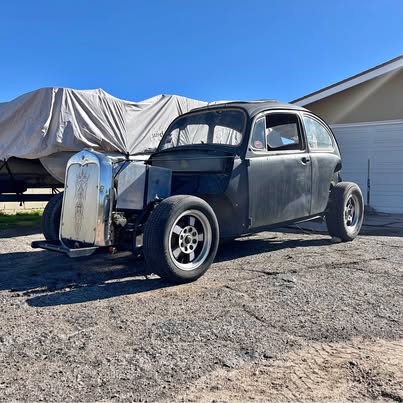
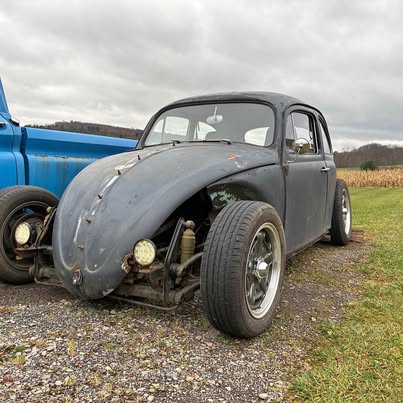
No section of a Bug guide matters more to value, because no classic has been modified more. The Beetle became the raw material of whole subcultures — dune buggies on shortened pans (the Meyers Manx and its thousands of imitators), Baja bugs with cut bodywork and exposed engines for desert racing, Cal-look cars lowered at the front with dechromed trim and big engines, resto-cal cars, rat rods like the 1970 car in this guide's pool, kit cars on Beetle pans from replica speedsters to novelty bodies, and an engine-swap tradition running from period Porsche 356 swaps through Subaru conversions in the modern era. Treat modifications as a spectrum to price, not a sin to condemn — but price them with your eyes open.
Reversible bolt-on changes — wheels, a header exhaust, a later engine, lowered suspension — cost the originality premium but not usability, and can be undone if the original parts were kept (ask; a car sold with its original engine on a stand is a different proposition from one whose engine is gone). Cut metal is the dividing line: a Baja conversion cuts the bodywork away, a chopped top is forever, a shortened buggy pan means the sedan body is usually long scrapped. A cut car is worth what it is as that thing — a good Baja bug is a good Baja bug — not a discount on a sedan. Engine swaps need the coldest eye. A bigger VW engine (1776, 1835 or 1914 cc, or a Type 4 conversion) is within the culture and, built well, makes the car quicker — but an undocumented big engine with unknown internals is worth less than a documented stock 1600, because you are buying the previous owner's machine work sight unseen. Non-VW swaps (Subaru, electric) create a car whose value is entirely in its execution and whose resale pool is a fraction of the VW-engined market.
The market's direction is plain: as sound unmodified cars get scarcer, originality — correct year parts, coherent numbers, uncut metal — is where the premium accumulates, and modified cars trade in a separate, thinner market priced by the quality of the modification. When a seller asks original-car money for a modified car, that gap is the negotiation.
How to inspect one
Allow an hour, bring a torch, a magnet wrapped in cloth, a small screwdriver for prodding (with the seller's permission), a tyre gauge and a friend to work the pedals and lights while you walk around. If the car passes you, a lift inspection is still worth paying for — the frame head and heater channels show their worst from underneath.
- Start with the numbers. Find the chassis number in its two places: stamped into the tunnel under the rear seat (lift the seat base; it is on the raised spine of the pan) and on the identification plate in the front trunk, in the spare-wheel area. The two must agree with each other and with the title. Published chassis-number tables date the pan by its sequence, and a number dating the pan to a different year than the title claims means the car is built on that pan, whatever body sits on it. Then read the engine number, stamped on the flange at the base of the generator stand: its letter prefix identifies the engine's original size and era, and a prefix that disagrees with the claimed specification means a swap — common, legal, and to be priced as a swap. Understand what "matching numbers" honestly means here: Volkswagen did not tie one engine to one chassis verifiably as Mercedes did with its data card, but the chassis number dates the pan, the body number relates to the shell, and the engine number dates and sizes the engine — a car whose three numbers all fall in the same model year and specification is as "matching" as this market gets, and that coherence is what you are checking.
- Cold start. Insist the engine is stone cold — a pre-warmed flat-four is hiding its choke behaviour, oil smoke and starting circuit. A healthy car starts promptly, idles fast on the choke, and settles as it warms. Blue smoke at start-up that clears is valve guides; smoke that stays is rings. A lumpy idle that smooths with revs is often ignition or a blocked idle jet; a deep knock under load is the bottom end.
- The endplay test. Engine off: grip the crank pulley and push and pull hard. A faint click is correct; a visible clunk is case money, per the engines section — $3,500 and up. This ten seconds outranks everything the seller says about a recent rebuild that did not include case machining.
- Underneath: the structure circuit. Torch and screwdriver along, in order: both heater channels (inside and underneath), both floor halves including the battery corner, the frame head and Napoleon's hat, the rear body mounts and shock towers. Perforation in channels, frame head or mounts is structural money — $1,500–3,000 a side for channels, per-car fabrication for the frame head — and decides whether you continue at all. Read the underseal: patchy and old is honest; fresh and uniform is a question.
- Front trunk and spare well. Lift the spare wheel. Look for rust in the well seams and, on a Super, examine the strut towers as structure, not trim. Settle the Super question here: spare flat in a shallow well means Super; spare upright in a deep well means standard. Compare the identification plate with step 1.
- Body and gaps. Walk the magnet over the lower doors, rear quarters, front fenders behind the wheels and decklid edges — filler announces itself. Sagging doors that lift onto their latches point back to the channels and hinge pillars of step 4. Count the rust bubbles rather than admiring the paint — paint is the cheapest layer.
- Suspension and steering by hand. Rock each front wheel at twelve-to-six and quarter-to-three; feel for ball-joint or link-pin play and bearing roughness. On a Super, check strut top mounts and control-arm bushings. At the rear, check swing-axle or CV boots for splits, and bounce each corner: the car should settle in one movement.
- Brakes and handbrake. Pedal firm, high and consistent across three pumps. A sinking pedal is a master cylinder or a leak; a pulsing pedal is oval drums. Look for weeping wheel cylinders at the backing plates. The handbrake should hold on a slope in three or four clicks.
- The test drive. Fifteen minutes, mixed roads, a hill if you can. The gearbox should change cleanly, second-gear synchromesh first on a downchange; jumping out of gear is mounts or internals, not adjustment. Feel for the flat spot just off idle on a dual-port car (the 009 mismatch), and for the Super shimmy in the 45–55 mph band if it is a Super. Brakes from 50 mph: straight, firm, no judder.
- Heat and the heat exchangers. Heater on full once warm. Weak heat is pattern exchangers or disconnected cables; any exhaust smell in the heated air is a perforated exchanger pipe — a safety item at $250–500 a side fitted, and a reason to drive home with the heater off.
- Electrics, all of them. Lights, flashers, brake lights, wipers, horn, interior light, fuel gauge against what the seller says is in the tank. On a 6-volt car, check the battery terminals and earth strap with your own eyes before judging brightness — crusty connections are the usual whole story. Charging light: on at key-on, out as revs rise.
- Interior and paperwork last. Sit in every seat and feel for the spring frame through the pad; check the headliner and door cards for water warp, and the battery area under the rear seat. Then the history file: receipts for pans, channels, engine work with machine-shop line items, any record of a body-off separation. On a car whose body and pan can be divorced in an afternoon, the file is part of the car — a thick, plausible file is worth real money, and its absence on a freshly restored car is information, not bad luck.
Values
The figures that matter for this model are computed from this site's own listings and recorded sales, and they sit below this guide — the listed-now summary and the market block are refreshed every time the site rebuilds, so use them rather than any number quoted elsewhere. What follows is how to read them.
The Bug market is a condition market more purely than almost any other classic's, because supply is effectively unlimited at the bottom and genuinely scarce at the top. The pool behind this guide makes the shape visible even at its small size: 5 cars currently listed under the Bug name, spanning 1958 to 1977, all manual, all from Marketplace sellers, in black (3 of the 5), red and purple, spread across Maryland, California, Illinois and Georgia. That is the everyday market — private sellers, driver-quality and project cars, the full year range at once — and it sits underneath a second, quieter market of preserved and correctly restored cars that trade through specialists and auctions at multiples of everyday money. Reading any single listing means first deciding which of those two markets it belongs to; a price that is absurd in one is ordinary in the other.
Within the everyday market, the drivers of value are, in order: structure, era, and originality. Structure dominates because the repair bills do — a car needing both heater channels and floor work carries several thousand dollars of welding before it is a car again, and the market prices that in brutally, which is why the spread between a solid car and a rotten one of the same year is wider than the spread between whole decades of production. Era is second: the early cars — split and oval windows above all, then the big-window cars to 1965 — carry a collector premium that grows with correctness, while the late standard cars are the value end of the range, and 1967 carries its own one-year premium only when its one-year parts are actually present. The Super Beetle sits slightly apart: liked as a driver, discounted by purists for its struts, and priced by condition almost alone. Cabriolets carry a consistent premium over the sedan of the same year and condition, paid for the open top and the Karmann build, and surrendered quickly when the top gear or the reinforced shell needs work.
Originality is the third driver and the one moving fastest. Matching, coherent numbers, uncut metal and correct-year parts are what the top of the market pays for, and the modification culture described in the problem areas has its own separate pricing: a well-executed Cal-look or Baja car is worth the quality of its build to a buyer who wants that car, and a fraction of an equivalent original car's money to everyone else. Project-versus-driver gaps are correspondingly stark. A non-running project is priced as a shell plus parts, and the honest arithmetic of channels, pans, engine and brakes means a project only makes financial sense when its shell is early, rare or exceptionally straight; a running, structurally sound driver is almost always cheaper than building one, at every point in the range. Asking prices in the private market are routinely optimistic — these are beloved cars, and sellers price the memories as well as the metal — so treat asking medians as the start of a negotiation anchored on the structural findings of your inspection, not as a verdict on any individual car.
Parts and ownership
The Bug's parts situation is the best in the classic car world, full stop — the product of twenty-one million cars, a global enthusiast industry, and seventy years of continuous demand. Almost everything mechanical is available new, much of it from multiple competing manufacturers, and the ownership skill is not finding parts but judging their quality, because the market is flooded with cheap reproductions alongside excellent ones.
Easy and cheap: every service item, brake components complete, suspension wear parts, steering parts, cables, seals and rubbers, engine internals for the 1600 in every size, carburettors and rebuild kits, exhausts and heat exchangers, floor pans, heater channels and most repair panels, interior trim and seat kits, glass and window seals, electrical consumables. Order today, fit this weekend, at prices that make other classic owners envious. The depth of supply is also why "rare part" claims in listings deserve scepticism for anything post-1960 — check before you pay a scarcity premium.
The quality trap: pattern panels vary in pressing accuracy and steel gauge — heater channels and floor pans from the better makers fit; the cheapest need persuasion and rot sooner. Heat exchangers divide the same way, as the problem areas explain. Chrome, engine tinware and small trim divide worst of all. The rule is to buy the best-regarded maker's version of anything structural or safety-related, and to treat the savings on the cheapest version as a loan you repay in labour.
Harder and dearer: correct parts for the early cars — split and oval window trim, early lights, semaphore-era parts, 36 hp engine specifics — early Cabriolet top frames and fittings, 1967's one-year items in good original condition, Autostick-specific components, and original German-made wear parts where the reproduction is measurably worse (some bearings, seals and rubber). None is unobtainable; all take hunting and money, and that hunting cost is part of what the early-car premium is paying for when a car already has them.
Running costs. A sorted Bug is among the cheapest classics in the world to run: fuel consumption in the high twenties to low thirties mpg in period terms, a service you can do on a driveway in an afternoon (oil — just 2.5 litres, with a strainer rather than a spin-on filter on classic engines, so the strainer gets cleaned and the gaskets renewed — valve clearances cold, points and plugs, every 3,000 miles or so in period schedule, stretched sensibly on modern oils), and insurance and consumables at the bottom of the classic scale. The two budget lines that catch new owners are the same as on any classic, only smaller: the first year of deferred maintenance — brakes, boots, hoses, seals, a fuel-system clean — realistically $1,500–3,500 on a running car bought honestly, and the recommissioning of a car that has sat for years at $3,000–6,000 before paint or structure. Engine and gearbox work, when it comes, is priced in the earlier sections and is cheap by classic standards precisely because the specialists and the exchange-unit trade are so numerous. Buy the structure and the identity, fix the mechanics: on no car is that mantra easier to follow, because on no car are the mechanics cheaper to fix.
Which one to buy
- The all-rounder: a 1969–1970 manual sedan. IRS rear suspension, the 1500 or the one-year 1600 single-port, 12 volts, still early in feel, cheap in parts. If you want one Bug to drive everywhere and maintain on a driveway, this is the centre of the range.
- The value buy: a late standard sedan, 1973–1977. The dual-port 1600, the best parts support of the run, the least collector premium. A structurally sound late car is the cheapest honest route into the whole hobby — just verify the emissions-era engine bay has not been stripped into illegality in your state.
- The driver's Super: a Super Beetle, 1971–1975. Strut front end, better luggage room, more modern road manners, priced below the equivalent standard car by purist discount. Buy it on bushing and strut-tower condition, and enjoy the arbitrage.
- The collector car: an oval-window car, 1953–1957 — or a split, if you can find one. The premium end, where correctness is the whole game: correct engine family, correct trim, numbers coherent across pan, body and engine. Verify ruthlessly, because a wrong-part early car is an expensive ordinary car.
- The character pick: 1967. The one-year car — 12 volts, the 1500, early looks — bought only when its one-year parts (decklid, bumpers, fenders, switches) are actually present. With them, it is the connoisseur's late-early car; without them, price it as a 1968 with a story.
- The open car: the Cabriolet. Any year you can afford, bought on shell, sills and top frame first. A Cabriolet with a sound reinforced body and a good top is a premium honestly earned; one needing both is two restorations in a trench coat.
- The project, honestly priced: a modified or cut car — Baja, Cal-look, rat rod. Buy it as what it is, at its own market's money, with the structure checks applied in full. A sound-pan Baja bug is a fine thing; it is simply not a discounted sedan, and must never be priced as one.
And the rule that overrides all of the above: buy the least rusty car you can find, on the pan and body the numbers say it should have. Engines are $400 used or a few thousand rebuilt, gearboxes are exchange items, brakes are a weekend — but heater channels, frame heads and a shell whose identity has drifted from its title are the bills and the arguments that never end. On the most numerous classic car ever made, patience is a strategy: another one is always coming to market, and the right one is the solid one.
See the 1 super bug convertible cars currently listed.
For sale now
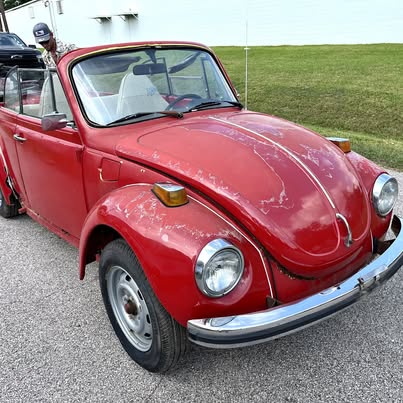 $1,695
Expand
What they sell for: super bug convertible sale prices.