
Volkswagen Super Beetle Convertible buyer's guide
Volkswagen Super Beetle Convertible -- the model's own buyer's guide: variants, values and what to check.
Years listed: 1971-1979 · Series: Beetle
Overview and history
The Super Beetle is the Beetle Volkswagen built when it finally admitted the original car needed a modern front end. Launched for the 1971 model year as the Type 1302, it kept everything behind the front seats that made a Beetle a Beetle — the air-cooled flat-four in the back, the double-jointed rear axles, the heater boxes, the smell — and replaced the standard car's 1930s torsion-bar front beam with MacPherson struts and coil springs. That one change sharpened the steering, softened the ride, and — because the spare wheel could now lie flat under the front luggage floor instead of standing upright in the nose — gave the car a front trunk you could actually put luggage in.
Volkswagen sold the Super alongside the standard Beetle, not instead of it, and the two look deceptively alike: the Super is a little longer in the nose, a little wider in the front track, with a more rounded front hood covering the strut towers and flat-lying spare. Everything from the windshield back on the early cars is standard Beetle. That matters to you as a buyer in both directions: most mechanical and trim parts are ordinary Beetle parts, cheap and everywhere, but the front suspension, front body structure and strut towers are Super-specific — and exactly where a Super hides its worst rust.
The first cars, the 1302 of 1971–72, kept the flat windshield and the classic Beetle dashboard. For 1973 the car became the 1303: a big curved panoramic windshield, a new padded dashboard with a proper glovebox and fresh-air ventilation, larger rear lamps, and a slightly reshaped nose. From the 1975 model year the 1303 gained rack-and-pinion steering in place of the old steering box, and US-market cars swapped the carburettor for Bosch L-Jetronic fuel injection. Sedan production ended in 1975 — Volkswagen's money and attention had moved to the Golf — but the 1303 convertible, built by Karmann at Osnabrück, carried on as the last Beetle sold new in America, through the 1979 model year.
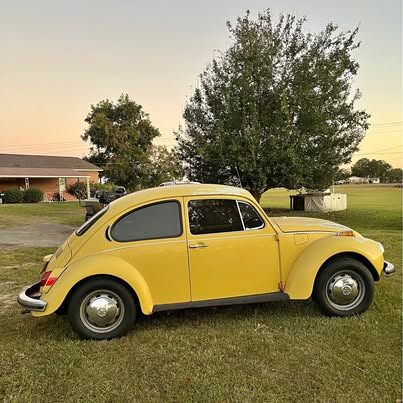
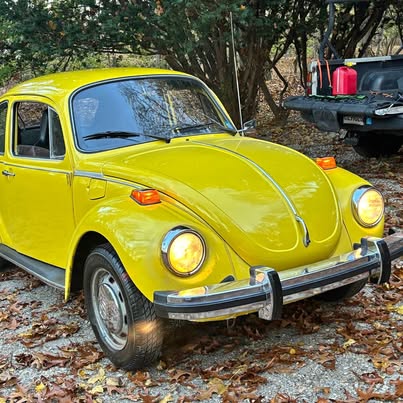
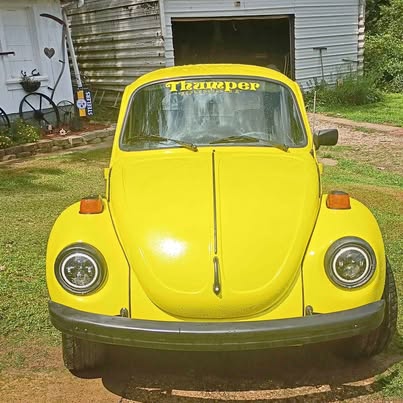
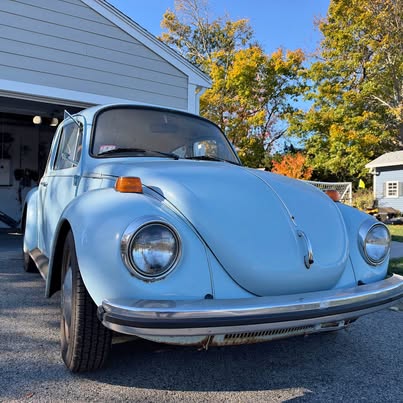
In our current listings we track seven Super Beetles, all for sale and all sourced from Facebook Marketplace: one 1972, three 1973s, and one each from 1974, 1975 and 1976, in yellow, orange and blue. That spread is the US market in miniature: the Super was a mainstream American car, sold in big numbers against the standard Beetle, and the survivors are mostly honest, used cars rather than garage ornaments — which is why condition varies so wildly and the inspection below matters more than the model year on the title.
Two myths to clear away. First, a Super Beetle is not a Beetle with bigger bumpers: the entire front structure, suspension and steering differ, and a standard-Beetle front clip cannot be swapped on. Second, the Super is not automatically the better classic. It is the better car — it steers, rides and stops better and carries more — but its strut towers are part of the body, they rust, and when they go the repair is fabrication, not a bolt-on beam swap. Buy a Super with your eyes on the front inner wings and you will be fine; buy one on the shine of its paint and you may own the most expensive Beetle in your county.
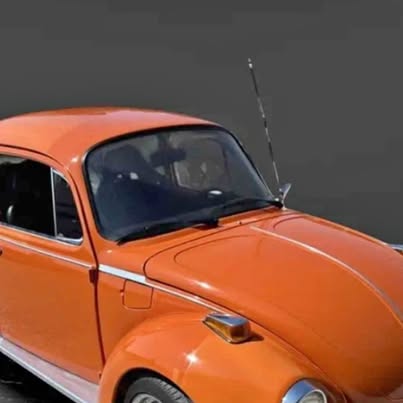
The models
Every Super Beetle is a Type 1 with struts. The badge on the engine lid usually just says "Volkswagen," so identify the car by its structure, not its badges: strut towers in the front trunk, a spare wheel lying flat, and — on 1303s — the curved windshield. The range is simple compared with most classics: two generations, two body styles, and in the US essentially one engine size throughout.
| Model | Years | Engine | Output | Built | Character |
|---|---|---|---|---|---|
| 1302 | 1971–1972 | 1.3 or 1.6 flat-four | 44 / 50 hp (DIN) | Not published separately | The first Super; flat screen, classic dash |
| 1302S | 1971–1972 | 1.6 flat-four | 50 hp (DIN) | Not published separately | The 1600 version; the standard US car |
| 1303 | 1973–1975 | 1.3 or 1.6 flat-four | 44 / 50 hp (DIN) | Not published separately | Curved screen, new dash, bigger lamps |
| 1303 (US, fuel injected) | 1975 | 1.6 flat-four, L-Jetronic | 48 hp (SAE net) | Not published separately | Injection replaces the Solex carburettor |
| 1303 Convertible | 1973–1979 | 1.6 flat-four | 50 hp (DIN); 48 hp injected from 1975 | Not published separately | Karmann-built; the last US Beetle of all |
(Volkswagen never published Super Beetle production as a separate clean total — the cars were counted within overall Beetle production, which passed 21 million across the whole Type 1 run. Treat any seller quoting an exact Super production figure with suspicion. Outputs are period DIN figures for carburettor cars; US cars were quoted in SAE terms, gross in the early years and net later, which is why period US literature shows different numbers for the same engine.)
The 1302 (1971–72). The original Super, and the one that looks most like a standard Beetle: flat windshield, flat classic dashboard with the single round speedometer, small rear lamps. Underneath it is all change — struts, coil springs, a front anti-roll bar, and a wider front track. European buyers could order a 1300 version; every US Super Beetle was a 1600. The 1302S designation marks the 1600 in markets where both were sold. Of the cars in our listings, the single 1972 is the 1302 of the set — the earliest and, to traditionalists, the prettiest Super, because it keeps the old dashboard and screen.
The 1303 (1973–75). The curved windshield is not a styling whim: it was shaped to meet anticipated US safety rules, and it came with a completely new dashboard — padded, with rocker switches and a proper fresh-air system. The rear lamps grew into the big units owners call elephant's feet. The 1303 also introduced a negative scrub radius, which is why these cars track straighter under braking than any earlier Beetle. Three of our seven listed cars are 1973s, which matches the market: the first 1303 year was a big seller in the US.
The injected 1975 cars. For 1975 the US 1303 kept its 1600 engine but lost its carburettor: Bosch L-Jetronic injection (Volkswagen called it AFC, for air-flow controlled) cleaned up emissions, sharpened starting and removed most flat spots. The same year brought rack-and-pinion steering, the best any Beetle ever had. A 1975 Super is the most modern-feeling sedan of the run — and the one whose fuel system needs a specialist's eye rather than a screwdriver, as the engines section explains.
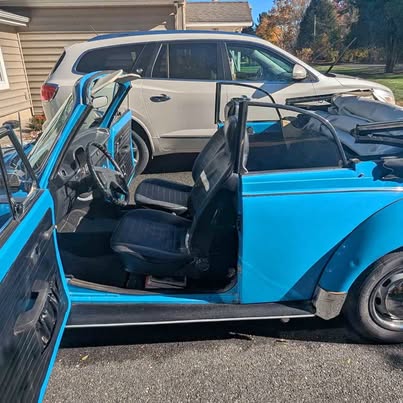
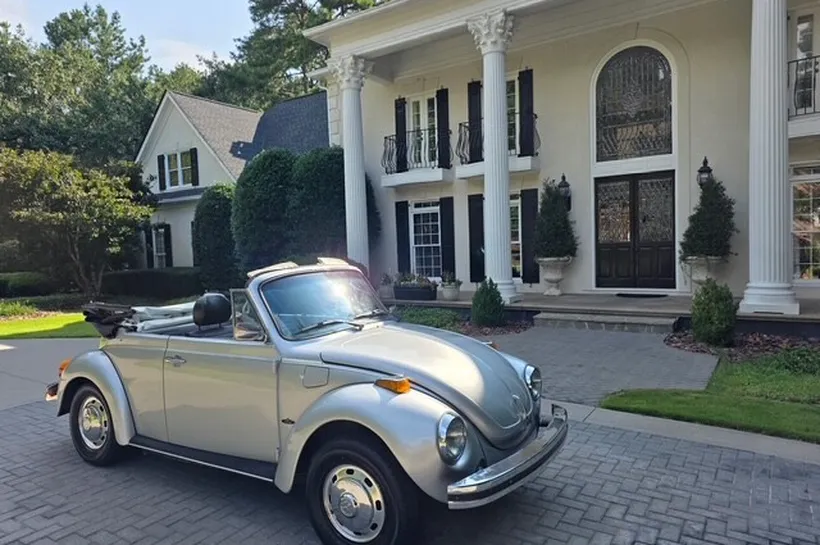
The convertible (1971–79). Karmann built every Beetle convertible, Super included, and the 1303 convertible outlived the sedan by four years: after 1975 it was the only Beetle an American could buy new, and the last ones — the black Epilogue edition of 1979 — closed out four decades of US Beetle sales. Our listings include one convertible, a blue 1976 — squarely in the injected, rack-and-pinion era, and the specification most convertible buyers actually want.
Special editions. Volkswagen sold the Super hard in the US with trim editions: the Baja Champion SE of 1972, the Sports Bug of 1973, the La Grande Bug of 1975 and the Champagne Edition convertibles near the end. None differs mechanically in any way that matters. An edition adds a little charm and occasionally a little money; it never rescues a rusty car, and editions are trivially faked with decals, so pay for condition and treat the edition as a bonus.
Gearbox choices across the range. Most Supers are four-speed manuals — five of the seven cars in our listings are manual. The alternative was the Automatic Stick Shift, a three-speed semi-automatic with a torque converter and a vacuum-operated clutch worked by touching the gear lever; sellers usually describe these cars simply as "automatic," and the two automatic cars in our pool should be read that way until proven otherwise. There was never a conventional full automatic in a Beetle.
Engines and gearboxes
The 1600 dual-port: the only US engine that matters
Every US-market Super Beetle left the factory with the same basic engine: the 1584 cc air-cooled flat-four, engine codes in the AE, AH and AK series for carburettor cars, with twin-port (dual-port) cylinder heads, a single downdraft carburettor and a quoted 50 hp DIN — period US literature says 60 hp SAE gross for the first cars and lower net figures later, for the same hardware. European cars could also be had with the 1285 cc single-port 1300 (44 hp DIN, code AB) and, in some markets, a 1600 single-port; if a US car is claimed to be a 1300, it is a grey import or an engine swap until the engine number proves otherwise. The engine number is stamped on the crankcase, on the raised boss at the base of the generator stand — read it, because on a fifty-year-old Beetle the engine in the car is very often not the engine the car was born with, and swaps are usually to whatever was cheap, not whatever was correct.
This engine's virtues are real: it is simple, light, tolerant of neglect in the short term, and supported by the best parts network of any classic car in the world. Its demands are equally real, and they are all about heat and oil. There is no water jacket to forgive a mistake. The cooling air comes from a belt-driven fan inside the fan housing, it is directed by pressed-steel tinware and sealed by rubber engine-bay seals, and it exits past the cylinders and the oil cooler. Missing tinware, a missing or perished engine-bay seal, or a slipping fan belt does not make a Beetle run a bit warm — it recirculates exhaust-heated air and cooks the engine, starting with the number-three cylinder, which sits in the worst of the airflow on earlier cooling layouts. When you look at a Super's engine bay, completeness of the tinware and seals is not tidiness. It is the cooling system.
Valve clearances are the signature service item: solid lifters, clearances set cold at 0.006 in (0.15 mm) on both valves, checked roughly every 6,000 miles. Let them go and the exhaust valves — number three first — run tight, stop sealing, overheat and eventually drop a valve head into the cylinder, which is an engine rebuild announced by a bang. A seller who says the valves have "never needed doing" is telling you the engine's most important service has been skipped. Listen at a cold start and at idle: a healthy engine has a soft, even mechanical murmur; a single loud tick is a loose clearance (cheap), and a deep knock that rises with revs is bottom-end wear (not cheap).
Oil is the other half of the cooling system — the engine carries only about 2.5 litres, works it hard, and cools itself partly through it. There is no oil filter on a standard engine, just a strainer screen cleaned at each change; oil changes at 3,000 miles are not fastidiousness, they are the design assumption. Check the dipstick for level and smell: fuel in the oil points to a failing mechanical fuel pump diaphragm or chronic rich running washing the bores; a grey mayonnaise under the filler cap on a short-trip car is usually condensation, but on an air-cooled engine it also warns that the car never gets hot enough to dry itself out. Rear main seal leaks are endemic — oil misting from the bellhousing joint — and on their own are a nuisance rather than a verdict; the serious check is crankshaft end play. With the engine off, pull and push the crank pulley hard: perceptible clunking movement means the thrust bearing and case are worn, and that is an engine-out, case-machining conversation, realistically $2,500–4,500 for a proper rebuild by the time it is done.
The Solex 34 PICT-3 carburettor (1971–74 US cars) is a good instrument blamed for the sins of everything around it. Its known genuine weakness is wear in the throttle shaft bushes: air leaks in around the shaft, the idle mixture goes lean and unstable, and no amount of adjusting produces a clean idle — the test is a puff of carburettor cleaner at the shaft ends on a running engine, which changes the idle speed if air is being drawn in. Re-bushing or a quality replacement carburettor runs $250–600. The famous Beetle flat spot on acceleration is usually a mismatch, not a fault: the original vacuum-advance distributor (SVDA) works with the 34 PICT-3 as a pair, and generations of owners fitted the centrifugal-only 009 distributor, whose advance curve arrives too late and produces exactly the hesitation everyone then blames on the carburettor. Check which distributor is fitted before condemning anything. The automatic choke element and its stepped cam also drift out of adjustment with age, giving fast idles that never settle or cold stumbles that vanish warm — adjustment, not parts.
Fuel injection (US cars, 1975 on). The L-Jetronic system measures incoming air with a flap in an air-flow meter and meters fuel with electric injectors, an electric pump and a pressure regulator, all supervised by an analogue control unit that almost never fails. What fails is everything rubber and everything electrical around it: vacuum leaks from perished hoses and intake boots lean the mixture and produce hunting idles and hesitation; the cylinder-head temperature sensor (Sensor II) drifts and tells the control unit the engine is cold, so the car runs rich, sooty and thirsty; the dual relay that powers pump and injectors corrodes at its terminals and produces the classic crank-but-no-start. Fuel pressure is the first test on any sick injected car, before parts are bought: a tired pump or clogged filter moves the pressure off specification and mimics electronic failure. Injector seals harden and leak air — and occasionally fuel — at the manifolds. A sorted injected Super starts instantly, hot or cold, and idles like a modern car; budget $400–900 to have a specialist replace the hoses, seals and filters and test the sensors on a car that does not, and treat documented injection work as a genuine selling point, because many general shops still refuse these systems and many owners "fix" them by converting to a carburettor — a conversion that lowers the value of a 1975-on car and should lower your offer.
Heating is part of the engine. Cabin heat comes from heat exchangers around the exhaust pipes, and rusted-through exchangers are both a heat failure and a safety issue, because a holed exchanger can feed exhaust fumes into the cabin air. New exchangers run roughly $150–300 each in parts, plus fitting; control cables seize and flaps stick. Strong heat at the windshield outlets on a test drive means exchangers, cables and fan all work at once — a small thing that tells you a great deal about how the car has been kept.
Gearboxes: four-speed manual and Automatic Stick Shift
The four-speed manual is the standard Beetle transaxle, all-synchromesh, and fundamentally tough. In a Super it drives through double-jointed half-shafts with constant-velocity joints — the IRS layout every Super has — rather than the swing axles of early standard Beetles, which is why Supers do not tuck a rear wheel under in hard cornering and why their rear tyres wear evenly. Judge the box on second-gear synchromesh (the first to wear; a crunch on a fast downchange into second), on jumping out of gear under load (worn detents or mounts, and a rebuild conversation), and on noise: a whine that rises with road speed in all gears is usually final-drive or bearing wear, while a growl that vanishes when the clutch is pressed points at the input bearing or the clutch release bearing. Gear oil is often forgotten for decades; a car whose transaxle oil has never been changed is normal, and changing it is among the first jobs on any purchase. A full transaxle rebuild at a specialist runs roughly $1,500–3,000; good used boxes are plentiful and much cheaper, which softens every gearbox verdict on these cars. CV joint boots split with age and the joints then wear dry — clicking on lock or a clunk on take-up — and a set of boots is cheap insurance at $20–40 a side in parts, while joints are roughly $80–150 each fitted.
The Automatic Stick Shift is not a conventional automatic. It is a three-speed manual gearbox with a torque converter in place of a flywheel and a vacuum-operated clutch: an electrical contact in the gear lever knob tells a control valve to disengage the clutch via a vacuum servo whenever you touch the lever, so you select Low, Drive 1 or Drive 2 and drive without a clutch pedal. It works better than its reputation — smooth, lazy, well suited to the car — but it is slower, thirstier, and its support network is a fraction of the manual's. Its failure points are specific: vacuum hoses and the servo diaphragm perish (sluggish or incomplete release, grinding changes), the lever contact wears (no release at all, or release when you merely rest a hand on the knob), the converter seal leaks ATF, and the special clutch plate is a hunt-it-down part. A full Auto Stick overhaul is realistically $1,800–3,500 if you can find the shop. Price any Auto Stick car as a manual minus the cost of the conversion back to four-speed that a future buyer will assume — unless the system works perfectly and you specifically want it, in which case a good one is a charming, undervalued thing.
Clutch (manual cars). The cable-operated clutch should bite progressively in mid-travel. Judder on take-up is oil on the plate from that leaking rear main seal, or a Bowden tube that has lost its deliberate preload bend. A slipping clutch is an engine-out job, but on a Beetle the engine comes out in under an hour and a kit is roughly $150–250 in parts, so fitted costs of $600–1,000 are normal and should not frighten you off an otherwise good car.
Problem areas
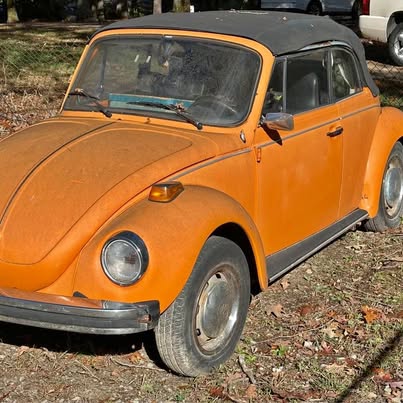
A Super Beetle divides neatly into two cars. Behind the front seats it is a Beetle, with a Beetle's problems — heater channels, floor pans, engine heat management — all well understood and mostly fixable at sane money. Ahead of the front seats it is a different and less forgiving structure, in which the suspension bolts to the body itself, and rust there is structural in a way it never is on a standard Beetle. Everything in this section follows from that split. Our seven listed cars are all single-lead-photo Marketplace listings, so there is no large photo sample to quote incidence from here; what follows is the model's known failure map, and the inspection section turns it into a checklist.
Rust: the Super-specific map
Strut towers and front inner wings — the Super's defining check. The MacPherson struts carry the front suspension loads into turrets pressed into the front inner wings, inside the front trunk. Open the trunk, lift out the spare wheel and the trim, and look at the towers and the inner wing panels around them: bubbling, flaking or previous patching here is the Super equivalent of a cracked frame. The towers also collect water thrown up from below, so prod the metal from inside the trunk and look at the same area from inside the wheel arch with the wheel turned. Repair means cutting out and fabricating or fitting repair panels and re-establishing the suspension geometry — realistically $1,500–3,500 a side done properly, and more if the rot has spread into the bulkhead. A car needing both towers is a parts car at driver money, whatever the paint looks like. This single check is worth more than everything else in this section combined.
The frame head and front bulkhead. Under the front of the car, the frame head — the pressing the front of the chassis spine spreads into — and the bulkhead behind the pedals rot where road water sits. On a standard Beetle the front beam unbolts and the frame head is a known repair; on a Super the same area carries the steering and the inner ends of the suspension arms, so softness here shows up as vague steering and wandering under braking as well as visible perforation. Get the car on a lift or at least on stands and look properly; repair sections exist, but fitting them is chassis work at $1,000–2,500 plus alignment and paint.
Heater channels. The longitudinal box members under the door sills carry the cabin heat forward from the engine — hence the name — and they are structural: the body bolts to the chassis along them. They rot from the inside, fed by the warm damp air they carry, and by the time bubbles show along the sill the channel inside is usually lace. Press hard along the full length of both sills, check the jacking points, and look at the channel from underneath where it meets the floor pans. A channel replacement is a body-off or body-braced job, roughly $1,200–2,500 a side fitted and painted, and it is the single most common big bill on any Beetle, Super included. Fresh thick underseal along the sills, applied over everything including the channel seams, is a cover-up until the seller proves otherwise.
Floor pans. The two pans under the seats are thin, flat and famous for rusting, especially the battery tray area under the rear seat on the right-hand side, where battery acid and trapped water work together. Surface rust is a clean-and-treat job; perforation is a pan replacement — sections are cheap ($100–200 a side in parts) but fitting and sealing them properly is a day of work, so $600–1,200 a side fitted is realistic. Pans alone do not kill a car. Pans plus channels plus towers do, because together they say the whole lower body is at the same stage.
The crescent-vent and C-pillar trap. From 1971, Beetle sedans carry a small crescent-shaped vent behind each rear side window, feeding flow-through ventilation. Behind that panel, Volkswagen injected foam into the C-pillar for sound deadening, and the foam traps moisture against the steel for fifty years. The result is rust that starts inside the pillar and breaks out as bubbling around the crescent vent, along the roof gutter above the rear window and at the base of the rear window itself — on cars whose lower body may be perfectly sound. It is the most misread rust on a Super: sellers call it cosmetic, and sometimes it is, but the pillar is part of the rear body structure and proper repair means cutting the panel open, removing every trace of foam and welding in fresh metal, roughly $800–2,000 a side. Any bubbling in this area on a sedan should be priced as pillar work, not paint.
The rest of the map. The rear luggage floor over the engine and the engine-bay side trays rust where their seals fail; door bottoms fill with water when their drain slots block (run a fingertip along the bottom edge of every open door and feel for bubbling); the front hood's leading edge and the spare-wheel well both hold water; and on convertibles the rear body corners, rear seat base and underfloor reinforcement rails deserve the same pressure you give the heater channels. None of these alone is fatal. Together they are the car's diary: they tell you whether it lived under a roof or under a tree.
Front suspension, steering and the shimmy
The Super Beetle shimmy is the model's signature fault: a steering-wheel shake, typically between about 45 and 55 mph, that owners chase for years. Understand what it is and it stops being mysterious. A strut front end with wide, light wheels is unusually sensitive to imbalance and wear, and the shimmy is almost never one fault — it is the sum of small ones. The usual contributors, in the order to check them: tyre balance and tyre condition (a flat-spotted or out-of-round tyre from sitting will shake a Super that nothing else is wrong with), worn strut top mounts and strut cartridge play, play in the lower ball joints and control-arm bushes, a worn idler arm bush on steering-box cars, tie-rod end play, and wheel bearings out of adjustment. Each item is cheap; the full set, fitted, is roughly $600–1,400, and a car that has had the whole front end done — struts, bushes, ball joints, idler bush, alignment — drives like a different vehicle. The diagnostic discipline matters more than the money: balance the wheels and set the bearings first, then re-test, because half the shimmy cars on the market need only that. A seller who says "they all do that" is describing an unrepaired car, and you should price the full front-end refresh into your offer.
Struts and springs. The strut cartridges themselves wear like any damper: bounce each front corner and watch it settle — more than one free oscillation is a tired cartridge. Replacement cartridges are inexpensive ($60–120 a side in parts) and the job is a morning's work, but budget for an alignment afterwards, and for the top mounts and bump stops that crumble when disturbed. Broken front springs are uncommon; sagging that drops the nose is more often tired springs plus perished rubber than anything structural — but measure ride height against the towers' condition before assuming, because a collapsing tower also drops a corner, and the two are easy to confuse at a kerbside.
Steering: box, then rack. 1302s and most 1303s steer through a worm-and-roller steering box with an idler arm. Free play at the wheel rim beyond about an inch means adjustment first (the box has an adjuster, and many "worn out" boxes are merely unadjusted) and then wear: a rebuilt or quality replacement box is $300–600 plus fitting. The 1975-on rack-and-pinion cars feel sharper and suffer less play, but their racks wear in the straight-ahead position and their rubber gaiters split and let grit in — a rack rebuild or exchange unit runs $400–800 fitted. On all cars, check the steering damper: a dead damper makes a Super feel nervous and amplifies every shimmy tendency, and it is a $40–80 part that owners forget exists. Also check the flexible coupling in the steering column and, on box cars, the idler arm bush — the single most common shimmy contributor after tyres.
Rear suspension. The IRS rear end is the standard Beetle's best feature carried over: diagonal arms, torsion bars, CV-jointed half-shafts. Its wear items are the torsion-bar and spring-plate bushes, and the CV boots covered in the gearbox section. Rear dampers are ordinary telescopics, cheap and quick. Crashing and banging from the rear over bumps is usually bushes, not structure — $300–700 fitted for a refresh — while visible negative camber points at tired torsion bars or bent diagonal arms from an old accident, a geometry conversation rather than a bush bill.
Brakes. US Supers have front disc brakes and rear drums, dual-circuit hydraulics and, by modern standards, modest stopping power that is entirely adequate when maintained. What fifty years does: flexible hoses perish internally and act as one-way valves (a brake that drags and a wheel that runs hot), the master cylinder leaks into the pedal area or past its seals, rear wheel cylinders weep, and cars that have sat grow rust bands on the discs and seized calipers. A full hydraulic refresh — hoses, master cylinder, wheel cylinders, caliper seals or exchange calipers, pads and shoes — is roughly $800–1,800 fitted and transforms the car. Pedal feel is the tell on a viewing: a Super's pedal should be firm and high. A long, soft or sinking pedal is the refresh bill introducing itself.
Interior, top and trim
Seats and pads. Beetle seat pads are rubberised fibre over spring frames, and they crumble with age: the driver's cushion sags into a hammock, the covering splits at the entry bolster, and the tell-tale is fibre dust under the seats. Sit in the driver's seat of any car you view, because it is the one that prices the interior. Re-padding and recovering a pair of front seats runs roughly $500–1,200 depending on materials; the high-back seats of later Supers are comfortable and worth doing properly. Seat frames crack at the adjusters and the seat rails rust where the floor has been wet — check the seat slides freely and locks.
The 1303 dashboard. The 1302 kept the classic painted dash, which is nearly immortal. The 1303's padded dashboard is not: the foam-backed vinyl cracks across the top in the sun, usually starting around the speaker grille and the defroster vents, and a cracked dash is the first thing you see from the driver's seat. Dash caps are cheap and look it; a quality replacement dash or professional re-cover is $600–1,500. Price a cracked 1303 dash as that job, not as a detail. Door cards warp and their vinyl lifts at the edges, headliners sag and stain around the rear window (which also tells you the rear window seal leaks), and carpets hold the moisture that rots the pans — lift them.
Convertible tops. On a Karmann convertible the top is a multi-layer padded structure, not a tonneau: outer vinyl or canvas, padding, headliner, a folding frame and, on later cars, a glass rear window. A full professional top replacement is roughly $2,000–3,500 fitted, and a tired frame with worn pivots adds fabrication on top. Test the top up and down, look for frame bows out of line, check the rear window for cracks and clouding, and — most important — check the top's seals and the body where water runs when they fail: the rear seat base, the rear side panels and the floor corners behind the seats. A convertible with a new top over rotted rear structure is the Super market's prettiest trap.
Chrome and rubber. Bumpers on US cars grew through the run, ending with the big energy-absorbing units of the mid-1970s, whose mounts and rubber strips are harder to source than the slim early blades. Window and body seals are all available and all perish; a full rubber kit is a few hundred dollars in parts and a weekend of fitting, and new seals cure most of the water leaks that cause the rust above. Read a car's seals the way you read its tyres: perished rubber everywhere means maintenance stopped years ago, everywhere.
Electrics and the small stuff
The Super's electrical system is a simple 12-volt layout, generator on early cars and alternator on later ones, and its faults are the faults of age, not design. Earth connections corrode — battery and transaxle straps, lamp clusters — and produce the classic symptoms: dim lights, a fuel gauge that lies, indicators that flash at odd speeds, a starter that clicks. All cheap, all tedious to trace, and a car where every electrical item works has usually been used and maintained, which is the best sign there is. The charging check is a voltmeter across the battery at a fast idle: a healthy alternator car sits around 14 volts. Generators charge weakly at idle by design — a glowing light at idle that goes out with revs is period behaviour, not a fault.
The items that cost money: the wiper motor and its linkage (slow, graunching wipers are worn pivots as often as a tired motor), the 1303's fresh-air fan (a dead fan is a dashboard-area job, annoying rather than ruinous), the heated rear window element on later sedans (usually dead, rarely fixed), and the fuel gauge sender in the tank. On injected cars add the dual relay and the air-flow meter's connector to the check list. Fuses on these cars are the old ceramic torpedo type and their holders corrode — half of all "dead circuits" on a viewed car are a dirty fuse contact, which is worth knowing before a seller discounts a car for electrical faults you can cure with an emery board in the driveway.
Finally, the small stuff that is not small: window regulators (a dropping or grinding window is a regulator at $80–200 fitted), door locks and handles, the fragile 1303 glovebox latch, and handbrake cables that stretch and seize. Individually trivial, collectively they are the difference between a car that feels loved and one that feels used up — and on a Super, where the mechanicals are cheap, that feeling is a legitimate part of what you are paying for.
How to inspect one
Allow an hour, bring a torch, a magnet wrapped in cloth, a jack and stands if the seller allows them, and a friend to work the pedals and lights while you watch. Insist the engine is cold when you arrive — half the tests below are meaningless on a warmed-up car.
- Paperwork and identity first. Match the VIN on the title to the plate under the front hood and the stamping on the chassis tunnel under the rear seat. Read the engine number on the boss at the base of the generator stand and check it against the car's year and type: a US Super should carry a 1600-series code, and a mismatch means a swapped engine — not a walk-away, but a price adjustment. Confirm the car is actually a Super: struts and a flat-lying spare in the front trunk, not a torsion-bar beam and an upright spare. Standard Beetles are regularly advertised as Supers, deliberately and innocently.
- The strut towers. Open the front trunk, remove the spare and trim, and examine both strut towers and the inner wings around them, from inside the trunk and from inside the wheel arches. Prod with the screwdriver. Perforation or soft metal here is the structural verdict from the rust section — this step decides whether you continue at all.
- Sills, channels and pans. Press hard along both heater channels, check the jacking points, then look underneath at the channel seams and floor pans, especially the battery area under the rear seat. Lift the carpets inside. Price channel work and pan work separately, the way the rust section sets out, and add them together before you judge the car.
- The C-pillar test (sedans). Look closely around the crescent vents behind the rear side windows, along the gutters and at the base of the rear window. Any bubbling is foam-fed pillar rust until proven otherwise — press gently and listen for the crunch of thin metal. Check the rear window seal while you are there, and the headliner below it for water staining.
- Cold start. Start the engine from cold. A carburettor car should fire with a prod of the throttle and settle as the choke comes off; an injected car should start at once and idle evenly. Blue smoke at start-up that clears is valve guides and seals; smoke that stays is rings or worse. Listen for a single loud valve tick, a deep knock under load, and exhaust leaks at the heat exchangers.
- The cooling completeness check. With the engine off and cool, walk the engine bay: all tinware present, engine-bay seal intact all round, fan belt tight and uncracked, no nests or debris in the fan. Then feel the crank pulley for end play — pull and push hard; a clunk is the thrust-bearing conversation from the engines section. Check the oil for level, smell of fuel, and what the dipstick tells you about the service history.
- The dipstick and filler story. Fuel-smelling oil points to the pump diaphragm or rich running. Mayonnaise under the filler on a car claimed to be regularly driven contradicts the claim. Ask when the valves were last adjusted and when the oil was last changed — the answers, and how they are given, price the deferred-maintenance risk better than any single mechanical test.
- The shimmy drive. Drive at a steady speed through the 45–55 mph band on the smoothest road you can find. Feel for steering shake, note exactly where it starts and stops, and combine it with the checks from the suspension section: bounce each front corner at rest, rock each front wheel top-to-bottom and side-to-side for bearing and joint play, and look at the tyre dates and wear pattern. Shake plus feathered front tyres plus play at the wheel is a front-end refresh priced into the offer; shake alone on old tyres may be a balance bill.
- Steering and brakes. On steering-box cars, measure free play at the wheel rim and look at the idler arm bush while your friend rocks the wheel. On rack cars, feel for a notch at the straight-ahead. Brake hard from speed twice: the car should stop straight (the 1303's negative scrub radius helps it), the pedal should be firm and high, and afterwards no wheel should be noticeably hotter than its pair — a hot wheel is a dragging brake from a perished hose or seized caliper.
- Gearbox, whichever it is. Manual: test second-gear synchromesh on a downchange, load the car in fourth to check for jumping out and clutch slip, and listen for whine. Auto Stick: from rest, select Drive 2 and confirm the clutch releases cleanly when you touch the lever and engages without grinding or a long vacuum pause; repeat for reverse; then rest a hand lightly on the knob while driving and confirm it does not disengage uninvited — the lever contact fault from the gearbox section.
- Heat and electrics. Whatever the weather, run the heater: strong hot air at the windshield outlets means exchangers, cables and fan all work, and sniff it — exhaust smell in the cabin heat is a holed heat exchanger and a safety item, not a comfort item. Then work everything electrical: lights, indicators, wipers on all speeds, the fresh-air fan on a 1303, horn, washers, fuel gauge. Check the charging voltage if you brought a meter.
- Interior, top and stance last. Sit in the driver's seat and feel for the hammock sag; look under the seats for fibre dust; check the 1303 dash top for cracks. On a convertible, run the top up and down, check frame alignment, the rear window and the floor corners behind the seats for water damage. Finally stand back: a Super should sit level, a fraction nose-up at rest is normal, and a low corner sends you back to step 2 to look at that tower again.
Values
The build's market block beneath this guide carries the current numbers — what is listed now and what recorded sales have achieved — and that is where prices belong, because the Super Beetle market moves at the speed of individual cars, not model years. What this section can teach you durably is how to read those numbers when you get there.
The first lesson is that the condition spread is enormous and almost entirely structural. A Super Beetle is, mechanically, one of the cheapest classics in the world to keep: engines, gearboxes, brakes and suspension parts are all modest money, and every mechanical fault has a known price. So the market does not really price mechanics — it prices bodies. A car with sound strut towers, sound heater channels and an honest C-pillar carries the value; a car needing towers and channels is worth its parts and its trim, however shiny its paint and however sweetly its engine runs, because the welding bill to make it whole approaches or exceeds the finished car's worth. When you compare two asking prices, you are mostly comparing two shells.
The second lesson is the asking-versus-achieved gap. These cars are thick on the ground in private listings — our seven current cars are all Marketplace listings — and private sellers anchor on the best car they have seen advertised, not on the car in their driveway. Driver-quality Supers are advertised optimistically and negotiated realistically; the gap is where patient buyers live. Auction results for genuinely good cars are firm by contrast, because at auction the good shells find each other. Treat a high asking price as an opening position, and a high auction result as information about the top of the market, not about the car in front of you.
Within the range, the premiums are predictable. Convertibles carry the clearest premium — Karmann built fewer, the top and rear structure give them more ways to be bad, and a good one is a genuinely usable summer car — with the late injected convertibles the most sought after as drivers and the final-year cars attracting collectors. Among sedans, the 1975 injected rack-and-pinion cars are the driver's pick and are beginning to be priced as such; the 1302 charms traditionalists with its flat screen and classic dash; and the middle 1303 sedans are the value heartland, the most numerous and the least fashionable, which is another way of saying the best cars per dollar. Special editions add a little where they are genuine and documented, and nothing where they are a set of decals. An Automatic Stick Shift car trades at a discount to an identical manual unless its system is demonstrably perfect, because the market assumes a conversion or a specialist bill is coming.
The project-versus-driver gap follows the same logic. A non-running Super with a sound shell is a rational purchase, because everything that stops it running is fixable at known prices. A running, driving Super with rotten towers and channels is the irrational one: it feels like a car and prices like a car while being, in substance, a shell replacement project. In this market you are buying welded steel, and the engine is thrown in.
Parts and ownership
The Super Beetle may be the best-supported classic car in existence. Volkswagen built the Type 1 for over six decades, the aftermarket is enormous and competitive, and almost everything a Super needs is available new, today, at prices that make owners of British and Italian classics wince. The Super-specific parts — strut components, front body panels, 1303 dashboard and trim — are the thinner end of that support, and the ones to check before you buy, not after.
Easy: everything mechanical in the engine, gearbox, brakes and rear suspension; service items, cables, seals, rubber kits, floor pans, heater channels (the panels are cheap; the fitting is the cost), heat exchangers, exhausts, glass and most chrome. Order today, fit this weekend is realistic for most of it.
Harder and dearer: front inner wing and strut tower repair panels (available, but the fitting is fabrication), quality 1303 padded dashboards, convertible top frames and their pivots, Auto Stick Shift components — the clutch plate, servo and control valve live in a small specialist ecosystem — L-Jetronic air-flow meters and dual relays in tested condition, and the big mid-1970s US bumper components. None of it is unobtainable. All of it rewards a car that does not need it yet.
Running costs. A sorted Super is a realistic regular-use classic: fuel consumption in the high twenties to low thirties mpg in gentle use, insurance in line with other modest classics, and servicing that any competent independent — or any owner with a manual, a jack and a Saturday — can handle. The non-negotiables are the Beetle rituals: oil every 3,000 miles, valve clearances every 6,000, brake fluid and flexible hoses on age not mileage, and grease and inspection underneath at least yearly, because on this car the underside is the car. The budget line that catches new owners is the first year: catching up deferred maintenance on a running car — front-end refresh, hydraulic refresh, seals, cables, a proper service — honestly runs $1,500–3,500 in parts and labour before you improve anything, and recommissioning a car that has sat for years runs more, because sitting is what kills these cars: tyres flat-spot, hoses perish, fuel varnishes, brakes seize and the shimmy moves in. Buy a car in regular use over a sleeping beauty at the same money, every time.
Which one to buy
- The all-rounder: 1303 sedan, 1973–74. Curved screen, proper dashboard, carburettor simplicity, the deepest supply of cars and parts. This is the Super most buyers should buy, and the middle of our own listings — three 1973s alone — is where the choice is.
- The driver's pick: 1975 1303. Injection and rack-and-pinion steering make it the most modern Beetle ever sold, and a sorted one is a revelation after a steering-box car. Buy it only with the injection working as Volkswagen built it, not converted back to a carburettor.
- The traditionalist's car: 1302, 1971–72. Flat screen, classic dashboard, small lamps — the Super that looks like 1965 and drives like 1971. The earliest cars are the lightest and the prettiest, and the 1972 in our listings is the shape of the thing.
- The summer car: 1303 Convertible. Karmann quality, a proper padded top, and the strongest values in the range. The late injected cars are the usable ones; the final-year cars are the collectible ones. Either way, the top, the frame and the rear body structure are the purchase.
- The value buy: the honest middle car with a perfect shell. A cosmetically tired 1303 sedan with sound towers, channels and pillars, in an unfashionable colour, from a seller who has maintained it and can prove it. The market underprices exactly the car this guide tells you to buy.
- The specialist taste: Automatic Stick Shift. Working perfectly, it is smooth, characterful and cheaper than the manual beside it. Working imperfectly, it is a research project. Buy the best one or none.
And the rule that overrides all of the above: buy the shell, not the specification — the least rusty Super Beetle you can find, in the model you can live with. Strut towers, heater channels and C-pillars are the car's value and its fate; engines, gearboxes, brakes, tops and dashboards are all fixable at prices you can plan for. A rotten Super costs more to put right than the finished car will be worth, and no badge or edition changes that arithmetic.
See the 29 Super Beetle Convertible cars currently listed.
For sale now
 $21,250
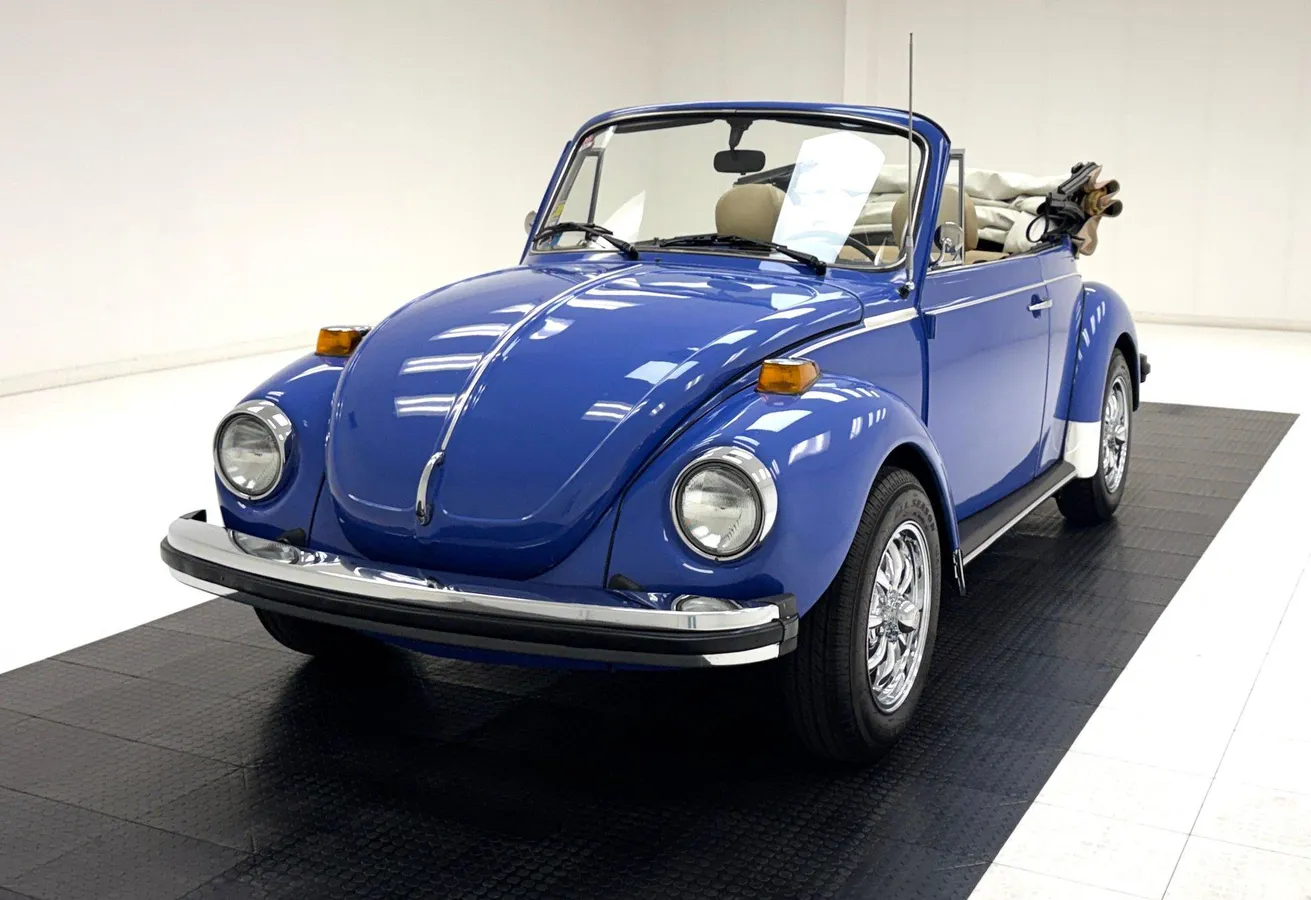 $20,000
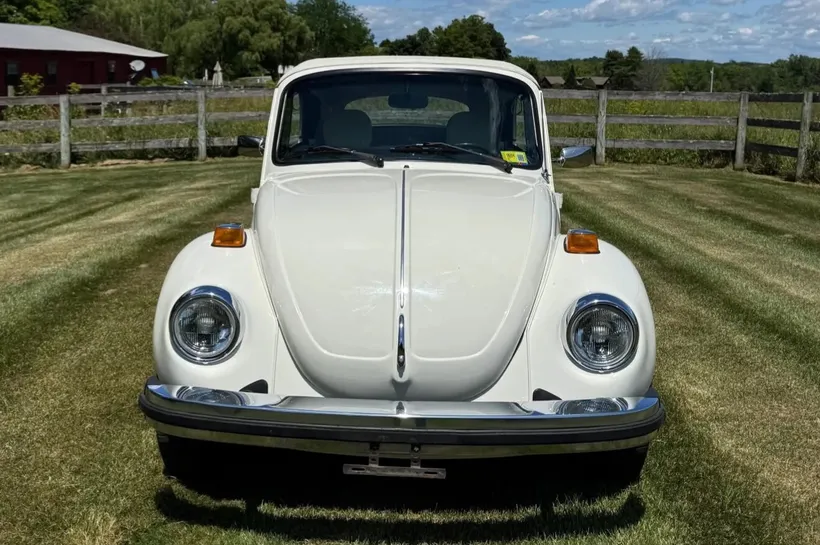 $12,500
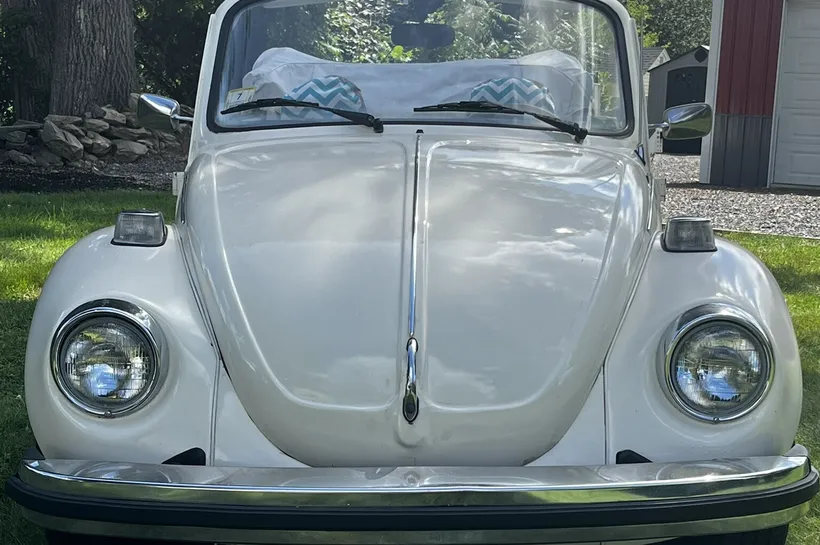 $21,250
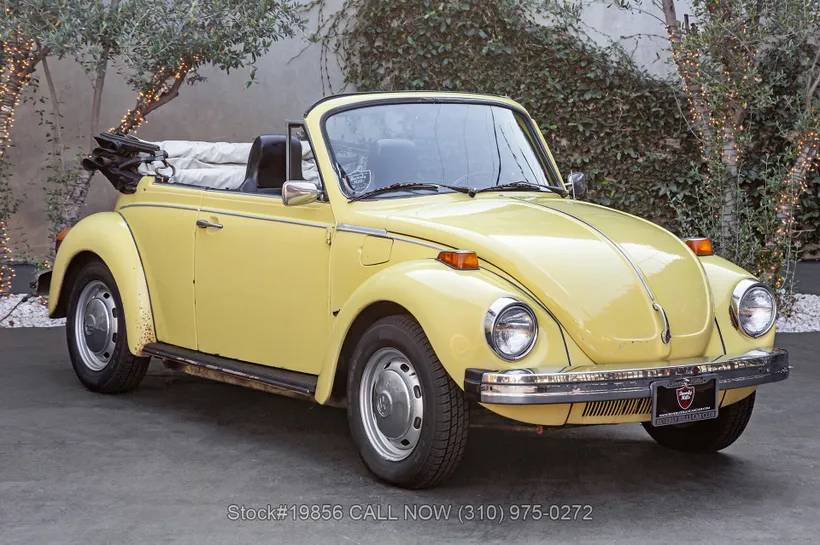 $21,250
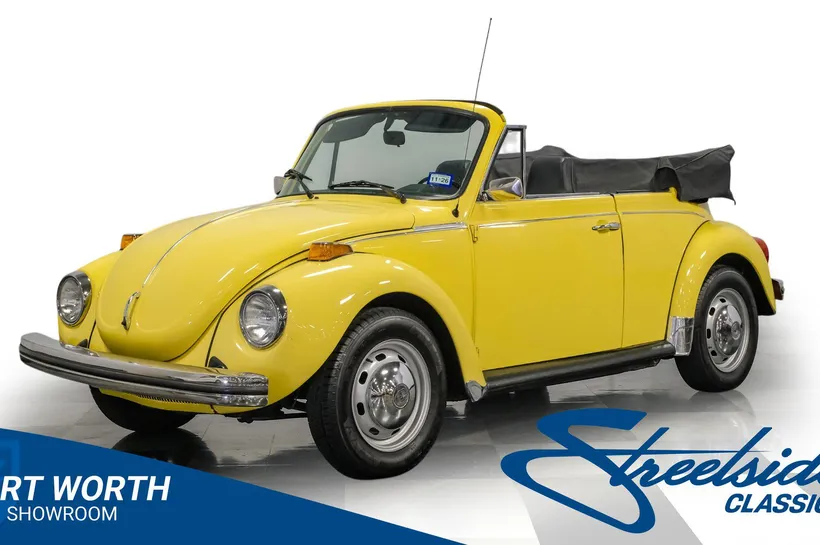 $15,495
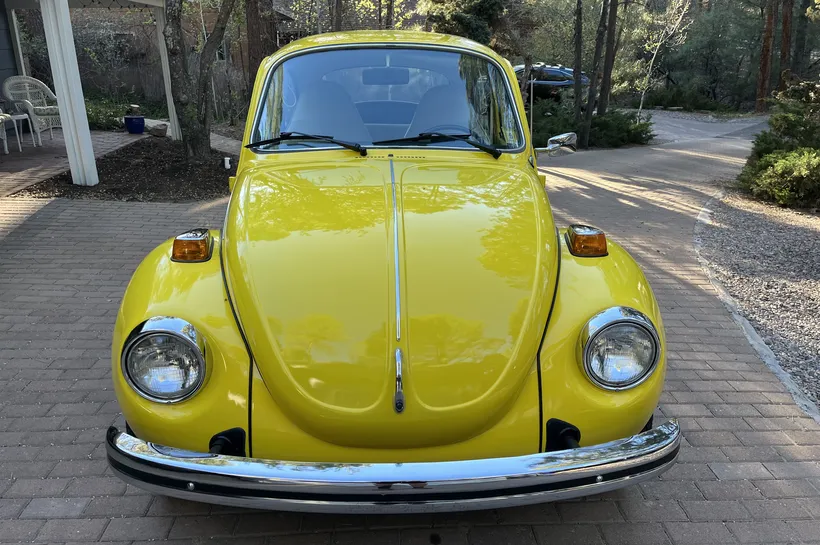 $10,200
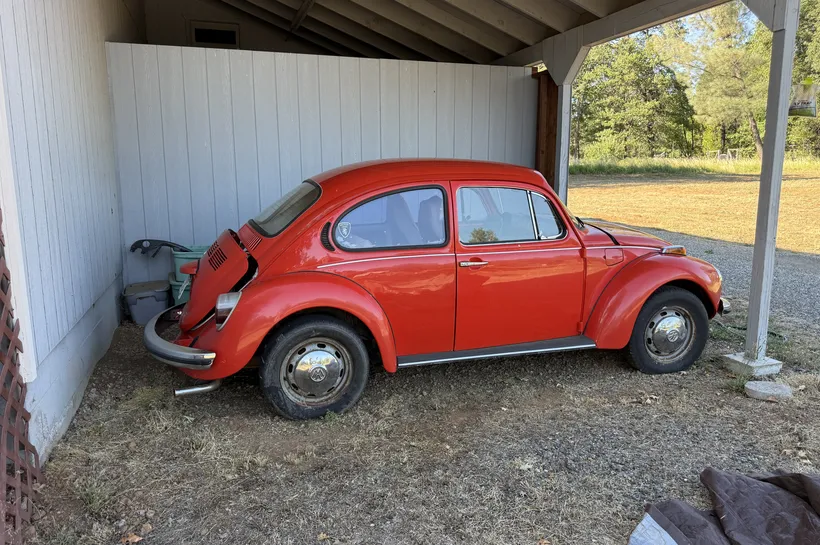 $7,995
What they sell for: Super Beetle Convertible sale prices.