
Volvo V70 buyer's guide
Volvo V70 -- the model's own buyer's guide: variants, values and what to check.
Years listed: 1997-1999 · Series: V70
Overview and history
The V70 is the wagon that carried Volvo through the end of the boxy era and into the rounded one, and the first-generation car covered here — built from 1997 to 2000, sold in the United States as a 1998 to 2000 model — is the most honest version of the idea. Underneath, it is a thorough rework of the 850 estate: the same transverse five-cylinder engine, the same front-wheel-drive layout with all-wheel drive as an option, the same vast, flat-floored load bay. On top, Volvo redrew almost every panel aft of the windscreen, softened the interior, improved the safety equipment and renamed the range to fit its new system, in which V stood for versatility and 70 placed the car above the smaller V40. If you know the 850, you know ninety per cent of this car. If you do not, this guide teaches it as what it is: a tough, simple, increasingly old family wagon whose problems are well mapped and mostly mechanical.
The context matters because it explains the car's character. The 850 of 1991 had been Volvo's revolution — front-wheel drive, a five-cylinder engine mounted sideways, side-impact protection built into the structure — and it sold on space and safety rather than style. The V70 kept that formula and civilised it: a curved dashboard instead of the 850's angular shelf, better seats, side airbags and WHIPS whiplash protection during the run, a raised Cross Country version chasing the Subaru Outback idea, and the R as a genuine 150-mph flagship. Ford bought Volvo Cars in 1999, and the second-generation V70 of 2000, on the new P2 platform, is a larger, heavier, more electronic car in every dimension. The first V70 is the end of an engineering line that starts with the 850, and parts, knowledge and affection all follow that line.
Now the honest statement of what our own listings hold, because it should shape how you read everything below. Our pool for this model is small — nine cars, all first-generation cars from the two ends of the run: seven from 1998 and two from 2000, eight automatics and a single manual. The mix runs from the plain 2.4 wagon through the GLT and the XC all-wheel-drive cars to a single R, in green, silver, blue, black and white, and every one came to us through Facebook Marketplace sellers. There is no T5 in the pool and no diesel — the diesel was never sold in the United States — so while this guide covers the full range you will meet in the wider market, the typical V70 offered here is a 1998 automatic wagon at the sensible end of the range, a quarter of a century old, and it should be inspected and priced as exactly that.
That framing is not a dismissal. These cars survive because the basic engineering is durable: the five-cylinder is one of the strongest engines Volvo ever built, the body was galvanised, and the interior was made for a twenty-year life. What kills one in 2026 is rarely a single catastrophe — it is accumulation: a timing belt nobody can date, a clogged breather pushing oil past seals, a failing electronic throttle on a 1999 or 2000 car, an all-wheel-drive system destroyed by mismatched tyres, layered until the next repair costs more than the car. Your job is to count the layers before you pay. The sections below give you the order.
The models
Every first-generation V70 is a five-door wagon on Volvo's P80 platform, with a transverse five-cylinder engine driving the front wheels, or all four on the all-wheel-drive cars. There is no saloon in this guide — the saloon twin was renamed S70 — and no small-engine economy special in the American market: the United States received a simple range built around the 2.4-litre naturally aspirated car, the light-turbo GLT, the high-turbo T5 and the all-wheel-drive XC and R. Europe took a wider spread, including 2.0-litre cars and a diesel, and European cars do surface, so the table covers the range as a whole. Outputs are period figures and vary slightly by market and year; treat any single horsepower claim as approximate and the engine code, covered in the next section, as the truth.
| Model | Years | Engine | Output | Built | Character |
|---|---|---|---|---|---|
| V70 2.0 / 2.0 10V (Europe) | 1997–2000 | 2.0 five-cylinder, naturally aspirated | 126–143 hp | Not published by trim | The European base cars; adequate, never quick |
| V70 2.4 / base (US) | 1998–2000 | 2.4 five-cylinder, naturally aspirated (B5254S family) | 168 hp | The bulk of US sales | The honest wagon: simple, durable, unhurried |
| V70 2.5D / TDI (Europe) | 1997–2000 | 2.5 five-cylinder turbodiesel (D5252T) | 140 hp | Not published by trim | The economy choice; Audi-sourced diesel, never sold in the US |
| V70 GLT | 1998–2000 | 2.4 light-pressure turbo (B5254T family) | 190 hp | Not published by trim | The sweet spot for most buyers: torque without drama |
| V70 XC / Cross Country | 1998–2000 | 2.4 light-pressure turbo, all-wheel drive | 190 hp | Not published by trim | Raised, cladded, all-weather wagon; the Subaru fighter |
| V70 T5 | 1997–2000 | 2.3 high-pressure turbo (B5234T family) | 236–240 hp | Not published by trim | The fast front-driver; manual or automatic |
| V70 R (front-wheel drive, Europe) | 1997–1999 | 2.3 high-pressure turbo | 240–250 hp | Low volume | The flagship in its purest, lightest form |
| V70 R AWD | 1998–2000 | 2.3, later 2.4, high-pressure turbo, all-wheel drive | 240–265 hp by year | Low volume | The US flagship; automatic only in America |
The base car: 2.4 naturally aspirated. This is the V70 most people bought and the one our listings mostly hold. Badging varies — plain V70, V70 2.4, and in Europe 2.5 or 2.5 20V for what is mechanically the same 2,435 cc engine — the model's first naming trap: a 2.5 badge and a 2.4 badge can describe the identical engine, because Volvo rounded the same displacement two ways in different markets and years. With 168 hp in US tune it is not fast, but the five-cylinder's torque arrives low and the car never feels strained at legal speeds. Do not expect the absence of toys to mean the absence of cost — the expensive systems on this car are mechanical, not electronic.
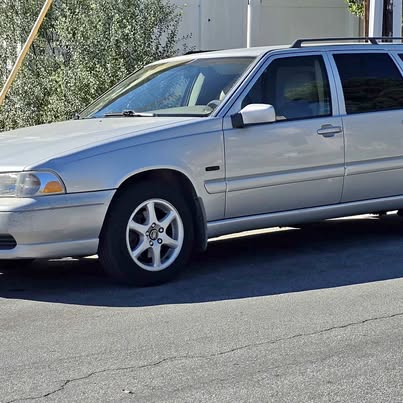
The GLT. The GLT adds the light-pressure turbo version of the 2.4, and the transformation is out of proportion to the modest headline gain to 190 hp. The small Mitsubishi turbocharger spools almost immediately, so what you actually buy is torque — a broad, early wave of it that makes the wagon feel effortless rather than brisk. For most buyers this is the best engine in the range: nearly T5 pace in ordinary driving, less stress on every component than the high-pressure cars, and no all-wheel-drive complication unless you choose the XC. Most GLTs are automatic, which suits the engine well. A GLT with a documented belt, a clean breather system and a healthy gearbox is the V70 at its most usable.
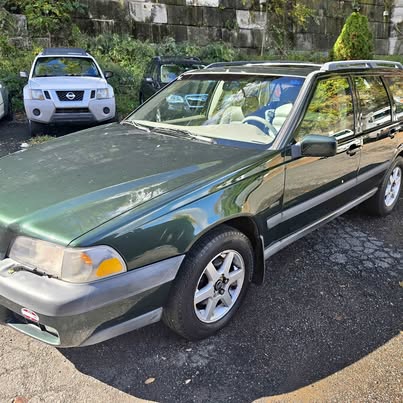
The XC, sold as the V70 XC and later Cross Country. Take the GLT drivetrain, add Volvo's viscous-coupling all-wheel drive, raise the suspension, and dress the result in unpainted cladding, a different grille and roof rails: that is the XC, launched for 1998 directly at the American crossover buyer before the word crossover meant anything. It is a genuinely good bad-weather car with a loyal snow-belt following. It is also the variant with the sharpest ownership trap in this guide, because the viscous system cannot tolerate tyres of different rolling circumferences, and a quarter-century of owners who fitted one new tyre at a time have destroyed couplings and bevel gears in large numbers. The all-wheel-drive section of the problem areas below is not optional reading if you are looking at one.
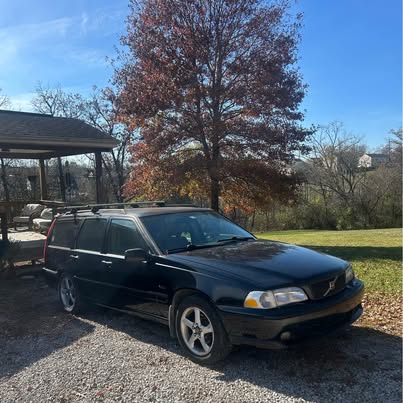
The T5. The performance front-driver: the smaller 2.3-litre engine with a high-pressure turbocharger, 236 hp in US tune, firmer suspension and a choice of five-speed manual or automatic. The T5 is the connoisseur's V70 in Europe, where its following included British traffic police fleets, and it proves how strong the basic structure is — it takes this power through the front wheels with more composure than it has any right to. In the United States the T5 wagon is uncommon, and sellers know it. Pay the premium only for a car whose identity and history check out: the engine code, not the tailgate badge, settles what the car is.
The R. The flagship comes in two forms, and separating them matters. European buyers could have a front-wheel-drive R, manual or automatic, with up to 250 hp in its strongest tune. The United States received only the R AWD, automatic only, at 240 hp for 1998 and 1999, and for 2000 a revised car with a larger 2.4-litre high-pressure engine, a five-speed automatic and a claimed 265 hp, distinguished by its twin exhausts. All Rs sit lower, wear distinctive wheels — the 1998 car's five-spoke design is the famous one — and carry a deeper front spoiler and a plusher interior. The R premium is real but so is the R risk: it combines the high-pressure engine's appetite for maintenance with the XC's all-wheel-drive fragility. Our pool holds one R, a silver 1998 car, and it deserves the most sceptical inspection of any variant in this guide.
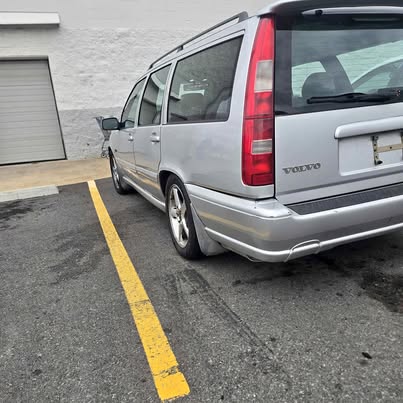
The diesel (Europe only). The 2.5 TDI uses an Audi-sourced five-cylinder turbodiesel rated at 140 hp, tough, noisy by modern standards and completely absent from the US range. If one surfaces in America it arrived as a private import and should be checked as an import first and a V70 second.
One closing trap. Because the V70 is a renamed 850 wearing new panels, sellers advertise these cars both ways, and 1997 European cars straddle the changeover. The tailgate badge tells you which brochure the car came from; the VIN plate and the engine code tell you what it is. Buy the car the codes describe.
Engines and gearboxes
One engine architecture carries the whole petrol range: Volvo's modular five-cylinder, an all-aluminium inline five with four valves per cylinder in the versions that matter here, a timing belt driving twin camshafts, and a distinctive off-beat warble that doubles as a diagnostic tool — a healthy five has a smooth, even beat, and a lumpy one is telling you something before any gauge does. The engine codes decode plainly: in a code such as B5254S, B is petrol, 5 is cylinders, 25 is the displacement in tenths of a litre, 4 is valves per cylinder, and the final letter gives the aspiration — S for naturally aspirated, T for turbocharged. Find the code on any car you are serious about; it takes two minutes and defeats every badge swap and optimistic advertisement in one reading.
All of these engines share three service facts that dominate buying. First, the timing belt: every petrol five here is an interference design, so a snapped belt bends valves and a service item becomes a cylinder-head rebuild realistically costing $2,000–3,500. Volvo's interval settled at 105,000 miles on later cars, but on a car now more than twenty-five years old the calendar matters more than the odometer — a belt in place for a decade is due whatever the mileage says. The job done properly includes tensioner, idlers and water pump, and runs roughly $700–1,200 at a specialist; treat any car with no dated evidence of it as needing it the week you buy it. Second, the breather, or PCV system, clogs with age and short journeys, pressurising the crankcase and pushing oil past the seals; it gets its own treatment in the problem areas, because on this engine it is the single most informative test you can do. Third, oil: these engines use a little with age, particularly the turbo cars, and forgive almost anything except being run low. Read the dipstick before the first start, and read the seller's reaction to you doing it.
The naturally aspirated cars: B5254S and family
The base engine is a 2,435 cc five with variable intake timing on later versions, rated at 168 hp and 162 lb-ft of torque in US form. Its European relatives include the 2.0-litre B5204S at 143 hp and the ten-valve versions at 126 and 144 hp, but the character never changes: unstressed, torquey, smooth at a cruise and audibly busy when worked hard, because a naturally aspirated five makes its power with revs. This is the engine for the buyer who wants the wagon without the worries: no turbocharger to wear, no intercooler plumbing to leak, and a cooling system that works less hard than on any other variant. Its specific weaknesses are the shared ones — breather system, belt, ageing ignition components, lifters ticking on neglected oil — plus one of its own: on high-mileage cars the variable valve timing solenoid, where fitted, gums up and sets fault codes and a flat spot, usually curable with cleaning and fresh oil rather than replacement.
Serviced on time, this engine's life expectancy is the best in the range, and 250,000 miles is unremarkable on a cared-for car. The buying test is therefore paperwork: a thick file of oil changes on a 180,000-mile base car beats a shiny engine bay on a 110,000-mile car with no history at all.
The light-pressure turbo: B5254T, the GLT and XC engine
The GLT and XC use the same 2.4 with a small Mitsubishi TD04 turbocharger blowing gently — this is what light pressure means in practice: boost that arrives almost off idle and is spent by the middle of the rev range. Output is 190 hp, but the figure that defines the car is 199 lb-ft of torque delivered low, which is why these wagons feel so much stronger in daily driving than the numbers suggest. Mechanically the additions are the turbocharger itself, an intercooler, an oil feed and return for the turbo, and a heavier workload for the cooling system. The turbocharger on this engine is a durable unit that usually outlasts the car if the oil has been changed; the failure pattern to test for is blue smoke on a trailing throttle after a hard run, and smoke on start-up after standing, both of which point to turbo seals or — check first, because it is cheaper and more common — a clogged breather system pressurising the oil return. Never let a seller, or a mechanic, sell you a turbocharger before the breather test in the problem areas section has been done.
Heat is this engine's tax. Coolant hoses, the radiator's plastic end tanks and the heater core all live harder lives behind a turbo, and a stained, crazed coolant reservoir is a record of overheating episodes the seller may not mention. Budget roughly $300–600 for a radiator fitted, and treat a car that needs topping up as a car with a leak to find, not a habit to accept.
The high-pressure cars: T5 and R
The T5 and the early R shrink the five to 2,319 cc — a shorter stroke and thicker cylinder walls for strength — and fit a larger turbocharger with serious boost. US T5 output is 236 hp with 243 lb-ft of torque; the R AWD makes 240 hp in 1998 and 1999 form, and the 2000 R moves to a 2,435 cc version of the high-pressure engine with a bigger turbocharger and dual exhausts, rated at 265 hp. These are fast cars even now, and they drive like it: the boost arrives as an event rather than a background fact, the front-wheel-drive T5 will steer with the throttle in the wet, and the whole drivetrain — engine mounts, driveshafts, gearbox, and on the R the all-wheel-drive hardware behind it — works harder than on any other variant.
That workload sets the buying rules. A high-pressure engine serviced on time is as durable as any other five; one run on cheap oil, long intervals or low coolant is a rebuild waiting for a date, and the difference is not visible on a gentle test drive. Insist on a cold start and on seeing the car use full boost once warm — hesitation, a boost cut or a warning light under load are findings, not quirks — and check the filler and dipstick for the mayonnaise of a failing head gasket and the coolant for oil. A compression and leak-down test, roughly $150–300 at a specialist, is cheap certainty on a T5 or R and an entirely reasonable condition of purchase. And confirm the car is what it claims: a car badged T5 or R but coded as a light-pressure engine is a dressed-up GLT, worth GLT money.
The diesel: D5252T (Europe)
The diesel is not a Volvo engine at all but the Audi 2.5-litre five-cylinder turbodiesel, coded D5252T in Volvo service, making 140 hp and strong low-speed torque. It has its own rules: a timing belt for the injection pump as well as the camshaft, longevity when serviced, expensive injection-pump trouble when not, and a cold-start test that tells you most of what you need — a healthy one fires cleanly from cold without a cloud; a smoky, reluctant one is showing you glow-plug, compression or pump wear. It never came to the United States; European buyers should budget for a specialist who knows the Audi unit.
Gearboxes
Most V70s you will meet — eight of the nine cars in our current pool — carry an automatic, and there are two different automatics, and knowing which one a car has changes what you check. Cars through 1999 use the Aisin-Warner 50-42LE, a four-speed unit that is fundamentally strong and fails mainly from neglected fluid and overheating; the test is in the fluid and the shifts, covered below. For 2000 Volvo moved to a five-speed Aisin-Warner unit with adaptive shift logic and a manual override mode on some versions — the Geartronic idea arriving — and this box is the fussier of the two: it is sensitive to fluid condition and to software, and harsh or flaring shifts on a 2000 car are a known pattern that ranges from a fluid-and-software cure, roughly $200–400, to valve-body wear at $800–1,500, to a rebuild at $2,500–4,000 that exceeds the value of most of these cars. On any automatic, the sequence is the same: check the fluid on the dipstick where one is fitted — it should be red to reddish-brown and smell of nothing much; brown, black or burnt-smelling fluid on a car that also shifts badly is a walk-away combination — then drive the car from stone cold and again fully warm, and feel every shift, including the engagement of drive and reverse from rest. A delay, a shudder or a flare between gears that the seller calls normal is not normal; it is the gearbox itemising its repair bill.
The five-speed manual, coded M56 in front-wheel-drive cars and M58 behind the all-wheel-drive system, is the enthusiast's choice and the rarest find in America — our pool's single manual car is typical of the odds. It is a strong box with a light, slightly long-throw change, a dual-mass flywheel on turbo cars that can rattle and judder as it ages — a flywheel and clutch together run roughly $900–1,600 fitted — and synchromesh that wears on second and third if the car has been hurried. The clutch slave cylinder is concentric with the release bearing, so a leaking slave is a gearbox-out job; a soft pedal or a biting point on the floor is a labour bill, not a bleed-and-see item. Whatever the gearbox, the mountings matter: the torque reaction mount at the top of the engine and the lower mounts perish with age and oil, and a car that clunks on and off the throttle is usually asking for mounts at $60–150 each in parts, not for a gearbox.
A last word on the all-wheel-drive hardware behind the gearbox on XC and R AWD cars: drive goes through a bevel gear — Volvo people call it the angle gear — to a propshaft and a viscous coupling at the rear axle. The coupling is a sealed silicone unit that locks progressively when front and rear wheels turn at different speeds, which is precisely why mismatched tyres destroy it: a permanent speed difference cooks it into either a permanently locked, wind-up-prone unit or an open one that leaves you a front-wheel-drive car carrying dead weight. There is no dashboard light for either state. The checks live in the problem areas and the inspection checklist, and on an XC or R they are the difference between buying all-wheel drive and buying its badge.
Problem areas
A first-generation V70 rarely dies of one thing. The structure and the engine are strong, and the car fails instead by a predictable handful of systems ageing together: the breather system, the electronic throttle on the last cars, the air-conditioning evaporator, the all-wheel-drive hardware on the cars that have it, and a long tail of electrical and suspension wear that is cheap item by item and heavy in total. Our listings pool for this model is small and carries no examined-photo aggregate, so nothing here is dressed up as a statistic from our own cars; this is the model's documented behaviour across twenty-five years, set out so you can test for it car by car. Work through it in the order given and you will meet the expensive problems first.
The breather system, the timing belt and oil leaks
Start here, because this test takes thirty seconds and grades the whole engine. The positive crankcase ventilation system routes blow-by gases from the crankcase through an oil trap — a plastic flame trap and separator box bolted to the block under the intake manifold — and back into the intake. The passages are small, the oil vapour is heavy, and on a car used for short journeys the trap and its hoses coke up solid. Once they do, crankcase pressure has nowhere to go, so it pushes oil out past the easiest seals: the camshaft seals, the crankshaft seals, and most expensively the rear main seal, whose replacement is a gearbox-out job at roughly $900–1,500 in labour alone. The test is the one every Volvo specialist performs first: with the engine warm and idling, pull the dipstick or remove the oil filler cap and hold a thin rubber glove, or the back of your hand, over the filler neck. A healthy system runs at a slight vacuum and sucks gently inward. A clogged system blows outward — a glove that inflates is the classic demonstration — and a car that blows has a breather service in its immediate future, roughly $300–600 in parts and labour because the intake manifold comes off to reach the trap, and it may already have seals leaking from the pressure. Oil leaks on a V70 are therefore a symptom before they are a diagnosis: never pay to chase a rear main seal on a car whose breather has not been tested, because the new seal will be pushed out by the same pressure that killed the old one.
The timing belt is the second engine-room gate, and it is a pass-or-fail item rather than a grading one. There is no test that tells you a belt has life left; there is only evidence — a dated sticker in the engine bay, an invoice naming the belt, tensioner and water pump together, or the seller's honest admission that it is unknown, which you should treat as a statement that it is overdue. Factor the full job, roughly $700–1,200, into the price of any car without proof, and if the belt is overdue by years as well as miles, understand that you are gambling a cylinder head, at $2,000–3,500, every time the engine turns until it is done.
Beyond those two, the engine bay offers a short list of regulars. The top engine mount splits and lets the engine rock; visible, cheap, and a useful tell that rubber elsewhere is the same age. Coolant reservoirs craze, radiator end tanks weep, and the small coolant hose to the turbo hardens and splits. Ignition leads, cap and rotor wear out on the earlier 1998 cars — Volvo moved to individual coil packs during the run, and a misfire on a later car is usually one coil at $50–100. None of these is a reason to reject a car. All of them together, on a car that also blows from the filler neck and cannot date its belt, are the definition of a neglected example — and neglected is the one thing a cheap V70 cannot afford to be.
The electronic throttle and the ABS module: the two electronic failures
For 1999 Volvo replaced the cable throttle with an electronic throttle module, supplied by Magneti Marelli, and fitted it to the 1999 and 2000 cars — which means, in our pool, it is the 2000 cars that carry it, while the 1998 cars keep a cable and are immune. Inside the module, the throttle position is read by contact tracks that wear, and when the signal degrades the car drops into a limp-home mode: a surging or hunting idle, a refusal to rev, the ETS warning light on the dashboard, and performance reduced to a crawl. This failure is so well documented that it generated a class-action settlement and an extended warranty in the United States, long since expired, and a mature repair market: the lasting cure is a rebuilt or contactless-converted module, roughly $400–700 fitted and programmed, while a used module of the same age is a gamble on the same wear. The buying rules follow directly. On a 1999 or 2000 car, ask directly whether the throttle module has been replaced, and look for the invoice; a car that idles unevenly or shows the ETS light is not suffering a mystery, it is showing you a known bill. And know which side of the changeover a car sits before you value it: all else equal, the 1998 cable-throttle car is the simpler ownership proposition, which is one reason the early cars in our pool deserve more respect than their age suggests.
The second electronic regular is the ABS module. On these cars the anti-lock and traction-control module suffers cracked solder joints on its internal relay connections as heat cycles accumulate, presenting as intermittent ABS and TRACS warning lights that come and go, sometimes with speedometer dropouts, and a diagnostic session that finds communication faults rather than a failed wheel sensor. The module is repairable — specialists resolder them for roughly $100–250 on an exchange or repair basis — and the trap is the opposite one: owners and garages replacing wheel sensors and even wheel bearings chasing a fault that lives in the module. Warning lights that appear on a hot restart and vanish when cold are the module's signature. Neither this nor the throttle module is a reason to walk away from an otherwise good car; both are reasons to make the seller, not you, pay for them, by price or by repair before sale.
The rest of the electrics are age, not design. The ignition switch's electrical portion wears — accessories cutting out, warning lights flickering, a key that needs jiggling — and is cured at modest cost. Door lock actuators fail one at a time, the tailgate wiring loom chafes at the hinge and takes the rear wiper and number-plate lights with it, and heated seats fail quietly. Test every electrical item, write down what does not work, and add it up honestly: six small faults at $100–300 each is a real number, and it belongs in your negotiation.
Air conditioning, the heater core and the interior
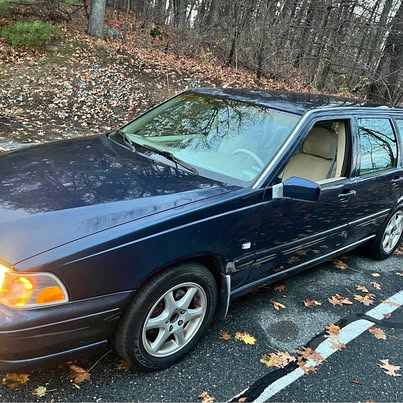
The V70's climate system holds the model's single most labour-heavy common failure. The air-conditioning evaporator, buried behind the dashboard, corrodes and leaks refrigerant, and replacing it means removing the dashboard — a full day's labour, roughly $1,200–2,000 fitted, on a car that may be worth not much more. The test is simple and non-negotiable in a warm climate: run the air conditioning on a test drive for at least ten minutes, not thirty seconds, and judge whether it blows genuinely cold and keeps doing so. Air that starts cool and fades, or a seller who explains that it just needs a recharge, is describing an evaporator or a leak until proven otherwise — a recharge that holds for a season is possible, but the burden of proof is the seller's, and the price should assume the dashboard comes out. The heater core is the evaporator's partner: it sits in the same neighbourhood, leaks coolant into the footwells, and announces itself with a sweet smell in the cabin, a misting windscreen that will not clear and damp carpets. Lift the mats and press the carpet foam; a wet, sweet-smelling footwell on a car with a falling coolant level is a heater core, at roughly $500–900 fitted, and a car whose owner has been topping up coolant without finding the leak.
Inside, the news is mostly good. The seats are among the best fitted to any wagon of the era and the leather wears well; the failures are the seat heaters, the adjustment motors and switches, and a driver's bolster worn through on high-mileage cars. Dashboard tops crack in sun states, glovebox latches break, and headlinings sag. The load bay — flat floor, split folding seats, fold-out child seats in the boot floor on some cars — is an honest record of the car's working life, and that is fine provided the price knows it too. Check the spare wheel well for water; ageing tailgate and rear light seals let it in, and a rusty spare is usually the first rust you will find on the whole car.
Rust, suspension, brakes and the all-wheel-drive system
Volvo galvanised these bodies and rustproofed them seriously, so a V70 is not a rust hunt in the way a contemporary from most other makers is — but it is a quarter-century old, and rust has its places. Look at the door bottoms and the tailgate's lower edge, the rear arches where they meet the sills, the sill ends where mud packs in, the subframe and its mounting points and the brake pipes; any salt-belt car deserves time on a lift rather than a kerbside crouch. Surface rust on suspension arms is normal and cosmetic; perforation at a mounting point is structural and ends the conversation. Cars from New England — several of our pool's cars are Massachusetts and Connecticut cars — have lived in road salt, and their undersides, not their shiny panels, decide their value.
The suspension is conventional — MacPherson struts in front, Volvo's Delta-link arrangement at the rear on front-drive cars — and it wears conventionally. Front control-arm bushes and ball joints, drop links that knock over low-speed bumps, strut top mounts that groan on lock, and shock absorbers that are simply old account for most of it; a front-end refresh runs roughly $600–1,200 in parts and labour and transforms a loose car. The self-levelling Nivomat rear dampers fitted to many wagons are the expensive line item, at roughly $300–500 each; a cheap conversion to conventional dampers exists but changes how the car carries weight, so ask which is fitted and whether a sagging rear end is Nivomats at the end of their life. Steering racks weep with age. Brakes are straightforward and cheap: the car is heavy and uses its front brakes hard, and judder under braking is usually worn discs — a set of front discs and pads is roughly $250–450 fitted and is maintenance, not a defect to fear.
The all-wheel-drive system, on the XC and the R AWD, gets the last word because it is the only system on the car that can be destroyed invisibly and completely. The viscous coupling cannot tolerate mismatched tyres, so gauge all four tread depths and read all four sidewalls — same make, same model, same size, depths within a couple of millimetres — or the system has been abused whether the seller knows it or not. Then check the bevel gear for leaks and the burnt smell of cooked oil, listen for whine and driveline shunt on a tight full-lock circle — binding or protest from the rear is a coupling locked solid — and confirm the car actually drives its rear wheels, on a lift or on gravel; many nominally all-wheel-drive XCs no longer do, their couplings having failed open years ago. A failed coupling or bevel gear runs roughly $800–2,000 to put right with used or rebuilt parts, when they can be found. Price any XC or R with mismatched tyres as a front-wheel-drive wagon, because that is what it may already be.
How to inspect one
Inspect a V70 cold, in daylight, with permission to drive it for at least twenty minutes, and take a tyre tread gauge, a torch and a thin rubber glove for the breather test. The order below follows the money: identity and engine first, the variant-specific traps in the middle, the road test last — after you know what you are listening for.
- Start with identity, not paintwork. Read the VIN plate at the base of the windscreen and on the driver's door jamb and confirm they agree with the title. Then find the engine code on the block and decode it against the badge on the tailgate: a car sold as a T5 or an R whose code says light-pressure turbo is a GLT in costume, and the inspection ends there until the price agrees with the code.
- Interrogate the paperwork for the three dated items that grade this model: the timing belt job, with tensioner and water pump named on the invoice; the breather system service; and, on a 1999 or 2000 car, the electronic throttle module replacement. Add automatic gearbox fluid changes if the car has them. A thick file moves the car up a class; a shrug moves it down one.
- Do the cold start yourself, bonnet up, standing by the engine. A healthy five fires evenly and settles to a smooth idle. Listen for lifter tick that does not fade, timing-case rattle, and the accessory-belt chirp of a tired tensioner, and watch the tailpipe: blue smoke points to oil — turbo seals or the breather — white smoke that persists points to coolant, and either one stops the inspection until it is explained.
- With the engine warm and idling, do the breather test from the problem areas section: glove or hand over the oil filler neck. Suction inward is health; pressure outward is a clogged PCV system and a bill, and it reframes every oil leak you are about to find as a symptom rather than a coincidence.
- Work the engine bay methodically. Read the dipstick before anything else — level, colour, and whether the oil smells of fuel. Check the coolant reservoir for staining, oil film and a level that sits where it should; squeeze the top hose for the crunch of internal decay; look at the radiator seams, the turbo coolant hose on boosted cars, the top engine mount's rubber for splits, and the camshaft area and the back of the engine for oil thrown by pressurised seals.
- Test the climate system properly, because it hides the car's biggest labour bill. Run the air conditioning for a full ten minutes of your drive, not a blast at the kerb, and run the heater hot as well. Cold that fades is an evaporator until proven otherwise. Then lift the front mats and press the carpet foam for the damp, sweet evidence of a heater core.
- On a 1999 or 2000 car, grade the electronics before you drive. The idle should be dead even; hunting or surging is the throttle module introducing itself. Check that the ETS and ABS lights come on with the ignition and go out, and watch for them on a hot restart later — intermittent ABS lights are the module's solder joints, not a wheel sensor.
- If the car is an XC or an R AWD, do the all-wheel-drive inspection now, before the road test makes you fond of the car. Read all four tyre sidewalls and gauge all four tread depths: mismatched tyres mean the viscous coupling has been abused, full stop. Then plan the full-lock car-park circle and the rear-drive check into your drive, and look under the car at the bevel gear for leaks.
- Get underneath, on a lift if the seller will allow it and on your back with a torch if not. Judge the salt-belt cars here: sill ends, rear arches, subframe and its mounts, brake pipes, the spare wheel well from below, and the exhaust. Perforation at a mounting point ends the purchase; honest surface rust is a negotiating line.
- Drive it from cold, and drive the gearbox as hard as the engine. An automatic should engage drive and reverse promptly and shift without flare, shudder or delay, cold and fully warm; a manual should take second and third cleanly and bite its clutch midway, not at the floor. Note the fluid story the shifts tell you and compare it with the paperwork from step 2.
- Use the performance the car claims to have. Once fully warm, let a turbo car pull through a full-boost run: hesitation, a boost cut or a warning light under load is a finding. Feel the T5's pull and the R's, and on any car feel for steering knock over low-speed bumps, groaning top mounts on lock, and brake judder from speed — the suspension and brake wear items from the problem areas, priced as a set, not forgiven one by one.
- Finish with the wagon tests and the electrics sweep. Fold the seats and check the load floor and the spare wheel well for water. Work every window, lock, seat heater and adjustment, the tailgate wiper and lights — the chafed tailgate loom shows here — and the sunroof if fitted, twice. Then write the fault list down in front of the seller and price the car from the list, not from the advertisement.
Values
The market block beneath this guide carries the current numbers — what is listed now and what recorded sales show — and it is refreshed as listings change, so this section deliberately carries no figures of its own. What it teaches is how to read those numbers for this model, because a first-generation V70 is one of the cars where the spread between the cheapest and the dearest example is explained almost entirely by condition and variant, and almost not at all by year or mileage alone.
Start with the shape of the range. The base 2.4 and the GLT are utility cars, and the market prices them as utility: a tired one is worth what any old wagon that runs is worth, and a genuinely sorted one — belt done, breather done, climate cold, gearbox sweet — is worth a clear multiple of that, because the buyer is really purchasing the previous owner's completed maintenance list. That is the central fact of V70 values: documented completion of the known service items is the value, and an undocumented low mileage is worth less than a documented high one. When the market block shows a wide spread for what looks like the same car, the spread is the maintenance, made visible.
The variants layer on top of that base in a predictable order. The XC carries a premium in snow country and a discount everywhere the all-wheel-drive system cannot be proved healthy, and the same car can honestly be both, depending on who is buying and what the tyres say. The T5 carries an enthusiast premium that is firmest on manual cars, which are scarce in America, and softest on automatics with thin history. The R sits at the top of the range and shows the widest spread of all: a correct, documented R AWD with a healthy drivetrain is a collector's wagon, while a tired R is the most expensive V70 to put right and the market knows it, so the gap between the best and the rest is larger here than the badge alone would suggest. The 2000 R, with its one-year specification, adds a rarity premium of its own — provided the car is genuinely that specification, which the engine code settles.
Two gaps deserve attention. The first is asking against achieved: sellers routinely ask driver money for project cars, so the recorded-sales side of the market block is the honest half — weight it more heavily, and expect negotiation on any car whose fault list you can itemise from the inspection section. The second is the project-against-driver gap, which on this model is unusually mechanical: the distance between a cheap V70 and a good one is a timing belt, a breather service, perhaps a throttle module and a set of matched tyres, and you can price that distance from the job costs given throughout this guide before you look at a listing. If the gap is smaller than the cost of the jobs the project needs, buy the driver. It usually is, and it usually is not close.
Finally, the honest long view. Outside the R this is not an appreciating blue-chip car, and you should not buy one as an investment; you buy it because it is one of the most capable and durable wagons of its era at a price set by its unfashionability. That unfashionability is the opportunity: money spent sorting a good shell is repaid in use for years, a better bargain than most of the classic market offers.

Parts and ownership
Ownership is a well-trodden path, and that is this car's great advantage: Volvo built the 850 and V70 in large numbers, sold them worldwide for a decade, and the knowledge base — factory manuals, specialist forums, walk-throughs for nearly every job in this guide — is deep and mostly free. A buyer who can wield a socket set will find this one of the most supportable cars of its era; a buyer who pays for every job should choose the variant carefully, because labour, not parts, is where the bills live.
Mechanical parts supply is strong. Service items — filters, belts, brake parts, ignition components — are available from multiple suppliers at sensible prices, and the pattern-parts industry covered this car thoroughly. Engine and suspension components remain easy, with the exceptions already flagged: Nivomat dampers are expensive, all-wheel-drive components such as viscous couplings and bevel gears are scarce and often sourced used or rebuilt, and the electronic throttle module is a specialist rebuild item rather than a shelf part. The ABS module is a repair, not a purchase. Body and trim are the tightening side of the ledger: panels in the right colour come from breakers, interior plastics and switchgear are used-market items, and the breaker supply, while still good, is no longer endless — if a car needs a specific piece of trim, price it as a search, not an order.
Running costs follow the variant. Fuel consumption is honest rather than frugal: the naturally aspirated car is the most economical petrol version, the light-turbo close behind it in real driving because it works less hard, and the T5, R and XC progressively thirstier, the all-wheel-drive cars carrying a permanent penalty. Tyres are a budget line with a rule attached on the XC and R — bought in matched sets of four, and an owner who cannot accept that rule should not buy the all-wheel-drive car. Insurance is generally gentle, reflecting the safety record and the unfashionable image, and a Volvo specialist rather than a main dealer keeps scheduled costs proportionate.
Choose your support before you need it: a specialist who knows the P80 cars — the breather test, the throttle module and the angle gear should all be familiar phrases — backed by the strong owners' community, particularly for the diagnostic order that separates a module fault from a sensor fault. Budget an annual figure for age-related maintenance beyond servicing, keep it aside rather than spending it on the purchase, and the V70 will do what it was built to do: carry everything, in any weather, for a very long time.
Which one to buy
- The all-rounder: the GLT. The light-pressure turbo's torque, front-wheel drive's simplicity, and a specification that wants for nothing in daily use. Buy the best-documented one you can find and it will be the easiest V70 to own.
- The value buy: the base 2.4, especially a 1998 cable-throttle car. The simplest engine, no turbo, no electronic throttle, and prices set by utility rather than enthusiasm. A sorted base car is the cheapest route into everything that makes the model good.
- The winter buy: the XC — with the tyre test passed. Genuinely capable in snow and priced keenly, provided all four tyres match, the coupling demonstrably works, and the bevel gear is dry. Fail any of those and you are buying a front-drive wagon at an all-wheel-drive price.
- The enthusiast buy: the T5, manual if you can find one. Real pace, the strongest following after the R, and a car that rewards a compression test and a thick history file. Scarce in the United States, so buy condition when it appears rather than waiting for perfection.
- The flagship buy: the R AWD, bought like a collector car. Verify the engine code, the throttle and all-wheel-drive health, and the damper and service history, and pay the premium only for a car that passes all of it. The 2000 car's one-year specification is the connoisseur's pick; the 1998 car is the simpler one to live with.
- The one to avoid: any variant, however rare, with no belt evidence, a blowing breather test and mismatched tyres. On this model the cheap car with three open systems is the expensive car, every time.
The overriding rule: buy the maintenance, not the mileage — a documented V70 with the belt, breather and variant-specific systems done is worth more than a lower-mileage car with none of them provable, and the engine code, not the badge, settles what the car is.
See the 8 V70 cars currently listed.
For sale now
 $3,200
Expand
What they sell for: V70 sale prices.