
Volvo V70 buyer's guide
Volvo V70 (1997–2000) — V70: what's listed, and what they sell for.
Years: 1997–2000 · Models: V70
Overview and history
The Volvo V70 is the wagon that carried Volvo's five-cylinder era: a big, square, front-wheel-drive estate built around one idea — that a family car should be safe, durable and shaped like the load it carries. The name ran for nineteen years and three generations, from 1997 to 2016, but you need to know at the outset which V70 this guide is really about, because the three generations are three different cars that share a badge and a silhouette and very little else.
The first generation (1997–2000, on Volvo's P80 platform) is a thorough reworking of the 850 wagon: same basic structure, same transverse five-cylinder engines, same delta-link rear axle, but a rounder nose, a much-improved interior and hundreds of detail changes. The second generation (2001–07, the P2 car) is all-new — bigger, softer, more electronic, and the basis for the 300 hp V70 R. The third generation (2008–16, the P3 car) moved to six-cylinder power in America, where the plain V70 was sold only for 2008–10 before Volvo kept the raised XC70 and dropped the low wagon. Europe kept the P3 V70, with diesels and four-cylinders, to 2016.
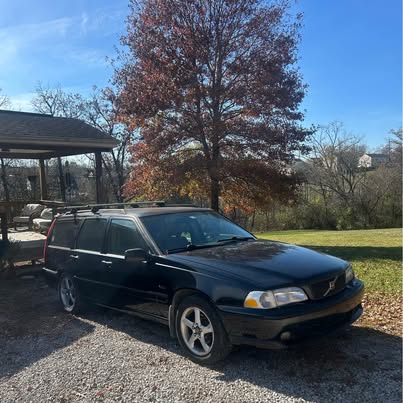
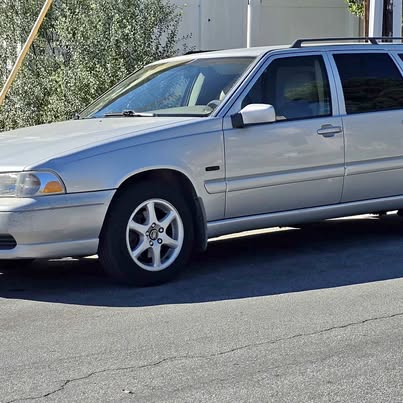
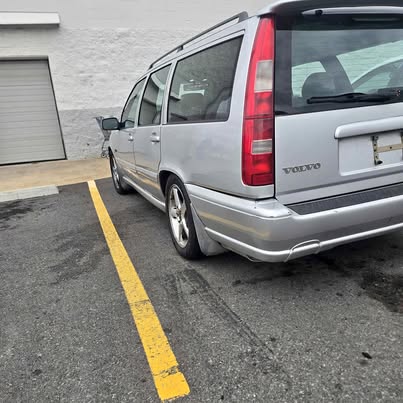
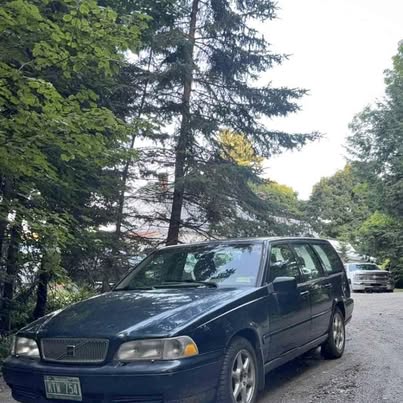
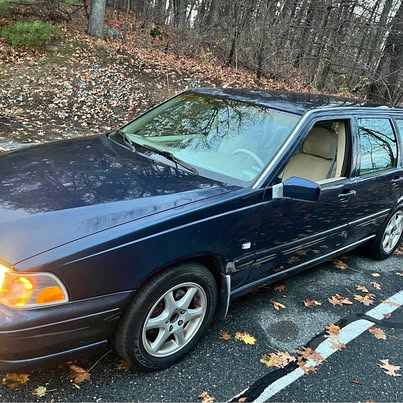
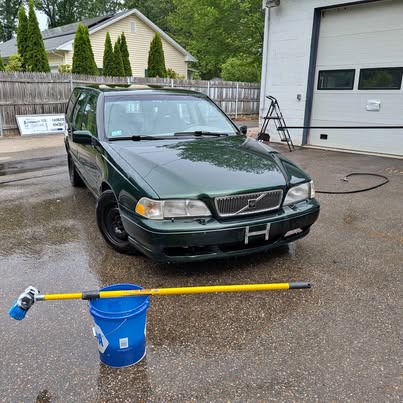
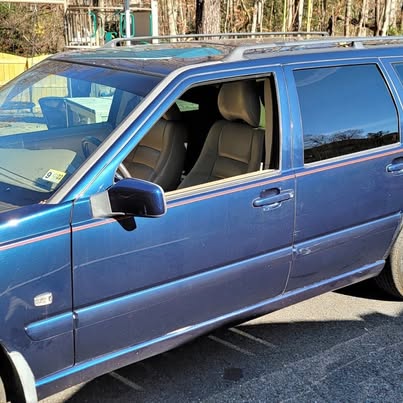
Our own listings pool defines the centre of gravity of this guide, and we will say so plainly: all nine V70s we currently track are first-generation cars — seven from 1998 and two from 2000, every one of them a Facebook Marketplace car. Eight are automatics and one is a manual. Green accounts for three of the nine, silver and blue for two apiece, then one black and one white car, and the geography is the snow-belt story of every surviving P80: two cars in Massachusetts, two in Virginia, and one each in Kentucky, Arkansas, California and Connecticut, with the ninth photographed in Vermont. In other words, the American V70 market as it actually exists today is a first-generation market. The P2 and P3 cars get honest coverage in this guide — their engines and their failure modes are different enough that a buyer cross-shopping generations needs them — but the depth, the inspection routine and the buying advice are weighted to the 1997–2000 car, because that is the car you will actually find, and it is the car the photographs in this guide show.
That weighting is no hardship. The P80 V70 is the last Volvo wagon of the old school: a cable throttle and a distributor-less but still simple ignition on the early cars, an engine you can service standing up, an interior built from materials chosen for twenty-year wear, and a load bay that is genuinely square — flat floor, vertical sides, a tailgate aperture you can slide a wardrobe through. It was also a landmark safety car in the period sense: side-impact protection engineered into the doors and B-posts, whiplash protection arriving on the late cars, and the structural honesty that made the 850's reputation, carried over intact.
What you are buying in any V70 is the five-cylinder formula: a transverse inline five — an engine layout almost nobody else persisted with — driving the front wheels, or all four on the AWD and XC cars, in a body that prioritises volume and crash structure over style. No V70 is a sports car, not even the R, and none is economical in the modern sense. Judge one the way you judge any twenty-five-year-old working machine: shell first, then the state of the specific systems this guide names, then history. The badge on the tailgate matters least of all.
The models
Every first-generation V70 is the same five-door wagon on a 104.9-inch (2,664 mm) wheelbase; there is no sedan in this guide because the sedan twin was sold as the S70. The buying decisions are engine, driven wheels and trim, in that order, and the range is easier to read than Volvo's badges suggest. There are four engines in effect — one naturally aspirated five and three states of turbocharging — and three driveline layouts: front-wheel drive, and two flavours of all-wheel drive that behave differently and fail differently.
| Model | Years | Engine | Output | Built | Character |
|---|---|---|---|---|---|
| V70 (base) | 1997–2000 | 2.4 five, naturally aspirated (B5254S, later B5244S) | 168 hp | Volume car; series total not split by trim in period reporting | The honest entry point; manual available, most are automatic |
| V70 GLT | 1997–2000 | 2.4 five, light-pressure turbo (B5254T, later B5244T) | 190 hp | Not separated in period reporting | The sweet spot: turbo torque without T5 temperament |
| V70 T5 | 1997–2000 | 2.3 five, high-pressure turbo (B5234T3) | 236 hp | Not separated in period reporting | The fast one; manual cars are the enthusiast pick |
| V70 AWD | 1997–2000 | 2.4 five, light-pressure turbo | 190 hp | Not separated in period reporting | Low wagon body, all-weather traction, viscous coupling |
| V70 XC (Cross Country) | 1998–2000 | 2.4 five, light-pressure turbo | 190 hp | Not separated in period reporting | Raised, clad, all-wheel drive; the proto-crossover |
| V70 R | 1998–2000 | 2.3 five, high-pressure turbo (2.4 for 2000) | 240–261 hp | Low thousands per year; no clean factory split published | The flagship; firmer, faster, thirstier, rarer |
(Outputs are period American figures. The 1998 R made 240 hp with the automatic and 250 hp in the rare manual; the 2000 R, with the larger 2.4-litre engine and a bigger turbocharger, made 261 hp and was automatic only. Volvo did not publish trustworthy per-trim production splits for the P80 V70, so the table says so rather than inventing them; total V70 production across all three generations ran well past a million cars, the great majority of them P2s.)
The base car. The naturally aspirated 2.4 is the fleet and family V70: 168 hp, adequate rather than quick, and the only model where the five-speed manual was sold in meaningful numbers — the single manual in our nine-car pool is a reminder of how completely America chose the automatic. A base car on steel wheels with cloth trim is not a lesser V70 mechanically; it is the same shell, the same brakes and the same suspension with the simplest engine in front of it, and at this age the simplest engine is a genuine virtue. Two of the pool cars are plain 2.4 wagons, in green and white, and they are the template for the value buy in the last section of this guide.
The GLT. The light-pressure turbo car, and the connoisseur's quiet pick. The GLT's small turbocharger is working almost from idle, so the car feels stronger than 190 hp suggests and never has the T5's all-or-nothing delivery. GLT trim also brought the plusher interior most buyers want. One green 1998 GLT sits in our pool, photographed in Vermont. Mechanically the GLT is the base car plus a turbocharger, an intercooler and oil feed lines — which is to say, plus the turbo-specific checks in the problem sections, and nothing more exotic.
The T5. The high-pressure turbo car: 236 hp from 2.3 litres, a 0–60 mph time in the mid-sixes with the manual gearbox, and a chassis that was always more composed than the power delivery. T5s were bought by people who drove quickly, and twenty-five years later they show it: budget your inspection for suspension wear, turbo condition and evidence of enthusiastic modification. A standard, documented T5 is a genuinely desirable car; a chipped, lowered one with a boost gauge screwed to the A-pillar is a project wearing a fast car's price tag.
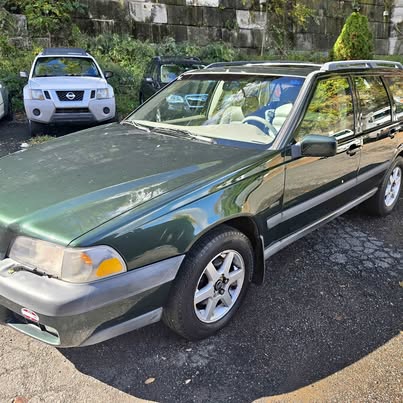
The AWD and the XC. Volvo sold two all-wheel-drive wagons on the same mechanical layout. The V70 AWD is the low, unadorned car; the XC — Cross Country — adds raised suspension, taller tyres, body cladding, a different grille and roof rails, and it is the XC that invented the template every manufacturer now sells. Two of our nine pool cars are XCs, one black and one green, and one more is the related R. All-wheel drive on the P80 is a viscous-coupling system, part-time and mechanical, and it carries one non-negotiable ownership rule about matched tyres that the problem sections explain in full. If you do not need the traction, the front-wheel-drive car is lighter, simpler and cheaper to keep; if you live where it snows, a sorted XC is a formidable winter tool.
The R. The flagship, sold for 1998–2000 in the P80 range. Beyond the engine, an R means firmer suspension, bigger brakes in spirit if not always in fact, a rear spoiler, distinctive wheels, and an interior with suede-effect trim. The silver 1998 R in our pool, photographed in Arkansas, is the earliest and most collectible version. R values and R running costs both sit above the rest of the range, and R identity is faked with badges often enough that the inspection section tells you what to verify. Buy an R for the engine and the rarity, not the body kit.
The later generations, in brief. The P2 V70 (2001–07) repeated the formula a size larger: base 2.4 (168 hp), 2.4T light-pressure turbo (197 hp), T5 (247 hp), and for 2004–07 a new R with 300 hp, Haldex all-wheel drive and active 4C suspension. The P3 car (2008–16) left five-cylinder power behind in America: the US V70 of 2008–10 was a front-wheel-drive 3.2-litre six (235 hp) only, while the XC70 continued with that engine and the turbocharged T6. Neither later car appears in our current pool at all — a fact worth remembering when a seller prices a P2 as if it were the rarer P80, or the other way round.
Engines and gearboxes
Every V70 engine worth discussing belongs to Volvo's modular family: an all-alloy, double-overhead-cam, four-valve-per-cylinder design built in several cylinder counts from one architecture. The V70 got the five-cylinder versions — 2.3 and 2.4 litres in the first two generations — and the five is the engine that defines the car: smooth in a way a four never is, characterful in a way a six rarely manages, and strong enough in its bottom end that the turbocharged versions are developments, not reinventions. Learn the family's shared service facts once and they apply to nearly every car in this guide.
The P80 fives: the 2.4, the light-pressure turbo and the 2.3 high-pressure turbo
The naturally aspirated 2.4 (B5254S, and B5244S from 1999). The base engine: 2,435 cc, ten-to-one compression, variable valve timing arriving on the exhaust cam for the later cars, and 168 hp with a flat, unhurried torque curve. It is not fast and does not pretend to be. It is, however, the least stressed engine in the range, the one least likely to have been modified, and the one whose running costs are pure service costs. Ignition is distributor-less, by individual control from the engine ECU, on all P80 V70s — there is no distributor to wear and no rotor arm to blame; misfires on these cars are plugs, coil packs on the later cars, leads on the earlier ones, or air leaks, in roughly that order.
The light-pressure turbo (B5254T, and B5244T from 1999). The GLT, AWD and XC engine: the same 2.4 with a small Mitsubishi turbocharger blowing gently — roughly half a bar of boost — for 190 hp and, more importantly, strong torque from under 2,000 rpm. Because the boost is low and the turbo small, lag is minimal and mechanical stress is modest; these engines last like the naturally aspirated cars if the oil has been changed, because the turbocharger is the only component living a harder life. The checks are the turbo checks of any era: blue smoke at idle after a hot run means turbo seals, smoke under boost means seals or a blocked crankcase breather pressurising the oil return, and a car that makes no boost at all usually has a split intercooler hose or a dead boost-control solenoid rather than a dead turbo. A turbocharger replacement on a P80 is a manageable job — a rebuilt unit is a few hundred dollars in parts — because access, by transverse-engine standards, is fair.
The high-pressure turbos (B5234T3 in the T5; B5234T4 and the 2.4 B5244T2 in the R). The 2.3-litre engine runs a larger turbocharger at roughly double the light-pressure car's boost for 236 hp in the T5, 240–250 hp in the 1998 R and 261 hp in the 2000 R, which moved to the 2.4-litre block with a bigger turbo and a twin-intercooler arrangement. These are strong engines — forged internals were never needed at these outputs, and the bottom end is not the weak point — but they live in cars that were driven hard, and their enemies are heat and neglect: oil that has cooked in the turbo feed line, coolant hoses softened by a decade of heat cycles beside the turbo, and head gaskets that let go on cars that have overheated once and been driven on. A high-pressure car that runs cleanly, boosts steadily and shows no emulsion under the oil filler cap is a sound buy; the inspection section gives you the tests in order.
The service facts that decide every P80 inspection. The timing belt drives both cams and the water pump, and the five-cylinder is an interference engine: a snapped belt bends valves, unlike the old Volvo Redblock four, which merely strands you. Volvo's interval was 70,000 miles on the earliest cars and 105,000 miles on later ones; treat any car without a dated belt invoice as due, whatever the seller says, and budget the full job — belt, tensioner, idler and a water-pump judgement call — at roughly $600–1,100 at a shop. The second fact is the PCV system. The crankcase breather routes through an oil-trap box under the intake manifold, and with age and short-trip use the trap and its hoses clog with sludge. A clogged system pressurises the crankcase and pushes oil past the cam seals and the rear main seal, which is why so many five-cylinder Volvos are described as leakers: the leak is the symptom, the blocked breather is the disease, and the cure — trap, hoses and a manifold-off clean — is a $150–350 parts job that sellers routinely mistake for a $1,500 seal job. The test takes ten seconds: with the engine warm and idling, pull the dipstick and hold a rubber glove over the tube. It should be sucked gently in. A glove that inflates condemns the PCV system on the spot.
The throttle question: cable cars, and the electronic throttle module
Split the P80 range at 1999. The 1997–98 cars use a conventional cable throttle and Bosch Motronic management, and they are the simplest V70s ever built. The 1999–2000 cars — and the 2001 P2 cars — use an electronic throttle module built by Magneti Marelli, and that module is the single best-known defect in this whole guide. Inside it, the throttle-position tracks are read by wipers running on resistive film; the film wears, the signal drops out, and the car answers with a surging idle, limp-home mode, stalling, or an ETS warning light. Cleaning does not cure worn tracks. The durable fixes are a contactless conversion of the module — specialist firms rebuild them with a non-contact sensor for roughly $500–700 — or a new module plus the dealer software download it needs before the car will accept it. Neither of our two 2000 pool cars can be assessed for this from a listing photograph, which is exactly the point: on any 1999–2001 car, the throttle's behaviour at idle and in traffic is a first-order inspection item, and a car with a documented contactless rebuild has had the problem solved, not postponed. A car with an ETS light on is not automatically a walk-away — it is a car whose price must carry the rebuild.
The later engines: P2 fives and the P3 sixes
The P2 range (2001–07) kept the modular five with detail changes: the 2.4 naturally aspirated (168 hp), the 2.4T light-pressure turbo (197 hp), the T5's 2.3 high-pressure turbo (247 hp), and from 2004 the R's 2.5-litre B5254T4 — a stroked five with a large KKK turbocharger, twin intercoolers and 300 hp. The P2 R is a serious performance car and a serious maintenance commitment, with the angle-gear and active-suspension costs covered in the problem sections. The P2's early cars share the P80's electronic throttle module problem; from 2002 a Bosch unit replaced it and the issue largely closes. The P3 American cars (2008–10) use Volvo's short inline six: the 3.2-litre naturally aspirated B6324S (235 hp) in the V70 and XC70, and the 3.0-litre turbocharged T6 (281 hp, later 300) in the XC70 T6. The six is a smooth, strong engine whose signature faults are different in kind: a PCV diaphragm built into the cam cover that tears and whistles, an alternator drive decoupler that wears, and accessory-drive complexity that makes jobs the five-cylinder shrugs off into half-day affairs. None of it is fatal; all of it costs more than the equivalent P80 work.
Gearboxes
Manuals. The five-speed M56 is the manual box across the P80 range, and it is a strong, slightly heavy-shifting unit whose synchromesh, especially on second and third, wears in cars that have been hurried. Clutches are long-lived and a replacement is a routine $800–1,300 shop job. Manual P80s are rare in America — one of our nine pool cars — and rarity cuts both ways: they are the enthusiast's pick in a T5 and the hardest cars to sell in a base wagon. On the P2, the M56 continued, joined in the R by the six-speed M66; the R's clutch and dual-mass flywheel are a heavier bill, realistically $1,500–2,200 fitted.
Automatics. Most buyers will meet the automatic, so learn its two versions. The 1997–99 cars, and the turbo cars into 2000, use the Aisin-Warner AW50-42LE four-speed: a durable, conventional box whose whole test is fluid condition and shift quality — clean changes up and down, no flare between gears, no delay engaging reverse from cold. For 2000, the front-wheel-drive non-T5 cars moved to the five-speed AW55-50/51SN, and that box then served the whole P2 range — where it earned a reputation the four-speed never did. In early P2 cars especially, the AW55's valve body wears and its solenoids stick, producing shift flare, harsh engagement and a bang into gear that owners feel long before the box actually fails; software updates and fluid changes help mild cases, a valve-body replacement at roughly $900–1,600 is the real cure, and a full rebuild runs $2,200–3,200. The P3's six-speed TF-80SC is a better box again, with few endemic faults beyond neglected fluid. On every automatic in this guide, the rule is the same: road-test from stone cold, because a seller who has warmed the car up for you has told you something.
Problem areas
A V70 rarely dies of its engine. It dies of accumulated systems: a dashboard-out air-conditioning job quoted against a cheap car, an all-wheel-drive coupling cooked by mismatched tyres, a wiring and electronics layer that fails one module at a time. The good news is that the failures are known, patterned and mostly testable in a driveway. Work through this section in order — structure first, then the systems that cost real money, then the ones that merely cost patience.
Rust and the shell: a galvanised car with specific traps
The P80 shell was substantially galvanised and resists rust far better than the cars Volvo built in the 1970s and 1980s; a V70 is not a rot hunt the way a 240 is. But our pool is a snow-belt pool — Massachusetts, Connecticut, Vermont, Kentucky cars — and twenty-five winters of salt find the same places every time.
Rear arches and sills. The rear wheel-arch lips trap salt mud behind the trim, and the sill ends where they meet the arches are the first perforations. On the XC, the plastic cladding that makes the car look rugged also hides exactly this area and holds wet grit against the paint; a bubbling XC arch lip usually means more behind the cladding. Prod the sill along its length and at the jacking points, and treat a car rusty at both rear arches as a car with a welding bill of roughly $700–1,500 a side done properly, which on a base wagon is a value argument, not a detail.
The tailgate and the rear floor. Wagon tailgates rust along the bottom edge and around the window aperture, and the load floor and spare-wheel well rust from the inside when the tailgate seal leaks and the well fills quietly over years. Lift the spare wheel: standing water or a tide mark settles the seal question. Sedan thinking does not apply here — the S70's boot is a different pressing; judge the wagon's rear as its own structure.
Front wings, subframe and the rest. Front wings rust behind the wheels where the liner traps debris; door bottoms go where drain holes block; and on salt cars the front subframe and its mounting points deserve a torch and a prod, because subframe corrosion is the one structural finding that can write off an otherwise sound car. Fresh black underseal applied over everything, suspension included, is a cover-up until the seller proves otherwise. The P2 shell is better again and the P3 better still; on both, the same arch-lip and sill-end checks apply, and on the P2 the tailgate's composite construction removes one rust site while adding a delamination and hinge check instead.
Electronics and modules: the ABS unit, the cluster and the small print
The ABS module (P80 and early P2). The ATE ABS control module fitted from the mid-1990s into 2001 fails by design of its solder, not its electronics: the joints on the board crack with heat cycles, the ABS and TRACS warning lights come on — often intermittently at first, over bumps or when hot — and the speedometer can drop out on cars that take their signal through it. This is one of the most misdiagnosed faults on the car, with sellers condemning wheel sensors and pumps. The module unbolts from the pump, and specialist rebuilders reflow and reseal it for roughly $100–250 by post, which cures it permanently. A car with the lights on and a seller quoting a four-figure dealer module is a negotiation gift: price the rebuild, not the scare story.
The instrument cluster (P2, 2002–03 especially). The P2's driver information module fails the same way — dry solder joints — with a more theatrical symptom set: gauges dropping to zero, warning lights in sequence, the clock spinning, the whole cluster going dark and recovering. Rebuilders fix these too, for a few hundred dollars, and a car that does it on the test drive has named its fault. Do not accept an intermittent cluster as a quirk on a car you are paying full money for; do accept it, priced, on a car you are not.
The smaller print. Window switches and the driver's door module wear; central locking actuators tire; the tailgate wiring loom flexes at the hinge and breaks wire by wire, taking the rear wiper, the tailgate lock and the number-plate lights with it one at a time — an afternoon with a soldering iron, not a loom replacement. On P80 cars the ignition switch's electrical portion wears and produces a famous party trick: lights, wipers and indicators dead until you jiggle the key back a fraction. The part is cheap and the diagnosis is in this sentence. Alarm and immobiliser faults on these cars are usually battery and fob faults wearing a disguise; a car that starts and runs has told you the immobiliser is fine.
Air conditioning, heating and the dashboard-out jobs
The P80's air-conditioning evaporator is the range's signature big bill. The evaporator core sits behind the dashboard, its fins corrode in the damp of the heater box, and when it leaks the cure is a full dashboard removal — eight to ten hours of labour around a part that costs little. Quoted whole, the job runs roughly $1,200–2,000 at a shop, which is why so many cheap V70s are sold with the air conditioning described as needing a recharge. The diagnostic discipline: a system that holds vacuum and still loses gas is leaking somewhere, and on this car the evaporator is the somewhere until proven otherwise; dye and a lamp settle it. Budget the job or buy a car with cold air and an invoice.
The heater core leaks too — sweet smell in the cabin, misting screen, damp passenger footwell carpet — but here the P80 redeems itself: the core can be changed from the footwell without removing the dashboard, a one-to-two-hour job with a $80–150 part, and anyone quoting you a dashboard-out heater core on a P80 is quoting the wrong car. Blower motors squeal and die on schedule, climate-control temperature sensors clog with cabin dust and make the automatic system hunt, and the air-conditioning compressor clutch gap widens with wear until the clutch stops engaging on hot days — a fault owners fix by removing a shim, and a test you run by simply demanding cold air at idle after a hot drive. On the P2 the evaporator is less notorious and the climate electronics more so; on both generations, working climate control on a twenty-year-old Volvo is evidence of an owner who spent money, and its absence is evidence of the opposite.
Suspension, steering and brakes: wear you can hear
The P80 front suspension is MacPherson struts with a serviceable layout, and its wear items announce themselves honestly. Sway-bar end links are the cheapest clunk in the business — a rattle over broken surfaces at low speed, a $30–60 part a side, minutes to fit — and sellers discount cars for noises that cost less than the fuel in the tank. Control-arm bushings tear and let the car wander under braking; spring seats and strut top mounts groan and knock over bumps and eventually let the spring shift in its seat; struts themselves are done by 150,000 miles on most cars whatever the seller says. A full front-end refresh — arms, links, mounts, struts — is a $900–1,600 shop proposition and transforms the car, which is why a documented refresh is worth real money.
At the rear, the front-wheel-drive P80 uses Volvo's Delta Link axle, a semi-independent design whose large bushings age, soften and let the rear steer itself over bumps; a wagon that feels loose from the back on a bumpy road wants its delta bushings inspected before its dampers condemned. Many wagons carry Nivomat self-levelling rear dampers, identifiable by their fat bodies, and they are excellent until they are not: a car that sags overnight and pumps itself up in the first mile is working as designed, but a car that sits low and stays low needs Nivomats at several hundred dollars each, and converting to standard dampers means changing springs too, because the Nivomat does part of the spring's work. Steering racks weep from their seals and the pump reservoir and hoses weep with them; a groan on full lock with low fluid is a top-up and a hose, a groan with full fluid is a pump. Brakes are conventional discs all round, generously sized, and cheap; the handbrake, a drum inside the rear disc, seizes and sheds its shoe linings on neglected cars, and a car that will not hold on a hill is telling you about a $150–300 rear brake rebuild, not about the main brakes at all.
The P2 adds its own items: front spring seats that crack and knock (the heavy-duty XC90 part is the known upgrade), four-wheel alignment sensitivity that eats front tyres on cars with worn bushings, and on the R the 4C active dampers — electronically controlled, genuinely effective, and roughly $400–700 a corner when they die, with warning lights to match. Price an R with dead 4C as an R that needs four dampers, because that is what it is.
All-wheel drive: the matched-tyre rule and its consequences
The P80 AWD system is mechanical and part-time: drive goes to the front wheels, and a viscous coupling ahead of the rear differential locks progressively when the front wheels turn faster than the rears. It works well and asks one thing in return — all four tyres must be the same size, the same make and model, and at near-equal wear, so that front and rear rotate at the same speed. Run a worn pair with a new pair and the coupling spends its life partially locked, overheats, and cooks its silicone fluid; the symptom is a car that binds and hops in tight turns, then quietly becomes front-wheel drive. The test is a slow full-lock circle in a car park: a healthy car rolls cleanly; a car that shudders and pushes has a tired coupling or mismatched tyres, and you establish which by measuring tread depths before you condemn anything. Propshaft centre bearings wear and drone at speed, and the rear differential's seals weep. A coupling replacement is used-parts money and real labour; the honest summary is that AWD on a P80 is a benefit you verify, never a benefit you assume.
The P2 replaced the viscous coupling with a Haldex unit and added the range's most famous driveline failure: on AWD cars the splined sleeve connecting the gearbox to the angle (bevel) gear strips, and the car becomes front-wheel drive without any warning light at all. The test is to put the car on a lift or jack the front and check whether the propshaft turns with the drive — or, on the road, to launch firmly on a loose surface and have a helper watch the rear wheels. Haldex fluid and filter service is neglected on most cars and overdue on all of them. The P3's later Haldex generations are sturdier, and the XC70's system is the same story with better parts. On any AWD Volvo of any generation, the sentence that matters is this: assume the system is broken until you have watched it work.

How to inspect one
Inspect a V70 in this order: identity, shell, the systems that cost four figures, then the ones that cost three. Take a torch, a rubber glove for the PCV test, a tyre tread gauge and a cold engine — insist on the cold engine, because half of this list is meaningless on a warm one.
- Settle the identity first. Read the VIN plate at the windscreen base and the engine code on the timing-cover label, and match them to the title. On an R or a T5, the engine code is the identity: a car badged as an R with a light-pressure engine code is a GLT in costume, whatever the seller calls it. Check the odometer against the service history and the wear on the pedals and driver's seat bolster.
- Walk the rust map from the problem sections before you open anything: rear arch lips, sill ends and jacking points, front wing trailing edges, door bottoms. On an XC, get underneath and look behind the cladding line. Bubbling at both rear arches means a welding conversation; walk away from subframe rot at any price.
- Open the tailgate and lift the spare wheel. Standing water, a tide mark or a rusty well means the tailgate seal leaks and has been leaking. Check the tailgate's bottom edge and window frame, then work the rear wiper, tailgate lock and number-plate lights one at a time — the hinge loom fails wire by wire.
- Start the engine from cold and watch and listen. It should settle to a clean idle within seconds. On a 1999–2000 car, hold your judgement on the throttle: a hunting or surging idle is the electronic throttle module naming itself. Let it idle while you do the next checks, and come back to idle quality when it is fully warm.
- Do the glove test for the PCV system. Warm engine idling, dipstick out, rubber glove over the tube: gentle suction is healthy, inflation means the oil trap and hoses are clogged and every oil leak on the engine is explained. Price the PCV service into the car on the spot.
- Check under the oil filler cap for emulsion, squeeze the top radiator hose on the cold engine (it should be soft; pressure in a cold system means combustion gas in the coolant), and read the coolant colour and level. Ask for the timing-belt invoice and read its date and mileage, not the seller's summary of it. No invoice means the belt is due, and the price moves by the cost of the job.
- Demand the air conditioning, cold, at idle, after the engine is fully warm. Weak cooling that improves with revs points at the compressor clutch gap; no cooling at all on a P80 means you price the dashboard-out evaporator job until dye testing proves a cheaper leak. Check for the heater core's signature too: sweet smell, misting screen, damp passenger carpet.
- Look at the warning lights with the ignition on and again running. ABS and TRACS lights that stay on point at the module's solder joints — a cheap, permanent rebuild, priced as such. An ETS light on a 1999–2000 car prices the throttle-module rebuild. Lights that never come on at all mean a bulb has been removed, which is a seller verdict, not a car verdict.
- Measure all four tyres on an AWD or XC car: same make, same size, tread depths within a whisker. Then drive the full-lock circle test in a car park, slowly, both directions. Binding, hopping or shuddering means the viscous coupling has been cooked or the tyres have cooked it. On a P2 AWD car, add the loose-surface launch test for the angle-gear sleeve.
- Drive the car properly, from cold, for at least twenty minutes. Listen for the front end over broken surfaces at low speed (end links first, then mounts and arms), feel for wander under braking (control-arm bushings), and on a turbo car watch the boost build: smooth and repeatable is healthy, smoke under boost or at hot idle sends you back to the turbo and PCV checks.
- Test the automatic gearbox in every way it can fail: engagement from cold into drive and reverse (delay or a bang is a deduction), full-throttle kickdown, gentle part-throttle changes (flare between gears is the AW55's valve body introducing itself), and a long hill for converter behaviour. On a manual, hurry second and third gently; worn synchromesh crunches before it refuses.
- Finish inside. Every window, the sunroof if fitted, both heated seats, the blower on every speed, the rear demister, the central locking from both the fob and the door. Sit in the back and check the load bay like a buyer of a wagon should: flat floor, straight side panels, a spare that matches, and seat backs that fold without a fight. Then decide what the car is: a sorted example, a priced project, or a walk-away — and let the list above, not the paint, make the decision.
Values
The build's market block beneath this guide carries the current numbers — what is listed now and what recorded sales have achieved — and this section teaches you to read it, because on a V70 the spread inside a single model is wider than the spread between models.
Condition is the whole story. The V70 was built in large numbers and sold to people who used them fully, so the pool divides sharply into three tiers. At the bottom sit the tired cars: high miles, deferred PCV and belt service, dead air conditioning, warning lights explained away. In the middle sit the honest drivers — serviced, working, cosmetically lived-in — and these are the cars the market prices most rationally, because there are enough of them to compare. At the top sit the genuinely sorted cars: documented belts, working everything, clean shells, and on the rare variants — a manual T5, an early R — the small premium that originality and specification earn when the underlying car is right.
Variant premiums are real but disciplined. The R carries the strongest premium and defends it only when the engine code, the specification and the condition all agree; a tired R is worth less than a sorted GLT, because the R's extra costs are real and its extra value is not. The XC premium over the equivalent AWD or front-drive car is a winter-market premium: it swells in the snow belt in autumn and softens in spring, and a southern XC with a cooked viscous coupling deserves no premium at all. Manual gearboxes add value on a T5, subtract it on a base car, and are neutral on a GLT, because the buyers are different people. Colour and trim move money only at the margins; green, silver and blue — the colours our own pool is made of — are the period palette and price as such.
The asking-versus-achieved gap on these cars is mostly a maintenance gap in disguise. Sellers ask sorted-car money for cars carrying an evaporator job, a throttle-module rebuild or a cooked coupling, and the recorded sales show what buyers actually paid once those jobs were priced in. Your leverage is documentation: a car with dated invoices for the belt, the PCV service and the climate work is a car whose seller can hold a price, and a car without them is a car whose price should fall by the cost of the work, itemised, in the negotiation. Project-versus-driver money follows the same logic: the gap between a running, working V70 and a non-running one is not the cost of a battery — it is the cost of every system you cannot test on a car that does not run, and the market prices that uncertainty correctly by pricing non-runners as parts cars with potential.
Read the recorded sales by specification, not by headline. Compare like with like — generation, engine, driven wheels, and above all the maintenance state the listing evidenced — and treat any single spectacular result, high or low, as an anecdote about one car on one day rather than a value for yours.
Parts and ownership
The V70 is one of the easiest modern classics to keep, because Volvo supported the P80 platform for a long time, the cars sold in real numbers, and the specialist and breakers' networks are mature on both sides of the Atlantic. Service parts — filters, belts, brake discs and pads, suspension wear items — are cheap, widely stocked and often available in several quality grades; the discipline is to buy the good grade of the part that is a nuisance to change, and the cheap grade of nothing at all.
The platform-specific parts picture is equally reassuring, with named exceptions. PCV kits are sold complete and cheap. ABS modules and P2 instrument clusters are rebuild services rather than parts purchases, which is better: the rebuilt unit is the permanent fix. Nivomat rear dampers are the expensive consumable — genuine units cost real money and the conversion to conventional dampers and springs is a legitimate, documented alternative if you do it as a matched set. Turbochargers are rebuildable and the light-pressure car's small unit is inexpensive; intercooler hoses and boost pipework are pattern-available. Body panels for the P80 are breakers' parts now rather than dealer parts, and the galvanised shell means good used panels exist; XC cladding and R-specific trim are the scarcity items, so a cosmetically complete XC or R is worth more than the same car missing its jewellery. P2 parts supply is stronger still, excepting R-specific 4C dampers and angle-gear components, which are priced like the low-volume parts they are. P3 six-cylinder accessory-drive work is the one area where labour, not parts, dominates the bill.
Running costs are period costs. Fuel consumption sits in the low-to-mid twenties per gallon for a naturally aspirated car in mixed use, lower for the turbos and the AWD cars; insurance is ordinary; tyres are ordinary sizes, with the AWD caveat that they are bought in matched fours. The ownership rhythm that keeps a V70 cheap is preventive and specific: timing belt on interval with its tensioner and idler, PCV service at the first sign of crankcase pressure rather than after the seals blow, automatic gearbox fluid changed rather than believed to be lifetime, Haldex fluid and filter on the P2 AWD cars, and climate control run regularly so its seals stay wet. Owners' clubs and forums for the five-cylinder cars are deep and technically literate — the failure modes in this guide are documented there job by job — and a good independent Volvo specialist remains easy to find in any state our pool cars live in. Budget honestly for one system-level job a year on a car of this age and the V70 repays you by never presenting two at once.
Which one to buy
- The all-rounder: a GLT with documented belt and PCV history and working air conditioning. The light-pressure turbo gives you the torque the base car lacks, the trim gives you the interior you want, and none of it carries T5 or R costs.
- The value buy: a naturally aspirated 1997–98 base car with a cable throttle, a clean shell and a glove test that passes. The simplest V70 ever built, priced like the unfashionable car it is, and the one most likely to still be running in another decade.
- The winter buy: a sorted XC — sorted meaning matched tyres, a clean full-lock circle test and heat and air conditioning that both work. In snow country nothing at the money does the whole job better; outside snow country, buy the front-drive car instead.
- The enthusiast buy: a manual T5, standard and documented. The performance is real, the gearbox transforms the car, and originality is the whole of its future value — walk past modified cars unless the price admits what they are.
- The collector buy: a 1998 R with its engine code verified, its specification intact and its cosmetics complete. The first-year R is the only V70 with a genuine rarity story, and it only tells that story when every piece of it checks out.
- The later-car buy: a 2002-onward P2 with the Bosch throttle, a serviced AW55 and — if it is all-wheel drive — proof the angle gear drives the rear wheels. Bigger, softer and more modern than the P80, and a better daily driver for it, provided the modules behave.
The overriding rule: buy the maintenance history, not the model. A documented base car is a better V70 than a neglected R at any price the market will actually ask, because every expensive failure in this guide is a maintenance failure first — and the invoices are the only proof it did not happen.
Listed now
On Classic Listings today: 8 cars are listed here; 1 for sale and 7 marked sold; average asking price $3,200; asking range $3,200 to $3,200; sold cars average $7,761.
See the 8 V70 cars currently listed.
The market — recorded sales
Recorded-sale figures: 6 recorded sales · median $8,050 · range $3,400 to $10,600 (Nov 2024 – Nov 2026)
Based on 6 recorded sales — too few for a benchmark value.
| Date | Car | Sale price | Source |
|---|---|---|---|
| Nov 14, 2026 | 1998 Volvo V70 Wagon 4D | $3,400 | |
| Nov 3, 2026 | 1999 V70 | $8,000 | Cars & Bids |
| Feb 20, 2026 | 1998 V70 | $10,600 | Cars & Bids |
| Aug 11, 2025 | 1997 V70 | $8,100 | Cars & Bids |
| Mar 19, 2025 | 1998 V70 | $4,225 | Cars & Bids |
| Jan 10, 2025 | 1999 XC70 | $10,101 | Cars & Bids |
Dates are the sale date where the source states one; otherwise the date the sale was recorded here.
For sale now
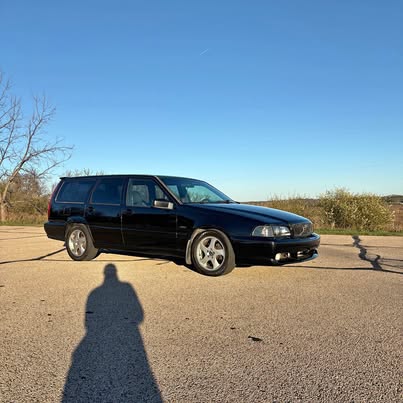 $3,200