
Alfa Romeo GTV buyer's guide
Alfa Romeo GTV -- the model's own buyer's guide: variants, values and what to check.
Years listed: 1969-1974 · Series: Alfetta/GTV
# Alfa Romeo GTV — a buying guide
Overview and history
The Alfa Romeo GTV is not one car. It is a name Alfa Romeo has reached for, on and off, for sixty years whenever it wanted to say fast touring coupé, and the first job of this guide is to tell you which GTV you are actually looking at — because the cars that share these three letters share nothing else. There is no common panel, engine or suspension part between the generations. A seller who talks about "the GTV" as if it were a single model is either careless or hoping you are.
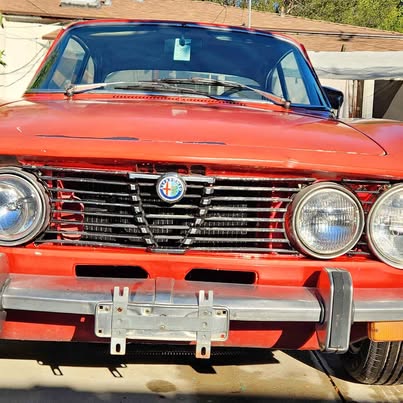
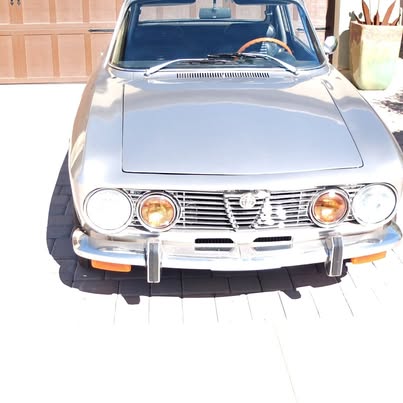
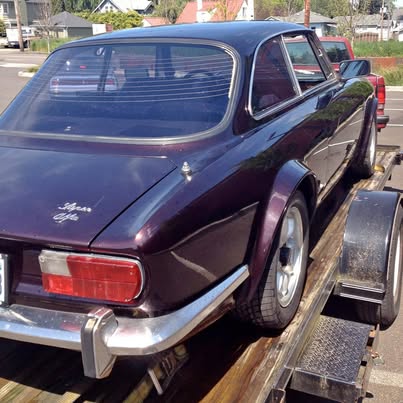
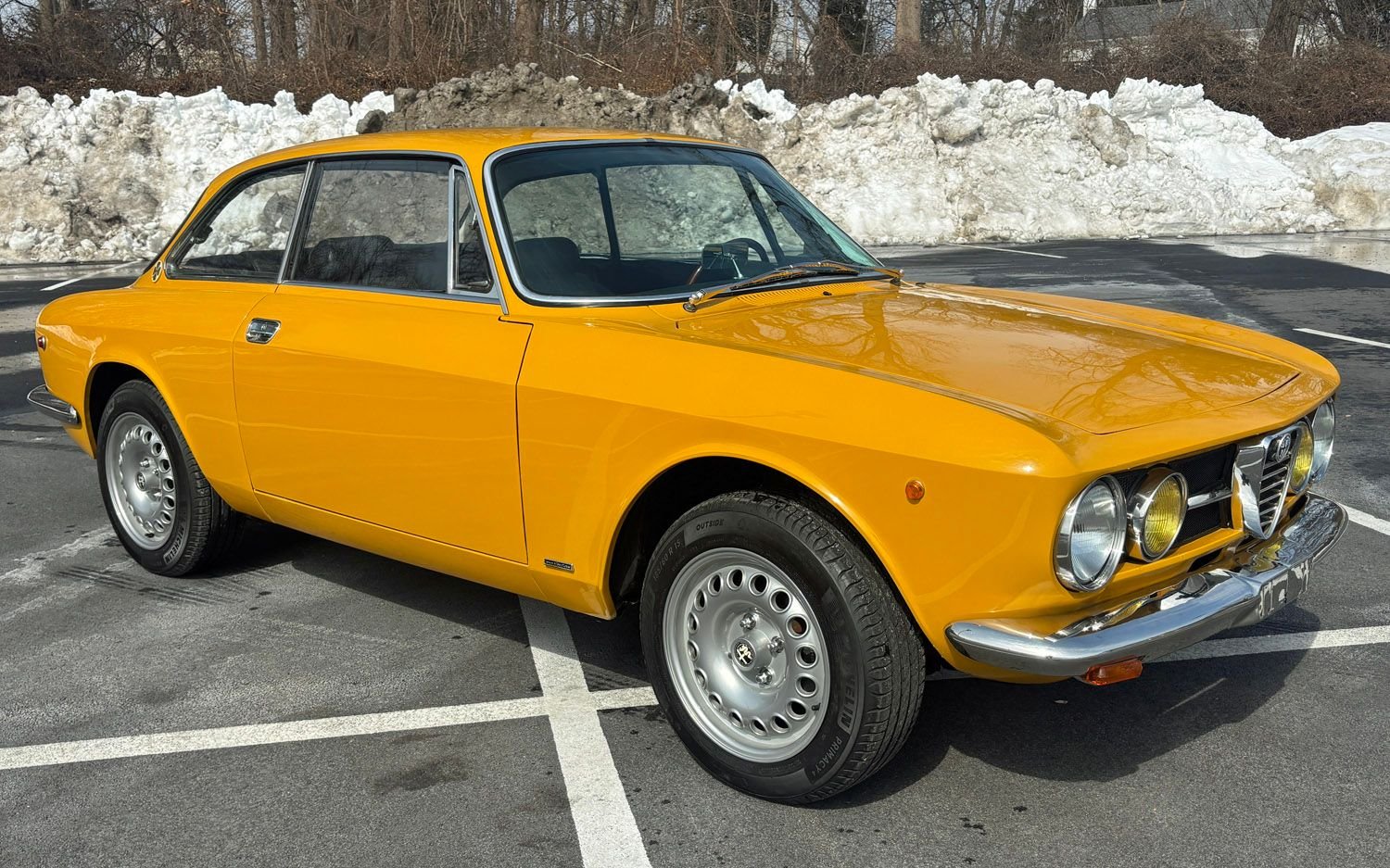
The GTV that matters here, and the GTV that Classic Listings actually holds, is the original: the Bertone-bodied coupé of the 105 series, built from 1963 to 1976 and sold in its later forms simply as the GTV. Our current pool is small and unusually consistent — four cars, all of them 2000 GTVs from 1972 and 1974, all in the United States. So this guide is written around the 105-series car, and the 2000 GTV in particular, while covering the earlier 105 variants you will meet in the same classifieds and dealing briefly with the two later, unrelated cars that wear the badge: the Alfetta-based GTV and GTV6 of 1974–86, and the front-wheel-drive GTV of 1995–2006, the 916 series. Neither later car is in our pool at the time of writing, and nothing written here about the 105 car should be read across to them.
The story starts in September 1963, when Alfa Romeo showed the Giulia Sprint GT at the Frankfurt motor show. The mechanical base was the Giulia saloon — the 105 series — which meant an all-alloy twin-cam four-cylinder engine, a five-speed gearbox at a time when five speeds still marked a car out as serious, disc brakes, and a chassis tuned by people who cared. Over it, Bertone draped a two-plus-two coupé body drawn by a very young Giorgetto Giugiaro, and the result is one of the handful of genuinely great mass-produced car shapes: short, taut, with a stepped leading edge to the bonnet on the early cars — the scalino, or step-nose — that collectors now chase hardest.
What makes the 105 coupé special to drive, and what you should be testing for on any viewing, is the balance of the thing. The engine loves revs and makes its best music past 4,000 rpm. The steering is unassisted, light and full of information. The rear axle is a live axle, which sounds crude on paper, but it is located so well, and the body is so stiff for its era, that the car flows down a road in a way few contemporaries match. This is a momentum car, a car for a road with corners, and a sorted example is one of the most satisfying classics you can own at any price.
The range grew the way Alfa ranges always grew: by displacement and by detail. The 1600 GT Veloce added pace in 1965, the lightweight GTA took the formula racing the same year, the 1300 GT Junior brought the shape down to a tax-friendly price from 1966, the 1750 GTV of 1967 brought the first real restyle and a bigger engine, and in 1971 the 2000 GTV topped the range with the 1,962 cc engine, a limited-slip differential and the final, cleanest interior. American buyers got the same cars with one major mechanical difference — SPICA mechanical fuel injection in place of carburettors, fitted to meet emissions rules — and it is the American 2000 GTV, SPICA and all, that dominates what you will find for sale in the United States today.
Buy one with your eyes open. These are hand-finished Italian steel cars from an era when rust protection was a coat of paint and a promise, and the difference between a good GTV and a bad one is not mileage or colour — it is the condition of a body shell that costs more to put right than the engine, gearbox and trim combined. The sections that follow are built to help you tell the two apart.
The models
The 105 coupé family tree is simpler than Alfa Romeo's naming makes it look. There is one body shell, developed through two major face-lifts, and four main engine sizes. Everything else — Junior, Veloce, GTA — is a variation on those two axes. Learn the shell changes and the engine changes and you can place any car you are shown in about ten seconds. The original Giulia Sprint GT of 1963–66 carries the step-nose front, a 1,570 cc engine on twin Weber carburettors, and drum brakes at the rear on the first production run before discs took over — an early-car detail worth checking rather than assuming. The Sprint GT Veloce of 1965–68 kept the step-nose and added power, better seats and a wood-rimmed wheel; it is the connoisseur's early car. The GT 1300 Junior arrived in 1966 as the entry model, with the 1,290 cc twin-cam and a plainer interior. Juniors were built in huge numbers, were often run on small budgets, and survive in very variable condition — the badge is no guide to the car.
The GTA 1600 of 1965–69 is the racing special: aluminium body panels, a twin-plug cylinder head, built in small numbers to homologate the car that dominated European touring-car racing. Genuine GTAs are six-figure cars, and the market is infested with replicas. Nothing in this guide's buying advice applies to a GTA except this: provenance is the car. No documents, no premium.
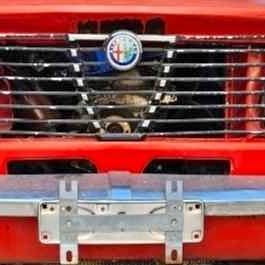
The 1750 GTV of 1967–72 is where the modern GTV begins. The step-nose was smoothed away, the nose gained the recessed grille and twin headlamps that define the classic GTV face, the interior became a proper wood-trimmed cockpit with a hooded instrument binnacle, and the engine grew to 1,779 cc. Series 1 cars (1967–69) have the purest detailing; Series 2 cars (1970–72) tidied the bumpers and trim. American 1750s introduced SPICA injection. The 2000 GTV of 1971–76, the car in our pool, took the engine to 1,962 cc, standardised the limited-slip differential, revised the grille with horizontal bars, and fitted the largest brakes of the range. It ran alongside the 1300 and 1600 Juniors, which by then wore a smoothed, unified nose of their own — so a late Junior and a 2000 GTV look far more alike than their values do, and the engine number, not the silhouette, settles which one you are buying.
Two footnotes complete the 105 picture. The GTC (1964–66) is a rare Touring-built convertible with its own structural problems. The Junior Zagato (1969–75) wears a different Zagato body on the same running gear; it is a separate model with a separate market and is not covered here.
The later namesakes, briefly. The Alfetta GT and GTV (1974–86) moved the gearbox to the back axle in a transaxle, used a de Dion rear suspension, and grew into the GTV6 (1980–87) with the Busso V6 — a wonderful engine in a car with its own, different rust and transaxle problems. Our store currently files the 105-series cars in this guide under an "Alfetta/GTV" series label, which is a filing error you should ignore: a 1972 2000 GTV predates the Alfetta coupé's American arrival and shares nothing with it. The 916 GTV (1995–2006) is a front-wheel-drive coupé with transverse engines, including a 3.0 and later 3.2 V6. It is a good car and a cheap one, but it is not this car, and none is in our current pool.
| Model | Years | Engine | Output | Built | Character |
|---|---|---|---|---|---|
| Giulia Sprint GT | 1963–66 | 1,570 cc twin-cam, Webers | about 106 hp | about 22,000 | The original step-nose; purest shape, earliest-car quirks |
| Sprint GT Veloce | 1965–68 | 1,570 cc twin-cam | about 109 hp | about 14,000 | The connoisseur's early car; better trim, keener tune |
| GT 1300 Junior | 1966–76 | 1,290 cc twin-cam | about 89 hp | about 91,000 | The entry car; sweet engine, hugely variable survival |
| GTA 1600 | 1965–69 | 1,570 cc twin-plug, aluminium body | about 115 hp road tune | about 500 | Homologation special; provenance is everything |
| 1750 GTV | 1967–72 | 1,779 cc twin-cam, Webers or SPICA | about 118 hp | about 44,000 | The classic GTV face arrives; the balanced all-rounder |
| 2000 GTV | 1971–76 | 1,962 cc twin-cam, Webers or SPICA | about 131 hp | about 37,500 | The fullest specification: LSD, biggest brakes, most torque |
| GTV / GTV6 (Alfetta) | 1974–87 | 1.6–2.0 four; 2.5 V6 | 108–160 hp | about 137,000 combined | A different car: transaxle, de Dion axle, Busso V6 in the GTV6 |
| GTV (916) | 1995–2006 | 2.0 four; 3.0/3.2 V6, front-drive | 150–240 hp | about 41,000 | A different car again: modern, transverse, Pininfarina-bodied |
Production and output figures are period Alfa Romeo figures as commonly published; treat the last digit of any of them with suspicion, because Alfa's own records and the surviving registries do not always agree — but the orders of magnitude are right, and they explain the market: Juniors are plentiful, 2000 GTVs finite, and genuine GTAs a different universe.
One identity trap deserves its own paragraph because it catches buyers every year. Alfa Romeo sold the 2000 GTV in America through 1974, but the same years also produced the Alfetta sedan and, from 1974 in Europe, the Alfetta GT — and titles and marketplace listings routinely scramble these cars. The car in front of you settles it: a 105 GTV has its gearbox in the middle of the car, a live rear axle, and a 105-series chassis number stamped on the firewall. An Alfetta has its gearbox at the back and inboard rear brakes. If a listing cannot tell you which it is selling, walk away until it can.
Engines and gearboxes
The twin-cam four: one engine, four sizes
Every 105 GTV runs a version of the same engine, and it is one of the great production engines. The Alfa Romeo twin-cam four — all-alloy block and head, hemispherical combustion chambers, twin overhead camshafts, sodium-cooled exhaust valves on the bigger engines — began life in the 1954 Giulietta at 1,290 cc and was stretched over twenty years without losing its character. It is strong and tuneable, and treated properly it is long-lived. Treated badly it fails in specific, diagnosable ways, which makes inspecting one a learnable skill rather than a lottery.
The sizes you will meet are these. The 1,290 cc Junior engine (74 × 75 mm) makes about 89 hp and is the sweetest of the family — short-stroke, eager, happiest revving. The 1,570 cc engine (78 × 82 mm) makes 106 to 109 hp and suits the early cars perfectly. The 1,779 cc engine (80 × 88.5 mm) of the 1750 GTV makes about 118 hp and adds real torque. The 1,962 cc engine (84 × 88.5 mm) of the 2000 GTV — engine type 00512 — makes about 131 hp in European carburettor form and is the strongest and laziest of the four: it pulls from 2,500 rpm as the smaller engines do not, and it is the engine in every car in our current pool.
All of them share the same architecture and the same inspection points. The camshafts are driven by a duplex chain with a tensioner you can reach; a rattling chain at idle that quietens as revs rise is a worn tensioner or a stretched chain, and it is a negotiation point, not a catastrophe — a chain, tensioner and guide replacement is a known job at roughly $600–1,200 in parts and labour through a specialist. Valve clearances are set by shims under bucket tappets, an engine-out-of-the-car job is not required but patience is, and a top end that clatters loudly when warm has usually simply been left unadjusted for a decade: budget $300–600 for a full shim service and be pleased if that is all the head needs. Oil pressure is the number that tells the truth about the bottom end. A healthy warm engine shows strong pressure at speed and a gauge that still registers meaningfully at a hot idle; an engine whose hot idle pressure collapses toward zero while the light flickers is telling you about worn main and big-end bearings, and a bottom-end rebuild on this engine is a $4,000–7,500 job done properly with the crank measured, not guessed at.
The head gasket is the family's known weakness, and the mechanism matters. The alloy head and alloy block expand together, but the cylinder liners are wet liners seated in the block, and if a liner has sunk even slightly below its correct protrusion, the gasket loses its clamp exactly there and begins to pass combustion gas into the water jacket or oil into the coolant. The symptoms are a cooling system that pressurises too fast from cold, mayonnaise under the oil filler cap that does not clear on a long run, and a car that uses coolant without leaking it. A head-gasket replacement alone runs about $900–1,600 in parts and labour — but insist the liner heights are measured while the head is off, because a gasket changed over a sunken liner will fail again within a season, and you will pay twice.
Oil leaks deserve a sentence of their own because every old Alfa leaks a little and sellers hide behind that. The cam cover gasket, the front crank seal and the half-moon seals at the back of the head all weep with age and are cheap to fix. Oil running from the bellhousing is a rear main seal, an engine-and-gearbox separation job. Learn to distinguish a weep you can live with from a leak that marks the car as neglected, because neglect, not mileage, is what kills these engines.
Carburettor cars: Weber, Dell'Orto and Solex
European and most non-American cars breathe through a pair of twin-choke carburettors — Weber 40 DCOE, Dell'Orto 40 DHLA or Solex 40 PHH depending on year and market. When they are right, a carburettor car feels alive: crisp pickup, a hard induction snarl under load, and a willingness at the top end that flatters the engine. When they are wrong, sellers describe it as "character". It is not character. It is wear, dirt or maladjustment, and almost all of it is fixable.
The failure modes are mechanical. The throttle spindles wear in their bores, letting unmetered air past the butterflies at idle, which is why so many carburettor GTVs idle at 1,200 rpm with the idle screws apparently doing nothing — the air is not coming through the screws. The test is to spray a little carburettor cleaner at the spindle ends on a running engine and listen: if the idle speed changes, air is entering there. Spindle rebushing is a specialist job at about $250–450 per carburettor. The accelerator pump diaphragms harden and split, producing the classic flat spot on tip-in that everyone blames on jetting; the diaphragms are cheap, the jetting is usually innocent. Float levels drift, fuel percolates after a hot shutdown and floods the restart, and the whole system is only ever as good as its fuel supply: a car that has sat for years will have varnish in every passage, and a full strip, ultrasonic clean and rebuild of a pair of Webers runs about $500–900. Budget for it on any car that has been stored, and regard a car that starts from cold on the choke, settles to an even idle and pulls cleanly through 5,500 rpm as a car whose previous owner spent money in the right places.
A word on the airbox. The original cylindrical air filter housing is part of how these engines were tuned, and a car still wearing its complete original airbox is a car that has not been messed with. Trumpets and foam socks look racy and usually cost midrange torque; their presence is not a fault, but it tells you the car's history has an enthusiastic chapter, and you should inspect the rest of it accordingly.
SPICA injection: the American system, understood
From 1969, American-market cars — including every 2000 GTV in our pool — replaced carburettors with SPICA mechanical fuel injection, built by Società Pompe Iniezione Cassani & Affini to meet United States emissions rules. SPICA frightens buyers who do not know it and delights owners who do. It is a fully mechanical system: a small four-plunger pump driven at half engine speed by a belt from the crankshaft, metering fuel through a three-dimensional cam — the "logic section" — that reads engine speed and throttle position. There is no ECU and nothing electronic to fail, and everything about it can be rebuilt. There is also almost nobody left who can rebuild it except the specialists, and that is the real ownership equation.
The system's known failure points are specific. The thermostatic actuator — a wax-element device screwed into the pump that enriches the mixture when cold and leans it as the engine warms — fails with age, and a failed actuator gives you a car that runs rich forever: black plugs, fuel in the oil, single-figure economy and a seller saying "they all run like that". They do not. A rebuilt actuator is available from the SPICA specialists at roughly $250–400 exchange, and fitting one transforms a car. The fuel supply pump in the tank and the main pressure pump must deliver clean fuel at pressure; SPICA's fine internal clearances are destroyed by dirt, which is why the system's fuel filters — including the one in the pump itself — are service items, not lifetime parts, and why a car that has sat with old fuel is a risk. The drive belt for the pump is a toothed belt with a service life; a snapped belt stops the engine dead and is routinely overlooked because owners forget the pump has a belt at all. Ask when it was last changed. If nobody knows, change it: the belt itself is cheap, and fitting with correct pump timing is a $200–400 job.
The diagnostic that matters on a viewing is behavioural. A healthy SPICA car starts from cold with a fast idle that settles as it warms, pulls without hesitation or black smoke, returns plugs the colour of weak tea, and does not smell of petrol at idle. A car that hunts, smokes black under load, or has obviously had its pump "adjusted" by an amateur is a car to price as a project: a full pump rebuild by the recognised specialist — Wes Ingram's shop is the name every American SPICA owner eventually learns — runs about $1,800–2,800 for the pump rebuild alone, with removal, refitting and set-up on top. Do not let anyone sell you a quick tune or a miracle: there is nothing electronic to tune. The pump is the system.
Should you prefer a carburettor car? In America, a well-sorted SPICA car is every bit as good to drive, and it is the original specification for the market. Converting one to Webers is common and costs roughly $2,500–4,500 in parts and labour done properly, but it permanently changes the car's originality. Buy the best car, not the induction system — and price a sick SPICA car as honestly as you would price a sick anything.
Gearboxes, clutch and the rear axle
The five-speed gearbox is all-synchromesh, with Porsche-type synchromesh that was advanced for 1963 and is the source of the car's most famous wear item: second gear. The second-gear synchro ring works hardest — it is the gear you downshift into for every corner and haul out of in every traffic gap — and on a worn box it crunches on the downshift from third and baulks on a hurried upshift from first. The test is precise: on a test drive, once the oil is warm, make three unhurried downshifts from third to second at moderate revs, then three quick ones. A box that crunches only when hurried is worn; a box that crunches always is worse; a box that is clean both ways has either been rebuilt or lived a gentle life, and either is good news. A gearbox rebuild with synchros, bearings and seals runs about $1,800–3,200 in parts and labour, and because the box comes out with the engine or from underneath depending on the shop, get the clutch done in the same visit.
The clutch is conventional, hydraulically operated, and long-lived; a high biting point with slip under full throttle in fourth is a worn plate, and a clutch replacement is a $900–1,500 job. The propshaft runs through a centre bearing with rubber doughnut couplings — Giubo joints — that perish and crack, producing a drumming vibration under load and a clunk on take-up; a set of couplings plus the centre bearing is a $300–600 parts-and-labour job that sellers routinely leave undone.
At the back, the 2000 GTV's limited-slip differential is a genuine asset — a plate-type unit that puts power down out of wet corners as the open-diff Juniors cannot — but its plates wear, and a worn LSD behaves exactly like an open diff, which is why the test in the inspection section matters. The axle itself is a strong Salisbury-type live axle; whine on a light throttle at cruising speed is pinion bearing wear, and a rebuild is a $1,200–2,200 job. Axle seals leak with age and announce themselves as oil on the rear brakes, which is a safety item, not a cosmetic one.
Finally, the automatic question, because our pool raises it. One of the four listings in our store carries an automatic transmission in its data. Alfa Romeo did not sell the 105 GTV with an automatic gearbox — the five-speed manual was its only transmission. Treat any "automatic GTV" listing as a data error until the seller proves otherwise with photographs of the gear lever and pedals; if a car genuinely has been converted, price it as a modified car and ask who did the work and why. Errors of exactly this kind are common in marketplace listings, and catching one is a reminder to verify every field of a listing against the car, not just the transmission.
Problem areas
Rust: the map
Everything else in this section is negotiable. This one is not. The 105 coupé was built from thin steel with minimal cavity protection, many were assembled with a casualness about panel gaps that let water sit exactly where it does most harm, and a GTV's body is a unitary structure — there is no separate chassis to save you. Rust is not a blemish on these cars; it is the main event, the thing that decides whether a car is a purchase or a liability, and it is the reason two outwardly identical 2000 GTVs can honestly differ in value by a factor of three.
Work through the map in the order the water does. The sills are the structural heart of the car and the first place to look. Each sill is a three-piece construction — outer panel, centre membrane and inner sill — and it rots from the inside out, fed by water entering through the jacking points and the seams. A sill that looks sound can be filler over a vanished membrane. Test every car with the jacking-point test described in the inspection section: the car's own jack, in its own jacking point, lifting the car. A sound sill takes it without a creak or a crackle. A rotten one announces itself immediately. Professional sill replacement, all three pieces, properly joggled and welded, runs about $1,200–2,500 per side in parts and labour — and that is before the floor and outrigger repairs the same water usually demands.
The floors rot where they meet the sills and around the seat mountings, and they hide under soundproofing and carpet that a seller will not want you lifting. Lift them anyway. The front footwells collect water from a leaking windscreen seal and from the scuttle, and the spare-wheel well in the boot floor is a bathtub with a drain hole that blocks: a well full of water stains and a boot floor perforated around it is the standard picture. The boot floor itself, the rear valance and the rear wheel arches — especially the lip where the arch meets the sill, and the inner arch where it meets the boot floor — all go, in that rough order of frequency.
At the front, the inner wings rot around the headlamp bowls and along the top rails, the front crossmember under the radiator corrodes where it traps road dirt, and the A-posts and door hinge pillars go at their bases, which is structural and expensive. Door bottoms and the lower front wing sections are cosmetic by comparison and cheaper to fix, but they are the rust you can see, which makes them useful: a car honest enough to show bubbling door bottoms often has an owner who will tell you the truth about the sills, while a car in fresh paint with perfect door bottoms and no history is the one to interrogate hardest. Fresh paint on a GTV is not a selling point. It is a question.
The windscreen and rear screen apertures rot under their seals, fed by perished rubber, and the repair is glass-out welding that nobody enjoys paying for — about $600–1,400 per aperture in parts and labour once the glass is out and the metal is made good. Check the scuttle panel below the windscreen and the heater box area behind it, because water that gets in there ends up in the footwells and starts the floor rust from above.
What does a full body restoration cost, honestly? A shell needing sills, floors, arches, a boot floor and aperture repairs, done by a specialist, is a $15,000–30,000 body-and-paint commitment before trim — exactly why the market pays so much for a genuinely solid original car and so little for a shiny one with no underside photographs. When you read a listing, count the underside photographs. A seller with a solid car photographs the sills, floors and jacking points. A seller without them has told you something too.
A note on what our own pool can tell you here: the four cars currently listed with us are marketplace listings carrying a single lead photograph each, and none supplies the underside photography a rust judgement requires. That is the normal state of a marketplace listing, not a criticism of those cars — but it means every one of them is unjudged on rust until somebody crawls underneath with a light and a magnet. Treat them that way.
Engine wear, oil and water
The engine's problems were introduced in the previous section; here is how they rank as buying risks. The head gasket and sunken-liner problem is the most common expensive surprise, because a car can run sweetly on a test drive with a gasket that is already passing gas into the water — the giveaway is a cooling system that is rock-hard at the top hose within two minutes of a cold start, before the thermostat has opened. Check it on every viewing; it takes ten seconds and no tools.
Timing-chain rattle, tired valve clearances and oil weeps are the ordinary wear of a fifty-year-old engine and should be priced, not feared. What should stop you is evidence of overheating: a warped head on this engine is a machining job, repeated overheating points to a blocked radiator or a failing water pump, and a car with a new head gasket, a new radiator and a recent respray of the engine bay is a car telling you a story — ask what happened, and listen carefully to the answer. Oil consumption of a quart in a thousand miles on a high-mileage engine is tolerable and common; blue smoke under acceleration after a trailing throttle is valve-stem seals and guides, a top-end job at about $1,500–2,800 in parts and labour with the head off, at which point the gasket and liner checks happen anyway. Blue smoke all the time is rings and bores, and that is the full rebuild.
The cooling system is conventional and adequate when maintained: radiator, water pump, thermostat and hoses, all available, all cheap by classic-car standards. Electric fan conversions are a sensible upgrade in hot climates — three of our four pooled cars live in California and Arizona, where this matters. What is a mark against a car is a cooling system full of rusty water, because that tells you the antifreeze, with its corrosion inhibitors, has not been changed in years, and the alloy head and block have been corroding from the inside while the outside was being polished.
SPICA and fuel-system faults
Because every American 2000 GTV runs SPICA, its faults get their own heading here; the mechanism and the costs are set out in the engines section, so this is the buyer's summary. A failed thermostatic actuator means a permanently rich car — sooty plugs, fuel smell, fuel diluting the oil on the dipstick. Sniff the dipstick on every SPICA car you view: petrol in the oil is the actuator's signature and it is also quietly wearing the bearings. A worn pump logic section gives uneven fuelling that no amount of external adjustment cures. A tired in-tank supply pump starves the main pump and mimics pump failure at a tenth of the cost, which is why diagnosis order matters and why you should buy from owners who used a specialist rather than a succession of guesses.
The rest of the fuel system is shared with the carburettor cars and fails the same way: the tank rusts internally on cars that have sat, feeding the filters a diet of rust flakes; the rubber fuel lines perish and are a fire risk on any car where they are visibly cracked — replacing every flexible fuel line on a newly bought car is a $150–350 job and should be your first weekend's work regardless of what the seller says about their age. On SPICA cars the stakes are higher because the pump's clearances are finer: a car that has sat for years with stale fuel in the pump is the single most expensive "bargain" in this market.
Suspension, steering and brakes
The front suspension is double wishbones with coil springs, an anti-roll bar and lever-arm or telescopic dampers depending on year; the rear is the live axle on coil springs with trailing arms and the upper T-arm. The geometry is right and the components are simple, which means a tired car is tired in cheap, fixable ways — and also means there is no excuse for one to drive badly.
Front ball joints and track-rod ends wear and produce vagueness and a knock over broken surfaces; a full front-end refresh of joints, bushes and dampers runs about $900–1,800 in parts and labour and transforms a car. The steering box — a Burman recirculating-ball unit — wears its worm and peg, and the test is free play at the wheel rim: more than about an inch of movement before the road wheels respond is wear to price, and a rebuilt or replacement box is a $600–1,100 commitment. The idler box on the opposite side wears too and is routinely forgotten. Rear trailing-arm bushes and the T-arm bush perish and let the axle steer the car under power — a GTV that changes lane slightly when you lift off mid-corner is telling you about its rear bushes, not its alignment. A full rear bush set fitted runs about $500–900 in parts and labour.
Brakes are discs all round — a 1963 talking point that still serves the car well — with ATE calipers and a servo on later cars. The failure mode of age is seized caliper pistons, especially the rears; a car that pulls under braking or has one hot rear wheel after a drive is showing you a sticky caliper. A full caliper rebuild runs about $600–1,200 in parts and labour for all four corners, and flexible hoses should be renewed on any car where their age is unknown. The handbrake works through small drums inside the rear discs and is famously feeble when neglected; a car that will not hold on a slope needs its rear brake mechanism serviced, not its cables tightened.
Interior, trim and electrics
The 2000 GTV's interior — deeply bolstered seats, a wood-veneered dash and console, a hooded binnacle with large Veglia instruments — is one of the car's pleasures and one of its costs. Seat foam collapses, the vinyl splits along its stitching, and a full professional retrim in correct materials runs about $3,500–6,500. The dash top cracks in sun climates — again, note where our pooled cars live — and a cracked dash is a $400–900 problem. Wood veneer lifts and clouds; refinishing it is a $300–700 job. Headlinings sag and carpets wear, and all of it is available from the specialists, but the bill for a full interior is real money, so grade interiors as carefully as engines.
Electrics are the period Italian standard: adequate when the earths are clean, mysterious when they are not. Nine out of ten GTV electrical faults are earth faults — a corroded ground strap or a bad earth at a lamp cluster — and the fix is cleaning, not parts. The fusebox contacts tire, the alternator charges modestly, and the instruments wander when their voltage stabiliser tires. A car whose electrics have been "improved" with Scotch-lock connectors and a 1990s alarm is a car you will spend weekends un-improving; original, untouched wiring is worth real money. Check that everything works on the viewing — every lamp, both wiper speeds, the heater fan, the horn, every gauge — because each dead item is an earth, a switch or a motor, and you want to know which before you own the question.
Chrome and brightwork: the bumpers are stainless on later cars and polish rather than rust, the grille and lamp surrounds are die-cast and pit, and the window frames and quarter-light mechanisms wear and rattle. None of it stops a purchase, but rechroming a set of small die-cast parts runs $800–1,500 surprisingly fast. Completeness is the point: a car with every piece of trim present but dull is a far better buy than a shiny car missing its grille heart and badges, because the specialists can sell you back the shine, but some missing pieces are simply no longer made.
How to inspect one
Inspect a GTV in this order: identity first, structure second, mechanics third, cosmetics last. Each stage can end the viewing, and there is no point falling for a dashboard before you have condemned a sill. Take a magnet wrapped in cloth, a torch, and a friend to work the pedals and lights while you watch.
- Start with the paperwork and the numbers. Read the chassis number off the firewall stamping, not just the plate, and confirm it is a 105-series number that matches the title. Read the engine number and confirm it is the 00512 type a 2000 GTV should carry. A mismatch between the car, its title and its listing description — model, year or transmission — ends the viewing until it is explained in writing.
- Cold start, from outside the car. Insist the engine is stone cold when you arrive. Watch for blue smoke on start-up (stem seals), listen for timing-chain rattle in the first seconds, and on a SPICA car confirm the fast idle settles as the engine warms — the thermostatic actuator test from the problem-areas section, done by ear.
- The top-hose test. Within two minutes of the cold start, squeeze the radiator top hose. If it is already hard with pressure before the engine is warm, combustion gas is entering the water jacket: the head-gasket and sunken-liner problem. Walk away or price a top-end rebuild into the car on the spot.
- The sill-jack test. Put the car's own jack in each front jacking point in turn and lift until the wheel is just clear. Listen. Creaking, cracking filler or a jacking point that moves is a rotten sill structure — the single most valuable test in this guide, and the one sellers of rotten cars will try to talk you out of. Do it anyway, politely, on all four points.
- Underneath, with the torch. Sills inner and outer, floor pans at the seat mounts, front footwells, the front crossmember, the spare-wheel well and boot floor, the rear arch-to-sill joins. Poke suspect areas with a screwdriver handle, not the tip — you are testing soundness, not making holes. Underseal is not evidence either way; fresh underseal over everything is a question, not an answer.
- The magnet tour. Run the wrapped magnet over the sill outers, the rear arch lips, the door bottoms, the front wing lowers and the nose panel. Where it will not hold, there is filler. Filler over a welded repair is acceptable if the seller can show the repair photographs; filler as the structure is not.
- Apertures, doors and glass. Open and close both doors from outside and inside; a door that drops on its hinges points to A-post or hinge-pillar trouble, not just worn pins. Check the windscreen and rear screen rubbers for perishing and the metal beneath them for bubbling. Check the scuttle and look for water staining in the footwells and a musty smell — water has been in, and floors follow.
- Oil, water and the dipstick sniff. Oil level and colour, coolant level and colour, and on a SPICA car, smell the dipstick for petrol — the failed thermostatic actuator's signature. Rusty coolant means years without antifreeze changes and internal corrosion you cannot see.
- The test drive: gearbox first. With the oil warm, make the second-gear test from the engines section — three gentle third-to-second downshifts, then three quick ones. Crunching is a rebuild to price. Then full throttle in fourth from low revs to test the clutch for slip, and a lift-off in a gentle corner to feel for rear-bush axle steer.
- Brakes and steering on the same drive. A firm stop from speed in a straight line, hands light on the wheel: pulling means a sticky caliper. Check the steering's free play at the rim — about an inch is the limit of acceptable — and feel for front-end knocks over broken surfaces. After the drive, walk round and feel each wheel: one hot rear wheel confirms the caliper you suspected.
- The limited-slip test. On the 2000 GTV, with one rear wheel on a loose or wet surface and the other on tarmac, pull away firmly. A working plate-type LSD drives the car forward; a worn one spins the loose wheel like an open diff. It is not a deal-breaker — the plates are replaceable — but it is a real cost to price in.
- Electrics and the small print. Every lamp, both wiper speeds, heater fan, horn, every gauge, both windows up and down, quarter-lights, locks, and the boot and bonnet releases. Then read the history file: who maintained it, which specialist, and whether the bills show the pattern of an owner who fixed causes or an owner who fixed symptoms. Buy the second kind of car only at the first kind of discount.
If the car passes, make the market check last: read the recorded-sales block beneath this guide and compare like with like — same engine, same market specification, same structural condition — before you offer. The inspection has told you which condition class the car is in; the sales record tells you what that class actually changes hands for.
Values
The numbers live beneath this guide, in the listed-now summary and the recorded-sales block the site builds from real transactions, and they are refreshed as the market moves — so this section teaches you how to read them rather than repeating figures that would stale. Read the GTV market as four separate markets wearing one badge, because that is what it is.
The first split is structure. A GTV with a genuinely solid original shell — sills, floors and apertures proven, not asserted — sits in a different price class from a car that merely looks tidy, and the gap between those classes is wider for this model than for almost any other car of its era, because the cost of moving a car from the second class to the first is so large and so well known. When you compare recorded sales, compare within the structural class first; a cheap recorded sale of a rotten car tells you nothing about the value of a solid one, and a strong sale of a restored car tells you nothing about yours.
The second split is variant. The step-nose early cars and the GT Veloce carry a premium for their purity and scarcity. The 1750 GTV is the connoisseur's balanced car and prices accordingly. The 2000 GTV is the most usable and the most numerous of the desirable cars, which keeps its ceiling honest. Juniors trade at a clear discount to the big-engine cars despite sharing the shell — the market pays for the engine and the specification, not the silhouette — and a Junior priced like a 2000 GTV is a car to walk past unless its condition is truly exceptional. GTAs, if you ever meet one in a sales record, are not comparables for anything else in this guide.
The third split is specification and market. American SPICA cars and European carburettor cars trade in overlapping but not identical pools: originality-minded American buyers pay for a correct, well-sorted SPICA car, while a converted car trades at a discount unless the conversion is documented and excellent. Matching numbers — the engine the car was born with — matter to this market and are checkable, which is why the inspection section starts with the numbers.
Finally, the project-versus-driver gap on a GTV is mostly a body-shop invoice wearing a disguise. A non-running project with a sound shell can be the best value in the whole market, because engines and gearboxes are rebuildable at predictable cost. A shiny driver with a rotten shell is the worst, because its price assumes the one thing it does not have. Asking prices in marketplace listings run optimistic, as they do everywhere; the recorded-sales block shows you what buyers actually paid, and on this model the spread between the two is where your negotiation lives. Go in with the inspection evidence in hand — sill photographs, the second-gear result, the actuator's behaviour — because on a GTV, documented faults are the only arguments that move a price, and they move it a long way.
Parts and ownership
The 105 GTV is one of the best-supported classics you can own, and that support is the practical reason it makes such a good first serious classic. Alfa Romeo built the running gear in volume, the cars were raced and rallied for decades, and a competitive specialist trade has grown up around them on both sides of the Atlantic. In the United States, Centerline Alfa and Vick Autosports carry the mainstream service and restoration range; in Britain, Classic Alfa and Alfaholics between them can supply everything from a sill set to a complete GTA-specification engine build, and they ship worldwide. Between the specialists, the owners' clubs and the AlfaBB forum's classifieds and technical archives, there is almost no mechanical part on this car you cannot buy new, rebuilt or good-used within a week.
The exceptions are worth knowing. Body panels are well covered — sills, floors, arches, wings and valances are all reproduced — but reproduction panels vary in pressing quality, and a body shop's time making them fit is part of the real cost. Interior trim is reproduced in correct materials for the common colours; odd colours and perfect dashboard tops are harder. SPICA parts are the one genuine specialism: pumps and thermostatic actuators go to the dedicated rebuilders, Wes Ingram's Ingram Enterprises above all in the United States, and turnaround is measured in weeks because the knowledge sits in very few hands. Weber and Dell'Orto parts, by contrast, are available everywhere.
Running one is straightforward if you respect three rhythms. The engine wants its oil changed often and its valve clearances checked on schedule — shim adjustment is the service item owners skip, and the clattering top end on a viewing is the receipt. The SPICA pump wants clean fuel, fresh filters, and its drive belt changed on age, not on failure. The body wants to be kept dry, garaged, and washed underneath after winter salt; over five years, that is the difference between a car and a restoration. A competent independent Alfa specialist will service the car for ordinary classic-car money, and the parts prices in the problem-areas section are the honest guide to what the big jobs cost when they come.
Ownership's pleasures are real, and they are why the market exists. The car is small, light, loud in the right way, and fast enough to use fully on ordinary roads. The parts and knowledge support means you are never stranded by an unobtainable component. And the community — clubs, registers, tours and a racing scene that still runs these cars hard — means the car comes with a social life attached if you want one. Buy the best shell you can find, keep it dry, service the top end, and a GTV will pay you back every time you drive it.
Which one to buy
- The all-rounder: a 1750 GTV, Series 2. The classic face, the balanced engine, carburettors or SPICA both fine when sorted — the GTV at its most complete, and the easiest to live with of the early cars.
- The fullest specification: a 2000 GTV — the car in our pool. The most torque, the limited-slip differential, the biggest brakes. In America that means a SPICA car: buy the one whose pump and actuator have documented specialist attention and you own the best-driving GTV of all.
- The purist's car: a Sprint GT Veloce. Step-nose shape, 1600 engine, the lightest and prettiest of the range. You pay for the purity, and early-car details — rear drums on the first cars, generator electrics — are part of the deal.
- The value buy: a GT 1300 Junior, late and solid. The same shell, the same chassis, the sweetest engine of the family, at a clear discount to the big-engine cars. A solid Junior is a better car than a rotten 2000 GTV in every way that matters on the road.
- The specialist's car: a GTA. Only with full provenance, only with registry confirmation, and only if you understand that you are buying a racing artefact, not a road car with a premium.
- Not this guide's car: the Alfetta GTV, GTV6 and 916 GTV. All worth owning, none covered by the advice above — different drivetrains, different rust maps, different markets. If a listing mixes them up with a 105 car, that confusion is itself information about the seller.
The overriding rule: buy the shell. Engines rebuild, gearboxes rebuild, SPICA pumps rebuild, interiors retrim — but a rotten 105 shell costs more to save than the finished car is worth, and a sound one makes every other fault a priced job instead of a catastrophe. Condition of the structure first, matching numbers second, everything else after that.
See the 4 GTV cars currently listed.
For sale now
Expand
$32,000Expand
What they sell for: GTV sale prices.