
Alfa Romeo GTV-6 buyer's guide
Alfa Romeo GTV-6 -- the model's own buyer's guide: variants, values and what to check.
Years listed: 1983-1986 · Series: Alfetta/GTV
Overview and history
The GTV6 is the car the Alfetta coupe was always meant to become. Alfa Romeo launched the Alfetta GT in 1974 with a four-cylinder engine and one of the most sophisticated chassis layouts ever put under a production coupe: a rear-mounted transaxle, inboard rear disc brakes, a de Dion rear axle and torsion-bar front suspension, all arranged to give near-perfect weight distribution. It handled beautifully, but the four-cylinder car was never quite fast enough to cash the cheques the chassis was writing. In 1980 Alfa fixed that by installing the 2.5-litre all-alloy V6 designed by Giuseppe Busso — an engine that had debuted, on carburettors, in the Alfa 6 sedan — and created the GTV6. The result is one of the great driver's cars of the 1980s: a Giugiaro-styled fastback coupe with a transaxle chassis, a five-speed gearbox at the back, and an engine whose induction and exhaust note owners describe in terms normally reserved for music.
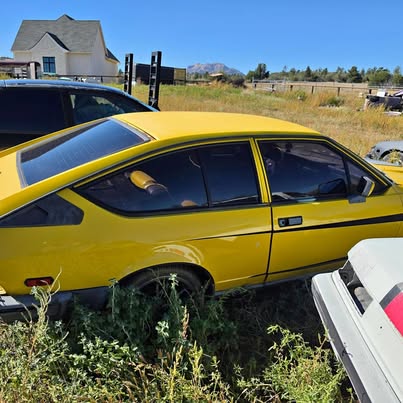
United States sales run from the 1981 model year through 1986, and the American car is a specific thing you need to understand before you judge any example. Federal cars carry Bosch L-Jetronic fuel injection, a catalytic converter, impact bumpers and emissions equipment the European car did not have, and they make 154 hp in SAE net trim against the European car's 160 PS. When production ended in 1986 (European build ran into 1987), Alfa replaced the concept in America with the Milano sedan, which shares the transaxle layout and the Busso V6 but not the coupe body. Be plain about what our own listings hold, because it shapes the rest of this guide. The GTV6 pool here is small — five cars, all of them Facebook Marketplace finds, spanning 1981 to 1986 with the 1986 model year the most common, in red, black, silver, gold and yellow, spread across Texas, North Carolina, Georgia and Arizona. That is a fair snapshot of how these cars surface in America today: one private seller at a time, often with a thin description and a single photograph. With a GTV6, the distance between a wonderful car and an expensive mistake is rarely the asking price or the mileage; it is the state of a forty-year-old shell, the date on the timing belt, and whether the transaxle and propshaft have been maintained by someone who understood what they were looking at.
Why does this car reward the effort? Three reasons. First, the engine: the Busso V6 is genuinely one of the finest production engines of its era — all-alloy, free-revving, durable when maintained, and possessed of a sound no modern turbocharged equivalent reproduces. Second, the chassis: the transaxle layout puts the gearbox, clutch and rear brakes at the back, so the car turns in, rides and puts its power down with a balance front-heavy contemporaries could not match. The mechanical core of the car — engine bottom end, gearbox internals, de Dion axle — is strong. What kills GTV6s is rust in structural places, timing belts run past their interval on an interference engine, propshaft couplings ignored until they shake the car apart, and a long chain of small electrical and trim faults that make a basically sound car miserable to live with. Buy the shell first, the service history second, and the shine last of all.
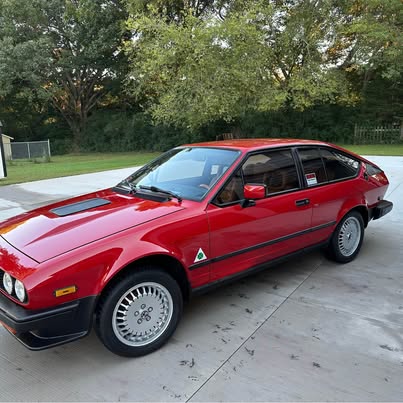
The models
Every GTV6 is the same basic car: a two-door fastback coupe on the Alfetta platform, front-engined, rear-transaxle, with the 2.5-litre Busso V6 and a five-speed manual gearbox. There is no factory automatic GTV6, in any year, in any market — the transaxle was a manual unit and Alfa never engineered an automatic version. Hold onto that fact, because it is a working identity check: a GTV6 advertised with an automatic transmission is a misdescribed car, and a seller or listing system that gets the gearbox wrong may have got other things wrong too. The variations that do exist are model-year development, market specification, and a short list of special editions and derivatives, some of them genuinely valuable. A summary table follows, then the variations in turn.
| Model | Years | Engine | Output | Built | Character |
|---|---|---|---|---|---|
| GTV6 2.5 (European) | 1980–1987 | 2,492 cc Busso V6, Bosch L-Jetronic | 160 PS | The bulk of roughly 22,000 GTV6s in total | The home-market car: lightest, quickest standard version |
| GTV6 2.5 (US) | 1981–1986 | 2,492 cc Busso V6, L-Jetronic, catalyst | 154 hp SAE net | US share not separately published | The federal car: bumpers, emissions kit, same essential character |
| GTV6 Balocco SE (US) | 1982 | 2,492 cc Busso V6 | 154 hp | About 350 | Named for Alfa's Balocco test track: stripes, Quadrifoglio badges, numbered plaque |
| GTV6 Maratona (US) | 1984 | 2,492 cc Busso V6 | 154 hp | Limited run | Silver with a factory aero body kit, flares and rear wing |
| GTV6 Grand Prix (European) | 1985–1986 | 2,492 cc Busso V6 | 160 PS | Limited run | Rayton Fissore body kit; a European-market special |
| GTV6 3.0 (South African) | 1983–1984 | 2,934 cc Busso V6, carburettors | About 186 hp | About 200 | Autodelta-built homologation car with a bonnet bulge; the rarest GTV6 |
| GTV6 Callaway Twin Turbo (US) | 1985–1986 | 2,492 cc Busso V6, twin turbochargers | About 230 hp | Around 30 | Callaway-built, sold through US Alfa dealers; the fastest GTV6 |
Treat the production figures in this table the way you should treat all GTV6 numbers: the total of roughly 22,000 cars across all markets is the widely documented figure, but Alfa did not publish clean splits by market or edition, so anyone quoting you an exact build count for an ordinary variant is guessing. The special editions are documented well enough to identify — plaques, trim, body kits — and identification, not rarity claims, is what should drive any premium you pay. One naming trap is worth stating here: the four-cylinder Alfetta GTV is a different model with a flat bonnet, a four-cylinder engine and a much lower value ceiling, and the two are occasionally confused in listings. The GTV6 tells are the bonnet's raised centre section, the V6 under it and GTV6 badging — if the car in front of you has a flat bonnet and four cylinders, it is a GTV, whatever the advertisement calls it.
The standard car, and how it changed. The GTV6 that reached America for 1981 is recognisably the European car with federal additions: larger bumpers, side markers, a catalytic converter, air conditioning on most cars, and a bonnet with the characteristic raised centre section clearing the V6's intake plenum — the single easiest visual tell separating a GTV6 from a four-cylinder Alfetta GTV at fifty paces. Early cars ride on Campagnolo magnesium-alloy wheels on many examples, a period piece worth checking for corrosion and cracks, because magnesium ages badly. The interior of the early car is pure 1970s Alfetta: a deep-dished dashboard, auxiliary gauges angled in the centre console, and trim materials that were never going to survive four decades of sun.
The significant development step comes for 1984. The clutch changes from the earlier twin-plate arrangement to a single-plate unit with a better action, gear ratios and the gearchange are improved, the dashboard and interior trim are revised, and the car generally feels a generation more sorted without looking much different from outside. The 1984–86 cars are the ones most specialists steer buyers toward, and the Maratona edition is built on the 1984 car. For 1985 and 1986 the recipe stays essentially the same, which is good news: the last cars are the most developed, and in our own pool they are also the most common.
The Balocco SE (1982). America's first GTV6 special edition, named after Alfa Romeo's Balocco proving ground in Italy. The Balocco is mechanically a standard 1982 car; the edition is in the presentation — exterior striping, Quadrifoglio emblems, red-piped seating, a numbered dash plaque and edition badging. About 350 were built. A genuine Balocco carries a modest premium over a standard 1982 car, and the plaque and trim details are exactly what a faker would need to reproduce, so verify the edition the way you verify anything on these cars: documentation and consistency, not badges alone. The Maratona (1984). The Maratona's change is the body. Built on the improved 1984 mechanical package, it adds a factory aerodynamic kit — deeper spoilers, wheel-arch flares and a prominent rear wing — finished in silver. It is the most visually aggressive factory GTV6 sold in America, and the kit is also a rust consideration: flares and spoilers trap moisture against the steel they cover, so a Maratona needs its arches and sill ends inspected with more suspicion, not less, for all its extra value.
The Callaway Twin Turbo (1985–1986). The serious one. Callaway Cars in Connecticut fitted the 2.5 with twin IHI turbochargers, an intercooler arrangement and the engine management to run it, producing about 230 hp in a car that weighs roughly what a modern supermini does — performance that embarrassed exotics of the day. The cars were sold new through Alfa Romeo dealers with Callaway identification, and only around thirty were built. A genuine Callaway is the most valuable GTV6 variant in America and the one most worth authenticating properly: Callaway's own records and the car's build documentation settle it, and a turbo conversion done by anyone else, however competent, is a modified car and should be priced as one.
The cars you will not find in America, and why they matter. Two derivatives frame the GTV6 story. The South African GTV6 3.0 of 1983 was built by Autodelta's local operation to homologate the car for Group One racing against the BMW 745i: a 2,934 cc version of the V6 on carburettors, about 186 hp, a fibreglass bonnet with a large bulge, and about 200 built. It is the reason the 3.0-litre Busso exists, and it is effectively unobtainable in the US. The European Grand Prix edition of 1985–86 wears a Rayton Fissore body kit on the standard 2.5 mechanicals. Both matter to an American buyer for one practical reason: the 3.0-litre engine went on to power the Milano Verde and the 164 in America, and transplanting a 3.0 into a GTV6 is the commonest serious modification you will meet. A 3.0-converted GTV6 can be a superb car — but it is a conversion, its value sits between a standard car and the rare factory specials, and it must be bought on the quality of the conversion work, which the inspection section covers.
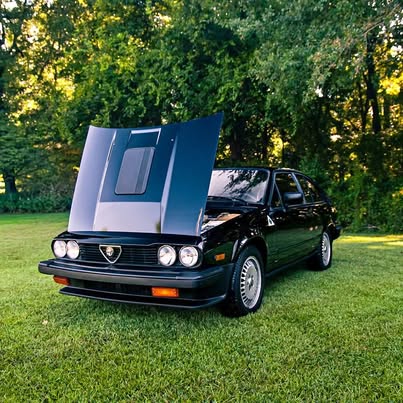
Engines and gearboxes
One engine family powers the whole model, and it is the reason the car exists in buyers' affections: the Busso V6, named for its designer Giuseppe Busso, all-alloy, with a single overhead camshaft per bank, two valves per cylinder and a 60-degree vee. Learn this engine properly, because almost every judgement you make about a GTV6 — what it should sound like, what its service history must show, which faults are trivial and which are fatal — follows from how it is built and what it asks of its owner.
The 2.5-litre Busso V6
The standard engine displaces 2,492 cc from an 88 mm bore and a short 68.3 mm stroke, which is the first clue to its character: it is oversquare, built to rev, and happiest between 4,000 rpm and the 6,000-plus rpm redline. The block and heads are aluminium. Each camshaft is driven by a single toothed timing belt that also drives the water pump, and the valve gear is a distinctive Busso arrangement: the cam lobes work the intake valves through bucket tappets directly, while the exhaust valves, splayed at a wider angle in the hemispherical combustion chambers, are worked through short rocker arms. Valve clearances are set with shims and they do close up in service, particularly on the exhaust side, so a clearance check is a real service item on this engine and not a formality — tight exhaust clearances held too long burn valves.
Fuel metering on all US cars is Bosch L-Jetronic electronic injection, with a flap-type airflow meter, a cold-start injector and a thermo-time switch for enrichment, and an auxiliary air valve governing fast idle when cold. US output is 154 hp SAE net; the European car, without the catalyst and US emissions calibration, makes 160 PS.
The engine's bottom end is genuinely strong. Crankshaft, bearings and pistons give little trouble on maintained cars, and high mileages are not in themselves a reason to walk away. What the engine will not forgive is its timing belt. This is an interference design: if the belt fails, pistons meet valves, and the repair is a top-end rebuild rather than a belt and a tow. Belt life is governed by age as much as mileage, and the tensioner bearing is as much a service item as the belt itself — a seized tensioner takes the belt out just as surely as a snapped one. Owner practice, endorsed by most specialists, is a belt, tensioner and water pump together at roughly 30,000 miles or three to four years, whichever arrives first, precisely because the pump is belt-driven and its failure has the same consequences. When you assess a car, the single most valuable document in the file is a dated, mileage-stamped receipt for that job. A car with no belt history is a car whose first job, before it is driven anywhere, is that job — price it in from the start, at $800–1,500 fitted for the belt, tensioner and pump together at a specialist.
Oil leaks are the engine's other signature, and most are manageable. The camshaft covers, the front crank seal area, the distributor drive and the oil pressure sender all weep with age; a Busso that is bone-dry underneath has usually been cleaned for your visit rather than cured. Distinguish weeps from losses: a misting cover gasket is a Saturday job, while oil reaching the timing belt moves the belt job from scheduled to urgent. Oil consumption on a healthy engine is modest; an engine drinking oil is usually telling you about valve guide and stem seal wear, which shows first as a puff of blue smoke on start-up and on the overrun, and which a compression and leak-down test will quantify before you buy.
The L-Jetronic system is simple, well documented and fixable, but its faults imitate each other. A hunting or hanging idle is most often the auxiliary air valve sticking or a split in the intake trunking between the airflow meter and the throttle body — unmetered air the flap never measured. A cold-start complaint is the thermo-time switch or the cold-start injector, both testable with a multimeter and a fuel-pressure gauge rather than guesswork: system pressure should sit around 2.5 bar at the rail, and an engine that loses residual pressure overnight will crank long every morning because the pump is re-priming the rail. The airflow meter's flap and track wear with age and produce flat spots that owners blame on the engine; the test is a smooth, unbroken resistance sweep as the flap opens. None of this needs a dealer computer — it needs a manual, a gauge and method, which is why a GTV6 maintained by an Alfa-literate shop is worth more than the same car maintained by whoever was cheapest.
The bigger and boosted engines
The 3.0-litre Busso stretches the same architecture to 2,959 cc in its fuel-injected form, and you meet it in three contexts. The first is the South African GTV6 3.0, on carburettors at about 186 hp, described in the models section and effectively unobtainable here. The second is the Milano Verde and 164, which brought the injected 3.0 to America at 183 hp in the Milano — the donor engine for nearly every GTV6 3.0 conversion. The third is the conversion itself. A 3.0 in a GTV6 gives the car the torque the 2.5 always wanted, and a well-executed swap uses the Milano engine complete with its injection management, matched to the GTV6 transaxle. Judge a conversion by its details: correct mounts and manifolds for the coupe shell, a cooling system renewed for the extra output, management fitted whole rather than improvised, and paperwork. A converted car with receipts from a known specialist is a desirable thing. A converted car with a story and no paper is a standard GTV6 with a question mark where its value should be.
The Callaway Twin Turbo is the factory-sanctioned extreme: twin IHI turbochargers on the 2.5, about 230 hp, and the cooling demands that come with nearly half as much power again. Callaway cars carry their own identification, and their engines are Callaway-built units with the internal changes boost requires — a standard 2.5 with turbochargers bolted on by a previous owner is not the same thing and does not carry the same value or reliability. On any turbo car, add turbo shaft play, oil feed and return condition, intercooler pipework and evidence that boost has stayed at the intended level to your inspection.
A word on the later 24-valve Busso, because you will see it advertised in swapped cars. The 3.0 24-valve engine from the 164 makes more power and keeps the soundtrack, but it is a bigger, more complex conversion — different management, a different belt and tensioner arrangement, more weight over the front axle of a car whose virtue is balance. Such cars are hot rods, and they should be bought and priced as individual builds, never as factory variants.
The transaxle, clutch and propshaft
The gearbox lives at the back of the car, in unit with the differential, and this single decision shapes the GTV6's character and its maintenance in equal measure. Weight distribution approaches fifty-fifty, which is why the car corners the way it does. The clutch sits with the transaxle at the rear, driven by a propshaft that runs the length of the car at engine speed — the shaft spins whenever the engine spins, clutch in or out. The box itself is a five-speed manual with synchromesh on all forward gears, operated from the cabin lever by a long linkage rod running back to the transaxle. Alfa never offered an automatic in this car, in any market, at any point in its life.
The linkage is the first thing you feel and the first thing that wears. When the bushes and universal joints in that long rod are fresh, the change is precise and mechanical; when they are tired, the lever wanders, the gate goes vague, and owners blame the gearbox for a fault that lives in the linkage. A linkage refresh is a few hundred dollars in parts and labour and transforms the car, so budget for it on any example whose change feels sloppy — and do not let a seller talk you into a gearbox rebuild for a linkage symptom. The genuine gearbox weakness is second-gear synchromesh, which wears and crunches on hurried changes, especially the cold downchange into second. Test it deliberately on the drive: a box that crunches second only when stone cold and improves warm is worn but serviceable; a box that crunches hot, up and down, is heading for a rebuild at $2,000–3,500, and that figure belongs in your negotiation.
The clutch changed during production, from a twin-plate unit on early cars to a single-plate clutch from the 1984 update, and the later arrangement has the better pedal action. Either way, clutch work means transaxle work at the rear of the car, and labour dominates the bill: expect $1,500–2,500 for a clutch job done properly with the hydraulics attended to. The hydraulic release system — master cylinder, slave cylinder, flexible hose — ages conventionally; a pedal that sinks, or engagement at the very floor, is hydraulics until proven otherwise, and the parts are cheap beside the labour of the clutch itself.
The propshaft deserves its own paragraph because it is the GTV6 component most often neglected and most dramatic when it lets go. The two-piece shaft is joined by rubber flexible couplings — donuts — front, centre and rear, with a centre support bearing, and it rotates at full engine speed for the car's whole length. The donuts crack and harden with age and heat. The symptoms build in order: a vibration under load, typically worst around 3,000 rpm, a clunk as drive takes up, and finally a coupling failing outright, at which point the shaft flails and the repair stops being a coupling and becomes a shaft, a floorpan, or both. Inspecting the donuts means getting the car in the air and looking at the rubber for cracking and distortion — you cannot judge them from the driver's seat until they are already bad. A set of couplings and the centre bearing, fitted, runs roughly $600–1,200, and on a car with no record of the job it belongs on your first-year list alongside the timing belt.
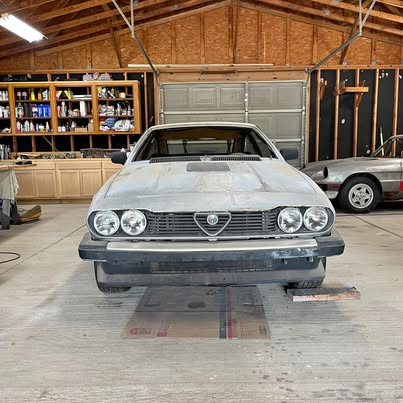
Problem areas
A GTV6 fails in predictable places, and almost none of them are the engine's bottom end or the gearbox's gear clusters. The car's enemies are corrosion in a shell rustproofed to 1970s Italian standards, rubber and hydraulic components at the end of their fourth decade, and electrical connections that were marginal when new. Work through the car by system, in the order below, and remember the governing principle: mechanical faults are priced in dollars, but structural rust is priced in the car's whole future. A tired engine in a sound shell is a project. A shiny shell with rotten suspension mountings is a parts car wearing a costume.
Rust: the map
Start at the front, because the GTV6's most serious corrosion is structural and lives where the front suspension loads the shell. The torsion-bar front suspension reacts its loads into the front crossmember and inner wing structure, and the inner front wings around the suspension pick-up points rot from the inside out, fed by road spray and underseal that traps moisture against the steel. Budget $1,000–2,500 a side for proper structural wing and mounting repairs with the suspension disturbed and realigned, and treat fresh black underseal in exactly these areas as a reason to look harder, not a reassurance.
The sills carry the jacking points and the car's bending stiffness, and they rot from the inside, starting at the rear ends where spray and drainage failures conspire. The jack test from the inspection section settles them: jack the car at each factory jacking point and watch the door gaps and the sill itself — a sill that crunches, flexes or lets the door gap close is rotten inside whatever its outer face shows. Sill replacement done properly, inner and outer with the jacking point rebuilt, runs $1,000–2,500 a side; a sill plated over for sale will be back within two winters. The rear wheel arches follow the same pattern: check the arch lips, the inner arch where it meets the sill, and — on a Maratona — under the flare covers, which trap moisture against exactly this panel.
The tailgate is the model's signature rust trap, and it is a design fault rather than neglect. The large rear glass is bonded and framed in a way that holds water against the frame's lower corners and the panel beneath the glass, and the frame rots from inside, showing first as bubbling at the lower corners of the glass and staining on the trim below. A tailgate can look presentable while its frame is structurally lace; press along the lower frame rail and look for the tell-tale rust weep at the corners. Sound used tailgates are scarce and expensive precisely because they all did this, so a genuinely solid original tailgate is a selling point worth real money, and a rotten one is a sourcing problem, not just a welding bill.
Complete the map with the floors, the windscreen surround and the battery area. Floor pans rot at the front footwells where water from a leaking screen surround or heater matrix has sat under carpets — lift the mats and press; a floor that feels like a biscuit tin is telling you the truth. The windscreen surround rusts under its seal, and a car with a recently replaced screen deserves questions about what was found underneath. The battery's tray and the panel beneath it suffer acid and water damage that spreads to the inner wing. All of these areas are checkable in twenty minutes with a torch, a magnet and a lift or a pair of ramps, and together they decide whether the car in front of you has a future.
Engine, injection and cooling
The engine section above covered the timing belt, and it bears repeating in problem form because it is the one fault that destroys the car in a second: a belt of unknown age on an interference engine is not a maintenance item, it is a countdown. The associated failure is the tensioner bearing, which seizes and strips the belt; belt and tensioner are one job, always. The water pump, belt-driven on this engine, is the third member of the set — a pump whose bearing is rumbling is a belt failure in waiting, and since the labour to reach it is the labour of the belt job, the three are replaced together by anyone who has paid for the lesson once.
Head gaskets on the 12-valve Busso usually announce themselves politely before they fail badly: oil weeping externally at the head-to-block joint, coolant loss with no visible leak, or mayonnaise under the oil filler cap on a car used for short runs — which last one, alone, is condensation and not a verdict. The test set is a cooling-system pressure test, a compression test and, if suspicion survives those, a leak-down test and a chemical block test for combustion gases in the coolant. A top-end refresh with gaskets, valve work and stem seals is a $2,500–4,000 job at a specialist, and it is the right moment to do the valve clearances and every hose and seal in the vee, because the labour overlaps almost completely. Valve gear wear shows as oil consumption and a start-up smoke puff, covered above, and as a top-end rattle when clearances have opened up — though the more dangerous direction is clearances closing, which is silent. A car with no history should have its clearances checked as part of its first service, because a burnt exhaust valve turns a clearance check into a head-off job. The distributor, ignition leads and amplifier are period Bosch and fail by age and heat; a misfire that arrives hot and vanishes cold is usually the amplifier or the coil, and both diagnoses are cheaper than the parts cannon most owners fire first.
Cooling is adequate when the system is healthy and unforgiving when it is not. The radiator silts with age, the electric fans and their switches and relays fail one at a time so the car keeps one fan and half its margin, and the thermostat sticks. The symptom pattern to fear is a temperature gauge that behaves in town and climbs on a long hill at speed — that is flow, radiator or pump, not the gauge. An overheating Busso warps heads and takes the head gaskets with it, so a car with a known overheating episode in its past wants the pressure and block tests above before money changes hands, however sweetly it runs on the day. Hoses are age items: a full set is a few hundred dollars and cheap insurance.
The fuel system ages at both ends. At the back, the tank rusts internally on cars that have sat with stale fuel, feeding the pump and filter a diet of debris; a car that cuts out under hard cornering when low on fuel, or eats fuel filters, is telling you about its tank. The pump itself is external and replaceable, and fuel pressure at the rail — around 2.5 bar, steady, holding after switch-off — settles most injection mysteries before they start. Perished fuel hoses in the engine bay are a fire risk on any forty-year-old injected car and are a same-week job on any new purchase. The exhaust rots from the manifolds back, and the manifolds themselves crack with heat cycles; a ticking that fades as the engine warms is a manifold crack until proven otherwise.
Transaxle, propshaft, suspension and brakes
The transaxle's external weaknesses are oil leaks and the linkage, and the leaks matter beyond the mess because of where they land. The rear discs are mounted inboard, beside the differential, to cut unsprung weight, and that decision means rear pad and disc work is slower and dirtier than on an outboard car, the handbrake — small dedicated pads acting on the discs — is marginal when new and feeble when neglected, and any oil or grease escaping the transaxle lands on the braking surfaces. A GTV6 that does not pull up straight, or whose handbrake will not hold it on a slope, is showing you this system asking for its overdue service. Front brakes are conventional discs and give conventional trouble: seized calipers on laid-up cars, perished flex hoses, and a pedal that goes long on fluid that has absorbed a decade of moisture.
The propshaft couplings are the model's defining wear item and they are covered in full in the engines section: cracking donuts, a failing centre bearing, vibration under load around 3,000 rpm, and catastrophic consequences if ignored. Add the clutch hydraulics — a slave cylinder that weeps at the rear, a master cylinder that bypasses internally and lets the pedal sink at lights — and the differential's own habits: a whine on the overrun that is wear, and a clunk on take-up that is usually the couplings and mounts rather than the diff itself. The de Dion rear axle is located by a Watt's linkage and a central pivot, and its bushes and the pivot wear produce a rear end that steers itself gently on lift-off; a car that feels nervous changing direction at speed usually needs bushes and alignment, not bravery.
Front suspension wear concentrates where the design loads it. The torsion bars themselves rarely fail, but the lower ball joints, the castor-rod bushes and the anti-roll bar links wear, and the symptoms are a car that wanders, tramlining and knocking over broken surfaces. The steering is unassisted rack and pinion — a GTV6 has no power steering, and a car advertised with it has been modified or misdescribed — and it should be direct and free of play at the straight-ahead; play there is rack wear or track-rod ends, both available, neither ruinous. Dampers are conventional and a set of quality units transforms a tired car; budget $800–1,500 for dampers and the essential bushes together. Wheels and tyres close the section: early Campagnolo magnesium wheels corrode and crack with age and deserve a specialist's eye, some cars sit on metric TRX rims whose tyres are a specialist-only purchase, and any car on tyres older than seven years needs a set regardless of tread — budget $600–1,000 for proper rubber in the original sizes.
Electrics, interior and trim
Alfa electrics of this era fail by connection rather than by component, and the GTV6 is the full demonstration. The fusebox connections corrode and go intermittent; earth straps — engine to body, battery to body — rot and produce symptoms that imitate failed components all over the car; and the window motors, wiper motor and heater blower all draw power through forty-year-old wiring and switches. The method that works is boring and total: clean every earth, work through the fusebox connections, and test circuits with a meter before replacing anything. The method that bankrupts is replacing alternators, motors and switches into a car whose real fault is a green connection in a footwell. A car whose electrics mostly work has been used and maintained; a car with six electrical faults listed as minor has one fault, in its wiring, wearing six disguises. The alternator and starter are period units — the starter suffers heat soak and gives the classic hot no-crank that recovers when cold — and the battery is often undersized or ancient on a car that sits. Budget for a battery and a charging-system test on any purchase.
Inside, the dashboard top cracks in the sun with near-perfect reliability, and a genuinely uncracked dash is rare enough to be a selling point. The seats split at their seams, the headlining sags, door cards warp, and the console plastics go brittle; none of it stops the car, all of it costs money to make right, and interior trim in good condition is far harder to source than mechanical parts, because the mechanicals were shared with the Milano and 164 and the trim was not. Judge the interior as a scarcity problem: a mechanically tired car with a beautiful interior is a better buy than the reverse, because you can buy an engine rebuild and you cannot buy a new old-stock dashboard. Air conditioning, fitted to most US cars, is marginal when perfect and usually is not — compressor, condenser and hoses all age. A heater matrix leak announces itself as a sweet smell and a misting screen, and replacing one is a dashboard-out labour bill wildly out of proportion to the part.
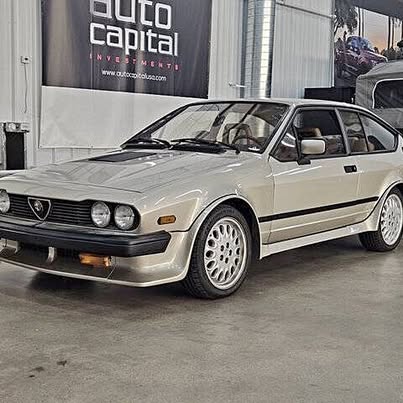
How to inspect one
Inspect a GTV6 in this order: identity and paper first, structure second, mechanicals third, and the road test last, because the road test is where sellers expect you to fall in love and it should happen only after the car has earned it. Ask for the car cold — an engine started before you arrive is an engine whose cold-start behaviour someone did not want you to hear.
- Identity before everything. Confirm the car is a GTV6 and not a four-cylinder GTV in costume: the raised centre section of the bonnet, the V6 under it, GTV6 badging, and a chassis plate that matches the paperwork. If the car wears a special-edition claim — Balocco plaque, Maratona kit, Callaway identification — look for the documentation that goes with the claim, and if the listing describes an automatic gearbox, treat the whole description as unverified, because no such car was ever built.
- The belt question. Ask, in so many words, when the timing belt, tensioner and water pump were last replaced, and ask to see the receipt with a date and a mileage. No receipt means the job is due now, before the car is driven home — this is the interference engine from the problem areas section, and it does not negotiate. Add the job's cost to your mental price of the car and say so to the seller.
- The rust map, front first. With the car on a lift or ramps, work the map from the problem areas section in order: front inner wings and suspension pick-up points, sills, rear arches, tailgate frame, spare-wheel well, floors, screen surround, battery tray. Press suspect metal firmly; bubbling paint over the suspension mountings is the one finding that should end the inspection on the spot if the metal underneath is soft.
- The sill-jack test. Jack the car at each factory jacking point in turn, as the rust section describes, and watch the door gaps and listen. A sound sill takes the car's weight silently. A sill that crackles, moves or lets the door gap change is rotten inside, and the repair figure from the rust section goes straight into the negotiation.
- The tailgate and the well. Open the hatch and examine the frame around the rear glass, pressing along the lower rail and corners for softness, then lift the spare-wheel cover and look for water, staining and perforation in the well. Check the rear light seals while you are there — they are the well's usual water supply.
- Cold start, watched and listened to. From cold, the L-Jetronic car should start promptly, idle fast while the auxiliary air valve does its work, and settle as it warms. Note blue smoke on start-up (valve stem seals and guides), a top-end rattle that outlasts the first seconds (clearances or wear), and a ticking that fades with heat (a cracking exhaust manifold). Confirm the fans cut in as the temperature climbs.
- Under the bonnet, engine running. Look for oil reaching the timing belt area, perished fuel hoses, cracked intake trunking between the airflow meter and the throttle body, and the state of every hose in the vee. Check the coolant for oil and the oil filler cap for mayonnaise — remembering that mayonnaise alone on a short-run car is condensation, not a verdict. If you can, gauge the rail: around 2.5 bar, steady, and holding after switch-off is the healthy answer.
- The propshaft and couplings. On the lift, inspect all three rubber donuts and the centre bearing for cracking, hardening and distortion, and check the transaxle for leaks — remembering that anything escaping it lands on the inboard rear brakes. This is the check sellers least expect and the one that saves you the model's most dramatic failure.
- Clutch, gearbox and linkage on the road. Drive the car properly warm. Test second gear deliberately, up and down, cold memory and hot reality: a hot crunch into second is the synchromesh bill from the transaxle section. Feel whether the gate is precise or wandering — wandering is linkage, and it is the cheap fault. Note the clutch bite point and any slip under full throttle in a high gear, and listen for the propshaft's signature vibration under load around 3,000 rpm.
- Brakes and handbrake. From speed, brake firmly in a straight line: the car should pull up square, with a firm pedal. Then test the handbrake on a slope — the inboard rear brakes and their small handbrake pads are the layout's known weakness, and a handbrake that will not hold the car is a service bill and, in many states, an inspection failure waiting for you.
- Steering, suspension and the rear end's manners. The unassisted steering should be direct, with no play at the straight-ahead. Over broken surfaces, listen for knocks from ball joints and bushes; on a quiet road, lift off mid-corner and feel whether the rear end steers itself — worn de Dion and Watt's linkage bushes announcing themselves. Check the tyres' dates as well as their tread, and note Campagnolo magnesium wheels or metric TRX rims if fitted — both carry their own costs.
- Electrics and interior, completely. Work every switch: windows, wipers and washers, blower at all speeds, lights, hazards, gauges. Six faults here are one wiring fault in disguise, per the electrics section — price the diagnosis, not six components. Then judge the interior as the scarcity it is: dashboard cracks, seat seams, headlining, console plastics. End by re-reading the paperwork against the car one last time, because the GTV6 you want is the one whose documents and metal tell the same story.
Values
The GTV6 market is thin, national and condition-obsessed, and the computed market block beneath this guide — the cars listed now and the recorded sales — is where its numbers live and where you should take them from. What this section teaches is how to read those numbers, because on a car like this the spread between the cheapest and the dearest example is not noise: it is the price of rust, belt history and documentation, expressed in the only language sellers cannot argue with.
Condition drives everything, and it drives it in a specific order. The market pays first for the shell: a structurally sound, honestly presented car with a solid tailgate and sills sits in a different price world from a shiny car with soft mountings, and knowledgeable buyers can tell the difference in twenty minutes, which is why the shiny rotten car so often sits unsold at a price its owner thinks is a bargain. It pays second for the maintenance file — a dated timing belt receipt, valve clearances on schedule, couplings done — because those receipts retire the new owner's first-year bills in advance. Paint, wheels and cosmetics come a distant third, and mileage, within reason, barely registers: a high-mileage car with a full specialist file is worth more than a low-mileage car that has sat for a decade, because sitting is what kills these cars and the recommissioning bill for a decade of stillness routinely exceeds the saving.
Variant premiums are real but narrower than sellers hope. The Callaway Twin Turbo stands alone at the top, priced as the rare, documented, dealer-sold special it is — and only with its documentation, because an undocumented turbo car is a conversion and converts back to conversion money the moment a serious buyer starts asking questions. The Balocco and Maratona carry modest premiums over the equivalent standard car, paid for originality of plaque, kit and trim rather than for any mechanical difference. A 3.0 conversion sits in between: worth more than the standard 2.5 to the buyer who wants the torque, worth nothing extra to the buyer who wants originality, and worth less than either if the conversion is undocumented. The standard car's own hierarchy is simple — the developed 1984–86 cars lead, the early cars follow closely, and European-specification imports price on their own condition rather than on any automatic import premium.
The project-versus-driver gap is where this market is most often misread. A non-running or long-stored GTV6 is not a driver at a discount; it is a driver plus a recommissioning — belt, pump, hoses, fuel system, brakes, hydraulics, tyres, couplings — plus whatever the storage did to the shell, and that sum regularly carries the total past the price of the tidy driver the buyer was trying to undercut. Asking prices, finally, are aspirations on a thin market: cars are few, comparables are scattered across the country, and a seller's price often reflects the best car they have seen advertised rather than the car in their driveway. The recorded sales beneath this guide, read against the condition order above, are the discipline that keeps a negotiation honest — on both sides.
Parts and ownership
A GTV6 is a realistic car to own and run, provided you accept its one non-negotiable term: it is maintained on schedule, by the calendar as much as by the odometer, and the schedule is not optional. The timing belt set at roughly 30,000 miles or three to four years is the rhythm everything else hangs from. Valve clearances are checked and shimmed as they fall due, oil and filter changes are frequent and cheap, coolant and brake fluid are changed on time rather than on failure, and the propshaft couplings and the rubber of the fuel and cooling systems are inspected annually whether the car has covered five hundred miles or five thousand.
Parts supply is better than the car's rarity suggests, for a structural reason: the Busso V6 and the transaxle layout lived on in the Milano and, in developed form, the 164, so engine internals, gaskets, seals, injection components and much of the running gear remained in production and in the aftermarket long after the coupe itself ended. The established US specialists — Centerline Alfa and Vick Autosports are the names every owner learns first — carry the service and wear catalogue in depth, and European specialists such as Alfaholics, Classic Alfa and OKP fill the gaps, including reproduction panels and trim unavailable a generation ago. What remains genuinely scarce is coupe-specific: tailgates that have not rotted, dashboard tops that have not cracked, edition-specific trim for the Balocco and Maratona, and good used glass and brightwork. The ownership rule follows directly: never throw away a GTV6-specific part, because the mechanicals can always be found and the trim cannot.
The knowledge network is the other half of ownership, and it is excellent. The Alfa Romeo community in America is old, organised and generous: the AlfaBB forum holds decades of model-specific diagnosis, the owners' clubs run the events and the classifieds where the good cars quietly change hands, and the specialist shops — the ones who know what a donut is without being told — are worth travelling to if your region lacks one. Budget honestly for the relationship: a GTV6 maintained by a marque specialist costs more per visit than one maintained by a generalist and less per year, because the specialist does the belt with the tensioner and the pump, checks the couplings while the car is in the air, and catches the tailgate drain before the frame goes.
Running costs, set out plainly: the scheduled services and the belt cycle are the price of admission, fuel consumption is period V6 rather than modern, and insurance through a classic policy with an agreed value is inexpensive for the car's performance and is the correct way to insure a car whose market value and repair cost are strangers to each other.
Which one to buy
- The all-rounder: a 1984–86 standard GTV6 with the single-plate clutch, the revised interior and a specialist file showing the belt cycle kept. This is the car the market understands best, the easiest to live with and the easiest to sell, and it is where most buyers should land.
- The purist's car: a 1981–82 early car, Campagnolo wheels and all, bought knowingly — the twin-plate clutch, the older trim and the extra years of history are the price of the most period-correct version of the car, and a verified Balocco SE is the early car at its most collectible.
- The value buy: a structurally sound driver in an unfashionable colour with tired cosmetics and a complete mechanical file. The market discounts shine it should not and overpays for paint it should not; the gold and yellow cars of the world, with solid sills and a dated belt receipt, are where the money is saved.
- The special: a Callaway Twin Turbo with Callaway documentation, or a South African 3.0 if one ever surfaces — bought as the rare cars they are, authenticated before they are negotiated, and never at special money on a badge and a story.
- The conversion, knowingly: a 3.0-swapped car with a named builder and receipts, priced between the standard car and the specials. The torque transforms the car; the paperwork is what transforms it from a liability into an asset.
- The project, only on one condition: a cheap car is worth buying only when its shell passes the full rust map — mountings, sills, tailgate, well — because every mechanical fault on this car has a known price and structural rust has an unknown one.
The overriding rule: buy the shell and the service file, and let the engine, the colour and the shine argue about whatever is left — a GTV6 with sound mountings and a dated timing-belt receipt is the right car at almost any mileage, and a GTV6 without them is the wrong car at almost any price.
See the 5 GTV-6 cars currently listed.
What they sell for: GTV-6 sale prices.