
BMW 3 Series buyer's guide
BMW 3 Series -- the model's own buyer's guide: variants, values and what to check.
Years listed: 1984-1999 · Series: E30
Overview and history
The BMW 318i is not one car. It is a badge — the smallest petrol engine in the 3 Series, with injection — that BMW attached to three successive generations of its compact sedan across more than two decades, and a buyer who does not separate those generations will price the wrong car, order the wrong parts and look for rust in the wrong places. This guide covers all of them, but it is scoped plainly at the outset: the cars in this site's own pool for the 318i badge are all from the last two of those generations. Of the 4 cars in the pool (sample size n=4), 2 are filed as E30 and 2 as E36, the model years in the pool run from 1991 to 1996, all 4 are currently for sale and none is a recorded sale, and all 4 came through Facebook listings. That small, late, two-generation sample is what the pool evidence in this guide rests on; the earlier history below is background, not a claim that early cars are what you will find for sale here.
The lineage starts with the E21, the first 3 Series, built from 1975 to 1983. In most of the world the four-cylinder injection car was indeed a 318i, powered by the 1.8-litre version of BMW's M10 engine. In the United States, however, the same basic car was badged 320i throughout its life: the early US cars carried a 2.0-litre M10, and from 1980 the US 320i adopted the 1.8-litre M10 with Bosch K-Jetronic injection — mechanically the 318i's engine in all but badge. Treat any seller who describes a US-market E21 "318i" with care: either the car is a European-market import, or the description has drifted from the car, and the VIN settles which. The E21 matters because it established the formula — a light, iron-block four in a compact, well-balanced rear-drive sedan, sold as the affordable way into the marque — and because its M10 went on to power the first E30 318i almost unchanged in concept.
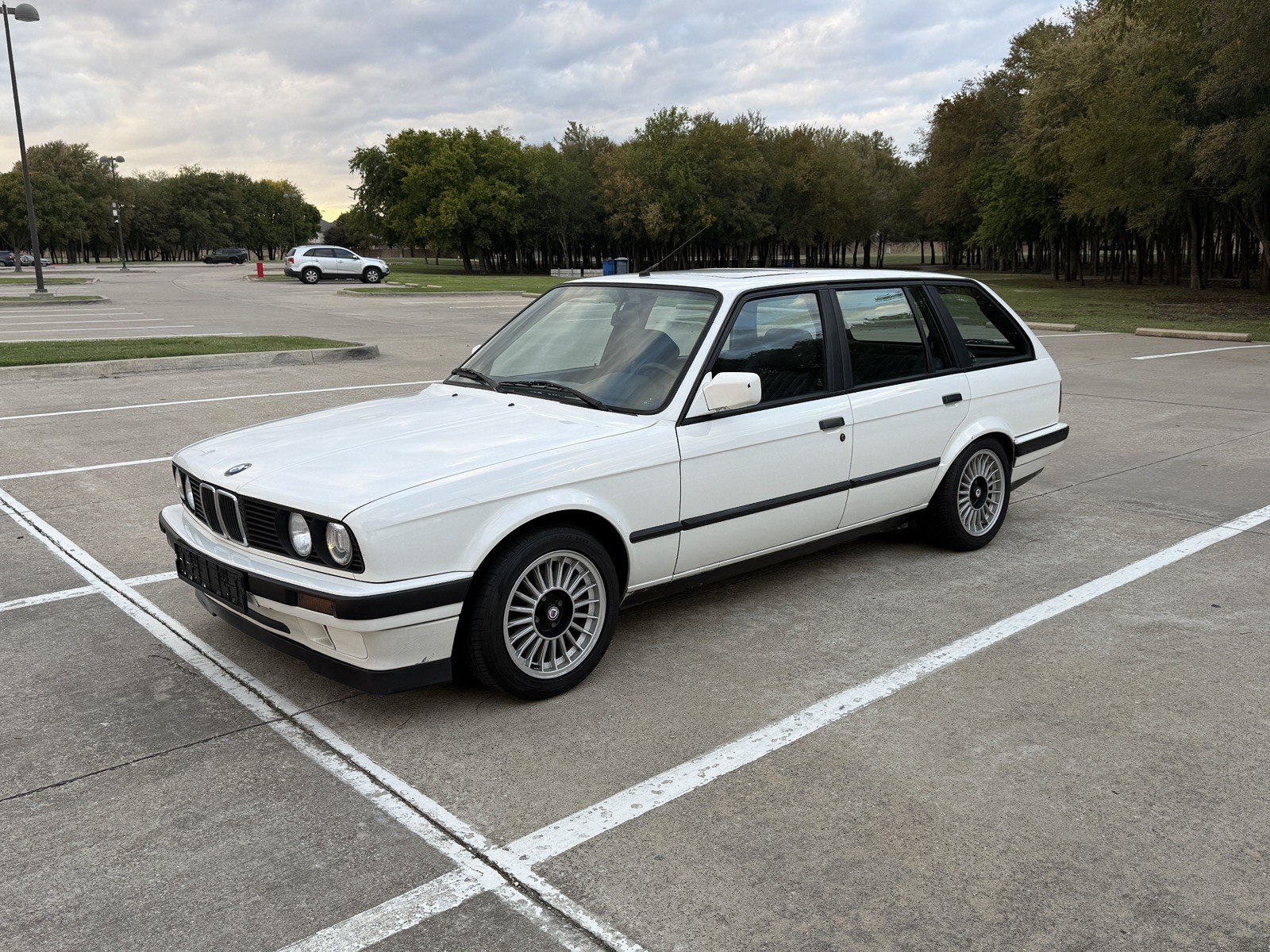
The E30 carried the 318i badge in the United States in two distinct waves that share almost nothing except the badge and the bodyshell. The first wave, for the 1984 and 1985 model years, used the familiar 1.8-litre M10, now with Bosch L-Jetronic injection, and was then dropped from the US range as BMW pushed the six-cylinder 325e and 325i. The second wave, for 1991 (with the convertible running on a little longer), brought an entirely different engine: the M42, a modern twin-cam, sixteen-valve 1.8 that turned the humble 318i into one of the most interesting cars in the whole E30 range. A 1991 318i and a 1985 318i look like close relatives and drive like cars from different decades. Section 2 separates them properly.
The E36, built through the 1990s, made the 318i the mainstream entry model again: sedan, coupe (badged 318is), convertible and, in spirit, the 318ti Compact hatchback. US cars used the M42 1.8 until the end of 1995 and then the larger M44 1.9 from 1996, gaining torque and emissions sophistication in the exchange. The E36 is a bigger, softer, more modern car than the E30 — and, in four-cylinder form, the car the market has historically valued least in the range, which is precisely why it interests a thinking buyer today.
That last point is the thread that runs through every generation of 318i. The four-cylinder car was always the budget choice when new, and the market has always discounted it against the six-cylinder cars — the 325i, 328i and their predecessors — that enthusiasts wanted. What the discount buys you is real: less weight over the front wheels, sharper turn-in, a car you can use hard without travelling absurdly fast, and running costs a step below the sixes. What it costs you is equally real: less performance, less of the sound and smoothness that define the classic BMW experience, and — because cheap cars get cheap maintenance — survivors in which deferred servicing and tired cooling systems are the norm. In the pool behind this guide (n=4), the split is even — 2 cars manual and 2 automatic, from that same sample of 4 — a fair miniature of the choice you will face: the manual is the car this guide steers you towards, and the automatic is the car you will most often be offered.
These are not rare cars, and none of them is bought sensibly as an investment first and a car second. They are bought because a light, simple, rear-wheel-drive BMW with a willing four-cylinder engine is one of the most enjoyable ordinary classics you can run on ordinary money — provided you buy the right generation, with a body and a cooling system that have survived. The rest of this guide is about doing exactly that.
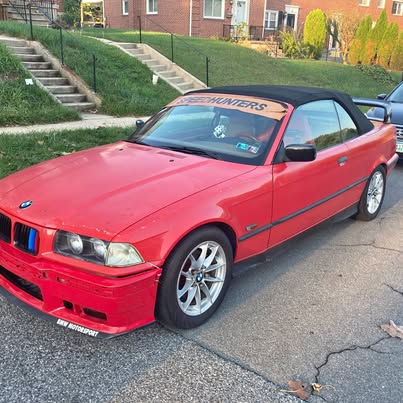
The models
Read the badge in two halves. "3" is the series, "18" is nominally 1.8 litres, and "i" is injection — but BMW's numbering is a marketing position, not a measurement, and the last E36 cars badged 318i carry a 1.9-litre engine. Body style matters as much as year: across the E30 and E36 generations the 318i was sold as a two- and four-door sedan, a coupe, a convertible and (as the 318is and 318ti) in forms the market treats as separate models. The table below covers the US-market cars a buyer here will actually meet; outputs are period US figures, and where a figure varies by source or year, treat the table as orientation and the car's own documentation as truth.
| Model | Years | Engine | Output | Built | Character |
|---|---|---|---|---|---|
| E21 318i (Europe; US cars badged 320i) | 1980–1983 in 1.8 form | 1.8 four (M10), K-Jetronic | about 100 hp | Part of 1.53 million E21s, all types | The origin; in the US, buy it as a 320i and know what it is |
| E30 318i (M10) | 1984–1985 | 1.8 four (M10), L-Jetronic | about 101 hp | Not separately published here | Simple, light, slow-steering-era charm; the mechanic's favourite |
| E30 318i / 318is (M42) | 1991 (convertible later) | 1.8 twin-cam four (M42), Motronic | 134 hp | Not separately published here | The "poor man's M3" story; the E30 four to have |
| E36 318i / 318is (M42) | 1992–1995 | 1.8 twin-cam four (M42), Motronic | about 138 hp | Not separately published here | Modern, usable, discounted; watch the cooling system and profile gasket |
| E36 318i / 318is (M44) | 1996–1999 by body style | 1.9 twin-cam four (M44), OBD-II Motronic | about 138 hp, more torque | Not separately published here | The torquiest 318i; the easiest to live with, the least rev-happy |
| E36 318ti Compact | 1995–1999 | 1.8 M42, then 1.9 M44 | as above | Not separately published here | Hatchback, simpler rear suspension; a sibling, priced separately |
The E21 cars (to 1983). Included for completeness and for badge literacy, not because the pool contains one — it does not, in a sample of 4 cars (n=4). The E21 is a 1970s car in every feel: recirculating-ball steering, a semi-trailing-arm rear end that demands respect in the wet, thin pillars, minimal rust protection and an interior of admirable simplicity. A European 318i and a late US 320i are mechanical cousins under the M10 bonnet. Buy one as an E21, on E21 terms — body condition above all — and do not pay a premium for a badge story the VIN cannot support.
The M10 E30 (1984–85). Two-door and four-door sedans only in the US, with a five-speed manual or an optional automatic. This is the lightest, simplest injected E30 sold in America: no power to stress anything, an engine any competent mechanic already understands, and a spec that kept prices low when new and lower ever since. What dates it is not the engine but the details — early-car trim, modest brakes and equipment. As a classic it is the honest, unpretentious end of the E30 world, and it is priced that way.
The M42 E30 (1991). The return of the 318i after a five-year absence, and a different proposition entirely. The four-door was badged 318i; the two-door coupe was the 318is, with a sportier specification that typically included a limited-slip differential option, sport seats and a front air dam; the convertible was badged 318i and carried the M42 into the last years of E30 production. Enthusiast folklore calls the 318is the "poor man's M3" — the short version is that the chassis balance and the engine's appetite for revs earn the compliment, and the brakes, body and outright pace do not pretend to an M car's. One year of sedan and coupe production means small numbers against the six-cylinder E30s, and good ones are hunted.
The E36 cars (1992 on). Sedan first, then coupe and convertible; the coupe is badged 318is but, unlike the E30, the "s" here denotes the coupe body more than a distinct sporting model, and US equipment varies car by car. The 1992–95 cars use the M42; the 1996-on cars use the M44, a 1.9 with the same headline power, usefully more torque lower down, and full OBD-II electronics. The 318ti Compact shares the engines and the front half of the car but is a shorter hatchback with the older semi-trailing-arm rear suspension — lively, practical, and treated by insurers, parts catalogues and this guide as its own model.
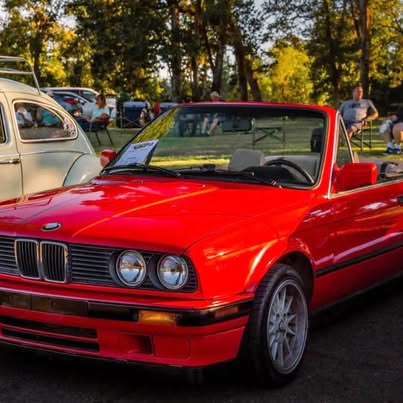
Engines and gearboxes
Three engine families power every 318i, and they could hardly be more different in character: the M10, a single-cam design whose roots reach back to the early 1960s; and the M42 and its enlarged M44 development, a twin-cam sixteen-valve designed for the 1990s. Learn to tell them apart from one photograph of the engine bay — the M10 has a narrow cam cover and a distributor; the M42 and M44 have a wide twin-cam cover, a coil pack, no distributor and an intake manifold that dominates the bay — because the badge on the boot will not tell you, and on an E30 the year is your first clue and the engine bay is your proof.
The M10: E21 and the first E30 (to 1985)
The M10 is one of the great long-lived engine designs: an iron block, an aluminium head, a single overhead cam driven by a duplex chain, and a bottom end strong enough that BMW later built a Formula One turbo engine on the same block architecture. In 1.8-litre 318i form it makes about 100 hp — modest, but the engine's virtues are torque delivery, simplicity and a tolerance for neglect that no later BMW four matches. A healthy M10 starts readily, ticks over with a slight mechanical bustle that is normal, pulls cleanly from low revs and uses little oil. Valve clearances are set manually with eccentrics on the rocker arms; a top end that is completely silent on a cold M10 is usually one whose clearances have closed up, which is worse than a light tick.
Fuel delivery is the dividing line within the M10 cars. The 1.8 in the late E21 (and the European 318i) uses Bosch K-Jetronic, a continuous mechanical injection system controlled by an airflow sensor plate and a fuel distributor, with a warm-up regulator setting cold enrichment. K-Jetronic has no electronics to fail and a memory for standing still that ruins cars: the sensor plate sticks, the fuel distributor's fine internal passages varnish, the warm-up regulator drifts, and a car that has sat for two years presents as a non-starter or a car that starts cold and will not restart hot. The tests are pressure tests — system pressure and control pressure, measured with a gauge set, against the figures for the exact model year — and any diagnosis offered without them is guesswork. Rebuilding a fuel distributor is specialist work, realistically $600–1,200 exchange, and the system's rubber lines and injector seals should be renewed as a matter of course on any car of this age; modern ethanol fuel is unkind to all of it.
The 1984–85 E30 318i replaced all that with Bosch L-Jetronic: electronic port injection, an airflow meter with a flap, a simple ECU and none of the K system's standing-still fragility. Its period faults are equally specific. The airflow meter's carbon track wears at the cruise position and produces a flat spot owners blame on everything else first; the idle control system gums up and gives a hunting idle; and the rubber intake boot between meter and throttle body cracks on its underside, invisible from above, admitting unmetered air that leans the mixture — squeeze the boot and look underneath before condemning anything electronic. None of this is expensive: budget $150–400 to sort a tired car's sensors, boot and idle gear, and expect the M10 itself, if its oil has been changed, to outlast the car around it. The chain is long-lived but not immortal; a rattle at start-up that persists when warm is a tensioner-and-guides conversation, roughly $500–900 fitted, and cheap insurance against the alternative.
The M42: the twin-cam (1991 E30; E36 to 1995)
The M42 was BMW's statement that the four-cylinder car mattered again: a 1.8-litre, sixteen-valve twin-cam with an iron block, an aluminium head, hydraulic valve lifters (no clearance adjustments, ever), individual coils in a pack with electronic ignition, a two-stage intake manifold (BMW's DISA system) that switches runner length to fatten the torque curve, and Bosch Motronic management. In the 1991 E30 it makes 134 hp; in the E36, about 138 hp. Those numbers undersell it. The M42 pulls modestly below 3,500 rpm and then wakes up entirely, revving to its limiter with an enthusiasm no M10 and no US six-cylinder E30 short of the M3 can match. That is the whole "poor man's M3" story, told honestly: the 318is shares the M3's recipe — light nose, balance, a peaky engine you must work — at a fraction of the pace, cost and collector seriousness. It is a compliment about character, not a claim about equivalence.
The M42's known mechanical weakness is at the front of the engine, and it has a name every buyer should know: the profile gasket. Between the timing case and the cylinder head and block sits a gasket whose job is to seal the coolant passages at the front of the engine. On early M42s — the E30 cars and the first E36 production — the original gasket material degrades, and the failure presents as an external coolant leak at the front of the engine, sometimes sudden and heavy. A car that loses coolant, shows dried coolant staining down the front of the block, or has a history of overheating with no radiator fault found is a car to interrogate about this gasket specifically. The repair is timing-case work, often done under goodwill in period, and a documented replacement with the updated gasket closes the question; an undocumented early car carries it open. Parts are modest; labour, at roughly $700–1,400 all-in at an independent, is the bill. Do not let anyone tell you the engine is scrap because of it — and do not buy a leaking early M42 at a price that assumes someone else has already fixed it.
The rest of the M42 ages conventionally. The cooling system it depends on is covered as a system in the problem-areas section, because on the E36 it, and not the engine, is the usual cause of death: the M42's aluminium head on an iron block tolerates one serious overheat, not a habit of them. The DISA flap's seals perish and the unit can rattle; the idle control valve gums up exactly as on earlier cars; coil packs fail singly and announce themselves as a single-cylinder misfire that moves with the coil when you swap it — the free test that should precede any parts order. Oil leaks from the cam cover and the oil filter housing gasket are endemic and cheap. Timing chain tensioners wear and rattle at start-up; a rattle that persists hot, again, is the warning. The hydraulic lifters ask only for clean oil of the right grade, and a neglected M42 tells on itself with a noisy top end on cold starts that quiets as pressure builds.
The M44: the 1.9 (E36, 1996 on)
For 1996 the US E36 318i exchanged the M42 for the M44: capacity up to 1.9 litres by a longer stroke, headline power unchanged at about 138 hp, but torque up and arriving lower, full OBD-II diagnostics, and a management system that reports its faults through a standard connector — a genuine inspection advantage, because a cheap code reader on an M44 car tells you things about misfires, mixture and sensors that an M42 car keeps to itself. On the road the M44 is the better everyday engine and the less exciting one: stronger in the mid-range where you actually drive, less keen at the top end where the M42 sings. Neither is "better" in the abstract; they suit different buyers, and section 8 picks between them.
M44-specific age items are mostly ancillaries shared with the rest of the late E36 range. Plastic coolant outlets and thermostat housings age and weep; crankcase ventilation hoses perish and produce oil leaks and idle faults that mimic bigger problems; and the secondary air system's pump and valves fail noisily and expensively relative to the car's value — a car with an air-pump fault code needs the cost priced, not waved away. The profile gasket story belongs to the early M42; on an M44, a front-of-engine coolant leak is a housing, hose or pump fault until proven otherwise. As with the M42, the engine itself is fundamentally strong, and broken ones were almost always cooked by a cooling failure or starved by neglected oil, not worn out.
A note on identity, because the four-cylinder cars are the most engine-swapped in the 3 Series world: six-cylinder conversions of 318i shells and M42 swaps into early E30s are both common, and a car is worth what its engine actually is, not what its badge says. The engine type is stamped on the block — on the M10, on a pad by the starter side; on the M42 and M44, at the front by the timing case — and the VIN decodes the car's original engine and market. Check both on any car priced above the ordinary: a swap disclosed honestly is a specification; a swap discovered by you is a price correction.
Gearboxes
The manual is a five-speed in every generation covered here, and it is the gearbox this guide recommends without qualification. The E21 and M10 E30 cars use Getrag five-speeds of the 240 family type; the M42 E30 and the E36 use later Getrag five-speeds (the 250 family in the E36), with a light, precise change when the linkage bushes are fresh and a baggy, vague one when they are not — linkage wear, at $50–150 in parts, masquerades as gearbox wear on test drives every day. Synchromesh on second gear is the wear point on high-mileage cars: a crunch on a fast downchange into second when cold, improving as the oil warms. Budget $1,200–2,200 for a specialist rebuild or fit a good used box for less, and change the gearbox oil on any car whose history you cannot prove — "lifetime fill" was a marketing phrase, not an engineering one. Clutches are conventional, long-lived in four-cylinder service, and cost roughly $700–1,200 fitted; judder pulling away and a biting point at the very top of the pedal travel are the wear signs. The rubber flex disc (the guibo) in the propshaft and the centre bearing perish with age on all of these cars — a thump on taking up drive and a vibration under load at speed are their signatures, and the parts are cheap even if the labour is not.
The automatics divide by generation. The E21 and early E30 offered a three-speed automatic that suits the M10's character poorly and the car's value worse; the M42 E30 used a four-speed automatic; the E36 used a four-speed automatic of General Motors design (the 4L30-E family). All of them cost performance the four-cylinder engine cannot spare — an automatic 318i is a noticeably slower, thirstier car than its manual twin — and all are now old enough that the questions are condition questions: dark, burnt-smelling fluid, delayed engagement from cold, flaring between ratios, and a history of fluid changes are what price the car. A rebuild is $2,000–3,500 at a transmission specialist, which on an E36 318i can approach the value of the car, so an automatic car with any gearbox symptom is a car to price as a project or walk away from. The exception that proves the rule: a low-mileage, documented automatic convertible, bought as a cruiser, is a legitimate car — bought knowingly, at the automatic's discount, not by accident.
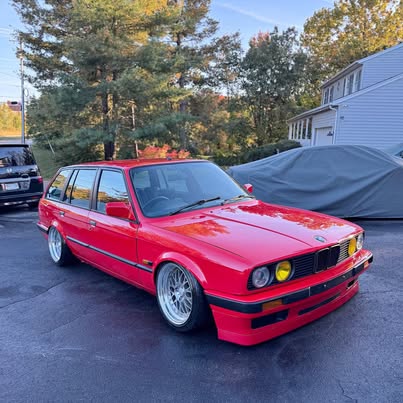
Problem areas
Everything in this section is ordered by consequence, not by how often it occurs. On a 318i of any generation, the engine is rarely the problem. The body, the cooling system and thirty years of budget maintenance are the problems, and they are generation-specific: an inspection routine learned on an E30 will miss the E36's failures, and vice versa. Work through the rust map for the generation in front of you, then the cooling system, then the rest.
Rust: the map, by generation
E21 (to 1983). Assume rust and make the car prove otherwise. The E21 predates modern corrosion protection, and its map is the classic 1970s one: wheel arches front and rear, sill ends and jacking areas, floors under the carpets, boot floor and spare wheel well, front panel and headlamp surrounds, windscreen surround, and the rear panel around the lights. Structural repairs are fabrication, priced per car, and parts support is the thinnest of the three generations — which is why the E21 is bought as a body first, and why this guide treats it as background to the badge rather than a pool car.
E30 (1982–94). The E30's rust protection was good for its era and is now forty years old, so the map is specific rather than general. Work in this order. First, the rear wheel arches and the inner arch lips, where mud sits against the seam — bubbling at the arch edge means the inner structure is worse. Second, the sills and the jacking points at their ends: press hard along the sill, look behind the front wheels where road grit blasts the coating off, and treat fresh underseal on one side only as a confession. Third, the battery tray and the bulkhead around it, and the boot floor and battery well on cars with the battery in the boot — acid and standing water work from the top down, invisibly, until the tray is lifted. Fourth, the scuttle, windscreen surround and the front footwells beneath them: water past the screen seal lands in the footwells and rots the floor from inside, under sound-looking carpet. Fifth, the sunroof carcass and its drain tubes — a stained headlining or a damp rear footwell on a sunroof E30 is the drains until proven otherwise. Sixth, the tail panel around the number-plate lights and rear light seals, the door bottoms, and the front valance. A sill or arch repair done properly — cut out, welded, painted — runs roughly $800–2,000 per side at a body shop; a car needing both sills, both arches and floor work is a restoration, priced as one, whatever the engine's health.
E36 (1992–99). The E36 rusts less and hides it better, which makes the specific checks more important, not less. The known places: the jacking points in the sills, where the plastic sill covers trap moisture against the metal and the first sign is a jack point that feels soft or a cover that sits proud; the rear arch lips, again where the seam holds dirt; the boot floor around the spare wheel well and the battery tray beneath it; the bottoms of the doors and the bootlid edges; and, on convertibles, the scuttle, the windscreen frame and the floor around the seat mountings, because convertible seals leak. Surface bubbling on an E36 panel is usually exactly that — but the jack points and the rear subframe mounting areas (below) are structural, and a car that fails there is not a cheap fix. Panel and paint work on an E36 is ordinary body-shop work; structural sill and mounting-point welding is $600–1,500 per area and should be priced before purchase, from underneath, on a lift.
The cooling system: the four-cylinder's real weakness
If one system kills more M42 and M44 engines than everything else combined, it is this one, and the M10 cars suffer their own version of it. The E36 cooling system was built with plastic where earlier cars used metal: a radiator with plastic end tanks and a plastic filler neck that embrittles with heat cycles and cracks — classically at the neck, suddenly, at motorway speed; a plastic thermostat housing and water-pump components, including pumps with plastic impellers that loosen on their shafts and stop circulating while the belt still turns; an expansion tank that crazes and splits; and a viscous fan coupling that loses its drive with age, so the car that stays cool on the road overheats in traffic. The sequence that destroys engines is always the same: a component lets go, the temperature gauge — damped in the middle of its range, so it moves late — finally swings, the driver presses on to the next exit, and the aluminium head warps or the head gasket fails. An M42 or M44 that has been overheated once, gently, usually survives; one that has been driven hot is a car whose head gasket job ($1,200–2,000 at an independent, head skim included) or worse is already scheduled.
The discipline this imposes is simple. Treat the E36 cooling system as a single service item with a known price: radiator, water pump (with a metal-impeller pump where the application allows), thermostat and housing, expansion tank and cap, and the main hoses, renewed together, run roughly $600–1,100 in parts and a day's labour, and a car with documented evidence of that work done recently is worth a real premium over an identical car without it. On the M42, add the nest of small coolant hoses and plastic coolant pipework under the intake manifold — perished, invisible from above, and the source of the slow coolant loss owners top up for a year before the big failure. On the M10 cars the system is metal and simpler, but the radiators are forty years old and the fan clutches tired; the same logic applies at lower prices. On every car, test what you can on the day: a top hose that pressurises rock-hard within a minute of a cold start means combustion gas in the system (head gasket); rusty or oily coolant tells you how the car has been kept; and a gauge that never reaches the middle is a thermostat stuck open — an engine the management believes is still cold, and fuelling to match.
Suspension, steering and brakes
The chassis layouts divide by generation. The E21 and E30 use MacPherson struts at the front and semi-trailing arms at the rear — a design whose camber and toe change with suspension travel gives the cars their adjustable, throttle-sensitive feel and their reputation for demanding respect on a wet road. The E36 sedan, coupe and convertible replaced the rear with a multi-link design (BMW's Z-axle) that is more stable, more comfortable and more expensive in bushes; the 318ti kept the old semi-trailing arms, which is why the Compact feels like an E30 from behind. The wear items are predictable. Front control-arm ball joints and bushes perish and knock; on both generations the ball joints are part of the arm for most applications, so a "ball joint" is an arm, at $150–300 a side fitted. Rear trailing-arm and subframe bushes on the E30, and the E36's larger set of rear bushes, go soft with age and show as a rear end that steers itself over bumps and under power — a full rear bush refresh is $800–1,500 with labour and alignment, and transforms a tired car. E36 rear shock top mounts tear and knock over bumps; they are cheap parts and an hour's work, and their knocking is routinely mis-sold as something worse.
Two structural checks belong on a lift. On the E36, inspect where the rear subframe bolts to the floor: on hard-used cars the mounting points can tear the sheet metal, a failure far more common on the powerful six-cylinder cars than on a 318i, but the check costs nothing while the car is in the air and the repair — reinforcement plates welded in, roughly $1,000–2,000 — is not a surprise you want after purchase. On the E30, inspect the front subframe and the steering rack mountings, and the rear beam mounts, for the same reason. Steering on the E21 is a recirculating-ball box with play that is normal within limits and vague beyond them; the E30 and E36 use power-assisted racks that leak from their seals and boots with age (a rack is $400–800 exchanged and fitted). Most play blamed on the rack is track-rod ends and column couplings. Brakes are discs at the front on all of them and, depending on model and market, drums or discs at the rear on the four-cylinder cars — check what the car in front of you actually has rather than assuming. The universal brake story on cars that have sat is seized calipers, perished flexible hoses and fluid that has absorbed years of water: a full hydraulic refresh, $600–1,400 with labour, belongs in the first-year budget of any car without recent evidence.
Interior, electrics and the convertible top
Interiors divide by generation too. The E30's is the durable one: hard-wearing cloth or vinyl, a dashboard that cracks across its top in hot climates (a crack-free original is worth noting in a car's favour), seat bolsters that wear through on the driver's entry side, and the famous instrument-cluster faults — the service-indicator board's rechargeable batteries leak and kill the instruments, and the plastic odometer gears crumble, so the mileage on an E30's odometer is a claim the service history must support, not a fact. Cluster repairs are specialist work at $200–450; a car whose instruments all work and whose mileage is documented has had money spent in the right place. The E36 interior is softer, quieter and more fragile: door cards whose covering delaminates and whose clips break when removed, a headlining that sags as its foam backing fails (a retrim is $300–700), a glovebox lid that sags, window regulators whose plastic sliders and clips fail and drop the glass into the door ($150–350 a side fitted), and seat mechanisms and occupancy sensors that light the airbag warning lamp. None of it stops the car; all of it is the visible price of a cheap E36, and a car whose interior is intact and working has usually been garaged and kept.
Electrics follow the same pattern. E30 faults are earths, tired switches, central-locking actuators and the cluster above. The E36 adds one famous fault of its own: the wiring loom that crosses into the boot lid flexes at the hinge, its insulation chafes and its wires break and short — producing a carnival of blown fuses, dead boot lights, number-plate light faults and, in the worst cases, damaged wiring further forward. Peel back the loom's covering at the hinge on any E36 viewing; chafed insulation is visible in a minute and the repair, before it shorts, is an hour with a soldering iron. Add perished alternator and starter wiring on the M10 cars, tired window motors everywhere, and air-conditioning that on any car of this age should be assumed non-functional until it demonstrably blows cold — a compressor, receiver-drier and seals refresh runs $800–1,500, and "just needs a re-gas" is the most reliably false sentence in classic-car advertising.
On convertibles — and the pool behind this guide (n=4) contains convertibles among its 4 cars — add the top itself: fabric and rear window condition, frame operation through its full cycle (manual on most E30s; power on E36s, with motors and linkages that fail at $500–1,500 to put right), seals that decide whether the footwells and boot are dry, and scuttle shake on the test drive. A convertible with a dry interior, a working top and no shake has been kept under cover; price the opposite accordingly.
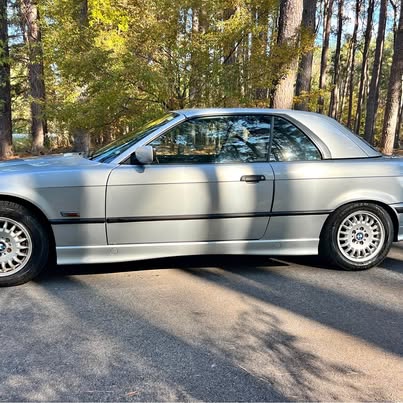
How to inspect one
Allow an hour, bring a torch, a magnet wrapped in cloth, a rag for the dipstick and — for a 1996-on M44 car — a cheap OBD-II code reader. Insist on a cold engine when you arrive; half of what follows depends on it. If the car passes you, pay for a lift inspection before money changes hands: the jack points and subframe mountings below cannot be judged properly from a driveway.
- Paperwork and identity first. Match the VIN on the title to the VIN plate and the stamping in the engine bay, and decode it: it tells you the car's generation, original engine and market. Check the engine type against the badge — M10, M42 or M44, from the engine bay features described in the engine section — because 318i shells carry swapped engines in both directions. On an E30, treat the odometer as unverified until the service history supports it; the cluster's odometer gears fail, and a thick, dated history file is worth more than any number on the dial.
- Cold start. An injected car of any generation should start promptly and settle. Listen at the front of the engine for timing-chain rattle that persists once warm (tensioner and guides, on M10 and M42/M44 alike), watch for blue smoke at start-up (valve stem seals) and under load later (rings), and on an M10 note whether a light top-end tick quiets as it warms — normal — or a suspicious silence suggests closed-up valve clearances.
- The coolant questions, before the drive. With the engine cold, open the expansion tank: coolant should be clean and at level, not rusty, oily or freshly topped to hide a loss. Squeeze the top hose, then start the engine and feel it again after a minute — pressure building immediately from cold means combustion gas in the system. On an early M42, examine the front of the engine, low down, for dried coolant staining: that is the profile gasket's signature from the engine section, and it reprices the car on the spot. Ask directly when the radiator, pump, thermostat and tank were last replaced, and believe invoices, not adjectives.
- Under the car. Torch along both sills and press the jacking points — on the E36, feel behind the plastic sill covers at the jack points specifically. Check the E30's rear arch inners, battery tray area and front footwell floors from below; on the E36, check the rear subframe mounting points in the floor for tearing or cracking. Perforation or tearing in any of these is structural: it ends the inspection at project money or ends it altogether.
- Floors, boot and water. Lift the carpets in all footwells and look for water tracks, damp and rust starting under sound paint. In the boot, lift the spare wheel and check the well, the battery area and the seams. On a sunroof E30, look for headlining stains and damp rear footwells (sunroof drains). On a convertible, press every carpet and look in the boot before anything else — a convertible's water history is its condition.
- Body and gaps. Run the magnet over the arch lips, sill ends and lower doors. Check panel gaps and paint match panel to panel; on an E36, mismatched plastic trim and tired headlamp lenses are honest age, but fresh paint over one arch is a question. Count the small costs as you go — trim, lenses, seals — because on a cheap 318i they add up to the price difference between cars.
- Suspension and steering by hand. Rock each front wheel for bearing and ball-joint play; bounce each corner and watch it settle in one movement. Look at the rear from behind: visible camber oddities and a rear end sitting low suggest tired bushes and springs. Check the steering rack boots for splits and leaked fluid, and on an E36 add the rear shock top mounts to your knock-hunt if the test drive produces one.
- The test drive. Fifteen minutes minimum, including a stretch at speed and some low-speed manoeuvring. A manual should change cleanly, with second-gear synchromesh tested on a cold downchange early in the drive; a thump taking up drive points to the propshaft flex disc. An M42 should pull with real enthusiasm above 3,500 rpm — one that feels flat everywhere is telling you about its airflow meter, its DISA unit, its fuel supply or its timing, and none of those is the seller's "they all do that". Brake firmly from speed: straight, no judder, no pedal that sinks.
- Heat and traffic. Let the car idle in traffic or standing until the fan's behaviour shows itself. The gauge should sit at the middle and stay there; a gauge creeping up at idle is the viscous fan coupling or a circulation fault, and a car that has "never overheated, it just runs warm" is describing the cooling section's failure sequence in its first act. Run the heater hot — it proves coolant circulation through the matrix and tests the blower in the same minute.
- Electrics, all of them. Every window through its full travel (E36 regulators fail mid-travel), the sunroof if fitted, lights, wipers and washers, instruments and warning lights, central locking. On an E36, peel back the boot-lid loom covering at the hinge and look for chafed insulation. On an M44 car, plug in the code reader and read stored faults — and be suspicious of a car whose codes were cleared that morning, which a reader's readiness monitors will often reveal.
- The convertible cycle, if it is one. Put the top fully down and fully up, watching for hesitation, asymmetry and leaks at the seals; check the rear window's clarity and the frame's pivots for play. Drive it over broken ground with the top up and listen: scuttle shake and squeaks grade the shell. Then repeat step 5's water checks with the top's evidence in mind.
- Interior last, and weight it. Sit in the driver's seat and judge bolster wear, cushion support and, on an E36, whether the door cards are firmly attached and the headlining is up. A sound, complete, working interior is the hardest part of a cheap 318i to recreate at sensible money — and, like a working instrument cluster on an E30, it is evidence about the whole car's life. Then decide what the car is: a driver, a project, or a parts-priced shell with a good engine.
Values
The figures that matter for this model are computed from this site's own listings and recorded sales, and they sit below this guide — the listed-now summary and the market block are refreshed every time the site rebuilds, so use them rather than any number quoted elsewhere. What follows is how to read them, and it starts with the pool's own shape: the pool behind this guide holds 4 cars (sample size n=4), all 4 currently for sale, none recorded as sold, split evenly between E30 and E36 at 2 cars each, with colours running 3 red to 1 silver in that sample of 4. A sample that small, with no achieved prices in it at all, cannot tell you what a 318i is worth. It can only tell you what sellers are asking — which is exactly the distinction this section exists to teach.
The 318i market is a discount market, and understanding the discount is the whole game. In every generation, the four-cylinder car sits below its six-cylinder contemporary — below the E30 325i, below the E36 325i and 328i — by a margin that reflects performance and desirability, not condition or usefulness. Within the 318i badge itself, the premiums are specific. The 1991 M42 cars, and the 318is coupe above all, carry the badge's only real enthusiast premium, earned by the engine and the one-year production run. Manual gearboxes carry a premium over automatics in every generation, because the buyers who want these cars want to drive them. Convertibles price on condition and season more than on specification. The M10 E30 and the ordinary E36 sedan sit at the bottom of the structure — not because they are bad cars, but because supply was large and demand is thin, and that is where the value in this market lives.
Condition spreads are wide, and they are driven by the unglamorous items in the problem-areas section. The difference between the cheapest and the dearest E36 318i is rarely mileage and never the badge; it is a cooling system renewed or original, a body sound or soft at the jack points, an interior intact or delaminating. Project cars — non-runners, overheated cars, cars with structural rust — are priced against the cost of the work in this guide, and the arithmetic is brutal: a head gasket, a cooling-system renewal and a set of rear bushes can together approach the value of a finished car, which is why the finished car, bought once, is almost always the cheaper purchase. Asking prices in the private listings where these cars mostly trade — all 4 pool cars (n=4) came through Facebook listings — are opening positions, not verdicts, and the negotiation is conducted against documented faults. Bring the inspection list, price the faults in dollars from the ranges in this guide, and negotiate from evidence. A seller who has already done the cooling system, the bushes and the timing-case work has spent your money for you; that car is worth paying the top of its band for, against a cheaper car that needs all three.
Parts and ownership
The 318i's parts story is one of its strongest arguments, because BMW built the 3 Series in the millions and the four-cylinder cars share most of their non-engine parts with the six-cylinder range that the whole classic BMW trade exists to support.
Easy: service items for all three engine families — filters, plugs, belts, hoses; M10 ignition and L-Jetronic service parts; brake discs, pads, calipers and hoses; suspension wear items including control arms, bushes and shock mounts; cooling-system components for the E36, which are cheap precisely because they fail so predictably; clutch kits; exhaust systems; window regulator repair kits; and the great majority of mechanical parts for the E30, whose aftermarket support is among the best of any 1980s car. Order today, fit this weekend, at prices close to modern-car money.
Harder and dearer: K-Jetronic fuel distributors and warm-up regulators for the early cars (exchange and specialist rebuilds, not shelf items); E21-specific trim, panels and interior parts, the thinnest support of the three generations; M42 profile-gasket and timing-case work is labour rather than parts money, but DISA units and good coil packs are worth sourcing carefully; E36 interior trim in the right colour, crack-free and undelaminated, which is now genuinely scarce because so many cars were broken for it; convertible top frames, motors and seals; and air-conditioning compressors and condensers in working order for any generation. As with every car in this programme, the mantra applies: buy the body and the interior, and fix the mechanics — with the 318i's rider that the cooling system counts as body, because its failure destroys engines.
Running costs. This is where the four-cylinder car makes its case against the sixes. Fuel consumption in ordinary use sits in the high twenties to low thirties mpg for the manual cars, several points better than a six-cylinder equivalent; insurance groups and tyre sizes are a step down (the four-cylinder cars wear narrower, cheaper tyres than the sixes); and there is simply less engine to service — four plugs, less oil, and on the M10, no hydraulics to worry about at all. Set against that the first-year rule that applies to every car in this guide: catching up deferred maintenance on a running 318i honestly costs $1,500–4,000 before you improve anything — cooling system, fluids everywhere including the gearbox and differential, brake hydraulics, bushes and the flex disc — and recommissioning a car that has sat for years runs higher, with the fuel system cleaned end to end on the K-Jetronic cars in particular. A sorted 318i is among the cheapest classic BMWs to run as a regular-use car, and any good BMW independent can service it. Budget for the catch-up, keep the cooling system young, change the oil on time, and the car's running costs will stay the smallest part of owning it.
Which one to buy
- The enthusiast's pick: 1991 E30 318is (M42). The one-year coupe with the twin-cam, the balance and the story. Buy the best shell you can find, verify the profile gasket's history, and accept the premium as the price of the only 318i the market actively hunts.
- The all-rounder: E36 318i or 318is (M44), manual, 1996 on. The torquiest engine, OBD-II diagnostics, the modern cabin and the market's discount, in one car. With a documented cooling-system renewal, this is the most usable 318i ever made and usually the cheapest route to a good one.
- The value buy: E36 318i (M42), 1992–95, manual. Discounted even below the M44 cars because buyers fear the older engine; the fear is really about the cooling system and the early profile gasket, both of which are checkable in one inspection and priceable from this guide. A checked, documented M42 car at M42 money is the bargain of the range.
- The simple life: E30 318i (M10), 1984–85. For the buyer who maintains their own car and values simplicity over speed: an engine from the stone age in the best sense, L-Jetronic that any mechanic understands, and the lowest prices in the E30 world. Rust, not mechanics, decides which one to buy.
- The cruiser: 318i convertible, E30 or E36. Bought as an open car, not a sports car: the E30 for charm and the M42's character, the E36 for comfort and the M44's ease. An automatic suits this brief better than any other in the range — bought knowingly, at the automatic discount, with the top and the footwells inspected first.
- The origin car: E21, bought as a 320i (US) or 318i (European import). For the buyer who wants the 1970s car and understands that body condition and parts patience are the whole purchase. Verify the badge story against the VIN before paying.
And the rule that overrides all of the above: buy the car with the sound body and the documented cooling system, in the generation you actually want. Engines, gearboxes and bushes are all fixable at prices you can plan for from this guide. A rotten shell costs more to put right than the finished car will be worth, and an overheated twin-cam's next failure is already inside the engine — the two things about a 318i that no price can make cheap again.
See the 30 3 Series cars currently listed.
For sale now
 $17,999
Expand
What they sell for: 3 Series sale prices.