
BMW 3 Series Coupe buyer's guide
BMW 3 Series Coupe -- the model's own buyer's guide: variants, values and what to check.
Years listed: 1988-1998 · Series: E30
Overview and history
The BMW 318is is the E30 3 Series at its lightest and keenest: a two-door coupe with a twin-cam, sixteen-valve four-cylinder engine, a five-speed manual gearbox, lowered sports suspension and almost no excess weight or equipment between you and the road. It arrived at the very end of the E30's life — launched in Europe in September 1989 as the 318iS and sold in North America for the 1990 and 1991 model years — and it was built to answer a specific criticism. The early four-cylinder E30s were pleasant but slow. The 318is was BMW proving that a small engine in this shell could be a driver's car in its own right, not just the cheap way into the badge.
The engine is the whole story. In place of the old single-cam M10 four, BMW fitted the new M42: 1.8 litres, double overhead camshafts, four valves per cylinder and 134 hp from an engine that loves revs. Around it, BMW specified the car the way an enthusiast would: a close-ratio five-speed manual and nothing else, a 4.10 final drive to keep the engine on the boil, stiffer and slightly lowered suspension, thicker anti-roll bars, sport seats, a front air dam with the deep iS lip spoiler, a small rear deck spoiler, 14-inch BBS cross-spoke alloy wheels and blacked-out window trim. Curb weight stayed around 2,650 lb, hundreds of pounds lighter than a six-cylinder E30, and almost all of the saving came off the nose. That is why the car steers the way it does.
Period testers noticed, and enthusiasts have repeated the verdict ever since: the 318is is the poor man's M3. Treat the nickname carefully. It does not mean the car is nearly as fast as an E30 M3 — it is not, and the gap in a straight line is large. It means the 318is delivers the same kind of pleasure — balance, feedback, an engine that rewards being worked hard, and limits you can explore without heroic speeds — at a fraction of the M3's cost and complexity. Of all the standard-production E30s, it is the one whose reputation has grown most steadily since production ended.
One warning belongs at the front of this guide, because it decides whether the rest of it applies to the car in front of you. The genuine 318is is only the M42-engined coupe of 1989 to 1991. BMW also sold a plain 318i in the United States for 1984 and 1985 with the older M10 engine, and those cars are slower, softer and worth less — yet they are routinely advertised, titled in listings and even badged as a 318is. Our own store illustrates the confusion exactly: as this guide is written we track just four cars filed under the 318is name, every one of them an E30, with filed years of 1984, 1985, 1986 and 1991. Only the 1991 car can be a factory 318is. There was no 318is in 1984, 1985 or 1986 anywhere in the world, and no four-cylinder 318 of any kind in the US range for 1986. A small sample of four cars proves nothing about the wider market, but as an identity lesson it is perfect: on this model, you verify the engine and the specification, never the badge and never the listing headline.
That cuts both ways. A misdescribed M10 car bought at 318is money is the classic trap. But a genuine M42 coupe hiding under a vague 318i description, from a seller who does not know what the twin-cam car is, is one of the better buys left in the E30 world. Everything that follows is written to help you tell the two apart and to judge the real car on its known strengths and its two or three genuinely expensive weaknesses — above all the M42 profile gasket and the wear inside its timing case.

The models
There is exactly one true 318is body style and one true 318is engine, which makes this section simpler than most — and makes the impostors easier to name. In North America the 318is was sold only as a two-door coupe, only with the M42 engine and only with a five-speed manual gearbox. No automatic, no four-door, no convertible and no Touring wagon ever carried the badge from the factory. In Europe the same car was sold as the 318iS, with the same engine and specification and the same 1989 to 1991 production window; the capital S in the European badge is a spelling difference, not a different model.
| Model | Years | Engine | Output | Character |
|---|---|---|---|---|
| 318i (US) | 1984–1985 | 1.8 four (M10), single cam, 8 valves | 101 hp | The early base car — the one most often misdescribed as a 318is |
| 318is (US) / 318iS (Europe) | 1989–1991 | 1.8 four (M42), twin cam, 16 valves | 134 hp | The subject of this guide: coupe, manual only, sports specification |
| 318i sedan (US) | 1991 | 1.8 four (M42), twin cam, 16 valves | 134 hp | Four-door sister car: same engine, softer specification, automatic offered |
| 318i convertible (US) | 1991–1992 | 1.8 four (M42), twin cam, 16 valves | 134 hp | Open car on the M42 engine; no is chassis specification |
BMW has never published a clean, separately audited production total for the US 318is coupe alone, and any seller quoting you an exact build figure for it should be asked for the source. What is certain is the shape of the market: the car was on sale in North America for only two model years, it was never a high-volume trim, and survivors have been thinned hard by rust, by track and autocross use, and by decades as a cheap second car. It was never rare in the M3 sense. It is simply a short-run specification that people used up.
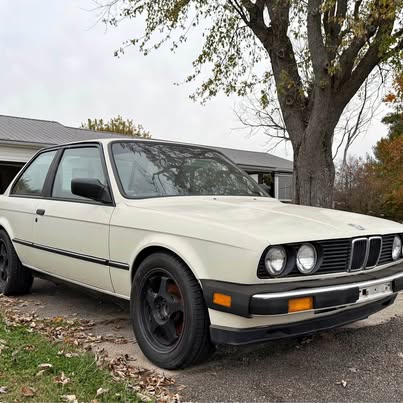
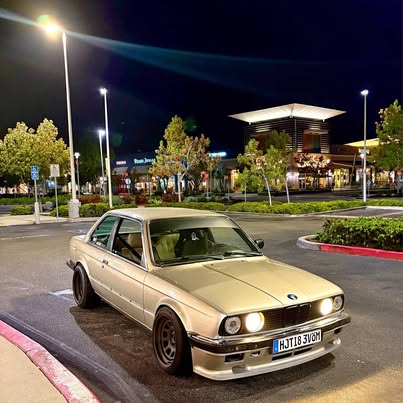
The 318is coupe itself. Beyond the engine, the factory specification is your identity checklist, and it is worth memorising before you view a car. Sports suspension, lowered over the standard car, with firmer dampers. A front air dam carrying the distinctive deep iS front lip and fog lamps. A small lip spoiler on the boot lid. Sport front seats with deeper bolsters. A leather-rimmed sports steering wheel. BBS cross-spoke 14-inch wheels — the basketweaves in the photographs in this guide. Black trim around the windows in place of brightwork. A 4.10:1 final drive, with a limited-slip differential on the options list and fitted to a minority of cars. If a car wears the badge but sits at standard ride height on steel wheels with comfort seats and bright window trim, you are not looking at a neglected 318is — you are looking at something else until the engine proves otherwise.
The 318i sedan and convertible. For 1991 BMW also sold the M42 in the four-door sedan as the 318i, and in the convertible. These are honest cars and the engine advice in this guide applies to them word for word — same profile gasket, same timing case, same cooling system. What they do not have is the coupe's full sports specification, and the sedan could be ordered with an automatic gearbox. That last fact matters forensically: our store's four filed cars include one automatic, and a factory 318is coupe with an automatic is a contradiction. An automatic car in a 318is search is a sedan, a misdescription or a conversion, and it should be priced as what it is.
The early 318i. The 1984 and 1985 US 318i is a different car that shares only the shell, the badge family and the first three digits of the name. Its M10 engine is a single-cam, eight-valve unit making 101 hp, fed by Bosch L-Jetronic injection, driving through a five-speed manual or an optional three-speed automatic, and the chassis specification is standard rather than sporting. It is a likeable, simple classic in its own right — the M10 is one of the toughest engines BMW ever built — but it is not a poor man's M3, it does not have the M42's failure modes, and it is not worth 318is money. The engines section below covers it separately precisely because so many buyers meet it wearing the wrong name.
The badge trap, stated plainly. Badges are cheap, boot lids are swapped, and listing templates file cars under the nearest familiar name. The three early-year cars in our four-car store sample — filed as 1984, 1985 and 1986 — are the pattern to expect everywhere: two of those years correspond to the M10 318i's real production window, and the third, 1986, corresponds to no US four-cylinder E30 at all. Do not accuse a seller of fraud over it; mis-filing is usually laziness rather than deceit. Just do not pay for the mistake. The VIN, the engine under the bonnet and the specification on the car settle identity. Nothing else does.

Engines and gearboxes
The M42: the twin-cam in the 318is
The M42B18 is the most technically ambitious four-cylinder BMW had put in a production 3 Series up to that point, and it was developed with the M3's four-cylinder in mind as a benchmark for character, if not for output. It displaces 1,796 cc from an 84 mm bore and an 81 mm stroke, with a cast-iron block, an aluminium double-overhead-camshaft cylinder head, four valves per cylinder, hydraulic tappets that never need adjustment, a forged crankshaft and a 10.0:1 compression ratio. Output is 134 hp at 6,000 rpm and 127 lb-ft of torque at 4,600 rpm, managed by Bosch Motronic 1.7 engine electronics with distributorless ignition — there is no distributor to wear, time or flood with oil, which removes a whole class of period faults at a stroke.
On the road the numbers undersell it. Below about 3,500 rpm the M42 is willing but ordinary. Above 4,000 rpm it changes voice, pulls hard and cleanly to its redline just past 6,500 rpm and plainly wants to be kept there — which is exactly what the short 4.10 gearing lets you do. This is a momentum engine in a light car, and driving it well means using the gearbox constantly. Buyers coming from a six-cylinder E30 sometimes call it busy or underpowered after a ten-minute test drive taken at low revs. Take the longer drive, in the upper half of the rev range, before you agree. A healthy M42 starts promptly hot or cold, idles steadily at around 800 rpm without hunting, revs without hesitation or flat spots, and shows no smoke beyond a faint puff after a long idle. Oil consumption on a sound engine is modest; a car needing a quart every few hundred miles is telling you about rings, valve stem seals or a crankcase ventilation fault, and the three are priced very differently, so diagnose rather than guess.
Two design features dominate M42 ownership, and both get full treatment in the problem areas section. The first is the profile gasket: a rubber sealing profile set into the front of the cylinder head where it meets the timing case, sealing coolant and oil passages at the joint. The original gasket material degrades with heat and age, and when it fails the engine loses coolant at the front of the head — externally down the front of the block if you are lucky, and in the worst cases with coolant and oil mixing. The second is the timing drive itself. A single chain drives both camshafts, running over sprockets and guide rails under a hydraulic tensioner. The chain itself is durable; the guides, the tensioner and above all the camshaft sprockets wear, the sprocket teeth sharpening into hooked points that accelerate chain wear in turn. Neither fault is a reason to avoid the engine. Both are reasons to demand evidence, because both jobs are labour-heavy front-of-engine work: a proper timing-case refresh with chain, guides, tensioner and sprockets typically runs $1,000 to $1,900 in parts and labour at an independent specialist, and profile gasket work, which means stripping the front of the engine and disturbing the head joint, is honestly quoted in the $900 to $1,800 range depending on what else is renewed while access is open. A car with recent invoices for either job has had the M42's two big bills paid by someone else, and that is worth a real premium.
The supporting systems are conventional BMW of the period, which is good news. The cooling system uses a belt-driven water pump, an engine-driven fan with a viscous clutch, a front-mounted radiator and a separate expansion tank, and it has generous capacity for the engine — overheating in an M42 is almost always neglect, not design, and it matters because the alloy head does not forgive being cooked. The intake side carries the idle control valve and a famously crowded nest of small coolant and vacuum hoses beneath the intake manifold, known to every M42 owner as the mess under the intake; perished hoses there cause hunting idles, coolant weeps and lean running that owners misdiagnose as electronic faults. The exhaust manifold is a cast unit that can crack with age and heat cycling. The engine management itself — Motronic 1.7, a throttle position switch, an airflow meter and temperature sensors — is fundamentally reliable, and most running faults on these cars trace back to air leaks, tired sensors or neglected ignition leads rather than to the control unit.
The M10: the engine in the early 318i
Open the bonnet of a 1984 or 1985 car filed as a 318is and this is what you will almost certainly find: the M10, BMW's long-serving single-cam four, in 1,766 cc form with two valves per cylinder, a single overhead camshaft driven by a duplex chain, and Bosch L-Jetronic fuel injection metering air through a flap-type airflow meter. Output is 101 hp, the delivery is gentle and torquey rather than rev-happy, and the whole unit feels a generation older than the M42 — because it is. The M10's basic architecture dates to the early 1960s and it powered everything from the 1500 saloon to the 2002.
As an engine to own, the M10 is close to unburstable if it has had oil. Its needs are different from the M42's, not greater. Valve clearances are set manually with shims and eccentrics and drift with mileage, so a tappety top end on an M10 is usually an adjustment overdue rather than wear — a valve adjustment is a routine service job at $250 to $450. The L-Jetronic system is simple and its faults are simple: split intake boots and vacuum hoses lean the mixture and spoil the idle, the airflow meter flap wears, and cold-start and auxiliary-air devices stick. Timing chains last very well, head gaskets are a known age-related job rather than a design scandal, and there is no profile gasket and no timing-case wear pattern of the M42 kind. Judge an M10 car as what it is: a simple, honest early E30 that will run for decades on basic maintenance. Just never let its virtues talk you into paying twin-cam money for it.
Telling the two engines apart takes ten seconds and requires no tools. The M42 has a wide aluminium cam cover with the spark plugs buried in deep wells down its centre, twin-cam width across the top of the engine and no distributor. The M10 is visibly narrower, with a smaller cam cover, plugs in the side of the head and a distributor. If you remember one inspection rule from this guide, make it this one: the engine you can see outranks the badge you can read, every time.
Gearboxes and final drive
Every factory 318is uses the same transmission: a Getrag 240 five-speed manual with a light, precise, slightly notchy change that suits the engine perfectly. There was no automatic option on the coupe and no six-speed; an automatic in a car presented as a 318is means the car is a 318i sedan, a conversion or a misdescription, and each of those is a different purchase. The Getrag 240 is a strong box whose synchromesh, second gear first as usual, is the wear point to test on a car that has been driven hard. A box that crunches into second when cold and improves as it warms is showing early synchro wear; a box that crunches hot, jumps out of gear or whines loudly in the indirect gears is a rebuild or replacement conversation, realistically $900 to $1,600 for a used-box swap with labour, more for a proper rebuild. Clutches last well in a 2,650 lb car unless the car has been launched or tracked, and a clutch replacement runs $700 to $1,200 fitted — worth doing the rear crank seal and the gearbox input seal while the box is out.
Between gearbox and differential sits the propshaft with its rubber flex disc — the guibo — and a centre support bearing, both of which perish with age and announce themselves as a thump on take-up or a vibration under load; the parts are cheap and the job is $300 to $550 fitted. The final drive is a 4.10:1 unit, short gearing chosen deliberately to keep the M42 in its working band, which is why a 318is feels alert and also why it cruises at noticeably higher revs than a six-cylinder car. The optional limited-slip differential is the single most desirable option on the car. Test for it the honest way: with both rear wheels off the ground and the gearbox in neutral, turn one rear wheel — on a limited-slip car the other wheel turns the same way, while an open differential turns it the opposite way. A seller's claim, a sticker or a vague memory is not a test. Differential whine on a trailing throttle points to wear, and a tired unit is a specialist rebuild rather than a handyman job.
The early M10 318i offered the five-speed manual or a three-speed automatic, and automatics are common among surviving early cars because they were bought as runabouts. That is the final identity tell to file away: in our store's sample of four cars filed as 318is, the transmission split is two manual, one listed as five-speed and one automatic — and it is the automatic car that should trigger your closest questions, because the factory never built the car it claims to be.
Problem areas
No examined-photo sample was supplied with the brief for this guide, so this section makes no incidence claims from photographs. It is built from the model's documented failure patterns, and it starts from the store position stated earlier: four cars filed under this name, three of them filed under years in which the factory built no such car. Identity is therefore the first problem area in practice, and the mechanical ones follow. Almost everything on an E30 can be fixed with money and patience. The two exceptions that should shape your offer are structural rust and an M42 whose front-end work has been deferred until the symptoms compound — because each turns a cheap car into an expensive one faster than the seller's price usually admits.
The M42 front end: profile gasket and timing-case wear
The profile gasket is the M42's defining fault, and it deserves its reputation — with one correction. It is not a head gasket failure, and a car that has suffered it has not necessarily overheated or warped anything. The profile gasket is a moulded rubber seal that sits in a groove at the front face of the cylinder head, where the head meets the timing case. It seals the coolant and oil passages that cross that joint. The original material was not up to a lifetime of heat cycles at the hottest, most thermally active joint on the engine: it hardens, shrinks and loses its seal, typically well before 100,000 miles on an original gasket. BMW revised the part, and a car that has had the job done with the updated gasket is usually done with the problem.
The failure presents in two ways. The common one is an external coolant leak at the front of the head: coolant loss with no puddle you can easily find, a sweet smell after a run, white and green crusty deposits around the front timing-case joint, and staining down the front of the block. The worse one is internal, with coolant finding its way into the oil side or oil into the coolant, showing as emulsion under the oil filler cap and a cooling system that pressurises oddly. The distinguishing work matters because three cheaper leaks live in the same neighbourhood: the thermostat housing joint, the water pump, and the small throttle-body heater plate and its hoses under the intake manifold all weep coolant around the front and top of this engine. The test that settles it is unglamorous — clean the front of the engine thoroughly, pressure-test the cooling system cold, and watch with a torch and a mirror for exactly where the first bead forms. A seller who will not allow a pressure test on a car losing coolant has answered your question. Budget the job honestly at $900 to $1,800 at a specialist, because access means stripping the front of the engine, and sensible owners renew the timing wear parts while they are in there — which is why so many invoices show the profile gasket and the timing case done together. Ask to see that invoice. It is the most valuable single document in an M42 car's history file.
Timing-case wear is the second front-end bill, and its mechanism is a chain reaction in the literal sense. The hydraulic tensioner ages and bleeds down, the chain runs slack at start-up and on the overrun, the slack chain wears its guide rails and hammers the camshaft sprocket teeth, and the teeth wear into sharp, hooked points that then chew the chain in earnest. Listen for it on a genuinely cold start: a brief rattle for a second or two as oil pressure builds is common on an old tensioner; a rattle that persists, a slapping or whirring from the front of the engine at steady revs, or a metallic chatter on lift-off is wear announcing itself. The visual test is definitive and cheap — with the cam cover removed, worn sprocket teeth look pointed and hooked rather than flat-topped and symmetrical, and a specialist can judge chain stretch and guide condition in the same look. The stakes justify the inspection: the M42 is an interference engine, so a chain that jumps teeth bends valves, and a skipped-timing repair with a head rebuild runs $2,200 to $3,800 where a preventive timing refresh runs $1,000 to $1,900. When you price a car with a rattly front end and no invoices, price the refresh in. When a seller says the rattle is normal for the model, he is describing the tensioner's old age, not a design feature.
The supporting faults are smaller but they are what make an M42 feel tired. The nest of hoses under the intake manifold — coolant hoses to the throttle heater plate, idle-air and breather hoses — perishes in the heat trapped under there, giving a hunting or high idle, lean hesitation and small coolant losses that get blamed on everything else; renewing the whole nest is $350 to $700 in parts and labour and transforms how the engine behaves. The idle control valve sticks and can often be cleaned before it is replaced. The intake boot between airflow meter and throttle body cracks on its underside, invisible from above, and leaks unmetered air — flex it by hand and look. The plastic thermostat housing warps and weeps. The water pump's bearing play is checked by rocking the fan. None of these is serious alone. Together, on a neglected car, they are the difference between the eager engine the model is famous for and a flat, lumpy disappointment that still is not the engine's own fault.
Rust: the map
The E30 shell was well made and reasonably well protected by the standards of its day, but its day ended more than three decades ago, and rust is now the first thing that decides what any individual car is worth. Work through it in the order the water does.
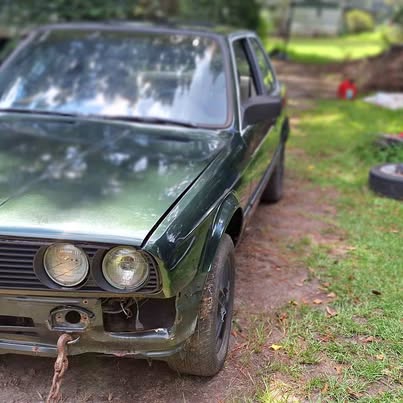
Front footwells and jacking points. The most structural and the most commonly bodged area on the car. The front jacking pads sit at the front of the sills where the footwells meet them, water and road grit collect in the seam, and years of being jacked on the pad crush and split the metal around it. Prod the footwell floors from inside with the carpets lifted and from below with the car raised; soft, crunchy metal here is structural welding, not cosmetics, at $600 to $1,400 a side done properly — and it is the area most often hidden under fresh underseal applied for the sale.
Sills and front wings. The sills rot from the rear ends forward and from the inside out; bubbles along the lower sill or at the rear wheelarch lip mean the inside is worse. The front wings trap mud behind the wheel at their lower rear edge and bubble there first. Wings unbolt and pattern or good used replacements are a few hundred dollars painted and fitted; sill sections cut out, welded and painted run $800 to $2,000 a side depending on how far the rot has travelled into the floor and arch.
Scuttle, screen surrounds and sunroof. The panel below the windscreen rots around the wiper spindles and at its corners, and because it is a double-skinned structural panel it is slow, skilled work to repair — $900 to $1,800 is a realistic range for proper scuttle work, and it is the repair most often disguised with filler, so run a magnet and your fingertips along it. Sunroof cars add a cassette that rusts around its drain outlets; blocked drains fill the roof and then the sills and footwells via the pillars, so wet carpets in a sunroof car mean checking the whole path, not just the floor.
Battery tray and bulkhead. On four-cylinder E30s the battery lives in the engine bay, and its tray and the bulkhead metal beneath it rot from acid and trapped water exactly as on older BMWs — invisible until the battery is lifted out. Lift it, or at least rock it and torch the edges. Tray repair is modest; bulkhead repair is not.
The rear of the car. Rear wheelarches go at the lip and at the inner arch where they meet the sill ends. The rear valance below the bumper rots, the panel behind the number plate and around its lamps perforates, and the boot floor and spare-wheel well collect water from tired boot seals and rear lamp gaskets — lift the spare wheel on every car, without exception. The fuel filler neck and its surrounding panel are a further E30 weak point worth a torch and a prod. Individually these are panel jobs in the $400 to $1,200 range; collectively, on a car that shows several of them at once, they describe a shell that has lived wet for years, and that car should be priced as a welding project whatever its mileage.
Chassis: suspension, steering, brakes and driveline
The E30 layout is MacPherson struts at the front and semi-trailing arms at the rear, and its wear pattern is well mapped. At the front, the lower control arms carry ball joints that are replaced with the arm as a unit, and the rear control-arm bushes — the eyeball bushes — split and perish, giving a shimmy under braking, vague turn-in and a knock over sharp bumps; a full front-end refresh with arms, bushes and track rods runs $800 to $1,500 fitted and makes a bigger difference to how the car feels than any other single spend. The steering rack is quick and communicative when tight; play at the rim, leaks from the rack boots and heavy, notchy assistance point to a rack rebuild at $600 to $1,100 fitted. At the rear, subframe bushes and trailing-arm bushes soften with age, letting the rear axle steer the car under power — the classic E30 symptom is a car that needs a steering correction as you get on and off the throttle. Rear subframe bushes are a subframe-down job at $500 to $900. Dampers are conventional and cheap by modern standards; a car wallowing on original dampers is a known, priceable fix, not a mystery.
Brakes on the 318is are discs at the front with drums giving way to discs at the rear on the sports specification, servo-assisted and well up to the car's weight when maintained. What age does is seize calipers, perish flexible hoses and corrode hard lines, especially over the rear axle; a full hydraulic refresh with calipers, hoses and fluid runs $700 to $1,400. Judge stopping in a straight line, pedal firmness and disc condition on the test drive, and check the handbrake holds on a slope — a weak handbrake is its own small job in the rear mechanism, not a verdict on the whole system. Wheel bearings hum rather than grind when they go, rising and falling with road speed and changing note as you load the car side to side in gentle bends; that load test is how you separate a bearing from tyre noise. In the driveline, the guibo flex disc cracks around its bolt holes and the propshaft centre bearing sags, giving a thump as drive takes up and a drone at speed — both covered in the engines section pricing, both cheap next to a differential rebuild, which is where a whining rear axle leads at $800 to $1,500 for a rebuilt unit fitted.
Interior, trim and electrics
The E30 cabin is durable, handsome and now old enough that its failures are cosmetic in a way that still costs money. The dashboard top cracks in the sun — on US cars that have lived in southern states it is closer to a rule than an exception — and a crack-free original dash is genuinely hard to source, so price a cracked dash as a permanent feature or a $400 to $900 used-dash hunt plus fitting labour, and beware the plastic cap covers sold to hide it. The sport seats in the 318is wear through on the driver's entry bolster first; the foam underneath collapses after the cloth or vinyl splits, and a bolster repair with matched material runs $300 to $700 a seat at a trimmer. Sit in the driver's seat, always, and feel for the frame through the pad.
The instrument cluster hides the model's sneakiest fault: the odometer is driven by small plastic gears that crumble with age, so the odometer stops — sometimes years before the sale — and the mileage on the dial stops meaning anything. Test it on the drive: watch the trip meter and odometer actually advance over a measured mile. A dead odometer does not make a car bad; it makes its history unprovable, and it should move the car into the buy-on-condition-only category at a condition-only price. The service interval indicator board in the cluster carries rechargeable batteries that leak with age and damage the board, giving dead gauges and warning lights that misbehave; a board repair is $200 to $450. Beyond the cluster, the electrics fail at connections and switches rather than in looms: electric window mechanisms slow and jam, central locking actuators die door by door, the heater blower works on full speed only when its resistor pack fails — the cheap fix — and not at all when the motor itself goes, which on an E30 is the more involved job. Air conditioning on US cars, where fitted, is usually inoperative after decades and a full recommission with conversion work is $800 to $1,600; treat working cold air as a bonus worth paying for, never as a promise to accept untested.
How to inspect one
Allow ninety minutes, bring a torch, a cloth-wrapped magnet, a tyre pressure gauge and a friend to work the lights and pedals while you watch. Insist on a cold engine when you arrive — half the tests below are worthless on a car the seller has warmed up for you. If the car passes your inspection, pay for an hour on a lift before money changes hands; on an E30 that is the only way the underside gets a fair hearing.
- Paperwork and identity first. Match the VIN on the title to the plate on the dashboard and the stamping in the engine bay. Then open the bonnet and identify the engine before anything else: the wide twin-cam M42 with its central plug wells means the car can be a 318is; the narrow single-cam M10 means it cannot, whatever the badge, the title description or the listing says. Check the model year against the same rule — a factory 318is coupe is a 1989 to 1991 car with a manual gearbox, so an early year or an automatic ends the identity conversation and starts a different one about a different car at a different price.
- Cold start, bonnet up. The M42 should fire promptly and settle. Listen at the front of the engine for chain rattle: a second of tensioner noise is one thing, a persistent rattle, slap or whir is the timing-case wear from the problem areas section, and it prices a four-figure refresh into your offer. Watch for blue smoke at start-up and after a long idle, which points to valve stem seals, and smoke under load, which points deeper.
- The coolant story. With the engine cold, check the expansion tank level and look at the front of the cylinder head and timing case with a torch for the crusty deposits and staining of a profile gasket leak. Ask directly when the profile gasket and timing parts were last done, and ask to see the invoice rather than the answer. If the car is losing coolant and the seller refuses a cold pressure test, treat the leak as the expensive one until proven cheap.
- Under the intake and around the bay. Flex the intake boot and look at its underside for cracks. Look into the shadows under the intake manifold for perished hoses, weep stains and bodged repairs — the mess under the intake from the problem areas section. Check the oil for emulsion, the cam cover and filter housing for leaks, and the sump for grounding damage and weld repairs.
- The rust circuit, in order. Carpets up in both front footwells and prod around the jacking points. Along both sills with your fingertips and the magnet. The scuttle panel below the windscreen, magnet included. Battery out or rocked, tray and bulkhead inspected. Rear arch lips, rear valance, and the boot with the spare wheel lifted out. Perforation at the jacking points, sills or scuttle is structural money; use the per-area ranges in the rust section to build the number before you negotiate anything else.
- Specification audit. Walk the identity checklist from the models section: ride height, iS front lip and fog lamps, boot spoiler, sport seats, cross-spoke wheels, black window trim. Missing pieces on a genuine M42 car mean parts to source and money to spend; missing pieces on an M10 car confirm what the engine already told you.
- Wheels off the ground, if you can. Rock each front wheel for bearing and ball-joint play, look at the control-arm bushes for splits, and check the steering rack boots for leaks. At the rear, turn one wheel with both off the ground and the box in neutral: the other wheel turning the same way confirms the limited-slip differential from the gearboxes section; the opposite way means an open differential, whatever the seller believes.
- The test drive, gearbox first. Fifteen minutes minimum, and use the whole rev range — the M42 only shows its character above 4,000 rpm. Test second-gear synchromesh cold and hot, feel for a thump on drive take-up that betrays the guibo or centre bearing, and listen on a trailing throttle for differential whine. A car that will not rev cleanly is usually suffering air leaks or neglect, not a dying engine, but you price the diagnosis, not the hope.
- Chassis behaviour. On a quiet road, brake firmly from speed: a shimmy under braking points at the front bushes from the chassis section. Get on and off the throttle in a high gear and feel whether the rear of the car shifts or needs a steering correction — that is soft rear subframe bushes letting the axle steer. Note knocks over sharp bumps, and whether the car tracks straight with the wheel centred.
- Heat and electrics at idle. Let the car idle hot until the fan and temperature gauge have told their story — the gauge should sit steady, and an M42 that creeps hot at idle has a cooling fault to find before it becomes a head fault. Run the heater and blower on every speed, work every window, the lights, washers, wipers and horn. Blower on full speed only is the cheap resistor; no blower at all is the expensive conversation.
- Mileage verification. On the drive, watch the odometer and trip meter advance over a measured distance. The crumbling odometer gears from the interior section mean a stationary odometer is common on these cars — and if it is stationary, every mileage claim for the car is unverifiable, the service history needs invoices rather than stamps, and you are buying condition alone.
- Interior last, driver's seat first. Sit where the wear is: bolster, foam, frame through the pad. Read the dashboard top in raking light for cracks and for the tell-tale edge of a plastic cover hiding them. Check the headlining, the sunroof operation and drains if fitted, and the boot for the damp smell of a car that has lived wet. A sound, uncracked, original interior is the hardest part of this car to replace, so weight it accordingly.
Values
Read the market block that follows this guide before you read anything into a single asking price, because on this model the sample is always small and the spread is always wide. Our own store currently tracks just four cars under the 318is name, with none recorded sold — and as the earlier sections explain, three of those four are filed under years in which no factory 318is existed. That is not a quirk of one website. It is the defining feature of this market everywhere: the headline pool mixes genuine twin-cam coupes with earlier single-cam cars, sedans and optimistic descriptions, so any average built from unfiltered listings is measuring the mixture, not the car. Filter by engine and specification first, and only then compare numbers.
Within the genuine cars, condition drives value far more than mileage — which is just as well, given how many of these odometers stopped telling the truth years ago. The premium cars are rust-free or honestly rust-repaired coupes with the profile gasket and timing work documented, a working odometer backed by invoices, the limited-slip differential fitted and verified by test rather than by claim, and an interior that has survived uncracked. At the other end, the project end, sit cars needing the front-of-engine work, welding in the footwells and sills, or both together; the gap between a documented driver and a project needing both big jobs is not a discount, it is a chasm, because the two jobs together can consume the entire difference before paint, interior or chassis work is even discussed. Price a project by subtracting the work at real specialist rates from the value of a finished car, not by hoping the work will come in cheap.
Two further patterns are worth knowing. First, asking prices and achieved prices part company most widely on the misdescribed cars: a single-cam 318i advertised at twin-cam money can sit unsold for months and then change hands quietly for what it actually is, so time on the market is information. Second, the genuine 318is has been pulled upward by the wider E30 market and by its poor man's M3 reputation, but it has not followed the M3 into territory where originality is everything — sensible, well-documented maintenance and quality replacement parts protect value here, while cosmetic modification, cheap coilover conversions and deleted trim subtract from it. The most valuable modification a seller can show you is not a modification at all. It is a thick, dated, invoiced history file.
Negotiate from the inspection, not from the advertisement. The profile gasket invoice that is missing, the timing rattle you heard cold, the footwell welding the magnet found — each is a specific, costed item, and sellers concede specific items far more readily than general cheapness. And keep the small-sample warning in front of you throughout: with so few genuine cars trading at any moment, one exceptional sale does not reset the market, and one desperate sale does not sink it. Buy the car, not the comparison.
Parts and ownership
The 318is sits in one of the best-supported corners of the classic BMW world. The E30 was built in large numbers, the enthusiast base is enormous, and the car shares its shell, suspension architecture and much of its trim with the six-cylinder models that specialists already live on. BMW's own classic parts programme still lists a surprising amount for the E30, and the pattern and performance aftermarket covers most of the rest. The M42 engine was also fitted to the E36 318i and 318is in updated form, which widens the pool of engine knowledge and many service parts, though you must check part numbers rather than assume interchangeability — the E36 version differs in its intake, sump and ancillaries.
Easy: service items, filters, plugs and leads, brake discs, pads, calipers and hoses, dampers, control arms and bushes, track rods, wheel bearings, water pumps, thermostats, radiators, exhaust systems in standard form, clutch kits, guibo discs and centre bearings, window and door seals, and most suspension wear parts. Order today, fit this weekend, at prices that will pleasantly surprise anyone used to rarer classics.
Harder and dearer: a crack-free dashboard, because the supply of good used ones shrinks every year; the deep iS front lip spoiler, which lives inches from the ground and has been sacrificed to kerbs and driveways for three decades; sport seat material in the original patterns; limited-slip differentials, which are hunted by every E30 owner without one; profile gaskets and timing components are available, but the cost is in the labour, as the problem areas section sets out; and M42-specific items such as the cylinder head and the intake hose set under the manifold, which are best sourced through BMW specialists who know the engine rather than general breakers. A quality repaint in the original colour starts in the mid four figures and rises steeply with the amount of rust repair folded into it, which is why this guide keeps repeating the same advice: buy the shell and the interior, and fix the mechanics.
Running costs. A sorted 318is is a realistic regular-use classic. Fuel consumption in mixed driving sits in the high twenties to low thirties per gallon if you can resist the top of the rev range, and appreciably worse if you cannot. Servicing is straightforward — oil and filter at sensible intervals, coolant and brake fluid on a two-year rhythm, valve gear that never needs adjustment thanks to the hydraulic tappets — and any competent BMW independent can look after the car. The budget line that catches new owners is the first year of catching up: on a running car with deferred maintenance, allow $1,500 to $3,500 to work through the hoses, bushes, fluids, brakes and small leaks before you improve anything, and more if the timing case or profile gasket is part of the catch-up. Cars that have sat for years need the fuel system cleaned end to end, every rubber hose and belt treated as guilty, and the brakes inspected piece by piece. Buy a car in regular use over a sleeping bargain, even at a higher price — with this model, use is what keeps the seals sealed, the chain tensioned and the rust visible rather than hidden.
Which one to buy
- The driver's pick: a documented 1991 M42 coupe with the big jobs done. Profile gasket and timing case refreshed on invoices, limited-slip differential verified by the wheel test, shell sound at the jacking points and scuttle. This is the car the reputation is about, and it is the easiest to sell on, because the next buyer is looking for exactly the same evidence.
- The value buy: a genuine M42 coupe needing the known work, bought at project money. The faults on this model are unusually well mapped and honestly priceable, so a car with a cold-start rattle and a coolant weep is a rational buy — provided the shell is sound and the price subtracts the work at real rates, not at hope.
- The first classic: a 318i sedan with the M42. Same twin-cam engine and the same engine lessons, softer chassis, four doors and often an easier price. You give up the coupe's specification and some of its future value, and you gain most of the driving pleasure for everyday use.
- The honest runabout: an early M10 318i, bought as itself. Simple, tough and charming — as long as the price is an early 318i price. The moment it is priced as a 318is, walk away and let someone else fund the badge.
- The one to avoid: any car whose identity will not settle. Wrong engine, wrong year, automatic gearbox, unverifiable mileage and a thin story, in any combination. There are too many straight cars in this market to marry a question mark.
And the rule that overrides all of the above: buy the engine evidence and the shell, never the badge. On a 318is the badge is the cheapest part of the car and the most often transferred. A sound shell with a documented M42 is a car you can improve forever; a rotten or misdescribed car wearing the right badge is a story you will pay for twice.
See the 26 3 Series Coupe cars currently listed.
What they sell for: 3 Series Coupe sale prices.