
BMW 8 Series buyer's guide
BMW 8 Series -- the model's own buyer's guide: variants, values and what to check.
Years listed: 1994-1997 · Series: E31
# BMW 840Ci (E31) — Buying Guide
Overview and history
The 840Ci is the V8 member of BMW's E31 8 Series, the big pillarless coupé BMW launched in 1989 as a technology flagship and a deliberate step above the 6 Series it notionally replaced. Where the original 850i carried the M70 V12, the 840Ci — introduced for the 1994 model year in North America — uses a 4.0-litre V8, and that single fact defines the car you are shopping for. It is lighter over the nose than the V12, simpler under the bonnet by an entire bank of cylinders and one engine-management system, cheaper to keep in fuel, tyres and parts, and in real driving it gives away remarkably little: the V8 cars are within a few tenths of the early V12 to highway speed and feel keener to turn in. What it does not give away is presence. The E31 shape — long bonnet, pop-up headlamps, no B-pillar, frameless glass, a tail that tapers like it was drawn in one stroke — is identical whichever engine sits in it, and it remains one of the most admired production BMW designs of the modern era.
Understand what BMW was selling. The E31 was not a sports car; at roughly 1,800 kg with fluids it is a heavy, expensively engineered grand tourer, developed with early CAD/CAM methods, a drag coefficient around 0.29 with the lamps down, and a specification — multi-link rear axle, optional electronic damper control, stability control, dual batteries, a check-control computer — that read like a concept car in 1989. It was priced accordingly, and that is the trap and the opportunity thirty years on. The 840Ci was the "entry" 8 Series only in the showroom. Every system around the engine — suspension, electrics, hydraulics, interior — is flagship-grade, flagship-complex and flagship-priced to repair. The market, which prices these cars as affordable exotics, does not reflect that. You are buying a six-figure engineering programme at used-family-car money, and the difference will be settled by whoever owns it when deferred maintenance comes due.
The V8 itself arrived as part of BMW's range-wide move to the M60 engine family, shared with the E34 5 Series and E32/E38 7 Series. That shared DNA is the 840Ci's great practical virtue: engine parts, knowledge and specialists cross over from far more common cars, in a way nothing on the V12 — effectively two six-cylinder engines on one crankshaft, with two of almost everything — can match. Production of the whole E31 family totalled just over 30,000 cars across a decade, and the 840Ci accounts for roughly 7,200 of them, split between the early 4.0-litre M60 cars and the later 4.4-litre M62 cars described in the next section. North American cars are all automatics, all left-hand drive, and were sold from 1994 to 1997.
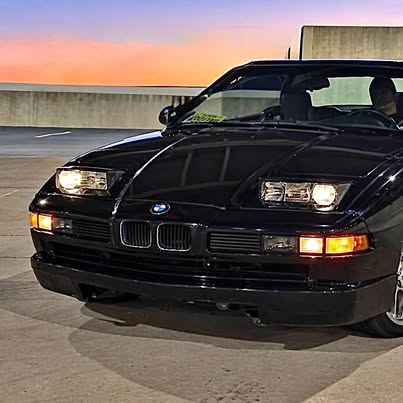
On this site the 840Ci pool is small — three cars recorded, two offered for sale and one sold at the time of writing, all of them black 1994–95 cars — so treat any single listing as an individual negotiation, not a market. All three are the early M60 version, which means the Nikasil question covered in the problem sections applies to every one of them, and it is the first thing to settle on any early car you inspect.

The models
The 840Ci badge covers two distinct engines in one continuous production run, and telling them apart matters more than the badge suggests. The changeover is by build date and engine code, not by styling — there was no facelift to spot — so you identify the version from the VIN plate, the engine itself and the paperwork, never from the seller's description alone.
| model | years | engine | output | built | character |
|---|---|---|---|---|---|
| 840Ci (M60) | 1994–1995 (US) | M60B40 4.0 V8, Nikasil block | 286 hp, 400 Nm | — (see text) | The original V8 8; free-revving, the Nikasil question attached |
| 840Ci (M62) | 1996–1997 (US) | M62B44 4.4 V8, Alusil block | 286 hp, 440 Nm | — (see text) | Same headline power, more torque everywhere; Steptronic gearbox |
| 850i (context) | 1990–1994 | M70B50 5.0 V12 | 300 hp, 450 Nm | — | The launch car; manual offered; two of everything to maintain |
| 850Ci (context) | 1994–1999 | M73B54 5.4 V12 | 326 hp, 490 Nm | — | The smoother, later V12; automatic only |
| 850CSi (context) | 1992–1996 | S70B56 5.6 V12 | 380 hp, 550 Nm | 1,510 | The M-division flagship; a different price universe entirely |
Combined 840Ci production was roughly 7,200 cars worldwide; reliable published splits between the M60 and M62 versions vary by source, so the table leaves the per-version figure blank rather than inventing one. The context rows are there because sellers blur them: an "840" with a V12 is an 850 wearing the wrong description, and an 850CSi is not a trim level of anything — it is a separate, M-built model whose value has no bearing on an 840Ci negotiation.
The M60 car (1994–95 in the US) uses the 3,982 cc M60B40: an all-alloy 32-valve V8 with chain-driven double overhead cams per bank and a rated 286 hp. It is a sweet, high-revving engine by V8 standards, happiest past 3,500 rpm, and slightly soft below that in a car this heavy — you work it through the gearbox's sport mode rather than surfing torque. Its defining ownership issue is the Nikasil cylinder-bore coating on early blocks and its reaction to high-sulphur fuel, dealt with in full in the problem areas. Many cars received Alusil replacement engines under warranty; a replacement is a positive, not a demerit, provided the paperwork proves it.
The M62 car (1996–97) uses the 4,398 cc M62B44. Headline power is identical at 286 hp — BMW was managing insurance and marketing bands, not the engine's capability — but torque rises from 400 to 440 Nm and arrives lower, which transforms the car's manner: it wafts where the 4.0 cruises, and overtakes without the downchange-and-revs ritual. The M62 block is Alusil from the factory, so the Nikasil question disappears; in its place you inherit the M62's own known items — timing-chain guide wear and the crankcase-ventilation plate — which are age items rather than design scandals. Later cars also bring the Steptronic version of the five-speed automatic, with manual override, and detail equipment updates.
One record-keeping warning, because it appears in real listings — including in this site's own small pool, where one of the three cars is recorded as a 6-speed: BMW never built a manual 840Ci. Every 840Ci left Dingolfing with the five-speed automatic. A listing claiming a manual 840Ci is one of three things: a misdescribed 850i (the V12 was offered with a six-speed manual), a car that has had a manual conversion using 850i/Getrag parts — a real and increasingly popular swap, valuable if documented and done completely — or a data error. Each possibility prices differently, so establish which before you discuss money.
Equipment was generous and mostly standard in the US: leather, electric memory seats, dual-zone climate, on-board computer, ASC+T traction/stability control. Electronic Damper Control (EDC) was an option and is the one to identify on sight — the dampers are model-specific and expensive, and a car with dead EDC is a car negotiating against itself. Wheels varied; the cross-spoke and later M Parallel styles suit the car, but check diameter and tyre size against the door-jamb placard, because oversize rears on a heavy GT accelerate the rear suspension wear covered later.
Engines and gearboxes
The M60B40: the 4.0-litre original
The M60 was BMW's first production V8 in a quarter-century when it appeared in 1992, and it is a thoroughly modern design for its era: an aluminium block and heads, four valves per cylinder, double overhead camshafts per bank driven by duplex chains, fracture-split forged connecting rods, and individual coil-on-plug ignition managed by Bosch Motronic (DME 3.3 on these cars) with sequential injection and knock control per bank. Displacement is 3,982 cc from an 89 mm bore and 80 mm stroke — oversquare, which explains the character: this is a V8 that likes revs, makes its 286 hp at 5,800 rpm, and delivers its 400 Nm at 4,500 rpm, high for a luxury engine. In the E31 it breathes through a large composite intake manifold with a single throttle body and idles — when healthy — with a smoothness you can balance a coin against.
The M60's fame, good and bad, is the block. Early engines use Nikasil (nickel-silicon carbide) electroplated bores running directly in the aluminium block. In markets whose petrol carried high sulphur — the US in the early 1990s prominently among them — sulphur compounds attacked the coating, bore wear accelerated, compression and idle quality fell away, and BMW replaced large numbers of engines under warranty with Alusil-block units (aluminium-silicon alloy, bores honed to expose silicon crystals — a different, durable technology). Three decades on, the practical position is this: modern fuel is low-sulphur everywhere, a Nikasil engine that still shows even compression and a clean idle today is not living on borrowed time in the way it was in 1996, and the engines that were going to fail mostly have. But "mostly" is doing work in that sentence, and the test is cheap — a compression or leakdown check and a casting-number check, both covered in the inspection section. Never buy an M60 car on a story; buy it on numbers.
Mechanically, the M60's recurring themes are oil, air and water rather than bottom-end failure. The oil pump is driven by a chain at the front of the sump, and its mounting bolts are famous for loosening and occasionally dropping into the pan — a ten-minute check whenever the sump is off, and a reason to ask whether it has ever been done. The crankcase ventilation system routes through a plate at the rear of the intake manifold (the OSV/PCV plate); its diaphragm splits with age and produces a vacuum leak that mimics far worse things — rough idle, whistling, oil consumption, fault codes. Intake manifold and throttle gaskets shrink and leak unmetered air. The valley beneath the manifold houses coolant pipes and the knock sensors, sealed by a valley-pan gasket that weeps coolant invisibly until the level drops. None of this is exotic; all of it is labour-priced, because access on a wide V8 in a low engine bay is the cost driver.
The M62B44: the 4.4-litre successor
The M62, fitted from the 1996 model year, is an evolution, not a new engine: same architecture, bore and stroke opened out to 92 × 82.7 mm for 4,398 cc, Alusil block as standard, revised Motronic (ME 5.2) management, and a torque curve re-drawn for the real world — 440 Nm at 3,900 rpm. Peak power stays at a nominal 286 hp, which fools spec-sheet readers; on the road the M62 car is the more muscular and relaxed of the two, and it is the engine to prefer if you will use the car for distance work. One myth to kill on sight: the E31's M62 does not have VANOS variable valve timing. VANOS arrived on the M62TU in other models from 1998; the E31 ended production before it, so any seller describing a "VANOS 840" is describing a car that does not exist, and any VANOS rattle diagnosis on an E31 is a misdiagnosis by definition.
The M62's signature age item is the timing-chain guide system. The chain runs against plastic-faced guide rails — a long U-shaped guide in the valley of the V — and at mileages now typical for these cars (and simply with heat cycles and age) the plastic embrittles and sheds. The early symptom is a brief rattle at cold start and, later, chain slap audible at idle and debris in the sump. Caught as a rattle, it is a preventative job; ignored until the chain jumps, it is an engine. Budget figures live in the problem section, but the buying rule is simple: a documented guide replacement transforms an M62's value; an undocumented high-miler is priced as if the job is due, because it is. The M62 shares the M60's crankcase-vent plate weakness, valley-pan coolant weep and general appetite for fresh gaskets; it also adds a secondary-air and revised thermostat arrangement that makes its cooling behaviour slightly different to diagnose — the thermostat is a mapped, electrically assisted unit on these cars, and a lazy gauge reading is not automatically a sender fault.
Both engines share service realities. Oil is cheap insurance: these are chain-driven, hydraulically tensioned engines that punish extended intervals with guide and tensioner wear, and a car with annual oil changes regardless of mileage is a measurably better bet than one serviced "by the book" on 1990s extended intervals. Spark plugs are platinum and long-lived; coil packs fail individually and announce themselves as a single-cylinder misfire that moves when you swap coils — a two-minute test that separates a modest parts bill from a imagined engine rebuild. Fuel is supplied by an in-tank pump with a filter whose replacement is routinely skipped; a car that hesitates at sustained high load and is cured by nothing else often just wants the filter nobody changed.
Gearboxes: the ZF five-speed automatic
Every 840Ci uses ZF's 5HP30 five-speed automatic (BMW designation A5S 560Z) — the heavy-duty ZF box of its generation, also found behind V12s, and well matched to the car. Early M60 cars use adaptive shift logic with economy/sport programmes; M62 cars add Steptronic manual selection. There is no clutch pedal, no factory manual, and no limited-slip differential on standard US cars — traction is managed electronically by ASC+T, which intervenes with throttle and brake. Judge any claim otherwise against the VIN decode, not the advertisement.
The 5HP30's reputation suffers from BMW's period "lifetime fill" doctrine. The fluid was declared sealed-for-life, which meant sealed-until-the-warranty-ended; at thirty years, every 840Ci gearbox is living on borrowed fluid unless a previous owner broke the doctrine and serviced it. Healthy behaviour: clean, unhurried upshifts cold and hot, a firm but not thumping engagement of Drive and Reverse, no flare (rev rise) on the 2–3 shift, and kickdown that arrives without a two-second committee meeting. The failures are progressive: worn fluid and a tired mechatronic/valve body produce slushy then harsh shifts long before hard parts fail, and a fluid-and-filter service (with the correct specification fluid and a proper level-set at temperature) rescues more of these boxes than rebuilders care to admit. A full rebuild is a four-figure specialist job; a service is a few hundred dollars. When a seller says "the gearbox needs attention," your first question is when the fluid was last changed — the answer prices the car. Torque-converter shudder at light throttle in top gear, and delayed reverse engagement on a cold morning, are the two specific behaviours to test for on your drive; both are documented in the inspection checklist.
One more gearbox point, because it decides arguments: the transmission is controlled by its own electronic module (EGS) in conversation with the engine's DME, and a surprising share of "gearbox faults" on an E31 are electrical conversations gone wrong — a failing mass-airflow meter corrupting the engine's torque signal, a low system voltage from those twin batteries confusing the shift logic, a corroded connector at the gearbox itself. A car that shifts badly and also idles badly or shows electrical gremlins does not have three faults; it has one, upstream. Diagnose in that order — voltage, engine sensors, then the box — and you will avoid the classic E31 own-goal of rebuilding a healthy transmission behind a sick engine.
Problem areas
The E31's problems are unusually well mapped, because the car has a devoted specialist community and because almost every system on it was shared with, or derived from, the E32/E38 7 Series and E39-era hardware. The pattern to internalise before the detail: this car rarely fails suddenly. It degrades across a dozen systems at once, each one individually affordable, collectively decisive. The cars to fear are not the ones with one big fault but the ones with fifteen small ones and an owner who stopped caring — the total to recommission such a car exceeds the value gap between it and a good one, every time.
Engine: Nikasil, air leaks and the chain guides
On an M60 car, settle the block first. The failure mechanism is bore-coating erosion from sulphur in period fuel: compression falls unevenly, the idle turns lumpy in a way no tune-up cures, oil consumption climbs, and a leakdown test hisses air into the crankcase past the rings. Distinguish it from the impostors before you condemn an engine: a split PCV plate diaphragm, leaking intake gaskets and a failed idle-control valve all produce rough idle on a sound engine, and each is a few hundred dollars, not an engine swap. The distinguishing tests are mechanical, not electronic — compression figures across all eight cylinders (even and healthy versus scattered and low), a leakdown percentage, and the block casting number, stamped on the side of the block, checked against the published Nikasil/Alusil lists. A warranty-replacement Alusil engine in an early car is common and desirable; the evidence is a casting number plus, ideally, a dealer invoice in the file. Allow $400–700 for a proper pre-purchase compression/leakdown session at a specialist; an engine replacement, if it ever comes to that, is a $5,000–9,000 exercise with a used unit and labour, which is why the test matters.
The M60's oil-pump bolts deserve their own paragraph because the failure is silent and total. The pump hangs at the front of the sump on bolts that lose torque over years of heat cycles; the pump drops its drive, pressure vanishes at speed, and the engine is scrap before the warning light's message registers. There is no external symptom. The check is to drop the sump — a modest labour job — inspect the bolts (they are sometimes found lying in the pan, which tells you the clock was ticking), and refit with threadlocker. Any M60 car without evidence this has been inspected carries an unknown, and specialists treat the sump-drop as part of a first major service, bundled at perhaps $300–600 with gaskets and an oil service.
On the M62, the equivalent engine-out-of-the-blue item is timing-chain guide disintegration. The plastic guide facings crack and shed into the sump; chain tension geometry changes; the engine rattles at start-up, then at idle; left alone, the chain can jump a tooth and bend valves. Listen at a stone-cold start — the seller who has "already warmed it up for you" on an M62 car is telling you something. A guide job done properly (guides, tensioners, chains inspected, gaskets, often the valley pan and PCV plate while access is open) runs roughly $2,500–4,500 at an independent specialist; it is the single largest routine liability on the later cars, and documented completion is worth real money.
Both engines leak air and fluids in predictable places as the rubber reaches thirty years: intake and throttle-body gaskets (unmetered air, lean codes, hunting idle), the rear PCV plate (a honking or whistling at idle that stops when you pull the dipstick is the classic field test — the crankcase is under excessive vacuum), valve-cover gaskets weeping onto the exhaust manifolds (burning-oil smell after a run, rarely a fire risk but always a smell), and the valley-pan gasket weeping coolant into the engine's V, where it evaporates before it can drip — the giveaway is a coolant level that falls slowly with no visible leak and a sweet smell at the bulkhead. Budget a "reseal and refresh" of a neglected engine bay at $1,500–3,000 in parts and labour; done once, done completely, it transforms how the car feels and smells.
Cooling system: the whole system, on a schedule
BMW cooling systems of this era are consumables with a service life, and the E31's is no exception — it merely costs more when it lets go, because a wide, low nose packs the radiator, viscous fan, auxiliary electric fan, expansion tank and a long inventory of hoses into a space designed by stylists. The failure points: plastic radiator end-tanks and hose necks that embrittle and crack (often at the top-hose neck, suddenly, at temperature), expansion tanks that split at the seam, water-pump bearings that develop play you can feel by rocking the fan, thermostat housings and the valley coolant pipes under the manifold, and the heater core and its valve at the bulkhead. The viscous fan clutch deserves specific attention: a clutch that has failed freewheeling lets temperatures climb in traffic; one that has seized makes the car sound like a hovercraft and can, in the extreme, shed a fan. Test it with a rolled newspaper against the spinning fan at operating temperature — a healthy clutch yields; the fan should also roar briefly on a hot restart and then quieten.
The ownership rule the community settled on long ago: replace the cooling system wholesale, on a schedule, rather than component-by-component on failure. A full preventative refresh — radiator, expansion tank, pump, thermostat, major hoses, fan clutch — is roughly $1,200–2,500 in quality parts plus labour, and it buys a decade. A car whose file shows exactly that invoice is worth a premium; a car with one new hose and seven old ones is a countdown. Overheating on the test drive is an absolute stop: these engines tolerate a brief excursion poorly, head-gasket and warped-head territory starts at $3,000 and climbs, and a seller's "it just needs a thermostat" is a claim to verify with your own money only after the price reflects the worst case.
Electrics: two batteries and a hundred modules
The E31 carries two 12-volt batteries in the boot, wired in parallel, because its standby loads and starting demands were flagship-grade in 1990. The system works well when both batteries are matched, healthy and charged; it fails confusingly when one dies, because the pair drag each other down and the car's modules — exquisitely voltage-sensitive — begin to misbehave in ways that mimic individual component failures: windows that forget their limits, a check-control display inventing faults, central locking with opinions, an MID (multi-information display) with dead pixel rows. The first diagnostic step on any E31 electrical complaint is a proper load test of both batteries and a check of the charging voltage; the second is to inspect the boot floor and battery trays for the corrosion that leaked electrolyte leaves behind. Parasitic drains are common — the general module's capacitors age, the boot-light and glovebox switches stick — and a car that cannot sit for two weeks and start is a car with a findable fault, typically a $200–600 diagnosis-and-repair at a specialist who knows the model, not a mystery to live with.
Specific electrical systems to exercise on every viewing: the pop-up headlamps (below), all four windows including the automatic drop-and-seal as the doors open and close — the frameless glass indexes down a few millimetres and back up, and a car that does not do this has a microswitch, regulator or module fault that will also leak weather — the sunroof in both slide and tilt, both seat memories and every seat axis, the IHKA climate panel, the MID pixels, the headlamp washers if fitted, and the boot and bonnet releases. The wiring itself is generally good, with one notorious exception: the headlamp looms flex at the hinge every time the pods rise, and thirty years of flexing chafes insulation inside the conduit, producing intermittent lamp and motor faults that come and go with the mechanism. Budget $300–800 to have both looms properly repaired or replaced if a car flickers.
Suspension, steering and brakes: weight tells
The E31 rides on MacPherson struts at the front with separate lower control and thrust arms, and a sophisticated multi-link integral rear axle — a layout shared with the 7 Series and built to control nearly two tonnes with dignity. Every arm carries bushes or ball joints, and at thirty years the question is never whether some are tired but how many, and whether an owner replaced them in sets or one groan at a time. Symptoms, in the order you will feel them: a shimmy under braking from 50–60 mph (front thrust-arm bushes, the classic), a knock over sharp bumps (ball joints, drop links), vague straight-line stability and rear-end steer over mid-corner bumps (rear subframe and trailing-arm bushes — the rear axle has enough links that worn ones let the wheel steer itself), and uneven rear tyre wear. A full front-end refresh with quality arms is roughly $800–1,500 in parts; a full rear bush overhaul is a bigger, subframe-out job at $1,500–3,000 with labour. None of it is optional on a car that tramlines: the E31's whole appeal is its composure, and a loose one is just a heavy old car.
Identify EDC (Electronic Damper Control) if fitted — a button by the gear selector and model-specific dampers. Working EDC is a delight and a selling point; failed EDC dampers are a four-figure-per-corner conversation, and the pragmatic community answer — conversion to conventional dampers — is legitimate but must be priced and disclosed. Steering is recirculating-ball via a Servotronic box on these cars: expect some centre free play by design, but groaning at parking speeds points to low fluid or a tired pump, and leaks from the box and hoses are common and messy rather than fatal. Brakes are generously sized discs all round; the checks are the usual ones plus two E31 specifics — the brake "bomb" (hydraulic accumulator) that assists the system loses its nitrogen charge with age, giving a hard pedal after the car sits or a pedal that goes hard after several quick applications, a few hundred dollars to replace; and handbrake shoes inside the rear discs, routinely ignored until the lever points at the ceiling.

Body, rust and the pop-up headlamps
The E31's body was substantially galvanised and resists rot far better than its 1970s ancestors — but "far better" is not "immune," and the rust it does get hides in structural and expensive places. The known map: the sunroof panel and its tray (a perforated panel is visible; a blocked drain soaks the headlining and footwells), the rear wheel-arch lips and the inner arches behind them, the jacking points and sill ends (get the car on a lift and look — sill covers hide the evidence), the boot floor around the battery trays, the scuttle and windscreen surround, and the leading edge of the bonnet and the headlamp pods, which live a hard life in the airflow. Panel fit is your accident detector: the E31 was built to tight, even gaps, the doors are huge and heavy (check hinge sag by lifting the trailing edge — play means pin and hinge wear on a door that costs real money to rehang), and the bonnet and bootlid are aluminium on many cars, so a magnet test tells you little; use paint-depth readings and consistency of finish instead. A paint meter across every panel is a $50 tool that settles arguments; mismatched readings on a "never painted" car end the conversation usefully.
The pop-up headlamps are the E31's signature and its most theatrical liability. Each pod carries the lamp units on a mechanism driven by a motor, with plastic adjusters and pivots that embrittle. Failure modes: one pod lazy or stuck (motor, relay, or the chafed loom above), lamps that rise but sit misaligned or wobble (worn pivots and adjusters — rebuild kits exist, a few hundred dollars per side fitted), cloudy or cracked lamp glass, and the low-beam projectors' modest output, which owners improve with correct-specification bulbs, never with illegal retrofits that melt thirty-year-old reflectors. Cycle the lamps a dozen times on your inspection; a mechanism that works once and sulks on the fifth cycle is negotiating with you.
Glass and seals deserve a budget line of their own. The frameless door glasses, their regulators and the door seals are a system; perished seals whistle at speed and admit water that ends up in the footwells and, eventually, the sill structures. Rear side glass is fixed and rarely troublesome. The heated rear screen's elements fail in stripes. None of this is exotic, but NOS trim for the E31 is thinning, and a car with complete, undamaged brightwork and uncracked plastic trim is worth more than the sum of those parts — because you may not be able to buy them at any price.
Interior and climate: where the money quietly goes
Sit in the car and work everything, because the E31's cabin is a dense thicket of motors, steppers and modules. The IHKA dual-zone climate system uses stepper motors to drive its flaps; failed steppers and a leaking heater core are the two big jobs, the core being a dashboard-out exercise at $1,500–2,500 in labour alone — its symptom is a sweet coolant smell in the cabin and a windscreen that mists from the inside on a dry day, and it converts "minor coolant loss" from an engine-bay item into a five-alarm warning. The blower's final-stage resistor fails to give you full-speed-only or no fan. Air conditioning on US cars is R134a-era or converted; a system that blows cool but not cold usually wants a condenser (stone-damaged, at the very front of the car) and a recharge, $400–900, while a seized compressor is a larger bill. Seats: the electric sport seats wear their driver's bolster first, the memory functions depend on a module under the seat, and fore-aft cables can stretch so one side of the seat advances ahead of the other — the "seat twist" familiar from other BMWs of the era, a modest cable repair. Headlinings sag, as all foam-backed linings of the period do; a proper re-trim is $400–800 and a pinned-up lining is a tell about the owner's standards. Leather responds well to feeding if it is not cracked through; budget a specialist clean-and-recolour at $300–600 before you price a retrim.
Tyres and alignment close the chassis section, because the E31 is unusually sensitive to both. The car was aligned to fine tolerances and wears wide, low-profile rubber; a set of aged, mismatched or budget tyres will make a mechanically sound car feel nervous, noisy and vague, and more than one "suspension rebuild" has been a set of tyres all along. Check date codes and brands on all four corners before you price any chassis work, and note that a proper four-wheel alignment on this multi-link rear axle is a specialist job with eccentric adjustments at the back — a car that has just had bushes replaced but never aligned will chew its new rear tyres in a few thousand miles while handling worse than it did worn. Factor a quality matched set and a full alignment into any recommissioning budget as a matter of course, roughly the cost of one of the suspension jobs above, and treat it as the baseline that makes every other chassis judgement meaningful.
Finally, the instruments and displays: the MID's pixel ribbon fails in rows (repairable by specialists, $150–350), the check-control will report bulb failures that are actually corroded bulb-holder contacts — clean them before you buy modules — and the on-board computer's backlight bulbs are consumables. A car whose displays are complete and legible has usually been owned by someone who fixed things; let that pattern inform your judgement of the whole car.
How to inspect one
Inspect in this order, cold car first, and do not let the seller warm it up before you arrive — half the E31's confessions are made in the first ninety seconds from cold. Bring a paint-depth gauge, a torch, a code reader that speaks 1990s BMW (or a booked specialist inspection), and the casting-number lists for the M60 block check.
- Paperwork and identity first. Match the VIN on the title to the plate at the base of the windscreen and the stamped body number. Decode the VIN: it settles the engine (M60 versus M62), the build date and the factory specification, and it exposes the "manual 840Ci" impossibility from the models section — a claimed factory manual means the description, not BMW, is wrong. Read the service file for the big-ticket receipts: cooling-system refresh, chain guides (M62), block replacement (M60), gearbox fluid services.
- Cold start, bonnet up, stand and listen. The engine should fire cleanly and settle to an even idle. A rattle for the first seconds that fades is the M62 chain-guide warning from the problem section; a lumpy, hunting idle on an M60 starts the Nikasil-versus-air-leak investigation — do not guess, schedule the compression test. Listen for whistling or honking at idle (PCV plate), and pull the dipstick: a strong vacuum gulp confirms the crankcase-vent diagnosis.
- The block check (M60 cars). With the engine cool and the car on a lift or stands, read the casting number on the side of the block and compare it with the published Nikasil and Alusil lists. Combine it with the compression and leakdown figures — even compression in the healthy range across all eight, leakdown modest and even — and you have settled the single largest question on an early car. Scattered low readings plus a Nikasil number is a walk-away or an engine-priced negotiation, nothing in between.
- Cooling system audit. Stone cold, check the expansion-tank level and look for the tide mark of a car that "uses a little water." Squeeze the hoses (crunchy is old), inspect the radiator top neck and end tanks for hairline cracks and coolant crust, rock the fan for water-pump bearing play, and test the viscous clutch as described in the problem section. Date-code what you can: a system refreshed as a set shows matching-age components; one new hose among antiques tells its own story.
- Oil, fluids and the sump question. Oil on the dipstick: level, colour, and any emulsion under the filler cap (short-trip condensation is common and innocent; thick mayonnaise plus coolant loss is not). Ask directly whether the M60 oil-pump bolts have ever been inspected, and treat "never heard of it" as an answer. Gearbox fluid history: ask when, and with what specification fluid.
- Underneath, on a lift. Work the rust map from the problem section: sunroof drains' exit areas, arch lips and inners, sill ends and jacking points, boot floor (from inside as well), scuttle. Then the mechanicals: weeping steering box and hoses, gearbox and differential seals, exhaust condition (a full system is a serious invoice), and the state of every suspension bush you can see — cracked, extruded rubber is a budget line, not a surprise.
- Every electrical consumer, in sequence. Both batteries' date labels first. Then: pop-up lamps up and down ten times, watching for a lazy pod or flicker (the flexing-loom fault); all four windows through their full travel plus the door-open drop-and-seal; sunroof slide and tilt; both seats through every axis and memory recall; MID and check-control legibility; climate to full hot and full cold on both zones; wipers, washers, mirrors, central locking from every door. Anything dead goes on the list with a price, not a shrug.
- The EDC and specification check. If the car has the EDC button, confirm the dampers fitted are the EDC units and cycle the modes — a converted car is fine if priced as one. Confirm wheel and tyre sizes against the door placard, tyre date codes (anything past six years is a replacement negotiation regardless of tread), and spare, tools and jack presence.
- The drive: gearbox and chassis. From cold, note Drive and Reverse engagement (a long pause before reverse bites is the 5HP30 symptom from the engines section). Drive gently until warm: shifts should be clean, with no flare on the 2–3 change. Then work it — kickdown from 40 mph, sustained top-gear light throttle to provoke converter shudder, and a firm stop from 60 mph with hands light on the wheel: the 50–60 mph braking shimmy names the thrust-arm bushes, tramlining names the rear bushes, and a pedal that firms up oddly after repeated stops names the brake accumulator.
- The drive: engine manners. An M60 should pull cleanly and eagerly past 4,000 rpm; an M62 should surge from low revs without needing the downchange. Hesitation under sustained load points back to the fuel filter and pump; a single-cylinder misfire under load is most often one coil — ask to see it proven, not assumed. Watch the temperature gauge in traffic afterwards: it should park at centre and stay there.
- Post-drive leak and smell audit. Park over clean concrete for ten minutes. Check for coolant at the bulkhead (heater core — remember the dashboard-out labour), oil at the valve covers, fluid at the steering box. Sniff the cabin for coolant sweetness and the engine bay for burning oil. Mist on the inside of the windscreen after the drive re-opens the heater-core question.
- Price the list, then decide. Total the inspection findings using the cost ranges in the problem sections — guides or block questions, cooling refresh, suspension sets, electrical repairs — and negotiate from the total cost of the car made right, not from the asking price minus a gesture. If the sums approach the price of a documented, sorted car, buy that car instead; the E31 market always has one, and it is always the cheaper purchase.
Values
The build's market block beneath this guide carries the live numbers — current listings and recorded sales — so this section teaches you how to read them, because the 840Ci market is wide, thin and easy to misread. The spread between the cheapest and dearest 840Ci is not primarily about mileage or even condition in the cosmetic sense; it is about documented, completed maintenance on the systems this guide has catalogued. A car with invoices for the chain guides, the cooling system, the suspension and the gearbox service sits in a different market from an identical-looking car with a shiny detail and a thin file, and the price gap between them is smaller than the cost of moving the second car into the first car's condition. That single relationship — asking price plus deferred work, versus the sorted car's price — is the whole valuation method for this model.
Asking prices and achieved prices diverge more on the E31 than on most modern classics. Sellers anchor on the V12 cars and on the model's original flagship pricing; buyers price the maintenance liability. Cars that sell are the ones where the file closes the argument. Expect the negotiation to be conducted, in effect, over specific invoices: each documented big job is worth money, each undocumented system is a deduction, and both sides know it. Auction results are the most honest guide to achieved money, because the bidding exposes exactly how much the market credits a good file and punishes an absent one; private asking prices, especially for cars that sit listed for months, are aspirations, and the length of time a car has been offered is itself data.
Variant premiums are rational here. The later M62 car commands a premium over the M60 in equivalent condition — not for its identical headline power, but because the Alusil block removes the Nikasil investigation and the torque makes the better tourer — unless the M60 car carries proof of a warranty Alusil engine, which closes most of the gap. A documented manual conversion, done completely with the correct Getrag gearbox and pedal box, is worth a premium to the buyers who want one and a deduction to everyone else; it narrows the market while raising the ceiling. Colour matters at the margins — the strong period colours and the classic black and silver cars move fastest — and an EDC car is worth more with working EDC and less than a standard car without it.
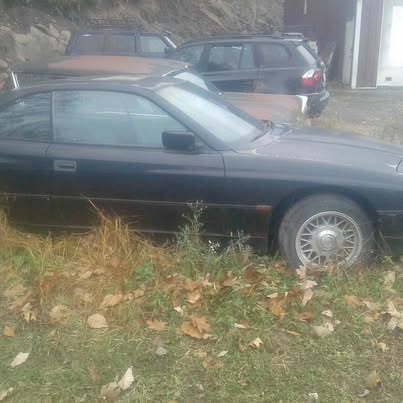
The project-versus-driver gap is the trap to model before you view anything. A non-running or long-stored 840Ci is not a cheap 840Ci: waking one means batteries, tyres, the entire cooling system, fuel-system cleaning, brakes freed and resealed, and then the faults it was parked for. The gap between a project and a running, driving, documented car routinely exceeds the cost of the visible work, because the invisible work — modules, seals, bushes, the heater core you discover in month two — is where this model keeps its bills. Buy the best file you can reach, stretch for the sorted car, and let someone else be the hero of the cheap one.
Parts and ownership
Ownership is easier than the car's complexity suggests, for one structural reason: BMW built a lot of the E31's mechanical family. The M60 and M62 engines, the ZF gearbox and much of the suspension and brake hardware are shared with the E34/E39 5 Series and E32/E38 7 Series, so service parts — filters, gaskets, pumps, bushes, coils, sensors — are widely stocked by the BMW specialists and the German parts houses, at prices set by those cars' volumes rather than by the 8 Series' rarity. Mechanical wear items are rarely the problem. The discipline is to buy quality: cheap suspension arms and no-name cooling components have short, expensive second acts on a car this heavy, and the labour to fit them twice dwarfs the saving.
The scarcity lives in the model-specific layer: body panels and lamp units, the pop-up mechanism's plastic hardware, interior trim, seat parts, glass seals, the MID and modules, EDC dampers. BMW Classic still lists a surprising amount, the specialist breakers and the owners'-club networks circulate the rest, and a healthy used-parts market exists because rust and accident write-offs feed it — but prices for clean E31-specific trim rise every year, and some items are effectively "find a good used one" parts. This is why the guides keep repeating that a complete, undamaged car is worth a premium: you are partly buying an inventory of parts you cannot order.
Running costs are grand-tourer costs. Fuel consumption is in the mid-teens around town and low twenties on a run, on premium; tyres are wide, staggered on many cars, and not cheap; insurance is classic-policy friendly if the car is garaged and mileage-limited, which suits how most are now used. Find your specialist before you buy, not after: a BMW independent who knows the E31 — and owns the diagnostic kit that talks to it — will save you the car's purchase price in avoided misdiagnosis over a few years, because so many of its faults impersonate more expensive ones. The owners' community (the long-established E31 forums and registries) is deep, technical and generous with part numbers and procedures; budget your own time there as part of ownership. Servicing rhythm: oil and filter annually regardless of mileage, gearbox fluid and filter every few years against the "lifetime" doctrine, coolant and brake fluid on schedule, and a standing annual inspection on a lift, because the car tells you its needs early if someone is underneath looking. Storage matters as much as servicing for cars now used seasonally: a battery conditioner is not optional on a twin-battery car that sits, fuel should be fresh and stabilised over winter, and the kindest thing you can do a stored E31 is to drive it properly — fully warm, systems exercised, lamps cycled, air conditioning run — once a month rather than letting it hibernate untouched, because seals, steppers and mechanisms all age faster at rest than in use.
Which one to buy
- The all-rounder: a 1996–97 M62 car with a documented chain-guide replacement. The torquier engine, no Nikasil question, Steptronic gearbox — and with the guides done, its largest liability is already paid for by someone else.
- The value buy: a 1994–95 M60 car with a proven Alusil engine. Warranty-replaced block or clean compression figures on a Nikasil one, a fat service file, and a price that still reflects the early car's reputation rather than its actual condition.
- The enthusiast's pick: a documented manual conversion. Only with complete paperwork for the Getrag six-speed swap — gearbox, pedal box, hydraulics, coding — and a drive that proves it shifts and clutches like a factory car.
- The spec hunter's car: a working-EDC example in a strong colour. Worth its premium only while the dampers demonstrably work; the same car with dead EDC is the value buy's poorer cousin.
- The one to leave: the cheap, shiny, file-less car at any year. Fresh paint and a detailed engine bay over fifteen deferred systems is the most expensive 840Ci of all, once your name is on the title.
The overriding rule: buy the file, not the car — on an 840Ci, documented maintenance is worth more than low mileage, rare specification or fresh paint, because every system you cannot prove was done is a system you are about to pay for.
See the 9 8 Series cars currently listed.
For sale now
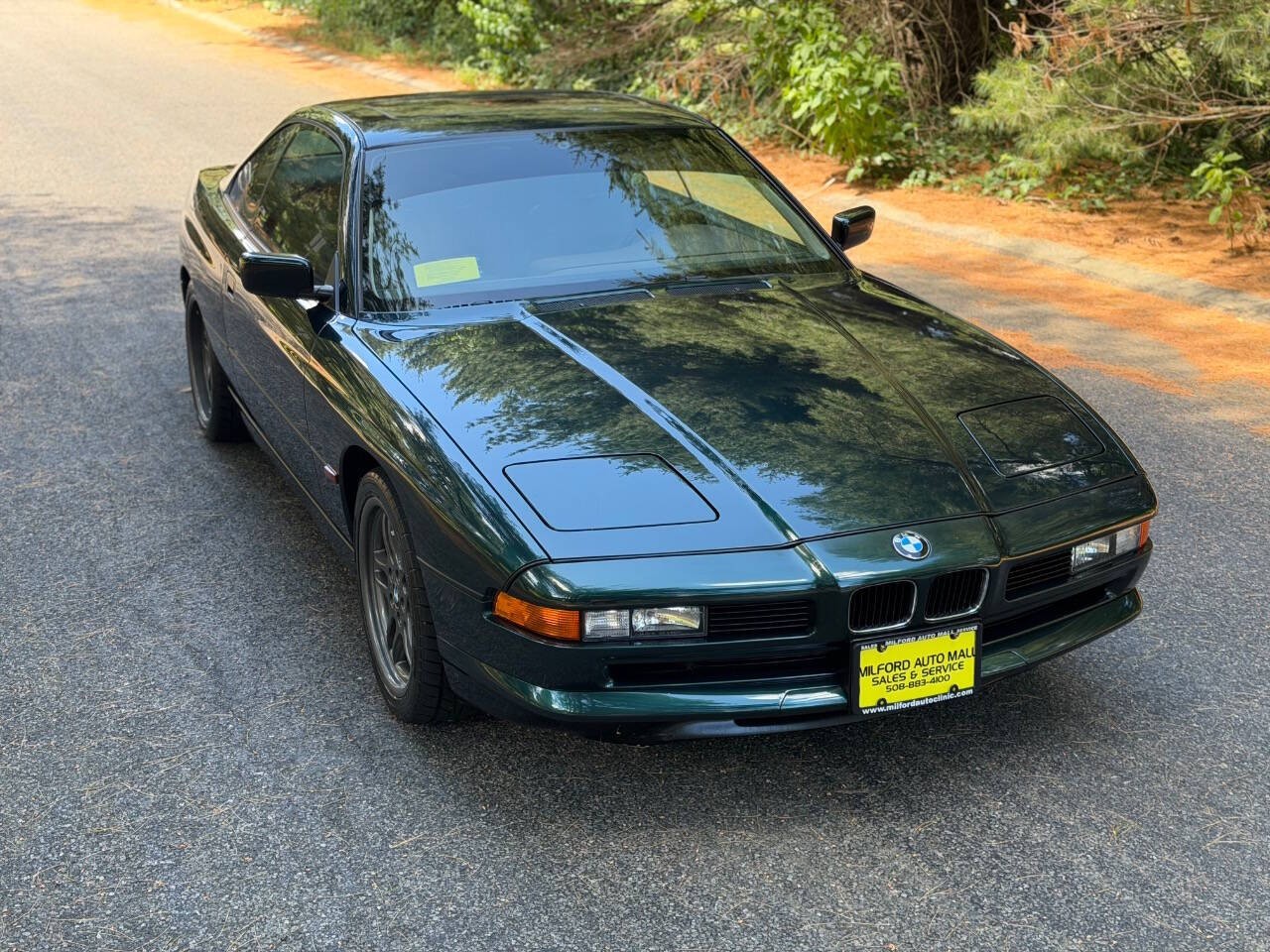 $29,999
Expand
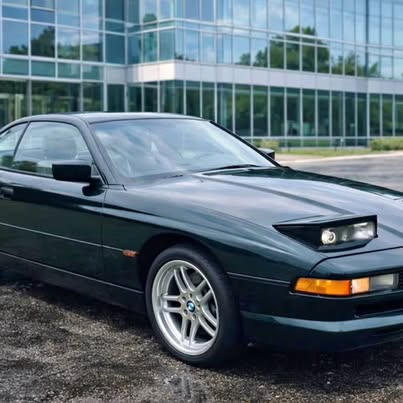 $24,950
Expand
What they sell for: 8 Series sale prices.