
BMW 8 Series buyer's guide
BMW 8 Series -- the model's own buyer's guide: variants, values and what to check.
Years listed: 1990-1992 · Series: E31
# BMW 850i (E31) — Buyer's Guide
Overview and history
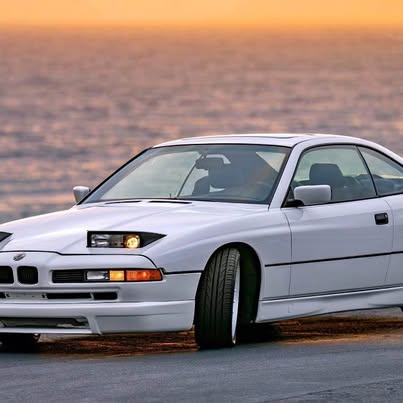
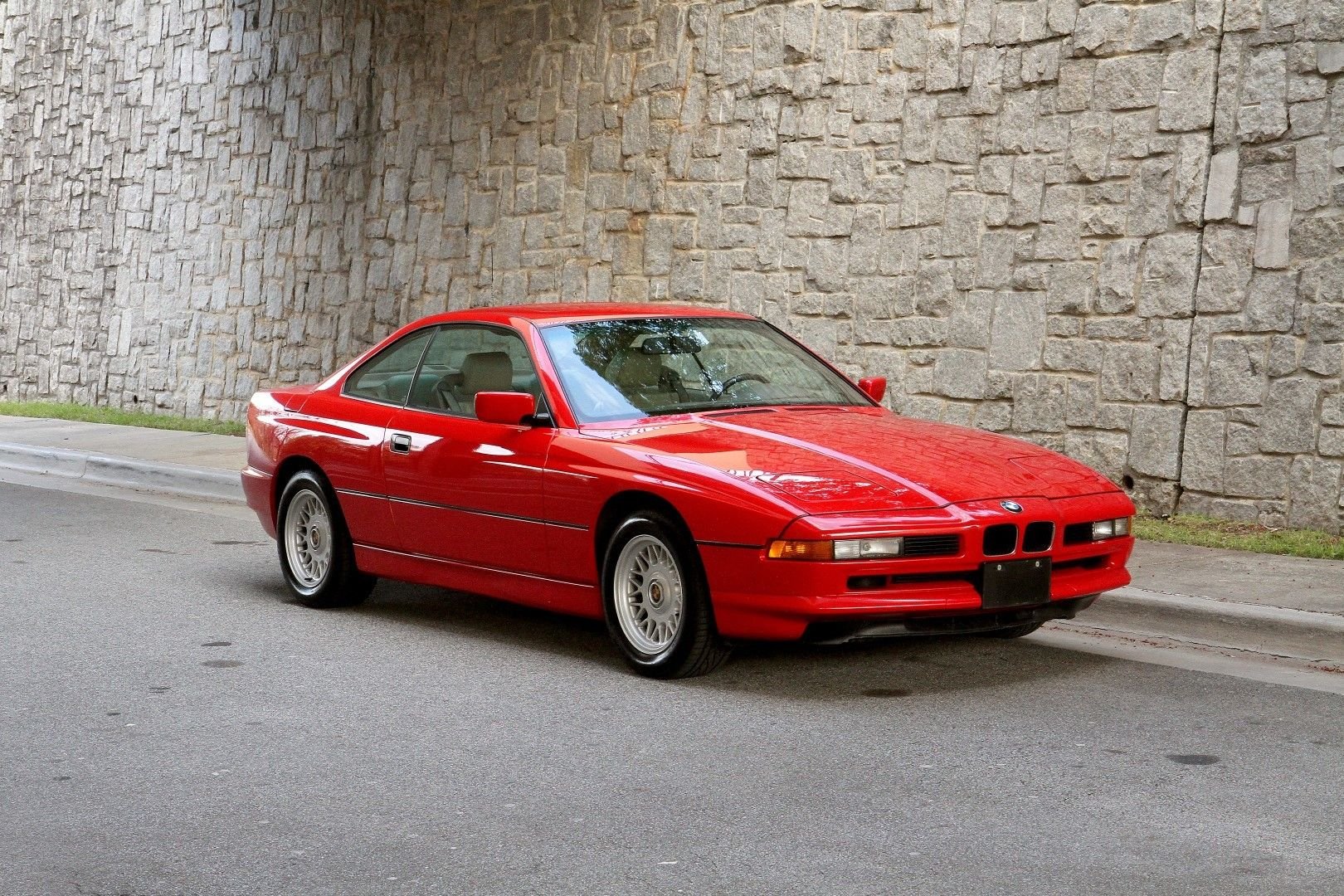
You are not looking at a sports car, whatever the silhouette suggests. The BMW 850i — chassis code E31 — is a grand tourer built to cross a continent at speed in near silence, and everything about how it ages, breaks and rewards you follows from that. It is long, low, pillarless, close to two tonnes, and it carries a 5.0-litre V12 under a bonnet so tightly packed that routine jobs on lesser cars become half-day exercises. Buy it expecting a coupé version of a flagship saloon and you understand it; expect a bigger, faster 3 Series and you will resent it within a month.
BMW shows the car at Frankfurt in September 1989, production starts that year at Dingolfing, and North America gets the car for the 1991 model year — which is why the cars you meet in the United States are almost all 1991s onward. The E31 is not a mechanical replacement for the E24 6 Series; it sits a full class above it, engineered against the Mercedes-Benz S-Class coupé and the Porsche 928. The drag coefficient of 0.29 is a genuine achievement for a car with pop-up headlamps and a V12 to cool, and you feel the development money in the details even now: the frameless door glass that drops a fraction as you pull the handle, the belt feeders that present the seat belt to your shoulder, the sheer thickness of every panel.
The engine is the headline and it deserves to be. The M70 V12 reaches production first in the E32 750i in 1987 — BMW's first production twelve — and the 850i is its second home. At launch the 850i is the only model in the range, and it makes a claim no other road car can match at the time: it is the first production car offered with a V12 engine and a six-speed manual gearbox. Most buyers, then and now, take the four-speed automatic instead, and the automatic suits the car's purpose, but the manual exists, it is real, and it transforms the way the car asks to be driven.
Understand the naming before you look at a single advert, because the badges move around and sellers exploit the confusion. The car launches as the 850i. For the 1994 model year BMW renames the range, and the V12 car becomes the 850Ci — the C simply marks it as a coupé in the new scheme. The first 850Ci cars still carry the same M70 engine as the 850i. Then, from late 1994, the 850Ci receives the M73 5.4-litre V12 and a five-speed automatic, and the manual disappears from the V12 range. So "850Ci" tells you the badge era, not the engine: an early 850Ci is mechanically an 850i, a late one is a different and simpler machine. Alongside the V12 cars sits the V8 840Ci, and at the top the Motorsport-developed 850CSi — both of which matter to you chiefly as badge traps, covered in the models section.
Sales never match the ambition. The car arrives into a recession, it is very expensive, and the markets BMW counts on cool quickly. Production ends in May 1999 after 30,621 cars of all E31 variants — a small number for a decade-long run, and the reason you are choosing from a thin pool today. Scarcity, however, is not the same as universal desirability: the market wants the best-documented cars and is lukewarm about tired automatics in unfashionable colours, a spread the values section explains how to read.
At its best you are buying one of the great long-distance cars of its era. At its worst you are buying two of everything — two engine computers, two throttle bodies, two cylinder banks of ignition parts — wrapped in a body whose every trim piece is now old, brittle and hard to replace. The rest of this guide is about telling those two cars apart before the money moves.

The models
The 850i name covers more variation than the badge suggests, and your first job as a buyer is to place any car you are considering in the right box, because the boxes differ in engine management, gearbox choice, running costs and value. The table below gives you the V12 line, plus the two cars you must be able to recognise on sight — the V8 840Ci, because sellers badge them upward, and the 850CSi, because sellers badge ordinary cars toward it too.
| Model | Years | Engine | Output | Built | Character |
|---|---|---|---|---|---|
| 850i | 1989–1994 | M70B50 5.0 V12 | 300 PS (296 hp), 450 Nm | 20,072 (all M70 850 cars) | The original: twin-DME engine management, six-speed manual or four-speed automatic, the full doubled-systems experience |
| 850Ci (M70) | 1994 | M70B50 5.0 V12 | 300 PS (296 hp), 450 Nm | Included in the 20,072 above | A rename, not a new car: new badge convention, same engine, same gearboxes, minor trim changes |
| 850Ci (M73) | 1994–1999 | M73B54 5.4 V12 | 326 PS (322 hp), 490 Nm | 1,218 | The simplified late car: single engine management, five-speed automatic only, torquier and easier to live with |
| 850CSi | 1992–1996 | S70B56 5.6 V12 | 380 PS (375 hp), 550 Nm | 1,510 | The Motorsport car: six-speed manual only, WBS VIN, rear-axle steering — a different market entirely |
| 840Ci (for contrast) | 1993–1999 | M60B40 4.0 / M62B44 4.4 V8 | 286 PS (282 hp) | 7,803 | The V8 car: lighter nose, cheaper to run, and the one most often rebadged as a V12 |
Total E31 production is 30,621 cars, including a handful of 830i prototypes never sold. Roughly 3,600 V12 cars are built with the six-speed manual — uncommon, not mythical, and no reason to pay a unicorn premium for a rough one.
Read the years with care. US-market cars start with the 1991 model year, and American V12 sales effectively end after 1997 although European 850Ci production runs to 1999 — so a US-advertised 1998 or 1999 car is a European import or a misdated earlier car, and either claim deserves paperwork. A "1990 850i" in the States is likewise a European-market car; check its specification and emissions equipment rather than assuming it matches a US car.
The rename catches buyers out in one specific way: because "Ci" sounds like an upgrade, sellers price early M70 850Ci cars as though the badge adds equipment. It does not — the changes are badging and minor trim. What matters is the engine code, which changes only when the M73 arrives. Ask "M70 or M73?" before "i or Ci?" and you are ahead of most of the market.
The identity traps deserve a paragraph of their own. First, the rebadged 840Ci: a V8 car wearing V12 badges and, occasionally, a V12 engine cover. The cure takes ten seconds — open the bonnet and count. A V12 fills the bay side to side, a manifold per bank; a V8 leaves visible space at the sides. Confirm with the VIN and engine number, because a badge is a five-minute job. Second, the dressed-up CSi tribute: the real 850CSi carries a WBS VIN — Motorsport's prefix, not the standard WBA — is manual only, and its S70B56 is stamped accordingly. Any "CSi" with a WBA VIN or an automatic is a standard car in costume; price it as one. Third, the reverse trap: a plain-colour automatic 850i dismissed by badge-chasers is mechanically the same M70 car as any other. Buy the car, not the bootlid.
Equipment varies more than the brochures imply: seat specification, the electronic damper control (EDC) that some cars have and many have since had deleted or left failed, wheel designs from the original 16-inch cross-spokes through later 17- and 18-inch options, interiors from sober black leather to two-tone Individual specifications. Note what a car actually has rather than what its model year suggests. Alpina's B12 coupés exist in tiny numbers and are beyond this guide's scope; if one is offered to you, you need specialist verification of its build plaque and papers, not this guide.

Engines and gearboxes
The M70: two sixes sharing a crankshaft
The M70B50 is best understood the way BMW's engineers describe it themselves: two M20-family 2.5-litre straight sixes joined at a 60-degree vee on a common crankshaft. The kinship is not a metaphor. The M70 keeps the M20's bore spacing, its single overhead camshaft per bank with two valves per cylinder, its general architecture of hydraulic lifters and belt-driven ancillaries scaled up — and, most importantly for you as an owner, its philosophy of management. Because BMW builds the engine as two sixes, it also manages it as two sixes, and that decision defines the car's character, its smoothness and nearly every electrical fault you will ever chase.
Each bank has its own Bosch Motronic 1.7 DME, its own airflow meter, distributor, coil, fuel rail and set of injectors; the banks share a crankshaft position signal and little else. Above the DMEs sits a third unit, the EML, governing the two drive-by-wire throttle bodies — one per bank — and the EML is what your right foot talks to. There is no throttle cable: a potentiometer reports your request, the EML decides, and two electric throttles open in synchrony. In 1990 this is space-age; in your ownership it means throttle response, idle quality, cruise control and limp-home behaviour all run through electronics now more than three decades old.
The output figures are 300 PS (296 hp) at 5,200 rpm and 450 Nm (332 lb-ft) of torque at 4,100 rpm from 4,988 cc, with a compression ratio of 8.8:1 — low, deliberately, because the engine is tuned for smoothness, longevity and tolerance of fuel quality rather than for specific output. Do not let anyone sell you the M70 as a highly stressed engine; mechanically it is anything but. The bottom end is famously strong, the Alusil-type silicon-aluminium block wears slowly, and a well-maintained M70 covers very large mileages without internal work. The engine's enemies are not revs or load. They are heat, neglect, vacuum leaks and the slow decay of the doubled electronics around an fundamentally sound mechanical core. A compression or leak-down test on an M70 usually returns good news; the bills cluster around the engine, not inside it.
The doubled architecture gives you one diagnostic gift: the bank comparison. Each bank is a self-contained engine in management terms, so a one-bank fault — dead coil, failed DME output stage, split intake boot, tired airflow meter — can be assigned to a bank before anything is opened. The M70 specialist's party trick is to disable one bank and let the engine idle evenly on the other six. An engine clean on each bank separately but rough on both points at the shared systems — fuel supply, EML, crank signal. One rough bank means a bank-specific fault, and knowing it halves your diagnostic bill.
Fuel system specifics matter: two fuel pumps, two filters, and a forest of rubber hose in a hot engine bay, much of it now decades old. Budget for systematic rubber renewal — fuel lines, vacuum hoses, intake boots — on any car without documented recent work: $400–900 in parts plus labour, and the best money you can spend on a newly bought M70 car, because perished fuel hose over a hot V12 is a fire risk, not a running fault. Ignition is doubled the same way: two distributors whose caps and rotors wear and track, two coils, plug leads that chafe across the hot centre of the vee. A full refresh runs $350–800 in parts and cures a remarkable share of the "mystery misfires" that follow these cars between owners.
One myth corrected here: the M70 uses oil by modern standards, and modest consumption with clean plugs and no smoke is normal. Blue smoke on overrun points to valve stem seals — a known age item, and a fiddly in-situ replacement at $1,200–2,200, not the "engine rebuild" some sellers describe. Consumption that climbs suddenly means a compression test before conclusions, because bore wear on this block is rarely the answer.
The M73: the simplified successor
From late 1994 the 850Ci receives the M73B54: 5,379 cc, still a single-cam two-valve V12 in the same architectural line, but stroked and bored for capacity, with compression raised to 10.0:1 and output up to 326 PS (322 hp) at 5,000 rpm and 490 Nm (361 lb-ft) at 3,900 rpm. The numbers understate the change you feel. The M73 pulls harder from lower revs, asks less of the gearbox, and — the point that matters most to an owner — abandons the doubled management of the M70. The M73 runs a single DME controlling both banks, conventional management of its two throttle bodies, roller rocker arms in place of the M70's arrangement for reduced friction and wear, and the general electronic architecture of the E38 750i with which it shares its life. It is, in every ownership sense, the rational V12: fewer control units, fewer bank-synchronisation faults, better parts commonality with a much more numerous saloon.
Do not let a seller blur the M73 into the M70's reputation, in either direction. It does not suffer the signature faults — no second DME to fail asymmetrically, no synchronisation drama — but it shares the family's appetite for cooling maintenance, its gasket leaks and its ageing rubber. What you buy with an M73 car is a lower probability of the exotic faults and an unchanged exposure to the ordinary ones.
One further engine belongs here because it defines the badge trap: the S70B56 of the 850CSi, 5,576 cc and 380 PS (375 hp), manual only, 1,510 built. Despite the folklore, it is not the McLaren F1 engine — that is the S70/2, a different dual-overhead-cam design sharing a lineage and little else. A seller who tells you an ordinary 850i "has the McLaren engine" has taught you something about the seller and nothing about the car.
Gearboxes: the Getrag six-speed and the automatics
The manual option is the Getrag 560G six-speed, offered on the M70 cars only, and it is the gearbox that makes the early 850i historically significant: no production road car has paired a V12 with a six-speed manual before it. It is a big, strong, deliberate gearbox — the shift is weighty and long by modern standards, the clutch is heavy, and the whole installation suits a driver who enjoys mechanical ceremony over speed of gearchange. Clutch life depends entirely on the previous owner's sympathy; a replacement clutch job runs $900–1,600 in parts with labour on top, and you should test for slip in a high gear at low revs under full throttle, where a tired clutch announces itself first. The 560G itself is durable, but it is also rare, and internal parts for it are a specialist search rather than a catalogue order — a noisy or baulking 560G is a $2,500–4,500 problem at a gearbox specialist, which is why you test every synchromesh, especially second and third, on a car you are paying a manual premium for.
Most 850is carry the ZF 4HP24 four-speed automatic, and you should not apologise for it: it matches the M70's torque delivery beautifully and is the more relaxing car. The unit is strong; its enemies are heat and the "sealed for life" fiction BMW promotes in the nineties — fluid never changed in thirty years is not a lifetime fill, it is a countdown. A fluid and filter service runs $250–450; a full rebuild is $2,800–4,500 at a ZF specialist. Test it cold and hot: delayed engagement from cold, flaring between shifts, and lock-up shudder are your warnings, in roughly that order of seriousness.
The M73 cars bring the ZF 5HP30 five-speed automatic, with adaptive shift logic and a manual override, and the manual vanishes from the V12 range. The 5HP30's faults split between the hydraulic — worn valve body, tired solenoids, the same fluid neglect, at $300–500 for a service — and the electronic, which needs proper diagnosis rather than parts darts. Neither automatic is a reason to reject a car; both are reasons to insist on a test drive that includes a cold start, because a box that misbehaves only when cold will be demonstrated to you, by a careful seller, only when warm.
Performance figures — a 155 mph limiter, 62 mph in the high sixes for the manual car by period test — matter less to your purchase than behaviour at walking pace and at a cruise, where worn engine and gearbox mounts and perished propshaft couplings show themselves. A V12 E31 should move off with no shunt, thump or tremor; if it does not, the cause is usually rubber and mounts at $300–700 in parts, and you want the price to reflect that you found it.
Problem areas
The doubled engine management: DMEs, EML and the two-bank faults
Every E31 horror story you have heard traces back, in the end, to this subsection — and most of them are exaggerated, misdiagnosed or both. The system is complex, but it fails in patterned, legible ways, and a car whose faults have been properly diagnosed is not a worse buy than a car with no faults showing; it is often a better one, because you know where you stand. Learn the patterns.
The signature M70 fault is the bank shutdown. When the EML or a DME detects a serious problem on one bank — a failed throttle signal, a dead airflow meter, an ignition fault — the system drops that bank and runs the car on six cylinders. The car still drives, idles smoothly and pulls away; an unobservant owner covers miles at half power, because a six-cylinder E31 at part throttle feels merely heavy rather than broken. That is the trap: a car presented on one bank can feel almost plausible to a buyer expecting a lazy GT. Your defence is the full-throttle test and one piece of knowledge — a healthy M70 gathers speed with an urgency this heavy car has no right to. If it feels like a 525i with extra leather, one bank is asleep, and the price conversation changes completely.
Causes, in test order. First, the throttle bodies: the EML drives two motorised throttles whose potentiometers wear and whose drive-motor contacts decay until the sides fall out of synchrony. Symptoms are a hunting idle, the EML lamp, limp mode, or bank shutdown. Exchange throttle bodies run $400–900 each fitted, and a matched pair is the proper fix — replacing one side often moves the mismatch rather than curing it. Second, the airflow meters, one per bank: when one reads differently the DMEs fuel their banks differently and the engine runs unevenly under load while idling deceptively well. Confirm by swapping the meters side to side and watching the fault follow the part; replacements are $250–500 per side. Third, the DMEs: solder joints and capacitors age, and a unit that fails hot — runs cold, drops a bank at temperature, restarts when cool — is a known pattern; exchange or repaired units run $500–1,100. Fourth, cheapest, the wiring: harness insulation hardens in the heat and multiplugs corrode. Methodical continuity testing finds what parts-swapping never will, which is why $300–800 of specialist diagnostic labour is money well spent and the parts cannon is not.
Position sensing produces the most misdiagnosed symptom of all: the car that cranks and will not start, blamed in turn on fuel pumps, DMEs and immobilisers. The M70's timing sensors live in the hottest part of the bay, and one that reads correctly cold and drops out hot strands its owner twenty minutes into every journey. The test is a scope or a known-good substitution at temperature, not a code read in a cold workshop. And learn this truth now: a car with no lamps lit but a bulb removed is lying by omission. At every viewing, confirm each warning lamp illuminates in the bulb check and goes out after start. A missing EML lamp is a seller telling you something.
On M73 cars this subsection shrinks: single DME, no bank-synchronisation architecture, and the remaining faults are the ordinary nineties-BMW set — airflow meter ageing, sensor failures, connector corrosion — diagnosable with the same tools an E38 750i needs. When a seller of an M73 car leans on the V12's fearsome reputation to explain a running fault, push back: on the late car it is usually a specific, findable component.
Batteries and the electrical system: a car that eats charge
The E31 carries two 12-volt batteries, one in each side of the boot, wired in parallel, because its electrical appetite exceeds what BMW trusts one battery of the era to supply. The pair must be matched in age and condition: when one weakens it drags the other down, the good battery discharging into the failing one until both sit at a compromised voltage — and the car develops its most characteristic symptom cluster: a lazy crank, warning lamps that come and go, modules behaving oddly, locking and window quirks, a car "fine after a run" and dead after three days parked. Replacing only one is the false economy that keeps this fault alive for years. A matched pair costs $250–450; budget for both on any car without proof of a recent pair, and test them separately, disconnected, because a parallel pair masks the weak unit.
Parasitic drain is the second half of the story. A healthy E31 draws a small current once its modules sleep; a faulty one — a boot lamp staying on, a module that never sleeps, an aftermarket alarm wired by an optimist — flattens even two batteries in days. The test is a meter in series after the car has sat locked for the modules to time out, and the fix is methodical fuse-pulling, not a bigger battery. Budget $200–500 of diagnostic time for a drain hunt, and treat a seller's battery cut-off switch as an admission: the drain exists and has been managed, not cured. A trickle-charger pigtail on a weekly-used car is a legitimate pattern; the difference between charger-as-routine and charger-as-life-support is whether the car survives a fortnight unused. Ask, and judge by the answer's confidence.
Beyond the batteries, inspect the known ageing points. The boot-lid harness flexes at the hinge, its conductors fatigue and short, taking out boot and number-plate lamps — flex it gently with the lamps on and watch for flicker. Green corrosion on fuse blades predicts intermittent everything. The general module governs windows, locking and wipers, and its failure gives you the poltergeist symptoms sellers call "character"; specialist module repair runs $250–600. The pixel failure of the onboard computer display is cosmetic but universal — re-ribboning is $150–350 — and its absence on a claimed low-mileage car means the job has been done or the mileage deserves a second look.
The windows and pillarless doors form a system of their own. The glass drops a few millimetres as you pull the handle to clear the seal and rises as the door closes, depending on microswitches, a healthy door module and regulators not yet slowed by dried grease. A window that fails to drop makes the door thump its seal and eventually tears the rubber; a slow window is a regulator and motor heading for failure at $300–650 per side. Test every window through its full travel, twice. Sunroof drains block and pour water into the headlining and footwells where connectors live: damp carpets in an E31 are never just damp carpets, they are an electrical fault on a timer. Lift the mats, press the underlay, and smell the car with the doors closed.
Cooling: the system with no reserve
The M70 and M73 generate V12 heat in an engine bay with saloon-car airflow, and the cooling system is sized with little margin for decay. This is the mechanical system that kills these engines, because the aluminium heads on an overheated V12 warp, and a warped-head repair — heads off, skimmed, gaskets, the labour of a doubled top end — runs $3,500–6,500 and frequently exceeds what a tired car is worth. Everything in this subsection is cheap by comparison, and the whole game is catching it early.
The radiator's plastic tanks and neck go brittle with heat cycles, the expansion tank likewise, the viscous fan coupling loses its drive so the fan freewheels when it should pull air in traffic, the auxiliary fan covers for it until its own motor or resistor pack fails, and the water pump is a wear item on an engine where access is measured in hours. A car that holds temperature at speed but creeps in traffic is showing you the viscous coupling or the auxiliary fan, in that order; from cold, the fan should roar on first start, quieten, and resist being slowed at a hot idle. Smaller hoses perish quietly and weep onto hot castings, leaving a crystalline trace and a slowly falling level. A proper system overhaul — radiator, tank, pump, thermostat, hoses, coolant — is $900–1,800 at a specialist and the standard first-year spend on a neglected car. Ask when it was last done as a system; one new hose among old neighbours is not a refresh.
Head gasket failure here is usually the consequence of an overheat, not a spontaneous event. Mayonnaise under the oil filler on a short-trip car is condensation and proves nothing; the meaningful signs are a cooling system that pressurises hard from cold (confirm with a block tester on the expansion tank), coolant loss with no leak you can find, and a misfire on one cylinder that clears as the engine warms. Any one of them ends the negotiation until a specialist tests the car — you are no longer pricing maintenance, you are pricing engine surgery.
Do not overlook the heater matrix behind the dashboard: a leak fogs the screen with a sweet-smelling film, soaks the footwells, and its replacement is a dashboard-out marathon at $1,200–2,000, nearly all labour — eliminate the cheaper auxiliary pump and heater valves first. On the test drive run the heater hot and the air conditioning cold in turn; an E31 with genuinely working air conditioning is uncommon enough that a seller should demonstrate it proudly rather than describe it hopefully.
Pop-up headlamps, body and trim
The pop-up lamps are the car's signature and a mechanism you test like an engine: repeatedly, watching both pods. Each pod is raised by an electric motor through a linkage, governed by the lamp module. Worn linkage bushes let a pod sit crooked or nod over bumps; tired motors raise one pod a beat after the other; module and relay faults leave a pod up, down or cycling. A slow or crooked pod is usually linkage and adjustment at $150–400; motors and module work runs $300–700. The lamps' real significance is forensic: pods, bonnet and the shallow nose panel align to fine tolerances, and uneven pods, wandering bonnet gaps or filler in the nose panel show you a front-end impact the seller may not mention. These panels are E31-specific and largely unavailable new — a straight, complete nose is a genuine asset.
Rust is not this car's famous weakness — the shell is well protected for its era — but inspect the known places: rear arches and sill ends behind their liners, the boot floor and both battery trays (a rotten tray is evidence of years of battery neglect), the sunroof cassette, the front wings' lower rear edges, and jacking points crushed by careless lifting. Structural rot is rare and serious; cosmetic arch and wing work is common and priceable at $600–1,500 per panel. Treat fresh, thick underseal over sills and arches as a question, not an answer, and press a thumb along the seams — sound metal is unyielding, filler over rot is not.
Trim is where the E31 quietly bleeds money. Interior plastics embrittle, dashboard tops crack in sun states, and the wood veneer's lacquer crazes and lifts. Leather is high quality and usually recoverable unless the driver's bolster has worn through — a seat retrim runs $600–1,200, and matching the original hide is the hard part. The headlining sags as its foam backing disintegrates ($400–800 to retrim), and exterior rubber hardens until wind noise and water get in; a full re-rubber is a four-figure parts exercise when the pieces can be found. None of this stops a car driving, and all of it decides whether it feels like a flagship or a tired old coupé, so grade it honestly and price the difference.
Suspension, steering and brakes: carrying two tonnes
The front suspension is a MacPherson strut design with a twist: each side uses two separate lower arms — a control arm and a thrust arm — and the fluid-filled thrust-arm bushes split and leak with age. Worn thrust-arm bushes give you a shimmy under braking from speed and a clonk over sharp edges; worn ball joints give you vagueness and tyre wear. A full front-end refresh is $1,200–2,200 fitted and aligned, and it transforms the car — which is why you establish whether it has been done. A tight E31 steers with a precision that belies its weight; a worn one wanders in a way sellers call "characterful for its age." It is not character. It is a bill, and it is negotiable.
The rear axle is the multi-link Integral design from the flagship cars, five links per side and a dozen bushes whose combined decay makes the rear end steer the car gently on lift-off and tramline on worn roads; subframe and arm bushes are a $900–1,800 fitted refresh. Cars with EDC electronic dampers present a decision: the dampers are hard to source ($800–1,500 per corner when found), many cars have been converted to conventional dampers — a legitimate route at $700–1,400 a set — and a car on failed EDC rides on dampers stuck in one mode. Look for the EDC wiring at the strut tops and price what you find. Self-levelling on some specifications adds accumulators to the ageing list: sagging that pumps up on start is the system working, sagging that stays is $500–1,100 of spheres and seals.
Steering is recirculating ball, and it wears at the box and linkage: play at the straight-ahead that adjustment cannot remove without tightness at the locks means a worn box, $700–1,300 exchanged. The steering shares its hydraulic world with the brakes — the V12 cars use a hydraulic brake servo rather than a vacuum booster, fed by a pump and a pressure accumulator. That accumulator, the sphere owners call the bomb, loses its gas charge with age: the pedal is fine for the first applications, then goes hard as stored pressure runs out. A new accumulator is $200–400 and an hour's fitting, and the test is in the inspection section. Brakes are conventional discs, cheap in consumables ($400–800 all round), with two age traps: calipers seized from standing, and flexible hoses that balloon under pressure and make a pedal spongy in a way bleeding never cures. A long-stood car needs its brakes recommissioned as a system, not a pad slap.
Wheels and tyres close the section because they are diagnostic: feathered front edges confirm the suspension wear above, and a matched, evenly worn set tells you the last owner aligned the car and cared. Run your hand across each tread — the tyre is the cheapest suspension report you will ever get.

How to inspect one
Inspect an E31 in the order below, and do not let the seller reorder it: cheap observations before expensive tests, and the car cold when you arrive — a V12 "just warmed up for you" is hiding its cold-start behaviour, its cold automatic shifts and possibly its bank faults. Allow two hours. Bring a torch, a magnet, and a friend to watch the lamps and exhaust while you work the controls.
- Start with the paperwork, not the car. Match the VIN on the title to the VIN plate at the base of the windscreen and the stamped VIN in the engine bay. Confirm the prefix: WBA for a standard car, WBS only on a genuine 850CSi. Read the engine code the car claims — M70 or M73 — and write down what the documents say the car is, so you can hold the physical car up against it in the steps that follow.
- Do the cold bulb check. Ignition on, engine off. Every warning lamp must illuminate, including the EML lamp on M70 cars and the check-engine lamp. A lamp that does not light has a bulb out or a bulb removed, and on this car a removed bulb is a concealed fault until proven otherwise. Note which lamps stay lit; they should all go out within seconds of starting.
- Cold-start the engine and stand at the exhaust. The M70 should catch cleanly and settle to an idle so smooth you check the tachometer to confirm it is running. Watch the exhaust: a puff of blue that clears suggests valve stem seals; persistent blue is oil burning; white vapour that smells sweet and does not clear is coolant, and ends the inspection until a block test says otherwise. Listen for the viscous fan's initial roar, covered in the cooling section.
- Test both banks. With the engine idling, have your friend watch and listen while you note the exhaust note and the engine's smoothness; then, on the test drive, use one full-throttle run through the gears. The bank-shutdown fault from the problem areas shows itself as an engine that idles sweetly and pulls weakly. If the car feels merely adequate, say so out loud and price it as a car with a bank asleep until a specialist proves otherwise.
- Work the electrics in a fixed order. Both windows down and up, twice, watching for the glass drop as each handle is pulled. Sunroof through its full travel. Both seats through every adjustment, mirrors, heated screen, every lamp including the pop-ups — raised and lowered three times, watching for synchrony and crooked pods. Every dead function is a price item; two dead functions in different systems point at voltage or a module, which points back to the batteries.
- Interrogate the batteries. Inspect both boot compartments: matched batteries of similar age, clean terminals, dry and sound trays. Corrosion, one new battery beside an old one, or a cut-off switch are findings, not details. Ask how long the car can sit unused and still start, and note whether the answer is a number or a story.
- Inspect the cooling system cold. Expansion tank level and coolant colour — clean and correct, not rusty water or a rainbow of sealant. Squeeze the main hoses: they should be supple, not crunchy, not oil-soft. Look for crystalline coolant traces at hose joints, the radiator neck and the water pump weep hole, and check the radiator's plastic tanks for hairline cracks. Then look underneath for the undertray's wet patches. You are deciding whether this car has had the system overhaul from the problem areas or is waiting for you to fund it.
- Read the tyres and the stance. Measure or gauge all four tyres, compare wear patterns side to side and edge to edge, and check the sizes match the car's specification and each other. Uneven front wear confirms thrust-arm and ball-joint wear; a car sitting low at one rear corner or nose-high is telling you about springs, dampers or the self-levelling. Bounce each corner: the car should settle in one movement, not two.
- Test the brake hydraulics before you drive. Engine off, pump the brake pedal repeatedly and count the applications before the pedal goes hard — stored accumulator pressure should give you several assisted applications; a pedal that is hard almost immediately means the accumulator from the suspension and brakes section is discharged. Start the engine and confirm the pedal feel restores and the brake pressure warning lamp goes out. On the drive, brake firmly from speed twice: the car should pull up straight, without shimmy (front bushes) and without a lengthening pedal (hydraulics or hoses).
- Drive it for at least thirty minutes, in a set pattern. Cold town running first, for the automatic's cold shifts. Then a steady cruise, listening for bearing and differential whine. Then the full-throttle bank test from step 4. Then traffic, watching the temperature gauge for the creep that exposes the viscous coupling, with the heater hot and the air conditioning cold in turn. A seller who will not allow this drive is the loudest fault on the car.
- Do the body circuit last, in good light. Magnet along the sills, arches and lower wings; torch into the rear arches, boot floor and battery trays; sight along both flanks; compare headlamp pod fit and bonnet gaps side to side for the front-end history the lamps section describes; lift the mats and press the underlay for damp. Cosmetic findings price the car; structural findings end the purchase.
- Finish underneath and under the bonnet, engine hot. On a ramp if you can get one: oil leaks (note the source — a cam cover weep and a rear main leak are different conversations), the exhaust along its whole length, subframe bushes, brake and fuel lines. Back on top, re-check the warning lamps, then stop the engine, wait ten minutes and restart it hot: the sensor behaviour from the problem areas only shows itself now, and a car that will not restart hot is bought at a price that includes finding out why.
Score the car as you go: a list of specific, priced faults is a negotiating tool; a general feeling of tiredness is a reason to walk away.
Values
The values section of this guide carries no prices, deliberately: the market block beneath this guide on the site carries the current listings and recorded sales, refreshed as the data changes, and figures printed here would be stale before they were useful. What does not go stale is how to read that block, and how the E31 market actually behaves. Learn the structure and the numbers will make sense whenever you look at them.
The first structural fact is the condition spread, wider here than on almost any comparable car. The gap between the best and worst advertised examples is not explained by mileage or year; it is explained by the cost of the work in the problem areas. A car needing a cooling overhaul, a suspension refresh, electrical diagnosis and interior attention carries a very large rectification bill, and the market prices that in — roughly, unevenly, and with a lag that creates both bargains and traps. Comparing two cars means comparing two bundles of completed and uncompleted work, and the price difference between a documented car and an identical-looking undocumented one is usually smaller than the cost difference of the work. That asymmetry is where value lives in this market.
The second fact is the asking-versus-achieved gap. Sellers price the car's original cost, its V12 and its rarity, and the cars then sit. Recorded sales are the honest data and habitually land below the asking prices of comparable-looking listings. Read the listings for supply and the sales for truth, negotiate from achieved figures for cars in the same documented condition, and bring your inspection list as evidence — on an E31 the rectification costs are specific enough to argue line by line.
Variant premiums follow a clear logic. The manual carries a rational premium — a minority of V12 production has it, it is the historically significant specification, and its buyers have few alternatives — but the premium attaches to good cars: a manual with a tired clutch and baulking synchromesh is worth no more than a sorted automatic, because its rectification costs are the highest of any variant. The M73 850Ci sits in an interesting middle position: rarer by production, simpler to own, and historically undervalued because the market priced the badge confusion instead of the ownership reality. The 850CSi is a separate market; ignore its results when pricing an ordinary car, and be suspicious of any seller who will not.
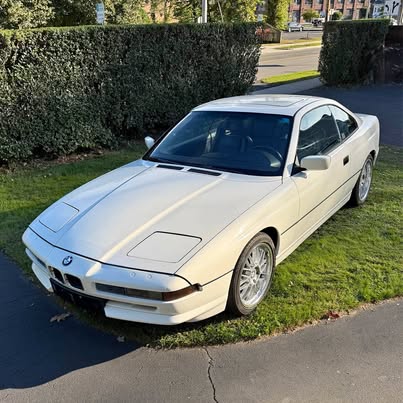
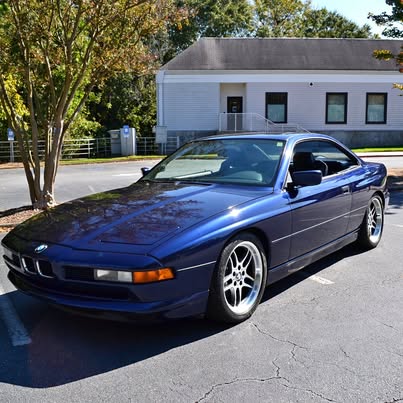
Colour and specification move prices more than year does. The market rewards deep blues, darker reds and black, and is cooler toward white and silver on this shape; Individual interiors, sports seats and larger factory wheels all help a car find its next buyer. None of this should decide what you buy, but it should decide what you pay, because you will sell into the same preferences one day.
Finally, the project-versus-driver gap. A running, presentable car with needs is worth far more than a non-runner, out of proportion to the mechanical difference, because the non-runner's faults cannot be enumerated — you cannot test a gearbox, an engine bank or a brake accumulator on a car that does not run — and the market prices that ignorance brutally. A non-runner is only cheap enough when its price assumes the worst about every untestable system at once. Honest drivers with documented work on the known systems are where this market is most efficient, and they are your benchmark for everything else.
Parts and ownership
Owning an E31 means managing two supply chains. Mechanical consumables — filters, brakes, suspension arms, ignition parts, belts, hoses, most gaskets — remain available through BMW's classic channels and the German aftermarket at premium but sane prices: a major service runs $450–800 at a specialist, and the suspension costs quoted earlier are mostly labour. The second chain is E31-specific — trim, lamps, panels, interior plastics, glass and seals — and here supply is thin, increasingly used-only and priced by scarcity: a headlamp pod or a trim piece in your car's colour is a search, not an order, and can take months. Let that asymmetry shape what you buy. Mechanical wear is fixable with money; missing E31-specific trim takes money, time and luck.
BMW's classic parts support is better than most manufacturers' for a low-volume car of this age, though at flagship prices. The specialist ecosystem is small but real: a few breakers hold meaningful stock, specialists rebuild the throttle bodies, DMEs and modules (budget $300–900 per unit for quality electronic repair), and the owners' clubs and forums function as the car's true technical library. Join before you buy: the collective knowledge on bank diagnosis and parts interchange will save you its weight in diagnostic invoices.
Running costs are what you expect of a V12 flagship. Fuel use sits in the mid-teens miles per gallon in town and the low-to-mid twenties on a run — the gearing and aerodynamics make it a surprisingly economical motorway machine for its size, and a ruinous one in traffic. Classic-policy insurance is reasonable for a garaged car; original 16-inch tyres are affordable, later staggered fitments less so. Most honest owners land between $1,500 and $3,500 a year in maintenance beyond fuel and insurance, and you keep a reserve, because the bills arrive in clusters: cooling, suspension and electrics age on similar clocks, and a car that has had none of them done presents all three in your first two years.
Storage and use patterns matter more than mileage. These cars suffer from standing: batteries discharge, seals dry, calipers seize, fuel stales. Recommissioning a long-stored E31 — fluids, fuel system, brakes, tyres, battery pair, then the electrical gremlins that wake one by one — is a $2,000–4,500 programme before anything is actually repaired. Buy the car with recent, regular use and the invoices to prove it, over the garage ornament with the lower odometer, every time.
Find your specialist before you need one. The doubled systems reward a technician who has seen the faults before, and the difference between a specialist's two-hour diagnosis and a generalist's two-week parts exchange is the difference between the bills in this guide and bills twice the size. A pre-purchase inspection by such a specialist — $200–400 — is the best-value step in this entire guide.
Which one to buy
- The all-rounder: a documented M70 850i automatic. The original car in its best-supported form, and with the cooling, suspension and battery work done, the most usable E31 you can own. Buy condition, not model year.
- The enthusiast's pick: a six-speed manual 850i. The historically significant specification and the most engaging drive, worth its premium only when clutch, synchromesh and engine management are all demonstrably healthy — a needy manual is the most expensive E31 to put right.
- The rational buy: an M73 850Ci. Simplified management, stronger low-speed torque and the five-speed automatic make this the easiest V12 E31 to live with, and the market has historically underpriced it. Production is small, so you may have to wait for a good one.
- The value buy: a sound 850i automatic in an unfashionable colour. White and silver cars with full documentation sit cheaper than identical cars in blue or black — a discount for other people's taste, handed to buyers who drive rather than pose.
- The one to walk away from: any car, of any variant, running on one bank, overheating, or with warning lamps missing at bulb check. These are not negotiating positions; they are unpriced engine and electronics work, and the E31 world contains enough honest cars that you never need to rescue a dishonest one.
The overriding rule: on an E31, you are not buying an engine, a colour or a badge — you are buying the previous owner's maintenance. The best car has documented, recent work on the cooling system, suspension, batteries and engine management, in that order, and a thick file beats a low odometer every time.

See the 30 8 Series cars currently listed.
For sale now
 $40,000
Expand
Expand
What they sell for: 8 Series sale prices.