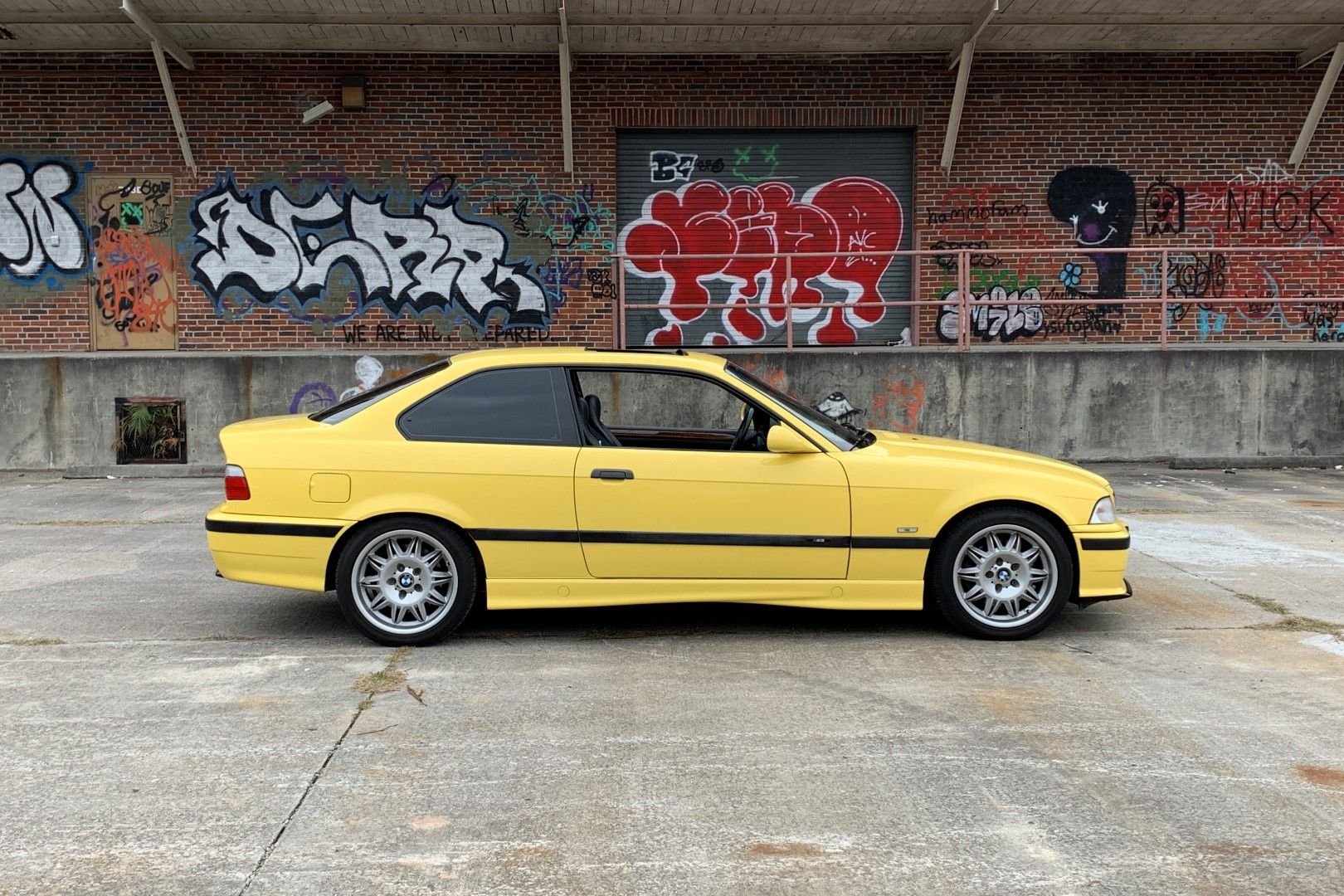
BMW E36 buyer's guide
BMW E36 (1992–1999) — 318i, 318is, 318ti, 320i, 323i, 323is, 325i, 325is, 328i, 328is, M3, 3 Series, Alpina B3: what's listed, and what they sell for.
Years: 1992–1999 · Models: 318i, 318is, 318ti, 320i, 323i, 323is, 325i, 325is, 328i, 328is, M3, 3 Series, Alpina B3
Overview and history
The E36 is the third-generation BMW 3 Series, and it is the car that carried BMW from respected European specialist to default answer. Launched in Europe in late 1990 as a 1991 model and sold in North America from the 1992 model year, it replaced the E30 with a bigger, heavier, far more sophisticated car: a multi-link rear axle borrowed from the Z1 roadster, a slippery body with glass-covered headlamps, dual airbags as the years went on, and an engine range that ran from a 1.8-litre four to the 240 hp M3. Production ran to 1999 for the sedan, coupe and convertible (the compact hatchback and the Z3 roadster, which shares this platform, ran longer), and BMW built roughly 2.28 million E36s in all — which is why, thirty years on, you can still find one in almost any condition, in almost any town.
The shape was led by Claus Luthe's studio and it was a deliberate break with the upright E30: a lower nose, a steeply raked windshield, flush glass and a cabin pushed toward the rear wheels. Underneath, the front suspension stayed MacPherson struts, but the rear moved to the multi-link "Z-axle" — one upper control arm and two lower links per side locating a trailing arm — and that single change is most of why an E36 rides and handles like a modern car where an E30 feels like a brilliant old one. The range broadened as it aged: four-door sedan first, then the coupe for 1992, the convertible for 1994, and the three-door 318ti Compact hatchback for 1995. North America never got the Touring wagon or the smaller European engines.
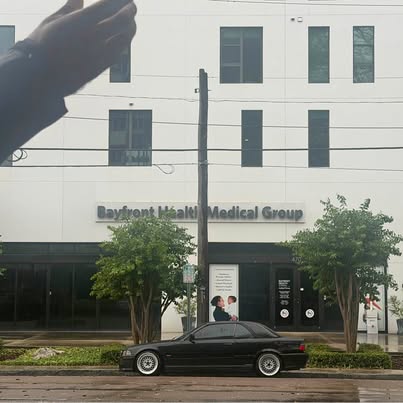
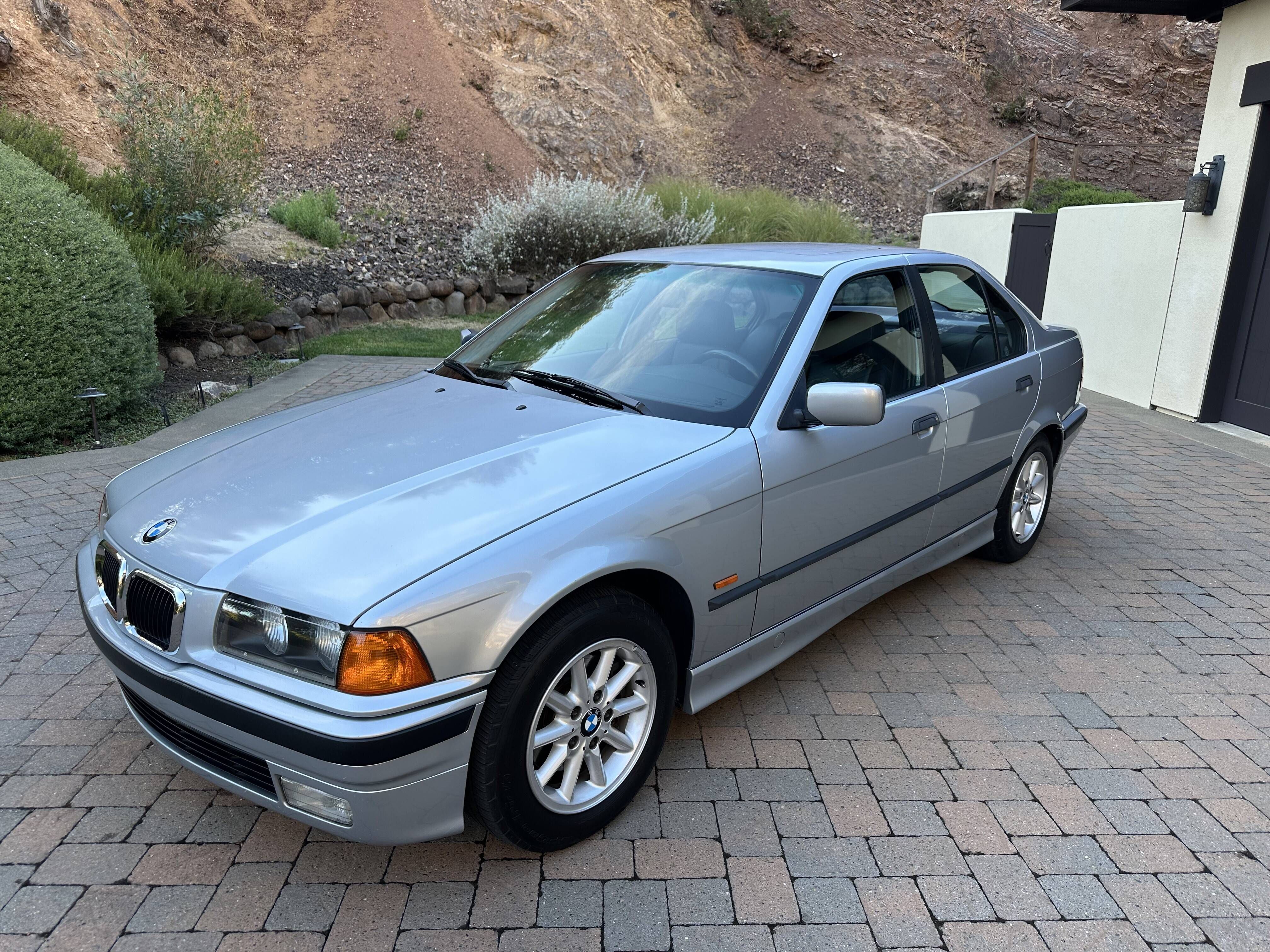
We currently track 14 E36s for sale or recently sold in the US, 13 of them for sale as we write — and every one of the 14 arrived through Facebook Marketplace, which tells you where this market now lives. Ten of the 14 are manuals. Five are M3s. The newest is a 1998 and the oldest a 1993 — the early cars have thinned out.
What defines the E36 today is the split between its engineering and its materials. The engines and gearboxes are among the toughest BMW ever built, and a well-kept E36 is a genuinely usable modern classic. But BMW built this car at the moment the industry fell in love with plastic, and the plastic is now thirty years old: cooling-system parts, door-panel glue, seat mechanisms, window sliders, headliner adhesive. An E36 rarely dies of a worn-out engine. It dies of a neglected cooling system, a torn rear subframe mount, or a thousand small plastic failures that made the previous owner stop caring. Buy the car whose owner never stopped caring, and the E36 is the easiest classic BMW to live with. Buy the one where they did, and you will spend your ownership re-buying every plastic part BMW fitted.
The models
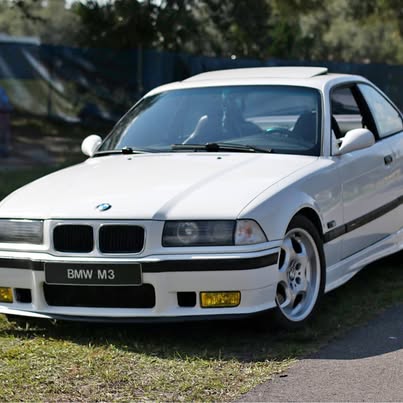
Every US E36 is badged by engine, and the system is nearly honest: the number is the engine size in litres, times one hundred, give or take BMW's marketing department. The letters do the rest. An i means fuel injection, which in America means every car. An s after the number — 325is, 328is — means the coupe with the sport package, not a separate model: sport suspension, sport seats, a limited-slip differential on many cars, and extra trim. A ti is the Compact hatchback. A convertible is simply a 318i, 325i, 323i or 328i with the folding roof, and BMW never gave it a distinct US badge. Body styles are the four-door sedan, the two-door coupe (a longer, lower body sharing almost no panels with the sedan), the convertible, and the ti hatchback, which is shorter aft of the doors and uses a simpler E30-derived rear suspension rather than the multi-link axle.
| Model | Years | Engine | Output | Built | Character |
|---|---|---|---|---|---|
| 318i / 318is | 1992–1999 | 1.8 four (M42), then 1.9 (M44) | 138 hp | High-volume; part of the 2.28 million total | The light, simple starter car; chain cam, modest pace |
| 318ti | 1995–1999 | 1.8 four (M42), then 1.9 (M44) | 138 hp | The US Compact run; part of the total above | The hatchback: shorter, lighter, E30 rear axle |
| 325i / 325is | 1992–1995 | 2.5 six (M50) | 189 hp | The core early US model; part of the total above | The default E36 six; VANOS from 1993 |
| 323i / 323is | 1998–1999 | 2.5 six (M52) | 168 hp | Final-years model; part of the total above | Badged down to sit under the 328; torquey, underrated |
| 328i / 328is | 1996–1999 | 2.8 six (M52) | 190 hp | The core late US model; part of the total above | The torque car — quicker in real use than the 325 |
| M3 | 1995–1999 | 3.0 six (S50), then 3.2 (S52) | 240 hp | about 71,000 worldwide, all bodystyles | The flagship; a different car in pace and upkeep |
BMW published E36 production by body and engine family rather than by US badge, so the built column gives an exact figure only where the record is solid — the worldwide M3 total — and says so where it is not. Anyone quoting you a precise production figure for a US 328is by colour is inventing it.
The fours: 318i, 318is and 318ti (1992–99). The four-cylinder cars are the entry point and, driven well, not a punishment: about 200 lb lighter over the nose than a six, with the same steering and the same brakes. The 318is coupe is the keen driver's pick of the cheap cars, and the ti hatchback has developed its own following — it is the shortest, lightest E36 sold in America, and the Club Sport package (1995) added M-Technic trim and a limited-slip. What the fours are not is quick in a straight line, and an automatic 318 is the slowest car in this guide. Judge a four on condition: the price gap to a good 325 has narrowed to the point where the six is usually the better buy.
The 325i and 325is (1992–95). The core of the early market. The 2.5-litre M50 makes 189 hp, and from 1993 it gained single VANOS variable valve timing and a broader torque curve. The 325is coupe with a manual gearbox and the sport package is the E36 most buyers picture, and seven of the 14 cars we track are 325-family cars — it is the centre of the surviving fleet as it was of the original range.
The 328i and 328is (1996–99). The 2.8-litre M52 makes one more horsepower than the 325 on paper and a great deal more torque in fact — 207 lb-ft against 181 — delivered lower in the rev range. On the road the 328 is the quicker, easier car everywhere except a racetrack's longest straight. These are also the newest sixes, with OBD-II diagnostics and the best chance of finding a car maintained as a car rather than preserved as a project. For most buyers this is the sweet spot of the range.
The 323i and 323is (1998–99). The forgotten car. The badge says 2.3 litres; the engine is a 2.5-litre M52 making 168 hp, badged down so it would not crowd the 328. Torquier and quicker than the numbers suggest, usually cheaper than a 328 in identical condition, and mechanically the same car to own — a clean manual 323is is the value buy of the late range.
The M3 (1995–99). The US M3 is its own subject — it gets a model guide of its own — but the outline belongs here. America did not get the European car's individual-throttle S50; the US engine is a bored and stroked development of the M50/M52 family making 240 hp in both its 3.0 (S50, 1995 only) and 3.2 (S52, 1996–99) forms. The 1995 car is manual-only and the purest; the sedan arrived for 1997 and 1998, the convertible for 1998 and 1999, and an automatic was offered from 1996 — an automatic M3 is worth notably less than a manual and always will be. The 1995 Lightweight, about 225 built, is the collector flagship and lives in a different price world. Five of the 14 E36s we currently track are M3s, which is far above their share of production: M3s get kept, photographed and listed; ordinary cars get scrapped quietly.
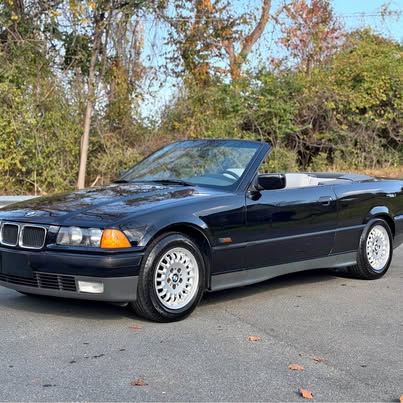
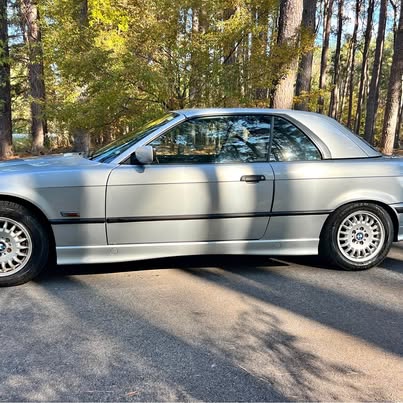
Engines and gearboxes
The fours: M42 and M44
The 318 cars use BMW's small twin-cam four in two forms. The M42 (1992–95) is a 1.8-litre with a cast-iron block, an alloy 16-valve head, a timing chain and 138 hp — an engine developed for the E30 318is and carried over. The M44 (1996–99) is its 1.9-litre successor, built for torque and emissions rather than revs, making the same 138 hp lower down. Both are willing, durable engines that want to be worked; neither will move an E36 quickly by modern standards, and both are honest about it.
The M42 has one signature fault, and you must ask about it directly: the profile gasket. The front of the head is sealed to the timing case by a gasket whose original material broke down with age and heat; it fails, typically well before 100,000 miles, leaking coolant externally at the front of the engine or — worse — internally. Most survivors had the updated gasket fitted decades ago, after which it is a non-issue, so the question is not whether the car has the fault but whether the invoice exists. The job runs roughly $600–1,100 at a shop; unexplained coolant loss on an M42 with no invoice is a walk-away until proven otherwise. The M44 dropped the profile gasket but brought its own smaller items: a plastic valve cover that warps and leaks oil onto the exhaust side, plastic cooling parts that age exactly as they do on the sixes, and idle-control and crankcase-ventilation hoses that split and make the idle hunt. On either four, a rattling timing chain at start-up that does not quiet in two seconds is a tensioner and guide conversation, not character.
The sixes: M50 and M52
The six-cylinder cars use one engine family in two generations, and it is the heart of the E36's reputation. The M50 (1992–95) is a 2.5-litre, iron block, alloy head, chain-driven cams, 189 hp. The first year, 1992, is the non-VANOS engine: fixed cam timing, a slightly peakier delivery, and a cult following among builders for its stronger internals and simpler head. From 1993 the M50TU added single VANOS — variable timing on the intake cam only — which filled in the mid-range and is the better road engine. The M52 (1996–99) is the OBD-II evolution: 2.8 litres and 190 hp in the 328, 2.5 litres and 168 hp in the 323, with an aluminium-block variant in some markets that America did not get — every US M52 is an iron block, which is one reason they last. All of them share the family character: silky, free-revving, and tolerant of mileage in a way that surprises people. A healthy six starts instantly, idles at a steady 700 rpm without a tremor, pulls from 2,000 rpm without a flat spot and shows no smoke, hot or cold.
What kills them is not wear but heat, and heat is the cooling section's subject below. The engine-specific items are these. VANOS wear is the famous one: the seals inside the VANOS piston harden with age, and the unit loses its ability to hold cam timing. The symptoms are a diesel-like rattle from the front of the cam cover — most audible on a trailing throttle around 2,000–3,000 rpm, the "marbles in a can" noise — plus a soft, hesitant patch in the mid-range. The test that distinguishes it from a timing-chain rattle is location and behaviour: VANOS rattle comes from the bulge at the very front of the cam cover and changes with throttle load at cruise; chain rattle is lower, at the front cover, and worst at a cold start. Neither is fatal; a VANOS seal-and-rattle repair runs roughly $500–900 at a specialist, and the car will feel transformed. Oil leaks are the second item, and they are gaskets, not doom: the valve cover gasket hardens and weeps onto the exhaust manifold (the burnt-oil smell at traffic lights), the oil filter housing gasket leaks at the front of the block and mimics a front main seal, and the VANOS oil feed line crush washers weep. A filter-housing gasket is a $150–350 job; a misdiagnosed "rear main seal" is an engine-out quote — get the diagnosis in writing before paying either. The crankcase ventilation valve on the M52 clogs with age and short-trip sludge; symptoms are a whistling or honking at idle, an idle that dips when you lift the oil filler cap, and in cold climates a frozen valve that pressurises the crankcase and blows oil past every seal at once. If the car lives where winters are real, ask whether the cold-climate insulated version is fitted.
One myth to bury here: the M52 does not have the Nikasil bore problem that haunts BMW's V8s of the same years. That was an aluminium-block, high-sulphur-fuel issue on other engines; US E36 sixes are iron-block and immune. A seller explaining away a smoky M52 with "they all do that, it's the Nikasil" is telling you the engine is worn and the story is borrowed.
The M engines: S50 and S52
The US M3 engines are developments of the production sixes, not the European S50 with its individual throttles and 321 hp — accept that now and the US car makes sense on its own terms. The S50 (1995) is a 3.0-litre M50 development: 240 hp, 225 lb-ft, single VANOS, a 6,800 rpm redline and an iron block. The S52 (1996–99) is a 3.2-litre M52 development, also 240 hp, with 236 lb-ft and more mid-range. Both are strong, understressed engines — 240 hp from 3.2 litres is not highly tuned — and both share the production cars' cooling system, which on an M3 is not a maintenance item but a survival item.
M-specific checks: the oil pump nut. On S50 and S52 engines the nut securing the oil pump sprocket can back off — most notoriously on cars that are tracked or driven hard, where vibration and high rpm work it loose — and when it lets go, oil pressure goes to zero at speed. The engine rarely survives the next ten seconds. Many careful owners have had the nut secured with threadlock or a drilled-and-wired replacement while the sump was off for the oil pan gasket. Ask the question by name; a blank look from the seller of a hard-driven M3 is information. Early S50 valve retainers were a softer part that could fail on a mechanical over-rev; BMW updated the retainers during 1995 production. That connects to the M3's defining used-car risk, the money shift: the gearbox gates are close, a hurried 5-to-4 change at speed finds second instead, and the engine is dragged far past its redline by the road wheels. Bent valves are the result, and the damage can hide — a car that idles slightly unevenly and feels flat up top may be carrying it. A compression test on any M3 you are serious about is not paranoia; it is the price of admission, and a leak-down test settles arguments. Oil consumption of up to a quart in 1,000 miles on an S52 is within BMW's generous tolerance, but combined with smoke on the overrun it means valve stem seals, a known and fixable job.
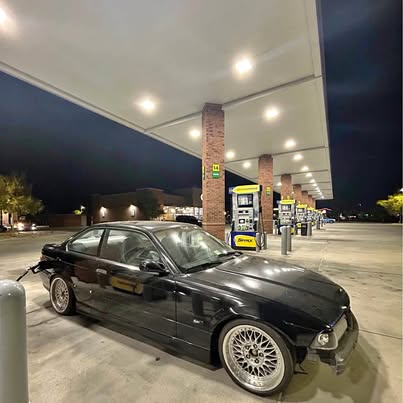
Gearboxes
The manual gearbox is the default choice and the one the market pays for. Four-cylinder and 325/323 cars use the Getrag 250 five-speed; the 328 and M3 use the stronger ZF five-speed (S5D 310Z in the 1995 M3, S5D 320Z after). Both are durable boxes with a precise, slightly notchy change. Judge them on second-gear synchromesh when cold — the first change of the day tells you more than any other — on bearing whine in fifth, and on the shift linkage itself: the E36's selector bushings wear and the lever goes vague and floppy long before the gearbox itself is tired. A linkage refresh with new bushings and the selector-rod joint is a $250–500 job that makes the car feel ten years younger, so a sloppy lever is a negotiating point, not a rejection. Clutches last well; judder pulling away is usually the dual-mass flywheel or oil on the plate from one of the leaks above, and a clutch job runs $900–1,500 fitted. Worn gearbox and engine mounts let the whole drivetrain rock under load — and on an M3, tired mounts contribute to the money shift, because the gearbox moves relative to the lever's gate pattern mid-corner. Fresh mounts are cheap insurance and belong in any M3's recent history.
The automatics divide by engine. Most cars use the GM-built 4L30-E four-speed — smooth, lazy, suited to the convertible and blunting everything else; the M3 automatic (1996 on) is a ZF five-speed and a better drive, but the market discounts any automatic M3 heavily and permanently. On any automatic, judge the fluid: BMW called it lifetime fill, which was marketing, not engineering, and a box never changed in thirty years is living on borrowed time. Changes should be clean, reverse prompt; a rebuild runs $2,500–4,000, which on a 323i automatic is most of the car's value. The differential is a final quiet check: a limited-slip was standard on the M3 (25 percent locking) and a common option elsewhere, identified by the tag on the diff cover and option code 209. Listen for whine on a trailing throttle and check the front diff bushing, which tears and lets the diff clunk on take-up.
Problem areas
Everything in this section is the standard E36 failure map, and it has a shape: the mechanical core is strong, the systems around it are plastic, rubber and glue, and they are all now thirty years old. Of the 14 cars we currently track, every one is a Facebook Marketplace listing, and Marketplace photographs almost never show the places this section is about. Assume the photographs are the car's best angle and go and look at the rest yourself. Almost everything here is fixable at prices you can plan for. The two exceptions — a cooked engine and a torn rear subframe floor — are the two that turn a bargain into a write-off, and both are checkable in minutes.
Cooling: the system that decides everything
If you remember one section, remember this one. The E36 cooling system was designed with plastic where earlier cars used metal, and every plastic part in it is now at the end of its life whether it has failed yet or not. The components: a radiator with plastic end tanks and a plastic inlet neck that goes brittle and snaps; an expansion tank that crazes, yellows and splits; a thermostat housing in plastic on most engines, which warps and weeps; a water pump whose original impeller was plastic and can crack, slip on its shaft or disintegrate, at which point circulation stops while the engine keeps running; a viscous fan clutch that loses its drive with age; and an electric auxiliary fan whose low-speed resistor pack fails silently. Any one of these can overheat the engine. On an iron-block six, an overheat does not usually crack the block — it warps or cracks the alloy head and takes the head gasket with it, a $1,800–3,000 repair on a car whose engine was perfect the day before.
The inspection logic follows from the mechanism. Look at the expansion tank first: original tanks are a translucent white that ages to yellow-brown; a tank that colour, with a matching aged radiator, means the system is original and the car is one hot traffic jam from a very bad day. Ask for the cooling-system invoice by name — radiator, pump, thermostat, housing, tank, hoses. A full preventive refresh with quality parts is $600–1,100 in parts and a weekend, or $1,100–1,800 fitted at a shop, and it is the single best money in E36 ownership; a car with that invoice in the file is worth a real premium over an identical car without it. Then test what is in front of you: from cold, the temperature gauge should climb to the middle and stay there, in traffic, with the air conditioning on. A gauge that creeps at idle points to the fan clutch (spin the fan by hand, engine off — it should resist and stop within a turn or so, not freewheel) or the auxiliary fan. A car that has "just had a head gasket" is not repaired until you know why it needed one: gaskets here fail from overheating, not age. Milky residue under the oil filler cap on a short-trip car can be mere condensation — the test is a long drive: condensation burns off in twenty minutes at full temperature, combustion gas in the coolant does not, and a chemical block test on the expansion tank takes five minutes and ends the argument.
Chassis: subframe, suspension and the mounts that tear
The E36's rear suspension bolts to a subframe, and the subframe bolts to four mounting points in the floor. On cars that are driven hard, launched, tracked or simply old, the sheet metal around those mounting points fatigues and tears — the mount pulls through the floor. The M3 left the factory with reinforcement plates at these points; the ordinary cars did not, and the failure is overwhelmingly a non-M, hard-use failure — but "ordinary car, driven hard for thirty years" describes a lot of survivors. The symptoms are a clunk from the rear on take-up and a vague, shifting feel from the back of the car under power. The check is visual and non-negotiable: on a lift or with the rear of the car safely raised, look at all four mounting points for cracking, tearing or previous weld repairs. A proper repair — subframe out, torn metal cut back, reinforcement plates welded in — runs $1,200–2,500, and a car that needs it needs the price adjusted by that much or walking away from. A car that already has plates fitted by a competent welder has had the E36's worst job done for you; that is a selling point, not a blemish.
Below that headline, the chassis wears in a predictable order. Rear trailing arm bushings (RTABs) are the big one: they locate the rear wheels' toe, and as they perish the rear axle steers itself — the car feels nervous in fast corners, wanders under power and wears the rear tyres unevenly. New bushings are cheap; fitting and a proper alignment run $400–700 all-in, and the transformation is out of proportion to the bill. Front control arm bushings — the "lollipop" bushings at the back of the front arms — crack and give a shimmy under braking and a clunk over bumps; ball joints wear in the same arms, and on most cars the arm is replaced as a unit, $350–600 a side fitted. Rear shock mounts tear their rubber and knock over bumps (a $40 part and an hour, from inside the trunk); front strut mounts collapse and add camber and noise. The steering is rack-and-pinion and generally tight; play is usually tie rods, and a leaking rack weeping from its boots is a replacement, $600–1,000 fitted. The flexible coupling in the propshaft — the guibo — cracks with age and gives a vibration and a thump on take-up; inspect it on the lift while you are looking at the subframe mounts, and budget $200–400 fitted if it is cracked. Finally, stance: an E36 sits level and even. A car down at one rear corner has a broken spring — the bottom coil, usually; check both sides, they live the same life.
Rust: the map
The E36 rusts far less than an E30 — better steel preparation and better sealing saw to that — but it is a thirty-year-old car and the map is known. Work through it in this order:
Rear wheel arches and sill ends. The arch lips trap mud against the inner wing, and the rear of the sills, just ahead of the rear wheels, catches everything the road throws. Bubbling at the arch lip is cosmetic until it isn't; perforation at the sill end is structural territory and a welding conversation. Jacking points. The four sill jack pads are plastic plugs in holes in the sill — the plugs fall out, water goes in, and the sill rots around the hole from inside. A missing pad on a northern car is a torch-and-prod invitation. Front fender bottoms, behind the front wheels, where the fender meets the sill: mud packs behind the liner and the metal goes quietly. The trunk: the battery sits in the right side of the trunk floor on most cars, and between battery vapour, a perished trunk seal and clogged sunroof drains, the trunk floor and spare wheel well hold the car's water history. Lift the spare. Underneath: brake and fuel lines on salt-belt cars, and the subframes themselves. None of this is the E30's scale of rot — a perforated E36 shell is the exception — which is why the subframe mounting points, not the body panels, are the structural check that matters here.
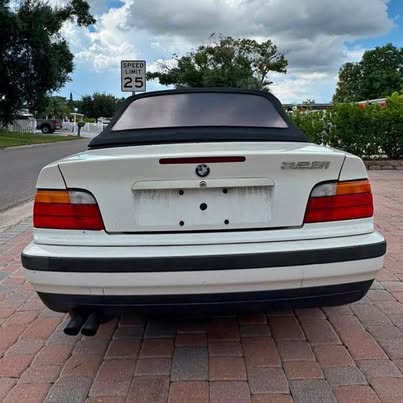
Interior, roof and trim
The cabin is where E36s show their age most honestly, because BMW's adhesives and plastics of the period have a known lifespan and it has expired.
Door panels are the signature failure. The panel is a fibreboard and vinyl construction held together with glue, and the glue lets go: the vinyl shrinks and peels away from the top edge and the armrest, the panel's mounting pockets crack, and the whole card rattles and sags. Almost every unrestored E36 has at least one door doing this. Re-gluing is a home job with mixed results; good used panels are getting scarce and a properly retrimmed set costs real money, so price the interior you are actually looking at, not the one in the brochure. The headliner sags for the same reason — the foam backing turns to dust and the fabric drops, usually starting over the rear seat. A retrim is $400–800 done properly with the board out. Seats: the leather cracks on the driver's bolster first; the foam underneath lasts better than the covering. Two mechanical seat faults matter more than cosmetics. On coupes, the seat-back release that lets rear passengers in works by a cable that stretches and snaps — a coupe whose seat will not tip is a small-parts job but an annoying daily one. On power seats, the recline and height drives use small plastic gears that strip, leaving the seat stuck at an angle; gears are available and the fix is fiddly rather than dear. The sunroof tilts and slides on plastic lifting arms that break, and its four drain tubes clog or detach, sending water into the headliner, the A-pillars and the footwells — wet front carpets on a sunroof car are drains until proven otherwise, and the proof is a litre of water poured carefully into each corner of the open roof's tray while someone watches where it comes out: it should exit behind the front wheels and ahead of the rears, not onto your shoes inside the car.
Convertibles add a roof system on top of all of this. Early US cars have a semi-automatic top — you release the header latches by hand and the electrics do the rest; later cars (from about 1996, and all 328s) are fully automatic. The failure list is electrical and mechanical together: tonneau-cover motors whose emergency-release gears strip, tension straps that stretch so the frame fouls the tonneau as it folds (the graunch-and-stop halfway), microswitches that lose the plot about where the roof is, and the C-pillar trim pieces — the "bat wings" — whose strings snap and leave them hanging. The plastic rear window clouds, yellows and finally cracks along the fold; it zips in on most cars and is replaceable on its own for $250–450 fitted. A full new top, fitted, is $1,200–2,000. Operate the roof through two complete cycles on any viewing, standing outside watching it fold — a roof that only works with "a helping hand at this bit" needs that bit priced.
Electrics and the small warnings
E36 electrics fail at the edges, not the core, and several of the failures are famous because they are so specific. The trunk wiring harness is the one to check on every car: the loom that runs to the trunk lid flexes at the hinge every time the lid opens, the insulation cracks inside the rubber boot, and the bare wires short against each other — blown fuses, dead trunk lights, central locking oddities, and in the worst case a small fire. Peel the boot back at the left hinge and look at the wires; cracked insulation there is a loom repair, $150–400, and a genuine safety item. The brake-light switch at the pedal fails and the check control announces "Brake Light Circuit" on a car whose brake lights may still work — the switch is cheap ($30–60 fitted) and the message terrifies sellers into honesty about other things, so treat it as a gift. The airbag light is usually the passenger seat occupancy mat or a seat-belt buckle switch — the car is protecting you from a sensor, not an airbag — but it needs a proper diagnostic read to confirm, and some states fail an inspection on the light alone; budget $200–500 for the sensor work. The digital climate control unit (fitted to later cars) dies by capacitor: the display goes dark or the unit cycles on and off by itself, and the fix is a known component-level repair, $100–250 by mail-order specialists, rather than a new unit. Window regulators run on plastic sliding blocks that crack, dropping the window into the door or leaving it cocked at an angle; blocks are pennies, fitting is an hour a door, and while the door is apart you will find out whether the door panel in the trim section has been glued before. On coupes and convertibles, the window's automatic drop when you open the door is triggered by a microswitch in the door striker that wears — a window that no longer dips makes the glass catch the seal, and owners slam doors harder to compensate, which is how the strikers get worse. A car where every one of these small things works has been owned by somebody who fixed things as they broke — which is the best predictor of the big things too.
How to inspect one
Allow an hour, bring a torch, a magnet wrapped in cloth and a code reader if the car is a 1996 or later OBD-II model. Insist on a cold engine — a seller who has warmed the car up for you has hidden the cold start, the VANOS rattle and half the oil leaks. If the car passes you, pay for a lift inspection before money changes hands: the subframe check in step 5 cannot be done properly any other way.
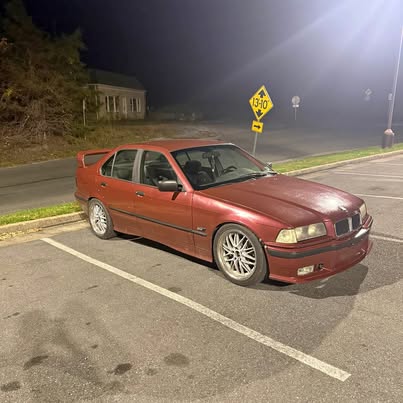
- Start with the paperwork and the identity. Match the VIN on the title to the plate at the base of the windshield and the sticker on the driver's door jamb. An M3's VIN begins WBS; every other E36 begins WBA — a "M3" with a WBA VIN is a dressed-up 325 or 328, whatever the badges say, and should be priced as one. The tenth character of the VIN is the model year. Read the paint code on the label under the hood and compare it with the car in front of you. Then ask for the two invoices that matter most on this model: the cooling-system refresh and, on an M3, anything relating to the oil pump nut. A thick history file is worth real money on an E36.
- Cold start. From stone cold, the engine should fire at once and settle to a steady idle. Listen at the front of the cam cover for the VANOS rattle described in the engines section, and watch the tailpipe: a puff of blue that clears is valve stem seals, continuing smoke is wear. A car that needs throttle to start, or idles like a tractor for the first minute, is telling you about its sensors and its maintenance in one gesture.
- The cooling system, before the drive. With the engine cold, open the expansion tank: coolant should be clean and at the mark, with no oil film and no rust colour. Note the tank's own colour — yellowed and crazed means original, and original means due. Squeeze the top hose; it should be supple, not crunchy. Check the radiator's plastic neck and the thermostat housing for the white and green crust of old weeps. This step and step 9 together price the car's most important system.
- Body and rust. Work the rust map from the problem areas in order: rear arch lips and sill ends, the four jacking points (all four plastic pads present?), the bottoms of the front fenders, door bottoms. Run the magnet over the arch lips and lower doors. Check the panel gaps and look down each flank for ripples — coupes in particular have lived eventful lives.
- Under the car. On the lift, go straight to the four rear subframe mounting points and look for tearing, cracking or old weld repairs — the check from the chassis section that decides whether the car is a purchase or a project. Then the guibo for cracks, the subframes and brake lines for salt damage, the diff for leaks and a torn front bushing, and the sills from below. Perforation at a subframe mount is structural; everything else under here is a priced job.
- Trunk and water. Lift the spare wheel and look at the well and the battery tray for staining and rust. Peel back the rubber boot on the trunk-lid hinge wiring and inspect the insulation — the electrics section explains why this five-minute check is a safety item, not a nicety. Damp carpets in the cabin plus a sunroof means drains; pour the litre of water and watch where it lands.
- Suspension by hand and ear. Rock each corner and listen. Rear shock mounts knock from inside the trunk; front bushings clunk over the first sharp bump on the drive. On the lift, lever the front wheels for ball-joint play and check the lollipop bushings for cracking, and inspect the rear trailing arm bushings — perished RTABs are the wandering rear end described in the chassis section, and they are a price deduction with an invoice attached.
- The test drive. Fifteen minutes minimum, including a highway stretch and a rough side street. A manual car: judge second-gear synchromesh on the first cold change, feel whether the lever is precise or stirring soup (linkage bushings, a priced job), and on an M3 change up briskly — you are feeling for worn mounts letting the drivetrain move. An automatic: changes clean, reverse prompt. The car should track straight, pull cleanly to 5,000 rpm, and brake straight and hard without judder — shimmy under braking is front bushings or warped discs, and you now know which section prices each.
- Heat and idle, after the drive. Park it, leave it idling with the air conditioning on, and watch the temperature gauge for five minutes: it should not move off the middle. This is where a tired fan clutch or a dead auxiliary fan confesses. Check the heater blows hot — a lukewarm heater on a car with a correct gauge can be the first sign of a cooling system full of air from a slow leak.
- Electrics, all of them. Work every window (watch for the coupe's drop-and-rise at the door), the sunroof through both motions, the mirrors, the locks from both the key and the button, the blower on every speed, and the check-control display for stored warnings. Note the airbag light's behaviour: it should light at key-on and go out. A light that never lights at all has been defeated, which is worse than a light that stays on.
- Interior and roof. Sit in the driver's seat and work its adjustments — on a coupe, tip the seat forward and back and confirm the release cable works. Pull gently at the top edge of each door panel; delamination shows as movement and a hollow sound. Look up: headliner tight or beginning to drop over the rear seat? On a convertible, run two full roof cycles standing outside, and inspect the rear window against the light. On a car with the hardtop fitted, the soft top underneath still has to work — ask to see it.
- The M3 extras, if it is one. Compression test, or walk. Ask the oil pump nut and retainer questions on a 1995 car by name. Verify the limited-slip by the diff tag, check the brakes are the larger M items, and confirm the engine is an S50 or S52, not a production M50/M52 fitted after a money shift. On any E36, end the same way: add up the priced jobs from your notes and buy the car whose list is shortest, not the one whose asking price is lowest.
Values
The market block beneath this guide carries the current numbers — the cars listed now and the recorded sales — and it is refreshed from the listings themselves, so this section teaches you how to read it rather than repeating figures that would date. Read it with the E36's condition spread in mind, because no mainstream classic spreads wider. The same badge covers a car that needs a cooling system, subframe plates and a roof, and a car that needs nothing; the gap between those two cars is not a percentage, it is a multiple, and the cheap end of every model row is cheap for reasons this guide has spent several thousand words enumerating.
The hierarchy is stable. The M3 sits at the top, with the 1995 Lightweight in a world of its own, the manual coupes at the head of the ordinary M3s, and the automatic convertible at the foot — an automatic M3 carries a permanent discount that no amount of condition quite erases. Below the M3, the 328is manual is the strongest of the ordinary cars, the 325is close behind it, and the 323 the quiet bargain: badged down when new, discounted now for a number on the trunk that understates the engine. Convertibles are the cheapest way into a six-cylinder E36 in equivalent condition, because the roof system's potential bills frighten buyers — which means a convertible with a documented recent top and working everything is frequently underpriced against its own repair history. The 318ti has climbed from the bottom on charm and rarity of good ones; the plain 318 automatic sedan is the floor of the market and likely to stay there.
Three reading rules. First, asking prices on this car are aspirations: our tracked sample is entirely Facebook Marketplace listings, where the first price is an opening bid in a negotiation the seller expects to have, and tidy, honestly described cars sell while optimistically priced ones circulate for months, dropping a little at a time. Judge a listing by its time on the market as much as its number. Second, modifications subtract more than they add, with one exception: a documented cooling-system refresh, subframe reinforcement and suspension rebuild — the unglamorous invoices — genuinely support a premium, while wheels, suspension and cosmetic M-trim on a non-M car narrow the buyer pool to people who wanted exactly those choices. Third, geography is money: a lifelong southern or western car carries a premium over a salt-belt car that no photograph fully justifies — which is why the lift inspection from the checklist is part of the price, not an extra. There is no such thing as a cheap E36 that stays cheap — there is only the choice of paying the previous owner for the work, or paying your mechanic for it.
Parts and ownership
The E36 is one of the best-supported BMWs of its era: BMW built more than two million of them, the M50/M52 family ran across the 5 Series as well, and the Z3 shares the platform, so the specialist trade and the used-parts market are both deep. BMW's own classic parts operation still lists a wide range for the car, and the pattern-parts industry covers the wear items comprehensively.
Easy: everything the cooling system needs (radiators, pumps with metal impellers, thermostats, tanks, hoses — buy quality brands, as the cheap versions of these specific parts are false economy), brake discs, pads and calipers, suspension arms, bushings and mounts including the RTABs and reinforcement plates for the subframe repair, clutches, filters, ignition parts, window sliding blocks, brake-light switches and the other small electrical items named in the problem areas. Order today, fit this weekend, at prices close to modern-car money.
Harder and dearer: interior trim is the frontier — good door panels, uncracked dashboards and tidy headliner boards are used-part hunting now, and coupe-specific trim is scarcer than sedan. Convertible roof components (tonneau motors, control units, the bat-wing trims) are available but proud of it. M3-specific parts — brakes, suspension arms, the limited-slip differential, S50/S52 engine internals — cost M money, and 1995 M3 parts differ from 1996-on in ways that catch out quick ordering. The early M42's profile gasket job is parts-cheap and labour-led. A quality repaint costs what a quality repaint costs on any car, which is why the ownership mantra matches the buying one: the mechanicals are the cheap part of an E36.
Running costs. A sorted E36 is a realistic daily classic: mid-twenties mpg for a six in mixed use, servicing any competent independent BMW specialist can handle, insurance in line with other cars of the value. The budget line that catches new owners is the first year. Catching up a deferred cooling system, a set of bushings and mounts, and the small electrical list honestly runs into four figures before you improve anything — the inspection checklist is written so you can total that bill before you own the car. Cars that have sat need the fuel system cleaned (modern ethanol fuel attacks the old rubber lines and leaves varnish in the tank), every fluid changed, and the tyres judged by date code rather than tread. Buy a car in regular use over a low-mileage car that has slept for a decade: on an E36, use is preservation and storage is a slow leak of every seal, hose and plastic clip on the car.
Which one to buy
- The all-rounder: 328is manual. The torquiest ordinary engine, the newest shell, the ZF gearbox and the sport package in one car. If you want one E36 to drive everywhere, this is it.
- The value buy: 323is manual. A 2.5-litre car wearing a 2.3 badge, discounted for the badge. Mechanically a 328's near-twin to own, cheaper to buy in identical condition.
- The classic choice: 325is, 1993–95. The VANOS M50 in the early body, the car the E36 legend was built on. Buy the cooling-system invoice as much as the car.
- The driver's M3: 1995 coupe, manual. The 3.0 S50, the lightest US M3 specification and the purest steering of the run. Compression test first, oil pump nut question second, money third.
- The usable M3: 1997–98 sedan, manual. The S52's torque, four doors, and a discount against the coupe for a shape buyers underrate. The family M3 is the thinking M3.
- The summer car: 328i convertible. The cheapest route into a good six — provided the roof cycles cleanly twice in front of you and the rear window is clear. Price the top before the car.
- The left-field pick: 318ti Club Sport. The lightest E36 sold in America, with its own following. Slow, honest, increasingly hard to find unmodified.
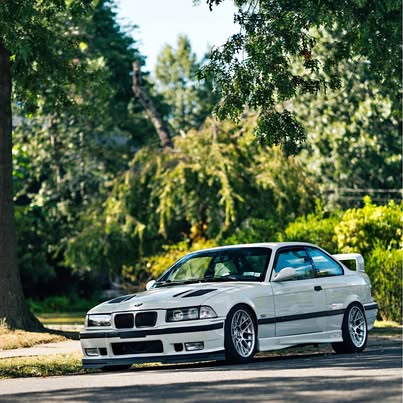
And the rule that overrides all of the above: buy the car with the cooling system already done and the subframe mounts intact, in the specification you can live with. Engines, gearboxes, bushings and roof motors are all fixable at prices you can plan for. A cooked head and a torn floor are the two bills that exceed the plan — and they are the two things the seller's photographs will never show you.
Listed now
On Classic Listings today: 419 cars are listed here; 5 for sale and 352 marked sold; average asking price $11,610; asking range $4,500 to $16,991; sold cars average $14,424.
See the 419 E36 cars currently listed.
The market — recorded sales
E36 Classic Listings Index: $14,000 — based on 129 recorded sales, Nov 2024 – Nov 2026.
Change vs the prior 24 months: +6% (n=141 then, n=129 now).
Recorded sales: 129 · Total recorded sale value: $2,040,982 · Lowest sale: $3,500 · Top sale: $60,000 · Most recent sale: $4,000 (Nov 12, 2026)
| Date | Car | Sale price | Source |
|---|---|---|---|
| Nov 12, 2026 | 1994 BMW 3 Series 325is Coupe 2D | $4,000 | |
| Nov 6, 2026 | 1999 Z3 Roadster | $4,400 | Cars & Bids |
| Nov 5, 2026 | 1999 E36 M3 Coupe | $23,750 | Cars & Bids |
| Nov 3, 2026 | 1998 Z3 Roadster | $7,200 | Cars & Bids |
| Oct 30, 2026 | 1997 E36 M3 Sedan | $10,000 | Cars & Bids |
| Oct 28, 2026 | 1998 E36 M3 Coupe | $31,000 | Cars & Bids |
| Oct 27, 2026 | 1995 E36 M3 Coupe | $17,250 | Cars & Bids |
| Oct 27, 2026 | 1999 3 Series Convertible | $4,137 | Cars & Bids |
| Oct 21, 2026 | 1998 E36 M3 Convertible | $12,300 | Cars & Bids |
| Oct 16, 2026 | 1998 Z3 Roadster | $7,000 | Cars & Bids |
| Sep 18, 2026 | 1997 E36 M3 Sedan | $13,200 | Cars & Bids |
| Sep 17, 2026 | 1998 E36 M3 Coupe | $18,050 | Cars & Bids |
| Sep 11, 2026 | 1999 Z3 Roadster | $10,850 | Cars & Bids |
| Sep 3, 2026 | 1998 E36 M3 Convertible | $14,100 | Cars & Bids |
| Aug 27, 2026 | 1998 E36 M3 Sedan | $26,500 | Cars & Bids |
| Aug 24, 2026 | 1995 3 Series Sedan | $3,633 | Cars & Bids |
| Aug 18, 2026 | 1996 E36 M3 Coupe | $16,000 | Cars & Bids |
| Aug 13, 2026 | 1995 E36 M3 Coupe | $25,000 | Cars & Bids |
| Aug 12, 2026 | 1999 Z3 Roadster | $9,999 | Cars & Bids |
| Aug 11, 2026 | 1999 E36 M3 Coupe | $15,800 | Cars & Bids |
| Aug 5, 2026 | 1999 Z3 Coupe | $20,250 | Cars & Bids |
| Jul 31, 2026 | 1995 E36 M3 Coupe | $13,800 | Cars & Bids |
| Jul 29, 2026 | 1997 E36 M3 Coupe | $13,700 | Cars & Bids |
| Jul 28, 2026 | 1997 E36 M3 Sedan | $12,200 | Cars & Bids |
| Jul 24, 2026 | 1997 E36 M3 Sedan | $28,500 | Cars & Bids |
Dates are the sale date where the source states one; otherwise the date the sale was recorded here.
For sale now
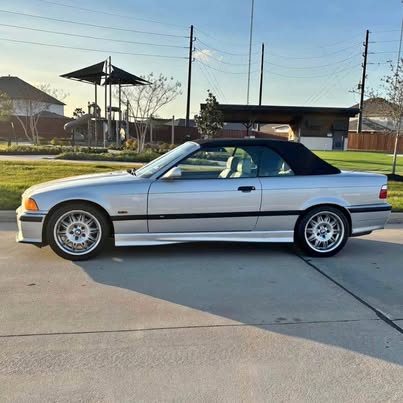 $15,500
Expand
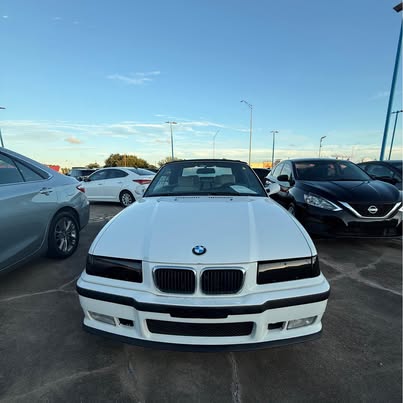 $16,991
Expand
 $4,500
Expand
 $9,450