
Buick Skylark Gran Sport Coupe 2D buyer's guide
Buick Skylark Gran Sport Coupe 2D -- the model's own buyer's guide: variants, values and what to check.
Years listed: 1965-1972 · Series: GS
# Buick Gran Sport — Buying Guide
Overview and history
The Gran Sport is Buick's answer to the Pontiac GTO, and it is the answer of a division that refuses to shout. When Buick launches the Gran Sport in January 1965 as a performance package on the intermediate Skylark, it does not fit a boy-racer image or a cartoon name. It fits the biggest engine it builds — the 401-cubic-inch nailhead V8 from the full-size cars — into a tidy A-body coupe, adds heavy-duty suspension, and sells the result to the buyer who wants GTO pace with Buick manners. That formula — maximum Buick torque, minimum Buick fuss — defines every Gran Sport from 1965 to the end of the classic run in 1972. The performance is wrapped in the trim, sound deadening and options of a near-luxury car, and fifty years on it is the wrapping as much as the pace that costs money to put right.
The name itself needs care, because Buick spreads it widely. In this guide, Gran Sport means first and foremost the Skylark-based cars: the 1965–66 GS with the 401 nailhead, the GS340 and GS400 of 1967, the GS350 and GS400 of 1968–69, and the GS350, GS455 and GSX of 1970–72. Alongside them sits the Riviera Gran Sport, a separate personal-luxury coupe that carries the GS badge and Buick's biggest engines from 1965 to 1975 — a different car in a different class, covered here because the badge, the engines and the buying logic overlap, and because one is in the site's own pool. There is also a one-year Wildcat Gran Sport in 1966 and a later Century Gran Sport; both are footnotes to the main story, and the main story is the A-body.
The arc of that story is the arc of the muscle car itself, compressed. The 1965–66 cars are torque-rich and understated, built around an engine design that dates to 1953. For 1967 Buick replaces the nailhead with a clean-sheet big-block, the 400, and adds the small-block GS340 beneath it. The 1968 restyle gives the cars the rounded A-body shell they keep, in facelifted form, through 1972. The peak comes in 1970: the new 455, the Stage 1 package at the top of it, and the GSX — Saturn Yellow or Apollo White, striped, spoilered, the one Gran Sport that does shout. After 1970 the familiar forces close in: compression falls in 1971, gross ratings give way to net in 1972, insurance surcharges bite, and production shrinks every year. The 1972 cars are the last of the classic Gran Sports — still quick, still torquey, and considerably rarer than the peak-year cars.
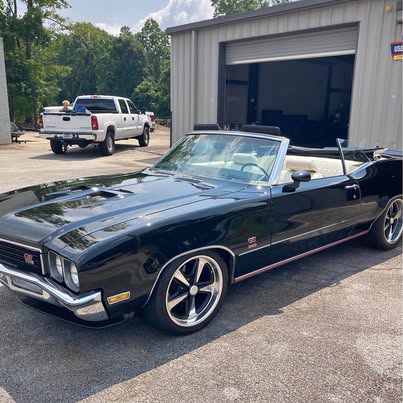
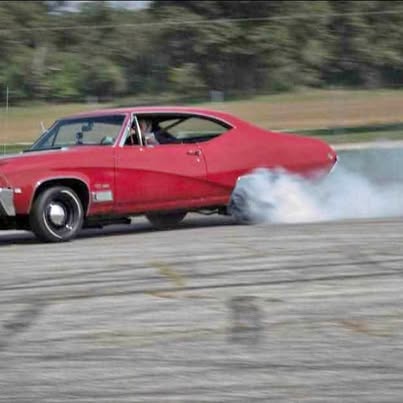
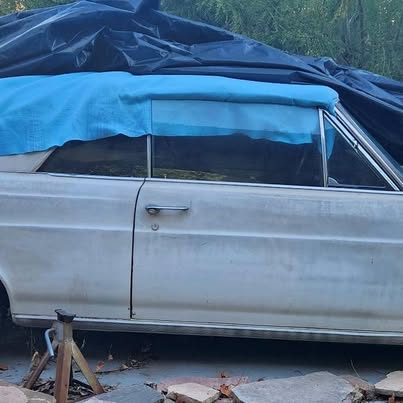
On Classic Listings the pool is small — three cars — but it spans the story unusually well. There is a red 1967 car from a dealer in Minnesota, offered as a project and photographed exactly as it sits, engine out and interior stripped; a silver 1968 Riviera Gran Sport from a dealer in Wisconsin; and a black 1972 car from a Marketplace seller in Georgia, a convertible whose seller tells you plainly that it began life as a 350 car and now runs a built 455. Both cars with a recorded transmission are automatics, which is honest to how these cars were ordered new. Treat the pool as a lesson in the range of what wears this badge: a luxury coupe, a restoration project and an engine-swapped driver are all "Gran Sports", and the inspection each one needs is different.

The models
A Gran Sport is defined by the combination of shell, engine and paperwork, and all three change by year. Learn the year-by-year shape of the range before you look at a specific car, because the commonest buying mistake with these cars is paying one year's money — or one engine's money — for another year's car wearing its badges.
1965 — the original. The Gran Sport arrives mid-season as a package on the Skylark, in hardtop coupe, post coupe and convertible form. The heart of it is the 401 nailhead, rated 325 hp and badged on its air cleaner as the Wildcat 445 — 445 being the torque figure in lb-ft, a piece of period honesty about what this engine is for. Heavy-duty suspension, a reinforced frame on the convertible and dual exhaust complete the package. Because it is a package, the VIN is a Skylark VIN; identity rests on the trim tag, the engine code and documentation, which is why 1965 cars live or die on paperwork in a way later cars do not.
1966 — a series of its own. The GS400 in all but name, with its own VIN series (446), a facelifted shell, and the 401 in its final year. If you want the nailhead car in its most developed form, this is it — and the own-series VIN makes it far easier to verify than the 1965.
1967 — the new engines. Buick replaces the nailhead with a clean-sheet big-block 400 (340 hp) in the GS400, and creates the GS340 underneath it with a 340 small-block (260 hp) — hardtop only, plainer trim, the budget Gran Sport. The GS400 comes as hardtop, post coupe and convertible. This is the year of the red Minnesota pool car: note from its photographs that it is a convertible, whatever shorthand a listing uses, because the folded top frame and the absence of a roof are visible in both views.
1968–69 — the rounded shell. GM's A-bodies are restyled for 1968 with the long-hood, short-deck shape they keep through 1972. The GS340 becomes the GS350 as the new 350 small-block replaces the 340; the GS400 continues. Hardtop and convertible; the post coupe disappears from the GS line. 1969 is a facelift over the same structure. These are the best-supplied Gran Sports and the easiest to live with: parts support is strongest here, and the cars are new enough to have dual-circuit brakes, old enough to be unmistakably sixties.
1970 — the peak. The 400 grows into the 455, and the range reaches its fullest expression: GS350, GS455, and above both the Stage 1 version of the 455 and the GSX. The Stage 1 is a factory performance package — hotter camshaft, larger valves, specific carburettor and distributor calibration, gearing to suit — that makes an already fast car one of the quickest production cars America has built to that date, famous for torque rather than revs. The GSX is an appearance-and-performance package on the GS455, offered only in Saturn Yellow and Apollo White in 1970, with stripes, spoilers, a hood tachometer and the 455 standard, the Stage 1 optional. The GSX totals only 678 cars, and that scarcity is real, documented and priced.
1971–72 — the managed decline. The cars continue — GS350, GS455, Stage 1, and the GSX in widened colours for 1971 and rarer still for 1972 — but compression drops for 1971 and net ratings arrive for 1972, so the published numbers fall even though the cars remain genuinely quick. Production falls harder than performance: a 1972 GS455 is a much rarer car than a 1970, and a 1972 Stage 1 convertible is among the rarest production muscle cars of the era. The black Georgia pool car is a 1972: a GS350 convertible by birth — the VIN's engine letter settles that, as the inspection section explains — now carrying a built 455. A legitimate and enjoyable configuration, but a GS350 with a 455 in it, priced as one, never as a GS455.
| model | years | engine | output | built | character |
|---|---|---|---|---|---|
| Gran Sport (Skylark GS) | 1965 | 401 nailhead V8, Carter AFB 4-bbl | 325 hp gross, 445 lb-ft | c. 15,800 total | The original package car; Skylark VIN, paperwork proves it |
| GS400 | 1966 | 401 nailhead V8, Carter AFB / Rochester 4-bbl | 325 hp gross, 445 lb-ft | Low five figures | Last nailhead year, first own-series VIN (446) |
| GS340 | 1967 | 340 V8, Carter AFB 4-bbl | 260 hp gross | c. 3,700, hardtop only | The budget GS; one year only |
| GS400 | 1967–1969 | 400 V8, Rochester Quadrajet | 340 hp gross, 440 lb-ft | Five figures per year, falling | The clean-sheet big-block car; 1968 restyle mid-run |
| GS350 | 1968–1972 | 350 V8, Rochester Quadrajet | 280 hp gross (1968–69); 315 hp gross (1970); net-rated 1972 | The volume GS of 1970–72 | The driver's Gran Sport; lighter nose, revvier engine |
| GS455 | 1970–1972 | 455 V8, Rochester Quadrajet | 350 hp gross, 510 lb-ft (1970) | c. 10,000 in 1970, falling sharply after | The peak torque car; the one the badge is priced on |
| GS455 Stage 1 | 1970–1972 | 455 Stage 1, Rochester Quadrajet | 360 hp gross (1970, widely held underrated) | c. 2,465 in 1970; hundreds by 1972 | The factory hot rod; documentation is half the car |
| GSX | 1970–1972 | 455 or 455 Stage 1 | As GS455 / Stage 1 | 678 in 1970; far fewer after | Stripes, spoilers, hood tach; 1970 in yellow or white only |
| Riviera Gran Sport | 1965–1975 | 425 nailhead / 430 / 455 V8 | 360 hp gross (430) | A minority of Riviera production | The luxury GS; a cruiser, not a street racer |
Production figures in the table are commonly published approximations, given only where the record supports them; Buick's surviving splits by body style and engine are incomplete for several years, and a seller quoting an exact figure for a specific combination should be able to show the source. The shape of the story is not approximate: the GS350 and GS400/455 are the normal cars, the Stage 1 is always a small minority, the GSX is always rare, and everything gets scarcer after 1970.
Engines and gearboxes
Every Gran Sport engine is a Buick engine — not a corporate substitute — and that matters twice over. Buick's V8s share almost nothing with Chevrolet, Pontiac or Oldsmobile units of the same displacement: the 350 is not a Chevy 350, the 455 is not an Olds 455, and parts, specialists and knowledge do not transfer. The range also contains three genuinely different engine families across eight years, each with its own character and failure modes. Learn which family is in front of you before you judge how it runs, because a healthy nailhead, a healthy 350 and a healthy 455 sound, idle and pull differently — and each can feel "wrong" to an ear trained on one of the others.
The 401 nailhead — 1965–66
The 401 is the last flowering of Buick's first V8, introduced in 1953 and named for its vertical valve arrangement, which leaves the valves small and the ports upright — nailheads, in the slang. On paper the specification looks limiting: 401 cubic inches (4.19 × 3.64-inch bore and stroke), a single Carter AFB four-barrel (Rochester Quadrajet on some 1966 cars), 10.25:1 compression, 325 hp gross. The figure that defines it is 445 lb-ft of torque, delivered low and evenly. A nailhead GS does not surge or peak; it leans on the car and moves it, and in period it earns its reputation in the first sixty feet. Do not judge one by revving it — it is not built to rev, with a practical ceiling around 5,000 rpm — judge it by the way it pulls from 1,500 rpm in a high gear without protest.
Nailhead specifics a buyer must know: the distributor sits at the rear of the engine, the starter and its heat soak are perennial issues, and the rope-type rear main seal weeps on almost every surviving engine — a damp rear main is normal, a drip that marks the drive is a negotiation point, not a walk-away. The Carter AFB's commonest faults are a worn accelerator-pump cup and a perished choke pull-off, both cheap. The real enemies are overheating from a silted radiator — the cooling system is marginal in traffic — and a valvetrain worn by fifty years of indifferent oil. Listen for a rhythmic top-end tick that does not fade as the engine warms; on a nailhead that usually means a worn cam lobe or lifter, and a cam change is a specialist job at roughly $1,500–3,000 with parts and labour.
The small-blocks — 340 (1967) and 350 (1968–72)
The GS340's 340 and the GS350's 350 are developments of Buick's small-block line: deep-skirt blocks, generous main bearings, and a reputation — earned — as the toughest small-blocks GM built in the period. The 340 (260 hp gross, 365 lb-ft) is a one-year engine in the GS: adequate, willing, and the reason the GS340 is the cheapest way into the badge. The 350 is the better engine. In the GS350 it carries a Rochester Quadrajet, 10.25:1 compression in its strong years and ratings of 280 hp gross for 1968–69 and 315 hp gross with 410 lb-ft for 1970, before compression and then net ratings pull the published figures down. In the car it is noticeably lighter over the front axle than the big-blocks, revs more freely, and makes the GS350 the best-balanced Gran Sport on a real road. A good GS350 is not a consolation prize; it is a different, lighter car.
The small-block's known weaknesses are concentrated at the front of the engine, and they preview the big-block story below. The oil pump lives in the aluminium timing cover, driven off the camshaft, and the cover's pump cavity wears with mileage; the symptom is low oil pressure at hot idle that recovers with revs. Buick's published hot-idle figures are low by modern standards — around 10 psi at idle is within the period service specification on a worn engine — so judge by a mechanical gauge, by the absence of bearing noise, and by pressure at 2,000 rpm (you want roughly 35–45 psi hot), not by the dashboard light alone. Worn throttle-shaft bores in the Quadrajet are the other classic: the shafts leak air, the idle wanders and leans out, and no amount of mixture adjustment cures it. The test is to wiggle the primary throttle shaft at idle — play you can feel, or an idle that changes when you spray carburettor cleaner at the shaft, condemns the bushings; a specialist re-bush costs roughly $150–300 on top of a rebuild.
The big-blocks — 400 (1967–69) and 455 (1970–72)
Buick's clean-sheet big-block replaces the nailhead for 1967: thin-wall casting, valves in the modern inclined arrangement, and displacements that grow from 400 cubic inches (340 hp, 440 lb-ft) to the 430 in the big cars and finally the 455 of 1970 — 4.3125-inch bore, 3.90-inch stroke, 350 hp gross and the number that defines the whole Gran Sport story: 510 lb-ft of torque, the highest figure of any American production engine of the era. In the car, a GS455 does not feel fast the way a high-revving engine feels fast. It feels inevitable: the torque arrives from just off idle, the Turbo Hydra-Matic barely needs to downshift, and the car covers ground at a pace its demeanour does not advertise. This is also why so many survive with automatics and tall axle ratios: the engine never asked for anything else.
The 400 and 455 share their architecture and therefore their inspection points. The front timing cover is the centre of the engine's life: it carries the oil pump, the water pump mounts to it, and the distributor drives the oil pump through it. Three checks follow. First, oil pressure, exactly as for the 350 — a worn pump cavity gives low hot-idle pressure, and the honest fix ranges from a pump rebuild kit with a booster plate (roughly $100–200 in parts) to a replacement cover (several hundred dollars, plus labour) if the cavity is scored. Second, coolant corrosion: the aluminium cover against an iron block, bathed in old coolant, corrodes at the water passages, and a cover eaten through at the pump face is a common reason a "simple water pump job" turns into a cover replacement at $600–1,200 all-in. Third, the harmonic balancer and front seal: a perished seal leaks oil onto the balancer, the balancer's rubber ring degrades, and the timing marks wander — one reason so many of these cars are found running with their timing set by ear. Verify timing against a light and a known-good mark before you judge a car down on performance.
Further back, the Quadrajet (typically a 750 cfm casting on the big-blocks) is a superb carburettor when tight and a diagnostic trap when worn: the same throttle-shaft wear as the 350, plus a warped air horn that lifts the lid and leaks, and a choke pull-off diaphragm that splits and causes the cold-start stall everyone blames on the choke itself. A professional Quadrajet rebuild by a Buick-literate specialist runs roughly $400–700 and transforms cars that owners have spent years "tuning" around a worn carburettor. Ignition is conventional Delco points on most cars — budget for a service or a discreet electronic conversion, and check that the vacuum advance can holds vacuum from a hand pump; a split diaphragm gives a flat spot off idle that mimics carburettor trouble. Finally, cooling: a car that creeps up in traffic but cools on the move has a fan-clutch, shroud or radiator-flow problem; a car that is hot everywhere, all the time, has a head-gasket, timing or water-pump problem. The distinction is the diagnosis, and it is made in the first twenty minutes of the test drive.
The Stage 1 — what the package actually is
The Stage 1 is widely misunderstood, so be precise. It is not a separate engine and it is not a dealer dress-up kit. On the 455 it is a factory package of specific parts: a higher-lift, longer-duration camshaft; larger valves (2.12-inch intake) in specially machined heads with stiffer springs; a recalibrated Quadrajet and distributor; chrome dress-up; and, in most years, standard Positraction and specific axle gearing. The rated output for 1970 is 360 hp gross — a figure period road tests suggest was politely understated. What matters to you is not the mythology but the verifiability: a Stage 1's carburettor number, distributor number, head castings, engine production code and — decisively — its factory documentation are all specific, and every one is checkable. A car with Stage 1 badges and a standard engine is a GS455 with badges, worth GS455 money. The problem-areas section sets out the checks; the rule is that a Stage 1 premium is paid against documents, never against a seller's assurance.
Gearboxes and axles
Four transmissions cover the range. The Super Turbine 300 two-speed automatic serves the early and smaller-engined cars — smooth, durable, and blunting even a nailhead's torque less than you would expect, because the torque covers the gap between its two ratios. The Turbo Hydra-Matic 400 three-speed, fitted behind the 400 and 455 (and called the ST400 in its 1965–67 switch-pitch form, with a variable-pitch torque converter — feel for the subtle change in note and urge as you lean on the throttle at cruise), is one of the strongest automatics ever built; its faults are age faults: a perished vacuum modulator that lets the box draw fluid into the intake (white smoke and a falling fluid level with no external leak), hardened seals that delay engagement on a cold morning, and a governor that sticks and holds gears too long. A TH400 rebuild runs roughly $1,200–2,000. The TH350 behind later GS350s is lighter and just as honest; check for flared 2–3 shifts under load. Manual cars use a three-speed in the cheapest installations and the Muncie M20 or close-ratio M21 four-speed with a Hurst shifter in the ones everyone wants: judge by synchromesh on the 3–2 downshift, by a linkage that selects reverse without a fight, and by progressive clutch take-up — a high, snatchy bite usually means a worn clutch, roughly $800–1,400 to replace with the flywheel skimmed.
Axles are Buick's 8.2-inch 10-bolt in most A-body cars to 1970 — a Buick-specific unit whose carrier and gears do not interchange with the Chevrolet 8.2, which makes ratio changes and Positraction retrofits pricier than Chevy owners expect — and the stronger corporate 8.5-inch 10-bolt from 1971. Positraction (option code G80) is desirable on any big-block car and essential to a Stage 1's value story. Check it honestly: with one rear wheel jacked and the gearbox in neutral, a Positraction car resists turning the free wheel hard; a car that spins it freely has an open axle or a worn Positraction clutch pack, whatever the seller says. Ratios run from a relaxed 2.93:1 in automatic cruisers to 3.42:1 and 3.64:1 in Stage 1 and four-speed cars; a 455 on a 2.93 axle and a 455 on a 3.64 axle are two different driving experiences wearing the same badges.

Problem areas
Rust: the map
The A-body Gran Sport is a full-frame car, which changes the rust calculation in your favour — a rotten floor does not write the car off the way it does a unibody — but the frame itself joins the list of things to inspect, and the body still rots in a predictable map. Work it in this order, because the order runs roughly from most structural to most cosmetic.
The frame first. The A-body perimeter frame rusts at the rear kick-up over the rear axle, at the body-mount points (where the mount cushions trap mud against the rails), and along the lower faces of the side rails behind the front wheels. Convertibles use a boxed, heavier frame and rot in the same places faster. Take a torch and a screwdriver: surface scale is normal, but flaking, holed or thinned rail sections are a frame repair — welding sections into a frame is skilled work at roughly $1,500–4,000 depending on extent, and a frame holed in several places on a common hardtop makes the car a parts donor, however good the engine is. On the red 1967 pool car, photographed sitting in a yard with the engine out, frame condition is the single question that decides whether it is a project or a parts car, and it cannot be answered from the photographs — which is itself the answer about how to bid on it.
The body map is the standard GM A-body pattern, shared in outline with the Chevelle and GTO but pressed in Buick panels that are scarcer and dearer. The cowl and windshield frame rust at the base of the screen, channelling water into the front footwells; lift the front carpets and look for damp, tide marks and patched floors. Front floor pans go at the toe boards and under the seats; the seat mounts tear out of thinned pans, so rock each front seat hard. The trunk floor is the classic: on hardtops, the rear window channel rusts through under the trim, rain runs down inside the rear pillars, and the trunk floor and drop-off panels rot from the inside out — probe the seams where the floor meets the wheelhouses and drop-offs, and look for the tell-tale of rot sealed and painted over rather than repaired. Lower rear quarters bubble behind the rear wheels; front fenders bubble at the lower rear corner, where the fender brace traps mud; door bottoms rust from the hem flange upward when the drain holes block — run a hand along the bottom edge of every door and feel for the crinkle of a swollen seam. Rocker panels rot from inside, worst on convertibles, which lean on their rockers and cowl for stiffness. Vinyl roofs hide roof-skin and pillar rust that shows only as bubbling under the vinyl — press along the roof rails and rear pillars and treat any crunch as a roof-skin repair, roughly $1,000–2,500 with the roof off and the vinyl replaced.
Convertibles add their own chapter: the top well behind the rear seat collects water and rots, the rear seat pan and the floor under it follow, and a top that has leaked for years will have quietly destroyed the rear of the interior while the outside still presented well. On any convertible — including the black 1972 pool car, whose photographs show a tidy white interior — lift the rear seat base, look into the top well, and check the floor beneath it before you admire the upholstery. Budget honestly: floor pans welded in run roughly $800–1,800, a trunk floor $700–1,500, quarter-panel lower sections $1,000–2,500 a side painted, and a full professional rust programme on a car like the Minnesota project runs well into five figures before paint. The Minnesota car's rear photograph shows that arithmetic: rust across the decklid, perforation at the valance and quarter edges, trim missing. It is all repairable. It is not cheap, and it is never the only rust the car has.
Identity: clones, codes and paperwork
A Gran Sport premium buys you a paperwork inspection, and Buick makes it a fair fight: from 1966 the GS carries its own VIN series, so a clone built on a Skylark announces itself the moment you decode the plate on the driver's door jamb (1966–67) or at the base of the windshield (1968 onward). Learn the codes for the car in front of you. For 1966–67 the GS400 is series 446; the GS340 of 1967 is a 444 car. For 1968–69 the GS400 remains 446 and the GS350 is 434. For 1970–71 the GS455 is 446 and the GS350 is 434. In every year the fourth and fifth digits give the body style — 37 for the hardtop coupe, 67 for the convertible, 07 for the post coupe where offered — so a "GS455 hardtop" whose VIN reads 44667 is a convertible wearing a roof story, and a "GS400" whose VIN starts 444 is a GS340 or a Skylark. For 1972 the system changes: the series digit no longer separates GS from Skylark, and the fifth character of the VIN is the engine code — K for the 350 four-barrel, U for the 455, V for the 455 Stage 1. On a 1972 car, that single letter is the difference between a GS350, a GS455 and a Stage 1, and it is stamped at the base of the windshield where anyone can read it. The Georgia pool car decodes, by its seller's own description, as a K-code GS350 convertible now running a 455: a perfectly good car, mispriced only if someone pays U-code or V-code money for it.
The trim tag on the firewall adds the second layer: build date, body style, plant, and the factory paint and trim codes. A car repainted in a fashionable colour it was not born with is worth less than the same car in its correct colour, and a GSX whose documentation does not support Saturn Yellow or Apollo White (the only 1970 GSX colours) is not a GSX. The engine production code is stamped on the big-blocks on the block deck between the front spark plugs on the driver's side, and the partial VIN derivative is stamped on a machined pad — matching those numbers to the car's VIN is the "numbers-matching" test, and on a Stage 1 or GSX it is worth real money, so do it yourself with a wire brush and a torch rather than accepting a photograph of someone else's stamping. Build sheets survive in the usual GM hiding places — on top of the fuel tank, under the rear seat, behind a door panel — and the Sloan Museum in Flint holds factory records for these cars; a Sloan report or marque-registry documentation is the gold standard, and a seller of a genuine Stage 1 at Stage 1 money will normally already have it. The myth to correct here is the reverse one: not every undocumented car is a fake. Most GS350s and many GS455s have no paperwork beyond a title, and that is normal and priced accordingly. Documentation matters in proportion to the premium being asked.
Two traps deserve naming. The first is the engine swap presented as originality: a 455 in a GS350 (like the pool car), a 400 dressed as a Stage 1, a later 455 from a full-size Buick. Buick engines carry Buick architecture — distributor at the rear on the nailhead, at the front on the 350/400/455, the front cover carrying the oil pump — and a five-minute look with that knowledge separates a Buick 455 from a transplant or an Oldsmobile unit painted Buick red. The second trap is the tribute GSX: stripes, spoilers and a hood tachometer are all reproduced, all bolt on in a weekend, and none of them makes a GSX. Only 678 were built in 1970; the paperwork, or its absence, is the car.
Suspension, steering and brakes
The A-body chassis is conventional — unequal-length front wishbones with coil springs, a live rear axle on coils with stamped control arms, recirculating-ball steering — and it wears in conventional places, with two emphases. The first is weight: a big-block GS carries a heavy engine over the front wheels, and front springs sag, idler arms and centre links wear, and ball joints tire sooner than on a small-block car. Drive over broken pavement at low speed and listen for knocks; jack the front and rock each wheel at twelve and six o'clock for ball-joint and bearing play, at three and nine for steering linkage play, and have a helper turn the wheel while you watch which joint moves first — that joint is the worn one. Rear control-arm bushings are the second emphasis: perished rubber lets the axle wind up, and the symptom is axle tramp and a clunk on take-up that owners misdiagnose as a differential fault. New bushings are cheap parts and moderate labour — roughly $400–900 for a full rear set fitted — and they transform a loose-feeling car, so treat sloppy rear location as a negotiation, not a rejection.
Steering boxes (Saginaw) wear at the centre of travel, where the car has spent its life; a car that wanders on a straight road usually needs a box adjustment or rebuild ($300–600) plus whatever linkage wear you found, not an alignment. Check the flexible rag joint at the column — a torn one is an immediate safety fix. Brakes: most cars you meet will have the optional front discs or a later conversion; judge a conversion by its completeness (proportioning valve, correct master cylinder, pedal feel) rather than its presence. Drum cars should pull up straight with a firm pedal; a pedal that pumps up is air or adjustment, a pedal that sinks slowly at a standstill is a master cylinder bypassing internally. Handbrakes are routinely seized or disconnected — test it, because it is a legal requirement in most states and a diagnostic of how the car has been maintained.
Interior, top and electrics
The Gran Sport's interior is where the Buick premium lives, and where restoration money goes to die quietly. GS-specific seat covers, door panels and emblems are reproduced for the popular years, but the richness of the trim — woodgrain, brightwork, the optional console, the consolette tachometer on early cars — means a tired interior is a $3,000–8,000 programme done properly with foams, covers, carpets, headliner and dash pad, and double that if the car needs convertible top work as well. Dash pads crack in the sun; the GSX's hood tachometer is a theft-and-fake target, so check that a GSX's tach is a correct unit and not a reproduction priced as original. Power windows slow from dried grease and tired motors before they fail; the factory air conditioning is usually present and usually not working — compressor, drier, hoses and a charge is roughly $1,000–2,500 to return to service, and "the air just needs a charge" is the oldest sentence in the hobby.
On convertibles, work the top through two full cycles. The hydraulic pump and rams should raise and lower the frame evenly; a lagging side is a ram or a low reservoir, and milky fluid means water in the system. Top fabric is a $1,500–3,000 replacement fitted, and the rear window clouds and splits. Electrics across the range age in simple ways: engine harnesses chafe above the exhaust manifolds, fusible links corrode, and earth straps go missing during engine work, producing the wandering faults — dim lights, lazy gauges, a starter that clicks when hot — that sellers describe as character. A hot-start click is usually heat soak in the starter solenoid plus tired cables; budget $200–450 for a starter and cables before condemning anything deeper. On the Riviera, add the vacuum-operated hidden headlamps of 1968–69: vacuum actuators fed from a reservoir, hoses and diaphragms that perish, and the classic symptoms of one door winking or doors creeping open overnight as vacuum bleeds away. The fix is hoses, seals and diaphragms — fiddly, inexpensive in parts, and a fine test of whether the previous owner maintained systems or just paint.

How to inspect one
Inspect in this order: paperwork before paint, structure before shine, because the expensive mistakes are bought in exactly the reverse order.
- Decode the VIN before you touch the car. Read the series and body-style digits (446/434 and 37/67 on 1966–71 cars; the fifth-character engine letter — K, U or V — on a 1972) and confirm the car in front of you is the car the VIN describes. This is the identity check from the problem-areas section, and it takes ninety seconds. If the VIN says Skylark, GS350 or hardtop and the badges say Stage 1 convertible, stop negotiating on the seller's terms and restart on yours.
- Read the trim tag and the engine stampings. Firewall tag for paint and trim codes; block production code and partial VIN on the big-block's deck and pad. On a Stage 1 or GSX claim, ask for the documentation — build sheet, Sloan Museum report, registry paperwork — now, not after the test drive. A premium without documents is a story, and stories are free.
- Cold start, from outside the car. Insist the engine is cold when you arrive. Watch for blue smoke on start-up (valve seals or guides), listen for bottom-end rumble in the first seconds before oil pressure builds, and note how the choke and fast idle behave. A car that is "already warmed up for you" has had its most honest thirty seconds taken away.
- Oil pressure with a mechanical gauge. Once fully warm, check hot idle and 2,000 rpm figures against the timing-cover discussion in the engines section — roughly 35–45 psi hot at 2,000 rpm is healthy on a 350/400/455; a low hot-idle figure with a quiet bottom end is a pump-and-cover conversation, a low figure with bearing noise is a rebuild conversation ($4,000–6,500 for a quality big-block rebuild) and should be priced as one.
- The frame and mounts, on your back with a torch. Rear kick-up, body mounts, lower rail faces — the rust map from the problem areas. On a convertible this step decides the car: probe the boxed rails and the rocker structure, and walk away from perforation in several places whatever the engine does.
- The body rust circuit. Cowl base and front footwells with the carpets lifted, seat mounts rocked hard, trunk floor seams and drop-offs probed, rear window channel on hardtops, door bottoms felt along the hem, quarters behind both wheel pairs, vinyl-roof pillars pressed for crunch. On a convertible, lift the rear seat and inspect the top well and the floor under it.
- Panel fit and paint honesty. Sight down both flanks for ripple and mismatched reflections; check bonnet, door and decklid gaps for the evenness that says the car has not been pulled straight; run a weak magnet in a cloth over the quarters, fender bottoms and door bottoms — filler announces itself where the magnet will not hold.
- The road test: torque first. From 30 mph in a high gear, open the throttle. A healthy big-block pulls hard and clean from low revs without downshift drama, hesitation or detonation. Pinging under load on a car sold as a Stage 1 may be timing, fuel or a standard engine wearing Stage 1 claims — revisit step 2. A flat spot off idle points to the Quadrajet's throttle shafts or a split vacuum-advance can, per the engines section; test the advance can with a hand pump when you are back.
- Gearbox behaviour, hot and cold. Automatic: engagement into drive and reverse should be prompt and gentle; delayed, harsh engagement cold that improves warm is seals; a flare on the 2–3 shift under load is wear. Check the fluid's colour and smell, and ask about the level — a falling level with no leak and white exhaust smoke is the vacuum modulator drinking it. Manual: 3–2 downshift at speed for synchromesh, reverse selection, clutch bite point.
- Steering, suspension and brakes in one pass. Broken pavement at low speed for knocks; a straight, hands-light stretch for wander (box wear, not alignment, is the usual GS answer); firm stops from 50 mph for pull and pedal feel; the handbrake tested on a slope. Note every noise's corner of the car — the inspection is a map, not an impression.
- Systems sweep. Every switch, twice: windows, seat, lights (on a Riviera, cycle the hidden headlamps and watch both doors), heater and air conditioning, wipers and washers, horn, all gauges against reality. On a convertible, two full top cycles, watching for a lagging side, and inspect the rams and pump for leaks and milky fluid.
- The underside oil audit, last. After the drive, look again underneath with the engine hot and off. A weeping nailhead rear main is normal; fresh oil at the front cover, coolant at the water-pump weep hole, transmission fluid at the modulator or pan, and fuel at the Quadrajet's inlet each name a specific job from the sections above. Add the jobs up in dollars, in writing, before you discuss the car's price — on a Gran Sport the gap between the asking figure and the honest figure is almost always the sum of the jobs on this list.
Values
The Gran Sport market is a documentation market wearing a muscle-car market's clothes, and reading it well means understanding what the spread between two apparently identical cars is actually made of. The computed figures beneath this guide give you the current listings and recorded sales; this section teaches you how to weigh a specific car against them.
The condition spread is wider than for most contemporaries, for a structural reason: the range contains both the GS350 hardtop, built in real numbers and still comparatively accessible, and the Stage 1 convertible, built in the low hundreds and traded like a blue-chip. Between those poles, condition moves money more than specification does in the middle of the range and less at the top. A tired GS455 hardtop is worth what its frame, floors and engine stampings say, because the restoration arithmetic — rust programme, paint, interior, engine — is roughly fixed and quickly exceeds the finished car's value; that is the project-versus-driver gap in its purest form, and the Minnesota pool car sits squarely in it. The rational project buyer pays for a genuine, complete, unmolested structure and treats everything else as a costed list. The rational driver buyer pays the premium for a finished car whose previous owner absorbed that arithmetic. The irrational purchase, at any level, is the shiny car in the middle: fresh paint over an unexamined structure, at a finished car's price.
Variant premiums stack in a legible order. At the top, documentation: a numbers-matching, papered Stage 1 or GSX is a different asset from an identical-looking car without the stamps and sheets, and the gap is not a few per cent — it is the difference between the collector market and the hobby market. Below that, body style: convertibles carry a consistent premium over hardtops, earned by lower production and higher survival costs. The four-speed premium is real but narrower than sellers claim, and it evaporates if the gearbox and linkage are not the correct Muncie and Hurst hardware. Colour matters most where it is provable — a documented Saturn Yellow GSX against a repaint in a non-factory colour — and least on the volume cars. Engine swaps cut the other way: a GS350 carrying a 455, like the Georgia pool car, is worth its value as a good GS350 convertible plus something for the fun of the bigger engine — never the GS455 figure its bonnet suggests.
On asking versus achieved: Gran Sports are a thin market, so asking prices are set by hope and comparable listings as often as by evidence, and time-on-market is information — a car that has sat for months at a figure is telling you the figure is wrong, and the recorded sales beneath this guide are a better anchor than any asking price. Sellers of the rare cars negotiate least, because their small buyer pool knows exactly what it is hunting; sellers of project and mid-range cars negotiate most, especially when your inspection has produced a written, costed job list. Bring the list, not an opinion.
Parts and ownership
Owning a Gran Sport is easier than owning most orphans of the muscle era and harder than owning a Chevrolet, and the difference is Buick specificity. The mechanical core is well served: Buick V8 specialists — TA Performance above all, which casts Buick-specific parts including aluminium heads and timing covers for the 350/400/455 — keep the engines buildable to a standard the factory would recognise, and the nailhead has its own dedicated suppliers. Quadrajet expertise is a specialism of its own; a Buick-calibrated rebuild from a recognised shop is worth more than a generic exchange unit with the wrong metering in it. Turbo Hydra-Matic 400s can be rebuilt by any competent transmission shop. Suspension, brakes and steering are GM A-body fare with wide support.
The friction is in the Buick-only body and trim. Sheet metal is reproduced for the popular panels — floors, trunk floors, quarter sections, fenders for the volume years — but Buick pressings are not Chevelle pressings, the catalogue is thinner, and GS-specific pieces (the 1970–72 bonnet with its scoop pressing, GS grilles, correct emblems, the GSX's spoilers and hood tachometer) range from reproduced to hunt-for-it. Interior soft trim is well covered by the big reproduction houses for the mainstream years; convertible-specific and early-car pieces take longer. Budget a parts premium of patience rather than money on most jobs, and buy the car's missing GS-specific trim as part of the purchase negotiation whenever you can, because that is the shopping list that takes a year.
Ownership rhythm is undemanding. These are simple, understressed cars: annual oil and filter with a quality oil carrying adequate zinc for flat-tappet camshafts (modern low-zinc oils are a genuine cam-wear issue on all three engine families), coolant every two to three years to protect that aluminium timing cover, brake fluid on the same cycle. Fuel is the standing compromise: the high-compression pre-1971 engines were built for leaded premium, and on modern unleaded premium they want their timing respected — most owners run premium, a sensible distributor curve, and hardened exhaust valve seats at rebuild time, and have no trouble. The club and knowledge infrastructure is strong: the Buick GS Club of America, the Stage 1 Registry, the Sloan Museum's documentation service and an active forum culture mean almost every question has a documented answer. The one ownership cost that surprises newcomers is tyres — correct-size rubber for the original wheels is a specialist purchase, and big-block cars are not kind to cheap tyres. One final distinction the pool makes concrete: a Riviera GS eats from a different parts shelf from an A-body car — the same engine family, but big-car brakes, the vacuum headlamp system and luxury trim from the Riviera catalogue — so know which shelf your car eats from before you buy it.
Which one to buy
- The peak car: a 1970 GS455 Stage 1 hardtop with its documentation in order. The strongest engine in the strongest year. Buy it on paperwork first and condition second; a documented car needing cosmetics beats a shiny car needing provenance, every time.
- The collector's car: a 1970 GSX, Saturn Yellow for the full effect, Apollo White for the quieter money. Only 678 exist, the registry and Sloan records make fakes hard to sustain, and the premium is real — so verify as if it were not, twice.
- The all-rounder: a 1968–69 GS400 hardtop. The clean-sheet big-block, the rounded shell, the best parts support in the range, and none of the 1970 peak-year premium. This is the Gran Sport most buyers should actually buy.
- The driver's car: a GS350, 1970 if you can find one, any year if the car is right. Lighter nose, sweeter balance, an engine that revs, and a price that leaves budget for the jobs every old car needs.
- The sixties purist's car: a 1966 GS400. The nailhead's last and best year, with its own VIN series to make verification easy — the 1965 is the more romantic purchase and the harder one to prove.
- The cruiser: a Riviera Gran Sport, 1968–70 on the 430 or 455. Not a muscle car and not priced as one; a fast, silent, luxurious coupe that does the torque trick in a dinner jacket. The pool's silver 1968 car is the template.
- The project, with eyes open: a genuine but derelict car like the red 1967 GS400 convertible in the pool — bought only if the frame and cowl pass the probe test, the VIN is right, and the price assumes every panel and system needs work.
- The honest fun car: an engine-swapped driver like the black 1972 GS350 convertible now running a built 455 — bought at GS350 money, enjoyed at GS455 pace, and sold on later with the same honesty it was bought with.
The overriding rule: buy the VIN, the stampings and the structure — in that order — and let the badges, the paint and the seller's story earn nothing until the first three have been paid for. A Gran Sport is torque wrapped in paperwork; the torque is easy to find and the paperwork is the car.
See the 4 Skylark Gran Sport Coupe 2D cars currently listed.
For sale now
 $19,500
Expand
 $24,000
Expand
$37,900 · 148% above typicalExpand
What they sell for: Skylark Gran Sport Coupe 2D sale prices.