
Buick Wildcat buyer's guide
Buick Wildcat -- the model's own buyer's guide: variants, values and what to check.
Years listed: 1963-1969 · Series: Full Size
Overview and history
The Buick Wildcat is the full-size Buick that wanted to be a performance car — and for most of its life, genuinely was one. It ran from 1962 to 1970, and it changed identity as it went: it began as a sporty sub-series of the Invicta, became a full model line in its own right for 1963, and finished the decade as Buick's big, fast hardtop and convertible flagship in everything but price, sitting below the Electra 225 in luxury and above the LeSabre in intent. Every Wildcat is a full-size car — the brief for this guide records all 14 cars in our pool filed under Buick's Full Size series, with no exceptions — and every Wildcat carried one of Buick's big torque-rich V8s. There was never a small-engine, economy Wildcat. That is the whole point of the car, and it is why it rewards a buyer who understands it and punishes one who shops for it as if it were just a prettier LeSabre.
The name arrived for 1962 on a single car: a two-door hardtop version of the Invicta with bucket seats, a centre console, a tachometer and the 401-cubic-inch "Nailhead" V8 as standard equipment. Buick had shown wildcat-named dream cars in the 1950s, but the production car was something more useful — a deliberate answer to the early-1960s discovery that buyers would pay for a big car that felt personal and went hard. It sold well enough that for 1963 Buick promoted the Wildcat to a standalone model line, with a two-door hardtop, a four-door hardtop and a convertible, its own trim, its own badging and the 401 standard across the range, with the larger 425 Nailhead on the option list. Those 1963–64 cars, with their crisp, squared-off styling, are the ones collectors picture first.
For 1965 the whole full-size Buick range was redesigned on a new body, and the Wildcat settled into the three-tier structure it would keep, in spirit, for the rest of its life: Wildcat, Wildcat Deluxe and Wildcat Custom, from plainer to plusher, across hardtop coupe, hardtop sedan and convertible bodies, with a pillared sedan in some years. The performance story sharpened at the same time. Buick launched the Gran Sport idea in 1965 as a performance package across three of its lines — Riviera, Wildcat and Skylark — and the Wildcat GS of 1965–66 is a real and rare car. But keep the relationship straight, because sellers blur it constantly: from 1966 onward the Gran Sport became a model line of its own, centred on Buick's intermediates, and that GS line — GS 400, GS 455 and the rest — is a separate story with its own guide. The Wildcat's own performance options, before, during and after the two GS years, are this car's story, and they are told below on their own terms.
The second great change came for 1967, when Buick retired the Nailhead after a production run stretching back to 1953 and replaced it with an entirely new big-block family. The Wildcat's version was the 430, an engine that kept the old motor's defining virtue — enormous low-speed torque — in a lighter, more modern casting. Restyles followed in 1967 and again in 1969, the cars growing longer, lower and more formal as American full-size taste demanded. For the Wildcat's final year, 1970, the 430 was bored out to create the famous 455, one of the great torque engines of the muscle era, and in the Wildcat it made the biggest Buick hardtops and convertibles genuinely effortless. After 1970 the Wildcat name was dropped; its place in the range was taken from 1971 by the Centurion, which inherited the same idea — the sporty full-size Buick — under a new badge.
Why buy one now? Because the Wildcat sits in a sweet spot the market has been slow to reprice. It offers the presence, ride and torque of the great American full-size cars with a performance pedigree its plainer sisters lack, yet it has never carried the collector premium of a Riviera or a GS 455. The convertible and the two-door hardtop are the charismatic cars; the four-door hardtops are among the cheapest ways into a genuinely quick, genuinely imposing sixties Buick. Against that, set the realities this guide will keep returning to: these are big, heavy, chrome-laden cars whose body and trim were built in far smaller numbers than a Chevrolet's, whose model-specific parts can be genuinely scarce, and whose survival rate in the salt states was poor. Our own pool illustrates the shape of the surviving market: of the 14 Wildcats recorded for this guide, the year spread runs from 1963 to 1970, with 1965 the single most common year (5 of the 14), followed by 1963 and 1964 (3 each), 1969 (2) and 1970 (1) — a distribution that matches the wider market, where the mid-decade cars dominate and the final-year 455 cars are the hardest to find. Condition, as ever with full-size Buicks, will matter more than any of that. Buy the car, not the year.


The models
Every Wildcat is a B-body full-size Buick, rear-wheel drive, and — this matters when you are comparing cars across the range — every one left Flint with a big-block Buick V8. What separates one Wildcat from another is year, body, trim level and which of the big-blocks, and which gearbox, the first buyer paid for. Read the range in three eras: the 1962–64 Nailhead cars in the first body, the 1965–66 Nailhead cars in the second body, and the 1967–70 cars with the new 430 and 455 engines in the third and fourth bodies.
| Model | Years | Engine | Output | Built | Character |
|---|---|---|---|---|---|
| Wildcat (Invicta sub-series) | 1962 | 401 Nailhead V8 | 325 hp | — | The original: one two-door hardtop, buckets and console |
| Wildcat | 1963–1964 | 401 Nailhead V8; 425 optional | 325 hp; 340 hp (425) | — | Crisp first full line; hardtops and convertible |
| Wildcat / Deluxe / Custom | 1965–1966 | 401 Nailhead; 425 optional | 325 hp; 340/360 hp (425) | — | The redesigned cars; the market's centre of gravity |
| Wildcat GS | 1965–1966 | 425 Nailhead | 340/360 hp | — | The factory performance package; rare, verify everything |
| Wildcat / Deluxe / Custom | 1967–1969 | 430 V8 | 360 hp | — | New engine, new styling; the torque cars |
| Wildcat / Custom | 1970 | 455 V8 | 370 hp | — | One year only; the biggest engine in the biggest Wildcat |
(Outputs are period SAE gross figures, as Buick quoted them at the time — useful for comparing cars within the range, not for comparing with modern net ratings. Production splits by individual Wildcat body and trim were not published by Buick in a form that separates cleanly model year by model year, so this guide does not print per-variant build numbers rather than guess at them. Total Wildcat production across the run was in the tens of thousands a year in the mid-1960s — a volume car by Buick standards, a rare car by Chevrolet standards, and that gap explains most of the parts story in the final sections.)
1962: the Invicta Wildcat. One body only, a two-door hardtop, and a specification that read like a personal-luxury manifesto: bucket seats, console, tachometer, vinyl roof covering on many cars, and the 401 with a four-barrel carburettor as the only engine. A three-speed manual was the nominal standard gearbox and the Buick automatic the near-universal choice; a four-speed manual could be ordered and almost nobody did. Genuine 1962s are rare today, and their one-year trim is rarer still.
1963–64: the first full line. The Wildcat became a series of its own — two-door hardtop, four-door hardtop and convertible — with the 401 standard and the 425 a straightforward option that changed the car's character out of proportion to its 15 extra quoted horsepower, because the bigger Nailhead's real gift was torque delivered even lower in the rev range. Styling is the draw: the 1963 car especially is all straight edges and good proportions, and the 1964 cleaned up the details. These are the Wildcats for the buyer who wants the early-sixties look, and they are also the cars where the Dynaflow-versus-ST400 gearbox divide falls, which the next section explains.
1965–66: the redesign, and the GS. The 1965 body is bigger, rounder and more formal, and the trim ladder — Wildcat, Deluxe, Custom — lets you read a car's original price from its interior: plainer cloth and vinyl in the base car, richer trim, more brightwork and better appointments as you climb. The convertible and two-door hardtop carry the market; four-door hardtops and the pillared sedan are the value route in. The Wildcat GS package of 1965–66 bundled the 425 engine (in 1966 the single-four-barrel 425 was standard and the dual-quad version optional), firmer suspension, a quicker axle ratio and GS badging. It is the most collectible Nailhead Wildcat and, inevitably, the most cloned: badges and air cleaners are bolt-on parts, so a claimed GS is a paperwork car or it is a claim, nothing more. From 1966 the Gran Sport name went to its own model line in Buick's intermediate range; do not let a seller sell you a later Wildcat as a "GS model," because after 1966 no such Wildcat existed — later cars could be optioned to be quick, but they were Wildcats with performance options, not Gran Sports.
1967–69: the 430 cars. New styling for 1967 — longer, with the swept-back rear quarters of the period — and the new 430 engine standard in every Wildcat, all years, no smaller alternative. Trim designations shuffled (the Custom became the plush one to have) but the body menu stayed familiar: hardtop coupe, hardtop sedan, convertible, and a sedan in some years. These cars are the sweet spot for a buyer who wants to drive rather than show: the 430 is a more modern engine with better parts support than the Nailhead, the cars are usually cheaper than the 1963–65 favourites, and the performance is, if anything, stronger in real driving. The 1969 restyle is the last of the separate-identity Wildcats before the 1970 finale.
1970: the 455 car. One year, one engine, and the largest displacement ever fitted to a Wildcat. The 1970 car shares its body with the 1969, updated in detail, and the 455 turns it into something close to a factory sleeper in hardtop form and a genuinely rapid convertible. It is the rarest Wildcat in our pool — 1 of the 14 cars recorded — and the one where verification matters most, because a 455 badge and a pair of valve-cover decals are cheap and a real 1970 Wildcat is not.
A word on bodies, because the brief's numbers underline it: among the cars in our pool whose body style is recorded, convertibles lead the hardtops 3 to 1, and that reflects the market rather than production — open cars survive in collections at a higher rate and are listed more often. When new, hardtop coupes and sedans were the volume. Judge any individual car on its own shell, not on the rarity story attached to its roof.


Engines and gearboxes
Three engine families power every Wildcat ever built, and they could hardly be more different in character and in what they ask of an owner: the Nailhead of 1962–66, the 430 of 1967–69, and the one-year 455 of 1970. All three are torque engines first and horsepower engines second — the Wildcat was a heavy car, and Buick's engineers knew exactly what moved it. Learn to tell them apart on sight and on paper, because the engines look similar in a listing photograph, the badges swap easily, and the money follows the engine.
The Nailhead: 401 and 425 (1962–66)
The Nailhead earned its name honestly: to keep the engine narrow enough for 1950s engine bays, Buick stood its valves nearly vertical in small, pent-roof combustion chambers, worked by a single camshaft in the valley through near-horizontal pushrods — and the small valve heads that resulted look, in the old phrase, like nails. The valve covers stand almost upright, the distributor sits at the back of the engine, driven off the rear of the camshaft, and the whole engine has a tall, narrow, unmistakable silhouette. No other American V8 looks like it, which is your first identification tool: upright covers and a rear distributor mean Nailhead, whatever the air-cleaner decal says.
Two displacements served in the Wildcat. The 401 (in truth a fraction under 401 cubic inches) was the standard engine every year from 1962 to 1966: a single four-barrel Carter AFB carburettor, 10.25:1 compression in most years, 325 hp and — the figure that matters — 445 lb-ft of torque at low revs. The 425 was the option: 340 hp with a single four-barrel, and from 1964 the famous dual-quad version, two Carter AFBs on a cast manifold, rated at 360 hp and sold in Wildcat circles as the Super Wildcat engine. On the road the dual-quad car is not dramatically faster than the single-quad 425 in ordinary driving — both are torque-rich and relaxed — but it is sharper at the top end and considerably thirstier, and today it carries a real premium, which is exactly why the verification section below matters: a dual-quad manifold and a pair of AFBs bolt onto any 425, and onto the story of many cars that did not leave Flint wearing them.
Living with a Nailhead is mostly pleasure. They are smooth, quiet, famously durable in the bottom end, and they pull a two-ton Buick from rest with an ease that makes modern drivers laugh out loud. The ownership realities are these. First, they run warm by design and their cooling systems are now sixty years old — a Nailhead that overheats in traffic is usually telling you about a silted radiator, a tired water pump or retarded timing, not a fatal flaw, but attend to it, because sustained overheating is what warps and cracks old castings. Second, the rear distributor makes ignition work fiddly rather than difficult: points, condenser and timing are all serviceable, but access is poor and neglected cars often carry decades of bodged wiring at the back of the engine where nobody wanted to reach. Third, oil leaks are a way of life — rope rear-main seals and cork gaskets weep, and a Nailhead that leaves no spot at all has usually just been resealed. Judge the leaks by quantity, not existence.
The failure modes to price are valve-train wear on cars run on dirty oil, exhaust manifolds that crack or whose bolts snap on removal (budget the machine-shop time, not just the manifold), and carburettor wear: AFBs are simple and rebuildable, but worn throttle shafts leak air and give the lumpy, un-tuneable idle that owners blame on everything else. A Nailhead rebuild by a shop that knows the engine — and that qualifier matters, because the Nailhead's oiling and clearances are its own — runs into the mid four figures before machining surprises; a documented recent rebuild is worth a genuine premium.
The big-block: 430 (1967–69) and 455 (1970)
For 1967 Buick replaced the Nailhead wholesale with a new big-block family: thin-wall casting, a conventional wedge head with inclined valves under low, wide rocker covers, the distributor back at the front of the engine where a mechanic can reach it, and displacements that started big and grew. In the Wildcat the engine was the 430: 360 hp and a torque figure quoted at 475 lb-ft, delivered with the same low-rev emphasis as the Nailhead but with more of everything and a lighter engine doing it. A Rochester Quadrajet four-barrel fed every 430 Wildcat. For 1970 Buick bored the 430 to create the 455 — 370 hp in the Wildcat, and 510 lb-ft of torque, the highest torque rating of any American production engine of its moment in this class of car. The 455's reputation was made in the GS line, but in the Wildcat it is the same long-stroke, torque-first engine wearing quieter clothes.
These engines are, if anything, easier to own than the Nailhead. They share their architecture with the engines that powered Buicks into the mid-1970s, so service parts, gaskets, water pumps, ignition components and rebuild knowledge are all more widely available, and the front distributor and conventional layout make them friendlier to work on. The Quadrajet is a superb carburettor when rebuilt by someone who understands it and a misery when adjusted by folklore: the classic faults are a worn primary throttle shaft leaking air at idle, a float that has absorbed fuel and sunk, and secondary air-valve settings that give the famous bog on full throttle. All are fixable, and a properly set-up Quadrajet car starts, idles and pulls exactly as it should.
What to watch: the big-blocks run their oil pressure modestly by modern standards, and the gauge reading at a hot idle frightens new owners unnecessarily — what matters is pressure rising cleanly with revs and no bearing rumble under load. Timing-cover and water-pump corrosion matters on these engines because the pump and cover live together at the front; a car that has run plain water for decades can present a bill for the cover as well as the pump. The 455 in particular must be checked for its identity rather than its manners: it looks much like a 430, the Wildcat carried the 430 only three years earlier, and engine swaps between the two are straightforward and common. The stampings, covered in the inspection section, settle it — the decals do not.
One myth to bury across both families: the Wildcat was never a high-revving car, and an engine that feels happiest surging forward on a wave of low-speed torque is behaving correctly. Judge these engines on smoothness, quietness, oil pressure behaviour, smoke and starting — not on how eagerly they rev.
Gearboxes: Dynaflow's end, the ST400, and the rare manuals
The gearbox divide in the Wildcat range falls at 1964, and it is one of the most important mechanical distinctions in the whole guide. Cars of 1962–63 use Buick's Dynaflow — by then officially Turbine Drive — a torque-converter transmission with no conventional stepped gears at all: it delivers one seamless, swelling surge of drive, with a variable-pitch converter stator providing the extra multiplication for take-off. It is characterful, smooth and, in modern traffic, slow-feeling; it is also a specialist transmission now, with few shops left who know it, and its behaviour — no shift points to feel — makes condition hard for a newcomer to judge. A healthy Dynaflow car pulls away cleanly, does not slip or flare under load, and does not delay engagement. Anything else is a specialist rebuild, priced accordingly.
From 1964 the Wildcat moved to the Super Turbine 400 (ST400) — Buick's name for its version of GM's three-speed Turbo Hydra-Matic family — and kept it, in developed form, to the end of production in 1970. This is one of the strongest automatic transmissions ever fitted to an American car. Its period party trick, on 1964–67 cars, is the switch-pitch (variable-pitch) torque converter, whose stator angle changes with throttle opening to give a lower, sharper take-off ratio when you ask for it — a working switch-pitch car feels noticeably keener off the line than a later one, and the system is controlled by a simple linkage and switch that are often disconnected or misadjusted on surviving cars. Test it, and budget to recommission it rather than rebuild the gearbox if a 1964–67 car feels flat. ST400 faults are the usual automatic ones: delayed or harsh engagement, flaring on the 2–3 change, and fluid that smells burnt and looks brown instead of red. A rebuild by a competent transmission shop is a known quantity — realistically a four-figure job in the low-to-mid range, far less frightening than Dynaflow work — and a documented fluid-and-filter history is a good sign.
The manuals are the rarity. A three-speed column-shift manual was the nominal standard gearbox in the early years and the automatic the option nearly everyone bought — our pool mirrors that reality exactly: every one of the 14 cars whose transmission is recorded is an automatic, in one listing wording or another. A four-speed manual, a Borg-Warner T-10 behind the Nailhead, could be ordered in the mid-1960s and transforms the car: a dual-quad 425 with a four-speed is the Wildcat the magazines dreamed about. Surviving genuine four-speed cars are very rare, conversions exist, and the gearbox itself is the easy part to verify — what you are really verifying is whether the car left the factory that way, which is a paperwork question again. Judge any manual car on second-gear synchromesh, clutch judder and the state of the linkage, and expect a centre console and bucket seats in a genuine performance-ordered car.

Problem areas
A Wildcat is a very large, very heavy, chrome-dressed steel car built in Michigan in the 1960s and sold heavily in the northern United States. Its problem areas follow from that sentence. The mechanicals — engines, the ST400, the rear axle — are strong and were engineered with margin to spare. The body, the trim and the interior are where time, water and scarcity do their work, and where your money will go. Our own examined-photo evidence makes the point in miniature: of the 4 Wildcats we photo-checked for this guide, rust is mentioned in the notes for 3 of them and visible damage in 2 — a tiny sample, quoted for direction rather than statistics, but it matches what anyone who has shopped for these cars already knows. Assume the car in front of you has rust somewhere until you have personally proved otherwise, in the places below, in this order.
Rust: the map
Rust on a Wildcat follows the water and the road salt, and it starts where you cannot see it.
Rear quarters and wheel arches. The single most characteristic Wildcat rust. The long rear quarters trap mud behind the wheel openings, the inner and outer skins meet at the arch lip, and salt spray does the rest. Bubbling at the arch lip or behind the rear wheel means the inner structure is worse — press hard along the lip and look inside the wheelhouse with a torch. Quarter repair on these cars is panel work, not patch work: sections must be cut, shaped and welded, and on a car with side trim the trim has to come off and go back on straight. Budget in the low four figures per side for proper metal repair before paint, and more where the rot has reached the wheelhouse.
Trunk floor and the well. The rear window and trunk seals leak, water runs down into the trunk, and it sits in the spare-wheel well and in the low corners either side of it, under the mat, invisible in listing photographs. Lift the spare and the mat on every car. Staining is a clean-and-seal job; perforation is a floor section and paint, and it rarely travels alone — a holed trunk floor usually means the rear quarters and the valance are on the same path. Check the trunk lid's own lower edge and the panel below the rear window while you are there; both hold water against their seams.
Rocker panels and lower doors. The rockers on a Wildcat are mostly cosmetic covers over structure, which makes them doubly treacherous: they bubble late and hide early rot in the sill beneath. Prod along the bottom edge, open every door and run a fingertip along its lower skin and the drain slots, and check the dog-leg where the rear door meets the quarter on four-door cars — a classic mud trap that rots from inside. Door-bottom repairs are fiddly and add up door by door; four-door cars have twice as many to pay for, which is part of why the sedans must be cheaper to make sense.
Floor pans and the cowl. Windshield seals perish, the cowl plenum drains block, and water finds the front footwells; heater leaks add to it from inside. Lift the carpets — all of them, front and rear. Surface scale under sound metal is treatable; holed pans are a cut-and-weld job, realistically in the high three to low four figures a side fitted and finished, and holed front pans should send you looking hard at the cowl and the lower windshield frame, because the water came from somewhere. On convertibles add the rear footwells and the area under the rear seat, where top-well water ends up.
The frame. Full-size Buicks of this era sit on a substantial frame, and it is strong — but frames rust, particularly at the rear kick-up over the axle, at body-mount points, and anywhere mud packs and stays. Surface rust on a frame is normal and honest; flaking, thinning or perforation at a mount or a suspension pickup is structural, is fabrication work priced per car, and on a cheap car it is the end of the conversation. This is the strongest argument in this guide for paying for a lift inspection: the frame is the one part of a Wildcat you cannot assess from your knees in a driveway.
Front fenders, core support and battery tray. Lower front fenders behind the wheels, the radiator core support's lower corners, and the battery tray and the inner fender beneath it — acid plus water plus sixty years — all rot quietly and all show in the engine bay if you look with a torch rather than a glance. None is individually fatal; together they are the signature of a car that has lived wet, and they should calibrate how hard you look at everything else.
Suspension, steering and brakes
The Wildcat's chassis is conventional and tough: independent front suspension with coil springs, a live rear axle on coils, recirculating-ball power steering on most cars, and power drum brakes as the period standard, with front disc brakes appearing on the option list in the later 1960s and increasingly common by 1969–70 — check what the car in front of you actually has rather than assuming, because the difference matters to how it stops and what the parts cost.
Wear, not design, is the problem. Front-end wear shows as vagueness, wander and a knock over bumps: ball joints, control-arm bushings and idler and centre-link joints are all replaceable at sensible money, and a full front-end refresh with alignment is a low-four-figure job at a shop — budget it on any car that drives loosely, and do not let a seller blame the steering box until the joints have been checked, because the box is the expensive part and the joints are the usual cause. Saginaw power steering boxes and pumps leak at their seals with age; a damp box is normal, a dripping one is a reseal or exchange unit. Rear axle bearings and the differential are long-lived; a whine that changes with throttle points to the diff, a constant rumble to a wheel bearing.
Brakes deserve a paragraph of their own because so many Wildcats have sat. Drums all round were period-normal and a well-maintained drum system stops these cars adequately, but sitting kills hydraulic systems: wheel cylinders weep, hoses perish internally, master cylinders pit, and the self-adjusters seize so the pedal feels acceptable while the braking is not. A full hydraulic refresh — master, wheel cylinders or calipers, hoses, fluid, and machining or replacing drums — is realistically a high-three-to-low-four-figure job, and it is non-negotiable money on any car without recent documented brake work. On disc-brake cars, check rotor thickness and caliper freedom; on all cars, check the steel lines along the frame rail, because a rusted brake line is the quietest dangerous fault on an old full-size car.
Interior and trim
This is where the Wildcat parts story bites hardest, and where a shabby car becomes an expensive one without a single mechanical fault.
Trim is year-specific and model-specific. Grilles, side mouldings, scripts, lamp bezels and badges changed year by year and differ between Wildcat, LeSabre and Electra — and almost none of it is reproduced. A missing or damaged 1963 grille, a bent set of quarter mouldings, broken scripts: these are found at swap meets, from parts cars and from the small world of Buick specialists, at prices set by scarcity, and sometimes not found at all in a season of looking. When you inspect a car, inventory its brightwork piece by piece and price the absences honestly. A mechanically tired car with perfect trim is a better buy than a sweet runner with its mouldings missing, because engines can be rebuilt on a schedule and trim cannot.
Interiors. Vinyl and cloth seat covers crack, split at the seams and fade; the foam and padding beneath collapse, the driver's cushion first. Bucket-seat cars — the 1962 originals, console-equipped coupes and convertibles — carry their own scarcity: seat frames, console parts and the Wildcat's tachometer are all sought-after. Headliners sag and stain, door panels warp at their lower edges where door water has reached them, and convertible interiors suffer sun damage on the rear seat top and the top boot area that hardtops escape. A professional retrim of a full-size Buick interior runs well into four figures for materials and labour on a bench-seat car and considerably more for buckets and a console car done correctly; a good original interior is worth real money and should be weighted accordingly.
Convertible tops. On the open cars — remember, convertibles are 3 of the 4 body-styled cars in our pool — the top is a system: fabric, pads, rear window, frame, hydraulic pump, rams and lines. Fabric replacement fitted is a four-figure job; hydraulic faults (a pump that runs but a top that creeps, rams that weep) add more; and a bent or worn frame makes the new fabric fit badly no matter who installs it. Operate the top twice on any viewing, watch for even movement, and inspect the top well for the water damage that tells you how the car has really been stored.
Chrome and pot metal. Bumpers are enormous and re-chroming them is priced by the square foot and the hour — a pair of full-size Buick bumpers properly re-plated is a serious four-figure commitment. The die-cast pot-metal pieces — grilles on some years, bezels, handles, ornaments — pit from within as the metal ages, and pitted pot metal cannot simply be polished back; it needs specialist stripping, filling and plating, or replacement. Count the chrome honestly, piece by piece, before you fall for the paint.
Electrics and accessories
Sixties Buick electrics are simple, and their faults are age faults: corroded grounds giving dim lamps and lazy gauges, brittle insulation at the engine-bay heat points, and switches and motors worn by use. Power windows — common on Customs and convertibles — slow down as their motors tire and their channels foul; a window that needs helping by hand is a motor or regulator conversation. Air conditioning was a frequent option on Wildcats and a working system is a genuine asset in a car this size: period systems that have sat need seals, a receiver-drier, and a decision about refrigerant, and a compressor that is seized or noisy turns "it just needs a charge" into a four-figure recommissioning. Believe the seller's air conditioning only when it blows cold in front of you. Heater cores leak into the front footwell — a sweet smell and a damp passenger carpet — and replacing one is a labour-heavy job out of proportion to the part's price. Finally, the clock, the radio and the power seat and aerial motors: individually trivial, collectively the difference between a car that feels finished and one that feels tired, and all testable in five minutes on a viewing.


How to inspect one
Allow a full hour, bring a torch, a cloth-wrapped magnet and a friend to work the switches while you watch the lamps. These are big cars with long option lists; a systematic pass beats an enthusiastic one. If the car passes you, pay for a lift inspection before money changes hands — on a Wildcat, the frame and floors you cannot see from a driveway are exactly the parts that decide the car's value.
- Paperwork and identity first. Match the VIN on the title to the car's VIN plate — on early-1960s cars look at the driver's door pillar area, on later cars the plate moved into view at the base of the windshield — and check the Fisher Body trim (cowl) tag under the hood for the style, body, trim and paint codes: the tag should describe the car standing in front of you, its body style, its original colour and its interior trim. A mismatch is a question that needs an answer, not a detail.
- The Protect-O-Plate and the books. Buick issued each car with a Protect-O-Plate — a stamped metal plate in the warranty booklet carrying the original owner's details and the car's key numbers. A surviving plate, owner's manual and warranty book are strong originality evidence and worth money in themselves. Ask for them, and for invoices: a thick history file on a Wildcat is worth thousands, because so much of the car's cost is in work you cannot see.
- Engine identity. Confirm the engine is what the badge claims. Nailheads identify on sight — vertical valve covers, distributor at the rear. The 401 and 425 look alike, so read the engine code stamping on the block (on the machined surface at the front of the engine, by the valley) and check it against the year and displacement the seller claims; on the 430 and 455, read the stamping on the block and remember that valve-cover decals prove nothing. A "dual-quad" car should also show the correct manifold and a pair of Carter AFBs, not a single carburettor under a fancy air cleaner.
- Cold start. Insist the engine is cold when you arrive. All three engine families should start readily and settle to an even idle. Blue smoke at start-up that clears suggests valve seals; smoke that persists under load is rings and an engine-out conversation. Listen for lifter clatter that does not fade and for any bearing rumble as it warms.
- Under the car. Torch along the frame — kick-up over the rear axle, body mounts, suspension pickups — then the floor pans, rockers and trunk floor from below. Flaking or perforation at the frame is a walk-away on a sensibly priced car; surface rust is not. The lift inspection settles this step properly.
- The rust tour. Work the map from the problem-areas section in order: rear arches and quarters (press the lips, torch the wheelhouses), trunk floor with the spare and mat lifted, rockers and every door bottom, floors with all the carpets up. The magnet tells you where filler lives along the arches and lower quarters. Price what you find before you drive the car, so enthusiasm cannot reprice it afterwards.
- Trim inventory. Walk the car with a notebook: grille, side mouldings, scripts, bezels, bumpers, pot-metal pieces. Note every missing, bent or pitted item. On a Wildcat this list is a real number, not a cosmetic footnote — some of it cannot be bought new at any price.
- The test drive. Fifteen minutes minimum, including a highway stretch. A Dynaflow car (1962–63) should surge away with no steps and no slip. An ST400 car should change cleanly through three ratios; on a 1964–67 car, note the keener take-off that says the switch-pitch converter is working. The car should track straight, ride level and pull its big torque without hesitation — a bog on full throttle in a Quadrajet car is a carburettor set-up item, not a character trait.
- Brakes and steering. Brake firmly from speed, twice: straight stop, no pull, no judder, a pedal that stays where it should. Any softness, sinking or pulling is the hydraulic refresh from the problem-areas section, priced into your offer. Steering should be light and free of knocks over bumps; wander plus a knock is front-end wear, and the joints are checked before the box is condemned.
- Heat and electrics. Let it idle hot and watch the temperature gauge behave. Then work everything: heater and blower on all speeds, every window, the power seat, lamps, wipers, washers, horn, radio — and on a convertible, the top, twice, watching for even movement and listening to the pump. Air conditioning counts only if it blows cold while you stand there.
- Stance and body. Stand back and look down each flank. A Wildcat should sit level and even; a sagging corner is springs or mounts, a rippled flank is history. Check panel gaps, door fit and — on hardtops — the roof seams and rear window surround; on convertibles, the header fit and quarter-window alignment with the top up.
- Interior last. Sit in every seat. Feel for collapsed padding, look for split seams and sun damage, check the headliner, the door panels' lower edges and the carpet's dryness. Operate the seat belts and look at their webbing and anchors. A sound original interior is the hardest thing about a Wildcat to recreate, so weight it as heavily as the body.

Values
The figures that matter for this model are computed from this site's own listings and recorded sales, and they sit below this guide — the listed-now summary and the market block are refreshed every time the site rebuilds, so use them rather than any number quoted elsewhere. What follows is how to read them. The context from our own pool is worth knowing before you do: it is a small market — 14 cars recorded for this guide, 8 of them listed for sale and 6 recorded as sold — so treat every figure the market block shows as a small-sample figure, where one exceptional or one desperate car moves the numbers noticeably.
The Wildcat market is really three markets wearing one badge. The convertibles are the collector cars: a good 1963–65 drop-top with the right engine is the Wildcat the hobby wants, and it is priced like it. The two-door hardtops sit a clear step below, and the four-door hardtops and sedans are the value basement — the same engines, the same presence, a fraction of the glamour, and often the best driving cars of all because they were bought by older owners and used gently. Within any body style, engine matters in a fixed order: a documented dual-quad 425 or a GS-package car at the top, the single-quad 425 and the 455 next, then the 401 and 430 cars — with the crucial proviso that documented is doing the work in that sentence. An undocumented claim adds nothing a stampings check cannot take away.
Condition spread dominates everything. These are cars whose restoration costs — rust repair, chrome, trim, interior — routinely exceed their finished value, so the market prices the body first and the specification second. The cheapest Wildcats share the usual story: rust, storage, missing trim, or all three, and they are cheap for reasons that will invoice you later. A mid-priced car with a sound shell, complete brightwork and a history file is almost always better value than the cheapest example of a rarer variant. Asking prices also deserve their usual caution, doubled for a thin market: sellers of full-size Buicks routinely ask convertible money for hardtops and GS money for badged-up cars, and the recorded-sales figures in the market block are the corrective — read the achieved numbers, not the asking medians, before you decide what a car is worth. There is no such thing as a cheap Wildcat that stays cheap; there are only Wildcats whose bills you have not seen yet.
Parts and ownership
The Wildcat's parts story is a tale of two cars. Mechanically, it is a mainstream GM product of the 1960s, and a well-supported one. Cosmetically, it is a low-volume Buick, and an unforgiving one. Plan your ownership around that split and few bills will surprise you.
Easy: service items for all three engine families — filters, plugs, points and ignition consumables, belts and hoses; brake hydraulics and friction parts for both drum and disc cars; suspension and steering wear parts; exhaust systems; ST400 service parts and rebuild components (the gearbox's GM-wide family is its salvation); Quadrajet and Carter AFB rebuild kits; glass, weatherstrip and most body rubber from the GM full-size reproduction trade. The 430 and 455 share their world with the Buicks of the 1970s, which keeps their mechanical support the deepest of the three families.
Harder and dearer: Nailhead-specific engine parts and, above all, Nailhead knowledge — use a machinist who knows the engine; Dynaflow parts and expertise for the 1962–63 cars; dual-quad manifolds and correct AFB pairs; Wildcat-specific trim, scripts, grilles and mouldings for every year (effectively a used-and-NOS market only); pot-metal brightwork in good order; bucket seats, consoles and tachometers; convertible top frames and hydraulics; and full-size bumpers in rechromed condition. None of this is impossible — the Buick club world is active and knowledgeable, and parts cars still surface — but it is found by patience and networking, not by clicking "order."
Running costs. A sorted Wildcat is a realistic regular-use classic: fuel consumption in the low-to-mid teens per gallon in mixed driving, insurance in line with other cars of its value, and servicing that any good independent shop comfortable with carburettors and points can handle. The budget line that catches new owners is the first year: catching up deferred maintenance on a running car — brakes, hoses, tyres, fluids, the leaks that matter — honestly costs a few thousand dollars before you improve anything, and recommissioning a car that has sat for years costs several thousand more, because sitting is what kills the brakes, the fuel system and the top hydraulics. Modern ethanol fuel attacks old rubber and leaves varnish in tanks and carburettors; a car in regular use suffers far less than a stored one. Buy the car that has been driven over the car that has been asleep, even at a higher price — the Wildcat you want is the one whose previous owner has already paid its first-year bills.
Which one to buy
- The all-rounder: 1965–66 Wildcat hardtop, 401 or 425. The redesigned body, the ST400, the deepest market to buy from and sell into, and the centre of our own pool — 1965 alone accounts for 5 of the 14 cars recorded. If you want one Wildcat to drive and enjoy, this is it.
- The value buy: any four-door hardtop, 1967–69 430 car above all. The same size, presence and torque for the least money, with the most modern engine of the range. Buy the best shell you can find and let other people pay the convertible premium.
- The early car: 1963–64 Wildcat. The crispest styling and the purest Nailhead experience. Choose a 1964 for the ST400 unless you specifically want the Dynaflow's seamless surge and have a specialist within reach.
- The collector car: 1965–66 Wildcat GS, or a documented dual-quad 425. The performance peak of the Nailhead years. Verify ruthlessly — stampings, paperwork, Protect-O-Plate — because the premium rides entirely on originality, and a cloned car is worth standard money.
- The sleeper: 1970 Wildcat 455. One year only, the biggest torque of the range, and still priced as a big Buick rather than as a muscle car. The rarest car in our pool and the one most likely to be misdescribed — do the step-3 engine check before you do anything else.
- The open car: any year convertible, Custom trim if you find it. The most enjoyable Wildcat and the most expensive to put right. Buy the top mechanism and the interior as carefully as the body; a cheap convertible with a tired frame and hydraulics is three projects wearing one price tag.
And the rule that overrides all of the above: buy the least rusty, most complete car you can find, in the specification you can live with. Engines, gearboxes, brakes and carburettors are all fixable at prices you can plan for. A rotten shell and a box of missing trim cost more to put right than the finished car will be worth — and on a Wildcat, the trim is the one thing about the car that can never simply be ordered and made right.
See the 12 Wildcat cars currently listed.
For sale now
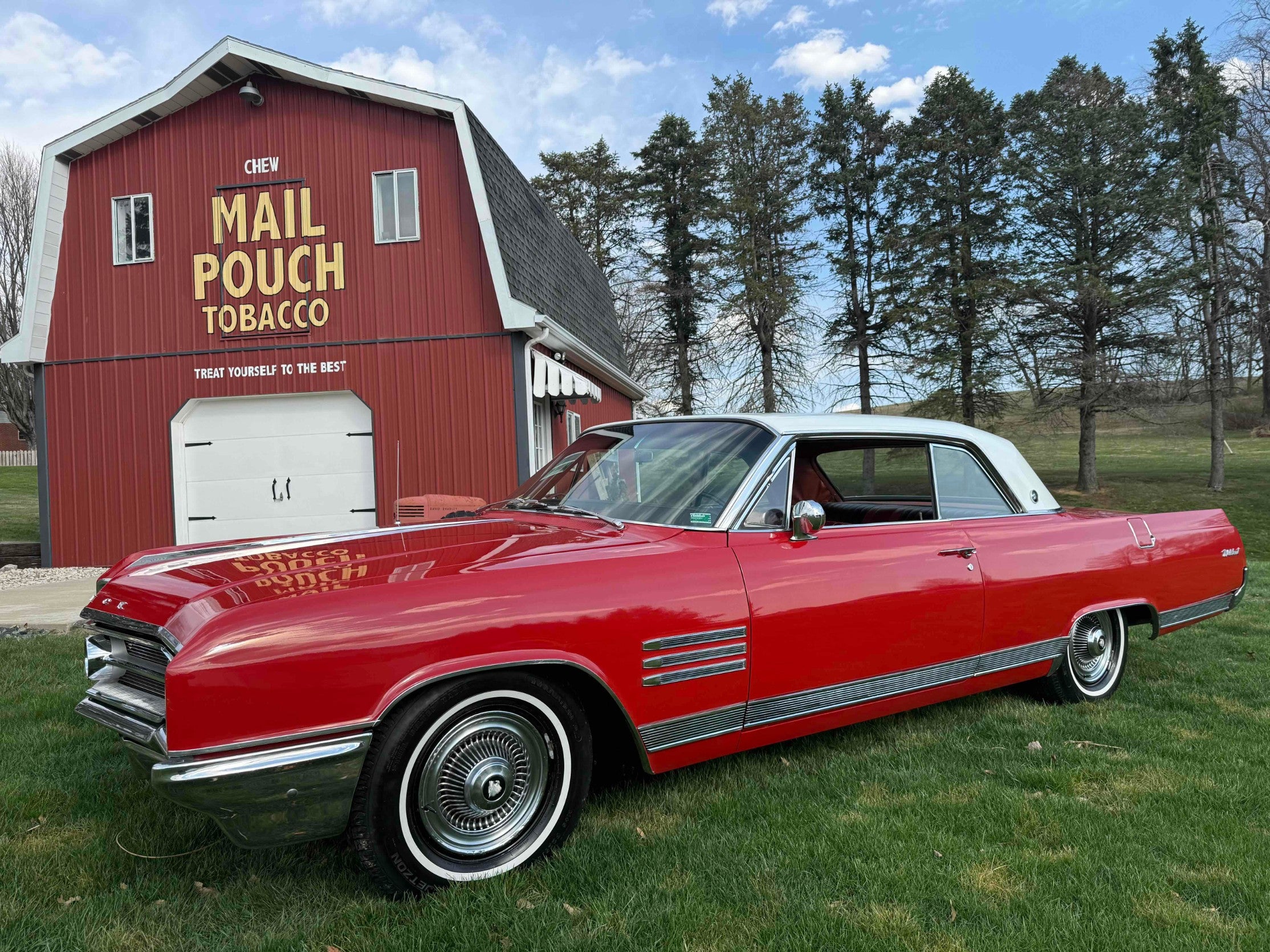 $22,900 · 6% below typical
Expand
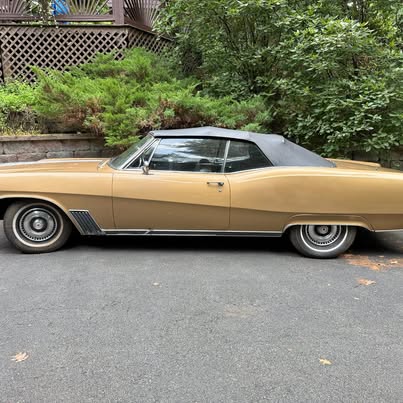 $17,500
Expand
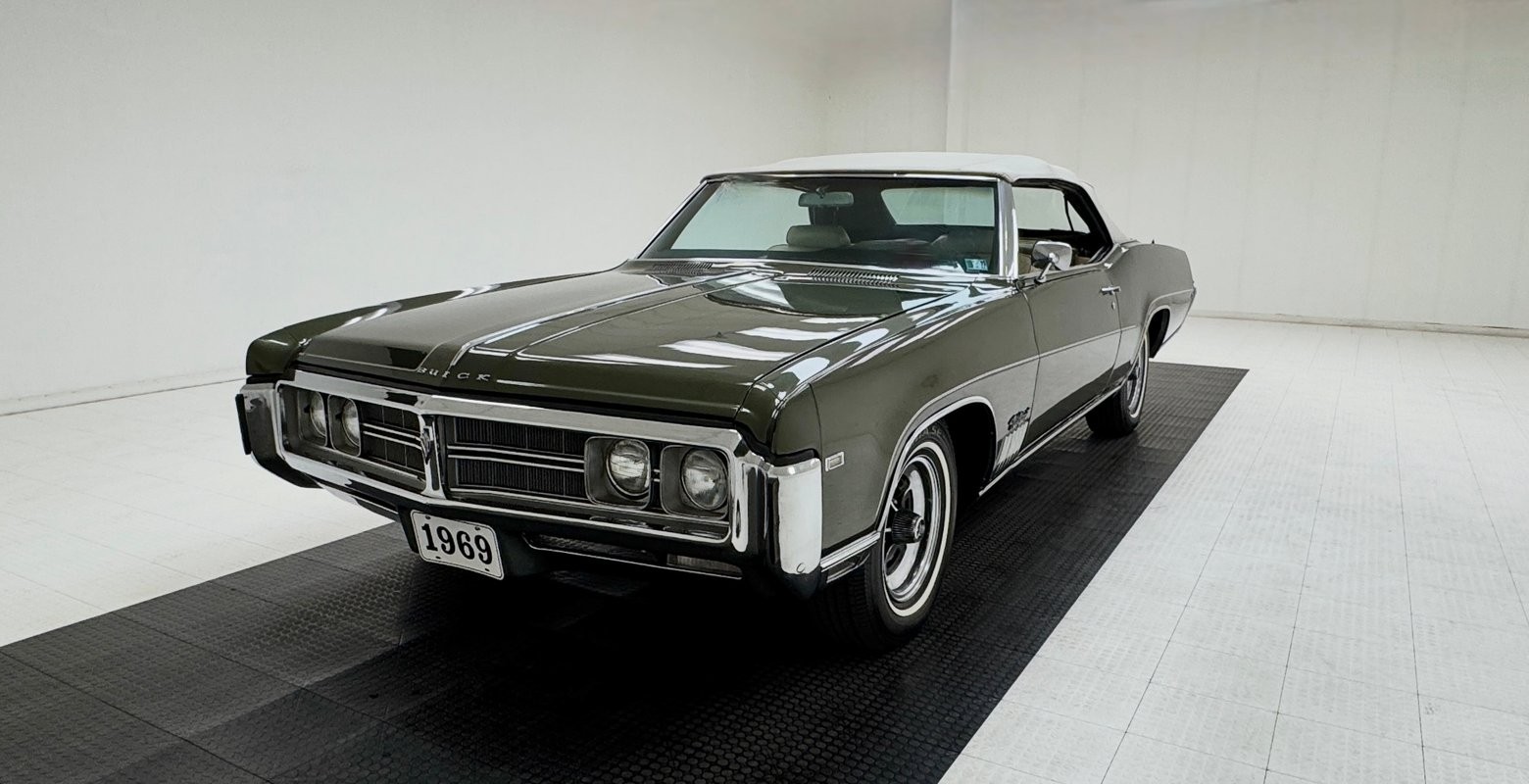 $22,900 · 6% below typical
Expand
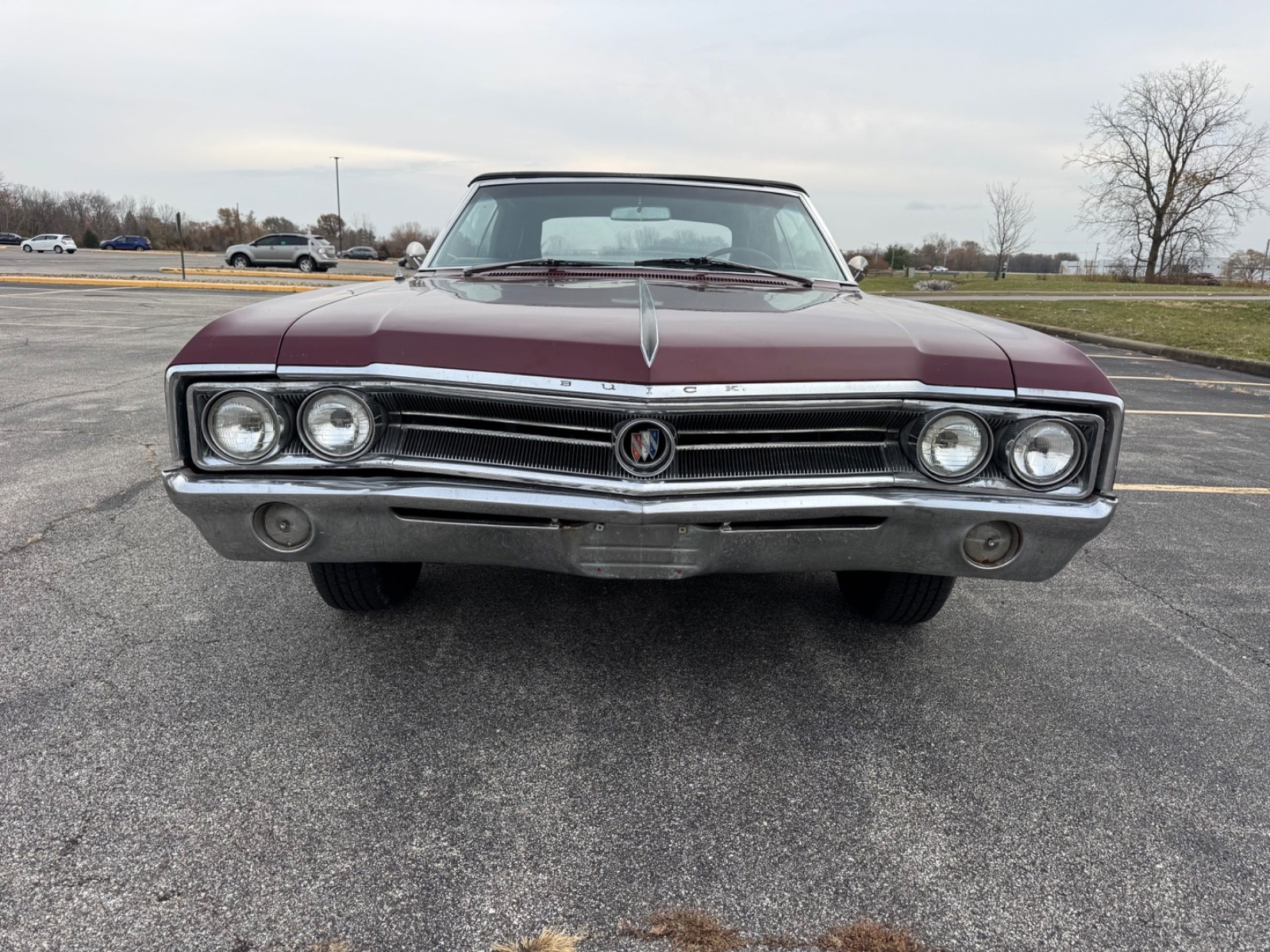 $18,500 · 24% below typical
Expand
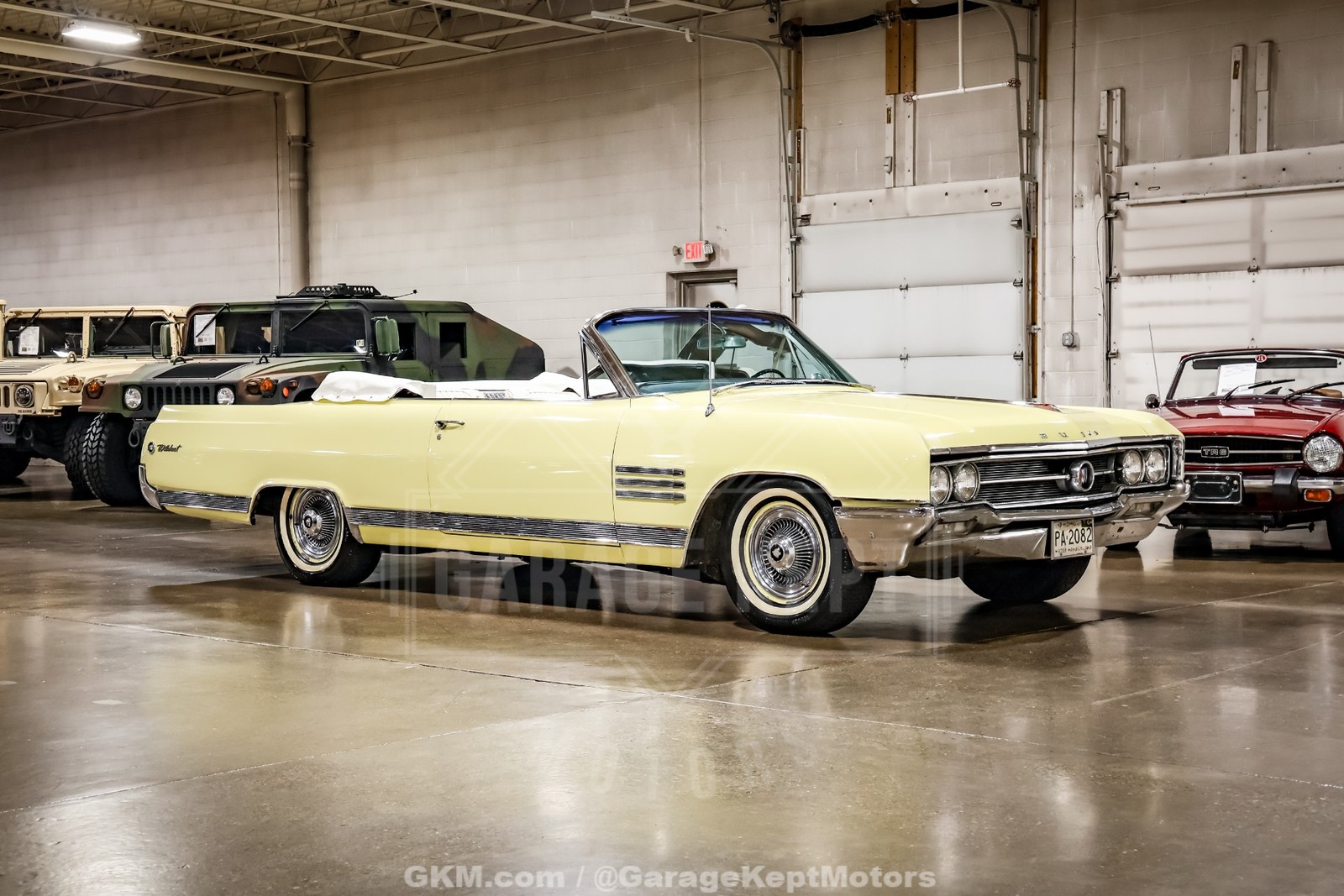 $34,900 · 43% above typical
Expand
What they sell for: Wildcat sale prices.