
Cadillac V-16 buyer's guide
Cadillac V-16 (1930–1940) — V-16, 452: what's listed, and what they sell for.
Years: 1930–1940 · Models: V-16, 452
Overview and history
The Cadillac V-16 is not really a car model in the modern sense. It is an engine with a coachbuilt wardrobe, sold for eleven years, through the worst collapse in the American luxury market, to people who mostly already had everything else. Cadillac unveiled it on 4 January 1930 at the New York Automobile Show, weeks after the Wall Street Crash, and the timing tells you the essential fact about the programme: it had been developed in total secrecy through the late 1920s, under engineer Owen Nacker — recruited from Marmon, where a rival sixteen had been gestating — and by the time the economy fell away, the car was too far along, and too important as a statement, to cancel. It was the first production V-16 offered in the United States, and it made Cadillac, overnight, the multi-cylinder benchmark against which Packard's Twin Six and Twelve, Lincoln's V-12 and the coming Marmon Sixteen would all be measured.
Understand what Cadillac was actually selling. Not speed, although a well-tuned Sixteen will run to 90 mph and beyond. Not novelty, although sixteen cylinders was a headline. The product was silence and smoothness of a kind no eight or twelve could match: firing impulses every 45 degrees of crankshaft rotation, overlapping so completely that torque delivery feels continuous, like an electric motor wound in cast iron and walnut. At idle a healthy 452 is close to inaudible from the driver's seat. That is the thing you are buying, and it is the thing your inspection has to verify, because a V-16 that ticks, shakes or clatters has lost the entire point of itself.
The commercial arc is a cliff edge followed by a long, dignified tail. Cadillac shipped 2,887 cars in the 1930 model year — remarkable for a car of this price, achieved because orders taken that spring still reflected 1929 money. Then the floor went: 364 cars in 1931, 300 in 1932, 126 in 1933, and from 1934 to the end of the overhead-valve line in 1937, roughly fifty a year. The flathead Series 90 of 1938 briefly revived volume to 315 cars before the line faded through 138 in 1939 to a final 61 in 1940, production ending in December 1939. Total production is usually quoted between about 4,076 and about 4,400 cars depending on whether the counter uses factory shipment ledgers or later build-sheet research; the per-year figures below follow the build-sheet tradition. The last hundred cars of the argument do not matter — any individual body style, in any individual year, was built in handfuls.
Two structural facts shape everything about buying one now. First, almost every V-16 was finished to order. Fleetwood and Fisher, both in-house General Motors coachbuilders by then, catalogued dozens of bodies — Cadillac-LaSalle Club research counts around seventy distinct job and style numbers across the run — and a small number of chassis went to outside coachbuilders in America and Europe, among them Lancefield of London, whose work appears in our own listing pool. There is no such thing as a standard V-16 specification to check a car against; there is only that car's build sheet, obtainable through Cadillac's historical services from the engine number, and the car in front of you either matches it or it does not. Second, the car was registered and identified in period by its engine number, not a modern VIN. Identity lives in stamped numbers, body tags and paper, and a surprising amount of this guide is about reading them.
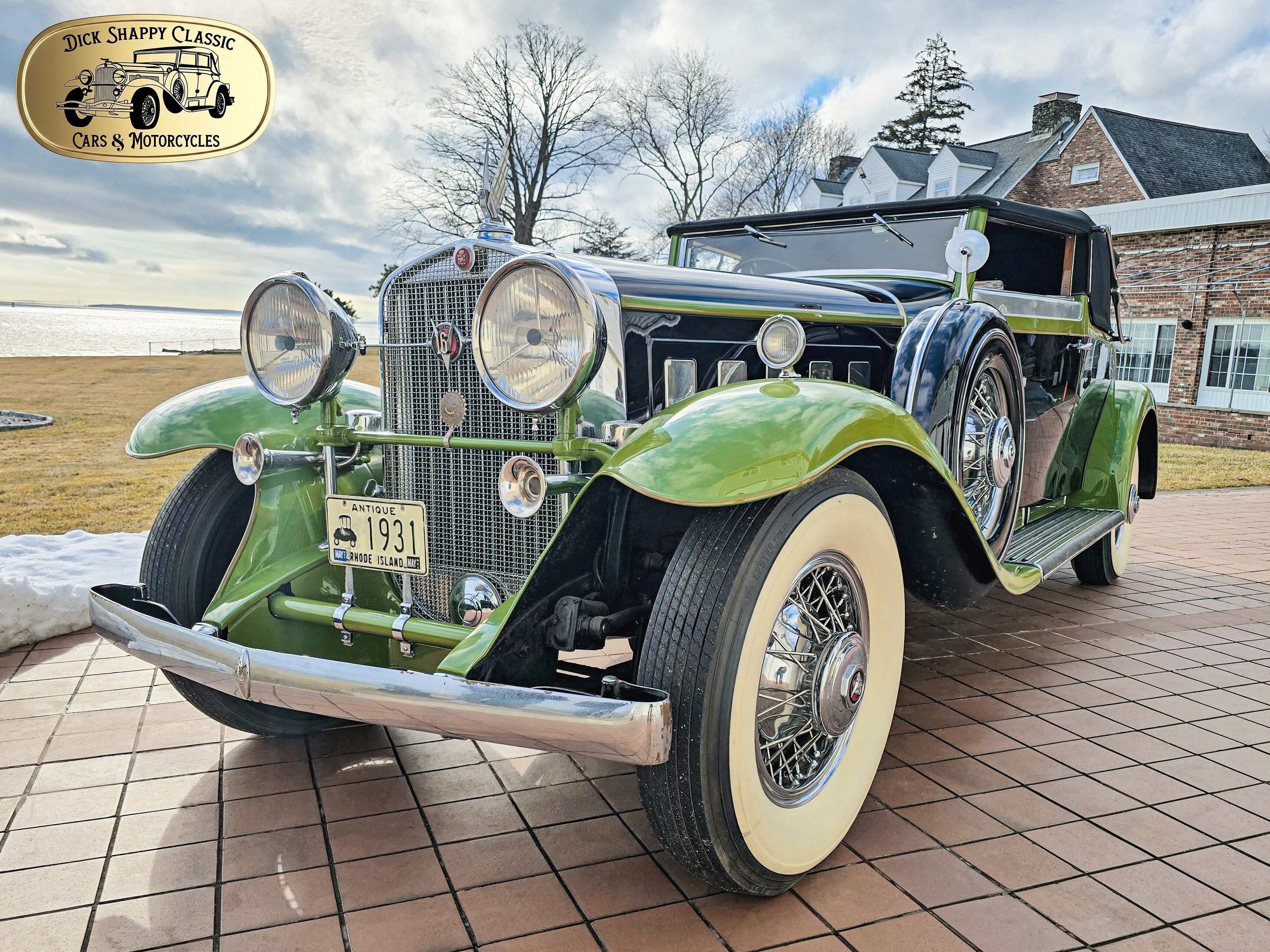
On this site the V-16 pool is tiny: six cars listed at the time of writing, all dealer-offered, five in Rhode Island and one in Michigan, spanning 1930 to 1932 — the open and convertible Fleetwood and Lancefield bodies of the first generation. That is a fair sample of where the market's centre of gravity sits: the 1930–32 cars dominate what changes hands, while the streamlined 1934–37 cars and the flathead Series 90s appear rarely. Where this guide cites our own photo evidence, it does so from a sample of just four photo-examined cars, and says so every time — four cars prove nothing statistically, but on a V-16, four cars is sometimes all the market gives you in a season.
One correction before we go further. The myth is that the V-16 is a fragile prima donna only a handful of magicians can keep alive. The truth is more useful: the 452 is a robust, understressed engine — 165 horsepower from 452 cubic inches is a gentle state of tune — and most of its systems are doubled versions of ordinary Cadillac practice. What is exotic is not the engineering but the arithmetic: everything exists in sixteens, the body is a one-off, and labour is doubled by the sheer size of the thing. V-16s do not fail mysteriously. They fail expensively, in ordinary ways, at extraordinary scale.
The models
A V-16 is identified by three layers, and you need all three before any conversation about rarity makes sense. The first is the series — 452, 452A, 452B and so on — which fixes the model year, chassis and engine generation. The second is the body style number, a four-digit Fleetwood or Fisher job number (4302, 4260, 4380, 4235, 5155) that fixes the coachwork design. The third is the individual build sheet, recording body number, original colours, trim, accessories, and the first buyer's name and town. Two cars can share a series and a style number and still be materially different cars. Sellers quote style-number production ("one of four built") because it is the most flattering layer; hold all three in view at once.
| Model | Years | Engine | Output | Built | Character |
|---|---|---|---|---|---|
| Series 452 | 1930 | 452 cu in OHV V-16, 45° | 165 hp | 2,887 | The launch car: upright, formal, vast catalogue of Fleetwood and Fisher bodies |
| Series 452A | 1931 | 452 cu in OHV V-16, 45° | 165–175 hp | 364 | Detail refinements, same 148 in wheelbase; the Depression arrives in the order book |
| Series 452B | 1932 | 452 cu in OHV V-16, 45° | 165 hp | 300 | Lower, longer styling, downdraft carburation, mechanical fuel pump, bigger brakes |
| Series 452C | 1933 | 452 cu in OHV V-16, 45° | 165 hp | 126 | The connoisseur's year: skirted fenders, V-grille, Fisher No-Draft ventilation |
| Series 452D | 1934 | 452 cu in OHV V-16, 45° | 185 hp | 56 | Streamlined pontoon styling, 154 in wheelbase, the longest American production cars |
| Series 452E / Series 90 (OHV) | 1935–37 | 452 cu in OHV V-16, 45° | 185 hp | 50 (1935), 52 (1936), 50 (1937) | Turret Top steel roofs, hydraulic brakes for 1937; limousines dominate the tiny output |
| Series 90 | 1938–40 | 431 cu in L-head V-16, 135° | 185 hp | 315 (1938), 138 (1939), 61 (1940) | The second Sixteen: flathead, 141 in wheelbase, Series 75-based, twin everything |
Production figures follow factory shipment and build-sheet research; published totals for the full run vary between roughly 4,076 and 4,400 cars, and individual years can differ by a handful between sources. Treat any seller's production claim for a specific style as a claim to be checked against the build sheet and the Cadillac-LaSalle Club's records, not as a fact to be repeated.
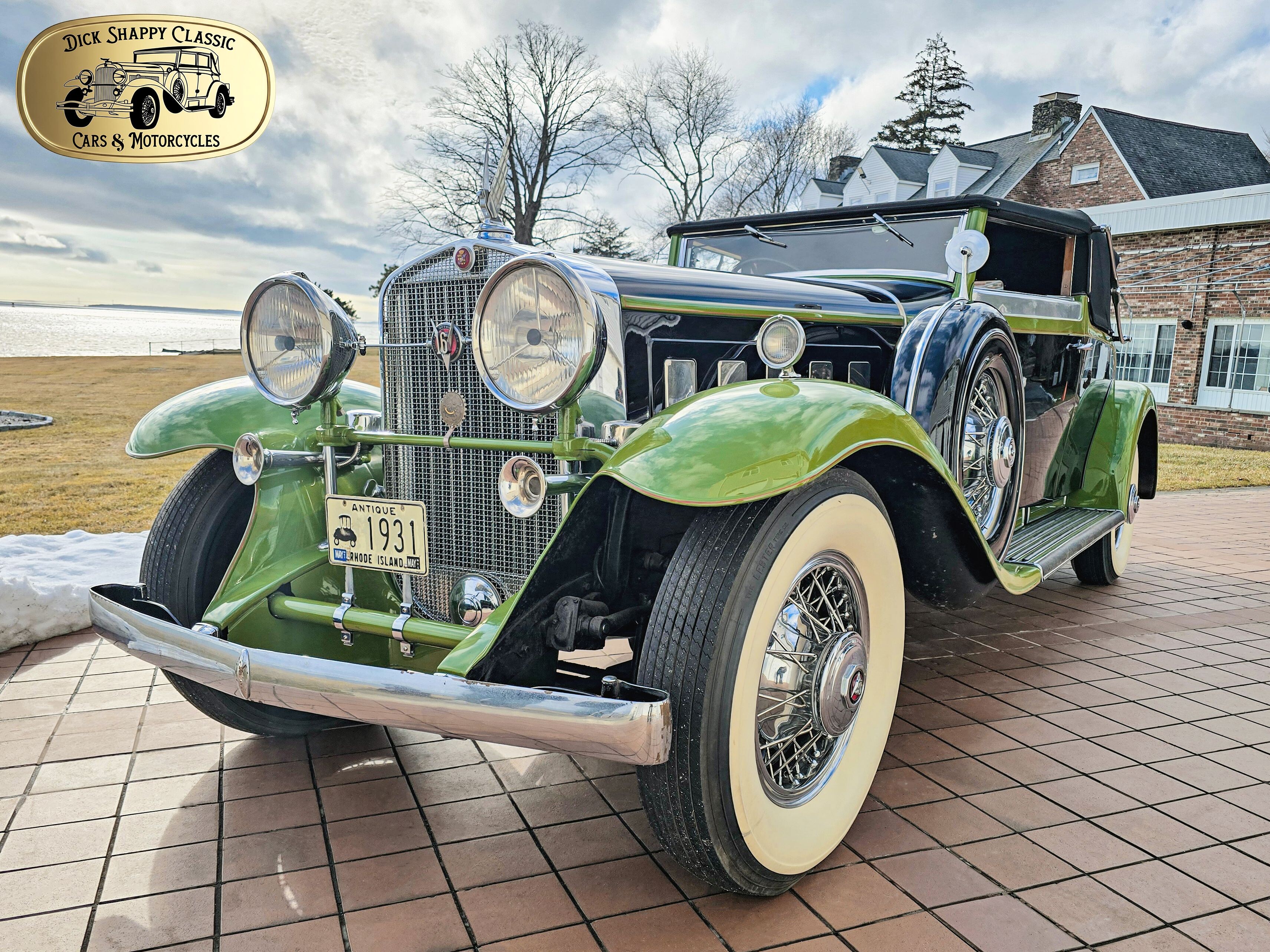
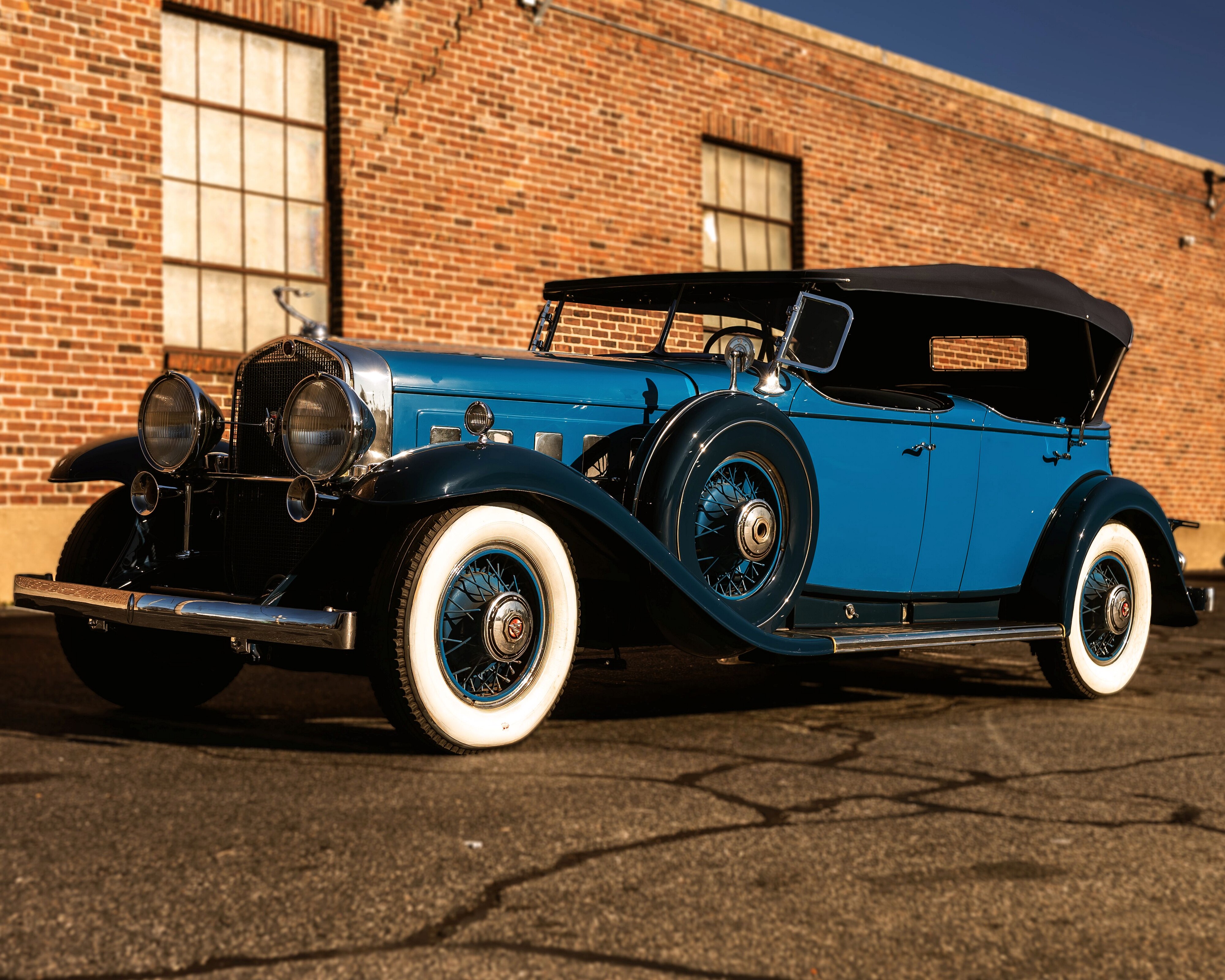
The 1930–31 cars — Series 452 and 452A. These are the V-16 of the popular imagination: 148-inch wheelbase, upright radiator shell, free-standing headlamps on a bar, side-mounted spare wheels in metal covers, and a catalogue so broad it reads like a coachbuilder's fantasy — roadsters, phaetons, convertible coupes and sedans, five- and seven-passenger sedans, imperial limousines with division glass, town cars with open chauffeur compartments, landaulets with collapsible rear quarters. Fleetwood styles carry 42xx and 43xx numbers; the Fisher-bodied cars, slightly less ornate, carry their own series. Within the Fleetwood range sit the celebrated Madame X bodies — styles in the 41xx group, named by collectors (never by Cadillac) after the 1929 Ruth Chatterton film — identified by an 18-degree raked one-piece windshield, strikingly thin window pillars, and chrome mouldings edging every pane of glass. A Madame X transforms an upright sedan into something low and faintly sinister, and the market has always known it.
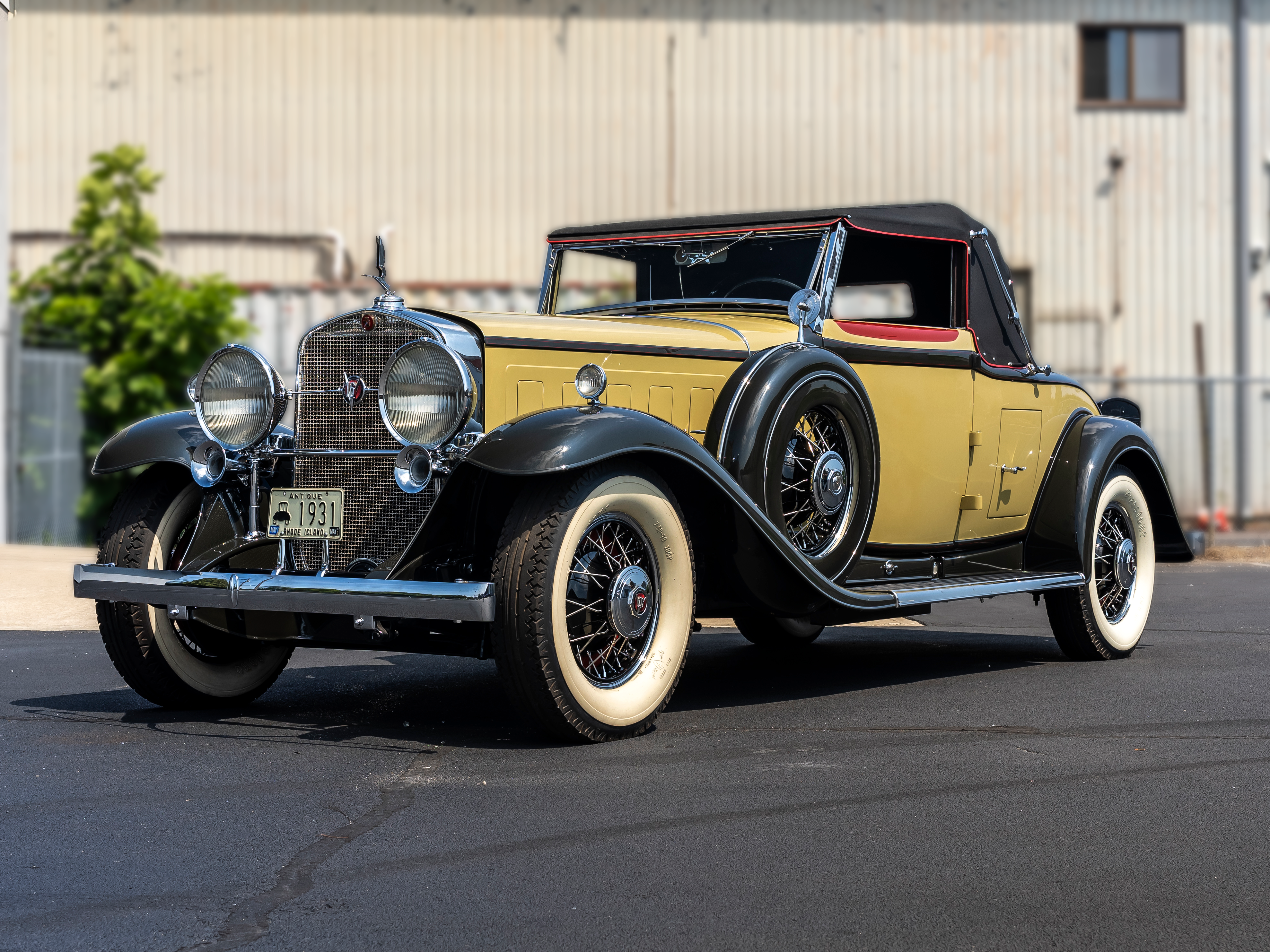
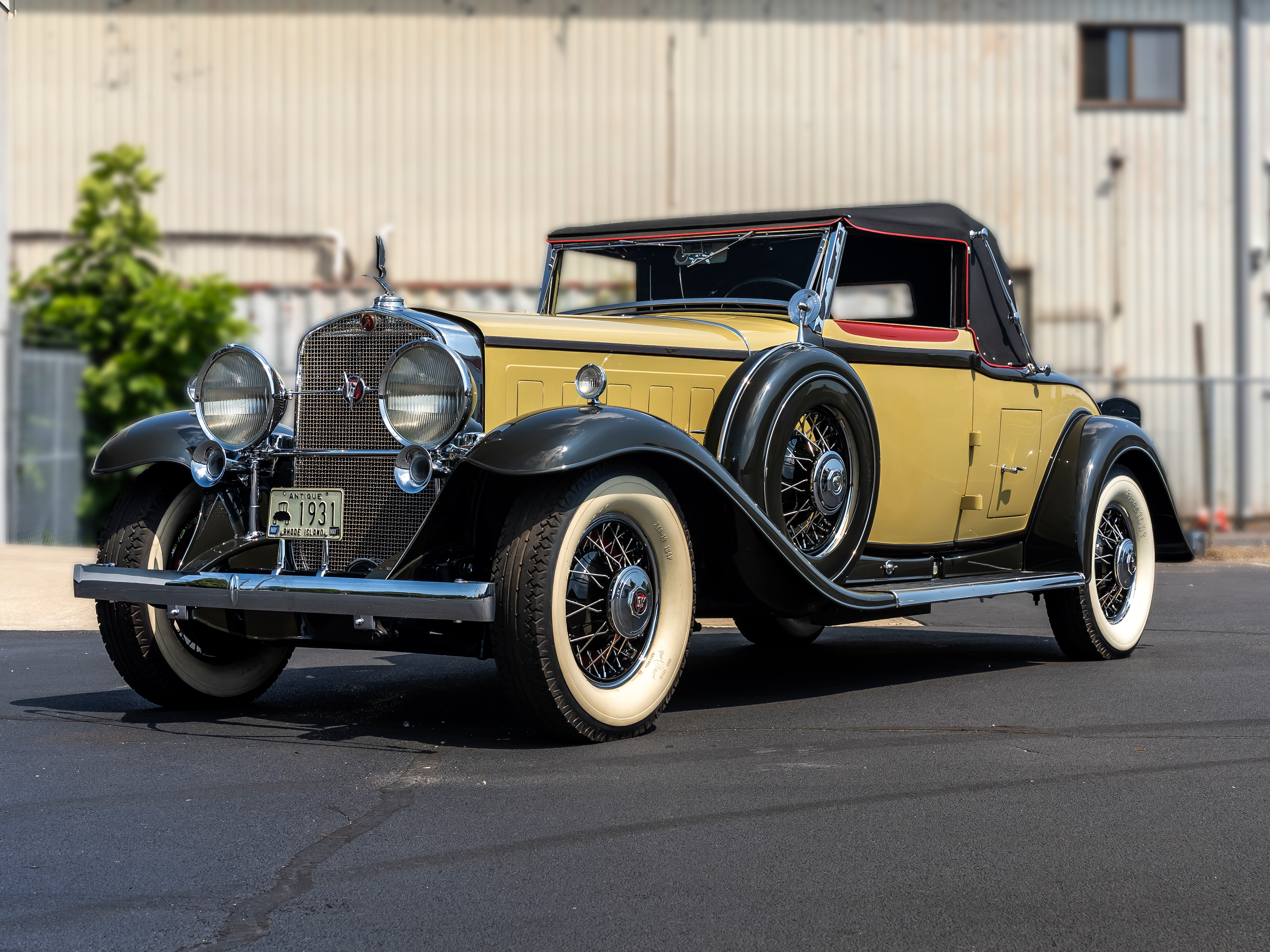
The open cars dominate both the listings and the money. The Roadster, style 4302, is the sportiest thing ever built on the chassis — two seats, a rumble seat, a folding screen. The Sport Phaeton, style 4260, adds a second cowl and a rear windshield. The All-Weather Phaeton, style 4380, is the clever one: a convertible sedan whose windows rise in proper frames, giving you a closed car in bad weather and an open tourer in good. The Convertible Coupe, style 4235, and its convertible sedan sisters are the cars most buyers actually live with — open-car theatre, closed-car usability, and a top one person can manage.
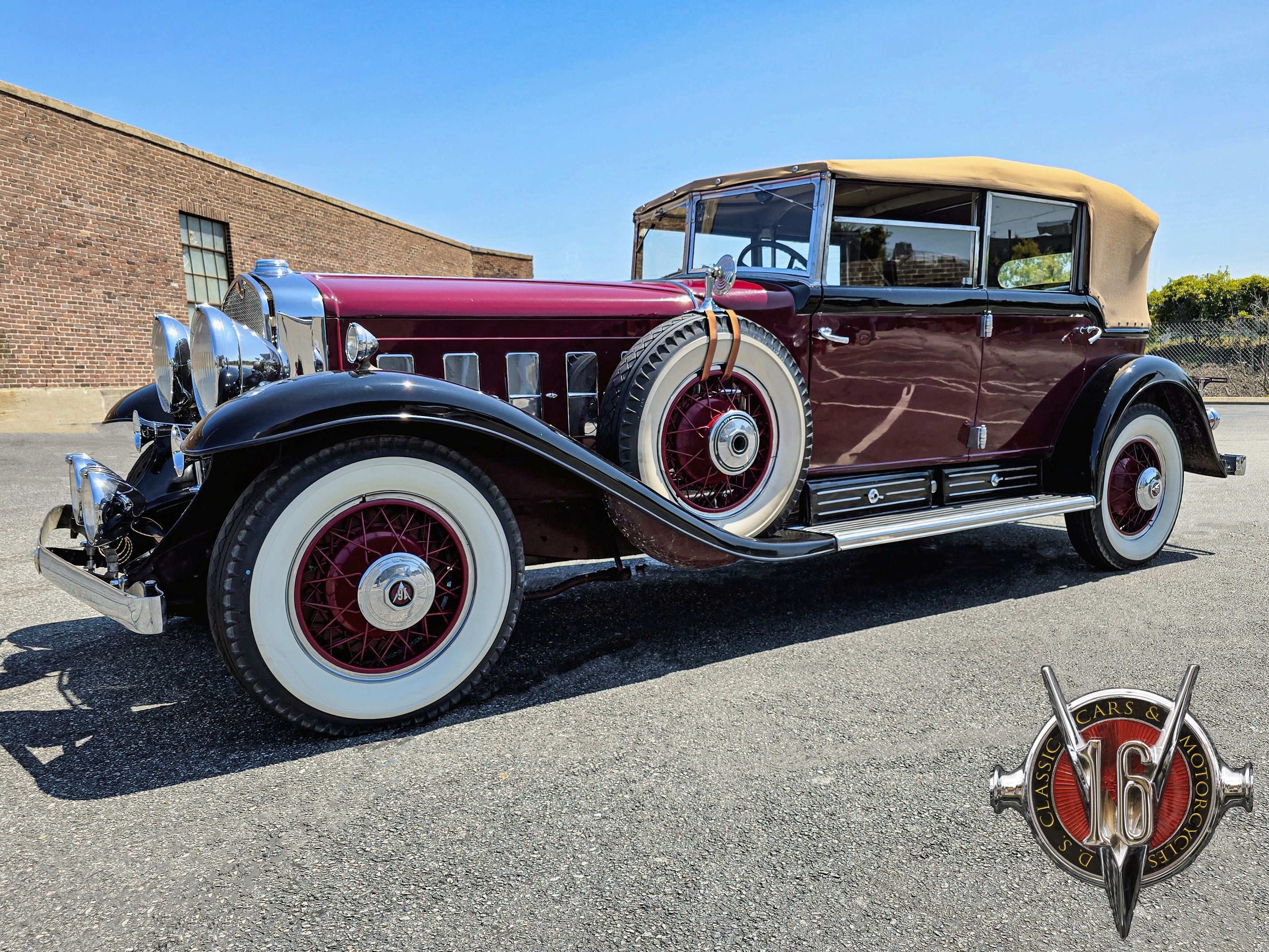
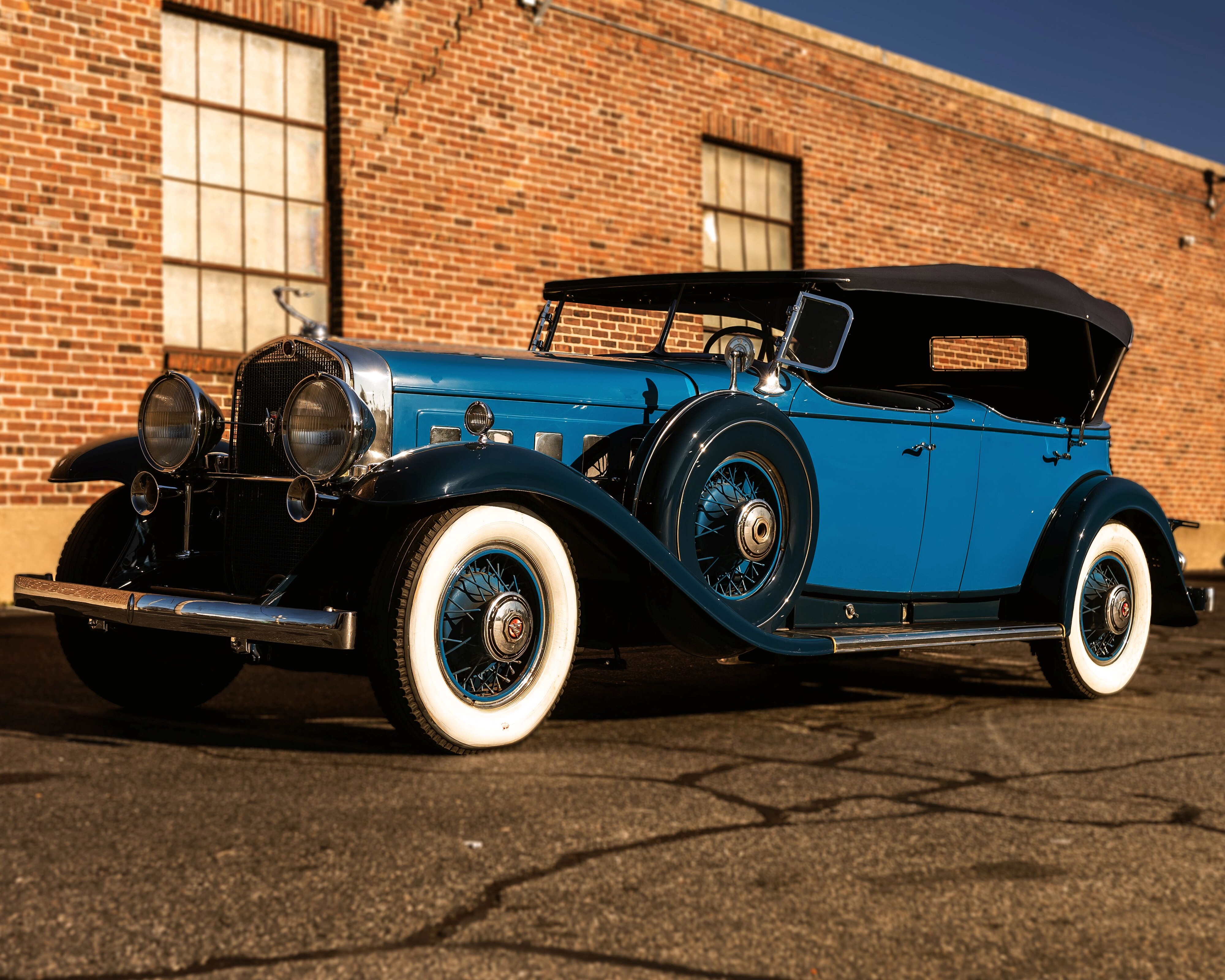
The 1932–33 cars — Series 452B and 452C. Cadillac restyled the car for 1932: lower and longer in feel, headlamps freed from their bar, a more integrated grille, and under the skin the useful changes — downdraft carburation, a mechanical fuel pump replacing the vacuum tank, heavier axles, larger brakes, and an available vacuum-operated automatic clutch with freewheeling, a period gadget you should test carefully and budget to live with or disable honestly. The 452B is the last of the classical, separate-fender idiom. For 1933 the 452C gained skirted fenders, a vee'd grille and Fisher's No-Draft individually controlled ventilation — the vent windows that would become universal. Cadillac announced that 1933 production would be limited to 400 cars, each owner's name on a plate in the car; it built 126. Collectors rate 1933 as the aesthetic peak of the first generation, the year the upright car and the streamlined car briefly overlap, and with 126 built across more than thirty recorded body styles, almost any 452C is a production rarity by arithmetic alone.

The 1934–37 cars — Series 452D, 452E and the OHV Series 90. For 1934 Cadillac stretched the wheelbase to 154 inches — with overall lengths around 240 inches, among the largest production cars ever built in America — and wrapped the chassis in Streamline Moderne coachwork: pontoon fenders, bullet headlamps, faired-in trunks, and from 1935 the Fisher Turret Top all-steel roof, although Fleetwood still built the bodies. Output rose to a claimed 185 hp. Production was 56 cars in 1934 and around fifty a year thereafter, nearly half of the 1936 cars ordered as limousines. These are formal cars: they were chauffeur-kept when new and collection-kept ever since, so originality is often remarkable and wear low, but the streamlined trim, die-cast brightwork and one-year-only details are the hardest of all V-16 parts to replace. Hydraulic brakes finally arrived for 1937, the overhead-valve engine's last year.
The 1938–40 cars — the flathead Series 90. The second-generation Sixteen is a different car wearing the same idea. The new engine (next section) sat in a shorter 141-inch chassis shared in most respects with the V-8 Series 75, bodied exclusively by Fleetwood in fourteen styles. It is lower, quieter at idle even than the 452, and easier to drive — but it has never held the same place in the Full Classic hierarchy as the overhead-valve cars, partly because the Classic Car Club of America's Full Classic list centres on the earlier coachbuilt era, and partly because sharing so much with the Series 75 makes it feel, unfairly, less bespoke. As a car to use, it is arguably the best Sixteen of all. As an asset, it trades in a different, cooler room. Know which room you are buying into.
Outside coachwork. A handful of chassis went to independent coachbuilders — Murphy and Judkins in America; in Europe, firms such as Saoutchik, Vanvooren and Lancefield of London, which built the Custom Victoria recorded in our own pool on a 1931 chassis. An outside-coachbuilt V-16 is a double research project: the Cadillac build sheet records only a chassis shipped in the white, and the coachbuilder's own records carry the rest of the story. Provenance gaps on such cars are normal; provenance inventions are not. Pay for the documented ones.
Engines and gearboxes
There are two V-16 engines, sharing nothing but the cylinder count, the badge and the design brief: sixteen cylinders, turbine smoothness, silence. Everything else — architecture, character, cost profile — differs, and the first job in assessing any car is knowing which engine you are standing in front of. The giveaway is instant: the 452 fills its bay tall and narrow, valve covers high; the 431 sits low and improbably wide and flat, like a table, with its carburettors on top.
The 452 overhead-valve engine, 1930–37
Owen Nacker's engine is best understood as two overhead-valve straight-eights sharing one crankshaft and one aluminium crankcase, their cast-iron blocks meeting at a narrow 45-degree vee. Bore and stroke are 3.00 by 4.00 inches, giving 452 cubic inches (7.4 litres). The crankshaft runs in five main bearings, is fully counterweighted, and carries a vibration damper; firing order and the 45-degree bank angle were chosen so that power impulses overlap completely, which is the mechanical source of the car's famous seamlessness. Cadillac rated the engine at 165 hp at 3,400 rpm at launch, with some period and later sources quoting 175 hp, and the final overhead-valve versions at 185 hp; torque is the figure that matters — around 320 lb ft, with roughly 300 lb ft available from little more than idle, which is why a Sixteen pulls away in top gear from walking pace without complaint and why period drivers made a parlour trick of it.
The valvetrain is the engine's signature technology. Overhead valves were a Cadillac first, and noisy by nature; Nacker's answer was the hydraulic valve silencer — an early hydraulic lash-compensating device that maintained zero lash automatically, eliminating both the clatter and the periodic valve adjustment rival engines demanded. It is the ancestor of every hydraulic lifter you have ever owned, and when it works, the top end of a 452 is silent. When it does not — plungers gummed with old oil, worn, or starved by low pressure — the engine ticks in a way that is, on this car, a serious diagnostic event rather than a cosmetic one, as the problem areas section explains.
Each bank is served as a semi-independent engine: its own carburation, its own exhaust manifold and system, its own cooling path. The 1930–31 cars use updraft carburettors — Cadillac-built units, with Detroit Lubricator instruments also documented — fed by a vacuum tank; for 1932 Cadillac adopted downdraft carburettors and a mechanical fuel pump, a worthwhile modernisation that later owners sometimes retrofit to early cars, which is correct as engineering and a deduction as originality — ask, and price accordingly. Ignition is by coil and distributor with twin contact points in the period Cadillac manner; the generator, starter and water pump are conventional Cadillac practice scaled up. The engine is dressed like jewellery — enamelled manifolds, polished aluminium, every wire and pipe routed with intent — because Cadillac understood that owners of this car opened the bonnet in front of other owners. A scruffy engine bay on a V-16 is therefore not patina; it is evidence about the last thirty years of the car's life.
Servicing the 452 is straightforward in concept and heavy in execution. Oil quality is critical — the hydraulic silencers are the first components to suffer from sludge — and the engine rewards short oil intervals and regular use. A full rebuild is a major professional undertaking: budget $45,000–$80,000 for a complete, documented rebuild by a shop with sixteen-cylinder experience, and treat any quote dramatically below that range as a quote for something else. Partial work — a top-end overhaul, silencer service, carburettor and ignition rebuilds — sits in the $4,000–$12,000 range. The saving grace is how rarely a looked-after engine needs the full treatment: these are understressed lumps, and most survivors have covered modest mileages.
The 431 L-head engine, 1938–40
For 1938 Cadillac replaced the jewel with a pragmatist. The Series 90 engine is a side-valve (L-head, flathead) V-16 of 431 cubic inches (7.1 litres), bore and stroke square at 3.25 inches, with the banks spread to an extraordinary 135-degree vee. The wide angle drops the engine dramatically — the unit is roughly six inches shorter, thirteen inches lower and some 250 pounds lighter than the 452, with far fewer parts — allowing the low bonnet lines late-1930s styling demanded. The crankshaft runs in nine main bearings. Output was quoted at the same 185 hp as the final 452s, delivered with even less fuss: a healthy 431 at idle is one of the quietest internal-combustion engines ever put in a motor car.
The design philosophy is duplication as reliability. Two carburettors, one per bank. Two fuel pumps. Two distributors. Two water pumps. Each bank can be diagnosed as its own engine, and a fault that silences one bank leaves you an eight-cylinder Cadillac to limp home on rather than a stranded monument. The flathead architecture brings its own signature: cooling depends on generous water passages that scale up if neglected, and decarbonising means lifting two very wide heads. Rebuild costs match the 452's — the same $45,000–$80,000 professional range — while engine-specific castings are rarer by production: only 514 of these engines were ever built.
Gearboxes
Every V-16 uses Cadillac's three-speed manual gearbox with synchromesh on the upper ratios — the "clashless" Syncro-Mesh transmission pioneered in 1928 — driving a live rear axle. There was never a factory automatic; if a car is presented with one, you are looking at a later conversion, and its value and story both change on the spot. The gearbox is strong, slow and deliberate: synchromesh that rewards an unhurried hand, ratios wide enough that most driving, once rolling, is top-gear driving. On 1932 cars, check for the optional vacuum-operated automatic clutch and freewheeling device; its servo and linkages age, and a car that creeps or refuses clean engagement may be suffering there rather than in the clutch itself.
Clutch work on any V-16 is an engine-out or gearbox-out labour event on a very heavy car: budget $3,500–$7,000 for a clutch renewal done properly with the flywheel refaced and the release mechanism rebuilt, and $4,000–$9,000 for a gearbox overhaul including bearings and synchromesh renewal. Rear axles are durable but their bearings and seals are ninety years old; a whining axle under light throttle that changes pitch on the overrun is wear talking, and an axle rebuild runs $3,000–$6,000. None of these numbers should frighten you off the car. They should frighten you off a cheap one with symptoms.
Problem areas
A V-16 concentrates the ordinary failure modes of a 1930s luxury car and multiplies each by the cost of scale, rarity and hand-built trim. What follows is organised by system, in the order a professional inspection will meet them. Our own photo-examined sample on this site is just four cars; within that tiny sample, the examiners' notes mention rust on one car and visible damage on one, and mention neither smoke nor leaks on any — a distribution that tells you more about how carefully these cars are presented than about the population, and which you should treat as a prompt to look harder, not as reassurance.
The engine: silencers, cooling and the doubled systems
Start with the hydraulic valve silencers on the 452, because they are this engine's tell. The silencers depend on clean oil at stable pressure; sludge from long storage, infrequent changes or overheating lets the plungers stick or leak down. Symptoms are a cold-start rattle that takes minutes to fade, or a persistent tick from one bank that no amount of running cures. Distinguish silencer trouble from genuine valve-gear wear by behaviour: silencer noise varies with oil temperature and pressure and often changes side or cylinder as the oil warms, while mechanical wear — a worn rocker, a tired cam lobe — ticks with metronome regularity at half engine speed from one spot, hot or cold. A stethoscope on the valve covers localises it. A silencer service — removal, cleaning, testing and renewal of the units as needed — runs $2,500–$6,000 depending on access and how many units are replaced; ignored long enough, collapsed silencers hammer the valve gear and turn a service into a top-end rebuild at $8,000–$15,000.
Cooling is the second engine system that decides whether a V-16 is a car or a sculpture. Sixteen cylinders reject a great deal of heat into a radiator designed for 1930s coolant, traffic and fuel. The failure chain is universal: scale accumulates in the block's water passages and the radiator core over decades; the water pump's seal and bearing wear; thermostatic radiator shutters on the early cars seize in whatever position they last moved; and the car that "only overheats in traffic" is telling you its margin is gone. Test it properly — a long idle after warm-up, then a pull in top gear — with an infrared thermometer: the two banks should run at comparable temperatures, and a bank running hotter points to its own carburation, cooling path or exhaust restriction, because on this engine everything is doubled and asymmetry is information. A radiator recore is a large, specialist job at $2,500–$5,000; water-pump rebuilds run $600–$1,200 per pump; a full cooling rehabilitation is $4,000–$8,000. Budget it into any car without documented cooling work, because the consequence of cooking a 452 — warped heads, a cracked block among sixteen bores — is the most expensive sentence in this guide.
Fuel and ignition faults follow the same logic of asymmetry. On the early cars the vacuum tank and updraft carburettors add period failure modes: a vacuum tank that loses its prime starves the engine after a few miles, then mysteriously recovers at rest; updraft carburettors flood hot and wear at the throttle spindles until the idle wanders. On 1932-on cars the mechanical pump and downdraft instruments are more forgiving, but twin carburettors out of balance make the engine idle on what feels like twelve cylinders. The distinguishing test for any rough-running complaint is to work bank by bank: disable or enrich one side at a time and listen for which side changes the note. Ignition wear — points, condensers, coil, distributor bushings, and on the Series 90 two distributors to synchronise — produces the classic hot misfire owners misdiagnose as carburation for years. A full ignition and carburation rebuild runs $2,500–$6,000; a vacuum-tank rebuild $800–$1,800. None of it is difficult. All of it must actually be done, and on a sixteen there is twice as much of it.
Finally, listen to the bottom end with the engine fully hot and the oil thin. The five-bearing crank of the 452 and the nine-bearing crank of the 431 are both strong, but low oil pressure at hot idle, a deep knock under load that fades on the overrun, or glitter in the drained oil moves you from maintenance into the rebuild budget quoted in the engines section. Oil pressure is read on the car's own gauge and verified with a mechanical gauge teed in — never accept the dashboard alone on a car where the gauge, its line and its sender are all ninety years old.
Rust, structure and the wooden body
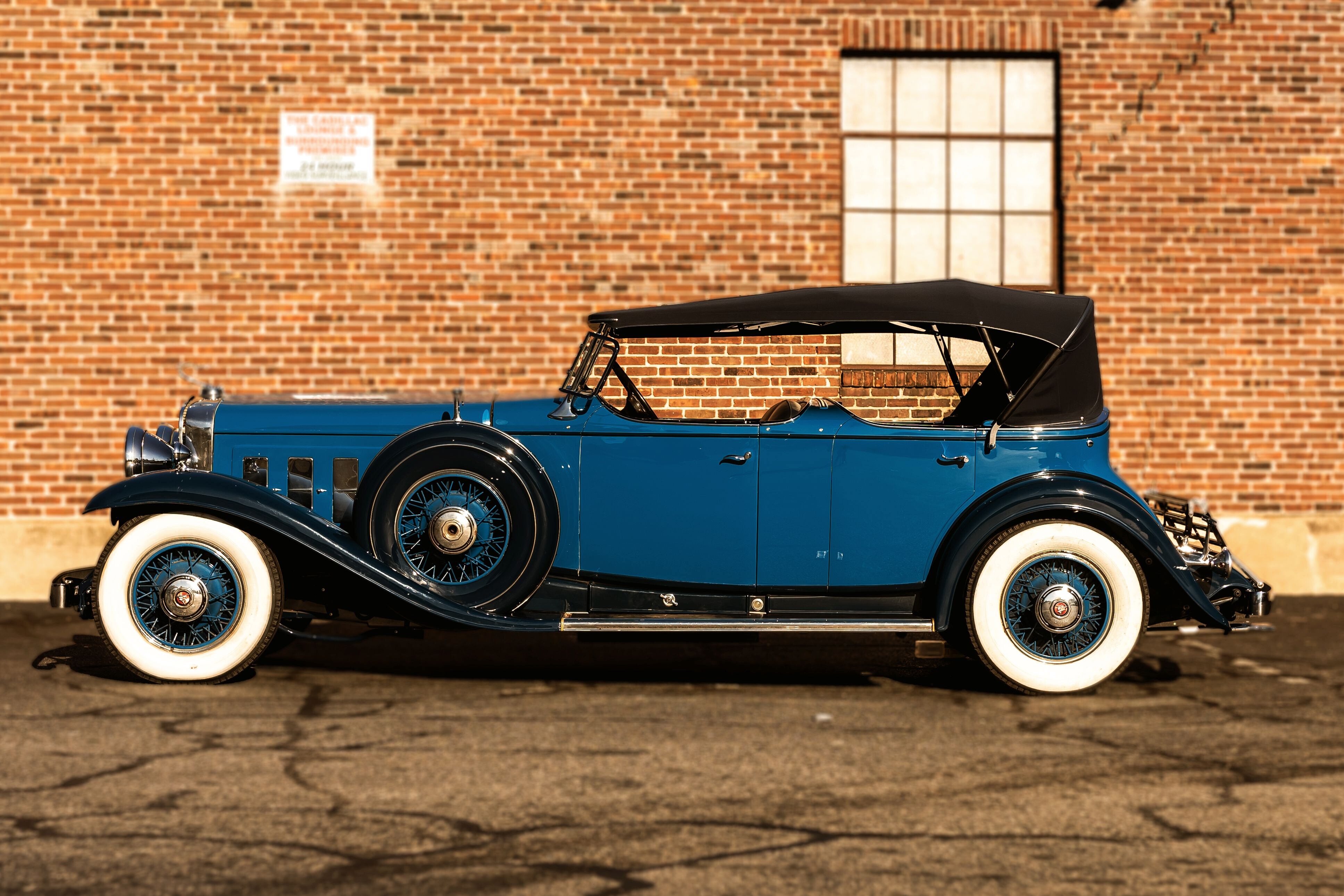
Here is the fact that organises everything about a first-generation V-16's body: beneath the steel and aluminium skin, a Fleetwood or Fisher body of 1930–33 is a wooden structure — ash framing, jointed, screwed and glued, over which the panels are nailed and finished. The wood is the body. Rot in the framing is therefore not a trim issue; it is structural failure in slow motion, and it concentrates exactly where water sits: the bottom of the door pillars, the sill members under the door thresholds, the framing around the windshield and rear quarters, the boot floor, and the lower cowl. Its symptoms are doors that have dropped and need a lift to latch, door gaps that taper, a windshield frame that moves when you push a front pillar, and floors that feel springy rather than solid at the edges. The test is tactile and unglamorous: press and probe (with the seller's permission, a blunt awl at hidden framing), work every door for sag and latch effort, and look from underneath at the sill line and body mounts. Professional reframing of a door opening or a sill section runs $3,000–$8,000 per side once the trim is out; a body needing extensive wood throughout is a $25,000–$60,000 conversation before paint, and it is the commonest way a "cheap" V-16 becomes the most expensive one.
Steel rust follows the period map. Fenders rust at their beads, their running-board junctions and around the side-mount spare wells; running boards rot under their rubber covering, invisibly, until they flex; boot lids and rear valances trap water; door bottoms rust from inside as drain holes block. On the 1934–37 cars the Turret Top replaced the fabric roof insert — a rot and leak point on earlier closed cars — with an all-steel roof, but the streamlined bodies' faired panels and enclosed spare compartments hold moisture against seams you cannot see without a lift. Aluminium panels corrode at their fasteners and where they meet steel, bubbling paint along edges. In our four-car photo-examined sample, rust was noted on one car — treat that as the floor of the true incidence, not the ceiling: the question is never whether a car has had corrosion, but where, how much, and whether the repair respected the wood underneath. Chassis rust is less common — the frame is massive — but check spring hangers, crossmembers under the battery and tank, and frame straightness on any car with a body-fit problem.
Brakes, steering and suspension
The braking system divides the run in two. Cars through 1936 use mechanically operated drum brakes with vacuum assistance — rods, cables, cross-shafts and compensators, all of which must be in adjustment together for the car to pull up straight. Their failure mode is not sudden loss but progressive mediocrity: stretched cables, worn clevis pins, oval drums, glazed or oil-contaminated linings, a vacuum servo whose diaphragm and valves have aged out. The test is a series of firm stops from 40 mph, hands light on the wheel: a mechanical-brake car in proper order stops straight and surprisingly well; one that dives for a verge has an adjustment or contamination fault on the side it pulls away from, and one with a long, springy pedal has wear in the linkage, not "character". A complete mechanical-brake rehabilitation runs $4,000–$9,000. From 1937, and across the Series 90, hydraulic brakes bring a master cylinder, wheel cylinders and pipes that are now ninety years old: the failure mode flips to leaks, seized cylinders and perished flexibles, the cure is a full hydraulic rebuild at $3,000–$6,000, and the test is a hard pedal held for a full minute, watched for sink, plus a torch inspection of every pipe and backing plate for weeping.
Steering on the early cars is a worm-type box driving a beam front axle on semi-elliptic leaf springs, with kingpins and shackle pins doing the locating. Wear accumulates everywhere at once: play at the wheel rim beyond a couple of inches, a knock over broken surfaces, and wander that no alignment cures until kingpins, shackle bushes and steering box are renewed as a set. Grease is the system's life — these chassis have numerous grease points with service intervals measured in thousands of miles, and a dry chassis wears in a season what a greased one survives for decades. Ask when it was last lubricated, and by whom; the answer predicts the steering bill. A steering-box rebuild runs $1,500–$3,500; kingpins, bushes and a lubrication recommissioning $1,500–$4,000; sagged leaf springs are re-arched or remade at $800–$2,000 per spring. The Series 90's independent front suspension replaces kingpin wear with wishbone-bush wear, diagnosed by levering each joint for play. Hydraulic lever-arm dampers leak and go slack; bounce each corner — the car should settle in one movement — and budget $400–$900 per corner for rebuilt units.
Electrics, trim and interior
The electrical system is 6-volt, positive earth in period Cadillac practice, sized for an enormous starter load. Its enemies are resistance and time: corroded earth straps, tired generator brushes and cut-outs, perished cloth-braided wiring whose insulation crumbles where it flexes, and ninety years of owners' additions. Slow cranking is more often cable and earth resistance than a weak battery or starter — the distinguishing test is a voltage-drop check across each cable while cranking, which finds the hot, resistive joint in minutes. A full rewire in correct cloth-braided loom is $4,000–$9,000; a generator and starter rebuild $800–$2,000 the pair; and charging should be checked hot, at speed, with the lamps on, because marginal charging is the fault that strands these cars at dusk. Instruments fail at their senders and capillary lines as often as at the gauge; budget $1,500–$4,000 for a full instrument restoration, and verify the odometer against a measured mile, because mileage claims on a car whose cable may have been disconnected for decades are folklore until proven.
Trim is where V-16 economics turn savage. The brightwork is extensive, much of it die-cast — handles, window winders, lamp shells, mascot details — and die-cast metal of this era cracks, pits and swells with corrosion no polishing reverses. Replating a V-16's chrome to show standard is a $15,000–$35,000 programme; replacing a cracked die-cast handle means finding one of a handful of survivors or having the part cast and machined, at $500–$2,500 per piece. The Goddess mascot, grille shell, side-mount covers and mirrors, correct headlamp lenses — each is a small market of its own. Inventory the trim against photographs of the correct style before you value the car: a V-16 missing its brightwork is missing a five-figure shopping list that cannot be completed from a catalogue.
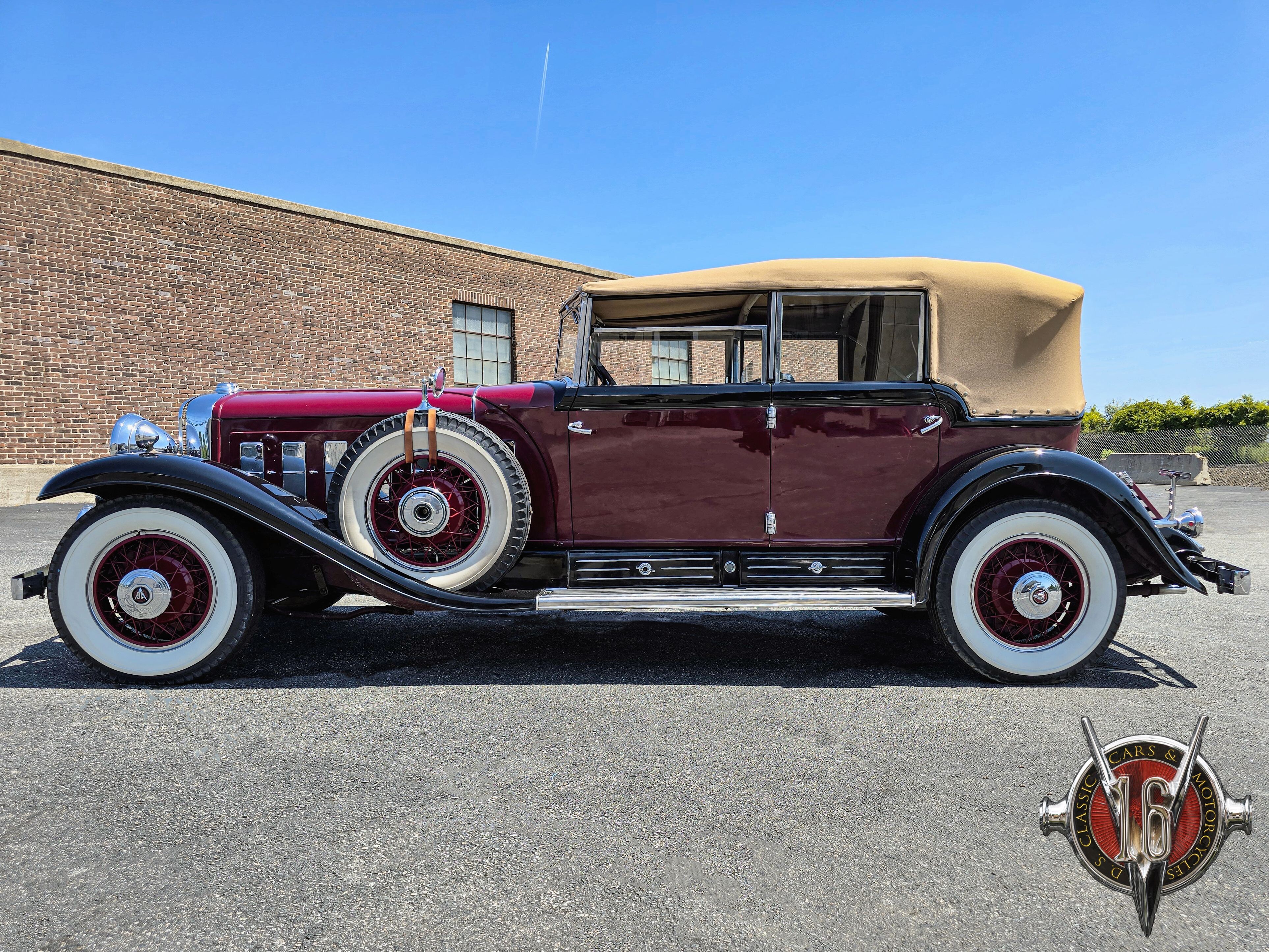
Interiors were trimmed in wool broadcloth, mohair and leather, with wood veneer on the fine bodies. Failure is by light, moth and water: broadcloth fades and wears at the driver's cushion; moth eats stored wool silently; leather splits at the piping; veneer lifts where a leaking windshield or roof insert has fed it water — also your evidence trail back to the wood-framing section above. A correct full retrim in period materials is $20,000–$45,000; anything visibly modern in material or stitch pattern costs more in value than it saves in money. Convertible top mechanisms deserve their own check: bows bend, joints wear, landau irons seize, and a top that needs two people and a prayer to erect will not improve. Top-frame repair and a correct new top run $6,000–$15,000.
How to inspect one
Inspect a V-16 in this order, and do not let the theatre of the thing rearrange the sequence. Identity before beauty, structure before mechanics, mechanics before cosmetics. Bring a torch, a magnet, a paint-depth gauge, an infrared thermometer and a notebook — and a marque specialist if the purchase is serious: on a car where a single wrong conclusion costs five figures, a paid inspection by a Cadillac-LaSalle Club–known expert is the cheapest money in the transaction.
- Start with the paper, not the car. Obtain the build sheet for the engine number from Cadillac's historical services before or during the inspection, and read the car against it: series, body style number, body number, original colours and trim, factory accessories, first owner's name and town. A car that matches its build sheet has a floor under its value that no amount of shine can substitute for. A car that does not match is not necessarily a bad car — engines were swapped in period, bodies were changed by owners of means — but every mismatch must be explained by documents, not by anecdotes.
- Verify the stamped numbers in metal. Cadillacs of this era were registered by engine number. Read the engine number stamping, the frame stamping where accessible, and the Fleetwood or Fisher body tag, and compare all three with the title, the build sheet and any prior registrations. A restamped or disturbed engine pad, a body tag held by new rivets, or a title carrying a number that appears nowhere on the car stops the inspection until it is resolved — identity problems on a V-16 do not get cheaper with ownership.
- Do the cold start, and insist on it. The car must be stone cold when you arrive; a warmed-up V-16 hides its two most informative symptoms. From cold, listen for the hydraulic-silencer rattle described in the engine problem areas and time how long it takes to fade as oil pressure builds; watch the exhausts for the colour and symmetry of what each bank produces; and note how the engine catches — a healthy sixteen starts with an almost casual ease. Blue smoke that clears is valve-guide wear talking; smoke that persists is rings or worse, and on sixteen cylinders there is no cheap version of either.
- Read the engine hot, bank by bank. After a full warm-up and a road test, repeat the listening exercise with a stethoscope: valve covers, water pumps, generator, bottom end. Use the infrared thermometer across both exhaust manifolds and both sides of the radiator. The doubled-systems rule from the problem areas applies throughout: on this engine, asymmetry is information. Check hot oil pressure against a mechanical gauge, and pull the oil filler cap and radiator cap looking for the cross-contamination — emulsion, bubbles, oil film — that announces gasket or casting failure.
- Test the cooling system under load, not at the kerb. Drive the car for at least half an hour, including a sustained pull in top gear and a period of idling in traffic or its equivalent. Watch the temperature gauge's behaviour rather than its absolute reading — a steady needle at any sane position is health; a needle that climbs at idle and falls on the move is lost margin, exactly the radiator and shutter failure chain described earlier. After shutdown, check for coolant weeping at the pumps, hoses and core, and for the sweet smell that betrays a leak too small to see.
- Work the fuel and ignition systems through a hot restart. Switch off, wait ten minutes for heat soak, and restart. The early cars' updraft carburettors and vacuum tank, and any car's ageing coil and points, all declare themselves at the hot restart: flooding, endless cranking, or a start on one bank followed by the other chiming in. Then hold a fast idle and a steady cruise on the road and feel for the misfire that comes and goes with temperature — the ignition fault owners misdiagnose as carburation.
- Test the brakes as the system they are. On a mechanical-brake car, make the series of firm stops from 40 mph described in the brakes section, hands light, and judge straightness and pedal feel; then examine the linkage, servo and drums. On a hydraulic-brake car, hold a hard pedal for a full minute and check for sink, then inspect every pipe and backing plate for weeping. On either system, a car that cannot stop straight and confidently is not a driver at any price until the bill in the problem areas has been spent.
- Judge the steering and chassis at walking pace and at speed. Full-lock manoeuvres expose kingpin and shackle wear as knocks and notchiness; a straight road at 40–50 mph exposes wander. Measure the free play at the wheel rim, bounce each corner for the dampers, and ask for the chassis lubrication history — on these grease-fed chassis, the answer is a wear report. Check tyre wear patterns across all four (and the side-mount spares): uneven wear on a car this heavy is alignment or wear evidence, and tyres of this size are a real cost, so note their age codes as well as their tread.
- Interrogate the wooden structure. This is the sill-and-door test from the body section, and it settles the single largest hidden cost on a first-generation car. Open and close every door: each should latch with a push, not a lift or a slam. Sight along the door gaps for taper. Push the windshield pillars. Probe the hidden framing at the sill ends and pillar bases with a blunt awl, with permission. Stand back and sight along the body sides for the waviness that betrays panel work over tired wood. Any car failing here needs a body specialist's estimate before a price is discussed, because reframing costs run from the figures in the problem areas upward, and they are invisible in photographs.
- Sweep the steel with magnet and gauge. Fender beads, running-board edges and undersides, door bottoms, boot lid, rear valance, spare wells. Distinguish old, honest repair from fresh filler over rot by edges, undersides and the story the magnet tells at panel margins. On aluminium panels, look for the bubbling at fasteners and seams that marks corrosion beneath paint. Remember the photo-evidence lesson from our own small pool: damage and rust appear even in carefully presented dealer photography — if you can see it in a listing picture, assume the lift will show you more.
- Inventory the trim and the interior against reference photographs. Goddess mascot, grille, lamp lenses and shells, side-mount covers and mirrors, handles, winders, hubcaps, dashboard die-cast trim, division glass and its mechanism on imperial bodies, jump seats, footrests, robe cords. Price every missing or cracked die-cast piece as a fabrication job, not a parts order. Inside, test every window winder, the division, the blinds, the instruments and the lamps; on open cars, erect and fold the top completely, with the seller's help, and inspect the bows, landau irons and header rail fit.
- Finish with the drive the car was built for. Half an hour minimum, mixed roads, top gear from low speed to feel the torque, a hill to load the engine, a quiet stretch to listen at cruise. A right V-16 is defined by absences: no tick, no knock, no wander, no brake pull, no smell of fuel or coolant, no drama. Then check underneath for fresh leaks, and read the plugs if the seller permits — sixteen plugs are sixteen witnesses, and their colour, bank by bank, is the cheapest engine report you will ever get.
Values
The build appends the current market picture — what is listed now, and what recorded sales show — beneath this guide, and that block, refreshed at every build, is where the numbers live. This section teaches you how to read it, because on a V-16 the spread between the cheapest and the dearest car in any given season is not a margin but a chasm, and the reasons are structural.
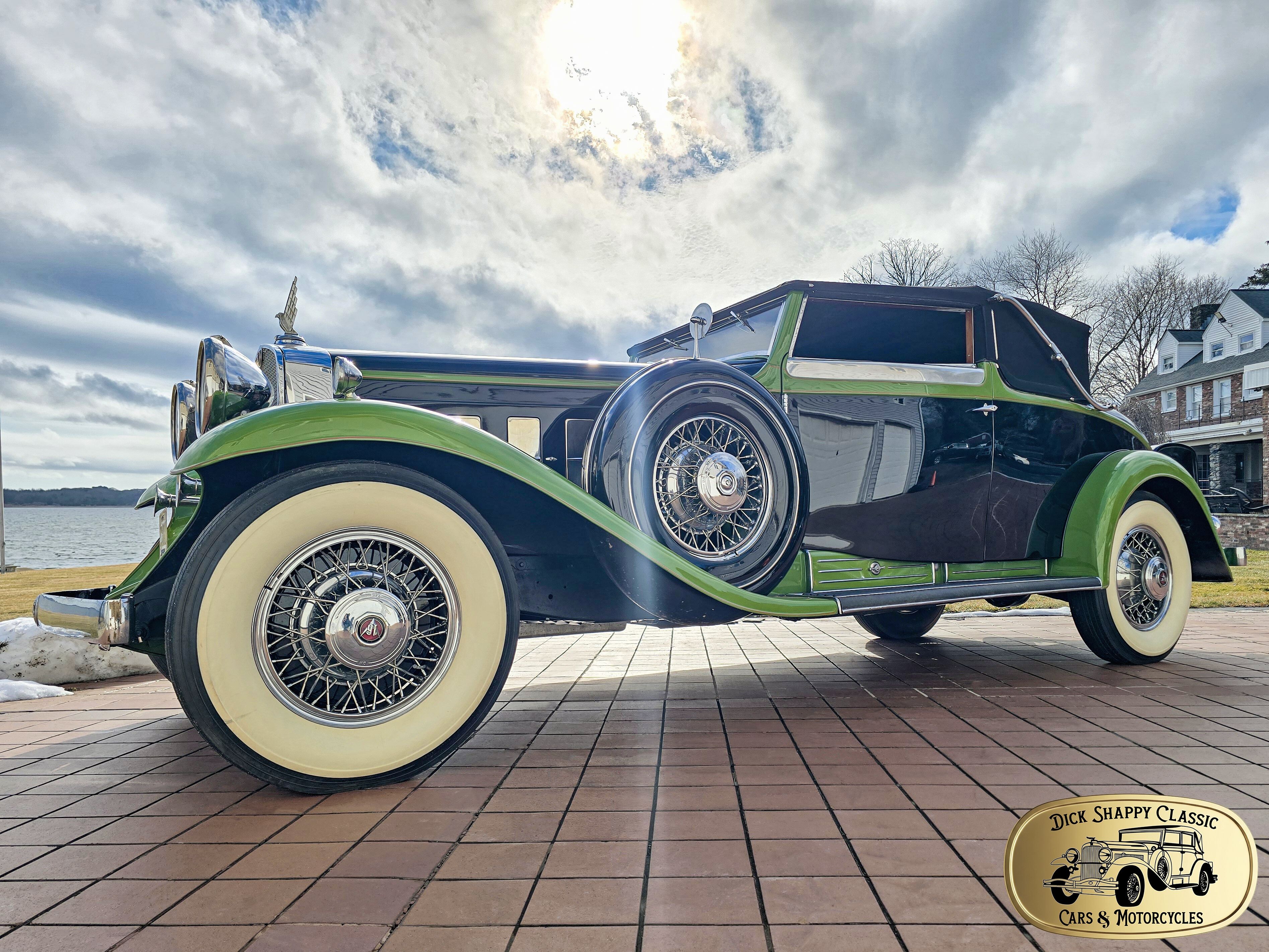
The first driver is body style, and it outweighs everything else including year and, within reason, condition. Open Fleetwood bodies — roadsters, sport phaetons, convertible coupes and sedans — sit at the top of the market, with the Madame X closed cars close behind them on the strength of their looks and their rarity. The upright five- and seven-passenger sedans and imperial limousines that made up the bulk of production are the market's foundation: magnificent, historically central, and permanently cheaper than the open cars, because supply of closed cars is larger and the pool of buyers who want to be seen in one is smaller. The streamlined 1934–37 cars trade on rarity and design importance; the flathead Series 90s trade in their own, cooler room, as the models section explains, and a Series 90 priced like a 452 is a car that will wait a long time for its buyer.
The second driver is documented identity. A V-16 whose build sheet matches its engine, body and equipment, with a chain of ownership that reaches back towards the first buyer named on that sheet, carries a premium that has nothing to do with its paint. The market has learned — expensively, over decades — that undocumented Sixteens conceal engine swaps, body swaps and, in the worst cases, identities assembled around a number. Provenance is not a garnish on these cars; it is a component, and its absence is priced like a missing component.
The third driver is the restoration arithmetic, which on this car inverts the usual logic. A full, correct restoration of a V-16 costs more than the finished value of most closed cars and a substantial fraction of the value of most open ones, because every system is doubled, the body may need reframing in wood, the trim must be replated or fabricated, and the interior must be made by hand in period materials. The consequence is a market with a hard floor and a soft middle: superb, finished cars command their money because the buyer is purchasing a restoration already paid for by someone else; honest, original, mechanically sorted drivers are the value sweet spot; and the project car — the disassembled, incomplete or long-dead Sixteen — is the most dangerous purchase in the whole classic market, because its purchase price is the smallest cheque its new owner will write. When you read the sales block below, sort what you see by those three categories before you compare anything else.
Asking and achieved prices diverge in a specific way. The best cars often sell privately, through marque specialists, without troubling a public listing, so the public record over-represents both the exceptional auction result and the optimistic dealer ask that sits for seasons. Dealer asks for the early open cars should be read as opening positions in a negotiation both sides expect to be conducted by inspection and documentation, not by telephone. A car listed unchanged for a very long time is usually telling you its price assumes a condition or an identity that inspections keep failing to confirm.
Finally, condition spread within a single body style is wider than the spread between styles at the top of the market. A numbers-matching, freshly sorted Sport Phaeton and a tired one with tired wood are nominally the same car and practically different assets. Read the market block with the inspection checklist in hand: the figures make sense only once you know which cars have had their wood, brakes, cooling system and silencers done — and which are waiting to send those bills to you.
Parts and ownership
Owning a V-16 is an exercise in belonging to the right networks. There is no parts counter for this car; there is a community, a handful of specialists, and a long tail of new-old-stock and used components surfacing through the Cadillac-LaSalle Club, the Classic Car Club of America, and the marque's historians and registries. Join the clubs before you buy, not after: the classifieds, technical archives and collective memory of which car is which are worth more than any single part, and registry knowledge alone can settle identity questions no amount of staring at stampings will answer.
Parts availability divides into three honest tiers. The first is consumables shared with other Cadillacs of the era — bearings, seals, ignition components, brake lining material, hoses, tyres and tubes — all obtainable through the prewar trade with patience. The second is V-16-specific mechanical components: valve-silencer units, water-pump internals, carburettor parts, distributor components, engine internals. These exist — in specialists' stock, in the club network, and increasingly as quality reproductions commissioned by the community — but they are bought by enquiry and waiting, not by clicking, and a set of pistons or a silencer overhaul has a lead time measured in months. The third tier is coachwork: Fleetwood and Fisher trim, die-cast brightwork, body hardware, top mechanisms, anything specific to a single body style. Here the supply is the surviving cars, the occasional estate of hoarded parts, and fabrication. A skilled coach trimmer, a die-cast founder and a chrome plater who will take prewar work are not luxuries in V-16 ownership; they are your supply chain.
Running costs follow the same pattern as everything else on the car: the consumables are ordinary, the events are not. Annual servicing for a car in regular use — oils, greases at every chassis point, ignition attention, brake adjustment on the mechanical cars, coolant and a thorough spanner check — is a $1,500–$3,500 year at specialist rates, less for the owner who does the work and has the manuals; Cadillac's own shop literature and the club's technical reprints are essential purchases. Fuel consumption is what sixteen cylinders and three tons suggest: expect figures in the high single digits to low teens per gallon depending on use, on modern fuel whose ethanol content argues for fresh fuel, drained carburettors for storage, and fuel-system materials renewed in modern ethanol-resistant form where they cannot be seen. Insurance should be agreed-value through a classic specialist, with the valuation revisited as the market block below moves; storage should be dry, ventilated and, for the wooden-framed cars, stable in humidity, because the ash framing that holds the body together dislikes damp cycling as much as it dislikes standing water.
The ownership rhythm that suits these cars is regular, gentle, thorough use. A V-16 that tours — driven far enough, often enough, to heat its oil fully, work its brakes, charge its battery and exercise its top and windows — stays sorted in a way a trailered show car does not. The corollary: a V-16 bought after a decade of stillness needs a recommissioning budget before anything else — $8,000–$20,000 to go through fuel, cooling, brakes, tyres, lubrication and electrics on a car that presents well but has not turned a wheel in anger for years. Put that figure in your purchase arithmetic from the start.
Which one to buy
There is no wrong V-16, but there are wrong purchases: the right car is the one whose body style suits the life you intend to live with it, whose identity is documented, and whose expensive systems have either been done or been priced. In the terms of our own current pool — six cars, all first-generation, all dealer-offered — the choice concentrates on the 1930–32 open and convertible cars, which is no hardship: that is where most buyers should be looking anyway.
- The all-rounder: a 1930–31 convertible coupe or convertible sedan (styles 4235 and its sedan sisters). Open-car presence, a top one person can manage, windows that make it a real car in real weather. The broadest usability and the deepest market when you sell.
- The showpiece: a Sport Phaeton (style 4260) or Roadster (style 4302). The purest expressions of the first-generation car and the strongest long-term demand — bought for presence and event use, and priced accordingly. Verify the rear cowl, screens and top irons with particular care.
- The connoisseur's closed car: a Madame X sedan or cabriolet. The raked screen and thin pillars give you the era's most distinctive closed silhouette at closed-car money relative to the open cars. One of the four-built claims attached to cars like the 5155-C in our pool is exactly what the build sheet is for.
- The value buy: an honest 1930–31 five-passenger sedan or imperial with matching numbers and tired cosmetics. The same engine, the same silence, the same presence at a fraction of open-car money — provided the wooden framing is sound, because on a cheap closed car the wood is the whole ballgame.
- The driver's Sixteen: a 1938–40 Series 90. The flathead car is quieter, easier and cheaper to live with, and trades in a cooler room than the overhead-valve cars. Buy it to drive, with your eyes open about that market difference.
- The brave buy: a 1933 452C or a streamlined 1934–37 car. Rarity and design importance in their purest form, balanced against the hardest trim and detail sourcing in the whole range. Buy the most complete example in existence, or do not buy one at all.
The overriding rule: on a V-16, buy documentation and structure before everything else — a numbers-matching car with sound wooden framing and a build sheet that agrees with its stampings is worth more than a prettier car without them, because identity and wood are the two things money cannot quickly buy back.
Listed now
On Classic Listings today: 4 cars are listed here; 4 for sale and 0 marked sold; average asking price $741,667; asking range $575,000 to $875,000.
See the 4 V-16 cars currently listed.
The market — recorded sales
No dated sales recorded for this series yet — as sales are recorded, they will appear here with their dates and prices.
For sale now
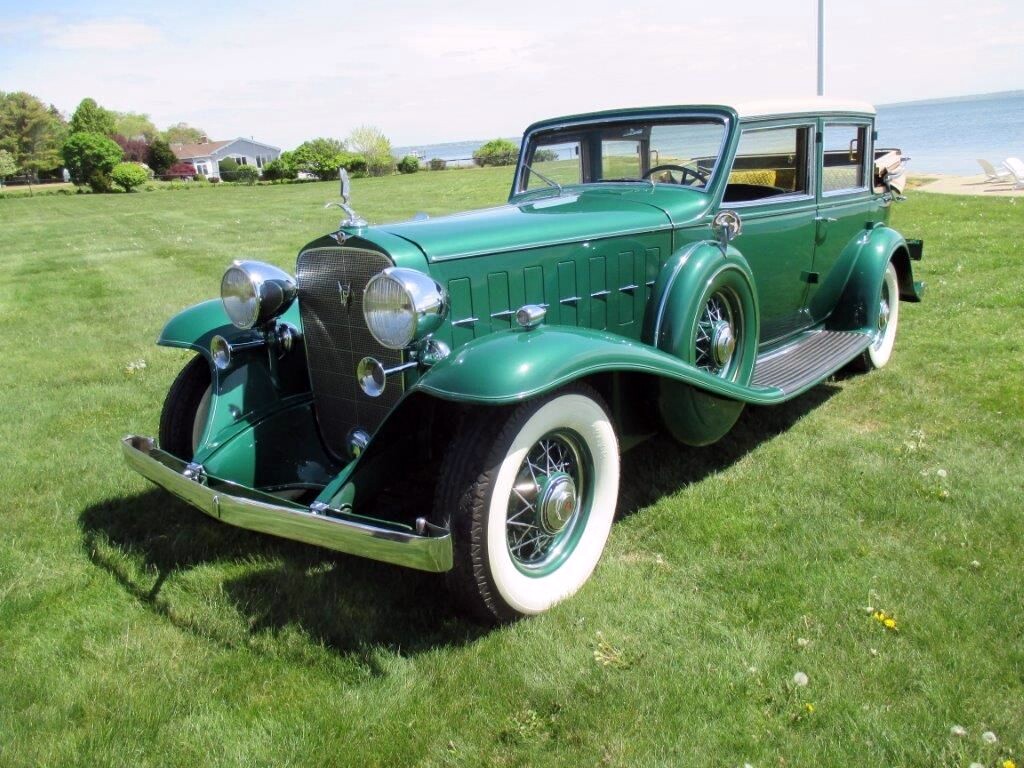 $575,000 · 28% below typical
Expand
 $875,000 · 9% above typical
Expand
 $1,500,000 · 88% above typical
Expand
 $775,000 · 3% below typical