
Cadillac V-8 buyer's guide
Cadillac V-8 (1915–1933) — Type 51, Type 57, 314, 353, 355, V-8: what's listed, and what they sell for.
Years: 1915–1933 · Models: Type 51, Type 57, 314, 353, 355, V-8
Overview and history
The Cadillac V-8 is not one car. It is the eighteen-year run — 1915 to 1933 in the span this guide covers — during which a configuration that had been a racing and hand-built curiosity became the normal way to power a serious American motor car, and became so identified with one marque that for a generation "Cadillac" and "V8" were almost the same word. If you are standing in front of one now, you are not shopping for transport. You are shopping for a piece of engineering history that happens to be drivable, and the difference between a good one and a bad one is measured less in miles or paint than in wood, in cast iron, and in how honestly the last three owners dealt with both.
Cadillac, founded in 1902 by Henry Martyn Leland and part of General Motors from 1909, had built its reputation on precision: interchangeable parts, the Dewar Trophy, tolerances in ten-thousandths of an inch when much of the industry still filed parts to fit. Its four-cylinder Model 30 was beautifully made and increasingly outclassed — rivals sold sixes, a six was smoother, and smoothness, not speed, was what a luxury buyer paid for. Leland's answer, announced in autumn 1914 for the 1915 model year, was eight cylinders in two banks of four at 90 degrees on a common crankcase: the Type 51, with a 314-cubic-inch flathead V8 rated at 70 horsepower. That made Cadillac the first manufacturer to put a V8 into series production at volume, and the qualifier matters, because sellers blur it. V8s had existed before — De Dion-Bouton built them, Rolls-Royce made a handful, racing cars used them. What Cadillac did first was design a V8 that production methods could build by the thousand, dealers could service, and owners could start on a cold morning — helped by Cadillac having already given the industry the electric self-starter, Charles Kettering's Delco system, on the 1912 Model 30. Pull away in a healthy 314 and you feel why it worked: no step, no shudder as each cylinder fires, just a continuous even push and a muted, expensive murmur.
The type numbers climbed — 51, 53, 55, 57, 59, 61 — the engine gaining detachable heads and better cooling, Cadillac V8s serving as staff cars and ambulances in the First World War, and the bodies gaining closed forms: in 1915 most Cadillacs were open tourers and roadsters, and by the end of the 1920s the proportions had reversed. The eight Cadillac V-8s currently recorded on Classic Listings, six offered for sale and two recorded as sold, show the arc: from a 1915 Type 51 Landaulet to a 1933 355-C convertible coupe, taking in a 1917 and a 1918 Type 57 roadster, three 1930 Series 353 cars and a 1932 town car by Rollston. Eight cars is a small pool; treat it as a cross-section, not a census.
The final act, 1930–33, is where most buyers in this market are shopping: a flagship engine becoming the middle of the range while the world fell apart. In 1930 Cadillac launched the V-16, then a V-12, placing the V8 — now the Series 353 — a rung down in its own catalogue. In engineering terms the 353 is the mature flathead: quiet, torquey, understressed, built with fifteen years of production learning. In commercial terms it had to sell into the Depression. Volumes collapsed, the Series 355 of 1931–33 (355-A, B and C by year) was built in a fraction of late-1920s numbers, and survivors are scarcer and often more elaborately finished — in a shrinking market, the buyers who remained could still afford coachwork. That is how you get the pool's 1932 355-B town car by Rollston: a factory chassis dressed by an independent New York coachbuilder for a customer who wanted formality itself as the product.
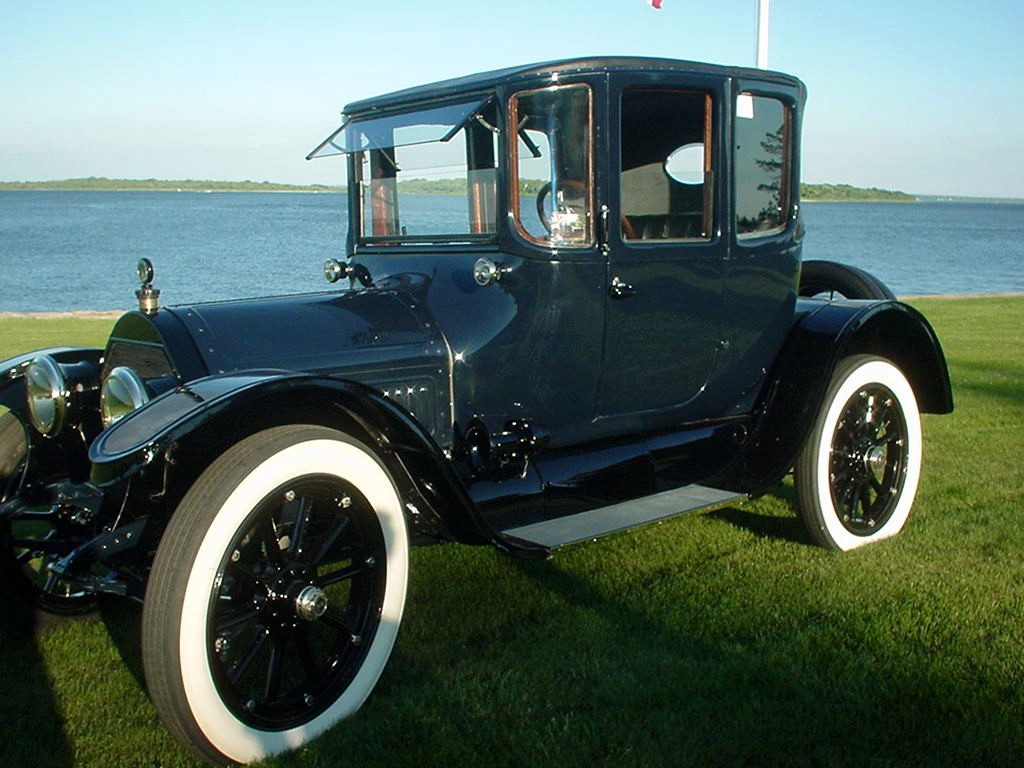
The models
Cadillac's naming confuses every newcomer, and sellers exploit the confusion, so learn the grammar first. From 1915 to about 1923 the cars carry Type numbers — 51, 53, 55, 57, 59, 61, 63 — model-year designations, not engine sizes. From 1926 the badges become Series numbers that do denote cubic-inch capacity: 314, 341, 353, 355. The trap is that the number stayed similar while the car changed: a 353 and a 355 have essentially the same engine, the 355 being the later chassis and styling, while a 314 is a genuinely earlier car than a 341 despite the numbers sitting close together. The letter suffixes on the late cars are model years — 355-A is 1931, 355-B 1932, 355-C 1933 — so establish the letter from the car's own numbers, not the seller's description. Most Cadillacs wore catalogue bodies by Fisher or, on the grander cars, Fleetwood; a minority went as bare chassis to independent coachbuilders — Rollston, Judkins, Willoughby — and those cars are individual commissions: find the coachbuilder's plate, and expect an individual price logic.
| Model | Years | Engine | Output | Built | Character |
|---|---|---|---|---|---|
| Type 51 | 1915 | 314 cu in flathead V8 | 70 hp | c. 13,000 in the first year | The original production V8; tall, formal, brass-age manners |
| Type 53 / 55 | 1916–1917 | 314 cu in flathead V8 | 70 hp | Tens of thousands across the two years | Refinement of the formula; detachable heads arrive; the Type 53 settles the controls into the modern pattern |
| Type 57 / 59 / 61 | 1918–1923 | 314 cu in flathead V8 | 70–77 hp | Tens of thousands across the run | War-service proven, then longer, heavier closed bodies on the same honest engine |
| V-63 / Series 314 | 1924–1927 | 314 cu in flathead V8, counterweighted crank | c. 77 hp | Tens of thousands across the run | The smoothed engine and four-wheel brakes; the vintage Cadillac in classic form |
| Series 341 | 1928–1929 | 341 cu in flathead V8 | 90–95 hp | Tens of thousands across the two years | Bigger, lower, Earl-styled, first synchromesh Cadillac — the easiest early car to drive |
| Series 353 | 1930 | 353 cu in flathead V8 | 96 hp | Low thousands — the Depression begins | The mature flathead under the new V-16 flagship; formal and very well made |
| Series 355-A / B / C | 1931–1933 | 353 cu in flathead V8 | 115 hp by 1933 | Low thousands per year, falling | Streamlined, scarce, often coachbuilt; the connoisseur's end of the V8 line |
The Types, 1915–1923. Buy a Type 51, 57 or their sisters and you are buying the Edwardian motor car in its most advanced American form. The roadsters — the pool holds a 1917 and a 1918 Type 57 roadster — are the most charismatic early cars: long bonnet, two seats, and performance that surprises people who assume a 1915 car must be slow; a healthy 314 pulls to fifty with complete composure. The touring cars are the natural event cars, welcomed on brass and early-vintage tours. The closed cars — coupes, sedans and formal bodies like the pool's Type 51 landaulet — were the minority then and are the rarity now, with a warning developed later in this guide: a landaulet's folding leather rear quarter is a maintenance item, not a styling detail, and a closed body traps moisture against its timber framing in ways an open car never does.
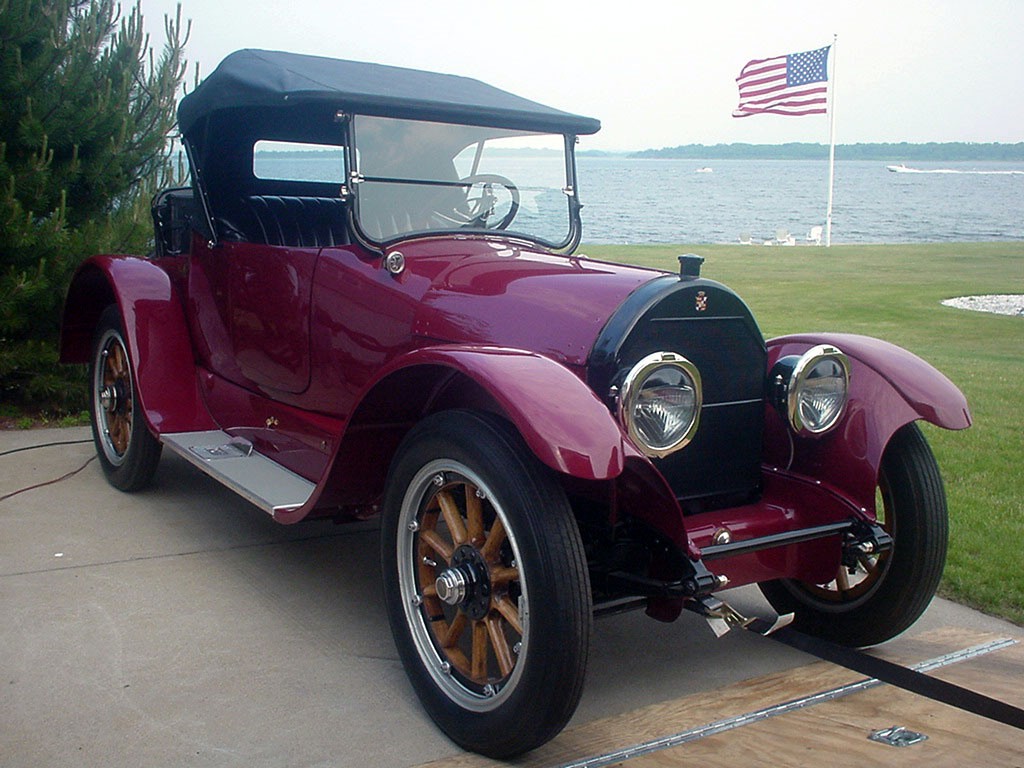
The V-63 and Series 314, 1924–1927. This is the vintage Cadillac as the hobby mostly pictures it: nickel rather than brass, four-wheel brakes, balloon tyres on later cars, and the rebalanced engine that removed the early car's one dynamic flaw. If you intend to tour seriously in a pre-1930 Cadillac, start here rather than with the Types: the brakes, the smoother crank and five more years of detail development make a real difference over a long day, and specialist parts support is at its broadest for these middle years. The 314's character is dignity at forty. It will go faster; it simply makes clear that was not the point.
The Series 341, 1928–1929. The 341 is the hinge car of this guide and, for many buyers, the sweet spot of the whole line. Styling steps toward the 1930s — lower roofs, more integrated wings — the engine gains a useful margin of torque, and synchromesh transforms driving from a skill into a pleasure. A 341 sedan is a big, handsome, genuinely usable vintage car a newcomer can drive home without a lesson in double-declutching, and that widens its market every time one sells. Watch the split: 1928 cars are 341-A, 1929 cars 341-B, with detail differences — and watch for the era's fashionable accessories, dual sidemounts, trunk racks and Trippe lights, dressing a plain car into a grander story than its body plate supports.
The Series 353, 1930. The pool is rich here: a convertible coupe, a Fisher rumble-seat coupe and an All Weather Phaeton, all 1930 353s. The All Weather Phaeton is worth understanding because sellers use the name loosely: a four-door open tourer with proper winding glass windows and a folding top engineered to seal — a halfway house between a phaeton's airiness and a sedan's weather protection. The window mechanisms and top sealing are part of what you are paying for; check they work, because they are fiddly to put right. The convertible coupe and rumble-seat coupe are the sporting faces of the 353, and the rumble compartment is an excellent place to check for water damage, because it collects rain the way a bucket does. Under all three sits the same mature chassis and the same 96-horsepower engine doing the same unhurried work.


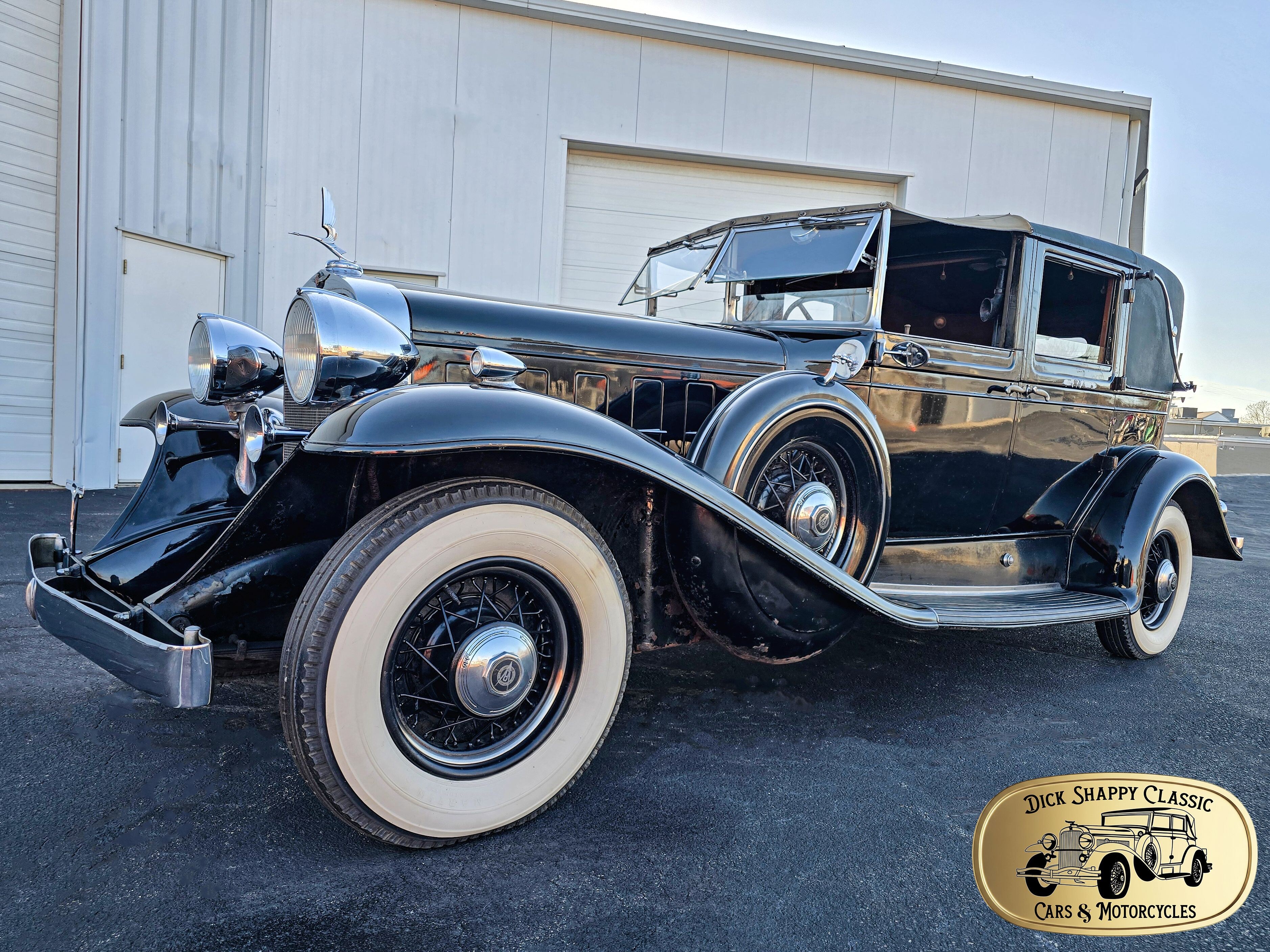
The Series 355, 1931–1933. The last cars in this guide are the rarest and, at their best, the finest. The pool's 355-B town car by Rollston is the extreme case: chauffeur exposed to the weather in period convention, passengers enclosed in formality behind — a car bought not for touring but for concours lawns, ceremony, and the preservation of Depression-era craftsmanship, and one to inspect as furniture and archive as much as machinery. At the other end of the range, the 355-C convertible coupe shows where styling had arrived by 1933: lower, skirted, more streamlined, the vertical classicism of 1930 dissolving into the flow that would define the later thirties. Output from the same 353 cubic inches had risen to about 115 horsepower by 1933, through compression and breathing detail work — a reminder that the same displacement on the badge can hide different states of tune.
Engines and gearboxes
Every engine here is the same idea at a different stage of its life: a 90-degree V8, side-valve — flathead in American usage — valves in the block beside the cylinders, camshaft in the valley driving them through tappets, and two cast-iron cylinder blocks mounted on a common crankcase. That last detail matters: the early Cadillac V8 is not a modern one-piece casting but an assembly — crankcase, two blocks, and from the Type 55 era detachable heads — and assemblies have joints, joints have gaskets, and gaskets on a century-old engine are a maintenance fact, not a defect. The side-valve layout explains the character: the combustion chamber is a long, flat pocket over valve and piston together, which limits useful compression — these engines live between roughly four-and-a-half and six to one — but makes for quiet running, tolerance of low-octane fuel, and torque that arrives early and stays. Nobody bought one for its top end. They bought it because at fifteen miles an hour in top gear it simply leaned against the load and pulled.
The original 314: Type 51 to Series 314, 1915–1927
The 314 displaces 314.5 cubic inches, about 5.15 litres, a long-stroke engine designed to make its 70 horsepower low down and do it all day. The earliest crankshafts ran in three main bearings and had a known roughness in a band of the rev range; Cadillac answered first with detail changes and then, decisively for the V-63 of 1924, with a redesigned counterweighted crankshaft and revised bearings that made the engine the smooth unit its reputation claimed. Drive an early car and a V-63 back to back and this is the difference you feel — and why the later 314 cars are the easier ownership proposition. Detachable cylinder heads, arriving during the Type 55 period, transformed maintenance: decarbonising, the routine service operation of the era, went from an engine-out ordeal to a workshop afternoon. On a very early car, establish which head arrangement it has, because it changes the cost of every top-end job you will ever do.
Ignition is Delco, distributor driven from the camshaft, with dual contact-breaker points on many cars sharing the work. The fuel system is pure period: a Cadillac-designed carburettor — the company's own Johnson-type instrument in the early years — fed not by a pump but by a Stewart vacuum tank on the firewall, which uses manifold vacuum to draw fuel from the rear tank into a small reservoir that feeds the carburettor by gravity. It has two characteristic failure behaviours, covered in the problem sections: it can starve the engine on a long hill at wide throttle, when manifold vacuum is lowest and demand highest, and its float and flap valves fail with age and modern fuel. Cooling is by pump and a tall honeycomb or cellular radiator, unpressurised, temperature judged by a MotoMeter on the filler cap rather than a dashboard gauge on early cars. These engines run cool when the system is clean and boil readily when it is not, and the margin between the two states is the condition of passages you cannot see — which is why the cooling tests in the inspection section matter.
Oil is where modern owners do the most damage with the best intentions. The 314 was designed for the oils of its time, for frequent changes, and for bearing clearances that modern thin oils do not flatter. Main and big-end bearings on early engines are babbitt — white metal cast and scraped to fit — and their survival depends on oil pressure, oil cleanliness and, above all, not being lugged at low speed under heavy load when the film is thinnest. Run the grade the specialists recommend, change it far more often than a modern car asks, and treat any unexplained fall in oil pressure as a stop-and-investigate event. A babbitt rebuild is a specialist engine-out job: budget $6,000–12,000 for a bottom-end overhaul done properly, crank ground and rods re-metalled. A car priced as though that job were not looming, when its oil pressure says it is, is two cars' money wearing one car's paint.
The 341: Series 341, 1928–1929
For 1928 Cadillac enlarged the engine to 341 cubic inches, about 5.6 litres, rated at 90 to 95 horsepower depending on year and source — roughly a third more usable urge than a 314 in a car that is not a third heavier, felt most in the hills and in top-gear flexibility. Internally it is the 314 idea brought up to date: better breathing, improved manifolding, detail work on cooling and lubrication. Part for part it is the most robust engine in this guide relative to the work asked of it — provided its cooling system has been kept clean, because the bigger engine makes more heat into a radiator that did not grow in proportion. The ancillaries become recognisably modern in layout, the six-volt system fitted throughout this guide is adequate for its loads, and most "electrical faults" on these cars are resistance faults in ninety-year-old wiring, a theme the problem section develops.
The 353: Series 353 and 355, 1930–1933
The final enlargement took the engine to 353 cubic inches, about 5.8 litres, rated at 96 horsepower in the 1930 Series 353 and rising by stages to about 115 horsepower by the 355-C of 1933 — the gains from compression, carburation and manifolding, not from any change of architecture. This is the flathead at full maturity: so understressed at its rated output that its failure modes are almost never structural. 353s do not, as a class, throw rods or crack blocks from overwork. They wear, they clog, they overheat from neglect, and they suffer from the ancillaries around them — carburettor, fuel feed, ignition, cooling — long before the core engine is in trouble. That is excellent news, because ancillaries are weekend jobs and core engines are mortgage jobs: on a 353 or 355, satisfy yourself the bottom end is quiet and the oil pressure right, then spend the bulk of your scepticism on everything bolted to the outside of the engine.
Gearboxes
All these cars drive through a three-speed manual gearbox and a single dry-plate clutch, but the gearbox divides into two eras you can feel with your right hand. Before 1928 the box is sliding-mesh — a crash gearbox — in which the gears themselves slide into engagement. Changing up smoothly requires matching speeds by ear; changing down requires double-declutching, blipping the throttle in neutral to spin the gears up to road speed. It is not difficult, it is enormously satisfying when learned, and it is a genuine filter on who should buy an early car: if you will not enjoy acquiring the skill, you will not drive the car, and a car not driven deteriorates. Wear announces itself honestly — jumping out of gear under load points to worn dogs and detents, a whine in one gear only tells you which pair of teeth is tired. A specialist rebuild of a pre-synchromesh box runs $3,500–7,500 depending on tooth damage; a clutch replacement alone is $1,200–2,500.
From 1928, Syncro-Mesh changes everything between second and top: cone clutches in the box match the speeds for you, and the change becomes the modern push-and-it-goes-in. First gear remains unsynchronised, which is correct and normal — select it at a standstill or a crawl. Synchromesh units wear their cones and blocker rings with age and ham-fisted use, and the test is specific: a warm gearbox, a brisk second-to-top change and a top-to-second change at moderate road speed. Crunch on the downchange only, when warm, is the classic early warning. Budget $3,000–6,500 for a synchromesh box overhaul — and note the upside: a 341, 353 or 355 can be driven by any competent driver in the family, which in practice means these cars get used, and used cars stay healthy.
Behind the gearbox, drive passes by an open propeller shaft to a spiral-bevel or, on later cars, hypoid-type rear axle, with ratios chosen for dignity rather than dash: cars geared to cruise at forty to fifty and to climb in top longer than a modern driver expects. Axles are strong, and their characteristic fault is not breakage but whine from wear and from incorrect pinion preload after an amateur rebuild, plus leaks from pinion and hub seals hardened over decades. A quiet axle with dirty oil is a better buy than a noisy axle with clean oil: the first needs an afternoon, the second $2,000–4,500 of specialist setting-up. Clutches are mechanically operated, heavy by modern standards, and long-lived if free play is kept adjusted; a clutch that judders from rest is usually reporting oil on the plate from a rear main or gearbox seal, or a warped driven plate from being slipped by a nervous driver — the inspection section's low-speed test separates the two stories.
Problem areas
A Cadillac of this era fails in a predictable order, and it is not the order sellers expect you to check. The engine core is last. First comes the structure — timber and steel — then cooling, then fuel, then electrics, then running gear, and only after all of those the engine's internals. Work through the systems in that order on any car you inspect. Of the two cars in this pool whose photographs have been formally examined on this site, rust was noted in one — a sample of two proves nothing statistically, but it matches the universal experience of the marque's specialists: corrosion and timber decay, not mechanical failure, are what end these cars.
Rust and timber: the structure
A Cadillac body of this period is a composite structure: ash and other hardwood framing, jointed and screwed, skinned in steel — in some panels on some bodies, aluminium — bolted to a separate steel ladder chassis. The chassis is the least of your worries: massively built from pressed channel sections, with serious rust largely confined to the rear crossmembers, the battery carrier area where acid has helped, and cars stored on earth or run on salted roads. Surface rust on a chassis is cosmetic. Perforation at the spring hangers and body mounting points is structural and expensive.
The body is the real inspection. Timber fails in three places first, in this order. The sills — the longitudinal timbers at the base of the body, not the chassis rails beneath them — rot from the inside out where water sits in the joints, and a rotted sill shows itself in door fit before anywhere else: doors that drop on their hinges, gaps that taper, a door that must be lifted to latch. The door pillars and hinge posts are second, because every door opening flexes them and every flex pumps water into the joints. Third is the floor and toe-board area and, on open cars, the timber around the seat and rear deck structures, and on rumble-seat cars the compartment floor named in the models section. The distinguishing test is not a magnet — magnets tell you about filler in steel, nothing about wood. It is a thin awl, used with the owner's permission at inconspicuous points inside sills and pillars, plus the door test: open each door fully, lift gently at its rear edge, and feel for movement at the hinges beyond the hinge pin's own play. Add the jack test: close every door on level ground and note the gaps, then jack one side under the chassis — never under the body — and watch whether the gaps change. Gaps that move as the chassis rises tell you the body is no longer holding its own shape.
Steel rust follows water's path through that structure: lower door and deck-lid edges, the bottoms of the rear wings where they meet the running boards, the running boards themselves, the valances, and every seam where wings bolt to the body, all trap mud and hold it wet. On closed cars add the roof gutters and the windscreen frame area; on landaulets and formal cars, the folding quarter mechanism and its well, a designed-in water collector. Paint bubbles at a lower door edge are not a paint problem; they are the visible end of a perforation that started inside the door, in wet timber and trapped debris at its base. Repairs scale brutally. A localised steel repair to a wing or door bottom, painted to match, is $800–2,000. A rotted sill timber replaced properly — body supported, skin opened, new ash sectioned and jointed, skin refitted — is $2,500–5,000 a side by the time the paint is blended. A car needing both sills, both hinge pillars and floor work is a body restoration, $15,000–30,000 before paint, and should be priced as one however shiny the top surfaces are. This is the most common way buyers of these cars lose money: the mechanical car is honest, the paint is beautiful, and the structure underneath is a five-figure secret.
Engine: wear, oil pressure and the bottom end
The flathead core wears slowly and talks quietly, so listen properly. Cold-start behaviour is the first evidence: a healthy engine starts with a few revolutions, settles to an even, muffled idle, and shows no blue smoke beyond a faint puff that clears. Persistent blue smoke at idle that worsens after idling and clears under load points to oil passing worn valve guides — on a side-valve the guides are in the block, and their replacement is a specialist job, $2,500–4,500 with the associated top-end work. Blue smoke under acceleration points lower, to rings and bores; a compression test, dry and then wet with oil, separates the two, and you should insist on the numbers rather than the seller's summary. Expect compression figures modest by modern standards and judge them by evenness across all eight cylinders. One cylinder down on its neighbours is a valve, a gasket or a ring set with the car's name on it.
Oil pressure is the bottom end's report card. Note the gauge at hot idle and at cruising speed, and judge it against the car's own handbook tradition rather than modern practice: these engines run lower pressures than a modern unit, but a hot-idle reading sinking toward nothing, with a deepening rumble under light load, is worn babbitt announcing itself. The test that distinguishes tired bearings from a tired gauge or a blocked pickup is a mechanical gauge screwed into the gallery by a specialist — cheap, decisive, and worth its $150–300 of workshop time on any undocumented car. Top-end noises are usually tappets: the valve gear is accessible under covers on the side of the block, clearances are adjustable, and a car that ticks evenly is often simply a car whose tappets have not been set in a decade — a service job, not a rebuild. The expensive top-end sound is a single sharp, regular tick that does not respond to adjustment, which can be a worn guide or a valve-seat problem; on an engine whose seats are cut in the block, seat work means a specialist with the right cutters and, in the worst case, seat inserts — $1,800–3,500 for both banks together.
Head gaskets and block joints deserve respect rather than fear. With detachable heads and two blocks on a common crankcase, weeping at a joint is common and usually tolerable. Combustion gas in the coolant, coolant in the oil — look for emulsion under the filler cap and on the dipstick — or persistent unexplained coolant loss is not tolerable and means the heads come off: budget $1,500–3,000 for both head gaskets done properly, heads checked for flatness. Cracks come from freezing: an engine stored with water rather than antifreeze cracks blocks and heads along the water jacket, often visible as a rusty weep line along the block's outer wall — run a hand and a torch along both outer walls of both banks on any car with an unknown storage history. A cracked block is not automatically a death sentence — specialist stitching and welding repairs exist, $2,000–5,000 depending on access — but an undeclared one converts the seller into a story.
Cooling: the system that decides everything
The distinguishing tests are thermal, not visual. A car that holds a steady, moderate temperature in traffic and on a climb has a system with margin. A car whose temperature climbs steadily whenever it works and falls back at cruise has a capacity problem — radiator or block passages. A car that boils quickly from cold, or whose top hose stays cool while the engine overheats, has a circulation problem — pump, or a single blockage. The remedies scale from a professional radiator clean and system flush, $400–900, through a radiator re-core, $1,500–3,000 for a unit of this size and shape, to the deep cure of removing the heads and cleaning the block passages mechanically, a $2,500–4,500 job done as part of top-end work and the single most transformative spend on a car that "has always run hot." Reject the folklore that these engines "all run hot, it's normal." They did not run hot when new, in summer, in traffic, on the fuel of the day. Heat is a symptom. Price it as one.
Fuel system: vacuum tanks, carburettors and modern petrol
The Stewart vacuum tank is the component every new owner of a pre-1929 car should understand before the first long drive. It is a two-chamber vessel on the firewall: manifold vacuum draws fuel from the main tank into the upper chamber through a float-operated valve, and the lower chamber feeds the carburettor by gravity. Its failure modes are precise. The float valve and the flap valve between the chambers wear and leak, so the tank loses its vacuum and the engine starves — characteristically on a long climb or a long fast stretch, when manifold vacuum is low, recovering after a stop, which is why sellers honestly report that "it only does it sometimes." Cork floats absorb modern fuel and sink; the vacuum line cracks at its unions. The road test is a sustained climb at moderate throttle: starvation there, with a full main tank, is the vacuum tank until proven otherwise. A specialist overhaul is $350–800; many owners fit a discreet electric pump as an auxiliary — establish whether the original system still works, because "it has an electric pump" sometimes means "the vacuum tank failed in 1974 and nobody has looked since."
Cadillac's own carburettors — the Johnson-type instruments fitted through much of this period — are well made, wear at the throttle spindle like every carburettor ever built, and suffer in modern service chiefly from modern fuel: ethanol blends attack old solder, gasket materials and floats, and evaporate in a hot engine bay to give the classic hot-start reluctance. A specialist carburettor overhaul is $600–1,400, spindle rebushing included at the top of that range. Across all years the fuel tank itself is a suspect: a steel tank of ninety years sheds rust scale that blocks filters and jets intermittently, giving the maddening fault that clears when the car stops and the debris settles. If the fuel in the glass bowl is the colour of tea, the tank needs cleaning and sealing, $800–1,800 with removal and refitting, and every fuel fault on the car is suspect until that is done.
Electrics and ignition
Six volts, and proud of it. The system is adequate — these cars started reliably in Minnesota winters when new — but it has no margin for resistance, and resistance is what ninety years adds. Every earth strap, battery cable and connection in the starting circuit is a suspect. The classic presentation is a slow, groaning starter that sellers attribute to "the battery," cured temporarily by a new battery and returning within the month. The distinguishing test is a voltage-drop test across each cable and connection while cranking, done by any competent auto electrician in twenty minutes: wherever the volts go missing is where the fault lives. Replacing the heavy cables and earth straps with correct-gauge modern equivalents is $200–500 in parts and transforms starting more reliably than any other single spend on an early car.
Chassis, steering and brakes
The chassis components are massive and their wear correspondingly slow, but three areas repay attention. First, the front axle and steering: kingpins and their bushes wear and let the wheels adopt attitudes of their own, felt as wander and shimmy and seen as uneven front tyre wear. Jack each front wheel and rock it top and bottom, then have a helper move the steering while you watch each linkage joint in turn — play shows itself joint by joint. A kingpin and bush job is $900–1,800 a side at specialist rates, reaming done properly. The steering box wears most at the straight-ahead, where it has lived, and adjustment taken up to hide it makes the box tight and notchy at the locks; judge a box by its feel across the whole travel, not only at the centre. A box overhaul is $1,200–2,500.
Springs are semi-elliptic leaves front and rear, and their faults are sag, broken leaves — usually the main leaf at the eye — and shackles worn oval. Sight the car from front and rear on level ground: a Cadillac should sit level and square, and a list is a spring or shackle describing itself. Shock absorption on earlier cars is by friction or early hydraulic units depending on year, frequently disconnected or seized on survivors; a car that bounces over sharp bumps is not "riding like an old car," it is riding without damping, and returning the original units to service is $600–1,500 depending on type. Brakes divide the range in two. Cars before 1924 brake on the rear wheels only, supplemented by a transmission or hand brake — adequate in period traffic, a genuine planning exercise in modern traffic, and the strongest argument for choosing a later car for busy roads. From 1924, four-wheel mechanical brakes with rod and cable actuation do the work, and their condition is one of adjustment and linkage health as much as lining material: a well-set-up system pulls up straight and firmly, a neglected one pulls to one side and asks for both feet. A full mechanical brake overhaul — drums skimmed, liners replaced, linkage freed, equalised and adjusted — is $1,500–3,000, money that buys safety rather than shine, which is exactly why it is so often the money the previous owner did not spend.
Interior, top and trim
Interiors on these cars are not decoration; on the formal and closed cars they are half the product. Wool broadcloth and mohair in the sedans, leather in the open cars and in the chauffeur's compartment of formal cars, wood garnish mouldings, and a forest of small plated fittings. The failure modes are moth in the wool — look in the folds and under the cushions, not at the show surfaces — water staining from the leaks the structure section warned about, leather dried to cardboard on open cars, and headlinings sagging as tacks and fabric give up together. A correct retrim of a seven-passenger sedan in appropriate materials is $8,000–18,000, and a leather open-car interior is in the same territory — which is why a car with a sound, original, slightly worn interior is worth more to a wise buyer than one with a fresh, incorrect one. Originality in trim is unrepeatable; once retrimmed, the evidence is gone.
How to inspect one
Inspect in this order. It is the order of the problem sections, which is the order in which these cars actually cost money, and the cheapest checks — the ones that can end the inspection — come first. Take a torch, a thin awl, a tyre gauge, a notebook, and a friend to work controls while you watch. Allow two hours. A seller who will not allow two hours has answered your first question already.
- Paperwork and identity first. Read the engine number and chassis or serial number from the car itself — locations vary by year, so have the club's guidance for the series with you — and compare them with the title documents and each other. Confirm the series letter on a 341, 353 or 355 from the car's own plates, and find the body plate and, on a coachbuilt car, the coachbuilder's plate. A mismatch is not automatically fraud — engines were swapped in service — but an unexplained mismatch reprices the car before you have looked at anything else.
- Cold engine, before it is started. Insist the engine is cold when you arrive; a warmed-up car has had its cold-start evidence destroyed. Check coolant level and condition, oil level and its feel between finger and thumb, and look under the filler cap and at the dipstick for the emulsion that means oil and coolant are mixing, from the engine section.
- The structure walk. Sight along the body sides at each corner. Check every door's fit and gaps, then do the lift test at each door's rear edge and the awl test, with permission, inside the sills and pillars — the tests from the rust and timber section settle the structure, and the structure settles whether the rest of the inspection is worth your time.
- Underneath, properly. Get the car on a lift or over a pit if you can. Chassis rails and crossmembers, spring hangers, body mounting points, the battery carrier, the floors from below, the rumble compartment floor on a coupe, and the bottom edges of every panel. Surface rust is a note; perforation at a mounting or hanger is a negotiation.
- The cold start. Watch and listen: how many revolutions before it fires, whether the starter groans — remember the voltage-drop lesson from the electrics section — whether oil pressure rises promptly, and what the exhaust shows. A faint puff that clears is a note. Continuing blue smoke is the valve-guide and ring evidence from the engine section; note whether it behaves like guides or like rings as it warms.
- Cooling evidence, statically. With the engine warm, look for weeps at the pump, hoses, head joints and along both outer walls of both blocks — the rusty weep line of the freeze crack from the engine section. Squeeze the top hose: it should be hot and firm with circulation. A cool top hose on a hot engine is the circulation fault from the cooling section, found in ten seconds.
- Clutch and gearbox, stationary. Engine running, select each gear. On a crash box, engagement at a standstill tells you about the clutch's release, not the box. Check clutch free play and where the bite comes in the pedal's travel; a bite at the very top with no free play is adjustment or wear, and the gearboxes section explains which bill follows each.
- The road test: first mile. Drive away gently and feel for clutch judder from rest — the oil-on-the-plate or warped-plate evidence from the gearboxes section. Note the steering's straight-ahead feel and whether the car tracks straight on a level road with your hands light on the wheel.
- The road test: brakes early, while you are still going slowly. From twenty miles an hour, brake firmly in a straight line. Pull to one side, a control that needs pumping, or stopping distances planned in another county are all the mechanical-brake evidence of the chassis section. On a pre-1924 car, perform this test with genuine respect: rear brakes only is a fact, not a challenge.
- The road test: the climb. Find the longest hill available and climb it at a steady, moderate throttle, in the highest gear the car will hold. This one test interrogates three sections at once: fuel starvation here is the vacuum tank from the fuel section; a temperature that climbs and keeps climbing is the cooling section's capacity fault; an engine that pinks, labours or drops its oil pressure at the top is giving you the engine section's evidence under load.
- The road test: gearbox warm. Fully warm, make brisk changes between second and top both ways on a synchromesh car — the warm downchange crunch is the test from the gearboxes section. On a crash-box car, have the seller demonstrate, then try yourself: jumping out of gear under load or on the overrun is worn dogs and detents, and it is a rebuild, not an adjustment.
- The road test: cruising temperature and pressure. Settle at the car's natural cruise for ten minutes. Watch the temperature hold steady and the oil pressure hold its cruising figure, and re-check both at idle when you stop, hot. The hot-idle oil pressure is the number from the engine section that prices the bottom end; write it down.
- Interior and weather equipment, last but not lightly. Sit in every seat. Work every window — on an All Weather Phaeton this is a headline test, not a detail — operate the top or landaulet quarter with the seller's help, look for moth in the folds of the wool and water staining low on the trim panels, and check the rumble seat compartment dry. The trim section's figures are why this step can move the price as much as the engine can.
- The second cold look. Back at rest, engine off, walk the car once more and look underneath for fresh drips now that everything is hot and worked — oil, coolant and fuel each leave a different signature on clean ground. Then compare your notes against the asking story. The inspection is not a hunt for a perfect car; none exists. It is a hunt for a car whose faults are all visible, priced, and of the kind you are willing to own.
Values
The market for these cars is really several markets wearing one badge, and telling them apart is worth more than any single figure, because the computed market summary that accompanies this guide — the cars listed now and the recorded sales — only makes sense once you can see which market each car in it belongs to. Read that block the way the specialists do: not as a price for "a Cadillac V-8," a thing that does not exist, but as overlapping ranges for quite different objects that happen to share an engine architecture. Within any series, body style outweighs year, colour and usually mileage: open cars command the premium they have always commanded, with the sporting two-door bodies — roadsters early, convertible coupes late — at the head of their series; closed sedans are the value of the range; and formal cars — town cars, landaulets, Imperial sedans — obey their own logic entirely, their value sitting disproportionately in the originality of coachwork and interior, with a coachbuilder's name like Rollston moving a car between categories on the same chassis.
The first division is by era. The earliest cars, the brass-age Types, sell to a defined and loyal audience of early-car enthusiasts, for whom event eligibility and the significance of the 1915 breakthrough are the value. The middle cars — the V-63, the 314 and above all the 341 — sell to the broadest audience of all, the vintage touring buyer, and breadth of audience is itself a form of value: these are the cars with the deepest pool of next owners. The Depression cars, the 353 and 355, sell into scarcity: fewer were made, fewer survive, and their buyers are collectors who know exactly what a 355-C or a Rollston town car is. Scarcity cuts both ways: a scarce car in strong demand rises; a scarce car whose audience is narrow can sit unsold at an optimistic asking figure for a very long time, because the three people in the country who want it are not obliged to want it this month. When you compare asking figures with achieved figures in the market block, that gap — modest on the broad-audience middle cars, often wide on the formal and coachbuilt cars — is the most informative pattern in it.
Condition spreads here are wider than on almost anything else you might shop for, and the reason is structural — literally. Two cars that present identically in photographs can be separated by the entire cost of a timber body restoration, and the market knows it, which is why documented structural honesty is the strongest single value-driver after body style: a car with a photographed, receipted record of sill and pillar work by a known specialist carries a premium that is not sentiment but the removal of the largest unknown in the transaction. The project-versus-driver gap, likewise, is a chasm rather than a step, because the cost of closing it is dominated by work — timber, trim, plating — whose price has risen faster than the value of the finished car. Hence the most useful sentence in this section: on these cars, the expensive car with the structure, trim and mechanical work done is almost always cheaper than the cheap car, once both are standing in your garage in the same condition. Originality, too, is appreciating relative to restoration — an honest, preserved car increasingly achieves figures a freshly restored equivalent does not exceed by as much as the restoration cost, because the original cannot be recreated at any price and the restored one can.
Parts and ownership
Owning a Cadillac V-8 is an exercise in belonging to the right networks more than in ordering from the right catalogues, and the good news is that the networks are strong. This was America's prestige car in volume for two decades, the marque has one of the oldest and best-organised clubs in the hobby in the Cadillac-LaSalle Club, and the combination of high original production, high survival and an affluent original clientele means the specialist trade around these cars is deeper than for almost any contemporary rival. Mechanical parts for the engines — gaskets, bearings made or re-metalled to order, pistons, valves and guides, ignition and carburettor components — are obtainable through the established pre-war Cadillac specialists, and chassis consumables, from brake linings to kingpin kits, are stock in trade for the general pre-war parts trade. Where you will wait, and pay, is in the model-specific and body-specific: brightwork in the correct pattern for one year, pot-metal fittings, instruments, the hardware of a particular coachbuilt body. The rule of the marque is that anything mechanical can be fixed and anything cosmetic can be expensive.
Storage is a mechanical decision, not a housekeeping one. A timber-framed body wants a dry, ventilated building and dislikes both the damp barn and the sealed, moisture-cycling modern garage; a car stored damp will present you with the sill bill from the problem sections as surely as a car stored after being driven in rain. Lay a car up with fresh oil, the cooling system filled with proper antifreeze mixture — never plain water, and never empty-and-dry, which rots from the air side instead — the fuel system drained or treated, and the battery maintained. Use is the other half of storage: these engines, gearboxes and axles stay healthy in regular moderate exercise and deteriorate measurably in idleness. A car driven thirty miles every fortnight will cost you less over five years than the same car driven three hundred miles every summer, and be worth more at the end of it. Document the car as the archive it is: photograph the numbers, plates, coachwork and trim before you touch anything, and keep every receipt.
Which one to buy
- The all-rounder: a Series 341 sedan or coupe, 1928–1929. The biggest audience, the easiest drive thanks to synchromesh, the most robust engine relative to its work, and four-wheel brakes — the car in this guide a newcomer can simply get in and use.
- The touring pick: a V-63 or Series 314 open tourer or phaeton, 1924–1927. The rebalanced engine and four-wheel brakes in classic vintage form; the natural event car, with the broadest parts support of the pre-1930 range.
- The historian's pick: a Type 51 or Type 57, 1915–1918. The original production V8 in its first form — roadsters for character, a closed car like the landaulet for rarity. Buy it for what it started, learn the crash gearbox, and accept rear-only brakes on the earliest cars as part of the covenant.
- The value buy: a Series 353 sedan, 1930. The mature flathead and full 1930 build quality in the body style the market underprices; ninety percent of the experience of the glamorous 353s for the sedan's gentler money.
- The sporting pick: a 353 convertible coupe or a 355-C convertible coupe, 1930–1933. The two-door open cars carry their series' premiums for a reason — looks, rarity and event appeal in one package — and the 1933 car adds the last styling and the strongest tune of the flathead.
- The connoisseur's pick: a coachbuilt 355, such as the Rollston town car. Bought as craftsmanship and archive rather than transport; value lives in the coachwork, the trim and the paperwork, and the inspection is a joiner's and a historian's before it is a mechanic's.
- The one to avoid: any car, of any series, whose price assumes its timber is sound and whose doors say otherwise. The series, the engine and the body style can all be argued about. Rot in the structure, undocumented, is the one fault that rewrites every other number in the deal.
The overriding rule: buy the structure and the paperwork, and let the engine be the third thing you fall in love with — on a Cadillac V-8 the flathead can almost always be fixed and the trim can eventually be remade, but sound original timber and an honest history are the two things no amount of money can retrofit.
Listed now
On Classic Listings today: 4 cars are listed here; 2 for sale and 0 marked sold; average asking price $264,000; asking range $178,000 to $350,000.
See the 4 V-8 cars currently listed.
The market — recorded sales
No dated sales recorded for this series yet — as sales are recorded, they will appear here with their dates and prices.
For sale now
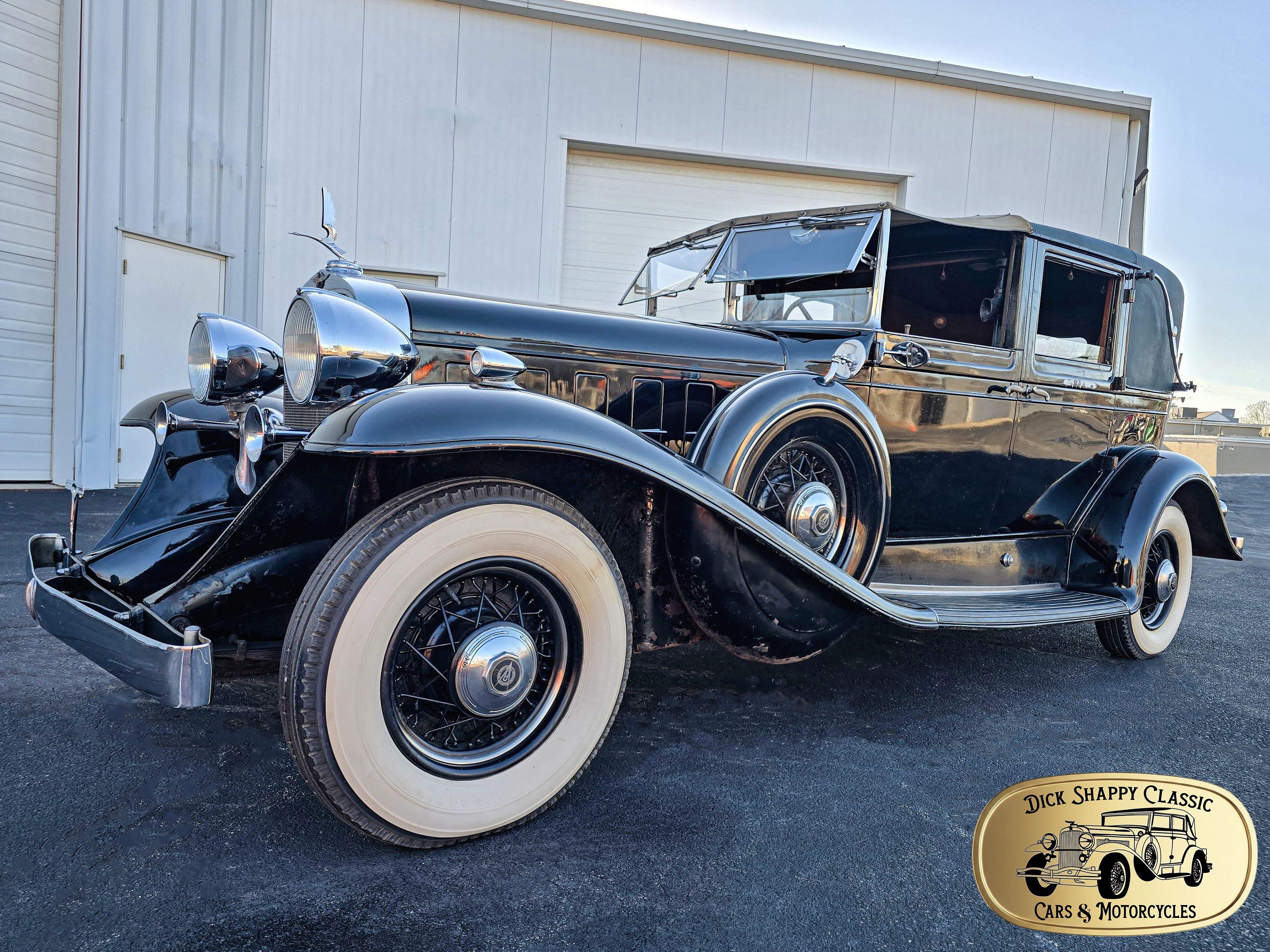 $350,000 · 50% above typical
Expand
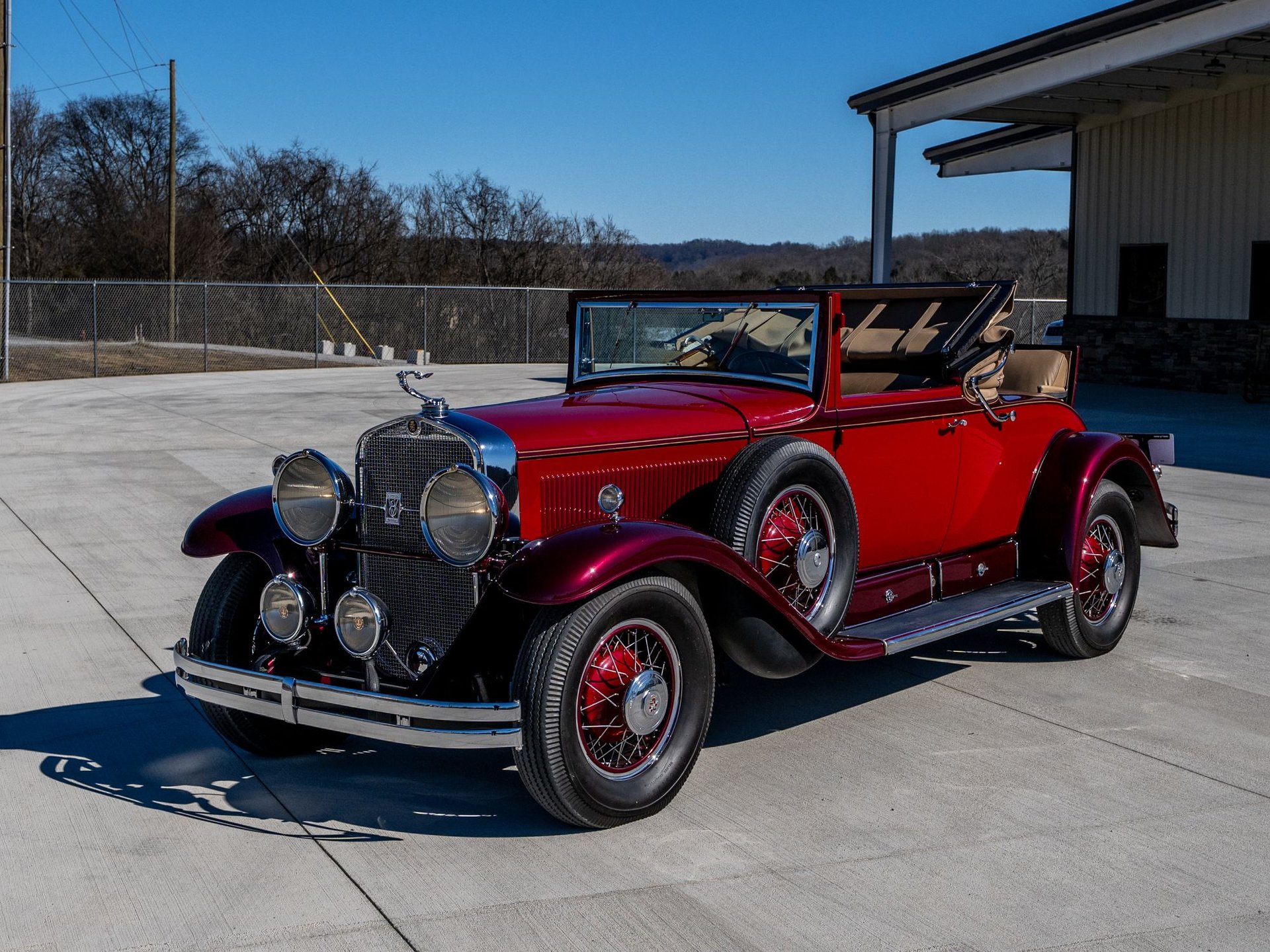 $178,000 · 38% above typical