
Chevrolet Bel Air Coupe buyer's guide
Chevrolet Bel Air Coupe -- the model's own buyer's guide: variants, values and what to check.
Years listed: 1958-1967 · Series: Impala
# Chevrolet Bel Air Coupe — Buying Guide
Overview and history
You are not really buying a model when you buy a Bel Air Coupe. You are buying a trim level, a roofline and a badge that Chevrolet moved up and down its full-size range for two decades — and your first job in front of any car is to work out which Bel Air you are actually looking at, because the name alone tells you almost nothing about value, rarity or correctness.
The Bel Air starts in 1950 as the name for Chevrolet's new pillarless two-door hardtop, the Bel Air Sport Coupe in the Deluxe range: a coupe that looks like a convertible with the top up. In 1953 Bel Air becomes a series in its own right, the top trim above the 210 and the 150. In 1955, 1956 and 1957 — the Tri-Five years — the Bel Air sits at the top of a completely new car: new chassis, new overhead-valve small-block V8, modern ball-joint front suspension. Those Tri-Five coupes, the two-door hardtop and the two-door sedan, are the cars most people picture when they hear the name, and they are covered here as background and as a comparison, because you will constantly be shown Tri-Five prices and Tri-Five thinking when you shop for a later car.
Then the hierarchy flips, and this fact shapes everything else in this guide. The Impala arrives in 1958 as a Bel Air sub-series and becomes a series of its own in 1959, above the Bel Air. From 1959 onward the Bel Air is the middle full-size Chevrolet: above the Biscayne, below the Impala. A 1962 Bel Air Coupe is therefore not the flagship its 1957 namesake was. It is a plainer, lighter, often more honestly specified car — which is precisely why drag racers ordered Bel Airs with the biggest engines, and why so many Bel Airs you meet today wear Impala and Super Sport jewellery they never left the factory with.
The cars this guide knows best, and the cars in Classic Listings' current pool, run from 1958 to 1967: the one-year-only 1958 body, the finned 1959–60 cars, the clean 1961–64 B-bodies including the famous 1962 Bel Air Sport Coupe — the bubble top — and the Coke-bottle 1965–70 generation represented here by a 1967 two-door sedan. The Bel Air name itself runs on in North America into the mid-1970s as an increasingly plain fleet and family trim, but the collectable coupe story effectively ends when the big formal coupes give way to the 1971 redesign. Scope this guide honestly: the deep inspection, rust and mechanical advice below is written for the 1958–67 pool cars, with the Tri-Five and the 1950–54 cars brought in only where the comparison protects you from a bad purchase.
What unites every car in that span is the formula. A separate body on a frame — perimeter frame before 1958 and again from 1965, the notorious X-frame in between. Coil springs all round from 1958. A six as standard well into the 1960s, a small-block V8 as the engine most survivors actually carry, and, if you ordered bravely in the right years, a big-block in a car with wind-up windows and a bench seat. Almost everything interchanges across the full-size Chevrolet range, which makes these cars easy to keep running and very easy to build up — honestly or otherwise — from a cheaper shell. That interchangeability is the Bel Air Coupe's blessing and its central buying trap, and it runs through every section that follows.
The models
Read the range as three questions in order. What year, because the body, frame and glass change almost annually in this period and almost nothing cosmetic interchanges? What body, because Chevrolet sells you two different two-doors — a pillarless hardtop coupe and a pillared two-door sedan — and the market, the roof strength and the weather sealing are all different? And what series does the paperwork say, because Bel Air trim unbolts and a Biscayne or a 210 can be dressed into a Bel Air in a weekend?
The earliest cars set the pattern. The 1950–52 Bel Air is a hardtop only, on the pre-war-derived chassis with a torque-tube driveline and the 235 cubic-inch overhead-valve six. The 1953–54 cars get the one-piece windscreen and the 235 Blue Flame six throughout, with Powerglide if you pay for it. They are charming, slow and structurally simple, and they share almost nothing with what follows.
The Tri-Five cars, 1955–57, come as a two-door sedan with a B-pillar and as the Sport Hardtop without one. The 1955 is the cleanest, the 1956 the most trimmed, the 1957 the most collected and the most cloned. Treat any Tri-Five claim with the trim-tag discipline in the Problem areas section; the difference between a real Bel Air and a dressed 210 is entirely in the codes, because Chevrolet built all three series in the same bodies.
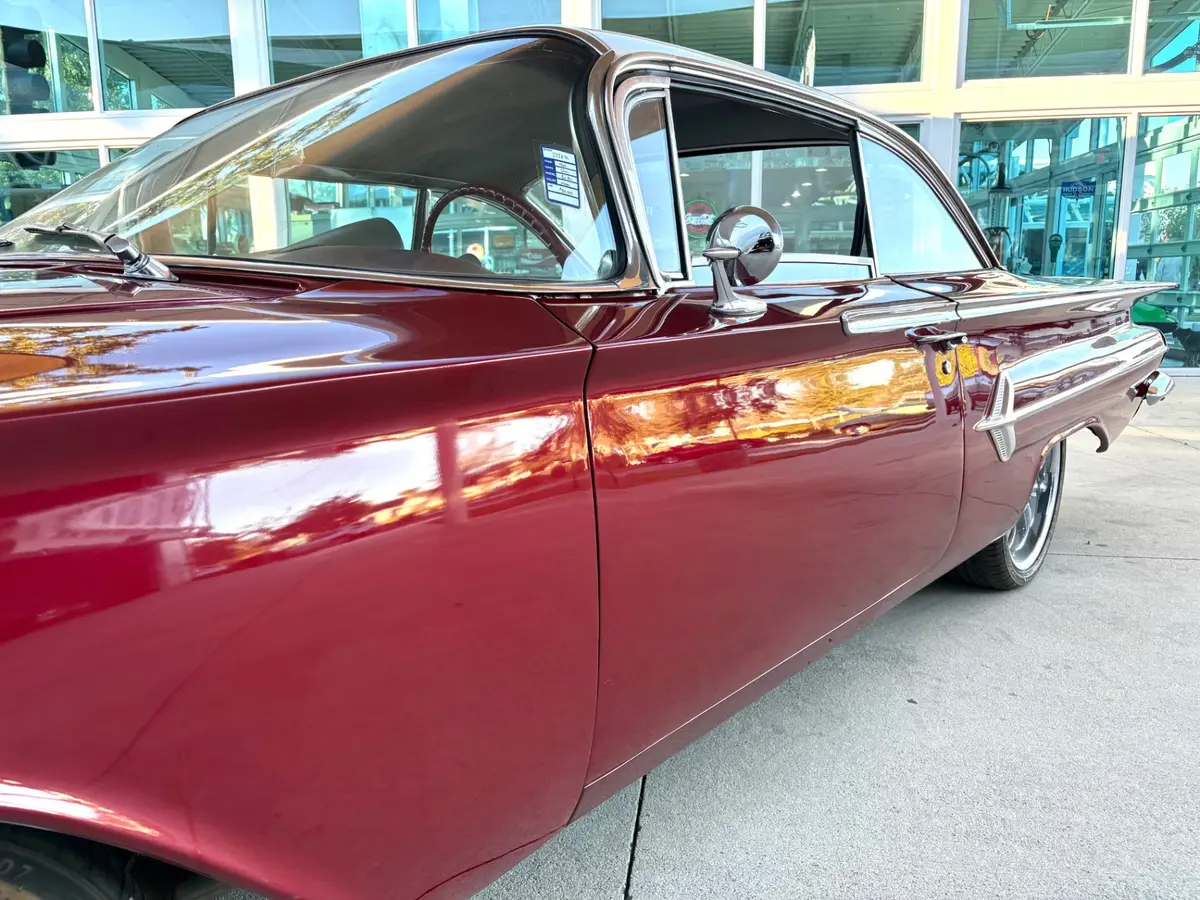
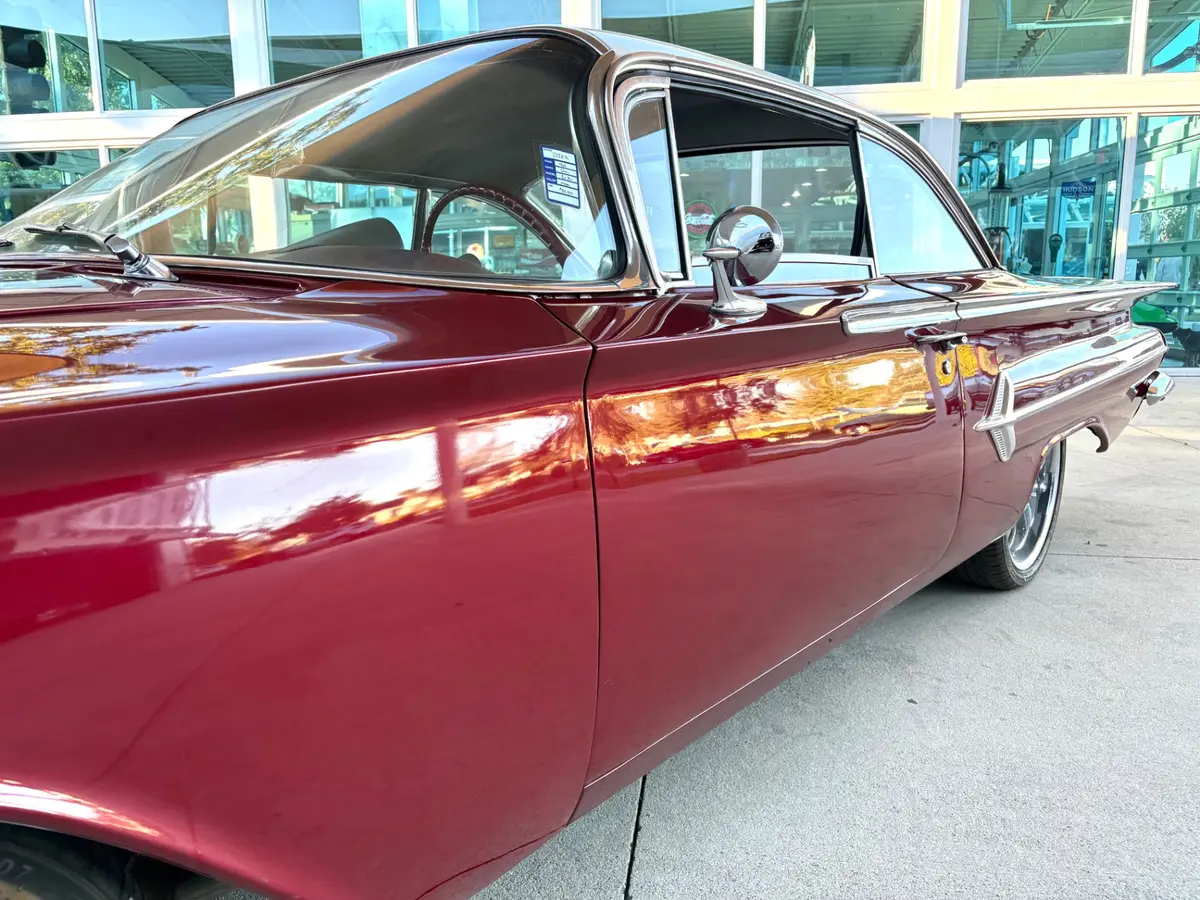
The 1958 car is a one-year body on the new X-frame, longer, lower and heavier, with quad headlamps, coil-spring rear suspension in place of leaf springs, and the 348 big-block alongside the 283. It shares its roof and much of its structure with no other year, so every 1958-specific panel, glass and trim piece costs you more time to find. The 1959 car is the wild one — wide, flat tail fins, teardrop tail lamps — and the 1960 is the same basic shell tidied. Both suffer the X-frame's rust and alignment traps in full.
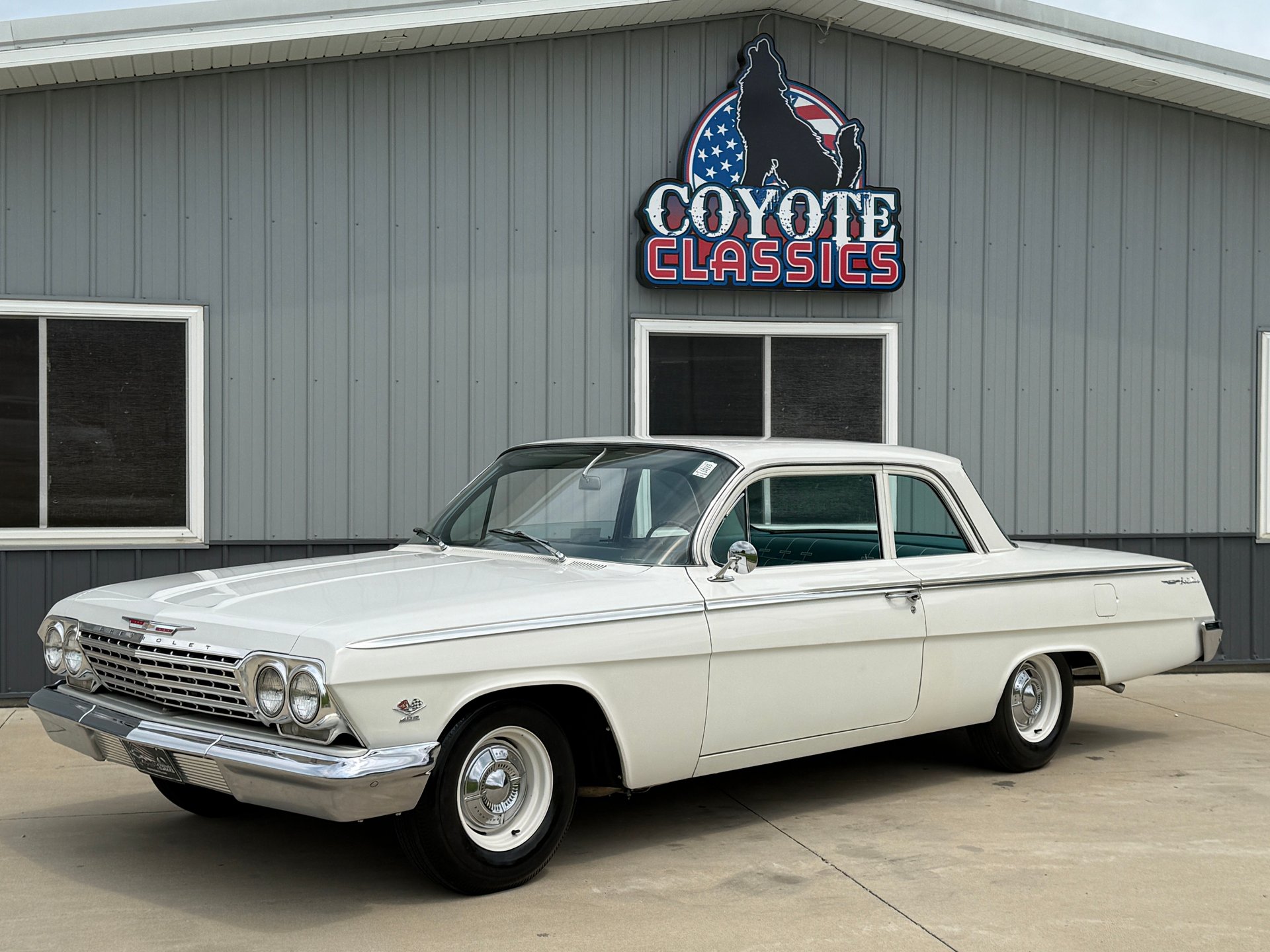
The 1961–64 cars are the ones to learn in detail. The 1961 is a near-total reskin, shorter and cleaner, and the last year of the wraparound windscreen. The 1962 Bel Air Sport Coupe keeps the thin-pillared, curved-glass 1961 Impala roof — the bubble top — while the 1962 Impala moves to a more formal, squared roof; that single roof pressing is why a genuine 1962 bubble-top Sport Coupe matters, and why sellers pass off the far commoner 1962 two-door sedan, with its thick B-pillar and completely different roof, under the same words. The white car in the figures is that sedan: honest and desirable, but not a bubble top, and never pay a bubble-top price for it. The 1963 and 1964 cars square up further and mark the high point of the 409 era.
The 1965 redesign brings the perimeter frame back, curved side glass, and the rounded Coke-bottle rear quarters you see on the 1967 car in the figures. By then the Bel Air coupe is really a two-door sedan in the middle of the range — the glamour has moved to the Impala and Caprice hardtops — and that honesty is its appeal: a big, simple, well-supported Chevrolet without the Impala price or the Impala clone industry attached. The Bel Air two-door continues to 1969 in this generation; after 1970 the name fades into fleet trim and the coupe story is over.
| Model | Years | Engine | Output | Built | Character |
|---|---|---|---|---|---|
| Bel Air Sport Coupe (hardtop) | 1950–54 | 235 Blue Flame six | Around 105–115 hp (gross, period rating) | Hardtop only at first; series production in the tens of thousands a year | The original: pillarless roof, torque tube on early cars, Powerglide if specified |
| Bel Air two-door sedan / Sport Hardtop | 1955–57 | 265 / 283 small-block V8, 235 six | 162–283 hp (gross); 283 hp fuel-injected 283 is the peak | Mass production — Bel Air was the volume top trim; coupe-only splits were not consistently published | The Tri-Five icon; most collected, most cloned, 210-to-Bel-Air dressing is the standing trap |
| Bel Air Sport Coupe / two-door sedan | 1958 | 283 V8, 348 W-motor, 235 six | 185–315 hp (gross) | One-year body; total 1958 Chevrolet production fell sharply in a recession year | One-year everything: quad lamps, X-frame debut, orphan panels and glass |
| Bel Air Sport Coupe / two-door sedan | 1959–60 | 283 / 348 V8, 235 six | 185–335 hp (gross) | Mass production | The fin cars; spectacular, rust-prone, X-frame and centre-bearing driveline in full |
| Bel Air Sport Coupe (bubble top) / two-door sedan | 1961–62 | 283 / 327 / 409 V8, 235 six | 170–409 hp (gross) | Mass production overall; the 1962 bubble-top Sport Coupe is the scarce roof within it | The racer's choice; 409 car, Super Sport was Impala-only — any SS Bel Air is a build |
| Bel Air Sport Coupe / two-door sedan | 1963–64 | 283 / 327 / 409 V8, 230 six | 195–425 hp (gross) | Mass production | Squared styling, Muncie four-speed arrives, last and best of the 409 |
| Bel Air two-door sedan | 1965–69 (pool car: 1967) | 230 / 250 six, 283 / 307 / 327 / 350, 396 / 427 big-block | 140–425 hp (gross, varying by year) | Mass production, increasingly fleet-weighted | Perimeter frame returns; the honest mid-trim coupe, priced below the Impala it shares everything with |
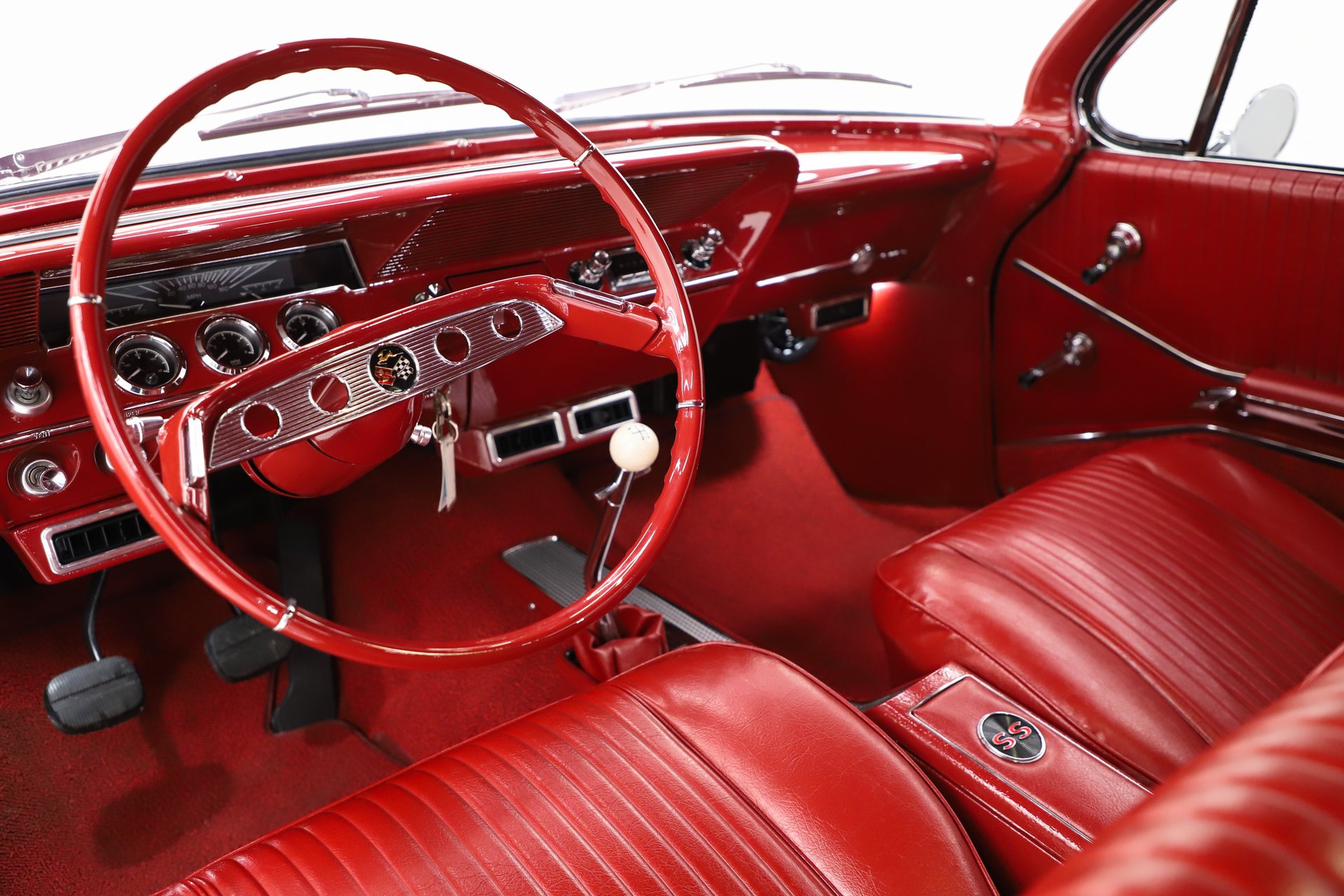
Two naming traps close this section, because you will meet both in adverts. First, Super Sport is an Impala package and then an Impala model in this period, never a Bel Air factory model: a Bel Air with SS badges, bucket seats and a console — like the red interior in the figures — is a car someone has built, which may be exactly what you want, but you price it as a build, not as a factory rarity. Second, sellers use coupe to mean any two-door. You do not. In this guide coupe covers both the hardtop Sport Coupe and the two-door sedan only when the body is named with it, and on a 1962 the roof pressing is the whole ballgame.
Engines and gearboxes
Almost every engine Chevrolet ever put in a full-size car in this period fits in every other one, and sixty years of swaps means the engine in front of you is evidence, not paperwork. Learn the families, learn where the numbers live — the stamped pad on the block deck in front of the passenger-side cylinder head on V8s, the casting number and date at the back of the block — and treat any claim of matching numbers as unproven until you have read the stamps yourself with the paint scraped and a torch in your hand.
The sixes: the Stovebolt family and its successors
The 235 cubic-inch Blue Flame six, the final development of the Stovebolt line that powered Chevrolets since 1929, is standard equipment into 1962. It is an overhead-valve, seven-main-bearing-in-effect honest engine with a single Rochester or Carter single-barrel carburettor, solid or hydraulic lifters depending on year and gearbox, and one defining weakness you must test for: low oil pressure at hot idle on a worn engine is normal conversation, but a six that smokes blue on the overrun and breathes heavily from the filler cap has worn bores and rings, and no valve adjustment will cure it. Listen cold. A Stovebolt with excessive valve lash ticks; a Stovebolt with a worn timing gear or a cracked exhaust manifold ticks differently — the manifold crack, usually at the centre where the heat riser lives, ticks loud when cold and quietens as it expands and seals, while valvetrain noise stays constant with temperature. That temperature test separates a cheap gasket-and-manifold car from an engine-out car. The heat riser valve itself, in the manifold, seizes with age: seized shut it cooks the carburettor and causes hot-running flat spots, seized open it makes the car undriveable for the first five minutes on a cold morning. Move it by hand on every six you inspect.
From 1963 the 230 cubic-inch thin-wall six, and later the 250, replace the 235. They are lighter, have seven main bearings, spin more freely and share their architecture with nothing earlier — do not let a seller call a 230 a Stovebolt. They are durable and understressed in a Bel Air, and their common faults are mundane: a leaking side-cover gasket weeping oil down the block, a worn single-barrel Rochester with a sloppy throttle shaft that no rebuild kit fully cures, and perished rubber in the fuel pump on modern ethanol fuel. A six-cylinder Bel Air Coupe is the slowest car in this guide and the cheapest to keep, and it is also the car most likely still to have its original engine, because nobody bothered to swap it.
The small-blocks: 265, 283, 307, 327 and 350
The small-block V8 is the heart of the Bel Air story. The 265 arrives in 1955 with no integral oil-filter boss on the earliest blocks — a fact that identifies a genuine 1955 engine at a glance — and grows to the 283 in 1957, offered that year with Rochester mechanical fuel injection at one horsepower per cubic inch. The 283 is the sweet Tri-Five and fin-era engine: it revs, it is plentiful, and every part for it is a phone call away. The 327, from 1962, is the engine the 1961–64 cars want: 250 hp in mild tune, 300 hp with the Carter AFB four-barrel, and up to 375 hp in fuel-injected Corvette tune that you will almost never find factory-fitted in a Bel Air — a 327/375 claim in a Bel Air needs build-sheet-grade proof, because the high-output 327s lived in Corvettes and, in tamer states, Impalas. The 307 (from 1968) is a smog-era economy small-block that nobody fakes and nobody wants, and the 350, arriving at the end of the decade, is the default replacement engine in the whole fleet.
The failure modes are shared and specific. The nylon-toothed timing sprocket fitted to many small-blocks from the mid-1960s sheds its teeth with age: the chain jumps, the engine stops or runs retarded and gutless, and the debris goes into the oil pump pick-up. Any original-chain engine rattling at the front cover gets a steel timing set in your budget, at $400–900 fitted, before it gets driven home. Rear main seals leak — rope seals early, two-piece rubber later — and the test that matters is whether the oil on the bellhousing is engine oil from the seal or ATF from the gearbox front pump seal; wipe, drive, and look at the colour. Hydraulic lifter tick that clears in seconds from cold is oil drain-back; tick that stays is a collapsed lifter or a worn cam lobe, and a wiped lobe shows as one rocker moving visibly less than its neighbours with the cover off. The Rochester Quadrajet, and the Carter AFB and WCFB before it, all suffer the same modern-fuel disease: ethanol hardens accelerator-pump cups and needle valves, so a car that has sat will hesitate, flood or both, and the cure is a rebuild with ethanol-rated parts, $350–700, not a replacement carburettor. Oil consumption is rings, valve guides or the PCV system, in that order of expense, separated by the test in the inspection section: smoke on acceleration is rings, smoke on the overrun and after idle is guides and stem seals.
Above all, decode the stamp. The pad suffix tells you the original application, displacement, gearbox and assembly plant of that block — not of the car. A correct-code 283 in a 1962 car that left the factory with a six is a good engine in a misdescribed car, and you price the car, not the story.
The big-blocks: the 348 and 409 W-motors, then the Mark IV
The 348, new for 1958, is the first big-block: a W-motor, named for its W-shaped rocker covers, with the combustion chamber in the block rather than the head. It gives you 250 hp in single four-barrel form and up to 315–350 hp with the famous triple two-barrel set-up. The 409, from mid-1961, is its bored and stroked heir: 360 hp with a single Carter AFB, then 409 hp with dual quads in 1962, and 425 hp in the final 1963–65 form. These are the engines that make a Bel Air valuable, because racers ordered the lightest shell with the biggest motor, and they are the engines around which the entire clone industry revolves.
Inspect a W-motor as a different species. The heads have no combustion chamber to crack in the usual place, but the blocks crack in the lifter valley and around the main webs when raced, the dual-quad linkage goes out of adjustment and makes the car feel broken when it is merely unbalanced, and the Tri-Power and dual-quad intake set-ups are worth so much loose that a correct air cleaner and linkage can matter as much as the block code. Verify a 409 by casting number — the 409 blocks carry distinct castings, most famously the 409/409 truck and passenger codes in the 3830814 and related families — and by the dipstick location and the head castings, never by the rocker covers, which bolt onto a 348 and fool buyers weekly. A 348 sold as a 409 is the single most expensive badge error in this guide. Budget a genuine 409 rebuild at $8,000–15,000 done properly; a seller who has just had one done cheaply has usually had the bores honed and the cracks left.
From 1965 the Mark IV big-block — 396, then 402, 427 and 454 at the edges of the period — replaces the W-motor entirely. It is a stronger, better-supported engine in every way, with hydraulic lifters in all but the solid-lifter high-output versions, and its Bel Air appearances are rare because by 1965 the performance buyer bought an Impala SS. A big-block 1965–67 Bel Air is a sleeper worth verifying carefully: check the engine code, the big-block-specific radiator, front springs and harmonic balancer, because a 396 dropped into a small-block car on small-block springs sits nose-down and cooks, and sellers call that stance attitude.

Gearboxes: three on the tree, Powerglide, and the four-speeds
The standard gearbox is a three-speed manual with synchromesh on second and third only, shifted from the column — three on the tree. First gear is a crash engagement at anything above walking pace, worn synchro rings show as a crunch into second when cold that improves warm as the oil thins, and the column linkage wears into a vague, two-handed search for gears that new bushings, not a gearbox rebuild, usually cure. The optional overdrive version is a genuine cruising asset; test that it engages and freewheels as designed, because a failed overdrive solenoid or governor strands you in direct drive and the parts search is slower than for anything else in this section.
The Powerglide is the default automatic: a two-speed, with a cast-iron case to 1961 and an aluminium case from 1962. It has one forward range that does everything, a characteristically loose, sliding engagement, and a reputation for weakness it does not deserve — a Powerglide that slips on the upchange under load usually needs band adjustment and fresh fluid, while one that delays engagement into Drive on a cold morning has hardened seals shrinking off their bores, which is a rebuild at $1,200–2,200, not an adjustment. The Turboglide, offered 1957–61, is the opposite: a genuinely clever continuously variable design that is now an orphan, with almost no rebuild support; a Turboglide car that drives perfectly is a curiosity, and one that does not is a Powerglide conversion waiting to be priced in. From the mid-1960s the Turbo-Hydramatic arrives — the TH400 behind big-blocks and the TH350 behind small-blocks from 1969 — and it transforms the later cars: three real ratios, a firm shift, and parts everywhere. A TH350 or TH400 swapped into an earlier car is the commonest and most defensible modification you will meet.
The four-speed is where the money is. Cars to 1962 use the Borg-Warner T-10; from 1963 the Muncie takes over — the wide-ratio M20, the close-ratio M21, and the heavy-duty M22 with its straighter-cut, noisier gears, the rock crusher. Verify by the case casting and the input-shaft rings, and be sceptical twice over: the M22 premium invites faked stamps, and a four-speed in a Bel Air needs its supporting cast — correct crossmember, shifter, pedals and floor hump — to be a factory installation rather than a conversion. Conversions are fine cars and false paperwork. Original three-speed and Powerglide cars still exist in numbers, and they are cheaper for no mechanical reason at all.
Problem areas
Rust and the frame: the X-frame map, then the body map
Start underneath, because on a 1958–64 car the frame is the car. The X-frame — a cruciform centre section with short side rails front and rear — has no full-length side members, which gives you two problems at once. It rusts in the centre X where road dirt and moisture sit in the box sections and where you cannot see without a torch and a mirror, and it twists: a car that has taken a corner impact or years of jacking on one corner can be measurably out of square while looking straight, and the only honest test is a four-point measurement or a laser alignment printout showing thrust angle and wheelbase side to side. A perimeter-frame car (1957 and earlier, 1965 and later) is far more forgiving: check the rails at the rear kick-up over the axle, the body-mount outriggers, and the front crossmember under the radiator, where battery acid and coolant have assisted the rust for sixty years. A frame repair done well is acceptable on a driver; a frame repair hidden under fresh underseal, with the seller discouraging the lift, ends the inspection.
Body rust follows a map so consistent you can walk it. Front wings rot at the headlamp eyebrows and at the lower rear corner where the inner brace traps mud. Doors rot along the bottom seam — open the door and look at the underside, not the painted face — and a reskinned door shows a crimped, uneven hem. Sills and rockers rot from the inside out, fed by blocked drain holes; press hard along the full length with the heel of your hand, because filler over a holed rocker feels solid to a fingertip tap and gives under real pressure. Floor pans go at the front footwells, where the carpet holds water against the steel, and at the body-mount points. The boot floor goes around the spare-wheel well and above the fuel tank, and on 1959–64 cars the rear quarters go in three places: the lower edge behind the wheel, the wheel-arch lip, and the inner quarter where it meets the boot floor — the last is structural to the quarter's shape and the expensive one to do right.
The roof and glass apertures are the quiet killers. The pillarless hardtop has no B-pillar to stiffen the shell, so the roof, the windscreen frame and the rear-quarter structure do the work, and they rot where water sits: the windscreen surround under the stainless trim, the rear-window channel — worst on the 1961–62 bubble top, whose huge curved backlight sits in a channel that holds water against a flange you cannot inspect without removing trim — and the drip rails. Bubbling at the base of the windscreen pillars on a hardtop is never cosmetic; by the time paint lifts there, the flange underneath is perforated, and the repair means screen out, trim off and fabrication, at $1,500–3,500 a side done properly. On the two-door sedan the same water goes down inside the B-pillar and rots the pillar base and the rear floor from a place no photograph shows. Lift the carpets on every car. Every car. A seller who will not let you lift carpets and look in the boot well has answered your most important question.
Replacement panels exist for floors, rockers, lower quarters and boot floors for the popular years — Tri-Five and 1961–64 best, 1958 and 1959–60 patchier, 1965–67 good for floors and quarters — at a few hundred dollars a panel, but the labour is the bill: a car needing floors, rockers, both lower quarters and a boot floor is a $12,000–25,000 welding programme before paint, and paint on a car this size, with this much stainless to remove and refit, is its own five-figure conversation. Buy the shell. Everything else in this guide bolts on.
Identity: trim tags, VINs and the badging traps
Chevrolet makes identity easy to check and easy to fake, in that order, and the fakes rely on you checking the shiny parts instead of the stamped ones. Work in this order and you will not be caught.
The VIN first. On cars of this era it lives on a plate in the driver's door jamb on most years, moving to the windscreen-base dash plate at the end of the 1960s, and its format encodes the series, the model year, the assembly plant and the sequential production number — and from the mid-1960s the engine family fitted at the factory is encoded in the VIN itself on many Chevrolet lines, so a V8 VIN with a six in the bay, or the reverse, is a documented swap, not a mystery. Check the plate's rivets and font against known examples for the year, and check the number against the title before you check anything else: a car whose VIN plate has been transferred from a Bel Air to a Biscayne shell is a title problem wearing a trim problem's clothes.
The trim tag — the Fisher Body cowl tag on the firewall — is your second document. It encodes the model year, the Fisher style number (which states the series and the body: hardtop coupe and two-door sedan carry different style numbers, and this is where the white sedan above separates from a bubble top in ten seconds), the body number and plant, the trim code for the interior material and colour, and the paint code. Decode all of it, in the seller's presence, from a year-specific source. A tag whose style number says Biscayne two-door sedan under Bel Air trim and Impala badges is a dressed car, full stop, and its price is the dressed car's price however good the work is. Tags are reproduced and restamped; a tag that is conspicuously new, held with modern rivets or screws, or whose codes decode to a different colour and trim than an unrestored car's hidden areas show — under the rear seat, inside the boot, under the dash — deserves a car priced as undocumented.
Then the badges, because badges are where the money leaks. Bel Air versus 210 versus 150 on a Tri-Five, and Bel Air versus Biscayne versus Impala later, differ in side trim, scripts and interior — all of it bolt-on, all of it reproduced, all of it fitted to cheaper shells for fifty years. The crossed-flags fender emblem implies a big or hot engine and proves nothing; the 409 numerals, the SS scripts, the Impala's extra brightwork and the Bel Air's side spear are a morning's work to fit. The myth to correct plainly: there is no factory Bel Air Super Sport in this period, and there is no factory 1962 Bel Air bubble-top sedan — the bubble top is a hardtop roof, the sedan is a different body, and no trim package crosses them. Equally, correct the opposite myth: a six-cylinder or 283 Bel Air is not a lesser car that someone has downgraded. Most Bel Airs left the factory modestly powered; the big-engine cars are the exception the market has taught you to expect, and an honest small-engine car with its paperwork in order beats a big-badge car whose numbers do not agree, every time, at resale as well as at purchase.
Suspension, steering, brakes and the rear axle
The front suspension is conventional double wishbones with coil springs and ball joints, and it wears conventionally: upper ball joints and control-arm bushings first, then lowers, then the idler arm, the single most common cause of the vague, wandering steering sellers blame on the steering box. Test it on the lift with an assistant rocking the wheel while you watch each joint; play at the idler shows as the centre link moving before the wheels do. A full front-end rebuild runs $800–1,800 in parts and alignment, and a car that has just had one should have the invoice, because the other explanation for tight steering on a worn car is a steering box wound up on its adjustment to mask wear — which then wears the box's centre sector, felt as notchiness straight ahead. Recirculating-ball boxes are rebuildable at $400–800; a box both loose at centre and tight at lock is worn, not maladjusted.
Springs sag, and sag is diagnostic. Down at the nose on one side is a broken or settled coil; down on both sides with a big-block fitted raises the spring-rate question — small-block springs under a 409 or a 396 overload and crack their lower control-arm mounts over time. At the rear, the 1958–64 cars run coil springs with a Panhard rod locating the axle; worn trailing-arm bushings let the axle steer the car under power, felt as the rear stepping sideways on a hard launch. The two-piece propshaft on X-frame cars runs through the frame's centre on a support bearing, a wear item with a signature: a rumble at 30–45 mph that disappears above and below, misdiagnosed for decades as wheel balance. A new bearing is a $300–600 job; a vibration worst under load at highway speed is more likely a worn universal joint or a pinion-angle problem after a spring change.
Brakes are single-circuit drums all round on everything before 1967, with a dual-circuit master cylinder arriving as the period closes. Understand what that means: one failed wheel cylinder, one perished flex hose, one corroded line empties the only circuit you have. Budget a full hydraulic overhaul at $700–1,500 in parts on any car without documented recent work, and treat a hard, high pedal that pulls as oval drums, a soft pedal that pumps up as air or a swelling hose, and a pedal that sinks slowly at a standstill as a master cylinder bypassing internally. Front disc conversions are everywhere and usually welcome; judge them on the proportioning valve and master cylinder sizing, not on the drilled rotors. The rear axle is strong and its noises are honest — a whine on the overrun is pinion bearing or gear wear, a clunk on direction change is backlash — and Positraction units need their limited-slip additive or they chatter and then destroy their clutch packs in tight turns.
Interior, trim, glass and electrics
The interior is where a Bel Air tells you its true series and its true mileage. Bel Air trim means specific patterns, specific materials and, in most years, more brightwork than a Biscayne; a retrim in the correct pattern from a quality kit is a $3,000–6,000 event with seat foam and labour, and a retrim in the wrong pattern — Impala pleats in a Bel Air, bucket seats and a console where a bench belongs — is a statement about the car's past you should price, not admire past. The red interior in the figures is the perfect teaching example: beautifully done, with bucket seats, a console carrying an SS emblem and a floor-shifted four-speed — and none of that is how a Bel Air left the factory. As a restomod it may be the best seat in this guide to sit in. As an original car it does not exist, and the price must follow the first sentence, not the second.
Stainless and pot-metal trim decide restoration economics more than any mechanical part. The long side spears, window surrounds and grille on a fin-era car are year-specific, and pot-metal pieces — headlamp doors, tail-lamp housings, emblems — pit from within as the zinc alloy corrodes; rechroming pot metal properly, with the pits drilled, filled and coppered, runs $300–800 a piece, and a car missing its year-specific stainless is a parts hunt measured in seasons, not weekends. Glass is the hard boundary: flat glass is cut anywhere, but the curved screens — the 1959–60 wraparound windscreen, the 1962 bubble-top backlight — are reproduction-limited and expensive when they exist at all, and a delaminating, milky-edged curved screen on a car whose glass is not currently reproduced is a permanent defect to price, not a job to schedule. Check every curved pane for edge delamination and for the sandblasted arc of a worn wiper.
Electrics are simple and therefore honest. The charging system is a generator on early cars and an alternator from 1963; a generator car that discharges at idle with the lamps on is behaving normally within limits, while one that discharges at cruise has a regulator or brush problem. The wiring goes brittle at the bulkhead and the engine-bay runs, and the failure mode is resistance, not drama: dim lamps, a slow starter and a hot ignition switch all trace to corroded grounds and a tired positive cable more often than to failed components. Test voltage drop, not just voltage — more than half a volt lost across the starter cables cranking is the fault, whatever the battery test says. Most Bel Airs carry warning lamps rather than gauges for oil and temperature; a car whose oil lamp flickers at hot idle needs a mechanical gauge plumbed in for the inspection drive before you conclude anything, because the switch, the wiring and the engine are three different prices. Heater cores leak into the passenger footwell and are universally described by sellers as air-conditioning condensation on cars that have no air conditioning; a sweet smell and a greasy film inside the windscreen above the demister vents is coolant, and the core is a $150 part behind a $600–1,000 labour bill on the later cars.
How to inspect one
Inspect in this order, cold car, on a lift if you can possibly arrange one, and do not let a warm engine, a washed underside or a ticking clock reorder it for you.
- Paperwork and plates before panels. Match the VIN plate in the door jamb (or at the windscreen base on the latest cars) to the title, then decode the Fisher cowl tag: style number for series and body, trim code, paint code. If the style number says two-door sedan, no roofline argument reopens it. Photograph both plates.
- The roof test. On a hardtop, stand at the rear three-quarter and sight along the roof and quarters: the bubble top's thin pillar and curved backlight are unmistakable once you have seen the white sedan in the figures for contrast. Check the rear-window channel and windscreen pillars for bubbling, and price aperture rust as fabrication, not filler.
- The frame walk. Underneath, torch in hand: the X-frame centre box sections and rear rails on a 1958–64, the kick-ups, outriggers and front crossmember on a perimeter-frame car. Probe suspect sections with a screwdriver — with permission, and a refusal is itself a result. Look for fresh underseal localised over damage.
- The rust circuit. Door bottoms from underneath, rocker panels pressed hard along their length, front footwells with the carpets lifted, boot floor and spare-wheel well, lower rear quarters inside and out, wing eyebrows and lower rear corners. You are building the welding list that decides the price; write it down as you go.
- Cold start. Engine stone cold, bonnet up, stand at the exhaust. Blue smoke at start that clears is valve stem seals; smoke that continues under load is rings. Listen for the manifold tick that fades as a Stovebolt warms (a crack sealing) against valvetrain noise that does not. Watch oil pressure behaviour and the charge lamp as it settles.
- Numbers on the engine. Read the stamp pad in front of the passenger-side head and the block casting number and date at the rear of the block. A 409 claim gets casting verification, not rocker-cover verification; a 348 in 409 clothes is the most expensive sentence in this market. Note what the suffix says the block began life as.
- The drive: gearbox and driveline. A Powerglide that engages promptly cold and does not slip on its single upchange under load is healthy; delay cold is seals, slip is adjustment or wear, in that diagnostic order. A manual gets every synchro tested cold, especially second. Feel for the 30–45 mph rumble that identifies the X-frame propshaft centre bearing, and for axle whine on the overrun.
- The drive: steering, suspension and brakes. Straight-ahead notchiness is a worn or over-tightened steering box; wander that changes with road camber is linkage play, most often the idler arm. Brake from speed in a straight line, hands light: a pull is drums, hoses or adjustment, and on a single-circuit car any hydraulic doubt is a walk-away-until-fixed item, not a discount line.
- Smoke separation. On a long descent or after a minute's idle, accelerate hard: smoke on acceleration points to rings, smoke puffing on the overrun and on take-off after idle points to guides and seals. That one test prices the difference between a top-end refresh and a full rebuild, so do it properly.
- Electrics and water. Every lamp, the horn, the wipers, the heater fan on all speeds. Smell the passenger footwell and look for the greasy demister film that means heater core. Check the inside of every curved pane for delamination, and run a hose over the hardtop's pillarless glass if the seller allows — a hardtop that seals is worth real money over one that whistles and drips.
- Trim audit against the year. Walk the car with a year-specific eye: correct side spear, correct grille, correct tail treatment, and an inventory of missing stainless and pitted pot metal. Missing year-only trim on a 1958 or a 1959 is a seasons-long hunt; missing 1962 trim is a catalogue order. Price accordingly.
- The stance and the story. Step back. Small-block springs under a big-block sit nose-down; a converted four-speed shows in the floor hump and crossmember; fresh paint over old panel gaps shows in uneven shutlines. Then ask the seller to explain the car you have just measured. Buy the car that matches its explanation.

Values
The market figures that matter for the car in front of you sit in the computed listings and recorded-sales blocks beneath this guide, refreshed as the market moves, and you should read them the way this section teaches rather than carrying any fixed number in your head from one season to the next.
Start with the condition spread, because on a Bel Air Coupe it is wider than on almost any comparable car. The same model year covers a six-cylinder two-door sedan bought as a hobby, a documented small-block hardtop in honest driver condition, and a rotisserie-restored big-engine car whose build cost exceeds what the market will ever return. These are effectively three different markets sharing one badge, and the median of all three tells you nothing about any one of them. Read the recorded sales for your exact combination — year, body, engine as verified rather than as badged — and treat any car offered well away from that cluster as a question to be answered, not a bargain or a rip-off to be assumed.
Asking prices and achieved prices part company predictably here. Dealer asking prices carry the cost of the polish and a negotiation margin, and auction results carry the opposite distortions: a restomod with the right stance can outrun a more correct car on the day, and a correct car with a cold room can stall below its worth. The gap that matters to you is the one between a badge and a document. A verified big-engine hardtop with agreeing numbers commands its premium because verification is rare; an unverified car wearing the same badges should trade near the honest small-engine cars, and the distance between those two points is the exact value of the stamp pad, the cowl tag and the casting numbers you checked in the inspection. Sellers price the badge. You pay for the proof.
Within the range, the premiums have logic you can rely on. The pillarless hardtop outruns the two-door sedan of the same year and engine, and the 1962 bubble top outruns both, because the roof is scarce and unrepeatable. The Tri-Five cars carry a fame premium that the fin cars partly share and the 1961–64 cars mostly do not, which is why the later cars are the value in this guide: the same engineering, the same parts support and, in 409 form, the greater performance, without the icon tax. The one-year 1958 trades in a thinner market — fewer buyers, fewer cars, and prices that depend heavily on the completeness of its orphan trim. Late cars, the 1965–67 generation, are priced as the honest classics they are, held down by the Impala above them, and a good one is bought with the head rather than the heart at a level the earlier cars have not seen for years.
The project-versus-driver gap follows the welding maths in the Problem areas section. A running, driving car with a sound shell is worth more than a cheaper project plus its restoration estimate, because the estimate always grows and the finished value has a ceiling the market sets. Buy a project only when the shell is genuinely sound or genuinely rare — a bubble top, a documented big-engine car — and the work it needs bolts on. Negotiate on evidence, not enthusiasm: the welding list, the trim inventory, the numbers that do not agree. Every one is a legitimate, specific point, and a seller who has done the same homework will respect all of them.

Parts and ownership
Ownership is where the Bel Air Coupe repays you, because the full-size Chevrolet of this era is one of the best-supported classics in the world. The mechanical catalogue is effectively complete: every service item, every suspension and brake component, every engine part for the small-block and the sixes, and most W-motor and big-block wear parts, are available new from multiple competing suppliers, and interchange across the GM divisions means the used-parts pool is continental in scale. A small-block Bel Air can be kept in daily use indefinitely on catalogue parts alone; budget routine servicing at ordinary classic-car levels, with oil and filter changes every 3,000 miles and points, plugs and condenser work folded into an annual ignition service if you keep the original distributor.
The body and trim catalogue is where support thins by year, and you should map your car against it before you buy, not after. Floor pans, rockers, braces, lower quarter patches and boot floors are reproduced for the Tri-Five, the 1961–64 cars and the 1965–67 generation, with the 1958 and 1959–60 cars served more patchily — patch panels and used cuts rather than full pressings. Weatherstrip, glass channels and window fuzzies are available for most years and transform a hardtop from a whistle into a car; a full weatherstrip set runs $400–900 depending on year and body, and fitting it patiently, with the glass adjusted in the correct sequence, is the highest-value weekend in Bel Air ownership. Interior kits in the correct patterns and materials are available for the popular years, seat foam included, and the discipline is the same as at purchase: order the pattern your trim code specifies, and the car stays a Bel Air inside as well as out.
What is genuinely hard is short and specific. Year-only stainless and pot-metal trim for 1958 and 1959, in unpitted condition. Curved glass for the low-production rooflines when current reproductions lapse. Turboglide internals and expertise. Correct dated components for a numbers-level 409 build, where the market in loose intakes, carburettors and air cleaners is expensive and itself heavily reproduced. None of this stops you using the car; all of it should be inventoried at purchase, because the time to discover that your 1958 is missing its one-year grille is before it is your 1958.
Running one is simple in the way its makers intended. The cars tolerate modern fuel with the carburettor rebuilt in ethanol-rated parts and the rubber fuel lines renewed throughout — do this on any new purchase without records, at $100–250 in materials, before you chase any running fault. They reward use and punish storage: brakes seize, Powerglide seals harden, centre bearings dry out, and fuel goes stale in vented tanks, so a car driven monthly costs you less than one admired quarterly. Insurance, club support and specialist knowledge are all easy — the full-size Chevrolet clubs hold the decoding information and the parts stashes, and joining one for your year is the cheapest expertise you will ever buy. Store the car dry, keep the drains clear, and almost nothing on it is beyond a competent home workshop with a lift, a torch and time.
Which one to buy
- The icon: the Tri-Five Sport Hardtop, 1955–57 — buy the best shell you can find with a decoded trim tag, accept the fame premium, and never buy one on badges alone.
- The value buy: a 1961–64 Bel Air two-door sedan with a 283 or 327 — the full B-body experience, the best parts support in the guide and no icon tax; the white 1962 pattern of car is the template.
- The one to hunt: a genuine 1962 Bel Air Sport Coupe, the bubble top — verify the roof, the style number and the engine stamps, and pay for documents, not for the words bubble top in an advert.
- The performance car: a documented 409 car, 1962–64 — casting numbers checked in person, priced as a build unless the paperwork is build-sheet strong.
- The honest driver: a 1965–67 Bel Air two-door like the black 1967 in the figures — perimeter frame, modern road manners by the standards of the guide, and the most car for the money of anything here.
- The brave buy: the 1958 — one-year beauty and one-year everything else; buy only a complete car, because completing an incomplete one is a hobby measured in years.
- The car to leave: any Bel Air, of any year, whose VIN, cowl tag and engine stamps tell three different stories at a price that requires one of them to be true.
The overriding rule: buy the shell and the documents, in that order — a sound, honestly identified Bel Air with a modest engine is a good car at almost any point in this market, and a rusty or misidentified one is a bad car at every price, whatever is bolted to its fenders.
See the 5 Bel Air Coupe cars currently listed.
For sale now
 $58,797 · 5% below typical
Expand
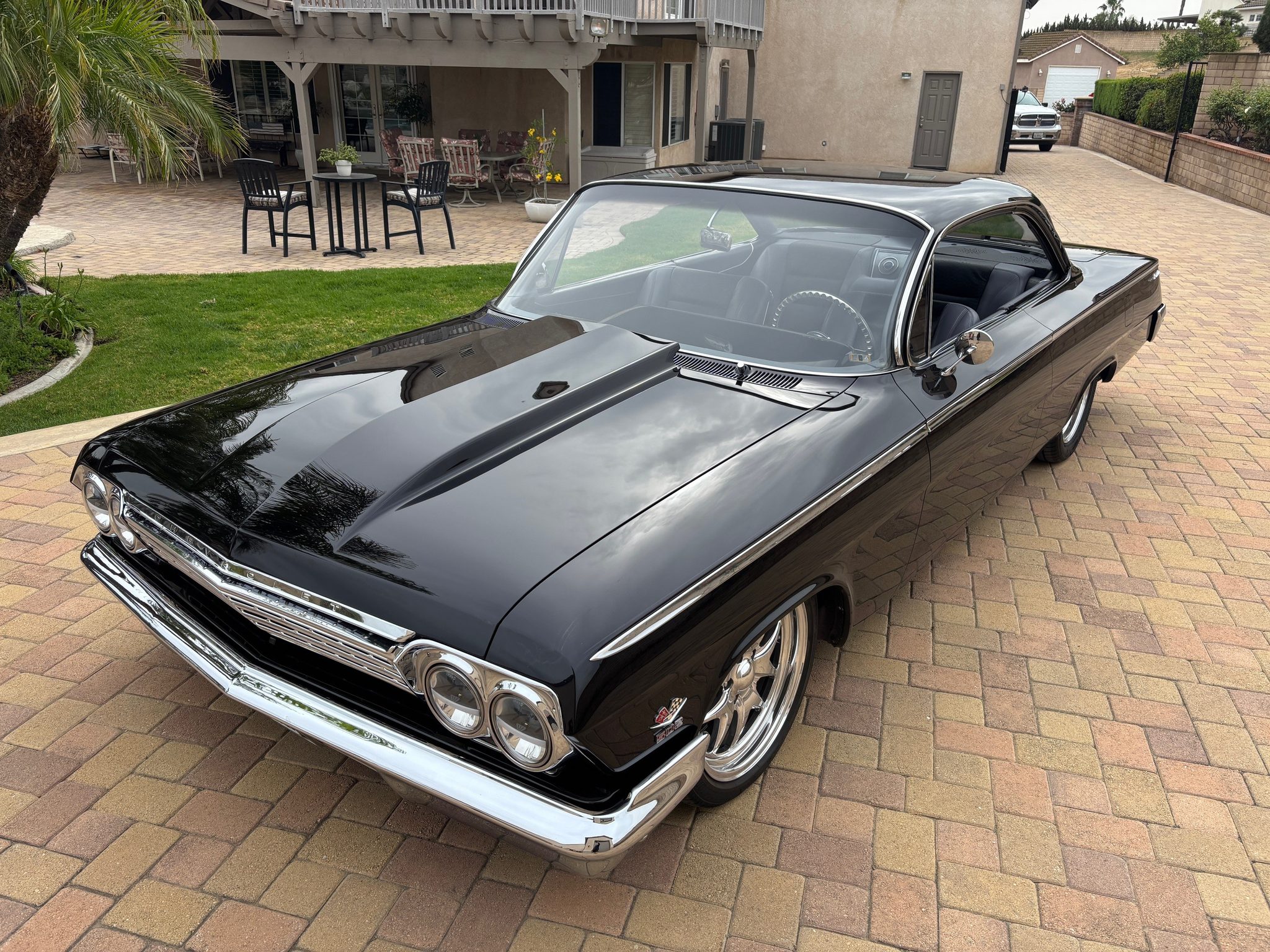 Current bid $29,500
Expand
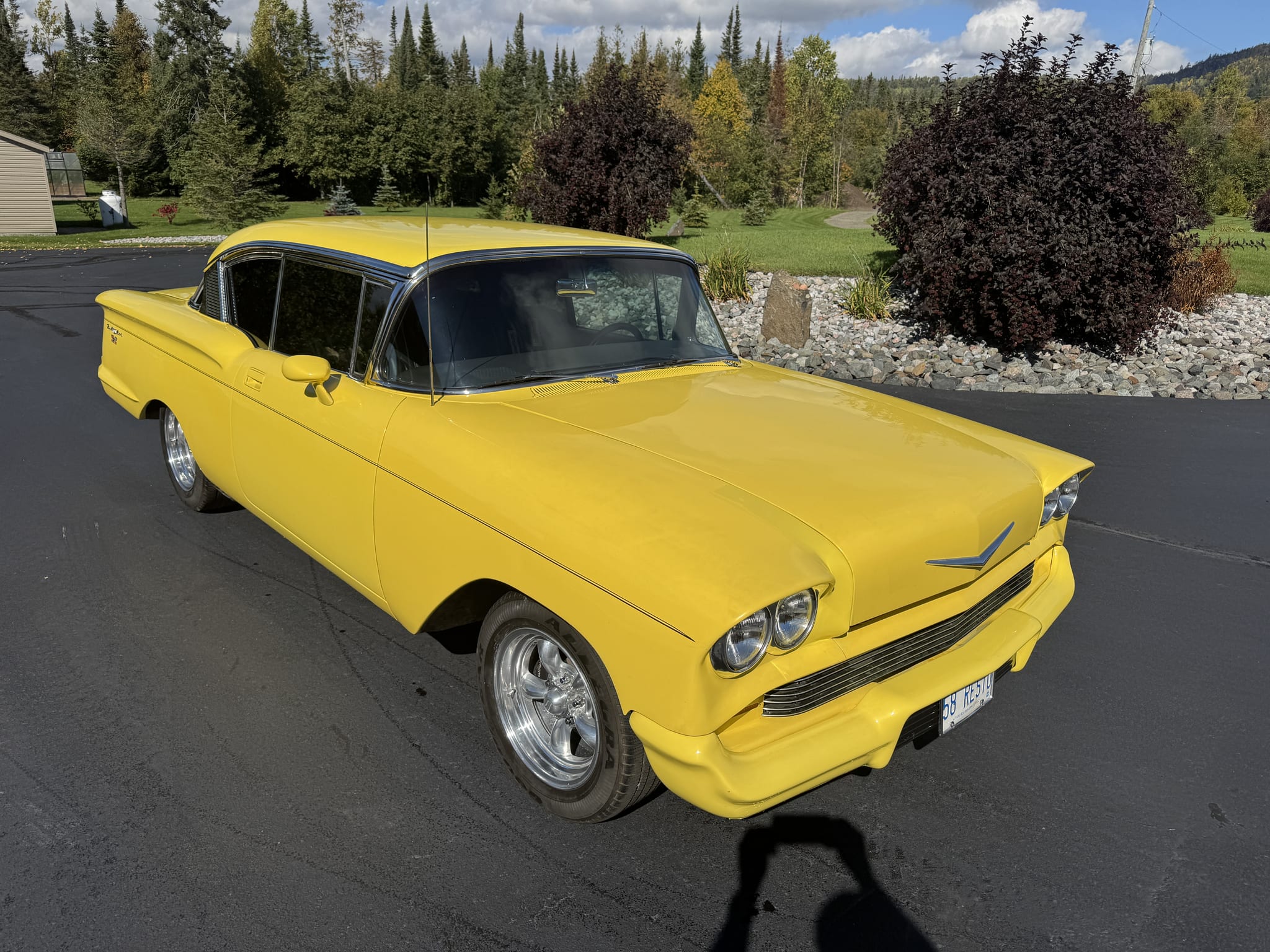 Current bid $10,250
Expand
What they sell for: Bel Air Coupe sale prices.