
Chevrolet Biscayne buyer's guide
Chevrolet Biscayne -- the model's own buyer's guide: variants, values and what to check.
Years listed: 1960-1969 · Series: Impala
Overview and history
The Biscayne is the Chevrolet full-size car for people who did not want to pay for chrome they did not need. From its launch for 1958 to the end of United States production in 1972 it sat at, or very near, the bottom of the big-Chevrolet ladder: below the Bel Air, below the Impala, and after 1965 below the Caprice as well. That position is the whole point of the car, and it is also the reason the best Biscaynes are now so interesting. A plain two-door post sedan with rubber mats, a painted roof, almost no side trim and a 409 or a 427 under the bonnet looks like a fleet car and goes like a stock car. Chevrolet built that combination on purpose, sold it cheaply to police departments, taxi fleets, travelling salesmen and drag racers, and most of the survivors you will meet today are either honest workhorses that were used up, or deliberately ordered performance cars that were thrashed in a different way. There is very little middle ground, and buying well means understanding which of those two lives the car in front of you has led.
The name arrived in 1958, a year Chevrolet would probably rather forget. The 1958 full-size line was a one-year body: heavy, low, wide, covered in sculpted panels and chrome, built on the new X-frame chassis with coil springs all round. In the range reshuffle that year the old 150 and 210 names disappeared. Delray became the entry model, Biscayne took the middle step, Bel Air stayed near the top, and the Impala — introduced that year as a Bel Air sub-series of hardtop coupe and convertible only — sat above them all. The Biscayne came as a two-door sedan, a four-door sedan and a four-door station wagon badged Brookwood; there was no Biscayne hardtop and no Biscayne convertible, a rule that held for most of the model's life. If a seller offers you a Biscayne hardtop from the classic years, you are looking at a rebadged Bel Air or Impala until paperwork proves otherwise.
The 1958 car matters beyond its looks. It was the first year of the W-series big-block, the 348-cubic-inch V8 that grew into the 409, offered in the Biscayne from the start. It was also a recession year: sales fell hard, the elaborate body was replaced after a single season, and surviving 1958 Biscaynes are scarce because fewer were sold and the one-year panels and trim were never reproduced in depth. Treat a 1958 as a specialist purchase — charismatic, mechanically straightforward, and unusually dependent on the completeness of its trim.
For 1959 and 1960 the car grew fins, then lost them. The 1959 body, with its flat, eyebrowed tailfins and teardrop tail lamps, is the most flamboyant Biscayne ever made; the 1960 tidied the styling and is generally the better-sorted car. Underneath, both years kept the X-frame, the coil-sprung rear axle located by trailing arms and a Panhard rod, and the same basic engine ladder from the Blue Flame six through the 283 small-block to the 348 big-block, the latter available with three two-barrel carburettors — Tri-Power in Chevrolet marketing language — in the cheapest body Chevrolet sold. That combination, a stripped two-door sedan with the strongest engine in the catalogue, established the Biscayne template that the next decade followed.
The 1961 redesign was the turning point. The new body was shorter, cleaner and lighter in feel, the fins were gone, and late in the model year Chevrolet released the engine that made the Biscayne famous: the 409, a bored and stroked 348, offered at first with a single four-barrel carburettor and, for 1962, with twin four-barrels and solid lifters at a factory rating that put it among the fastest production engines in America. The Beach Boys sang about it; drag racers from Don Nicholson to Dave Strickler won with it; and the cars they chose were overwhelmingly Biscaynes and Bel Airs, not Impalas, because the post sedan was the lightest, stiffest, cheapest shell. The 1961 "bubbletop" coupes get the glamour, but those are Bel Air Sport Coupes — the Biscayne buyer got the two-door sedan, and period racers preferred it precisely because the B-pillar made the shell rigid.
From 1963 the 409 story was complicated by the arrival of the Z11 — a 427-cubic-inch development of the W engine, built in tiny numbers for drag racing, with an aluminium front end on some cars — and then ended abruptly in early 1965 when Chevrolet replaced the W-series with the Mark IV big-block, the engine the world knows as the 396, 427 and 454. The 1965 full-size redesign, built on a perimeter frame with full coil suspension, was the best-selling Chevrolet line of the decade, and the Biscayne continued at its foot: six-cylinder or small-block power for the fleets, and 396 or, from 1966, 427 power for anyone who ticked the right boxes on the order form. A 1966–69 Biscayne two-door with an L72 427 and a four-speed is the direct descendant of the 409 cars, rarer than the equivalent Impala SS, plainer to look at, and — to the people who collect them — more desirable for exactly that reason.
The last chapter is quieter. The 1967 restyle, the 1969 facelift and the all-new, much larger 1971 body progressively turned the Biscayne into a pure fleet and value proposition. Big-block performance faded after 1970 as compression fell and emissions controls arrived; after 1972 the name was dropped in the United States, surviving a few more years in Canada.
That shared mechanical base is the Biscayne's great practical strength. Almost everything that makes the car go, stop and steer is common to the full-size Chevrolet line — one of the highest-volume cars in the world in its day — and almost everything that makes a Biscayne a Biscayne is trim, badges and specification. Buy the shell and the paperwork first, the engine second. A genuine big-block Biscayne with a tired engine is a restoration; a small-block car wearing big-block badges is a story, and stories are priced by sellers and discounted by everyone else.
Our own listings pool reflects how thin the surviving stock is: the site carries just 10 Biscaynes in total, 8 for sale and 2 recorded sold, spanning 1958 to 1969 — every classic generation, and none of the 1970–72 cars. That is a small sample, not a market census, but it tells the truth about Biscayne hunting: you do not choose from a row of them. You wait for the right car, you travel, and you inspect it as if you will never see another — because in the specification you want, you may not.
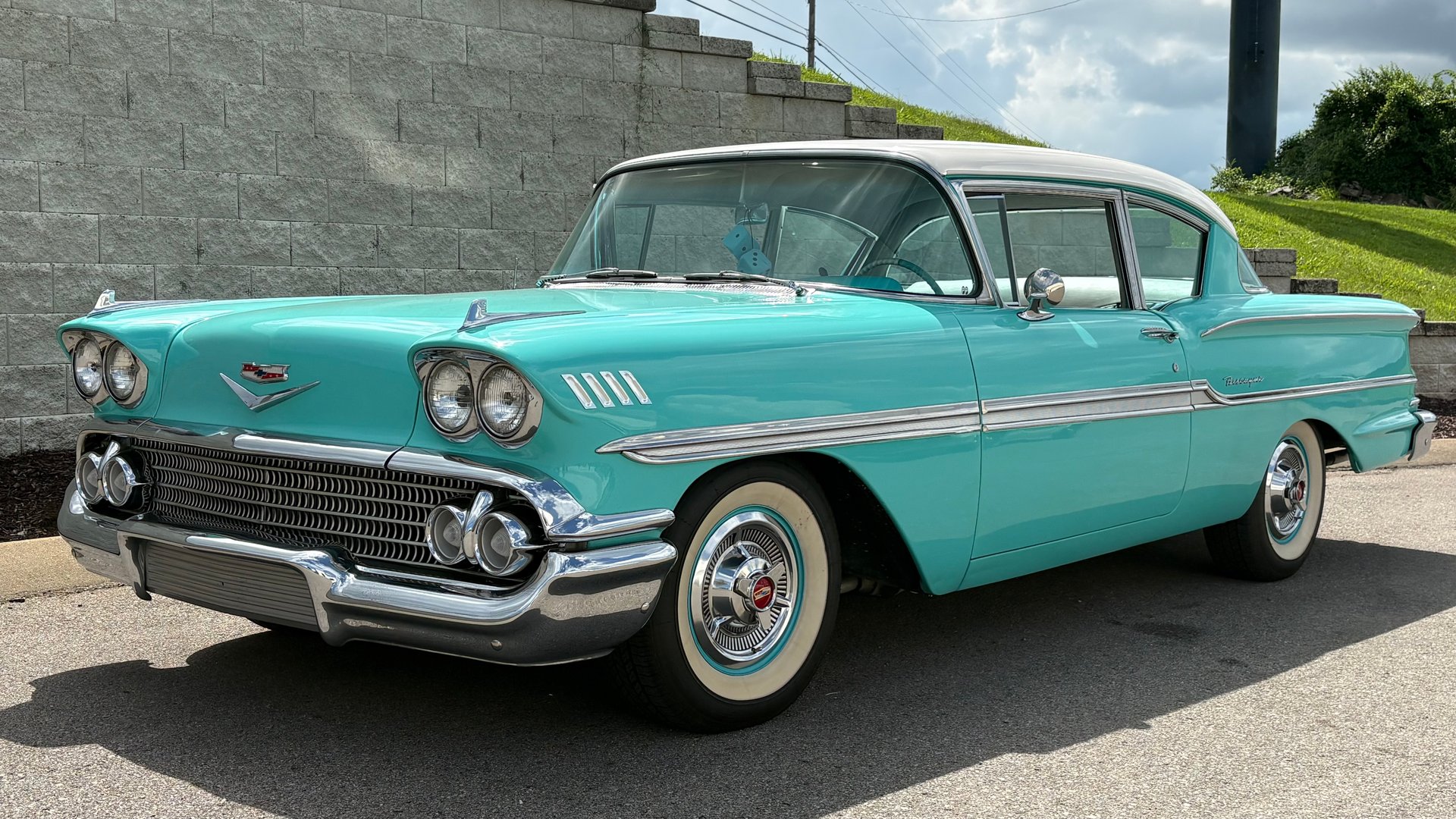
The models
The Biscayne range is best understood by generation, because Chevrolet changed the body, the frame and the engine ladder far more often than it changed the car's position in the range. Throughout, the body-style rule is your first identity check: sedans and wagons, almost always with a B-pillar. Two-door sedan, four-door sedan, and station wagons (Brookwood to 1961, then simply Biscayne wagon) make up nearly the whole population. Hardtops and convertibles belong to Bel Air, Impala and Caprice; a Biscayne badge on one is a later addition until a build sheet, a cowl tag and a VIN agree otherwise.
| Model | Years | Engine | Output | Built | Character |
|---|---|---|---|---|---|
| Biscayne (first generation) | 1958 | 235 six; 283 V8; 348 V8 | 145–315 hp | One-year body; sales hit by the 1958 recession | Heavy, ornate, scarce; the 348 makes it a collector car |
| Biscayne (second generation) | 1959–1960 | 235 six; 283 V8; 348 V8 incl. Tri-Power | 135–350 hp | High volume across the full-size line | The finned cars; 1960 is the tidier, better-sorted buy |
| Biscayne (third generation) | 1961–1964 | 230/235 six; 283, 327 V8; 409 V8; Z11 427 (1963) | 140–430 hp | High volume; 409 cars a tiny, documented minority | The drag-racing years; identity and paperwork are everything |
| Biscayne (fourth generation) | 1965–1970 | 230/250 six; 283, 307, 327, 350 V8; 396, 427, 454 V8 | 140–450 hp | The best-selling full-size line of the era | Perimeter-frame cars; L72 427 two-doors are the peak |
| Biscayne (fifth generation) | 1971–1972 | 250 six; 350, 400, 454 V8 | 145–365 hp (net ratings from 1972) | Fleet-heavy; US production ends 1972 | Bought on condition; a big, simple, comfortable Chevrolet |
Production figures in the table are deliberately given as character rather than false precision: Biscayne sub-totals are frequently quoted from secondary compilations that disagree with each other, and the figure that matters is not how many were built — it is how many survive in the specification in front of you. For the performance cars the relevant numbers are small and, for documented examples, verifiable through registries and paperwork: Z11 production in 1963 is counted in dozens, L72 installations in any given year in the low thousands across the full-size line, and genuine 409 Biscaynes are a fraction of total 409 production, because most buyers who paid for the engine also paid for an Impala.
1958: the ornate starter
One year, one body, and a specification sheet that runs from a 145-hp Blue Flame six with a three-speed manual to a 348 with Tri-Power and a solid-lifter camshaft. Most 1958 Biscaynes were sixes and 283s, and they are charming, slow and entirely adequate for shows and gentle touring. The 348 cars are the collectors' target. Wagons — Brookwood two-door and four-door — are the rarest survivors and the hardest to restore, because wagon-specific panels, glass and tailgate hardware were never reproduced. Judge a 1958 on trim completeness and panel originality above all: everything mechanical can be rebuilt from the shared Chevrolet parts pool, but a missing length of one-year side spear cannot.
1959–1960: fins, then sense
The 1959 is the styling statement; the 1960 is the same car with the excess trimmed and a year of production learning behind it. Both ride the X-frame, which gives a low floor and a soft ride and demands respect in the rust section below — the X has no perimeter rails to sacrifice, and its cruciform centre section traps mud. Engine choice mirrors 1958, with the 348 Tri-Power at the top. A 1960 two-door sedan with a 348 and a four-speed is one of the most undervalued routes into W-engine ownership; a 1959 four-door six is a style purchase, bought for the fins and the dashboard, and should be priced as one.
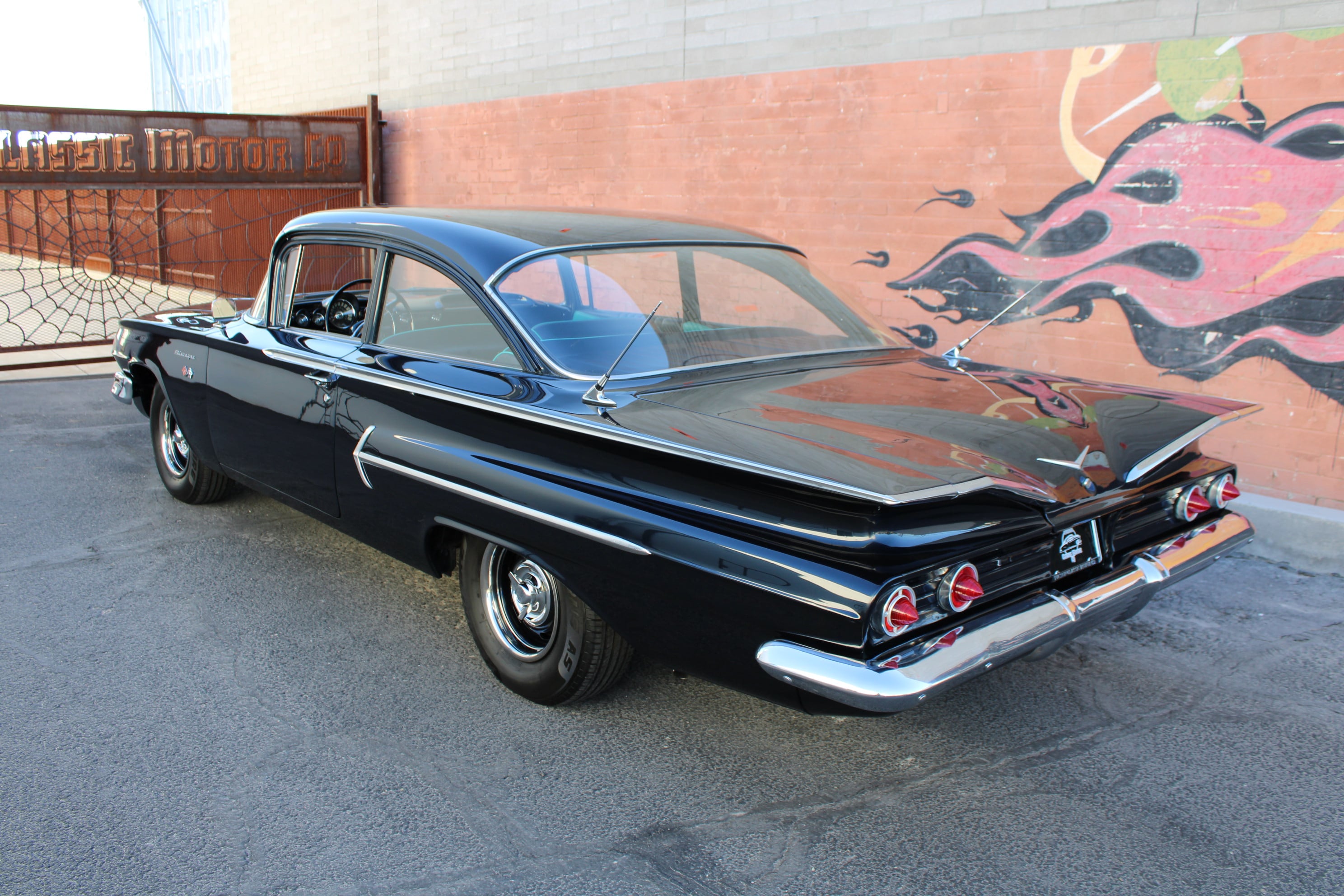
1961–1964: the 409 years
The volume cars — sixes, 283s and, from 1962, the excellent 327 — are straightforward, durable family Chevrolets in a clean early-sixties shape, and the 1961–62 two-door sedans have a purposeful, upright stance that has aged well. But this generation is defined by the 409. Offered from late 1961, the single-four-barrel version is a strong, tractable road engine; the 1962–64 twin-carburettor, solid-lifter version is a racing engine that happens to idle in traffic, and it behaves like one: it needs valve-lash attention, it dislikes being lugged, and it rewards an owner who understands it. The 1963 Z11 sits above the market this guide addresses — if one is offered to you, the transaction belongs with marque specialists and factory documentation, not with a general inspection. For ordinary buyers the sweet spot is a documented 1962–64 409 car, or a 327/300 with a four-speed, which delivers most of the experience with none of the identity anxiety.
1965–1970: the perimeter-frame cars
The 1965 redesign is the most complete Biscayne: a stiffer perimeter frame, better suspension geometry, disc brakes available at the front from 1967 and standard-fit thinking on safety that the earlier cars lack. The range runs from the 250 six to the L72 427/425, with the L35 and L36 big-blocks as the strong road engines and the 350 small-block, from 1969, as the sensible all-rounder. Two-door sedans again carry the performance flag; four-doors and wagons are the value buys. The 1969–70 cars add the 454 for 1970 and the tidiest styling of the run. If you intend to drive long distances, start here: parts support is the best of any generation, the driving manners are a decade ahead of the 1958 car, and a well-specified 1965–66 two-door is as handsome as anything Chevrolet made in the period.
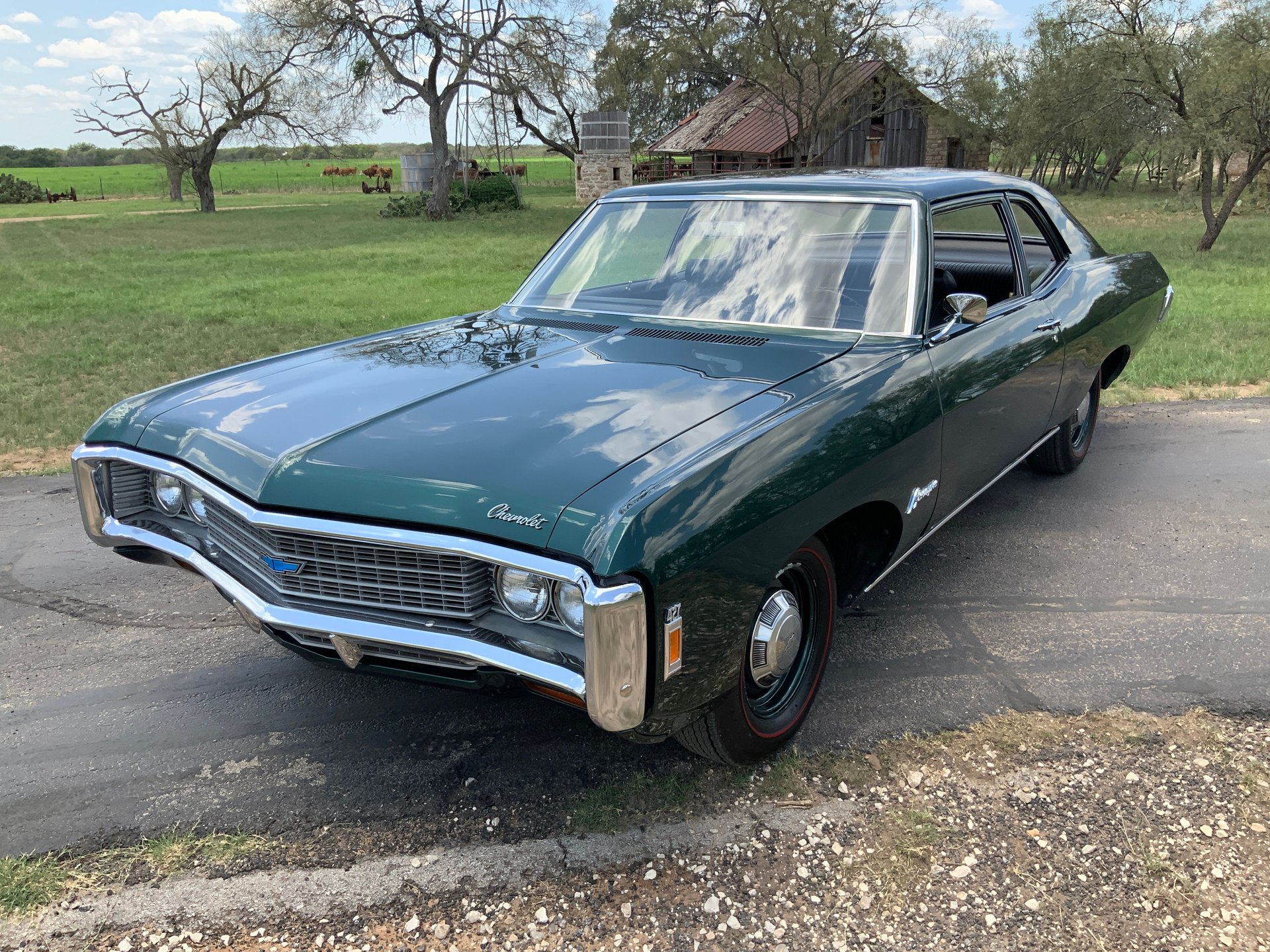
1971–1972: the fleet finale
The biggest Biscaynes, and the least collectible. Suspension is softer, steering lighter, performance modest even with the 454, which by 1972 was rated on the net system and tuned for emissions compliance. None of that makes them bad cars — it makes them condition purchases. A rust-free 1971 four-door from a dry state is a great deal of Chevrolet for family touring; a rusty one is a parts car, because restoration costs are identical to an Impala's while the finished value is not. Buy the best shell you can find, in this generation above all.
Engines and gearboxes
Every Biscayne engine is a known quantity with a deep knowledge base, and that is a large part of the car's appeal. There are no orphan power units here. What varies is not reliability in the abstract but state of tune, originality and the cost of putting a neglected example right — a neglected solid-lifter 409 and a neglected 283 are both Chevrolet V8s, but they are not the same bill.
The sixes: Blue Flame 235, then the 230 and 250
The 235-cubic-inch Blue Flame six (1958–62) is the old stovebolt's final form: overhead valves, a single one-barrel carburettor, splash-and-pressure oiling in its late, full-pressure form, and a reputation for running indefinitely at modest speed. Output was around 145 hp in Biscayne tune. Its weaknesses are age weaknesses: a worn timing gear (fibre, and quiet until it strips), oil leaks from the side cover and the rear main, a carburettor worn at the throttle shaft, and exhaust-manifold cracking. From 1963 the thin-wall 230 and, later, the 250 six replaced it — lighter, seven-main-bearing, altogether more modern, and the better engine in every way except period charm. A six-cylinder Biscayne will not be quick and was never meant to be; check instead that it starts cleanly, idles without a miss, shows no blue smoke on the overrun and carries good oil pressure hot. A full six rebuild with machining typically runs $2,500–4,500; carburettor and distributor work is a few hundred dollars and transforms most of them.
The small-blocks: 283, 307, 327 and 350
The small-block Chevrolet is the most supported engine on earth, and the Biscayne used most of the classic versions. The 283 (1958–67) came in two-barrel form for Biscaynes and, in the early years, with higher-compression four-barrel and fuel-injected variants in the wider range — a fuel-injected Biscayne is a claim to verify very carefully, not a feature to accept from a badge. The 327 (1962–68) is the pick of the small-blocks: 250 hp in the mild tune, 300 hp with the larger-valve heads and a four-barrel, smooth, free-revving and strong. The 307 (1968–72) is a smog-era economy engine, adequate and unloved. The 350 (from 1969) needs no introduction and is the easiest engine of all to live with.
Failure modes are shared and well understood. Hydraulic lifters tick at start-up when oil drains down or when the engine has been run on extended intervals — a tick that clears in seconds is a nuisance, one that persists hot is wear. Flat camshaft lobes were a genuine period problem on engines run on modern low-zinc oil without care; the symptom is a miss and a popping back through the carburettor under load, and the test is to pull the rocker covers and watch for a rocker that barely moves. Rear-main seals weep, two-piece seals weep more, and a dry underside on a claimed-original small-block usually means it has been apart. Timing chains stretch and retard the cam; on a high-mileage engine, budget for a chain set as routine. None of this is frightening: a quality small-block rebuild runs $3,500–6,500, a camshaft-and-lifter job $900–1,800 in parts and labour, and every gasket, pump and bearing is available off the shelf.
The W-series big-blocks: 348 and 409
The 348 (1958–61) and 409 (1961–65) share an architecture unlike anything else Chevrolet built: the combustion chamber is in the cylinder, not the head — the block deck is cut at an angle, the heads are flat, and the wedge is formed by the piston crown. That is why W engines look the way they do, with their distinctive scalloped rocker covers, and it is why parts interchange with the later Mark IV big-block is essentially nil. Do not let a seller blur that line: a 409 is not an early 396, shares almost nothing with one, and is rebuilt by people who know the type.
The 348 in Biscayne tune ran from 250 hp with a single four-barrel to 315–350 hp with Tri-Power and, in the hottest 1961 form, a solid-lifter camshaft. It is a torquey, understressed road engine and the most usable of the W family. The 409 began at 360 hp, reached 409 hp in the famous twin-four-barrel 1962 specification — one horsepower per cubic inch, hence the song — and ended at 425 hp. The high-output engines use solid lifters, a forged crankshaft in most applications, larger ports and an appetite for valve adjustment and high-octane fuel.
What goes wrong is specific. Solid-lifter cars that have been "adjusted" by ear arrive with lash all over the place; budget a proper set-up and listen for the even, sewing-machine clatter of a correctly lashed top end. The W engine's oiling to the rocker arms is marginal on neglected engines, and worn rocker balls and pushrod tips are common. Tri-Power cars suffer the usual multi-carburettor sins — linkage wear, vacuum leaks at three bases instead of one, and centre-carburettor flooding — plus one of their own: the outer carburettors are vacuum-operated, and perished diaphragms mean they never open, which owners misdiagnose as a gutless engine. The distinguishing test is simple: watch the linkage while an assistant loads the engine, or test each vacuum unit with a hand pump. Twin-four-barrel 409s use a progressive linkage and two Carter AFBs; mismatched or later carburettors are the norm on undocumented cars and a genuine deduction. A W-engine rebuild by a specialist runs $7,000–12,000, and a solid-lifter top-end refresh $1,500–3,000; the premium over a small-block rebuild is the price of the badge, and it is real.
Identity is the other half of W ownership. The 348 and 409 blocks are visually similar; casting numbers and the stamped suffix code on the pad at the front of the right-hand deck are what settle displacement and original application, and on a 409 car the suffix and the partial VIN stamping are the difference between a documented performance car and a tribute. Learn the codes for the year you are buying, photograph the pad before you pay, and treat a decked block — pad machined blank during a rebuild — as a permanent loss of evidence that the price must reflect.
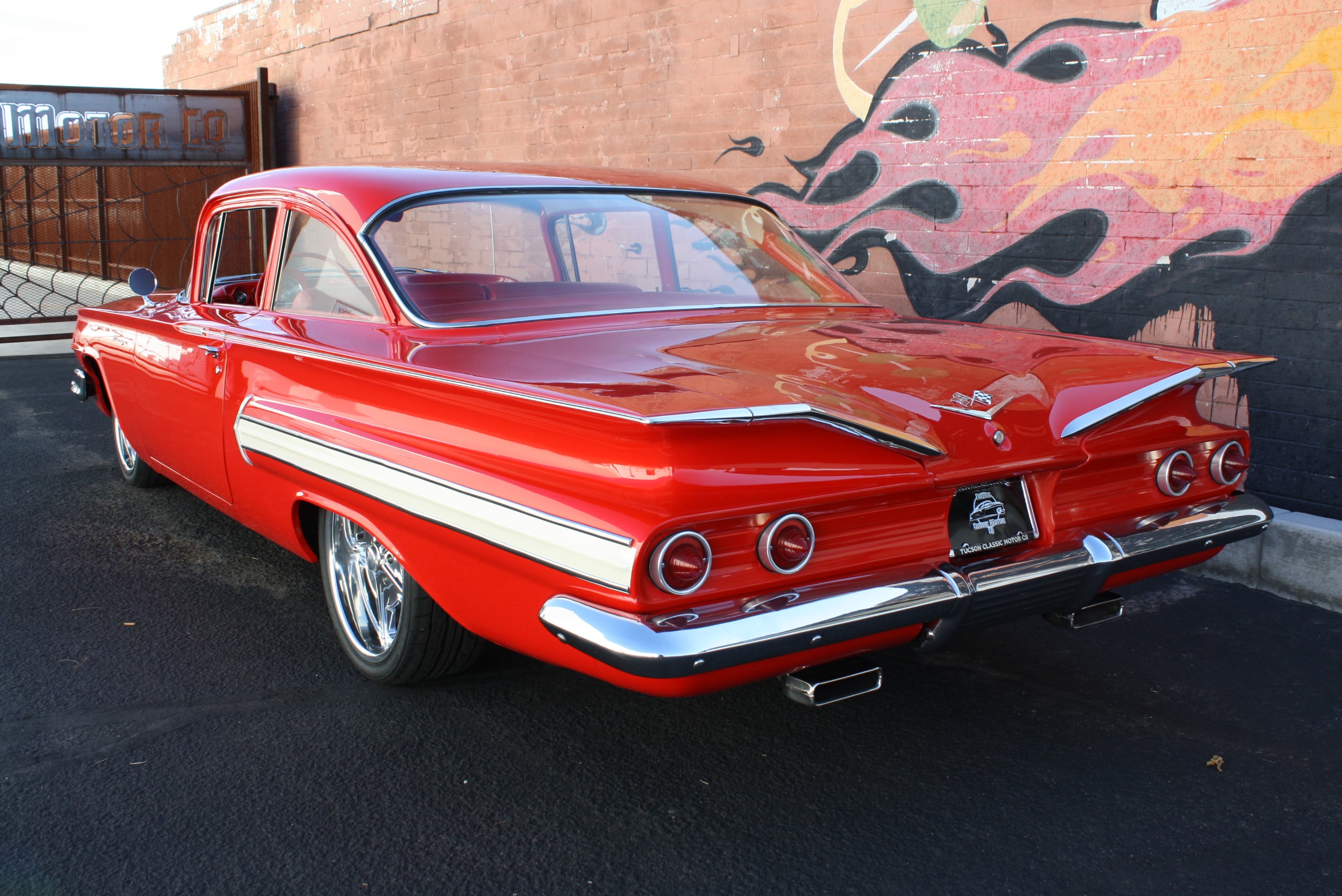
The Mark IV big-blocks: 396, 427 and 454
From mid-1965 the Mark IV took over: conventional wedge heads, huge ports in the high-performance versions, and a parts supply that remains excellent. In the Biscayne you will meet the 396 in 325-hp L35 form most often, the 427 in L36 390-hp hydraulic form and — the prize — the L72, a solid-lifter, aluminium-intake, Holley-fed 425-hp engine that turned the plain two-door sedan into one of the fastest full-size cars in the world. The 454 arrived for 1970 in LS4/LS5 road tunes in this range; the LS6 was a Chevelle and Corvette engine, and a Biscayne claimed to have one from the factory needs factory paperwork, full stop.
Mark IV weaknesses are the big-block Chevrolet canon: overheating in traffic when the fan clutch, shroud or radiator core is tired — these engines make a great deal of heat and the Biscayne's engine bay gives it nowhere to go; oil consumption past worn valve guides and stem seals, visible as a puff of blue smoke at start-up after standing; exhaust-manifold bolts that seize and snap; and, on solid-lifter L72s, the same lash discipline the 409 demands. Hydraulic big-blocks are otherwise as durable as the small-block and only slightly dearer to rebuild: $5,500–9,500 for a quality rebuild, $600–1,200 for a cooling-system overhaul done properly with a recored or replacement radiator, fan clutch and hoses. As with the W engines, the stamped suffix, casting numbers and casting dates are the identity, and an L72 claim without them is a 427-shaped hope.
Gearboxes
The base gearbox for most of the run was a three-speed manual with synchromesh on second and top, column-shifted in fleet cars and the source of the "three on the tree" driving experience: slow, long-throw, and perfectly durable if the column linkage bushes are not worn — sloppy selection is linkage wear, not gearbox failure, and a bush kit is cheap. Overdrive was available on the three-speed in the earlier years and is a desirable, verifiable option on a touring car.
The four-speed that matters is the Muncie: M20 wide-ratio, M21 close-ratio and the heavy-duty M22 "Rock Crusher", fitted from the early 1960s through the big-block years. A genuine factory four-speed big-block Biscayne is a documented car; check the transmission's stamped codes against the build date, listen for bearing whine in the indirect gears (the M22 whines by design in a straight-cut-ish growl — learn the difference from a worn M20 before you condemn or excuse it), and test the synchromesh on a fast second-to-third change, hot and cold. A Muncie rebuild runs $1,200–2,500; a clutch job $700–1,400.
Automatics divide by era. The two-speed Powerglide is simple, strong and slow, and suits sixes and small-blocks in cruising use; it should shift once, cleanly, with no flare, and its iron-case early form is heavier and harder to source parts for than the later aluminium case. Turboglide (1958–61) is the trap: a complex continuously-variable design that was troublesome when new and is a specialist rebuild today — a Turboglide car is bought cheaply or with a known-good unit, never on a promise. From the mid-1960s the Turbo Hydra-Matic 350 and 400 are the automatics to have: the TH400 behind big-blocks is one of the strongest production automatics ever made, and both are rebuildable anywhere for $1,200–2,500. Check the fluid first — bright red and sweet is maintained, brown and burnt is a negotiation — and confirm the kickdown works, because a disconnected kickdown cable or switch is the commonest cause of a "lazy" TH350. Later swaps are common in this pool — our listings include cars described with modern five-speed manual conversions — and a well-executed Tremec swap makes a better road car; just price it as a modification, not as originality, and check the crossmember, the speedometer drive and the clutch actuation as conversion work, not factory work.

Problem areas
A Biscayne's problems are the problems of a mass-produced steel car that was cheap when new, worked hard for a living, and then spent decades as a low-value used car before anyone thought it collectible. That history produces a predictable pattern: mechanicals rebuilt more than once, bodywork repaired to a price, and originality lost in small ways that add up. In our own photo-checked sample — 7 Biscaynes examined in listing photographs — rust was noted on 2 cars and visible damage on 1; treat that as a small-sample illustration, not a rate, but it points the right way: look at the body first, because the body is where the money goes. Work through the car by system.
Rust: the map
Start with the frame, because the frame decides whether the car is a project or a parts source. The 1958–64 cars use the X-frame: a cruciform centre with rails that splay to the sills. It has no full-length perimeter rail, so corrosion concentrates in three places — the centre X junction, where the sections overlap and trap road mud; the rear rails where they kick up over the axle; and the front crossmember and its mounting pads. Probe with a screwdriver, not a fingertip, and get the car on a lift: an X-frame that is holed at the centre is a specialist fabrication job at $2,500–6,000, and a car needing it must be priced as a shell. The 1965-on perimeter frame is more conventional and more forgiving; check the side rails behind the front wheels, the rear rails at the spring mounts, and the body-mount outriggers — a sagging body mount shows as uneven door gaps and a door that drops on its hinges, and a mount-and-bush set fitted runs $800–1,800.
Body rust follows a map you can walk. Front wings rot at the rear lower corner behind the wheel, where the inner brace traps dirt against the skin, and along the top edge beside the bonnet on the 1958–60 cars. Sills — rocker panels — rot from the inside out because the drain holes block; the test is to press hard along the inner sill from underneath and to open each door and stand on the sill while watching for movement, the sill-jack test in spirit: a sound sill takes your weight without a creak or a flake of rust falling. Floors go first under the front mats, fed by leaking windscreens and heater matrices, and a Biscayne's original rubber mats hide floor rust better than any carpet — lift them. The boot floor rots around the spare-wheel well and above the fuel tank, and on 1959–64 cars the rear quarters rot spectacularly behind the rear wheels, where the huge sculpted panels hold a ledge of mud against the inner wheelhouse. Rear wheelarches, the bottoms of the B- and C-posts, and the panel below the rear window — fed by a leaking rear screen seal — complete the circuit. Wagons add the tailgate, the rear side-window frames and the load floor.
Panel economics decide restorations. Front wings, sills, floor pans and boot floors are reproduced for most years at $150–600 per panel, and a competent sill replacement with paint runs $1,000–2,500 per side. Rear quarters for the finned cars and wagon-specific panels are the hard core: repair sections exist for some years, but a full quarter replacement with fabrication can reach $3,000–6,000 per side, and 1958 panels are effectively repair-what-you-have. This is why the buying rule in the last section is what it is: on a Biscayne, rust is not a discount category, it is the category.
Distinguish surface from structure honestly. Bloom on a boot floor that a wire brush brightens is maintenance; a screwdriver that pushes through a floor, or a frame rail that rings dull instead of bright when tapped, is structure. Fresh underseal over the sills and frame on a car being sold is a flag, not a finish — ask what is under it, and walk away from any car whose seller will not let you probe.
Front suspension, steering and brakes
The front suspension is conventional double-wishbone with coil springs and an anti-roll bar on V8 cars, and its wear items are ball joints, wishbone bushes and idler arms. Worn upper ball joints show as play at the wheel with the car jacked under the lower arm; worn idler and centre-link joints show as steering free play that no adjustment of the box will cure — have an assistant rock the wheel while you watch each joint in turn, because replacing the steering box to cure linkage play is the classic wasted money on these cars. A steering-box overhaul or exchange unit runs $400–900; a full front-end rebuild with joints, bushes and alignment runs $1,200–2,500. Coil springs sag with age, most visibly on big-block cars, and a Biscayne that sits nose-down with its bump stops polished has been asking for springs for years.
The rear suspension divides by era. The 1958–64 cars locate a live axle on coil springs with trailing arms and a Panhard rod: worn trailing-arm bushes let the axle steer the car under power, felt as a rear-end wag on and off the throttle, and the Panhard rod bushes are cheap and always forgotten. The 1965-on cars use a four-link coil layout that is better in every way and wears the same bushes the same way. Shock absorbers are cheap and universally tired. Budget $600–1,400 for a full bush-and-shock refresh and expect it to transform the car.
Brakes are drums all round until front discs arrive as an option in 1967 and spread thereafter. A well-maintained drum system stops a Biscayne adequately; a neglected one pulls, fades and leaks from wheel cylinders that cost little and get deferred forever. Pull a front drum on any serious purchase: scored drums, contaminated shoes and perished flexible hoses are all visible in ten minutes. Single-circuit master cylinders on the earlier cars mean one leak empties the system — a dual-circuit conversion is the single most sensible safety modification on a pre-1967 car, at $300–700 fitted. A front disc conversion on a drum car runs $900–1,800 and is worth it on a driver; on a documented 409 car, keep the original parts with the car whatever you fit.
Engines in the car: cooling, fuel and oil
Beyond the engine-family issues covered above, three in-car systems cause most Biscayne breakdowns. Cooling first: radiators silt up from the bottom, fan clutches freewheel when they should drive, and big-blocks in particular will creep up in traffic until they boil. The distinguishing test is a proper heat soak — twenty minutes of running including ten at idle after a drive — while watching the gauge and checking for the fan clutch engaging. A cooling overhaul is $600–1,200; an engine that has been repeatedly boiled is a head-gasket and warped-head lottery you do not need to enter. Fuel second: mechanical pumps weaken, rubber lines perish — especially with modern ethanol fuel, which attacks period hose and carburettor components — and tanks rust from the inside, feeding the carburettor a diet of flakes that no filter fully stops. A car that "needs the carb cleaned" every season needs its tank cleaned or replaced, at $300–800. Oil third: consumption on a V8 that uses a quart in 500 miles is wear, not character; find whether it is stem seals (smoke at start-up and on the overrun), rings (smoke under load, low compression) or leaks (a clean engine bay and a dirty underside), because the three bills are $400–800, a rebuild, and a gasket set respectively.
Interior and trim
The Biscayne interior was built to a price: vinyl bench seats, rubber floor mats in the early and fleet cars, painted metal where an Impala has padding, and door cards that warp and split. That plainness is now a restoration problem, because the reproduction industry serves the Impala first. Impala seat covers do not make a Biscayne correct — patterns, materials and trim codes differ — and Biscayne-specific upholstery is reproduced for the popular years only, with earlier and wagon interiors a trimmer's job at $2,500–6,000 for a full retrim in correct-style materials. Dashes crack on the sun-belt cars; steering wheels crack at the rim and the horn ring; headlinings sag and stain from screen leaks. None of it stops a car driving, all of it is visible in photographs, and sellers price interiors as if they were cheap to fix. They are not: budget a tired interior as a major cost line, and prize a car with a sound original interior above one with a shiny engine.
Exterior trim follows the same logic. Biscayne side trim is minimal — which helps — but what exists is model- and year-specific, stainless or anodised aluminium, and frequently missing, dented or replaced with Bel Air and Impala pieces that do not match the holes in the panels. Bumpers rechrome at $600–1,200 each. Glass is available for the common body styles; wagon rear glass and 1958 curved screens are the difficult items. Walk the car with a list of its correct trim for the year and count what is missing before you negotiate, not after.
Electrics
Period Chevrolet electrics are simple and their faults are age faults. The generator on early cars and the alternator from 1963 onward both fail by wear, not mystery; the test is charging voltage at the battery, around 13.8–14.4 volts with the engine running and loads on. Voltage regulators stick, earth straps corrode — the engine-to-body strap is the forgotten one, and its failure presents as slow cranking, dim lights and gauges that lie, all cured for the price of a strap. Wiring looms chafe at the bulkhead and the steering column, and sixty years of accessory fitting leaves most cars with an archaeology of Scotchlocks behind the dash: a car with a history of electrical "mysteries" usually needs a loom, at $500–1,200 for a quality reproduction plus fitting, not another auto-electrician's hour. Switches wear and are mostly available; heater and wiper motors are rebuildable. None of this is a reason to reject a car; all of it is a reason to test every switch on the inspection, because "probably just a fuse" is the most expensive sentence in classic-car buying.
Cloned, rebadged and "found" performance cars
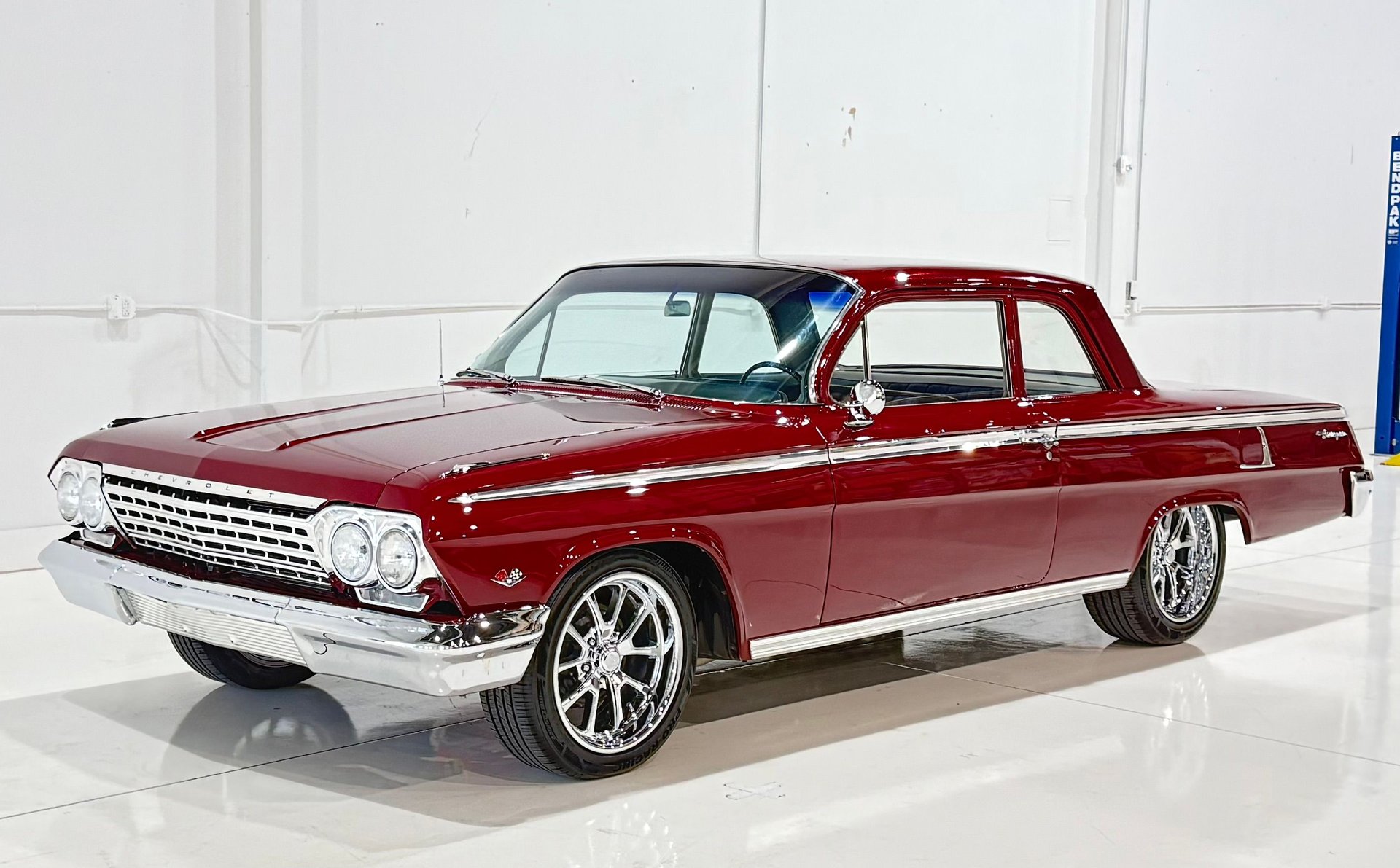
The last problem area is not a system but a market condition, and it is where Biscayne buyers lose the most money. A plain Biscayne sedan is the ideal base for a tribute: the shell is right, the badges are available, and a 409 or 427 engine — or an engine dressed as one — completes the story. Engine swaps are legitimate when declared and priced as swaps. They are fraud when a pad has been restamped, a cowl tag swapped, or a build sheet "found" that no archive supports. Protect yourself with process, not suspicion: photograph the VIN plate, cowl tag, engine pad and casting numbers; check the casting dates sit plausibly before the car's build date; check the engine suffix matches the claimed specification; and for any car priced as a genuine 409 or L72, pay for a marque expert's hour before you pay for the car. Chevrolet documentation of this era is incomplete — no factory archive will certify most cars — which is exactly why the physical evidence on the car has to agree with itself.
How to inspect one
Inspect a Biscayne in this order: identity, structure, mechanicals, then cosmetics. The order matters because each stage can end the purchase, and the cheap stages come first. Take a torch, a magnet wrapped in cloth, a screwdriver for probing, and a friend to work the controls while you watch. Insist on a cold engine — a warm car has had its cold-start behaviour, its choke and its start-up smoke hidden from you, whether the seller meant to hide them or not.
- Paperwork and identity first. Match the VIN plate to the title, then read the cowl tag for year, series, body style and build date. A Biscayne should be a sedan or a wagon; a hardtop body code under a Biscayne badge ends the inspection until the seller explains it with documents, not enthusiasm.
- Engine identity before engine condition. Photograph the engine pad stamp, the block casting number and the casting date, following the identity checks in the engines section. On any car priced as a 348 Tri-Power, a 409 or an L72 427, these numbers are the car. A blank, restamped or wrong pad reprices the purchase on the spot.
- Cold start. From cold, watch for blue smoke (stem seals or rings, per the cooling, fuel and oil section), listen for lifter tick that does not clear, piston slap that fades as the engine warms, and — on a solid-lifter car — the even clatter of correct lash against the ragged tick of one tight or loose valve.
- Underneath on a lift: frame before floors. Probe the X-frame centre junction and rear kick-ups on a 1958–64 car, or the rails and body-mount outriggers on a 1965-on car, exactly as mapped in the rust section. Frame rot ends the inspection; everything else is negotiation.
- Sills, floors and boot. Stand on each sill with the door open — the sill test from the rust section — lift the rubber mats or carpets to see the front floors, and empty the boot to inspect the well and the panel over the tank. Fresh underseal that you are not allowed to probe is an answer in itself.
- Panel by panel with the magnet. Front-wing rear corners, rear quarters behind the wheels, wheelarch lips, door bottoms. The magnet tells you where filler lives; the reflections along the long rear quarters tell you how well it was finished. Check panel gaps and door drop, which report body-mount and hinge wear as described in the rust section.
- Suspension and steering by hand. Jack under the lower arms and feel for ball-joint play; rock the steering while your friend watches the idler arm and centre link, joint by joint, as in the suspension section. Play you find here is a known bill, not a surprise.
- Brakes before the road. Pull a front drum on a drum-brake car, check hoses and wheel cylinders, and confirm whether the master cylinder is single- or dual-circuit. Then, on the road, brake firmly from speed in a straight line: pulling, fading or a long pedal each name their fault.
- The road test, long enough to get hot. Twenty minutes minimum, including a traffic idle for the cooling test from the problem areas — gauge steady, fan clutch engaged, no creep. Use every gear, feel for Muncie synchromesh baulking on the second-to-third change, Powerglide flare, or a Turbo Hydra-Matic that will not kick down.
- Power and smoke under load. Accelerate hard in a high gear: popping back through the carburettor suggests a flat cam lobe or ignition breakdown (see the small-block section); blue smoke under load is rings, on the overrun is guides and seals. On a Tri-Power or twin-carburettor car, confirm the outer carburettors actually open.
- Every switch, every light, every gauge. Work the full electrical list from the electrics section — lights, wipers, heater, indicators, horn, charging — and read the charging voltage at the battery if anything misbehaves. Electrical faults are cheap singly and endless in aggregate.
- Trim audit against the year. Walk the car with the correct trim list for its year and model, as in the interior and trim section: side spears, badges, seat pattern, wagon hardware if applicable. Price what is missing as the trimmer's and rechromer's bills it will become, then decide.
If the car passes identity and structure, the remaining faults are money, and money can be negotiated. If it fails either, no engine, colour or story compensates — patience is the cheapest option in the whole purchase.

Values
The Biscayne market is a condition market wearing a specification market's clothes, and learning to separate the two is most of what this section can teach you. The build of this page appends the current listings and recorded-sales figures beneath this guide; read them after you understand what drives them, because the spread between the cheapest and dearest Biscayne is wider than for almost any other full-size Chevrolet, and the raw numbers alone will mislead you.
The first driver is identity, and it is not close. A documented 409 or L72 car and an identical-looking small-block sedan are different objects that happen to share a silhouette; the market prices the paperwork, the stampings and the casting dates as much as the metal. That is why the inspection order in this guide puts identity first — verifying a performance car moves its worth more than any cosmetic work you could do to it, and discovering a tribute under a performance car's price is the largest single loss available in this market. Conversely, an honestly presented clone or swap is not worthless: it is worth what a good Biscayne plus a good engine is worth, no more, and sellers who price swaps as factory cars are telling you how the negotiation will go.
The second driver is the shell. Because restoration costs are broadly the same for a Biscayne as for the Impala that shares its structure, while finished values are lower, the project-versus-driver gap is brutal. A rusty Biscayne is rarely an economic restoration unless it is a documented performance car; a sound, dry-state shell with tired mechanicals is almost always the better purchase, because mechanical work is priced, predictable and shared with the whole Chevrolet world, while panel and paint work is none of those things. The recorded-sales block below will show you the shape of this: finished cars cluster, projects fall away steeply, and the middle ground — the presentable driver with needs — is where most real transactions happen.
Generation and body style set the ceiling. The 1958 carries one-year scarcity in both directions: fewer buyers, fewer cars, and values that depend heavily on completeness. The 1959–60 cars trade on style, the 1961–64 cars on the 409 association — which lifts even small-block two-door sedans above their Bel Air equivalents — and the 1965–70 cars on usability, with the big-block two-doors again at the top. Four-doors and six-cylinder cars sit at the bottom of every generation's range and are the rational buys for an enthusiast who wants the shape without the performance premium. Wagons break the pattern: scarce, fashionable and hard to restore, good ones outperform their sedan equivalents.
Asking prices and achieved prices part company most widely at the top of the market, where a seller with a genuine car waits for the one buyer who agrees with an auction headline, and in the middle, where optimistic driver pricing meets a thin pool of buyers. With a population this small — our own pool, again, is ten cars — any single listing is an anecdote, not a comparable. Use the recorded sales, and insist on condition and identity as the explanation for any premium.
Parts and ownership
Owning a Biscayne is easy in the ways that matter and annoying in one specific way: everything mechanical is available, and everything Biscayne-specific is a hunt. Plan your ownership around that asymmetry and the car will never strand you.
Mechanical parts supply is as good as the classic hobby offers. Engine internals, gaskets, bearings, water pumps, carburettor kits and ignition parts for the sixes, small-blocks and Mark IV big-blocks are stocked by every major supplier and most local factors; a small-block water pump is a $40–90 part on the shelf, a full engine gasket set $80–200. The W engines are the exception inside the rule — 348 and 409 parts are made by specialists, cost more (a W-engine gasket set and a set of pistons each run well beyond their small-block equivalents), and reward joining the marque and model registers where the knowledge lives. Suspension, steering and brake consumables are shared across the full-size line and are cheap: ball joints, bushes, wheel cylinders and hoses are all routine mail-order items, and a full set of brake consumables for a drum-brake car is typically $250–500 in parts. Gearbox parts follow the same pattern — Powerglide and Turbo Hydra-Matic rebuild kits are everywhere at $150–400, Muncie parts are well reproduced, and Turboglide parts are the one genuine scarcity, which is why the gearbox section tells you to buy that unit on condition alone.
Body and trim are where ownership gets characterful. Floor pans, sills, boot floors and repair sections for the popular years are reproduced at the prices given in the rust section; glass for sedans is available; weatherstrip kits are complete for most years at $300–700 and are the best money you can spend on a car that lives outside. Biscayne-specific trim, badges and interior patterns are the hunt: NOS and good used pieces surface through the registers and swap meets, and the correct response to a missing piece on a car you are buying is to price the search, not assume it. Rechroming and retrims are priced in the problem areas; get quotes before purchase, not after.
Running costs are period-American reasonable. Fuel consumption runs from the low twenties per gallon for a gently driven six to the low teens for a big-block used as intended — the Tri-Power and twin-carburettor cars are not as bad as their reputations at a cruise, because the outer carburettors stay shut, and considerably worse the moment they open. Insurance through a classic policy is straightforward; the performance cars need agreed-value cover with the documentation file — pad photographs, casting numbers, build evidence — kept with the policy, because that file is what you are actually insuring. Servicing is owner-mechanic territory: oil and filter every 3,000 miles, valve lash on the solid-lifter cars at the intervals in the engine section, and coolant and brake fluid on a two-year cycle regardless of mileage. Budget $800–1,500 a year to run a sorted driver properly, excluding fuel and the unexpected.
The ownership community is a real asset: national clubs, 348-409 specialists, big-car registers and an unusually literate forum culture have already answered almost every question your car will ask. Casting-number decoders and cowl-tag references are all published — an hour in them before an inspection is worth more than a day of opinion afterwards.

Which one to buy
There is no single best Biscayne, because the name covers a finned six-cylinder sedan and a solid-lifter drag car wearing the same badge. Buy by the life you intend the car to lead:
- The all-rounder: a 1965–66 Biscayne two-door with a 327 or 350 small-block and a Turbo Hydra-Matic or four-speed — the best frame, the best parts support, real pace, and a shape that has aged beautifully.
- The performance buy: a documented 1962–64 409 car, twin-carburettor if your budget and your temperament both stretch to solid lifters — bought on its pad stamp, casting dates and paperwork, never on its story.
- The big-block alternative: a 1966–69 two-door with an L36 427 for the road, or an L72 if you find a genuine one — the L72 is the peak Biscayne, and the premium belongs only to cars whose evidence survives the inspection above.
- The style buy: a 1959 or 1960 car, 283 or 348, bought for the fins, the dash and the presence — choose the 1960 for sorting, the 1959 for theatre, and either on shell condition.
- The value buy: a four-door or six-cylinder car from any classic generation with a rust-free shell and a sound original interior — the full Biscayne experience at the bottom of the range, and the car the market most consistently underprices.
- The character buy: a 1958, 348-powered if you can find one, bought complete — in this one-year car, completeness of trim is worth more than any option on the sheet.
- The family buy: a Brookwood or later Biscayne wagon with small-block power and a refreshed cooling system — scarce, useful and fashionable, priced on the tailgate, the load floor and the rear glass.
The overriding rule: buy the shell and the stampings, not the shine — a Biscayne's frame, floors and engine identity are its value, everything else is a priced job, and the plainest honest car beats the shiniest doubtful one every time.
See the 8 Biscayne cars currently listed.
For sale now
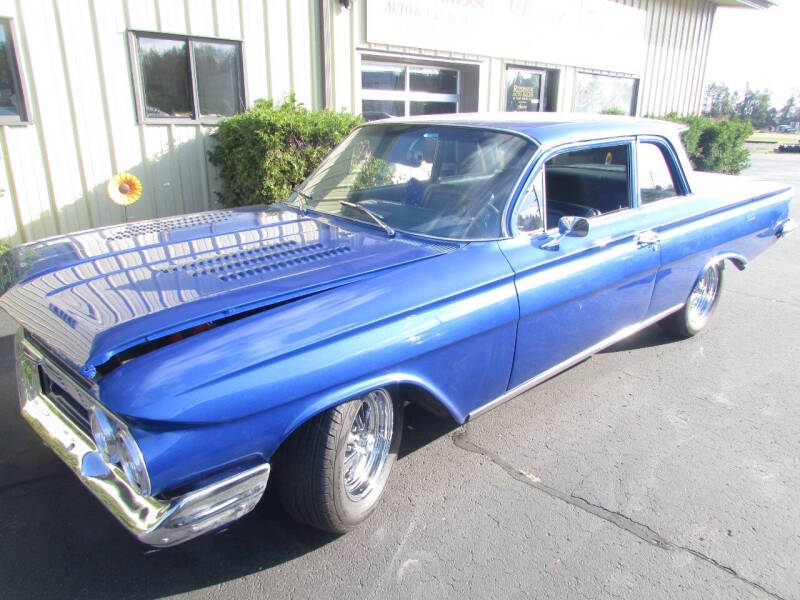 $27,500 · 30% below typical
Expand
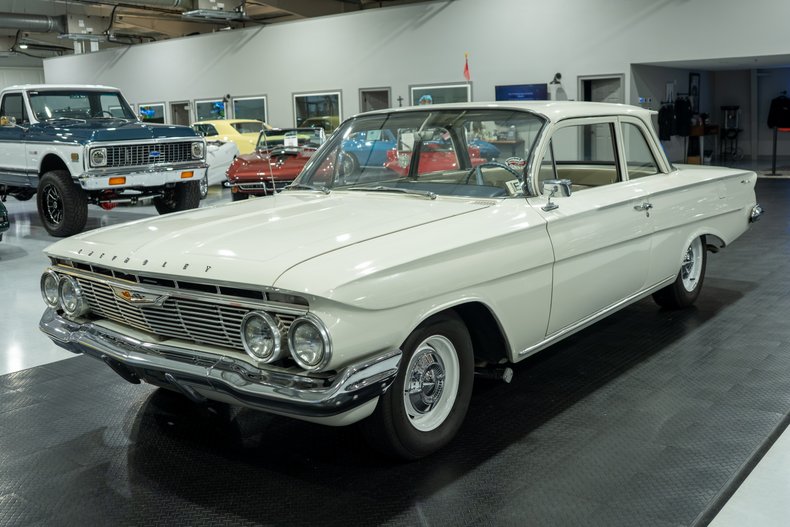
Expand
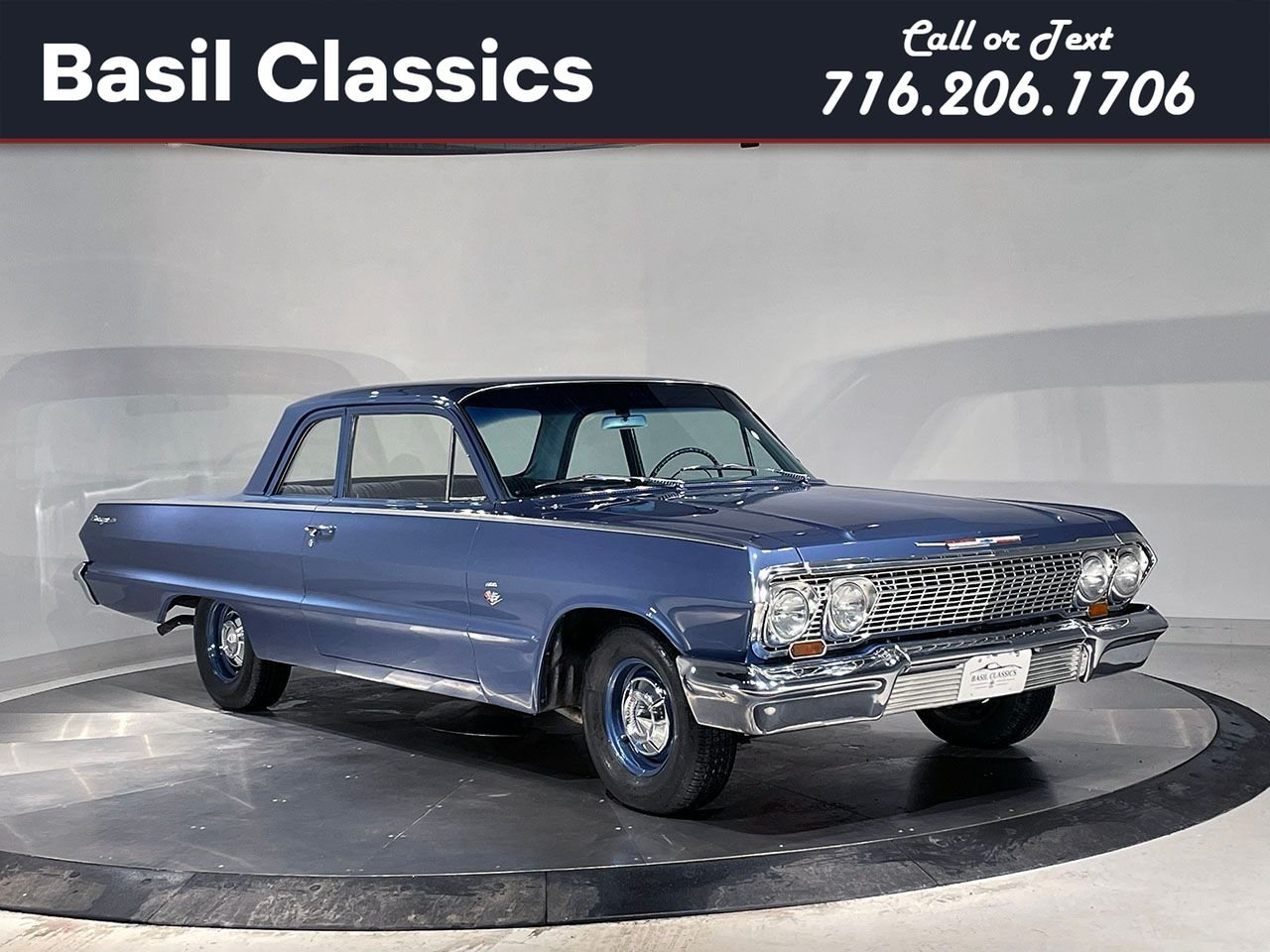 $39,895 · In line with typical
Expand
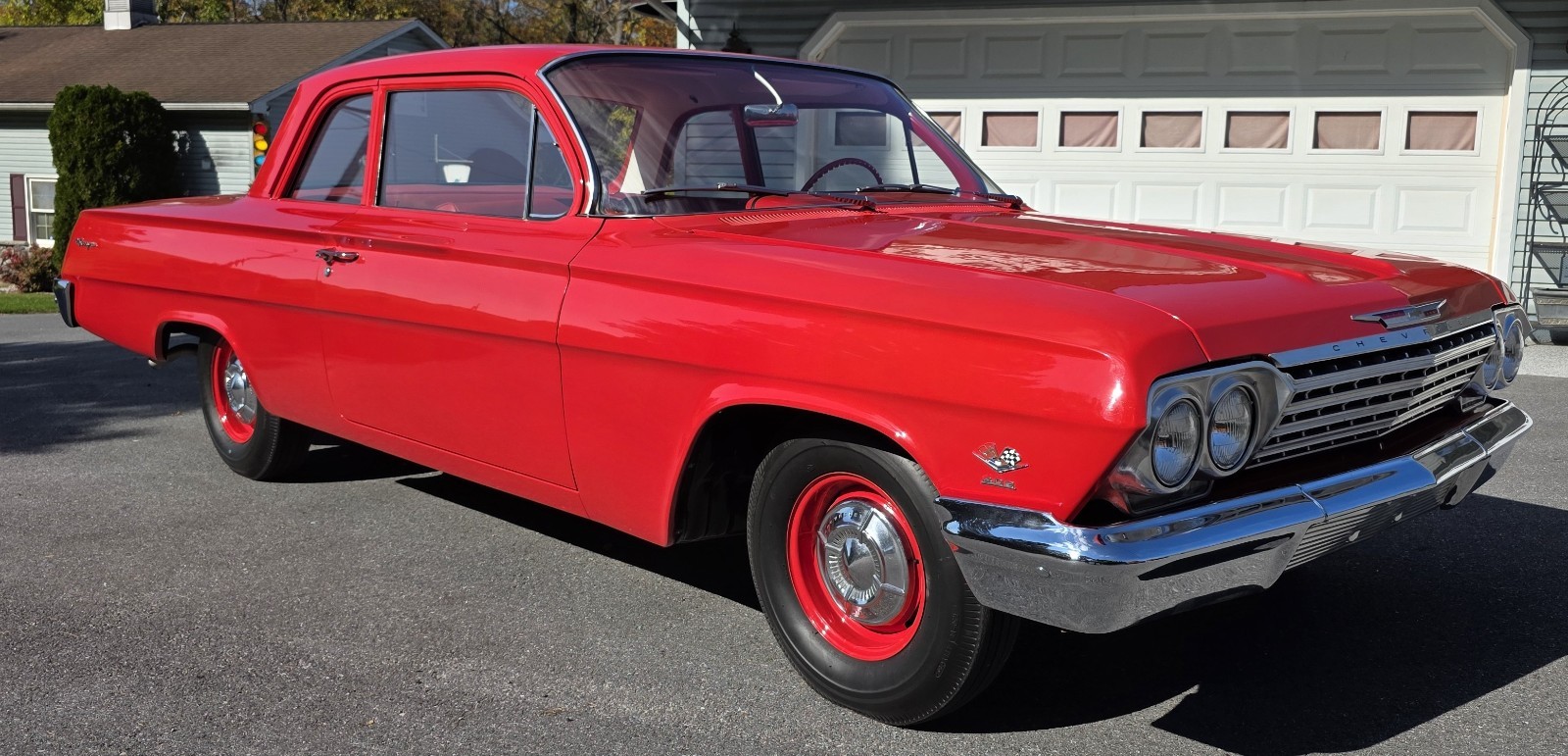 $89,500 · 128% above typical
Expand
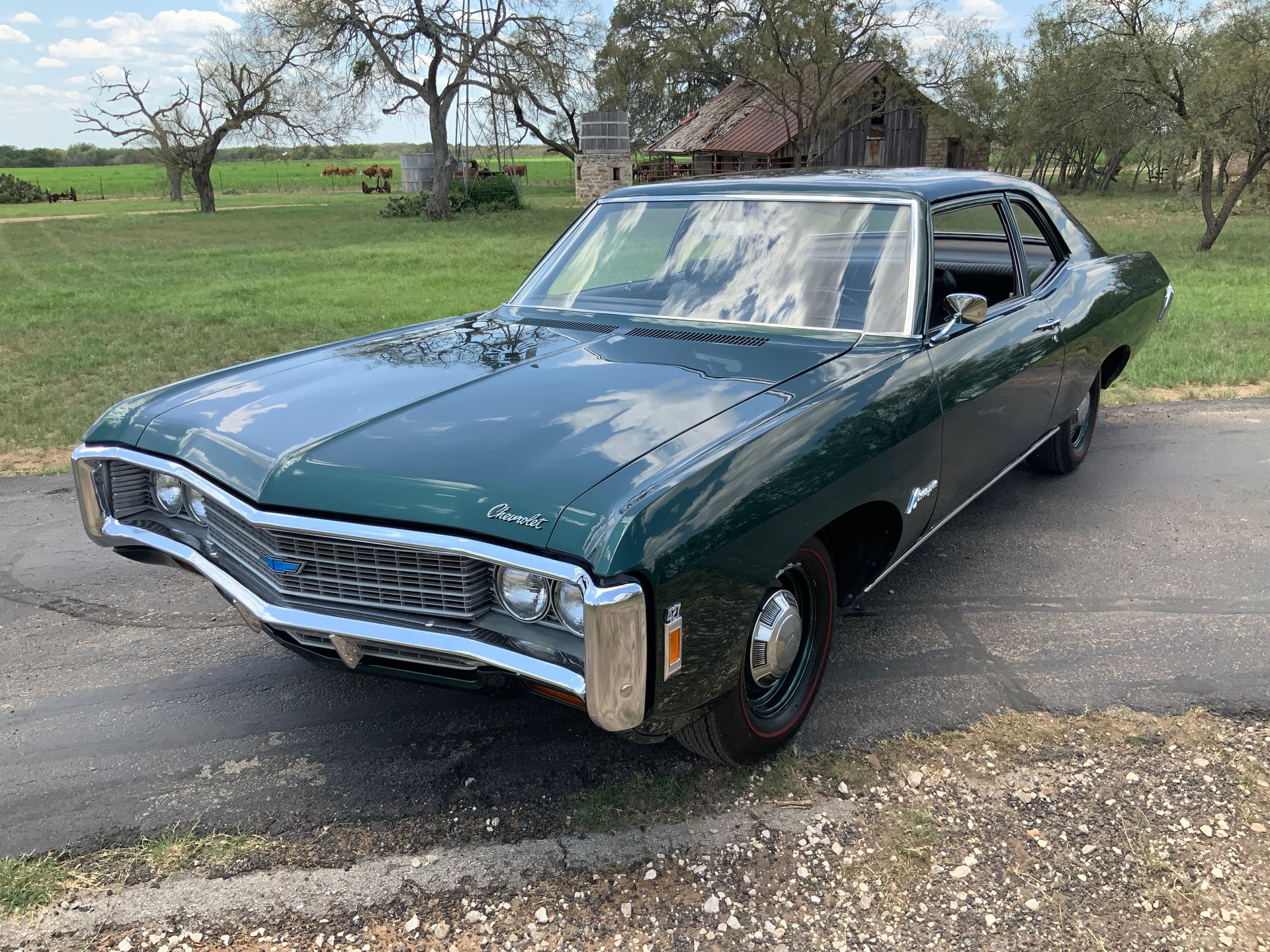 $55,000 · 40% above typical
Expand
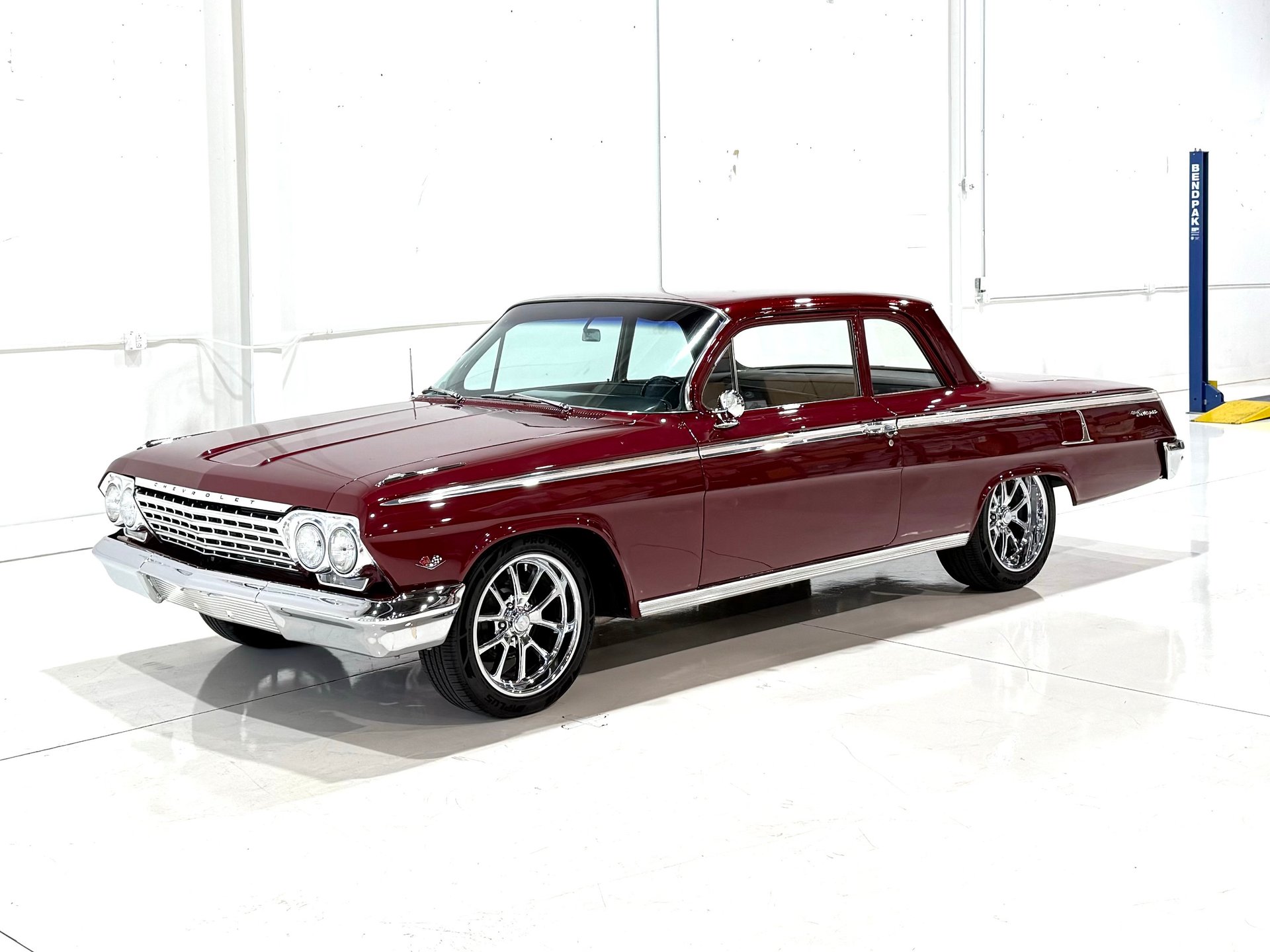 $48,850 · 25% above typical
Expand
What they sell for: Biscayne sale prices.