
Chevrolet Chevy Ii Nova Coupe buyer's guide
Chevrolet Chevy Ii Nova Coupe -- the model's own buyer's guide: variants, values and what to check.
Years listed: 1963-1967 · Series: Nova
Overview and history
The Chevy II is Chevrolet's hurried, honest answer to the Ford Falcon — and the car that quietly became one of the great American performance bargains of the 1960s. When the Falcon started eating into Chevrolet's compact sales at the end of the 1950s, General Motors first replied with the Corvair, a clever rear-engined car that was everything the Falcon was not: ingenious, unusual and expensive to build. The Chevy II, launched in the autumn of 1961 as a 1962 model, was the correction: designed in a fraction of the usual time, deliberately conventional in every particular — front engine, rear-wheel drive, a straight-six or even a four-cylinder engine, a live rear axle on leaf springs — and built to be cheap to make, cheap to buy and cheap to fix. That plainness is exactly why so many survive, and why the best of them are such good classics now.
The name tells you the positioning. This was not a junior Impala; it was a second, smaller Chevrolet, sold in plain 100 and 300 series trim for families and fleets, and as the plusher Nova 400 at the top. Nova was a trim name at first, not the model name — the car is a Chevy II, and Nova is its smartest suit. That matters when buying, because the market now calls almost every early car a Nova whether it left the factory as one or not, and because from 1964 onward the Super Sport story turns on paperwork and codes rather than badges.
There are two distinct cars inside the 1962–1967 run covered by this guide, and learning to see the split is the first skill a buyer needs. The 1962–1965 cars are the original design: upright, slab-sided, with a squared-off roofline, modest chrome and an early-1960s economy-car stance. The 1966–1967 cars keep the same basic structure, wheelbase and mechanical layout but wear a completely restyled body — longer-looking, with a semi-fastback roofline on the coupes, kicked-up rear quarters and a much more muscular presence. Under the skin the two generations are close cousins; to look at, to sit in and to price, they are different cars, and the market treats them that way.
What transformed the Chevy II's reputation was the small-block V8. The car was not designed for it — the engine bay was drawn around four- and six-cylinder engines — but for 1964 Chevrolet made the 283-cubic-inch V8 a factory option, and for 1965 the 327 arrived, culminating in the L79 327 in the light 1966–1967 body: a combination with a power-to-weight ratio that embarrassed cars costing twice as much, and period drag racers knew it. The light shell and simple axle also made the Chevy II a natural home for later engine swaps, which is why so many cars today carry engines, gearboxes and rear axles they were never born with. Originality on these cars is a spectrum, and pricing one means working out where on that spectrum it honestly sits.
The other defining fact is construction. The Chevy II is a unitised — unibody — car: there is no separate chassis frame underneath to save it. The front suspension and engine sit on a bolted-on front subframe section, and the rear leaf springs hang from rails formed in the body shell itself. That made the car light and cheap in 1962. Sixty years on it means the body is the structure, the structure is the value, and rust in the wrong three or four places — the subframe mounts, the trunk floor over the rear rails, the rear spring hangers — is not a cosmetic problem but an existential one.
A note on the evidence in this guide. Our own listings cover a small sample — thirteen Chevy IIs tracked, ten of them offered for sale — and our examined photo-note sample is smaller still: just two cars examined in detail, in which no rust, smoke or leak mentions were recorded and one car showed recorded damage. A sample of two proves nothing about the model as a whole, and nothing in what follows leans on it.
The models
Every Chevy II sits on the same 110-inch wheelbase and the same basic unitised shell; what changes across the range is body style, trim series and, from 1964, whether the car is a genuine Super Sport. Work through the range in that order — shell first, trim second, badges last.
Body styles. The working cars are the two-door and four-door sedans: plain, upright, with a proper window frame around every door glass, bought new by families, sales reps and fleets. Above them sits the two-door Sport Coupe — the hardtop, with no pillar between the side windows and a lower, sleeker roofline — the body every Nova SS and almost every V8 performance car uses. The convertible was offered only for 1962 and 1963 and only in Nova trim; it is the rarest regular-production body and the one whose shell flexes most and rusts fastest, so judge it hardest. The four-door station wagon ran through the whole period and is the sleeper of the range: practical, handsome in the 1966–1967 styling, and now genuinely sought after — but wagons worked for a living, and their rear floors and tailgate apertures carry the scars.
The trim series, 1962–1965. The first-generation range is three steps. The Chevy II 100 is the economy car: rubber mats, plain trim, the four-cylinder engine as standard, bought to a price. The 300 sits in the middle with better trim and more chrome. The Nova 400 is the top series — plusher seats, more brightwork, and the only route to the Sport Coupe and the convertible. For 1964 the line was tidied and the Nova name strengthened. In the second generation, 1966–1967, the range simplifies to the Chevy II 100, the Nova, and the Nova Super Sport at the top, and the styling does the talking: even a plain 100-series 1966 coupe looks like a performance car, which is precisely why so many plain cars have acquired SS badges over the years.
The Super Sport — and why it changes everything about verification. The Nova SS began for 1963 as an option package on the Nova 400 Sport Coupe and convertible, not as a separate model. It brought bucket seats, a centre console on floor-shift cars, special wheel covers, extra brightwork and SS emblems — and, critically, it was available only with six-cylinder power in its first year. There was no V8 Nova SS in 1963, whatever a seller may tell you; a V8 in a 1963 SS is a later installation, full stop. From 1964 the SS became a distinct series, confined to the Sport Coupe, and the V8 became available — the moment the SS turns from a trim package into a performance car, and through the 1966–1967 restyle the SS coupe is the flagship, with access to the full engine ladder up to the L79 327.
Because the premium for a genuine SS is large and the visible differences are bolt-on parts — emblems, buckets, console, trim — the early cars carry the worst clone problem in the Chevy II world. The verification rules are covered in full in the problem-areas section, but the headline belongs here: on a 1963 car the VIN does not identify an SS at all, because the SS was a package on a Nova 400; on the 1966–1967 cars the VIN series digits and cowl tag style number do identify an SS, and a car whose numbers say plain Nova is a plain Nova with badges, priced accordingly. Buy the numbers, never the emblems.


Engines and gearboxes
Four engine families power the Chevy II range, and they could hardly differ more in character: a small iron four, the Chevrolet inline six in two sizes, and the small-block V8 that rewrote the car's story. All are simple, pushrod, cast-iron engines, well understood by any competent American-car specialist. What matters when buying is knowing which engine a car was born with — the stamping pad and the paperwork settle that — and judging the engine in front of you on its own merits, because swaps are so common on this model that assuming originality is the beginner's mistake.
The four and the sixes: 153, 194, 230 and 250
The base engine for 1962 was the 153-cubic-inch inline four, rated at 90 hp — in effect two-thirds of the Chevrolet six, sharing its design and much of its machining. It is a willing, rattly, fundamentally unbreakable engine that suits the car's economy brief and nothing else; four-cylinder cars are now rare because so many were re-engined. Judge one as you would any iron four: even compression, no bottom-end knock under load, oil pressure that holds hot. Smoke on start-up that clears is usually valve stem seals; smoke under load is bore and ring wear, and a proper machine-shop rebuild runs roughly $2,500–4,500.
The 194-cubic-inch six, at 120 hp, was the volume engine of the early cars, and the 230 that joined and then succeeded it in the range — with the longer-stroke 250 arriving at the end of the run — is the better engine in every way: more torque low down, the same manners, the same simplicity. These sixes have seven main bearings and a modern thin-wall iron block, and their failure modes are few and legible. The single-barrel Rochester carburettor wears its throttle shaft, admits air at idle and gives the lumpy, hunting idle that owners blame on tuning; rock the shaft by hand and feel for play before paying for a tune-up that cannot work. The exhaust manifold cracks, classically around the centre ports where the heat-riser passage concentrates heat, and ticks when cold in a way that fades as it warms — a tick that stays hot is more likely a lifter or a leaking gasket joint, and a stethoscope or a length of hose separates the two in minutes. Hydraulic lifters go noisy on cars that have sat, because the lifters bleed down and the galleries varnish; fresh oil and real use cure more six-cylinder top-end noise than any parts cannon. Head gasket failure is uncommon and usually follows overheating, so a six with a history of running hot wants a compression test and a look at the oil filler for emulsion. A full rebuild on a six runs roughly $3,000–5,500 at a machine shop; a carburettor rebuild is $250–450.
The small-block V8s: 283 and 327
The V8 story starts for the 1964 model year with the 283, offered in two-barrel form at 195 hp and with a four-barrel carburettor and dual exhausts at 220 hp. The 327 arrived for 1965 in 250 and 300 hp forms, and the engine that defines the model followed immediately: the L79, a 327 rated at 350 hp in 1965 and 1966 tune, with 11:1 compression, a hydraulic high-performance camshaft, a big four-barrel carburettor on an aluminium intake manifold in its classic form, and a willingness to rev that no other Chevy II engine approaches. For 1967 the L79's advertised rating in the Nova settled at 325 hp, a change of specification and rating practice rather than a different character — a genuine 1967 L79 is still a very quick car. Below it, the 1967 buyer could order the 283 and milder 327s, including the 275 hp L30, which is the sweet spot for a road car: strong, tractable and understressed.
Everything said about the small-block Chevrolet everywhere applies here, because it is the same engine: an iron block, hydraulic lifters in all Chevy II applications, a Rochester or Carter four-barrel on the performance versions, and a distributor at the back of the block driving the oil pump. The checks that matter separate a healthy small-block from a tired one wearing good paint. Cold start first: a puff of blue that clears in seconds is valve stem seals, a $400–800 job done in the car with the heads on. Continuous smoke under load is rings and bores. A rhythmic top-end tick at hot idle that follows one cylinder is a worn camshaft lobe or a collapsed lifter, and on a flat-tappet engine run on modern low-zinc oil without care, lobe wear is the most common internal failure you will meet: pull a rocker cover and watch every rocker arm move through its full travel while the engine cranks, because a wiped lobe shows as one valve barely lifting. That visual check is the distinguishing test between lifter noise and lobe wear — noise alone will not separate them, and the bills differ by a factor of three: a lifter set at $600–1,200 against a camshaft, lifters, timing set and labour at $1,800–3,200.
On the L79 specifically, originality is money, so verify before you admire. The engine number pad on the front passenger-side deck of the block, just ahead of the cylinder head, carries the assembly stamp and the suffix code that identifies the engine's original application and specification, and on a car claiming matching numbers a partial VIN derivative is stamped there too. An L79 claim with the wrong suffix, a decked block with the pad machined blank, or a casting date that postdates the car is not a matching-numbers L79, whatever the air cleaner decal says — and the decals, intakes and valve covers that dress a mild 327 as an L79 are all available by mail order. Cooling deserves a sentence of its own: the V8 was packaged into a bay drawn for a six, the radiator is modest, and a car that creeps up in traffic but cools at speed has an airflow or capacity problem, while one that heats under load at speed has a circulation or head-gasket problem — the test is simply noting which pattern the car follows. Budget $4,500–8,500 for a full small-block rebuild to stock specification, more for an L79 built correctly.

Gearboxes: three-speed, Muncie four-speed and Powerglide
The standard gearbox is a three-speed manual, column-shifted on the early and plainer cars, with synchromesh that wears first on second gear — the classic test is a brisk change down into second at moderate speed, which should engage cleanly without a graunch once the oil is warm; a box that only misbehaves stone cold usually has the wrong or ancient oil in it. The desirable manual is the Muncie four-speed — M20 wide-ratio in most applications, M21 close-ratio behind the hottest engines — identified by its aluminium case and side cover and, on an originality claim, by the codes stamped into the case and the partial VIN that should match the car. Muncies are strong and rebuildable; listen for bearing whine in neutral that stops when the clutch is pressed (input bearing and cluster wear), check for jumping out of gear under load or on the overrun (worn synchro dogs and sliders, not adjustment), and budget $900–1,800 for a specialist rebuild with new bearings, synchro rings and seals.
The automatic is the two-speed aluminium-case Powerglide, and it divides opinion wrongly. It is not fragile and it is not complex; it is a simple, light, two-ratio box whose vices are a lazy shift feel and a first gear so tall that a six-cylinder car on a Powerglide is genuinely slow. Its failure modes are legible: delayed engagement from cold that improves as it warms is hardened seals losing their grip — a rebuild at $1,200–2,200 fitted — while slipping under power once warm is friction material at the end of its life and the same bill. Fluid that smells burnt and looks brown rather than red confirms internal wear; a box that shifts well with clean fluid is a box to leave alone. The linkage matters more than the internals on many cars: worn column-shift linkage gives a vague selector and a car that can be left thinking it is in park when it is not, so test the detents physically on every automatic you view. A small number of cars carry later automatics and five-speed manuals — our own listings include cars described with both, alongside modern rear axles — and those are conversions to be judged on workmanship: crossmember fabrication, driveshaft angles and shifter installation tell you how the whole job was done.
Problem areas
Two problems dominate the Chevy II market, and everything else is ordinary old-car maintenance by comparison. The first is identity: whether the car is the car it claims to be, above all where Super Sport money is involved. The second is structure: whether the unitised shell still has its strength in the handful of places where this design concentrates its loads. Deal with those two properly and a Chevy II is one of the most straightforward classics you can own; skip either and no amount of shiny paint will save the purchase.
Identity: Nova SS verification and the clone problem
Start with the plates, before you look at the car's equipment at all. Every Chevy II carries a VIN plate — on the driver's side front door hinge pillar on these cars — and a Fisher Body cowl tag riveted to the firewall. The VIN gives you the division, the series, the body style, the model year, the assembly plant and the sequential production number. The cowl tag gives you the build date, the body style number, the trim code for the interior the car was built with, and the paint code. Neither plate should show disturbed rivets, fresh paint over old stampings, or characters that look re-struck; a plate that has clearly been off the car is a question the seller must answer with documents, not with a story.
Now apply the rules year by year, because they change — and the change is the whole game.
1963: the package year, and the hardest to prove. For 1963 the SS was an option package applied to the Nova 400, so the VIN series digits identify a Nova 400, not an SS — there is no SS VIN for 1963, and any seller who claims the VIN proves a 1963 SS has told you something important about the sale. What you can check: the body style must be the Sport Coupe or the convertible, the only bodies the package was offered on; the cowl tag trim code should be consistent with the bucket-seat interior the package required; and the engine must be a six — a 1963 SS was never built with a V8. Beyond that, proof is documentary: an original window sticker, build sheet or dealer invoice naming the package. Without documents, a 1963 car is a Nova 400 with SS equipment fitted at some point in sixty years, and it should be priced as exactly that, however convincing the emblems look — every visible piece of the package is reproduced or transferable, so the clone problem on the early cars is the default assumption a buyer should start from.
1964: the SS becomes a series. From 1964 the Super Sport is its own series, and the VIN series designation changes with it — the numbers now can identify an SS, and the Sport Coupe is the only body. A 1964 SS claim that starts from a sedan or wagon VIN, or from the plain Nova series digits, fails at the first hurdle. The cowl tag style number should agree with the VIN; a mismatch between the two plates is a red flag on any year.
1965–1967: read the model numbers. On the later cars the system is cleanest and there is no excuse for getting it wrong. The Nova SS coupe carries the SS series model numbers — 11737 for a six-cylinder car and 11837 for a V8 car, the 37 denoting the two-door Sport Coupe body — and those digits appear in both the VIN series-and-style sequence and the cowl tag style number. A plain Nova coupe carries different series digits (the 115/116 family for the Nova line, and 113/114 for the Chevy II 100). So on a 1966 or 1967 car the test takes thirty seconds: read the VIN, find the series and style digits, and compare them with the claim. If the car wears SS badges, bucket seats and a console but its numbers say 11637, it is a Nova coupe that has been dressed — a car that may still be worth buying, at a Nova coupe price, with the cost of honesty already settled. If the numbers say 11837, you have a genuine SS shell, and you then move on to the engine pad, because an SS shell with a replacement engine is worth less than an SS with its born-with engine and more than a clone, and the market prices those three cars very differently.
Rust: the unibody map
Rust on a Chevy II follows the structure, so inspect the structure in load order: the front subframe bolts to the body at the cowl, the rear springs hang from rails pressed into the floor, and the floor ties the whole car together. Work through the map below in order, with a torch, a cloth-wrapped magnet and a screwdriver for prodding where the seller permits — and get the car on a lift if it passes the first pass, because half of this map is only visible from underneath.
Front subframe and its mounts. The bolted front subframe section carries the engine, the front suspension and the steering, and attaches to the shell at mounting points around the cowl and radiator support. Those mounting areas are the single most important rust check on the car. The mounts trap dirt and water against the shell, the rubber insulators perish and hold moisture, and corrosion eats the body-side mounting points and the subframe ends from inside the box sections outward. A car can present clean sills and floors and still be structurally finished here, because the failure is hidden behind the subframe itself. Prod around every mount you can reach, look for flaking, swelling or fresh underseal localised exactly at the mounts — the cover-up signature — and check that the subframe sits square: sight the front wheel positions in their arches, because a subframe shifted on rotten mounts shows as a wheel sitting off-centre in its arch. Repair here is fabrication: rebuilding mounting boxes and subframe ends runs roughly $1,500–4,000 a side, and it is specialist work. Walk away from perforation at more than one mount unless the price already treats the car as a shell.
Radiator support, inner wings and shock towers. The radiator support rots at its lower corners where it traps mud behind the valance, the inner fender aprons rust along their lower seams, and the battery tray area suffers acid-assisted corrosion that starts under the battery and eats outward into the apron — lift the battery or at least rock it and inspect the tray edges and the metal below, because with the battery in place the damage is invisible. The coil-spring and shock towers carry suspension loads; perforation around a tower is structural in the same way as a mount, and bubbling at a tower seam deserves a screwdriver, not a shrug. Front clip panels are reproduced, and a support or apron replacement fitted and painted runs roughly $600–1,500 per panel; tower work is the fabrication bill above.
Cowl, windscreen surround and floors. Water enters at the windscreen seal and the cowl vent, runs down inside the cowl sides, and arrives in the front footwells and toe boards. Lift the carpets in all four footwells on every viewing — no exceptions, because the floor is both a rust site and the tell-tale for leaks above it. Surface rust and staining are treatable; perforation at the toe boards, around the seat mounts or along the tunnel seams is a welding bill, roughly $800–2,000 a side for a floor section cut out, replaced and sealed properly, and floor rust rarely travels alone. The cowl sides, behind the front wheels, trap leaves and mud at the bottom of the front fender and rot outward into the fender's lower rear corner, the classic bubbling spot behind each front wheel.
Sills and rocker panels. The rockers on a unibody car are structural box sections, and they rot from the inside out where the front wheels throw water at the seams. Press hard along the full length, check around the jacking points, and distrust fresh stone-chip that stops neatly at the sill line. A rocker cut out and replaced runs roughly $900–2,200 a side fitted and painted; a seller who will not let you look under the car at all has answered the structural question for you.
Rear quarters, wheel arches and door bottoms. The rear arch lips trap mud against the quarter panel, and the lower rear quarters rot where the trunk floor extensions meet them — check from inside the trunk as well as outside, because the inner and outer skins go together. Door bottoms fill with water when their drain slots block; run a fingertip along the bottom edge of every door feeling for bubbling, and check the drains are clear. None of these alone condemns a car, but together they are its service record written in steel, and a lower quarter section fitted and painted runs $1,000–2,500 a side.
Trunk floor, rear rails and the rear spring hangers. This is the second structural red zone, and the one sellers' photographs most reliably avoid. The trunk and rear window seals leak, water collects under the trunk mat and in the spare-wheel area, and the trunk floor rots — critically, directly above the rear frame rails formed in the shell, so a holed trunk floor usually means rail corrosion beneath it. Lift the mat, lift the spare, and prod the floor over both rails and out into the extensions at the quarters. Then get underneath and find the rear leaf-spring hangers: the front hangers bolt to brackets on the rails ahead of the axle, and the rear shackles hang from the rail ends. These points carry every driving and braking load the rear axle produces, they live in the road-spray zone, and they rot inside the rail where a glance will not find them; a hanger pulling out of a rotten rail is a known failure on neglected cars, and it happens under load, on the road. Perforated rails or hanger mounts are fabrication work at $1,200–3,500 a side, and a car needing both rear rails and front subframe mounts is a parts car or a full restoration, whatever the paint looks like. A trunk floor panel itself is comparatively cheap — $700–1,600 fitted — but price the rails underneath it, not the panel.

Front suspension, steering and brakes
The front suspension is a conventional double-wishbone layout with coil springs, carried on the front subframe, and its wear items are ball joints, control-arm bushings and shock absorbers — all cheap parts whose neglect shows as knocking over bumps, uneven front tyre wear and a car that wanders at speed. The distinguishing test between bushing wear and ball-joint wear is a lever and a helper: with the car lifted, rock the wheel top-to-bottom and side-to-side while someone watches each joint in turn, because play felt at the rim tells you nothing about which joint owns it. A full front-end refresh — joints, bushings, tie-rod ends and shocks, fitted and aligned — runs roughly $900–1,800, a negotiation item rather than a walk-away. Perished subframe mounting rubbers produce a vaguer fault: a front end that feels loose over ridges and clunks on lock. They are replaced as a kit — budget $500–1,100 fitted — and the job forces the mount-area rust inspection above, which is why sellers of rotten cars rarely volunteer it.
The steering is a recirculating-ball box, manual on most cars with power assistance an option, slow and light in the period manner. Wear shows as free play at the wheel rim — more than about two inches before the road wheels respond is a car asking for work — and the play lives in the box itself, the idler arm, or the linkage joints. Have a helper rock the wheel through the free play while you watch the linkage from underneath; the joint that moves late is the worn one. A rebuilt box runs $450–900 exchanged, an idler arm is a small part and an hour's labour, and the rag joint — the fabric coupling in the column — perishes and adds its own slop for very little money.
Brakes are drums all round as standard across most of the range, single-circuit hydraulics on the early cars, adequate when maintained and alarming when not. Inspect the whole system: a pedal that sinks slowly under sustained pressure is a master cylinder bypassing internally or a leak in the circuit; a hard pedal with poor stopping is seized wheel cylinders or glazed, contaminated shoes; pulling to one side is a seized cylinder or a collapsed flexible hose on the side it pulls away from — the hose fails internally, acts as a one-way valve and holds the brake on, which is why a dragging, hot drum with a healthy-looking cylinder is usually a hose at $30–60 a corner rather than a brake rebuild. A full hydraulic refresh runs roughly $800–1,600 fitted, and front disc conversions are the commonest upgrade in the model: a proper kit fitted runs $700–1,500, transforms the stopping, and on a driver-quality car costs nothing in value. On an originality-priced SS or L79, keep the removed parts with the car.
Rear axle, springs and driveline
The rear suspension is a Hotchkiss live axle on single-leaf — monoleaf — springs, a layout chosen for cheapness that works better than it sounds. The monoleafs sag with age and use and can crack, classically near the axle seat; a car sitting tail-down or listing to one side is usually announcing spring age rather than structural failure — but check before you conclude, because the same stance comes from a rotten spring hanger, and the two diagnoses differ by thousands. Replacement monoleafs run roughly $350–700 a pair plus fitting; many owners fit multi-leaf conversions, which ride harder. The shackles and their bushings perish and knock over bumps; they are cheap parts whose replacement forces a close look at the rail ends they bolt to, which is exactly where you want to be looking anyway.
The axle itself changed early in the run: the 1962–1963 cars use the older drop-out-carrier rear axle inherited from the 1950s Chevrolet line, while from 1964 the cars carry the integral-carrier 10-bolt axle, an 8.2-inch ring gear unit that stayed in the family for years. Both are durable behind the engines they were sold with. The failures to test for are whine that rises and falls with road speed (ring and pinion wear or incorrect set-up after a ratio change), a clunk on taking up drive (excess backlash, worn spider gears or worn universal joints — separate them by holding the pinion and rocking the driveshaft by hand, feeling where the free play lives), and leaking pinion and axle seals, the latter soaking the rear brake shoes and quietly removing your rear braking. An axle rebuild with bearings and set-up runs roughly $900–1,800; a limited-slip conversion or ratio change is a planned upgrade, not a repair, at $1,200–2,500 done properly. Behind a built V8, ask what axle is actually fitted: 12-bolt swaps are common, a Ford 9-inch appears on serious builds — our own listings include a car described with exactly that combination — and the quality of the perches, shock mounts and brake plumbing on a swapped axle tells you the quality of the whole build.
Interior, trim and electrics
The cabin is simple, and its costs are the costs of age and sun rather than design faults. Vinyl covers split along their seams and at the driver's entry bolster first; foams and spring bases sag, so sit in the driver's seat and feel for the frame. A full retrim in correct-style vinyl runs roughly $1,500–3,500 for the set depending on buckets or bench and how much foam and spring work is needed, and correct-pattern covers are reproduced, which keeps this model cheaper to retrim than most. Dash pads crack in the sun from the speaker grille outward; headliners stain at the rear window from the same seal leaks that rot the trunk floor, so a stained headliner is a leak report, not just a cosmetic item. SS consoles crack around the shifter opening — and console and bucket hardware is precisely the equipment cloners fit to plain cars, which is why the identity section starts with the plates and not with the seats.
Brightwork is the quiet bill. Bumpers, grilles and the thin side trim of the Nova and SS cars pit, dent and lose their finish, and re-plating a full set runs roughly $1,500–3,500; reproduction pieces exist for the common items and vary in fit, so a car with straight, original, merely dull chrome usually beats one wearing fresh reproduction trim that does not quite sit right. Glass is available for the common bodies; convertible and wagon specifics are harder. Weatherstrip rubber perishes everywhere, and a full re-rubber is a few hundred dollars in parts and a weekend of labour that pays for itself in stopped leaks — on this shell, every leak is a future rust repair being scheduled.
Electrics are period-simple: a generator on the earliest cars and an alternator thereafter, a points distributor, and wiring whose failures live at the connections. Dim lights and slow cranking are earth straps and battery cables before they are components; test by voltage drop, not by replacing parts in order of price. The bulkhead connector at the firewall is the classic trouble spot for intermittent total electrical loss, and any car with a history of cutting out wants that connector opened and inspected for heat damage before anything else is condemned. Heater blower motors fail and are mercifully accessible by the standards of the era; gauges fail by their senders more often than by the instruments; and any car converted to electronic ignition should be judged on the tidiness of the conversion wiring, because under-dash wiring bodges are the commonest fire risk on a modified car of this age. A sorted car where everything electrical works is a car that has been used and maintained — on a Chevy II, the best single predictor of a sound purchase.
How to inspect one
Allow a full hour, bring a torch, a cloth-wrapped magnet and a screwdriver for prodding (with the seller's permission). Inspect in this order: identity and structure first, because either can end the viewing in ten minutes, and cosmetics last, because they are the easiest part to price and the least important part to get right.

- Start with the plates and the paperwork. Read the VIN on the driver's door hinge pillar and the cowl tag on the firewall; check both against the title. On a claimed 1966–1967 SS, confirm the series and style digits say SS — the 11737 or 11837 model numbers from the identity section — and on a 1963 SS claim, accept that the VIN cannot prove the package and ask for the build sheet, window sticker or invoice. No documents on a 1963 SS means Nova 400 money. Check the engine pad against any matching-numbers claim.
- Cold start, from outside the car. Insist the engine is cold. Watch the exhaust: a blue puff that clears is stem seals; smoke that stays under load later is rings. Listen for a camshaft-lobe tick and for the cold exhaust-manifold tick of a six, which should fade as it warms. Note oil pressure behaviour as it warms.
- The subframe mounts. With the torch, work around every front subframe mounting point you can reach at the cowl and radiator support, prodding for soft, swollen or freshly coated metal, exactly as the rust section directs. Perforation at more than one mount ends the inspection for most buyers. Sight each front wheel in its arch for the off-centre stance of a shifted subframe.
- Underneath: rails, floors and hangers. On a lift if at all possible. Prod the rear frame rails over their full length, the trunk-floor support area from below, and both rear spring hanger and shackle mounts — the structural trio from the rust map. Then the floor seams, toe boards and rocker inners. Read the underseal as evidence: patchy and honest is factory; a fresh, uniform black coat over everything is a question, not an answer.
- Trunk and spare well. Lift the mat and the spare. Look for water staining, perforation over the rails and rot out into the floor extensions behind the rear wheels. Check the trunk seal and the rear window seal while you are there — the leaks that made any damage you find.
- Floors and cowl from inside. Lift all four carpets. Wet carpets in a dry-stored car mean live leaks; perforation at the toe boards or seat mounts is a welding bill; staining tracks point you to the windscreen seal or cowl that is feeding it.
- Body, gaps and the magnet. Run the magnet over the rockers, arch lips, lower quarters and door bottoms. Check panel gaps for the wandering lines of accident repair on a unibody shell, feel every door bottom for bubbling, lift the battery to inspect its tray and the apron beneath, and count the pitted brightwork, because chrome is a real line in the budget.
- Front end and steering. Rock each front wheel top-to-bottom and side-to-side, and have a helper watch the joints to find which one owns any play, per the suspension section. Check steering free play at the rim while the helper rocks the wheel and you watch the linkage from below. Look at the front tyres: uneven wear is the alignment and bushing story written down.
- The test drive. Fifteen minutes minimum, including a fast road. A manual should change down into second cleanly when warm; a Muncie should not whine in neutral or jump out of gear on the overrun; a Powerglide should engage without a long delay and hold under power. A six should pull evenly without the flat spot of a worn carburettor shaft; a V8 should pull to the upper rev range without hesitation, and an L79 should feel genuinely eager up there — if it does not, ask why not.
- Brakes and heat. Brake firmly from speed several times: the car should stop straight, without judder, a sinking pedal or a dragging, hot corner afterwards — walk round and feel each drum for the one working too hard or not at all. Then let it idle and watch the temperature behaviour, noting which pattern from the engines section the car follows: creeping in traffic only, or heating under load.
- Stance and springs. Stand back and look. Level is right. Tail-down with normal rear-wheel attitude is usually tired monoleafs; a list to one side wants the spring and hanger check from step 4 before you blame the springs; nose-down or crashy at the front points to springs and subframe rubbers. Photograph the car square from the side — stance faults you excuse in person are obvious in a picture.
- Interior and electrics last. Sit in every seat, feel for collapsed foam in the driver's cushion, check the headliner at the rear window for leak staining, and work everything electrical: blower, wipers, lights, horn, every gauge. Then price what you have found against the car you have verified — not the car the badge describes.
Values
The market block beneath this guide carries the current numbers — what is listed now, and what recorded sales have achieved — refreshed as the market moves. This section is about how to read those numbers on a model where two cars wearing the same badge can be entirely different propositions, because the spread between the cheapest and dearest example of the same year is driven less by age or mileage than by four things: which body, which numbers, which engine, and how much of the shell is original steel.
Body style sets the first tier. The Sport Coupe hardtop is the centre of the market and the shape demand follows; sedans trade in its shadow even in identical mechanical condition, because the buyer pool for a sedan is smaller and more price-sensitive. Convertibles sit above coupes when they are genuinely good, but so few are — the open shell flexes, leaks and rusts in exactly the structural places this guide has mapped — that the premium belongs only to cars that have passed the underside inspection with room to spare. Wagons have climbed from curiosity to a real niche: a sound second-generation wagon is no longer the cheap way in.
Identity sets the second tier, and it is the steepest. A verified SS carries a clear premium over the same car as a plain Nova, and a matching-numbers L79 car sits in a different market altogether from an SS with a replacement engine — which in turn sits clearly above a dressed-up clone. The gaps between those four cars are not small percentages; they are the whole negotiation, which is why asking figures bunch confusingly: the market is pricing four different cars under one name. When a car is advertised at SS money, the plates and the engine pad from step 1 of the inspection are not pedantry — they are the entire justification for the price, and a seller who cannot support them should expect to be paid at the tier the evidence supports.
Condition does the rest, and on a unibody car condition means structure before shine. The project-to-driver gap on this model is unusually wide, because the expensive work — subframe mounts, rear rails, floors, quarters — is welding and paint, and welding and paint do not scale down for a cheaper car. A structurally sound car in tired cosmetics is almost always the better buy against a glossy car with structural questions, even at a higher asking price, because cosmetics can be improved in stages while structure must be paid for all at once, up front. Asking prices also run ahead of achieved prices, particularly on clones and on restomods, where the seller is pricing the build cost and the market prices the result; auction results in the market block are the corrective — they show what buyers actually paid when the bidding stopped, and the distance between a long-running advertisement and the auction line for a comparable car is the most honest negotiation briefing you will get. Restomods follow their own logic: a well-built modern-engine car can outprice an ordinary original car, but its value lives in the quality and coherence of the build, not in the parts list.
Parts and ownership
The Chevy II is one of the easiest American classics of its era to keep, for a simple reason: it was built in large numbers from the most common mechanical parts bin in the industry, and the hot-rod and restoration trades have adopted it ever since. Engine, gearbox, axle and brake wear parts for the sixes and the small-block V8s are available everywhere at ordinary prices, and any specialist who knows period Chevrolets knows this car.
Easy: service items, filters, plugs and points, carburettor kits for the Rochester and Carter units, water pumps, radiators and hoses, ball joints, bushings and shock absorbers, steering wear parts, brake shoes, cylinders, hoses and hardware, springs, weatherstrip rubber, and the common glass. Most of it is order-today, fit-this-weekend, at prices close to modern-car money.
Harder and dearer: correct dated components for originality-priced cars — the right casting dates and suffix codes on an L79 engine, a correctly dated Muncie, the early drop-out axle's specific internals — because correctness is a hunting exercise, not a catalogue order. Repair panels exist for floors, trunk floors and quarters, but the subframe mounting areas and rail sections are fabrication work, priced per car, and that is the real dividing line in ownership costs: panels are cheap, structure is labour. Convertible trim, wagon tailgate hardware, SS console pieces and crack-free dash pads all reward patience. A quality repaint costs what it costs on any car of this size — hence the standing advice to buy structure and originality, and fix mechanics and cosmetics in that order.
Running costs. A sorted Chevy II is a realistic regular-use classic: the sixes are economical and nearly unburstable, and servicing is within the ability of any good independent shop — or a competent home mechanic, which is how most of these cars have always been kept. The budget line that catches new owners is the first year: catching up deferred maintenance on a running car — brakes, hoses, bushings, fluids, tyres of unknown age — honestly costs real money before you improve anything, and recommissioning a car that has sat for years costs more again, because modern ethanol fuel attacks old rubber and leaves varnish through the tank, lines and carburettor, and every seal needs inspection after a long sleep. Buy a car in regular use over a car that has been asleep, even at a higher price: the premium for a living car is almost always smaller than the recommissioning bill for a sleeping one.
Which one to buy
- The all-rounder: 1966–1967 Nova coupe with a 283 or mild 327. The best-looking body, the full parts support, performance enough for modern roads and a deep market to buy from and sell into. If you want one Chevy II to drive, this is it.
- The value buy: a first-generation sedan or a plain Chevy II 100 coupe. The same structure, the same mechanicals and most of the fun at a fraction of SS money — provided the structure passes, because a cheap unibody car with rotten mounts is not cheap at any price.
- The collector car: a verified 1966 Nova SS with the L79 327. The flagship of the model and priced like one when the numbers check out. Verify ruthlessly — VIN series digits, cowl tag, engine pad — because a wrong-engined or cloned L79 is worth a fraction of a correct car.
- The honest SS: a 1964–1967 SS with a replacement engine, priced as one. All the looks and equipment of the real car without the matching-numbers premium, and the best way to own an SS to drive rather than to certify.
- The character choice: a 1962–1963 Nova convertible or a second-generation wagon. The convertible is the rarest body and wants the hardest structural inspection of any car in this guide; the wagon is the usable classic of the range and the one your family will actually ask to ride in.
- The builder's car: a sound-shell six-cylinder coupe. The engine swap this model was born to receive — but buy it for the shell, price it as a six, and never pay V8 money for a car whose V8 arrived last year.
And the rule that overrides all of the above: buy the numbers and the structure, in that order, and let the badges and the paint come last. Engines, gearboxes, brakes and interiors are all fixable at prices you can plan for. A cloned SS is a pricing fact you cannot change, and a rotten unibody shell costs more to put right than the finished car will be worth.
See the 8 Chevy Ii Nova Coupe cars currently listed.
For sale now
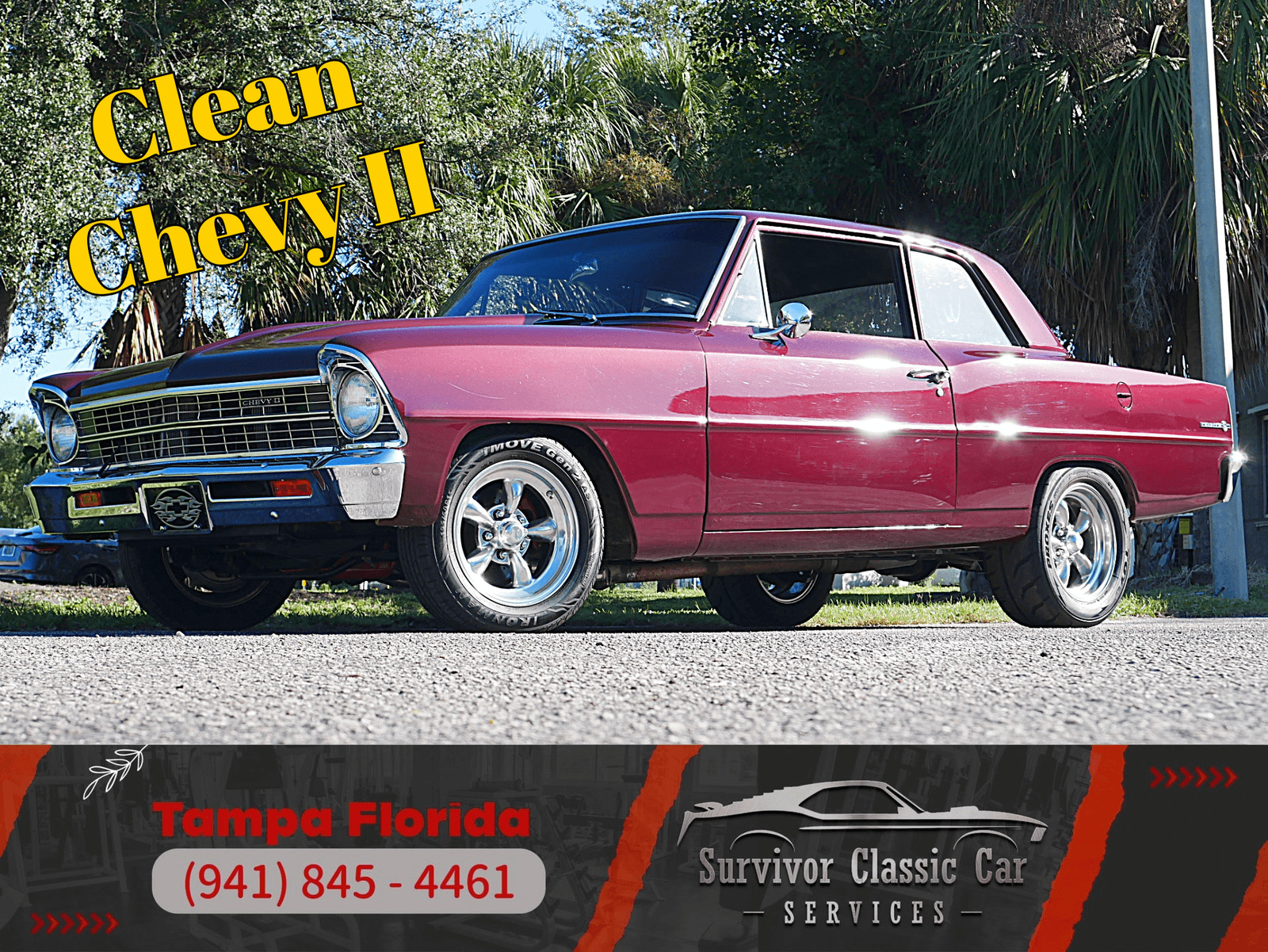 $37,495 · 7% below typical
Expand
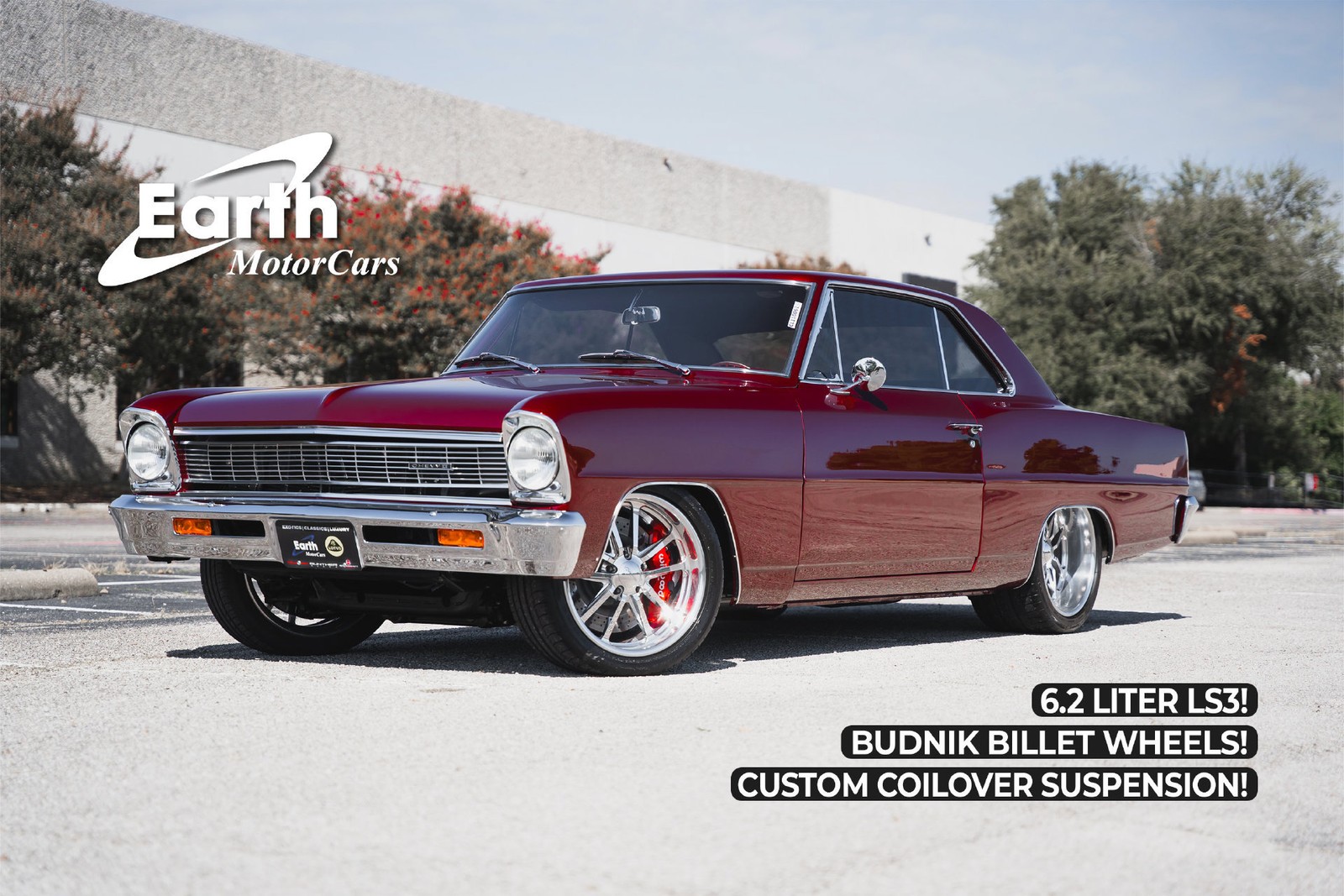 $184,675 · 359% above typical
Expand
 $25,000 · 38% below typical
Expand
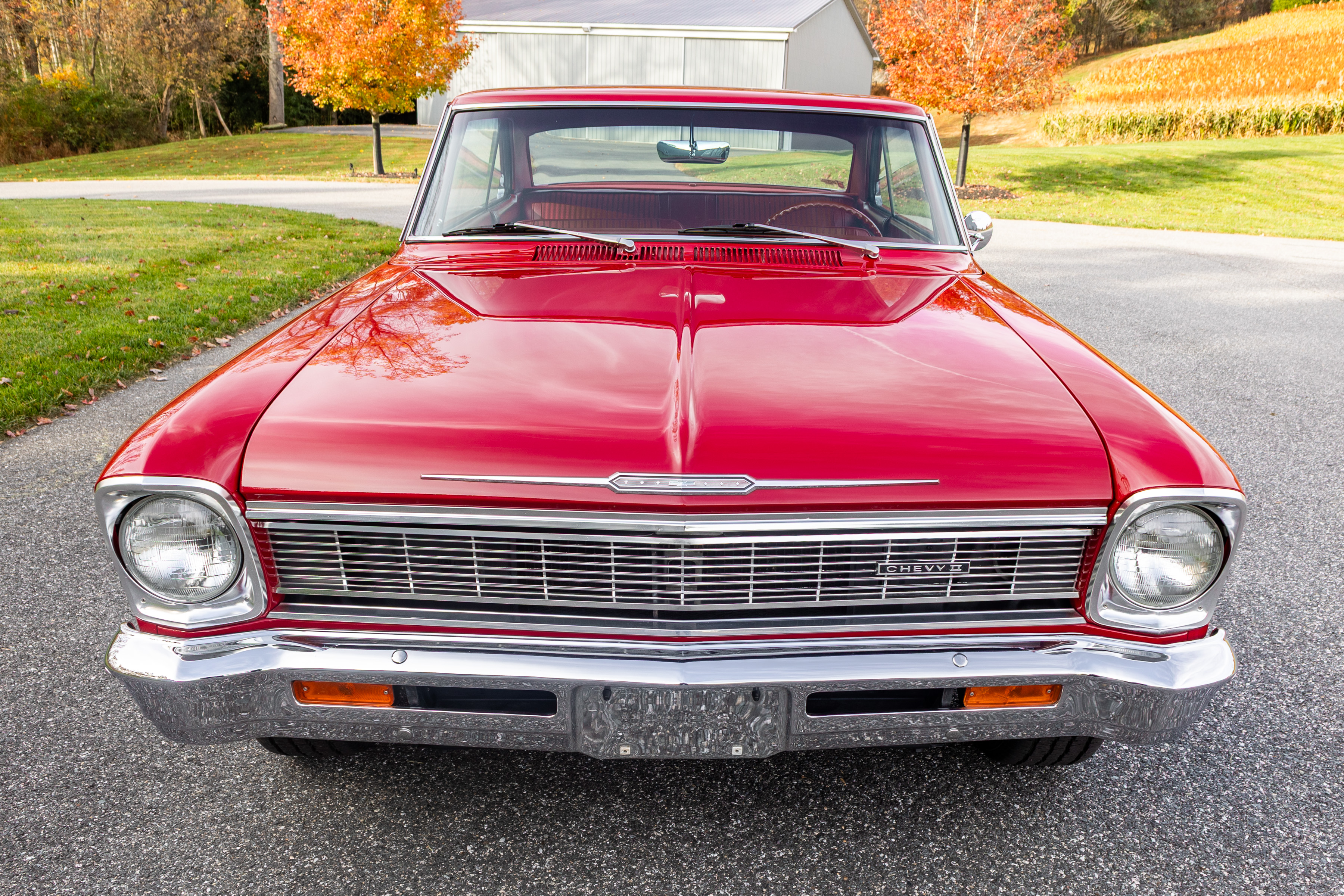 Current bid $75,000
Expand
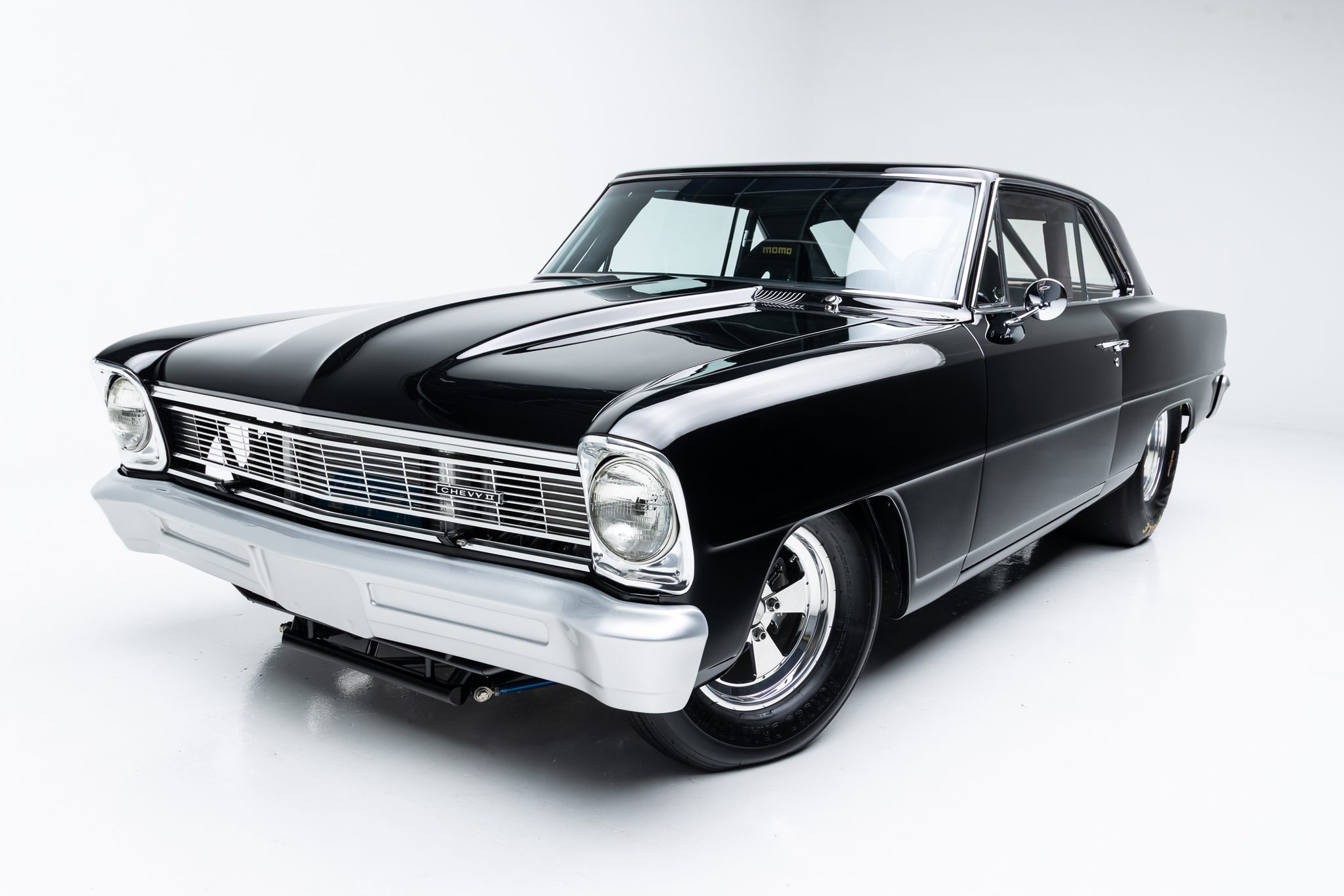 Current bid $45,000
Expand
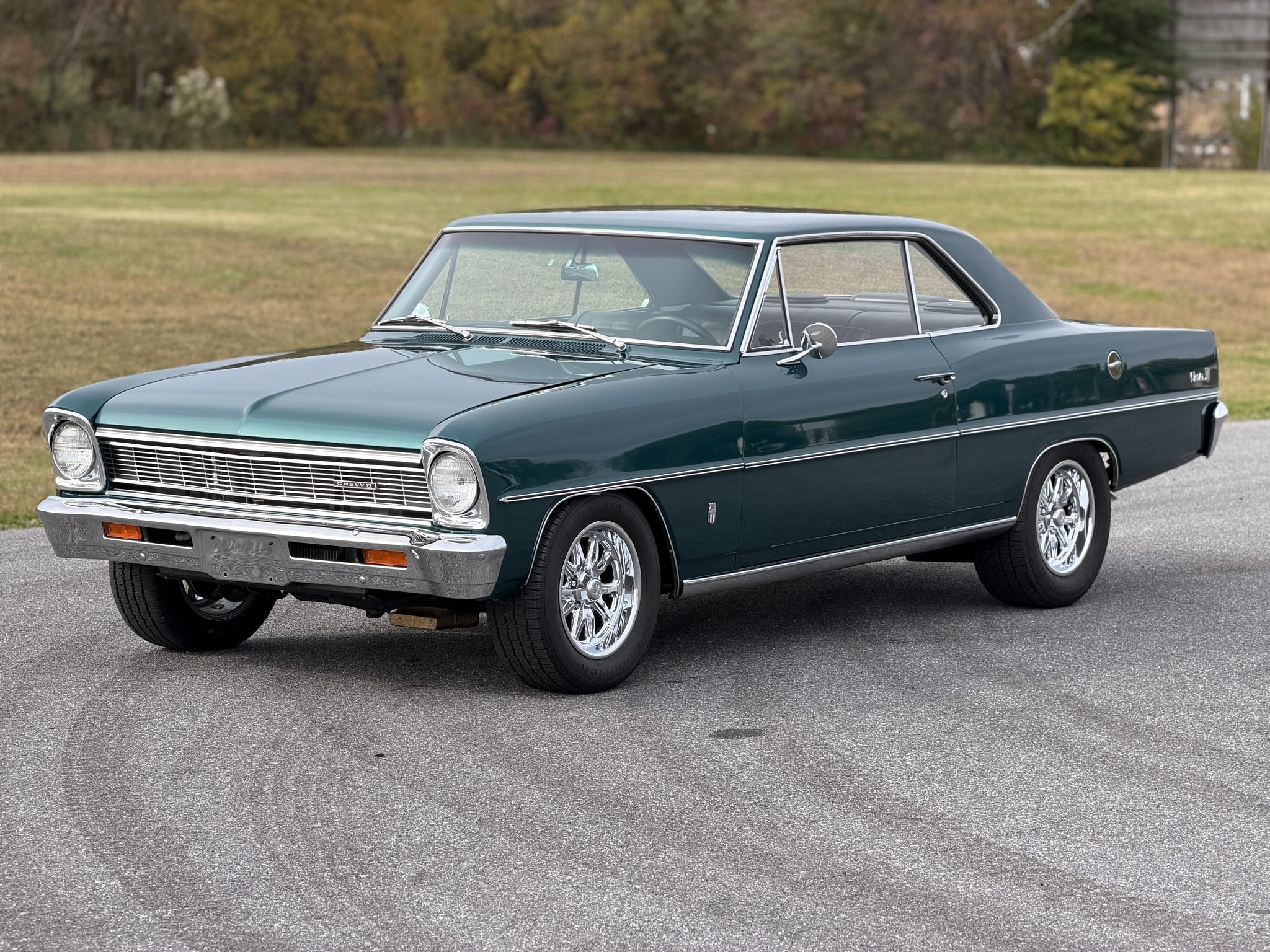 Current bid $20,000
Expand
What they sell for: Chevy Ii Nova Coupe sale prices.