
Chrysler Newport buyer's guide
Chrysler Newport -- the model's own buyer's guide: variants, values and what to check.
Years listed: 1967-1968 · Series: Full Size
# Chrysler Newport — Buyer's Guide
Overview and history
You buy a Chrysler Newport for the thing it does better than almost anything else of its era: it covers distance in a large, quiet, torsion-bar-sprung American car without asking you to pay the premium attached to the Chryslers above it, or to the Imperial at the top of the corporation's range. The Newport is the entry-level full-size Chrysler from 1961 to 1981, and that word entry-level needs correcting at once. It never means small, cheaply trimmed in the modern sense, or mechanically cut down. A Newport shares its unibody, its wheelbase in most years, its big-block engines and its TorqueFlite automatic with the 300, the New Yorker and the Town & Country wagon.
The name itself is older than the model. Newport was a Chrysler hardtop designation in the 1950s, a label for a pillarless body rather than a separate series. For 1961 Chrysler promotes it to a full model line in its own right, positioned below the Windsor at launch and then, when the Windsor disappears, as the permanent bottom rung of the full-size ladder. The first cars, for 1961 to 1964, still carry the last traces of the fin era in their early styling, then clean up markedly for 1963 and 1964.
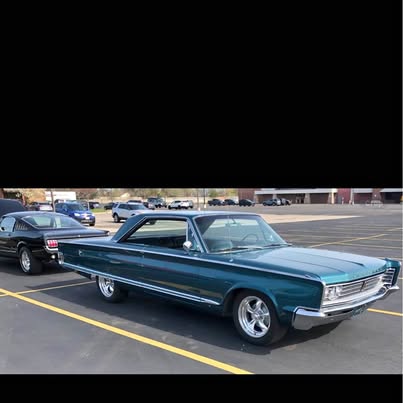
The generation you meet most often, and the generation that dominates the cars offered for sale now, arrives for 1965. Chrysler restyles its full-size C-body cars completely: slab sides, straight-through fender lines, stacked or side-by-side headlamps depending on year, enormous glass and interiors you measure in acres rather than inches. The 1965 to 1968 cars have a particular, upright confidence.
Scope this guide honestly. The Newport name spans twenty-one model years and four distinct generations, and no single inspection routine flattens that into one car. The mechanical heart of the guide — the big-block B and RB wedge engines, the 727 TorqueFlite, the torsion-bar front end and the C-body rust map — belongs chiefly to the 1961 to 1978 cars, and within those, most heavily to the 1965 to 1973 cars you are likeliest to stand in front of. Where the later lean-burn cars or the R-body cars behave differently, the guide says so in place.
You should also understand what a Newport is not. It is not a muscle car, even when a 440 sits under the bonnet. A Newport Custom or a Newport two-door hardtop with the high-performance 440 is a fast, heavy cruiser, not a Plymouth Road Runner with extra chrome. It is not rare in the way an Imperial Crown convertible is rare, and it does not reward restoration money the way a Chrysler 300 letter car does. It is not, despite the size, a complicated car: almost every system on it is conventional, well understood and repairable by a competent general shop. Its difficulties are specific rather than general — rust in places you cannot see from the kerb, torsion-bar and steering wear that hides behind power assistance, carburetion and ignition faults on the emissions-era cars that get blamed on the wrong component, and trim that was never reproduced because the model sat too low in the range to attract the reproduction industry. Learn those specifics and you own the buying decision. Ignore them and the cheapest Newport in the country becomes the most expensive car you ever bought, one welded repair at a time.
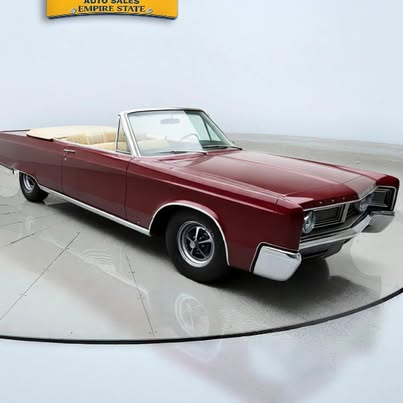
The models
The Newport range is a trim-and-body range built on one mechanical recipe, so you choose first by generation, second by body style, and only third by engine. In every C-body year you find the same core bodies: a four-door sedan with a centre pillar, a four-door hardtop without one, a two-door hardtop, and, in the earlier years, a convertible and a station wagon connection that needs untangling because sellers routinely blur it.
The wagon trap comes first. From 1961 to 1965 the Chrysler Town & Country wagon is effectively the Newport wagon — the wagon body sold in the Newport series, with Newport mechanicals and trim. From 1966 the Town & Country becomes a series in its own right.
The trim walk above the Newport matters just as much. Above the Newport sits, depending on year, the Newport Custom, the 300, and the New Yorker, with the Imperial as a separate marque entirely until the mid-1970s. The New Yorker is the one you will confuse most often. It shares bodies and, in many years, the same basic shape, but it carries more standard equipment, plusher interiors, different side trim and script, and in several years a longer-wheelbase sedan body. Sellers badge-engineer in both directions: a Newport dressed with New Yorker trim to justify a price, and, more usefully for you, a New Yorker listed carelessly as a Newport, which is the mistake that occasionally gives you the better car for the Newport money. Never rely on the script on the fender. Read the VIN and the fender tag, decode the series characters, and confirm the engine code against the engine actually in the car. Chrysler identity lives in those stamped and riveted codes, not in chrome letters that unbolt in five minutes.
Within the Newport line itself, the Newport Custom, offered through much of the late 1960s and into the 1970s, adds upgraded upholstery, more brightwork and often the larger optional engine as standard or near-standard equipment. It is not a separate mechanical species. Treat it as a Newport with a nicer cabin and check it exactly the same way.
| Model | Years | Engine | Output | Built | Character |
|---|---|---|---|---|---|
| Newport sedan and hardtop, first generation | 1961–1964 | 361 and 383 cu in B-series V8 | 265–305 hp gross, depending on year and tune | Newport-only splits by body style are not cleanly published for every year; Chrysler reported by series and body in period sources that do not reconcile to one honest total | The transitional car: fins fading, structure and torsion-bar ride already fully formed |
| Newport Town & Country wagon | 1961–1965 | 383 cu in V8, 413 optional in later years | 305–340 hp gross | Wagon figures are folded into Town & Country reporting and are not honestly separable as a Newport total | The family hauler of the line, and now the hardest early body to find unrusted |
| Newport and Newport Custom, slab-side C-body | 1965–1968 | 383 cu in standard; 440 cu in optional from 1966 | 270–330 hp gross for the 383; 350–375 hp gross for the 440 | High-volume years for the line as a whole; per-body-style splits are not published consistently, so any precise figure a seller quotes for one body should be treated as unproven | The archetypal Newport: upright, spacious, mechanically simple, the sweet spot of the whole range |
| Newport convertible | 1961–1970 | 383 cu in standard, larger engines optional | As the equivalent hardtop for year and engine | Always a small minority of Newport production; Chrysler did not publish a clean, continuous convertible-only series of figures across the run | Open-top cruising on the full C-body chassis; scarcity is real, condition varies wildly |
| Newport and Newport Custom, fuselage C-body | 1969–1973 | 383, then 400 cu in; 440 cu in optional | Gross ratings to 1971, net ratings from 1972; roughly 175–335 hp depending on year, engine and rating system | Volume falls across the period as the full-size market contracts; body-style splits remain inconsistently published | The styling high point for many buyers, and the last of the relatively unstrangled big-blocks |
| Newport, formal C-body | 1974–1978 | 360, 400 and 440 cu in | Net ratings, roughly 155–255 hp depending on year and engine, California cars lower | Production continues in meaningful numbers to 1978, but survival is poor because these cars were cheap used transport for decades | Big, soft, emissions-era cars; the 440 survives to the end of the line in 1978 |
| Newport, R-body | 1979–1981 | 318 and 360 cu in LA small-block V8 | Net ratings, roughly 110–195 hp depending on engine and year | The shortest and lowest-volume Newport run of all; three model years only | The downsized epilogue: a sedan and hardtop coupe only, bought for curiosity and completeness more than presence |
Read the output column with the rating change in mind, because it catches buyers out. American manufacturers quote gross horsepower, measured on a bare engine, up to 1971, and net horsepower, measured with accessories, exhaust and emissions equipment fitted, from 1972. A 1971 440 and a 1972 400 are not separated by the cliff the headline numbers suggest, and a 1973 car is not automatically a slug.
Body style decides how you use the car and how hard the trim hunt becomes. The four-door sedan is the honest workhorse: the stiffest shell, the easiest rear-seat access, the least fashionable shape and therefore usually the most car for your money.

Engines and gearboxes
Every Newport engine you are likely to meet is a Chrysler V8 of known character, and the family tree is simpler than the badge count suggests. There are two big-block families, one later big-block replacement, and the small-blocks of the final years. Learn which family is in front of you, learn its one or two real weaknesses, and ignore the folklore that attaches to cubic inches.
The B and RB wedge big-blocks: 361, 383, 413, 426 and 440
The core Newport engines are Chrysler's wedge-head big-blocks, named for the wedge-shaped combustion chamber. The B series is the low-deck family: the 361, fitted to the earliest Newports, and the 383, the standard Newport engine through most of the 1960s and into the early 1970s. The RB series is the raised-deck family, taller and wider across the intake manifold: the 413 of the early cars, the short-lived 426 wedge, and the 440, introduced for 1966 and the optional engine that defines the later C-body Newport. Telling a B from an RB at the kerb is a practical skill, not trivia. On a B engine the distributor sits at the front, angled, and the engine looks comparatively compact between the inner fenders. On an RB the same front distributor is there — all Chrysler big-blocks drive the distributor from the front, unlike the small-block — but the block is visibly taller-decked and the intake manifold wider.
The 383 is the engine to understand in depth because most Newports have one. In two-barrel form it is a low-compression, regular-fuel cruiser with a Carter BBD two-barrel carburettor: unstressed, tolerant and, when the timing chain is fresh and the carburettor is clean, genuinely pleasant. In four-barrel form, with a Carter AFB and later AVS carburettor, higher compression in the mid-1960s cars and a dual-exhaust option on some applications, it becomes a strong performer that still runs cool and starts reliably. Its weaknesses are age weaknesses, not design flaws. The nylon-toothed timing sprocket fitted in many years sheds its teeth with age and heat; the chain stretches, valve timing retards, idle quality and economy decay, and the failure, when the teeth finally strip, leaves you with a no-start rather than a destroyed engine, because these are generally non-interference designs in stock form — but you still face a front-of-engine strip-down. Budget a timing set at $450 to $900 fitted, and expect the exhaust heat-riser valve to be seized, the valve-cover cork gaskets to weep, and blue smoke on a cold start to trace to hardened valve stem seals — a $350 to $750 job with the heads on — rather than to worn bores, which smoke under load instead.
The 440 deserves its reputation, with one correction. The myth is that every 440 Newport is a high-performance car. Most are not: the standard 440 is a torque engine, single four-barrel and mild camshaft, tuned to move two and a quarter tons without effort. The high-performance version — badged TNT in the late 1960s, with the hotter cam, free-flowing exhaust manifolds and dual exhausts — is a genuinely rapid car and a rarer find, and a seller's claim that any 440 is that engine is the most common exaggeration in Newport listings. The VIN engine code, the fender tag and the engine pad settle it; a claim that survives none of those checks earns no premium. The 440 also adds cooling load, so a silted radiator, a missing fan shroud or a tired viscous fan drive shows up as overheating in traffic that owners mask with electric fans instead of rebuilding the system as designed.
Fuel and ignition hardware on the wedge cars is conventional and that is their strength. Carter carburettors — BBD two-barrel, AFB and AVS four-barrels — are rebuildable indefinitely, and a flat spot is more often a failed accelerator pump cup, a warped air horn from overtightening, a clogged idle circuit or low float level than a carburettor that needs replacing. Set float level, check fuel pressure at roughly 5 to 7 psi at the carburettor inlet for these mechanical-pump systems, and confirm the choke pull-off holds vacuum with a hand pump before you condemn anything electronic. Ignition is points on the early cars and Chrysler electronic ignition from the early 1970s, with the familiar orange-box and later control units; the ballast resistor is the roadside failure everyone who owns one of these cars learns to carry as a spare — a car that starts when you crank and dies when you release the key is telling you the resistor has failed, not that the engine has.
The emissions era and the small-blocks: 360, 400, 318 and lean burn
The 400, introduced for 1972, is the last big-block design: a B-series architecture bored out, with the largest bore Chrysler ever put in a production V8 of this family, intended to restore with displacement what emissions tuning was taking away. In a Newport it replaces the 383 as the standard big engine through the 1970s, with the 440 continuing as the option until production of the 440 ends after 1978. A 400 is not a bored-out failure or a thin-wall risk in stock form; in a heavy Newport it is a perfectly serviceable engine whose real enemies are the systems bolted to it in the 1970s — retarded timing strategies, exhaust gas recirculation, air injection on some applications, catalytic converters from 1975, lower compression and carburettors calibrated lean at cruise.
The LA small-blocks — the 318 and the 360 — appear in Newport service as the 1970s progress and dominate the R-body cars. The 318 is one of the most durable engines Chrysler ever made, understressed in this application, and its faults are the family's faults: timing chain stretch, lean carburetion on two-barrel Carter BBD and later Holley two-barrel installations, EGR driveability faults and oil leaks from the rear of the intake manifold and the valve covers. The 360 adds displacement and, in some years, a four-barrel; it is externally balanced, which matters when you swap flexplates or converters, a trap that produces a mysterious vibration after a transmission change if the balance is wrong. Neither small-block makes a Newport fast. Both make it simple, and parts support for the LA family is the best of any engine in this guide.
Lean burn needs its own plain explanation, because it generates more bad diagnoses than any other system on a late Newport. From 1976 Chrysler fits, on many cars, the Electronic Lean Burn system, later called Electronic Spark Control: a computer module mounted conspicuously on the air cleaner housing, taking inputs from sensors for throttle position, engine temperature, vacuum and speed, and controlling ignition timing and, in effect, the spark strategy to run the engine lean at cruise for emissions and economy. When it works, the car drives acceptably. When it ages — cracked sensor vacuum hoses, corroded connectors, a failed throttle position sensor, a computer with heat-damaged internals, a carburettor whose lean calibration no longer matches a worn engine — the symptoms are hesitation, surging at light throttle, stalling at junctions, hard hot starting and a general feeling that the car is ill in a way no tune-up touches. The mechanical truth is that the underlying engine and TorqueFlite are usually sound, and the fault lives in the control layer. The established cure, where local rules allow it, is conversion to the earlier conventional Chrysler electronic ignition with a standard distributor advance curve and a conventionally calibrated carburettor, using a recognised conversion kit; a kit and fitting typically run $300 to $700 in parts plus setting-up time.
TorqueFlite gearboxes
Almost every Newport you inspect has a TorqueFlite automatic, and the big cars use the A727, one of the strongest three-speed automatics ever fitted to a production car. Early cars to 1964 use pushbutton control and, in the earliest years, cable operation with distinct service procedures; from 1965 the range moves to conventional column or console shifters and linkage operation, with the A727 behind big-blocks and small-blocks in the C-body years and the lighter A904 appearing behind the 318 in the downsized final cars. The 727's reputation is earned: behind a stock Newport engine, with fluid changes and correct linkage adjustment, it outlasts the car around it.
Its critical vulnerability is not inside the case. It is the throttle-pressure linkage — the rod or cable system, often called the kickdown linkage, running from the carburettor back to the transmission. On a TorqueFlite this linkage does far more than command a downshift. It controls line pressure in proportion to throttle opening. Run the car with the linkage disconnected, seized or badly misadjusted — a common result of a carburettor swap done carelessly — and the transmission shifts early and soft at low pressure under load, slips its clutches and bands, and burns itself up in a distance measured in miles, not years.
Service behaviour is straightforward. Fluid should be clean and red-pink, smelling of nothing much; dark brown fluid with a burnt smell means heat and wear, and glitter in the pan at a fluid change means internal distress. Band adjustment and fluid and filter changes are periodic service, not repairs, and a car with records of them is a car whose previous owner understood the machine. Shift quality in a healthy 727 is firm and positive without being violent: a flare on the two-to-three shift, a delayed engagement into drive or reverse on a cold morning that improves as the fluid warms, or a shudder in reverse each point to specific internal wear — seals hardening with age explain much of the cold behaviour on a fifty-year-old unit, and a reseal and rebuild is a known, bounded job rather than a mystery.
Problem areas
A Newport fails in predictable places, and the order of this section is the order of financial danger. Structure first, because structure decides whether the car is a car at all. Suspension and steering second, because the torsion-bar front end hides its wear behind power assistance and ride height tricks. Brakes and cooling next, because a two-ton car that cannot stop or that boils in traffic is unusable however sound its shell. Then the emissions-era drivability layer, the electrics, and the interior and trim, which decide what a cosmetically tired car really costs to make pleasant. Work through them in that order on any car you view, and you will never be seduced by new paint over a rotten stub frame again.
Rust: the C-body map
Chrysler's full-size cars are unit-construction: there is no separate chassis frame under the body in the way a contemporary Ford or General Motors full-size car is built. Instead the body shell itself is the structure, with a bolted front stub frame — a subframe — carrying the engine, the front suspension and the steering, and a torsion-bar crossmember tying the front structure together. This gives the car its rigidity and ride when sound, and concentrates its structural risk in specific, inspectable places when rust takes hold. You are not looking for rust in general.
Start with the front stub frame itself, particularly where it bolts to the body, around the torsion-bar anchors and along its rails where road salt and mud sit in the sections. Surface scale on a stub frame is normal and treatable. Perforation, flaking that reveals thinning, or cracking around the mounting points is structural: the stub frame can be unbolted and replaced or repaired on a jig by a specialist, but that is major surgery, typically $2,500 to $5,000 in welding and fabrication labour before paint if the surrounding body mounts also need work, and a car needing it must be priced as a structural project, not a driver. Next, the torsion-bar crossmember and the floor area immediately around the rear anchors of the bars: water and salt collect where the bars pass through, and rot here is both structural and a safety matter, because the crossmember carries suspension loads.
Move to the cowl and the front floor pans. The cowl plenum below the windscreen collects leaves and debris through its intake, holds water against seams that were never well protected, and rots from the inside out. The giveaway inside the car is a wet front carpet, a musty smell that cleaning never cures, and rust staining at the kick panels; the giveaway outside is bubbling at the lower corners of the windscreen and along the cowl seams. A leaking cowl on a car with a dry-looking exterior is how a Newport comes to need front floors: water enters at the cowl, runs under the carpet and its sound-deadening pads, and rots the pans from the top down while the underside still looks presentable. Lift the carpets.
The sills and rocker panels carry the same top-down deception. The rockers rot from inside, fed by blocked drain holes and by water entering at the front and rear ends of the sill cavity; the outer skin can hold paint over a structure that crumbles under thumb pressure at the jacking points. Use the jack test described in the inspection section: a sound rocker lifts the car without creaking, movement or the jack head sinking. The rear quarter panels rot in three places — the lower quarter behind the rear wheel, where the panel wraps toward the valance; the wheelarch lip itself, where the inner and outer skins trap mud; and, on hardtops especially, the area below the rear window where water sits under the trim and, on vinyl-roof cars, under the vinyl.
The trunk floor is the last structural regular: it rots over and around the fuel tank, at the seams where it meets the inner quarters and in the spare-wheel well, fed by a leaking rear-window seal and perished trunk weatherstrip, so lift the mat and flex the floor with your hand rather than admiring the carpet. Check the rear rails and spring-hanger areas with the same suspicion. A vinyl roof deserves its own verdict, because the covering traps moisture against a roof skin that received minimal paint at the factory: bubbling under the vinyl or a crunchy feel along its edges means perforation beneath, and repairing it properly runs $1,500 to $3,500 depending on how far the rot has spread.
Torsion-bar suspension, steering and brakes
The front suspension is Chrysler's torsion-bar system: longitudinal bars, anchored at the crossmember behind and splined into the lower control arms at the front, spring the car by twisting. There are no front coil springs to sag or break, and ride height is set by the adjuster bolts at the bar anchors — which is both the system's elegance and its diagnostic trap. A Newport sitting level and correct can have tired bars, worn bushings and shot ball joints, because a previous owner has simply wound the adjusters up to restore the stance. Ride height proves nothing except that someone owned a wrench. What you check instead is the hardware: perished strut-rod bushings let the lower arm move fore and aft under braking, so the car darts slightly as you brake and wanders at cruise, and ball joints and control-arm bushings on most survivors are decades overdue — a full front-end refresh of bushings, joints, tie-rod ends and idler arm, at $1,200 to $2,400 fitted, transforms a vague car.
The steering is a recirculating-ball power box with a linkage behind the axle centreline, an idler arm and, on many years, a rubber-isolated coupling and a flexible joint in the column that perishes and adds slop owners blame on the box. Diagnose in order: coupling and column joint first, then idler arm and tie rods, then box adjustment, then box wear. A box adjusted tight to mask worn linkage feels notchy at the centre and still wanders; a correctly sorted Newport steers with light, slightly vague but consistent feel and tracks straight hands-off on a flat road.
At the rear, semi-elliptic leaf springs carry the live axle, and the springs sag, lose arch and, on hard-used cars, crack a leaf at the eye. A Newport sitting low at the rear with the adjusters at the front wound up to compensate sits nose-high in attitude even when the tape measure says level, and it will axle-tramp and bottom where a fresh car does not. Rear springs, re-arched or replaced, plus dampers all round, run roughly $700 to $1,500 fitted, and are among the most satisfying money you can spend on one of these cars. Axle faults are few: the 8.75-inch Chrysler axle under most big-block cars is immensely strong, its centre section unbolts from the front of the housing, and the Sure Grip limited-slip, where fitted, uses clutch or cone designs that wear and revert to open behaviour without drama — test by the usual one-wheel test rather than by the seller's description. Pinion seal leaks and axle bearing wear are the routine items; a howling axle is usually a bearing or a pinion preload problem, diagnosable on the lift, rarely a reason to reject an otherwise sound car.
Brakes divide by era. Early-1960s cars use drums all round, single-circuit on the very earliest, and they stop a heavy car adequately when every cylinder, hose and shoe is fresh and correctly adjusted — and alarmingly when any part of that chain is neglected. From the mid-1960s front disc brakes appear as an option and spread through the range, with the four-piston fixed-caliper Budd disc system fitted to many 1966 to 1968 cars deserving specific warning: it stops well, but its rotors are scarce and expensive, its calipers corrode internally, and a conversion to a later single-piston sliding-caliper set-up is a common and sensible modification — a front disc overhaul on Budd equipment can run $900 to $1,800 if rotors are needed, against $450 to $900 for a routine later-system overhaul with new discs, pads, hoses and fluid. From the early 1970s front discs with power assistance become the normal Newport specification and are straightforward to maintain. On any car, the rubber flex hoses are a date-based replacement, the dual-circuit master cylinder from 1967 onward is a safety feature only if both circuits actually work, and a pedal that sinks slowly at a standstill means master-cylinder seals bypassing internally whether or not any fluid is visible outside. Budget a full brake hydraulic renewal — master cylinder, hoses, wheel cylinders or calipers as applicable, fluid — at $600 to $1,400 on a car with unknown history, and do it before the first long drive, not after the first long stop that goes wrong.
Cooling, electrics and the drivability layer
A Newport cooling system is sized for a big engine in American summer traffic, and it fails by neglect, not design. Radiators silt and scale internally until the bottom third does no work; viscous fan drives lose their silicone fluid and freewheel exactly when the car is stationary and needs the fan most; fan shrouds go missing after engine work and never return; heater valves and heater cores leak into the front footwell and get misread as cowl leaks — the distinguishing test is smell and taste of the fluid, coolant being sweet where rainwater is not, plus a cooling system that loses level. Test the fan drive by its resistance when spun cold and its roar on a hot restart, pressure-test the system, and look for the green or rusty staining at the radiator seams, water pump weep hole and core plugs that maps the leaks for you. Core plugs — freeze plugs in American usage — rot from the inside of the water jacket outward on cars that ran plain water, and one weeping plug behind the engine mount or at the back of the block turns a small parts cost into an engine-out or engine-lifted labour bill, $500 to $1,100 depending on access.
Electrics are the car's second language of age faults. The charging system is an alternator with, on early cars, an electromechanical regulator and, later, an electronic one; the ammeter on many dashboards carries substantial current through the bulkhead connector, and that bulkhead connector — where the main harness passes through the firewall — is a known Chrysler trouble point across the era: corroded, overheated terminals there produce intermittent everything, melted insulation and, in the worst cases, under-dash fires. Inspect the bulkhead connector and the ammeter connections on any car, look for bypass wiring previous owners have added, and treat a tidy, unmolested engine bay harness as a genuine selling point.
The drivability layer on 1970s cars deserves its own discipline, because it is where money gets wasted. A lean-burn or Electronic Spark Control car that hesitates, surges or stalls presents a system, not a part: vacuum hoses that look intact but collapse internally, an EGR valve stuck partly open diluting the idle mixture, a choke and hot-air intake system whose vacuum motor has failed so the engine breathes cold air and ices or stumbles on a damp morning, a carburettor calibrated lean on an engine whose compression and ignition leads are no longer to specification. The method that works is to return the base engine to known-good first — compression even, ignition components new or proven, timing set to the specification on the under-bonnet decal for that exact car, every vacuum hose replaced as a set because they are all the same age — and only then judge the control system. Half the lean-burn condemnations in the hobby trace to a base engine that was never put right. The other half are genuine, and for those the conversion route described in the engines section is the honest fix. Either way, a test drive that includes a fully warm restart, a light-throttle cruise at steady speed and a junction idle in gear will expose the condition in ten minutes, which is why the inspection section builds those exact moments into the drive.
Interior, trim and weather equipment
The interior decides how the car feels every mile, and Newport interiors age in specific materials. The vinyls and cloths of the 1960s cars are durable but fade and split at seat seams and at the top of the rear seat back where sun through the rear glass cooks the stitching. The 1970s cars add the era's fragile plastics: dash pads that crack across the speaker grille and along the windscreen edge, door panels whose backing warps, and headlinings that detach and sag onto your head. Seat foams collapse on the driver's cushion first; a car that sits you in a hollow is a car whose foam, not just its cover, needs replacing, and a proper front seat rebuild with foam and covers runs $800 to $1,800 depending on material and whether the rear seat is matched.
Trim is the Newport's structural weakness as a restoration proposition. Because the model sat below the New Yorker and the 300, the reproduction industry made little for it specifically: side spears, scripts, grille pieces, tail-lamp bezels and interior ornaments are largely used-parts-only, shared in some years with the senior cars and unique in others. A Newport missing its brightwork is not a car you finish with a catalogue order; it is a car you finish with years of swap-meet and breaker searching, or you do not finish it at all. The buying rule follows directly: completeness of trim outranks shine of paint, and a dull car with every piece of trim present and straight is a better purchase than a gleaming car missing two spears and a grille section. Glass is mostly available or cuttable for flat pieces; the curved hardtop rear glass of fuselage cars is a used-only item, so a cracked one is a serious matter. Weatherstrips are reproduced for the popular bodies and transform a hardtop's wind roar and water leaks when renewed as a set, roughly $350 to $800 in parts for a full car set depending on body style, plus fitting time that owners consistently underestimate.
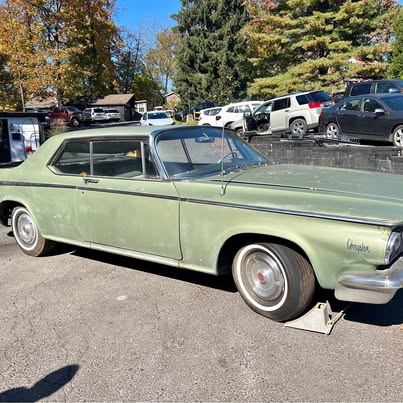
How to inspect one
Inspect a Newport in a fixed order, structure before cosmetics, cold engine before warm, and never let a seller's running commentary reorder the sequence for you. Take a torch, a magnet wrapped in cloth, a tyre pressure gauge, a long screwdriver for probing and listening, overalls or a mat for the ground, and a friend to work pedals and lights while you watch. Allow two hours for a car you are serious about.
- Start with identity, before you touch anything mechanical. Read the VIN plate, decode the series and engine characters, then find the fender tag and compare its codes, then locate the stamped engine pad by the distributor and confirm the displacement matches the story.
- Do the cold walk-round for rust in the map order: stub frame and its mounting points from underneath, torsion-bar crossmember and rear bar anchors, cowl seams and lower windscreen corners, front floors from below, rockers along their full length, rear quarters behind the wheels and below the rear window, trunk floor edges and spare-wheel well.
- Lift the carpets in the front footwells and look, and smell. Damp underlay, rust staining or a musty smell that cleaning never cured settles the cowl and front-floor question from the rust section at once, because water entering at the cowl rots these pans from the top down while the underside still looks presentable.
- Test the rockers and jacking points. Take the car's weight on each factory jacking point in turn: a sound rocker lifts quietly, while creaking, movement at the door gaps or a jack head sinking into soft metal tells you that side needs sill work, whatever the painted outer skin suggests.
- If the car wears a vinyl roof, press along its edges, around the rear window and along the drip rails with your fingertips. A firm, even feel is reassuring; crunching, bubbling or a surface that moves over something soft underneath means perforation of the roof skin, and you should price the vinyl-roof repair from the rust section into the car on the spot.
- With the engine stone cold — insist on this, and treat a pre-warmed engine as a deliberate concealment until proven innocent — start it. Watch the exhaust: a brief blue puff that clears points to hardened valve stem seals, as the engines section explains, while continuous blue smoke points to rings and bores. Listen for timing-chain rattle at the front cover and for lifter clatter that should fade within seconds as oil pressure builds.
- Under the bonnet, run the cheap decisive checks. Confirm the throttle-pressure linkage to the transmission is present, connected and moving through its full travel as a friend opens the throttle — the two-minute check that protects the TorqueFlite. Inspect the bulkhead wiring connector for corrosion and heat damage, confirm the fan shroud is present, feel the viscous fan drive, and treat every vacuum hose on a 1970s car as a set: if three are cracked, they are all cracked.
- Check the front suspension and steering in the order the problem areas section prescribes. Feel the column coupling for lost motion while a friend rocks the wheel, then watch the idler arm, tie-rod ends and centre link for play at each joint in turn, and examine the strut-rod and control-arm bushings for perishing. Remember that a level stance proves nothing on a torsion-bar car, because the adjuster bolts can wind a tired front end back up to height.
- Test the brakes before the road, then on it. At a standstill, hold firm pedal pressure for thirty seconds; a pedal that sinks is a master cylinder bypassing internally.
- Drive the car through the full sequence, not around the block. Run a steady light-throttle cruise to expose lean-burn surge or a Thermoquad stumble, a full-throttle run to confirm the kickdown works and the engine pulls cleanly, a closed-throttle descent to watch for the stem-seal smoke signature, and junctions at full temperature to test the hot idle in gear. Note every shift: early, soft upshifts point back to the linkage from step 7, and flare on the two-to-three shift is internal wear to price.
- Switch everything on, in gear, at idle, with the engine fully warm, and let it sit. Watch the temperature gauge in traffic conditions for the cooling margin; a car that climbs steadily at idle has the radiator, shroud or fan-drive faults detailed earlier.
- Finish underneath and with the paperwork. On a lift if you can get one, or on the ground with the torch if you cannot, re-examine the stub frame, floors, spring hangers and rear rails now that you know how the car drives, check for fresh underseal applied over the areas you probed — recent black coating exactly where rust lives is a confession, not a coincidence — and look for fluid leaks at the pinion seal, the transmission pan and front seal, and the steering box. Then read the history file for the pattern the problem areas section teaches you to value: regular fluid changes, coolant changes, brake work and front-end work recorded over years predict a sound car more reliably than a single recent respray invoice.
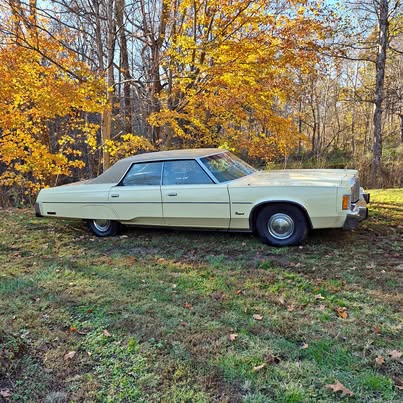
Values
The Newport market rewards condition and punishes optimism, and learning to read it means learning what the spread between cars actually represents. At the bottom of the market sit the project cars: complete or nearly complete four-door sedans with structural rust, tired engines or long-dead transmissions, bought by people who either own a welder or have not yet priced one. In the middle sits the honest driver — sound structure, presentable but imperfect paint and trim, mechanicals that work, an interior you can sit in without apology — and this is where most Newports change hands and where the best value in the whole full-size Chrysler field lives. At the top sit the exceptional cars: low-mileage originals with unmarked interiors and every piece of trim in place, the best two-door hardtops, convertibles with working tops and documented history, and the rare high-performance 440 cars whose identity survives the VIN and fender-tag checks described earlier in this guide.
Body style and generation move value in a predictable order. Convertibles lead, two-door hardtops follow, four-door hardtops sit in the middle, wagons from the Newport years have a devoted following that outruns their numbers, and four-door sedans trail — not because they are lesser cars, but because supply is largest and fashion is cruelest there. The 1965 to 1968 and 1969 to 1973 cars attract the strongest following among the C-bodies, the formal 1974 to 1978 cars are the cheapest way into a big-block Newport and are bought best when their emissions-era systems are either working or honestly converted, and the R-body cars trade in a thin market where the right buyer matters more than any guide figure. Engine premiums are real but modest by muscle-car standards, and they belong only to verified engines: a documented high-performance 440 car earns its premium, a standard 440 earns a smaller one, and a claimed engine that fails the pad and code checks earns none at all, however the advertisement is worded.
Asking prices and achieved prices part company on Newports in a specific way. Sellers price from the senior cars — from New Yorker and 300 money, and sometimes from Imperial money — because the cars look alike in photographs. Buyers pay for the Newport in front of them, its structure and its trim completeness. The negotiation reality follows: a car with verified sound structure, complete trim and a tired engine is a strong buy at a firm price, because the expensive problems are the ones it does not have; a car with gleaming paint, missing trim and unexamined floors is overpriced at almost any figure, because its expensive problems are still uncounted. The project-versus-driver gap is the other lesson. Restoring a rough Newport to driver standard costs more, in welding, trim hunting and mechanical recommissioning, than buying the driver in the first place, in almost every case you will actually meet. Buy the best structure you can find, let someone else have taken the restoration loss, and spend your own money on the maintenance and gradual improvement that keep a good car good.
Parts and ownership
Owning a Newport is an exercise in knowing which of three parts worlds each component lives in. The first world is the mechanical mainstream, and it is generous: engine internals for the 383, 440, 400, 318 and 360, TorqueFlite service parts, brake consumables for the later systems, suspension joints and bushings, steering wear parts, water pumps, alternators, starters and carburettor kits are all available through the normal American classic trade, much of it shared with the far larger Dodge and Plymouth C-body and B-body population. A gasket set, a timing set or a carburettor rebuild kit is a routine order, with typical consumable costs in line with any American V8 of the era — a full engine gasket set in the region of $120 to $250, a quality carburettor rebuild kit $45 to $110, a water pump $60 to $140 depending on engine. The second world is the reproduction and specialist trade: weatherstrips for the common bodies, carpet sets, some upholstery materials, suspension and steering rebuild components from the Mopar specialists, improved steering boxes and torsion bars for owners who want firmer responses, and disc-brake conversion components for drum and Budd-disc cars. This world serves the Newport well precisely because the car shares so much with its better-loved cousins.
Running costs follow the car's size honestly. Fuel consumption is heavy by any modern measure: expect the big-blocks to return figures in the low-to-mid teens in mixed use and less in town, the small-block late cars somewhat better, and budget for premium-grade attention to tune rather than premium fuel itself, since most stock Newport engines in their later, lower-compression forms run happily on regular unleaded with a hardened-seat question that deserves a sentence. Valve seats on pre-unleaded-era heads are a long-running debate; in practice, a Newport used as a classic — moderate mileage, no sustained towing loads — survives for years on unleaded without seat recession drama, and the sensible course is to monitor, use a lead-substitute if it gives you peace of mind, and have hardened seats fitted if the heads ever come off for other work, a marginal addition of roughly $300 to $600 to a head overhaul rather than a standalone emergency job. Storage is the ownership cost new buyers underestimate: a Newport is a very long car, and outdoor storage in a wet climate undoes in two winters what the rust section teaches you to inspect for.
Servicing rhythm is simple and rewards regularity. Engine oil and filter at least annually regardless of mileage, coolant renewed on a two-to-three-year cycle to protect the core plugs and radiator, brake fluid renewed on the same cycle because it absorbs water and rots the system from inside, TorqueFlite fluid and filter on a mileage or age interval with the band adjustment checked, front suspension grease points attended to where fitted, and the throttle-pressure linkage checked for free movement at every service — the five-minute habit that protects the most expensive component on the car. Find a shop that knows older Mopars or is willing to learn from the factory service manual, which you should own in reprint or original for your exact year, because torque figures, torsion-bar ride-height specifications and linkage adjustment procedures are year-specific and guessing them is how good cars get spoiled.
Which one to buy
- The all-rounder: a 1965 to 1968 Newport or Newport Custom two-door or four-door hardtop with the 383 — the archetypal slab-side car, mechanically simple, structurally checkable, with the best balance of presence, parts support and value in the whole range.
- The value buy: a sound four-door sedan from any C-body year, ideally 1969 to 1973 — the least fashionable body on the same structure and running gear, and consistently the most Newport your money buys when the underside is honest.
- The performance pick: a verified high-performance 440 car, most plausibly a 1967 to 1970 Newport Custom or two-door hardtop with the TNT engine confirmed by VIN, fender tag and engine pad — rapid, rare and worth its premium only when all three identity checks agree.
- The open-air pick: a 1965 to 1970 convertible with a demonstrably working top mechanism and a sound boot well — buy the hydraulics and the structure, accept the trim hunt, and never pay convertible money for a car whose top you have not cycled twice in front of you.
- The wagon pick: a 1961 to 1965 Town & Country from the Newport years, bought on tailgate, load-floor and roof condition — the hardest early body to find sound, and the one whose identity sellers blur most often, so decode it before you fall for it.
- The late-car pick: a 1974 to 1978 Newport with the 440 or a well-sorted 400, bought cheaply and knowingly — either a lean-burn and emissions car that demonstrably drives cleanly through the full test sequence, or one honestly converted, with the price reflecting which.
- The curiosity pick: a 1979 to 1981 R-body Newport with the 360 — the downsized epilogue, bought for completeness and rarity of survival rather than presence, and only with its small-block running gear in genuinely good order.
The overriding rule: buy the structure and the trim, and let the engine and the paint be the negotiable parts — a Newport with a sound stub frame, solid floors and quarters, and every piece of brightwork present is the right car at a wide range of prices, and a Newport that fails on structure or trim completeness is the wrong car at almost any price, because welding and unobtainable trim are the two bills on this model that no bargain purchase price ever outruns.
See the 3 Newport cars currently listed.
For sale now
 $24,998 · 53% above typical
Expand
 $7,500 · 54% below typical
Expand
What they sell for: Newport sale prices.