
Chrysler Town And Country buyer's guide
Chrysler Town And Country -- the model's own buyer's guide: variants, values and what to check.
Years listed: 1948-1950 · Series: Full Size
# Chrysler Town & Country — a buyer's guide
Overview and history
Town & Country is not one car. It is a name Chrysler reused for seventy-five years across at least five completely different vehicles, and the first thing you have to do as a buyer is work out which one is standing in front of you. The name itself is estate-agent language from before the war: town for the formal, chauffeur-driven life, country for the shooting-brake, station-wagon life, in one car that could do both. Chrysler launched it for 1941 as a station wagon with a genuine wooden body — white ash framing and mahogany panels, built like furniture because, in part, it was — and the rounded rear doors of the 1941–42 cars earned them the nickname "barrel back." Production stopped for the war with the idea only half-proved, and it is what Chrysler did next that made the name immortal.
For 1946 the Town & Country came back not as a wagon but as a range: a four-door sedan, a convertible, and in tiny numbers a coupe, all wearing structural wood panelling on Chrysler's Windsor and New Yorker chassis. These 1946–48 "woodies" are the cars this guide is mostly about, because they are the cars the classic market means by the name and they are the cars our own listings hold. They were halo cars — expensive, slow to build, bought by film stars and estate owners, and advertised as much for the image as for the transport. The wood was not decoration. The doors and rear body are framed in ash and panelled in mahogany, the joints are finger-jointed and glued and screwed, and the whole structure contributes to the body's stiffness. That is why, eighty years on, the wood — not the engine, not the paint — is the car.
Real wood ended fast. For 1949–50 the range shrank to a convertible, a hardtop and a wagon with ever less timber in it, and the 1950 wagon in our pool — framed mahogany panels under a steel roof — is effectively the last of the true woodies. From 1951 the Town & Country became an all-steel station wagon, but it stayed Chrysler's flagship wagon for another quarter-century: Hemi power in the fifties, torsion-bar suspension and pushbutton TorqueFlite, then the big C-body wagons of 1965–77 with 383 and 440 power and woodgrain appliqué where the mahogany used to be. After 1977 the name slid downmarket — a LeBaron wagon for 1978–81, then the front-wheel-drive K-car LeBaron Town & Country wagon and convertible of 1982–88, complete with simulated wood and Mark Cross leather — before its final and commercially biggest reinvention: from 1990 to 2016, Town & Country was Chrysler's flagship minivan, the upmarket sibling of the Dodge Caravan, sold in numbers the woodie builders could not have imagined.
Be plain about our own pool, because it shapes this guide. Our listings hold five cars: two 1948 woodies (a sedan and a convertible), a 1950 Royal Town & Country wagon, a 1953 steel wagon, and a 1993 Town & Country minivan. That is a fair cross-section of the name's whole arc in five cars, and this guide covers the full arc — but the inspection weight sits where the money and the risk sit: on the wood cars. Our examined-photo sample for this model is small — two cars photo-checked — and it is cited honestly, with its size, where it is used below.
The buying thesis is the same in every era, and it is not the usual one. On a Town & Country you buy structure and identity first: wood on the early cars, shell and specification on the steel wagons, unmodified originality on the minivans. The engines — flathead, Hemi, big-block, minivan V6 — are all fixable, at prices this guide gives you. What is not fixable at sane money is a wood body that has rotted in its joints, a flagship wagon missing its one-year trim, or a "woodie convertible" that started life as something else. Learn to tell the eras apart, learn what the wood should look and sound like, and the rest is ordinary old-car buying, done carefully.

The models
Every Town & Country is a Chrysler, front-engined and — until the K-cars and minivans — rear-wheel drive, but almost nothing else carries across the eras. The range divides first by era, then by body, then by chassis line: on the woodies, Windsor means the six-cylinder car and New Yorker means the straight-eight, and that split matters more to value and character than the body style does. Learn the eras in the table and you can decode any listing in seconds.
| Model | Years | Engine | Output | Built | Character |
|---|---|---|---|---|---|
| Town & Country wagon ("barrel back") | 1941–1942 | Spitfire flathead six, 241.5 cu in | 108 hp | Low thousands before the war stopped production | The original; rounded rear doors, the rarest way into the name |
| Town & Country sedan | 1946–1948 | Spitfire six, 250.6 cu in, or straight-eight, 323.5 cu in | 114 hp / 135 hp | A few thousand across three years | The formal woodie; four wooden doors, immense presence |
| Town & Country convertible | 1946–1948 | Spitfire six or straight-eight (eight predominates) | 114 hp / 135 hp | The most numerous woodie; commonly cited in the low-to-mid thousands per year | The collector car; the woodie the market prices first |
| Town & Country convertible and Newport hardtop | 1949–1950 | Spitfire six or straight-eight | 116–135 hp | Small numbers; the hardtop one year only in this form | The transition; less wood, same idea, much rarer than the '46–48 cars |
| Royal / Windsor Town & Country wagon | 1950 | Spitfire flathead six, 250.6 cu in | 116 hp | One year in this form | The last true woodie wagon; steel roof over framed mahogany panels |
| Town & Country steel wagon (Windsor / New Yorker) | 1951–1964 | Spitfire six, then FirePower Hemi V8 and successors | 119–300+ hp | Regular production, tens of thousands | The flagship wagon; Hemi cars are the prize |
| Town & Country C-body wagon | 1965–1977 | 383, 413 (early) and 440 big-block V8s | c. 290–375 hp gross | Regular production | The last full-size flagship; woodgrain appliqué, nine-passenger cars |
| LeBaron Town & Country wagon | 1978–1981 | Slant six 225 or 318 V8 | 90–155 hp | Regular production | The name goes compact; fake wood over an honest wagon |
| LeBaron Town & Country wagon and convertible | 1982–1988 | 2.2 four, 2.2 Turbo, 2.6 Mitsubishi four | 96–146 hp | Wagon to 1988; convertible 1983–86 only | The K-car woodie; Mark Cross leather, simulated panels |
| Town & Country minivan | 1990–2016 | 3.3 / 3.8 V6, later 3.6 Pentastar V6 | 150–283 hp | Hundreds of thousands across five generations | The flagship minivan; the pool's 1993 car is a first-generation example |
(Outputs are US-market gross figures as rated when new, net figures from the early 1970s onward; the Built column gives honest orders of magnitude where Chrysler published sales by nameplate rather than a trustworthy split by body style, rather than invented precision.)
The original wagon (1941–42). A Windsor-based station wagon with an all-wood rear body and those rounded "barrel back" rear doors. Genuinely rare, genuinely early — you buy one as a piece of prewar history, from a specialist, with woodie-club help, and almost never from a general listing. If one is offered cheaply, the wood is why.
The postwar woodies (1946–48). The heart of the guide. Sedan and convertible on the Windsor (six) and New Yorker (eight) chassis, with a two-door coupe announced and built, at most, in handfuls — treat any "1946 Town & Country coupe" claim as a prototype story that needs factory paperwork, not a listing description. The convertible is the market's centre of gravity: the most built, the most restored, the most valuable, and consequently the most impersonated. The sedan is the same wood, the same presence and four doors' worth of extra joints to inspect, for materially less money — the thinking buyer's woodie, and the pool's green 1948 car shows exactly why. Six-cylinder cars are sweeter and lighter to drive than their reputation suggests; eight-cylinder New Yorker-based cars carry the premium and the performance, such as it is.
The transition (1949–50). Chrysler's 1949 redesign kept the name on a convertible and added the Newport hardtop, while the wagon that appears in our pool for 1950 — catalogued as a Royal Town & Country — carries the wood into its final season: look at the photographs and you see framed mahogany door and quarter panels under a full steel roof, a hybrid the earlier cars never were. These are scarce cars, less understood than the 1946–48s, and priced on individual merit rather than a settled market. Verify year and series from the serial plate, not the listing title: 1949 and 1950 cars are routinely misdescribed in both directions.
The steel flagship wagons (1951–77). From 1951 the Town & Country is a steel wagon and nothing else — first with the new FirePower Hemi under the bonnet, through the finned Forward Look cars, and from 1965 on the C-body platform with big-block power, available nine-passenger seating and, on many cars, woodgrain appliqué that quotes the woodies without imitating their structure. The pool's 1953 car belongs to the first chapter of this era: a Windsor wagon from the years when the six still sold alongside the Hemi. Buy these cars on specification — engine, seating, options, originality — because trim and one-year parts, not rust alone, are what separate a good one from a parts car.
The downsized and K-car cars (1978–88). The LeBaron wagon of 1978–81 is a competent compact wagon in period dress. The K-car cars of 1982–88 are the connoisseur's joke that stopped being funny: the convertible in particular — simulated wood, Mark Cross leather, turbo power available — has a real and growing following as an eighties artifact, and survivors are now far scarcer than their production numbers suggest, because nobody preserved them. Buy the best survivor you can find; there is no restoration economics here at all.
The minivan (1990–2016). Five generations of flagship minivan, all long-wheelbase, all V6-powered in Town & Country trim, all front-wheel drive with all-wheel drive offered on the earlier generations. The first generation (1990–95 — the pool's 1993 car) still wears woodgrain appliqué; later cars drop it for chrome and leather. These are modern used cars with modern failure modes, covered in the same depth below, and the good ones — unmodified, documented, rust-free — are already harder to find than the production numbers imply.


Engines and gearboxes
The flatheads: the Spitfire six and the straight-eight
Every woodie and every Town & Country to 1953 runs a flathead — an L-head engine with its valves beside the cylinders in the block, not above them. The six, Chrysler's Spitfire, displaces 241.5 cu in in the 1941–42 cars and 250.6 cu in in the postwar Windsor line, rated at 108 hp and then 114–116 hp. The straight-eight in the New Yorker-based cars displaces 323.5 cu in and makes 135 hp. Neither figure tells you anything useful about how they drive. What matters is the shape of the output: peak torque arrives barely above idle, the engines pull from walking pace in top gear without complaint, and they run out of breath, by design, at speeds a modern driver calls motorway pace. These are engines tuned for silence and flexibility in a heavy car, and judged that way they are superb.
Mechanically they are as simple as engines get, and the simplicity cuts both ways. The flathead's long exhaust path through the block makes cooling the system's weak point, not the engine's strength: a marginal radiator, a silted block or a slipping fan belt shows up as heat on a grade long before it shows up as damage, and the test is in the problem-areas section. Carburation is a single Carter or Stromberg downdraught unit depending on year and line; ignition is a single coil and points in a distributor you can service at the roadside. The six in particular has a seven-main-bearing crankshaft — unusual generosity for the era — which is why a healthy Spitfire feels smoother than a flathead has any right to. Oil pressure on a warm, worn engine is the honest health gauge: these engines tolerate low readings longer than you should, so treat a flickering idle oil light as a rebuild conversation, not a character trait. A full flathead rebuild by a specialist who knows the engines runs roughly $4,000–$7,000 depending on how much machining the block needs; the parts are available, the knowledge is the scarce input.
One identity point, because it decides money: the engine number is stamped on a machined pad at the front of the block, and its prefix ties the engine to a model line and year range. On a woodie, a six where an eight should be — or the reverse — is not a detail. New Yorker-based convertibles carry the premium, Windsor cars have been "upgraded" on paper for decades, and the stamp, the serial plate and the body number together are the only arbiter. Check all three before you discuss price, not after.
FirePower: the Hemi wagons, 1951 onwards
For 1951 Chrysler replaced the straight-eight with the engine that defines its decade: the FirePower V8, 331 cu in of hemispherical combustion chambers, overhead valves and — a first in a production V8 — the breathing to make 180 hp when the industry's ordinary V8s made two-thirds of that. The Town & Country wagon was one of its launch homes, and from here to the end of the steel-wagon era the model is a V8 car, with the flathead six lingering only as the Windsor wagon's economy option into the mid-fifties — the pool's 1953 car comes from exactly that overlap, which is why a 1953 listing can honestly describe either engine and why you must establish which one a given car carries.
The Hemi grew through the decade — 354 cu in, then the 392 of 1957–58, output climbing toward and past 300 hp — and the same basic architecture powered Chrysler's letter cars and made its racing reputation. What you need to know as a buyer is the cost curve. A Hemi is not a small-block Chevrolet. Correct pistons, rocker gear and head work are specialist items, a proper rebuild runs roughly $8,000–$15,000, and a car advertised with a "rebuilt Hemi" wants receipts from a name you can verify, because a cheap Hemi rebuild is usually a gasket set and a coat of paint. The compensating truth is that a sound Hemi, kept in oil and coolant, is a very long-lived engine — buy the one that is already sound.
The big-block wagons: 383, 413 and 440
The C-body wagons of 1965–77 run Chrysler's B and RB big-blocks: the 383 as the working engine, the 413 in the first C-body years and the 440 above it. These are wedge-head engines — simpler and cheaper to live with than the Hemi they ultimately replaced — fed by Carter AFB and later AVS and Thermoquad carburettors, and rated in period at roughly 290–375 hp gross depending on year, tune and, after 1971, the industry's switch to net ratings, which is why a 1972 car can look weaker on paper than an identical-feeling 1970 car.
The buyer's checks are era-typical and cheap to make. Exhaust manifold bolts snap on heat-cycled big-blocks and turn a manifold gasket job into a drilling job — listen for the cold-start tick that fades as the manifold expands, and price it accordingly. The Thermoquad's phenolic fuel bowl warps and cracks with age and heat, causing hot-start and flooding behaviour that gets blamed on everything else first; a rebuilt or replaced carburettor with a sound bowl settles it. Electronic ignition arrives in the early seventies and removes the points problem entirely; the Lean Burn computerised spark system that follows later in the decade causes more driveability complaints than it ever saved fuel, and most survivors have been converted back to a conventional electronic setup — a conversion done well is a plus, not a demerit, but ask who did it and what distributor is in the car.
The small cars and the minivan V6s
The LeBaron wagon of 1978–81 offers the 225 Slant Six — Chrysler's famously durable inclined six, an engine that tolerates neglect better than almost anything in this guide — or the 318 small-block V8. The K-car Town & Countrys of 1982–88 run three fours: Chrysler's own 2.2, in naturally aspirated form (96 hp) and as the Turbo I (146 hp) in the later cars; and Mitsubishi's 2.6 "Hemi" four, with balance shafts, a Mikuni carburettor and a reputation, earned in every car that used it, for head-gasket and jet-valve trouble. The 2.2 is the ownership proposition of the three; the 2.6 is the one to buy only with a compression test in hand.
The minivan rewrites the page again. Town & Country trim means a V6 from the start: Chrysler's pushrod 3.3 (150 hp) at the 1990 launch, joined and then led by the 3.8 — the pool's 1993 generation runs these engines, and they are the durable heart of the early minivan, good for very high mileages on oil changes, with accessory drives, water pumps and engine mounts as the wear items rather than the long block. Mitsubishi's 3.0 V6, common in lesser Caravans, appears in the Town & Country story mainly as a warning: it is the engine with the valve-guide oil-burning habit, and a Town & Country advertised with one wants a second look at what else about the car is not as described. Later generations add the overhead-cam 3.8's successors and finish, from 2011, with the 3.6 Pentastar (283 hp), a modern dual-overhead-cam V6 whose known habits — rocker-arm wear ticking, a plastic oil-filter/cooler housing that leaks — are covered in the problem areas. All-wheel-drive versions of the earlier minivans add a power transfer unit and a viscous coupling to the inspection list; they are rare, genuinely useful in snow country, and worthless if the coupling has been overheated by mismatched tyres.
Gearboxes: Fluid Drive to Ultradrive
Chrysler's transmission story is the most distinctive in the industry, and Town & Country buyers meet all of it. The woodies drive through Fluid Drive: not an automatic, but a fluid coupling in place of the flywheel, behind which sits a conventional clutch and, on most cars, the M-6 semi-automatic — sold as Presto-Matic on Chryslers — a four-speed made of two ranges, each with two ratios, the shift between ratios made automatically by an electrically governed, hydraulically actuated mechanism when you lift off the throttle. You select High or Low with the column lever, use the clutch to engage a range, and let the car do the rest. It is smooth, it is slow, and it works beautifully when its electrics, its fluid and its governor are right — and baffles completely when they are not, because almost nobody under seventy has ever driven one. Plain three-speed manual cars exist (the pool records both manual and automatic woodies) and are simpler in every way; on a six-cylinder car the manual is arguably the better drive.
The steel wagons move through PowerFlite, Chrysler's two-speed automatic of 1954–61 — honest, leak-prone, and a gear short everywhere — to the three-speed TorqueFlite of 1957 onward, pushbutton-operated to 1964 and lever-operated after, and one of the strongest, cheapest-to-rebuild automatics ever made: a full TorqueFlite rebuild runs roughly $1,500–$2,500 and any competent transmission shop knows it. The K-cars use the three-speed TorqueFlite-derived A413 automatic, similarly tough. The minivan's Ultradrive A604, by contrast, is the cautionary tale: a fully electronic four-speed, adaptive and smooth when new, that earned a terrible early reputation from a simple cause — it requires Chrysler's specified ATF, and the industry's universal Dexron fluids destroy it. Rebuilt correctly, filled with the correct fluid (ATF+4 in modern service) and run with a healthy solenoid pack and clean electrical grounds, a later Ultradrive is a serviceable gearbox; a 1990–93 unit with no rebuild history is a $2,000–$3,500 rebuild waiting for a date. The test in every case is the same: fluid colour and smell, shift quality from cold, and paperwork. Paperwork most of all.

Problem areas
The wood: rot, movement and the refinishing trap
Start where the money is. A woodie's body is white ash framing — the structural skeleton you see as the pale timber — skinned with mahogany panels, the dark timber, which on the doors and quarters are veneered panels set into the frame. Water is the enemy, and it attacks by a specific route you can inspect: it sits in the horizontal joints, wicks into end grain at the finger joints, lifts the varnish from beneath, and rots the ash from the inside of the joint outward. By the time a joint looks black and soft on the surface, the damage is structural, in the joint, where repair means dismantling the panel, cutting out the rot and splicing in new ash shaped to match — cabinet-making, billed like cabinet-making. A single door frame rebuilt properly can run into the low thousands; a car needing full wood — every door, both quarters, tailgate where fitted — is a $20,000–$40,000-plus conversation with one of a handful of specialist wood shops, before paint, before chrome, before anything else.
So inspect like a woodworker, because that is the job. Rap every frame member with a knuckle: sound ash answers sharp and hard, rotted ash answers dull and soft, and the difference is unmistakable once you have heard both on the same car. Probe — with the seller's permission, and with an awl only where a joint already looks suspect — at the bottoms of the door frames, the lower corners of every panel, and the joints where verticals meet the sill-level horizontal. Look for the early warnings that precede rot: varnish crazed, lifted or gone grey; black staining bleeding from a joint line; gaps opening at finger joints; doors that have dropped on their hinges because the frame they hang from has softened. Open and close every door slowly and watch the gaps — a woodie door should shut with even margins and a solid, wooden thunk, not a rattle and a lift. Check inside the doors and quarters where you can: the inner faces rot first and photograph last, which is why a listing gallery of glossy outer panels proves nothing by itself.
Two myths to correct here, because they cost buyers money. First: dark panels and pale frames are correct. Ash and mahogany are different timbers; a car refinished to one uniform colour has usually been stained to hide mismatched replacement wood or veneer repairs, and uniformity is a question, not a virtue. Second: a shiny car is not a sound car. Marine varnish over soft joints photographs beautifully for exactly one selling season. The knuckle test and the door gaps outrank the shine, every time. And the refinishing trap itself: mahogany panels are veneer over a substrate, and an enthusiastic amateur with a sander goes through the veneer in minutes. Blistered, sanded-through or filler-shaped panels are not patina — they are a panel replacement, and on a sedan there are a lot of panels.
On the later cars the wood problem inverts. The C-body wagons, the K-cars and the early minivans wear Di-Noc woodgrain vinyl appliqué over steel or plastic. It cannot rot — but it fades, crazes, peels at the edges and lifts around the mouldings, correct reproduction material ranges from available to unobtainable depending on year and pattern, and a car with half its appliqué replaced in a near-miss pattern looks worse than a car with honest, faded original film. Price appliqué as a cosmetic deduction, never as the structural emergency real wood can be — confusing the two, in either direction, is the commonest valuation error in this whole guide.
Steel, chassis and rust
Under and behind the wood, a woodie is a conventional late-forties Chrysler: a separate steel chassis, steel front clip, steel rear fenders, steel floors. It rusts in the conventional places — floor pans at the front footwells and under the rear seat, rocker panels, the bottoms of the steel fenders, the trunk floor and spare-wheel well, and around the body mounts, where a rotted mount lets the body settle and throws every wooden door gap out at once. That last interaction is the woodie-specific one: door gaps that wander are as often a chassis-and-mount finding as a wood finding, and the cure is entirely different, so diagnose before you condemn the timber. Our own examined-photo evidence, small as it is, points the same way as experience: rust was noted on both of the two pool cars we photo-checked, and damage on one of the two — a tiny sample, quoted for direction rather than statistics, but no woodie buyer should expect the topic not to come up.
The steel wagons rust like the big American wagons they are: rear quarters behind the wheels, the tailgate and its window channels, the roof gutters, the floors under carpet that has held thirty years of wet boots, and the frame rails at the rear kick-up on C-body cars. The nine-passenger cars add the rear-facing seat well, a water trap by design. On the minivans, rust is generational: first-generation cars like the pool's 1993 example rust at the rockers, the sliding-door tracks and the rear wheel arches; the 1996–2000 generation adds the famous front strut-tower failure, where the tower separates from its mountings — a safety inspection point, not a cosmetic one, and a car with plated or freshly undersealed towers wants a very hard look.
Engines, cooling and fuel, by era
The flatheads fail by heat and by neglect, in that order. The cooling system — radiator, water pump, the water distribution tube inside the six's block that feeds coolant along the exhaust-valve side — silts and scales with age, and a distribution tube collapsed or blocked at the rear starves the back cylinders while the temperature gauge, sensing at the front, stays reassuring. The distinguishing test is a proper run: twenty minutes at road speed and a grade if you can find one, then watch the gauge behaviour at idle afterwards. A flathead that only overheats in traffic usually wants a radiator and a flush; one that pushes water out under load wants a head-gasket and crack conversation — flathead blocks crack between the valve seats and the bores, and a crack-tested block is part of any honest rebuild. Fuel systems suffer the modern complaint: ethanol-blended fuel attacks old cork, rubber and zinc, so budget for a carburettor rebuild and fresh soft lines on any car that has sat, roughly $300–$600 for the carburettor work alone, and treat a car that "just needs the carb cleaned" as a car whose whole fuel system needs doing.
The Hemi and big-block cars share the heat theme at higher cost. Hemi heads and blocks are crack-checked the same way, but every part costs multiples of the flathead equivalent, and overheating in a Hemi wagon is as often a recore-the-radiator problem (budget $600–$1,000) as an engine problem — test before you let anyone sell you a rebuild. Big-blocks add the manifold-bolt and Thermoquad issues covered in the engines section, plus valve-seat recession on pre-hardened-seat heads run on unleaded fuel: a car that has covered real mileage on modern fuel without seat work may already have it done, or may be living on borrowed time; a compression test distinguishes a healthy engine from a story.
The small engines fail small, except the 2.6. Mitsubishi's four blows head gaskets and cracks heads, and its Mikuni carburettor's automatic choke and feedback controls make it run badly in ways that mimic worse faults — a 2.6 car that runs sweetly and shows even compressions is the exception worth paying for; the rest are priced as engine jobs. The 2.2 four is the reverse: timing belts (change on evidence, not hope), head gaskets that weep oil at the front corner, and turbo cars whose turbochargers and intercooler hoses age out — all known, all cheap beside anything in the wood section. The minivan 3.3 and 3.8 are the most durable engines in this guide, and their problem list is an accessory list: water pumps, serpentine tensioners, intake gaskets weeping coolant on high-mile cars, and engine mounts that let the whole powertrain rock and take the exhaust flex joint with it. The Pentastar's tick is rocker arms, caught early it is a top-end job; ignored, it becomes camshafts. Listen at cold start, from outside the car, before the seller starts talking.
Transmissions in service
Fluid Drive and the M-6 semi-automatic fail electrically and hydraulically, not mechanically. The system depends on correct fluid in the coupling, a working governor, clean wiring to the solenoids and kickdown switches, and vacuum/electric interlocks that age exactly as seventy-year-old wiring ages. Symptoms — no upshift, shifting only at one speed, hunting between ratios — are almost never a "gearbox rebuild"; they are a diagnostic session with the factory manual, the wiring diagram and a methodical specialist, typically hours of labour rather than thousands in parts. The trap is the generalist who condemns the unit and quotes a conversion. Manual cars avoid all of this and substitute a clutch, which is the trade it sounds like.
TorqueFlite, in all its forms, is the opposite case: genuinely mechanical, genuinely strong, and its faults are legible — worn bands and clutches show as flare on the 2–3 shift, leaks come from the front pump seal, the selector shaft seal and the pan, and a car that delays engaging Drive from cold is telling you its seals have hardened. All fixable, all priced in the engines section. The Ultradrive is the third case and the one that needs your full attention on a minivan viewing. Its limp-home mode — locked in second gear — is triggered by electrical faults as readily as mechanical ones: a failing solenoid pack, a corroded ground, a tired input or output speed sensor, or the wrong fluid. A minivan stuck in second is therefore not automatically a rebuild; it is a code read and a fluid check first, and sellers who have been quoted a rebuild by a shop that never read the codes sometimes sell a sensor's worth of fault at a rebuild's worth of discount. Equally, a van with correct fluid, a documented rebuild and clean shifts is worth real money over an identical van without the paperwork. On all-wheel-drive vans, add the viscous coupling test: tight, slow, full-lock turns on a clean surface — binding, hopping or groaning means the coupling has been cooked, usually by mismatched tyres, and it is a specialist part.
Suspension, steering and brakes
The woodies ride on independent front suspension with coil springs and kingpins, and a live rear axle on leaf springs. Kingpins and their bushings wear and show as shimmy and vague straight-ahead feel; they need grease at period intervals — roughly every 1,000–3,000 miles in service — and a car whose grease nipples are dry and capped in old paint has not had it. The distinguishing test is to jack the front wheel and rock it at twelve and six o'clock: movement at the kingpin is wear you price, movement at the wheel bearing is adjustment you do not fear. From 1957 the steel wagons ride on torsion bars, Chrysler's Torsion-Aire system, with ball joints in place of kingpins; sagging ride height on one side is a torsion-bar or its anchor, not a spring, and the anchor points rust where they meet the frame. C-body cars eat idler arms and centre links — the steering goes vague from the linkage, not the box — and a wagon that wanders wants the linkage priced before the alignment.
Brakes are the era ladder in miniature. The woodies stop — eventually — on four-wheel drums with a single-circuit master cylinder: one hydraulic failure means no brakes, which is why a dual-circuit conversion is the one modification nobody should mark a car down for, and why the standard of the existing system matters so much: pull the drums, check for scored surfaces, leaking wheel cylinders and perished flex hoses on any car you intend to drive home. Power assistance, disc fronts and dual circuits arrive through the steel-wagon years and are all conventional to service. Minivan brakes are modern and cheap, with one generational note: rear drum or disc hardware on the early vans is often seized from light use rather than worn from heavy use, and a handbrake that does not hold is an MoT-style failure you can find in the car park in ten seconds.
Electrics, interior and the minivan systems
Woodies and early steel wagons are 6-volt, positive-earth, with cloth-insulated wiring whose insulation crumbles where it flexes and chafes where it passes through metal. Dim lights and slow cranking are the system working at its design limit with a tired battery and dirty earths — clean the earths and fit the biggest correct battery before condemning components — but a harness with bare, powdering insulation is a fire risk and a rewire, in correct cloth-braid style, is a four-figure job you should price into any scruffy car. Chrysler goes 12-volt, negative-earth for 1956, and everything after is progressively more conventional until the minivan turns electrical again: sliding doors whose harnesses flex and break inside the door track, power windows and locks on twenty-year-old switches, instrument clusters with failing solder joints, and body computers that dislike low voltage and jump-starts in equal measure.
Interiors divide by era in cost, not in principle. The woodie sedan's leather-and-cloth specification and the convertible's leather are coach-trimming jobs — a full retrim to correct standard runs well into five figures — and the wood continues inside, on door cards and garnish rails, so interior condition is body condition, as the pool car's photograph shows. Steel-wagon vinyl and cloth are cheaper but pattern-specific, and a nine-passenger car's third seat is usually the best-preserved upholstery on the vehicle, which tells you how it was used. K-car Mark Cross leather cracks at the bolsters and is effectively unrepeatable — buy the interior, because you cannot commission another. Minivan interiors wear at the driver's seat, the sliding-door trims and the headlining, and Stow 'n Go cars from 2005 add seat mechanisms that jam on debris in the wells: empty the wells, fold every seat, and only then believe the demonstration.
How to inspect one
Work in this order: identity, structure, wood or shell, mechanicals, drive. The order is the economics — the cheap checks eliminate the expensive mistakes first. Bring a torch, a magnet in a cloth for the steel panels, and, for a minivan, a code reader.
- Settle the identity before anything else. Serial plate, engine-number stamp and body number, checked against each other and against the paperwork. On a woodie, confirm the chassis line the car claims — Windsor six or New Yorker eight — from the stamps, not the badges; on a 1949–50 car, confirm the year, because the listings confuse them constantly; on a steel wagon, confirm the engine the car was born with; on a minivan, confirm the engine is the V6 the trim promises. A car that fails step one is not a bargain at any later step.
- Read the car in profile from twenty feet away. Woodie door gaps even and parallel, wagon roofline straight, minivan sliding doors flush. Sag, twist and wandering gaps announce themselves at distance and hide at arm's length — this is the body-mount and structure question from the rust section, asked cheaply.
- Do the wood, joint by joint (woodies), or the appliqué, panel by panel (later cars). Knuckle-rap every ash frame member, low corners and door bottoms first; probe only where a joint already looks suspect and only with permission. Score the car as the wood section teaches: sound, refinishing-only, or structural. On appliqué cars, note every lifted edge and mismatched panel as a cosmetic deduction, and move on.
- Go underneath, or get the car on a lift. Floors, rockers, body mounts, rear frame kick-ups, the spare-wheel well; strut towers on a 1996–2000 minivan; sliding-door tracks and rockers on an early one. Fresh underseal over exactly these areas is a finding, not a finish.
- Check the steel panels with the magnet and your palm. Front clip and rear fenders on a woodie, quarters and tailgate on a wagon. Filler over the wood line on a "woodie" is a category error that ends the viewing.
- Cold-start the engine yourself, from outside the car. Flatheads should settle to a near-silent idle; listen for the big-block's cold manifold tick and note whether it fades; listen for the Pentastar's rocker tick; watch for the 3.0 Mitsubishi's blue smoke if one has crept into a Town & Country listing. An engine the seller has pre-warmed has been edited — ask why, and come back another day if the answer is thin.
- Test the cooling system with a real run. Twenty minutes, road speed, a grade if the country offers one, then idle and watch. This is the flathead distribution-tube test and the Hemi radiator test from the problem areas, and no woodie or Hemi wagon should be bought without it.
- Compression-test anything with a story. The 2.6 four, any flathead with low oil pressure, any big-block claimed healthy after decades on modern fuel. Even numbers forgive a lot; one low cylinder reprices the car.
- Drive the transmission through its whole repertoire. M-6 car: engage each range with the clutch, lift off, and feel for the automatic ratio change; no change is the electrical diagnosis from the problem areas, not a rebuild. TorqueFlite: cold engagement delay and 2–3 flare. Ultradrive: every shift from cold, plus a check for second-gear-only limp mode and a look at the fluid — wrong-fluid history is the whole ballgame on these.
- Brake and steer it like you mean to drive it home. Drum-brake cars: straight, even retardation and a firm pedal, twice, from speed. Kingpin cars: the twelve-and-six rock test you did at the kerb, confirmed by how it tracks. C-body cars: wander means linkage until proved otherwise. Minivans: the handbrake test in the car park, and tight full-lock turns on all-wheel-drive cars for the viscous coupling.
- Work every electrical item, twice. Six-volt cars: lights, cranking speed, and a look at the harness where it flexes. Minivans: sliding doors, windows, locks, tailgate, rear wiper, every seat fold on a Stow 'n Go car. Intermittent is a diagnosis, not a quirk, and it is priced as one.
- Finish with the paperwork and the trim audit. Rebuild receipts from names you can verify, wood-work invoices from shops you can call, transmission history on any Ultradrive car. Then walk the car for the one-year, one-model trim pieces — woodie brightwork, wagon tailgate hardware, Mark Cross interior pieces, minivan roof racks and mouldings — because the car is worth what it costs to complete, and missing trim is the cost sellers most often forget to mention.
Values
The Town & Country market is really five markets wearing one name, and the first skill is refusing to let one of them price another. A woodie convertible tells you nothing about a steel wagon; a minivan's asking price tells you nothing about anything except minivans. Within each market, though, the logic is consistent, and it is condition logic, not rarity logic: these cars were built in usable numbers in every era except the prewar wagon and the transition cars, so what separates the strong result from the weak one is almost never "how many were made" and almost always "what does this one need."
On the woodies, the spread is the widest in the guide and it is set by a single variable: the wood. A structurally sound car needing only refinishing and a structurally tired car needing joint work can look identical in photographs and sit a whole market apart in reality, which is why woodies reward inspection and punish remote buying more than any other car in this programme. Convertibles lead, eight-cylinder cars follow, sedans trail on price while leading on value — the sedan gives you the full woodie experience, four doors of it, for the market's entry point. Asking prices on woodies are aspirations as often as they are prices: the market is thin, cars sit, and achieved results cluster around the cars that were inspected, documented and honestly described. The project-versus-driver gap is at its most brutal here. A project woodie is not a cheap woodie; it is a wood restoration with a car attached, and the market knows it, which is why honest projects change hands for a fraction of driver money and still struggle to find buyers.
The steel wagons price on specification and completeness. Hemi power, the desirable seating configurations, factory options and unbroken originality carry the premiums; a mid-specification car in superb order is worth more than a top-specification car missing its tailgate hardware and one-year trim, because the first car is finished and the second may never be. The big-block C-body cars follow the wider big-wagon market — strong for the best, soft for the needy — and the downsized and K-car cars are condition markets pure and simple: the premium attaches to the time-capsule survivor, the low-mileage, unmodified car, because restoration costs exceed value at every point on those cars and everyone in the market knows it.
Minivans price like the modern classics they are becoming. Ordinary, high-mileage, modified or rusty vans are used-car money and will stay that way for years; the premium cars are the documented, unmodified, rust-free examples, the all-wheel-drive cars in snow country, and the well-kept first-generation cars whose woodgrain and square lines now read as period charm. Read every market the same way: compare like with like within the era, discount for the specific, named work the inspection found — wood, transmission history, towers, trim — and treat any asking price that ignores its own car's findings as the start of a negotiation, not the end of one.
Parts and ownership
Ownership divides cleanly into the mechanical, which is easy in every era, and the specific, which is where your planning goes. Flathead service parts — gaskets, bearings, pumps, ignition and carburettor kits — remain in steady supply through the prewar and early-postwar Chrysler specialists, and the engines' simplicity means a competent general machinist can do most of a rebuild with specialist input at the crack-test and the parts counter. Hemi parts are a specialist market of their own: expensive, occasionally slow, but deep, because the drag-racing world adopted the early Hemi and never let its supply chain die. Big-block service parts are the easiest in the guide — the B and RB engines powered everything Chrysler built for two decades — and TorqueFlite support is universal. The K-car and minivan mechanicals were, until recently, the cheapest motoring in this guide; the supply of new old-stock and quality remanufactured parts is thinning as the cars age out of the daily fleet, so a minivan keeper should buy service items ahead of need rather than behind it.
The specific parts are the ownership story. Wood is not a parts problem but a people problem: a small number of specialist shops cut and fit ash and mahogany for these cars, their waiting lists are measured in seasons, and the National Woodie Club and the wider Chrysler club scene are how you find them and judge them. Brightwork, one-year trim and wagon tailgate hardware for the steel cars are swap-meet and salvage items — buy the complete car, or budget the hunt. K-car Mark Cross interior pieces and correct woodgrain appliqué, in the right pattern, range from difficult to effectively unobtainable, which is why the parts advice for those cars is simply to buy condition. Minivan sliding-door hardware, seat mechanisms and trim are still salvage-plentiful, but rust-free donor panels in the salt states are not, and the Ultradrive's correct fluid and solenoid packs should only ever come from sources that can prove what is in the bottle and the box.
Running costs follow the same split. A woodie asks for a dry garage, varnish maintenance measured in weekends rather than money, kingpin grease at period intervals and an owner who enjoys the ritual; a steel wagon asks for fuel, in quantity, and ordinary big-car consumables; a minivan asks for modern-car servicing and rust vigilance. Insurance and club support are strong for the woodies — agreed-value cover through the classic market is routine — and the club infrastructure (the WPC Club for Chrysler products generally, the National Woodie Club for the wooden cars) is genuinely useful rather than merely social: technical archives, parts leads and, for a woodie, the informal registry knowledge that helps verify a car's story.
Which one to buy
- The collector buy: a 1946–48 convertible on the New Yorker eight chassis, with sound wood and paperwork. The market's centre, the strongest demand, the car every woodie event is built around — bought on the knuckle test and the engine stamp, never on the shine.
- The value buy: a 1946–48 sedan, six or eight. The full wooden body, four doors of it, the same presence and the same inspection, for the market's entry point. The pool's green 1948 car is the template.
- The connoisseur buy: a 1950 wagon or Newport hardtop. The last of the wood, scarcer than the famous cars, priced on individual merit. Buy with club help and verify the year and series twice.
- The driver buy: a Hemi steel wagon, 1951–58, or a 383/440 C-body wagon. Real pace, real room, TorqueFlite ease and parts you can actually get. Buy specification and completeness over model year.
- The eighties buy: a K-car convertible or wagon, turbo if you can find one, bought purely on condition. A survivor, unmodified, with its interior intact. There is no other way to own one well.
- The family buy: a first-generation minivan, 1990–95, with the 3.3 or 3.8 and a documented transmission. The pool's 1993 car's formula exactly: durable engine, honest specification, and paperwork where the Ultradrive is concerned.
The overriding rule, in every era: buy the structure and the identity — the wood, the shell, the stamps, the paperwork — and let the mechanicals be the negotiation, because on a Town & Country the mechanicals are the only part that money reliably fixes.

See the 2 Town And Country cars currently listed.
For sale now
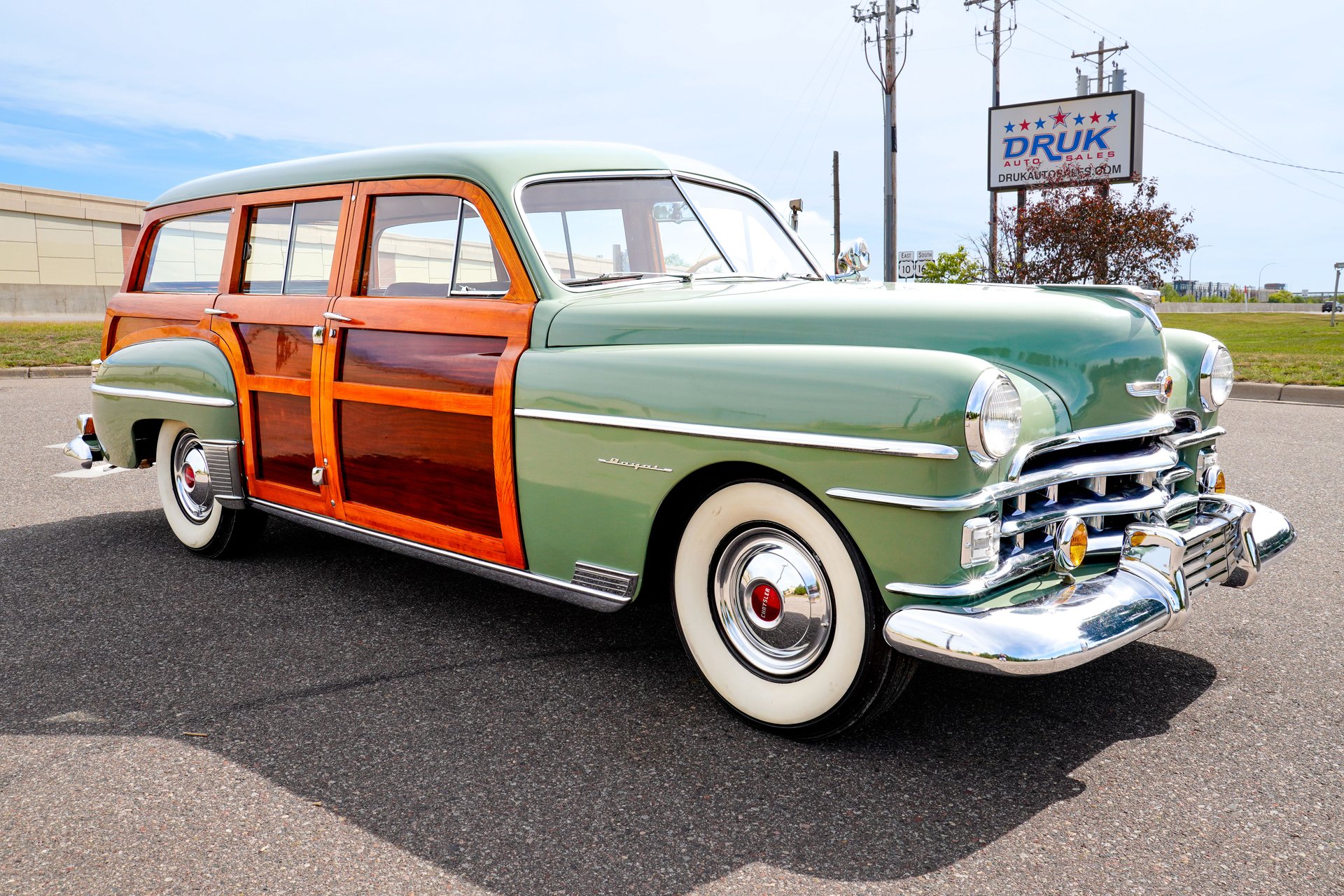 $44,980 · 18% below typical
Expand
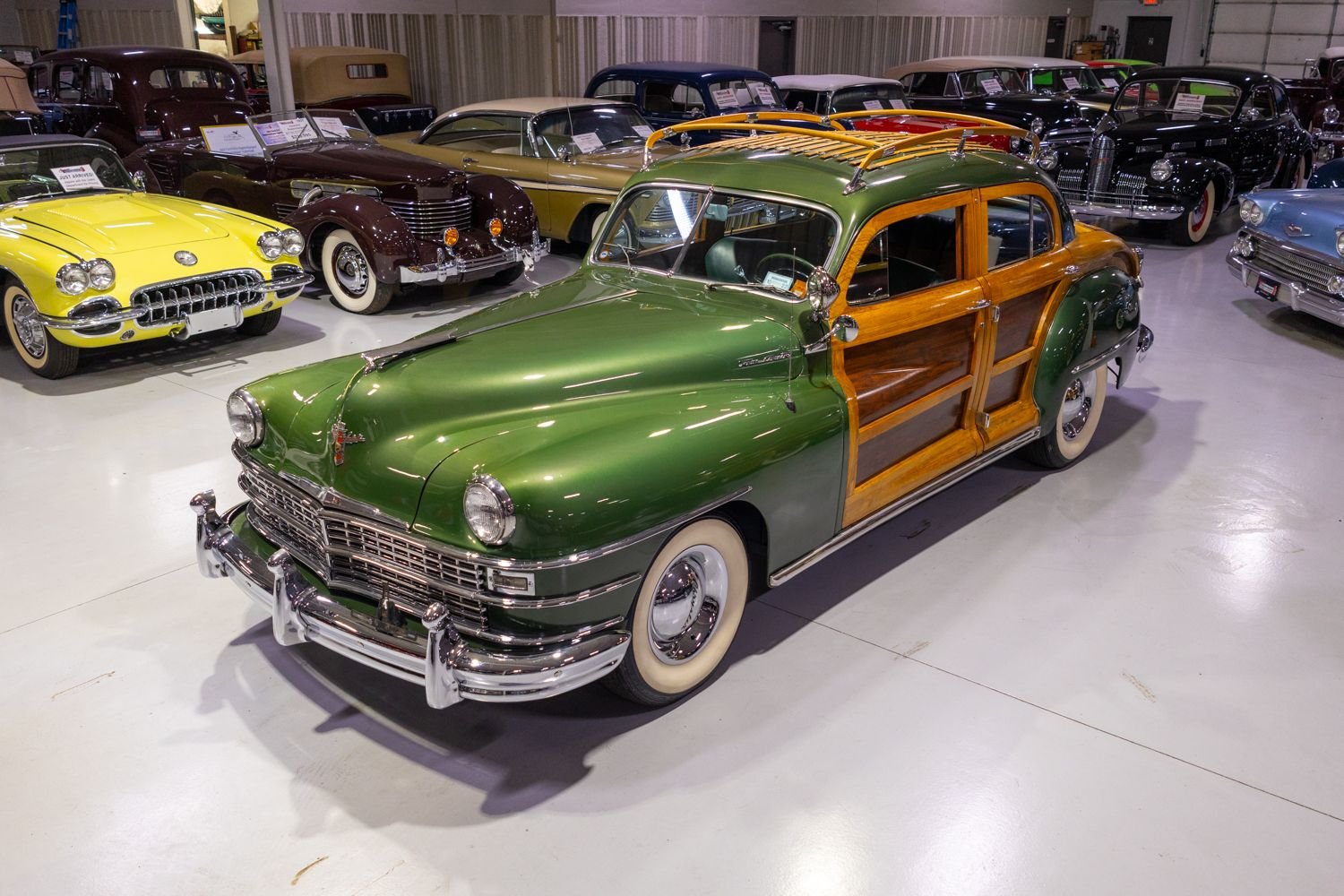 $69,995 · 27% above typical
Expand
What they sell for: Town And Country sale prices.