
Dodge Coronet Convertible buyer's guide
Dodge Coronet Convertible -- the model's own buyer's guide: variants, values and what to check.
Years listed: 1965-1966 · Series: B-Body
# Dodge Coronet Convertible — Buyer's Guide
Overview and history
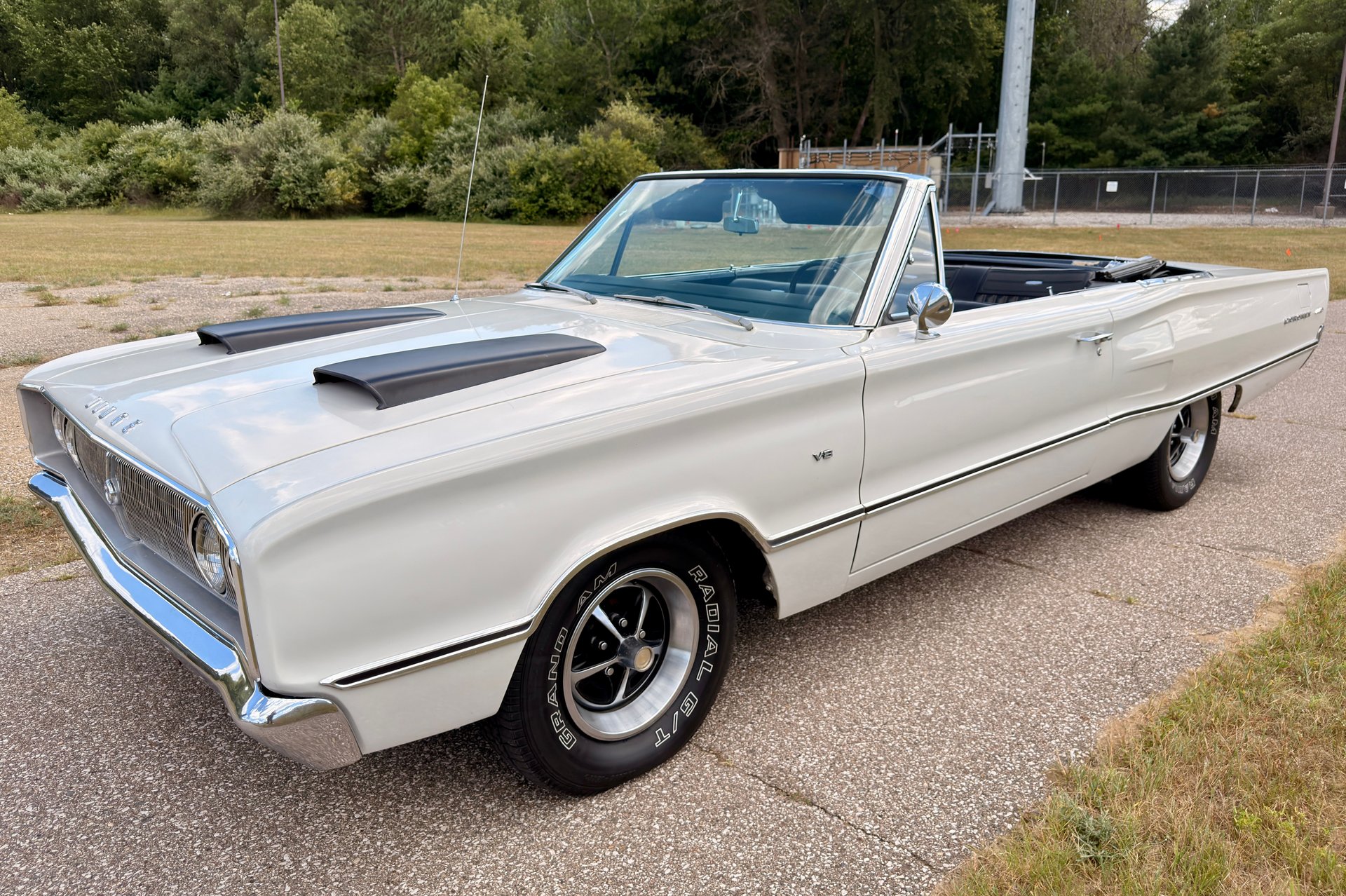
The Coronet convertible is the open version of Dodge's B-body intermediate, and it lives two lives at once. From 1965 to 1967 it is a well-trimmed family convertible that happens to share its structure with some of the quickest cars in America. From 1968 to 1970 it wears the sculpted second-generation B-body shell, gains the R/T and Super Bee nameplates, and becomes a muscle car that also happens to fold its roof away. In both lives the fundamentals never change: a unitised body with a bolt-on front subframe carrying torsion-bar front suspension, a live rear axle on leaf springs, and an engine range that runs from the 225-cubic-inch Slant Six to the 426 Hemi. Almost everything mechanical is shared with the Plymouth Belvedere, Satellite and Road Runner, which is the single most useful fact you will learn in this guide — parts, knowledge and reproduction support follow the B-body, not the badge.
The Coronet name returns in 1965 after a spell as a trim level, applied to a clean-sheet intermediate on a 117-inch wheelbase. The convertible sits in the Coronet 500 line, the bucket-seat flagship, and you can order it with anything from a Slant Six to the 426 Wedge. A sharp restyle for 1966 keeps the same shell under new panels; 1967 adds a facelift, a dual-circuit brake master cylinder, and the car that defines the model's performance ceiling, the Coronet R/T — standard 440 Magnum power, Hemi optional, convertible included. The full redesign lands for 1968: longer, wider, Coke-bottle flanks, and the convertible offered as the Coronet 500 and the R/T. The Super Bee, Dodge's budget muscle car, is a pillared coupe in 1968 but adds hardtop and convertible bodies for 1969, which gives you a third performance flavour. For 1970 the range gets its twin-loop front bumper, the convertible's last year — the B-body goes into 1971 without an open model, and the era of the big American convertible closes with it.
That six-year span matters to you because the two generations differ in almost every panel, glass and trim piece while sharing most of what is underneath. Buy the generation whose looks you want; buy the individual car on the strength of its shell, because a convertible concentrates every B-body weakness — rust, water, flex — into the places that cost the most to put right.

The models
Every Coronet convertible is a Coronet 500, an R/T or a Super Bee — Dodge never sells the open body in the base or Deluxe trims, which simplifies your search and guarantees bucket-seat-era trim levels on the early cars. Within that, the badge on the wing tells you the trim and the standard engine, but it does not tell you what is actually under the bonnet. Convertibles are the most engine-swapped of all B-bodies, because a tired 318 car is the cheapest route to a big-block ragtop, so treat the table below as what the factory offered and then verify the individual car against its VIN and fender tag, as the inspection section explains.
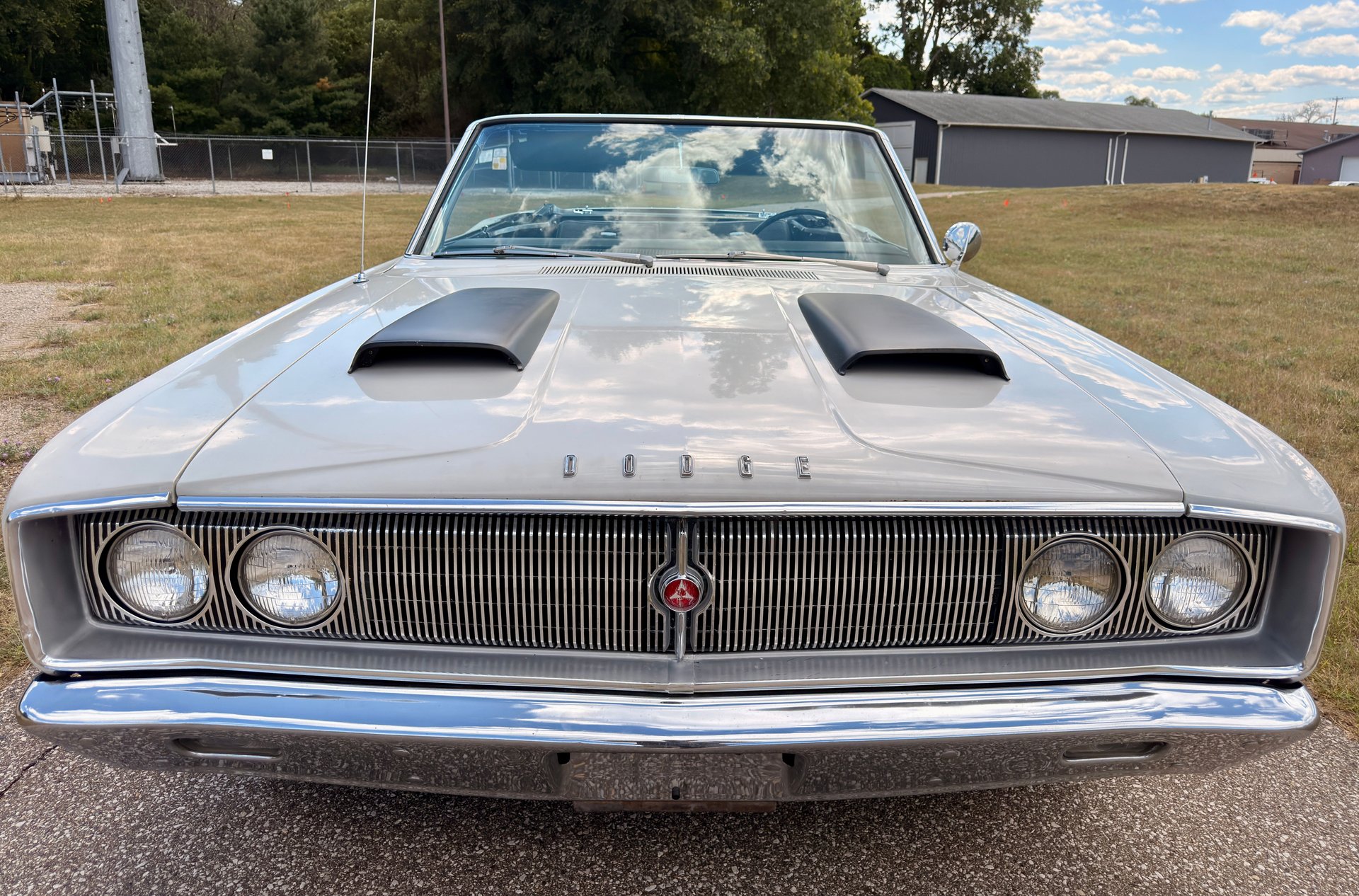
The 1965–67 cars are the square-cut first generation. The Coronet 500 convertible is the only open model for 1965 and 1966, with the 273 and Poly 318 small-blocks as the volume engines, the 361 and 383 B-series big-blocks above them, and the 426 Wedge at the top for 1965, replaced in the street catalogue by the 426 Hemi for 1966. The R/T arrives for 1967 as a separate model — heavy-duty suspension and brakes, a 440 Magnum as the standard and only automatic-choice engine, the Hemi as the option, and a convertible body from day one. A genuine 1967 R/T convertible is one of the rarest cars in this guide; it is also the most faked, because every external feature bolts onto a 500.
The 1968–70 cars are the second generation. The Coronet 500 convertible continues as the luxury open car, standard with the LA 318 and optional with the 383 in two- and four-barrel form. The R/T convertible carries the 440 Magnum as standard, the Hemi as the option, plus the heavy-duty underpinnings and the bumblebee stripe. The Super Bee convertible joins for 1969 and 1970 as the stripped performance buy — 383 Magnum standard, Hemi optional, less trim, less sound deadening, less money when new. Note what the Super Bee is not: it never offers the 440 as a factory option in these years, so a "440 Super Bee convertible" is an engine swap whatever the seller calls it, and the 1969½ Six Pack lift-off-hood package is a coupe and hardtop affair, not a convertible one.
| Model | Years | Engine | Output | Built | Character |
|---|---|---|---|---|---|
| Coronet 500 (Slant Six / 273) | 1965–66 | 225 Slant Six / 273 LA V8 | 145 / 180 hp | Not recorded by engine | The cruiser: light, simple, slow by modern standards |
| Coronet 500 (318) | 1965–70 | 318 Poly (1965–66), 318 LA (1967–70) | 230 hp | The volume convertible; totals not split by engine | The all-rounder — enough pace, the best parts support |
| Coronet 500 (361 / 383) | 1965–70 | 361 B (1965–66), 383 B two- and four-barrel | 265 / 270–325 hp | Not recorded by engine | Big-block torque without the R/T price or the fakes |
| Coronet 500 (426 Wedge / Hemi) | 1965–67 | 426 Wedge (1965), 426 Hemi (1966–67) | 365 / 425 hp | Handfuls; Hemi convertibles are counted in dozens | The unicorn — verify everything twice |
| Coronet R/T | 1967–70 | 440 Magnum standard, 426 Hemi optional | 375 / 425 hp | Low thousands across four years, convertibles a small fraction | The flagship muscle convertible; the most cloned car here |
| Super Bee convertible | 1969–70 | 383 Magnum standard, 426 Hemi optional | 335 / 425 hp | Not recorded separately from Bee totals | The budget bruiser: R/T pace, taxi-grade trim |
Two cautions belong with this table. First, period outputs are SAE gross figures, measured on a dyno with no accessories — a healthy 318's 230 hp is not comparable to a modern net figure, and every engine here feels stronger than the numbers suggest because the torque arrives early. Second, production figures for these cars survive as model-year body-style totals, not broken down by engine and trim the way enthusiasts repeat them online. Any seller quoting you an exact "one of 47 built" combination is working from a registry estimate or a decoding service's extrapolation from the option percentages — interesting, sometimes even right, but not a factory document, and never a reason on its own to pay a premium.
Trim and identity details change by year and reward a close look. The 1965 car has its VIN plate on the left front door hinge pillar; from 1968 the plate moves to the top of the dashboard, visible through the windscreen, where a convertible's plate lives a hard life of sun and water — a missing or re-riveted dash plate on a 1968–70 car is a serious conversation, not a detail. The fender tag, screwed to the left inner wing under the bonnet, codes the engine, transmission, colours and options as the car was built; the inspection section shows you how to read the two codes that matter most.

Engines and gearboxes
Six engine families power the Coronet convertible, and they divide cleanly into three ownership experiences: the Slant Six and small-blocks, which are cheap to run and easy to live with; the B and RB big-blocks, which are simple, torquey and barely more expensive; and the Hemi, which is a different hobby altogether. All are pushrod, iron-block, iron-head designs with hydraulic lifters except the solid-lifter Hemi, and all were designed for leaded fuel — every one needs hardened exhaust valve seats or a lead substitute strategy if it has not already been rebuilt for unleaded.
The Slant Six and the small-blocks: 225, 273 and 318
The 225 Slant Six, standard on the earliest 500s, leans 30 degrees to the right to clear a low bonnet line and is as durable as its reputation — the failure points are bolted to it, not inside it. The exhaust manifold cracks at the centre ports and the combined intake/exhaust joint leaks, the one-barrel Holley or Carter carburettor wears its throttle shaft, and the aluminium intake's hot-spot gasket burns through and gives you a vacuum leak no amount of tuning cures. In a two-ton convertible the six is working hard all the time, which shows as worn rings and tired valve guides sooner than in a Dart. Buy one for character and economy, not pace.
The 273 LA small-block (1965–67) is a sweet, revvy engine whose small bore limits both its power and its rebuild options — it takes the same external parts as the 318 and 340 but pistons and rings cost more and give less back. The 318 is the better ownership proposition in both its forms. The 1965–66 Poly 318 — the A engine, with polyspherical heads, scalloped rocker covers and staggered valve layout — is smooth, torquey and increasingly orphaned: ordinary service parts are fine, but Poly-specific items like pistons, cams and head gaskets come from a small specialist trade at specialist prices, and the engine is wider across the heads than the LA that replaces it. The LA 318 fitted from 1967 is the default Mopar small-block — a two-barrel Carter BBD, 230 hp, and an aftermarket that can supply anything from a water pump to a complete stroker kit off the shelf. Small-block failure modes are shared and mundane: timing chains stretch and retard the cam (check for slack by rocking the crank against the distributor rotor), rear main seals weep, the Carter BBD's idle circuits block and give you a car that stalls at junctions, and every LA weeps oil from the rocker covers and the intake manifold end seals. None of it is expensive. A small-block rebuild to stock specification runs roughly $3,500–6,000; budget at the top of that range for a Poly, purely on parts hunting.
The B-series big-blocks: 361 and 383
The 361 (1965–66) and 383 are low-deck B engines — shorter deck height than the RB, lighter, and in the 383's case one of the best-balanced engines Chrysler ever built. The 383 comes as a 270 hp two-barrel and a 325 hp four-barrel in the Coronet 500, and as the 335 hp Magnum — hotter cam, better exhaust manifolds, a Carter AVS four-barrel — in the Super Bee. These engines are close to unburstable in street use: forged or cast cranks depending on year and application, generous bearing sizes, and a cooling system sized for the job provided the radiator is actually clean. What fails is age, not design. The nylon-toothed cam sprocket of the silent timing set sheds its teeth into the sump and the chain jumps — any original engine that has never had a chain is living on borrowed time. Exhaust manifold bolts snap in the heads, the heat-riser valve in the right-hand manifold seizes and cooks the intake crossover, and the Carter AFB and AVS carburettors develop the classic worn-throttle-shaft air leak that makes idle mixture impossible to set. Oil consumption on a 383 is usually valve stem seals, a weekend job with the heads on, before it is rings. Rebuild costs sit around $5,000–8,000 for a quality stock-to-mild build, and the supporting parts — manifolds, mounts, pulleys — are all reproduced or shared with the 440.
The RB big-blocks: 426 Wedge and 440 Magnum
The raised-deck RB is the tall version of the same architecture. The 426 Wedge that tops the 1965 range is a street engine, single four-barrel, 365 hp — not the twin-carb Max Wedge race motor, which never belongs in a convertible and whose presence in one means a transplant. The 440 Magnum, standard in the R/T from 1967, is the engine this guide would steer most buyers toward: a Carter AVS (later a Holley and, for 1970, an AVS again depending on application), a hydraulic cam with real lift, high-flow exhaust manifolds, 375 hp and a torque curve that makes a heavy convertible feel light. The 440's known weaknesses are heat and neglect. The engine bay of a B-body is tight around an RB, the stock four-blade or clutch fan and a silted three-core radiator are marginal in traffic, and a 440 that has been repeatedly overheated warps its exhaust manifolds and pulls manifold studs. The rear main seal and the valley pan gasket weep with age. The oil pump is external — driven off the cam through the front cover — which makes pump replacement easy and also means a worn pump drive shows as flickering hot idle pressure before anything else. A stock-spec 440 rebuild is $6,000–9,000; the aftermarket for the 440 is the deepest of any engine in this guide, deeper even than the small-block's.
The 426 Hemi
The street Hemi — twin Carter AFB carburettors on a cross-ram-style dual-plane intake, solid lifters, 425 hp as advertised and more in truth — is offered in the Coronet 500 for 1966–67, the R/T from 1967, and the Super Bee for 1969–70. Understand what you are buying: an engine that needs its valve lash set with the engine at temperature on a schedule, that fouls plugs in traffic, that drinks fuel at a rate the 440 owner finds comic, and whose every component costs multiples of the wedge equivalent. A Hemi rebuild by a shop that knows the engine is $15,000–25,000 before anything exotic is found, and "found" is the operative word — cracked heads between the valve seats, a block repaired after a rod failure, and incorrect replacement pistons are all in circulation. The myth to correct is that the Hemi is fragile: correctly built and maintained, it is a strong engine. The truth underneath the myth is that it is unforgiving of deferred maintenance in a way a 383 is not, and most survivors have had at least one decade of deferral. The identity stakes are covered in the inspection section — a Hemi convertible is the single most valuable car in this guide and the most cloned, and the engine's casting and stamping evidence matters as much as its condition.
Gearboxes
Most convertibles are TorqueFlite automatics, and the TorqueFlite deserves its reputation as the best American automatic of the era. The A-904 serves the Slant Six and most small-blocks; the A-727 serves everything else and heavy-duty small-block applications, with big-block and small-block 727 cases differing at the bellhousing, so they do not interchange without work. Both are three-speed, both are controlled by cable (pushbutton cars are gone by 1965 — these are lever cars, column or console), and both fail in predictable ways: the kickdown linkage misadjusted after a carburettor swap, which holds gears too long or short-shifts and burns the kickdown band; worn front pump bushings leaking from the bellhousing; and a governor sticking after long storage, giving you a car stuck in first until it warms up. A full 727 rebuild by a Mopar-literate shop is $1,500–2,500. Check the kickdown linkage on any car you drive — it is a throttle-pressure control, not an optional extra, and a disconnected linkage will kill a good gearbox in a few thousand miles.
Manual cars are the minority and split three ways. The standard three-speed is a column-shift unit behind sixes and small V8s — adequate, unloved, and a common reason a car has been converted. The A-833 four-speed is the prize: a genuinely strong gearbox with a Hurst shifter from 1968 (the earlier Inland shifter is vaguer and its linkage wears), synchro wear on second as the standard fault, and a whine in the indirect gears from worn needle rollers that you can live with for years. Clutch linkage on the manual cars is mechanical, a bellcrank and rods rather than a cable or hydraulics, and its wear shows as a pedal that engages at a different height every week and a crunch into reverse that owners blame on the gearbox — renew the bushings and the felt seals before you condemn any internals, because half the "worn A-833s" in circulation are worn linkages bolted to sound gearboxes. The clutch itself is a diaphragm or coil-spring Borg & Beck unit depending on engine and year; a Hemi or 440 four-speed car uses the larger 11-inch clutch and a scattershield-era bellhousing arrangement that makes clutch changes a bigger job than on a small-block car, so a slipping clutch prices differently across the range — $600–900 fitted on a 318 car, $1,000–1,500 on a big-block four-speed. Behind a 440 or Hemi four-speed car sits the Dana 60 rear axle in place of the 8¾-inch unit, which is one of the quick identity checks for a claimed factory big-block four-speed car. The 8¾ itself, with its drop-out carrier, is strong and quiet; the Sure Grip limited-slip uses a clutch pack (later a cone type) that wears out silently, leaving you an open diff that still passes a casual test — jack one wheel and try to turn it against the other to feel whether the clutches still bite. Gear oil leaks from the pinion seal and axle seals mist the rear brakes, and axle bearings on the 8¾ are pressed-on tapered rollers whose end-play is set by an adjuster most general shops have never seen — a rumbling rear end on a test drive is as often a maladjusted bearing as a worn one.
Problem areas
Rust: the map
A B-body convertible rusts in the same places as the hardtop, plus the places the roof creates, and the bill differs by an order of magnitude between a car that needs cosmetics and a car that needs structure. Start underneath, because that is where the money is. The front suspension hangs from a K-member bolted to a front subframe structure that is part of the unit body; rust attacks the subframe rails where they pass under the front footwells, the torsion bar crossmember behind them — the bars' rear anchors live in this member, and a rotten crossmember is a structural failure, not a patch — and the floor pans above both. Convertible floors take a double dose: every top leak in fifty years has run down into the carpet and sat there, so a ragtop's floors are routinely a generation worse than a hardtop's of the same age and mileage. Pull the carpet edges and look; surface rust on a floor is normal, flakes and daylight are a negotiation. Budget $600–1,200 per side for floor sections fitted and welded, and treat a torsion bar crossmember replacement as a $2,000–3,500 job that also decides whether the car is worth saving at all.
Work outward from there. The cowl and plenum rust from the inside where leaves block the drains, and the evidence is water on the front carpets with good floors — pour water into the cowl grille and watch where it exits; it should leave behind the front wheels, not through the kick panels. The bottoms of the front wings trap mud behind the wheel, the battery tray and the inner wing beneath it dissolve from acid, and the doors rust along the bottom seam where the skin folds over the frame — a door that looks fine outside can be hollow in the fold, so run a magnet and your fingertips along the lower edge. The rear quarters are the convertible's signature expense: the top well behind the rear seat collects every drop that gets past the top and the well liner, and it rusts the well itself, the tops of the inner wheelhouses and the quarter panels from the inside out. Bubbles at the rear wheel arch lip on a shiny car are the well announcing itself. Full quarter replacement with inner work is $1,500–3,000 a side done properly; a car needing both quarters, floors and a crossmember is a restoration project at any price, and you should price it as one. The boot floor and its drop-off extensions rust from the well drains and from a leaking boot seal, and the spare wheel well hides it until you lift the tyre. Finally, the convertible-specific structure: the car relies on its sills, its reinforced floor pressings and the windscreen frame for the stiffness the roof would otherwise provide. Rust in the sills of a convertible is not cosmetic. Open both doors with the car on its wheels and then on a jack at one front corner — a sound shell's doors still open and close; a tired shell's doors bind, and that test, more than any photograph, tells you what you are buying.
The convertible top: frame, hydraulics and fabric
The power top is a hydraulic system: an electric motor driving a pump, mounted behind the rear seat, feeding two lift cylinders through plastic lines, with automatic transmission fluid as the working fluid. Every part of it is now old. The pump's reservoir O-rings leak ATF into the well — which then accelerates the well rust described above — the cylinders' seals weep and leave one side rising slower than the other, and the plastic lines go brittle and crack at the bends. A top that rises evenly but slowly usually needs fluid and a pump service ($150–400); a top that rises crooked needs a cylinder, and cylinders are $200–350 each rebuilt or replaced, plus the labour of working through the well. Operate the top through at least two full cycles on any inspection. It should latch at the header without being pulled down the last inch by hand, sit square in the well when down, and the pump should stop cleanly at each end of travel — a pump that strains and keeps running is telling you a cylinder is bypassing internally.
The frame itself is a scissor linkage that wears at its pivots. Worn pivots show as a top that will not align with the side glass no matter how it is adjusted, and as creases worn into the fabric at the same fold points every time. Adjustment is shims and eccentric bolts, and a frame that has been bent — by being forced against a failed cylinder, usually — never adjusts true again; a replacement used frame is the fix, and they are not reproduced. The fabric and rear window are consumables with a ten-to-fifteen-year life even garaged: vinyl tops shrink, the stitching rots before the material does, and the plastic rear window yellows and cracks at the fold. A quality top fitted with a new well liner and pads is $1,800–3,200; glass rear windows were an option on later cars and are the desirable specification, because the window unzips and folds flat instead of creasing. Check the header bow for rust — it lives under fabric, above the windscreen, in the wettest spot on the car — and check the latches, which are pot metal and crack at the pivot. Manual tops exist on early low-spec cars and are simpler in every way; do not let a seller present a manual top on a 500 as a rarity feature without paperwork, because power was the expected fitment.
Front suspension, steering and brakes
The torsion-bar front end is durable and its faults are legible. Ball joints — the uppers screw into the control arms, the lowers are pressed — wear and announce themselves with a clunk over sharp bumps and a knock when you rock the wheel at nine and three o'clock with the car jacked; a full front-end rebuild with quality parts is $800–1,500 in parts and labour before alignment. Torsion bars themselves rarely fail, but their adjusters seize, the bars' rear sockets in the crossmember corrode (see the rust section), and a car sitting low on one side has usually got a tired bar or a crossmember problem rather than a setting problem — measure the ride height at the factory points before accepting "it just needs winding up." The steering is a recirculating-ball box with a long centre link, idler arm and tie rods; play accumulates at every joint, and the test is how much of the total slack is in the box itself, because a rebuilt box is $300–500 exchanged while joints are cheap. Power steering, fitted to most convertibles, leaks from the pump reservoir and the box's sector shaft seal, and the Federal and TRW pumps take different parts — identify which you have before ordering anything. The idler arm is the most commonly worn single item and the most commonly misdiagnosed as a bad box.
Brakes divide at 1967. Cars before that year use a single-circuit master cylinder feeding four drums — adequate when perfect, unforgiving of any leak, and the first upgrade any sensible owner makes is a dual-circuit conversion. From 1967 the dual master cylinder is standard, drums remain standard, and front discs are a rare and desirable option: a four-piston fixed-caliper Bendix system on 1966–69 cars, whose calipers corrode internally and whose rotors are now expensive, replaced by a single-piston sliding-caliper Kelsey-Hayes design for 1970 that is far cheaper to live with. A disc car that pulls under braking usually has one seized piston of the four, and a Bendix caliper rebuild with sleeves is $400–800 a pair. Drums that are oval, wheel cylinders weeping into the shoes, and a handbrake that has not worked in years complete the usual picture; a full drum brake overhaul is $500–900 in parts. On any car, the steel lines along the sills and the flexible hoses are age items — budget to replace hoses on purchase regardless of appearance, because a perished hose fails under the one emergency stop you cannot schedule.
Electrics: the bulkhead, the ammeter and the rest
The classic B-body electrical fault is not a component but a connection. All the car's main power passes through a multi-pin bulkhead connector on the firewall and through the ammeter on the dash, and both were marginal when new. The bulkhead terminals corrode and overheat — the heavy charge wire's terminal melts its plastic housing — giving you intermittent total electrical failure, a car that dies at idle and restarts on a wiggle, or a charge system that shows discharge at speed. The ammeter itself carries full charging current through the instrument cluster, and its connections loosen and arc; a melted ammeter or a previous owner's bypass wire are both common finds. The honest fix, which most good cars have already had, is to clean and re-tension every bulkhead terminal, and either service the ammeter properly or convert to a voltmeter with the charge wire rerouted. Diagnose before you spend: flickering lights and a wandering ammeter needle together point at the bulkhead, not the alternator. The fusible link in the main feed is the other designed-in weak point — a car that is completely dead with a good battery has usually parted its link, and the correct repair is a link of the right gauge, not a piece of wire. Beyond that, the faults are the period standards: the ballast resistor on the firewall cracks and gives you an engine that starts on the key and dies on release — carry a spare, they cost a few dollars and fail without warning; the electronic ignition fitted to later and retrofitted cars depends on its control box's earth through its own case; the voltage regulator (mechanical early, electronic from 1970) overcharges and boils batteries when its points stick; and the convertible adds one circuit of its own, the top switch and its circuit breaker, which corrode from well damp and imitate a dead pump. Convertible rear side windows and their regulators, where power windows are fitted, are the slowest and most expensive glass on the car to put right.
Cooling, fuel delivery and engine wear
The big-block cars run hot by design margins, and sixty years of silt have used up the margin. The radiator is the first suspect — original three-core units that have been rodded out twice have thin tubes and thinner fins — but work through the system in order before you buy one: the fan clutch on later cars freewheels when its silicone fluid is gone (spin it cold; it should resist and stop within a turn or two), the shroud goes missing during engine swaps and costs you more cooling at idle than any other single part, and the thermostat housing and water pump weep onto the timing cover and imitate a front seal leak. The distinguishing test for a marginal system is the one in the inspection section: twenty minutes of driving followed by five minutes at idle. A car that holds its temperature through that has a working system whatever the radiator looks like; a car that creeps needs the full system priced, at $600–1,200 for a quality recore or aluminium replacement, pump, clutch and hoses.
Fuel systems suffer from modern petrol in three specific ways. Ethanol attacks the original rubber in the fuel pump and the carburettor's accelerator pump cup, giving you a car that runs and then floods or starves as the cups swell and stick — a rebuild with ethanol-resistant parts is the permanent fix, at $150–300 for a carburettor kit and fitting. Vapour lock is the period fault that ethanol's volatility revives: a hot 440 that cranks and will not fire after a fuel stop is boiling fuel in the line or the carburettor bowls, and the cure is the factory one — the vapour separator and return line that high-performance cars were fitted with — not an electric pump bolted on as a guess. Tank and sender problems complete the picture: the tank vents through a line that blocks with age, the sender's float sinks and the gauge reads low forever, and the steel line along the sill rusts from the outside in the same places the brake lines do. On engine wear itself, learn to separate the three oil-pressure stories. A gauge that reads low hot at idle and recovers with revs, on an engine that is quiet, is usually a worn pump or tired bearings at the mild end — driveable and monitorable. The same reading with a flickering warning light and a rumble under load is bearings asking for a rebuild. And a reading that is low only on the dashboard gauge, with a mechanical gauge teed in showing healthy pressure, is the sender or its earth — the cheapest fault on the car, and the one most often sold as an engine rebuild by the pessimistic or bought as one by the unwary. Verify with a mechanical gauge before you price any engine work; it is a twenty-minute test that settles a four-figure argument.
Interior, trim and weather equipment
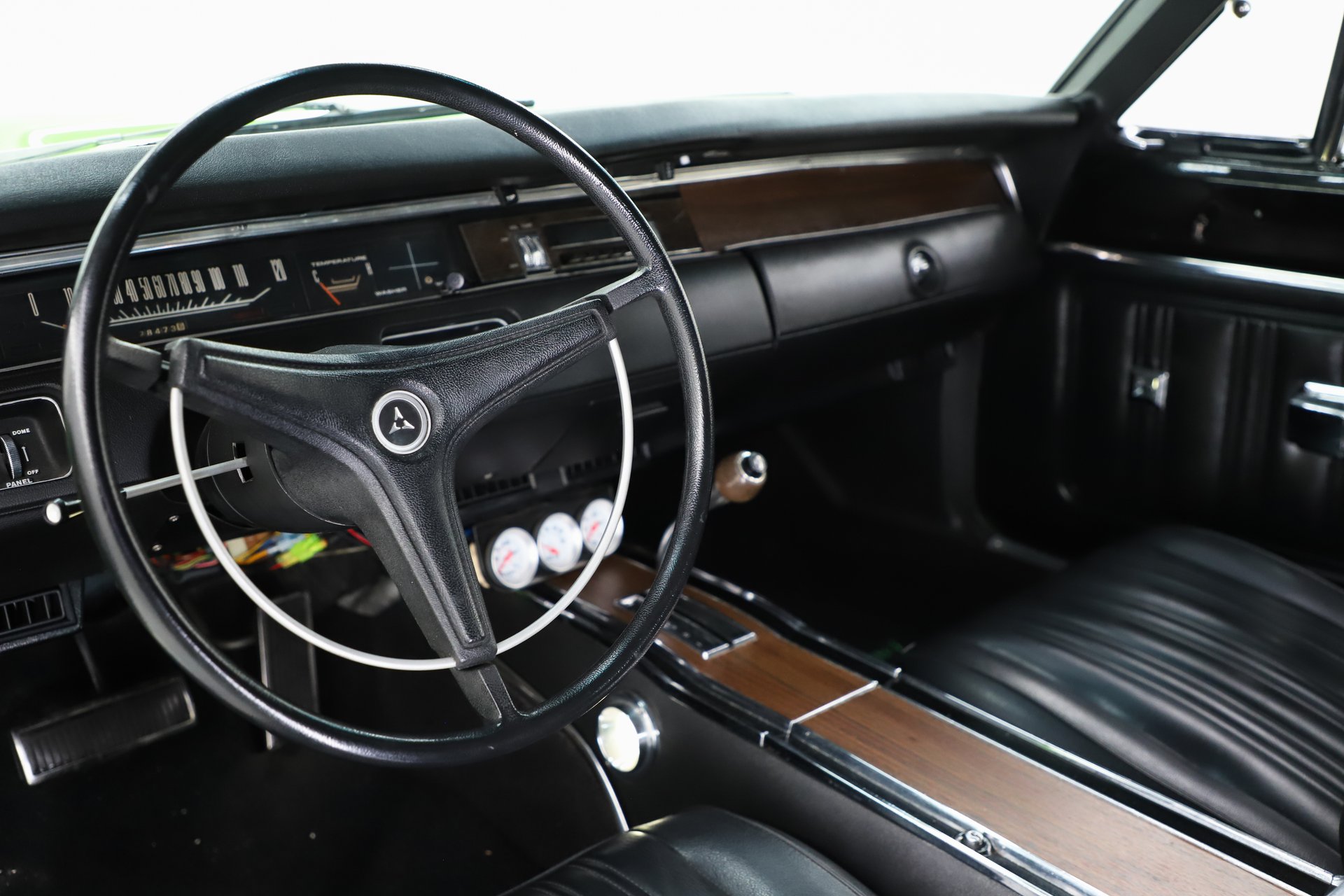
The interior is where the convertible's life shows. Sun and water do what mileage does not: dash pads crack across the speaker grille and shrink away from the windscreen, seat vinyl splits on its seams — the driver's outer bolster first — and the convertible's rear seat, narrower than the hardtop's to clear the top mechanism, is upholstered in material that the reproduction trade covers less completely than the front buckets. Full interior kits for the 500 and R/T run $1,500–3,000 in parts for seats, door cards and carpet, but Super Bee and early-car patterns are patchier, and a 1965's trim is a year-specific hunt. The Rallye instrument cluster of the R/T and the standard car's strip speedometer both suffer the same printed-circuit and pin corrosion at the cluster connector, which kills gauges one at a time and is routinely misdiagnosed as failed senders — clean the pins before you buy a single sender. Heater cores leak into the passenger footwell and are a dash-out job on air-conditioned cars ($800–1,400 in labour terms), and air conditioning itself, where fitted, is usually inoperative and priced by sellers as if it were not: a full recommission with a conversion to modern refrigerant is $1,200–2,500. The windscreen frame deserves its own sentence, because on a convertible it is structure: check the header and pillars for filler and rust with the top down, check that the sun visors' mounts are solid, and treat a rotten header rail as a rust-section problem, not a trim problem.
How to inspect one
Work in this order, and do not let a test drive happen before step 6 — a warm engine and a charming seller have ended more good inspections than rust ever has.
- Start with the paperwork and the VIN. On a 1965–67 car the plate is on the left front door hinge pillar; on a 1968–70 it is on the dashboard top, read through the windscreen. Check the plate's rivets and condition, and confirm the number matches the title exactly. A convertible with a paperwork discrepancy is unsellable later at any discount.
- Read the fender tag on the left inner wing. Decode the engine and transmission codes against a year-specific chart — the engine code (the E-code line: E74 is the Hemi, E86 the high-performance 440) is what the car was built as, and it outranks badges, air-cleaner decals and the seller's story.
- Check the engine itself. Big-blocks carry their displacement and build data on a machined pad at the front of the block by the distributor; small-blocks are stamped on the front face below the left cylinder head; the Slant Six is stamped on a pad at the front of the block. A partial VIN stamping on the pad of a 1968-and-later engine ties it to the car — its absence on a car sold as numbers-matching settles the question the other way.
- Look for the broadcast sheet. The build sheet is often tucked in the springs of the rear seat back or base — on a convertible, also check under the front seats and above the glovebox. A genuine sheet that matches the fender tag is the strongest identity evidence these cars offer; photograph it, never remove it.
- Do the structural pass underneath, in the rust section's order: front subframe rails, torsion bar crossmember, floors, sills, boot floor, and the top well from inside the boot. Take a torch and a screwdriver and the seller's permission. Refusal on any of those three ends the inspection.
- Run the door test. Doors open and closed, top up and top down, car on its wheels: gaps even, latches engaging without a lift or a slam. Then jack one front corner and try again — binding now, where none existed before, is the shell flexing, and on a convertible that is structure talking.
- Cycle the top twice, fully. Watch for even rise side to side, listen to the pump, look for ATF mist or drips at the cylinders and in the well, and check the header latches engage by themselves. Read the well liner and the well floor while the top is down — this is the rust section's most expensive square foot.
- Cold start, from outside the car. Have the seller start it cold while you stand at the rear: blue smoke on start that clears is valve stem seals; smoke that persists under load is rings. At the front, listen for the timing chain's rattle on a big-block and the exhaust manifold tick that fades as it warms — the first is a chain, the second is usually a gasket or a cracked manifold, and they price very differently.
- Check the electrics with everything on. Lights, heater fan, wipers and the top switch together, watching the ammeter and the brightness of the dash lights. Flicker or a needle swinging to discharge points at the bulkhead connector from the electrics section — then open the bonnet and look at the bulkhead for melted plastic around the heavy terminals.
- Drive it for steering and brakes before power. At walking pace, feel for the steering's free play and note where it comes from if you can; brake firmly from 40 mph in a straight line, hands light — a pull is a seized caliper piston or a contaminated drum, per the brakes section. Note whether the TorqueFlite's shifts are clean and whether the kickdown works on a full-throttle run; a lazy kickdown is linkage, a slipping shift is the box.
- Heat-soak it. Twenty minutes of driving, then five minutes idling in traffic conditions, watching the temperature gauge on a big-block car. A 440 that creeps upward at idle has a cooling system at the end of its margin — radiator, fan clutch or both — and that is a known cost, not a mystery.
- Finish underneath again, hot. Gearbox front-pump leaks, pinion seal mist, power steering drips and the rear main weep all show best hot and after a run. Then re-check the floors from inside with the carpets lifted at the edges, because a driven car that leaks will have shown you where by now.
Values
The Coronet convertible market is really three markets wearing one name, and reading it well means knowing which one a given car belongs to. At the top sit the documented performance cars — R/T convertibles, and above them the tiny number of Hemi cars — which trade in a world of build sheets, decoding reports and registry knowledge, where the money follows the paperwork as much as the car. In the middle sit the big-block 500s and the 383 Super Bees, bought by people who want the muscle-car experience in an open car and priced against hardtop R/Ts above them and small-block cars below. At the base sit the 318 and six-cylinder 500s, which are bought as cruisers and priced as classics first and Mopars second. The spread between a project and a finished car within each tier is wide — wider than for the equivalent hardtop, because the convertible's expensive items (quarters, well, top, interior) are exactly the ones a project always needs.
Several durable patterns are worth internalising. Asking prices for these cars run optimistic, and the gap between asking and achieved is largest on cars whose sellers are pricing a badge rather than a specification — an undocumented "Hemi tribute" priced near a real 440 car, or a 318 car priced near a 383. Documentation moves convertibles more than it moves hardtops, because so much of a ragtop's value is in claims that cannot be seen: a car with a broadcast sheet and a matching fender tag sells faster and stronger than an identical car without them, every time. Colour and specification matter in the usual Mopar way — high-impact colours on the 1970 cars, four-speeds anywhere, factory air on a 500 — but originality of specification beats desirability of specification: a car born a 318 and still a 318 is a cleaner buy than a car born a 318 and wearing a 440, because the market pays for the born-with story and discounts the built one. The project-versus-driver gap is the sharpest tool you have: because a convertible's restoration costs run well ahead of a hardtop's for the same result, a finished, honest driver is almost always cheaper than the sum of a project plus its restoration, and the listings that look expensive next to a project are usually the bargains. Use the recorded sales and current listings appended to this guide to place a specific car in its tier, then adjust for the shell, the top and the paperwork — in that order — rather than for the engine badge.
Parts and ownership
Owning a Coronet convertible is two ownership experiences bolted together. Mechanically, it is one of the easiest American classics to run: the B-body platform is shared with the Plymouth equivalents and supported by a deep reproduction and performance trade. Engine service parts for the LA 318 and the 440 are effectively unlimited; 383 parts are nearly as good; Poly 318 and 273 owners order from a smaller shelf and wait longer; Hemi owners order from a tiny shelf and pay accordingly. Suspension, steering and brake consumables are all reproduced, including the torsion bars, and the TorqueFlite can be rebuilt by any competent transmission shop with a manual. Sheet metal is reproduced for the common panels — floors, boot floors, quarter skins and full quarters for the 1968–70 cars are the strongest area, with 1965–67 panels thinner on the ground and convertible-specific pressings like the top well the hardest of all to source new; NOS and good used remain the fallback, and the well is the panel to price before purchase, as the rust section warns.
The convertible-specific layer is where ownership effort concentrates. Top fabric, well liners, pads, boots and weatherstrips are reproduced for all years, and the hydraulic components — pump, cylinders, lines — are serviceable through the convertible-top specialists who also serve the Ford and GM cars of the era. Glass is available for windscreens and side glass; the plastic rear window comes with the top. Trim is the thin spot: year-specific grille and tail-panel pieces, 1965-only brightwork, and R/T and Super Bee emblems range from reproduced to unobtainable depending on the year, and rechroming what you have is often the only route, at $400–900 for a bumper and rising for pot-metal pieces that need repair before plating. Budget your running costs as you would any big American classic of the period — annual servicing is cheap in parts and heavy in fluids and fuel, a 440 car will return fuel economy in the low teens at best — and add one convertible ritual: an hour each spring exercising the top, checking the pump fluid and clearing the well drains will prevent more expense than any other hour you spend on the car. Join the marque and model registers early; for a car where identity is value, the registry knowledge about your specific VIN is a genuine ownership asset, and the B-body community's decoding literature is the best in the Mopar world.
Which one to buy
- The all-rounder: a 1968–70 Coronet 500 with the 383 four-barrel. Big-block torque, the sculpted body, full luxury trim, none of the R/T's clone premium — and because nobody fakes a 383 500, the car in front of you is usually the car it claims to be.
- The value buy: a 318 LA Coronet 500, 1967–70. The cheapest route into a sound shell, with the dual-circuit brakes from 1967 and the best parts support of any variant. Buy the best body you can find and let the engine be ordinary.
- The purist's first-generation car: a 1965–66 Coronet 500 with the Poly 318 or a 383. The square-cut styling is ageing best of all, and a 383 car gives you the early body with the easy big-block. Accept the Poly's parts hunt only if you love the engine for its own sake.
- The flagship: a documented R/T convertible, 440 Magnum, any year. Buy the paperwork first and the car second — broadcast sheet, fender tag and stampings in agreement. A genuine R/T is a blue-chip Mopar; an undocumented one is a 440 convertible and should be priced as exactly that.
- The extrovert: a 1969–70 Super Bee convertible with the 383 Magnum. R/T pace and the high-impact colours without the R/T's trim costs or quite its price — but walk away from any "440 Super Bee," because the factory never built one.
- The specialist's prize: a Hemi convertible with ironclad documentation. Only buy one with expert, marque-specific verification of the car and the engine, commissioned by you. At this level you are buying evidence that happens to have a car attached.
The overriding rule: on a Coronet convertible, buy the shell and the paperwork, and let the engine be the third consideration — a sound, documented 318 car is a better purchase than a rotten or undocumented big-block car at any price, because quarters, wells and identity cannot be bought back at any sensible cost, while horsepower can.
See the 3 Coronet Convertible cars currently listed.
For sale now
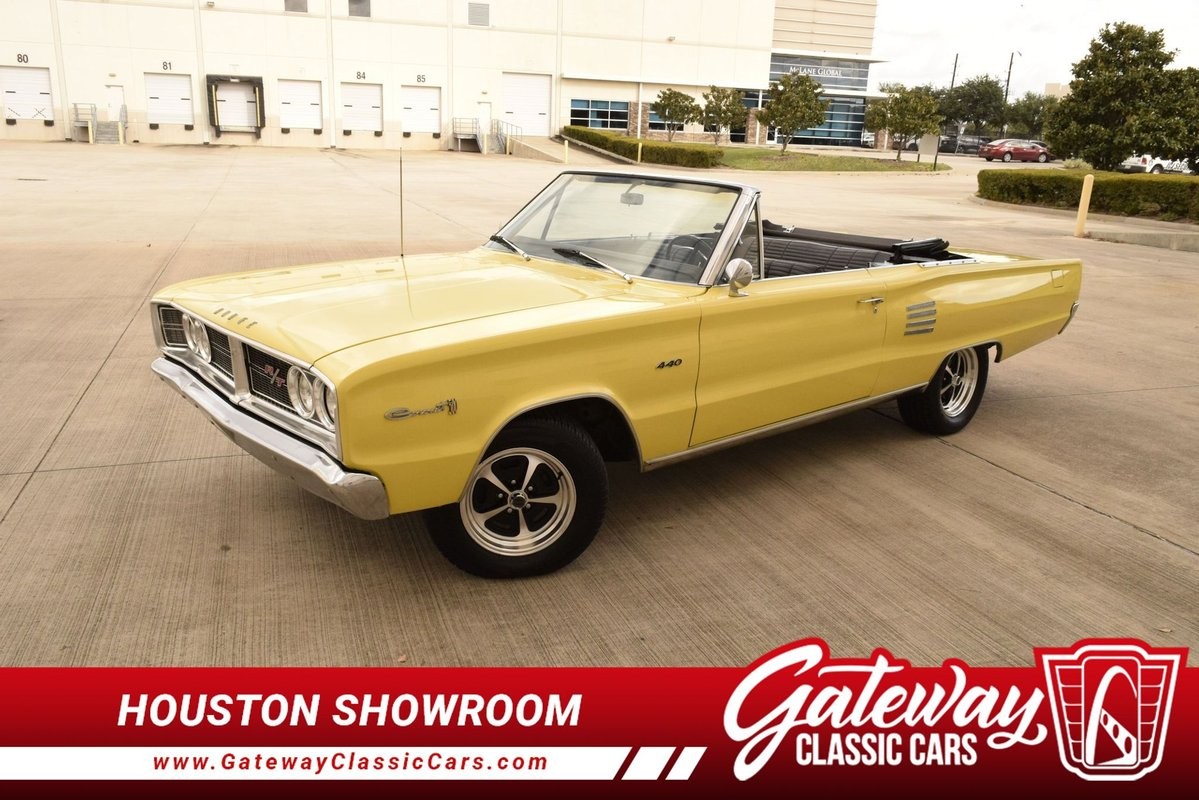 $26,000 · 27% below typical
Expand
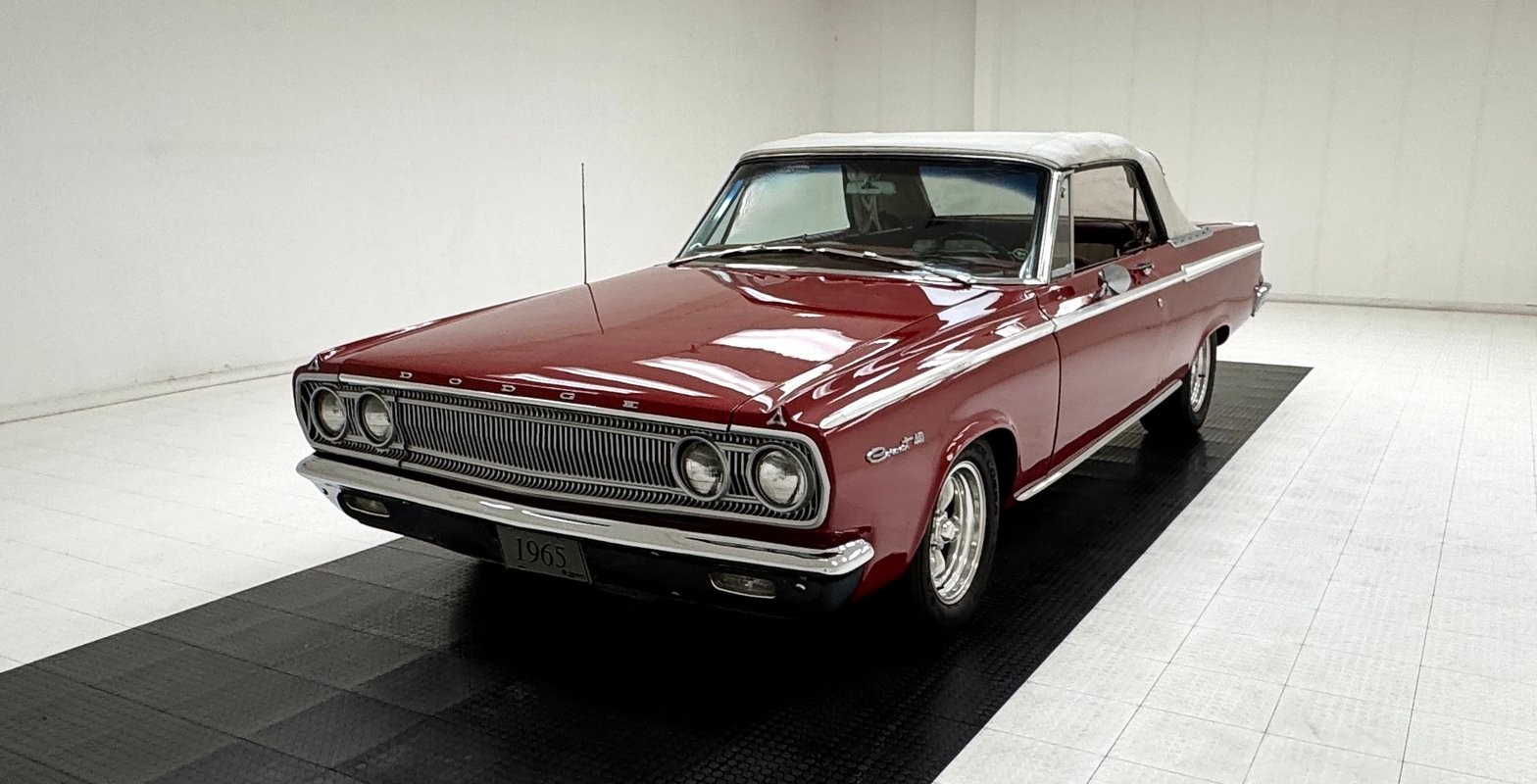 $24,900 · 30% below typical
Expand
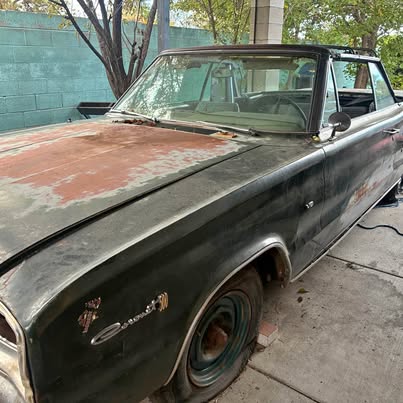 $5,800 · 84% below typical
Expand
What they sell for: Coronet Convertible sale prices.