
Dodge Coronet Super Bee Coupe buyer's guide
Dodge Coronet Super Bee Coupe -- the model's own buyer's guide: variants, values and what to check.
Years listed: 1965-1970 · Series: B-Body
# Dodge Coronet Coupe — Buyer's Guide
Overview and history
You buy a Coronet Coupe for one of two reasons, and you need to know which one before you look at a single car. Either you want a handsome, roomy, torsion-bar Mopar intermediate you can drive every summer weekend without the Charger or Road Runner tax, or you want the muscle that lived under this roof — the Coronet R/T and the Super Bee — at the point where Dodge put its biggest engines into its plainest two-door shell. Both reasons are sound. They lead you to different cars, different checks, and very different ideas of what a fault is worth, so settle the question first and hold it in mind through everything that follows.
The Coronet name is older than the car in this guide. Dodge used it from 1949 to 1959 on its full-size line, dropped it, and then revived it for 1965 on a completely different idea: the intermediate B-body. That platform matters more than the badge. The B-body is a unitised shell — there is no separate chassis frame — with the front suspension and engine carried on a bolt-in K-member, longitudinal torsion bars instead of front coil springs, and a live rear axle on leaf springs. It is simple, strong, tunable with factory parts, and shared, in its essentials, with the Plymouth Belvedere and Satellite, the Dodge Charger, and later the Road Runner and GTX. When you buy a Coronet Coupe you are buying into that whole ecosystem: its strengths, its rust habits, and its parts supply.
The 1965 car announces the formula plainly. It is upright, squared-off, and deliberately unadorned in its lower trims, because Dodge was selling it as a family intermediate that happened to accept every engine in the building, from the 225-cubic-inch Slant Six to the 426 Wedge and, in tiny numbers, the 426 Hemi. The 1965 Coronet also carries genuine drag-racing history: Dodge built altered-wheelbase cars on this shell that effectively invented the Funny Car, and the ordinary coupe you are looking at shares its basic pressings with those machines. That history does not make a Slant Six coupe valuable, but it explains why the early cars have a following out of proportion to their trim.
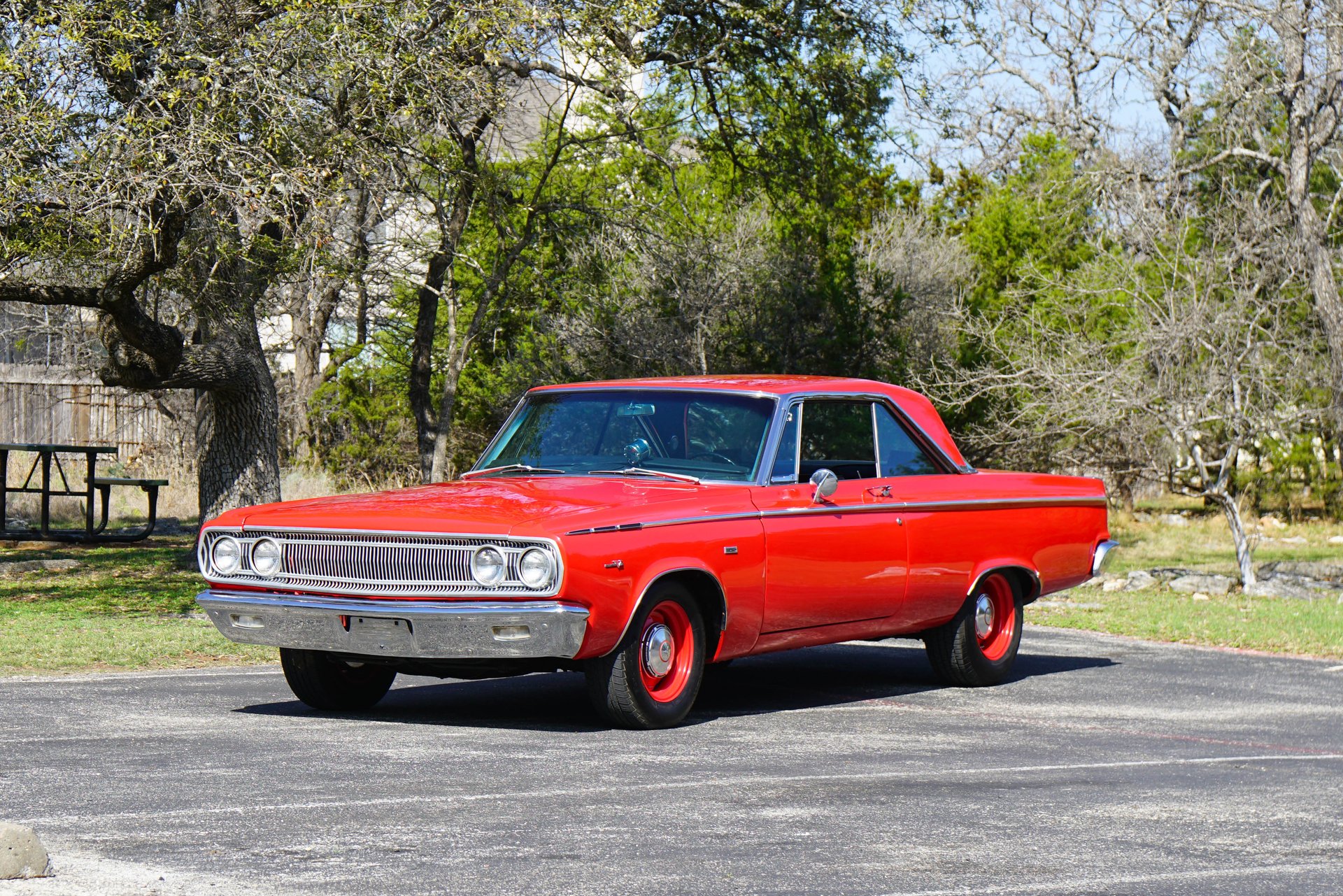
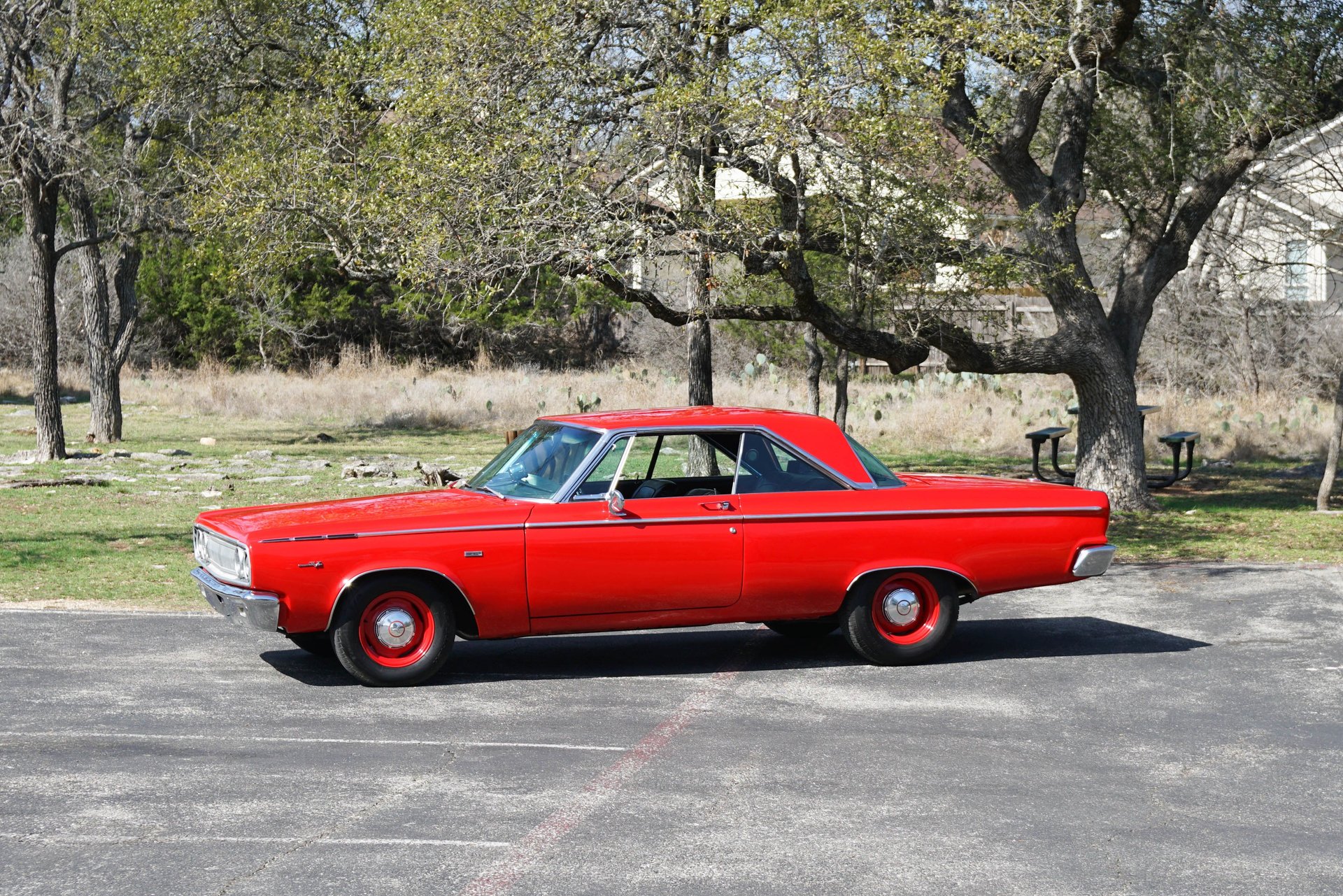
For 1966 the shell is restyled with cleaner, more sculpted sides, and for 1967 it is sharpened again — and 1967 is the year the range finds its performance flagship, the Coronet R/T, with the 440 Magnum as standard equipment and the 426 Hemi as the option at the top of the order form. The big change comes for 1968: a full restyle in the rounded, Coke-bottle idiom of the second-generation Charger, longer-looking, wider-looking, and far more overtly a muscle-era car. Midway through 1968 Dodge answers Plymouth's Road Runner with the Super Bee — a stripped, big-block Coronet coupe with the 383 Magnum as standard, a cartoon bee on the rear quarters, and very little else you do not need. For 1969 the Super Bee gains the 440 Six Pack option, including the A12 package with its lift-off fibreglass bonnet, and the R/T continues above it as the better-trimmed, more expensive performance car. For 1970 the front end is redesigned around a distinctive twin-loop bumper, the range is rationalised, and at the end of that model year the Coronet two-door disappears: from 1971 the Coronet is a four-door and wagon line, and the Charger takes over as Dodge's B-body coupe.
The models
At the bottom sits the base Coronet, called Deluxe in some years and simply Coronet in others. This is the fleet-and-family car: bench seat, plain vinyl, rubber mats in the cheapest versions, hubcaps rather than wheel covers, and the Slant Six or the 318 as the usual engines, although — and this is a Mopar trait you must internalise — Dodge would fit most engines in most trims if the buyer ticked the box, so a base car with a factory 383 exists and is not automatically a fake. Above it, the Coronet 440 is the volume mid-range car; the name refers to trim, not to the 440-cubic-inch engine, and confusing the two is the oldest beginner's error in this market. Say it plainly when you view: a Coronet 440 with a 318 is exactly what the factory built, in large numbers, and the seller who implies otherwise is either ignorant or testing you. The Coronet 500 is the premium trim: better upholstery, more brightwork, bucket seats in many configurations, and the convertible's stablemate in spirit — a coupe for the buyer who wanted comfort rather than speed.
The R/T — Road/Track — arrives for 1967 as the flagship. You get the 440 Magnum as the standard and only engine in its first year, heavy-duty suspension and brakes, a distinctive grille and trim, and the 426 Hemi as the single engine option. From 1968 the R/T follows the new styling, keeps the 440 Magnum as standard, keeps the Hemi as the option, and adds the visual theatre of the era, including the bumblebee tail stripe shared across Dodge's Scat Pack cars. The R/T is a trim-and-engine package with its own VIN prefix, and that prefix is the whole game: a genuine R/T announces itself in the second and fifth characters of its own VIN, as the identity section below explains.
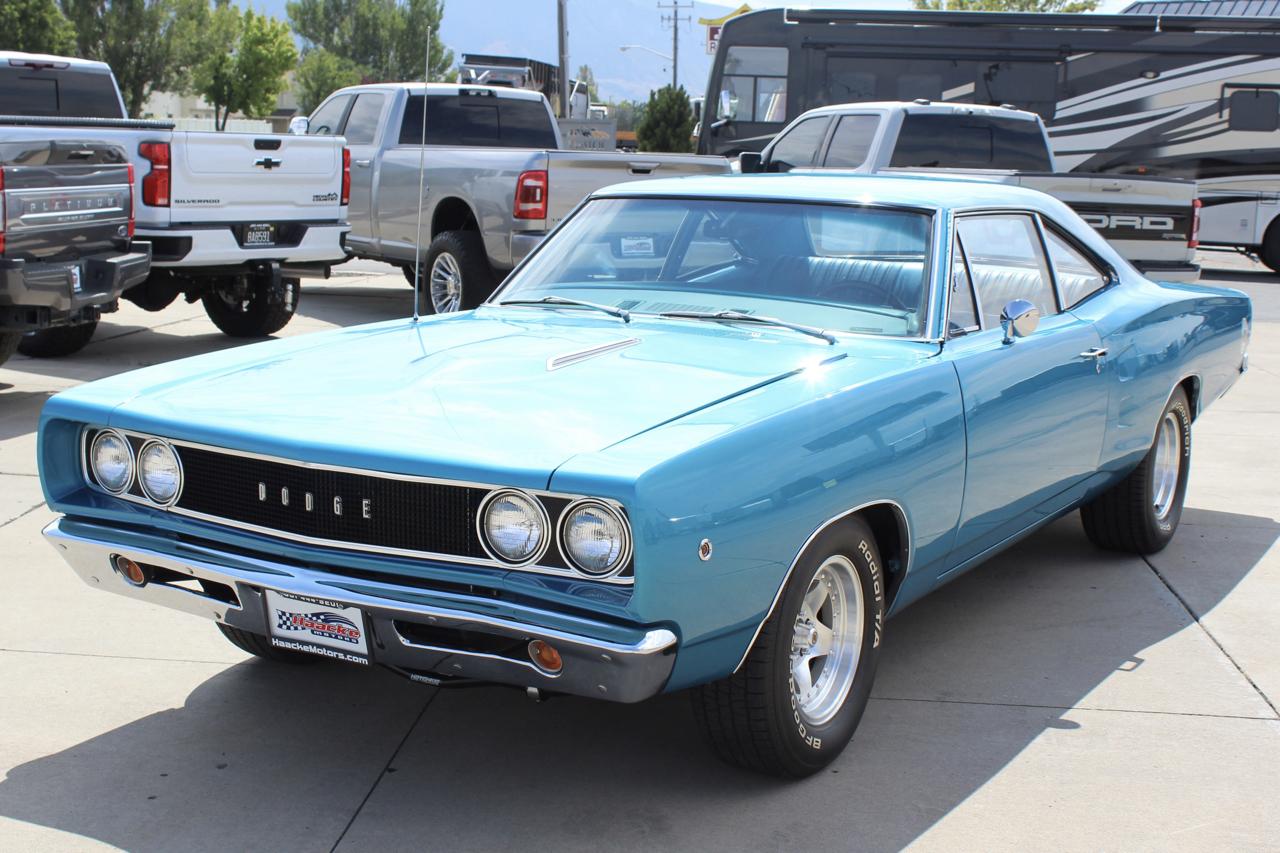
The Super Bee arrives in the middle of 1968 as Dodge's entry in the budget-muscle contest Plymouth started with the Road Runner. The concept is subtraction: the cheapest Coronet two-door bodies — first the pillared coupe, with a hardtop added — the 383 Magnum as standard, heavy-duty suspension, a bench seat, minimal trim, and the price kept down. The options list then lets the buyer build back up: the 426 Hemi is the headline option for 1968, and for 1969 the 440 Six Pack joins and largely takes over the Hemi's role as the serious Bee, most famously in the A12 package with its lift-off hood, black steel wheels, and Dana 60 rear axle. For 1970 the Bee continues on the restyled shell with the 383 as standard and the 440 Six Pack and Hemi above it. A Super Bee is therefore not defined by its engine — three very different engines are all correct — but by its VIN series code and its build specification.
Body style needs one careful paragraph, because sellers use "coupe" loosely and the factory did not. Dodge built two distinct two-door closed bodies in most of these years: the pillared coupe, with a fixed B-post and a framed door glass, and the two-door hardtop, with no B-post and a clean, open side when both windows are down. They look similar in a thumbnail photograph and they are not the same car: the hardtop carries more trim, more money, and a different roof pressing, and the pillared coupe is the lighter, stiffer, cheaper shell that Dodge chose for the first Super Bees precisely because it was the budget body. The body code in the VIN — the third and fourth characters — tells you which body the factory built, and a car whose pillar disagrees with its paperwork is a car you walk away from. When this guide says "Coronet Coupe," it covers both closed two-doors; when you buy, you distinguish them every time.
| Model | Years | Engine | Output | Built | Character |
|---|---|---|---|---|---|
| Coronet / Deluxe coupe | 1965–70 | 225 Slant Six, 273, 318 | 145–230 hp | Not published by body and trim | The honest base car: bench seat, plain trim, the cruiser and the project start point |
| Coronet 440 coupe | 1965–70 | 273, 318, 361, 383 | 180–330 hp | Not published by body and trim | The volume mid-range car — 440 is the trim name, not the engine |
| Coronet 500 coupe | 1965–70 | 318, 361, 383, 413 (early) | 230–360 hp | Not published by body and trim | The premium coupe: buckets, brightwork, comfort over speed |
| Coronet R/T | 1967–70 | 440 Magnum; 426 Hemi optional | 375 hp; 425 hp | Not published by body and trim | The flagship: big engine standard, own VIN prefix, the identity premium |
| Super Bee | 1968–70 | 383 Magnum; 440 Six Pack and 426 Hemi optional | 335–425 hp | Not published by body and trim | The budget muscle car: least trim, heavy-duty chassis, performance by subtraction |

Engines and gearboxes
The Slant Six — 225
What you check is specific. The exhaust manifold cracks, classically around the centre ports and at the choke stove area, and a ticking that quietens as the engine warms is the manifold or its gasket until you prove otherwise with a hand held — carefully — near the joint. The single-barrel Carter or Holley carburettor wears its throttle shaft, drawing air and spoiling the idle in a way no amount of mixture-screw twiddling cures; grip the linkage and feel for play. Valve clearances are set mechanically on early versions — a six that rattles softly and evenly is normal, a six with one loud valve is telling you about a worn rocker or a bent pushrod. The engine's famous durability hides one trap: because it almost never fails, it gets neglected, and you meet cars with ancient oil, a perished rear main seal weeping onto the clutch or converter, and cooling systems full of scale. Judge the maintenance, not the mythology.
The small-blocks — 273, 318 Poly, and 318 LA
Three engines share the small-block bay in these cars, and telling them apart is an identity skill, not trivia. The 273 is the early LA small-block, fitted from 1965 to the late 1960s in two-barrel form at 180 horsepower and, in the Commando version, with a four-barrel carburettor, higher compression, and 235 horsepower. It is a willing, rev-happy engine that suits the lighter early cars, and its weakness is simply age and size: worn bores and tired valve guides give you oil consumption and a blue haze on the overrun, and there is little economic case for a full rebuild when the larger engines exist — which is precisely why so many 273 cars have been re-engined, and why you verify what is actually under the bonnet rather than what the badge says.
The 318 you meet in a 1965 or 1966 car is usually the older A-series "Poly" engine, the polyspherical-head design with its wide rocker covers and scalloped lower cover edge, rated at 230 horsepower. From 1967 the LA-series 318 replaces it — same displacement, same nominal 230 horsepower, completely different, lighter wedge-head design with narrow covers in the familiar LA shape. The distinction matters for parts ordering, for manifold and head interchange, and for value: nobody pays a premium for either, but the owner who orders LA gaskets for a Poly discovers the difference expensively. Look at the rocker covers before you order anything; the Poly's wavy-edged, wide covers are unmistakable once you have seen one photograph.
The LA 318 itself is the workhorse recommendation of this entire guide. It is smooth, torquey enough for the shell, economical by the standards of the range, and supported by one of the deepest parts supplies in the classic world because the same basic engine powered Chrysler cars and trucks for decades. Its failure modes are the LA family's failure modes: timing-chain stretch retarding the cam and softening the response, diagnosed by rocking the crank pulley against the distributor rotor and watching for slop; oil weepage from the rear of the intake manifold and the rocker covers rather than from anywhere structural; and, on cars that have sat, a carburettor full of varnish and a fuel tank full of rust. A 318 that starts cleanly, idles evenly, and shows steady oil pressure is a known quantity, and the market's indifference to it is your discount.
The B-series big-blocks — 361 and 383
The B-series is the low-deck big-block family, and the 383 is its defining engine in this car. The 361, offered in the earlier years at around 265 horsepower in four-barrel form, is best understood as the 383's smaller-bore predecessor: perfectly serviceable, rarely sought, and a common reason a seller describes a car vaguely as "big-block" hoping you will hear 383 or 440. Read the engine codes and the casting numbers; do not bid on an adjective.
The 383 is the Coronet's muscle-era centre. In ordinary two-barrel form it gives 270 horsepower and relaxed torque; in four-barrel form, 330; and in Magnum form — the Super Bee's standard engine, shared with the Plymouth Road Runner — a hotter camshaft, a better exhaust, and a four-barrel carburettor give 335 horsepower and the character the whole budget-muscle idea was built on. The 383 Magnum is not a detuned 440. It is a shorter-stroke, freer-revving engine that many experienced Mopar drivers prefer in a B-body for exactly that reason, and correcting the seller — or the fellow buyer — who calls it the "small big-block, shame it's not a 440" is one of this market's reliable pleasures.
Mechanically the 383 is tough: a deep-skirted block, a forged crankshaft in most performance applications, and hydraulic lifters that ask only for clean oil. What fails is peripheral. The exhaust manifolds crack and their studs seize into the heads, turning a gasket job into a drilling job. The Carter AVS or Holley four-barrel carburettor, depending on year, wears and leaks like every carburettor of the era. The single-point or dual-point distributor, and later electronic ignition retrofits, account for most "it just stopped" stories; carry the diagnosis in order — spark, then fuel, then compression — because the 383 almost never fails all three at once, and the owner who has replaced the carburettor twice for an ignition fault is a seller you can learn from. Oil pressure that is healthy hot at idle is the single best quick verdict on a B-series bottom end: the gauge should not be flirting with the bottom of its travel on a warm engine at a stop light.
The RB-series big-blocks — 413, 426 Wedge, 440, and the Six Pack
The 440 is the RB that defines the mature range. In Magnum form — four-barrel carburettor, performance camshaft, dual exhausts — it is rated at 375 horsepower and is standard in the R/T and optional across the upper range. It is a torque engine first: the car surges rather than screams, the TorqueFlite suits it perfectly, and in ordinary driving it is less highly strung than its reputation suggests. Its specific weaknesses are heat and neglect. The 440 fills the engine bay, the cooling system works hard, and a car with an undersized or silted radiator, a missing fan shroud, or a viscous fan drive that freewheels when hot will creep up in temperature in traffic while behaving perfectly on the open road — that pattern, traffic-only overheating, points at airflow and the fan drive before it points at the head gaskets. Exhaust manifold bolts seize as they do on the 383. The rear main seal weeps with age. None of this is exotic, and a well-kept 440 is a 200,000-mile design being asked to do a fraction of that.
The 440 Six Pack — Dodge's name for the three two-barrel carburettor installation, sold as the 440+6 in some contexts — rates 390 horsepower and is the Super Bee and R/T option for 1969 and 1970, and the heart of the A12 package. Three Holley two-barrels sit on an aluminium intake manifold: the centre carburettor does the ordinary driving, and the outboard pair, opened by vacuum signal, arrive at wide throttle with a distinct change of note and pace. When it works it is magnificent. When it does not, the diagnosis is methodical rather than mysterious: the outboard carburettors must stay shut until called, their linkage and vacuum diaphragms must move freely, and the whole installation must be free of vacuum leaks at the manifold faces. A Six Pack car that idles roughly and stumbles in the midrange is usually a linkage, diaphragm, or gasket problem wearing the costume of a carburettor rebuild — and a Six Pack installation is also, note, entirely bolt-on, so its presence proves nothing about how the car left the factory. The fender tag and broadcast sheet carry that proof, or nobody does.
The 426 Hemi
Understand what you are taking on. The Hemi is wide — wider across the rocker covers than the bay feels designed for — and plug changes, valve-cover gaskets, and exhaust work are all slower than on a wedge. The dual-quad carburettors need synchronisation and clean fuel. The valve gear is more complex, the engine prefers knowledgeable hands at rebuild time, and a proper Hemi rebuild by a recognised specialist costs a multiple of a 383 rebuild — budget in the region of $18,000–30,000 for a thorough, documented specialist rebuild, against $6,000–10,000 for a comparable wedge big-block, and treat any quote far below that as a question rather than a bargain. Against that, a genuine, documented Hemi Coronet is one of the blue-chip cars of the era, and the engine itself, correctly built, is strong and tractable.
Gearboxes — TorqueFlite and the manuals
The automatic is the TorqueFlite, and it is the best automatic gearbox of its era by a margin its rivals conceded at the time. Two versions matter: the A904, fitted behind the Slant Six and the small-blocks, and the A727, fitted behind the big-blocks and built in versions strong enough for the Hemi. The 727 in particular is close to unbreakable in street use, and its failure modes are age failures rather than design failures: hardened seals that let the car hesitate before engaging drive on a cold morning and then behave all day — the classic "morning sickness" of a tired TorqueFlite — a front pump bushing weeping fluid at the bellhousing, and shift quality spoiled by a misadjusted kickdown linkage. That last point is not a detail: on a TorqueFlite the throttle-pressure linkage also controls line pressure, so a car driven with the kickdown disconnected or maladjusted is a car whose gearbox has been quietly burning its clutches. Check that the linkage is present, connected, and moving through its full travel on every automatic you inspect, and budget $1,800–3,200 for a competent 727 rebuild if the engagement is soft, the fluid is dark and burnt-smelling, or the shifts flare.
The manuals are Chrysler's A833 four-speed — one of the great heavy-duty gearboxes, fitted with the Hurst shifter in the performance cars — and three-speed manuals in the economy applications, column-shifted in the base cars. The A833's synchromesh wears, its Hurst linkage bushings slop until the gate feels like stirring a bucket, and both are fixable with the gearbox in place or out at moderate cost; a gearbox that jumps out of gear on the overrun, however, is telling you about worn engagement teeth and is a rebuild, typically $1,500–2,800 plus the clutch. Four-speed big-block and Hemi cars also bring the Dana 60 rear axle into the picture in many applications, where automatic cars use the Chrysler 8¾-inch axle — both are covered in the problem areas, and both are strong. The buying rule for gearboxes is simple: the TorqueFlite car is the easier classic to live with and to sell; the four-speed car is the one the performance market pays for, and in an R/T or a Bee the manual is the specification to verify hardest, because the conversion from automatic is common, well-documented, and worth real money done dishonestly.
Problem areas
Rust: the map
The B-body shell rusts in a pattern, and you read the pattern rather than hunting at random. Start underneath, at the front, because the most structural corrosion on this car lives where the loads are. The torsion bars anchor at the rear into a crossmember that is part of the floor structure, and their front ends work through the lower control arms carried by the K-member. Rot in the torsion-bar crossmember, in the front frame-rail sections around the K-member mounts, or in the floor directly above them is not cosmetic rust — it is the suspension's foundation, and it converts a cheap car into a fabrication project in a single sentence. Get the car in the air, or do not pretend you have inspected it. A car you have only seen from standing height is a car you have not seen.
From there, work the classic map. The floor pans rust from the inside out wherever the carpets have stayed wet, so lift the mats and press along the pans, especially the front footwells under the cowl drains and the low points under the rear seat. The cowl itself — the plenum at the base of the windscreen — collects leaves and water, rusts through, and then supplies the water that ruins the floors, so a car with wet front carpets and a sound-looking floor has simply not finished the process yet; look up under the dash at the cowl sides with a torch. The trunk floor rusts from leaking rear-window and boot seals and from the mat trapping condensation against the metal, and the trunk extensions and drop-offs behind the rear wheels rot quietly where road spray packs into the seam. Lift the trunk mat on every car, without exception, and look at the spare-wheel well and the seams where the floor meets the quarters.
The rear quarters and wheel-arch lips are the car's most visible rust and its most repaired. Bubbling at the lower rear quarter, behind the wheel, and along the arch lip is routine; what you are judging is the quality and extent of the previous repair, because this panel is where filler lives. Run a weak magnet wrapped in cloth along the quarters, the lower doors, and the lower front wings: it should hold evenly, and the places it falls away are the places to price as metalwork, not paintwork. Professional rear-quarter and trunk-floor work, properly welded and finished, typically runs $1,500–3,500 per side once paint is included, and a full floor and crossmember programme is a $4,000–8,000 conversation before trim comes out and goes back. Those figures are why the shell outranks the engine in every negotiation.
The hardtop adds its own water routes. With no B-post, the roof and rear side glass rely on seals that harden and shrink, and the rear window channel — on hardtops and coupes alike — traps water under its bright trim and rusts the channel and the panel below it, staining the parcel shelf and feeding the trunk. Look for bubbles at the rear-window corners, lift the parcel-shelf trim if the seller permits, and check the boot seal channel all the way round. Vinyl roofs, fitted to many 500s and R/Ts, hide a second roof underneath the first: bubbling or a crunchy feel under the vinyl at the C-pillars and around the rear window means the roof skin is rusting unseen, and the honest repair starts with removing the vinyl entirely. Price a vinyl-roof car with any such symptom as a roof repair plus a vinyl replacement, $1,200–2,500 in typical cases, and never as a cosmetic touch-up.
Front suspension, steering, and brakes
Wear concentrates in the ball joints, the tie-rod ends, the idler arm, and the control-arm bushings, all of it detectable with the front wheels unloaded and a lever and a helper, and all of it ordinary service work rather than disaster — a full front-end refresh with quality parts and an alignment typically runs $800–1,800 in parts and labour. The steering boxes, manual and power, wear free play into the centre of their travel, and the distinguishing test is to separate box play from linkage play: with the engine running on a power car, rock the wheel gently while a helper watches the linkage, and see where the motion is lost. Power-steering pumps whine when low, leak from the front seal and hoses, and are rebuildable or replaceable without drama. Treat vague steering on a test drive as a sum of small, priceable items — unless the looseness is in the box mounting or the K-member, at which point it is structure again.
Brakes divide by era and specification. Most Coronets left the factory with drum brakes all round, self-adjusting, adequate when perfectly maintained, and prone in old age to the full drum-brake liturgy: seized adjusters, oval drums, perished wheel-cylinder cups weeping onto the shoes, and a pull to one side that is usually a contaminated or seized front brake rather than a mystery. Front disc brakes were optional on the upper cars and standard-fit thinking on later performance applications, and they transform the car's stopping in modern traffic; a disc conversion using factory-pattern parts is a common and respectable upgrade, not a demerit, provided it is complete — matched master cylinder, correct proportioning, and no mixed hardware. Whatever is fitted, your tests are the same: a firm pedal that does not sink under sustained pressure, straight stopping from speed with your hands light on the wheel, no grinding, and fluid that is not black. A car that needs a full hydraulic overhaul — master cylinder, wheel cylinders or calipers, hoses, and lines — is a $900–2,000 job done properly, and it is non-negotiable safety work that belongs in the purchase price discussion, not in your first month of ownership surprises.
Rear axle, driveline, and exhaust
Two rear axles cover nearly the whole range. The Chrysler 8¾-inch axle, with its drop-out centre section in the manner of a Ford 9-inch, is the standard fitment behind most engines and all automatics in most applications; it is strong, quiet when healthy, and supported by excellent parts supply, with the centre section swappable to change ratio. The Dana 60, a much larger and heavier unit with a conventional rear cover, appears behind four-speed 440 and Hemi cars in the performance applications and is standard in the A12 package. Identify what is actually under the car — cover shape and size make it obvious at a glance — because an axle swap is not a fault, but a Dana claimed and an 8¾ delivered is a price conversation.
Engines in old age: the shared failure modes
Cooling is the second shared system. Radiators silt, water pumps weep from the tell-tale hole and then rumble, thermostats stick, and the rubber hoses and heater matrix reach the end of their lives together. The heater matrix deserves a specific mention because it is buried in the heater box and its failure announces itself as a sweet smell, a misting windscreen, and wet passenger-side carpet — the same wet carpet the cowl also causes, and the distinguishing test is the smell and the coolant level: a heater leak consumes coolant and smells of antifreeze, a cowl leak does neither. Budget $600–1,200 for a matrix replacement with the labour it actually takes, and treat a bypassed heater — two hoses joined in the engine bay — as a seller telling you the matrix has already failed.
Electrics
Chrysler electrics of this period are simple, and their faults are correspondingly honest. The charging system uses an alternator and a separate regulator, and the bulkhead connector — the multi-pin plug where the engine harness passes into the cabin — is the system's known weak point: its terminals corrode and overheat, most consequentially on the ammeter circuit, and the symptoms are flickering lights, a hot smell under the dash, intermittent everything, and in the worst cases melted insulation at the connector. On every car, look at the bulkhead connector and the wiring around the ammeter with a torch, and treat heat damage there as immediate, skilled work, not as character. A full rewire is rarely necessary; a cleaned, repaired, and sensibly fused original harness is the goal, with a typical professional sorting of a neglected car's electrics running $500–1,500 depending on how much previous improvisation has to be undone.
Interior, trim, and glass
The interior is where a Coronet's trim level becomes visible and where restoration costs ambush the unwary, because upholstery is labour-priced and model-specific trim is scarcity-priced. Seat vinyl splits along its seams and its heat-pressed pleats, foam collapses until you sit in the frame, and the bench-versus-bucket question is settled by the fender tag and the floor: a car converted to buckets will usually show you the evidence in its mounting holes and its console bracketry, or in their absence. Correct reproduction seat covers and foam for the common trims are available and a professional retrim of both rows typically runs $1,500–3,000; the uncommon trims and colours are where that figure climbs and the waiting begins.
Dash pads crack in the sun along their speaker and defroster openings, headliners sag and tear at their seams, and door cards warp at their lower edges where the same water that rusts the floors has been at work — a warped lower door card and a rusty door bottom are one observation, not two. Bright trim is the scarcity problem in miniature: the model-specific grille, tail-panel, and side trim for a one-year car like the 1970 is far harder to replace than the mechanical parts, and a car missing its unique trim is missing it at a price set by the few people who have it. Inventory the trim on any car as carefully as you inventory the engine, and price gaps accordingly. Glass is mostly available; the hardtop's rear side glass mechanisms, with their regulators and guides, wear and drop, and a rear quarter window that will not rise or seal is a fiddly, time-priced repair rather than a parts problem.
Identity, clones, and paperwork faults
This is the problem area that costs Coronet buyers the most money, and it is not mechanical at all. The range's structure — one shell, many engines, flagship variants defined by codes — makes the R/T, the Super Bee, the Six Pack car, and above all the Hemi car replicable from a base coupe with bolt-on parts, stripes, and badges. The defence is a hierarchy of evidence, and you apply it in order. The VIN is the foundation: on 1965–67 cars the plate is on the driver's door front pillar, and from 1968 it is on the driver's side of the dashboard, visible through the windscreen. Its characters encode the model series, the body style, the engine the factory fitted, the model year, the assembly plant, and the sequence number. An R/T carries its own series letters, a Super Bee carries its own, and the engine character for a Hemi or a 440 is specific and unmistakable once you have the year's code chart in front of you — so take the chart, decode the actual plate on the actual car, and never accept a photograph of a VIN in place of reading the plate yourself.
The fender tag — the stamped metal plate on the driver's-side inner front wing in the engine bay — is the second witness: it encodes the car's build specification, engine, gearbox, axle, colours, trim, and scheduled build date in option codes. The broadcast sheet, the factory build record sometimes found tucked in the rear seat springs, above the glovebox, or under the carpet, is the third and fullest witness. The body itself carries partial VIN stampings in locations that vary by year and plant, classically including the radiator core support and the rear body and trunk-lip area, and these exist precisely so that a re-bodied or re-tagged car can be caught: the numbers on the shell should agree with the numbers on the plates. A car whose fender tag is missing is not automatically dishonest — tags corrode and are lost in restorations — but a car whose tag is missing, whose broadcast sheet is absent, and whose price assumes the specification the seller describes is a car whose price should fall to the level its evidence supports. That is the rule, and it has no exceptions for charm, urgency, or a queue of other buyers.
State the companion myth plainly, because it appears in advertisements weekly: matching numbers, on a Chrysler of this era, does not mean what it means on some other marques. Chrysler did not stamp the full VIN on engines and gearboxes in the way that phrase implies for most of this period — partial VIN stamping on engines begins late in the 1960s — so the honest checks are the casting numbers, the casting dates relative to the car's build date, the stamped assembly codes on the engine pad where the design provides one, and the agreement of all of it with the tag and the sheet. A seller who understands this and shows you date-consistent components is giving you the strongest evidence this marque offers. A seller who waves a photograph of a casting number and says "matching numbers" is giving you a slogan.

How to inspect one
- Start with identity, standing at the driver's door. Read the VIN plate yourself — door pillar on a 1965–67 car, dashboard through the windscreen from 1968 — and decode the series, body, and engine characters against the year's chart. A pillared car must show a coupe body code, an R/T must show the R/T series, a Super Bee must show the Bee series. Then open the bonnet and read the fender tag on the driver's-side inner wing, and compare its engine, gearbox, colour, and trim codes with the car in front of you. Any disagreement at this step reprices the car to what its codes support, and a disagreement about the body itself ends the inspection.
- Check the shell's hidden numbers and the paperwork against each other. Look for the partial body stampings in the locations correct for the year and plant, classically around the radiator support and the rear body and trunk-lip area, and confirm they agree with the VIN sequence. Ask for the broadcast sheet, the title history, and any restoration invoices, and read them now, not after the drive — you are establishing what the car claims to be while you can still walk away cheaply.
- Do the cold start, and insist on it. The engine should be cold to the touch on the exhaust manifold when you arrive; a warmed-up car hides cold-start, choke, oil-pressure, and TorqueFlite engagement faults. Watch the exhaust on start-up — a brief puff that clears is stem seals, a continuing haze is deeper — listen for lifter tick and whether it fades, and watch the oil-pressure gauge rise and settle. On an automatic, engage drive and reverse in turn and feel for the cold hesitation that betrays hardened seals.
- Read the rust map from underneath. On a lift, or with the car properly raised, work the sequence from the problem areas: torsion-bar crossmember and its anchors, front rails and K-member mounts, floor pans front and rear, cowl from below, trunk floor, extensions and drop-offs, rear quarters from inside the wheel arch, door bottoms, and the rear window channel from the boot side. Probe suspect metal with a screwdriver only where the seller permits, and use the magnet on every outer panel above. Record each area as sound, repaired well, repaired cosmetically, or rotten — your price is built from those four columns.
- Check the stance and the front end. On level ground the car sits level, front height equal side to side. A low corner sends you back to that side's torsion bar and anchor. With the front unloaded, lever each wheel for ball-joint and bushing play, rock for bearing play, and have your helper turn the wheel slowly while you watch the linkage to find where the steering's free play lives — box, idler, or tie-rods.
- Test the brakes before the engine, on the drive. From moderate speed, brake firmly with your hands light: the car stops straight, the pedal is firm and does not sink when held, and there is no grinding or judder. Repeat from higher speed once. A pull, a sink, or a long pedal is priced from the brakes section, and a car that cannot be braked safely does not get an extended drive at all.
- Drive the engine through its evidence. Warm it fully. Note the temperature behaviour in traffic as well as at speed — traffic-only creep points at the fan drive, shroud, and radiator, as the 440 section explains. Accelerate hard once, safely: a Six Pack car should change note and pace as the outboard carburettors open, a Magnum should pull cleanly without a flat spot, and any big-block should breathe without a smoke screen. Lift off at speed and watch the mirror: blue smoke on the overrun is guides and seals, under load it is rings.
- Drive the gearbox as a separate test. A TorqueFlite shifts cleanly without flare or thump, kicks down when asked, and — before the drive — you have already confirmed its throttle-pressure linkage is connected and travelling fully under the bonnet. A four-speed should engage every gear without baulking, stay in gear on the overrun, and come with a clutch whose bite point and shudder, or lack of it, you have noted from the first pull-away.
- Test the rear axle under load and on the overrun. Listen for whine that comes and goes with throttle, and for bearing rumble that changes as you load each side in gentle bends. Test a claimed Sure-Grip properly: on a loose or wet surface, a firm start should leave two even marks, not one spinning wheel — and confirm by the axle's identity and the tag codes, because a limited slip that no longer limits is a rebuild item, not a discovery to make at home.
- Work every electrical item, then look at the wiring. Lights, indicators, wipers, heater fan at all speeds, horn, gauges, and the charging behaviour with the lights on. Then, engine off, inspect the bulkhead connector and the wiring around the ammeter for heat damage, and survey the engine bay and under-dash wiring for the quality of fifty years of additions. Soldered and loomed is a good car; twisted, taped, and dangling is a price deduction and a reliability forecast.
- Audit the interior and the trim against the tag. Trim code against upholstery, bench or buckets against the build specification, every piece of model-specific brightwork present and accounted for — grille, tail panel, side trim, Bee or R/T emblems in their correct places. Work the hardtop's rear side glass up and down, check the door glass drops and seals, and look at the lower door cards and the floors beneath the carpets for the water story the rust section taught you to expect.
- Finish with the numbers, in writing. List every fault found by system, price it from the ranges in this guide, and set that total against the asking price and the car's verified identity — not its described identity. Then decide which of three cars you are actually buying: the car its codes prove, the car its condition proves, or the car its seller describes. Pay for the first two. The third is free, and worth it.

Values
Read the market for this car as three markets wearing one name, because that is how the money actually behaves. The first market is the ordinary coupe — the sixes, the 318s, the honest 383 cruisers — and it is a condition market, not a rarity market. Cars change hands on the strength of their shells, their originality, and their usability, and the spread between a sound, driving, presentable car and a cosmetically tired car with a rotten underside is not a percentage, it is a multiple, because the second car carries a restoration bill that the first car's price does not begin to cover. In this market you are buying metal and maintenance history, and the model's badge contributes very little. Learn to price the shell first and you will rarely overpay here.
The second market is the documented performance car — the genuine R/T, the genuine Super Bee, the factory big-block coupe with its codes in agreement — and it is an evidence market. Within it, the premium does not attach to stripes, badges, or even to the engine sitting in the bay; it attaches to the chain of proof that the car left the factory in that specification. A car with its VIN, fender tag, body numbers, and broadcast sheet in agreement stands in a different price class from a visually identical car whose evidence is a story, and the gap between those classes is the single largest value variable in this entire guide. Engine hierarchy operates inside the evidence class: the 440 Magnum and the Six Pack carry strong, durable premiums, the 383 Magnum Bee trades on its balance of performance and usability, and the Hemi stands apart in a thin, specialist market where individual provenance moves individual cars more than any general trend does.
The third market is the tribute, the clone, and the modified car, and it is a perfectly respectable market as long as everyone in the transaction names it correctly. A well-built Hemi tribute or a tastefully upgraded 318 coupe is worth what its shell, its components, and its workmanship are worth, judged as a hot rod and a driver. It becomes a problem only at the moment its price borrows the evidence premium of the second market without the evidence. Your defence is the inspection sequence: you already know how to establish which market a given car belongs in, and you price it in that market regardless of the market its advertisement chose.
Parts and ownership
The body is the middle ground. The high-demand rust-repair panels — floor pans, trunk floors, quarter panels and skins, and the common repair sections — are reproduced because the B-body market justifies the tooling, and the Charger and Road Runner sharing your platform's architecture keeps that supply deep. The panels and sections specific to the Coronet's own pressings, and to a single year like the 1970, are thinner territory: available, but at prices and waiting times that reflect smaller runs. Glass, weatherstrip rubber, and the common brightwork are reproduced; the model-and-year-specific grilles, tail panels, emblems, and interior trim pieces are the true scarcity, and they trade in a used market where condition is everything. This is why the inspection section has you inventory trim like currency: replacing a missing 1970 grille assembly is a different financial event from replacing a water pump.
Set your ownership budget by system rather than by hope. A newly bought car of this age, however honestly described, typically wants a full service, every fluid changed, the brake hydraulics inspected as a system, the fuel system cleaned from tank to carburettor if it has sat, and a set of tyres whose date codes you have read — tyres that look new and are a decade old are the most common false economy in the whole classic market. Allow for that recommissioning in the purchase negotiation, keep a rolling reserve for the age failures this guide has catalogued — a TorqueFlite refresh, a front-end rebuild, a heater matrix — and the Coronet will be what it was designed to be: a large, simple, durable car whose costs arrive predictably and whose parts, in the main, arrive at all.
Which one to buy
- The all-rounder: a 1968–69 Coronet 440 or 500 coupe with the 383 or a healthy 318. The mature styling, the best parts and panel supply, a bench or buckets to suit your household, and enough performance for modern roads without the performance market's evidence premium. This is the car most buyers actually want once they have driven the range.
- The value buy: a clean 1965–67 small-block coupe, six-cylinder cars included. The early shell is undervalued against the later cars, the 318 LA is the sweetest engine-per-dollar in the guide, and a sound early coupe is the cheapest honest route into B-body ownership. Buy the shell, enjoy the car, and let the muscle market argue without you.
- The driver's muscle car: a documented 383 Magnum Super Bee. The budget-muscle concept in its purest form, a freer-revving big-block than the 440, and a premium that pays for evidence rather than for theatre. Verify the Bee series in the VIN, then drive it as its makers intended.
- The flagship: a documented Coronet R/T with the 440 Magnum. The complete period package — engine, trim, presence — and the TorqueFlite version is the effortless grand tourer of the range while the four-speed car is the collector's specification. Paperwork first, always, because the R/T premium is an evidence premium.
- The specialist's car: a factory 440 Six Pack Super Bee, A12 included, or a genuine Hemi car. Magnificent, valuable, and unforgiving of casual buying. These are purchases you make with the code chart, the broadcast sheet, a specialist inspection, and a rebuild reserve — or not at all.
- The project to take on: a rotten flagship with perfect paperwork. The project to refuse: a shiny tribute with none. Identity survives welding; it does not survive its own absence.
Buy the shell and the evidence, in that order: a sound body with its codes in agreement is the whole foundation, and every other virtue a Coronet Coupe can have — engine, colour, options, story — is negotiable, replaceable, or both.
See the 2 Coronet Super Bee Coupe cars currently listed.
What they sell for: Coronet Super Bee Coupe sale prices.