
Dodge Super Bee buyer's guide
Dodge Super Bee -- the model's own buyer's guide: variants, values and what to check.
Years listed: 1968-1971 · Series: B-Body
Overview and history
The Super Bee is Dodge's answer to a car from its own family. When Plymouth launched the Road Runner for 1968 — a stripped, big-engine intermediate built to be the cheapest fast car in America — Dodge, which had expected the budget-muscle idea to be its own, demanded an equivalent. The result arrived part-way through the 1968 model year: the Coronet Super Bee, a two-door B-body with the 383 Magnum big-block as standard, heavy-duty suspension and brakes, a bench-seat interior with almost nothing in it, and a cartoon bee wearing a crash helmet wrapped around the tail. The formula was identical to Plymouth's — spend the money on the engine, the chassis and nothing else — and the Super Bee was a member of Dodge's "Scat Pack" performance line from day one.
It was always the rarer car. Across four model years Dodge built roughly 56,000 Super Bees against well over 180,000 Road Runners, and the mix matters as much as the total: the overwhelming majority of Super Bees carry the 383, while the cars the market fights over — the 440 Six Pack A12 of 1969½ and the 426 Hemi cars — were built in the hundreds. Only 349 Hemi Super Bees were built in four years. Rarity, in this range, is concentrated exactly where the desire is.
The arc is short and sharp. For 1968 the Bee was a pillared coupe only, with two engines: the 383 Magnum or the Hemi. For 1969 a hardtop joined the range, sales peaked, and mid-year the A12 package turned the car into a factory drag racer — 440 Six Pack, lift-off fibreglass hood, Dana 60 axle. For 1970 the Coronet body was restyled around a controversial twin-loop front bumper and sales halved as insurance surcharges and emissions rules began to bite. For 1971 the Coronet line went four-door-only, so the Super Bee moved onto the new fuselage-styled Charger, gained a small-block 340 option as an insurance dodge, and died at the end of the year along with the Hemi itself. The name returned decades later on modern Chargers, but the original car is these four years only, and this guide covers nothing else.
That history defines today's market. These were cheap cars bought to be driven hard, and most were: raced, modified, crashed, rusted and parted out. The survivors divide into documented originals, honest drivers, restored cars of wildly varying accuracy, and clones — ordinary Coronets and Chargers dressed in stripes and badges, because the Super Bee was an option package on a common body and almost everything that makes one can be bolted onto a car that never was one. We currently track 14 Super Bees for sale or recently sold, 11 of them for sale now, spanning all four years with 1969 and 1970 cars the most numerous — a fair picture of the market as a whole. On this model, more than most, you are not really buying a car. You are buying proof: a VIN, a fender tag, a broadcast sheet and a set of stamped numbers that all tell the same story. The sections that follow are organised around that fact.

The models
Every Super Bee is a two-door B-body, but the body it wears changes across the run. The 1968–70 cars are Coronets: WM21 is the pillared coupe, WM23 the hardtop that joined for 1969. The 1971 car is a Charger hardtop, VIN prefix WS23, on the same B-body underpinnings under completely different, fuselage-style sheet metal. Those first two VIN characters are the model's birth certificate — a claimed Super Bee whose VIN starts with anything else (WH or WL for a Coronet, WH or WP for a Charger) is a clone, whatever is bolted to it.
| Model | Years | Engine | Output | Built | Character |
|---|---|---|---|---|---|
| Super Bee 383 Magnum | 1968–1971 | 383 big-block, Carter AVS 4-barrel | 335 hp (300 hp in 1971) | about 51,000 of the 56,202 total | The car itself; nine of ten Bees are this one |
| Super Bee A12 440 Six Pack | 1969½ | 440 RB, three Holley 2-barrels | 390 hp | 1,907 | The factory drag car; lift-off hood, Dana 60 |
| Super Bee 440 Six Pack | 1970–1971 | 440 RB, three Holley 2-barrels | 390 hp (385 hp in 1971) | a few hundred a year; 99 in 1971 | The A12's engine as a regular option |
| Super Bee 426 Hemi | 1968–1971 | 426 Hemi, two Carter AFB 4-barrels | 425 hp | 349 total (125 / 166 / 36 / 22 by year) | The flagship; the price of entry is proof |
| Super Bee 340 | 1971 | 340 small-block, 4-barrel | 275 hp | about 310 | One year only; the insurance-era Bee |
(Outputs are period SAE gross figures. Production totals are the commonly quoted factory counts; sources differ by a few hundred cars on some years, which is normal for Chrysler records of the period and one more reason documentation matters more than any published table.)
1968. One body, two engines, 7,842 cars. The pillared coupe was the cheapest Coronet shell, chosen deliberately: this was a price-point car. Standard equipment was the 383 Magnum, a four-speed manual or TorqueFlite automatic, heavy-duty drum brakes, a bench seat, the Charger's Rallye-style instrument cluster (a Super Bee signature from the start — the Coronet's plain dash was not used), and the bumblebee tail stripe, which could be deleted on the order sheet, so its absence proves nothing either way. The Hemi was the only real option of consequence and just 125 buyers took it.
1969. The peak year: 27,800 cars. The hardtop (WM23) joined the coupe and outsold it better than two to one. A fresh-air Ramcharger hood, with twin forward-facing scoops feeding a sealed air cleaner, became available as option N96. Then, mid-year, the A12: covered in its own paragraph below. The 383 still accounted for 25,727 of the year's cars and the Hemi for 166.
The A12 (1969½). Option code A12, engine code M in the VIN, and the most single-minded package Dodge ever sold. The 440 Six Pack engine, a Dana 60 rear axle with 4.10 gears and Sure Grip, heavy-duty 11-inch drum brakes, Hemi-specification suspension, black 15-inch steel wheels with G70-15 red-streak tyres and chrome lug nuts, and a flat-black fibreglass hood with an enormous scoop that lifts off on four pins — no hinges, no latch, no insulation. Interiors stayed taxi-spec. Of the 1,907 built, every one is accounted for in registries to a degree the ordinary cars are not, and every one needs its paperwork checked against the registries, because the package is also the most cloned specification in the range.
1970. The restyle year: new sheet metal, the twin-loop front bumper Dodge's publicists called "bumble bee wings," horizontally divided tail lamps, optional rear spoiler and hood tachometer, and the High Impact colours — Plum Crazy, Sublime, Go Mango — that now define the year. The Six Pack became a regular production option (VIN engine code V) rather than a special package, on a steel hood, and the A12's Dana-and-lift-off-hood hardware went away. Production fell to 15,506, Hemi cars to just 36.
1971. The Charger Super Bee, one year only, 5,054 cars. The fuselage body is bigger, heavier and plusher, and the engine list tells the story of a market closing down: the 383 Magnum detuned to 300 hp, a 340 small-block offered for the first and only time (about 310 built) purely to slip buyers under insurance surcharges, the 440 Six Pack down to 99 cars, and the Hemi — in its final year in any production car — at 22. A footnote for the truly dedicated: the single-four-barrel 440 Magnum was never on the 1971 option sheet, yet 26 cars are recorded as factory-built with it. If you are shown one, the broadcast sheet is not a nicety; it is the whole argument.


Engines and gearboxes
The 383 Magnum: the standard engine
The 383 is a B-series wedge: cast-iron block and heads, a 4.25-inch bore and short 3.38-inch stroke, hydraulic lifters, and a forged steel crankshaft in the Magnum version. What makes a Magnum a Magnum — as opposed to the ordinary 383 two-barrel in a family Coronet — is the top end and the tune: the free-breathing cylinder heads shared with the 440 Magnum (the 906 casting on most 1968–70 cars), a higher-lift camshaft, a windage tray in the sump, dual exhausts, and a Carter AVS four-barrel under an unsilenced air cleaner. The result was 335 hp gross and 425 lb-ft of torque, in a car light on equipment: a healthy 383 Bee is a genuinely quick car, and it is the engine the whole model was designed around.
It is also a forgiving engine, and its faults are the wedge family's faults. The nylon-toothed camshaft sprocket fitted for quietness sheds its teeth with age and heat — a car that still carries one is living on borrowed time, and the teeth end up in the oil pickup. Hydraulic lifters tick at start-up after standing and usually quieten; one that never does is collapsed or starved. Valve stem seals harden and give the classic puff of blue smoke on start-up and on the overrun after a long coast. The exhaust manifold bolts at the ends of the heads snap during removal, not in service, which is why manifold work on a wedge is quoted with a drill-and-extract caveat. The heat-riser valve in the right-hand manifold seizes — open is harmless, shut cooks the intake crossover and gives hot-running and a cooked choke. Oil leaks are rear main seal and valve covers, in that order. None of this is exotic, and a full rebuild of a 383 to stock specification is a mainstream machine-shop job, realistically $6,000–10,000 done properly with the engine out, less if the bores and crank measure up and only a refresh is needed.
One trap specific to the Magnum: because the premium rides on the specification, ordinary 383s get dressed as Magnums. The VIN's engine digit settles what the car was built with (H for 1968–69, N for 1970–71); the engine itself is proved by the casting and stamping checks in the inspection section, not by an orange engine and a pie-tin air cleaner lid, both of which are reproduced and cheap.
The 440 Six Pack: A12 first, then a regular option
The 440 is the RB — raised-block — version of the wedge, taller in the deck than the 383, and in Magnum form it made 375 hp with a single four-barrel. The Six Pack replaced that carburettor with three Holley 2300-series two-barrels on one intake manifold: a centre carburettor of about 350 cfm that does all the idling, cruising and starting, and two outboard carburettors, opened progressively by vacuum signal, that arrive when you use the throttle in earnest. Combined flow is roughly 950 cfm. Rated output was 390 hp and 490 lb-ft — and the torque, arriving in a flood when the outboards open, is the whole experience.
On the 1969½ A12 cars the manifold is an Edelbrock aluminium casting — a speed-shop part, fitted by the factory — and the engine got heavy-duty connecting rods and other Hemi-adjacent internal attention. When the Six Pack became a regular option for 1970–71, the manifold changed to a Chrysler cast-iron piece and the hood reverted to hinged steel, with the Ramcharger fresh-air system available. A correct A12 therefore has the aluminium manifold; a 1970–71 Six Pack car should have the iron one, and a car wearing the wrong one has a story to explain.
Living with three carburettors is a tuning discipline, not a curse. The rules: the engine idles and is mixture-adjusted on the centre carburettor only; the outboards contribute nothing at idle and should not be "helped" to. Hesitation as the outboards open is almost always vacuum, not jetting — the outboard throttle plates are pulled open against return springs by vacuum pods, and split pod diaphragms or perished vacuum hoses delay or prevent opening, giving a car that pulls hard to about half throttle and then goes flat and lean. The opposite fault — outboards hanging open or dribbling — is float level and needle valves, and shows as a rich, lumpy idle that no centre-carb adjustment cures. Linkage wear matters: the mechanical progressive linkage must be free, because a binding outboard shaft gives a sudden step instead of a progression. A full rebuild and bench set-up of all three carburettors by a Six Pack specialist runs roughly $900–1,800 for the set; sorting a badly adjusted set on the car is a day of specialist labour and transforms most "bad" Six Pack cars. Budget for it on any car that stumbles, and do not let a seller blame "they all do that." They do not.
The 426 Hemi
The street Hemi is a different engine from the wedges in almost every particular: hemispherical combustion chambers with inclined valves operated by two rocker shafts per head, spark plugs through the centres of the valve covers, a cross-bolted forged crankshaft, and two Carter AFB four-barrels on an aluminium intake, worked by progressive linkage so the car cruises on one carburettor's primaries. The street version runs a hydraulic camshaft and a 10.25:1 compression ratio, and the advertised 425 hp was a polite fiction agreed across the industry; the torque figure, 490 lb-ft, matters more and is honest. Everything about the engine is bigger, heavier and more expensive than the wedge it replaced on the order form — it added roughly a third to the price of a 1968 car, which is why 125 people bought one.
Assessment is specialist work, but the buyer's checks are clear. Plug tubes: each spark plug sits in a tube sealed by O-rings at the valve cover, and hardened seals let oil pool around the plugs — visible the moment you pull a plug wire, and a cause of misfires blamed on everything else. The dual carburettors go out of synchronisation and give a rolling, rich idle; linkage adjustment, not rebuilds, is the first step. Oil consumption on a Hemi is higher than a wedge's by design and period standards; what matters is where it goes — stem seals and plug tubes are service items, ring wear is a rebuild, and a proper Hemi rebuild with the heads done correctly is a $15,000–25,000 conversation at a known Mopar shop, which is why a documented recent build by a named specialist is worth more on a Hemi car than any other single piece of paper. Cold-start piston slap on forged pistons, audible for the first minute, is normal on these engines and not a defect; a seller who knows the cars will tell you so unprompted.
The 1971 additions: 340 and the detuned 383
For 1971 the 383 Magnum lost its edge on paper — 300 hp gross, the result of a lower compression ratio and emissions-era tuning — and drives sweeter than the figure suggests, because the torque stayed. The 340 is the LA small-block, a high-winding engine with a forged crank, big-valve heads and a Carter Thermoquad spread-bore carburettor whose phenolic float bowl is its signature part and its signature fault: the bowl warps and the well plugs leak with age and heat, giving hard hot starting and a fuel smell, cured by a specialist rebuild rather than adjustment. A 340 Bee is a lighter-nosed, better-balanced car than any big-block Bee and the connoisseur's oddball of the range — but with about 310 built, verify it like a Hemi car, because a 318 or 340 Charger is a cheap thing to start from.
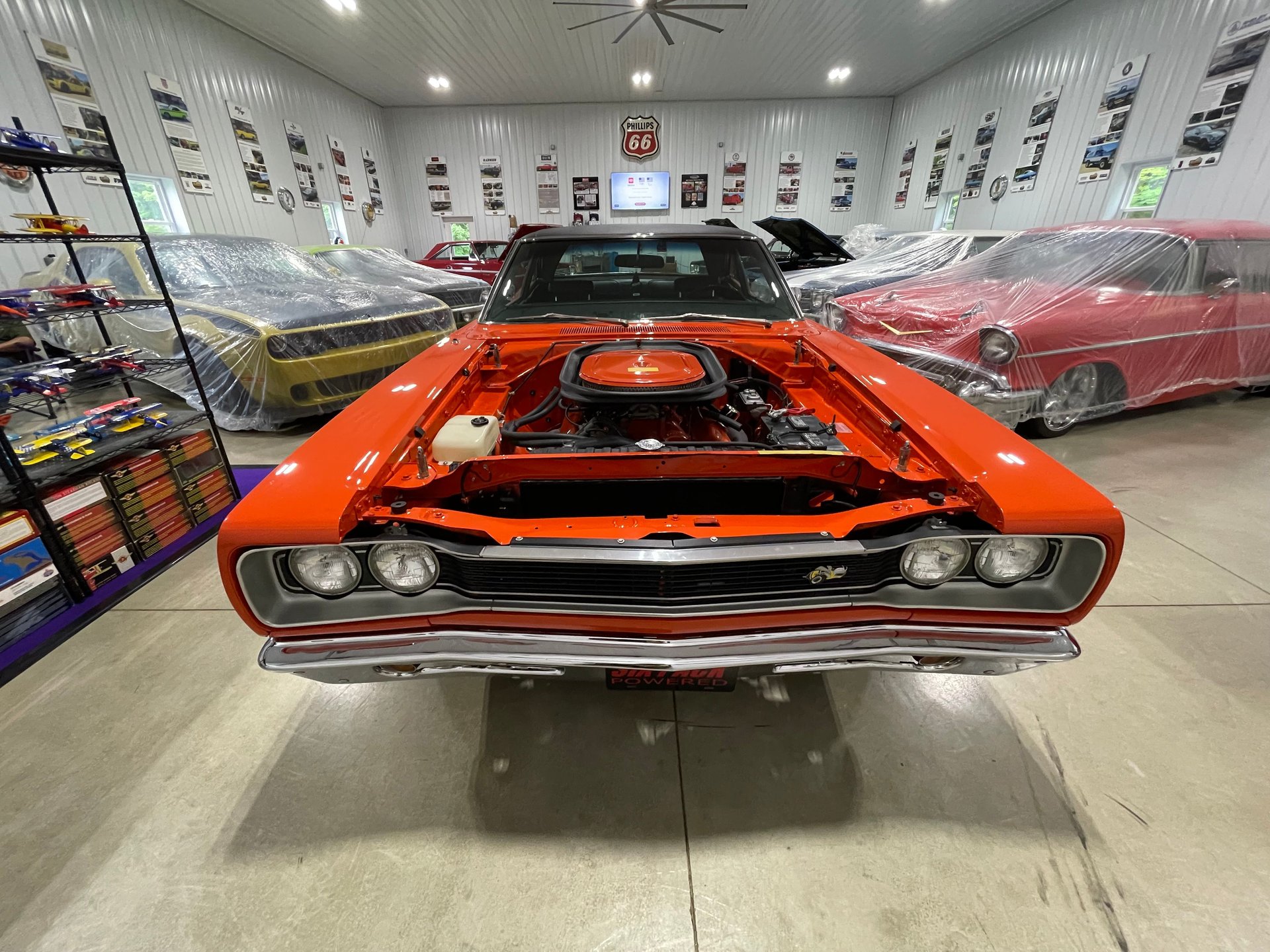
Gearboxes and axles
Two gearboxes cover nearly every Super Bee. The A833 four-speed manual, with a Hurst shifter (the long pistol-grip lever on 1970–71 B-bodies), is the enthusiast default: a strong, notchy box whose wear shows as tired synchromesh on the second- and third-gear downchanges and a sloppy, vague gate when the shifter mechanism and its bushings wear — the box itself is rarely the problem. A rebuild runs roughly $1,200–2,500; a shifter rebuild is a fraction of that and cures most complaints. The TorqueFlite 727 automatic is one of the strongest three-speed automatics ever built and the correct choice for a Six Pack or Hemi car you intend to use. Its one lethal vulnerability is adjustment, not strength: the throttle-pressure (kickdown) linkage from the carburettor does not merely request downchanges, it controls the transmission's internal line pressure, so a car driven with the linkage disconnected or badly maladjusted runs low pressure, slips its clutches and burns the box — check the linkage is present, connected and stroking fully on any automatic car before the test drive, and treat a flare on the 2–3 change or a lazy, sliding 1–2 as a rebuild priced in, roughly $1,800–3,000 at a transmission shop. A three-speed manual was the standard box on the smaller-engined 1971 cars and is now rare; judge it on synchromesh and noise and do not pay a four-speed premium for it.
Axles follow a simple logic. Standard is Chrysler's 8¾-inch rear axle, a drop-out-carrier design in three case strengths — the 489 case is the desirable one — with Sure Grip limited slip an option you verify by jacking the rear and turning a wheel, not by trusting the tag. The Dana 60, with its 9¾-inch ring gear, was mandatory with the Hemi and a four-speed, and standard on every A12 regardless of gearbox. A Dana under a 383 car or an 8¾ under a claimed Hemi four-speed is not automatically fraud — axles get swapped in fifty years — but it moves the burden of proof, and on an A12 the correct Dana with 4.10 gears is part of the package you are paying for.
Problem areas
Everything in this section is drawn from the cars themselves. We currently track 14 Super Bees, and for 7 of them we have gone through the sellers' photo sets in detail and written photo notes. Damage of some kind — accident repairs, panel damage, the marks of a hard life — was noted on 4 of those 7 cars, and visible rust on 2 of the 7. Read those proportions the right way: the photographed cars are the ones sellers are proudest of, damage still showed up on more than half of them, and the rust figure counts only what a camera can see from outside. On a unibody Mopar of this era the rust that ends the argument is underneath and inside, where listing photographs rarely go. Assume every car needs the full examination below, and let a good car prove itself.
Identity: clones, re-bodies and swapped engines
This is the Super Bee's defining problem area, ahead of rust, because the car was an option on a mass-produced body and the value gap between a real Bee and a dressed-up Coronet is the whole price of a good engine. Work through the layers in order; each one is cheap to check and each one catches a different grade of deception.
The VIN. On the dash pad at the base of the windshield, driver's side, and it must read WM21 or WM23 (1968–70) or WS23 (1971) in the first four characters, with the fifth character the correct engine code for the year: H for a 1968–69 383, J for a 1968–69 Hemi, M for a 1969½ A12, N for a 1970–71 383, V for a 1970–71 Six Pack, R for a 1970–71 Hemi, H for a 1971 340. A VIN riveted with non-factory rosette rivets, or a dash pad that has clearly been swapped, ends the inspection until explained. A "Hemi Super Bee" whose fifth digit is anything but J or R is not a Hemi Super Bee; it is a car with a Hemi in it, which is a different and much cheaper thing.
The fender tag. The stamped metal plate screwed to the driver's side inner front fender carries the car's build data in option codes: E63 for the 383 four-barrel, E74 for the Hemi, E87 for the 440 Six Pack, the transmission code (D21 four-speed, D32 automatic), axle and Sure Grip codes, paint and trim codes, and the scheduled build date. Tags are reproduced — legally, for owners who have the underlying documentation — so a fresh-looking tag is not itself damning, but a tag whose codes contradict the car (wrong paint under the respray, an axle code the car does not have) is. Missing tag plus missing broadcast sheet plus a premium price is a walk-away combination on any engine above the 383.
The broadcast sheet. The factory build sheet, usually found tucked in the springs of the rear seat back or base, sometimes under the carpet, behind the glovebox or above the fuel tank. It lists everything, line by line, including the engine and the car's full identity, and it is the single most valuable document a Super Bee can have. Cars with sheets trade at a premium because the sheet is close to unforgeable in practice — the paper, print and codes have to be right in a hundred places at once. The specialist decoder Galen Govier's name appears throughout this market: a Govier report or registry verification on an A12 or Hemi car is the closest thing to a certificate the hobby has, and sellers of genuine cars usually already have one.
The body numbers. The VIN's sequence is echoed in partial stampings on the shell itself — on the radiator core support and in the trunk, under the weatherstrip on the gutter. They are hidden by paint and rubber, which is the point: they tie the shell to the VIN. A car whose core-support and trunk numbers do not match its VIN sequence has been re-bodied or clipped, whatever its paperwork says. On a 383 driver this is a price conversation; on an A12 or Hemi car it is the end of the premium.
The engine numbers. From 1969, Chrysler stamped a partial VIN on a machined pad on the engine block by the oil pan rail, and a matching partial on the transmission case. That pad is what "numbers-matching" means, and it is checkable with a torch and a mirror in five minutes. The block casting date must also precede the car's build date by a sensible margin — weeks to a few months; a block cast after the car was built cannot be its original engine, and a date years earlier suggests a service or donor block. None of this requires expertise, only the refusal to be hurried.
Rust: the map
The B-body is a unibody: the shell is the structure, the front stub frame and torsion-bar crossmember carry the front suspension, and rust in the wrong panel is a structural repair, not a cosmetic one. Work in this order.
The torsion-bar crossmember and front frame rails. The most important check on the car, and the one listing photos never show. The torsion bars anchor in a crossmember under the front floor, and it rots from inside where road water and mud sit in it; the front rails rot around the K-member mounts and where the bumper brackets attach. A perforated crossmember is fabrication work on the car's structural spine — price it as such, or walk. Prod with a screwdriver, with permission, and look for the tell-tale of a car that has already failed here: plates welded over the member rather than a replaced section.
Floor pans. Water enters past the windshield seal and the cowl, and past the rear window on the hardtops, then sits under the carpets and the factory sound deadening, which holds it against the metal. Lift every carpet. Surface rust is a clean-and-treat job; perforation at the seat mounts or seat-belt anchors is structural and an MoT-style failure in any language. Replacement pans are available and fitting one side properly is a $800–1,800 job with paint and trim time — but floors, as on every unibody, rarely rot alone.
Trunk floor and extensions. The classic B-body failure. The rear window channel leaks, the trunk mat traps the water against the floor, and the floor and its drop-off extensions to the quarter panels rot from the top down, invisibly, under a tidy mat. Lift the mat, remove the spare, and prod the corners and the seams above the frame rails. A trunk floor replacement fitted and painted runs roughly $1,000–2,000; extensions and wheelhouse work on top of that is where the bill grows.
Rear quarters, wheelhouses and spring perches. The lower rear quarters rot behind the wheels where the inner wheelhouse meets the outer skin; filler over a rusted wheelhouse lip is the standard used-car repair and a magnet finds it. Further under, check the front spring hangers and rear shackle mounts where the leaf springs meet the body — these carry the axle's loads, and rot here is structural. The fuel tank straps and the tank's top face, hidden against the trunk floor, rust together with it.
The rest of the map. The rear window channel on 1968–70 hardtops and coupes (the glass comes out to fix it properly, and the channel repair is panel work, not sealer), the lower front fenders behind the wheels, door bottoms and the lower door skins, the cowl sides and firewall around the heater box, the battery tray and the inner fender beneath it, the drip rails, and — on vinyl-roof cars, which is most of them — the roof skin under the vinyl, where trapped moisture bubbles the paint from beneath and the first sign is a blistered or lifted roof covering. On the 1971 Charger add the Dutchman panel below the rear window and the huge rear quarters, whose replacement panels are a bigger commitment than the Coronet's. A full, quality repaint after metalwork starts around $10,000 and rises quickly; that figure, held against any "cheap" Bee with bubbles in the quarters, is the arithmetic that decides most purchases.
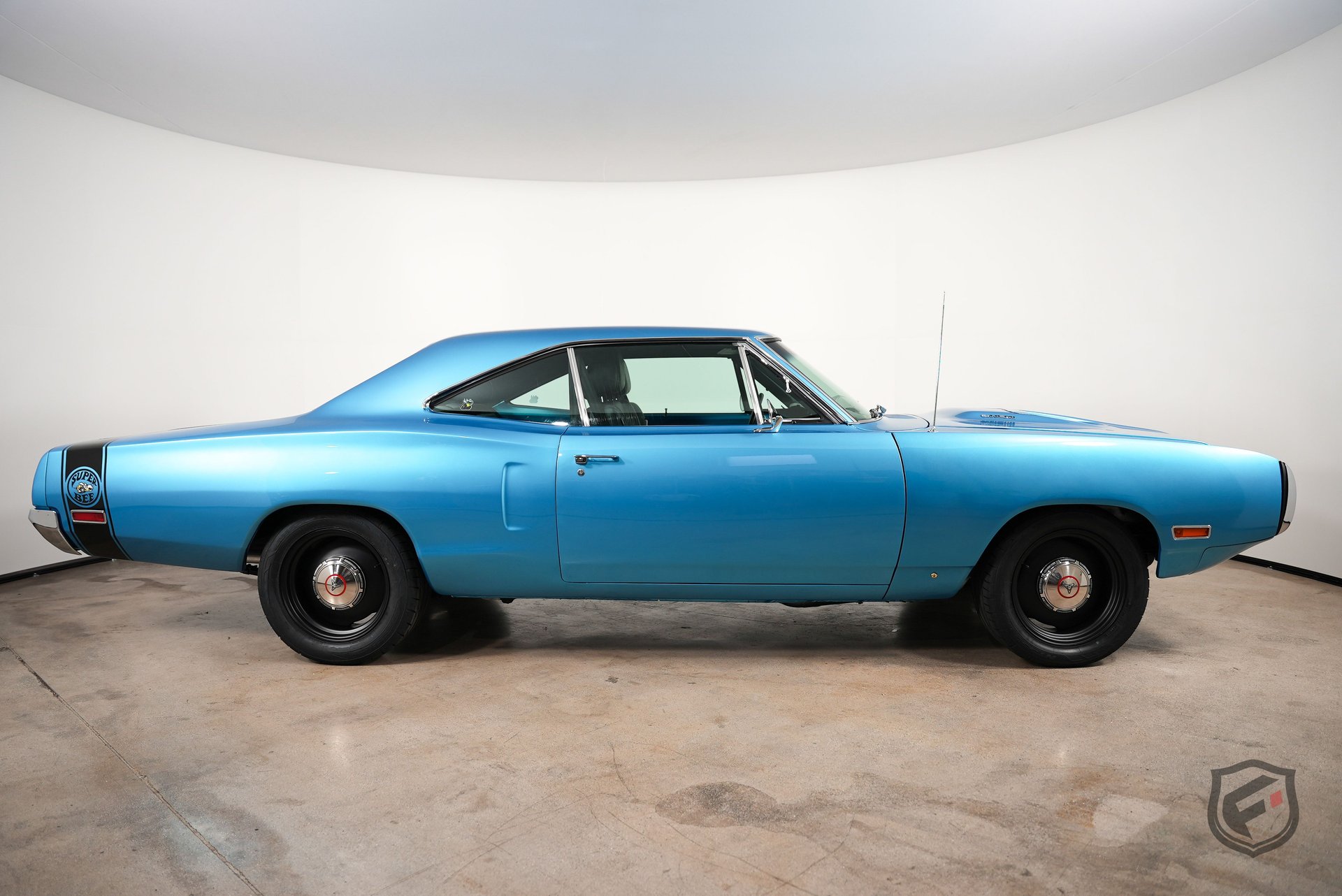
Suspension, steering and brakes
The front suspension is torsion bars, upper and lower control arms, and a front anti-roll bar; the rear is leaf springs on a live axle. It is a simple, strong layout whose wear items are all still available, and whose condition you can judge from the driver's seat in one drive.
Torsion bars and ride height. Ride height is set by adjuster bolts at the crossmember anchors, so a car sitting low at the front is usually adjustment or tired bars, not doom — but bars are side-specific, marked left and right, are not interchangeable, and a bar fitted on the wrong side after a rebuild is pre-loaded the wrong way and can snap. Creaking from the front on lock or over bumps is usually the bars' anchor seals and boots perished, letting grit into the anchor sockets. A front-end wear rebuild — ball joints, control-arm bushings, tie-rod ends, idler arm — is a $1,200–2,500 job at a shop with alignment, and transforms a wandering car. Note the upper ball joints: they screw into the upper control arms and need the correct large socket; torn threads in the arm from a previous gorilla are a known discovery mid-job.
Steering. Power steering was an option many buyers skipped; manual cars are heavy at parking speed and honest about front-end wear, power cars hide it behind assistance. Play at the wheel on a power car is most often the steering box itself and the flexible coupling; a rebuilt box is a few hundred dollars. Judge by straight-line behaviour at speed: a sorted B-body tracks straight and needs small corrections; one that darts under braking has a brake or bushing problem, not a steering one.
Brakes. Standard brakes are 11-inch drums all round — adequate when perfect, and the reason so many cars have been converted. Front discs were a rare option (single-piston sliding calipers by 1970) and are the desirable factory specification; aftermarket disc conversions are common, work well, and on a 383 driver cost nothing in value, while on a documented car they are a deduction to note. Whatever is fitted, fifty-year-old hydraulics are the issue: perished hoses, a master cylinder bypassing internally (pedal sinks slowly at a stop), wheel cylinders weeping into the drums. A full hydraulic refresh — master, hoses, cylinders or caliper rebuilds, fluid — is $800–1,800 with labour and is non-negotiable money on any car that has sat. The A12's heavy-duty 11-inch drums, 3 inches wide at the front, were the best drum setup Chrysler made and still stop the car well when the shoes are correctly arced and adjusted; a vague, long pedal on drums is adjustment and hydraulics, not the design.
Interior and trim
The Super Bee interior was deliberately plain — bench seat standard, vinyl trim, rubber mats in the cheapest cars — and that plainness is now its charm and its trap, because "plain" is easy to fake and hard to date. The dash is the Charger's Rallye cluster with proper round gauges, and the optional Tic-Toc-Tach (tachometer with an inset clock) is a desirable, frequently added option: check the fender tag and sheet before paying for it as original. Seat foam collapses and the vinyl splits at the seams and at the driver's entry edge; reproduction seat covers and foam are available for every year and a front bench retrimmed with new foam runs roughly $800–1,500 in parts and trim-shop labour. Dash pads crack in the sun and good reproductions exist, but the 1971 Charger's pad and door panels are one-year parts and priced like it. Headliners sag, package trays warp, and the bumblebee stripe outside is reproduced in every colour — which is why stripes, badges and bee emblems carry zero evidential weight. What carries weight is the trim code on the fender tag matching the colour and pattern of the vinyl actually in the car, including under the seat covers someone fitted in 1994.
Electrics
Chrysler electrics of this era have one famous structural weakness and one famous party trick. The weakness is the bulkhead connector: the entire charging current passes through the ammeter circuit and through spade terminals in the bulkhead disconnect at the firewall, and with age those terminals corrode, heat, melt the connector body and produce the full catalogue of symptoms — flickering lights, a bouncing ammeter needle, intermittent everything, and in the worst case a dash fire. Pull the bulkhead connector apart on any car you are serious about and look for melted plastic and green, heat-darkened terminals; a car whose ammeter has been bypassed by a previous owner has usually had the problem, and a neat bypass with the charging lead run properly is an acceptable, even desirable, repair — a melted connector left in circuit is not. The party trick is the ballast resistor on the firewall: when it fails, the engine cranks and fires, then dies the instant you release the key, because the ignition is fed through the resistor in the Run position only. It is a cheap part and a two-minute diagnosis — carry the knowledge, and use it when a seller's car "just stopped running last week." Beyond those two: fusible links corrode at the starter relay, points ignition on the big-blocks (the Hemi runs a dual-point distributor) drifts out of dwell and makes every other system look faulty, and many cars have been converted to electronic ignition — a good conversion is a plus for a driver and a small deduction on a documented car. On the 1971 Charger, the optional hideaway headlamps are driven by an electric motor and relay that fail with age; a car with its lamps stuck up or one eye half-closed is showing you a fixable but fiddly fault, and the parts hunt is part of the price.
How to inspect one
Allow two hours, and bring a torch, a magnet wrapped in cloth, a mirror on a stick, and a screwdriver for prodding (with the seller's permission). On this model the paperwork inspection and the metal inspection are equal halves of the same job, and the order below is deliberate: identity first, because there is no price at which the wrong car is a bargain.
- Start with the VIN. Read it through the windshield and write it down. First four characters WM21, WM23 or WS23; fifth character the correct engine code for the year and the engine claimed. Check the plate's rivets look factory. If the VIN fails, stop — everything after this step is about a different car from the one described.
- Decode the fender tag. On the driver's inner fender: engine code (E63, E74 or E87), transmission code, paint and trim codes, build date. Compare each against the car in front of you — the paint code against the colour in the door jambs and under the trunk mat, the trim code against the interior. Ask for the broadcast sheet and any decoder or registry report, and weigh their absence by the engine: tolerable on a 383 driver, close to disqualifying on an A12 or Hemi at full money.
- Check the body numbers. Torch and mirror: the partial VIN stamping on the radiator core support and in the trunk gutter under the weatherstrip. The sequence must match the VIN plate. Mismatched or ground-off numbers mean a re-body or a clip, and on a premium car that ends the negotiation, not starts it.
- Check the engine. Find the partial-VIN pad by the oil pan rail (1969-on) and the casting date on the block. Pad matches the VIN and casting predates the build date: proceed. Then identify what the engine actually is — 383 and 440 are told apart by the RB's taller deck and the distributor pad area, a Six Pack by its three Holleys and manifold (aluminium on an A12, iron on a 1970–71 car), a Hemi by everything about it. Dress-up parts prove nothing; stampings and castings do.
- Cold start. Insist the engine is stone cold. A wedge should fire quickly and settle; listen for lifter tick that fades (acceptable) against tick that stays (a collapsed lifter or worse), watch for the start-up puff of blue that means stem seals, and note the oil pressure gauge's behaviour — strong cold, lower hot at idle is normal. A Hemi that slaps lightly for the first minute cold is showing you forged pistons, not damage.
- Underneath: the structure. On a lift if at all possible. Torsion-bar crossmember first — prod it, and the front rails around the K-member. Then floor seams, front spring hangers and rear shackle mounts, trunk floor from below, and the frame rails at the rear. Perforation in the crossmember or spring mounts is structural money; perforation in the trunk floor is panel money; know which you are looking at, because they differ by a factor of several.
- Trunk and floors from inside. Lift the trunk mat and the spare: water staining, rust in the floor corners and extensions, the rear window channel's story told from inside. Then lift the cabin carpets in both front footwells and prod the pans at the seat mounts. A "dry-stored" car with damp carpets is leaking at the cowl or the glass, and the floor is where the bill lands.
- Body and magnet. Work the magnet along the lower rear quarters, wheelhouse lips, lower fenders, door bottoms and sills. Check panel gaps and the fit of the trunk lid and doors, and look down each flank for ripples. On a vinyl-roof car, press the roof gently for the crunch of rust under the vinyl and look for bubbling at the roof's edges and around the rear window.
- The drive: gearbox and axle. Fifteen minutes, including full-throttle work where legal. Automatic: before you move, confirm the kickdown linkage is connected at the carburettor — a disconnected linkage is cooking the box as you drive. Shifts should be firm; flare or slide on the 2–3 change prices a rebuild. Manual: test second- and third-gear synchromesh on downchanges and feel for a shifter that wanders in its gate. In a quiet moment at steady speed, listen for axle whine on the overrun and check for a Sure Grip car laying even power rather than spinning one wheel away from junctions.
- Six Pack and Hemi behaviour, if fitted. A Six Pack car should idle cleanly on its centre carburettor and pull without a step or a stumble as the outboards open under load; a flat, lean sag at half throttle is vacuum pods and hoses until proved otherwise. A Hemi should idle evenly once warm — a rolling, hunting idle is carburettor synchronisation first, everything else second. Pull one plug lead boot on the Hemi and look for oil in the plug tube.
- Brakes, steering and stance. Brake firmly from speed, twice: straight, no pull, no judder, and a pedal that does not sink at the following stop — sinking is the master cylinder. Note the steering's straight-line manners and any wander over bumps. Then park on level ground and stand back: level is correct; nose-low is torsion-bar adjustment or tired bars; tail-low is springs or their mounts, and you have already inspected the mounts in step 6, so you know which.
- Electrics and the bulkhead connector. Work everything: lights, indicators, wipers, heater fan, gauges, horn, and the hideaway lamps on a 1971. Watch the ammeter for flicker or bounce — the bulkhead connector's signature. If the seller will allow it, separate the bulkhead connector and look for heat damage. A car that cranks, fires and dies as the key is released has a failed ballast resistor, and you may just have diagnosed the "mystery fault" in the listing in ten seconds.
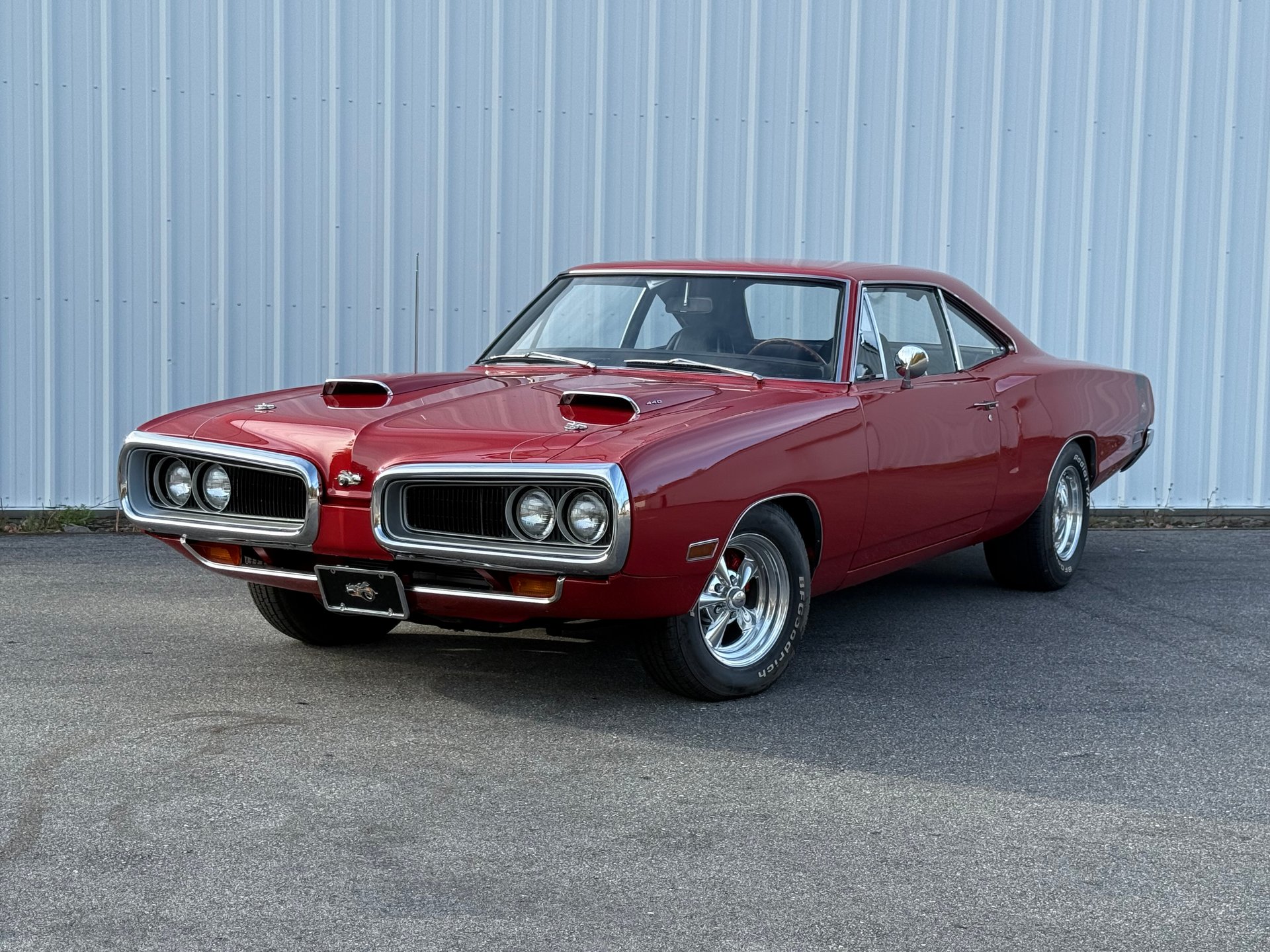

Values
The build's market block beneath this guide carries the current numbers — what is listed now and what recorded sales have achieved — and this section deliberately carries none, because the figures move and the structure of this market does not. Learn the structure and the numbers will read themselves.
The first driver is the engine, and the spread is not a slope, it is a staircase. The 383 cars are the market's volume: plentiful, comparable against each other, and priced by condition in a way you can sanity-check against a dozen other listings. The Six Pack cars sit a full step above, the A12 above the later Six Packs (the package's hardware and registry culture put it there, not just the engine), and the Hemi cars occupy a different market altogether, where the comparable sale is an auction result and the negotiation is about proof as much as condition. The 1971 cars complicate the staircase: every 1971 Bee is rarer than its Coronet equivalent, the 340 and Six Pack cars especially, and rarity pulls prices up even where the earlier body style is more loved.
The second driver is documentation, and on this model it can outweigh condition. A numbers-matching engine, a legible broadcast sheet and a fender tag that agrees with both are worth a real premium on any Bee, and on an A12 or Hemi car they are the difference between the top of the market and a polite discount for a nice replica-grade car. Conversely, the clone discount is steep and permanent: a beautifully built tribute is worth what a good 383 driver is worth, minus the cost of the doubt, forever. Buyers at the top of this market pay for certainty and sell certainty on; a car with a gap in its story carries that gap to every future sale.
Third, condition and originality pull in opposite directions at different levels. In the 383 market, a well-restored driver in a High Impact colour — the 1970 palette especially — will outrun a scruffy original car, because most buyers want to drive. At the top of the market the polarity reverses: original paint, original panels and an unrestored engine bay on a Hemi or A12 car are the premium specification, and a glossy restoration of a rare car invites more questions than it answers. Colour matters within years, too: a genuine EV2 Hemi Orange or FC7 Plum Crazy car earns its premium only when the fender tag's paint code says it left the factory that way.
Finally, the project gap. A project Super Bee — rusty, engineless or in boxes — is not a cheap route into the model, because the expensive parts of a Bee (structural metalwork, a correct engine, the interior, the chrome of a 1970 bumper) cost the same whether the car cost a lot or a little, and the finished car's value is capped by its documentation. The realistic reading of the market block below is therefore: find where the documented, driving cars sit, treat anything dramatically cheaper as a car whose missing money you will spend yourself, and treat anything dramatically dearer as a claim — about rarity, originality or restoration quality — that the paperwork has to prove.
Parts and ownership
The Super Bee sits in the best-supported corner of the Mopar world, because it shares its platform with the Road Runner, Charger, GTX and Coronet lines and its engines with half the Chrysler range. Almost everything mechanical is reproduced or rebuilt on exchange, and the specialist trade — engine builders, carburettor men, decoder services, registries for the A12 and Hemi cars — is deep.
Easy: all service items, ignition parts, brake hydraulics and friction parts, suspension wear items including torsion bars and ball joints, TorqueFlite and A833 rebuild parts, 8¾ axle gears and Sure Grip units, engine internals for the 383 and 440, Six Pack carburettor rebuild kits, weatherstrips, seat covers and foam, carpets and headliners, stripes and decals. Order today, fit this month, at prices in line with any popular classic.
Harder and dearer: Hemi-specific parts (heads, rocker gear, plug tubes and seals, correct carburettors), a correct Edelbrock aluminium Six Pack manifold for an A12, an original A12 lift-off hood in unrepaired fibreglass, Dana 60 housings of the correct width and date, 1970 twin-loop bumper chrome, 1971 Charger one-year trim and dash parts, correct-date coded glass and sheet metal for a documented car, and original fender tags and broadcast sheets — which are not parts at all, and cannot be bought back once lost. A quality repaint starts around $10,000; structural metalwork on the crossmember and rails is priced per car and is the one bill that can exceed a 383 car's value.
Running costs. A sorted Bee is a simple car to keep: the wedges ask for oil, plugs, points (or an electronic conversion), valve clearances never, and an annual once-over of the bulkhead connector and the kickdown linkage adjustment. Fuel consumption is in the low teens per gallon in mixed use and worse around town; the Six Pack driven as intended is worse again, and premium fuel is a standing requirement on the high-compression engines. The budget line that catches new owners is the first year of deferred maintenance: hydraulics, hoses, belts, tyres of unknown age, a carburettor set-up and the electrical gremlins together run $2,000–5,000 on a running car before any improvement begins, and recommissioning a car that has slept for a decade — fuel system end to end, brakes, seals, tyres — runs well beyond that. Insurance through a classic policy is unremarkable for a 383 car; agreed-value cover on a documented A12 or Hemi car is a specialist conversation, and the documentation file you built at purchase is what the valuation rests on.
Which one to buy
- The all-rounder: 1969–70 383 Magnum hardtop. The full Super Bee experience — the shape, the stripe, the Rallye dash, a genuinely quick big-block — in the deepest market, with the best parts support and the most cars to choose from. Buy the best-documented, least rusty one and drive it.
- The value buy: 1968 383 coupe. The purest and cheapest Bee: one body style, no frills, the same engine. Pillared coupes are less fashionable than hardtops and priced accordingly, and the saving buys the hydraulic refresh and the carburettor set-up.
- The collector car: 1969½ A12. The package, the hood, the Dana, the registry culture. Buy only with the VIN's M code, a broadcast sheet or registry verification, and the correct hardware in place — an A12 missing its hood and axle is a Six Pack car at an A12 price.
- The flagship: 426 Hemi, any year. The rarest Bee and the most valuable, with 1971's 22 cars the extreme case. Specialist inspection and decoding before money moves, full stop; the engine's rebuild cost alone justifies the fee.
- The connoisseur's car: 1971 340. The only small-block Bee, the best-balanced driver of the range, and rare enough to demand Hemi-grade paperwork at a fraction of Hemi money.
- The cruiser: 1970 383 with TorqueFlite. The restyled car, the High Impact colours, an automatic that suits American distances — with the kickdown linkage checked and adjusted, as this guide insists.
And the rule that overrides all of the above: buy the numbers before the car. A Super Bee's value lives in its VIN, its fender tag, its broadcast sheet and its stamped body and engine numbers agreeing with each other; rust can be cut out and engines rebuilt, but a car that was never a Bee, or whose engine was never its own, stays that way forever. The least rusty documented car you can find, in the specification you can live with — that is the buy.
See the 9 Super Bee cars currently listed.
For sale now
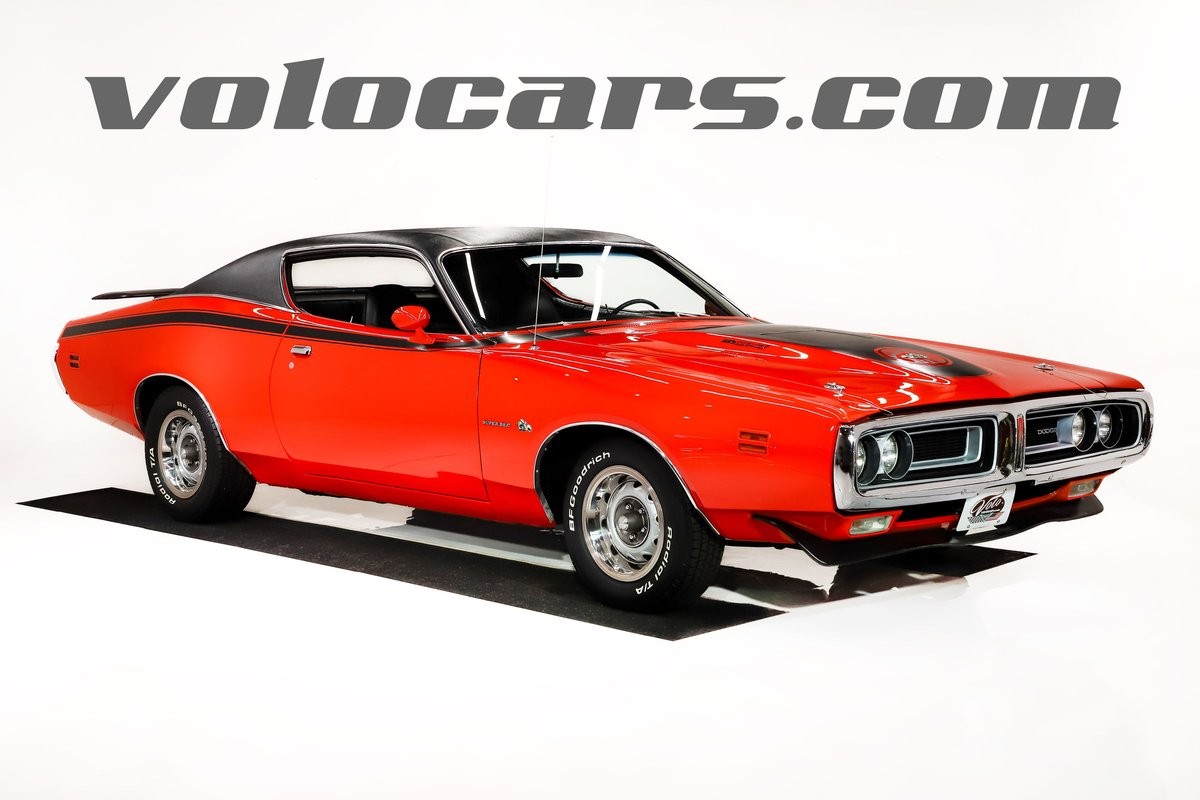 $119,998 · 46% above typical
Expand
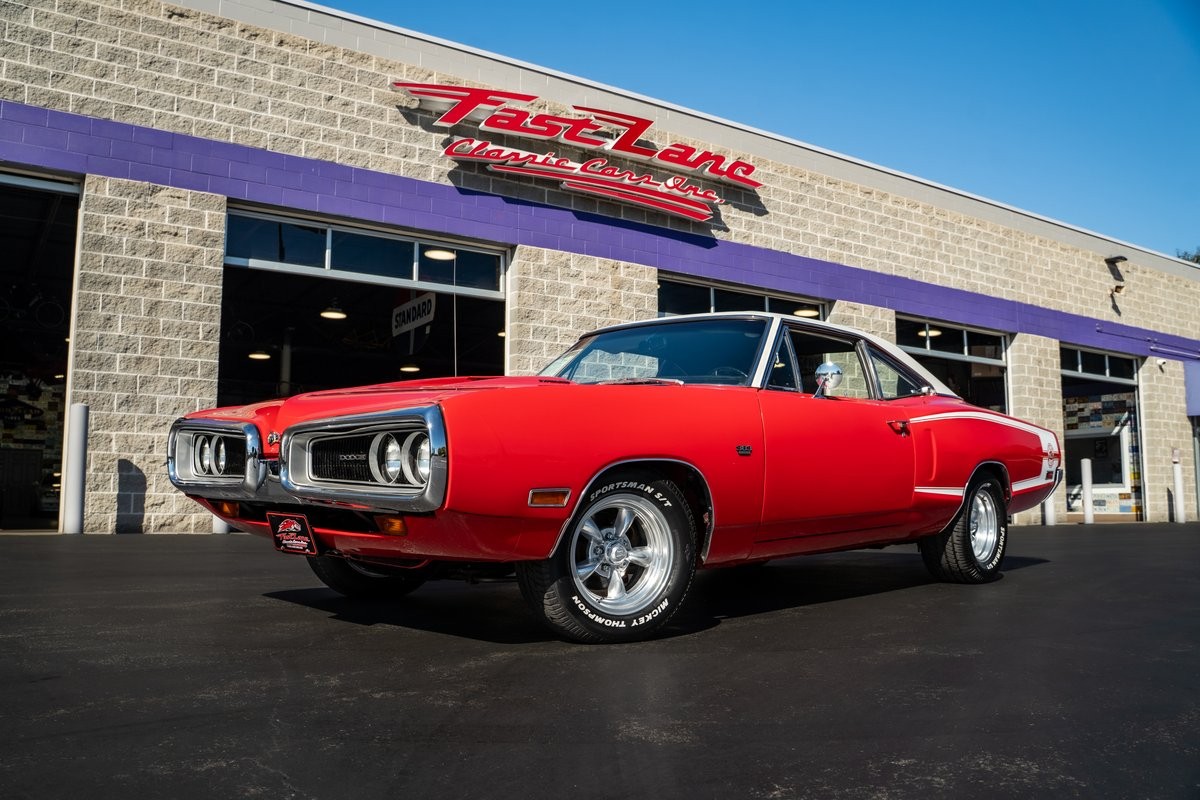 $79,995 · 3% below typical
Expand
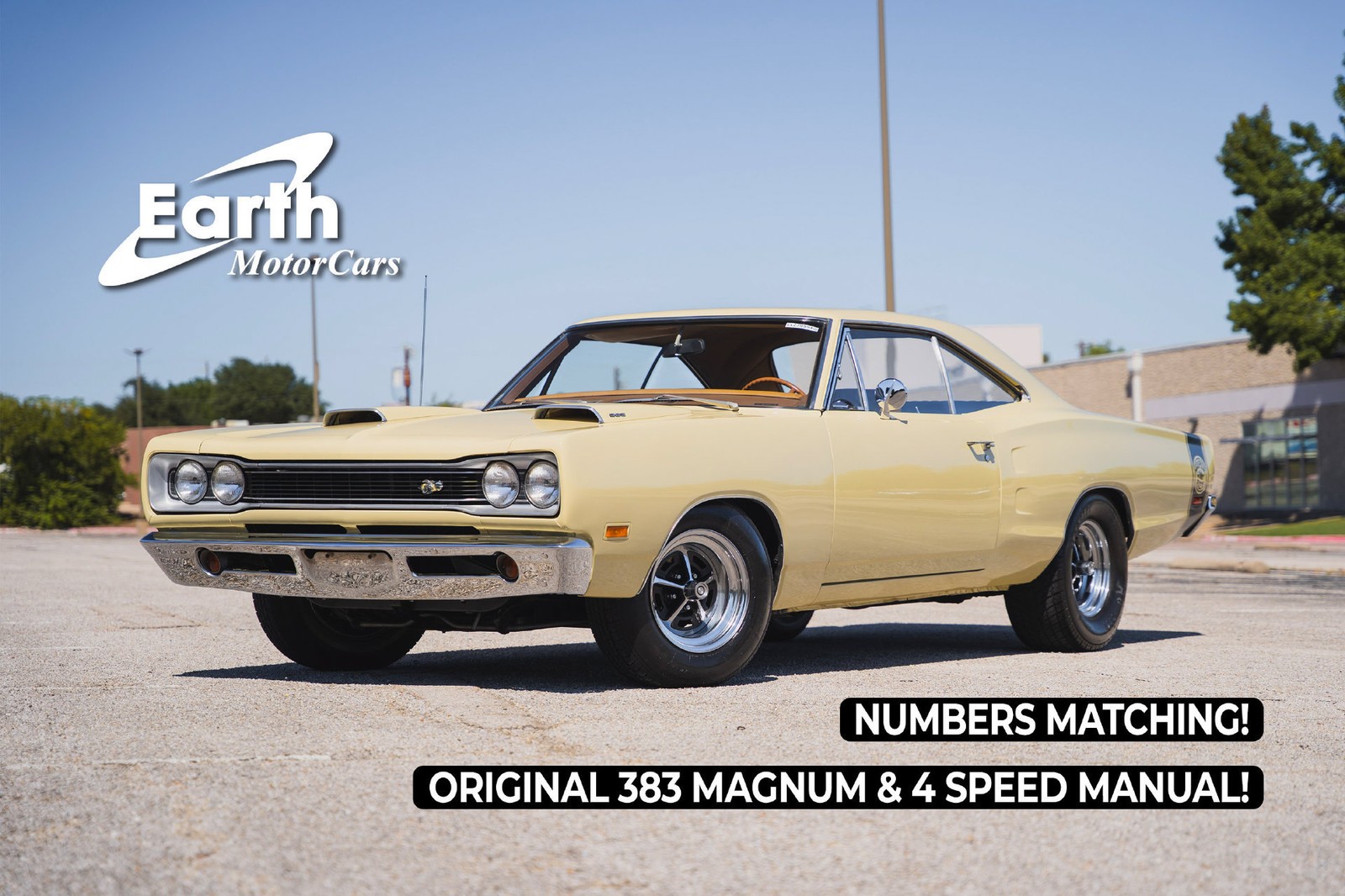 $85,675 · 4% above typical
Expand
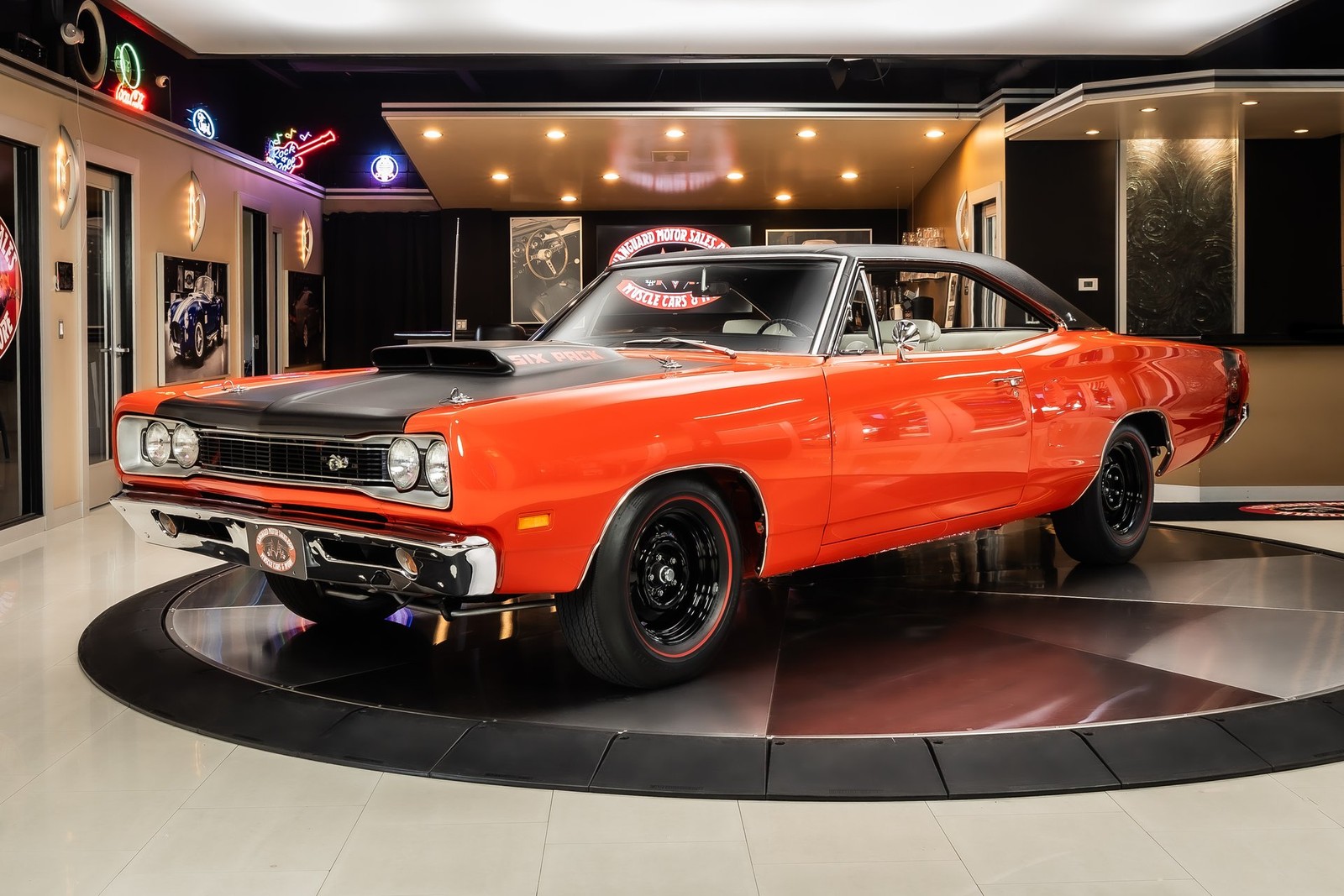 $199,900 · 143% above typical
Expand
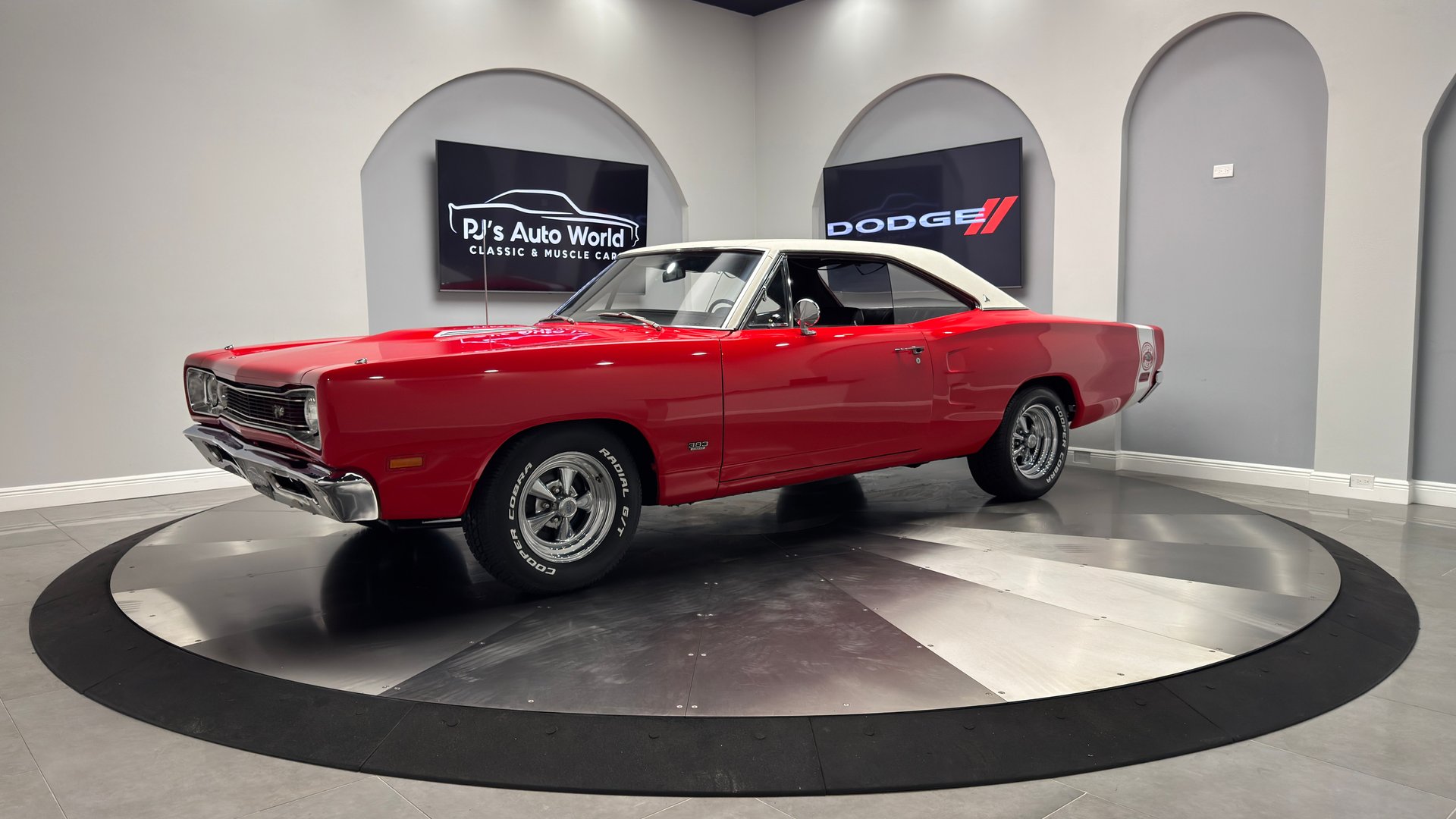 $64,900 · 21% below typical
Expand
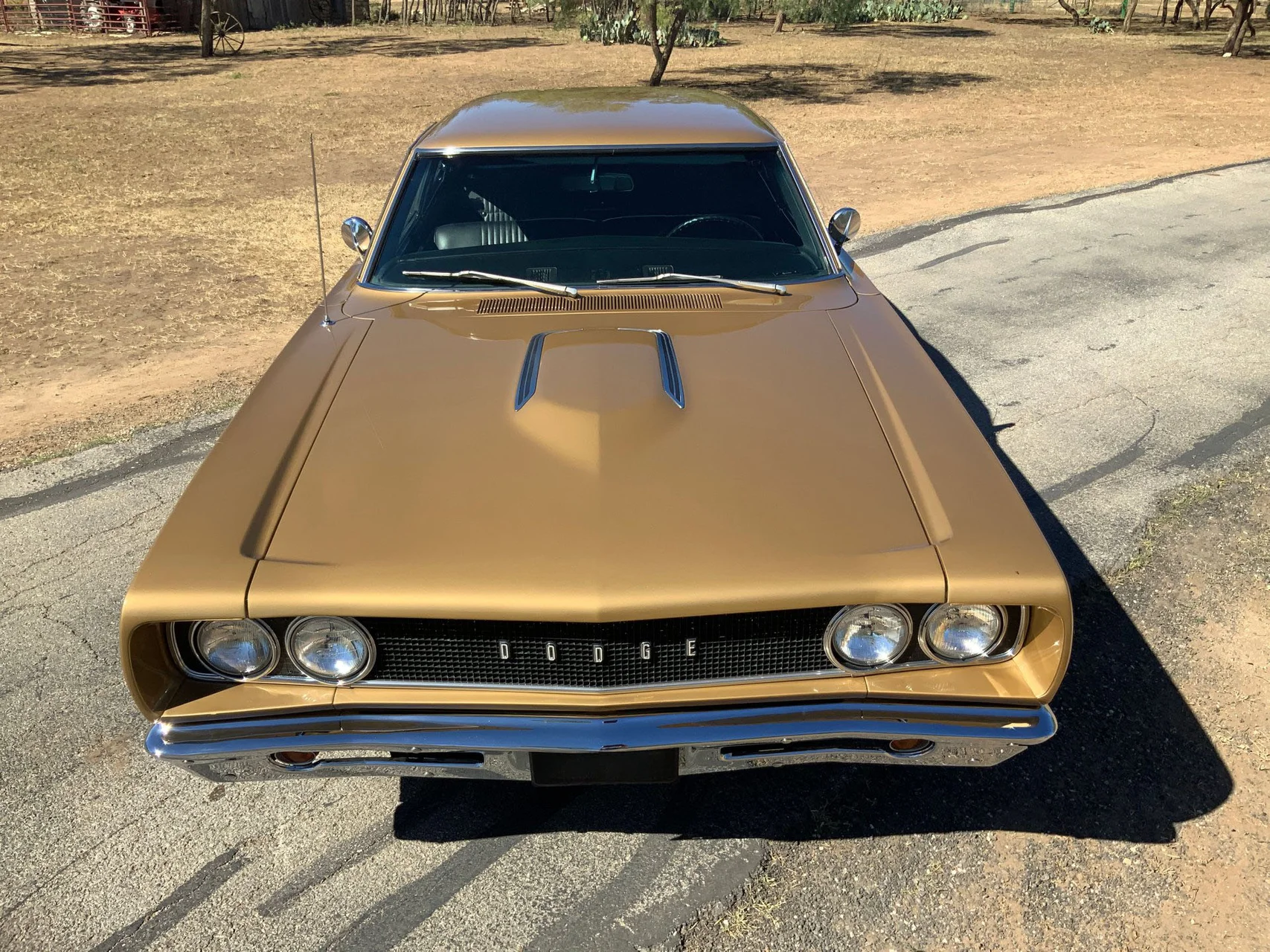 $44,640 · 46% below typical
Expand
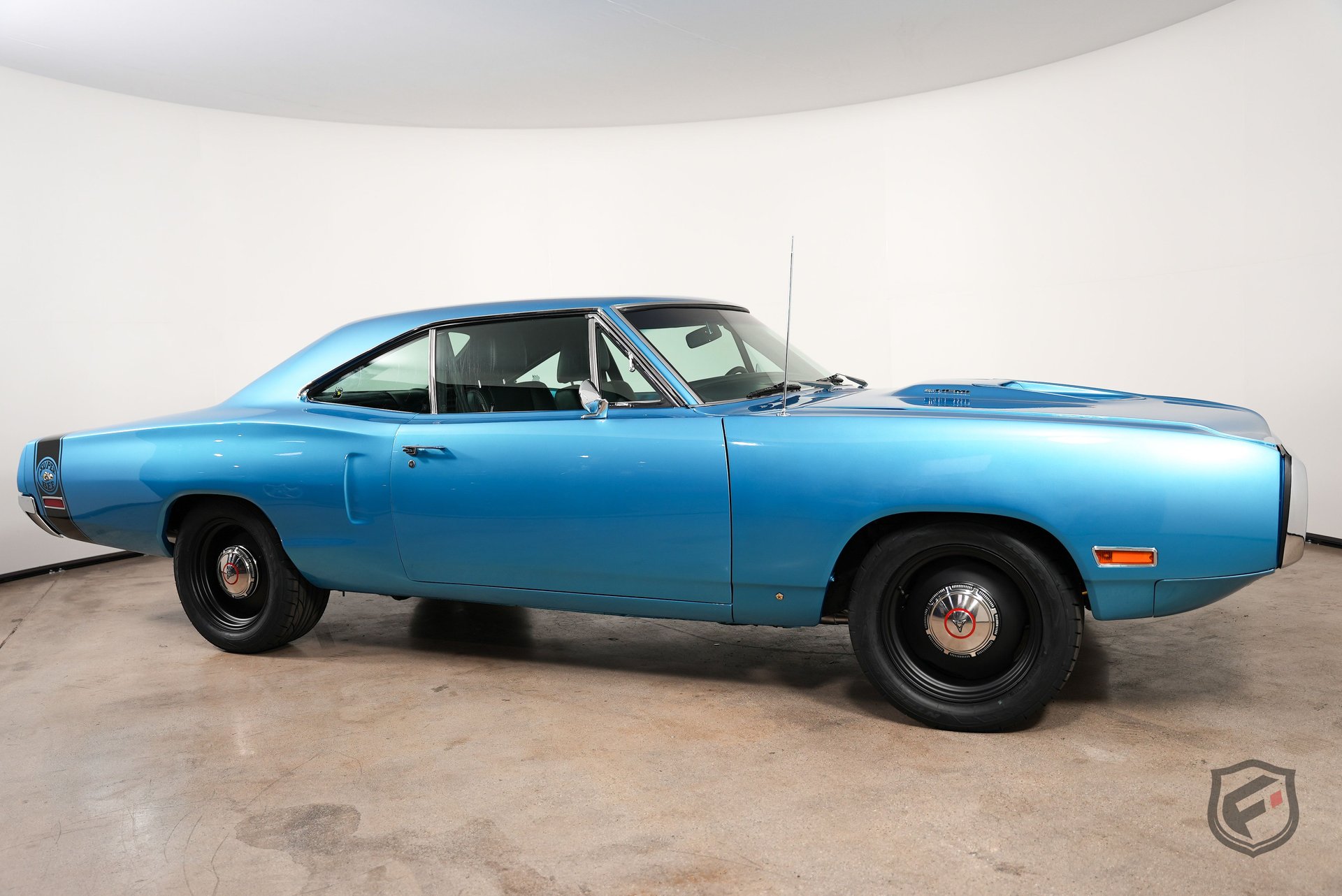 $119,950 · 46% above typical
Expand
What they sell for: Super Bee sale prices.