
Edsel Ranger 2 door buyer's guide
Edsel Ranger 2 door -- the model's own buyer's guide: variants, values and what to check.
Years listed: 1959-1960 · Series: Ranger
Overview and history
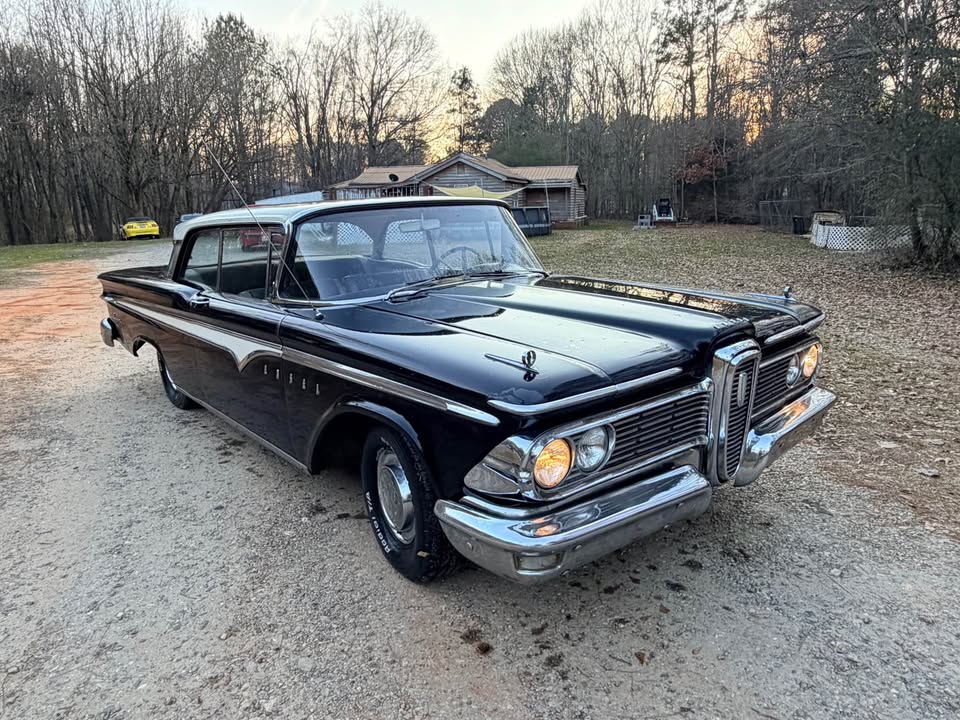
The Ranger is the Edsel you can actually buy, own and run without a specialist on retainer — and it is also the Edsel that tells the whole sad story in a single car. It was the entry-level series of Ford's brand-new Edsel Division, launched on 4 September 1957 — "E-Day" — as a 1958 model, priced and sized against Pontiac, Oldsmobile and Dodge. Underneath the famous styling it is a Ford: Ford chassis, Ford-derived engines, Ford transmissions, Ford brakes and Ford electrics. That is not a criticism. It is the reason a Ranger, alone among the headline acts of 1950s Detroit excess, can still be kept on the road today with a Ford parts catalogue, a set of hand tools and ordinary mechanical knowledge. You buy the theatre of an Edsel with the running gear of the best-supported American cars of the era.
Get the hierarchy straight before anything else, because sellers blur it. For 1958 Edsel fielded four series on two platforms. The Ranger and the step-up Pacer sat on Ford's 118-inch-wheelbase chassis; the Corsair and Citation sat on Mercury's longer 124-inch chassis with a bigger engine. The Ranger was the cheapest, lightest and — this matters now — most numerous Edsel. It came as a two-door sedan, a four-door sedan, a two-door hardtop and a four-door hardtop. There was no Ranger convertible and no Ranger wagon in 1958: the convertible belonged to the Pacer, and the wagons were separate series (Roundup, Villager and Bermuda). Any car offered to you as a 1958 Ranger convertible is something else wearing Ranger badges — read the identity checks in the inspection section before you read the seller's story.
The launch is the most studied marketing failure in American industry, but you need only the facts that shape the cars you will look at. Ford had projected first-year sales in the region of 200,000 and needed something like half that to break even. The 1958 model year delivered 63,110 Edsels in the United States, into the teeth of the sharp 1958 recession, at prices that overlapped Mercury at the top and well-equipped Fords at the bottom. The car itself was not the disaster of legend — what failed was the positioning, the pricing ladder, a dealer network built for volume that never came, and a year of teaser advertising that promised a revolution and delivered a mid-market sedan with an unusual grille. The grille is the other thing to get right. The 1958 car's vertical oval centre section was nicknamed the "horse collar" at the time and has been called worse since. It is also the single most valuable styling asset the car has: it is the feature that makes an Edsel unmistakable at fifty yards, and on a Ranger — where period buyers paid the least for it — it is exactly what you are buying now.
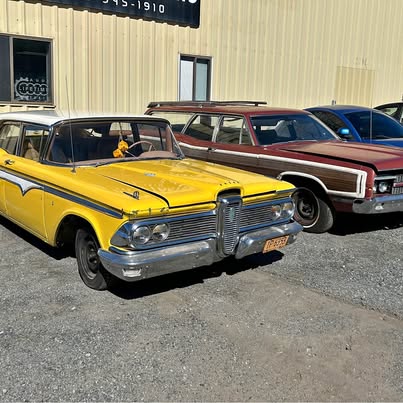
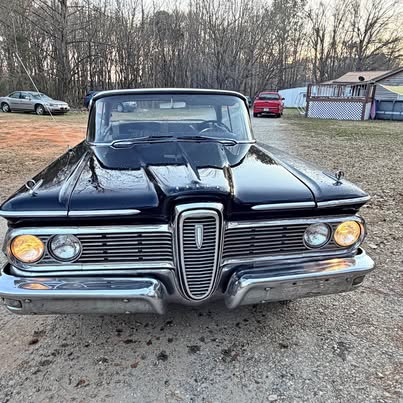
For 1959 Ford cut hard. Edsel was folded into the Lincoln-Mercury organisation, the Citation and Pacer were killed, and the range shrank to the Ranger, a revised Corsair and the Villager wagon. The Ranger grew onto a 120-inch wheelbase, the styling was toned down — the horse collar became a narrower shield between full-width bars — Teletouch was dropped, and the engine range widened downwards: a six-cylinder Ranger appeared for the first time, and the standard V8 shrank from the 361 to Ford's 292. The 1959 Ranger four-door sedan, at 12,814 US-built cars, was the single best-selling model in Edsel's entire history. If you shop Rangers for long, you will look at more 1959 cars than the other two years combined — which matches the listings pool for this guide: of the seven Rangers currently recorded on this site, three are 1958 cars, three are 1959s and one is a 1960, with four listed as automatics, two as manuals and one as a column-shift three-speed.
For 1960 the range shrank again, to the Ranger and the Villager wagon only. The 1960 Ranger, introduced on 15 October 1959, is a much more conventional-looking car — closely related to the 1960 Ford, with a full-width grille and a split horizontal bar where the horse collar used to be — but it kept one Edsel distinction that becomes an identity tool: it rides a 120-inch wheelbase where the equivalent Ford rides 119 inches. Ford announced the end of Edsel on 19 November 1959 and the last cars were built before the month was out. Total 1960 Edsel production was 2,846 cars, of which 2,571 were Rangers — including just 76 Ranger convertibles, the only Ranger convertibles ever built. Every 1960 Ranger is therefore a rare car by production, a common trap by reputation (converted Fords exist, and the convertible is the one they fake), and a perfectly usable Ford underneath either way.
One myth to correct before you go any further, because it poisons asking prices in both directions. The Edsel did not fail because the cars were badly built or mechanically exotic, and a Ranger is not a fragile orphan: its mechanical failure rate is the failure rate of a late-1950s Ford, because that is what it is. What is genuinely scarce is Edsel-specific body, trim and interior parts, and what is genuinely risky is the body structure underneath the styling. Buy the car as you would buy a Ford of the same year — structure first, identity second, mechanics third — and the Edsel badge adds pleasure without adding peril.
The models
The Ranger range is simple by year and confusing only across years, because Ford changed the car's platform, wheelbase, engine ladder and body list in each of its three seasons. Learn it year by year and no seller's description can move you.
| Model | Years | Engine | Output | Built | Character |
|---|---|---|---|---|---|
| Ranger sedan & hardtop | 1958 | 361 cu in FE V8, four-barrel | 303 hp | 21,701 | The launch car: biggest engine ever standard in a Ranger, horse-collar grille, Teletouch available |
| Ranger Six | 1959–1960 | 223 cu in overhead-valve six, single-barrel | 145 hp | A small minority of 1959–60 Ranger production | The economy buy: a credit option in 1959, bought by fleets and the cautious; slow, simple, honest |
| Ranger V8 | 1959–1960 | 292 cu in Y-block V8, two-barrel | 200 hp in 1959 form | The standard V8 car; the bulk of the 30,258 Rangers built for 1959 | The all-rounder: proper V8 manners on Ford running costs |
| Ranger with Express / Super Express V8 | 1959–1960 | 332 or 361 cu in FE V8 (1959); big FE V8 (1960) | 225 hp (332) to 303 hp (361) | An optional minority in both years | The sleeper: full-size performance in the cheapest Edsel body |
| Ranger convertible | 1960 | 292 V8 standard, FE V8 optional | 200 hp and up | 76 | The unicorn — and the most faked Edsel of all; verify before you value |
The 1958 cars are the purest Edsels and the easiest to understand. Every 1958 Ranger left the factory with the 361-cubic-inch V8 — there was no six and no smaller V8 — driving through a three-speed manual, an overdrive manual, or the Teletouch automatic described in the engines section. The four bodies split production as follows: the four-door sedan led at 7,414 cars (US and Canada), followed by the two-door hardtop at 6,005, the two-door sedan at 4,615 and the four-door hardtop at 3,667. Trim is deliberately plain next to a Pacer: less stainless, simpler upholstery patterns, painted details where the Pacer wears chrome. Period two-tone paint was common and suits the car — the side scallop was designed to carry a contrasting colour or a stainless sweep — and a 1958 in a correct two-tone scheme is a better-looking and better-selling car than the same car in a flat single colour. What a 1958 does not have matters as much: no convertible, no wagon, no smaller engine, and no Mercury-platform hardware anywhere. If a part on a 1958 Ranger looks like a Mercury part, ask why.
The 1959 cars are the rational Edsels. The range stayed at four bodies — two- and four-door sedans, two- and four-door hardtops — and production rose for the Ranger even as Edsel shrank: 30,258 Rangers for 1959, with the four-door sedan the runaway leader at 14,063 cars including Canadian production, the two-door sedan at 7,778, the two-door hardtop at 5,966 and the four-door hardtop at 2,451. The big change is under the bonnet. The standard engine became the 292 V8, the 223 six became available as a money-back credit option — the only time Ford sold you an Edsel by paying you to take less engine — and the 332 and 361 FE V8s sat at the top of the option list. Teletouch disappeared; the automatic became a conventional column-lever unit. Styling moved the headlamps down into the grille surround, shrank the centre shield, and cleaned up the rear. A 1959 is two inches longer in the wheelbase than a 1958, and that two inches is in the rear door and rear seat: four-door cars in particular do not share rear doors or some rear glass with the 1958, which matters when you price a car needing body panels.
The 1960 cars are the collector's Edsels and the buyer's trap, in that order. Five Ranger bodies were offered: two- and four-door sedans, two- and four-door hardtops, and the convertible. The four-door hardtop uses a thin-pillar roofline Ford did not offer on the equivalent Ford sedan, and the convertible is the famous one: 76 built, against a world of Ford Sunliners that look almost the same. Total 1960 Ranger production was 2,571 cars, so even the "common" four-door sedan is a low-production car. Engines reverted to a Ford-style ladder: the 223 six, the 292 V8, and a big FE V8. Every 1960 Ranger was built in a run of roughly five weeks in the autumn of 1959, at Louisville alongside Fords — expect Ford parts-bin hardware where a 1958 has Edsel-specific pieces, and build variation that would warn you off any other car is normal on this one.
Across all three years, equipment follows the same logic. Power steering and power brakes were optional throughout — common on hardtops, rare on six-cylinder sedans. Air conditioning was a rare option on V8 cars, and a working period installation adds genuine interest; most cars you see will have a heater, a radio, a clock and little else. Two-tone paint and the contrasting scallop insert are styling features, not trim levels — the data plate, not the paint, settles how the car left the factory.
Engines and gearboxes
Four engine families cover the Ranger, all of them Ford designs with Ford service histories: the FE big-block V8, the Y-block V8, and the 223 overhead-valve six. None is exotic, none is the reason to walk away from a car, and each has a distinct character you should choose deliberately rather than accept by accident. Gearboxes are three-speed manuals, overdrive manuals and two families of Ford automatic — plus one famous Edsel-only control system for the 1958 automatic that has its own subsection, because on a 1958 car it deserves one.
The 361 FE V8: the E-400
The 361-cubic-inch V8 standard in every 1958 Ranger — and optional at the top of the 1959 range — is a member of Ford's FE family, the big-block architecture that also produced the 352, 390 and 427. Edsel marketed it by its torque figure as the E-400: 303 horsepower and 400 lb-ft of torque, from a four-barrel carburettor and a compression ratio of about 10.5:1. It is an Edsel-only displacement — Ford never sold a 361 in a Ford — but it is not an Edsel-only engine in any way that matters to your wallet: the block, heads, valvetrain, bearings, gaskets and service procedures are FE, and an engine builder who knows the 352 and 390 knows this engine. In the car it is the making of the 1958 Ranger. The 361 gives the lightest Edsel genuine big-car performance: strong, lazy torque from idle, a proper four-barrel surge when the secondaries open, and cruising effortlessness that the later, smaller Ranger engines never quite match. This is the engine that makes a 1958 feel like the medium-price car Ford promised.
Its failure modes are FE failure modes. Exhaust manifold bolts seize and snap, and FE manifolds crack — budget $400–$900 to sort a blowing manifold properly, more if studs have to be drilled. The rear main seal and intake manifold end seals weep oil with age; an FE intake is a heavy iron casting, and resealing it is a $600–$1,200 job with the distributor timing reset afterwards. Hydraulic lifters tick on cold starts when oil changes have been skipped, and a tick that does not clear within a minute is telling you about wear or sludge, not character. The four-barrel carburettor suffers the usual heat-soak and ethanol problems of the era — warped air-horn surfaces, perished pump diaphragms, a sticking choke — and a full rebuild at $350–$650 is a service item on any car that has sat. Oil pressure is the FE's vital sign: a gauge that sags at hot idle with the engine quiet is acceptable on a high-mile car, but a gauge that sags with lifter noise is a rebuild conversation at $4,500–$7,500, which is why the 361's condition, proven by a pressure gauge and a cold start, matters more than its specification.
One identity trap lives here. Because the 361 is Edsel-only, a 1958 Ranger with a 352 or 390 in it has had an engine swap — common, Ford-easy, and not a catastrophe — but it is no longer the car its data plate describes, and it should be priced as a swap, not as original. The engine code on the serial plate settles what the car left the factory with; the casting numbers and date codes on the block settle what is in it now. Check both.
The 292 Y-block V8
For 1959 the standard Ranger V8 became Ford's 292, the largest of the Y-block family that had powered Fords and Thunderbirds since 1955. In 1959 Ranger form it makes 200 horsepower from a two-barrel carburettor. The Y-block is a deep-skirted, heavy, immensely strong engine with a distinctive exhaust note and a reputation for outlasting the cars around it. It is noticeably less powerful than the 361 — you feel it on hills and in overtaking — but it is smooth, torquey at low speed, and perfectly matched to what a Ranger sedan is actually for. In the lighter two-door bodies it is entirely adequate; in a four-door hardtop with power options and an automatic, it is adequate and no more.
Y-block specifics are different from FE specifics, and a seller who describes them as interchangeable is guessing. The oiling system feeds the rocker shafts from galleries that sludge up when oil changes are neglected, starving the top end: the classic symptom is valvetrain clatter that worsens as the engine warms, and the classic bodge is an external copper oil line run from the oil-pressure sender port up to a valve cover — if you see that line, the engine is telling you its service history in copper. Rocker-shaft wear and worn valve guides give blue smoke on start-up and on the overrun. The two-barrel carburettor is simple and cheap to rebuild ($250–$450), the distributor sits awkwardly at the back of the engine, and the crossover exhaust pipe cooks its gaskets and nearby plug leads. None of it is fatal, all of it is cheap by big-block standards, and a 292 that starts cleanly, idles quietly and shows no copper plumbing is one of the lowest-risk engines in this guide.
The 332 FE and the big-engine options
Between the 292 and the 361, the 1959 Ranger offered the 332 FE at 225 horsepower with a two-barrel carburettor — in period Edsel language, the Express V8, where the 361 was the Super Express. It gives you FE torque and smoothness without the 361's four-barrel thirst, and shares every FE service consideration above. For 1960 the top of the ladder was again a big FE V8 in Ford tune, in place of the discontinued Edsel-only 361. You will meet these engines rarely — most 1959–60 Rangers were built as 292s — so value them as a bonus on a sound car, never as a reason to forgive a rotten one. Verify any claimed big-engine car from the data plate engine code: FE engines swap within the family with a spanner, and they have had sixty-five years to be swapped.
The 223 six: the Mileage Maker
The 223-cubic-inch overhead-valve six, offered in the Ranger for 1959 and 1960, is Ford's Mileage Maker: 145 horsepower, 206 lb-ft of torque, a single-barrel carburettor and hydraulic lifters. In 1959 it was a credit option — the list price of the car fell if you took it — which tells you exactly how period buyers regarded it, and the cars went disproportionately to fleets, utilities and careful private buyers who then maintained them carefully. That history cuts both ways today. A six-cylinder Ranger is a slow car by modern standards and makes no attempt to hide it: motorway merging is planned, hills are taken at the engine's pace, and an automatic six is the slowest combination in this guide. But the 223 is also one of the toughest engines Ford ever made — a seven-main-bearing design in its later form with a service life measured in decades — and the cars around it tend to be the least molested Rangers you will find: unmodified, unraced, and often still wearing their original paint and trim because nobody ever loved them enough to "improve" them.
Service is simplicity itself. The single-barrel carburettor (a Holley 1904-pattern unit) rebuilds for $200–$400; the cooling system is generous for the engine's output, so a six that overheats has a blocked radiator or a failed thermostat, not a design flaw. Budget for the same age-related rubber, ignition and fuel-system work as any car in this guide, and no more. Do not let a seller price a six as a V8 — and do not let V8 snobbery talk you out of a genuinely original six at six-cylinder money: as the values section explains, the gap between the two is the market's, not the cars'.
Gearboxes: manual, overdrive and the Ford automatics
The standard gearbox in every Ranger is a three-speed manual with column shift — "three on the tree" — a Ford unit with synchromesh on second and top. It is robust, vague in the way of all column shifts, and critically dependent on the linkage bushes at the base of the steering column: a shift that baulks or jams between gates is almost always worn linkage, fixed with a bush kit and an afternoon ($150–$400 fitted), not a gearbox rebuild. A crunch into second on the move is synchromesh wear, and a box that jumps out of top on the overrun needs internal work ($900–$1,800). The optional overdrive — a Borg-Warner electrically engaged planetary unit behind the manual box — is a delight when it works and a diagnostic exercise when it does not: it depends on a kickdown switch, governor, relay and solenoid, and failure is electrical in most cases. Budget $300–$800 to recommission a dead one, and test it on the road, because it cannot be tested on a driveway.
The conventional automatics are Ford's two families of the era: the two-speed Ford-O-Matic (sold in Edsel language as the Mile-O-Matic) and the three-speed Cruise-O-Matic (Dual-Power Drive in 1959 Edsel terms). Both are cast-iron-case, torque-converter gearboxes of Borg-Warner design heritage, both are well understood by any transmission shop that handles 1950s Fords, and both fail in the same ways: hardened seals that delay engagement when cold (a box that takes three seconds to find drive on a cold morning is asking for a reseal, $800–$1,500, before it asks for a rebuild), slipping on the 2–3 change, and fluid cooked brown by a blocked cooler line. A full rebuild runs $1,800–$3,000. Check the fluid on every automatic car: pink and sweet is a service history; brown and burnt is a negotiation. Note also that the brief pool for this guide skews automatic — four of seven cars — which matches the wider fleet: most Rangers were sold as automatics, and a genuine manual car, particularly a V8 manual, is the scarcer find.
Teletouch: the 1958 push-button automatic
The 1958 Ranger's optional automatic is controlled by Teletouch Drive: five push buttons — Park, Reverse, Neutral, Drive and Low — set into the centre of the steering wheel, where every other car puts the horn button. An electric servo motor mounted on the transmission works the shift linkage when you press a button. As a piece of 1957 theatre it is unmatched, and as a piece of 1958 engineering it was the Edsel's most troublesome system, for reasons that are specific and diagnosable. The servo and its wiring live low on the transmission, in the heat and road dirt beside the exhaust; the harness chafes and cooks, the servo's brushes and contacts wear, the buttons themselves crack and stick, and the whole system depends on correct adjustment of the cable and linkage it moves. The classic symptoms are a box that will not leave Park, a button that works hot but not cold (or the reverse), a servo that buzzes without shifting, and a car that has been "fixed" by fitting a floor shifter through a hole cut in the transmission tunnel — which solves the problem and amputates the feature in the same afternoon.
Price a Teletouch car by what the system does on your test, not by what the seller says it did last summer: press every button, hot and cold, engine running, foot on the brake. A fully working Teletouch is a genuine selling feature — the knowledge and most parts survive in the Edsel club world, and a servo rebuild plus harness repair typically runs $500–$1,200 at a specialist. A dead Teletouch on a sound car is a known, bounded problem; a dead Teletouch plus a cut tunnel is a car whose originality has already been spent, and it should be priced accordingly. From 1959 the system was gone, so no 1959 or 1960 car should ever be described to you as Teletouch: if it has buttons, it is a 1958, whatever the title says.
Problem areas
Everything in this section follows one ordering rule: structure first, because a Ranger's Ford mechanicals can be fixed with money and a catalogue, while its Edsel body can only be fixed with money, time and donor metal. Work through the car in the order below and you will spend your suspicion in the right places.
Rust: the map
A Ranger rusts where a late-1950s Ford rusts, plus two places that are Edsel's own. Start underneath, because the frame decides the car. The chassis is a separate ladder frame with a perimeter character at the passenger cell, and the killing rust is in the side rails where they kick up over the rear axle, in the crossmembers that carry the body mounts, and in the torque-box areas at the front of the rear wheelhouses. Surface rust on a frame is normal and largely cosmetic; flaking, holed or soft metal at a body mount is structural, and a car that needs frame-rail repair at two mounts is a restoration project whatever its paint says. Prod with a screwdriver — with the seller's permission, and if the seller refuses, you have learned something worth the trip. Budget $1,500–$4,000 for proper frame-rail and mount repairs with the body on, and walk away from a car whose frame is holed in the kick-up on both sides unless the price already treats it as a parts car.
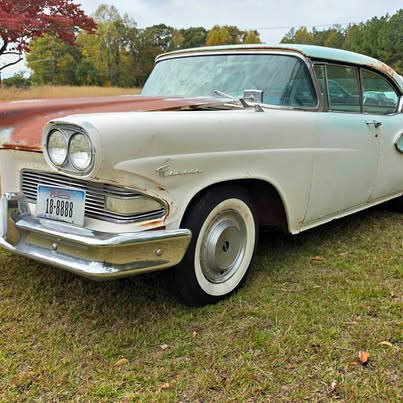
On the body, walk this map in order. The rocker panels (sills) rust from the inside out: press along their length, look for bubbling where they meet the wheel arches, and check the sill tops under the tread plates. The floor pans rust under the carpets where leaking windscreens and heater cores have kept them wet for decades — lift the carpets, all of them, and expect the front footwells to be worst. The trunk floor rusts around the spare-wheel well and above the fuel tank; check it from inside and underneath, because the tank hides the middle of the panel. Rear wheel arches and lower rear quarters rust where the skins trap road dirt; lower front fenders rust behind the front wheels for the same reason; door bottoms rust along the folded seam; hood and trunk-lid edges rust where the skin folds over the frame. None of these panels is reproduced for an Edsel. Ford panels sometimes adapt — floors and some structural pressings are shared in spirit if not in part number — but quarters, fenders and door skins are donor-car or hand-fabricated parts, and fabricating one lower quarter runs $1,200–$2,500 before paint. That arithmetic is why a solid body with a tired engine beats a shiny body with holes, every time.
Two Edsel-specific traps complete the map. The 1958 car's side scallop is a pressed recess that collects water and dirt behind its stainless or painted insert, and it rusts along its lower edge in a line that sellers love to fill and paint — run a magnet along the scallop's lower lip and look inside the rear wheelhouse for the back of the repair. And the 1958's distinctive "boomerang" rear lamps sit in housings that trap water against the rear panel; bubbling below the lamps is common and the housings themselves are scarce. On 1960 cars, check the unique rear panel and lamp pods with the same suspicion: they are one-year, one-marque pressings, and damage there is fabrication, not ordering.
Front suspension, steering and brakes
The front suspension is Ford's independent coil-spring design with ball joints, and by now every wear item in it is either new, worn, or worn and disguised. Ball joints, control-arm bushes, anti-roll bar links and tie-rod ends are all shared Ford service parts, cheap and available; a front end that clonks over bumps, wanders at speed or wears its front tyres on one shoulder is asking for a $600–$1,400 refresh of joints and bushes plus an alignment, not for forgiveness. Coil springs sag — measure the ride height side to side, because a car down on one front corner has a broken or collapsed spring, and a car down at the back has tired leaf springs or, worse, rusted spring hangers, which returns you to the rust section. Shock absorbers are ordinary Ford fitments; bounce each corner and expect one firm rebound, not a pogo stick.
Steering is a recirculating-ball box, manual as standard, with linkage-type power assistance optional. Manual boxes wear in the straight-ahead position and develop play that no adjustment fully removes; an inch of free play at the wheel rim is tired, two inches is a rebuild or exchange box ($400–$800 fitted). The Ford power-steering system of this era uses a control valve and a slave cylinder in the linkage, and it leaks — from the valve, the cylinder rod seal and the hoses — as a matter of age rather than abuse. A system that groans, leaks onto the driveway and still steers evenly is a reseal job ($500–$1,000); a system that assists one way and not the other has a valve fault and needs the same money spent sooner. Check the steering column itself on manual-shift cars: the shift linkage and the steering share the column, and wear there shows as both vague steering and a vague shift.
Brakes are four-wheel drums, entirely adequate when maintained and treacherous when not, because every Ranger left the factory with a single-circuit hydraulic system: one failed hose, cylinder or line means no brakes at all, not half brakes. Treat the hydraulic system as a single consumable. On any car you buy, budget immediately for a full inspection and, unless there is recent documented work, renewal of the flexible hoses, wheel cylinders and master cylinder, with every steel line examined for corrosion — $700–$1,500 for a thorough recommissioning with quality parts. A dual-circuit master-cylinder conversion is the one modification this guide actively recommends on a car that will be driven in modern traffic; it uses Ford-pattern parts, it is reversible, and it converts a total-failure system into a get-you-home system for $300–$600 fitted. Inside the drums, look for the usual: scored drums (many Ford drums interchange, but measure before assuming), contaminated shoes from leaking cylinders or axle seals, and self-adjusters seized solid. The parking brake cables seize in their housings, particularly on cars that have sat; a car that rolls against its parking brake on a slope needs cables, not adjustment.
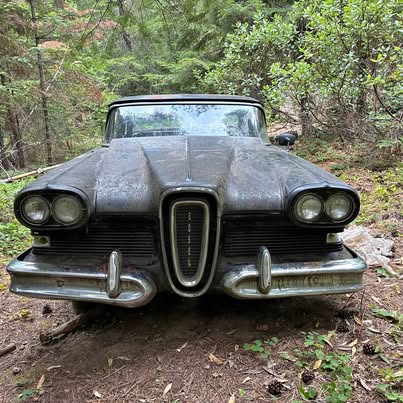
Engine, cooling and fuel system
The engine-specific faults live in the engines section; this is the system-level picture. Every Ranger engine is cooled by a generous radiator that is now sixty-five years old. Original cores block internally and rot at the tanks; a car that runs hot in traffic but cool on the road has a flow problem (radiator or water pump), a car that runs hot everywhere has a timing, mixture or head-gasket problem, and a car with rusty water in the header tank has been run on plain water and will have corrosion throughout — including inside the heater core, whose failure soaks the passenger footwell and then rusts the floor you checked in the rust section. A radiator recore runs $450–$800; a water pump is a cheap Ford part; a heater core is cheap and miserable to fit. Replace every rubber hose and the thermostat on any car without documented recent work, and pressure-test the system before the road test, not after.
The fuel system is the second recommissioning bill on any stored car. Tanks rust from the inside when cars sit with old fuel; the sender unit's float and rheostat fail; the steel line along the frame corrodes at its clips; and the mechanical fuel pump's diaphragm is attacked by modern ethanol fuel. Symptoms layer on each other — a car that runs on a remote bottle but starves on its own tank has told you the tank and line are the problem. Budget $600–$1,400 to clean or replace the tank (replacement tanks for the Ford equivalents are the usual route; verify fit before ordering), renew the line and pump, and rebuild the carburettor. Do not run a stored car on its own tank "just to hear it run" on a viewing: you will pull a decade of sediment into the pump and carburettor and turn the seller's problem into your first repair. Finally, exhausts: manifolds crack (FE) or blow at the crossover (Y-block) as described earlier, and the single exhaust system rots from the muffler forward. A full replacement system in aluminised steel runs $500–$1,000 fitted and is one of the few jobs where a Ranger costs exactly what a Ford costs.
Interior and trim
The interior is where Edsel-specific scarcity actually bites, because the mechanical Ford world cannot help you. Seat upholstery was vinyl, or vinyl and cloth, in patterns unique to the series and year; correct-pattern reproduction covers are not a catalogue item the way they are for a Mustang. A good trimmer can reproduce a Ranger interior from the original patterns if the original covers survive to copy — $2,500–$5,000 for a full retrim — but a car already retrimmed in generic street-rod vinyl has lost its patterns as well as its originality, and should be valued as a car that needs trimming. Door cards warp and rot at their lower edges where window seals leak; headliners sag; the padded dash cracks in the sun. Judge by completeness: every knob, escutcheon and piece of stainless present and correct is worth more than shiny replacements, because the missing Edsel-only piece is the one you will spend a year hunting.
Brightwork follows the same rule. Bumpers rechrome at $800–$1,500 each. The grille assemblies — above all the 1958 horse-collar centre — are partly pot metal, and pot metal pits from within: chrome over pitted pot metal is a temporary cosmetic, and a deeply pitted grille is one you live with or replace from a donor. Stainless side trim is durable and polishable but series- and body-specific in length and profile. A complete, dull trim set beats an incomplete shiny one.
Electrics
A Ranger is a 12-volt, negative-earth car with a generator (dynamo), not an alternator — Ford did not standardise alternators until the mid-1960s. A healthy generator charges adequately at cruising speed and barely at idle with the lights on, which is normal; a car that flattens its battery in town traffic usually has a tired generator, a lazy regulator or a slipping belt, all cheap Ford service items ($200–$500 to put right). The wiring is the real age risk: insulation hardens and cracks, earth straps corrode, and previous owners add accessories with domestic cable and hope. Look for the standard bodges — Scotch-lock connectors, wires twisted and taped — and budget a day with a multimeter on any car that shows them. Test on every viewing: the headlamp switch (its internal breaker cycles the lights on and off when it fails, a fault owners misdiagnose for months), the horn (on a 1958 Teletouch car the wheel centre is the gear selector, which confuses everyone the first time), the blower, the wipers, and every gauge, because the instrument voltage regulator behind the dash fails and makes the fuel and temperature gauges lie together in the same direction. None of this is expensive; all of it is diagnostic gold about how the car has been kept.
How to inspect one
Inspect in this order. It follows the problem areas deliberately: identity and structure can kill a purchase in ten minutes, and there is no point falling for an engine you will never get to use.
- Paperwork and identity first. Match the title to the serial number on the car's data plate, and read the plate's codes — engine, body style, trim, paint, build date and plant — against the car in front of you. The plate, not the badges, settles what the car is. A 1958 car described as a convertible, or a 1960 convertible at any price, goes no further until this step passes.
- The 1960 wheelbase test. On any 1960 car — and on a 1960 convertible above all — measure the wheelbase. A genuine 1960 Edsel rides on 120 inches; the 1960 Ford it is so often converted from rides on 119. One inch, one tape measure, and the most expensive fake in the Edsel world is settled before you discuss money.
- Frame and mounts. Get under the car with a light, or get it on a lift — see the photograph below. Work the rust map from the problem areas: rear kick-ups, body mounts, crossmembers, torque boxes. Prod suspect metal. Frame condition outranks everything else on the car.
- Sills, floors and trunk. Press the rocker panels along their full length, lift every carpet, and empty the trunk. Check the scallop's lower lip with a magnet on a 1958, and look under the rear lamp housings for bubbling.
- Panel fit and paint. Sight down both sides for ripples and mismatched gaps; check that the chrome and grille pieces agree in condition (the grille test from the models section); look for overspray on rubbers and trim that betrays a quick cosmetic paint job over the rust you have just been hunting.
- Cold start. The engine must be cold when you arrive — a warmed-up car is a hidden fault. Watch for blue smoke (guides and rings), listen for lifter tick that does not clear (FE sludge, Y-block top-end oiling), and look for the copper oil-line bodge on a Y-block's valve cover.
- Oil pressure and charging. With the engine hot, note the oil pressure at idle and at cruise on the road test, and confirm the charge light behaves. Sagging hot pressure with noise is a rebuild negotiation; a charge light glowing at idle with a slipping belt is a cheap fix — know which you are looking at.
- Cooling under load. Drive long enough to get the car properly hot, including a slow traffic section. Temperature that climbs in traffic and falls on the move points at radiator flow; temperature that climbs everywhere points deeper. Check for rusty coolant and footwell dampness (heater core) when you return.
- Gearbox, all of it. Manual: every gear, the 2nd-gear synchromesh, jumping out of top on the overrun, and the column linkage's precision. Overdrive: confirm it engages and kicks down. Automatic: cold engagement delay (time it), the quality of every shift, and the fluid's colour and smell on the dipstick afterwards. Teletouch on a 1958: every button, hot and cold, exactly as the engines section prescribes — and look under the carpet for a cut tunnel that says the system died years ago.
- Steering, suspension and brakes. Drive over broken surfaces and listen; check straight-ahead steering play at the wheel rim; brake firmly from speed and feel for pulling (a sticking cylinder or contaminated shoes), a sinking pedal (hydraulics) and a pedal that needs pumping (air or adjustment). Remember the single-circuit warning: on the test drive, you are also testing the system you will recommission first.
- Electrics sweep. Lights (watch for the cycling headlamp-switch fault), horn, wipers, blower, gauges, radio. On a generator car, note charging behaviour with the lights on at idle — lazy is normal, discharging hard is a bill.
- Interior and trim census. Last, because it prices the car rather than saving it: count what is missing. Every absent Edsel-only trim piece, knob, lamp housing and upholstery pattern goes on the list with a realistic hunt-time attached. Then — and only then — add up the car: structure verdict, identity verdict, mechanical bills, trim hunt. That sum, not the seller's enthusiasm, is your offer.
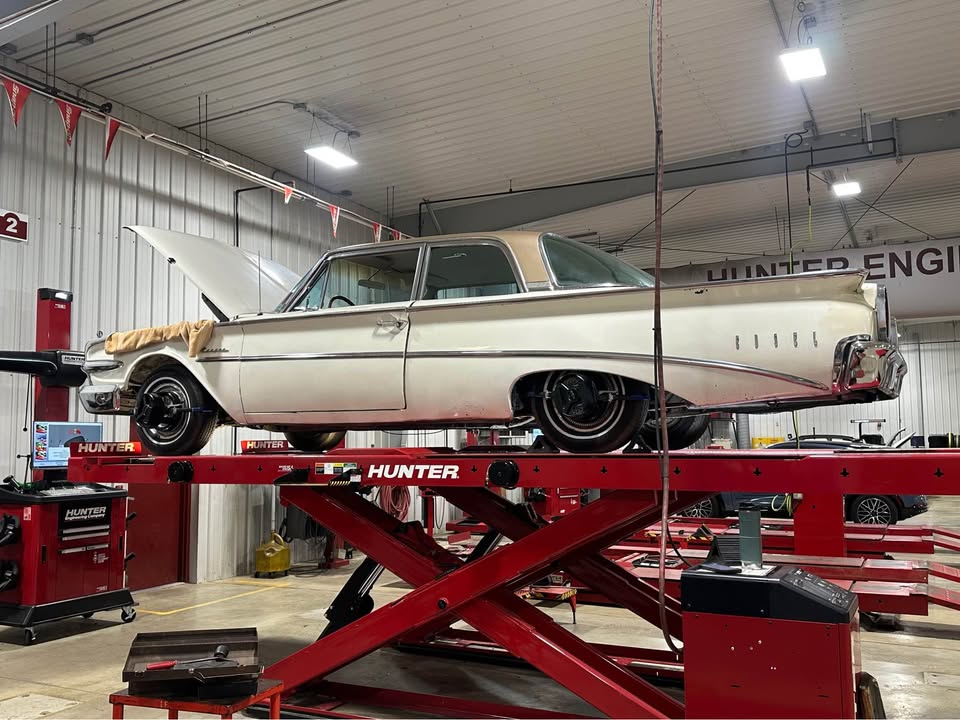
Values
The build's market block beneath this guide carries the current numbers — the cars listed now and the recorded sales — and this section teaches you how to read them, because the Ranger market is small, condition-driven and routinely misread by people importing assumptions from bigger Ford and Mercury markets.
The first driver is condition, and the spread is wider than on almost any comparable Ford. The surviving Ranger pool runs from outdoor-stored project cars to properly restored hardtops, with very little in between that is honestly described. A project Ranger and a finished Ranger are effectively two different markets that share a badge: the project trades on its structure, its completeness and its identity, and the finished car trades on the quality of work you can verify. When you compare a listing against the recorded sales, compare like with like on those terms first — body style second, year third, engine last. A solid, complete project is frequently better value than a cosmetically finished car whose structure and trim census you cannot verify, because the project's faults are priced and visible while the finished car's may be neither.
The second driver is body style, and the hierarchy is stable. Convertibles sit at the top — in the Ranger's case that means the 76-car 1960 production, where verified identity commands a premium that a converted Ford must never be allowed to borrow. Two-door hardtops follow: the best-looking Rangers, bought as style cars and kept better. Four-door hardtops carry a smaller premium over the sedans than their rarity alone would suggest. Sedans — the volume cars, above all the 1959 four-door — are the value end of the market and the easiest Rangers to buy well. Do not let a seller price a sedan off hardtop evidence, in either direction.
Year and engine adjust the body-style figure rather than replacing it. The 1958 cars carry a first-year premium rooted in the horse-collar styling and the standard 361: they are the iconic Edsels, and icon status is a real market force. The 1960 cars carry a rarity premium rooted in the five-week production run, strongest on the convertible and the four-door hardtop, weakest on the sedans where rarity does not overcome the plain styling. Between engines, the 361 and the big FE options earn a modest premium over the 292, and the 292 over the six — but condition overwhelms all of it. A documented, original six-cylinder car will out-sell a tired 361 car with a swapped engine and a cut Teletouch tunnel, because originality is the third driver and the one sellers most often claim and least often prove. Data-plate agreement, unmolested systems and a car that is what it says it is: that is what the premium attaches to.
Finally, negotiation reality. This is a thin market with a loyal but small buyer pool, which means asking prices are aspirations more often than evidence, cars stay listed for a long time without anything being wrong with them, and the recorded sales beneath this guide — achieved prices, not asks — are the only honest benchmark. Price your offer off the inspection sum from the checklist: structure, identity, the recommissioning bills (brakes, fuel, cooling, tyres on any stored car) and the trim census. A seller who has done those jobs with receipts has a car worth a premium. A seller who has done none of them has a project, whatever the paint looks like, and the market — read properly — already knows the difference.
Parts and ownership
Owning a Ranger divides cleanly into two worlds. The mechanical world is Ford's, and it is one of the best-supported worlds in the entire classic hobby. The social and trim world is Edsel's, and it is smaller, club-centred and entirely navigable if you join it before you need it.
Mechanical parts first. Engine service and rebuild parts for the 223 six, the 292 Y-block and the FE family are ordinary catalogue items from the mainstream Ford suppliers, because these engines powered hundreds of thousands of Fords, Thunderbirds and trucks: bearings, gaskets, pistons, timing sets, water pumps, carburettor kits, ignition parts and clutch components are all current service items, priced as Ford parts, not orphan parts. Suspension, steering and brake components are the same story — ball joints, bushes, tie-rod ends, brake shoes, cylinders and hoses interchange with the Ford equivalents of the same year in most cases. Verify by measurement and part number rather than by assumption, particularly across the 1958-to-1959 wheelbase change, but expect the Ford catalogue to answer. Gearbox parts survive through the transmission trade, and the generator, starter and regulator are standard Ford units any auto electrician can rebuild. If it makes the car go, stop or steer, you can buy it new, this week, at Ford money.
Body, glass and trim are the honest difficulty. No reproduction sheet metal is made for the Edsel: floors and some structural repair sections from the Ford world can be adapted, but fenders, quarters, doors and the Edsel-specific front and rear pressings come from donor cars, New Old Stock that surfaces irregularly, or fabrication. Glass is better — the cars share much of their glazing with Ford equivalents, and the specialists can usually match a screen or side glass — but the 1959's longer-wheelbase rear doors and the 1960's unique rear treatment mean you confirm fit by year and body, never by optimism. Chrome and die-cast trim are restorable rather than replaceable: rechroming is a thriving trade, pot-metal repair is a specialist one, and the Edsel clubs' classifieds and the swap-meet circuit are the real supply chain for grille centres, lamp housings, scripts and stainless. Upholstery, as the problem areas explain, is a trimmer's job from surviving patterns. None of this is a reason not to buy the car. It is the reason the inspection's completeness census matters more on a Ranger than on the Ford it is based on.
The knowledge infrastructure is excellent, and it is the strongest argument for the car. Two long-established clubs — the Edsel Owners Club and the International Edsel Club — maintain registries, technical libraries, reproduction small parts (decals, rubber seals, Teletouch components and the like appear through club channels), and the accumulated decoding knowledge for data plates and build records. Factory shop manuals exist in reprint and original form, and you need the Edsel supplement as well as the Ford manual, because the Edsel-specific systems — Teletouch above all — are not in the Ford book. Join a club before you buy if you can; the classifieds alone will recalibrate your sense of what a fair price is, and a club member's eyes on a local car are worth more than any checklist, including the one in this guide.
Running costs are Ford costs. Fuel consumption is period big-car consumption — the 361 four-barrel is thirsty, the six is genuinely economical by 1950s standards — and modern ethanol fuel asks for the usual accommodations: fresh fuel, a carburettor rebuilt with ethanol-tolerant parts, and attention to rubber fuel components. Insurance through the classic-car market is straightforward and inexpensive for an agreed-value car in this class. Storage matters more than mileage: a Ranger kept dry will outlive its owner, and a Ranger kept damp will consume its floors, its frame mounts and its interior in a decade. Buy the driest car you can find, keep it that way, and the ownership experience is a 1950s Ford with a better story at every fuel stop.
Which one to buy
- The all-rounder: a 1959 Ranger V8 two-door hardtop. The 292 gives proper V8 manners, the 120-inch chassis rides the best of the three years, the hardtop is the prettiest volume body, parts are at their most Ford-shared, and the market prices these honestly. If you want one Edsel to drive, start here.
- The icon: a 1958 Ranger with the 361 and working Teletouch. The horse collar, the big engine, the buttons in the wheel — this is the car the whole Edsel story is about. Buy the best structure you can find, verify the Teletouch works hot and cold, and accept the first-year car's thirst and theatre as the point.
- The value buy: a 1959 Ranger four-door sedan, six or 292. The best-selling Edsel is the cheapest Ranger to buy well, the most likely to be original and unmolested, and the easiest to live with. The market discounts four doors and small engines; the cars do not deserve it, and you keep the difference.
- The collector's car: a verified 1960 Ranger. Any 1960 is rare; the four-door hardtop is the connoisseur's pick, and the convertible is the prize — but only after the data plate and the 120-inch wheelbase have proven it is an Edsel and not a Ford in costume. Pay the rarity premium for paperwork and measurements, never for a story.
- The project to take on: a complete, solid-framed car in any year that has sat. Rangers survive in barns and yards in unusual numbers, and a complete stored car with a sound frame is a recommissioning exercise, not a restoration. An incomplete car, however shiny, is the opposite.
The overriding rule: buy structure and identity, and let the engine and the paint take care of themselves — a Ranger's Ford mechanicals can always be fixed, but its frame, its data plate and its Edsel-only trim are the car.
See the 3 Ranger 2 door cars currently listed.
For sale now
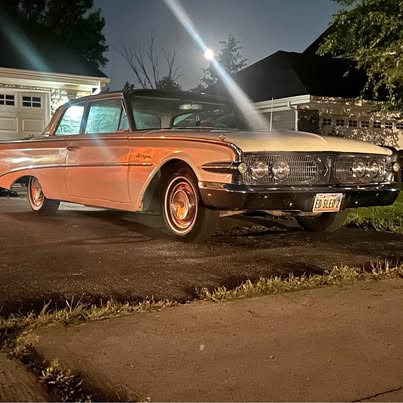 $12,500 · 208% above typical
Expand
$9,500 · 95% above typicalExpand
What they sell for: Ranger 2 door sale prices.