
Ford Model A buyer's guide
Ford Model A (1928–1931) — Model A: what's listed, and what they sell for.
Years: 1928–1931 · Models: Model A
Overview and history
The Ford Model A is the car that saved Ford. When the last Model T rolled off the line in May 1927, Henry Ford shut his plants down for months to retool, while Chevrolet sold cars into the gap he had left. What replaced the T, announced in December 1927 and sold as a 1928 model, was not a warmed-over T at all. The Model A was a conventional, modern car in a way the T never tried to be: a sliding-gear three-speed gearbox instead of the T's planetary transmission, four-wheel brakes instead of brakes on the rear wheels and transmission alone, battery-and-coil ignition instead of a magneto, a water pump instead of thermosyphon cooling, and styling — directed by Edsel Ford, Henry's son — that looked like a smaller Lincoln. It was also, by 1928 standards, quick: a genuine 65 mph car that cruised happily at 45 to 55.
Production ran from late 1927 to 1931, with model years quoted as 1928 to 1931. Ford built about 4.86 million Model As in total, cars and trucks together. That number is the most important fact for a buyer today. The Model A is not rare and does not need to be: what you are buying is condition, correctness and body style, because another one is always coming to market. On Classic Listings we currently track 90 Model As, 36 of them for sale and 54 recorded sold, all dealer-offered cars, and that steady flow is typical of the wider market.
Underneath, the formula is simple, and it is why the cars survive. A separate steel chassis with a 103.5-inch wheelbase carries a steel body — with a great deal of structural wood inside some body styles, a point the problem-areas section returns to at length. The engine is a 200.5-cubic-inch side-valve four making 40 hp. Drive goes through a torque tube to a live rear axle, suspension is a solid axle at each end on a transverse leaf spring — the one major Model T idea Henry kept — and the brakes are mechanical, worked by rods and levers, with no hydraulics anywhere. There is a six-volt system with positive earth, an electric starter as standard, and a fuel tank built into the cowl, feeding the carburettor by gravity.
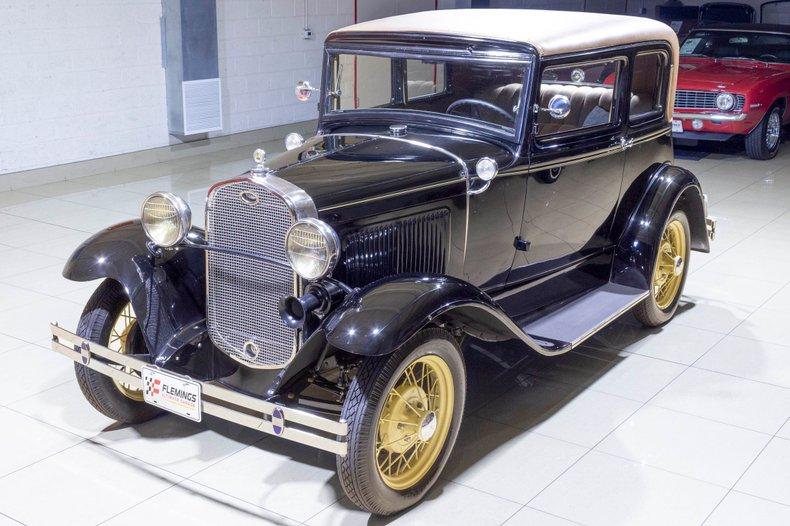
The range divides cleanly in two. The 1928 and 1929 cars are the early cars: nickel-plated brightwork, fluted headlamp lenses, a drum-shaped tail lamp, a narrower radiator shell. The 1930 and 1931 cars are the late cars: a taller, wider stainless radiator shell, stainless headlamp buckets, slightly larger closed bodies, and the Victoria and DeLuxe bodies never sold in 1928. Neither half is better. Buy the half whose looks you prefer, then buy condition inside it.
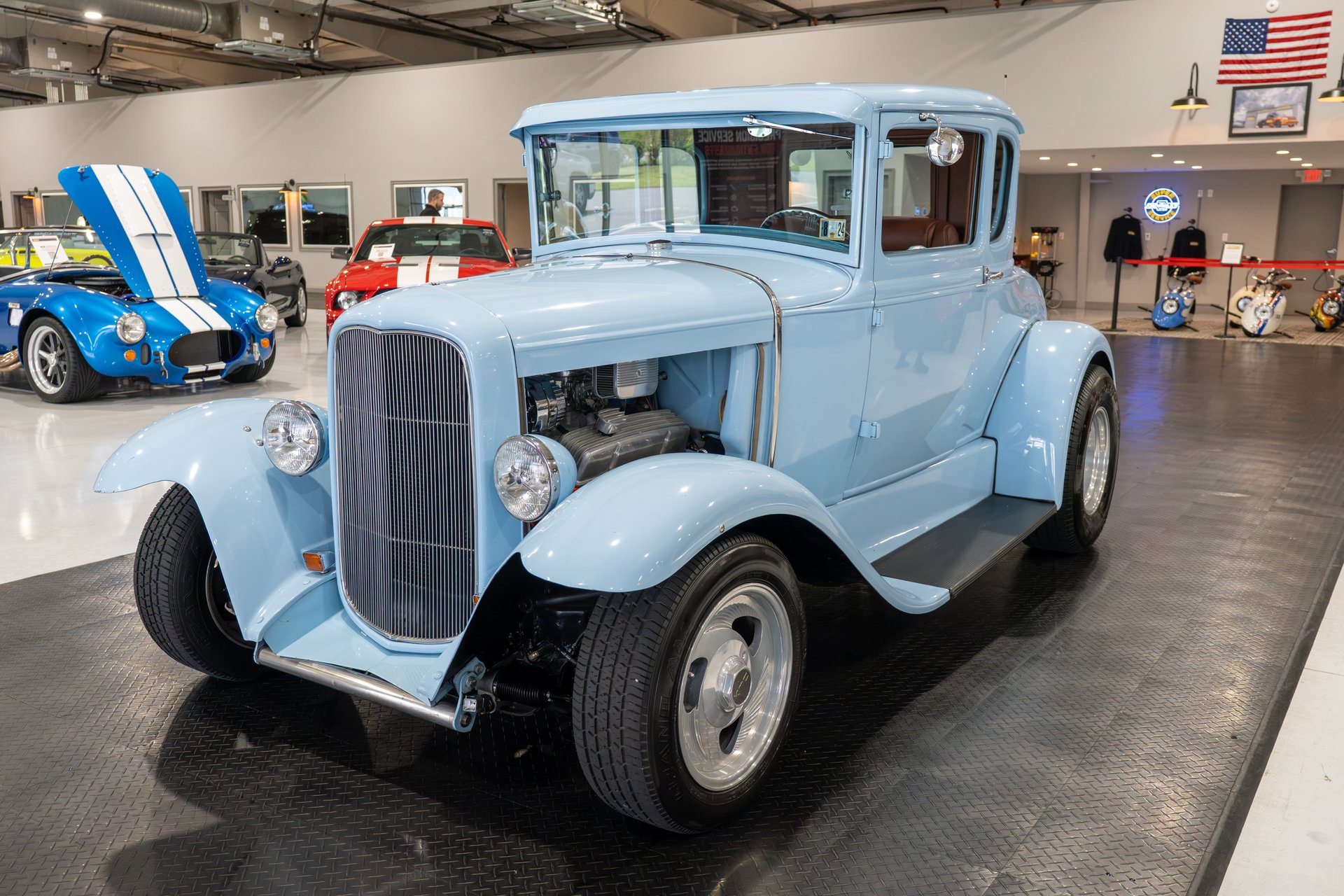
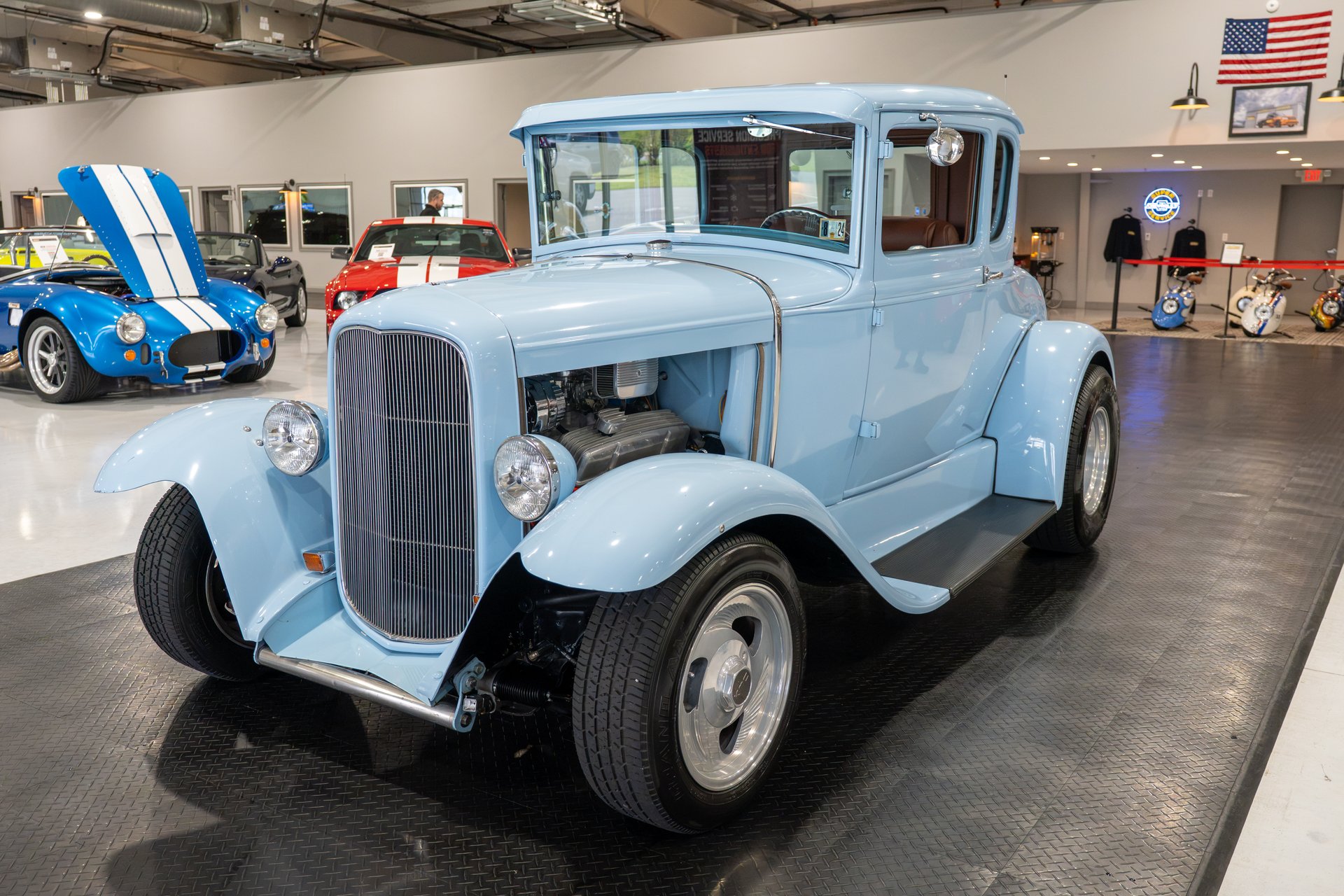
The second divide matters even more: stock against modified. The Model A became a foundation car of American hot rodding — the cheap, light, good-looking body a generation of builders filled with a flathead V8, and later a small-block Chevrolet — and that culture never stopped. A large share of the Model As offered today are street rods or restomods: in our own listings the recorded transmissions include a substantial minority of automatics and five-speeds Ford never fitted, because a stock Model A has exactly one transmission, a three-speed manual. They are different purchases priced by different rules, and the most expensive mistake in this market is paying stock, numbers-correct money for a modified car. This guide's inspection and problem sections are written for the stock car first — but every modified car still sits in a 1928 to 1931 body and frame whose condition obeys the same rules.
These were working cars, used hard through the Depression and the war years, then restored in waves — amateur in the 1960s and 1970s, professional in the 1980s and 1990s, with older restorations ageing ever since. The difference between a good Model A and a money pit is almost never the engine. It is rust in the lower body, rot in the structural body wood, worn mechanical brakes nobody has set up properly, and ninety years of accumulated bodges — in roughly that order.
The models
Ford did not sell the Model A as a short list of models in the modern sense. It sold one chassis and one engine under a long catalogue of body styles, each with its own Ford body number, built by Ford itself or by outside body builders — principally Briggs and Murray. Model As carry no model badges at all. What you are buying is a body style, a year, and a trim level, Standard or DeLuxe. Learn the body styles and you have learned the range. One warning belongs here: early 1928 cars, the so-called AR cars, differ in dozens of details — a multi-disc clutch for the first months, many small parts now hard to find — and are a specialist's pleasure and a beginner's trap.
| Model | Years | Engine | Output | Built | Character |
|---|---|---|---|---|---|
| Tudor Sedan | 1928–1931 | 200.5 cu in side-valve four | 40 hp | The most numerous closed body | The default Model A; two doors, room for five, the deepest market |
| Fordor Sedan | 1928–1931 | 200.5 cu in side-valve four | 40 hp | High volume | Four doors, blind-back and slant-windshield variants; the family car |
| Coupe (Standard, Business, Sport, DeLuxe) | 1928–1931 | 200.5 cu in side-valve four | 40 hp | High volume | Five-window shell in four trims; rumble seat on Sport and DeLuxe |
| Roadster (Standard and DeLuxe) | 1928–1931 | 200.5 cu in side-valve four | 40 hp | Moderate volume | Open two-seater, folding top, rumble seat; the hot rod era favourite |
| Phaeton (Standard and DeLuxe) | 1928–1931 | 200.5 cu in side-valve four | 40 hp | Moderate to low volume | Open four-door tourer; no side windows, side curtains only |
| Cabriolet | 1929–1931 | 200.5 cu in side-valve four | 40 hp | Low volume | Convertible coupe with roll-up windows and a fixed windshield frame |
| Victoria | 1930–1931 | 200.5 cu in side-valve four | 40 hp | Low volume | Close-coupled steelback or leatherback; the late-car flagship |
| Town Sedan | 1929–1931 | 200.5 cu in side-valve four | 40 hp | Low volume | The plush Fordor: cowl lamps, robe rail, better trim throughout |
| Station Wagon | 1929–1931 | 200.5 cu in side-valve four | 40 hp | A few thousand a year | Maple and birch woody body; the woody to have |
| Roadster Pickup and Closed Cab Pickup | 1928–1931 | 200.5 cu in side-valve four | 40 hp | Moderate volume | The working Model A; open or closed cab on the car chassis |
| Town Car | 1928–1929 | 200.5 cu in side-valve four | 40 hp | About 1,100 | Chauffeur body, open front compartment; the rarest regular body |
Production is given as scale rather than false precision for the high-volume bodies: published totals reconcile Ford's body-number, model-year and calendar-year records differently, and the honest summary is the total — about 4.86 million — with the Tudor the best-selling closed body by a wide margin. The Town Car is the exception: its tiny run is genuinely documented, which is why a real one is a collector car and a replica is a question to ask about any example offered cheaply.

The sedans. The Tudor (body 55-A, then 55-B in 1930) is the car most buyers end up with: weather-tight, mostly steel in structure, and more numerous than anything else, so comparison shopping is easy. The Fordor (60 series early, 155 and 165 series later) adds rear doors at the cost of much more structural wood in the early Briggs and Murray bodies — a better family car and a worse restoration prospect in the same afternoon. The 1931 slant-windshield Fordor and Town Sedan (160 series) are much more steel-intensive and the strongest of the four-doors. The Town Sedan is simply the DeLuxe Fordor specification — cowl lamps, robe rail, better upholstery.
The coupes. All Model A coupes share the five-window shell. The Business Coupe is the plain one, with a package tray and a trunk; the Standard Coupe adds a little trim. The Sport Coupe wears a fixed, landau-style top with decorative irons and a rumble seat — and fools more first-time buyers than any other body: it looks like a convertible and is not one, because the top does not fold. The DeLuxe Coupe of 1930 and 1931 is the plush one, again with a rumble seat. A rumble seat is charming, useless in rain, and a rust trap underneath; lift its cushion and floor on every inspection.
The open cars. The Roadster is the archetype: folding top, side curtains instead of windows, a rumble seat behind. The DeLuxe Roadster added cowl lamps, twin tail lamps and colour choices. The Phaeton is the same idea stretched to four doors, with no weather protection beyond curtains — exactly its appeal, and why so few survive in honest condition. The Cabriolet (68-A, B and C) is the sophisticated answer: a convertible coupe whose top folds but whose windshield frame stays, with roll-up windows in the doors. Rarer, heavier, more valuable — and never let a seller call a Sport Coupe one; the folding top settles it.
The late specials. The Victoria (190-A, 1930 and 1931) was Edsel's style statement: close-coupled, bustle-backed, the best interior trim in the range. It commands a real premium and earns it when the body wood is sound. The Station Wagon (150-A and B) is a genuine woody, maple framing and birch panels assembled at Iron Mountain, and the most wood-dependent body of all — on a wagon the wood is not trim, it is the body. The pickups are cars with a bed, sharing the car chassis. The heavy 1.5-ton AA truck is a separate vehicle and outside this guide.

Engines and gearboxes
The Model A engine: the 200.5-cubic-inch four
There is only one stock engine, and every stock Model A you inspect has it: a side-valve (flathead, or L-head) inline four of 200.5 cubic inches, about 3.3 litres, bore and stroke 3.875 by 4.25 inches, compression about 4.2 to 1, rated at 40 hp at 2,200 rpm. Torque is the real story — roughly 128 lb-ft at low revs — because the engine was designed to pull a loaded car up a dirt-road hill in top gear, not to rev. It is a three-main-bearing design with a detachable head, a single updraft carburettor, a camshaft-driven oil pump and a belt-driven water pump on the head. Peak revs in normal use stay under 3,000 rpm, a large part of why good ones last decades between rebuilds.
Understand the lubrication system before you judge any engine, because it explains both the design's strength and its one expensive weakness. The oil pump lifts oil to a chamber in the valve gallery; from there the main bearings are fed largely by gravity, and the rod big ends by splash and by dippers on the rod caps scooping oil from troughs. There is no full-pressure feed to the rods, no oil filter, and no oil pressure gauge. Two consequences follow. First, oil level and cleanliness matter more here than on almost any other engine: running a quart low or two thousand miles overdue is how bearings die. Second, the bearings are the expensive weakness. Mains and rods are poured babbitt — soft bearing metal cast directly into the block saddles, caps and rods, then bored and fitted by hand. When babbitt wears or pounds out, the repair is an engine-out, specialist rebabbitting and line-boring job: realistically $3,500 to $6,500 for a properly rebuilt short engine once machining, pistons, rings, valves, guides and a reground crankshaft are counted. Insert-bearing conversions exist; a documented one by a known builder is fine, an undocumented one is a question.
A healthy engine tells you so in ninety seconds. It starts readily, hot or cold, idles slowly and evenly — a properly set-up A ticks over at a pace that sounds agricultural and is meant to — and pulls from very low revs in top gear without complaint, with no blue smoke under load. Noise alone is not a diagnosis on this mechanically noisy engine. A deep knock that comes in under load and eases off the throttle is a rod bearing until proven innocent, and it prices the car as an engine rebuild, whatever the seller calls it.
Identity is settled by one number. The engine number is stamped on a machined pad on the left side of the block, above the water inlet: a star, the letter A (AA for the truck prefix) and a serial number, closed by a star. On a Model A the engine number is the car's serial number — the same number was stamped on the top of the left frame rail, roughly under the cowl, at build. That stamping is usually hidden by the body, which is why titles follow the engine number — and why an engine change can leave a car wearing an engine from a different year than the body. Date the engine from its number against the published serial lists, date the body by its features, and treat a mismatch as normal history to be priced, not automatically as fraud. A car sold as matching-numbers at a premium is the exception: there the frame number is the test, and a seller asking the premium should expect you to want it verified.
The Model B engine deserves its own warning, as the most common period swap. The 1932 Model B four develops the A design with pressure-fed crankshaft drillings, a better oil pump, a fuel pump instead of gravity feed and 50 hp. A B in an A is not a disaster — many good cars run one — but it is not a stock engine, it changes the value discussion, and it shows itself in details: a fuel pump on the side of the block, a downdraft carburettor, a B head. Price what is actually there.
Carburation, fuel and ignition
The stock carburettor is a single updraft Zenith — Zenith-1 and Zenith-2 in Ford production, with Tillotson and other replacements fitted over the years. Fuel reaches it by gravity from the cowl tank — ten gallons in the 1928 and 1929 cars, eleven in the later cars — the tank forming the top of the dashboard itself, its float gauge read through a window in the instrument panel. There is no fuel pump to fail — and none to help, which is why a clogged sediment bowl at the firewall shut-off, a rusty tank and a blocked vent in the tank cap present exactly like carburettor faults. Work the system in order: fuel at the sediment bowl, fuel at the carburettor, float level and needle seating, jets clean and correct, and only then mixture. A professional rebuild of a correct Zenith runs roughly $250 to $500, and the common failure is not wear but dirt, rust flakes from the tank, and ethanol fuel attacking old float and gasket materials. A car that runs well only on choke is lean — blocked jet, manifold air leak or a low float level — not characterful.
Ignition is by battery, coil and a distributor on top of the head, with spark advance controlled by hand: the left lever on the steering column is retarded fully for starting and advanced for running, and driving a Model A well is partly listening for what the engine wants from that lever. Running hard with the spark retarded overheats an engine in minutes; pinking under load is the lever asking to come back a notch. The weak points are specific and cheap: condensers fail heat-soaked and cause a car that dies hot and restarts cold, and the armoured ignition cable and pop-out switch — a period anti-theft device — develop internal faults that imitate coil failure. A full distributor service with points, condenser and timing set by the book is a $150 to $400 job.
Cooling is by the head-mounted water pump, a large unpressurised radiator and a two-blade fan. The system holds about three gallons and there is no thermostat as standard. Overheating is a symptom, never a diagnosis: check, in order, retarded timing, a slipping fan belt, a radiator clogged internally with scale (a recore or correct new core runs $600 to $1,200 fitted), a worn water pump, and only at the end of the list a head gasket. A head gasket is one of the cheapest major jobs on the car — the head is a flat slab and the job is an afternoon — which is why you should not let a seller use one to explain away a cracked block. Cracks are the real issue: freeze cracks along the water jacket on the left side of the block, cracks in the deck between cylinders and around valve seats, and previous stitch repairs. A stitched repair that has held for years is usable history; a fresh crack weeping coolant is a block replacement conversation.
Gearboxes: one transmission, and the art of using it
Every stock Model A has the same gearbox: a three-speed sliding-mesh manual with reverse, no synchromesh on any gear, behind a single-plate dry clutch (the multi-disc clutch of the first 1928 cars excepted), driving through an enclosed torque tube to the rear axle. Final drive is 3.78 to 1 in most cars, with a 3.54 high-speed ratio in some applications. Gear whine in first and second is normal — the gears were never quiet — and the tests that matter are whether it stays in gear under load and overrun, whether the clutch takes up smoothly without judder or slip, and whether you can change down using the technique the box demands.
That technique is double-declutching, and a test drive must include it, because a seller who says the gearbox is fine and then will not let you change down is telling you something. Downchanges need a blip of throttle in neutral to match gear speeds; done right, a healthy box slots home with a clunk and no graunch. A box that graunches into second on every correct change has worn sliding gears or a dragging clutch — and check the clutch first, because a clutch that does not fully clear makes a good gearbox look guilty. The money is mid-range: a clutch is roughly $600 to $1,200 fitted, a gearbox rebuild $900 to $1,800 depending on gear condition, a rear axle rebuild $800 to $1,600. A worn torque-tube universal joint gives a clunk on take-up and a vibration at speed owners misdiagnose as wheel balance for years.
The popular period-correct upgrade is the Mitchell overdrive, an auxiliary unit in the torque tube giving an overdrive top; the popular modern upgrade is a synchronised five-speed conversion. In our listings you will also meet automatics, including Ford C4 conversions behind V8 engines: at that point you are assessing a street rod, not a Model A gearbox, and the problem-areas section tells you how to change your questions.

Problem areas
Everything here is written for a car between 94 and 98 years old: the question is never whether a Model A needs work, but which work, how structural it is, and whether the price already knows about it. A note on our own evidence first, because honesty about sample sizes matters more than a confident percentage: our examined photo-note base for this series is only four cars — too small to quote incidence rates from, and this guide does not. One of those four noted rust and two noted visible damage, which tells you nothing statistical and everything practical: look for both, on every car, yourself. The patterns below come from the design itself and from what ninety years of these cars have consistently done, ordered structure first, cosmetics last.
Rust: the map
A Model A does not rust the way a modern unitary car rusts, and the construction tells you where to look. The body sits on a separate ladder frame; the fenders, running boards and splash aprons bolt on; the lower body is steel over, in many bodies, a wooden skeleton. Rust therefore has two meanings: rust in bolt-on panels, which is money, and rust in the cowl, the door frames, the subrails and the frame itself, which is structure.
The frame. Start underneath, because a bent or rotten frame writes off everything above it. The channel-section rails rust where mud sits: around the crossmembers, at the running-board bracket rivets, in the rear horns, and in the battery carrier area, where acid has had ninety years to help. Look down each rail for straightness — the street-level tell of a shifted frame is a car that will not sit level on flat ground with the springs proven good. Surface scale is normal; perforation and previous plated patches are fabrication work priced per car. A good used frame is findable because Ford built millions, but a frame swap is a body-off job that only makes sense on a valuable body.
Cowl, doors and lower quarters. The lower cowl behind the front fenders is one of the classic rust sites — hidden by the fender until advanced, so feel behind the fender edge and look from inside, under the tank and kick panels. Door bottoms rot from the inside: the doors hold water, the skin folds over the frame at the bottom, and the first sign is bubbling along the lower edge and a door that sounds dull rather than tinny when tapped. Patch panels for door bottoms, cowl and quarter bottoms are all reproduced, and a single panel fitted and painted is typically $400 to $1,200 — but doors and quarters rarely rot alone, and a car needing all of them is a body restoration, not a panel bill. The panel below the deck lid, the bottoms of the rear wheel arches and the spare-wheel carrier region belong on the same circuit.
Floors, subrails and splash aprons. Lift the mats and seat where you can. The front floor is boards in many bodies — replaceable, and often already replaced — but the steel toe board, the floor under the rear seat, and above all the subrails tying the body together at sill level are structural. Subrail rust where the body bolts pass through is hidden, load-bearing and expensive, because the repair is carpentry and metalwork together. Splash aprons and running boards are bolt-on and reproduced — a pair of running boards is a few hundred dollars — but their mounting edges on the body are not, so price the edge, not the board. Fenders crack at the bead edge and at the spare-wheel well in rear fenders, and have usually been repaired several times; reproduction steel exists, and fibreglass fenders are common on cheaper cars and hot rods. A magnet and a look at the underside bead tell you which you are being sold, and on a stock car at stock money, fibreglass is a deduction, full stop.
The tank and the top. Two rust sites are unique to this car. The cowl fuel tank rusts inside and sheds flakes that block the sediment bowl and the carburettor jets; a tank sealed with an old-generation liner can shed the liner too. A car that repeatedly blocks its fuel filter is reporting tank condition; professional cleaning and modern sealing runs $300 to $700, and a reproduction tank is the expensive last resort. And closed cars carry a fabric-covered roof panel in a wooden frame: the covering perishes, water enters, and the roof bows and header rot from above while the headliner below still looks presentable. Press the roof, check the seams, and treat headliner water staining as a roof-structure inspection trigger, not a cleaning job.
Body wood: the structure you cannot see
This is the section that separates Model A knowledge from generic old-car advice. Many bodies — the Fordors and Town Sedans above all, the Victoria, the Cabriolet, and the Station Wagon absolutely — are built around a hardwood skeleton: sills, pillars, door frames, roof rails and headers in ash, oak or maple, with the steel skin nailed or screwed over it. When the wood is sound, the body is tight and the doors shut with a thunk and stay aligned. When it rots — exactly where water sits, at the sill bottoms, pillar bases, lower door frames and roof headers — the body loosens in a way no hinge adjustment cures.
Learn the field tests, because sellers rarely volunteer wood condition and photographs never show it. Doors that sag and must be lifted to latch, gaps wide at the top and touching at the bottom, a body that creaks over bumps, screws that will not tighten, softness when you press a small screwdriver (with permission) into the sill wood under the door opening, and black staining at the pillar bases are the classic tells. Wood kits exist for most bodies — a full kit for a Fordor runs roughly $1,500 to $3,500 in parts — but fitting is the real bill: skilled coachbuilding labour, often $5,000 to $15,000 on a wood-heavy body, usually impossible without disturbing paint. That arithmetic is why a sound-wood Fordor at a higher price is a cheaper car than a rotten-wood Fordor at a lower one — the single most valuable sentence in this section.
Brakes, steering and the running chassis
Mechanical brakes are the Model A's most misunderstood system, and the one where setup matters more than parts. The brakes are internal-expanding drums on all four wheels, 11 inches in diameter, worked entirely by rods, levers and cross shafts — no hydraulic assistance, no servo action worth the name. In perfect order a Model A stops adequately for its performance: firmly, straight, with real pedal effort. Out of order — as most unrestored cars are — it stops long, pulls to one side, and frightens its owner at the first modern traffic light. Each wear point steals travel and equality: oval clevis pin holes, worn cross-shaft bushings, a bent rod, contaminated shoes, drums scored or out of round. A full overhaul — drums skimmed or replaced, shoes relined and arched, pins and bushings renewed, the system equalised — runs roughly $1,200 to $2,500 at a specialist, and it transforms the car. Treat pulling, a pedal whose bite point moves (there is no fluid to pump; a moving bite point is mechanical slack taking up), or a parking brake that will not hold on a slope as priced defects, not character. Many cars have been converted to 1939 to 1948 Ford hydraulic brakes or modern disc kits: a well-done hydraulic conversion is a selling point on a driver or a rod, and a deduction on a car sold as stock.
Steering. The seven-tooth box of 1928 and early 1929 cars and the Gemmer two-tooth box that replaced it are both worm-and-sector designs, and both wear in the straight-ahead position first. Play at the rim of an inch or two is period normal; wandering, a tight spot at centre with looseness at lock, or notchiness is a box overhaul — $400 to $900 for a specialist rebuild — plus whatever the drag link, tie rod ends, kingpins and shackles add. Kingpins and bushings are a classic wear pair: rock the top of each front wheel in and out with the car jacked, and price a kingpin job at roughly $300 to $600 a side fitted if there is real play. Shackles and spring bushes wear oval; the transverse springs sag and lose leaves, usually the main leaf at the eye. Original Houdaille lever-action shocks are frequently missing or frozen: a car on four working lever shocks rides remarkably well, a car on none crashes over bumps in a way owners wrongly blame on the springs, and a rebuilt set of four is an $800 to $1,600 item.
Wheels and tyres. Stock wheels are welded-spoke steel discs, 21 inches for 1928 and 1929 and 19 inches for 1930 and 1931. Welded spokes crack at the hub and rim welds; check every wheel including the spare, because a cracked wheel is scrap. Old tyres are old regardless of tread: date codes decide, and a set of correct new tyres is roughly $800 to $1,400 fitted.
Engine, transmission and electrical wear
The engine problems that cost real money were covered in the engine section — babbitt, block cracks, rebuild cost — and are repeated here only as a checklist: a load knock, grey oil, coolant in the sump, a freeze crack weeping down the left side of the block, and compression spread between cylinders. A compression test is a ten-minute job through the plug holes and no seller of a sound car refuses one; healthy cylinders read within about 10 psi of each other, in the 60s to 70s psi range on a stock engine in good order. Add the smaller certainties: the fibre timing gear loses teeth and changes the valve timing by stealth, presenting as an engine that gradually lost power and will not tune; the water pump leaks at its packing, and a modern leakless pump is a sensible service part; the exhaust manifold warps at the centre ports and blows the gasket — a manifold set fitted is a $300 to $700 job; and the rear main has no lip seal as built, so a Model A that does not mark its parking place slightly is either very freshly built or out of oil. Judge leaks by rate, not by presence.
Gearbox and axle wear follow the same pattern: a box that jumps out of second or top has worn sliding gears and dogs, a clutch that judders has oil on the plate or a warped disc as often as a worn lining, and an axle that howls on drive and goes quiet on coast has a worn ring and pinion — specialist work at $800 to $1,600.
Electrically, the system is six-volt, positive earth, with a three-brush generator whose output is set by moving the third brush — no voltage regulator as standard, only a cutout — and a car that boils its battery is overcharging by adjustment. Wiring on an unrestored car is original cloth-insulated and perished: a full correct harness is $300 to $600 in parts and one of the best-value safety jobs on the car, because the alternative is a short in a car whose fuel tank is also its dashboard. Twelve-volt conversions with an alternator are the most common electrical modification of all — fine on a driver, a deduction on a stock car, and always a question to ask directly, because photographs will not tell you.
Tops, interior and trim
Open-car tops are a consumable with a real price: a correct top with side curtains for a Roadster or Phaeton runs $1,500 to $3,500 fitted, and the top irons and bows underneath it are where the money hides if they are bent or rusted. Closed-car interiors divide by trim — mohair and broadcloth in the sedans, leather in DeLuxe applications — and the economics are constant: a professional retrim in correct materials runs into five figures, so a good original interior is worth real money and a cheap vinyl retrim is a deduction dressed as a feature. Brightwork divides by year: nickel plate early, stainless and chrome late, and a full replate is a four-figure bill sellers of shiny cars have either paid or faked with paint. On 1930 and 1931 DeLuxe cars the shell and headlamp buckets should be stainless, which does not rust but does dent — and dents in stainless are specialist repairs.
The modified car: what changes
If the car in front of you has a V8, an automatic, hydraulic brakes, a twelve-volt system, a dropped axle or a reproduction body, stop applying stock-car deductions one by one and change method. A modified Model A is valued as a build: the quality of the chassis work, the identity of the engine actually fitted, whether the frame is an original, a boxed original or a modern reproduction chassis, whether the body is original steel, reproduction steel (Brookville bodies are the known quantity here) or fibreglass, and whether the title matches the frame the car actually stands on. Bad hot rods are worse than bad stock cars, because the failure modes are fabrication quality — welds, steering geometry, brake balance — and they hide under paint just as rust does. The structural checks above still apply in full; what changes is only the originality arithmetic.

How to inspect one
Allow at least an hour, bring a torch, a magnet wrapped in cloth, a small screwdriver, a tyre pressure gauge and a notebook, and arrange the viewing so the engine is cold when you arrive. If the car passes you, pay for a lift inspection and a compression test before money changes hands — on a car of this age it is the best money in the whole purchase. Work in this order, because the early steps are the ones that can end the viewing.
- Start with the paperwork and the number. Match the title to the engine number on the pad on the left side of the block. Date the engine from the published serial lists and compare it with the car's claimed year. Ask what history exists — restoration receipts, engine builder invoices, club records. On a car sold as matching-numbers at a premium, say plainly that the frame number on the top of the left rail is the deciding check and agree how it will be verified. And start the viewing itself at a distance, on flat ground: stance, door gaps and fender alignment are all visible before you touch anything.
- Cold start, by the book. Spark lever fully retarded, choke as needed, ignition on. A healthy engine starts within a few turns, settles to a slow, even tickover, and shows charge on the ammeter. Watch for blue smoke at start-up and on the blip after idle — and note whether the seller has warmed the car before you arrived, which is a question, not a courtesy.
- Walk the structure first. Torch along both frame rails, the crossmembers, the battery carrier and the rear horns. Then the cowl bottoms behind the front fenders, the door bottoms, the panel below the deck lid and the rear wheel arches. Perforation in the frame, the subrails or the cowl is structural: it reprices the car as a restoration, whatever the paint says.
- Test the wood through the doors. Open and close every door. It should latch without lifting, sagging or slamming, with even gaps. Press the sill area below each door opening and look for black staining at the pillar bases, softness, and screws that have pulled. On a Fordor, Victoria, Cabriolet or wagon, treat door sag as body-wood news until proven to be hinge pins — the wood section explains why the distinction is worth thousands.
- Floors, roof and tank. Lift the mats: toe board, floor under the rear seat, subrails where the body bolts pass. Press the closed-car roof gently and check the covering seams and headliner for water staining. Open the fuel cap and look for rust flakes and peeling sealer, then run the engine and watch the sediment bowl — the tank reports itself within minutes.
- Brakes, stationary and moving. Press the pedal hard: firm, at a consistent height, with travel in reserve. Make the parking brake hold on a slope. On the drive, brake firmly from 40 mph, hands light on the wheel: pulling, a long pedal or weak retardation prices the full mechanical overhaul from the problem section, and no, they are not all like that.
- Steering and front axle. Note the play at centre, any tight spot, and whether the car wanders over bumps. Jacked if the seller allows, rock each front wheel top-to-bottom for kingpin play. Check every welded-spoke wheel for cracks at hub and rim, including the spare — a cracked wheel is scrap on the spot.
- The test drive, long enough to get it hot. Fifteen to twenty minutes minimum, including hills. The clutch should take up smoothly, and you should make at least two double-declutched downchanges into second and one into first at walking pace: a healthy box accepts them with a clunk and no graunch. Listen for axle howl on drive that disappears on coast, a clunk on take-up, and jumping out of gear on overrun.
- Heat and habits at temperature. Let it idle hot. Coolant should not be pushing out of the overflow, the engine should restart hot without drama, and the tickover should stay even. An engine that dies hot and restarts cold is the classic condenser story from the ignition section.
- Electrics, everything, one at a time. Headlamps, tail and stop lamp, horn, wipers (vacuum-operated — they slow as you accelerate, which is correct, not a fault), ammeter, starter cold and hot. Look at the wiring itself: perished cloth insulation is a harness replacement priced into the offer, and on this car the fire argument outranks the originality argument.
- Top, glass and interior. On an open car, put the top up and down and check the irons, bows and curtains. On any car, check the windshield seals, the windows wind, and whether the side glass is safety glass or original plate — plate glass is a safety replacement no buyer should object to. Sit in every seat, feel for broken springs, and look under the cushions for damp.
- Stance and the photograph test. Stand back and take your own photograph from each side and each three-quarter. The car should sit level, arches even, doors and fenders in line. Faults you talked yourself out of are obvious in a photograph — believe the picture, then find the cause before you agree a price.
Values
The build of this page appends the current market figures beneath this guide — the cars listed now and the recorded sales — and those figures, refreshed at every build, are the numbers to trade on. This section teaches you how to read them.
The first lesson is the condition spread, which on a Model A is wider than on almost any newer classic, because the same name covers four genuinely different commodities. At the bottom are project cars: complete or incomplete, non-running or barely running, valued as a body, a title and a pile of parts. Above them are older-restoration and honest-driver cars, the heart of the market, where the price buys structure and usability rather than shine. Above those are freshly and correctly restored stock cars, whose prices must be read against the cost of producing one — and at the very top, a small separate tier of show cars, rare bodies and exceptional originals. A single median across those tiers describes none of them. Compare a car within its tier and body style, and be suspicious of any asking price that quietly borrows the tier above.
Body style is the second driver, and it is durable. Open cars — Roadsters, Phaetons and Cabriolets — carry a premium over closed cars in the same condition; the Victoria and the Station Wagon carry their own premiums as the late flagship and the woody; the Town Car sits in a collector market of its own. The Tudor, precisely because it is the most numerous and the most useful, is the value benchmark: where a given amount of money buys the most Model A. None of this changes quickly, which is why a Tudor priced like a Roadster, or a Sport Coupe described and priced as a Cabriolet, is a pricing error you are being invited to fund.
The third driver is the stock-versus-modified divide, and it cuts both ways. A correctly restored stock car and a well-built street rod can stand at similar asking prices for entirely different reasons, and neither figure validates the other. Modified cars are priced as builds: engine identity, chassis work, fabrication quality, receipts. Stock cars are priced on correctness and structure. The discount cases are the cars caught between the stools — a modified stock car priced as though it were correct, or an undocumented build priced as though it were a known builder's product. Asking and achieved prices part company in a predictable place: at the top of the driver tier and in the restored tier, where sellers price in the restoration they paid for rather than the car the market sees. Restoration cost is not value — a ground-up restoration of a Tudor costs more than the finished Tudor is worth, which is a reason to buy a restored car rather than restore one, and no reason to reimburse a seller for the difference. The defensible offer is built from comparable cars in the same body style and tier, adjusted by the priced defects your inspection found — brakes, wood, a tired engine, a rusty tank — each with a real job cost behind it. And remember the supply fact: Ford built millions, the market in common bodies is deep, and walking away from an overpriced Tudor costs you a week. Overpaying for the wrong one costs you the ownership.
Parts and ownership
The Model A has the strongest parts support of any pre-war car you can buy, and it is not close. Ford built millions, the clubs — the Model A Ford Club of America and the Model A Restorers Club, with chapters everywhere — have sustained a specialist trade for sixty years, and dedicated suppliers (Snyder's, Bratton's, Bert's Model A Center, Mike's and others) between them list effectively every service part, most wear parts, a huge range of reproduction trim and panels, and the judging standards that define what correct means for each year. Recalibrate if you are coming from a rarer marque: the question is rarely whether a part exists. It is whether the part on the car is original, a good reproduction or a poor one, and whether the job around it is priced in labour or in coachbuilding.
Easy: all service items, plugs, points and condensers, carburettor kits and rebuilt Zeniths, brake shoes, drums, rods and hardware, kingpin and shackle kits, spring leaves, water pumps in original and modern leakless form, gaskets for everything, wiring harnesses, tyres in both stock sizes, glass, seals, and patch panels for the common rust sites. Order today, fit this weekend, at prices modest by classic-car standards.
Harder and dearer: the labour-intensive core of the car. Rebabbitting and a proper engine rebuild, body wood kits fitted rather than merely bought, a full mechanical brake overhaul done to book standard rather than merely relined, correct Houdaille shock absorbers rebuilt, a quality repaint (which starts at a figure that exceeds the value of a project car and climbs steeply from there), a correct retrim in mohair or broadcloth, top replacement with iron and bow repair, and original early-1928 AR parts, which are a specialist market of their own. The pattern: parts are cheap, skilled hours are the bill — which is why this guide's mantra is to buy structure and accept mechanical wear.
Running costs. A sorted Model A is a realistic regular-use classic for the driving it was designed for. Fuel consumption sits in the high teens to low twenties per gallon depending on tune and pace, with the caveat that ethanol blends attack old tank sealers, float materials and rubber never meant for them — ask what has been renewed in the fuel system, and renew the rest. Oil is a standing responsibility: check it every drive and change it often, because the lubrication system has no filter to forgive you. The budget line that catches new owners is the first year: catching up deferred maintenance on a running car — brakes set up properly, a harness if it needs one, tyres by date rather than tread, the fuel system cleaned end to end — honestly costs a four-figure sum before you improve anything, and recommissioning a car that has sat for a decade costs several times that, because everything rubber, everything in the fuel path and everything in the brake linkage wants attention at once. Buy a car in regular use over a car that has been asleep, even at a higher price. On a Model A, asleep is the expensive condition.
Which one to buy
- The all-rounder: Tudor Sedan. The most numerous, the most useful, the easiest to buy well and to sell. If you want one Model A to drive, tour and learn on, this is it.
- The value buy: a sound-wood Fordor. Four doors and family room for less than open-car money — provided, and only provided, the body wood passes the door test in the inspection. A rotten Fordor is not a value buy at any price.
- The open-air car: DeLuxe Roadster. The archetype, and the prettiest silhouette in the range. Pay for original steel fenders, a correct top and a rumble seat floor that is not a rust trap.
- The connoisseur's car: Cabriolet or Victoria. The two most sophisticated bodies on this chassis — one open, one closed, both rarer, both wood-dependent, both worth the premium when the structure is proven and neither when it is assumed.
- The character buy: Station Wagon. A commitment to carpentry as much as to motoring, and owners love them for exactly that reason. Buy the best wood you can find; on this body, the wood is the car.
- The working classic: Closed Cab Pickup. Usable, charming, honest — and the easiest Model A to justify, because it still does a job of work. Value the honesty over the shine.
- The builder's car: a modified roadster or coupe, bought as a build. If what you want is a street rod, buy a finished, documented one from a known hand rather than a stock car to cut up or a half-built project. The discount for someone else's completed work is real.
And the rule that overrides all of the above: buy the soundest structure you can find — frame straight, body wood tight, lower steel honest — in the body style you actually want. Engines, gearboxes, brakes and tops are all fixable at prices you can plan for, with parts you can order this week. A rotten wooden skeleton or a bent frame costs more to put right than the finished car will be worth.
Listed now
On Classic Listings today: 6 cars are listed here; 3 for sale and 3 marked sold; average asking price $128,783; asking range $8,900 to $347,550; sold cars average $31,833.
See the 6 Model A cars currently listed.
The market — recorded sales
Recorded-sale figures: 6 recorded sales · median $59,500 · range $14,000 to $185,000 (Nov 2024 – Nov 2026)
Based on 6 recorded sales — too few for a benchmark value.
| Date | Car | Sale price | Source |
|---|---|---|---|
| Nov 19, 2026 | 1931 Model A | $185,000 | Dealer |
| Nov 19, 2026 | 1929 Model A roadster | $59,500 | Dealer |
| Nov 19, 2026 | 1930 Model A Hot Rod | $59,500 | Dealer |
| Nov 19, 2026 | 1930 Model A Cabriolet | $59,500 | Dealer |
| Nov 8, 2026 | 1931 Truck Roadster Pickup | $22,000 | Dealer |
| Nov 8, 2026 | 1930 Model A Huckster All Original Fruit Truck Advertising | $14,000 | Dealer |
Dates are the sale date where the source states one; otherwise the date the sale was recorded here.
For sale now
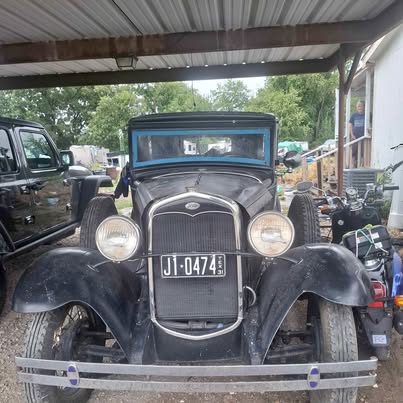 $8,900
Expand
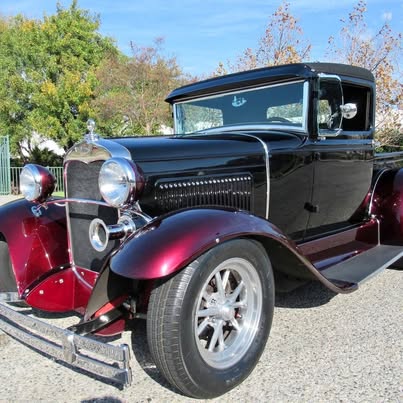 $29,900
Expand
 $347,550 · In line with typical