
Ford Model B buyer's guide
Ford Model B (1932–1934) — Model B: what's listed, and what they sell for.
Years: 1932–1934 · Models: Model B
Overview and history
The 1932 Ford is the most mythologised cheap car America ever made, and the Model B is the half of the story that gets told wrong. Strictly speaking, the Model B is the four-cylinder car: Ford's direct successor to the Model A, launched on 31 March 1932 alongside the car that stole its thunder — the Model 18, the first low-priced car ever sold with a V8 engine. The two cars share a chassis, a body catalogue, a trim list and a face. They differ in the engine, in the badge on the headlamp bar, and in almost nothing else you can see from the kerb. Ninety years of sellers have blurred that fact: in today's market the words Model B, Model 18, Deuce and 1932 Ford are used interchangeably for any 1932 Ford-shaped car, whatever engine it left the factory with and whatever engine it carries now.
The car underneath the myth was a genuine advance on the Model A. The wheelbase grew to 106 inches on an all-new double-drop frame — the rails curve down between the axles so the body sits lower without losing ground clearance. The fuel tank moved from the Model A's cowl to the rear, which is why both 1932 engines carry a mechanical fuel pump where the A relied on gravity. The styling, led by Edsel Ford with chief designer Joe Galamb, gave the car a V-shaped grille in a deep shell, a longer hood and flowing fenders — a small Lincoln in proportion, and still the shape hot rodders measure every other early Ford against. Suspension stayed Ford-conservative: solid axles on transverse leaf springs, and mechanical brakes, as Fords would keep until the late 1930s.
The four-cylinder engine was the Model A engine grown up: the same 200.5 cubic inches, but stronger, better lubricated and rated at 50 hp against the A's 40. The V8 was the sensation — 221 cubic inches and 65 hp in a car priced for Model A buyers, for a premium so small the four was undermined from the day it was announced: the V8 outsold it by better than two to one in 1932, and dealers routinely switched four-cylinder orders to V8s. The four ran on through 1933 and 1934 — in the longer, restyled Model 40 body, where the V8 rose first to 75 hp and then to 85 hp while the four stayed at 50 hp — and then Ford dropped it entirely. A genuine four-cylinder 1932 Ford is therefore the rarer car today, by a wide margin, and rarer still unmodified.
That last phrase is the market. The 1932 Ford became the foundation car of American hot rodding: light, strong, good-looking, cheap after the war, and blessed with a frame and body that accepted every engine the industry produced afterwards. Generations of builders cut them, channelled them, chopped them and filled them with flathead V8s, overhead-valve V8s and eventually modern crate engines, and the word Deuce — from the 2 in 1932 — became the generic name for the whole breed. The consequence for a buyer now is that a 1932 Ford is not one purchase but at least three: an original car, stock or restored, four-cylinder or V8; a traditional hot rod, built from a real 1932 car in period style; and a modern street rod, which may be a real 1932 body on a modern chassis, a reproduction steel body, or a fibreglass body on an aftermarket frame, titled as a 1932 Ford. All three are legitimate purchases, priced by completely different rules, and the most expensive mistake in this market is paying for one while receiving another. One open-car warning belongs with the table below: the sport coupe's fixed top, dressed with landau irons, does not fold — a seller who prices one as a cabriolet is either confused or hoping you are.
On Classic Listings we currently track 59 cars filed under this series, 29 of them for sale and 30 recorded sold, all dealer-offered. The filed cars show the whole market in miniature: roadsters are the single largest group, coupes and sedans follow, and the recorded transmissions are dominated by automatics — cars Ford never built, because a stock 1932 Ford has exactly one transmission, a three-speed manual. Most of what is offered as a Model B today is a street rod wearing the name, and this guide is written for all three purchases, because the body, the frame and the paperwork obey the same rules whatever engine is in front of the firewall.
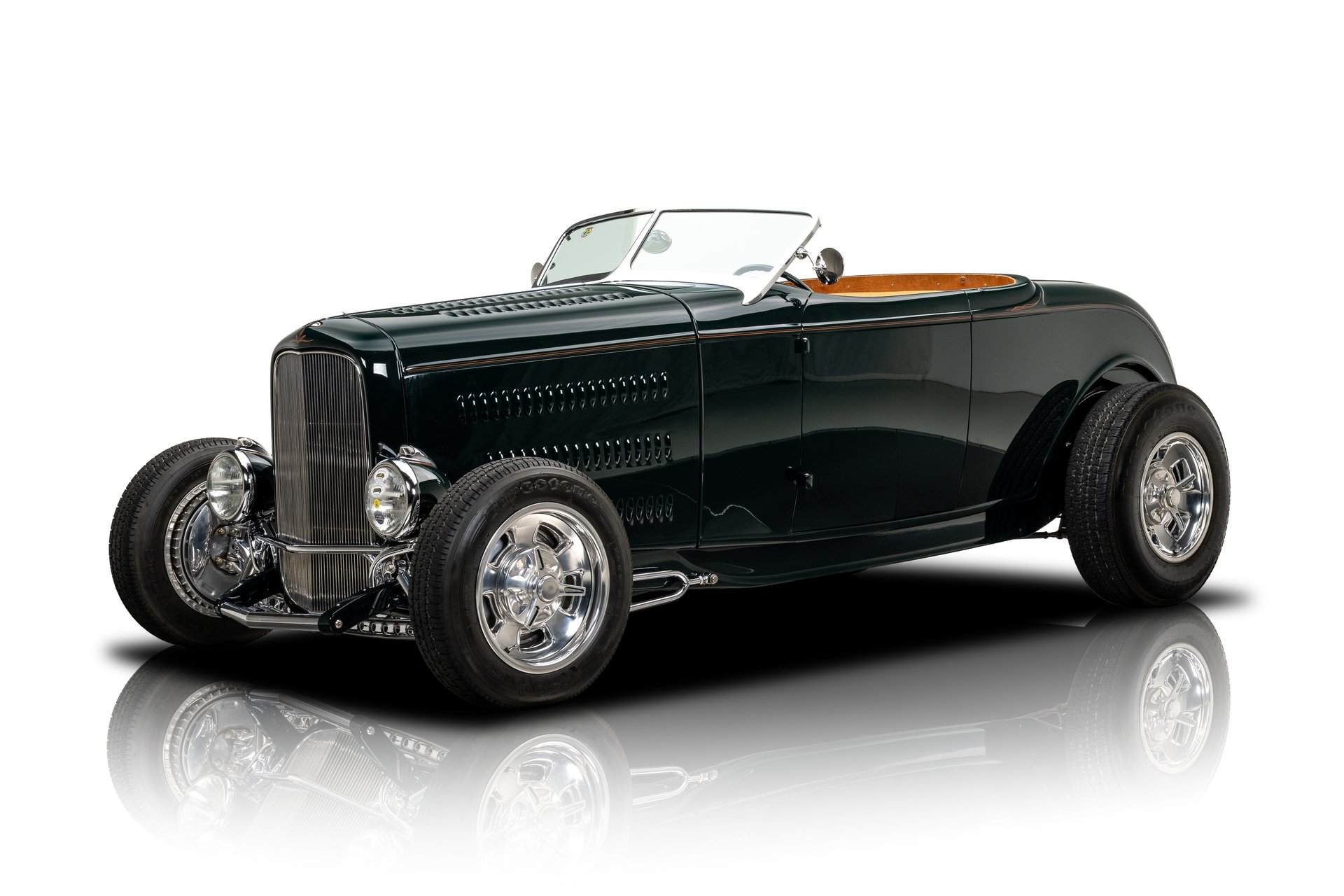
The models
Ford sold the 1932 car the way it had sold the Model A: one chassis, two engines, two trim levels — Standard and DeLuxe — and a long catalogue of body styles, most available with either engine. There is no model badge that settles anything. A buyer is choosing a body style, a trim level and an engine, in that order, and then — in the modern market — how much of the car is actually from 1932. DeLuxe cars carry more brightwork, cowl lamps on many bodies and better upholstery; the three-window coupe was DeLuxe-only. Body production below is given as scale rather than false precision: Ford's records split production by body, engine and plant in ways published tables reconcile differently, and the honest summary is the shape of the range — sedans and the five-window coupe were the volume cars, the three-window coupe and roadster were built in far smaller numbers, and four-cylinder versions of every body were outsold heavily by the V8.
| Model | Years | Engine | Output | Built | Character |
|---|---|---|---|---|---|
| Roadster (Standard and DeLuxe) | 1932–1934 | 201 cu in four (B) or 221 cu in V8 (18/40) | 50 hp / 65 hp in 1932 | Low volume | The icon; open two-seater, rumble seat, the rodder's first choice |
| DeLuxe Coupe (3-window) | 1932–1934 | 201 cu in four (B) or 221 cu in V8 (18/40) | 50 hp / 65 hp in 1932 | Low volume | DeLuxe-only, rear-hinged doors, the connoisseur's coupe |
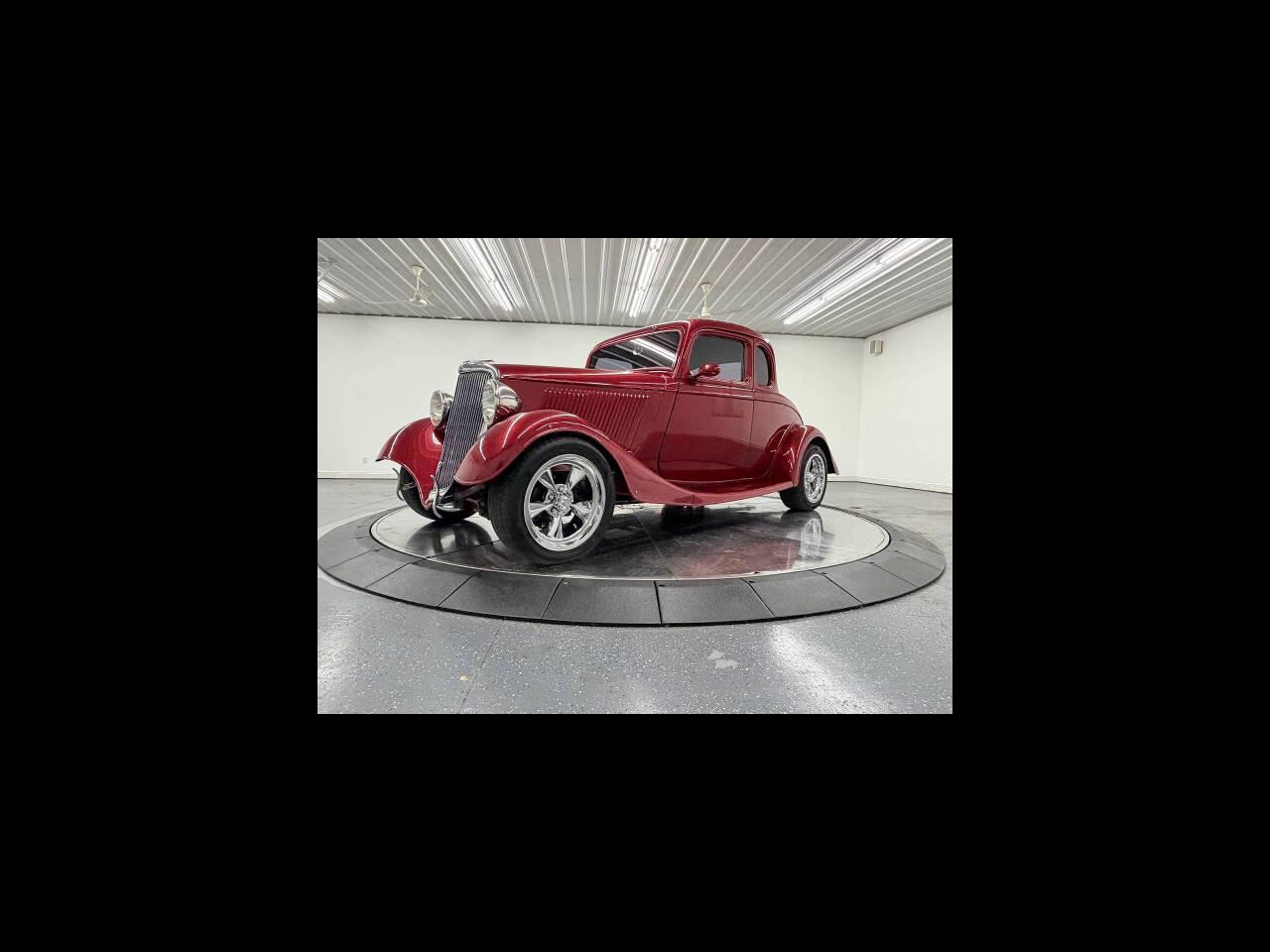
| Coupe (5-window) | 1932–1934 | 201 cu in four (B) or 221 cu in V8 (18/40) | 50 hp / 65 hp in 1932 | High volume | The everyman Deuce coupe; Standard and DeLuxe trim |
| Sport Coupe | 1932 | 201 cu in four (B) or 221 cu in V8 (18/40) | 50 hp / 65 hp in 1932 | Low volume | Fixed landau-style top and rumble seat; looks convertible, is not |
| Cabriolet | 1932–1934 | 201 cu in four (B) or 221 cu in V8 (18/40) | 50 hp / 65 hp in 1932 | Low volume | Folding top with roll-up windows; the sophisticated open car |
| Phaeton (Standard and DeLuxe) | 1932–1934 | 201 cu in four (B) or 221 cu in V8 (18/40) | 50 hp / 65 hp in 1932 | Low volume | Open four-door tourer; side curtains only, few survive honest |
| Tudor Sedan | 1932–1934 | 201 cu in four (B) or 221 cu in V8 (18/40) | 50 hp / 65 hp in 1932 | The volume body | Two doors, room for a family, the value way into a steel Deuce |
| Fordor Sedan | 1932–1934 | 201 cu in four (B) or 221 cu in V8 (18/40) | 50 hp / 65 hp in 1932 | Moderate volume | Four doors, the formal family car; Murray and Briggs bodies |
| Victoria | 1932–1934 | 201 cu in four (B) or 221 cu in V8 (18/40) | 50 hp / 65 hp in 1932 | Low volume | Close-coupled bustle-back; the closed-car flagship |
| Convertible Sedan | 1932–1934 | 201 cu in four (B) or 221 cu in V8 (18/40) | 50 hp / 65 hp in 1932 | Very low volume | Four-door convertible; complex top, rare and fragile |
| Station Wagon | 1932–1934 | 201 cu in four (B) or 221 cu in V8 (18/40) | 50 hp / 65 hp in 1932 | Very low volume | Wood body built at Iron Mountain; the woody, and the wood is the body |
| Pickup, Panel and Sedan Delivery | 1932–1934 | 201 cu in four (B) or 221 cu in V8 (18/40) | 50 hp / 65 hp in 1932 | Moderate volume | The commercials on the car chassis; worked hard, survivors are rods or restorations |
(V8 output rose after 1932: 75 hp for 1933, 85 hp for 1934; the four stayed at 50 hp. The 1933–34 cars sit on a 112-inch wheelbase with a more sloped grille — visibly different from the 1932, and priced as their own thing even though this series files them together.)
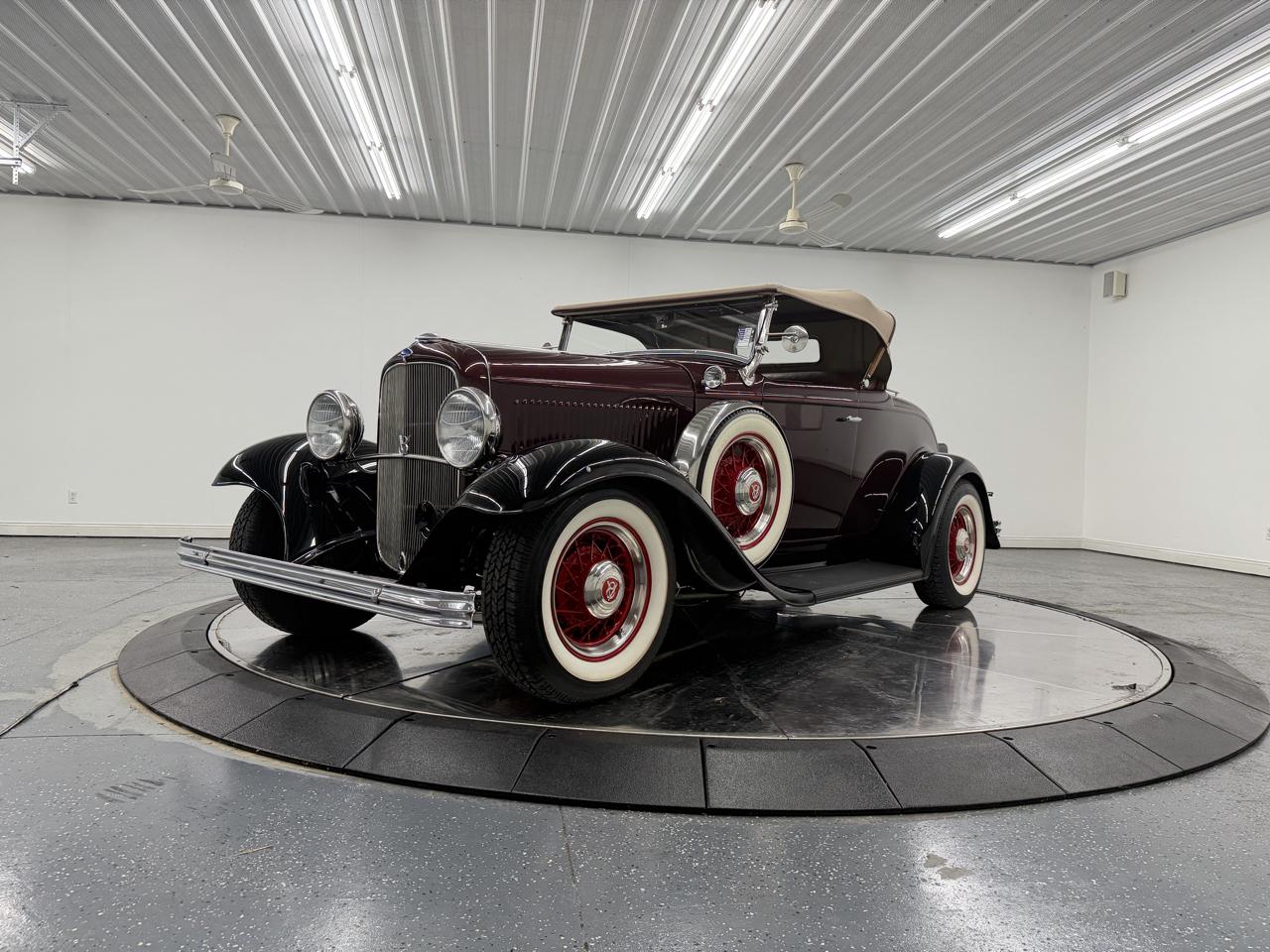
The coupes. The five-window coupe — two door windows, two quarter windows, a rear window — is the Deuce coupe of the song: built in volume, raced, rodded and reproduced ever since. The three-window DeLuxe Coupe is a different, more expensive body: a smoother roofline, no quarter windows, and doors hinged at the rear — suicide doors, in the vernacular — which makes door alignment and latch condition a structural question on this body in a way it is not on any other. Both coupes were offered with a rumble seat in place of the trunk on many cars. A rumble seat is charming, leaks, and hides rust in the floor beneath it; lift everything and look.
The sedans and the Victoria. The Tudor is the value body in steel: two wide doors, a real back seat, built in the largest numbers, and — because rodders wanted coupes and roadsters — sedans survived in original form at a higher rate than the glamour bodies. The Fordor adds rear doors and, on many cars, a body built by Murray or Briggs rather than by Ford itself, identified by a body tag; those bodies carry more wood framing than Ford-built bodies, a point the problem-areas section returns to. The Victoria is the closed flagship: close-coupled, bustle-backed, the best trim in the range, and genuinely scarce now. The commercials share the car chassis: pickups are their own steady market, the panel and sedan deliveries are the rarest of the line, and the station wagon's wood body — maple framing and panels from Ford's Iron Mountain plant — makes a wagon a carpentry purchase first and a car purchase second.

Engines and gearboxes
The Model B four: the Model A engine, grown up
The stock four is a side-valve (flathead, or L-head) inline four of 200.5 cubic inches, about 3.3 litres, with the Model A's bore and stroke of 3.875 by 4.25 inches. Ford rated it at 50 hp at 2,800 rpm — a 25 percent gain on the Model A — with torque of roughly 128 lb-ft low down, and the gain came from detail work rather than displacement: compression raised from about 4.2 to 1 to about 4.6 to 1, a revised combustion chamber, increased valve lift, improved manifolding, and a larger Zenith carburettor with a power-valve circuit. The crankshaft is the important change underneath: larger 2.00-inch main journals, wider main bearings, and — late in the 1932 season — a fully counterweighted crankshaft that transformed the engine's smoothness and is the most sought-after component in the four-cylinder world, because Model A owners and four-cylinder racers have hunted B cranks and B blocks for ninety years.
Lubrication is where the B earns its reputation as the better engine. The Model A fed its main bearings largely by gravity and its rods by splash and dippers. The B keeps the three-main-bearing layout and the poured babbitt bearings — mains and rods are still soft bearing metal cast in place and fitted by hand, not modern insert shells — but the oil pump and crankshaft drillings were upgraded to feed the mains under pressure and meter oil far more positively. It is still not a modern pressure system, there is still no oil filter and no oil pressure gauge, and the rule applies with money behind it: oil level and oil cleanliness are the engine's life. Run a B a quart low or a season overdue and you wear babbitt that only an engine-out specialist job replaces — realistically $3,500 to $6,500 for a properly rebuilt short engine once repouring, line boring, machining, pistons, rings, valves and guides are counted. Insert-bearing conversions exist; a documented one by a known builder is a plus, an undocumented one a question.
Two B features identify the engine at a glance, and both exist because the fuel tank moved to the back of the car. There is a mechanical fuel pump on the right front of the block, driven by an extra lobe on the camshaft — a Model A has no pump at all — and the carburettor is a downdraft Zenith rather than the A's updraft unit. Ignition changed just as much: the B distributor uses automatic centrifugal advance, so the manual spark lever a Model A driver works constantly does not exist here. A B also carries an engine stabiliser — a large friction damper tying the engine to the firewall — that the V8 does not have, a useful tell when you are identifying a car. A healthy B starts readily, idles slowly and evenly, and pulls a laden car up a grade in top gear from low revs. A deep knock that loads up under throttle and eases off it is a rod bearing until proven innocent, and prices the car as a rebuild whatever the seller calls it. Freeze cracks along the water jacket, cracks in the deck between the cylinders and around the valve seats, and old stitch repairs are the block faults to hunt, exactly as on a Model A — but a cracked B block hurts more, because correct B blocks are scarcer than A blocks and the Model A upgrade market competes for every sound one.
Identity on a four is settled by the serial, and the system is not the Model A system, so learn it fresh. US four-cylinder engines began the season with an AB prefix — ABB for engines destined for the heavy truck line — followed by a number continuing the Model A sequence from 5,000,001. Partway through the run, at engine 5,062,387, the A was dropped and later fours carry a plain B prefix, or BB for truck engines. The number was stamped on the flywheel housing, flanked by stars, and served as the car's serial number for title purposes; when a frame was stamped — practice varied by plant — it was duplicated on the top of the left frame rail. Two consequences matter. An AB or B number dates the engine, and a Model A engine in a 1932 car is common, priceable history, not automatically a fraud. And because the title follows the engine number, an engine change can leave the paperwork describing an engine the car no longer has — the most common title complication on these cars, to resolve before money moves.
The flathead V8: the engine most original Deuces actually carry
No honest guide to this series can treat the V8 as a footnote, because most original 1932 Fords you will meet are Model 18s, and most traditional rods are flathead-powered. The 221 cubic inch V8 — 3.6 litres, bore and stroke 3.0625 by 3.75 inches — was the first V8 cast in one piece and sold at a cheap-car price, rated at 65 hp in 1932 form, 75 hp in 1933 and 85 hp in 1934 as carburation and ignition improved. It is a side-valve engine like the four, with the exhaust routed through the block, a single downdraft carburettor (a Detroit Lubricator unit on early 1932 cars), a distributor at the front of the engine driven off the nose of the camshaft, and water pumps mounted in the cylinder heads on the early engines. It should start promptly, idle with a soft, even lope, and pull cleanly; it will also run warm in modern traffic in a way its owner should be able to explain rather than excuse.
The flathead's failure modes are specific and testable. The distributor's position makes it the most neglected service item on the engine — it comes off the front of the motor, and its twin contact sets and advance mechanism live in heat and road dirt, so a car that stumbles, runs flat or is hard to start hot has a distributor question before it has a carburettor question. Cooling is the known weakness: the pumps-in-heads layout, exhaust passages heating the block from inside, and ninety years of scale in the jackets mean a flathead that boils in traffic is reporting radiator capacity, pump condition, timing or internal blockage — work through them in that order before accepting a head-gasket story. The blocks crack, classically in the valve area and along the pan rail, and a crack test by a shop that knows flatheads is money well spent on any expensive car; a quality flathead rebuild runs roughly $4,500 to $8,500 depending on machining and period speed parts. The fuel pump, at the back of the engine where heat collects, is the classic vapour-lock culprit on a hot restart — an electric auxiliary pump is an acceptable driver modification if disclosed and plumbed safely.
Serials on a V8 follow the same title logic with a different prefix: US V8 engines were numbered from 18-1 upward, stamped on the transmission case above the inspection cover, and duplicated on the top of the left frame rail, the front stamping visible with the body on. A frame number far outside the 1932 sequence means a later engine, a changed frame, or both — and on a car priced as a matching original that is the seller's explanation to give, not yours to construct.
The engines you will actually find: the rod reality
Open the hoods in our own listings for this series and the stock engines are the minority. The typical car carries a Chevrolet small-block — a 283, 327 or above all a 350 — a modern GM LS engine, a Ford small-block or 5.0, a Chrysler Hemi in a traditional build, or occasionally the B four itself built as a period banger engine with an overhead-valve conversion head of the Riley, Miller or Cragar type. None of this is a defect in itself. It changes the inspection completely: you are assessing a used modified car, and the questions become build questions. Who built the engine, when, and where are the invoices. How many miles since the build — the odometer on a rod measures the build, not the car, and is frequently a new gauge that started at zero. How is it cooled: the original-style shell hides a core sized for a 65 hp flathead, and a big engine in a Deuce lives or dies by radiator area, shrouding and an electric fan that works in traffic. Judge the answers, not the chrome. A documented, sensibly cooled small-block car with ten thousand sorted miles beats a flashier build with no paperwork and a boiling problem the seller calls character. Period four-cylinder speed equipment reverses the usual value logic — a genuine B with a documented overhead-valve conversion is a specialist prize — but only with paperwork, because the name cast into a head is a claim to verify, not a fact to repeat.
Gearboxes
Every stock 1932 Ford, four or V8, has the same transmission: a three-speed manual with a floor lever, synchromesh on second and top — a real novelty in the cheap-car field in 1932 — behind a single-plate dry clutch, driving through an enclosed torque tube to the rear axle. First gear is unsynchronised and the box was never silent, so judge it on the tests that matter: it stays in gear under load and on the overrun, second and top engage cleanly at sensible revs, reverse engages without a fight, and the clutch takes up smoothly without judder or slip. A box that jumps out of gear under load is worn dogs or a bent fork, and the money is mid-range: a clutch runs roughly $600 to $1,200 fitted, a gearbox rebuild roughly $900 to $1,800, and a rear axle overhaul roughly $800 to $1,600. A worn torque-tube universal joint announces itself as a clunk on take-up and a vibration at speed owners misdiagnose as wheel balance for years. The later 1930s Ford transmissions — above all the 1939 floor-shift box — are the traditional rod swap behind a flathead, prized for stronger gears and better ratios.
Automatics in this series are always a conversion, full stop. In our listings they are the majority: Chevrolet Turbo 350 and Turbo 400 three-speeds and later overdrive automatics behind small-block and LS engines, Ford automatics behind Ford engines. Assess one as in any used modified car: fluid colour and smell, firm clean shifts hot and cold, no flare between gears, no long delay into reverse, a working kickdown, and a cooler actually plumbed in — a big engine, a small grille and an uncooled automatic is a summer breakdown arranged in advance. A five-speed manual, usually a Tremec, is the other common conversion, judged on synchromesh and whether the conversion cut the car's structure to fit — which leads directly to the problem areas, because on a 1932 Ford the build is the car.
Problem areas
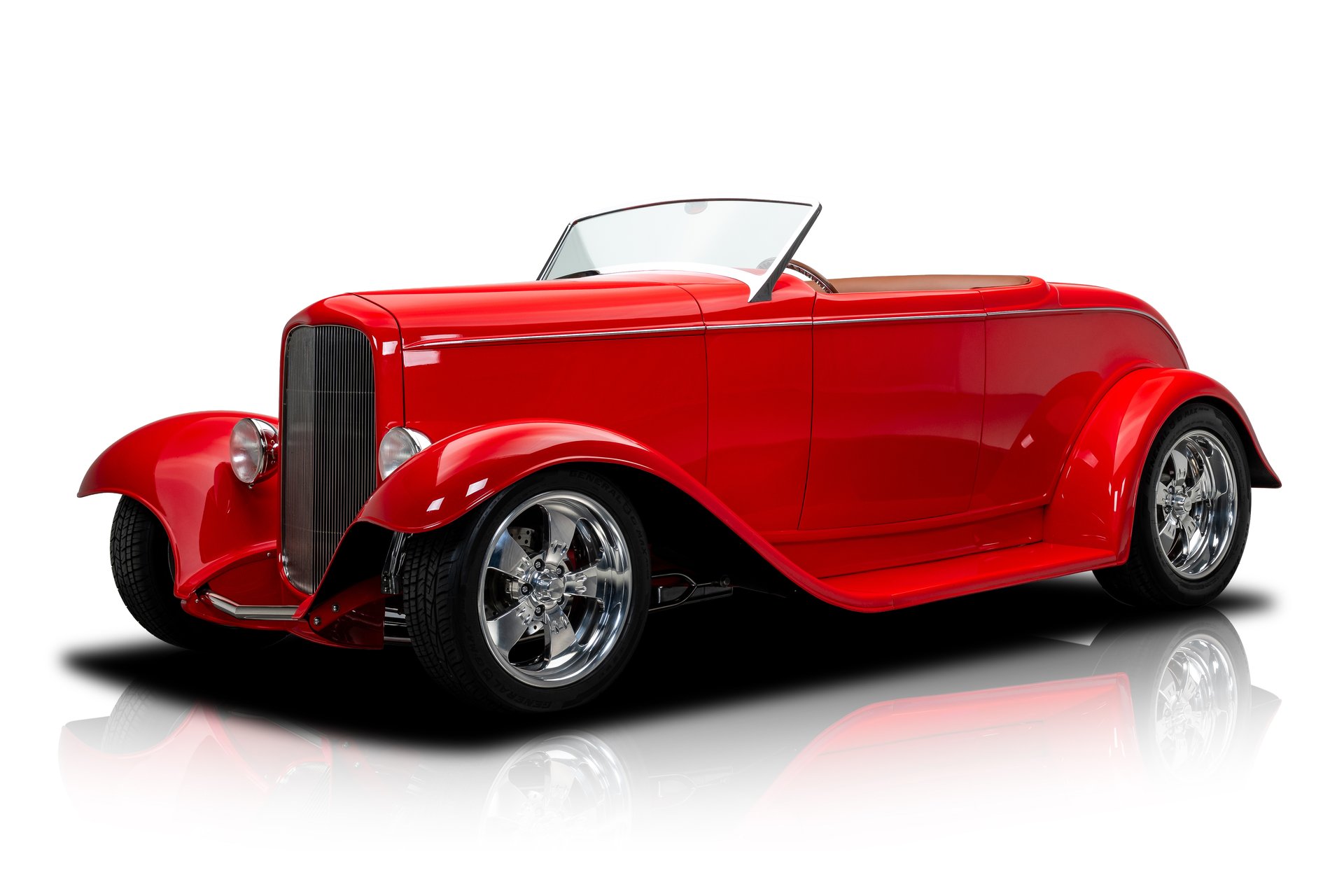
Everything in this section follows from one fact: a 1932 Ford is the most reproduced, most modified and most misdescribed car in the American market, and it is also a 94-year-old car underneath whatever has been done to it. The question is never whether a Deuce needs work. It is which car you are actually being sold, which work it needs, and whether the price already knows. A note on our own evidence first, because honesty about sample sizes matters more than a confident percentage: our examined photo-note base for this series is only six cars — too small to quote incidence rates from, and this guide does not. Two of those six noted visible damage, and none noted rust, smoke or leaks. That tells you nothing statistical; the patterns below come from the design itself and from what ninety years of these cars have consistently done, and you verify them on the car in front of you, every time.
Identity: Henry steel, reproduction steel, and glass
This is the problem area that exists for no other car in this programme at anything like the same scale, and it comes before rust, before engines, before everything.
Original Henry Ford steel is the top of the ladder: a body and frame built by Ford in 1932 (or 1933–34 for the later cars), carrying a frame stamping that matches the title — factory spot welds and seams, correct pressings, original body tags on the Murray and Briggs bodies. Original steel is finite and priced accordingly. It is also, on the glamour bodies, frequently claimed and much less frequently true.
Reproduction steel is the honest middle. Brookville Roadster and others have built complete new steel roadster and coupe bodies for decades; the best are excellent, the panels interchange with originals, and a car built on one is a perfectly good car. It is not an original car, and must not be priced as one. The tells are in the details: uniformly crisp pressings with no ninety years of small repairs, modern weld patterns, and — decisive when it exists — build paperwork naming the body maker. Ask directly whether the body is original Ford steel, reproduction steel or fibreglass, and get the answer in writing on an expensive car.
Fibreglass is the bottom rung for value and not necessarily for use: a good glass body on a well-built chassis is a durable, rust-proof driver. The magnet test settles the material in seconds — a magnet wrapped in cloth, run over the cowl, doors, quarters and roof; it sticks to steel and falls off glass. What a glass car must never do is carry original-steel money, and its paperwork must never pretend to a Ford serial it does not have. Many glass and reproduction cars are titled under state assigned numbers or a serial from a donor frame, which is legal and normal when disclosed and when the title matches the number actually on the car. It is a walk-away when the number on the title exists nowhere on the vehicle.
The frame is half the identity. An original 1932 frame — deep pressed rails with the double-drop profile — is a valuable component in itself, and rods sit on everything from a restored original frame to reproduction rails to a fully fabricated modern chassis. None of those is wrong. What matters is knowing which one is under the car, whether it is straight, and whether the serial on the title lives on it. A bent, rusted or badly welded original frame is worse than a good reproduction frame in every way except a listing description.
Rust and rot: the map
A 1932 Ford body sits on a separate frame, the fenders and running boards bolt on, and most closed bodies are predominantly steel — far less structural wood than a Model A Fordor carries — so rust has two meanings here: rust in bolt-on panels, which is money, and rust in the cowl, the substructure and the frame, which is the car.
The frame. Start underneath, always. The rails rust where mud and water sit: around the crossmembers, at the front and rear horns, in the centre section where road grit blasts the paint away, and anywhere a previous repair has plated over damage instead of cutting it out. Look down each rail for straightness as well as perforation, and judge a boxed rod frame (a plate welded inside the rail to close the channel, standard practice for V8 torque) on its welding: continuous, even, crack-free welds are strength; porous welds with rust bleeding from the seam are a fabrication bill. Perforation is a cut-out-and-replace job priced per car; a complete reproduction frame is often the cheaper honest answer, and either way the bill belongs in the offer, not in your first month of ownership.
Cowl, doors and lower body. The lower cowl sides behind the front fenders are a classic trap, hidden by the fender until the rust is advanced — feel behind the fender edge and look from inside, under the dash. Door bottoms rot from the inside out on every closed body and on the cabriolet; the first signs are bubbling along the lower edge and a dull note when the door is tapped. On the three-window coupe, add the rear-hinged door structure itself: worn hinges and tired latches on a suicide door are a safety item, not a trim item, and a door that needs lifting to close is reporting hinge pins, the pillar, or both. The panel below the trunk or rumble lid, the lower rear quarters and the wheel-arch lips belong on the same circuit. Patch panels are reproduced and a single panel fitted and painted typically runs $500 to $1,500 — but cowl, doors and quarters rarely rot alone, and a car needing all of them is a body restoration wearing a driver's price tag.
Floors, subrails and the trunk. Lift the carpets and the rumble or trunk floor on every car. The floor structure and the subrails that tie the body together at sill level are load-bearing, hidden, and exactly where water from perished window and top seals ends up. Surface scale is treatable; perforation at the body mounting points is structural work, and it is the repair sellers' photographs most reliably avoid. On a roadster or phaeton, add the top irons' mounts and the wood tack strips and bows: the steel may be sound while the wood the top depends on is dust. On the station wagon, invert the inspection — the wood is the body, and opened joints, filled panels and soft lower framing are the wagon equivalent of a rotten sill, priced by a coachbuilder, not a panel beater.
The smaller traps. The grille shell is the face of the car and an original 1932 shell in good order is a valuable part in itself; check for cracks at the mounts, filler in the rolled edge, and a reproduction shell passed off as original — the insert should fit the shell evenly all round. Headlamp bars bend and crack at the mounts. The rear fuel tank rusts inside and sheds flakes that block filters — a car that repeatedly blocks its filter is reporting its tank, and cleaning and sealing runs roughly $300 to $700. Running boards rot at their mounting edges, which are body metal, not board metal. And on any chopped car — the roof cut and lowered, the signature Deuce coupe modification — judge the chop as structure: even pillars, glass that fits its openings, doors that still align, weld quality you can inspect from inside the roof. A bad chop compromises strength and weather sealing both, and no engine makes it worth original money.

Brakes, steering and the running chassis
Mechanical brakes are the stock car's most consequential system, because a stock 1932 Ford stops entirely by rods and levers: internal-expanding drums of 12 inches on all four wheels, no hydraulics, no servo. In perfect order the car stops adequately for its performance — firmly, straight, with real pedal effort. Out of order, as most unrestored cars are, every worn clevis pin, oval hole, bent rod and out-of-round drum steals travel and equality, and the car stops long and pulls. A full overhaul — drums skimmed or replaced, shoes relined and arched, pins and bushings renewed, the system equalised rod by rod — runs roughly $1,200 to $2,500 at a specialist and transforms the car. Treat pulling, a bite point that moves (there is no fluid to pump up; a moving bite point is mechanical slack taking up) or a parking brake that will not hold on a slope as priced defects. Most rods, and many drivers, have been converted to 1939–48 Ford hydraulics or front discs: a well-engineered conversion with a properly sized master cylinder is a selling point on a driver or a rod and a deduction on a car sold as stock, and a badly engineered one — single-circuit hydraulics behind a heavy engine — is worse than honest mechanicals.
Suspension and steering. The transverse leaf springs are simple and durable; what wears is everything they connect to. Shackles and bushings wear oval, main leaves crack at the eyes, and the Houdaille lever-action shocks are frequently frozen, disconnected or missing, which owners then blame on the springs. A car on four working lever shocks rides remarkably well; a rebuilt set of four is roughly an $800 to $1,600 item. Kingpins and bushings wear as a pair: rock each front wheel top to bottom and price real play at roughly $300 to $600 a side fitted. The steering box wears in the straight-ahead position first; an inch or two of play at the rim is period normal, wandering and a tight spot at centre is a box overhaul at roughly $400 to $900. On rods, expect a dropped axle (judge the workmanship — a badly dropped axle is a cracked axle waiting), split wishbones, a Vega or Mustang steering box, or full independent front suspension; each is judged as engineering, on weld quality, geometry and bump steer, not on whether Henry would have approved.
Wheels and tyres. Stock wheels are 18-inch wire-spoke steel on the 1932 car — a one-year size that makes correct wheels a hunt in themselves. Welded spokes crack at the hub and rim welds; check every wheel including the spare, because a cracked wire wheel is scrap. On rods the check is the universal one: tyre age by date code, not tread. A set of correct new tyres for a stock car runs roughly $800 to $1,400 fitted.
Engines and builds in old age
The stock engines' failure modes are covered in the engines section and apply in full here, with one addition: time in storage. A car that has sat for years needs its fuel system cleaned end to end (ethanol fuel attacks old rubber and leaves varnish in tanks and carburettors), every brake component inspected before the first drive rather than after it, and all fluids, hoses and seals renewed. Budget for recommissioning as a separate line from purchase, and prefer the car in regular use over the sleeper, almost every time.
On a rod, the problem areas are build areas. Cooling first: the grille shell fixes the radiator's frontal area, and a powerful engine behind it needs core thickness, shrouding and fan capacity that many builds skimp on because they do not show — ask for a demonstration in traffic, not on an open road. Electrics second: a modern build should have a modern, fused, labelled harness; unfused splices and gauges that work when they feel like it tell you how the rest of the build was done. Structure third: swaps require mounts and crossmember work, and a transmission tunnel cut without reinforcement, or a frame notched without boxing, is the build equivalent of a rotten sill. A famous engine in a badly built chassis is a bad car at a good car's price.
Interior, top and trim
Interiors on stock cars are simple, durable and increasingly expensive to put right correctly. Upholstery was mohair or broadcloth on closed cars and leather or leatherette on open and DeLuxe cars; seat springs and pads collapse with age, and a correct retrim in correct materials is specialist work priced in the thousands, not the hundreds — which is why a sound original interior is worth real money and a cheap vinyl retrim on a car sold as original is a deduction. Instruments live in an engine-turned panel at the centre of the dash; working gauges are a maintenance sign. On rods the interior is a build item again: judge whether the wiring and insulation behind the trim match the standard of the parts you can see.
Tops divide by body. A roadster or phaeton top is a consumable — canvas, bows and irons — and a new top with sound irons is a budgetable job; bent or missing irons are the expensive part, because they are body-specific. A cabriolet mechanism is more complex and its rails and latches must work, not merely fold. A convertible sedan top is the most complex mechanism Ford sold that year and should be demonstrated through a full cycle, twice. Chrome pits on every car of this age and re-plating a full set of brightwork is a serious bill. Count the pieces that need work and price them individually.
How to inspect one
Allow at least an hour, bring a torch, a magnet wrapped in cloth and a small screwdriver for prodding (with the seller's permission), and arrange a lift inspection before money changes hands on any car priced as original steel. Work in this order: identity first, structure second, mechanics third, cosmetics last. A car that fails step 1 or step 3 does not get rescued by a good engine.
- Start with the paperwork and the serial. Match the title to a number physically on the car. On a stock car that is the engine serial system from the engines section: an AB or B number on a four, an 18 number on a V8, stamped on the flywheel housing or transmission case and duplicated on the top of the left frame rail. On a rod, find whatever number the title rests on — a frame stamping, a reproduction-frame number or a state assigned number — and put your hand on it. A number that exists only on paper ends the inspection here.
- Settle what the body and frame are. Magnet in hand, work the cowl, doors, quarters, roof and fenders, and ask the direct question from the identity section: original Ford steel, reproduction steel, or fibreglass — and the same for the frame. Look for a body tag on a Murray or Briggs body and build paperwork on a built car. Price follows the answers, so get them before you fall for the car.
- Under the car. Torch along both frame rails, front to back: perforation, plated repairs, cracks at the crossmembers, and the quality of any boxing welds on a rod. Check the subrails, body mounting points, floor seams and rear horns. Perforation in rails or subrails is structural. This step decides whether you continue at all.
- Cowl, doors and quarters. Feel behind the front fender edges for the lower cowl, run a fingertip along every door bottom, tap for the dull note of filler or rot, and check the panel below the trunk or rumble lid. On a three-window, work the rear-hinged doors through their full swing and latch them repeatedly — alignment and latch security are safety items on this body.
- Floors, trunk and rumble. Lift every carpet, the trunk mat and the rumble cushion and floor. Look for water tracks from the window and top seals, prod the pans and subrails, and read a repeatedly blocked fuel filter as the tank fault it is.
- Cold start. Insist the engine is cold when you arrive. A stock four or flathead should start readily and settle to an even idle; a rod's engine should start hot and cold without drama. Watch for blue smoke under load (rings) and on the overrun (guides and seals), and listen for the deep, load-dependent knock that prices a four as a babbitt rebuild.
- Cooling, demonstrated. Let the car idle up to temperature, then drive it in traffic, not just on an open road. A stock flathead runs warm and its owner should explain its fan, radiator and pump history; a rod must show you its electric fan cutting in and its temperature holding at a crawl. A car that boils on your test drive will boil on your first summer trip, at your expense.
- The test drive, brakes first. Fifteen minutes minimum. On a stock car, brake firmly from speed: it should stop straight, with a bite point that stays where it was — a moving bite point is mechanical slack, per the brakes section. On a hydraulic conversion, judge pedal feel, straightness and whether the system is dual-circuit. Then the gearbox: a stock box stays in gear under load and on the overrun; an automatic shifts firmly hot and cold with no flare and no long pause into reverse.
- Steering, springs and stance. The steering should be free of a tight spot at centre and the car should track straight over bumps without bump steer — a rod trait that condemns front-end geometry. At rest, stand back and read the stance: level side to side, sensible arch clearance, no unexplained sag. Rock each front wheel top to bottom for kingpin play.
- Body and gaps. Walk the car slowly. Panel gaps even or explained, doors, hood and rumble lid fitting their openings, grille shell straight with its insert fitting evenly. On a chopped car, check glass fit in every opening and door alignment twice — the chop section explains why. Count pitted chrome pieces and price them individually.
- Interior, top and electrics. Sit in every seat and feel for collapsed springs. Work every gauge, the lights, the horn and the wipers. Run a folding top through a full cycle — twice on a convertible sedan — checking irons and latches, not just canvas. On a rod, look under the dash: the wiring there is the build's honest signature.
- History last, and weight it. Build invoices, restoration photographs, engine and chassis receipts, previous titles. On an original car, a thick file verifies the story the stampings started. On a rod, the file is the difference between a known build and an anonymous one, and anonymous builds are priced as the sum of their risks. Then decide which of the three purchases this car actually is, and pay that purchase's price — never another one's.
Values
The build appends the current market figures beneath this guide — the listed-now summary and the recorded-sales block — and those numbers, refreshed at every build, are the ones to negotiate from. What follows is how to read them, because on this series the spread inside a single body style is wider than the spread between body styles, and a median read without the reasons behind it misleads in both directions.
The first driver is provenance, and it works like a ladder. An original-steel car with a frame number that matches its title, in a desirable body, sits at the top. A car built on reproduction steel sits a clear step below it in the same specification, and a fibreglass car below that — not because the driving experience differs by anything like the same margin, but because original steel is finite and the collector market prices scarcity. Establish which rung each car stands on before you compare anything else; most apparently inexplicable price gaps in this market are two cars on different rungs being read as one market.
The second driver is body style, in an order the market has held for decades. Roadsters and three-window coupes command the strongest money, five-window coupes follow, cabriolets and phaetons sit in the middle with condition deciding everything, and sedans — Tudors above all — are the value bodies, with Victorias the exception among closed cars because so few survive. Genuine panel and sedan deliveries are rare enough to behave like the glamour bodies. The 1933 and 1934 cars have their own price structure; a 1934 three-window is a valuable car on its own terms, neither a discount 1932 nor a premium one.
The third driver is which purchase the car is. Original cars are priced on correctness, matching numbers and restoration quality — and an older restoration done to a high standard, now mellowed, frequently beats a fresh restoration of unknown depth on value. Traditional rods are priced on provenance of a different kind: a known builder, period-correct components and documented history. Modern street rods are priced on build quality and specification, with one hard rule that surprises first-time sellers: a rod almost never returns its build cost, which makes the two-to-five-year-old professionally built car, bought at a fraction of its build invoices, one of the rational buys in the whole classic market — provided the build file comes with it.
Asking and achieved prices diverge here more than on most series, for a structural reason: sellers price the story, buyers price the verification. A car described as original steel that cannot produce a frame number, or as a fresh build that cannot produce invoices, will sit while honestly described cars sell around it. The project gap follows the same logic: a project Deuce — a body, a frame, a title and boxes of parts — is worth its verified components and no more, because finishing it costs more than the finished value in all but the rarest bodies. The cheapest complete car is almost always a better purchase than the most exciting project. Negotiate from the recorded sales, verify the rung, the body and the paperwork, and let cars priced on unverifiable stories find the buyer they are waiting for.
Parts and ownership
The 1932 Ford is one of the best-supported pre-war cars in the world, for a simple reason: the hot-rod industry never stopped needing its parts. Between the restoration and street-rod trades, almost everything for this car is available new, used or reproduction — and the buyer's skill is knowing which of the three a given part should be.
Easy: service items for all three engine families, brake shoes, drums and hydraulic conversion components, kingpin and shackle kits, spring and steering wear parts, wiring harnesses (stock-pattern and modern), glass and rubbers, fuel tanks, exhaust systems, and a vast catalogue of reproduction trim, lamps, bumpers and hardware. The grille shell and insert are reproduced in several qualities — buy the best, because the shell is the face of the car. Complete reproduction frames and full street-rod chassis, from traditional to independent suspension, are catalogue items with waiting times, not fabrication projects.
Harder and dearer: correct 1932-only details for a stock restoration — the 18-inch wire wheels, early V8 carburation and distributor parts, one-year trim and hardware, and original panels for the low-volume bodies. Model B engine parts carry a twist: service parts come through the Model A and early Ford trade, but the desirable B components — sound uncracked blocks, counterweighted crankshafts, good B heads — are hunted by Model A upgraders and four-cylinder racers as well, and priced by that competition. Period speed equipment, genuine overhead-valve conversions above all, is a specialist market where paperwork is the part you are really buying. Murray and Briggs body wood, convertible sedan top components, and station wagon wood — a coachbuilder's job, priced as furniture restoration as much as car repair — complete the expensive list. A quality repaint on a Deuce starts in five figures at a good shop, which is why this guide's recurring advice is to buy the body and the paperwork and fix the mechanics.
Running costs. A sorted stock car is a realistic regular-use classic within its performance envelope: a four cruises happily at 45 to 55 mph, a V8 car a little faster, fuel consumption sits in the mid-to-high teens, and any competent early-Ford specialist can service it — the Early Ford V-8 Club and the Model A and B clubs maintain the knowledge base and judging standards that make ownership straightforward. Six-volt electrics, mechanical brakes and transverse-spring ride quality are period facts to accept rather than faults to fix, though a discreet 12-volt conversion and hydraulic brakes are the two modifications the driver market forgives most readily. A rod's running costs are its components' costs: modern engines and automatics are serviced anywhere, and the bills that surprise rod owners are the build-specific ones — a bespoke radiator, a one-off exhaust, glass made for a chopped body. The line that catches every new owner is the first year: catching up deferred maintenance on a running car honestly runs $2,000 to $5,000 before you improve anything, and recommissioning a car that has sat for years runs $4,000 to $8,000 at a shop. Classic-policy insurance is straightforward for stock cars and for rods with an agreed value supported by the build file — one more place where paperwork pays.
Which one to buy
- The purist: an original four-cylinder car. A genuine Model B — AB or B serial, stock engine, stock body — is the rarest form of the Deuce and the one the market overlooks. Buy the most original example you can find, verify the serial against the title, and accept Model A pace with better manners. Correctness is the whole value; protect it.
- The traditionalist: a flathead Model 18. The original V8 car, stock or in period hot-rod form, is the historically complete Deuce. Buy documented cars, have the block crack-tested, and budget for the cooling system the car deserves.
- The driver: a sorted street rod with a build file. A professionally built small-block or LS car, steel or quality reproduction body, bought at a fraction of its build cost with the invoices in the glovebox, is the most usable Deuce money buys. No file, no premium — that rule alone will save you more than any mechanical check.
- The value buy: a Tudor sedan in original steel. The volume body rodders passed over, which is why honest original sedans survive: a real 1932 Ford, a real back seat and the deepest choice on the market, at the gentlest prices in the series. A Fordor is the same logic with rear doors.
- The showpiece: a three-window coupe or roadster. The glamour bodies, priced like it in every form. At this level buy provenance before shine — original steel, matching numbers or a famous build, verified in writing — because the premium lives entirely in the verification.
- The craftsman: a Victoria or a woody wagon. Small production, high character, specialist ownership. Buy the best body you can find, because those are the parts no catalogue will rescue you from.
And the rule that overrides all of the above: buy the verified car — the body, frame and title you have proven, in the specification you actually want. Engines, gearboxes, brakes and tops are all fixable at prices you can plan for. A Deuce whose steel, serial or build story turns out to be something other than what you paid for is the one purchase in this market that no amount of subsequent spending makes right.
Listed now
On Classic Listings today: 6 cars are listed here; 1 for sale and 5 marked sold; average asking price $129,500; asking range $129,500 to $129,500; sold cars average $59,080.
See the 6 Model B cars currently listed.
The market — recorded sales
Recorded-sale figures: 7 recorded sales · median $59,500 · range $41,900 to $75,000 (Nov 2024 – Nov 2026)
Based on 7 recorded sales — too few for a benchmark value.
| Date | Car | Sale price | Source |
|---|---|---|---|
| Nov 19, 2026 | 1934 Sedan | $63,900 | Dealer |
| Nov 19, 2026 | 1932 Coupe | $59,500 | Dealer |
| Nov 19, 2026 | 1932 Roadster | $41,900 | Dealer |
| Nov 8, 2026 | 1932 2 Door 5 Window Coupe | $75,000 | Dealer |
| Nov 8, 2026 | 1932 5 Window Coupe | $59,500 | Dealer |
| Nov 8, 2026 | 1932 Roadster | $59,500 | Dealer |
| Nov 8, 2026 | 1933 Cabriolet | $59,500 | Dealer |
Dates are the sale date where the source states one; otherwise the date the sale was recorded here.
For sale now
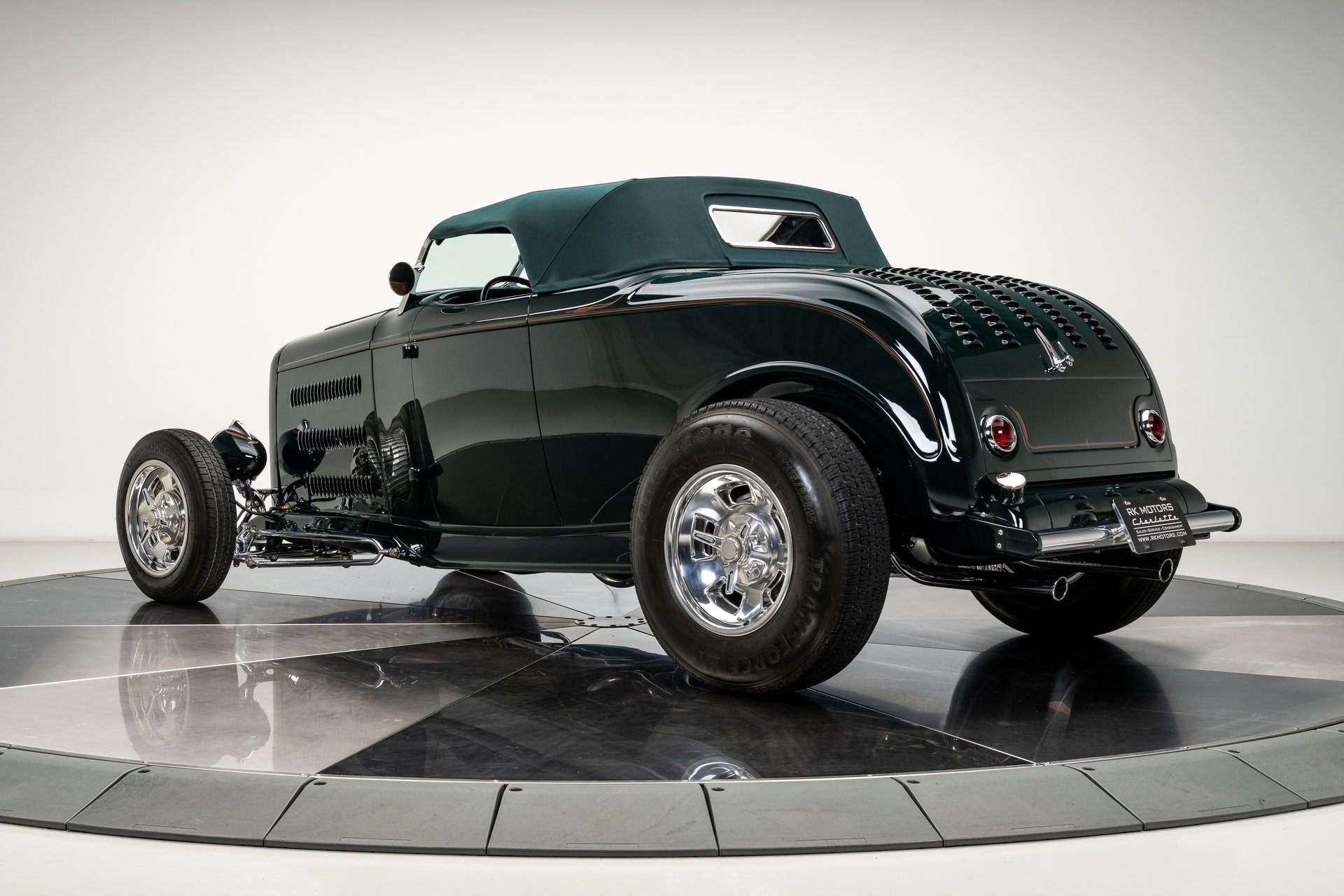 $129,500 · 118% above typical