
Ford Thunderbird Retro buyer's guide
Ford Thunderbird Retro (2002–2005) — Thunderbird, Thunderbird Convertible: what's listed, and what they sell for.
Years: 2002–2005 · Models: Thunderbird, Thunderbird Convertible
Overview and history
The 2002–2005 Thunderbird — the retro Thunderbird, the eleventh generation of the nameplate and the last Ford has built — is the car Ford made when it decided the Thunderbird should be a Thunderbird again. Not a family coupe or a four-seat luxury barge, but a two-seat open roadster in the direct line of the 1955–1957 original: long hood, short deck, round headlamps, a porthole hardtop, and colours with names like Torch Red and Thunderbird Blue. It was sold on feeling first and engineering second, and twenty years on the feeling has lasted — while the engineering underneath, borrowed from a Jaguar and a Lincoln, is more particular than the styling suggests.
Shown as a concept at the Detroit auto show in January 1999, under design chief J Mays with production styling led by Jack Telnack's team, the car drew on two ancestors at once: the nose, egg-crate grille, round lamps and hardtop porthole are 1955–1957; the smooth flanks and faired-in rear nod to the 1961–1963 Bullet Bird. The first cars reached dealers in the summer of 2001 as 2002 models, and early demand was real — dealers charged over list and the Neiman Marcus edition sold out in hours — but the fashion premium faded, sales fell every year, and the last car left the Wixom Assembly Plant in Michigan on 1 July 2005. There was no replacement, which is why this short run reads as a closed chapter.
Underneath sits the Ford DEW98 platform, developed with Jaguar and shared with the Lincoln LS and the Jaguar S-Type. That matters enormously, because this is not a Mustang in a costume: rear-wheel drive, double-wishbone independent suspension at both ends, near-even weight distribution, rack-and-pinion steering and a Jaguar-derived 3.9-litre V8 driving through a five-speed automatic — engineered as a relaxed, refined cruiser, and it drives like one. Judge it as a grand-touring roadster and it makes complete sense; judge it as a sports car and you will mark it down for sins it never claimed to avoid.
Every retro Thunderbird is a two-seat convertible — no coupe, no manual gearbox, no six-cylinder version. That simplicity is a gift to the used buyer: the differences between cars are year, trim, colour, mileage, condition and paperwork, not a maze of mechanical specifications.
Most were bought as second or third cars, garaged and driven on fine weekends, which is why the market holds an unusual number of 20-year-old convertibles with 20,000 to 50,000 miles and clean undersides. It is also why the traps are those of the low-use car: perished rubber, tired plastic cooling parts, ignition coils killed by age and heat rather than mileage, and sellers who believe low mileage excuses a car from ever needing anything. It does not. A 25,000-mile Thunderbird whose fluids and tyres have never been renewed on time is not a time capsule; it is a deferred-maintenance bill with good paint.
We currently track 55 of these cars for sale or recently sold in the United States, and for 18 of them we have gone through the sellers' photo sets in detail. In that sample, visible damage was noted in 5 of the 18 cars and rust mentions appeared in 6 of the 18 — low figures next to a 1960s classic, as expected from a galvanised modern car, but not zero. Smoke was noted in none of the 18 and leaks in only 1. These engines rarely die dramatically: they misfire, they weep, they overheat when a plastic part gives up, and they get sold by owners who have lost patience with a warning light. Your job is to tell the car that needs a weekend and a set of coils from the car that needs a transmission — and the difference is entirely knowable before you pay.
The models
Ford sold one car in four model years, in two main trim levels, with a run of special editions that matter more here than usual — because on a car where every example is mechanically near-identical, a documented edition, the right colour and the removable hardtop are most of what separates one car's desirability from another's.
| Model | Years | Engine | Output | Built | Character |
|---|---|---|---|---|---|
| Thunderbird Deluxe | 2002–2005 | 3.9 V8 (AJ35) | 252 hp (2002); 280 hp (2003–05) | See production note below | The standard car; soft top, hardtop optional in early years |
| Thunderbird Premium | 2002–2005 | 3.9 V8 (AJ35) | 252 hp (2002); 280 hp (2003–05) | See production note below | The better-equipped car; hardtop, chrome wheels and heated seats in most years |
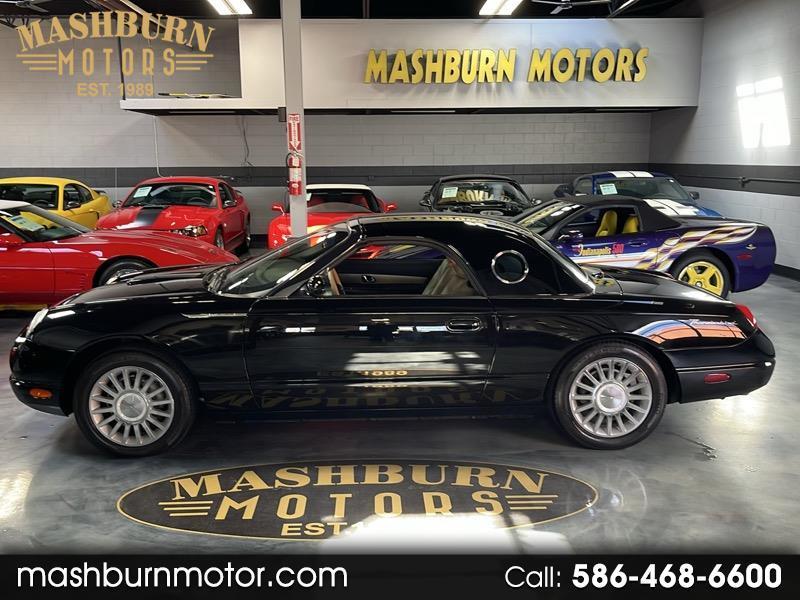
| Neiman Marcus Edition | 2002 | 3.9 V8 (AJ35) | 252 hp | 200 | Black and silver two-tone catalogue car; the first-year trophy |
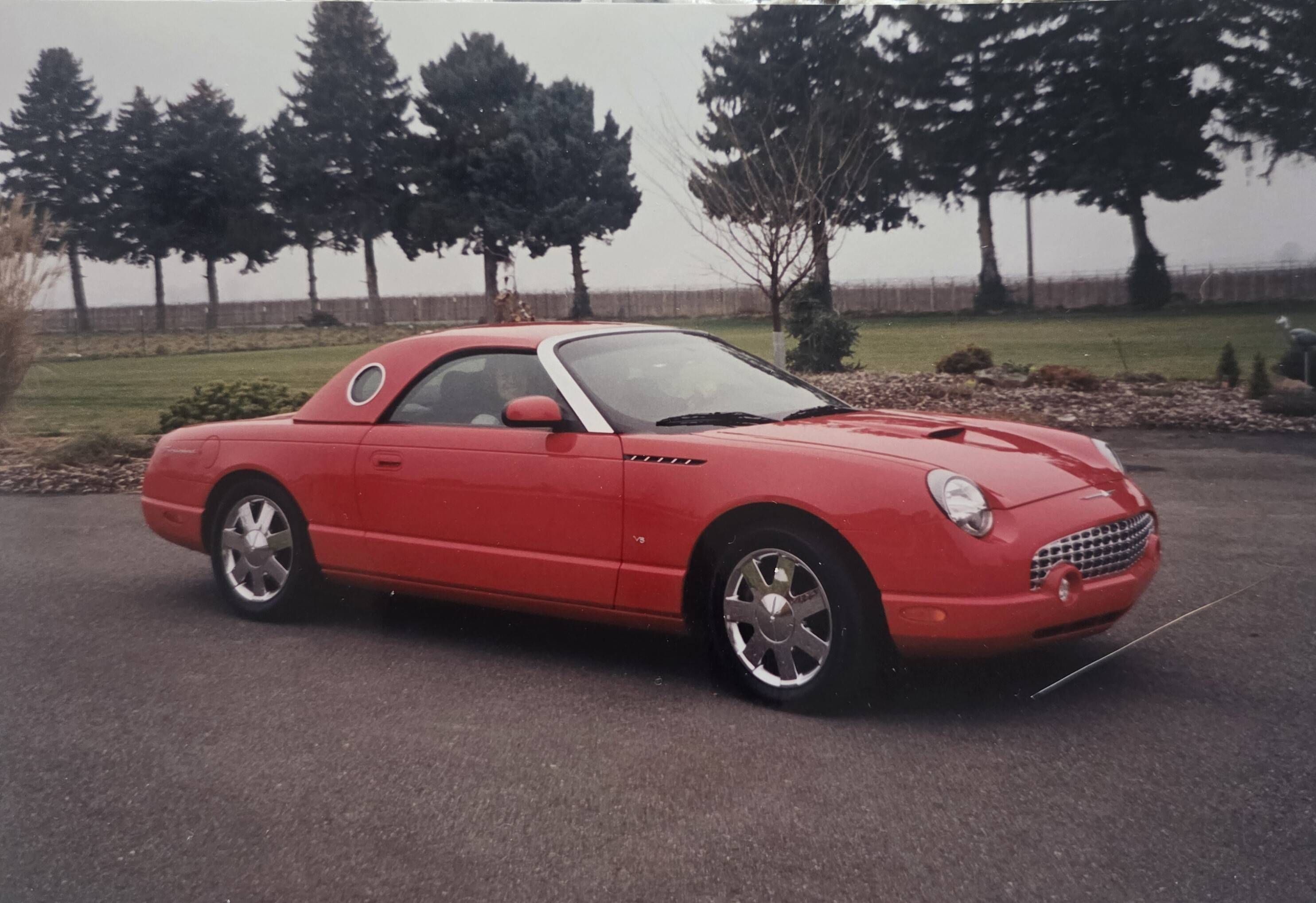
| James Bond 007 Edition | 2003 | 3.9 V8 (AJ35, VVT) | 280 hp | 700 | Coral paint, white hardtop; tied to the film Die Another Day |
| Pacific Coast Roadster | 2004 | 3.9 V8 (AJ35, VVT) | 280 hp | 1,000 | Monterey Mist with dark ash top and two-tone interior |
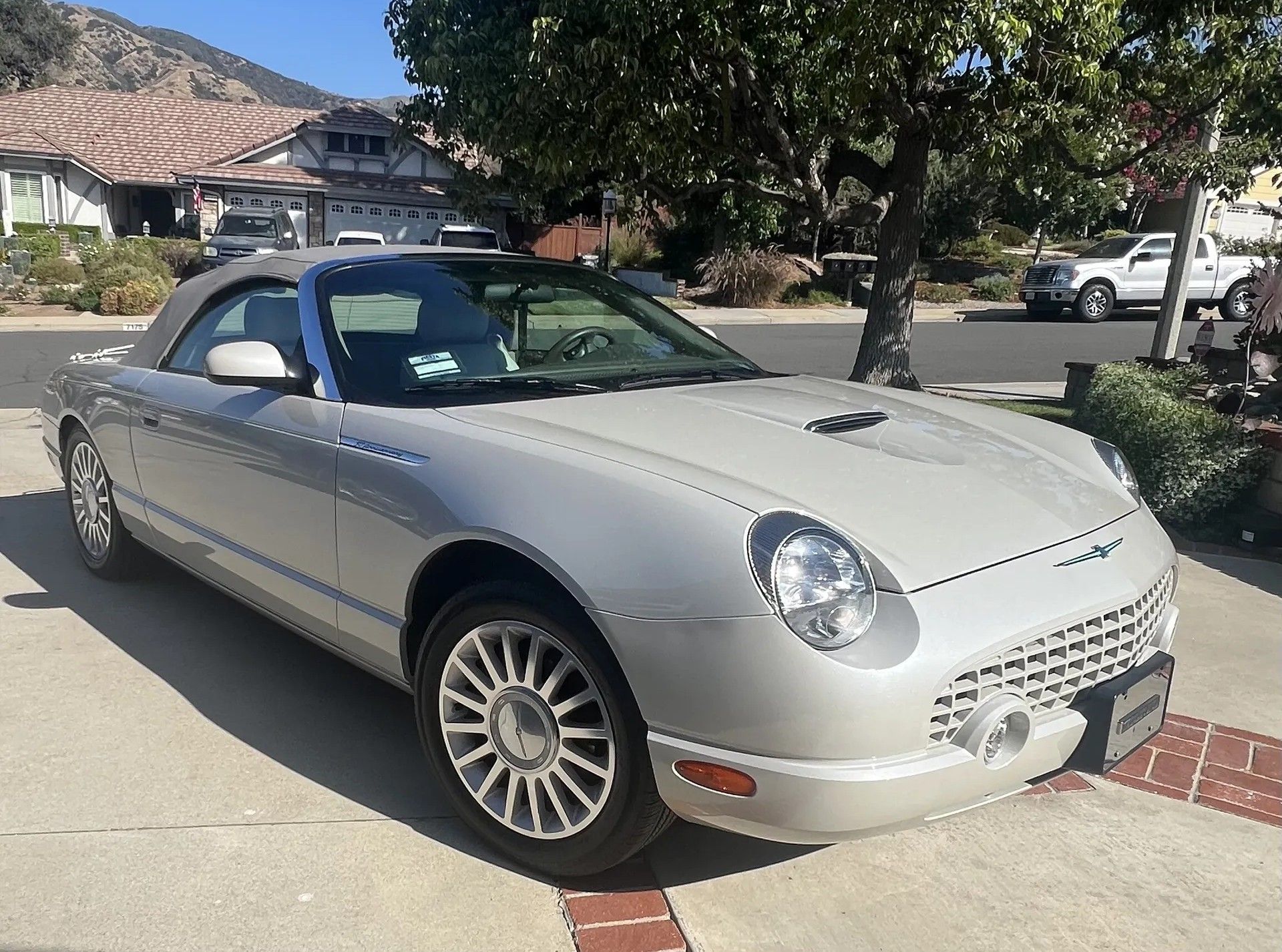
| 50th Anniversary Limited Edition | 2005 | 3.9 V8 (AJ35, VVT) | 280 hp | 1,500 | Cashmere tri-coat only; the final-year commemorative car |
Production by model year, across all trims, is the figure Ford records most consistently: 31,368 cars for 2002, 14,678 for 2003, 12,757 for 2004 and 9,295 for 2005 — 68,098 in total. Trim-by-trim splits were not published with the same consistency, so this guide gives the honest year totals and documented edition runs rather than inventing a Deluxe-versus-Premium breakdown. Nearly half of all retro Thunderbirds built are 2002 cars, which is why 2002s dominate any listing search and the scarcer later years are harder to find in a chosen colour.
Deluxe and Premium. The Deluxe is the standard car: power folding soft top, leather-trimmed seats, dual-zone climate control and 17-inch painted wheels in the early years. The Premium adds what most buyers now treat as expected — the removable porthole hardtop in most years, chrome 17-inch wheels, heated seats and, depending on year, a richer interior trim package. Packaging shifted year by year, so never buy the description in an advertisement; confirm the hardtop, heated seats and wheel finish physically. The most common specification disappointment here is a car advertised as complete whose hardtop was sold separately or left in a previous owner's garage. The hardtop, its stand, its cover and the Torx wrench are part of the car's completeness, and a missing top is both a cost and a value deduction, covered below. Two-tone interior inserts, colour-keyed to the exterior on certain combinations, were a signature option. A correct, unfaded insert lifts a car; a sun-bleached or dyed-over panel drops it, and original insert panels are far harder to source than black ones.
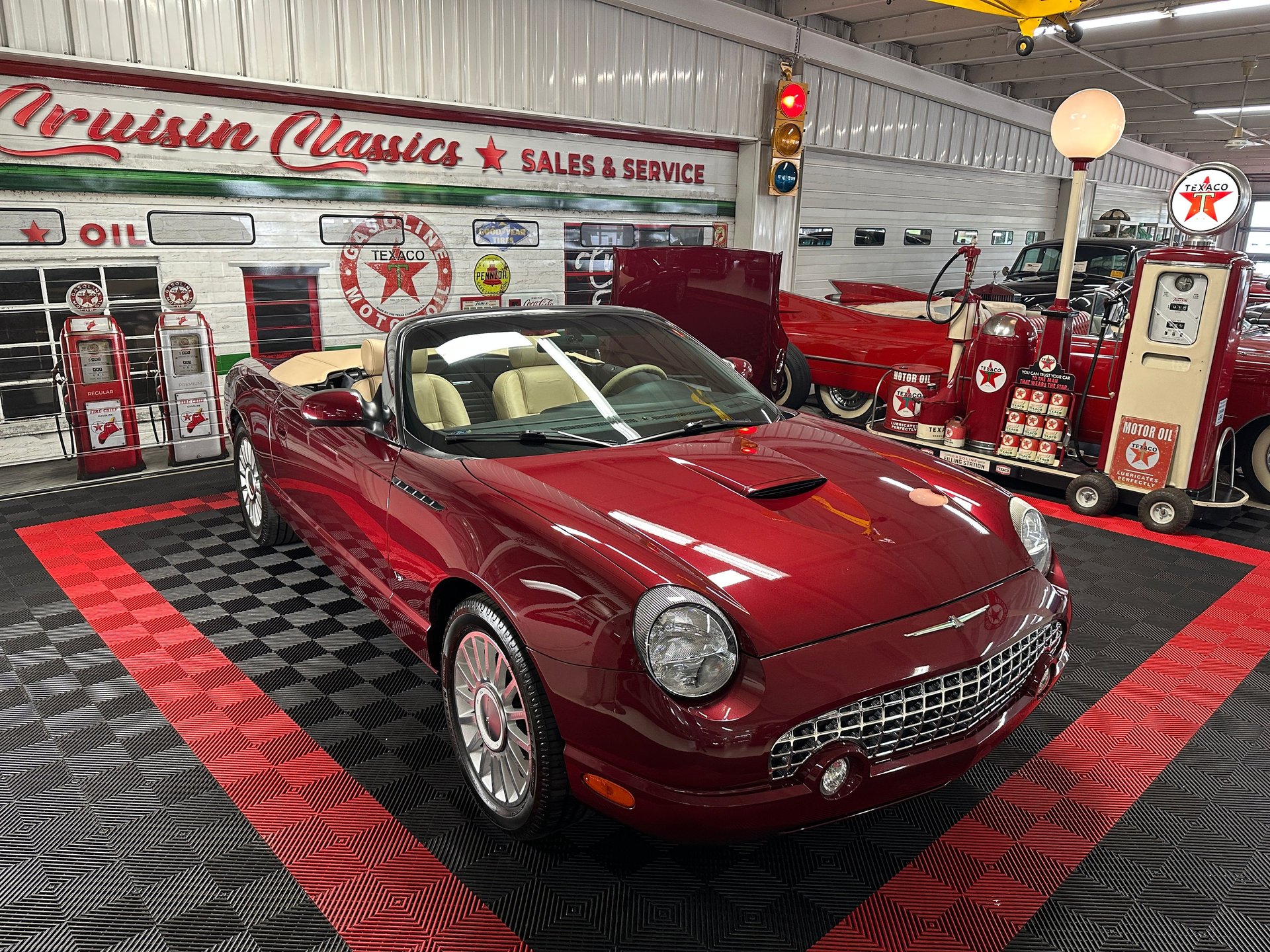
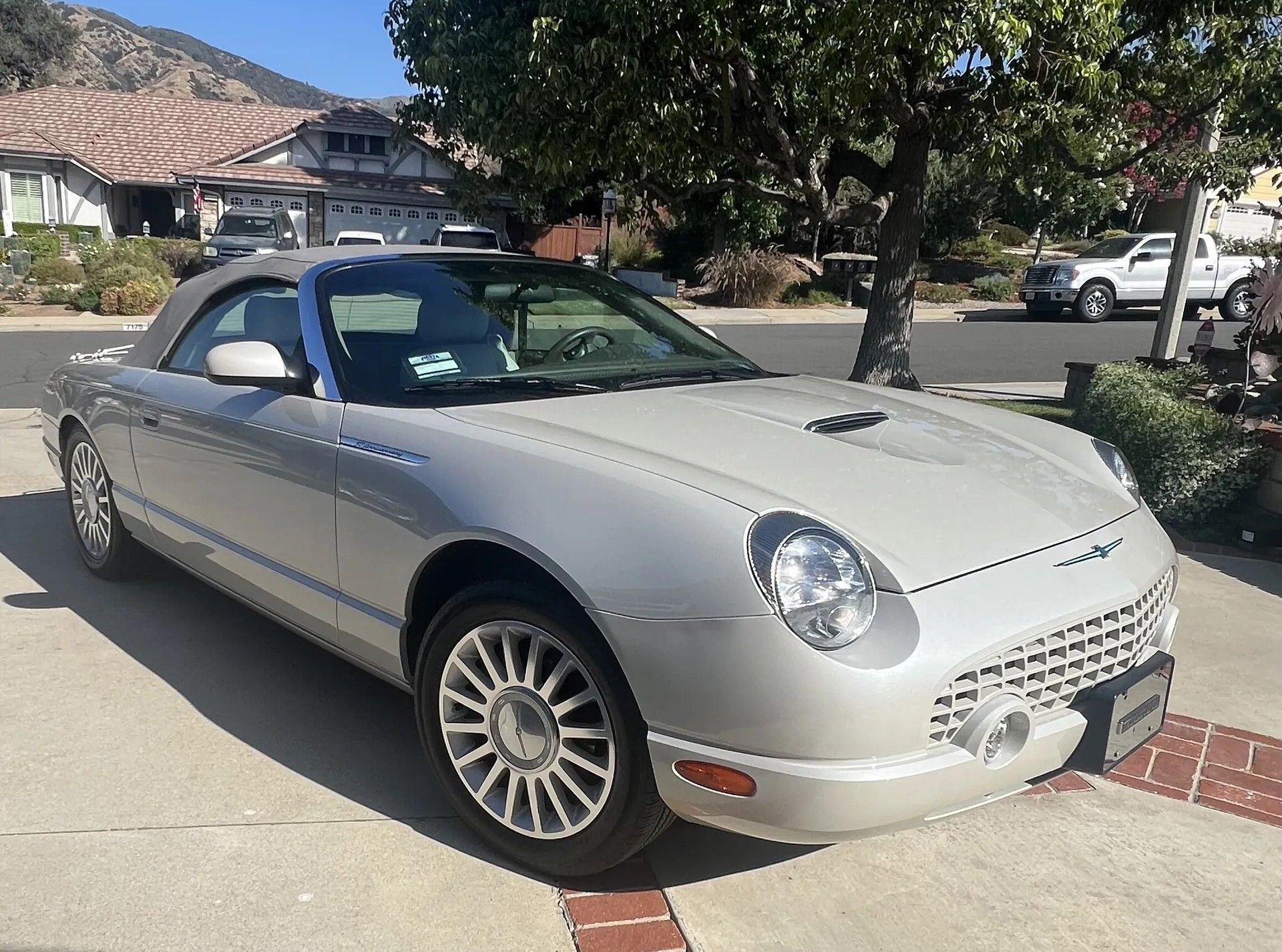
The special editions. The Neiman Marcus Edition opened the run in the retailer's 2001 Christmas catalogue: 200 cars in Evening Black over a silver hardtop, with silver interior accents and a numbered plaque, all spoken for within hours — still the edition collectors name first. The James Bond 007 Edition for 2003 marked the car's appearance in Die Another Day: Coral paint, a deliberate echo of a 1956 colour, a white hardtop and 007 badging; 700 built. The Pacific Coast Roadster for 2004 came in Monterey Mist, a pale metallic green, with a dark ash soft top and two-tone interior; 1,000 built. The 50th Anniversary Limited Edition closed the run for 2005, every one in Cashmere Special Tri-Coat Metallic with anniversary badging and a numbered plaque; 1,500 built. On every edition the rule is the same: the premium lives in the paperwork and the specific trim pieces, not in a badge a seller has stuck on. Plaque, paint code, top colour and edition trim should all agree; an edition car missing its distinctive pieces is a standard car with a story, and should be priced as one.
The year split that matters mechanically. The 2002 cars carry the 252 hp engine without variable valve timing and the earlier gearbox covered in the next section. From 2003 the engine gained variable valve timing and rose to 280 hp, the gearbox gained an optional manual-shift facility, and the hydraulic engine-cooling fan of the first year gave way to an electric fan. None of this makes a 2002 a bad car — it is the most numerous, the most colourfully specified and often the best value — but between otherwise equal cars the later car is stronger and free of one expensive first-year cooling component. The 2005 cars add final-year scarcity, but no further mechanical step.
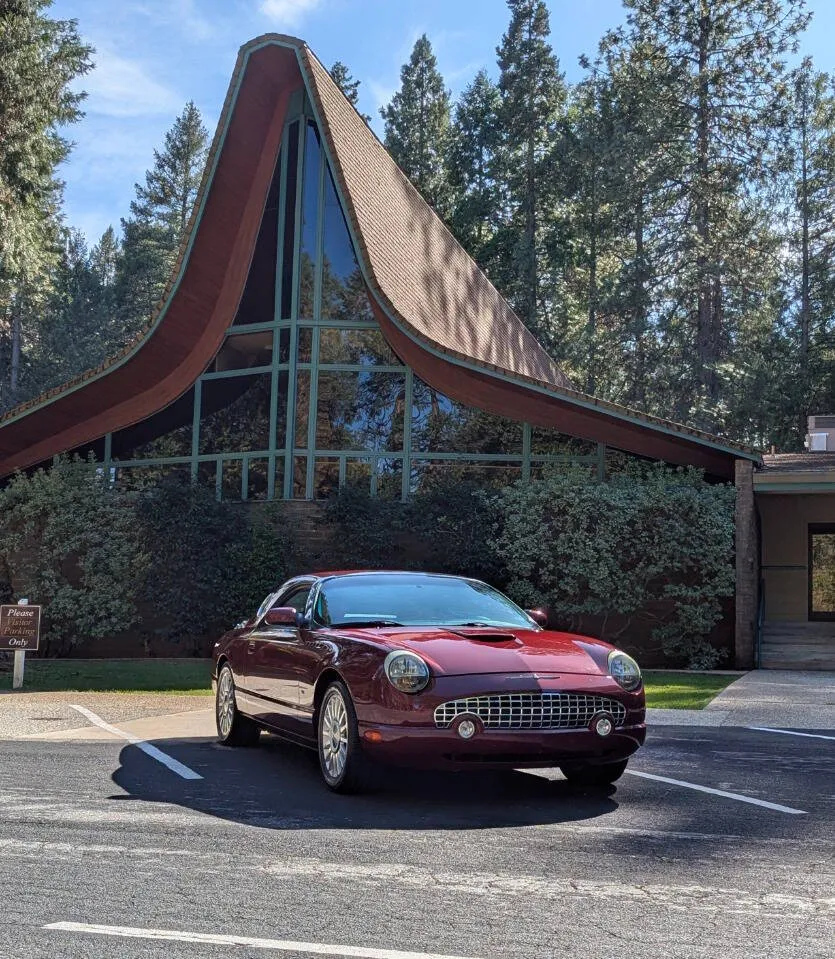
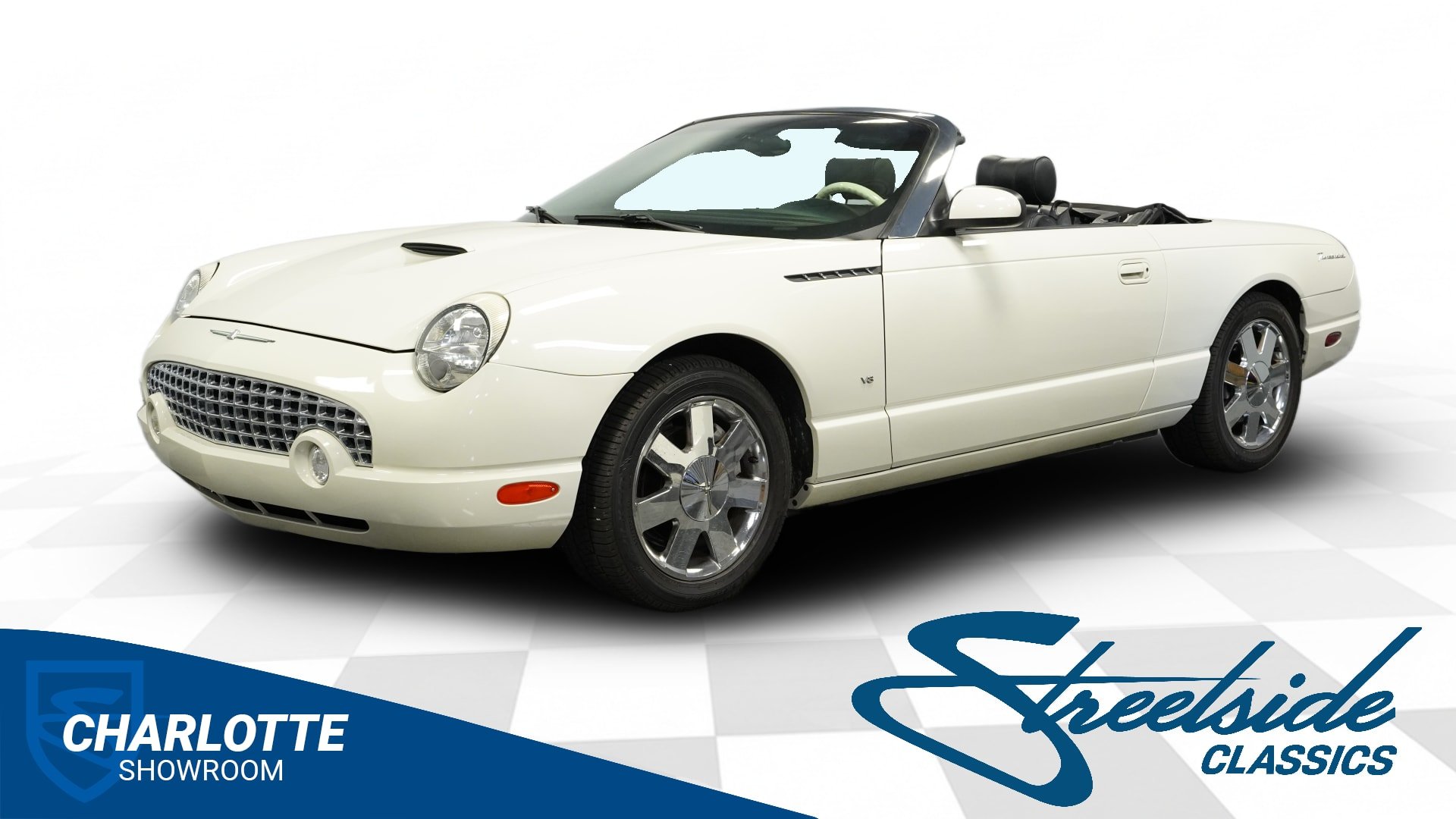
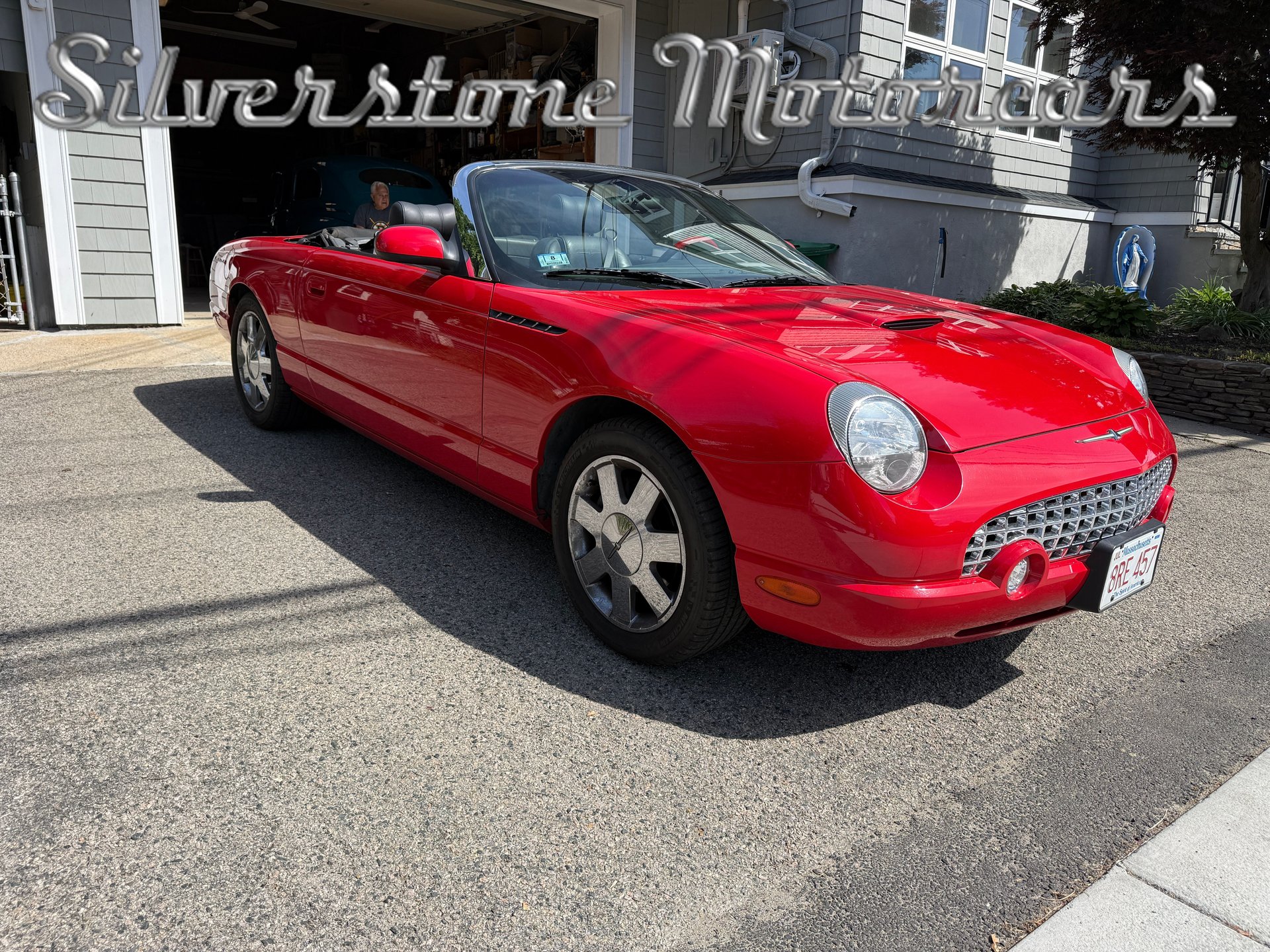
Colours. The five launch colours — Torch Red, Inspiration Yellow, Thunderbird Blue, Evening Black and Whisper White — are the heritage palette. In our current listings Black and Red appear most often, with Thunderbird Blue, White, Silver and Torch Red all represented and Inspiration Yellow notably scarcer. Later years added shades such as Merlot and the Cashmere tri-coat reserved for the anniversary edition. Colour is a genuine value factor here: heritage and edition colours carry the strongest following, and any non-factory colour should be priced as a repaint.
Engines and gearboxes
There is one engine in this car, in two states of tune, and one gearbox family, in two versions. That sounds simple. It is not quite, because the engine is a Jaguar design built to Jaguar habits rather than Ford habits, the details that decide whether a car is healthy are specific and testable, and the gearbox is the most expensive ordinary component on the car when neglected.
The 3.9 V8 as launched: the AJ35 for 2002
The engine is the AJ35, a 3,934 cc derivative of Jaguar's AJ-V8, shared in its essentials with the Lincoln LS V8: all-alloy, double overhead camshafts, 32 valves, electronic fuel injection, coil-on-plug ignition — one coil on each spark plug, under the cam covers — and a drive-by-wire electronic throttle. In 2002 form it produces 252 hp at 6,100 rpm and 267 lb-ft of torque at 4,300 rpm, on premium fuel, as every version requires. A healthy one starts from cold without extended cranking, settles to a smooth, near-silent idle and revs cleanly, with no ticking beyond faint injector sound and no smell of hot coolant. Timing chains are generally long-lived, so a car that rattles loudly from the front covers on a cold start and keeps rattling is not normal: guides and tensioners wear, the job is labour-heavy, and the correct response is a specialist's estimate, not a hopeful discount. Outright internal failure is rare — in the 18 cars we photo-checked, smoke was noted in none — and sick engines are almost always sick in their bolt-on systems: coils, cooling plastics, sensors and gaskets. All of that is testable on a driveway.
The coil-on-plug system is the signature fault, developed fully in the problem areas. Each coil lives in a spark-plug well, in heat, and — when the cam-cover gaskets and plug-well seals age — in oil, which kills the coil and plug together and produces a misfire that may be constant, may appear only under load, and may come and go with temperature. Ford recognised the pattern and extended ignition-coil coverage on the 2003–2005 cars to ten years or 100,000 miles — long expired now, but paperwork for replacements under that programme shows the fault was handled properly rather than one coil at a time. One failed coil diagnosed properly is a small job; a full set of eight coils with plugs, done as preventive renewal, is realistically a cost in the region of 600 to 1,200 dollars in parts and labour. Never accept a misfire as minor until a scan has named the cylinder and the well has been looked into — the same symptom covers a coil, a plug, an injector and, rarely, a compression fault, and only one of those is cheap.
The cooling system is the second signature. Its plastic thermostat housing and crossover components age-harden with heat cycles and eventually weep, crack or fail at their seals. The housing renewed complete is typically a 350 to 700 dollar job at an independent shop; left weeping, it drops coolant slowly until a hot day in traffic turns a weep into an overheat, and an all-alloy engine overheated hard faces warped heads and a rebuild priced in the several thousands. On 2002 cars only, cooling uses a hydraulic fan driven by its own pump and actuator, inherited from the early LS. When it fails, the fan does not move enough air at idle: the car overheats in traffic while staying cool on the highway, and proper renewal commonly lands in the 900 to 1,800 dollar range. Some owners repair with scarce used parts or convert instead — acceptable only if documented and demonstrably working, with the gauge steady through a long idle. From 2003 the car uses a conventional electric fan, which fails more cheaply and more obviously. Whichever year you view, idle the fully warm car for ten minutes with the air conditioning on, watch the gauge and fan, then check the coolant level and colour. Correct-level coolant and a dry housing are what right looks like.
Ancillaries follow the same pattern. The water pump is long-lived but not immortal; weeping shows as staining low at the front of the engine. The dual coolant control valve, metering hot coolant to each side of the dual-zone climate system, sticks with age and produces heat on one side of the cabin and cold on the other; it is a few hundred dollars fitted, and is a diagnosis to confirm before anyone sells you a climate-control head. Cam-cover gaskets weep oil into the plug wells; renewal with well seals is a 500 to 900 dollar job, best combined with plugs and suspect coils while the covers are off. An electronic throttle body can develop hesitation and limp-mode faults — and a car that drops into limp mode on your test drive has failed its test drive. Service discipline is simple and often skipped on second cars: oil on time, coolant renewed rather than topped up forever, plugs at their interval. A record showing those things is worth more than a low odometer reading; a car with neither should be priced as if the cooling plastics, coils and every fluid are due, because they usually are.
The VVT engine: 2003–2005
For 2003 Ford fitted variable valve timing to the AJ35's intake camshafts, and output rose to 280 hp at 6,000 rpm and 286 lb-ft of torque at 4,000 rpm. The gain is real and felt in the middle of the rev range, where the later engine pulls more cleanly from part throttle. Block, heads, injection, coils and cooling architecture carry over, and every check above applies unchanged — but the timing units are oil-driven, which makes them hostages to oil quality and level. A car run low or long on old oil can develop a brief rattle or hesitation as the timing phases in, and cam-timing fault codes on a car with a patchy service record should first prompt an oil change with the correct grade and a re-test, not an immediate parts order. Persistent faults after that are specialist work, priced per diagnosis.
The later cars also gained the electric cooling fan in place of the hydraulic system and revised engine management. None of it transforms reliability — a cherished 2002 beats a neglected 2005 — but between equal cars the 2003–2005 engine is the tie-breaker: stronger, simpler around the fan, and covered in its day by the extended coil programme whose paperwork helps you now. Fuel economy is period V8 economy — high teens mixed, low twenties on a highway run, always on premium — and a car returning dramatically worse figures is telling you about a misfire, a dragging brake or a transmission that is not locking up. One myth to bury: there was no factory supercharged, V6 or manual version of this car, in any market. A car described as a rare factory variant outside the editions in the models section is a standard car with a story; the door label and build paperwork settle what a car is.
Gearboxes: the 5R55 family
Every retro Thunderbird drives through a Ford five-speed automatic from the 5R55 family, with a torque converter and electronic control. The 2002 cars use the 5R55N. From 2003 the car uses the 5R55S, which added SelectShift on equipped cars — a manual-shift gate that lets the driver hold and select gears, useful on grades and for engine braking, and worth testing because a SelectShift that does not respond is an electrical fault you want priced, not discovered. There was never a manual option, and the selector is a floor console lever on every car.
When right, this gearbox is one of the car's pleasures: smooth shifts at light throttle, a firm clean kickdown, prompt engagement of drive and reverse, relaxed cruising with the converter locked. When wrong, it speaks a vocabulary worth learning. Flaring — revs rising between gears as if the box hesitates in neutral — points to internal wear or a failing solenoid pack. Harsh, banging shifts point to valve-body, solenoid or line-pressure faults. A long delay, then a thump, engaging reverse or drive points to wear and low pressure together, and engagement that is worse cold is an early warning, not a quirk. Shudder as the converter locks is a converter or fluid-condition fault until proven otherwise. Any of these moves the car into a different price class: rectification ranges from a solenoid pack and valve-body job in the 800 to 1,600 dollar region to a full rebuild or quality remanufactured unit in the 3,000 to 5,000 dollar region fitted.
The root cause, more often than not, is fluid. The 5R55 was sold in the era of filled-for-life thinking, and many of these cars still run on fluid that has sheared, oxidised and loaded itself with clutch material. A documented fluid and filter service is a strong positive; dark, burnt-smelling fluid is a strong negative. A fluid change can improve a tired-but-sound box but cannot repair a worn one, and a seller who has just changed the fluid on a car that still flares has answered the only question that mattered. Servo bore wear in the case is a known family weakness, addressed by specialist sleeving during rebuild — which is why the right question about a rebuilt box is who rebuilt it and what was done, with an invoice. Judge every car on a drive covering cold and fully warm behaviour, kickdown, reverse on a slope and five minutes at converter lockup speed; the checklist below sequences exactly that drive. The rest of the driveline is durable: standard cars run an open differential with traction control, and rear hub assemblies are shared-platform parts costing a few hundred dollars fitted per side.
Problem areas
This section follows the order a good inspection follows: the systems that can end a purchase first, then the systems that price it. The retro Thunderbird's advantage over an older classic is that its serious faults are few, known and testable. Its trap is that it feels modern enough to lull a buyer into skipping the tests. Do not skip them. In the 18 cars we photo-checked, damage was noted in 5 and rust in 6 — a clean bill compared with a 1960s car, and still a reminder that one car in three showed points a listing description had not volunteered.
Ignition, cooling and the under-hood heat story
Start here, because this is where most retro Thunderbirds that come to market cheap are cheap. The three faults — coils, cam-cover seals and cooling plastics — interact, and a car can carry all three at once.
Coils and plug wells. Heat ages the eight coil-on-plug units; the cam-cover and plug-well seals harden and let oil into the wells; the oil attacks the coil boots and plugs; the car misfires. The presentation deceives: a single dead coil on a V8 can feel like slight roughness at idle and a stumble under load that an inexperienced driver blames on fuel or the gearbox. The check-engine light may be on steadily, may flash under load — flashing means active misfire severe enough to threaten the catalytic converters, and it ends a test drive — or may have been cleared by the seller that morning, which is why a scan showing readiness monitors and pending codes matters more than the dashboard. The physical test is decisive: with the covers off, pull the coils and look into the wells. Dry wells with clean plugs are right. Oil standing in a well, a swollen or split boot, a fouled plug — each is a finding with a price, and the correct repair is seals, plugs and affected coils together, not one coil swapped into an oily well to fail again by spring. A documented full set of coils and fresh well seals in a car's recent past means its most likely fault has been prepaid by someone else; value that paperwork.
Cooling plastics and the thermostat housing. The plastic housing and its associated components harden, distort at their sealing faces and weep. The evidence is a crust of dried coolant — pale pink to white staining — around the housing, a sweet smell after a drive, a reservoir below its mark, and dampness low in the bay that owners blame on the air conditioning. Pressure-testing is the professional version of the same check and belongs in any pre-purchase inspection. The danger is not the weep; it is the slow normalisation of topping up, until a seal lets go on a hot day. An alloy engine overheated once, gently, and shut down at once usually survives; an engine driven home on the gauge carries a head-gasket question forever. Treat a car with crust, a low reservoir and no paperwork as needing the housing, a thermostat, a coolant renewal and a pressure test before its first summer with you — a fair negotiation item rather than a walk-away on its own.
The 2002 hydraulic fan. First-year cars only, and it hides. The hydraulically driven fan loses speed as its pump or actuator ages, and the pattern — cool at speed, hot in traffic, air conditioning fading at idle — points owners at the thermostat and radiator before the fan. Watch a warm 2002 idle for ten minutes: the fan should be plainly working and the gauge should not creep. If it creeps, the fan system is the prime suspect and the bill is the four-figure one from the engines section, unless a documented repair exists. Electric fans on later cars fail more simply and cheaply, but the idle test is identical, because the consequence of missing it is identical.
Hoses, belts and the battery in the trunk. Rubber on a 20-year-old car is 20 years old even at low mileage: crunchy coolant hoses, a cracked drive belt and hardened vacuum hoses belong on the first-service list of any car without renewal paperwork. The battery lives in the trunk, which keeps it clean but forgotten — check its age label and terminals, and remember that a weak battery on this platform produces a carnival of unrelated electrical warnings that vanish with a sound battery. Test, do not guess.
The automatic gearbox in service
The box wears in three places that matter. The solenoid pack, metering pressure to the clutches, ages and produces harsh or erratic shifts. The valve body wears at its bores and produces cross-leaks, flare and delayed engagement. The servo bores wear in the case itself, which is why a cheap valve-body swap sometimes improves a car without curing it, and why a proper rebuild addresses the case. Fluid condition accelerates or slows all three.
Read the gearbox in layers. Cold engagement first: a long pause into drive or reverse is wear speaking early. Warm shift quality next: light-throttle shifts barely perceptible, medium-throttle shifts firm and single. Kickdown prompt and clean, not a flare followed by a thump. Converter lockup arriving as a small, single drop in revs, not a shudder. SelectShift answering promptly in both directions. A car passing all five layers on old-looking fluid is one to service immediately and own happily; a car failing one layer has a priced fault; a car failing several, or that the seller will not let you drive long enough to warm through, must be priced with a rebuild in it — or left, because a gearbox rebuild bought unknowingly can double the cost of a cheap example. Two warnings: a box that behaves for fifteen minutes and misbehaves at forty is not a contradiction, because heat thins fluid and opens clearances, so the checklist's test drive is deliberately long; and engine misfire impersonates gearbox shudder precisely enough to fool experienced drivers, so the distinction is made with a scan tool showing misfire counters while the fault occurs. Do not pay transmission money for a coil fault.
Suspension, steering and brakes
The DEW98 suspension — double wishbones at both ends — gives the car its refined ride and its most Jaguar-like maintenance profile. Ball joints, control-arm bushes and links are the wear items, and complete arm assemblies are often the service part where a joint or bush fails, making corners more expensive than Mustang owners expect: a renewed arm fitted typically runs in the 400 to 800 dollar range per corner, and a car needing several corners plus an alignment is a four-figure finding. The tests are tactile: knocks over sharp bumps at low speed, a steering wheel that does not sit straight, feathered or shouldered tyre wear, and play felt rocking a front wheel on a lift. Do not condemn from one symptom — a knock can be a drop link at a fraction of an arm's price — but do have a lifted car assessed by someone who knows the platform before deciding which it is.
Wheel bearings are so often misdiagnosed as tyre noise that they earn their own line. A hub bearing hums in proportion to road speed, changes note as you load and unload it in gentle curves, and does not change with throttle; tyres drone constantly and change with the road surface. Bearings are a few-hundred-dollar fitted job per side — and a car wearing four brand-new budget tyres may be one whose bearing noise was misdiagnosed, or whose alignment was eating tyres, or simply one prepared honestly for sale. The invoices tell you which. Steering is rack-and-pinion with hydraulic assistance: the rack is durable, its boots split, its inner joints wear, and the pump and hoses weep. Groaning at parking speeds with low fluid is a leak to find, not a top-up to repeat. A car that wanders at highway speed on good tyres at correct pressures is showing alignment, bush or rack wear, in roughly that order, and all three are lift findings.
Brakes are discs at both ends with anti-lock control, sized adequately for the car's brief. Their faults are those of age and sitting: calipers that stick after storage, discs corroded on their inner faces where photographs never reach, perishing hoses, and fluid that has absorbed water for a decade. Judge the pedal — high, firm and consistent across three hard stops — judge the pull, which should be absent, and judge the handbrake on a slope. A full hydraulic refresh is realistically an 800 to 1,800 dollar programme at a shop; a car that has just had it, with invoices, has prepaid one of the two standard first-year bills on this model, the other being coils and cooling plastics.
Rust, body and the hardtop
Rust is a condition issue here rather than the existential threat it is on a 1960s classic — but the 6 rust mentions in our 18-car photo sample exist, and they cluster predictably. Look first at the lower edges: door bottoms, sills ahead of the rear wheels, arch lips and lower front fenders, where road film and salt sit. Look second underneath: subframes, suspension arms, brake lines, exhaust joints and floor edges. Look third in the water traps: the trunk floor and spare-wheel well under the mat, the cowl, and around the windshield and hardtop seals. Surface rust on suspension components is normal life; perforation in a floor, sill or brake line is a repair with a price and, on a car whose appeal is condition, a reason to choose a cleaner example — the market is deep enough that you rarely need the rusty car. Cars from Florida, Ohio and Michigan all appear in our listings in numbers, so geography tells you nothing; the underside tells you everything.
Paint and panels follow the modern pattern. Evenly measured original paint is a strong positive; the tri-coat Cashmere and the metallics are hardest to match, so panel-to-panel colour shift in daylight matters more on those cars than on black or white. The long doors are heavy and their hinges wear, showing as a drop when opened and a lift when closed — a door needing lifting into its latch wants hinge attention and a check that the cause is wear rather than a bent shell. Stone chips are honest mileage. Ripples down a flank, filler at an arch or overspray on a seal are the magnet's and paint gauge's work, exactly as on a 1960s car, and accident history on a unibody modern car matters structurally in a way it does not on a body-on-frame classic — which is why a clean history report is a baseline document for this model, not an optional extra.
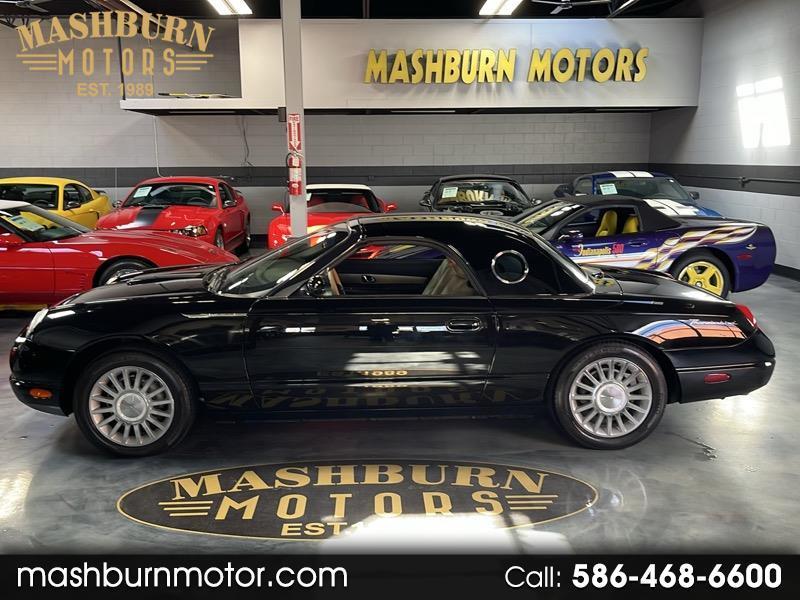
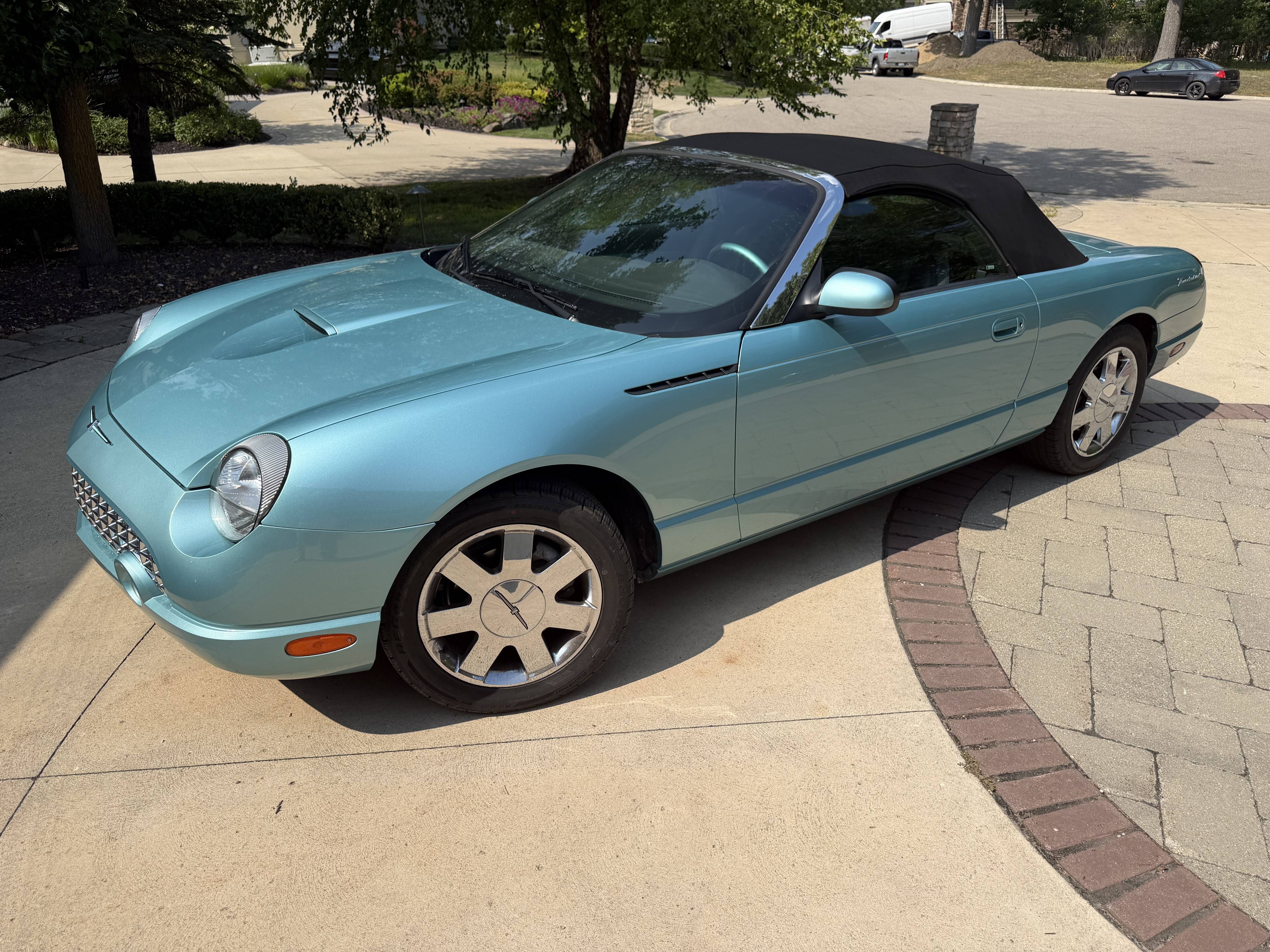
The removable hardtop is the signature component and the most mishandled. It weighs roughly 85 pounds, needs two people to lift safely, fastens with Torx fasteners at the front and latches at the rear, and carries the famous porthole on each side. Its faults are seals that perish and leak at the header and rear deck, a headlining that sags, rear latches that wear and let the top creak, and paint damage — to the top and to the car's deck — from careless removal and storage without the stand and cover. All of it is visible on a viewing: fit the top if it is off, or remove it if it is on, with the seller's help; check the seals are supple, look at the deck paint where the rear seal sits, confirm stand, cover and wrench are present, and inspect for tide marks of past leaks in the trunk and behind the seats. A Premium sold without its hardtop has lost a component that costs real money to replace in the correct colour — a used top in the wrong colour plus painting runs well into four figures — and the deduction belongs in the negotiation. Conversely, a mint top with stand and cover shows an owner who handled the fiddly parts properly, which predicts the rest of the car better than almost anything else.
The power soft top is durable in frame and hydraulics and mortal in fabric: shrinkage, seam stress, fading and stitching giving way, with slow movement or hydraulic weeping at the rams from the mechanism. Operate it twice, fully, and watch it. A professional fabric renewal is a four-figure job; a ram or pump fault is mid-hundreds to low-four-figures.
Interior, electrics and the module layer
The cabin — swept dash, round instruments, metal-look trim, turquoise-tinted accents on launch cars — ages in the modern-car pattern. Leather splits at the driver's bolster first, and the test is to sit in the driver's seat: collapsed foam changes how the car feels for every mile, re-trimming a pair of seats properly is a four-figure decision, and good used seats in black are findable while colour-keyed inserts are not. Dash and door trim lift at their edges in hot-climate cars, and Florida cars appear prominently in our listings, so sun damage — dash surface, wheel rim, seat tops, faded inserts — is a live check. Carpets tell the water story: damp, staining or a musty smell means a seal has leaked, and the leak matters more than the carpet.
Electrically this is a network of modules in the early-2000s Ford manner. The front electronic module governs much of the body load — lighting, wipers, windows and more — and a failing module produces wandering symptoms: a lamp behaving oddly, a window that dies and revives, wipers with a mind of their own. Several unrelated body functions misbehaving together points at the module or its power and earth connections; a single dead function points at its own motor, switch or wiring. Window regulators are a few-hundred-dollar fitted job per side; seat heaters fail at elements and switches; the climate system adds the coolant control valve from the engines section plus blend-door faults, so test heat, cold and both zones independently — climate faults here are cheap as a valve and expensive as a dashboard-out hunt, and you want to know which you are buying. Clusters develop gauge and illumination faults, and the audio system should be tested with a disc and a station, not assumed. The discipline is simple: electrical symptoms are evidence, not verdicts. A weak battery, a corroded earth or a dying module can each impersonate the other two, and the seller's story has no value until voltages and connections have been tested. On a car this dependent on systems, the pre-purchase inspection is not a formality. It is the purchase.

How to inspect one
Allow ninety minutes, bring a torch, a cloth-wrapped magnet and a scan tool if you own one. Insist on a cold engine — half the tests depend on it — and plan a thirty-minute drive covering town traffic, a highway stretch and a slope for reverse. If the car passes you, pay for a lift inspection with a shop that knows the Lincoln LS and Jaguar S-Type family; their knowledge transfers directly.
- Paperwork and identity first. Match the VIN on the title to the windshield plate and door-jamb label, and read the label for build date, paint and trim codes — they should agree with the car in front of you, which is how an edition car proves it is one. Read the service file for the four documents that matter most here: coil replacements, thermostat-housing work, transmission service or gearbox work, and top or hardtop-seal work.
- Cold start and idle. From genuinely cold it should fire promptly, settle smoothly, and show no front-cover rattle, misfire shake or staying warning lights. Blue smoke is not normal — in our photo sample smoke was noted in none of the 18 cars examined — and demands an explanation with evidence.
- Under the hood, in order. Reservoir: coolant at its mark, correct colour, no oil sheen. Thermostat housing: pink-white crust or damp seals are the weep from the problem areas. Cam covers for oil weeping, hoses by squeezing, belt by eye, and on a 2002 the hydraulic fan lines for weeping.
- Scan it, or have it scanned. Read stored and pending codes and readiness monitors; a car cleared that morning shows incomplete monitors, which is a fact to weigh. Misfire codes name cylinders; cam-timing codes on a 2003–2005 car start the oil-quality conversation from the engines section; transmission codes start the priced-fault phase of the viewing.
- Body, paint and rust, bottom six inches first. Magnet and fingertips over door bottoms, arch lips, sills and lower fenders; sight down both flanks for ripples; check gaps and whether a door drops as it opens. Rust appeared in the photo records of 6 of the 18 cars we examined, so finding some is normal; finding perforation is a decision point.
- Trunk and battery. Lift the mat and spare: the well should be dry, without the tide marks of hardtop or trunk-seal leaks. Check the battery's date label, terminals and hold-down — an old battery can explain, though never excuse untested, a list of electrical oddities.
- Hardtop on, hardtop off. With the seller's help, fit it if it is off or remove it if fitted: two people, correct wrench, no forcing. Check seal suppleness, headlining, rear latches, deck paint where the rear seal lands, and confirm stand, cover and wrench are present. A missing top on a Premium is a major deduction.
- Soft top, twice through its cycle. Watch for even movement and hydraulic strain; check fabric at its folds for splits and shrinkage; with it down, check the well for water and mildew and confirm the tonneau boot is present and fits.
- Cabin and electrics, every switch. Judge the driver's seat foam with your weight, not your eyes. Work both windows twice, seat heaters, mirrors, locks, wipers, every light, the audio system, and the climate control through heat, cold and both zones set differently — the dual-zone test exposes the coolant control valve fault. Several unrelated functions misbehaving together is the module pattern; one dead function is a smaller fault. Price them differently.
- Test drive, cold layers first. Note engagement of drive and reverse: prompt, without a long pause or thump. On a slope, stop and engage reverse — delay and thump here are the gearbox telling its story early, as the problem areas describe.
- Test drive, warm layers. Clean kickdown with no flare, a single firm take-up per gear, no shudder at converter lockup, SelectShift answering promptly on 2003 and later cars. Pull from low revs in a high gear to expose a load misfire; watch the temperature gauge in traffic with the air conditioning on; brake three times firmly — straight, quiet, consistent pedal. Listen for suspension knocks on broken pavement and a bearing hum that changes note in gentle curves.
- Hot idle and restart. Idle hot for ten minutes with the air conditioning running: the gauge should not creep — the hydraulic fan test on a 2002, the electric fan test later — and no coolant or hot-oil smells should arrive. Switch off, wait two minutes, restart: it should be as prompt as the cold start. Check underneath for fresh drips and the reservoir against step 3.
- Stance, tyres and the photograph test. The car should sit even, with no corner down. Read all four tyre dates, brands and wear patterns — each tells a story about alignment, bearings or preparation. Photograph all four corners; faults you talked yourself out of in person are obvious in a picture that evening.

Values
The build beneath this guide carries the live market — the cars listed now and the recorded sales — refreshed as the market moves, so this section carries no figures of its own. Its job is to teach you how to read that market, because buyers who understand its shape pay the right money for the right car, while buyers who read only headline numbers overpay for polish.
The condition spread here is driven less by mileage than by completeness and system health. At one end sits the documented car: correct edition or heritage colour, hardtop present with stand and cover, coils and cooling plastics renewed with invoices, transmission serviced, top working sweetly, tyres in date. At the other sits the shiny unknown: low miles in the advertisement, no file, a misfire described as minor, a top never demonstrated. The gap between them is not a haggling margin; it is the real cost of the work and missing components, plus the risk that the unknown car hides the one four-figure fault — the gearbox — the documented car has excluded. Compare listings as totals: price plus the first-year programme the car demonstrably needs. Priced that way, the apparently expensive documented car is very often the cheaper purchase.
Asking and achieved prices part company predictably. Low-mileage sellers anchor on the car's cost new, on the first-year frenzy, and on exceptional auction results for edition cars with delivery miles. The broader market pays for condition, specification and paperwork, and discounts ultra-low mileage once it is clear a car has sat rather than been used: a car needing tyres, fluids, coils, cooling plastics and top recommissioning is not automatically worth more than a higher-mileage car driven, serviced and renewed as it went. Use the recorded sales beneath this guide, not the asking prices beside it, and weight recent sales of the same year and edition far above any general impression.
Premiums are real but narrow, and they attach to proof. The numbered editions carry one when plaque, paint code, top colour, trim and paperwork all agree, and very little when they rest on badging alone. The 2003 to 2005 cars carry a modest premium over equivalent 2002s for the VVT engine and electric fan; the 2002s answer with the heritage colours and sheer choice, since nearly half of all production was the first year. Colour moves money: heritage and edition colours lead, mainstream metallics follow, a non-factory colour queues last. The hardtop is the largest specification factor after condition. The cheap end of this market is not rusty restorations but cosmetically tired, mechanically deferred cars with honest bones — the right buy for a hands-on owner only when the gearbox is proven sound and the shell clean, because those two findings break the arithmetic of a cheap car. Negotiate from findings, not opinion: a pressure-test result, a scan printout and a quote for a missing hardtop move a price as enthusiasm never will. With dozens of these cars in the national market at any time, the cost of leaving the wrong car is a train ticket; the cost of buying it is measured in years.
Parts and ownership
This car sits in a fortunate middle ground: new enough that Ford's systems, the aftermarket and the salvage network still support it, old enough that you need to know what is shared, what is specific and what is becoming a hunt. The platform siblings are the key. Much of the mechanical car is shared with the Lincoln LS and related to the Jaguar S-Type, so yards, catalogues and specialists know the components under other names — a part unobtainable under a Thunderbird search is frequently on a shelf under an LS search.
Easy and reasonably priced: consumables, filters, belts, brake discs, pads, calipers and hoses, plugs and ignition coils — coil supply is strong precisely because the fault is famous — water pumps, thermostats and cooling plastics, batteries, tyres in the standard 17-inch size, hub assemblies, window regulators, drop links, many bushes and ordinary engine sensors. Order today, fit this week, at modern Ford V8 prices. Dearer, slower or specialist: complete control arms, exchange steering racks, transmission internal work, the 2002 hydraulic fan pump and actuator, tested front electronic modules, instrument clusters, climate valves, top hydraulic components, and uncorroded factory chrome wheels. None is unobtainable; all reward pricing before purchase. The genuinely scarce layer is cosmetic and edition-specific: hardtops in the correct colour, stands and covers, tonneau boots, colour-keyed insert panels, edition plaques and trim, unfaded dash pieces and clean original headlamps. The mechanical car can be renewed from catalogues; the specification of the individual car can only be renewed from the dwindling pool of dismantled cars. Buy the complete car.
Budget the first year honestly: catching up a deferred car — fluids throughout including the transmission, coils and plugs as indicated, cooling plastics, brake attention, tyres by date rather than tread, a battery if its label is old — commonly totals in the region of 2,000 to 4,500 dollars at an independent shop, less for an owner who does the simple half at home. A sorted car then asks for annual servicing, premium fuel, and the discipline of using the top, air conditioning and full steering lock regularly, because gentle use is a preservative here and unprepared storage is a slow fault-generator. Expect fuel consumption in the high teens in mixed driving. Agreed-value insurance is worth arranging once a car is sorted, because the distinctions this guide describes — edition, completeness, documentation — are exactly what a standard valuation misses. In storage, keep the battery on a maintainer and the hardtop on its stand under its cover, never flat on its seals. The owner community is a real asset: Thunderbird forums hold two decades of platform knowledge, the LS community doubles it under the skin, and an hour in a model-specific forum's archives before purchase is the cheapest education in the classic-car world.
Which one to buy
- The all-rounder: a 2003–2005 Premium with its hardtop. The 280 hp VVT engine, the electric fan, the better equipment and the complete specification — top, stand, cover, heated seats — in a documented car. If you want one retro Thunderbird to drive for years, this is it.
- The value buy: a cherished 2002 in a heritage colour. The launch year is the most numerous, the colours are the best in the range, and the market discounts the 252 hp engine and hydraulic fan more than their real difference justifies — provided the fan test passes and the cooling paperwork exists.
- The collector car: a numbered edition with its proof intact. Neiman Marcus for rarity, James Bond 007 for recognition, Pacific Coast Roadster for looks, 50th Anniversary Cashmere for the final-year story — plaque, paint code, top colour, trim and paperwork agreeing, because the premium lives in the proof.
- The driver's car: the best 2004 or 2005 you can find, colour secondary. Buy it on gearbox behaviour, suspension quietness and service history.
- The hands-on buy: a cosmetically tired, mechanically honest car with a proven gearbox and clean shell. Coils, cooling plastics, brakes, tyres and top hydraulics are a workable programme; a failing transmission or accident history is not.
- The one to leave: any car whose seller will not allow a cold start, a long test drive and a lift inspection. Those refusals are the loudest information in the transaction.
And the rule that overrides all of the above: buy completeness and paperwork over mileage and shine. Coils can be renewed, cooling plastics replaced, brakes and tyres are consumables — but a missing hardtop, a lost edition identity and an undocumented gearbox cannot be bought back at any sensible price. The most complete, best-documented car you can find is the cheapest retro Thunderbird there is to own.
Listed now
On Classic Listings today: 15 cars are listed here; 11 for sale and 4 marked sold; average asking price $18,620; asking range $12,900 to $26,700; sold cars average $33,498.
See the 15 Thunderbird Retro cars currently listed.
The market — recorded sales
Recorded-sale figures: 8 recorded sales · median $23,500 · range $14,000 to $82,500 (Nov 2024 – Nov 2026)
Based on 8 recorded sales — too few for a benchmark value.
| Date | Car | Sale price | Source |
|---|---|---|---|
| Nov 19, 2026 | 2003 Thunderbird 2Dr Convertible Deluxe | $82,500 | Dealer |
| Nov 19, 2026 | 2003 Thunderbird Convertible | $82,500 | Dealer |
| Nov 19, 2026 | 2002 Thunderbird - Neiman Marcus Edition | $33,000 | Dealer |
| Nov 19, 2026 | 2003 Thunderbird | $23,500 | Dealer |
| Nov 19, 2026 | 2004 Thunderbird | $23,500 | Dealer |
| Nov 19, 2026 | 2003 Thunderbird Deluxe | $19,995 | Dealer |
| Nov 19, 2026 | 2002 Thunderbird Deluxe | $17,495 | Dealer |
| Nov 19, 2026 | 2002 Thunderbird | $14,000 | Dealer |
Dates are the sale date where the source states one; otherwise the date the sale was recorded here.
For sale now
 $35,750 · 31% above typical
Expand
 $24,900 · 9% below typical
Expand
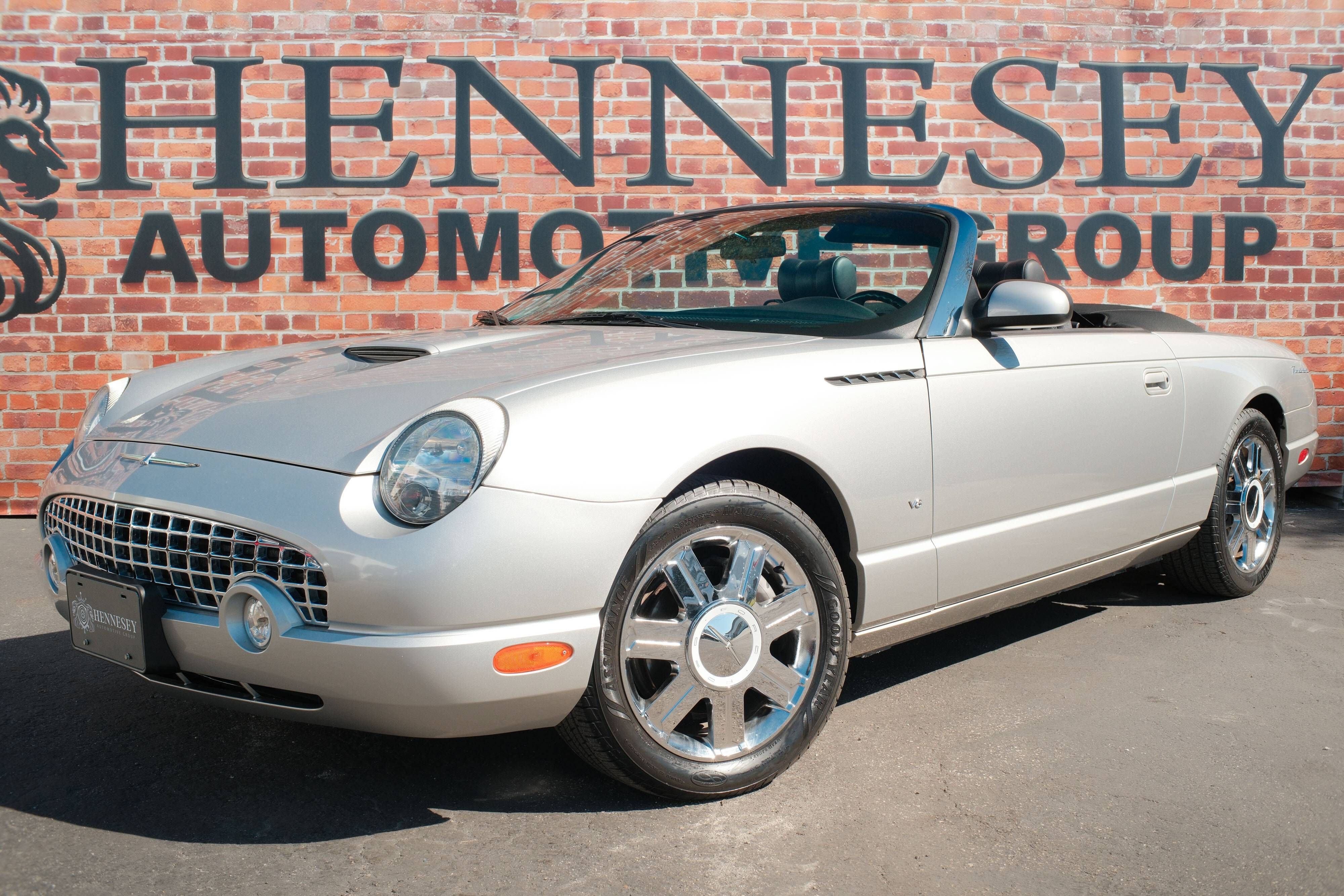 $19,200 · 30% below typical
Expand
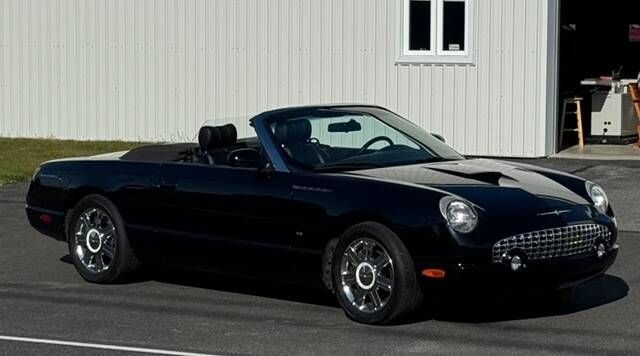 $14,500 · 47% below typical
Expand
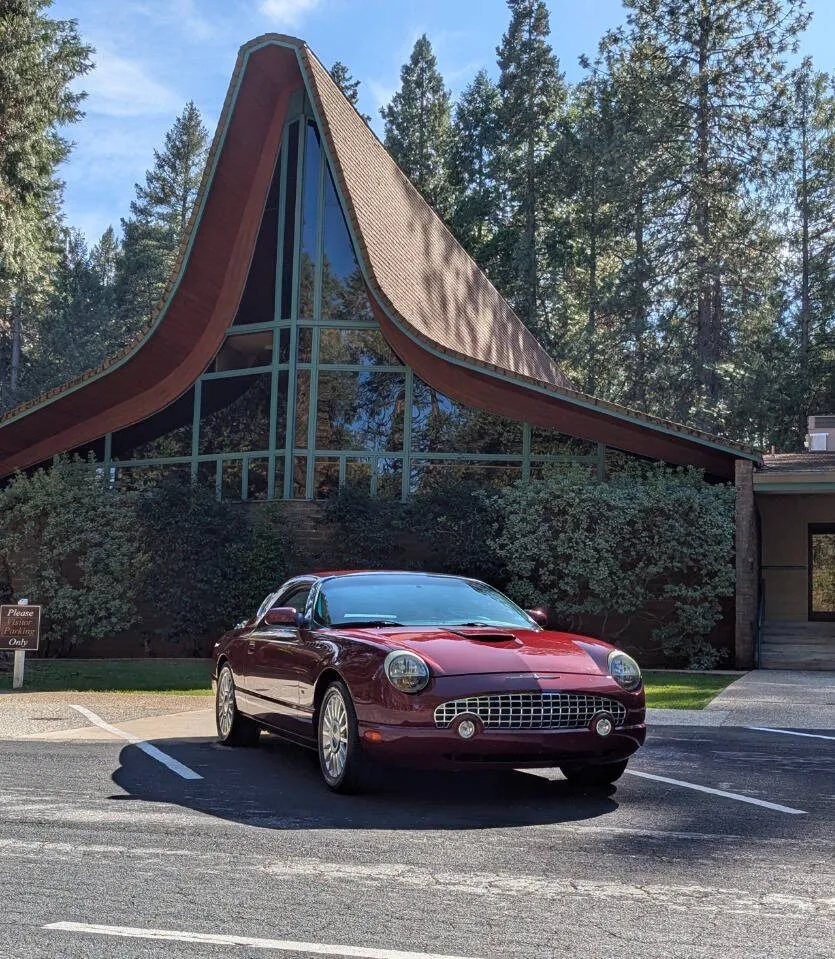 $12,900 · 53% below typical
Expand
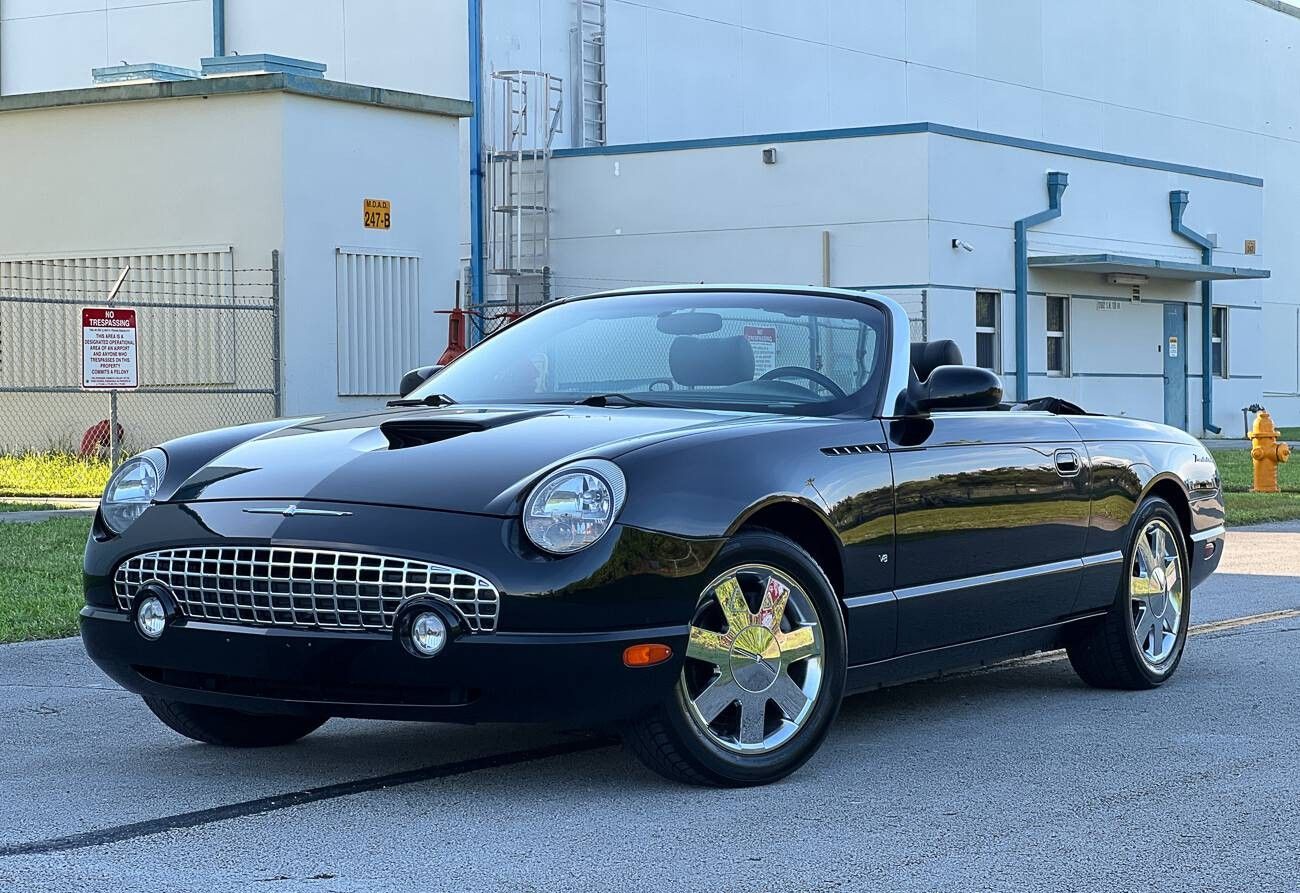 $26,700 · In line with typical
Expand
 $20,000 · 27% below typical
Expand
 $18,500 · 32% below typical