
Lincoln Capri buyer's guide
Lincoln Capri -- the model's own buyer's guide: variants, values and what to check.
Years listed: 1952-1957 · Series: Full Size
# Lincoln Capri — Shopping Guide
Overview and history
The Lincoln Capri is two different propositions wearing one name, and you need to know which one you are standing in front of before you judge anything else about the car. From 1952 to 1955 the Capri is Lincoln's flagship: the top series in the range, the car Ford fields against the Cadillac Series 62 and the Chrysler New Yorker, trimmed and priced above the Cosmopolitan it effectively replaces. From 1956 the name slides down the range. Lincoln launches the Premiere above it, and the Capri becomes the junior series — still a proper Lincoln, still V8-powered and generously equipped, but no longer the best Lincoln you can buy. In 1958 and 1959 it survives as the entry series of the enormous new unibody Lincolns before the name disappears altogether. A seller who tells you every Capri is "the top of the line Lincoln" is right about a 1953 and wrong about a 1957, and that difference runs through values, trim, equipment and desirability.
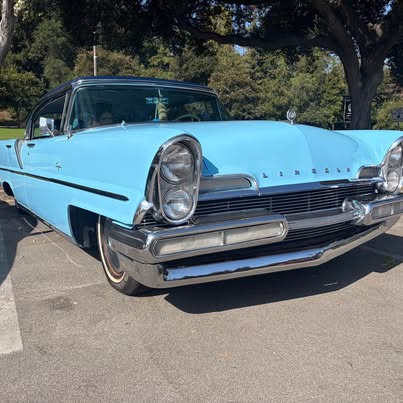
The first-generation car arrives for 1952 as part of a completely reworked Lincoln. The post-war Lincolns had been large, conservative and increasingly outclassed; the 1952 car is smaller, cleaner and more modern, with slab sides, a one-piece curved windscreen, and — most important of all — a brand-new overhead-valve V8 where the old car had soldiered on with a flathead. That engine, the Lincoln Y-block, is the heart of the early Capri and a large part of its character today. The styling is restrained by the standards of the moment. There are no fins to speak of on a 1952–54 car, just a heavy chrome grille, a long bonnet and a formal roofline. The 1955 facelift adds the hooded, frenched headlamps, a revised grille and the long side spear you see in most of the photographs in this guide, plus a larger engine. It is the most recognisably "fifties" of the first-generation cars and, not coincidentally, the one you will meet most often for sale.
The early Capri also carries genuine competition pedigree. Lincolns dominated the stock-car class of the Carrera Panamericana, the Mexican road race, taking class wins in 1952, 1953 and 1954 with essentially production cars. The point for you is not romance; it is that the running gear of a 1952–54 Capri was engineered to survive sustained hard use in heat and altitude. A well-kept early Capri is a tougher car than its boulevard image suggests.
The 1956 redesign makes the car bigger in every direction. The Capri is now the step below the Premiere, sharing its body and its enlarged 368-cubic-inch engine but carrying less trim. For 1958 the range is recast again as very large unibody cars with the new 430-cubic-inch MEL V8 — mechanically a different world from a 1953, and treated as such in the problem-areas section.
Why buy one now? Because the Capri offers the size, the V8 and much of the presence of an early-fifties Cadillac for generally less money, and the closed cars are comfortable, torquey tourers. Against that, set real weight, drum brakes, six-volt electrics on the early cars, and a parts pipeline thinner than Cadillac's. The small pool listed on this site — five cars, spanning 1953 to 1956 in the records, the bulk of them 1955s — is the Capri market in miniature: thin, national, driven by the individual car.
Buy on condition and originality, not on the badge. A Capri that has kept its correct Y-block, its trim and its structure is a satisfying ownership; one that has lost its engine to a swap, its floors to rust and its trim to a hot-rod build is a large, expensive problem shaped like a Lincoln. The rest of this guide is about telling those two cars apart.

The models
The Capri range is simpler than most fifties American ranges, because Lincoln builds one basic car in a handful of body styles and changes the recipe by year rather than by sub-model. Your job is to place a car in the right year and the right body style, confirm it carries the engine that year demands, and check whether it still has the trim its series promises.
For 1952, 1953 and 1954 the Capri is offered as a four-door sedan, a two-door hardtop coupe — Lincoln calls it the Sport Coupe in some literature — and a convertible coupe. The sedan is the volume car and the formal choice. The hardtop, with its pillarless side glass and lower roofline, is the style leader and the car most period advertising features. The convertible is the flagship: the most expensive body in the range, built in the smallest numbers, and the one whose structure and hydraulics you must examine hardest today. All three share the 123-inch wheelbase of the first-generation car and the same basic mechanical specification.
The engine story divides the first generation cleanly. The 1952 car launches with the new 317.5-cubic-inch Lincoln Y-block rated at 160 horsepower. For 1953 the same basic engine, with a four-barrel carburettor and tuning changes, jumps to a quoted 205 horsepower — a very large paper gain that reflects how conservatively the launch specification was rated as much as any hardware revolution. The 1954 car continues at a similar output. For 1955 Lincoln bores the engine out to 341 cubic inches and quotes 225 horsepower, and that, together with the facelift styling, is why the 1955 is usually treated as the pick of the first generation: it is the most developed version of the original idea.
The 1956 car is all change. The body is new, the engine grows to 368 cubic inches at a quoted 285 horsepower, the electrics go to twelve volts, and the Capri steps down below the new Premiere. Body styles are sedan and hardtops — and no convertible. If you are offered a "1956 Capri convertible," stop: the open car in the 1956 range is the Premiere convertible, and the data plate, not the seller, settles what such a car is. For 1957 the arrangement continues with the 368 quoted at 300 horsepower.
The 1958 and 1959 cars close the story: the Capri as base series of the giant unibody Lincoln, powered by the 430-cubic-inch MEL V8 quoted at 375 horsepower for 1958 and less for 1959. They share almost nothing with a 1955 beyond the name; buy one as a 1958–59 Lincoln first and a Capri second. One identity trap: the Capri name is later reused on completely unrelated Ford and Mercury cars. No part or specification crosses over — always qualify the name: Lincoln Capri, 1952 to 1959.
| Model | Years | Engine | Output | Built | Character |
|---|---|---|---|---|---|
| Capri sedan | 1952–1955 | 317.5 / 341 cu in Lincoln Y-block V8 | 160–225 hp (quoted) | Volume body of the first generation; exact per-body splits not reliably published | The formal flagship; roomy, quiet, the easiest early Capri to live with |
| Capri hardtop coupe | 1952–1955 | 317.5 / 341 cu in Lincoln Y-block V8 | 160–225 hp (quoted) | Smaller numbers than the sedan | The style leader; pillarless glass, lower roof, the best-looking closed car |
| Capri convertible | 1952–1955 | 317.5 / 341 cu in Lincoln Y-block V8 | 160–225 hp (quoted) | Smallest numbers of the first generation | The flagship body; hydraulics, structure and trim completeness decide its worth |
| Capri (second generation) | 1956–1957 | 368 cu in Lincoln Y-block V8 | 285–300 hp (quoted) | Sedan and hardtops only; no convertible | Bigger, faster, twelve-volt; now the junior series below the Premiere |
| Capri (unibody cars) | 1958–1959 | 430 cu in MEL V8 | 375 hp (1958, quoted), less for 1959 | Base series of the big unibody range | Enormous, rare, mechanically distinct; buy as a 1958–59 Lincoln |
A note on the production column: per-body-style splits for the Capri are not consistently documented and later sources disagree, so this guide describes relative volume rather than printing precise build numbers it cannot stand behind. Treat any seller quoting an exact, very low production figure as making a claim to verify against a recognised marque source, not a fact to pay for on the spot.
Trim and equipment are where a Capri earns or loses money. Power steering, power brakes, power windows and a power seat are common on well-specified cars; air conditioning is rare enough that a working, complete installation is a genuine plus, while a half-removed one is a liability. Check the data plate against the car's equipment: a heavily optioned car that has lost its power equipment to a previous owner's "simplification" has lost value you will not easily put back.
Engines and gearboxes
The Lincoln Y-block: 317 and 341 cubic inches, 1952–1955
The engine that defines the early Capri is the Lincoln Y-block, and the first thing to understand is that it is not the same engine as the Ford Y-block fitted to ordinary Fords and Mercurys of the period, however similar the family name and the deep-skirt block architecture sound. The Lincoln engine is the big version of the design: larger bore dimensions, larger displacement, its own castings, its own ancillaries, and a parallel life in Ford's heavy trucks. Parts described simply as "Y-block" in a general catalogue may be Ford-car parts that do not fit your Lincoln. Always order against the Lincoln displacement and, where the supplier lists it, the Lincoln application.
The name comes from the block itself. The crankshaft centreline sits high in a deep-skirted block whose sides extend well below it, so a cross-section of the block and sump looks like a Y. The design is stiff, heavy and conservative — exactly what Lincoln wanted for a luxury car and for the punishment of the Mexican road race. The valves are overhead, operated by pushrods and shaft-mounted rockers, the camshaft sits in the valley and is chain-driven, and the distributor is at the rear of the engine, driven from the camshaft. The exhaust manifolds are substantial castings, and on the early cars the system runs through a heat-riser valve that routes exhaust gas under the inlet manifold to warm the carburettor during warm-up — a component you will meet again in the problem-areas section, because it seizes.
The 317.5-cubic-inch version powers the 1952 car at a quoted 160 horsepower and, in developed four-barrel form, the 1953 and 1954 cars at a quoted 205 horsepower. These are gross period ratings, measured on a test bed without the losses of a full installation; do not compare them directly with modern net figures, and do not be disappointed that a healthy 317 feels strong rather than startling. What the engine does superbly is produce torque low down and hold a heavy car at speed in near silence. The 341 of 1955 is the same architecture with more displacement and a quoted 225 horsepower, and it is the most responsive of the first-generation engines in real driving.
The Y-block's signature weakness, shared with its Ford cousins, is oiling to the top end. Oil reaches the rocker shafts through passages fed from the camshaft bearings, and those passages are small. With age, infrequent oil changes and the sludge that short-trip luxury-car use generates, the feed restricts and the rockers and valve tips run dry. The symptoms are a ticking, clattering top end that does not quieten when warm, accelerated wear on rocker arms and shafts, and in neglected cases scored shafts and worn valve guides. Period and later practice includes external oiler kits that feed the rockers from an external line; the presence of such a kit is not a disgrace — it is evidence that a previous owner understood the engine — but you should establish whether it was fitted as prevention or as a cure for damage already done. Pull a rocker cover and look. A clean, oily top end with even wear is what you want. Dry, scored rockers and a cover full of sludge mean the engine has been starved and will need the top end rebuilt even if it runs quietly on the day, because sellers can quieten a worn top end temporarily with thick oil.
Oil pressure is your other window into a Y-block. A healthy engine holds strong pressure hot at cruising speed and a respectable figure at hot idle. An engine that shows good pressure cold and fades badly as it warms is telling you about bearing clearance and wear, and no amount of fresh oil changes that verdict. Ask for a cold start, always. A Y-block that has been warmed up before you arrive is a Y-block whose cold-start behaviour — oil pressure rise, lifter noise, choke operation, smoke — someone did not want you to see.
Fuelling is by a single four-barrel carburettor, the make and model varying by year. What matters is condition and originality: the correct carburettor for the year, with linkage, choke and fuel lines intact, is worth far more than a later replacement fitted because it was on the shelf. Worn throttle shafts, warped mating faces, perished accelerator-pump components and blocked idle passages are the norm in an unrestored car, and the resulting flat spots, stalling and rich running are usually blamed on "the carburettor" as a unit when the fault is one specific wear point a competent rebuilder can address. Budget for a proper rebuild on any car that has sat.
The 368 Y-block, 1956–1957, and the 430 MEL, 1958–1959
For 1956 the Lincoln Y-block grows to 368 cubic inches and a quoted 285 horsepower, rising to a quoted 300 for 1957. This is the largest and most powerful form of the Lincoln Y-block, and everything said above about top-end oiling, oil pressure and sludge applies with equal force — the architecture is the same, the passages are the same, and the cars are now heavier and often more neglected, because a 1956 Capri spent decades as "the one below the Premiere" and was maintained accordingly. The compensations are real: twelve-volt electrics transform starting and lighting, the extra displacement suits the bigger body, and these are the fastest of the Y-block Capris in ordinary use. Check the engine number and specification against the year with particular care on these cars, because the 368 also serves in other Ford-division applications in related forms and a swapped or misdescribed engine is harder for a casual buyer to spot than on the early cars.
The 1958–59 cars abandon the Y-block entirely for the 430-cubic-inch MEL engine — MEL for Mercury-Edsel-Lincoln, the division spread the engine was designed to serve. The 430 is a large, heavy, wedge-head V8 built for torque, quoted at 375 horsepower in its 1958 Lincoln tune. It is a strong engine with a good reputation for bottom-end durability, and its characteristic issues are those of size and age: cooling a very large engine in a very large engine bay that has lost its shrouds and seals, perished vacuum and fuel hoses in numbers, exhaust manifold and fastener problems after decades of heat cycles, and the simple cost of feeding and maintaining it. Do not let a seller transfer Y-block knowledge onto a MEL car or vice versa; they share a badge and nothing else. If you are buying a 1958–59 Capri, you are buying into the MEL parts and knowledge world, which is smaller than the Y-block world and more specialised.
A word on engine identity, because it decides money. Establish that the engine is the correct family for the year, that it is a Lincoln-specification unit rather than a related truck or Mercury engine presented as one, and that its ancillaries are correct period items rather than later convenience swaps. A correct, tired engine is a rebuild project with a known cost; an incorrect engine is a permanent deduction from value and a recurring problem every time you order parts.
Gearboxes: Hydra-Matic, automatics and the rare manual
Most Capris you meet are automatics, and the automatic story has two chapters. The early first-generation cars use GM's Hydra-Matic, bought in by Lincoln in the period before Ford's own automatics were ready for the division's flagship — the same arrangement that put Hydra-Matics in several other makers' luxury cars. The Hydra-Matic is a four-speed, fluid-coupling automatic of great period reputation: robust, long-lived and, in good order, surprisingly positive in its shifts. Its enemies are age, heat and neglected fluid. A Hydra-Matic that flares between shifts, delays engagement from cold, or produces dark, burnt-smelling fluid is facing a rebuild by one of the shrinking number of specialists who know the box; a good one will outlast the car around it. Parts and knowledge survive because the box was used so widely across the industry.
From the middle of the decade Lincoln moves to Ford's own three-speed automatic family, marketed in Lincoln form as Turbo-Drive, and the 1956-onward cars use this in-house box. It is a conventional torque-converter three-speed, well understood by any competent automatic transmission shop with classic experience, and generally cheaper and easier to rebuild than a Hydra-Matic. Its health check is the standard one: fluid colour and smell, prompt and clean engagement of drive and reverse, no flare or shudder on the upshifts, a kickdown that actually works, and no leaks from the front pump seal, the pan or the rear seal soaking the underside. On either box, budget honestly. A full rebuild of a fifties automatic by a specialist is a four-figure job in dollars — commonly in the low-to-mid thousands depending on box, region and how much hard-part damage is found — and a car priced as if its slipping gearbox were a fluid change away from health is mispriced.
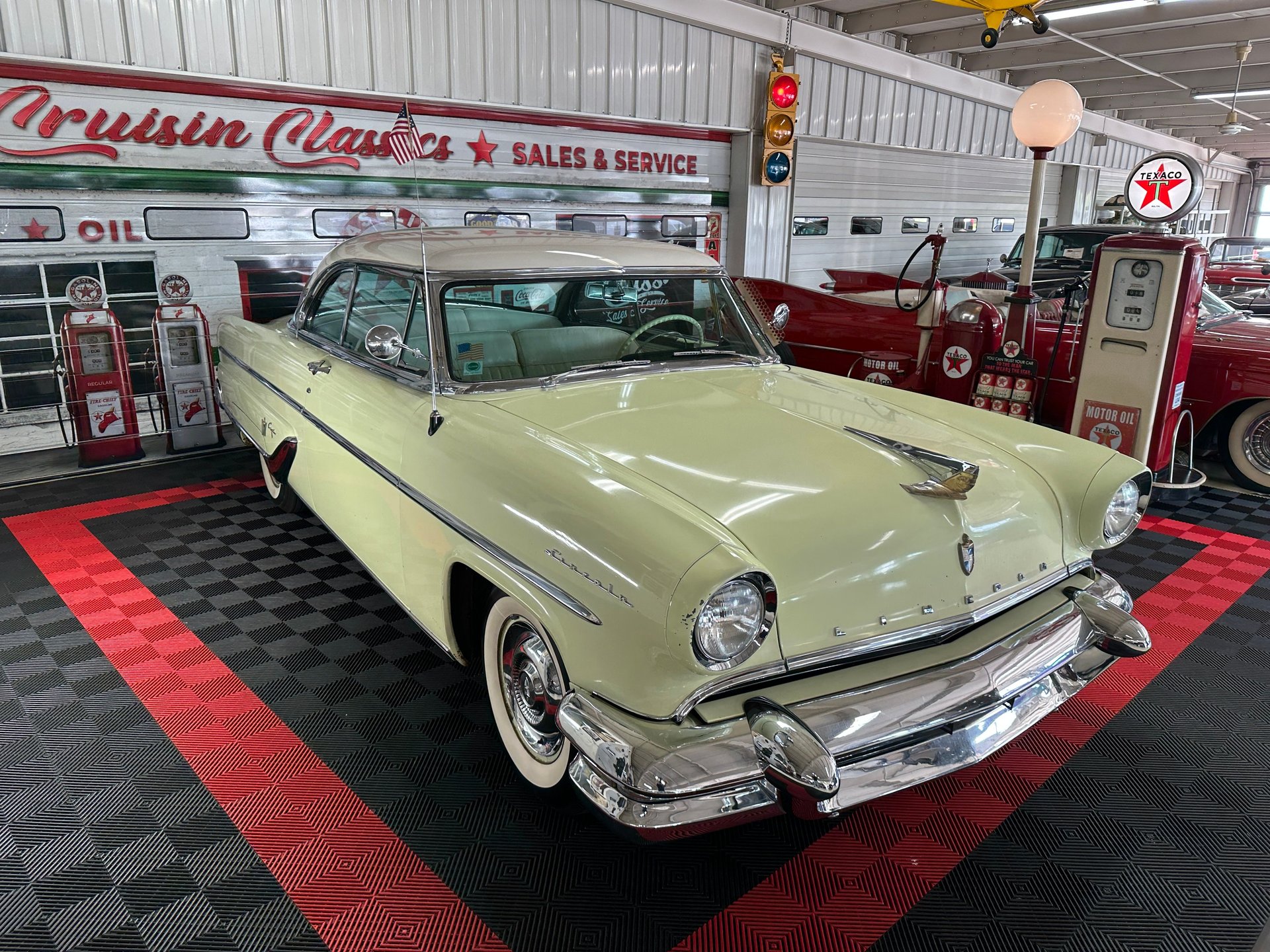
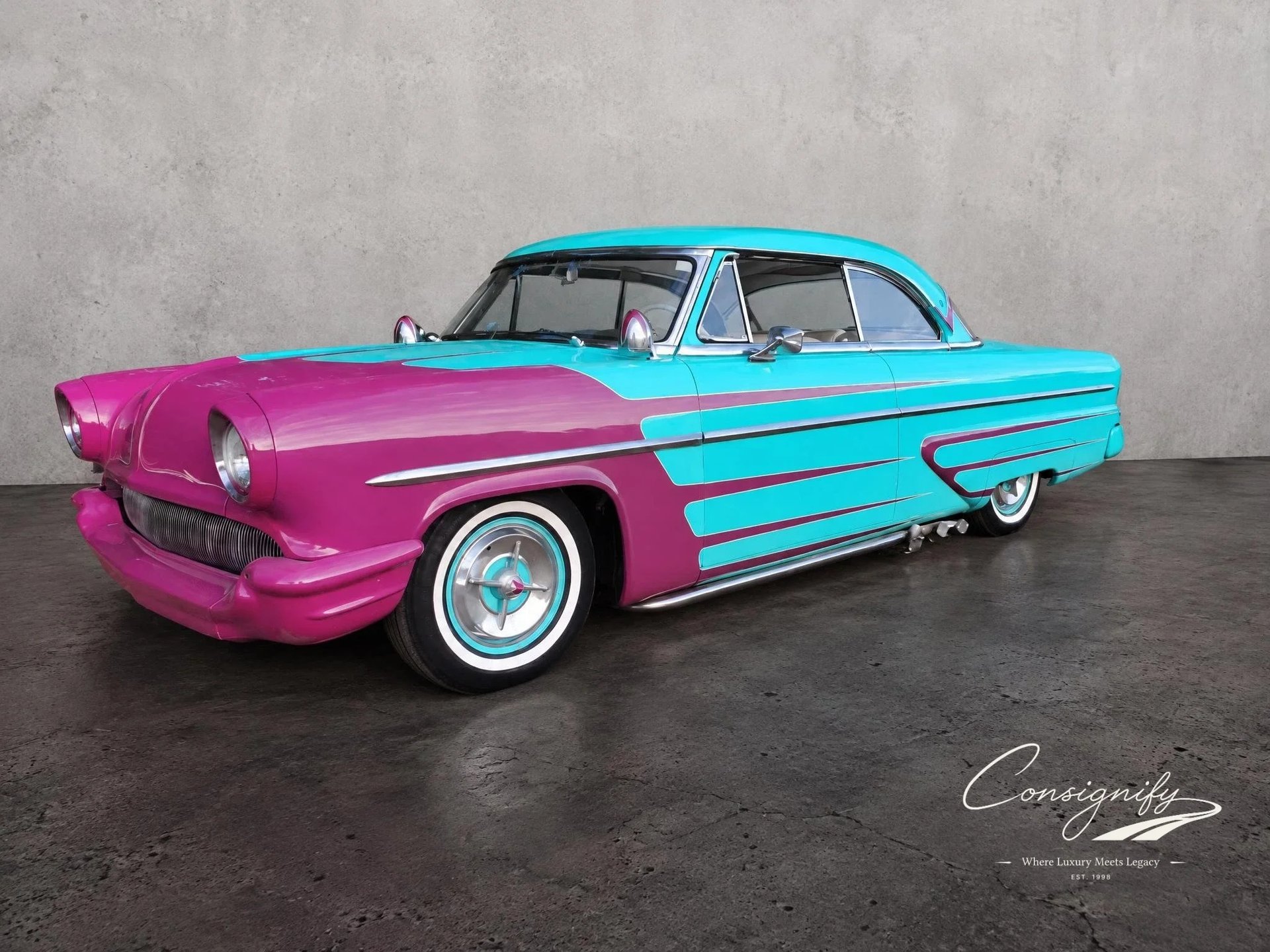
A small number of early cars were built with a manual gearbox, with overdrive available in period. These are curiosities today. A factory manual Capri is interesting and, to the right buyer, desirable; a Capri converted to a later manual or a modern overdrive automatic is a modified car and should be priced as one, however well the conversion drives. The same applies to complete modern drivetrain swaps. They can make a fine custom, as one of the cars pictured in this guide demonstrates, but they end the car's life as a Lincoln Capri in the collector sense, and the guide's advice on originality, parts and values no longer applies to them in the same way.
Finally, drive the gearbox as the car will actually be used. A Capri that feels brisk around the block but laboured and hunting on a highway grade is showing you a worn engine, a slipping box or both — the inspection test drive is designed to expose exactly that.

Problem areas
Rust: the map
Rust decides Capri purchases more often than engines do, because a Y-block can be rebuilt by known people for a known sum, while a rusted Capri body is a large, flat-panelled structure whose repair consumes panel-beating hours out of all proportion to the car's value. In the site's own photo-note sample for this model — three cars examined, a small sample and quoted as such — rust was mentioned in two of the three, and damage in one. That is a fair reflection of the wider market: assume rust is present until you have proved otherwise, panel by panel.
Start with the floors. The front and rear footwells, the areas under the front seat mounts and the floor above the exhaust run are the classic first failures, fed by leaking screen and side-glass seals, blocked cowl drains and decades of wet carpet underlay holding moisture against the steel. Lift every carpet you are allowed to lift. Surface discolouration is cosmetic; flaking, holed or previously patched floors are structural and expensive, because correct repair means cutting out and welding in properly formed sections, not laying a flat sheet over rot. A car with one patched floor corner and an honest seller is a negotiable car. A car whose floors are patched everywhere, in overlapping plates with sealant at the edges, is a car whose rust you have not finished finding.
Move to the sills and rocker panels, the lower door skins and the bottoms of the front wings. The Capri's long, straight flanks look simple and are not: the side spear and its fixings trap moisture, the rear of the front wing collects everything the front wheel throws up, and the dog-leg area where the rear door or rear quarter meets the sill and wheel arch is a moisture trap on every body style. Press, tap and use a magnet in a cloth on suspect areas. Filler announces itself by a dead note and a magnet that will not hold. Pay particular attention to the lower rear quarters behind the rear wheels and to the stone-guard area you can see in Figure 1 — that black guard exists because the area takes punishment, and what is under it matters.
The trunk floor is the third structural zone, and it fails from above as much as from below: a perished boot seal and blocked drain channels let water sit in the spare-wheel well and the low points of the floor until they perforate. A dry, original trunk floor with its factory finish intact is one of the best signs a Capri has been garaged and sealed properly. A trunk floor repaired with flat sheet and underseal, with a damp smell and a rusty spare wheel, is telling you the water path is still open. Find the leak — seal, rear screen surround, or lamp gaskets — before you price the repair, because welding a floor under a live leak buys you a few years at most.
At the front, examine the battery tray, the radiator support and the screen surround — surround rust is doubly expensive because the glass must come out and the bright trim must survive the process. On convertibles, add the top well, the reinforced top-mechanism mounts, and the floors again with extra suspicion. On the 1958–59 unibody cars, raise the stakes: the structure is the body, so sill and floor corrosion is a safety issue, and a rusty 1958–59 Capri is a far more serious proposition than a rusty 1954.
The frame on the 1952–57 cars is generally sturdy, but check it at the body mounts, suspension pick-up points and the rear kick-up. Surface rust is normal; thinned or perforated steel at a mount is a specialist repair and a walk-away-or-renegotiate decision.
The honest summary is this. Cosmetic rust — bubbles at a wheel-arch lip, a scabbed lower door skin — is part of Capri ownership and can be priced. Structural rust in floors, sills, screen surrounds, convertible reinforcement or unibody members is the car's central fact, and it must set the price. In dollar terms, proper welded repair of one sill-and-floor side on a car like this typically runs into the low thousands per side once paint is included, and a car needing both sides, floors and a trunk floor can consume a five-figure body budget before any mechanical work begins. That arithmetic, not the asking price, is why rust comes first in this guide.
Engines, cooling and fuelling in service
Beyond the design weaknesses covered in the engines section, the Y-block in service gives you a familiar set of age faults to test for, each with a mechanism and a distinguishing check. Blue smoke on start-up that clears is valve-stem seal and guide wear — oil pooled on the valves overnight burning off — and is a top-end job. Blue smoke under acceleration that does not clear points lower, to rings and bores, and is a rebuild conversation. Grey-black smoke and a rich smell are fuelling: choke stuck on, float level wrong, needle valve passing, or a carburettor so worn it can no longer meter at idle. Do not let a seller present any of these as "they all do that." They do not. A sorted Y-block starts cleanly, idles without smoking and pulls without a haze behind it.
The exhaust heat-riser valve deserves its own paragraph because it causes a disproportionate share of "mystery" Capri running faults. The valve sits in the exhaust path and diverts hot gas to warm the inlet manifold when cold. When it seizes shut — the common failure, after years of heat and corrosion — the manifold stays hot all the time, the fuel charge overheats, and the car develops hot-running, vapour-lock-style stalling and a reluctance to restart when warm that owners blame on the carburettor, the coil and the fuel pump in turn. When it seizes open, warm-up is slow and the choke stays on too long. The test is physical: the valve's counterweight and shaft should move freely against their spring. A seized valve is not a disaster — it can be freed, repaired or, in warm climates, wired open as a known compromise — but finding it explains symptoms that otherwise send buyers walking away from basically sound cars, or worse, paying for parts the car never needed.
Cooling is a system, and on a Capri it is a system sized for a new car in the early fifties, now asked to work in modern traffic with seventy years of internal scale. The radiator core blocks from the bottom up; the water pump bearing and seal age; the thermostat is replaced at some point with whatever was on the shelf; hoses and the heater core perish quietly until a hot day on a grade finds them. The distinguishing test is a proper run: at least half an hour, including a sustained faster stretch and a period of idling in traffic afterwards. A Capri that holds a steady temperature through all of that has a cooling system. A Capri that creeps upward at idle has an airflow, fan, shroud or core problem; one that climbs under load has a circulation or core-capacity problem; one that loses coolant without a visible leak needs a pressure test before you assume a hose — head-gasket and core-plug leaks announce themselves this way first. Overheating a Y-block is how good engines become cracked, warped expenses, so treat any temperature abnormality as a defect to be diagnosed, not a quirk.
Fuel systems on cars that have sat are a safety item, not just a running item. The steel tank rusts internally, the sender unit and its seal perish, rubber fuel lines harden and crack, and the mechanical fuel pump's diaphragm ages. Ethanol in modern fuel accelerates the decay of every original-spec rubber component it touches. Smell for fuel at the rear of the car and around the pump, look for staining and dampness along the lines, and ask when the tank was last cleaned or replaced. A car that runs from an auxiliary can "because the tank needs cleaning" is telling you the whole fuel system is an unknown, and you should price a tank clean or replacement, lines, pump and carburettor rebuild as one package — realistically a four-figure dollar sum in parts and labour if a shop does it — rather than as a weekend job.
Suspension, steering, brakes and the underside
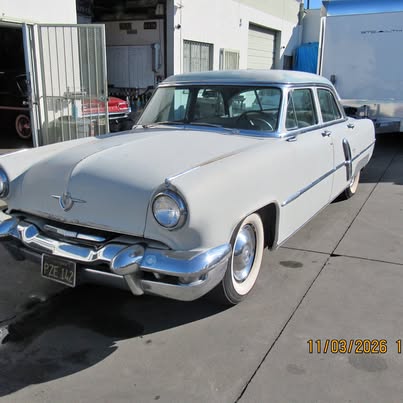
The front suspension of the first-generation cars is an independent coil-spring design of conventional period type, with the steering by a recirculating-ball box and, on most well-specified cars, power assistance. Wear accumulates in the predictable places: kingpin or joint wear depending on year and specification, tired coil springs that let the car sit low and nose-down, perished bushes, and shock absorbers that stopped absorbing long ago and now merely occupy the space. The test is partly visual — the car should sit level and at a plausible height, like the cars in Figures 1 and 2 — and partly dynamic. Wander on a straight road, a pull under braking, clonks over sharp bumps and a steering wheel that does not self-centre all point at specific wear you can then confirm on a lift. Power steering adds its own faults: pump whine that rises with lock means low fluid, a worn pump or air in the system; leaks at the pump, hoses and control valve or ram are common and messy; and a system that is heavy at parking speed but light at road speed has a pressure or valve problem, not a charm.
At the rear, a live axle on leaf springs does the work, located and damped conventionally. Sagging or cracked leaves, worn shackles and bushes, a leaking pinion seal and axle whine under load are the usual findings. Axle whine that rises and falls with road speed and changes between drive and overrun is gear wear announcing itself; it rarely gets quieter, and a rebuild is a specialist dollar cost in the low thousands if gears as well as bearings are needed. A silent axle with a weeping pinion seal, by contrast, is a seal and an afternoon.
Brakes are drums all round, hydraulically operated, with power assistance common, and they are the system where period standards and modern expectations collide hardest. In good order — round drums, good linings, sound cylinders, fresh fluid, a firm pedal — a Capri stops straight and adequately for its era. Out of order, the failure modes are specific: a pedal that sinks slowly at a standstill is a master-cylinder internal leak; a pedal that needs pumping is air, adjustment or a failing cylinder; a pull to one side is a contaminated lining, a seized cylinder or a collapsed flexible hose acting as a one-way valve; and a hard pedal with poor stopping is a failed booster or a vacuum supply fault. The single-circuit master cylinder on these cars means one hydraulic failure is a total failure, which is why the flexible hoses, steel lines and cylinder condition are not items to defer. Many owners fit a dual-circuit conversion for safety; done properly it is a sensible, reversible improvement that should not count against a car, but ask what was fitted and by whom. Budget-wise, a full brake overhaul — drums skimmed or replaced, cylinders, shoes, hoses, master cylinder — is a four-figure dollar job on a car this size, and a car that needs it needs it before its first proper drive, not after.
Finally, check tyre age by date code, not tread. A Capri on fifteen-year-old whitewalls with perfect tread is a car that has barely moved, and everything rubber on it will be in the same state; correct-size wide whitewalls from the classic-tyre trade are not cheap, so price a needed set into your total.
Interior, trim, electrics and the convertible top
Interior and trim are where Capri restoration economics bite hardest, because Lincoln trim is specific, often unique to model and year, and largely unreproduced. A complete, original interior with honest wear is worth more than a fresh retrim in the wrong material, because the wrong retrim must be done again at full price. Check bright trim with the same severity: a full rechrome of a car carrying this much brightwork runs well into four figures in dollars and can reach five, and pitted, irreplaceable castings are a genuine problem. Missing trim on a Capri is not like missing trim on a Mustang — you may search for years for the correct piece.
Electrics divide by year. The 1952–55 cars are six-volt, and a six-volt system in good order — heavy cables with clean, tight connections, a sound generator and regulator, a good battery — starts and runs a Y-block perfectly well. Most "six-volt problems" are connection and cable problems: thin modern replacement cables, corroded earths and a tired battery being asked to turn a big, tight engine. The cure is maintenance, not conversion, and a car converted to twelve volts should prompt the question of what else was changed in the process — bulbs, gauges, motors, the radio — because a half-converted car is an electrical puzzle for its next owner. The 1956-onward cars are twelve-volt from the factory and generally easier to live with, but they carry more electrical equipment to fail: power windows with ageing motors and switches, a power seat, courtesy systems, and on later cars more vacuum-and-electric accessories besides. Test every switch, in both directions, twice. A window that goes down but struggles up is showing you a motor or regulator at the end of its life, and four windows in that state are a real bill in parts and door-trim removal time.
The convertible top is a hydraulic system on these cars, powered by an electric pump driving cylinders that raise and lower the frame, and its examination is a ritual. Operate it fully, more than once, and watch: the frame should rise evenly, without one side lagging, groaning or needing a helping hand; the pump should sound unstrained; there should be no hydraulic fluid weeping at the cylinders, hoses or pump, and no dampness in the top well or boot where leaking fluid collects. The top material itself is replaceable at a known cost — a quality top, fitted, with pads and a rear window, is a four-figure dollar job — but a bent or worn frame, a dead pump and leaking cylinders together convert a cheap convertible into an expensive one. Check the top well and the rear seat area for the water damage that a leaking top leaves behind, and check that the boot cover and the top's latches are present and correct. A convertible missing its small, specific parts is, again, a search measured in years.
Finally, an odometer reading on a seventy-year-old car is a claim, not a fact, unless paperwork supports it; judge mileage by wear on pedals, seat, wheel and switches. Air conditioning, where fitted, is judged as a system: complete is a restoration project with a budget; incomplete is dead weight. A seller who tells you it "just needs gas" is telling you it does not work and he does not know why.
How to inspect one
Inspect a Capri in a fixed order — structure first, identity second, mechanical condition third, cosmetics last — because the order stops you falling for a shiny car with rotten floors. Take a torch, a magnet wrapped in cloth and a notebook, and allow two hours. A seller who will not allow a thorough inspection has given you the most important finding of the day.
- Identity before everything. Record the serial and data-plate information and check it against the paperwork and the car in front of you: year, series, body style and, where the plate decodes it, original colour and trim. Confirm the body style matches the year — remember that there is no factory 1956 Capri convertible — and that the engine family matches the year: Y-block for 1952–57 in the right displacement range, MEL 430 for 1958–59. A car whose plate, paperwork and metal tell three different stories is priced as the least valuable of the three until proved otherwise.
- Cold start, bonnet up. Insist the engine is cold. Watch the oil-pressure response, listen to the top end for the dry-rocker clatter described in the engines section, watch the exhaust for the colour and duration of any smoke, and check the choke's behaviour as it warms. An engine that was warmed up for your arrival fails this step by default; note it and move on with your suspicion raised.
- Under the bonnet, systematically. Check fluid levels and condition: engine oil (fresh oil in a neglected engine is a sales tool; black oil and a sludged filler cap are information), coolant colour and level, brake fluid, transmission and power-steering fluid where visible. Look for the external rocker-oiler line that signals known top-end oiling trouble, for perished hoses, for fuel dampness at the pump and carburettor, and for the heat-riser valve at the exhaust manifold — try to move its counterweight by hand. Note every non-standard component; each one is a parts question later.
- Floors, sills and trunk, with the torch. Lift the carpets you can, get under the car if a lift or pit is available, and work through the rust map from the problem-areas section: footwells, seat-mount areas, sills, dog-legs, lower wings, trunk floor and spare-wheel well, battery tray, screen surrounds. Magnet-test every suspicious flank panel. Write down each rust site separately; your repair estimate, and your negotiation, will be built from that list, not from a general impression.
- Frame and mounts (1952–57) or unibody structure (1958–59). Check the frame at body mounts, suspension pick-ups and the rear kick-up for thinning or perforation. On a unibody car, treat sill, floor and structural corrosion as the serious, price-setting defect it is. On a convertible of any year, examine the reinforced areas and the top-well structure with particular care.
- Suspension and steering, static. Check the car's stance: level, at a plausible height, matching the honest cars in the figures. Bounce each corner and watch it settle. With an assistant rocking the steering wheel, watch for lost motion at the box and linkage, and check for play at the front wheels by rocking them at twelve and six o'clock and at three and nine. Note power-steering leaks and listen for pump whine at full lock.
- Brakes, before the road. Press the pedal hard and hold it: a sinking pedal condemns the master cylinder. Pump it: a pedal that rises and firms suggests air or adjustment trouble. Inspect what you can of the flexible hoses and steel lines for perishing and corrosion, and check the fluid's age by its colour. If the brakes fail any of these tests, do not road-test the car at speed; price the overhaul and test the rest of the car gently, or not at all.
- The road test, at least thirty minutes. Drive the full pattern: cold running, town work, a sustained faster stretch, a hill if one is available, and idling in traffic at the end. This is the cooling-system test from the problem areas, the gearbox test — engagement, flare, kickdown, reverse — and the axle test, listening for whine that changes between drive and overrun, all in one drive. Note steering wander, brake pull and any vibration by speed.
- Hot restart and idle. Back at base, switch off, wait five minutes, and restart. The heat-soaked restart is where a seized heat-riser, a tired starter, vapour-lock tendency and a weak coil all declare themselves. Then let it idle and walk around it: exhaust note and smoke, coolant leaks appearing under pressure, fuel smells, transmission fluid on the ground where you parked.
- Every electrical item, twice. On a six-volt car, check starting enthusiasm, charging behaviour, lights and indicators; on any car, operate every power window in both directions, the power seat, the heater, wipers, horn, radio and courtesy lights. On a convertible, run the top through at least two full cycles and inspect the well, hoses and cylinders for hydraulic leaks afterwards.
- Trim completeness audit. Walk the car with a list: grille, bumpers and overriders, side spear, window and screen surrounds, badges and scripts, hubcaps, interior handles, switches and the small cast pieces. Photograph every missing or damaged item. On a Capri, this list is money — rechroming and unreproduced trim are among the largest costs in the parts section — and a "complete car" claim should survive this walk or be repriced.
- Paperwork and the final sum. Match the documents to the identity you recorded at step 1: title, registration, any build or club records, restoration invoices and photographs. Then total the car honestly: purchase price plus the rust list from step 4, plus the mechanical findings, plus trim and tyres, plus a brake overhaul if step 7 raised any doubt. That total — not the asking price — is what you compare with the value of a finished car in the values section. If the total exceeds the finished value by a wide margin, the correct move is to buy a better car, not a cheaper project.
Values
The Capri market rewards the individual car and punishes generalisations, so read the listings and recorded sales appended to this guide as a study in spread rather than as a single number. The same model name covers a project sedan that has not run in decades and a restored convertible with a rebuilt Y-block and a new top, and the distance between those two cars is not a percentage — it is a multiple. Your first task in any comparison is to place the car in front of you on that condition ladder honestly, using the inspection totals above, before you compare its price with anything.
Body style drives the first premium. Convertibles sit at the top of the first-generation range, hardtop coupes below them, sedans below that, because that is the order of period cost, present scarcity and show-field appeal. The 1955 facelift cars generally attract more interest than the 1952–54 cars in equivalent condition, reflecting the styling and the larger engine. The 1956–57 cars trade in their own band, where the Premiere above them caps Capri money: a Capri priced as if it were a Premiere needs Premiere condition and equipment to justify it. The 1958–59 cars are scarce enough that individual sales can look erratic; scarcity there cuts both ways, because the buyer pool is as small as the supply.
Originality is the second driver, and it is where Capris are lost and won. A car with its correct engine, correct trim and an honest, documented history commands its money because the next owner is buying certainty. A car with a swapped engine, a customised body or a retrim in the wrong materials — however attractive — has stepped out of the collector market and into the custom market, where value is set by build quality and taste, not by the Capri name. Neither market is wrong; confusing them is expensive. Asking prices, meanwhile, are aspirations. In a thin market like this one, cars sit, and the gap between asking and achieved prices on ordinary cars is where patient buyers do their work. Recorded sales, not listings, are the evidence; weight a completed sale of a comparable car far above a dealer's asking price for a dissimilar one.
The project-versus-driver gap deserves care, because Capri restoration costs are heavy-car costs: body and paint, a Y-block rebuild, a gearbox rebuild, brakes, top and interior can together exceed the finished value of all but the best body styles. A driving, presentable car at a firm price is therefore often the rational purchase: you are buying the previous owner's expenditure at a discount. Buy a project only when the body style justifies the arithmetic, or when the work itself is the point for you.
Parts and ownership
Capri ownership is supported by a real but specialised ecosystem, and you should enter it knowing which parts are easy, which are dear and which are a hunt. Mechanical service parts for the Y-block — bearings, gaskets, pistons, timing components, ignition and carburettor service items — are obtainable through the classic Ford and Lincoln specialists and the general American-classic trade, because the engine family was built in volume and also served in trucks. Always specify the Lincoln displacement and application; as the engines section warns, generic Y-block listings often mean the smaller Ford engine. MEL 430 support is thinner and more specialist, reflecting that engine's shorter life and smaller production, and 1958–59 ownership should be undertaken with a known specialist identified before you need one.
Gearbox support follows the same pattern. The GM Hydra-Matic is served by a small number of experienced specialists whose knowledge is the real asset; the later Ford-family automatic is understood more widely. Brake, suspension and steering consumables are generally available, with power-steering and booster components sometimes requiring rebuild of your own units rather than exchange replacements — a normal arrangement in this corner of the hobby, and a reason to keep every original component with the car rather than discarding cores. Cooling-system components, water pumps and radiators can be rebuilt, recored or, where necessary, fabricated by the classic trade.
Body, trim and interior are the hard categories. Sheet metal is largely a repair-and-fabricate discipline: patch panels for the common rust areas exist in limited form, but floors, sills and quarters on a car needing extensive work will involve a fabricator's time, and good used panels from donor cars are a finite resource. Bright trim, castings and scripts are the scarcest items of all and are seldom reproduced; the marque clubs, swap meets and the breaker network are the supply, and prices for the right piece in the right condition reflect that. Interior materials in correct patterns can be sourced through the specialist trim suppliers for the marque, but expect lead times and expect to pay for correctness. Glass is obtainable for the main screens and side glass through the classic glass trade, with curved and body-specific pieces dearer and slower.
The support structure that makes this workable is the Lincoln club scene — active and accustomed to exactly these cars — plus the marque's parts specialists and factory workshop literature for your year, which you should acquire before serious work. Running costs are those of a large, heavy car: fuel in the low-to-mid teens per gallon, classic-size tyres at classic prices, and a full-size garage space. Buy the best-supported version of the car — correct engine, complete trim, sound structure — because every gap will be filled from the thinnest parts of the pipeline.
Which one to buy
- The all-rounder: a 1955 hardtop coupe. The facelift styling, the 341 engine, flagship-series status and pillarless looks, without convertible hydraulics or convertible prices. In honest, driving condition this is the Capri most buyers will enjoy most.
- The flagship buy: a 1952–1955 convertible, 1955 first. The top body of the range and the strongest long-term proposition — bought strictly on structure, top mechanism and trim completeness, after the full convertible checks in the inspection section.
- The value buy: a 1953–1954 sedan or hardtop. The same Y-block engineering, the Panamericana-era mechanical specification and full flagship trim, generally for less than a 1955 in equivalent condition because the market pays for the facelift.
- The later-car buy: a 1956–1957 Capri hardtop. Twelve volts, the 368 engine and the bigger, later styling. Buy it as a junior series car at a junior series price, and check its equipment against a Premiere before paying Premiere money.
- The specialist buy: a 1958–1959 Capri. Enormous presence, MEL power and real scarcity, for a buyer who has priced unibody structural repair and MEL support honestly and wants the car anyway. Not a first classic.
- The custom buy: a modified car, bought as a custom. Judge the build, not the badge, and pay custom money — never original-car money.
The overriding rule: buy structure and completeness before shine — a Capri with sound floors, sills and surrounds, its correct engine and full trim will reward you for decades; a shiny Capri missing any of those is a bill looking for a payer.
See the 5 Capri cars currently listed.
For sale now
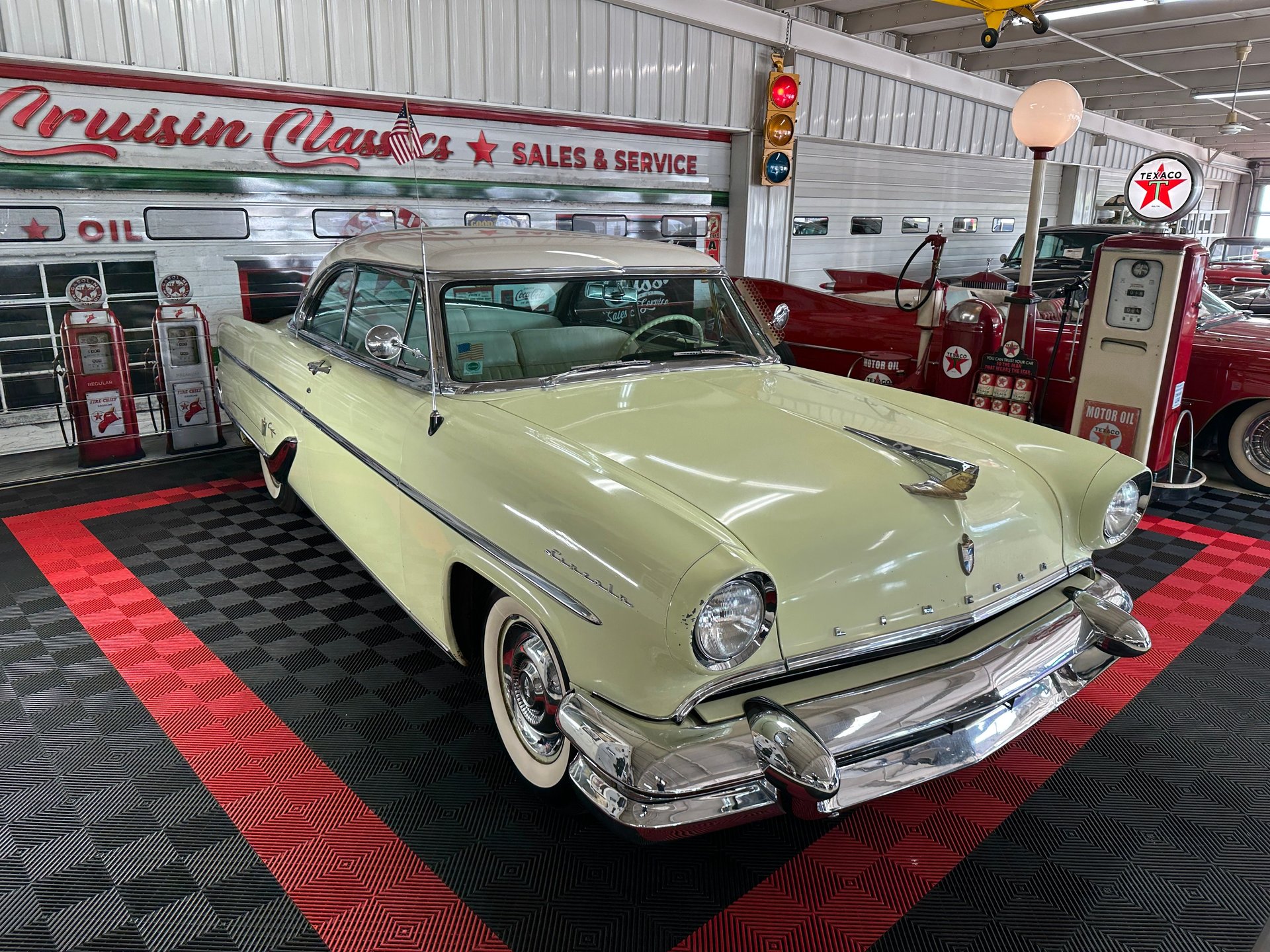 $24,995 · 8% above typical
Expand
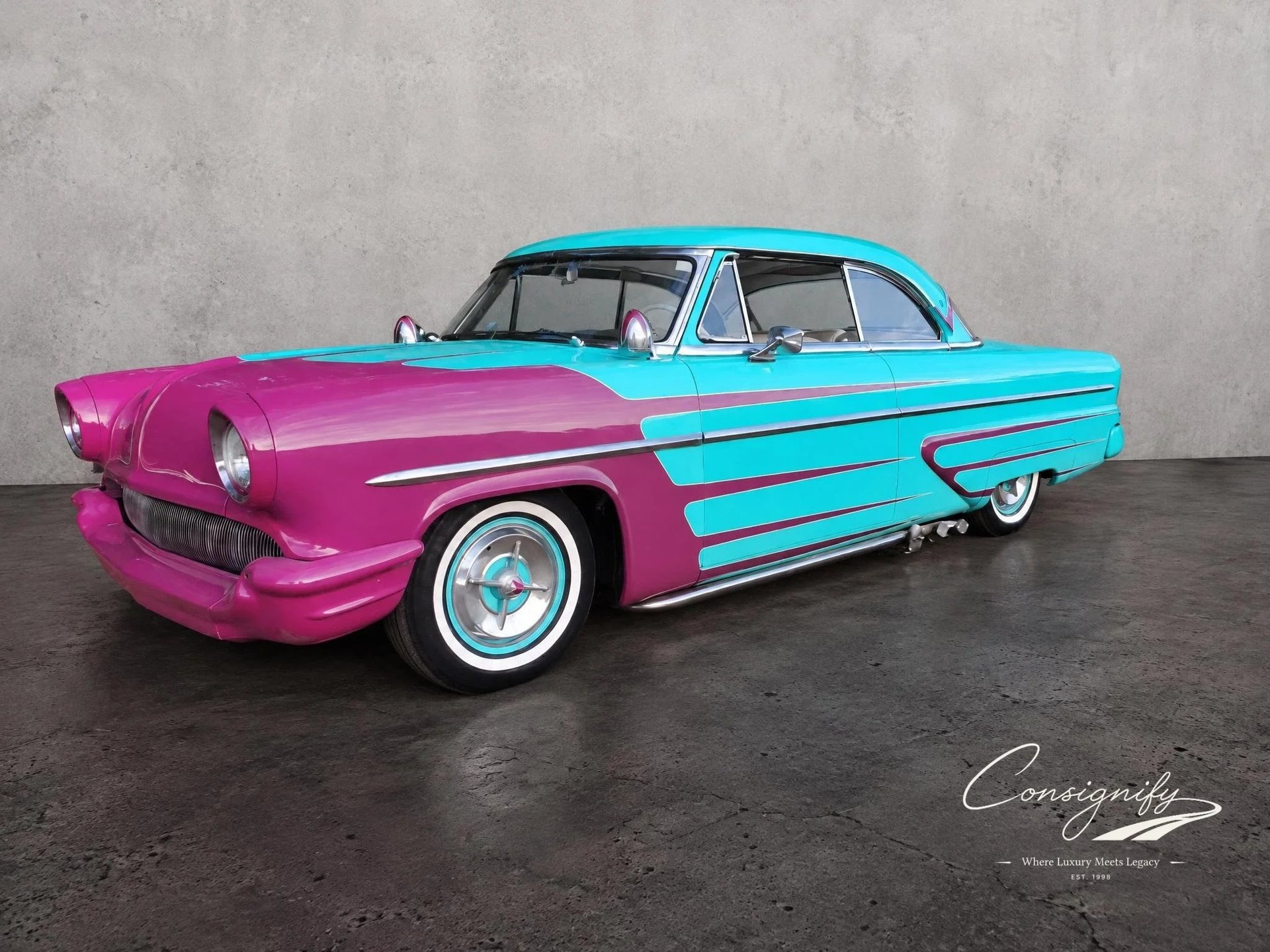 $23,000 · In line with typical
Expand
 $15,000
Expand
 $43,000 · 87% above typical
Expand
 $13,000
Expand
What they sell for: Capri sale prices.