
Lincoln Premiere buyer's guide
Lincoln Premiere -- the model's own buyer's guide: variants, values and what to check.
Years listed: 1956-1956 · Series: Full Size
# Lincoln Premiere — Buyer's Guide
Overview and history
The Lincoln Premiere of 1956 and 1957 is the flagship of a marque in the middle of reinventing itself, and you feel that ambition the moment you stand next to one. These are big cars by any measure — a 126-inch wheelbase, a body that runs to roughly eighteen and a half feet, and a presence built out of long, low, unhurried lines rather than chrome for its own sake. Where a contemporary Cadillac shouts, a Premiere talks in a lower voice. That difference in character is exactly why the car has a following today, and it is also why you need to shop for one with your eyes open: a quieter car in period is a rarer car now, and rarity cuts both ways when you need a door handle, a rear window or a competent trimmer who knows the model.
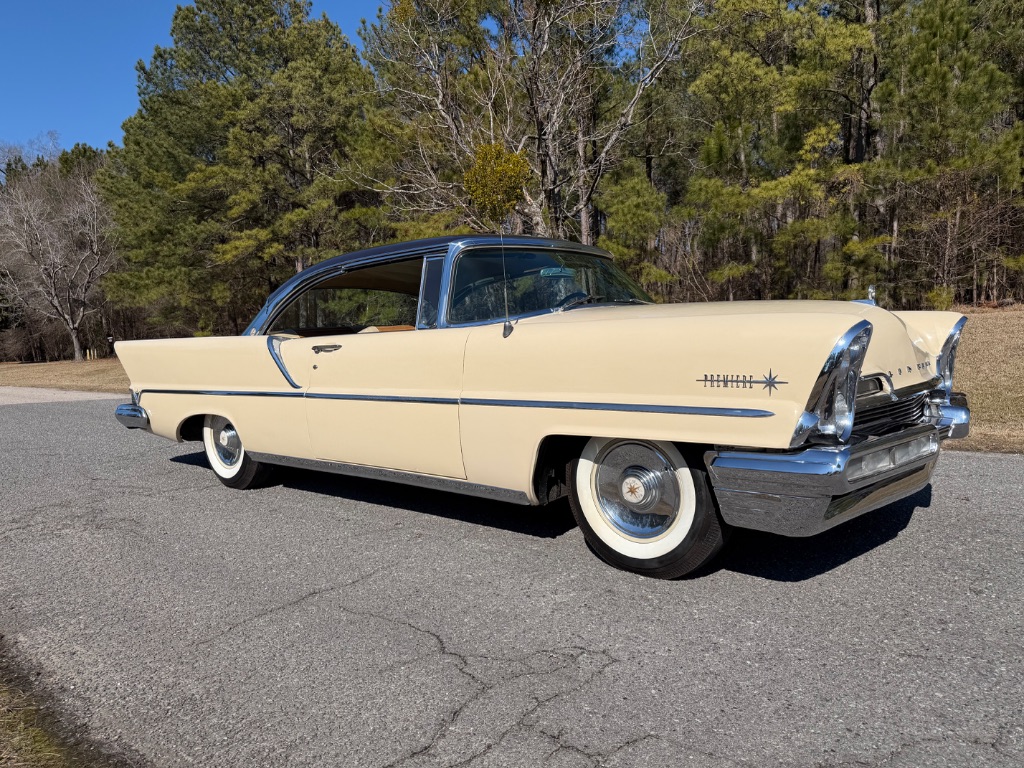
For 1956 Lincoln restyled completely. The new body was longer, lower and wider than the 1952–55 shell, with a wraparound windscreen, a broad grille and tail fins that were still modest enough to look tailored rather than theatrical. Into this range Lincoln inserted a new name at the top: Premiere. The Capri remained as the entry Lincoln and the Premiere sat above it, distinguished by richer trim, more standard equipment, a more elaborate interior and, on the roofline that defines the model, the two-door hardtop coupe and four-door hardtop sedan profiles that showed the new styling at its best. A conventional four-door sedan and a convertible completed the Premiere line.
The 1957 car kept the same body and the same basic engineering and turned the styling up a notch. The fins grew taller and canted outward, the front end gained the stacked dual headlamp treatment Lincoln called Quadra-Lite where regulations allowed, the grille and bumpers were revised, and the engine was tuned to a higher advertised output. A four-door Landau hardtop joined the Premiere range. Underneath, though, a 1957 Premiere is a development of the 1956 car, not a new one — parts knowledge, inspection technique and most weaknesses carry straight across the two years, which simplifies your life as a buyer considerably.
Then, for 1958, Lincoln threw all of it away. The 1958–60 Premiere is a completely different automobile: a vast unibody car, among the largest unit-construction cars ever built, powered by the 430 cubic inch MEL-series V8, styled in the heavy, sculpted idiom of the late-fifties Continental Mark III, IV and V programme. It shares the Premiere name and almost nothing else with the car in this guide — not the structure, not the engine, not the suspension, not the parts supply and not the buying calculus. Treat any advert, parts listing or well-meaning advice that lumps the two generations together as a warning sign.
Why buy one now? Three honest reasons. First, the driving experience: a sorted Premiere delivers the full mid-fifties American flagship experience — near-silent cruising, a soft but controlled ride, fingertip power steering and torque that arrives without any sense of effort — in a car that is less common at any gathering than its obvious rivals. Second, the engineering is conventional where it counts.
The pool of cars you will actually shop from is small and scattered. On this site at the time of writing the Premiere pool is seven cars, all offered for sale, five from 1956 and two from 1957, spread across California, Massachusetts, South Carolina, Minnesota, Kentucky and Florida, and split between dealer listings and private marketplace sellers. That spread is typical of the model nationally: you do not get to choose your ideal colour, body style and state all at once, and travel — or shipping — is a normal part of buying one. Every car in that pool is an automatic, as effectively every Premiere you will ever meet is an automatic; a manual-gearbox Premiere is not a realistic shopping target. Colours in the pool run from red, cream and yellow to blue, grey and black, which hints at the model's other pleasure: Lincoln sold these cars in a confident period palette, often two-toned, and the colour a car wears today may or may not be the colour on its data plate.
The models
The 1956–57 Premiere range is simple to map once you separate the three questions sellers habitually blur together: which model line (Capri or Premiere), which body style, and which year. Work through them in that order on every car you consider.
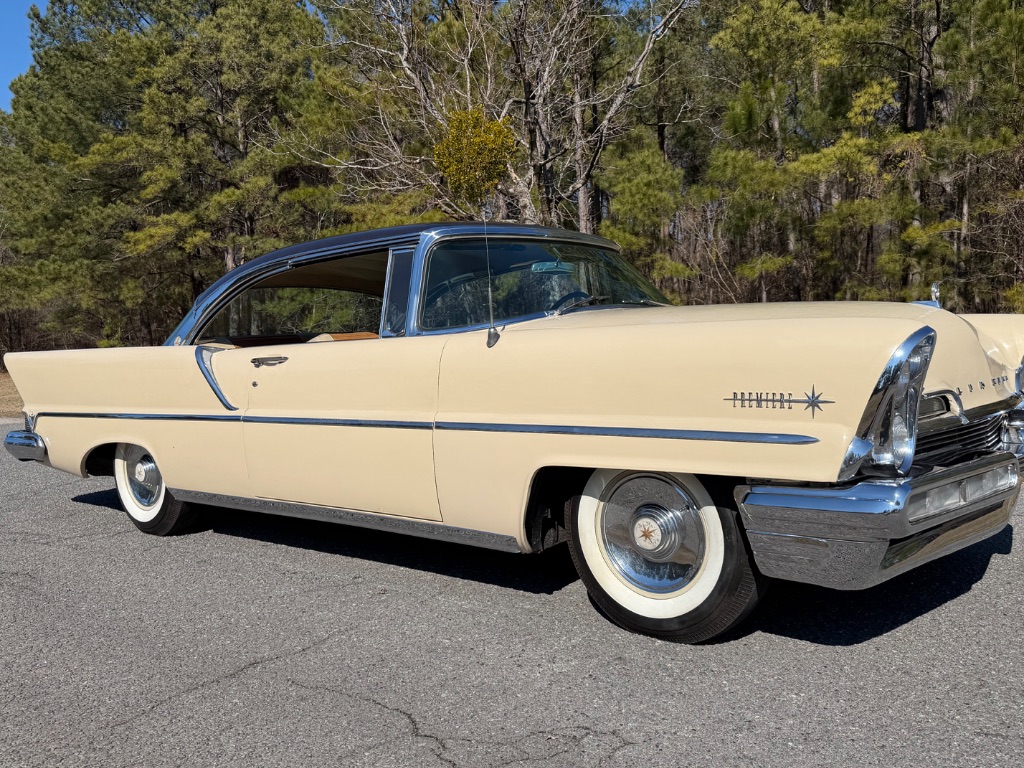
Premiere versus Capri first, because it decides what you are paying for. Both lines use the same body shell, the same wheelbase and the same engine. The Premiere sits above the Capri in price, trim and equipment. In practice you tell them apart by a cluster of evidence, never by one badge. Premiere trim is more elaborate: the side spear and stainless treatment differ, the rear quarters carry Premiere script, the interiors use richer materials with more elaborate door panels and seat patterns, and equipment that is optional on a Capri is standard or far more commonly fitted on a Premiere — power windows, a power seat and fuller instrumentation among them. The hardtop rooflines are the other half of the signature: the Premiere hardtop coupe and hardtop sedan have the pillarless profile with the distinctive rear-window treatment that gives these cars their low, glassy look.
Body styles next. For 1956 the Premiere line offers four: the two-door hardtop coupe, the four-door hardtop sedan, the four-door sedan with a centre pillar, and the convertible. For 1957 the range repeats those and adds the Landau, a four-door hardtop with a more formal rear treatment. Each has a distinct character and a distinct set of buying checks.
The two-door hardtop coupe is the car most people picture. The pillarless roof, the long doors and the uninterrupted side glass give it the purest version of the 1956–57 styling, and it is the body style that shows the two-tone paint schemes best. The costs of that beauty are practical: the doors are long and heavy, their hinges and latches work hard, the window mechanisms inside them are elaborate, and the hardtop's window sealing depends on rubber and adjustment rather than on a steel frame. Check door drop, window alignment and water staining with extra care on a coupe.
The pillared four-door sedan is the formal, understated member of the family. Its framed windows seal better, its structure around the roof is stiffer, and it tends to have lived a quieter life. It is also the least sought after, which makes it the value route into Premiere ownership if you like the car more than the silhouette. Do not let anyone tell you it is "not a real Premiere." It is exactly as much a Premiere as the convertible; it simply wears the badge in the soberest body.
The convertible is the flagship gesture: a power top over the full flagship interior, and the rarest and most condition-sensitive body in the range. Everything about a convertible multiplies inspection time. The top mechanism — frame, hydraulic or electric operation depending on components fitted, cylinders, pump, hoses and switches — is a system of its own. The body, deprived of a fixed roof, leans harder on the sills and floor for stiffness, so the rust checks in the next-but-one section matter most of all here. Top condition, boot and well condition, and evidence of long-term water entry through a tired top should dominate your viewing.
Year differences are styling and tuning, not substance. The 1956 car has the cleaner fins, the single-headlamp front end and the lower advertised engine output. The 1957 car has the taller canted fins, the revised grille and bumpers, the stacked-lamp front where fitted, the higher-output tune of the same 368 engine, and detail changes inside. Neither year is "the one to have" on engineering grounds; buy on condition and body style.
| Model | Years | Engine | Output | Built | Character |
|---|---|---|---|---|---|
| Premiere 2-door hardtop coupe | 1956–57 | 368 cu in Lincoln Y-block V8 | 285 hp (1956), 300 hp (1957), period gross ratings | Two-year flagship production; verify an individual car by its data plate rather than by published totals | The signature silhouette; long doors, pillarless glass, the show-car of the range |
| Premiere 4-door hardtop sedan | 1956–57 | 368 cu in Lincoln Y-block V8 | As above | As above | The all-round flagship; four-door access with the hardtop profile |
| Premiere Landau 4-door hardtop | 1957 | 368 cu in Lincoln Y-block V8 | 300 hp, period gross rating | 1957 only | Formal variant of the hardtop sedan; trim distinction, same mechanics |
| Premiere 4-door sedan | 1956–57 | 368 cu in Lincoln Y-block V8 | As above | As above | The sober formal car; best-sealing windows, quietest life, softest demand |
| Premiere convertible | 1956–57 | 368 cu in Lincoln Y-block V8 | As above | The lowest-volume body in the range | The flagship gesture; top mechanism and sill strength dominate the purchase |
Equipment is the last piece of the model picture, and on a Premiere it is half the car. Power steering and power brakes are effectively universal. Power windows and a multi-way power front seat are core Premiere equipment and you should treat inoperative examples as faults to price, not quirks to accept. Air conditioning was a factory option and is genuinely desirable where fitted and complete — and genuinely expensive when it is fitted, incomplete and dead, as the problem-areas section explains.

Engines and gearboxes
There is only one engine in a 1956–57 Premiere, and only one gearbox that matters, which makes this section simpler to map and more important to get right: every judgement you make about a car's mechanical health is a judgement about the 368 cubic inch Lincoln Y-block V8 and the Turbo-Drive automatic behind it. Learn their normal behaviour, their known wear patterns and the tests that separate a tired example from a dying one, and you can assess any Premiere in the country with the same toolkit.
The 368 cu in Lincoln Y-block V8
The Lincoln Y-block is the marque's own overhead-valve V8 family, introduced for 1952 at 317 cubic inches, grown through 341 cubic inches, and enlarged to 368 cubic inches — just over six litres — for 1956, the form in which every Premiere of this generation carries it. The name comes from the deep-skirted block: the crankcase extends well below the crankshaft centreline, giving the block a Y-shaped cross-section and a notably rigid bottom end. That rigidity, plus conservative tuning, is the engine's character. It is built to move a heavy car quietly for a long time, not to rev, and a healthy example makes its effort so discreetly that a buyer used to modern cars can mistake its calm for weakness. It is not weakness.
Anatomy, in the order you will inspect it. The block is cast iron, the heads are cast iron, and the valvetrain is pushrod-operated with hydraulic lifters, so there is no periodic valve-clearance adjustment of the mechanical-lifter kind — but there is a dependence on clean oil that the inspection section will return to. The intake carries a single four-barrel carburettor. Ignition is a conventional single-point distributor with vacuum and centrifugal advance, driven from the camshaft, with the coil and period wiring you would expect; many cars now run electronic ignition conversions inside the original distributor housing, which is a sensible usability upgrade and not a mark against a car provided the work is tidy and reversible. The exhaust leaves through cast manifolds that live a hard life in a crowded, hot engine bay.
Fuel and starting behaviour define the healthy baseline. A sorted 368 starts from cold with the automatic choke doing its work, settles to a smooth, slow idle with no rock on the mounts and no ticking beyond the faintest valvetrain murmur, and pulls away without hesitation. It warms to the middle of the gauge and stays there. It does not smoke: a puff of oil smoke on a cold start after standing can be tired valve-stem seals, a venial sin at this age; continuous blue smoke under load is rings or bores and is a mortal one. It does not smell of raw fuel at rest, it does not hunt at idle, and its oil pressure at a hot idle, while modest by modern standards, is steady. Memorise that baseline, because every test that follows is a comparison against it.
The engine's genuine weak points are age points, not design scandals. The rear main seal is a period design that weeps on cars that sit, and a car used regularly often seals better than a car stored for years — a Premiere that has just come out of long storage will mark its territory, and you must distinguish a weep that improves with use from a leak that is structural. The exhaust manifolds crack and their studs seize, turning a gasket job into a machining job; listen for the ticking of an exhaust leak on a cold start, loudest in the first minute, and look for soot tracks at the manifold joints. The valley area under the intake, the timing cover and the fuel pump are the other classic oil-mist addresses. The cooling system is sized for the car but has no reserve for neglect: a radiator that is half-silted after decades of short journeys and hard water will cope in October and boil in July traffic, and the 368's cast-iron heads do not forgive repeated overheating.
Oil consumption deserves its own paragraph because it generates more bad buying decisions than any other Y-block topic. A period engine in good order uses some oil; a quart between services is not a verdict. What condemns an engine is the pattern: consumption rising with load points to rings and bores; smoke on the overrun and on start-up after standing points to valve guides and stem seals; external loss points to seals and gaskets. The distinguishing test is a compression check, dry and then wet with a spoonful of oil in each cylinder, done on a warm engine with all plugs out. Readings that are even across all eight cylinders, even if modest, describe a tired-but-honest engine with life left.
The carburettor and ignition cause most of the running faults sellers blame on "the engine." Period four-barrels wear their throttle shafts, their choke mechanisms stick, their accelerator pumps perish, and decades of ethanol-blended modern fuel attack old rubber and leave deposits in idle circuits. The symptoms — flat spots, hot-start flooding, a rich idle that no adjustment cures — are carburettor symptoms, and a professional rebuild of the original unit, typically $400–800, transforms cars that owners had written off as worn out. Learn to make that distinction at a viewing: an engine that idles unevenly but shows even compression and clean plugs is usually a fuel-system patient, not a rebuild candidate. Conversely, do not let a seller explain away low compression as "probably the carb." The carburettor cannot lower a compression reading. Similarly, a weak spark from a worn distributor — sloppy shaft bushings scatter the timing and make the engine feel vague and gutless — is a distributor rebuild, not an engine rebuild.
One myth to correct plainly: the Lincoln Y-block is not the Ford Y-block. The two families share a name, an era and a deep-skirt idea, and almost nothing else that matters at a parts counter — the Lincoln engine is a larger, distinct design, and Ford Y-block components such as those for the 292 and 312 do not interchange in the ways optimistic adverts imply. Order parts as Lincoln 368 parts, verify by casting and part numbers, and be suspicious of any "Y-block" bargain that does not specify which family it belongs to. The same discipline applies to the later MEL engines: the 430 in the 1958–60 cars is a different family again, and its parts do not rescue a 368.
The Turbo-Drive automatic
Every Premiere you will realistically buy drives through Lincoln's Turbo-Drive, a three-speed automatic transmission — the brief for this site's pool lists the cars simply as automatics, with one described as a three-speed automatic, and that is the whole story: there is no manual Premiere on your shopping list. Turbo-Drive is Lincoln's version of the period Borg-Warner-derived automatic architecture used across Ford Motor Company, adapted and named for Lincoln duty. It is a torque-converter transmission with a fluid coupling character quite unlike a modern gearbox: engagement is soft, shifts are unhurried, and the whole unit is tuned for silence. Judged by modern standards it feels lazy.
Learn its normal manners so you can spot abnormal ones. From cold, engagement of Drive or Reverse should arrive within a moment, without a bang and without a long, worrying pause. A pause that shortens as the car warms points to hardened seals inside the transmission — the classic age failure, in which internal lip seals shrink and leak pressure until heat softens them — and it is the single most informative symptom a Turbo-Drive can show you. A transmission that delays engagement cold, then behaves all day, is telling you its seals are old.
On the road, shifts should be clean and consistent: no flare — revs rising between gears — no shudder on the upshift under load, no harsh clunk into gear at rest, and a kickdown that answers a full throttle demand without drama. Fluid tells the rest of the story. Pull the dipstick: the fluid should be red to reddish-brown and smell like oil, not like burnt toast. Dark, burnt-smelling fluid in a transmission that still shifts well suggests a unit that has worked hot and hard and has been maintained by hope; bright red fluid in a transmission the seller cannot date may mean a recent change to hide a symptom — ask why it was changed. Leaks gather at the pan, the rear seal, the cooler lines and the selector shaft, and a Turbo-Drive that has run low on fluid even briefly wears quickly, so any evidence of chronic leakage is a mechanical question, not a cosmetic one.
Running gear: steering, suspension and brakes in brief
The problem-areas section covers running-gear faults in depth; here is the design baseline you need to judge them against. The chassis is a separate steel frame, and the body bolts to it — a fact that shapes everything from rust consequences to accident repair. Front suspension is independent, by coil springs and unequal-length arms with ball joints, with an anti-roll bar; the rear axle is a live axle on semi-elliptic leaf springs. This is the standard quality-American layout of the period, well understood by any alignment shop that still sets up older cars, and it delivers the ride the car is famous for when its bushings, joints and dampers are in order — and a wallowing, wandering mess when they are not, which is a maintenance verdict, not a design one.
Problem areas
A Premiere rarely fails in one dramatic place. It declines by accumulation — a sill here, a window motor there, a vacuum diaphragm, a weeping brake unit — until the car is shabby everywhere and good nowhere. Your job as a buyer is to map that accumulation honestly before you own it. This section is organised by system, in the order of what it costs you if you get it wrong: structure first, then the power equipment that defines the model, then vacuum, brakes and suspension, then the electrics and trim that decide whether the car feels like a flagship or a project.
Rust: the map
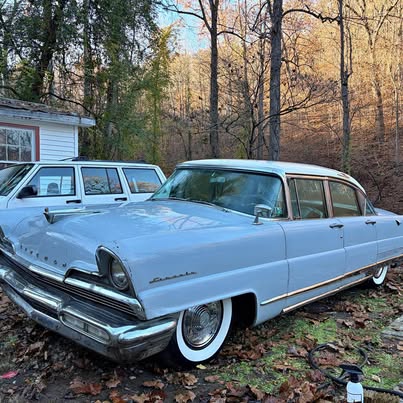
The Premiere is a body-on-frame car, which misleads buyers in both directions. The optimists say frame cars cannot rot structurally; the pessimists treat every bubble as death. The truth is specific. The frame itself is a stout ladder structure that rusts slowly and usually last, except where mud and road salt sit trapped — around the spring hangers, crossmember ends, body-mount points and the rear kick-up.
Walk the map from the bottom up, because that is the order of consequence. The rocker panels — the sills — are the first structural address. They carry the body between the wheels, the doors hang and latch in relation to them, and on the convertible they do more work still. Sills rot from inside out: the paint bubbles you can see are the last stage, not the first. Test them with a magnet over filler, with firm thumb pressure along the underside seam, and by watching the door gaps as the car is jacked at one corner — a body that twists visibly and changes its gaps as it lifts is telling you the structure between the jacking points is soft.
Floors come next. Front and rear floor pans trap water under carpets and underlay that hold moisture against the steel for decades, fed by leaking windscreens, tired door seals and hardtop window leaks. Lift the carpets — a seller who will not let you lift carpets has answered the question — and look for scale, pinholing and previous patch plates pop-riveted or screwed over rot, which is concealment, not repair. The trunk floor is its own trap: the spare-wheel well collects water from perished boot seals and from the rear-window channel, and a well that is perforated at its lowest point is one of the most common sights on a project Premiere.
Two Premiere-specific warnings. First, hardtop window leakage is a rust cause, not just an annoyance: pillarless glass seals imperfectly even when new, and after decades of hardened rubber a hardtop can feed water into the rear quarters and rear floor on every wet drive. Water stains on the rear side trim panels and a musty rear footwell are evidence, and they point you at the quarters and floors behind them. Second, previous repair is the norm, and its quality is the variable. These cars passed through decades when they were cheap, and cheap repairs — filler over rot, patches over patches, sills plated outside while the inside dissolved — are exactly what you are screening for.
The power accessories: seats, windows and air conditioning
This is the section that separates a Premiere from lesser cars, and it is where deferred maintenance concentrates, because every system here can fail quietly and stay failed for years while the car still drives. Price a Premiere on the assumption that anything you do not personally operate at the viewing does not work.
Power windows first. Each door — and each rear quarter window arrangement on the hardtops — has its own electric motor and regulator mechanism, driven through switches that carry real current and age accordingly. The failure modes layer up: motors weaken and slow, especially on the long coupe doors where the glass is heaviest; regulator arms wear and let the glass rock and bind; the channels' felt and rubber harden until friction defeats a healthy motor; and the wiring that flexes where the door opens fatigues and breaks inside its insulation, producing the window that works only with the door in one position. Test every window through its full travel, twice, and time them mentally against each other. A window that is merely slow is usually a motor-and-friction job; a window that is dead may be a switch, a wire, a motor or a seized regulator, and you cannot know which until the trim panel comes off. Per-window professional repair, motor rebuild or replacement plus regulator attention, typically lands at $300–700 per window once labour is counted, and a hardtop sedan has four doors' worth plus the choreography of getting pillarless glass to meet its seals afterwards.
The power front seat is the same story in one mechanism: a motor driving screws and tracks to give fore-aft and, on the multi-way installations, height and tilt adjustment. The mechanisms gum up with old grease turned to glue, the drive cables and gearboxes wear, the switches corrode, and the seat ends up seized in a position chosen by a previous owner's legs. A seat that moves in every direction, smoothly and to the ends of its travel, is a genuinely good sign about the car's whole electrical culture. A seat that moves one way, or groans, or moves only when helped by hand, is a strip-down job — seat out, mechanism cleaned, lubricated, cables and switch made good — in the region of $400–900 professionally, plus whatever the trimmer finds in the seat itself while it is out.
Air conditioning is the heavyweight. Factory air on a 1956–57 Premiere is a period system built around a large engine-driven compressor, a condenser ahead of the radiator, an evaporator and blower arrangement serving the cabin, and a web of hoses, seals and controls, all designed for the refrigerant and service practices of the 1950s. When it works, it transforms the car in southern heat — and note that cars in this site's pool surface in Florida, South Carolina and California, where working air is the difference between using the car all summer and garaging it until autumn. When it does not work, the reasons are usually systemic: the compressor seals have dried after years of disuse, the hoses are permeable or perished, the condenser is corroded, the system has been opened and left open to moist air, and the controls and vacuum or cable linkages that move the air doors are tired. There is no cheap resurrection.
Vacuum systems
Vacuum is the invisible workforce of a 1956–57 Lincoln, and its failures impersonate other faults so convincingly that buyers replace good components chasing them. Understand where engine vacuum is used and you will diagnose half the odd behaviour you meet at viewings.
The most important vacuum device on the car is the brake booster. The Treadle-Vac unit combines the master cylinder and a vacuum servo in one casting: manifold vacuum, stored and applied through internal valves and a large diaphragm, provides the power assistance when you press the pedal. Its age failures are characteristic. The diaphragm perishes and leaks, so assistance fades and the engine's idle changes or the unit hisses when the pedal is pressed — vacuum escaping into the system leans the idle mixture, and a car that idles worse with your foot on the brake is showing you a booster leak. The internal valves stick after years of inactivity, giving a pedal that is wooden, or grabby, or that sinks oddly. And because booster and master cylinder are one unit, internal fluid leaks and vacuum leaks present together and are repaired together: a Treadle-Vac rebuild by one of the specialists who still service them is typically $600–1,100 plus removal and refitting, and it is not a job for a generalist with a seal kit and optimism.
Distributor vacuum advance is the second vacuum citizen. The advance capsule on the distributor uses manifold or ported vacuum to add ignition timing at cruise; its diaphragm ruptures with age, which costs economy and crispness and can add a vacuum leak, and the failure is routinely misdiagnosed as carburettor trouble. The test takes a hand vacuum pump and thirty seconds: apply vacuum to the capsule, watch the breaker plate move, and confirm it holds. A capsule that will not hold vacuum is replaced, not adjusted around.
Brakes, steering and suspension
Brakes first, because the car weighs over two tons and its stopping system is entirely of its era. The drums themselves wear oval and oversize; the wheel cylinders weep behind their dust boots long before they leak visibly, so peel a boot back or look for the damp track inside the drum; the flexible hoses perish internally and can act as one-way valves, holding a brake on or delaying its release, while looking perfect outside — hoses of unknown age are replaced on principle, a full set being a few hundred dollars fitted and bled. The steel lines corrode, worst where they run along the frame and behind clips, and a line that weeps under pedal pressure is a line about to fail. The master-cylinder side of the Treadle-Vac adds its own internal-bypass failure: a pedal that slowly sinks to the floor at a long traffic light, with no external leak and no fluid loss, is fluid passing the master piston seals internally. That car is not safe to drive home.
Suspension wear on a Premiere announces itself as behaviour before it announces itself as noise: wandering on a straight road, a floaty second bounce after a crest, a nose that dives and stays, a rear that steers the car over bumps. The components are conventional — front ball joints and arm bushings, tie-rod ends and an idler arm in the steering linkage, leaf-spring bushings and shackles at the rear, and lever-era expectations replaced by tubular dampers that are long past their best on most unrestored cars. Check ball joints and linkage for play on a lift with a pry bar and a helper rocking the wheel; check the dampers by the bounce test and by looking for oil mist on the bodies; check the leaf springs for broken leaves, sagging measured side to side, and perished bushings that let the axle move under power. A full front-end refresh — joints, bushings, idler, alignment — is a known quantity at roughly $1,200–2,500 parts and labour; dampers all round are a few hundred dollars; springs are the variable. None of it is exotic, and all of it transforms the car, which is why a Premiere that drives badly is usually a bargain about maintenance rather than a warning about design.
Electrics, interior and trim
The 1956 model year is when Ford Motor Company cars moved to 12-volt electrics, and a Premiere lives in that world: 12-volt, negative earth, generator charging. The system's enemies are resistance and time. Earth straps corrode, connectors green up, the generator's brushes and regulator age, and the wiring insulation in the engine bay bakes hard. The classic presentation is a cluster of unrelated electrical gremlins — dim lights, a slow starter, gauges that lie, accessories that work when they feel like it — that all trace back to voltage drop. Test properly: battery voltage at rest, charging voltage at a fast idle with the lights on, and a starter that spins a hot engine as willingly as a cold one. A car converted to an alternator is not a sin; a car converted badly, with the ammeter bypassed by guesswork and the wiring chopped, is a weekend of detective work.
Inside, the Premiere's richness is its risk. The interiors combine leather or high-grade cloth-and-vinyl combinations depending on specification, deep carpeting, elaborate door panels with armrests and switches set into them, a padded dash top on many cars, and brightwork everywhere. Water is the great destroyer — through hardtop glass seals, window channels and convertible tops — and its signatures are warped door-panel boards, lifting veneer-like trim, mildewed carpet underlay, rusted seat frames and springs, and that sour smell no valet product removes because its source is still damp. Heat is the second destroyer: dash pads crack, seat material splits along its stitching, and headlinings sag as their stitching rots.
Trim is the last trap and the most Premiere-specific. The exterior brightwork — grille, bumpers, side spears, window surrounds, fin and lamp trim, scripts and badges — is largely unique to these two years and partly unique to each year, it was made in low volumes, and much of it is pot metal or stainless that pits, cracks and resists cheap repair. Rechroming a full set of Premiere bumpers and major brightwork is a $3,000–6,000 conversation; replacing a missing 1957-only lamp surround can be a months-long hunt through the clubs and swap meets. So inventory the trim like a parts manager: every script present, every spear straight, every lamp lens uncracked, the grille unbroken, the glass — especially the hardtop rear glass and the curved screens — sound, because model-specific glass is the other slow hunt.
How to inspect one
Inspect a Premiere in a fixed order, cold car first, and do not let a seller warm it up for you in advance — a warm engine hides cold-start smoke, choke faults, transmission seal delay and exhaust-manifold ticks, which is to say it hides the four most informative minutes of the viewing. Bring a magnet, a torch, a hand vacuum pump, a tyre gauge, a notebook, and a friend whose job is to watch the exhaust and the lights while you work the controls. Allow two hours.
- Identity before metal. Read the data plate and the serial number, confirm the car is a Premiere by its series and body-style coding rather than by its badges, and confirm the year by the plate rather than by the styling — the Premiere-versus-Capri checks and the 1956–57 versus 1958–60 generation line from the models section are settled here, on paper and plate, before you fall for anything. Note the original colour and trim codes for later comparison with what the car wears now.
- Cold start, standing outside. Have the seller start the car from stone cold while you stand at the rear. Watch the exhaust for the smoke patterns described in the engines section — brief start-up puff versus continuous blue smoke — listen for the cold exhaust-manifold tick, and note whether the choke sets and the idle settles as the baseline describes.
- The rust walk, bottom up. Magnet and torch along the sills, door bottoms, wing bottoms and quarter lips; under the car at the floor edges, spring hangers, crossmember ends and body mounts; into the trunk for the spare-wheel well; and along the windscreen and rear-window channels — the full map from the rust section, in its order of consequence. Lift the carpets if the seller allows it; record the answer if they do not.
- The door-gap and jack test. Note every door gap and the fit of the bonnet and boot, then have the car lifted or jacked at one corner and look again. The gap change under lift is the sill-and-structure test from the rust section, and it matters most of all on a convertible.
- Oil, water and fluid evidence. Engine oil level and condition on the dipstick, coolant colour in the header tank, brake fluid, power-steering fluid, and — once you can reach it — transmission fluid colour and smell against the Turbo-Drive description. Fluids are the car's diary; a car with four neglected fluids has neglected everything.
- Compression, if the viewing allows it. Warm engine, plugs out, dry readings then wet on the low cylinders, exactly as the engines section sets out. Even-but-modest is a driver; one cylinder far down is a negotiation; two adjacent cylinders down is a head-gasket conversation. If a seller refuses a compression test on a car priced as a strong runner, price it as an unproven one.
- Every switch, every window, twice. All four windows through full travel, the power seat in every direction, the top on a convertible through a full cycle, lights, wipers under way, heater for heat and for coolant smell, radio, aerial, horn — the whole power-accessories audit from its section, operated by you, timed by eye, written down fault by fault so the list can be priced rather than remembered fondly.
- Air conditioning, honestly. If the car has it, establish completeness first — compressor, condenser, evaporator, hoses, controls all present — then run it and feel for genuinely cold air at the vents after several minutes. Complete-but-sleeping and incomplete are different cars at different prices, as the air-conditioning section explains; "needs a recharge" is recorded as "does not work."
- The brake ritual. Engine off, pump away the vacuum reserve, hold the pedal, start the engine and feel for the sink that proves the Treadle-Vac booster wakes up; then a full minute of steady pedal pressure, engine running, feeling for the slow sink of internal master-cylinder bypass and listening for the hiss of a leaking diaphragm — the complete brake and vacuum test sequence from those sections, done stationary before the car moves an inch.
- The road test, in the car's own order. Cold engagement of Drive and Reverse first — the delay test that exposes hardened Turbo-Drive seals — then gentle miles while it warms: shift quality, kickdown, wandering, braking in a straight line with hands light on the wheel, damper behaviour over a known rough stretch, steering effort and whine on a parking manoeuvre at the end. Thirty minutes minimum; a five-minute loop around the block is a seller's test, not a buyer's.
- Hot restart and the second look. Back at base, switch off, wait five minutes, and restart hot — vapour and heat-soak faults in the carburettor and a weak starter both appear here and nowhere else. Then walk the car again with the torch: hot oil leaks show now, coolant weeps show now, and the transmission pan and cooler lines show their evidence now.
- Paperwork and the trim inventory. Title and serial agreement, any build or club documentation, receipts that name the work rather than assert it — and the parts-manager trim inventory from the electrics-and-trim section: every script, spear, lens and glass accounted for, because the missing items on that list are your slowest and sometimes dearest purchases. Photograph everything, including the faults, before you negotiate.
Values
Read the market figures that accompany this guide — the current listings and the recorded sales compiled beneath it — as a spread, not as a number, because on a Premiere the spread is the story. Condition separates these cars more violently than almost any other variable. A structurally sound, complete, honestly presented car and a shiny car with soft sills and dead accessories can look like neighbours in a list of adverts and be different purchases entirely, and the gap between the best and the rest is where inexperienced buyers lose money in both directions: overpaying for presentation, and underpaying — at first — for a restoration that will cost multiples of the saving.
Understand what drives a Premiere's position in that spread. Body style leads: the convertible and the two-door hardtop draw the strongest demand, the four-door hardtop follows closely, and the pillared sedan sits at the accessible end, not because it is a lesser car but because fewer buyers are competing for its silhouette. Completeness follows immediately behind body style — a full set of correct trim, sound model-specific glass and an intact interior move a car up the order more reliably than fresh paint does, because paint can be bought in a season and a missing year-only trim piece sometimes cannot be bought at all. Originality of identity matters in the same quiet way: a car whose data plate, colour and trim agree with what stands in front of you is simply easier for the next buyer to trust, and trust is priced.
Learn the asking-versus-achieved lesson that thin markets teach. Premieres sell slowly and in small numbers, which means advertised figures are often aspirations set by hope, by an old valuation, or by comparison with a different body style in a different condition. The recorded sales beneath this guide are the corrective: they show what buyers actually paid, for what, and they are the figures to anchor a negotiation on. Expect a negotiation on almost any Premiere, expect it to be conducted in the language of the fault list from your inspection — priced repairs, named and evidenced, move sellers in a way that a bare lower offer does not — and expect the right answer sometimes to be patience. In a pool this small, walking away from the wrong car costs you a journey; buying it costs you years.
The project-versus-driver gap deserves plain words. A project Premiere is cheap to buy for structural reasons this guide has already given you: the welding, the paint across that much sheet metal, the interior, the accessory resurrection and the trim hunt each carry real costs, and together they exceed the price difference between a project and a good driver in almost every realistic case. Projects make sense for buyers who weld, trim or spanner for pleasure and count their own hours as recreation. For everyone else, the most expensive Premiere is the cheap one, and the value buy is the finished car whose previous owner absorbed the restoration arithmetic.

Parts and ownership
Owning a Premiere is a logistics exercise wrapped around a simple car. The mechanical core — engine, transmission, brakes, suspension — is supported by the same ecosystem that keeps other fifties Ford Motor Company flagships alive: Lincoln and Continental clubs with technical libraries and member knowledge, marque specialists who stock the Lincoln-specific parts, Y-block engine specialists who understand that the Lincoln engine is its own family, and the general period-American trade for consumables. Join the club before you buy if you can; the classifieds, the technical advisers and the simple knowledge of which vendor's reproduction part actually fits will repay the dues in your first year.
Sort parts into three tiers in your mind, because they behave differently. The first tier is consumables and wear items — filters, belts, hoses, brake shoes and cylinders, ignition components, gaskets, seals, suspension joints — and it is healthier than the car's rarity suggests, because the specialists have kept the service pipeline alive and the wider fifties trade covers the generic end of it. Order by correct Lincoln application and part number, never by resemblance, and keep a shelf of the perishables: a Premiere off the road for a month awaiting a minor part is a self-inflicted wound. The second tier is rebuildable cores: the Treadle-Vac brake unit, the Turbo-Drive, window motors, the power-seat mechanism, the steering box and pump, the generator, the carburettor. For these, the ownership skill is knowing the handful of specialists who rebuild them properly, keeping your car's original cores rather than exchanging them away carelessly, and planning rebuilds as scheduled events rather than roadside surprises.
Running costs follow the car's size and era. Fuel consumption is what six litres of 1950s V8 moving two tons implies — plan touring figures in the low-to-mid teens of miles per gallon on a good day, less in town, and treat anyone's better claim as a following wind. The engine was designed for the leaded fuel of its day; in practice, hardened valve-seat considerations, octane appetite and ethanol's hostility to period rubber and carburettor parts are the three fuel topics to manage — use fresh fuel, keep the car exercised, choose a reputable lead substitute or additive regime on specialist advice rather than folklore, and expect to renew fuel-system rubber as routine maintenance. Oil and filter changes are frequent by modern standards and cheap insurance for hydraulic lifters; valve-train quietness is your audible report on oil discipline.
Driving the car is the point of owning it, and use is genuinely good for it. Regular exercise keeps seals supple, lifters quiet, brakes free and the transmission's seals doing the thing that cold-delay test measures. Cars that sit develop the storage faults this guide has catalogued — weeping rear main seals, sticky Treadle-Vac valves, gummed seat mechanisms, flat-spotted tyres. Plan your ownership around a rhythm of use: a monthly run long enough to fully warm everything, systems operated end to end — windows, seat, top, air conditioning where fitted — and an annual service that includes brake-fluid renewal and a vacuum-hose inspection.
Which one to buy
There is no wrong body style in this range, only wrong examples of each — but the variants do suit different buyers, and the picks below assume the car in question passes the inspection. Choose by how you will use the car, then hunt the best example of that variant your patience allows.
- The all-rounder: the 1956 or 1957 four-door hardtop sedan. Four doors, the pillarless profile, the full flagship interior and slightly softer demand than the coupe: this is the Premiere to tour in, to load friends into, and to own without paying the convertible's structural and top-mechanism premiums. Buy the year on condition alone.
- The value buy: the pillared four-door sedan. The soberest body carries the same engine, the same equipment and the best-sealing windows in the range, at the gentlest end of the demand curve. If you love the car rather than the silhouette, this is the intelligent money.
- The showpiece: the two-door hardtop coupe. The purest styling and the strongest audience, in either year — the 1956 for the cleaner, launch-year face, the 1957 if the taller fins and higher-output tune are your taste and you accept the one-year trim hunt that comes with them. Judge door fit and window behaviour hardest here.
- The flagship: the convertible. Buy it for high days, dry garages and the full 1956 gesture — and buy it only with sound sills, a working top mechanism and a complete interior, because a convertible needing all three is not a bargain at any plausible discount.
- The formal choice: the 1957 Landau. For the buyer who wants the hardtop's profile with the most formal presentation of the range, and who is already committed to a 1957 car. It is a trim distinction on a hardtop, so pay for the car, not for a mythology.
- The project buy: a complete, structurally honest 1956 car. If you are restoring, restore the year with the larger survivor population and the less exotic trim, and choose completeness over running order — a complete non-runner with sound sills teaches you less painfully than a running car missing its brightwork.
The overriding rule: buy the structure and the completeness, and let the engine and the paint be the negotiables — a Premiere with sound sills, floors and window channels, wearing all of its trim and glass, is the right car at a fair price even with a tired motor, while a gleaming car with soft bones and missing brightwork is the wrong car at any price that pretends otherwise.
See the 3 Premiere cars currently listed.
For sale now
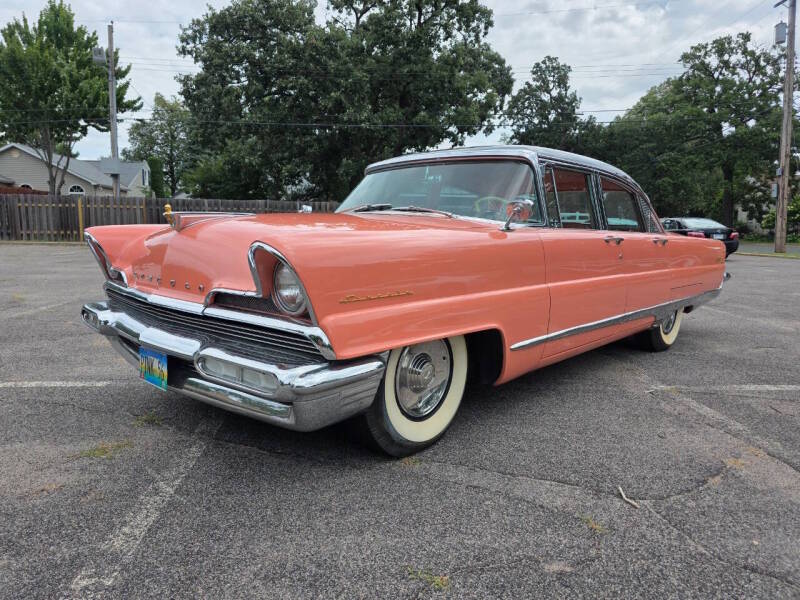 $32,500 · 16% above typical
Expand
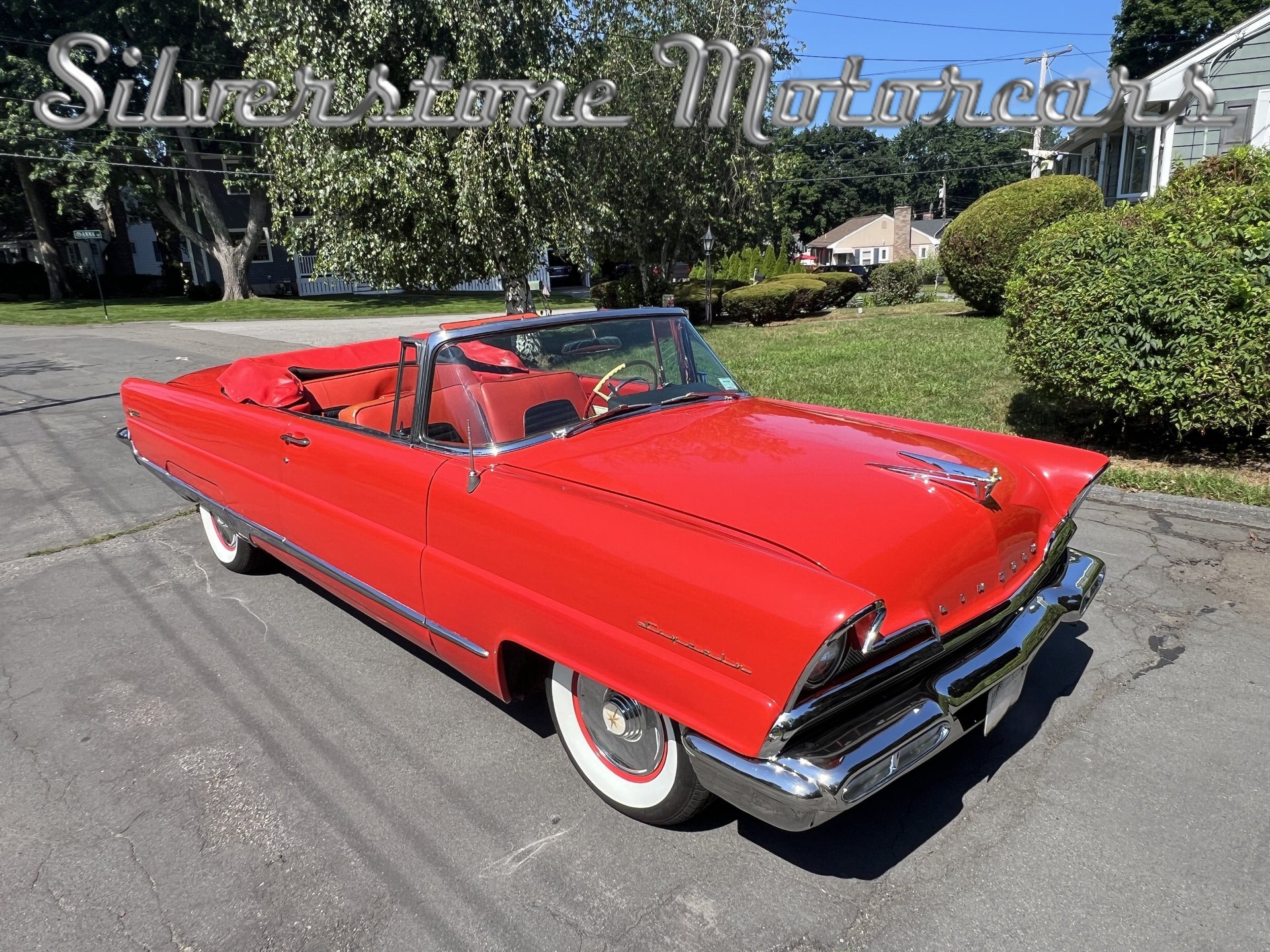 $55,000 · 97% above typical
Expand
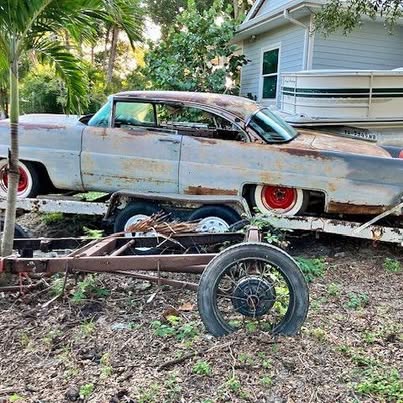 $6,000 · 79% below typical
Expand
What they sell for: Premiere sale prices.