
Mitsubishi Minicab buyer's guide
Mitsubishi Minicab (1990–2001) — Minicab, Mini Cab: what's listed, and what they sell for.
Years: 1990–2001 · Models: Minicab, Mini Cab
Overview and history
The Mitsubishi Minicab is not a small American pickup that shrank in the wash. It is a kei vehicle — designed from the first sketch to fit a Japanese legal class that dictates its maximum length, width, height and engine size, and then taxes and insures it more lightly because it stays inside those limits. Everything you like about a Minicab, and everything that will frustrate you about one in the United States, follows from that single fact. It is tiny because the law says it must be. Its cab sits over its front wheels, its bed is as long as the overall length will allow, and its engineering is an exercise in getting a working truck out of a footprint smaller than that of a modern side-by-side.
Mitsubishi launched the Minicab in 1966 as the commercial companion to the Minica kei car. The name tells you the layout: cab-over, engine under the seats, driven wheels at the back in the basic form, and a flat load bed behind the cab. Over the following decades the Minicab followed the kei regulations as they changed. When the permitted engine grew, its engine grew with it. Most importantly, in 1990 the class moved from 550 cc to 660 cc and allowed a little more length, and Mitsubishi redesigned the truck around the new allowance. The cars that reach the United States in meaningful numbers are the product of that 1990 change.
That timing is not an accident. A Japanese kei truck was never sold new through Mitsubishi dealers in the United States and was never certified to the federal standards of its year. It becomes straightforwardly importable under the federal 25-year rule: once a vehicle is 25 years old, it can be imported without conforming to the standards that applied when it was new — though Environmental Protection Agency rules, customs paperwork, state titling and state road-use law are separate questions, not answered the same way in every state. So the American market is a rolling window: as each model year turns 25 it becomes eligible, importers buy in Japan, and a small number of trucks and vans cross the Pacific. The Minicabs you will actually shop for are therefore not a cross-section of everything Mitsubishi built. They are the survivors of Japanese working life that were clean enough, straight enough and cheap enough in Japan to justify the freight.
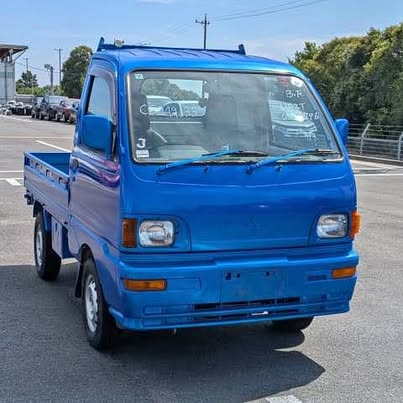
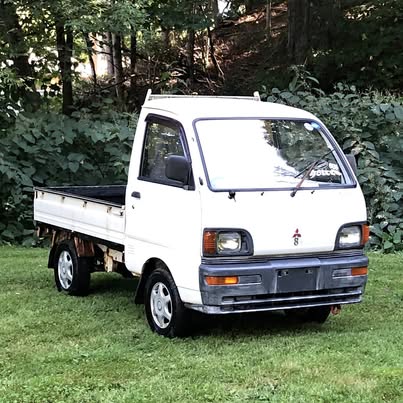
The pool behind this guide shows that window clearly. In this site's pool of 6 Minicabs, all 6 are listed for sale and none is recorded sold, the years run from 1994 to 1998, 5 of the 6 are manual and 1 is automatic, 4 of the 6 are white with 1 green and 1 blue, and all 6 come through Facebook listings — 3 in Georgia, 2 in Pennsylvania and 1 in Connecticut. Treat those numbers for what they are: a sample of 6, useful for the shape of the American market — mid-1990s, manual, white, work specification — and far too small to price the model or prove how common any variant is. What the sample does get right is the era: a 1994 to 1998 Minicab is a U41/U42-generation vehicle from the mature 660 cc period — old enough to be legally here, new enough to have the larger engine, a five-speed in most cases, available four-wheel drive and, in the van, the four-cylinder option. This generation is, for now, the centre of the American market.
Why do people buy them? Not for speed, and not as an investment. A Minicab truck will carry a surprising load for its size, sip fuel by American truck standards, turn in a space a full-size pickup cannot use, and go down a farm track that would stop a larger vehicle. The four-wheel-drive versions are genuinely capable at low speed, precisely because they are light. The vans make a small, tall, flat-floored box that suits campers, trades and market stalls. They are also, frankly, charming: right-hand drive, a three-cylinder beat under the seat, and a driving position that puts your feet close to the very front of the vehicle.
Hold that charm accountable to the compromises. A Minicab cruises at Japanese commercial-vehicle speeds, not at sustained American interstate pace, and asking it to do the latter is the fastest way to wear one out. There is very little structure in front of your legs by modern standards. Parts do not come from the Mitsubishi dealer down the road, because that dealer never sold the vehicle. None of this is a reason not to buy one. All of it is a reason to buy the right one, for a job the vehicle was actually designed to do — and that is what the rest of this guide is for.
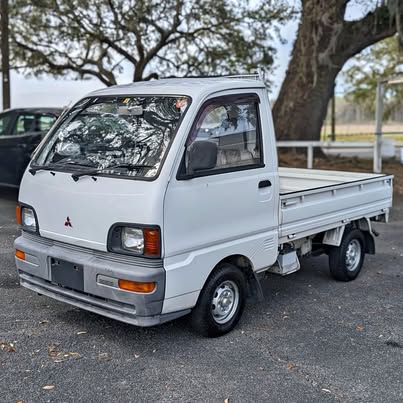
The models
Every Minicab is built to the same kei envelope, so the range is not organised by size the way an American truck range is. It is organised by body, by driven wheels and by engine. Get those three axes straight and any auction sheet, importer listing or American advertisement becomes readable. Get them muddled and you will pay van money for a truck specification, or four-wheel-drive money for a two-wheel-drive chassis, because listing titles are not reliable narrators.
First, the spelling trap in our own listings. This site's roster, from a pool of 6 cars, records the model two ways:
| Model as listed | Count in pool | Years in pool | Engine | Output | Built | Character |
|---|---|---|---|---|---|---|
| Mitsubishi Minicab | 4 of 6 | 1994, 1998 | 660 cc three- or four-cylinder, by specification | See engine section — do not read it off the listing title | Not recorded in the pool | The standard spelling; truck and van forms both appear under it |
| Mitsubishi Mini Cab | 2 of 6 | 1995, 1996 | 660 cc three- or four-cylinder, by specification | See engine section — do not read it off the listing title | Not recorded in the pool | The same vehicle with the name written as two words — a listing habit, not a different model |
That table is deliberately unglamorous. “Mini Cab” as two words is not a separate, rarer or better Minicab — it is the same name transcribed differently, and the 4-to-2 split in a sample of 6 tells you about how sellers type, not about what Mitsubishi built. Never pay a premium based on the spacing of the name. A Minicab's identity lives in its chassis code, body form and specification, not in an advertisement headline.
The truck. This is the core Minicab and the form most American buyers want. The chassis codes on the 660 cc generation are U41T for the two-wheel-drive truck and U42T for the four-wheel-drive truck — T for truck. The cab is a two-seater with the engine beneath it; the bed behind is flat with drop sides on most work specifications, folding down on three sides, which is why these trucks load so well from a forklift and why the bed hardware takes such a beating. Dump versions lift the bed on a hydraulic ram — immensely useful, and a whole extra system to inspect. Panel-sided variants and Japanese domestic special editions exist in the home market; in America you buy what the import window brings, so judge the individual vehicle rather than shopping for a brochure specification that may arrive once a year, if at all.
The van. The van encloses the load space on the same layout: U41V in two-wheel drive and U42V in four-wheel drive, V for van. In work trim it is a small panel van with a flat floor, sliding side doors on most specifications and a tall rear opening — a genuinely useful delivery box, and the base for many small camper conversions. Read listings carefully here, because sellers use “van,” “Bravo” and “Minicab” almost interchangeably, and a rear three-quarter photograph tells you more than the title does. Count the windows, look for rear seats, and check whether the floor is a commercial flat floor or a trimmed passenger floor.
The Bravo. Bravo is the passenger-leaning, better-equipped van line — the Minicab van dressed for people rather than parcels. Bravos typically carry more trim, better seats and, crucially, the four-cylinder 4A30 in many specifications where a work van makes do with the three-cylinder. Some home-market Bravos were offered with a turbocharged engine and an automatic, and those feel least strained on an American road. They are also where specification error is easiest, because “Bravo” in a listing title is sometimes applied to any tidy van. The chassis plate and the engine under the seat settle it. If you are paying Bravo money, insist on seeing both.
Two-wheel drive or four-wheel drive. This decision most changes what the vehicle can do, and it is coded in that second digit: U41 is rear-wheel drive, U42 drives all four wheels. Most four-wheel-drive Minicabs of this era are part-time systems for loose surfaces, with a transfer selection and, on many trucks, a low range or extra-low first suited to crawling with a load. They are not full-time all-wheel-drive cars, and driving them locked up on dry pavement winds up the transmission. For a farm, hunt camp or property vehicle, the U42 is usually worth its premium; for a market van living on pavement, the simpler U41 is less to maintain and no worse at its job. Our pool of 6 does not break the sample down by driven wheels, so check each car's chassis code yourself, using the inspection section.
The generations around the American window. Before the U41/U42 came the 550 cc U11/U12 generation of the 1980s; those cars are eligible by age and do appear, and they are slower and feel it, especially with a load or an automatic. After the U41/U42 came the U61/U62 from 1999, on the same basic formula, entering the American window as it passes 25 years. Later still, Mitsubishi's own kei commercial line gave way in the 2010s to badge-engineered vehicles built by Suzuki — the name continued, but on another maker's engineering — and there was also a battery-electric Minicab MiEV van. Those later vehicles are context, not this guide's subject: their parts and inspection needs differ enough that you should not buy one on advice written for a U41/U42.
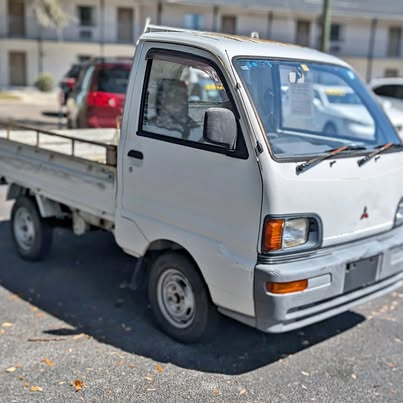
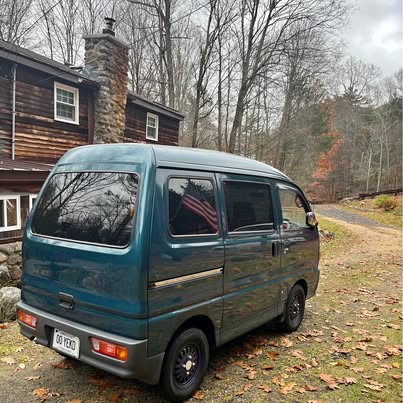
Engines and gearboxes
There are two engine families under a 1990s Minicab's seats, and telling them apart takes ten seconds — which matters, because American listings routinely omit the engine, misstate it, or describe the vehicle from a generic kei-truck template written for a different make. A Honda Acty uses Honda engines; a Suzuki Carry uses Suzuki engines. None of that knowledge transfers. On a Minicab, lift the seat, count the cylinders and read the chassis plate. That is the whole method, and it never lies.
The three-cylinder: 3G83
The standard engine in the U41/U42 Minicab is the 3G83, a 657 cc overhead-cam three-cylinder: the workhorse, fitted to the ordinary trucks and commercial vans, tuned for low-speed usefulness and driving through gearing that lets a very small engine move a loaded truck at Japanese working speeds. Three cylinders means an unmistakable idle — a busy beat that settles as it warms — and a power delivery that is all about keeping momentum and using the gearbox. The honest way to think about a 3G83 is not in horsepower at all: it will hold a working pace on ordinary roads with a sensible load, it will feel strained at sustained high American highway speed, and it will tell you so with noise, heat and fuel consumption long before it fails. Judge it on condition, not on specification.
Condition, on a 3G83, has a short list of decisive tells. It should start from cold without extended cranking, settle to a steady idle without hunting, and pull cleanly without a misfire that comes and goes with load — that pattern points first to ignition components and perished vacuum and breather hoses, consumables on a thirty-year-old engine. Blue smoke at start-up that clears points to valve stem seals. Blue smoke that stays under load is ring and bore wear, and on an engine this small there is no “drive it and see” — a compression test, cylinder by cylinder, with the figures written down, settles it. White vapour that does not clear, a cooling system that pressurises quickly from cold, or mayonnaise under the oil filler cap points to head-gasket failure, and the small Mitsubishi three is not tolerant of being run hot. Oil leaks are endemic and mostly honest — cam cover, crank seals, O-rings — and a dry 3G83 is more suspicious than a slightly damp one, because dry usually means it has just been washed for sale.
The single most important service fact here is the timing belt. Belts age by time as well as distance, and a Japanese sticker showing a change in a past decade is not evidence the belt is young now. If you cannot document a recent belt — with a date you believe, in years you can count — price a change into the purchase and do it immediately after. An unknown-age belt is a debt the car owes you from day one, and collecting on it is far cheaper than an engine.
Fuel and ignition vary by year and specification across the 1990s, and American listing copy rarely captures them accurately. Do not buy a part or a service kit from a listing description: photograph what is actually on the engine, match it against the chassis number with a parts supplier, and only then order. On a grey import, that discipline is the difference between a weekend job and a month of wrong parts crossing the Pacific twice.
The four-cylinder: 4A30
The second family is the 4A30, a 659 cc four-cylinder, fitted most often where the specification rises — above all in the Bravo van, where smoothness and a little more urge justify the cost. Four smaller cylinders in the same total capacity give a different character: smoother at idle, happier to rev, less thrum through the seat, and generally the better companion if your Minicab will carry people, run an automatic, or live on pavement rather than on a farm. Turbocharged versions were offered in the home market on some specifications, and they are the strongest-performing Minicabs of the era, with torque arriving in a way that makes an automatic Bravo feel like a small car rather than a working truck.
That extra sophistication is a real inspection burden. A turbocharged 4A30 adds a turbo, its oil feed and return, and a lifetime of heat in a very small engine bay. Oil history matters twice as much: a turbo fed old oil, or shut down hot without a moment's idle, wears its bearings — the tells are a whistle turned to a whine, smoke under boost, and shaft play a specialist can feel with the intake hose off. Naturally aspirated cars avoid most of that but share the need for documented timing-belt attention: an unknown-age belt is a purchase-price deduction and an immediate job. A four-cylinder that rattles, hunts or smokes is not “character” — it is a bill, on an engine for which American workshops will need parts ordered in.
How do you tell the families apart? Lift the seat base — the engine lives under the front seats, and the access hatch is itself a check: seized, missing its insulation or surrounded by heat-damaged trim, it is telling you about maintenance. Count the plug leads and look at the cam cover; three and four cylinders are obvious once seen. Then confirm against the chassis plate and engine number. If a seller describes a three-cylinder truck as a Bravo, reconcile the paperwork before you discuss price — usually sloppy listing rather than fraud, but sloppy listings are exactly how the wrong vehicle gets bought.
Gearboxes, transfer and driven wheels
In our pool of 6 cars, 5 are manual and 1 is automatic: the manual is the default Minicab gearbox, and the automatic is the exception you choose deliberately, usually in a van or Bravo.
The manual is most often a five-speed in this generation, with ratios chosen for a small engine: low early gears that get a loaded truck moving without slipping the clutch to death, and a top gear that is cruising gearing by Japanese commercial standards, not a tall American overdrive. Engine speed at an American highway pace therefore feels frantic — the vehicle is geared as designed, and the answer is to drive it at the pace it was geared for. Judge the box on synchromesh into second and third, on whether it jumps out of gear under load, and on clutch behaviour: bite point, judder from rest, and slip in a high gear on a hill. A clutch is not an exotic job, but it is labour in a tight package, so a slipping clutch is a priced deduction, not a shrug. Gear oil is rarely documented on imported cars; budget a change on purchase.
Four-wheel-drive manuals add the transfer selection. Engage and disengage it on a loose surface, confirm the lever or switch actually changes the state — a dashboard lamp is not proof — and listen for clunks and whines that appear only in four-wheel drive. Many work trucks have an extra-low crawler capability in effect, whether by a low range or a very low first intended for loaded starts; test pulling away laden if the seller allows, because that, not top speed, is what a U42T is for. A truck that cannot engage four-wheel drive cleanly is a two-wheel-drive truck at a four-wheel-drive price until the fault is found.
The automatic — the 1 car in 6 in our pool — is typically a three-speed in this class and era. In town and in stop-start delivery work it is the easiest Minicab to live with, and paired with the 4A30 it makes the most car-like Minicab of all. On a hill, with a load, or at sustained higher speed, it gives the small engine fewer ratios to work with and asks the torque converter to make up the difference, which makes heat. An automatic therefore lives or dies by its fluid: check colour and smell, insist on a drive long enough to get the box properly hot, and judge every change hot as well as cold — flaring and delayed engagement are rebuild conversations on a vehicle with no American transmission-shop familiarity. Budget a fluid service on purchase. If your Minicab must run long distances at speed, the manual is the safer tool; if it must do a hundred short stops a day, the automatic earns its place.
Rear-wheel drive on the U41 is simple and robust. Listen for a rear whine that changes with throttle, check for leaks at the pinion and half-shaft seals, and remember that a truck that has worked in Japan may have carried its rated load for decades. The hardware is honest; the question is always how much of it is left.
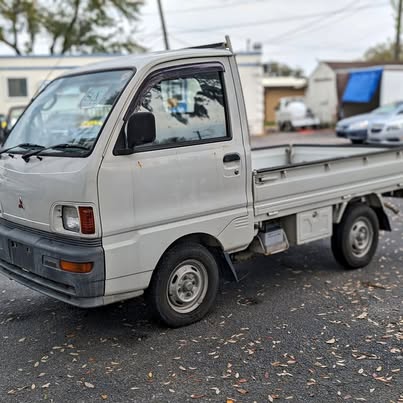
Problem areas
A Minicab fails differently from an American classic. The purchase price is low and the parts are small, so buyers assume the risks are small too. They are not. They concentrate in four places: rust in a cab and frame never expected to see American road salt, a cooling system with very little margin run hard in American heat at American speeds, rubber and belts aged out in Japanese years, and the legal and titling layer, which can strand a mechanically perfect truck as an off-road-only vehicle in your state. Work through this section in that order and you will catch almost everything that turns a cheap Minicab into an expensive one.
A note on evidence: this site's pool is 6 cars, all for sale, with no photo-note aggregate supplied for fault incidence — so this guide makes no “X of Y cars” claim for this model. The areas below are the known inspection ground, written so you can generate the evidence yourself, car by car.
Rust: the map
Rust on a Minicab follows water, mud and salt, and it attacks a vehicle structurally less forgiving than it looks: its frame rails and cab mounts carry a working load, and its bed holds water against its own seams. Japanese domestic life is not automatically kind, either — a truck from a snowy prefecture, a coastal town or a farm can arrive with more corrosion than a higher-mileage truck from a dry inland city. “Low kilometres from Japan” is not a rust verdict. Your hands, a torch and a magnet are.
Cab floor and the front structure. Start where your feet go. The cab floor, the steps and the structure around the front wheel arches take everything the front tyres throw up, and the cab-over layout means the wheel arch is effectively inside the cab's front corners. Lift the mats — do not accept a viewing where they cannot be lifted — and prod the floor at the corners, around the seat mounts and along the seams. Surface scale is treatable. Perforation at a seat mount, a seat-belt anchorage or a cab mount is structural, and welding a cab floor around pedals, linkages and wiring is a specialist-shaped job even when the panels are small: budget $800–2,000 for proper localised floor and arch repairs with paint, and walk away from a cab that needs floor, arches and mounts together unless the price is a project price and you weld. Check door bottoms the same way, fingertip along the lower edge, drain slots clear — replacement doors come from Japan, slowly.
Sills, cab mounts and frame rails. Get under the vehicle, on a lift if the seller will allow it, and treat this as the decisive half hour. The frame rails are modest sections — there is not a lot of spare metal — so scale that would be cosmetic on an American truck frame matters here. Prod the rails at the cab mounts, spring hangers and any crossmember that traps mud. Look for repairs, and for the opposite: a truck blown over with fresh underseal the week before export — uniform black coating over seams, mounts and fasteners on an otherwise worn underside — is a cover-up until the seller proves otherwise. Perished cab-mount rubbers are a parts-order job; the rotted mount underneath them is a fabrication job. Price them differently.
The bed. On a truck, the bed floor, its crossmembers and the drop-side hinges and latches have lived under gravel, soil, machinery and standing water. Expect dents and surface rust; reject a floor that flexes under your weight between crossmembers, opened seams, and crossmembers perforated at their ends. Drop sides that no longer latch are not trivia — they are the truck's core function, and freeing tired bed hardware is hours of small labour. On a dump truck, add the subframe and ram mounts: a dumper's frame cracks at welds and rots where the two frames trap mud between them. On a van, the equivalent ground is the rear floor, the wheel boxes and the sliding-door tracks, where water sits in the channels. A van floor hidden under a camper conversion you cannot lift is unverified, not sound — price that uncertainty.
The smaller traps. The battery tray, the firewall around it, the headlamp surrounds, the windshield surround — a leaking screen seal on a cab-over puts water straight into the front structure and the electrics behind the dash — and the exhaust, a thin, short system that rots from the inside on short-trip work. None alone kills a Minicab. Together they tell you where the vehicle lived in Japan and how it was kept, and where every replacement panel travels from Japan, “small rust” adds up in freight as fast as in welding.
Cooling, timing belt and the heat problem
If rust is what ends a Minicab's body, heat is what ends its engine — and American use is the heat risk. A kei truck is geared and cooled for Japanese working speeds. Run it for an hour at the fastest pace it will sustain on an American highway in summer, engine under the seat at high revolutions throughout, and you are using it at the edge of its design, continuously. The cooling system has to be perfect for that, and on an imported thirty-year-old truck it rarely is.
Learn the system on any car you view. The radiator is small, the hoses are old, the thermostat is a cheap part previous owners defer, and the electric fan and its switch are single points of failure. A radiator whose core is furred or whose tanks weep has no reserve. Coolant that is rusty water, or plain water with no antifreeze colour, tells you the system has been topped up rather than maintained — and plain water means internal corrosion and a water pump run without proper coolant. Do not let a needle sitting “about normal” on a ten-minute drive reassure you. The inspection section's hot idle and long-drive tests exist to give the cooling system time to confess.
The head gasket is the casualty when it confesses too late, on both engine families: a marginal radiator or sticking thermostat, one long hot run, a gasket that pressurises the system or mixes oil and coolant, and an engine-out job on a vehicle whose whole value may be a few thousand dollars. Prevention is absurdly cheap by comparison — a radiator service, thermostat, hoses, fan check and fresh coolant is a few hundred dollars in parts even with import sourcing, plus labour — and it is the first money to spend on any Minicab you buy. Do the timing belt at the same time if its age is undocumented, with the tensioner inspected and the water pump judged while you are in there, because the labour overlaps and the failure modes compound.
Air conditioning, where fitted, adds a condenser in front of that small radiator and a compressor load on that small engine. A car whose air conditioning “just needs gas” is a car with a leak or a compressor fault at import-part prices. Test both systems together, hot, at idle, as the inspection section directs.
Four-wheel drive, dump gear and working hardware
The systems that make a Minicab more than a runabout are the ones American sellers demonstrate least, because a Marketplace driveway is not a muddy field. Insist on testing them anyway, on suitable ground, because repairs mean parts from Japan and diagnosis by hand.
On a U42, the transfer case, front differential, front driveshaft and engagement mechanism all have to work together, and any one of them can have been dead for years in Japan without the truck's road life noticing — a truck used on pavement may never have engaged four-wheel drive in a decade, and seized linkages present exactly like broken ones until someone frees them. Test engagement at walking pace on gravel or grass, test disengagement, and get underneath afterwards for fresh leaks. Front hub arrangements vary; whatever is fitted must be present, matched side to side and operable — a missing manual hub is a small part with a long freight time attached.
Dump beds add hydraulics: a pump, a ram, hoses and a control. Run the bed up and down through its full travel, loaded lightly if the seller allows, and watch for a ram that creeps down under load, hoses that weep at crimps, a pump that strains, and a safety prop that is present and fits — never work under a raised dump bed on the ram alone, on a viewing or ever. Check the rear hinge pins for oval wear; a bed that lifts crooked is telling you about its pivots. If a truck carries lift equipment you cannot identify, photograph it, identify it before purchase, and assume its seals and hoses are aged out until shown otherwise.
Brakes, steering and suspension are conventional, so their faults are the plainly visible faults of age and load: wheel cylinders and calipers that seize after standing, perished hoses, steering play, worn joints, springs sagged under decades of rated loads, dampers that are decorative. All of it is testable on the drive in the inspection section. The trap is that a charming, tiny truck persuades buyers to forgive faults they would price ruthlessly on a domestic pickup. Do not forgive them. Price them — a full brake hydraulic refresh with imported parts and labour can run $600–1,500, and a front-end rebuild is a similar order of spend once freight is counted.
Electrics, interior and the right-hand-drive reality
Japanese electrics of the 1990s are simple, and their failures are the failures of connectors, earths and age. Dim lamps, a slow starter on a small battery that has sat on a dock for two months, heater fans with one working speed — budget a battery on almost any fresh import, clean the earths, and be suspicious only of wiring that has been modified: camper conversions and alarm or audio installations cut into looms are where Minicab gremlins are born. A van converted to a camper deserves a full audit of the conversion itself — leisure-battery charging and inverters are owner-added systems with no factory standard to inspect against.
The interior is work-grade and wears like it. Seat vinyl splits at the driver's entry bolster — you climb up and slide in over the same seam every time — foam collapses, and van headlinings and door cards mark and sag. Almost none of it is available off an American shelf, so a tidy original interior is worth real money in saved freight. Heater output matters: a small engine makes little spare heat, the cab is a thin steel box, and a Minicab with a weak heater in a Pennsylvania winter — 2 of our pool of 6 cars are in Pennsylvania, and 1 in Connecticut — is a vehicle you will not use for half the year. Test the heater hot, whatever the season.
Right-hand drive is the last reality, and it is a practical one, not a novelty. You sit on the right, the gear lever falls to your left hand, and your road position at junctions and when overtaking must be relearned consciously for the first weeks. Mirrors matter enormously because your sight lines are different; small, loose or missing mirrors are a safety defect, not a cosmetic project. Headlamp aim and beam pattern are set for driving on the left in Japan, and lamps that dazzle oncoming traffic are a compliance problem in some jurisdictions — check whether they have been addressed since import. All of it should be priced and planned, not discovered.
How to inspect one
Allow a full hour in person, and do the paperwork and photographs before you travel if the car is being sold sight unseen through an importer — which, for Minicabs, is half the market. Bring a torch, a magnet wrapped in cloth, a compression tester if the seller agrees, and a phone to photograph the chassis plate, the engine and every fault. The order is deliberate: identity and legality first, because a Minicab you cannot title is a parts vehicle whatever its condition; structure second, because rust decides whether the rest matters; systems after that, in the order the problem-areas section mapped them.
For a sight-unseen importer purchase, translate every step into a photograph or document demand before money moves: the chassis plate, the engine with the seat lifted, the underside on a lift, the bed raised on a dumper, a video of four-wheel drive engaging on loose ground, a cold-start video that begins with a hand on the engine to prove it is cold, and the export paperwork. A reputable importer does this routinely. An importer who will not is asking you to carry a risk they are better placed to carry, and the discount for accepting it should be very large indeed.
- Paperwork and title first. Establish what the car legally is in your state. Ask for the title or the import paperwork: customs entry, the Environmental Protection Agency and Department of Transportation declarations for a 25-year import, the Japanese export certificate and its translation, and the bill of sale chain. Read the chassis number on the paperwork, then find the same number on the vehicle in step 2 — a mismatch ends the viewing. Then ask the question no seller can answer for you: will your state title this vehicle for full road use, with restrictions, or refuse it? States have treated imported kei vehicles differently, and the position has changed over time. Check with your state motor vehicle authority, in writing where you can, before you pay. A Minicab bought for private land may need none of this; a road vehicle needs all of it.
- Identity on the vehicle. Find the chassis plate and the stamped number, and decode the code: U41 or U42, T for truck or V for van. That settles driven wheels and body form more reliably than any badge or listing. Photograph it. Check the year claimed against the paperwork, not the seller's memory — the 25-year rule makes the year a legal fact, and a car described a year younger than it is creates paperwork problems that follow the title.
- Cold start. Insist the engine is stone cold, and touch it to prove it. A 3G83 should fire promptly and settle to its busy idle; a 4A30 should be smoother about it. Watch the exhaust for thirty seconds — a puff of blue that clears is stem seals, continuous blue is wear, white that thickens is coolant until proven otherwise — and listen for timing-area rattle and exhaust blows. A warm engine on arrival is a withheld test; note it and discount accordingly.
- Under the seats: the engine. Lift both seat bases and look properly, with the torch. Count the cylinders and identify the family — 3G83 three or 4A30 four — against what you were told. Read the oil: level, colour, smell of fuel, mayonnaise on the filler cap. Read the coolant at the radiator cap, cold only: rusty or plain water is a maintenance verdict, as the cooling section explains. Photograph the timing-belt service sticker and any Japanese labels, and treat an undocumented belt as an immediate job in your offer. Squeeze the hoses — crunchy, swollen or rock-hard are all failures at this age — and look for heat damage around the hatch, fresh oil leaks, and perished engine mounts, which you feel as a shudder through the seat at idle.
- Underneath: the rust map. On a lift if at all possible. Work the map from the problem-areas section in order: cab floor corners and seat and belt mounts, wheel arches, sills and cab mounts, frame rails at the hangers and crossmembers, bed floor and crossmembers or van rear floor, and the small traps. Prod where the seller permits; run the magnet over repaired-looking areas. Fresh uniform underseal over everything counts against the car until explained. Perforation at mounts, rails or belt anchorages is structural — a project price or a walk-away, not a haggling point.
- The bed or the box. On a truck, work every drop side: hinges, latches, straightness. Climb in and feel the floor between crossmembers for flex. On a dumper, run the bed up and down fully, watch for creep and weeping hoses, find the safety prop and fit it. On a van, slide both doors through their full travel, lift every floor covering the seller will allow, and check the door tracks and rear floor for water damage. A load space that does not work is a Minicab that does not work — this is the vehicle's purpose.
- Four-wheel drive, if fitted. On gravel, grass or dirt — never locked up on dry pavement — engage and disengage twice. Engagement should be positive, and returning to two-wheel drive should release cleanly. Look underneath afterwards for new leaks. If the seller cannot provide a loose surface, treat four-wheel drive as untested and price the vehicle as two-wheel drive until you can.
- The test drive. Twenty minutes minimum, on the roads you will actually use. Pull away from rest, work up through every gear, test second- and third-gear synchromesh, feel the clutch bite and check for slip on a hill in a high gear. An automatic must be driven until fully hot and then judged again on every change and on engagement of drive and reverse. Brake firmly from moderate speed: straight, no judder, a pedal that stays firm. Steering should be free of excessive play and knocks. Note the engine speed and noise at the fastest pace you intend to cruise at — that, lived with for an hour, is the Minicab ownership experience, and if it is intolerable on the test drive it will not improve.
- Heat, cooling and the long idle. At the end of the drive, let it idle for ten minutes with the heater on, then the air conditioning too if fitted. Watch the temperature and the fan cutting in and out, smell for coolant, look for fresh drips. A Minicab that creeps up in temperature at idle or pressurises its hoses hard has failed the test the cooling section warned about — a priced repair before any road use, not a quirk.
- Electrics and the right-hand-drive checks. Work everything: every lamp, indicators, wipers, heater fan on every speed, horn, and every accessory the specification claims. Check whether the headlamps have been addressed for driving on the right, and judge the mirrors honestly from the driver's seat. Test the heater's actual output on a warm engine. A dead blower, dazzling uncorrected lamps or useless mirrors are bills to price, in that order.
- Stance, tyres and the small numbers. Stand back: a Minicab should sit level side to side, with any rake explained by load or spring condition. Kei tyre sizes are ones American shops may need to order; ancient or cracked tyres are a full set in the budget — check the date codes, not just the tread, and check the spare and jack exist. Uneven front wear points back to step 8.
- The importer's file, last and again. Re-read the paperwork with the car in front of you: chassis number, year and engine all match, and the Japanese auction grade and sheet — if supplied — are consistent with the condition you found. Auction sheets are evidence, not guarantees, and a truck far worse than its grade is a dispute to raise before payment, not after. If the lift inspection in step 5 was not possible, pay for one before money changes hands — on a vehicle with no American parts shelf, it is still the best money in the purchase.
Values
The figures that matter for this series are computed from this site's own listings and recorded sales, and they sit below this guide — the listed-now summary and the market block are refreshed at every rebuild, so use them rather than any number quoted elsewhere. What follows is how to read them, and for the Minicab that matters more than usual, because the sample behind this guide is 6 cars, all for sale, with no recorded sales at all. A median built on six asking prices is a weather report for one street. Treat it as orientation, never as valuation.
The Minicab market in America is really an import-cost market wearing a condition market's clothes. Every car carries a floor built from its Japanese purchase price, export costs, freight, customs and the importer's margin — which is why two trucks of the same year can be priced far apart for reasons that have nothing to do with the trucks. Above that floor, condition and specification do the pricing. Four-wheel drive commands a premium because American buyers mostly want these as property and farm vehicles. A dump bed commands a premium because it is genuinely useful and dumpers are a minority of imports. The Bravo and the four-cylinder cars command a premium from the smaller pool of buyers who want a van to drive rather than a truck to work. A manual is the default and prices as the default — in our pool, 5 of 6 cars — while the automatic, 1 of 6, is worth more to the specific buyer who wants it and less to everyone else, so automatic cars can sit until that buyer appears.
Read asking prices against achieved prices with care. The American kei market is thin, seasonal and regional. Cars at the bottom of the band are usually priced on one of the four risks in the problem-areas section — rust, heat damage, untested systems, or a title position the seller describes vaguely. That last discount is the dangerous one: a restricted title in your state converts a road vehicle into yard equipment, and its value should be set accordingly before you bid.
The project-versus-driver gap is wide and honest. A sorted, titled, four-wheel-drive truck with a documented belt and cooling refresh, working bed hardware and fresh tyres is a finished purchase — its previous owner has spent the import-friction money for you. A cheap fresh import with an undocumented belt, tired hoses, untested four-wheel drive and aged-out tyres needs a four-figure recommissioning spend even when nothing is actually broken, with freight delays attached. Compare like with like: add the recommissioning list from the inspection section to every cheap car before comparing it with a dearer sorted one. There is no such thing as a cheap Minicab that stays cheap if you skip that arithmetic.
Parts and ownership
Own a Minicab in America and you join a supply chain, not a dealer network. Mitsubishi built these vehicles in large numbers for a home market that still runs them; the Japanese parts system, breaker networks, specialist exporters and American kei importers who stock consumables all exist and work. What does not exist is same-day availability from a local counter. Every ownership decision — what to stock, what to order in advance, what to combine into one job — follows from lead time, not from price.
Easy, with planning: service consumables once you have identified your exact engine and chassis — filters, spark plugs, accessory belts, brake pads and shoes for common specifications, and the fluids themselves. Kei specialists and Japanese exporters supply these routinely; your job is to order by chassis number, keep one service kit ahead of the vehicle, and never assume a part described for a “660 cc Mitsubishi” fits without that check, because the 3G83 and 4A30 share a badge and a capacity and very little else that matters to a parts order.
Order in advance, by chassis number: timing-belt kit and tensioner, water pump, thermostat, radiator and heater hoses, fan switches, clutch kit, brake cylinders and hoses, steering and suspension wear parts, wheel bearings, senders and switches. None of this is expensive per part; all of it is measured in days to weeks of freight. The habit that makes a Minicab painless is to keep a shelf: the next service kit, a set of hoses, a thermostat and a fan switch. The alternative — a disabled truck waiting three weeks for a small part — teaches it once.
Harder and dearer: body panels and cab pressings, glass, doors and bed panels, dump hydraulics, transfer-case and front-differential internals, automatic gearbox rebuild parts, air-conditioning components, and trim — seats, door cards and Bravo-specific pieces. Breakers in Japan are the source, and freight on a panel can exceed the panel. This is the economic reason the rust section is so uncompromising: structure is the part of a Minicab you cannot economically replace.
Running costs and living with it. Fuel consumption is light in gentle use and rises sharply at the vehicle's maximum pace — a small engine working flat out is not an economical engine. Servicing is simple work any competent independent workshop can do once parts and information are supplied, and supplying them is your job as the owner of a grey import: bring the parts, and do not expect the shop's database to know a U42T. Insurance and registration follow your state's treatment of the vehicle, and both are conversations to have before purchase. The budget line that catches new owners is the first year of catching up — belt, cooling refresh, fluids everywhere including transfer and differentials, brake inspection, tyres if aged — realistically a four-figure sum even on a good car once labour and freight are counted. Budget it, do it in one planned campaign, and the Minicab that follows is cheap and durable to run. Skip it and you will meet each item separately, at the roadside.
Which one to buy
- The all-rounder: U42T four-wheel-drive truck, manual, 3G83. The centre of the American market for a reason: a five-speed manual, part-time four-wheel drive, the simpler three-cylinder, and a drop-side bed that does every job a small property asks. If you want one Minicab to keep for a decade, this is it.
- The value buy: U41T two-wheel-drive truck, manual. The same truck without the transfer case. It is worth meaningfully less than the U42 because the market wants four-wheel drive — which makes it the bargain if your use honestly does not. A two-wheel-drive truck bought for mud is no bargain at any price.
- The worker: a dump-bed truck, four-wheel drive where you can get it. The dumper earns its premium every time it tips a load exactly where you want it. Pay it only for hydraulics you have watched work through a full cycle, per step 6 — a dead dumper is a heavy standard truck with extra failure modes.
- The van for people: Bravo, 4A30, automatic if your use is urban. The smoothest, most car-like Minicab, and the right base for a small camper or a market and events vehicle. Verify the Bravo specification on the chassis plate and the engine under the seat before paying Bravo money, and test the air conditioning and the heater as the systems they are, not as listing claims.
- The van for work: U41V or U42V panel van, manual. A tall, flat-floored, economical box for deliveries, trades and conversions you plan to do yourself. Judge it on its floor, its door tracks and its rear doors — the load space is the product.
- The later car, when the window reaches it: U61/U62. As the 1999-onwards generation passes 25 years, it becomes the fresher route into the same formula. Apply this guide's discipline unchanged, but verify engine and specification afresh.
And the rule that overrides all of the above: buy the title first, the body second and the specification third — a Minicab you can register in your state, with a sound cab and frame, beats a perfect specification you cannot title or a cheap shell you cannot save. Engines, belts, brakes and heaters are all fixable at prices you can plan for. A title your state will not issue, and a cab and frame the rust has taken, are the two things money cannot reliably put right.
Listed now
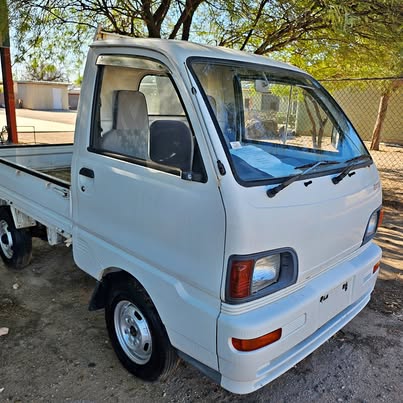
On Classic Listings today: 6 cars are listed here; 2 for sale and 4 marked sold; average asking price $7,648; asking range $7,495 to $7,800; sold cars average $6,242.
See the 6 Minicab cars currently listed.
The market — recorded sales
Recorded-sale figures: 4 recorded sales · median $6,783 · range $4,000 to $7,400 (Oct 2024 – Oct 2026)
Based on 4 recorded sales — too few for a benchmark value.
| Date | Car | Sale price | Source |
|---|---|---|---|
| Oct 7, 2026 | 1995 Minicab | $4,000 | Cars & Bids |
| May 21, 2026 | 1995 Minicab | $6,700 | Cars & Bids |
| Mar 23, 2026 | 1996 Minicab | $7,400 | Cars & Bids |
| Jan 8, 2026 | 1997 Minicab | $6,866 | Cars & Bids |
Dates are the sale date where the source states one; otherwise the date the sale was recorded here.
For sale now
 $7,800
Expand
$7,495