
Nissan Altima buyer's guide
Nissan Altima (1993–2001) — Altima: what's listed, and what they sell for.
Years: 1993–2001 · Models: Altima
Overview and history
The Nissan Altima is the sensible mid-size sedan that quietly outlived almost everything it was launched against — and that is exactly why buying one well takes more care than the badge suggests. An Altima was never bought as a dream car. It was bought as transport, run as transport, and maintained, in far too many cases, only when something stopped working. The difference between a good Altima and a bad one is therefore rarely the model year on the title. It is whether the previous owners changed the oil, serviced the transmission, and fixed small faults while they were still small. This guide teaches you to tell those two cars apart.
The Altima arrived for 1993 as the replacement for the Nissan Stanza — early cars even carried Stanza Altima badging before the Stanza part was dropped. Built at Smyrna, Tennessee, front-wheel drive, it sat between the compact Sentra and the larger Maxima, aimed squarely at Accord and Camry buyers who wanted Japanese reliability without the Honda or Toyota premium. For its first decade it was the smaller, nimbler alternative in that fight; from 2002 onward it became one of the biggest cars in the class, and the fight changed character completely.
Six generations carry the name. The first, coded U13, ran from 1993 to 1997 with a single 2.4-litre four. The second, L30, ran from 1998 to 2001 on the same mechanical recipe, restyled. The third, L31, ran from 2002 to 2006 and was the transformation: a much larger car, a new 2.5-litre four and, crucially, the option of Nissan's 3.5-litre V6, which made the Altima one of the quickest mainstream sedans in America. The fourth, L32, ran from 2007 to 2012, added a coupe and a short-lived hybrid, and made the continuously variable transmission — the CVT — the default gearbox, a decision that shapes the used market to this day. The fifth, L33, ran from 2013 to 2018 as a CVT-only sedan chasing fuel economy. The sixth, L34, arrived for 2019 with optional all-wheel drive and a variable-compression turbo at the top of the range.
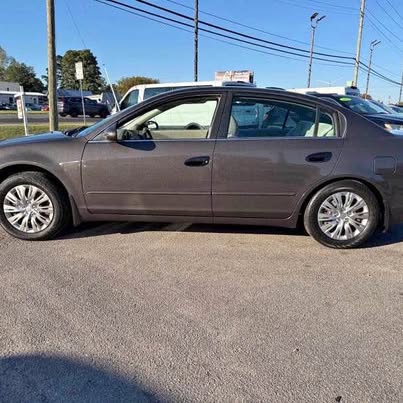
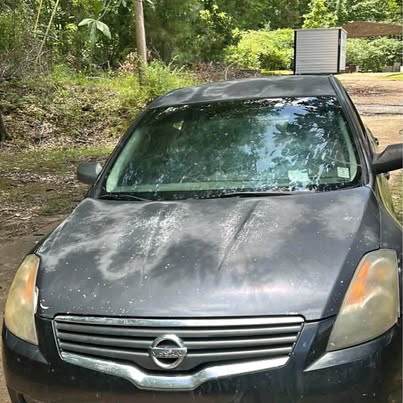
The cars actually listed on Classic Listings tell a narrower, more useful story. We currently track 21 Altimas, all sourced from Facebook Marketplace private sellers: third-generation cars of the early and middle 2000s dominate, with first-generation survivors from the middle 1990s at the other end and a single second-generation car in between. The listings run from Tennessee, Florida, Arkansas, Missouri and Louisiana through to Virginia — a largely southern pool, which matters, because a Tennessee or Florida car has faced a very different rust regime from one that spent twenty winters in the salt belt. Every car in the pool is an automatic; colours run to grey, gold, tan, white and black, with single cars in brown, red and silver. Weight your reading accordingly: the third generation gets the deepest coverage because that is the car you will actually be offered, and the later CVT generations are covered in depth because their transmission story is the most important knowledge in this market — a cheap L31 and a cheap L32 are not two versions of the same risk.
That is why this guide is long. The Altima sits at the exact price point where buyers stop paying for inspections and start buying on hope — and its faults are well documented, highly patterned, and mostly detectable with a cold start, a long test drive, a torch, and the discipline to check the oil level before you admire the paint. A good one will run for years on ordinary maintenance; a bad one will consume its own purchase price in a transmission, a timing-chain job, or an engine drinking oil through scored bores, usually within the first year.
The models
Every Altima is a front-wheel-drive sedan except where this section says otherwise: a coupe joined for the fourth generation, and all-wheel drive arrived, on four-cylinder cars only, with the sixth. Trim names are consistent enough to learn once. XE and GXE are the volume trims of the early cars, SE the sportier trim, GLE the early luxury trim. From the third generation the badging becomes engine-first: 2.5, 2.5 S, 2.5 SL, 3.5 SE and 3.5 SL tell you engine and equipment in one glance, and the short-lived SE-R is the performance flagship. Later cars settle into S, SR, SV, SL and Platinum. The table below is the buying map.
| Model | Years | Engine | Output | Built | Character |
|---|---|---|---|---|---|
| Altima XE, GXE, SE, GLE (U13) | 1993–1997 | 2.4 four (KA24DE) | 150 hp | Volume production, Smyrna | The simple original; conventional automatic, minimal electronics |
| Altima XE, GXE, SE, GLE (L30) | 1998–2001 | 2.4 four (KA24DE) | 150–155 hp | Volume production, Smyrna | The refined repeat; the quiet value buy of the early cars |
| Altima 2.5, 2.5 S, 2.5 SL (L31) | 2002–2006 | 2.5 four (QR25DE) | 165–175 hp | Volume production, Smyrna | The big seller; pre-cat and oil-consumption checks are mandatory |
| Altima 3.5 SE, 3.5 SL (L31) | 2002–2006 | 3.5 V6 (VQ35DE) | 240–250 hp | Volume production, Smyrna | Genuinely quick; the enthusiast's third-generation car |
| Altima SE-R (L31) | 2005–2006 | 3.5 V6 (VQ35DE) | 260 hp | Low-volume flagship | Six-speed manual available; the collectible Altima, such as it is |
| Altima sedan and coupe (L32) | 2007–2012 | 2.5 four (QR25DE); 3.5 V6 (VQ35DE) | 175 hp; 270 hp | Volume production, Smyrna | The CVT generation; hybrid sold 2007–2011 in limited states |
| Altima sedan (L33) | 2013–2018 | 2.5 four (QR25DE); 3.5 V6 (VQ35DE) | 182 hp; 270 hp | Volume production | CVT only; economy first, V6 increasingly rare |
| Altima sedan (L34) | 2019 onward | 2.5 four (PR25DD); 2.0 turbo (KR20DDET) | 188 hp; 236–248 hp | Volume production | Optional all-wheel drive; variable-compression turbo is the technical flagship |
Outputs are period SAE net figures for the United States and vary slightly by year and emissions tune. Nissan did not publish clean production splits by trim, so the Built column says volume production honestly rather than dressing a guess up as a figure; genuinely low-volume variants, like the SE-R and the hybrid, are labelled as such.
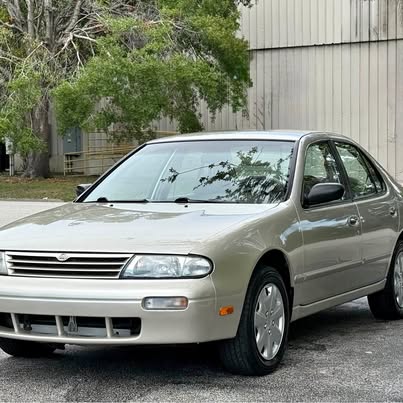
First generation, U13, 1993 to 1997. One engine, four trims, two gearboxes. The XE is the base car, the GXE the volume car and the one you will meet — including both first-generation cars in our pool, a 1995 and a 1997 GXE — the SE adds sportier tuning and trim, and the GLE is the leather-and-luxury version. A mild facelift tidied the nose and tail partway through the run. These are compact-by-modern-standards sedans: lighter and simpler than anything that followed, with hydraulic power steering, a conventional four-speed automatic or a five-speed manual, and an engine bay a home mechanic can see across. Their age is now their defining feature: any U13 has survived three decades of owners, and condition variance between two apparently identical cars is enormous.
Second generation, L30, 1998 to 2001. Nissan restyled the car, improved refinement and safety equipment, and kept the mechanical recipe deliberately familiar: the same KA24DE engine, fractionally stronger in later cars, the same gearboxes, the same trim ladder. A facelift for 2000 sharpened the styling. The L30 is the forgotten Altima — too new to be charming, too old to be modern — and that is precisely its appeal: it carries the toughest engine Nissan ever fitted to this car in a shell a decade younger than a U13's. The single second-generation car in our pool, a 2001 GXE in silver, is the archetype — an unglamorous sedan whose value proposition is that its engine, properly oiled, is very hard to kill.
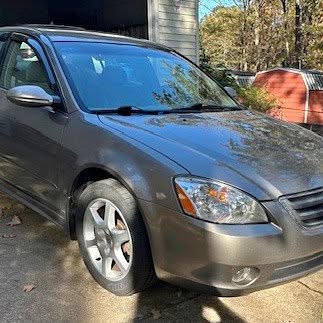
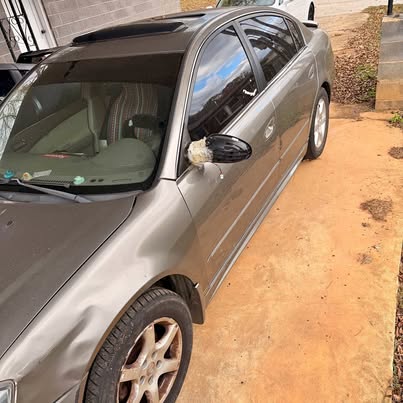
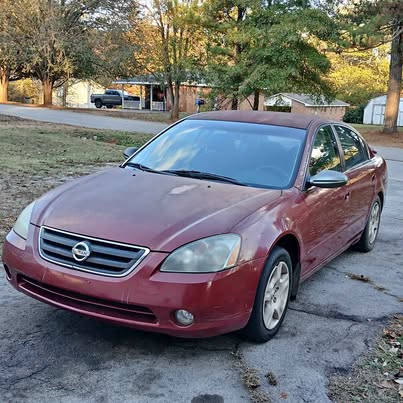
Third generation, L31, 2002 to 2006. The reinvention, and the centre of gravity of this guide and of the Classic Listings pool. The L31 moved to Nissan's FF-L platform, grew substantially in every dimension, and traded compact feel for genuine full-size interior room. The 2.5 cars — base 2.5, the volume 2.5 S, the plusher 2.5 SL — use the new QR25DE four and account for the great majority of sales and of our listings, including 2003, 2004 and 2005 cars in grey, gold, red and tan. The 3.5 cars — sportier 3.5 SE, luxury 3.5 SL — use the VQ35DE V6 and are different machines: properly fast in period, heavier on fuel and front tyres, and far more rewarding. A facelift for 2005 revised the grille, lights and interior, and is the quickest way to date a car in photographs. The SE-R, sold for 2005 and 2006 only, added power, a six-speed manual option, sport suspension and bigger brakes; it is the only Altima with a real enthusiast following, and the only one where originality deserves forensic checking. One caution from our own pool: a listing there describes a 2005 car as a coupe. No L31 coupe exists — the Altima coupe arrived only with the fourth generation, for 2008 — so that car is a sedan carrying a wrong body-style label, and the listing's other claims deserve the same scepticism. Verify body, engine and trim from the car itself, never from the listing's drop-down menus.
Fourth generation, L32, 2007 to 2012. A shorter-wheelbase evolution with push-button start and a modern cabin — and one overwhelming mechanical fact: the CVT became the standard automatic, with a six-speed manual offered early in the run and later withdrawn. The coupe, sold from 2008, shares the sedan's mechanicals. The hybrid, sold from 2007 to 2011 in the states following California emissions rules, paired a QR25 variant with hybrid technology licensed from Toyota; a competent car and a parts-and-knowledge orphan, to be bought only by someone who understands that distinction. Trims run 2.5, 2.5 S, 3.5 SE and 3.5 SL.
Fifth generation, L33, 2013 to 2018. Lighter, more aerodynamic, and single-minded about fuel economy. The manual disappeared entirely, every L33 is a CVT car, and the V6 became a low-take-rate option. The trim ladder — S, SV, SL, SR — matters less than the transmission's service history, a sentence true of no earlier Altima and completely true of this one.
Sixth generation, L34, 2019 onward. Sharper styling, a standard direct-injection 2.5, the variable-compression KR20DDET turbo replacing the V6, and optional all-wheel drive — offered only with the 2.5, never with the turbo, a trap for buyers who assume the flagship must be the all-wheel-drive car. These are modern used cars rather than the cheap sedans this guide's market centres on, but they close the story: the Altima began as the simple alternative and ended up carrying some of the most complex engine technology Nissan has ever sold.
Engines and gearboxes
Four engine families cover the Altima story, each with a distinct personality as a used buy. The KA24DE is the tough old campaigner. The QR25DE is the volume engine with two famous failure modes that must be checked by name. The VQ35DE is the great engine with one expensive wear item. The later PR25DD and KR20DDET are modern-car propositions. Learn the family first, because the family tells you which tests matter.
The KA24DE: the first and second generations
The 2.4-litre KA24DE is a cast-iron-block, aluminium-head, double-overhead-cam four, chain-driven, with a long prior life in Nissan's trucks and the 240SX behind it. In the Altima it makes 150 hp, rising fractionally in later L30 cars, and its delivery is its charm: unstressed, torquey for its size, and famously tolerant of hard use. With oil in it, a KA24 will run to mileages that embarrass most modern fours — the truck heritage means the bottom end is overbuilt for sedan duty.
Its faults are real but proportionate. The timing chain runs against plastic-faced guides, and the upper guide wears and can break up with age and neglected oil; the classic presentation is a diesel-like rattle from the front of the engine for a few seconds at cold start that lengthens as wear progresses, and a rattle that never fully leaves is a chain-and-guides conversation rather than a character trait. Distributor seals harden and weep oil on early cars, valve-cover gaskets leak, idle-air passages gum up and give a wandering idle that cleaning usually cures, and exhaust manifolds crack at high mileage. All of it is visible or audible on a careful viewing, at ordinary parts prices. Judge a KA car by oil evidence: a dipstick at the right level, a filler cap without thick emulsion, a service story with oil changes in it. A KA run low on oil will often still run — and will rattle, smoke and consume from then on. The engine forgives use; it does not forgive starvation.
The QR25DE: the volume engine, and its two famous traps
The QR25DE replaced the KA for the third generation and stayed, in evolved forms, at the centre of the range for well over a decade. An all-aluminium 2.5-litre four, chain-driven, making 165 to 175 hp in the L31, it is lighter and more powerful than the KA — and it demands two specific checks the KA never did, because both its famous failure modes can destroy the engine itself rather than merely inconvenience it.
Trap one: the pre-catalyst. The QR25's primary catalytic converter — the pre-cat — sits in the exhaust manifold, immediately against the exhaust ports, for fast light-off and clean cold emissions. On affected early L31 cars that catalyst can break down, and exhaust reversion can draw ceramic dust back into the cylinders. The dust scores the bores, the scores destroy oil control, and the engine begins consuming oil at an accelerating rate until compression and the replacement catalyst follow it. Nissan addressed the problem through recalls, revised parts and engine replacements on the worst early cars, and the failure is concentrated in early-2000s production — but concentration is not exemption. The buyer's tests are non-negotiable on any L31 2.5: check the oil level, ask directly how much oil the car uses between changes, then look for the honest answer in the exhaust — blue-grey smoke under hard acceleration and a sooty, oily tailpipe on a car with a low dipstick is the failure describing itself. A car that uses a little oil at high mileage is a negotiation point; a car that uses a lot, smokes, and stores a catalyst-efficiency code is an engine at the end of the process.
Trap two: the power-valve screws. The QR25's intake manifold uses secondary butterfly valves — the power valves — whose small retaining screws were not secured well enough on early engines. A screw can work loose, be ingested, and damage the piston, head and bore. The preventative fix is to refit the screws with thread-locking compound; a car whose owner can tell you this has been done, unprompted and in those terms, has been looked after by someone who knows the engine. Most sellers have never heard of it — but its absence on an early car is a small, real risk to price or to have done immediately after purchase.
Around those two traps sits a wider QR25 pattern book. Timing-chain guides and the tensioner wear on neglected-oil cars, with the same rule as the KA: a rattle that fades in seconds is a warning, a rattle that stays is a bill. Crankshaft and camshaft position sensors failed in numbers sufficient to generate recalls on early cars, and their failure mode — sudden stalling, a no-start when hot, an engine that cuts out and restarts — is still misdiagnosed as a fuel fault today; the sensors themselves are inexpensive. Early head-gasket failures occur, so any QR25 with an overheating story needs its gasket treated as suspect until proven otherwise. Oil consumption unrelated to the pre-cat also exists — rings and valve seals on hard-used engines — which is why the oil question is asked on every QR25, not just the early ones. Later generations added refinement revisions and, for the L34, direct injection as the PR25DD, adding the usual caveats about intake-valve deposits and high-pressure fuel hardware.
The VQ35DE: the great engine, one expensive wear item
The 3.5-litre VQ35DE V6 is the reason the third-generation Altima matters to anyone who likes driving. The VQ family spent years collecting industry awards, and in the Altima it makes 240 to 250 hp in L31 form and 270 hp in the L32 and L33, with the SE-R at 260 hp. An all-aluminium, chain-driven, four-cam V6, it revs eagerly, sounds genuinely good, and pulls the big sedan with an ease the fours never approach. It is the engine in our pool's 2003 3.5 SE and 2005 3.5 SL, and the engine to choose in any cross-shopping exercise — subject to the one check that follows.
That check is the timing-chain system. The VQ35's chain guides and tensioners wear, announcing themselves in two stages: a rattle at start-up, then the more distinctive whining or buzzing note that rises with engine speed as the chain runs against worn guide material. Replacing chains, guides and tensioners is an engine-mostly-apart job, realistically a four-figure bill in the low-to-middle thousands of dollars. A VQ car with documented chain work is worth a clear premium; a VQ car with the whine and no paperwork has the job already scheduled, whether the seller says so or not. Beyond the chains the pattern book is benign: valve-cover gaskets leaking oil into the spark-plug tubes, valve-timing solenoids gumming up on neglected oil, and a hearty appetite for fuel and front tyres that is a running cost, not a fault. Oil level matters here too — a VQ run low wears its chains faster and its bearings permanently.
Gearboxes: conventional automatics, manuals, and the CVT
The early cars offer the simplest choices. The five-speed manual is a conventional, durable box judged on second-gear synchromesh, clutch bite and judder, and release-bearing noise. The four-speed automatic in the early cars, and the four- and five-speed conventional automatics on L31 models — the V6 cars taking the stronger five-speed — are torque-converter boxes of known behaviour: prompt engagement of drive and reverse, clean shifts without flaring, fluid red to brown rather than black and burnt-smelling. A box with delayed, thumping reverse engagement or a flare between gears is negotiating its rebuild price, realistically a few thousand dollars, into your offer. These boxes respond well to fluid and filter service, and a car with evidence of it is a better car.
The CVT gets its full hearing here because it dominates every Altima from 2007 onward. Nissan, through its transmission affiliate Jatco, committed to the belt-driven CVT earlier and more completely than any other major maker. The units fitted to Altimas — the JF011E family in the L32, the JF016E and JF017E families in the L33 and L34, the higher-torque version serving the V6 and turbo cars — drive through a steel push-belt or chain between variable-diameter pulleys. There are no gears to shift, which is the point, and no shift quality to judge, which is the trap for buyers trained on conventional automatics.
The failure pattern is consistent and well documented. The CVT lives or dies on its fluid and its temperature. The fluid both lubricates and provides the friction the belt and pulleys depend on; as it degrades with heat and age, clamping and lubrication suffer together, the belt micro-slips, and slip generates the metal debris that accelerates valve-body and pulley wear. The symptoms, in rough order, are a whine rising with road speed, shuddering on take-off, judder under light acceleration, surging at a steady cruise, delayed engagement, and finally the fail-safe: the control system detects overheating or implausible ratios, limits power, and the car limps. A car that drives normally for fifteen minutes and then loses performance on a long hill or a hot highway run is describing CVT overheating until proven otherwise — which is why the inspection insists on a long, hot test drive. Nissan extended CVT warranty coverage on the 2007 to 2010 cars to ten years and 120,000 miles in response to early failure rates; those extensions have expired for the cars in this market, and are best read as evidence about the design's margins, not as protection for you.
Now the counterargument, stated fairly because it is substantially right. Nissan originally presented the CVT as a sealed, low-service unit. The experienced-owner and specialist consensus that developed in response is that regular fluid service — drain-and-fill changes with the correct Nissan NS-specification fluid at intervals far shorter than the factory implied, commonly every 30,000 to 60,000 miles, level set at the correct temperature — dramatically improves survival odds, and that auxiliary cooling helps cars worked hard in hot climates. The evidence is anecdotal rather than laboratory-controlled, but consistent and mechanistically sound: the failures are heat-and-fluid failures, so fluid and heat are the levers. The buying consequence is precise. Documented repeated fluid services are the single most valuable line in a CVT car's service file — worth more than low mileage, options or paint. Conversely, a high-mileage car with no evidence the fluid has ever been changed has consumed most of its designed life on its factory fill, and should be priced as a car that may need a replacement unit — realistically several thousand dollars fitted, with used units carrying the risk that they are someone else's version of the same story. There is no dipstick on most later units, so the service record and the long test drive are the test. A manual L32 sidesteps the entire subject, which is why knowledgeable buyers hunt them.
Problem areas
An Altima rarely fails in a surprising way. It fails in the ways its generation always fails, in roughly the order its maintenance was skipped. Work through this section by system, and remember the weighting: on the early cars the body and the cooling system decide the purchase, on the third-generation fours the engine's oil story decides it, on the V6 the timing chains decide it, and on every CVT car the transmission's service history decides it before anything else is discussed. Almost everything else on the car is ordinary wear at ordinary prices — which is not the same as free, and a car that needs six ordinary jobs at once is not a cheap car any more.
Rust and the body: the southern-pool advantage, and its limits
The Altima is a unitary steel sedan with no separate frame, and its rust story is climate first, design second. The design traps are the predictable ones. The rear wheel arches and the sill ends ahead of the rear wheels collect road spray and mud and rot from the inside of the seam outward, so bubbling at the arch lip means the metal behind it is further gone than the paint suggests. The sills themselves, the jacking points, and the floor edges follow. The front subframe — the bolted cradle that carries the engine and front suspension — and its mounting areas are the structural check that matters most on an older car, particularly on L31s, where subframe corrosion in salt-belt cars is a known inspection failure and a repair that quickly outruns a cheap car's value. The radiator core support, the bonnet and boot-lid seams, the door bottoms, and the boot floor around the spare-wheel well complete the map. Air-conditioning condensate and blocked sunroof drains wet the front footwells on equipped cars, and a damp smell or a lifted carpet corner is a instruction to look underneath the carpet, not to buy an air freshener.
Now the climate qualification, and it works in this market's favour. The Classic Listings pool is drawn overwhelmingly from Tennessee, Florida, Arkansas, Missouri, Louisiana and Virginia. A lifelong southern car may show nothing worse than surface oxidation at an age where a northern car is structurally finished. But do not let a southern plate do the inspection for you: cars move, coastal Florida has its own salt air, and flood exposure is the southern car's specific hazard — check for silt lines under the carpets and in the boot well, corrosion on seat rails and under-dash metal far above any road-spray line, and electrical gremlins in improbable combinations. Flood damage in a modern Altima is an electronics sentence, not a cleaning job. Paint is a cosmetic weakness across the range: clearcoat failure on horizontal panels is endemic on sun-state cars, and a quality repaint of the failed panels runs into four figures. Price it as the cosmetic job it is, and never let shiny paint substitute for the structural checks — the two have no relationship at all.
Accident history deserves its own check: panel gaps, overspray on rubbers, mismatched headlamp lenses, replaced core supports. A repaired Altima is not automatically a bad one — most have some panel history — but a badly repaired one, with kinked rails or a pulled-straight core support, compromises airbags, alignment and rust future alike. Walk toward the straight car.
Suspension, steering and brakes
The Altima's chassis layout is conventional: struts at the front, a multi-link or beam arrangement at the rear depending on generation, power steering — hydraulic on the early cars, electric on the later ones — and disc brakes, with rear drums on some base early trims. The wear pattern is equally conventional, and it is the area where a deferred-maintenance car announces itself most honestly on the test drive.
Front struts tire and leak, showing as a crashy ride and a nose that dives and floats. Lower control-arm bushes split and ball joints wear, giving knocks, vague steering and uneven tyre wear; the complete arm is the usual replacement, realistically a few hundred dollars a side fitted. Sway-bar links rattle cheaply, wheel bearings drone with road speed and change note in gentle curves, and perished engine mounts give a thump on take-off and an idle vibration owners misdiagnose as a misfire. At the rear, tired shocks, bushes and springs produce the sagging stance of a sedan that has carried a family for two decades. None of these jobs is frightening alone; together — and the same neglect schedules them together — a full chassis refresh of struts, arms, links, mounts and alignment is a four-figure programme, and the test drive should be long enough to count how many items a given car is asking for.
Steering splits by generation. Hydraulic systems leak at the pump, the hoses and the rack, and a whine that rises as you turn the wheel at parking speed is the pump telling you it is low on fluid, worn, or both; a rack replacement is a mid-three-figure to low-four-figure job depending on source and labour. Electric power steering on later cars removes the fluid and adds column and motor faults, usually announced by warning lights, intermittent heaviness, or a notchy feel at straight-ahead. In both cases, check the full lock-to-lock sweep at a standstill and at parking speed, and look at the front tyres: feathered or shoulder-worn tyres are the written record of alignment and bush wear.
Brakes are straightforward and commonly neglected. Discs lip and corrode, sliders seize in their carriers and wear pads unevenly, rear calipers stick, and the parking brake — a drum inside the rear disc hat on many models — fades into uselessness unnoticed until an inspection or a hill finds it. Flexible hoses perish with age regardless of mileage, and brake fluid in a cheap used sedan is almost never changed on schedule, so budget a full hydraulic refresh — fluid, hoses as needed, freed or replaced calipers, discs and pads — realistically several hundred dollars to over a thousand if calipers are involved, on any car whose brake history is a shrug. A car that pulls under braking, pulses through the pedal, or shows one mirror-shiny disc and three dull ones is showing you its seized caliper, not a mystery.
Cooling, electrics and the systems that strand you
More Altimas are stranded by small systems than by engines. Start with cooling, because on an aluminium-head engine an overheating event is never just an overheating event. Radiators silt up and their plastic tanks and necks crack with age and heat cycles; electric fans and their relays and control modules fail, usually discovered in traffic with the air conditioning on; thermostats stick; water pumps weep and then rumble; and heater hoses and plastic connectors embrittle. The test is in the inspection: a full warm-up, a traffic idle, the temperature gauge watched, both fans confirmed running. Any car that has overheated needs the head gasket interrogated — coolant in the oil, oil in the coolant, bubbles in the expansion tank, a cooling system that pressurises instantly from cold — because the gasket job, at a shop, is a four-figure repair on an engine that may also have a warped head.
Electrics divide into the annoying and the immobilising. Alternators fail across the range and announce themselves with a battery warning light, dimming at idle, or a car that dies with a flat battery after a new battery was fitted to cure the symptom rather than the cause; a replacement alternator fitted is a mid-three-figure job. Starters tire, with the classic hot no-crank. Batteries in these cars are often the cheapest unit available and two sizes too small for confidence. Crank and cam sensors, already covered under engines, belong here too as the great immobiliser of the QR25 era. Body electrics age in patterns: window regulators fail and drop glass into doors, door handles and lock actuators break on L32-era cars in particular, blower resistors fail and leave the fan working on full speed only, air-conditioning compressors and their clutches fail and condenser fans quit — and on a southern car, air conditioning is not a luxury item but a core system whose repair, if the compressor has scattered debris through the circuit, can run from several hundred dollars into four figures. Airbag and ABS warning lights on a cheap car are not dashboard decoration: they are failed inspections in many states, disabled safety systems, and occasionally the signature of accident or flood history. A light that has been removed or taped over is a seller verdict, not a car fault, and it should end the viewing.
Interior, trim and the cost of living with it
Altima interiors were built to a price and age accordingly, but they age honestly and most failures are visible in photographs. Seat bolsters split, driver's cushions collapse, dashboards crack in sun states on early cars, soft-touch surfaces on later cars go sticky, headliners sag, and latches and door cards break — the volume of small plastic breakage is the true measure of how a car has been treated: one broken latch is age, six is a biography. Sunroof cars add blocked drains; check headliner corners for staining and operate the roof fully, twice. Leather on SL and GLE trims splits on the driver's bolster first and is a retrim-or-tolerate item; cloth survives better.
Two interior checks carry mechanical weight. The first is heater and air-conditioning performance, because a blend-door or heater-core fault turns a cheap part into a dashboard-out labour bill. The second is smell: coolant means a heater-core or cooling leak, mildew means water getting in, and strong valeting scent over underlying sourness means a seller who knows about both. Trust your nose over the listing description.
The paperwork problem areas
At this end of the market the documents fail as often as the cars. Titles arrive branded — salvage, rebuilt, flood — or with mileage discrepancies, or in a previous owner's name in the title-jumping pattern that makes registration your problem. The Altima was a fleet and rental staple, and ex-fleet history is not disqualifying — fleet cars often carry the best service records in the pool — but it must be known and priced, not discovered. On cars old enough to be mileage-exempt in many states, compare the reading against pedal wear, seat wear, service stickers and title history, and treat a suspiciously low reading on a worn car as a worn car with a false reading. Keys are a modern trap: a car supplied with one key, especially a later intelligent key, carries a three-figure replacement bill that belongs in the negotiation on the day.
How to inspect one
Allow an hour, insist on a cold engine, and bring a torch and, if you own one, a code reader — on these cars a basic reader earns its keep in a single viewing. Work in this order, and be willing to stop early: several steps below are walk-away gates.
- Paperwork and identity first. Match the VIN on the title to the plate at the base of the windscreen and the sticker in the driver's door jamb. Read the title brand with your own eyes — clean, rebuilt, salvage and flood are different purchases. Check the engine the car actually has against the badge it wears, and be alert to listing errors of the kind our own pool contains, where a sedan is described as a body style the generation never offered. Ask for service records and look specifically for oil changes and, on CVT cars, transmission fluid services; a folder beats a story.
- The oil check, before the start. Pull the dipstick cold. Level first — low oil on a QR25 or VQ35 is evidence, not a detail — then colour and smell; gritty is bad, thin and fuel-smelling is bad. Look under the filler cap for emulsion and sludge. Ask the seller, directly, how much oil the car uses between changes, and remember the answer for the test drive.
- Cold start. Start it yourself from cold. Listen for timing-chain rattle and note how long it lasts — a second or two is a warning to log, a rattle that persists is a chain job being quoted to you live. Watch for blue smoke at start-up and as it warms. Note every warning light: all should illuminate at key-on and all go out, airbag and ABS included. A lamp that never illuminates has been dealt with, and not by a repairer.
- Engine bay tour. Look for the biography: oil leaks at the valve covers and, on the V6, oil in the spark-plug tubes; coolant stains at the radiator neck, hoses and water pump; a distributor weeping oil on an early car; ticking from a cracked exhaust manifold; bodged wiring, which usually means a sensor fault was cured with hope. Check coolant level and colour, and the transmission fluid on cars that still provide a dipstick — red to brown is serviceable, black and burnt-smelling is a negotiation or an exit.
- Underneath and arches. Torch along both sills, the jacking points, the rear arch seams, the floor edges and, above all, the front subframe and its mounts. Prod suspect metal with a screwdriver, with permission. Surface oxidation on a southern car is normal; perforated subframe or sill metal is structural, and on a cheap Altima structural rust ends the inspection — the repair costs more than the car.
- The catalyst and code check on a QR25. Plug the reader in. A stored or pending catalyst-efficiency code on an early 2.5, combined with oil consumption from step 2, is the pre-cat failure pattern from the engines section and should end or reprice the purchase. Clear-code trickery is common at this money: if the readiness monitors show as freshly reset, the seller has cleared codes shortly before your arrival, and you should assume the codes were the interesting ones.
- Suspension and steering by hand. Bounce each corner and watch it settle in one movement. Rock each front wheel top-to-bottom and side-to-side for bearing and ball-joint play. Turn the steering lock to lock at a standstill and listen — pump whine on a hydraulic car, notchiness on an electric one — then inspect the front tyres for the wear patterns that record bush and alignment neglect.
- The long test drive — twenty minutes minimum. This step decides CVT cars and must not be shortened. Drive from cold through town work to a sustained highway run, with a long incline if the terrain allows. On a conventional automatic, demand clean, unflared shifts and prompt reverse engagement afterwards. On a CVT, listen for a rising whine, feel for take-off shudder and light-throttle judder, and watch for surging at a steady cruise; then, fully hot, repeat a firm acceleration run and a long climb. A CVT that misbehaves only when hot has still misbehaved. On any car, test hard acceleration for blue smoke — the QR25 oil test — and for the V6's chain whine rising with revs.
- Brakes, heat and air conditioning. Brake firmly from highway speed: straight, no pulse, no pull. Idle in traffic or simulate it, air conditioning on full, and watch the temperature gauge and confirm both cooling fans run. Test the heater hot as well. Then work every electrical item — windows, locks, blower speeds, lights, wipers, sunroof twice if fitted — and count the failures; the count is a price.
- Interior and water. Sit in every seat. Lift the front carpet corners and feel for damp; check the boot well under the spare for water, rust and silt. Smell the car with the doors closed, and check you are handed every key — price any missing intelligent key into your offer on the spot.
- Stance and panels from ten paces. Stand back and read the car whole: level stance, even arch gaps, aligned panels, matching lamps, no overspray on rubbers. Photograph it from this distance; faults you talked yourself out of at arm's length are obvious in the picture later.
- Price the faults before you name a figure. List what the car needs in three columns — safety and legality now, mechanical soon, cosmetic whenever — and total them using the job ranges in this guide. If the first two columns exceed what a better example costs, this is not the car, whatever its purchase price. The cheapest Altima to buy is very often the most expensive one to own.
Values
The market block beneath this guide carries the live numbers, refreshed at every build, and it is the only place in this guide where prices belong. This section teaches you to read that block like a buyer rather than a browser, because on an Altima the headline figure is the least informative number on the page.
Start with the condition spread, which on the Altima is not a spread so much as a cliff system. The same model year and badge can describe a one-owner, fully serviced car and a four-owner car with a tired CVT and a cleared dashboard, and the asking gap between them understates the ownership gap, because the cheap car's bills arrive after purchase while the good car's costs were paid by its previous owner. Read the bottom of the listings range as a parts-and-projects market and the top as a condition market, and be suspicious of anything priced in the middle with a bottom-tier description: the middle is where optimistic sellers park ordinary cars.
Asking prices at this end of the market are opening bids, not values. Private Marketplace sellers — and every car in the current pool is a private Marketplace car — commonly price in the negotiation they expect, or price from the best example they saw listed rather than the one in their driveway. Achieved prices settle where the faults are: documented service history, a recent CVT fluid service, documented V6 timing-chain work, and fresh tyres and brakes all move real money, because each removes a bill the buyer no longer has to fund. Undocumented claims move almost nothing, and they should move nothing when you are the buyer.
Variant premiums follow the fault map, not the brochure. The V6 cars carry a premium over equivalent fours because the engine is stronger in character and, chains apart, the more durable unit — and the SE-R carries the only real scarcity premium in the range, fragile to condition and originality. Manual cars carry a small, real premium in the CVT generations because they delete the largest risk in the car. Early KA-engine cars invert the usual logic: their premium attaches to rust-free shells and documented simplicity, and a superb U13 or L30 can be worth more to the right buyer than a scruffy third-generation car years younger. The hybrid and the variable-compression turbo carry complexity discounts outside warranty, whatever their original list prices said.
The project-versus-driver gap is sharpest on the CVT cars: a driving, serviced CVT Altima and an identical car with a slipping, whining transmission are separated by a replacement bill that can approach the entire value of the lesser car, so the market rationally prices the faulty car as a shell with an engine. On the early cars the equivalent gap is rust — a sound project is a project, a perforated one is a parts car, and no engine condition bridges that gap. Learn which gap applies to the generation in front of you and you have learned how this market prices risk.
Finally, read the sample honestly. This is a thin, regional, private-seller pool — a couple of dozen cars, concentrated in the south and in one generation — so a single exceptional or desperate listing moves any median, and a variant's absence tells you about this month's supply, not the model's worth. Use the block for orientation, the inspection to price the individual car, and let the car's own faults and documents have the last word.
Parts and ownership
The Altima's great ownership virtue is ordinariness. Nissan built these cars in the hundreds of thousands, the mechanicals are shared across the range and with other Nissans of the era, and the parts trade — franchised, independent, salvage and online — is deep for every generation in the pool. There is no Altima equivalent of the unobtainable classic part; there is only the question of whether a given job is worth doing on a car of this value, which is an arithmetic question, not a supply question.
Easy and cheap: service items, filters, plugs, brake discs, pads and calipers, suspension wear parts including complete control arms, sway-bar links, wheel bearings, batteries, alternators and starters, sensors including the crank and cam sensors that strand QR25s, radiators and cooling fans, exhaust sections, and glass and lamps from the salvage trade. Most of it is same-week, much of it same-day, and a competent home mechanic with a jack, stands and ordinary tools can do most of it on a driveway — the early cars in particular are honest, spacious engine bays with no exotic fasteners waiting to punish you.
Dearer, and worth planning: timing-chain work on the QR25 or VQ35, where the parts are reasonable and the labour is the bill; head-gasket work after an overheating event; conventional automatic rebuilds; air-conditioning compressor replacement with a full system flush; heater-core and blower work requiring dashboard removal; and quality paintwork for failed clearcoat, the one cosmetic job whose cost routinely surprises owners. Salvage engines and transmissions are plentiful — the VQ35 especially — but a used CVT is a gamble on another car's fluid history, and a used QR25 from the pre-cat years needs the same oil-consumption interrogation as a whole car does.
The CVT ownership rule decides whether a later Altima is cheap transport or a subscription. If you buy a CVT car, service the transmission promptly on purchase unless the seller documented a recent service, use only the correct Nissan NS-specification fluid, set the level correctly at temperature, and repeat on a short interval thereafter. It is the highest-value maintenance money in the entire car. Budget honestly for the rest: the V6 drinks fuel and front tyres at a rate the four never matches, insurance is ordinary family-sedan money, and wear items arrive on family-car schedules.
The first-year budget is where new owners get caught. A cheap Altima bought with no recent evidence will typically want a full service with every fluid, the transmission service above, tyres or brakes or both, at least one suspension item, and one electrical item from the pattern book — a sensor, an alternator, a window regulator. Totalled honestly, that catch-up programme is a substantial fraction of the car's purchase price, and it is not a sign you bought badly; it is the previous owners' deferred maintenance arriving at its rightful new address. Buy the car with that budget in hand, or buy a dearer car whose seller already spent it. These are durable cars under maintenance and short-lived cars without it, and ownership satisfaction is decided almost entirely by which regime you fund.
Which one to buy
- The all-rounder: L31 3.5 SE or 3.5 SL. The VQ35 is the best engine ever fitted to an Altima, the conventional automatic deletes the CVT question entirely, and the room and pace embarrass cars costing far more. Buy on timing-chain evidence: documented chain work or a quiet engine, and walk from the whine.
- The value buy: L30 GXE or SE. The toughest engine in the youngest simple shell, ignored by the market and priced accordingly. A rust-free, oil-tight L30 is the cheapest reliable motoring in this entire guide.
- The simple-life buy: U13 GXE. One engine, a conventional automatic, minimal electronics, and thirty years of pattern-book knowledge. Buy the shell — arches, sills, subframe — and accept that every rubber component is on borrowed time you are now funding.
- The family-workhorse buy: L31 2.5 S or SL, carefully chosen. The roomiest cheap sedan here, bought strictly on the oil checks: sensible oil use, a clean catalyst story, the power-valve fix done or budgeted. Chosen that way it is a lot of car; chosen on paint it is a lottery ticket.
- The CVT buy, if you must: L32 or L33 with a paper trail. Documented, repeated CVT fluid services are the whole ballgame — worth more than low miles, more than trim, more than colour. No paper trail, no purchase, unless the price treats the transmission as already spent.
- The enthusiast buy: SE-R. The only Altima with a following: V6, available six-speed manual, real pace. Verify originality, budget the chains, and accept you are buying the best of a mainstream sedan, not a sports car in disguise.
- The avoid-unless-expert buys: the hybrid and the variable-compression turbo. Competent, clever, and orphaned in knowledge and parts support. Buy them as warrantied modern cars or leave them to someone who understands exactly what they are.
And the rule that overrides all of the above: buy the service history, not the model year. An Altima's value lives in its oil changes, its transmission services, its chain invoices and its rust-free southern shell — in the evidence that someone before you spent the money these cars quietly demand. A year older, a trim lower, or a colour duller is a price worth paying for that proof every single time.
Listed now
On Classic Listings today: 1 car is listed here; 1 for sale and 0 marked sold; average asking price $8,800; asking range $8,800 to $8,800.
See the 1 Altima cars currently listed.
The market — recorded sales
No dated sales recorded for this series yet — as sales are recorded, they will appear here with their dates and prices.
For sale now
$8,800