
Nissan Frontier buyer's guide
Nissan Frontier (1998–2001) — Frontier: what's listed, and what they sell for.
Years: 1998–2001 · Models: Frontier
Overview and history
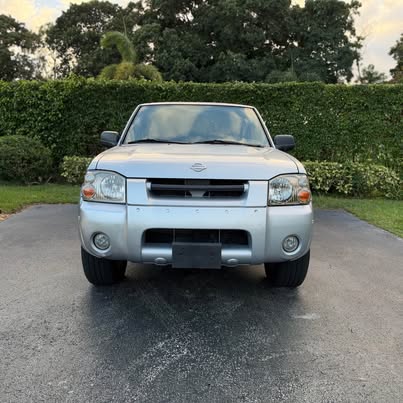
The Frontier is the truck that replaced the Hardbody — and if you know the Hardbody, you already know most of what matters about this one. Nissan introduced the Frontier name for the 1998 model year on the D22 platform, built in Smyrna, Tennessee, and it was a careful evolution of the D21 Hardbody it replaced rather than a clean-sheet design: a fully boxed ladder frame, double-wishbone front suspension on torsion bars, a leaf-sprung solid rear axle, recirculating-ball steering, and two engines carried over in spirit if not in detail — a 2.4-litre four and a 3.3-litre V6. Nissan kept what worked, tidied the styling, improved the cab, and sold the result through 2004, when the much larger D40 Frontier turned the nameplate into a mid-size truck and ended Nissan's run of genuinely compact pickups in America.
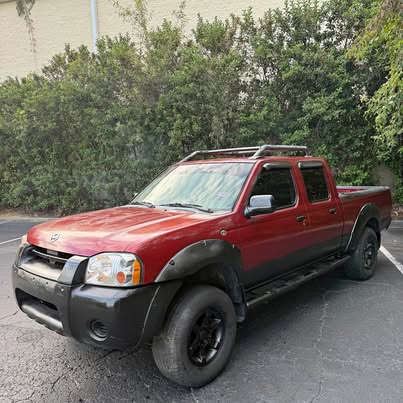
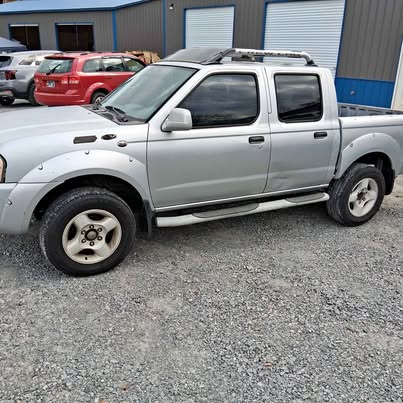
The range grew as it went. At launch in 1998 there were two cabs — a regular cab and the King Cab with its small rear jump seats — in XE, SE and LE trims, rear-wheel drive or part-time four-wheel drive. For 2000 Nissan added the Crew Cab, and it is worth pausing on that: the Frontier Crew Cab was the first compact crew-cab pickup sold in the United States, a four-door truck with a proper rear bench at a time when every rival made you choose between carrying people and carrying a bed. The catch was the bed itself, just 4.5 feet long; a 6-foot long-bed Crew Cab arrived for 2003. The same period brought the Desert Runner, a two-wheel-drive truck built on the 4x4 chassis with the V6, raised stance, skid plates and all-terrain tyres — a pre-runner in factory form. For 2001 the range got a heavy facelift, with a blockier, more industrial front end and squared-off fender flares, and the facelift brought the headline act: the Frontier SC, with a factory-supercharged V6, the first supercharged compact truck on the US market.
Abroad the same truck was sold as the Nissan Pickup and later the Navara, and D22 production continued overseas for years after Smyrna switched to the D40 — which tells you something about the design's durability, and helps with parts today.
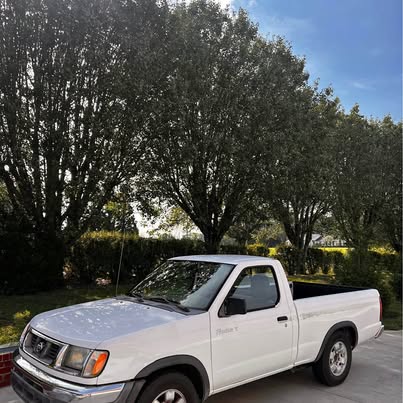
Our own listings give you the shape of today's market. We currently track eight first-generation Frontiers, all of them for sale and all listed on Facebook Marketplace, and every one sits in the Southeast — four in Florida, two in Tennessee and two in North Carolina. Six are automatics and two are manuals. That is a fair picture of where these trucks survive: they were working vehicles, most were used hard, and the survivors cluster in the warm states where frames did not dissolve under road salt. A Frontier was never a garage queen. The difference between a good one and a money pit is not mileage or model year — it is frame condition, timing-belt history on the V6, and whether the truck has been maintained as a machine or merely fuelled as an appliance.
The models
Every D22 Frontier is a body-on-frame pickup in one of three cab shapes. The badge on the tailgate tells you the trim — XE is the working base model, SE the mid-level, LE the top specification — and the engine is decided by cab, trim and year rather than by a badge, which is why you verify the engine under the hood and not the decals on the fenders. Two-wheel drive is standard; four-wheel drive is the part-time system described in the engines section. The table below covers the variants a buyer will actually meet; Nissan did not publish a reliable production split by variant, so the "built" column describes each variant's place in the range instead of inventing numbers.
| Model | Years | Engine | Output | Built | Character |
|---|---|---|---|---|---|
| Regular Cab XE | 1998–2004 | 2.4 four (KA24DE) | 143 hp | Full run; the volume seller | The simple truck: lightest, cheapest, easiest to keep |
| King Cab XE / SE | 1998–2004 | 2.4 four or 3.3 V6 (VG33E) | 143 / 170 hp | Full run | Jump seats behind, 6 ft bed; the private buyer's default |
| Crew Cab SE / LE | 2000–2004 | 3.3 V6 (VG33E) | 170 hp | 2000-on | First compact crew cab in the US; 4.5 ft bed, 6 ft from 2003 |
| Desert Runner | 2000–2004 | 3.3 V6 (VG33E) | 170 hp | Limited trim run | 2WD on the 4x4 chassis: stance, skid plates, all-terrains |
| Frontier SC | 2001–2004 | 3.3 V6 supercharged (VG33ER) | 210 hp | Facelift years only | Eaton-blown flagship; King Cab and Crew Cab, premium fuel |
| LE (King Cab / Crew Cab) | 1998–2004 | 3.3 V6 (VG33E) | 170 hp | Full run | Top trim: alloys, chrome, the best-equipped cabs |
The regular cab is the truck in its purest form: two doors, a bench or buckets, a 6-foot bed and, almost always, the KA24DE four. It is the lightest Frontier, the cheapest to run and the one whose frame has usually done the least towing. Most are XE trim with vinyl and crank windows, and that is a virtue — there is almost nothing on one that cannot be fixed with hand tools.
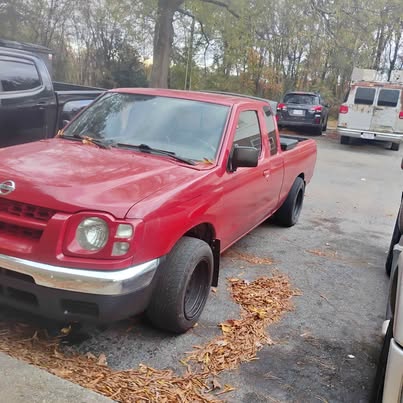
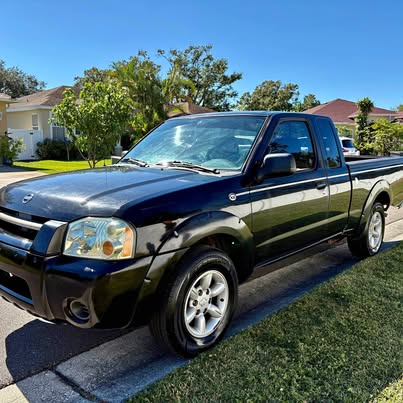
The King Cab adds the extended cab with fold-down jump seats — fine for children and dogs, tolerable for adults across town — and keeps the 6-foot bed. It is the most common Frontier in private hands and the easiest to live with: four or V6, manual or automatic, 2WD or 4WD were all on the menu. An SE King Cab with the V6 and four-wheel drive is the classic all-purpose Frontier.
The Crew Cab (2000–04) is the historically interesting one and the most family-useful: four full doors and a real rear seat, at the price of that 4.5-foot bed, which swallows a motorcycle only diagonally and a sheet of plywood not at all. The V6 was standard. From 2003 the Crew Cab Long Bed put the cab on the longer chassis with a 6-foot bed — the most versatile Frontier of all, and priced accordingly. Check the year before you assume: a 2000–02 Crew Cab is short-bed only, whatever the listing says.
The Desert Runner (2000–04) takes the opposite approach to off-roading: two-wheel drive, but built on the 4x4 frame and suspension, so it sits high on all-terrain tyres with skid plates, fender flares and a limited-slip rear axle on most. It was sold as a King Cab with the V6. It is lighter and simpler than a true 4x4 — no transfer case, no front differential, no CV shafts — and in the dry Southeast that is often the smarter truck. It is not a 4x4 that has lost its front drive; it never had it, so do not let a seller price it as one. The SC (2001–04) is the facelift flagship: the VG33E V6 with an Eaton supercharger, 210 hp, offered in King Cab and Crew Cab, with a hood scoop over the blower, unique wheels and graphics. It is genuinely quicker than the standard V6 and genuinely thirstier, and it drinks premium. Section three covers what the blower adds to the ownership bill; the short version is that an SC is a VG33E with one more expensive component and a much stricter need for its knock sensor to be alive.
Pre- and post-facelift. The 1998–2000 trucks wear the smooth original styling; the 2001–04 trucks wear the squared-off industrial nose, bigger flares and a revised interior. Mechanically the change is minor — engines, gearboxes and suspension carry over — but front sheet metal, lamps and bumpers do not interchange between the two looks, which matters when you price accident damage. Later trucks also added value packages (the SVE bundle on 2003–04 cars) that grouped popular options cheaply.
Engines and gearboxes
Two engine families power every D22 Frontier, and they ask opposite things of you. The four-cylinder has a timing chain and forgives neglect; the V6 has a timing belt and does not. Learn which engine is in the truck in front of you before anything else — the badges will not always tell you, but the engine will: the four is a narrow DOHC unit, the V6 a wide SOHC unit with a distributor at the front and, on the SC, a supercharger in the valley under a scooped hood.
The four-cylinder: KA24DE
The base engine is the KA24DE, a 2.4-litre double-overhead-cam four with an iron block, an alloy head and 143 hp with 154 lb-ft of torque. It is the same family that powered the 240SX and the Altima, and in the Frontier it is tuned for low-end usefulness rather than revs. It drives a truck of this size adequately rather than quickly — a regular cab four-cylinder is a relaxed thing, a King Cab automatic four-cylinder working hard on a grade is not — and in return it offers the cheapest running in the range and a genuine 200,000-mile constitution when the oil has been changed.
The KA24DE runs a timing chain, and the chain drive is its one real weakness. The upper chain runs against plastic-faced guides, and as the guides and tensioner wear the chain begins to rattle — a brief chatter for a second or two on a cold start is the early warning; a rattle that continues at idle, or a metallic scraping, means the chain is slack enough to be eating into the timing cover. Left long enough, the chain wears through the cover into a water passage and mixes coolant with oil. The test is to stand at the front of the truck on a genuinely cold start and listen: a healthy KA starts quietly. A chain, guide and tensioner refresh is roughly $600–1,200 fitted, and a truck with an invoice for it has had its one structural weakness dealt with.
Otherwise the four asks for the usual: oil that has been changed (sludged engines wear cam lobes and give a top-end tick), a distributor whose shaft bearing eventually wears and lets the rotor wobble — misfire and stumble that no plug change cures — and attention to the idle-air control valve, which gums up and gives a hunting or stalling idle that cleans up with solvent more often than it needs parts. A weak fuel pump shows as a lean surge at steady cruise before it shows as a no-start.
The V6: VG33E
Most Frontiers you will meet carry the VG33E: a 3.3-litre single-overhead-cam V6, iron block and alloy heads, making 170 hp and 200 lb-ft of torque. It is a development of the VG family that powered everything from the Maxima to the Pathfinder, and it is a torquey, unstressed engine that suits the truck well — the Frontier feels properly powered with it, tows sensibly, and cruises without effort. It is also the engine with the two jobs that define Frontier ownership, and both are in this section because a buyer prices them before the test drive, not after.
The timing belt comes first. Unlike the four, the VG33E drives its cams with a belt, the service interval is 105,000 miles, and the VG33 is an interference engine: if the belt breaks, the pistons meet the valves and the repair is a pair of cylinder heads or another engine. There is no warning and no graceful failure. So the single most valuable document in a V6 truck's history file is a timing-belt invoice with a date and a mileage, and the single most dangerous sentence in a listing is "the belt was done by the previous owner" with nothing to back it up. A belt service done properly includes the tensioner, the idler, the water pump (it lives behind the belt and is cheap only while you are in there) and the front seals — roughly $700–1,200 at an independent shop. If the truck is at or past 105,000 miles, or the belt's age is unknown, price the job into the offer and have it done immediately; on a truck of this value the belt is not a negotiating chip, it is the purchase's first service.
The knock sensor comes second, and it is the VG33E's signature fault. The sensor sits in the valley of the block, under the intake manifold, listening for detonation and telling the ECU to pull ignition timing. When it fails — and heat and age mean most originals have — the ECU defaults to retarded timing full-time. The truck does not stop or even run badly; it just becomes sluggish, gutless on hills and heavy on fuel, and owners drive them for years like that, assuming a 170 hp truck is simply slow. The code is P0325, and on these trucks it is often stored without lighting the dashboard warning lamp, so the fault rides invisibly. The sensor is a cheap part; the cost is the labour to remove the intake manifold to reach it, around $300–600 all-in. Before you buy any V6 Frontier, have the codes read with a scanner, not just the dash checked — a stored P0325 on a sluggish truck is actually good news, because the performance the seller thinks is normal is one manifold-off job away from being right.
Two more VG33E habits belong here. The exhaust manifolds crack — the passenger side especially — giving a sharp ticking from cold that fades as the manifold warms and expands to close the crack; section four covers the repair. And the distributor, mounted at the front of the engine, carries both the ignition and the crank-angle sensing: its internal bearing wears with heat and mileage, producing an intermittent stumble, a hot restart failure or a no-start that comes and goes with temperature. A V6 that stalls hot and restarts when cool is describing its distributor until proven otherwise.
The supercharged V6: VG33ER
The SC's engine, the VG33ER, is the VG33E with an Eaton M62 Roots-type supercharger mounted in the valley, driven from the crank, making 210 hp and 246 lb-ft. There is no intercooler; the blower simply forces more air through the same engine, and the management copes with premium fuel — which is mandatory, not recommended — and with the knock sensor, which on this engine is not a performance accessory but the component standing between the engine and detonation damage under boost. Everything said about the VG33E applies, with interest: the timing belt interval is the same 105,000 miles on the same interference layout, and a failed knock sensor on an SC is a reason to fix it before driving the truck hard, not a quirk to live with. A stored P0325 on an SC should genuinely slow a purchase down until it is resolved.
The blower itself is durable but not immortal. Its front drive coupler wears and rattles at idle — a marbles-in-a-tin noise from the supercharger snout that quiets off idle — and its bearings and rotor seals have a finite life, after which the unit whines, loses boost and eventually needs exchange or rebuild, roughly $800–1,500 for the unit plus fitting. Boost should arrive smoothly and the truck should feel decisively stronger than a standard V6 from low revs; an SC that feels no quicker than a VG33E has a blower, belt or management problem, and "supercharged" on the tailgate is not a premium you pay for a truck that is not making boost. The SC also uses more fuel than the standard V6 in every condition and demands premium in all of them — run the numbers honestly if you are buying it as a working truck rather than a toy.
Gearboxes, transfer case and axles
The standard gearbox is a five-speed manual: the FS5W71C behind the four-cylinder and the stronger FS5R30A behind the V6, a box with a long Nissan pedigree. Both are pleasant, long-throw truck manuals. Judge them on second-gear synchromesh (the first to wear, felt as a crunch on a hurried downshift), on bearing whine in the intermediate gears, and on the clutch — a full clutch job runs roughly $700–1,100 fitted, and a high, slipping or juddering clutch on a working truck is a near-term bill, not a character trait. Manuals are the minority in our listings — two of the eight trucks we track — and they are worth seeking out, because the manual suits both engines and removes the automatic's one big-ticket item from the risk list.
The automatic is a four-speed, the RE4R01A, a Jatco-built unit shared with the Pathfinder and a long list of Nissans. It is a strong, conventional torque-converter box that tolerates mileage well when its fluid has been changed and kills itself mainly through heat — towing in overdrive on long grades is the classic abuse. Test it fully warm: shifts should be prompt and clean in both directions, kickdown should arrive without a flare of revs, and reverse should engage without a long pause or a thump. Pull the dipstick: the fluid should be red and smell of nothing much; dark brown fluid that smells burnt on a box that still shifts well is a fluid change and a prayer, and on a box that flares or delays it is a rebuild at roughly $2,000–3,000. An auxiliary cooler is a sensible addition on any automatic truck that will tow.
Four-wheel drive is a part-time system through the TX10 transfer case: 2WD high, 4WD high and 4WD low, selected by a floor lever, with automatic locking front hubs on most trucks. Part-time means exactly that — there is no centre differential, so 4WD is for loose surfaces only, and driving it on dry pavement winds the transmission up. The failure points are the auto hubs, which stop engaging or stop releasing (clicking from the front wheels, or a truck that will not come out of 4WD cleanly), the transfer case chain, which stretches with abuse and clunks on load changes, and the front CV boots, which split and then take the joints with them. On the test drive, engage 4WD high and low on gravel or dirt, listen, and confirm the hubs release afterwards. The rear axle is a stout solid unit on leaf springs; a limited-slip differential was fitted to SE, Desert Runner and 4x4 models in various years — desirable for traction, and it wants the correct LSD oil, which a generic fluid change may not have used. Axle whine under load and a clunk on taking up drive point to pinion and U-joint wear respectively.
Problem areas
Everything in this section is what twenty-plus years does to a D22 Frontier. One honest note about our own evidence first: our current pool is eight cars, and their listings carry lead photographs rather than the full photo sets we examine on some other models — so this section does not quote incidence percentages from our own photo checks, because eight lead photos cannot support them. What it does instead is map the faults this platform is known for, in the order they should influence your money. The pattern to hold in mind: the engines and gearboxes are fundamentally tough, the cab and bed are simple, and the one thing that reliably ends a Frontier's life is the frame it all sits on. Almost every other problem here is a priced job; frame rot is a verdict.
Rust and the frame: the map
Rust on a Frontier follows the mud and the standing water. Work through it in this order:
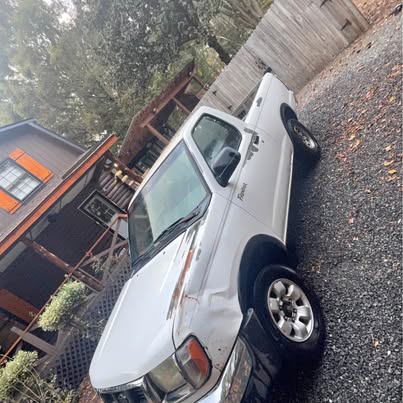
The frame rails. The D22's fully boxed frame is strong when sound and treacherous when not, because box sections rot from the inside out: mud and salt-laden water get in through the drain holes and seams, sit in the bottom of the rail, and perforate it from within, so a rail can look painted and respectable outside and be tissue-thin at its lower edge. The worst areas are the rear rails over and behind the rear axle, the spring hanger and shackle mounts, the crossmembers, and the sections under the cab mounts. Get under the truck with a torch and a screwdriver and prod the bottom faces of the rails, not the sides: sound steel rings and resists; rotten steel crunches, flakes and gives. Frame repair is fabrication — cutting out and plating sections, per area, at roughly $800–2,000 a section fitted by a shop willing to do it — and a truck needing several sections needs them at a price that exceeds what the finished truck is worth. This is the check that ends inspections, and it is why the survivors cluster in Florida, Tennessee and North Carolina rather than the salt belt: all eight trucks we track sit in those three states. A northern truck is not automatically rotten, but it has to prove itself underneath in a way a southern truck does not.
The bed. The bed floor rusts where water stands: under drop-in bedliners (the single worst accessory ever fitted to these trucks — a plastic liner traps water and grit against the floor and grinds the paint off, so a lined bed is a rusted bed until you lift the liner and prove otherwise), around the wheel tubs, and along the front bed panel where dirt packs against the cab. Lift any liner. Prod the floor at the front corners and over the wheel arches. Surface rust is a wire-brush-and-paint afternoon; holes over the tubs are panel work. Check the tailgate too: its bottom edge and cable anchors rot, and a tailgate that sags or will not latch is usually rusted hinges and cables rather than adjustment. And look at the bed from behind the truck: a bed visibly tilted against the cab line means tired or collapsed cab and bed mounts — rubber, perishable and replaceable, but a sign the truck has been worked hard.
The cab. Rocker panels and cab corners trap mud thrown up by the front wheels and rot from inside, announced by bubbling at the lower edges of the cab behind the front wheels and at the rear corners. Door bottoms follow the usual pattern — drain slots block, doors hold water, the lower skin bubbles. Floor pans rust from the inside where wet boots and a leaking windshield or heater box keep the carpet damp: lift the carpets in both footwells and prod. None of this is structural in the way the frame is, but rocker and cab-corner welding is real money per side — roughly $600–1,500 a side cut out, welded and painted — and it never travels alone; a cab with rotten corners deserves a second, harder look at the frame rails beneath it.
The smaller traps. The spare wheel hangs under the bed on a cable winch that seizes solid with rust and road dirt, usually discovered at midnight in the rain; lower the spare on the viewing and check both the tyre and the mechanism. Fuel and brake lines run along the frame rail and corrode where clips hold dirt against them — a weeping brake line is a safety item, not a haggling point. The fuel filler neck perishes and leaks on filling, and the radiator support panel rusts where it catches spray. Individually these are small jobs; together they tell you whether the truck has lived under cover or in a field.
The V6's known jobs: manifolds, distributor and the rest of the engine bay
The VG33E's problems beyond the belt and knock sensor covered in section three are concentrated, predictable and priceable.
Cracked exhaust manifolds. The cast manifolds crack with heat cycles, the passenger side more than the driver's. The symptom is diagnostic gold: a sharp ticking or chuffing from the engine bay on a cold start that fades within a few minutes as the manifold warms, expands and seals its own crack. Sellers describe it as "a lifter tick" — it is not; lifter noise does not vanish on a timer as the engine warms. The repair is a manifold replacement, roughly $500–1,000 a side fitted, and the price risk is the studs: manifold studs snap on removal with enthusiasm, and extracting them adds hours. A truck with both sides ticking cold has a four-figure conversation attached to it.
The distributor. Both engines use a distributor, and on both it is a wear item in a way modern coil-on-plug cars never teach you to expect. The shaft bearing wears, the shaft begins to wobble, and the crank-angle signal the ECU depends on degrades: an intermittent stumble, a misfire that moves around, a stall at temperature and a hot no-start that cures itself after twenty minutes of cooling. Because the fault is thermal and intermittent, trucks accumulate new plugs, wires and fuel pumps chasing it. You cannot strip a distributor on a seller's driveway, but a history showing repeated ignition parts without a distributor, on a truck that "sometimes cuts out when hot", is the pattern. A replacement is a few hundred dollars in parts and an hour to fit and time — a satisfying fix, but only once you have identified it.
Cooling. Both engines use a belt-driven fan with a viscous clutch, and the clutch is a silent failure: it stops locking up as the engine gets hot, the fan freewheels, and the truck overheats in traffic or on grades while cruising happily at speed. Spin the fan on a warm engine after a run — it should resist and stop quickly; a fan that spins freely by hand is a dead clutch, a $150–300 part and an easy fit, but the overheating it caused may already have cost the head gaskets, so treat temperature history seriously. Radiators are aluminium with plastic tanks that crack at the seams with age; look for coolant staining and a sweet smell at the top tank. A Frontier that runs hot is never "just the gauge" until the clutch, radiator and thermostat have each been cleared.
Suspension, steering and brakes
The front suspension is a double-wishbone layout located by torsion bars, and its wear items are honest truck parts: ball joints (upper and lower), tie-rod ends, and the steering linkage's idler arm. The recirculating-ball steering box itself is durable, but the linkage in front of it is not — a worn idler arm and centre link give the classic Frontier vagueness, a dead zone at straight-ahead and a wander that drivers compensate for without noticing. Rock the steering wheel gently on the viewing and watch the front wheels: movement at the wheel with no movement at the tyre is linkage play, priced at a few hundred dollars in parts. Ball joints are a safety check, not a feel check — jack each front corner and lever the wheel; play in a lower ball joint on a torsion-bar truck is a joint under permanent load, and it gets replaced before the truck is driven any distance, roughly $300–600 a side fitted for joints and alignment.
Torsion bars and stance. The front ride height is set by the torsion bars' adjusters, and sagging or uneven stance is common: bars tire, and previous owners "fix" a low nose by cranking the adjusters, which restores height at the cost of ride and alignment. Measure the stance on flat ground — level side to side, very slightly nose-down or level front to rear. A truck cranked hard on its adjusters to look level is telling you its bars or its rear springs are done.
The rear end. Leaf springs sag, crack leaves (look along each pack for a leaf that ends abruptly or sits offset) and wear their shackle bushes, giving a tail-down stance and a clunk over bumps. Replacement spring packs are available and not exotic — a few hundred dollars a side in parts — but a truck with a broken leaf has usually been overloaded, which sends you back to the frame and the bed with fresh suspicion. Rear dampers are cheap; front dampers likewise. Worn dampers on these trucks are so common as to be assumed: budget for a set on any truck without a recent invoice.
Brakes. Front discs, rear drums, with anti-lock on the rear axle on early trucks and fuller ABS later. The failure pattern is age, not design: front calipers seize on trucks that sit, giving a pull under braking and one hot wheel; rear drum self-adjusters stop adjusting, giving a long pedal; flexible hoses perish internally and act as one-way valves, holding a brake on. A full hydraulic refresh — calipers, hoses, rear cylinders, fluid — runs roughly $600–1,200 fitted and transforms a vague truck. Judge the discs for a rust lip and scoring, and remember a Frontier is light: if the brakes feel genuinely bad, something is seized, not merely worn.
Cab, bed and interior
The cab is simple and mostly durable, and its faults are the faults of a working truck. Seat foams collapse on the driver's side first — sit in the driver's seat, not the passenger's, and feel for the frame through the cushion; the covers split at the entry bolster where drivers slide in. A collapsed seat is daily misery, so price a replacement seat or a foam-and-cover job at a few hundred dollars. Headliners sag on southern trucks as the foam backing cooks — and remember our entire pool is southern: Florida, Tennessee and North Carolina heat is exactly what kills headliner glue. Window regulators, manual and electric, wear and slow; a window that needs helping up is a regulator, not a switch, nine times in ten. Door hinges drop, especially the driver's; lift the open door by its outer edge and feel for play.
The heater and air conditioning deserve a full test whatever the weather. Blower speeds die one by one as the resistor pack burns out (a cheap part), leaving only full speed, which is the resistor's signature and not the motor's. Air conditioning compressors and condensers die of age and Florida use; a full AC revival on a dead system — compressor, receiver-drier, flush, gas — runs roughly $700–1,200, and on a southern truck AC is not a luxury item in the value calculation, it is half the point of the cab. Heater cores leak into the passenger footwell (sweet smell, greasy mist inside the windshield) and are a dashboard-out job: a few hundred in parts and most of a day in labour. Check the footwell carpets for dampness and smell them.
Electrics are refreshingly simple, and fail at the usual places: the alternator, the starter (a click and silence on a hot restart), corroded battery terminals and earth straps, and the fuel gauge sender in the tank, which reads erratically or dies — an erratic gauge is the sender until proven otherwise, and it is a tank-down job, so note it. A truck where everything electrical works has usually been used and maintained, which remains the best single sign there is.
How to inspect one
Allow an hour, bring a torch, a screwdriver for prodding the frame, an OBD-II code reader (a basic one costs less than a tank of fuel and is the highest-value tool in this inspection), and a friend to work the steering and pedals while you watch. Insist on a cold engine when you arrive. If the truck passes you, a lift inspection is still worth paying for — the frame check in step 4 decides everything, and it is ten times easier from underneath on a lift than on a driveway.
- Start with the paperwork. Match the VIN on the title to the plate at the base of the windshield and the sticker on the driver's door jamb. Then go straight to the history file: on a V6 truck you are looking for one document above all others — a timing-belt invoice with a date and mileage, per the belt section above. No invoice means the belt is due, whatever the seller says, and you price it that way.
- Cold start, ears first. Stand at the front. A KA24DE four should start quietly — a rattle or scrape from the front of the engine that lasts beyond the first seconds is the timing chain and its guides asking for money. A VG33E V6 should start cleanly; listen instead for a sharp exhaust ticking that fades as it warms, which is the cracked manifold from the problem areas, and for a marbles-rattling noise from the top of an SC's engine, which is the supercharger coupler.
- Read the codes before you drive. Plug in the reader even if no warning light is showing — on the V6, the knock-sensor code P0325 is routinely stored without lighting the dash, and it explains a sluggish truck and prices a repair. Note every stored and pending code. A seller who will not let you plug a reader in has told you what the reader would have said.
- Under the truck: the frame. This is the step that decides whether the inspection continues. Torch and screwdriver along both frame rails, prodding the bottom faces — over the rear axle, at the spring hangers and shackles, at the crossmembers and under the cab mounts. Crunching, flaking or perforation in the rails is structural; walk away from a truck whose rails give under the screwdriver, because no engine or interior makes up for it. While you are under there: leaf springs for cracked leaves, CV boots on a 4x4, brake and fuel lines for corrosion, and the spare-wheel winch — lower the spare and confirm the mechanism works.
- The bed and the cab. Lift any bedliner and prod the bed floor at the front corners and over the wheel tubs — a liner hides rust as a service to the seller, not to you. Check the tailgate's bottom edge, cables and latches. Then the cab: rockers and cab corners for bubbling, door bottoms for blistering, and lift both footwell carpets to look for damp and floor rust.
- Engine bay, warm. With the engine hot, spin the fan by hand (engine off): strong resistance is a live viscous clutch; a fan that freewheels is the cooling fault from the problem areas, and it makes you ask what the overheating has already done. Look for coolant staining at the radiator's top tank, oil weeping from the valve covers, and perished hoses. Pull the oil filler cap: mayonnaise under it ends negotiations until explained.
- Steering and front end. Engine running, have your friend rock the steering wheel through its free play while you watch the linkage: play at the wheel that does not reach the tyres is the idler arm and centre link. Jack each front corner and lever the wheel top-to-bottom and side-to-side — ball-joint play is a safety item and a priced job, not a quirk.
- Stance. Stand back on flat ground and look at the truck as a whole. It should sit level side to side, level or a touch nose-down. Tail-down means tired rear springs; a nose cranked up on its torsion adjusters to mask sag means tired bars; a lean means one corner's hardware is done.
- The test drive. Fifteen minutes minimum, including a grade and a stretch at highway speed. A V6 should pull strongly and cleanly — a truck that feels gutless and heavy on fuel is the knock-sensor story from section three until the codes prove otherwise. An SC should feel decisively stronger than a standard V6 from low revs; if it does not, it is not making boost and you do not pay the SC premium. Work the gearbox hard: the manual should take a quick downshift into second without a crunch; the automatic, fully warm, should shift cleanly, kick down without flaring, and engage reverse without a pause or a thump.10. 4WD, if fitted. On dirt or gravel — never dry pavement — engage 4WD high and low, drive a short distance in each, and listen for chain clunk from the transfer case and clicking from the front hubs. Then disengage and confirm the hubs release and the truck rolls free in 2WD. A system that will not engage, or will not let go, is a repair you price, not a feature you imagine.
- Brakes and heat. Brake firmly from speed: the truck should stop straight, without pull or judder — a pull is a seized caliper until proven otherwise. Then let it idle hot for five minutes and watch the temperature gauge; a gauge that climbs at idle and falls at speed is the fan clutch again. Whatever the weather, run the heater and the air conditioning: the blower on every speed (missing speeds are the resistor pack), the AC properly cold (a revival is a four-figure-adjacent job on a southern truck), and smell for the sweet, greasy signature of a leaking heater core.
- Interior last. Sit in the driver's seat and feel for the frame through a collapsed cushion. Work every window, lock, light, wiper and the washers. Watch the fuel gauge against what the seller says is in the tank — an erratic gauge is the sender, a tank-down job. A sound, honest interior is worth real money on a truck like this: it is the part you touch every day, and the part that tells you whether the truck was kept or merely used up.
Values
The build's market block beneath this guide carries the current listing figures, and they move; what does not move is the shape of this market, and that is what this section teaches. The first-generation Frontier is a working truck priced as a working truck, and its value is set by condition and capability far more than by rarity or specification romance. Read any asking price against the following.
The condition spread is enormous, and it is driven from underneath. Two trucks of the same year, cab and engine can sit at opposite ends of the market because one has a sound frame and a documented timing belt and the other has neither. The frame is the value: a perforated frame does not make a Frontier cheap, it makes it a parts truck, and the honest market treats it that way. At the other end, a genuinely rust-free southern truck with a full belt-and-maintenance history commands its premium because the supply of them only shrinks — these trucks were bought to work, and most were worked to death.
Within the range, capability carries the premiums. Four-wheel drive adds real money over an identical 2WD truck; the V6 adds money over the four; the Crew Cab — the family-usable one — is priced above King Cabs of the same condition, and the 2003–04 Crew Cab Long Bed, the most versatile of all, sits at the top of the ordinary range. The SC carries a premium over the standard V6 when it is verifiably making boost with a healthy blower and a live knock sensor, and very little when it is not — a tired SC is a thirsty V6 with an extra liability, and the market knows it. The Desert Runner prices between the 2WD and 4WD trucks, and beware sellers asking 4x4 money for one. Manuals are scarcer than automatics in this market — two of the eight trucks we currently track — and scarcity cuts both ways: the right buyer pays a small premium for a good manual, while the average Marketplace buyer discounts what they cannot drive.
Asking prices on the marketplaces where most of these trucks now sell are opening positions, not achieved prices, and the gap widens with the optimism of the listing. Trucks priced on what the seller has spent — a rebuilt automatic, a new clutch, fresh paint over an unexamined frame — sit unsold; trucks priced on frame condition and history sell. The project-versus-driver gap is the other constant: a non-running or belt-due V6 truck is worth dramatically less than the same truck driving, because the buyer is purchasing unknowns in a specific order — belt, then whatever the codes say, then the frame verdict — and each unknown is priced at its worst case. If you are selling, the cheapest value you will ever add to a V6 Frontier is a timing-belt invoice and a clean code scan. If you are buying, a truck with both is worth paying up for, and a truck with neither should be priced as if both jobs are already owed — because they are.
Parts and ownership
The Frontier's parts position is one of its strongest arguments. Nissan built the D22 for years, sold it worldwide as the Pickup and Navara, and shared its mechanicals with the first-generation Xterra and, in the VG33E's case, the Pathfinder and Quest — so the population of engines, gearboxes and suspension parts in the world is far larger than one US truck range.
Easy: service items, filters, plugs, belts and hoses; brake discs, pads, calipers, drums and cylinders; dampers, ball joints, tie rods and steering linkage parts; clutch kits; alternators, starters and water pumps; radiators and fan clutches; exhaust systems in standard form; leaf springs and bushes; timing-belt kits for the V6 (belt, tensioner, idlers and pump are sold as a set precisely because the job is a known ritual). Order today, fit this weekend.
Harder and dearer: the supercharger on the SC — exchange and rebuilt units exist but are a real bill, and SC-specific parts are SC-only; the knock sensor is a cheap part in an expensive address, as section three explains; exhaust manifolds that are not cracked are worth money used, which tells you about the supply; Crew Cab Long Bed body panels and beds are the rarest sheet metal in the range; facelift (2001–04) front-end panels, lamps and bumpers do not interchange with the 1998–2000 nose, so used front clips must match the era; and interior trim in uncooked condition — dash tops, headliners, seat foams — is increasingly the hardest thing to find nice, because the surviving trucks are southern and the sun has had twenty years at them.
Running costs. Fuel is the headline: the four-cylinder is the economical truck, returning figures in the low twenties on a highway run in gentle use; the V6 lives in the mid-to-high teens; the SC is thirstier than the V6 everywhere and drinks premium on top of it. Budget the V6's timing belt as a recurring cost of ownership, not a one-off — every 105,000 miles it comes round again. Insurance is ordinary working-truck money, and the mechanical simplicity means any competent independent shop can maintain one; there is no Frontier job in this guide that requires a Nissan dealer. The budget line that catches new owners is the first year: catching up a neglected truck — belt service on the V6, a full brake refresh, dampers, tyres, fluids and the small stuff — honestly runs into the low thousands before you improve anything. Buy a truck that has been in regular use over one that has been asleep in a field, even at a higher price: sitting is what seizes the calipers, rots the brake lines, kills the AC seals and lets the frame's drain holes pack with the mud that rots it from inside.
Which one to buy
- The all-rounder: King Cab SE V6 4x4. The classic Frontier — proper power, a 6-foot bed, jump seats for occasional passengers, and the part-time 4WD for when you need it. The deepest pool to buy from and the easiest to sell on. Insist on the belt invoice.
- The value buy: a four-cylinder regular cab or King Cab, manual. The cheapest Frontier to buy and to keep — a timing chain instead of a belt, the best fuel economy in the range, and almost nothing on it that costs real money. Slow, honest, and exactly enough truck for most jobs.
- The family truck: Crew Cab, 2003–04 Long Bed if you can find one. Four doors and a real rear seat; the long bed removes the one compromise the early Crew Cabs force on you. Short-bed Crew Cabs (2000–02) are fine trucks priced as if the bed did not matter — make sure your life agrees before you pay.
- The dry-country truck: Desert Runner. The 4x4 stance and hardware without the transfer case, front differential and CV joints to maintain. The smart buy where the weather is kind — which is most of the market. Just never pay 4x4 money for it.
- The enthusiast's truck: the SC. The fastest, rarest-feeling Frontier and the only one with genuine collector curiosity about it. Buy it only with verified boost, a quiet blower, a live knock sensor and a documented belt — an SC missing any of those is a V6 with a drinking habit.
- The workhorse: any automatic V6 with a history. If the truck is for towing and daily work, the RE4R01A automatic with evidence of fluid changes is the least-effort ownership there is — provided the frame passes step 4.
And the rule that overrides all of the above: buy the frame, then the belt history, then everything else. Engines, gearboxes, manifolds, distributors and blowers are all fixable at prices you can plan for, and this guide has priced them. A rotten frame is the one thing about a Frontier that costs more to put right than the finished truck will ever be worth — so the best Frontier is the soundest one underneath, in whatever cab and engine you can live with.
Listed now
On Classic Listings today: 2 cars are listed here; 1 for sale and 0 marked sold; average asking price $4,000; asking range $4,000 to $4,000.
See the 2 Frontier cars currently listed.
The market — recorded sales
No dated sales recorded for this series yet — as sales are recorded, they will appear here with their dates and prices.
For sale now
$4,000