
Nissan Frontier Pickup buyer's guide
Nissan Frontier Pickup -- the model's own buyer's guide: variants, values and what to check.
Years listed: 1998-1999 · Series: Frontier
Overview and history
You buy a Nissan Frontier for one reason above all others: it does truck work without truck theatre. It has a separate frame, a live rear axle on leaf springs, an engine you can reach, and controls you can operate with gloves on. Across two long-lived generations — the compact D22 of 1998–2004 and the mid-size D40 of 2005–2021 — Nissan changes the size, the power and the styling, but never that proposition. If you want a pickup that tows a small trailer, carries a motorcycle, commutes in winter and still parks in a normal space, the Frontier does all of it without demanding full-size money or full-size patience.
Understand the split first, because "Frontier" names two quite different trucks. The D22 is a compact pickup in the old sense: narrow, light, simple, and — in four-cylinder form — slow in a way modern drivers forget exists. The D40 is a mid-size truck built on a shortened, boxed version of the Titan's F-Alpha frame, with a big V6, a proper crew cab and towing ability that embarrasses the D22. They share a badge and very little else. You choose the D22 when small, cheap and simple matter most; you choose the D40 when you need one truck to do family, towing and daily duties together. This guide covers both, because the used market treats them as one continuous nameplate.
The Frontier arrives for the 1998 model year as the replacement for the Hardbody, Nissan's D21 pickup. Nissan builds the D22 at Smyrna, Tennessee, and the American manufacture matters to you now: parts distribution, dealer familiarity and salvage supply all run deeper than for an imported contemporary. The early D22 keeps the Hardbody virtues — double-wishbone front suspension with torsion bars, a stout ladder frame, regular cab and King Cab bodies — in softer, rounder styling, with a twin-cam development of Nissan's KA four-cylinder or, optionally, the VG V6 in enlarged 3.3-litre form. Nothing about the launch truck is daring, and that is precisely why so many survive.
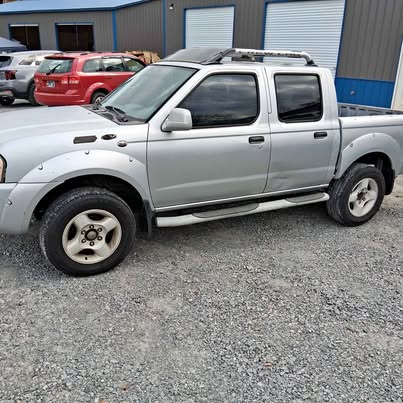
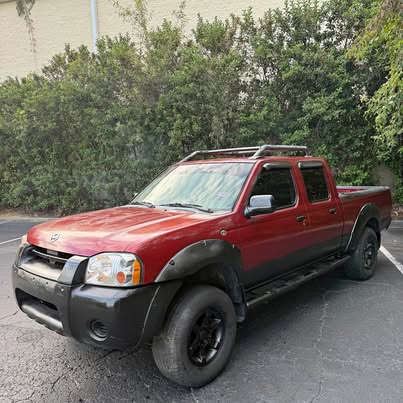
Two D22 developments change the truck's reach. For 2000 Nissan adds a Crew Cab with four full doors and a shortened bed of about 4 feet 7 inches, and claims — correctly — the first compact crew cab offered in the United States. The bed shrinks to near-uselessness for sheet goods, but the cab turns a work truck into a family vehicle years before the segment accepts the idea. For 2001, Nissan facelifts the range with the blunt, industrial styling you probably picture when you hear the name, and adds the supercharged V6, badged SC, which gives the compact truck genuine pace at a genuine fuel cost. A long-bed crew cab, with about 6 feet of bed behind four doors, follows and quietly becomes one of the most useful shapes in the run — if you find one, look twice.
The D40 replaces the D22 for 2005 and grows in every dimension that matters: wheelbase, width, payload and towing all step up. The styling borrows the Titan's face; the structure borrows its thinking, with a fully boxed frame where the D22 uses a more conventional design. The standard V6 is now the 4.0-litre VQ40DE, and a six-speed manual remains available — a fact that matters more every year, because the D40 becomes one of the last mid-size trucks you can buy new with three pedals. King Cab and Crew Cab bodies continue, with short and long beds, and production moves from Smyrna to Canton, Mississippi, for 2013. The truck then stays in production, with detail changes only, until 2021 — a run that cuts both ways: the design is proven and parts are everywhere, but a 2019 Frontier is, in engineering terms, a 2005 truck.
A third generation, with a 3.8-litre direct-injection V6 and a nine-speed automatic, arrives for 2022. It lies outside this guide's scope and shares almost nothing mechanical with either generation covered here.
Correct two myths at the door. First, the Frontier is not "a Titan underneath" in any parts sense: the D40 shares frame architecture with the Titan, not interchangeable running gear. Second, the supercharged D22 is not a factory hot rod with strengthened internals — it is a standard VG33E with an Eaton-type supercharger and a thirst to match, and you inspect it as a hard-used V6 first. A third myth deserves equal bluntness: no Frontier is rust-proof. These trucks rust at the frame, and the frame — not the engine — decides whether an old Frontier is a vehicle or a parts donor.
A note on the pool behind this guide. The Classic Listings pool holds just 8 Frontiers, all for sale and all first-generation D22 trucks — three from 1998, one each from 1999, 2001 and 2002, and two from 2004, listed in Florida, Tennessee and North Carolina, six automatics and two manuals. Treat that small, southern sample as a snapshot of the bargain end of the market, not a census: D40 supply nationally is far larger, and the D40 guidance here rests on the model's documented service history, not on those 8 listings.
The models
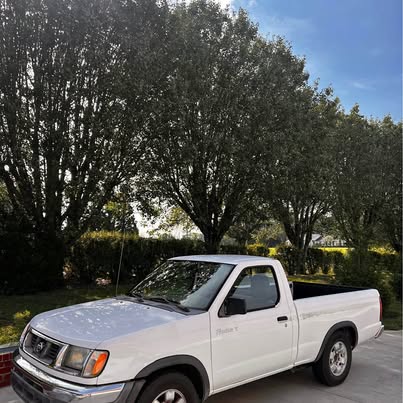
You shop the Frontier by cab first, bed second, engine third and trim last — the reverse of how sellers advertise them. Cab and bed fix what the truck can do for the next five years; trim only fixes how pleasant it feels while doing it. A trimmed crew cab with a 4-foot-7-inch bed still refuses a sheet of plywood lying flat, and a base regular cab still carries a motorcycle with the tailgate up. Decide the shape your life needs, then hunt the best example of that shape.
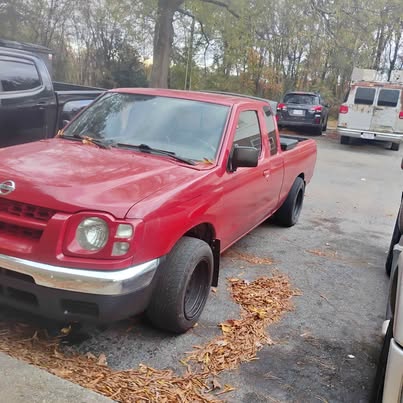
The D22 range opens with the Regular Cab: two doors and a bed of about 6 feet. This is the lightest, cheapest and simplest Frontier ever made, and for a single driver who works alone it remains the rational buy. The King Cab adds a small extended compartment with side-facing jump seats that suit children, tools and dogs — in that order of comfort — and keeps a 6-foot bed. The Crew Cab, from 2000, gives you four proper doors and a real rear bench at the cost of bed length: about 4 feet 7 inches on the standard crew, about 6 feet on the rare long-bed crew. Four-wheel drive is available across the range; two-wheel drive dominates the southern pool and costs less to run, feed and repair.
D22 trim names shift across the years, but the ladder is consistent. XE is the base working truck: hard-wearing cloth, steel wheels, the fewest toys to fail. SE is the common mid-point; LE tops the regular range, with leather available. Desert Runner, offered on two-wheel-drive King Cabs, confuses buyers most: it uses the four-wheel-drive chassis and ride height in a two-wheel-drive truck, for the pre-runner look. You get the stance without the transfer case — excellent if you never need front traction, a disappointment if you discover the missing lever after you pay. SC denotes the supercharged V6 for 2001–2004. Check any SC in person: badges are cheap, superchargers are not, and more than one naturally aspirated truck wears the letters.
The D40 range simplifies the shapes and expands the capability. The King Cab pairs small rear-hinged rear doors with a 6-foot bed. The Crew Cab offers a short bed of about 5 feet or a long bed of about 6 feet on a longer wheelbase. The trim ladder runs S, SV, SL and PRO-4X, with earlier years using XE, SE, LE and Nismo Off Road names before Nissan tidies the range around 2011. S is the fleet-and-work specification, often with the four-cylinder engine. SV is the volume trim and the sweet spot: V6 power, sensible equipment and the deepest choice. SL adds leather and comfort equipment. PRO-4X — called Nismo Off Road on early D40s — is the off-road flagship: Bilstein dampers, an electronic locking rear differential, skid plates and all-terrain tyres. You pay a premium for it, and you should: the locker alone is real capability. But you inspect a PRO-4X harder, because owners buy it to use it.
Study the table as a map, not a menu. Outputs are period factory claims for the common United States specification; small variations exist by year, but a seller who quotes you the wrong engine entirely is telling you to walk away.
| Model | Years | Engine | Output | Built | Character |
|---|---|---|---|---|---|
| Frontier Regular Cab XE (D22) | 1998–2004 | KA24DE 2.4 I4 | 143 hp | Smyrna, TN | The basic tool: lightest, cheapest, slowest, longest-lived |
| Frontier King Cab XE/SE (D22) | 1998–2004 | KA24DE 2.4 I4 / VG33E 3.3 V6 | 143 / 170 hp | Smyrna, TN | Jump seats and a full bed; the classic compact compromise |
| Frontier Desert Runner (D22) | 2000–2004 | VG33E 3.3 V6 | 170 hp | Smyrna, TN | 4x4 chassis and stance, 2WD running costs — check for the missing transfer case |
| Frontier Crew Cab SE/LE (D22) | 2000–2004 | VG33E 3.3 V6 | 170 hp | Smyrna, TN | First compact crew cab; family cab, toy bed unless you find the long-bed |
| Frontier SC (D22) | 2001–2004 | VG33ER 3.3 V6 supercharged | 210 hp | Smyrna, TN | Real pace, premium fuel, heavy thirst; inspect as a hard-used V6 |
| Frontier King Cab S (D40) | 2005–2021 | QR25DE 2.5 I4 | 152 hp | Smyrna, TN / Canton, MS | The economy D40; adequate empty, breathless loaded or towing |
| Frontier S/SV (D40) | 2005–2021 | VQ40DE 4.0 V6 | 261 hp | Smyrna, TN / Canton, MS | The volume truck and the default buy; torque does the talking |
| Frontier Crew Cab Long Bed SV/SL (D40) | 2005–2021 | VQ40DE 4.0 V6 | 261 hp | Smyrna, TN / Canton, MS | Family cab plus a usable bed; the one-truck answer, at a wheelbase cost |
| Frontier PRO-4X / Nismo Off Road (D40) | 2005–2021 | VQ40DE 4.0 V6 | 261 hp | Smyrna, TN / Canton, MS | Locker, Bilsteins, plates; genuine ability, harder prior lives |
Two identity checks protect you across both generations. First, the VIN plate at the base of the windscreen and the door-jamb sticker must agree with each other and with the title; on a truck this old and this commonly repaired, only paperwork settles a mismatch. Second, engine identity is physical, not verbal: the KA four has a single narrow cam cover; the VG V6 sits wide and low with the distributor at the rear on D22s; the supercharged VG carries the blower visibly on top; the VQ40 fills a much larger bay. Open the bonnet before you discuss price. Sellers confuse King Cab and Crew Cab, XE and SE, and — most expensively — two-wheel drive and four-wheel drive on Desert Runners. The truck in front of you outranks the advert every time.
Bed and payload honesty matters more than trim pedantry. Payload runs roughly 1,000–1,400 lb for a D22 and roughly 1,100–1,600 lb for a D40 depending on specification, with towing rising from roughly 3,500 lb at best for a D22 V6 to roughly 6,500–6,700 lb for a well-specified D40 V6. Those are period maxima for correctly equipped trucks, not promises for a tired example with sagging springs. If you tow near the limit, you buy the D40 and weigh the loaded trailer. If you never tow, the D22's smaller appetite rewards you every week.
Engines and gearboxes
Three engine families carry this guide, with three different personalities and three different service clocks. The KA24DE four is the tortoise: modest, honest and timed by a chain. The VG33E V6 is the mule: stronger, older in design, and timed by a belt whose replacement date you must know. The VQ40DE V6 is the athlete: powerful, modern and timed by chains whose guides wear in a specific, audible way on early D40s. Learn which clock your truck runs on first, because the most expensive sentence in Frontier ownership is "I assumed it was a chain."
KA24DE
The KA24DE is a 2.4-litre, iron-block, aluminium-head inline four with double overhead cams, rated at 143 hp and about 154 lb-ft of torque in Frontier tune. You find it in regular-cab and King Cab D22s, as the base engine from 1998 to 2004. Nissan uses versions of the KA across cars and trucks for years, and that breadth is your friend: every parts counter in America knows this engine, every salvage yard holds several, and nothing about it is exotic. It sits upright and accessible in a generous bay, with room around it for hands, tools and light.
On the road the KA tells the truth immediately. It pulls cleanly at low speed, cruises adequately in a light truck, and runs out of breath with a load, a hill or a headwind — often all three. Fuel economy is the compensation: a two-wheel-drive KA truck is the cheapest Frontier to feed and to run. If your work is local and your loads are bulky rather than heavy, this engine suits the truck better than its figures suggest. If you tow, climb or hurry, it does not, and no tune-up changes that verdict.
Mechanically, you watch three things. The timing chain and its guides live a long life, but a high-mileage KA rattles at cold start as they wear; a brief half-second of noise that fades is age, while sustained rattle that returns at hot idle is a chain job asking for money — budget roughly $700–1,400 for chain, guides and tensioner work, and treat "they all do that" as an invitation to negotiate or leave. The distributor develops bearing wear and internal oil leakage, showing as a hot misfire and oil inside the cap; a replacement runs roughly $250–500 in parts with straightforward fitting. Valve clearances use shim adjustment and drift tight on neglected trucks, showing as a tick and a reluctance to idle cleanly; checking them is cheap, ignoring them until a valve burns is not. Beyond those, the KA leaks modestly with age and otherwise endures. A KA that starts cleanly, idles evenly and shows no rattle hot or cold is as close to a sure thing as a 25-year-old engine gets.
For the D40, Nissan replaces the KA with the 2.5-litre QR25DE four, rated at 152 hp, in King Cab S trucks. It is a different, all-aluminium engine with its own habits — notably oil consumption on worn examples — and the same performance verdict applies: adequate empty, strained at work. Most buyers should skip the four-cylinder D40 entirely; the V6 costs little more used, works far harder and holds value better.
VG33E
The VG33E is a 3.3-litre, single-overhead-cam-per-bank V6 with an iron block, rated at 170 hp and about 200 lb-ft of torque in naturally aspirated tune. It powers the heavier D22s — crew cabs, four-wheel drives and Desert Runners — and earns its place with low-speed torque the four cannot match. Where the KA needs revs and planning, the VG leans on its displacement and pulls. For a crew cab it is effectively mandatory: the V6 is the engine that body was sold with in the United States and the only one that moves it convincingly.
The VG's defining maintenance fact is its timing belt. The belt drives the cams, the service interval is 105,000 miles or the age limit in the handbook, and the VG33E in the Frontier is an interference design in the practical sense that matters: a snapped belt risks bent valves and turns a service item into an engine-out conversation. You therefore ask one question of every VG seller — "when was the belt last changed, and where is the invoice?" — and you price the truck as if the belt is due unless paper proves otherwise. A belt service with water pump, tensioners and seals runs roughly $700–1,200 at an independent shop; add that figure to the asking price of every undocumented truck and see if the deal still works. A sticker on the timing cover with a date and mileage is better than a verbal assurance and worse than an invoice; a verbal assurance alone is worth nothing.
Beyond the belt, the VG has a known cast of supporting faults. Exhaust manifolds crack, particularly on trucks that tow or work in heat, announcing themselves with a cold-start tick that quietens as the manifold expands — or does not, once the crack grows; replacement runs roughly $600–1,200 per side in bad cases, with broken studs, not the casting, driving the cost. The distributor wears its bearing and leaks internally, as on the KA. The knock sensor, buried under the intake, fails and quietly retards timing, costing power and economy; replacement is labour-heavy for a cheap part at roughly $400–800 all-in. None of these faults is exotic, but they accumulate on a truck whose owner deferred everything at once — which is why a VG with invoices is worth real money over a VG with stories.
The supercharged VG33ER, sold in the SC for 2001–2004, adds an Eaton-type Roots supercharger and a premium-fuel requirement, and lifts output to 210 hp and about 246 lb-ft. The pace is genuine — an SC pulls like a small V8 — and so is the consumption, which drops into the low teens in real use. You inspect an SC exactly as a VG, plus two checks: listen for bearing growl from the blower at idle, and check the blower's own oil service history, which owners forget because the unit has a separate small reservoir. Budget roughly $800–1,500 for a rebuilt supercharger if the bearings sing, and walk away from any SC that detonates under load or wears SC badges over a naturally aspirated engine — the conversion does not exist as a cheap bolt-on, whatever the seller believes.
VQ40DE
The VQ40DE is a 4.0-litre, all-aluminium, double-overhead-cam V6, a long-stroke member of Nissan's VQ family, rated at 261 hp and 281 lb-ft of torque. It powers the D40 from 2005 to 2021 and transforms the Frontier from adequate to authoritative: the torque arrives low and stays broad, and the truck tows its rated loads without drama. This is one of the great working engines of its era, with one well-documented weakness the problem section dissects in full: on roughly 2005–2010 trucks, the secondary timing-chain guides and tensioner shoes wear prematurely, producing a rising whine that tracks engine speed and sounds, cruelly, like a supercharger. The fix is a full front-of-engine chain service. Everything else about the VQ40 is routine by comparison.
Routine, for the VQ40, means coil packs that fail individually with age and heat — a single-cylinder misfire at roughly $150–350 per coil fitted, replaced promptly before unburnt fuel cooks the catalytic converter. It means camshaft and crankshaft sensors that age out and cause long cranking or cutting out, at roughly $80–200 each in parts. It means an oil appetite on very high-mileage examples that you monitor rather than panic over, provided the exhaust stays clean and the plugs read evenly. And it means coolant that must stay the correct specification — a point that becomes critical in the radiator discussion below. A VQ40 that starts instantly, idles silently without whine and pulls cleanly is the strongest engine in this guide by a wide margin. A whining VQ40 is a negotiation with a known price tag; a danger-years automatic with milky transmission fluid is not a negotiation at all. It is a refusal.
A myth needs correcting here: the VQ40 is not "the 350Z engine in a truck." It shares VQ architecture with Nissan's sports cars, but the 4.0-litre truck engine has its own stroke, intake and tuning. The reverse myth — that the long run means every year is identical — is equally wrong. Early D40s carry the chain-guide and radiator risks in their sharpest forms; later trucks, broadly from 2011 onward, benefit from revised components, and a 2015 VQ40 is a materially safer buy than a 2006 VQ40 at the same mileage.
Gearboxes
You choose between manuals that reward you and automatics that demand one specific act of due diligence. The D22 offers a five-speed manual — light and direct, with a clutch at roughly $700–1,200 fitted when it wears — and a durable four-speed automatic that is entirely adequate behind either engine, provided its fluid history is sane. Check any D22 manual for synchromesh wear on second and third and for a high, slipping clutch bite, and test transfer-case engagement on four-wheel-drive trucks on a loose surface: a truck that will not engage low range on the test drive will not engage it on the boat ramp either.
The D40 offers a six-speed manual behind the V6 — a genuinely good gearbox, and the specification future enthusiasts will hunt — and the five-speed RE5R05A automatic, a fundamentally robust unit with one catastrophic external threat: the radiator failure detailed in the next section, which destroys more of these gearboxes than any internal weakness ever has. With clean fluid and firm shifts it is trustworthy; with pink, milky fluid it is scrap. On any D40 automatic you also check for top-gear shudder and delayed cold engagement, and you budget a fluid and filter service at roughly $250–450 as the first spend without recent evidence of one. Exercise every transfer-case mode on the test drive, because unused actuators seize, and a lit switch is not proof the front axle engaged — feel for it on gravel. Never let "sealed for life" talk you out of checking fluid condition: no Frontier automatic is sealed against inspection.
Problem areas
Every Frontier problem in this section is knowable before you pay: the catastrophic faults announce themselves in fluid colour, in sound, or in rust you can reach with a screwdriver and a torch. What separates a good buy from a disaster is whether you perform the specific test each fault demands, instead of a general wander around the truck. Work through these systems in order. The first two can each cost more than a cheap truck is worth; the rest decide whether a sound truck stays sound.
The radiator and the automatic gearbox: the strawberry milkshake
This is the most important passage in the guide if you buy an automatic D40. On D40 Frontiers from 2005 through roughly 2010 — the risk is sharpest in 2005–2008 and tapers as revised radiators enter production and service — the automatic transmission fluid is cooled by a heat exchanger inside the radiator's bottom tank. Engine coolant surrounds the exchanger; transmission fluid flows through it. The design is common across the industry. In this application, in these years, the exchanger wall corrodes and perforates. Coolant, under pressure, migrates into the transmission circuit, and transmission fluid migrates into the cooling system. Coolant destroys the friction material inside the RE5R05A gearbox: the glycol attacks the clutch linings and the adhesive that bonds them, contaminates the valve body, and turns a robust gearbox into a slipping, shuddering failure within a short distance — sometimes within miles of the breach becoming active.
The nickname comes from the evidence. Contaminated fluid turns pink, opaque and frothy — the strawberry milkshake of doom, in the forums' grim phrase. You check in three places. First, the coolant expansion tank, engine cold: coolant with an oily sheen, pink sludge or milky film has transmission fluid in it, and the breach is already two-way. Second, the transmission dipstick where fitted: healthy fluid is red and translucent; milkshake fluid is pink, milky and unmistakable once seen. Third, the drive itself: a contaminated gearbox slips, shudders and may lose drive as it warms. Any one of the three condemns the truck at any price that assumes a working gearbox. A contaminated RE5R05A rebuild or replacement runs roughly $3,500–6,000 fitted, plus a radiator and a full cooling-system flush — arithmetic that exceeds the value of most early D40s. You do not buy a milkshake truck unless the price treats the gearbox as scrap.
The prevention is cheap, proven and — this is the part sellers get wrong — verifiable. The better fix replaces the radiator with a revised or quality aftermarket unit; a replacement runs roughly $400–900 fitted and resets the clock entirely. The popular alternative is the bypass: the transmission lines are rerouted to run solely through the external air-to-fluid cooler the truck already carries, so coolant and fluid can never meet. The bypass costs roughly $50–200 and is effective insurance in most uses; its honest caveat is that the radiator exchanger also warms fluid on cold starts and assists cooling under extreme load, so a truck that tows heavily in mountains or severe heat is better served by a new radiator, or a bypass plus a supplementary cooler. Either fix, properly done, neutralises the fault. What does not is hope, a fluid change after contamination, or a seller's claim that "it never affected this one" without evidence.
Verifying a fix is a physical inspection, not a conversation. With the engine cold, you trace the two transmission cooler lines. In the original arrangement they run to fittings on the radiator's bottom tank; in a bypassed truck they loop instead toward the external cooler, and the radiator fittings stand capped or absent. You photograph what you find, and you ask for the radiator invoice: a revised unit fitted to a danger-years truck is exactly the history you want. If the truck still runs its original radiator, you do not panic and you do not pay full price: you price in an immediate radiator replacement as your first job — the first week, not the first year. Low mileage is no protection, because corrosion is a function of time and coolant condition as much as distance.
Note the boundaries precisely, because sloppy versions of this warning mislead in both directions. Manual-gearbox D40s cannot suffer this failure — there is no fluid circuit to contaminate. D22 automatics do not carry this specific risk; you judge them on fluid condition alone. Later D40s, broadly from 2011 onward, run revised radiators and fall outside the danger pattern in practice, though a fluid check costs ninety seconds and remains part of any inspection. Condemning every D40 automatic wastes good trucks; waving through a 2007 automatic without lifting the radiator cap wastes good money.
Timing chains, guides and the VG belt
The VQ40DE's second signature fault lives at the front of the engine. The VQ uses a main timing chain plus secondary chains, with plastic-faced guides and tensioner shoes controlling them. On early D40s — again, roughly 2005–2010 — the secondary chain's link plates carry edges sharp enough to saw through the tensioner shoe faces far earlier than design life. As the shoe wears through, chain control degrades, and you hear the symptom every owner describes the same way: a whine that rises and falls exactly with engine revs, present hot and cold. Owners mistake it for an alternator or a power-steering pump. The distinguishing test is isolation: the whine tracks revs in neutral with electrical loads making no difference, a stethoscope on the timing cover localises it to the chain case, and removing the drive belt briefly settles it definitively — if the noise persists with the belt off, it lives inside the cover.
The repair is a major service operation — timing cover off, chains, guides, tensioners and seals replaced — at roughly $1,800–3,200 at an independent shop. It is not fatal if caught at the whine stage; ignored until a chain jumps, it becomes a valve-timing catastrophe. As a buyer you treat a whining VQ40 as a priced defect: get the quote, deduct it, and require the rest of the truck to justify the effort. A truck with an invoice for the updated chain kit is worth a premium over a silent danger-years truck with no history, because silence at high mileage is not proof the wear has not started. Listen with the bonnet up, engine fully warm, at idle and at a held 2,000 rpm, before the test drive and again after it.
Contrast the other two engines so you never confuse their clocks. The KA24DE's chain wear shows as rattle, not whine, worst at cold start, at roughly half the VQ job's cost. The VG33E has no chain at all: it has the 105,000-mile belt, whose failure mode is silence followed by catastrophe, and whose only test is documentary. Three engines, three evidences: whine means VQ guides, cold rattle means KA chain, and silence with no paperwork on a VG means you budget the belt. Recite that before every viewing.
Frame rust and the underside
Rust decides Frontier values more than any engine fault, because engines unbolt and frames do not. The D22 frame traps mud and road salt against its inner faces and corrodes from the inside out in salt-belt service: the rails around the rear spring hangers, the crossmembers, the cab and bed mounts, and the sections ahead of the rear axle are the classic failure map. Surface scale is cosmetic; the failures that matter are perforation, flaking that reveals thinning, and mounts that flex when you lever them. Your tools are a torch, a hammer handle for sounding, and a screwdriver for probing suspect scale — with the seller's permission, firmly but fairly: a frame that cannot survive a probe cannot survive a pothole. A single localised rail repair runs roughly $500–1,500; widespread perforation is not a repair at all, it is the end of the truck as an economic proposition, and you walk regardless of engine, trim or price.
The D40's fully boxed frame resists the worst of the D22 pattern, but "better" is not "immune." You check the same geography and add one D40 habit: inspect inside the box sections through their drain holes with a torch, because a boxed rail hides corrosion until it is advanced. Also inspect the brake and fuel lines clipped along the rail: line corrosion is a safety and bargaining item, with full replacement at roughly $600–1,200 in labour-heavy fitting. A dry-state truck with a clean, factory-black frame is worth a substantial premium over a shinier salt-belt truck. The 8 pool trucks all sit in Florida, Tennessee and North Carolina — geography that favours frames — but you verify the individual truck's life, not its postcode: a Florida listing can hide a New York childhood.
Leaf springs deserve their own check. Both generations ride on rear leaf packs that sag with age and load abuse, crack individual leaves — look for the transverse crack near the centre bolt or eye — and wear their bushings into clonks. A pack replacement runs roughly $400–900 per side fitted, and a truck sitting low at the rear is telling you its springs, not its cheap-to-replace shocks, need money.
Suspension, steering and brakes
Neither Frontier uses exotic suspension, and both wear it out on schedule. The D22's torsion-bar front end wears ball joints, tie-rod ends and idler-arm bushes; you test by jacking the front safely and rocking each wheel at twelve-and-six and at three-and-nine. A D22 that wanders or wears its front tyres on one shoulder needs joints and an alignment, roughly $400–1,000 depending on how much you renew at once. Check CV boots on every 4x4: a split boot today is a joint replacement at roughly $250–500 per side tomorrow. The D40 uses coil-over struts and a steering rack; front-end clunks are usually sway-bar links at roughly $150–350 fitted, while rack leakage at high mileage climbs to roughly $800–1,400 fitted for a replacement rack.
On both generations you brake-test from speed: the truck must pull up straight, the pedal must stay firm, and pulsing means discs and pads at roughly $300–600 per axle. A D22 handbrake that barely holds usually needs drum service at roughly $200–450. An ABS lamp that stays lit deserves a code read, not a shrug. Four-wheel-drive systems on both trucks are part-time designs with no centre differential, which gives you a myth to correct: you never run four-wheel drive on dry pavement, and binding and hopping in tight tarmac circles are the system protesting correctly, not failing. Test engagement on gravel or wet grass instead.
Electrics, sensors and the small failures that strand you
Frontier electrics fail conventionally: age, heat and corrosion, in that order. On D40s, the fuel-level sending unit is the famous nuisance — the gauge reads erratically, drops to empty or sticks, because the sender's contact surface degrades. The repair drops the tank or lifts the bed and runs roughly $400–800 fitted; the workaround — refuelling by trip mileage — is tolerable but must be priced, not forgiven. Camshaft and crankshaft sensors on the VQ40 present electrically, as sudden cutting out and hot restart failure, and a code reader distinguishes them from fuel faults in minutes. The IPDM power distribution module occasionally fails in ways that mimic fuel-pump death, so a no-start D40 with a silent pump deserves the known relay-and-module checks before anyone sells you a pump.
On D22s, alternators and starters fail on the same schedule as any truck of the era, at roughly $250–500 each fitted, and window regulators and blower resistors join the usual list. Air-conditioning matters disproportionately in the southern market where most cheap D22s live: a full compressor-and-service job runs roughly $700–1,300, which on a bargain D22 can rival the truck's value — test it at idle and at speed on every viewing. A seller who maintained the small things usually maintained the belt, the coolant and the fluids. A seller who let six small things die has told you how the big things were treated.
Body, bed and cab
The steel above the frame fails more slowly, but in the same places on every truck: cab corners, rocker panels, wheel-arch lips, the bed floor at its front corners, and the tailgate's lower edge. Plastic bed liners hide floor corrosion perfectly, so you lift or peer under any liner you find, and you treat a refusal as an answer. D22 crew cabs add rear-door seal leaks that soak the rear carpet; damp smells in the rear footwells are your evidence. Accident repair is common on working trucks and is not disqualifying, but misaligned bed-to-cab gaps and overspray on rubbers tell you the repair was cheap — and cheap repair correlates with cheap maintenance everywhere else. Paint fade on southern trucks is cosmetic and honest. Pay for structure, discount for shine, never the reverse.
How to inspect one
You inspect a Frontier cold, in daylight, with a torch, a small hammer, a magnet, a code reader if you own one, and at least forty-five unhurried minutes. A warm engine hides chain rattle, manifold ticks and cold-start sins. The order below is deliberate: identity and fluids first, because they can end the viewing in five minutes; structure next, because it can end it in ten; the drive after that, because a truck that fails standing still never earns a test drive.
- Identity before metal. Match the windscreen VIN, the door-jamb sticker and the title, character by character. Confirm the engine in the bay is the engine the truck is sold as — four or V6, blower present or absent on an SC. A mismatch stops the inspection until paperwork explains it.
- Cold fluids, bonnet up. On a D40 automatic, open the coolant expansion tank first: look for oily sheen, pink sludge or milky film — the two-way breach evidence from the radiator section. Check engine oil for level, colour and mayonnaise under the filler cap. Any milkshake evidence ends the viewing as a purchase; you are now pricing scrap or leaving.
- Trace the transmission cooler lines on a D40 automatic. Lines into the radiator's bottom tank mean the original arrangement; lines looped to the external cooler with the radiator fittings capped mean a bypass. Photograph the arrangement and ask for the radiator invoice. Original radiator plus danger years plus clean fluids means you budget the swap into the deal.
- Cold start, standing outside. Have the seller start the truck while you stand at the open bonnet. Listen for KA chain rattle beyond a second, VG manifold ticking, and — on a VQ40 — the rev-tracking whine of worn chain guides. Watch the exhaust: blue smoke is oil, persistent white sweet smoke is coolant, a brief cold vapour puff is neither.
- The belt question on every VG. Ask when the timing belt was last changed and ask to see the invoice or dated cover sticker. No evidence means the belt is due in your arithmetic. Do not let a clean engine bay answer a documentary question.
- Frame sounding, side to side. Crawl the full length with torch and hammer handle. Sound the rails at the rear spring hangers, crossmembers and mounts — the rust map from the problem section. Solid metal rings; rotten metal thuds and flakes. Perforation at mounts or hangers is a walk-away on a D22 and a severe deduction on a D40.
- Springs, lines and leaks from underneath. Run your eye along each rear leaf for cracks and sag, then follow the brake and fuel lines along the rail for corrosion. Note every leak by colour and origin: engine oil, coolant and transmission fluid each carry a different price.
- Front-end play and boots. Jack each front corner safely. Rock the wheels at twelve-and-six and three-and-nine, watching ball joints, tie rods and the idler arm on a D22. On four-wheel-drive trucks, inspect every CV boot for splits.
- Cab and bed truth. Lift mats and peer under any bed liner. Check cab corners, rockers and arch lips with the magnet for filler. In a D22 crew cab, press the rear footwell carpets for damp. Work every door and the tailgate on both latches.
- Every switch, lit. Operate everything: all fan speeds, air conditioning at idle, every lamp, wipers, horn, windows and locks. On a D40, watch the fuel gauge through the drive for the sender's erratic behaviour. Small failures are deductions; patterns are character evidence.
- The drive, in the right order. Drive gently first: steering centre and wander, brake pull and pedal feel in one firm stop from moderate speed, automatic shifts cold — firm, prompt, without flare or shudder. Then drive warm: full-throttle merge for misfire, slip or detonation (fatal on an SC), and a held cruise for the VQ whine returning under load.
- Four-wheel drive on the right surface. On gravel or wet grass — never dry tarmac, per the driveline warning in the problem section — engage high range, feel the front axle pull, then low range, and feel the gearing step down. Confirm lamps and, more importantly, mechanical engagement. Disengage and confirm the truck returns cleanly to two-wheel drive.
- Hot restart and second listen. Park, switch off, wait five minutes, restart. Hot-start reluctance points at sensors or the distributor on older trucks. Re-listen at the bonnet, engine fully warm: VQ whine at idle and at a held 2,000 rpm, chain rattle, manifold tick now warm. Noises that survive heat are the ones you pay for.
- Paper and codes to finish. Read any stored codes; a clean scan on a truck with a lamp lit means someone cleared them for your visit. Read the service file against the truck: belt, radiator, chain-kit and fluid-service invoices are the documents that move value. Then — and only then — talk money.
Values
Read the market in layers, because a Frontier is never one market. The first layer is generation, and it outweighs everything else: the D22 trades as an inexpensive working truck whose worth rests on usefulness, while the D40 trades as a modern mid-size pickup whose worth rests on capability. A superb D22 and an ordinary D40 live in different conversations entirely, and a seller who prices one by pointing at the other's figures is either confused or hoping you are.
Within each generation, condition spreads values wider than specification does. The frame is the hinge. A truck with a sound, verifiably clean frame carries the confidence of the whole market, because every other fault here is fixable at a knowable cost and the frame is not. A perforated frame collapses value to the worth of the engine, gearbox and panels, however shiny the paint. Between those poles, documented trucks command the top edge: a V6 with a filed timing-belt invoice, an early D40 automatic with a filed radiator or chain-kit invoice. Paper, on a Frontier, is the difference between a known quantity and a gamble, and the market pays for the difference every time.
Specification premiums are real but modest. Four-wheel drive earns a genuine premium in snow-belt and rural markets and a smaller one in the South. The D40 crew cab earns its premium honestly, because families compete for them; the long-bed crew earns a further scarcity premium because Nissan built few. The PRO-4X premium reflects real hardware — the locking differential above all. By contrast, the supercharged D22's premium is thinner than sellers expect: the market admires the SC, then remembers the fuel bills, so an SC must be exceptional to hold a strong premium over an equivalent naturally aspirated V6. Trim and mileage premiums fade with age: a well-documented higher-mileage truck routinely outsells a neglected lower-mileage one, because buyers of old trucks have learned which number lies.
Asking prices and achieved prices part company in predictable places. Sellers ask for the truck they remember; buyers pay for the truck that exists — its frame, its fluids, its invoices. The gap yawns widest on modified trucks, whose lift kits and accessories represent spending the next owner did not choose and largely will not fund, and on danger-year D40 automatics offered without radiator history. The project-versus-driver gap follows the same logic: a fault-carrying Frontier is worth a running truck minus the repair, minus the risk the repair reveals the next fault, minus your weeks — and the market prices all three deductions whether the seller acknowledges them or not. Your negotiating strength is specificity: a deduction tied to a named component and a verifiable test carries weight a vague plea never will.
Finally, hold the long view. The D22's values rest on a floor of usefulness — a running, sound-framed compact truck always has a buyer — and the D40's on its position as one of the last simple, powerful, manual-available mid-size trucks. Neither is a speculative asset. You buy the best condition your budget reaches, you keep the invoices that prove it, and the value looks after itself.
Parts and ownership
Owning a Frontier is an exercise in pleasant normality. Both generations were built in America in large numbers, share components across Nissan's truck and SUV ranges — the D22 with the Xterra and Pathfinder of its era, the D40 with the Xterra, Pathfinder and the Suzuki Equator Nissan built alongside it — and sit inside one of the deepest parts networks of any used truck. Service items are available from dealers, national chains and salvage yards in every state, usually same-day or next-day, and any competent independent shop has seen your truck's problems before. That ordinariness is a genuine ownership asset.
Routine servicing is sized for real wallets: oil, filters, plugs, belts and brakes are all ordinary-cost consumables. The items that demand planning are the ones already flagged — the VG timing-belt service, best combined with the water pump while access is open, and the VQ chain-kit work if your truck needs it — plus coolant itself, which on a D40 is a protective item, not merely a service one: fresh, correct-specification coolant slows the internal corrosion behind the radiator fault, and a coolant change at roughly $120–200 is among the cheapest insurance this guide can sell you. Tyres are mainstream sizes in standard trims; oversize aftermarket fitments cost you economy in exchange for appearance — your choice, made with open eyes.
The salvage market deserves a strategy. D22s are now old enough that tidy panels, beds, glass and interior trim are the scarce items, while mechanical components remain plentiful; if you run a D22, buy good trim when you see it, not when you need it. D40s invert the pattern: panels remain widely available from the long run, and the scarce items are the desirable assemblies — locking differentials, six-speed gearboxes, clean long beds.
Fuel and insurance treat the Frontier as a working truck, not a collectible. The four-cylinder D22 is the economy champion; the V6 drinks noticeably more; the supercharged truck demands premium fuel and drinks like the performance vehicle it impersonates; the VQ40 settles into the mid-teens-to-high-teens in mixed real-world use. Over a year of ordinary mileage, the gap between thriftiest and thirstiest is real money but smaller money than one avoided gearbox. Keep the file — every invoice, every fluid service — because on the day you sell, that file is the premium.
Your first ninety days decide the ownership experience: baseline every fluid, settle the belt or radiator question permanently, treat any frame scale before it becomes structure, and the truck settles into the background of your life — exactly where a good pickup belongs. Maintain by breakdown instead, and the Frontier tolerates you longer than most before presenting the belt, the radiator or the frame as a single bill for every deferral at once.
Which one to buy
Buy the shape first, the generation second, the condition always. The picks below assume the inspection in this guide has been passed; no trim badge rescues a truck that fails on frame, fluids or timing evidence.
- The value buy: a two-wheel-drive D22 King Cab with the KA24DE and the manual gearbox. The cheapest honest truck in the guide: full bed, occasional seats, minimal appetite, minimal complexity. You accept slowness as the price of simplicity.
- The all-rounder: a D40 Crew Cab SV with the VQ40DE, from 2011 onward. The best Frontier for most buyers: family cab, real torque, the danger years behind it, and the deepest choice on the market. Choose the best-documented example, not the lowest mileage.
- The worker: a D40 King Cab or Crew Cab Long Bed with the VQ40DE. You buy the 6-foot bed and the towing ability, you verify the cooling and fluid history, and you own one truck for work and family jobs alike.
- The enthusiast's pick: a D40 with the six-speed manual, ideally a PRO-4X. Three pedals, a locking differential in PRO-4X form, and immunity by design from the radiator-gearbox failure. Inspect the underside for an honest off-road life.
- The character buy: a D22 SC, bought with open eyes. Genuine pace and period charm, premium fuel and real thirst, blower bearings checked twice. Buy the best one you can find or do not buy one at all — a tired SC is a V6 with extra bills.
- The budget family truck: a D22 Crew Cab V6 with a documented timing belt. The original compact crew cab still works as family transport if — and only if — the belt invoice exists, the frame sounds solid and the short bed fits your life.
- Avoid, at any trim level: an early D40 automatic with milky fluids or no radiator history at full price; any VG with a snapped-belt story already in its past and no head-work invoices; and any truck of either generation with perforation at the spring hangers or cab mounts. These are not bargains awaiting negotiation. They are other people's bills awaiting a new owner.
The overriding rule: buy the frame and the paperwork, and let the engine, the trim and the colour compete only among trucks that pass both — a sound-framed, well-documented Frontier is the right Frontier, and every other virtue is a tie-breaker.
See the 2 Frontier Pickup cars currently listed.
For sale now
$4,000Expand
What they sell for: Frontier Pickup sale prices.