
Nissan Maxima buyer's guide
Nissan Maxima -- the model's own buyer's guide: variants, values and what to check.
Years listed: 1987-2001 · Series: Maxima
Overview and history
The Maxima is the car Nissan spent forty years repositioning. It began in 1981 as the Datsun 810 Maxima — a rear-wheel-drive, six-cylinder sedan and wagon that was essentially a stretched, better-equipped relative of the 280ZX's running gear, aimed at buyers who wanted Japanese reliability with something approaching European pace. It ended, four decades later, as a large front-wheel-drive flagship sedan with a continuously variable transmission and a marketing line about being a "four-door sports car" that the car underneath it only sometimes deserved. In between sit the cars this guide is really about: the front-drive V6 sedans of 1985 to 2008, and above all the third- and fourth-generation cars of 1989 to 1999, which earned the Maxima a reputation no Nissan sedan has matched since.
That reputation was built on one thing: the engine. From the VG30E of 1985 through the VE30DE of the early 1990s to the all-aluminium VQ30DE of 1995, the Maxima carried a V6 that was smoother, stronger and longer-lived than anything else in its class at the price. Nissan knew it. The 1989 car was sold with a small "4DSC" decal in the rear side window — Four-Door Sports Car — and for once the claim was not embarrassing. These were quick, refined sedans that could be bought with a manual gearbox, serviced anywhere, and run to mileages that embarrassed the domestic competition.
The nameplate's arc matters to a buyer today because it decides what a given car is. A 1983 wagon is a rear-drive Datsun-era survivor, a collector curiosity with a straight six. A 1991 SE is a genuinely sporting sedan from the years when Nissan spent money. A 1996 GLE is the high-water mark of the formula — VQ engine, simple beam rear axle, automatic gearbox, built in Japan — turned into a comfortable used-car bargain. A 2005 SE is a bigger, heavier, American-built car with a stronger engine and a much longer list of expensive ways to go wrong. Same badge, four different ownership propositions. Read the car in front of you against its generation, not against the name.
Production of the early cars was in Japan; from the sixth generation (2004) the Maxima for North America was built at Nissan's plant in Smyrna, Tennessee. The model ran in the US through the eighth generation, ending after 2023 as buyers abandoned large sedans for crossovers. The classic interest, and nearly everything that changes hands as an enthusiast or budget-classic purchase, sits in the first six generations covered here.
There is also a generational split in how the cars were made that a buyer can use. The Japanese-built cars through 2003 are the ones with the tightest panel fit, the most durable interior materials and the strongest rust resistance of the range — not good rust resistance in any absolute sense, but measurably better than what followed. The Tennessee-built sixth generation is roomier, quicker and quieter, and its cabin materials and long-term durability are a step down, which is why a 2003 car and a 2005 car at the same mileage are not the same ownership proposition even though the newer car looks like the obvious buy. Trim interacts with this too: the GLE's leather, wood-effect trim and automatic climate control were the expensive options when new, but thirty years on it is the simpler GXE — cloth seats, manual climate controls, fewer motors and displays to fail — that often presents as the more honest survivor, while the SE's value lies entirely in its hardware rather than its equipment.
One honest warning before the detail: these were family sedans, and family sedans get used up. The Maxima's engines routinely outlast the bodies, the interiors and the automatic gearboxes around them, so the market is full of cars that run beautifully and are quietly rotting, sagging or one transmission fault away from scrap value. The whole skill of buying one is judging the parts that are not the engine.
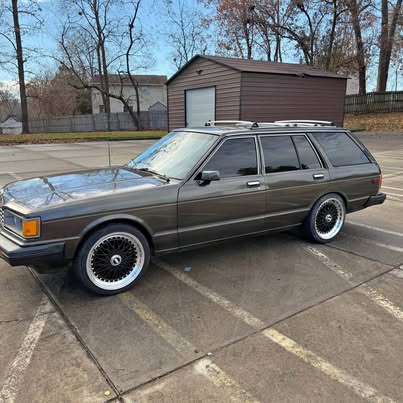
The models
Every Maxima is a four-door sedan except the first two generations, which also came as a wagon. Trim naming is consistent enough to decode at a glance: GXE is the base car, SE is the sporting trim (firmer suspension, different wheels, often the stronger engine in the early 1990s, and the only route to a manual gearbox), and GLE is the luxury trim — leather, automatic climate control, softer suspension tune, automatic gearbox only. Anniversary and special editions appear on the fifth generation but change equipment, not character.
| Model | Years | Engine | Output | Built | Character |
|---|---|---|---|---|---|
| 810 Maxima / Maxima (910) | 1981–1984 | 2.4 six (L24E); 2.8 diesel six (LD28) | 120 hp (petrol) | Japan | Rear-drive origin; sedan and wagon; a Datsun in all but late badges |
| Maxima (PU11) | 1985–1988 | 3.0 V6 (VG30E) | 152–157 hp | Japan | The front-drive switch; sedan and wagon; VG V6 arrives |
| Maxima (J30) | 1989–1994 | 3.0 V6 (VG30E; VE30DE in SE, 1992–94) | 160 hp; 190 hp (SE) | Japan | The "4DSC" car; independent rear suspension; the enthusiast pick |
| Maxima (A32) | 1995–1999 | 3.0 V6 (VQ30DE) | 190 hp | Japan | The VQ arrives; lighter, simpler beam rear axle; the volume classic |
| Maxima (A33) | 2000–2003 | 3.0 V6 (VQ30DE-K); 3.5 V6 (VQ35DE, 2002–03) | 222 hp; 255 hp | Japan | Bigger and plusher; 3.5 brings pace and new failure modes |
| Maxima (A34) | 2004–2008 | 3.5 V6 (VQ35DE) | 265 hp | USA (Smyrna) | American-built flagship; CVT from 2007; divisive styling |
(Outputs are period US-market figures. Diesel cars were a small minority of first-generation sales and are now very rare.)
The first generation (1981–84). Sold as the Datsun 810 for 1981 and as the 810 Maxima, then simply Maxima, as the Datsun name was retired. Rear-wheel drive, the L24E fuel-injected straight six shared with the 280ZX, and a 2.8-litre diesel six for the economy-minded. A talking dashboard on early cars — a synthesised voice warning about lights and doors — is the period party trick. These are thin on the ground now, wagons especially, and are bought as survivors rather than transport.
The second generation (1985–88). The switch to front-wheel drive, and to the VG30E 3.0-litre V6 mounted transversely. Sedan and wagon again. A competent, comfortable car that established the template — V6, front drive, generous equipment — but rust and age have thinned it to near-invisibility.
The third generation (1989–94). The car that made the name. Bigger, handsome, with independent rear suspension and a proper sporting flagship: from 1992 the SE received the VE30DE, a twin-cam, 24-valve development of the VG with variable valve timing on the intake cams, worth 190 hp against the GXE's 160 hp single-cam VG30E. The five-speed manual SE of 1992–94 is the most collectible Maxima there is. The "4DSC" decal was earned by this generation.
The fourth generation (1995–99). The VQ30DE replaces the VG: all-aluminium, twin-cam, 190 hp in every trim, and one of the most durable engines Nissan has ever built. The car got lighter, but the independent rear suspension was replaced by a simple multi-link beam axle — a cost decision you can feel on broken pavement but one that removes a whole category of wear parts. GXE, SE and GLE trims as before; a mild facelift for 1997. This is the generation that fills today's market, and the default recommendation for most buyers.
The fifth generation (2000–03). Longer, wider, heavier, plusher. The VQ30DE-K — a revised 3.0 with a variable intake — makes 222 hp for 2000–01; for 2002 the VQ35DE 3.5 arrives with 255 hp and, in the SE, the option of a six-speed manual. The pace is real, but so are the new problems: oil consumption and catalytic-converter failures on the 3.5 are engine-killers, covered in the problem section.
The sixth generation (2004–08). Built in Tennessee, styled controversially (the long glass roof strip on many cars is the tell), and positioned upmarket against Nissan's own Altima, which by now did most of the same job for less money. The VQ35DE makes 265 hp. A five-speed automatic served until 2007, when a CVT replaced it across the range. These are fast, comfortable, cheap — and the most mechanically risky Maximas of all, because the CVT and the VQ35's timing-chain wear both carry four-figure consequences.
Later cars (2009–14 and 2016–23) continued the formula — VQ35, CVT only, front drive — and are modern used cars rather than classics; everything in the problem and inspection sections about the VQ35 and the CVT applies to them with interest.
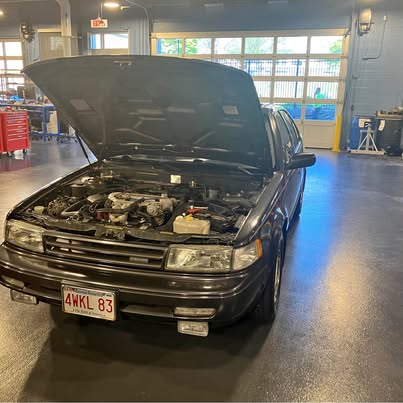
Engines and gearboxes
The straight sixes: L24E and LD28 diesel (1981–84)
The first-generation car uses the L-series straight six in 2.4-litre fuel-injected form, the L24E — the same basic engine as the 240Z's, with electronic injection in place of carburettors. It is a simple, understressed, long-lived unit whose enemies are age rather than design: perished vacuum hoses, tired injectors, corroded wiring and a cooling system full of forty years of deposits. The LD28 diesel is a 2.8-litre six of legendary durability and equally legendary slowness; glow-plug and injection-pump condition decide whether a diesel car is usable at all, and diesel-specific parts are now genuinely scarce. On either engine, judge the individual car — overheating history and oil pressure at a hot idle tell you more than mileage.
The VG30E and VE30DE (1985–94)
The VG30E is a 3.0-litre, single-overhead-cam, iron-block V6. In the second-generation car it makes about 152–157 hp; in the third-generation GXE, 160 hp. It is a tough engine with two defining service facts. First, it is driven by a timing belt, on a roughly 60,000-mile change interval, and the belt also drives the water pump — a car with no belt history needs both done immediately, and the bill belongs in the negotiation. Second, its fuel injectors live under the intake plenum and are a known failure and leak item on the third-generation car; a fuel smell in the engine bay of a J30 is an injector or fuel-rail job until proved otherwise, and it is a fire risk, not a cosmetic fault. Exhaust manifold studs break on these engines, announcing themselves as a ticking from the manifold face on a cold start that quietens as the engine warms and the joint expands. A stud job is fiddly, access-led labour rather than expensive parts.
The VE30DE, fitted to the 1992–94 SE, is a different character: twin cams, 24 valves, 190 hp, and Nissan's VTC variable intake cam timing. It revs where the VG will not and is the engine that justifies the SE badge. Its known vice is noise from the VTC sprockets and the timing-chain tensioner at start-up and idle on worn engines — a rattle or a diesel-like clatter from the front of the engine. Some noise is age; noise that persists hot, with the oil light flickering at idle, is wear you are buying. The VE is chain-driven, so there is no belt bill, but a chain-and-tensioner job on a tired VE is specialist-priced, and VE-specific parts are the scarcest of any engine in this guide.
The VQ30DE and VQ30DE-K (1995–2001)
The VQ is the reason to buy a Maxima. All-aluminium block and heads, twin cams, 24 valves, timing chains instead of a belt, and a reputation earned over millions of units: the bottom end is effectively unburstable in normal use, and 250,000-mile examples are unremarkable. The VQ30DE makes 190 hp in the fourth generation; the revised VQ30DE-K in the 2000–01 fifth-generation car adds a variable intake system and makes 222 hp.
Its faults are specific, known, and mostly cheap if caught:
Ignition coils. The VQ30 uses six individual coil packs, and the original Hanshin coils fail with age and heat — one at a time, usually, giving a single-cylinder misfire, a flashing or steady check-engine light and a lumpy idle. The front bank is a five-minute job; the rear bank sits under the intake plenum, so rear coils are a plenum-off job. A seller who has replaced one coil has five more of the same age. Budget for a set, and treat a misfire as a price conversation, not a mystery.
Knock sensor. The knock sensor lives in the valley of the engine, under the intake manifold, and fails routinely. A dead knock sensor retards the ignition timing, and the car goes flat and thirsty without ever feeling broken — many owners never notice. The code (P0325) can be present without the check-engine light lit. Replacement is a manifold-off job, which is why the market is full of cars with the sensor unplugged or a resistor bodge in the harness. On a test drive, a VQ30 that feels sluggish and heavy on fuel is very often this sensor, not a tired engine.
Idle air control and the ECU trap (2000–01). The fifth-generation car's idle air control valve (IACV) can short internally — coolant leaks into it and the stepper motor fails — and the short can burn the driver circuit in the engine ECU. Replacing only the valve on a car whose ECU is already damaged gives you a new valve and the same fault; replacing only the ECU without the valve can burn the new ECU. On a 2000–01 car with idle or stalling faults, the correct diagnosis prices both, and a documented repair of the pair is a genuine selling point.
Mass airflow sensor. The MAF on the 2000–03 cars fails progressively: hesitation, poor economy, stalling at idle, sometimes no code at all. Cleaning buys time; a quality replacement fixes it. A car that has had a cheap aftermarket MAF fitted can chase its tail for months — ask what brand went in.
The VQ35DE (2002–08)
The 3.5 is stronger everywhere — 255 hp in the 2002–03 car, 265 hp in the sixth generation — and it is still a fundamentally durable engine, but it adds two failure modes the 3.0 does not have, and both are serious.
Oil consumption and pre-cat failure. The VQ35 in these years can consume oil, and its exhaust manifolds carry close-coupled pre-catalytic converters. When a pre-cat breaks up, the debris can be drawn back into the cylinders on the exhaust stroke overlap, scoring the bores; the scored bores then consume more oil, which overheats and destroys the converter further. It is a death spiral, and the end point is an engine. The tells are oil consumption you can measure, a rattling from the manifold converters, and misfire or catalyst-efficiency codes. Any 3.5 that uses oil is a car to price as an engine-in-waiting or to walk away from. There were factory recalls and campaigns around crankshaft and camshaft position sensors on these engines too — sensor failure causes stalling and no-starts, the parts are cheap, and a car that stalls at junctions should have its sensors checked before anything exotic is blamed.
Timing-chain tensioners and guides. On higher-mileage VQ35s the secondary timing-chain tensioners and guides wear, producing a distinct whine or buzzing rattle that rises with revs, most audible on a cold engine and at around 2,000 rpm. This is an engine-out (or engine-tilted, subframe-down) job on the Maxima because the chain case faces the inner wing — the parts are modest, the labour is not, and quotes vary enormously. A whining 3.5 is not a cheap fix with a rattle; it is a four-figure job you are scheduling.
Gearboxes
The five-speed manual (to 2001) and six-speed manual (2002–03 SE). The manual is the enthusiast's choice and the durability champion: Nissan's RS5F50-series five-speed in the third- and fourth-generation cars is strong, with a cable-operated clutch on later cars and synchromesh that wears honestly — second gear crunches first on a tired box. The 2002–03 SE's six-speed (with an optional limited-slip differential) is the rarest and most desirable gearbox in the range. Manual cars are a small minority of production and an even smaller minority of survivors; a good one justifies a premium over an identical automatic.
The four-speed automatic (RE4F04 family). The default gearbox in nearly every Maxima you will look at, and a conventional torque-converter automatic that is durable if its fluid has been changed and fragile if it has not. Nissan's service culture treated the fluid as near-lifetime, and many cars are on ancient, dark fluid. Symptoms in order of seriousness: harsh or delayed engagement of drive or reverse, flaring (revs rising) on the 2–3 shift, shuddering at light throttle as the torque-converter lock-up clutch engages, and finally slipping under load. A fluid and filter service can rescue a box that is merely neglected; a box that flares or slips is a rebuild, and rebuild money on a cheap Maxima usually exceeds the car's value. This is the single most common reason these cars get scrapped.
The five-speed automatic (2004–06). The sixth-generation car's conventional automatic is broadly similar in character: fine when serviced, expensive when not, with valve-body and solenoid faults joining the wear list. Test it exactly as you would the four-speed.
The CVT (2007–08). Nissan's Xtronic CVT replaced the conventional automatic for 2007, and it changes the buying calculation completely. A healthy CVT is smooth and unobtrusive; a failing one whines, judders from a stop, overheats on grades (the car may go into a limp mode that limits speed), or hesitates and then surges. The usual causes are degraded fluid — the CVT is extremely sensitive to fluid condition and to having the correct Nissan NS-2 fluid — a worn valve body or stepper motor, and overheating from a blocked cooler circuit. There is no cheap CVT rebuild path: repairs are specialist work and replacement units are the common fix. On a 2007–08 car, a full Nissan-fluid service history is not a nicety; it is the difference between a car and a liability.
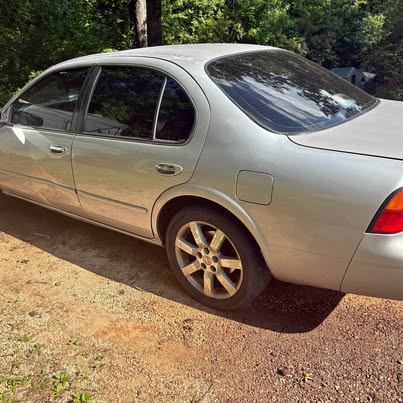
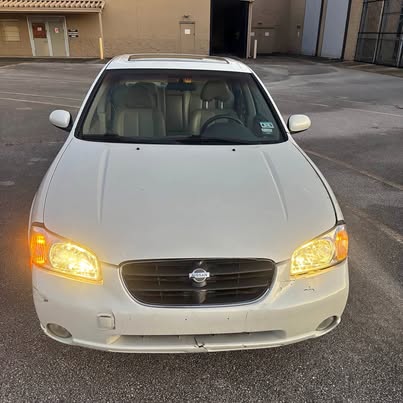
Problem areas
The Maxima's problem map divides cleanly in two. The engines — the 3.5's appetite for oil aside — are rarely what kills these cars. What kills them is rust in two specific places, the automatic gearbox, the slow decay of everything rubber and electrical around a fundamentally sound drivetrain, and, on the newest cars here, the CVT. Work through it in that order.
Rust: the map
A Maxima is a monocoque steel sedan built without exotic rust protection, and in the salt belt most of them are already gone. The survivors concentrate in the South and West, and even those need checking in the places the water and the road salt actually reach.
Lower radiator core support. The signature structural rust of the fourth- and fifth-generation cars, and the check that matters most on a 1995–2003 Maxima. The lower radiator support is a structural crossmember that carries the radiator and ties the front of the car together, and it rots from inside its box section — the outside can look merely scabby while the section has lost its strength. Prod it hard along its whole length with a screwdriver; a sound support rings and resists, a rotten one crunches and flakes. The panel is replaceable — it is spot-welded in, so the job is drilling welds, fitting a new support and re-welding, roughly a day's body-shop work — but a car that needs it usually has rust elsewhere too, and the support's condition is the best single proxy for how the whole front structure has lived.
Rear wheel arches and quarter panels. The classic Maxima rust, visible on the majority of northern cars: the arch lip traps mud against the inner quarter, and the panel bubbles from behind the paint. Arch rust is cosmetic until it reaches the inner structure and the rear door shut area, but it is the rust you can see, so use it as the index — a car with clean original arches has usually lived somewhere kind, and a car with filler in the arches has usually got worse news underneath.
Sills, floor edges and subframe mounts. Prod the sills along their length, especially ahead of the rear wheels, and check the floor edges and the front subframe mounting points from underneath. Subframe-mount rust is the genuinely dangerous finding: the front subframe carries the engine, gearbox and front suspension, and a mount that is losing its metal is a structural repair, not a patch. Surface rust on the subframe itself is normal and treatable; perforation at the mounts is a walk-away on a cheap car.
Strut towers and the engine bay. Open the bonnet and look at the front strut towers and the inner wings, and at the rear towers from inside the boot on the sedan. Tower rust is less common than on some contemporaries but appears on salt-belt cars and is structural. Also check the boot floor and spare-wheel well — the rear lamp and boot seals leak, water sits under the spare, and the well rots quietly. Lift the spare out; staining is a clean-and-treat job, holes are a welding job.
The early cars. First- and second-generation cars rust everywhere a 1980s Japanese car rusts: sills, arches, floor pans, door bottoms, around both screens. On a 1980s car the question is not whether but how much, and the answer decides whether it is a survivor to preserve or a parts car with a title.
Suspension, steering and brakes
The third-generation car has independent rear suspension with struts and links whose bushes wear; the fourth generation onward uses a multi-link beam at the rear — a beam on trailing arms with a lateral link — which has almost nothing to wear except its main bushes and the dampers, and which gives a slightly pattering ride over broken surfaces in exchange. Judge both the same way: bounce each corner, look for leaking dampers, and listen on the test drive.
Front struts and mounts. Worn front strut top mounts knock over bumps and groan when the steering is turned at parking speeds. Struts themselves are wear items at the mileages these cars have covered; a full set of quality struts fitted is a mid-three-figure to low-four-figure job depending on whether mounts and bearings are included, and it transforms a tired car.
Power steering. The high-pressure power-steering hose weeps and then leaks on the V6 cars — look for fluid misting on the back of the engine bay and a groaning pump low on fluid. The rack itself can leak from its end seals. A hose is a modest parts bill with awkward access; a rack is more. Check the reservoir level and the colour of the fluid on every viewing, and turn the wheel lock to lock at idle: groaning, notchiness or a heavy patch are all findings.
Wheel bearings and CV joints. Front wheel bearings hum — a drone that changes when you load and unload the bearing by weaving gently. Outer CV joints click on full lock. Both are ordinary wear, both are priceable, and both are useful evidence of how the car has been maintained: a car with a howling bearing has an owner who defers things.
Brakes. Discs front, discs or drums at the rear depending on generation and trim (SE cars generally get rear discs). The system is conventional and the parts are cheap. What fails is maintenance: seized rear calipers on disc-brake cars (the handbrake mechanism inside the caliper corrodes), perished flex hoses, and corroded hard lines on salt-belt cars — check the lines along the floor and over the rear beam carefully, because a full hard-line replacement is a long, fiddly job. A car that has sat will have rust-banded discs and a spongy pedal; budget a full hydraulic refresh on any long-stored car.
Interior, electrics and the small stuff that prices a car
Seats and trim. The GLE's leather cracks on the driver's bolster first; cloth cars wear better. Seat motors on powered seats fail, and the driver's seat in a high-mileage car will often have a collapsed cushion. None of this is structural, but a full retrim costs more than most Maximas are worth, so the interior you buy is the interior you keep.
Window regulators. A known weak point across the fourth and fifth generations: the cable-and-plastic-pulley regulators fail, dropping the glass into the door or leaving it stuck. The parts are cheap and the job is an hour a door for a competent DIYer, but count the dead windows — four regulators plus your time is a real number, and a seller's "the windows just need a fuse" is almost never true.
Climate control. The automatic climate control on GLE cars develops failed buttons, dead displays and blend-door faults; manual systems on GXE/SE cars are simpler and more durable. The air-conditioning compressor and its clutch are ordinary wear items, and a system that has been open needs a receiver-drier and a proper vacuum and recharge, not a top-up can. Test the air conditioning on every viewing, in every season — a system that blows cold in November is a system that works.
Bose audio. GLE and many SE cars carry Bose head units and amplified speakers. The head units fail (dead displays, CD mechanisms that refuse discs) and the speaker amplifiers fail individually, giving one silent or crackling corner at a time. Period-correct repair is specialist work; most owners fit modern head units, which on a Bose car means dealing with the amplified-speaker wiring properly rather than with adaptor bodges. Judge a modified car by the quality of the installation.
Sunroof. Where fitted, the sunroof drains block and the water runs down the A-pillars and into the front footwells — wet front carpets in a Maxima are drains or a windscreen seal until proved otherwise. Test the roof through its full travel; a roof that tilts but will not slide, or that grinds, needs mechanism work that is fiddly rather than dear.
Electrics generally. These are well-made cars electrically, and most faults are age faults: corroded earth points, tired alternators (check the charge voltage; a VQ with a failing alternator can present with gearbox and misfire codes that vanish when the voltage is right), and starter motors on the VG and early VQ cars, which live in the heat at the back of the engine and die slowly — a lazy, clicking start on a hot engine is the starter or its cable, not the battery, until tested. Active electronic engine mounts on some automatic GLE cars fail and pass vibration through at idle; the mounts are a known cost and a common reason a smooth engine feels rough in gear.
Cooling, fuel and exhaust
Cooling system. The V6 cars run electric fans and a conventional pressurised system, and the failure pattern is age: radiators with plastic end tanks that crack and weep at the seams, water pumps that begin to leak from the weep hole, thermostat housings and hoses that have heat-cycled for twenty-five years. On the VG cars the water pump is driven by the timing belt, so a pump leak on a car with no belt history is one job, not two — the belt, the pump and the tensioners together. On the VQ cars, check the radiator's top tank for the hairline cracks and coolant staining that precede a split, and confirm both fans cut in with the air conditioning on and at temperature; a dead fan motor is a cheap part that cooks an engine in traffic if it is ignored. Any Maxima that has overheated needs the conversation every overheated aluminium engine needs: head-gasket symptoms are coolant loss with no visible leak, a misfire on a cold start that clears, and pressure in the expansion tank. The VQ's head gaskets are not a weak point by design, which is exactly why a car showing those symptoms has usually been run hot, hard, or both.
Fuel system. Beyond the VG injector issue in the engine section, the recurring items are tired in-tank fuel pumps (a car that is hard to start hot, or that cuts out with a low tank, is describing pump wear), perished fuel hoses in the engine bay — any rubber fuel line that is hard, cracked or weeping is a same-week replacement, not a monitor-it item — and filler-neck corrosion on northern cars, which gives an evaporative-emissions code and a fuel smell after filling. Fuel filters are neglected on the later cars because they are awkwardly placed; a car with a documented filter change has had an owner who read the schedule.
Exhaust. Manifold studs on the VG were covered in the engine section. On the VQ cars the flex section of the front pipe fails first, giving a blare under load that quietens at cruise, and the job is a pipe section, not a system. On the VQ35, the manifold pre-cats are the structural issue already described — a rattle from a converter, a catalyst-efficiency code, or a car that has had one converter replaced singly are all prompts to check oil consumption twice as carefully, because converter failure and bore damage travel together on this engine. Rear silencers and mid-pipes are ordinary consumables everywhere in the range; a stainless replacement on a keeper car is money well spent, and a patched, blowing system on a car being sold as cherished is a small, telling lie about the maintenance standard.
The automatic gearbox and the CVT, again, as a condition issue
Because it decides so many purchases, it deserves restating as a condition check rather than a specification: on any automatic Maxima, the gearbox is the car's largest single financial risk. The fluid tells the story. Pull the dipstick (the four- and five-speed automatics have one; the CVT's service is a dealer-style procedure). Bright red fluid with no burnt smell is a serviced box. Dark brown fluid that smells burnt is a neglected box whose remaining life is unknown. Black fluid with debris is a box already failing. Combine the fluid with the road test in the inspection section — engagement delay, shift flare, lock-up shudder — and you have the verdict. A Maxima with a genuinely good automatic and a sound radiator support is most of the way to being a good car, whatever else it needs.
How to inspect one
Allow an hour, insist on a cold engine, and bring a torch, a screwdriver for prodding (with the seller's permission), a cloth and a magnet. A lift inspection before money changes hands is worth it on any car you intend to keep — the radiator support and subframe mounts are both judged far better from underneath.
- Paperwork and identity first. Match the VIN on the title to the plate at the base of the windscreen and the sticker on the driver's door jamb. Decode the trim from the car itself, not the advert: GLE cars have leather and automatic climate control, SE cars have the firmer suspension and (on 1992–94 cars) should have the VE30DE twin-cam engine — open the bonnet and look, because badges migrate. Ask for service records, and look specifically for timing-belt history on a VG car, transmission fluid changes on an automatic, and CVT fluid changes on a 2007–08 car.
- Cold start. The engine should start cleanly and settle. On a VE30DE, listen for VTC and chain rattle; on a VQ35, listen for the whine or buzzing rattle of worn chain tensioners, most obvious cold and around 2,000 rpm as you blip the throttle gently. Blue smoke at start-up is valve stem seals; smoke under load on the drive is rings or, on a 3.5, scored bores.
- Oil and consumption questions. Pull the dipstick: level, colour, and whether the oil smells of fuel. On a VQ35 car, ask directly how much oil it uses between changes, and check the level is not suspiciously fresh and full on a car with no recent service record. Low oil on the stick of a 3.5 is a serious finding — walk the price down hard or walk away.
- The radiator support. Crouch at the front, torch along the lower radiator core support, and prod it along its length. Crunching, flaking or holes here mean the day's body-shop conversation described in the rust section — and a prompt to check everything else structural twice as carefully.
- Underneath. Sills, floor edges, front subframe mounts, brake lines, the rear beam and its bushes, the boot floor from below. Perforation at the subframe mounts ends the inspection on a cheap car. Read the arches while you are there: run the magnet over the rear arch lips and the sill ends for filler.
- Gearbox, stationary checks. On an automatic, pull the transmission dipstick where one is fitted: colour and smell as described in the problem section. Engage drive and reverse from neutral, foot on the brake: engagement should be prompt and clean. A long pause followed by a thump is wear you are buying.
- The test drive — gearbox. Fifteen minutes minimum, including a hill and a stretch at highway speed. The automatic should shift firmly without flaring; feel for lock-up shudder at light throttle around 40–50 mph. On a CVT car, listen for whine, feel for judder pulling away, and hold the car on a grade — hesitation, surging or a hot smell are all findings. On a manual, test second-gear synchromesh on a brisk downchange and listen for clutch judder pulling away.
- The test drive — engine. A VQ30 should pull cleanly and eagerly; a flat, thirsty-feeling car with no obvious fault is the knock-sensor story from the engine section until a code read proves otherwise. A 2000–01 car that stalls at junctions or idles erratically is the IACV-and-ECU conversation — price both parts of it. Check for misfire under load (coils) and confirm the temperature gauge sits stable and the fans cycle.
- Steering, suspension and brakes. Lock-to-lock at idle for power-steering groans and notchiness; bumps at low speed for strut-mount knocks; a gentle weave for wheel-bearing drone; full lock in a car park for CV clicks. Brake firmly from speed — straight, no judder, no pull — and test the handbrake on a slope; a weak handbrake on a rear-disc car is the seized-caliper story, not an adjustment.
- Electrics and climate. Work everything: all four windows (regulators), the sunroof through its full travel, the climate control on hot and cold and the air conditioning whatever the weather, every seat motor, the mirrors, the wipers and washers, all the lights. Check the charge warning light behaves and, if you can, the charging voltage — low system voltage manufactures phantom faults on these cars.
- Interior and water. Sit in the driver's seat and feel for a collapsed cushion. Lift the front carpets and feel for damp — sunroof drains or screen seals. Lift the spare wheel and inspect the boot floor. Check the headlining around the sunroof aperture for water staining.
- Stance and the final look. Stand back. The car should sit level; a sagging rear on a third-generation car is worn rear struts and links, on any car a lean is a broken spring or a collapsed mount. Look down both flanks for ripples and mismatched paint, and check the panel gaps around the bonnet and boot for accident history. Then weigh the whole car against the rule in the last section.
Values
The Maxima market is really several markets wearing one badge, and the first skill in reading it is refusing to average them. A rear-drive 1983 wagon, a 1993 SE manual and a 2007 CVT car share nothing but the name, and their values move for entirely different reasons: rarity and survival for the early car, enthusiast demand for the SE, and simple used-car utility — minus mechanical risk — for the late car. The figures in the market block beneath this guide are the live picture; what follows is how to read them.
Condition spread is the dominant fact. Because the engines last so well, the market is full of running cars, and running is not the same as good. The gap between a rusty, cosmetically tired automatic car with dark transmission fluid and a dry-climate, serviced, rust-free car is not a percentage — it is several multiples, and it is justified, because the cheap car's defects (gearbox, radiator support, arches) cost more to fix than the price difference. At the bottom of the market you are not buying a discount; you are buying someone else's deferred maintenance at full price, payable later.
Premiums attach to specific, verifiable things. The manual gearbox is the big one: a five-speed third- or fourth-generation car, and above all a 1992–94 SE with the VE30DE or a 2002–03 SE six-speed, commands real money over an equivalent automatic because so few survive. Dry-climate history is the second premium — a car that has lived in the South or West carries its original radiator support and arches, and that is worth more than low mileage on a northern car. Documented big-ticket work is the third: a rebuilt automatic, a replaced radiator support done properly, a CVT with a full Nissan fluid history, a VQ35 with documented low oil consumption. Paper moves prices on these cars because paper is what separates the survivors from the gambles.
Asking prices and achieved prices diverge in a predictable pattern. Sellers of ordinary automatic cars — the bulk of the market — habitually ask enthusiast money for utility cars, and those listings sit; the cars that sell are priced as the used sedans they are. Sellers of the genuinely desirable cars (manual SEs, rust-free GLEs, early wagons) more often underprice them, because the wider market does not yet treat any Maxima as a collector car. That asymmetry is the opportunity in this market: knowledge, not money, is what buys a good Maxima cheaply.
The project-versus-driver gap follows the gearbox. A non-running or transmission-failed automatic car is worth close to its parts value, because the repair bill approaches the value of a finished car; a project manual car holds value because the gearbox is not a liability and the buyer pool wants it. Buy a project only if the body is genuinely sound — a rusty project Maxima is a parts car, and should be priced as one however well it runs.
Finally, geography is destiny. These cars are worth more where they have survived, which is not where most of them were sold. A rust-free southern car advertised nationally will find buyers from the salt belt who have learned what northern cars hide; expect to pay for the privilege, and expect a clean car to sell quickly when it appears.
Parts and ownership
The Maxima is one of the easiest Japanese sedans of its era to keep, because Nissan built them in the hundreds of thousands, the VQ engine went into everything from minivans to sports cars, and the mechanical parts commonality across the Nissan range is enormous.
Easy: service items, filters, plugs and coils, brake discs, pads, calipers and hoses, struts and mounts, wheel bearings, CV axles, alternators and starters, radiators and cooling parts, exhaust sections, window regulators, and almost everything for the VQ30 engine. Order today, fit this weekend, at prices close to modern-car money — the VQ's ubiquity means the aftermarket supports it properly.
Harder and dearer: the automatic gearbox rebuild (the bill that ends cheap cars — get a firm quote before buying a flaring car, not after), the CVT (specialist repair or a replacement unit; there is no cheap route), VQ35 timing-chain work (parts modest, labour heavy — access is the cost), VE30DE-specific parts for the 1992–94 SE (the scarcest engine in this guide; budget patience as well as money), VG timing-belt-and-water-pump service (routine but a real bill, and overdue on most survivors), first-generation body and trim parts and anything diesel-specific, Bose head units and speaker amplifiers in period-correct form, and rust-free body panels — arches, sills and radiator supports are available as repair sections, but the labour is the price.
Finding expertise. Any good independent can service a Maxima, and the VQ engines are so widespread that diagnostic knowledge is everywhere. The two places to seek out a Nissan specialist rather than a generalist are the CVT — where the wrong fluid or a guessed-at repair does real damage — and VE30DE work on the 1992–94 SE, where the engine's rarity means most shops are learning on your car. For the early cars, the Datsun-era parts and knowledge networks overlap with the Z-car world, which is the best route to both components and advice for a first-generation survivor.
Running costs. A sorted Maxima is a realistic daily classic: fuel consumption in the low-to-mid twenties mpg on the highway for the V6 cars, insurance in line with other sedans of the value, and servicing any competent independent can handle — there is nothing exotic anywhere in the car except the CVT, which wants its correct Nissan fluid and a specialist's respect. The budget line that catches new owners is the catch-up year: a running car with deferred maintenance honestly needs its fluids (including, on an automatic, the transmission), its belts or chain-area noises assessed, its brakes gone through and its tired struts and bushes replaced before it is the car it should be. Cars that have sat need the fuel system cleaned, the brakes fully inspected and every rubber hose treated as guilty until proved innocent. Buy a car in regular use over a sleeping bargain, every time.
Which one to buy
- The all-rounder: 1995–99 GLE or SE automatic. The VQ30DE at its simplest, the deepest parts support, the fewest engine risks of any generation. Buy on radiator support, arches and transmission fluid, and you have the best cheap sedan of its decade.
- The enthusiast's car: 1992–94 SE five-speed manual. The VE30DE, the 4DSC brief fulfilled, the most collectible Maxima there is. Verify the engine is the twin-cam VE and not a badged GXE, listen hard for VTC and chain noise, and accept the parts hunt as part of the deal.
- The value buy: 1995–99 GXE automatic. The same VQ30 and the same body as the GLE without the leather, the Bose and the climate-control complexity — usually the cheapest route into a sound fourth-generation car, and the trim least likely to have been bought by someone who deferred maintenance to afford the badge.
- The cruiser: 2000–01 GLE. The plushest of the Japanese-built cars, 222 hp, and the IACV/ECU pair is its one signature trap — buy one with that job documented, or price it in.
- The fast one, with eyes open: 2002–03 SE six-speed manual. 255 hp, a limited-slip option, genuinely quick. The VQ35's oil consumption and pre-cat checks are not optional on this car; a six-speed that uses oil is a liability wearing a desirable gearbox.
- The survivor: 1981–84 sedan or wagon. Bought as a curiosity and a piece of Datsun-to-Nissan history, not as transport. Rust decides everything; the wagon is the rarest and most charming of the early cars.
- The one to buy carefully: 2004–08. Fast, comfortable and cheap — and the generation where the VQ35 chain whine and, from 2007, the CVT concentrate all the risk. A 2004–06 automatic with full fluid history is defensible; a 2007–08 car without documented CVT fluid changes is not, at any price that assumes it will keep working.
And the rule that overrides all of the above: buy the body and the gearbox, and let the engine look after itself. Every engine in this guide except a neglected VQ35 is tougher than the car around it. The radiator support, the arches, the subframe mounts and the state of the automatic's fluid are what separate a Maxima that costs you money once from one that costs you money forever.
See the 5 Maxima cars currently listed.
For sale now
 $3,500
Expand
 $2,200
Expand
What they sell for: Maxima sale prices.